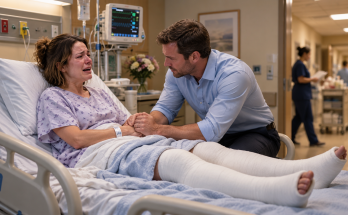
“For four years, I had been sending almost $100,000 back home while serving overseas. Then I came back without telling anyone and found my wife BALD, painfully thin, and washing dishes behind the house. “She brought this on herself,” my mother told me. But Chloe was keeping a secret that would completely shatter everything I thought I knew.

PART 1
I had spent four years serving overseas with the U.S. Army, and through every exhausting night away from home, I held onto one thing that kept me going: the thought of finally coming home to Chloe.
When my unit was unexpectedly granted emergency leave after our latest deployment, I made a decision. I wouldn’t tell anyone I was returning. I wanted to surprise my wife and see her face when she realized I was home. In my mind, I pictured her running straight into my arms.
Instead, I found a house that looked almost too perfect to be real.
Two stories. A beautiful gate surrounding the property. A brand-new truck parked outside. Expensive furniture that looked as though nobody had ever touched it.
For a moment, I felt proud.
I had sent nearly $100,000 home over those four years. I believed my family had used that money to create a better life and build something we could all be proud of.
Then I walked around to the back of the house.
And there was Chloe.
She was kneeling beside an old washing basin, her clothes hanging loosely from her painfully thin body. A knitted cap covered her head despite the warm afternoon air. She was quietly picking broken pieces of a plate out of the dirt.
Then my sister Brenda shouted from inside the house, “That bald woman shouldn’t even be showing her face while we have guests!”
Chloe immediately froze.
Then she looked at me.
She didn’t rush into my arms.
Instead, she took a step backward and grabbed her head with both hands.
That frightened me more than anything else could have.
I slowly walked toward her and carefully removed the cap from her head.
Her entire scalp had been shaved bare.
Small cuts and wounds were scattered across the skin.
My mother stepped outside wearing silk clothing and gold jewelry. Brenda came after her carrying a brand-new phone and an expensive purse.
My mother looked at Chloe and casually said, “She did this to herself. She destroyed her own hair using cheap chemicals. Then she became obsessed with losing weight.”
Brenda laughed.
“She spends your money and still expects everyone to feel sorry for her.”
Chloe said nothing.
Then her sleeve slipped higher.
I saw a hospital bandage near her elbow.
Beside it was a fading mark where an IV had been inserted.
Every instinct in me wanted to explode.
But four years in uniform had taught me something that mattered. When people are lying, you don’t show them everything you know before you’re ready.
So I forced myself to smile.
“I actually came home with some good news.”
I told them that my deployment compensation and military benefits had finally been approved.
Almost $400,000.
Their attitudes changed instantly.
My mother began talking about renovating the house. Brenda started making plans for another truck, vacations, and shopping trips.
Not one of them asked why Chloe could barely remain standing.
That night, I discovered my wife sleeping in a damp storage room.
Not a bedroom.
A storage room.
She sat beside me and slowly began opening her blouse.
That was when I saw the biopsy scar.
“I have cancer,” she whispered. “They found the tumor five months ago.”
Everything I thought I understood came crashing down.
Chloe had begged my mother, Patricia, for $300 so she could see a specialist.
Patricia refused.
Instead, she accused Chloe of pretending to be sick because she wanted to steal my military pay.
Brenda had been monitoring Chloe’s phone calls.
The money I had been sending home all those years had never reached my wife when she needed it most.
So Chloe had done the only thing she believed she could do.
She cut off her own hair.
Then she sold it for $150.
She used that money to pay for transportation and get a biopsy.
While my mother and sister lived upstairs in a beautiful house paid for with the money I had earned overseas, Chloe had been forced to sell her own hair simply to find out whether she was going to survive.
I wrapped my arms around her and whispered, “Just hold on a little longer.”
Later that night, I stayed awake beside my wife in that miserable storage room while Patricia and Brenda slept upstairs, surrounded by everything my money had purchased for them.
And before morning arrived, I made one decision that was going to change all of our lives.
PART 2 — THE MORNING EVERYTHING CHANGED
Before morning arrived, I made one decision.
I was not going to confront my mother.
Not yet.
I was not going to scream at Brenda.
Not yet.
And I was not going to tell either of them that the four hundred thousand dollars I had mentioned did not exist.
Not in the way they thought it did.
I had lied.
There was no giant military payout waiting to land in their hands.
No magical compensation package.
No sudden mountain of money.
I had invented the number because I needed to know something.
I needed to know whether four years had changed my family.
Or whether money had simply revealed who they had always been.
By three in the morning, I already had my answer.
Chloe was asleep beside me on a thin mattress in the storage room.
If it could even be called a mattress.
The foam beneath her was so worn that I could feel the wooden floor through it.
A damp stain spread along one corner of the room.
The air smelled faintly of mildew.
Beside the wall sat a plastic bucket filled with clothes.
Her clothes.
Not the clothes I remembered.
No soft sweaters.
No blue dress she wore on our anniversary.
No warm robe I had mailed her from overseas because she once told me the winters felt colder without me.
Just old shirts.
Faded pants.
Two pairs of shoes.
Everything she owned seemed to fit inside one plastic container.
My wife had become a guest in the house I had paid for.
No.
Worse.
She had become a servant.
I looked at her sleeping face.
Even in sleep, she did not look peaceful.
Her eyebrows tightened every few seconds.
Her hand remained pressed against her stomach.
Sometimes she breathed sharply, like pain was reaching into her dreams.
I wanted to wake her.
I wanted to carry her out of that house immediately.
I wanted to drive to the best hospital I could find and refuse to leave until every doctor in the building knew her name.
But something held me there.
Not hesitation.
Evidence.
There was one truth I had learned in the Army that never left me.
When the ground beneath you looks dangerous, you do not charge forward because you are angry.
You learn where every mine is buried first.
My mother and sister had spent four years building a story.
I was going to dismantle it piece by piece.
Quietly.
Completely.
And when I was finished, neither of them would ever be able to hide behind that story again.
At 4:17 a.m., Chloe woke.
She did not move at first.
Her eyes opened slowly.
Then she saw me sitting beside her.
For one second, she looked afraid.
That broke something inside me.
“Hey,” I whispered.
She relaxed a little.
“You’re still here.”
The words were almost nothing.
But I heard what lived beneath them.
She had gotten used to people leaving.
I took her hand.
“I’m not going anywhere.”
Her eyes filled.
She quickly looked away.
“Don’t promise things like that.”
“Why?”
“Because sometimes people mean them when they say them.”
She swallowed.
“And then life happens.”
I stared at her.
Four years ago, Chloe had been the strongest person I knew.
Not loud.
Never loud.
But certain.
She used to argue with me about everything from toothpaste brands to politics to whether pineapple belonged on pizza.
She laughed with her whole body.
She danced while cooking.
She once spent an entire afternoon rescuing a bird trapped in our garage because she refused to believe it would find its own way out.
Now she spoke like someone afraid even hope could hurt her.
I squeezed her hand.
“I need you to tell me everything.”
She froze.
“Everything?”
“Yes.”
Her eyes dropped.
“I already told you.”
“No.”
I shook my head.
“You told me you have cancer.”
She flinched at the word.
“I need to know what happened after that.”
Silence.
“Who took you to the hospital?”
“No one.”
“How did you get there?”
“Bus.”
“Who went with you?”
“No one.”
My jaw tightened.
“Where did you get the biopsy?”
She named a public hospital forty minutes away.
“Did you tell Mom?”
“Yes.”
“And Brenda?”
“Yes.”
“What did they say?”
Chloe gave a tired laugh.
It sounded more painful than crying.
“They said I was being dramatic.”
Something hot moved through my chest.
I forced it down.
“What happened when the results came back?”
Her fingers trembled inside mine.
“The doctor said it was malignant.”
I closed my eyes for half a second.
Malignant.
A clean, clinical word.
A word that could split a marriage in half.
A word that should have brought family members running.
Instead, Chloe had come home alone.
“What kind?”
“Breast cancer.”
Her voice became smaller.
“Stage two when they found it.”
My throat tightened.
“When?”
“Five months ago.”
“And now?”
She stared at the floor.
“They think it may have spread.”
For one moment, the room tilted.
I gripped her hand harder.
“Think?”
“I missed appointments.”
“Why?”
She finally looked at me.
Because she was crying now.
Not loudly.
Her tears simply slipped down her face.
“I couldn’t pay for everything.”
I stared at her.
“What do you mean?”
She laughed weakly.
“Doctors still cost money, Noah.”
My name sounded strange in her voice.
Like she had not said it enough.
“I sent money.”
“I know.”
“No.”
My voice sharpened.
“I sent money every month.”
She wiped her face.
“I know you did.”
“Almost two thousand dollars most months.”
“I know.”
“Sometimes more.”
“I know.”
“Where did it go?”
She did not answer.
That answer was already upstairs.
Sleeping in silk sheets.
I thought of the truck outside.
My mother’s jewelry.
Brenda’s expensive purse.
The renovated kitchen.
The marble countertops.
The giant television in the living room.
All those little pieces of my absence.
Converted into luxury.
While Chloe sold her hair.
My fists tightened.
She noticed.
“Noah.”
“I’m fine.”
“You’re not.”
“No.”
I looked at her.
“I’m not.”
She rested her forehead against my shoulder.
Neither of us spoke for a while.
Then I asked, “Did they ever hit you?”
Her body went still.
That was enough.
I moved back.
“Chloe.”
She shook her head.
“Not like that.”
“What does that mean?”
“Your mother never punched me.”
“What did she do?”
“She grabbed me sometimes.”
My voice lowered.
“How?”
“When I tried to use the phone.”
My stomach turned.
“Brenda?”
“She slapped me once.”
Everything inside me stopped.
“When?”
“A few months ago.”
“Why?”
“I told one of your friends I wanted to speak to you privately.”
My vision blurred at the edges.
“Who?”
“Marcus.”
I knew Marcus.
We had grown up together.
He had called me twice during deployment.
Both times, Brenda had somehow joined the conversation halfway through.
I remembered thinking it was strange.
I had never understood why.
“What happened?”
“Brenda took the phone.”
Chloe touched her cheek instinctively.
“She said I was trying to turn you against the family.”
I stood.
Too fast.
The room spun.
Chloe caught my wrist.
“Noah.”
I looked toward the ceiling.
Above us, my mother and sister were sleeping comfortably.
My mother had kissed me on the cheek when I arrived.
Brenda had hugged me.
They had smiled.
They had laughed.
They had asked about the imaginary four hundred thousand dollars.
And only a few walls away, my wife had been hiding scars they helped create.
I breathed through my nose.
Once.
Twice.
Three times.
Then I sat down again.
“Did they stop you from calling me?”
Chloe hesitated.
“Yes.”
“How?”
“They changed the internet password.”
I stared.
“They took my phone after I got sick.”
“What?”
“Your mother said I was unstable.”
My skin prickled.
“And when you called?”
“Sometimes from a neighbor’s phone.”
“Why didn’t I ever hear from you?”
“I tried.”
That sentence landed like a bullet.
“I tried so many times.”
Her face collapsed.
“I called you.”
I shook my head.
“No.”
“I did.”
“I would have answered.”
“I know.”
“I would’ve answered, Chloe.”
“I know.”
“I never saw the calls.”
“I know.”
My voice cracked.
“Then where did they go?”
She wiped her tears.
“Your mother knew your schedule better than I did.”
I went quiet.
“She would tell me when you were unavailable.”
I felt cold now.
“She said you were busy.”
I remembered those messages.
Can’t talk today, son. Stay focused.
Your wife is resting.
Chloe doesn’t want to bother you.
Everything is fine here.
Focus on your mission.
My mother had turned my duty into a wall.
And I had thanked her for it.
God.
I had thanked her.
“I believed them.”
Chloe looked at me.
“I know.”
“You probably thought I didn’t care.”
“No.”
She said it immediately.
“Noah, no.”
“How could you not?”
“Because I know you.”
The certainty in her voice almost destroyed me.
She placed one hand against my face.
“I knew if you understood what was happening, you would come home.”
I closed my eyes.
“And I knew you couldn’t just leave.”
My chest hurt.
“So I kept telling myself you didn’t know.”
She gave a broken smile.
“That was easier than believing you knew and chose not to come.”
I pressed my forehead against hers.
“I didn’t know.”
“I know.”
“I swear to you.”
“I know.”
Those words should have comforted me.
Instead, they made me want to cry.
Because Chloe had protected my image of myself even while her own life was falling apart.
I held her until the first sunlight appeared through the tiny window.
At 6:30 a.m., I stood.
“Get dressed.”
She looked confused.
“Why?”
“We’re going somewhere.”
“Where?”
“The hospital.”
Her eyes widened.
“Noah, I can’t.”
“Yes, you can.”
“I don’t have—”
“You have me.”
She looked away.
“I don’t want to create trouble.”
I crouched in front of her.
“Chloe.”
She met my eyes.
“You having cancer is not trouble.”
Her mouth trembled.
“You needing care is not trouble.”
I touched her hand.
“You existing is not trouble.”
That sentence broke her.
She covered her face and sobbed.
I wrapped my arms around her.
And while she cried into my chest, I realized something horrible.
Somebody had spent months teaching my wife to feel guilty for surviving.
I was going to spend however long it took teaching her the opposite.
We left the storage room quietly.
The upstairs hallway was still dark.
As we reached the back door, a voice stopped us.
“Where are you going?”
Brenda.
She stood at the end of the hallway wearing a silk robe.
Her hair was messy.
Her face still half asleep.
But the suspicion in her eyes was already awake.
I smiled.
“Breakfast.”
She looked at Chloe.
“At six-thirty?”
“I’m hungry.”
Brenda folded her arms.
“I can cook.”
“I want to go out.”
“Why take her?”
There it was.
Her.
Not Chloe.
Not my wife.
Her.
I looked at Brenda for a long second.
Then I smiled again.
“Because she’s my wife.”
Brenda’s face tightened.
“Obviously.”
“Then don’t ask stupid questions.”
Her eyes widened.
I had never spoken to her like that.
Not once.
Before she could respond, I opened the door.
“Tell Mom we’ll be back later.”
We left.
The second we got inside the car, Chloe started trembling.
I looked at her.
“What?”
“She’ll be angry.”
“Let her.”
“You don’t understand.”
“I’m starting to.”
“Noah—”
“Chloe.”
I started the engine.
“You don’t have to be afraid of them anymore.”
She looked out the window.
“I don’t know how to stop.”
I had no answer for that.
Not yet.
So I drove.
At the hospital, things moved quickly.
Too quickly.
A nurse saw Chloe and immediately asked for a wheelchair.
Chloe tried to refuse.
The nurse ignored her.
I liked her instantly.
We waited almost forty minutes before a doctor came in.
Dr. Simmons.
Mid-fifties.
Calm eyes.
Tired face.
He looked through Chloe’s records.
Then at her.
Then at me.
“Are you her husband?”
“Yes.”
He looked surprised.
“I wasn’t aware she had one present.”
My stomach tightened.
“I was deployed.”
His expression softened.
“I see.”
He turned to Chloe.
“You missed two oncology appointments.”
She looked down.
“I know.”
“And imaging.”
“I know.”
“And the blood work.”
Her fingers tightened in her lap.
“I know.”
He stopped.
Then his voice changed.
Less clinical.
More human.
“Why?”
Chloe did not answer.
I did.
“Money.”
Dr. Simmons looked at me.
“Financial barriers?”
“And family interference.”
That caught his attention.
He looked back at Chloe.
“Do you feel safe at home?”
Her face changed.
Tiny.
But enough.
The doctor noticed.
So did I.
He pulled up a chair.
“Mrs. Carter, I’m going to ask you something directly.”
Chloe nodded.
“Has anyone prevented you from accessing medical care?”
She stared at her hands.
Then whispered, “Yes.”
“Has anyone controlled your money?”
“Yes.”
“Your phone?”
“Yes.”
“Transportation?”
“Yes.”
My hands curled into fists.
Dr. Simmons did not react dramatically.
He simply wrote something down.
Then he looked at me.
“There are patient advocates here who can help.”
“Good.”
Chloe looked alarmed.
“No.”
I turned.
“What?”
“Noah, please.”
“Why?”
“If they get in trouble—”
“They should.”
She flinched.
I softened my voice.
“Chloe.”
“They’re your family.”
“So are you.”
Her eyes filled.
I leaned closer.
“You are my family.”
She stared at me.
Maybe she had forgotten.
Maybe they had made her forget.
I intended to remind her every day.
The tests took hours.
Blood.
Scans.
More imaging.
Questions.
Forms.
I sat beside her through all of it.
At noon, my phone started vibrating nonstop.
Mom.
Brenda.
Mom again.
Six missed calls.
Then messages.
Where are you?
We made lunch.
Brenda says Chloe dragged you out.
We need to discuss the money.
Call me.
Then:
Your sister has found a property we could buy if the benefits arrive soon.
My jaw tightened.
Not one message asked whether Chloe was okay.
Not one.
I turned the phone face down.
At 1:40, Dr. Simmons returned.
His expression told me everything before he spoke.
“We have concerns.”
I reached for Chloe’s hand.
He sat.
“The tumor has progressed.”
My throat closed.
“How far?”
“We need additional testing to confirm the full picture, but there are signs of lymph node involvement.”
Chloe shut her eyes.
I squeezed her hand.
“Treatment?”
“Yes.”
The word came quickly.
Thank God.
“Yes, there are treatment options.”
I breathed again.
“We need to move quickly.”
“How quickly?”
“As soon as possible.”
“Then do it.”
Dr. Simmons nodded.
“There may be surgery, chemotherapy, possibly radiation depending on the results.”
Chloe’s hand tightened around mine.
I looked at her.
“We’ll do whatever it takes.”
She whispered, “Noah.”
“Whatever.”
The doctor looked at me.
“There is one other concern.”
My stomach sank again.
“What?”
“Her nutritional status.”
I looked at Chloe.
He continued.
“She is severely underweight.”
I already knew that.
But hearing a doctor say it made it worse.
“Has she been eating?”
Chloe stared at the floor.
I knew the answer.
“Not enough.”
Dr. Simmons frowned.
“Why?”
I turned toward her.
“Chloe?”
She said nothing.
“Why?”
Her lips trembled.
“Sometimes there wasn’t enough.”
I stared.
“What do you mean?”
“At the house.”
My blood went cold.
“There was food.”
Silence.
I remembered the kitchen.
The stocked refrigerator.
The imported fruit.
Wine.
Meat.
Desserts.
The house was overflowing with food.
I looked at her.
“What do you mean there wasn’t enough?”
She whispered, “For me.”
Something inside me cracked.
I stood so quickly the chair scraped against the floor.
Dr. Simmons looked up.
I walked toward the wall.
Put both hands against it.
And lowered my head.
I had thought I had reached the bottom.
I hadn’t.
They had withheld food.
From a woman with cancer.
My wife.
While living in a house bought with my money.
I turned.
“Who?”
Chloe looked frightened.
“Who stopped you from eating?”
“Your mother said I wasn’t contributing.”
I stared at her.
“She said groceries were expensive.”
My breathing became shallow.
“She told me I could eat after everyone else.”
The room became silent.
Dr. Simmons stopped writing.
“What did that mean?”
“Leftovers.”
Chloe’s eyes filled.
“Sometimes there weren’t any.”
I looked away.
Because if I kept looking at her, I was going to lose control.
My phone buzzed.
Mom.
Perfect timing.
I answered.
“Noah.”
Her voice was instantly sweet.
“Finally.”
I said nothing.
“Where have you been?”
“At the hospital.”
Silence.
Then irritation.
“Why?”
I almost laughed.
Why.
“She needed medical attention.”
Mom sighed.
“Did Chloe make you take her?”
I looked at Dr. Simmons.
Then at my wife.
“No.”
“She has a way of exaggerating.”
My voice became very calm.
“What exactly is she exaggerating?”
“Everything.”
“Cancer?”
A pause.
“We don’t even know if it’s really cancer.”
Chloe’s face changed.
She could hear.
I put the call on speaker.
Mom continued.
“She showed me some papers months ago, but people print things off the internet all the time.”
Dr. Simmons slowly looked up.
I stared at the phone.
“Did you see her biopsy report?”
“She claimed it was one.”
“Did she ask you for money?”
“She always asks for money.”
“Three hundred dollars?”
Mom hesitated.
“Something like that.”
“And you refused.”
“I wasn’t going to encourage her attention-seeking.”
I closed my eyes.
“Mom.”
“What?”
“You knew she needed a specialist.”
“Noah, you need to understand—”
“Did you know she sold her hair?”
Silence.
Chloe looked at me.
Mom finally said, “That was her choice.”
I felt something inside me go perfectly still.
Her choice.
I looked at the woman I loved.
At the small wounds on her scalp.
At her thin wrists.
At the hospital bracelet.
Then I understood that I did not need any more answers.
I had enough.
“Mom.”
“Yes?”
“I’m coming home tonight.”
Her tone brightened instantly.
“Good.”
“And I want everyone there.”
“Of course.”
“Brenda too.”
“She’ll be here.”
“Her boyfriend?”
“Why?”
“The financial discussion.”
The excitement in her voice returned.
“Oh.”
I could practically hear her smile.
“Yes, absolutely.”
“Seven o’clock.”
“We’ll be ready.”
I ended the call.
Chloe looked at me.
“What are you going to do?”
I sat beside her.
“The truth.”
She shook her head.
“Noah.”
“I’m done lying for them.”
“They’ll blame me.”
“No.”
“They always do.”
“Not this time.”
She stared at me.
“You don’t know them anymore.”
That hurt.
Because she was right.
But I had spent four years thinking I did.
I touched her cheek.
“Then tonight I get reacquainted.”
Before we left the hospital, I made arrangements.
Everything.
Treatment.
Transportation.
A patient advocate.
Financial counseling.
I contacted my bank.
Then my commanding officer.
Then an attorney recommended through military legal assistance.
By the time Chloe and I returned to the car, the sun was beginning to lower.
She looked exhausted.
I did not take her back to the house.
Instead, I drove to a hotel.
A quiet one.
Nothing extravagant.
Just clean.
Warm.
Safe.
When we entered the room, Chloe stood frozen near the bed.
“What?”
She touched the blanket.
“It’s dry.”
I swallowed.
Of all the things she could have noticed, that was the first.
Dry.
She sat down slowly.
Then she began to cry again.
I knelt in front of her.
“Stay here.”
Her eyes widened.
“Where are you going?”
“Home.”
“Noah.”
“I need to finish something.”
She grabbed my hand.
“Please don’t do anything stupid.”
I almost smiled.
“I spent four years surrounded by people who specialized in stupid decisions.”
Her lips trembled.
“I learned restraint.”
She did not laugh.
So I became serious.
“I’m not going to hurt anyone.”
“Promise?”
“I promise.”
She loosened her grip.
I stood.
Then she said my name.
“Noah.”
I turned.
“If they choose you over me…”
Her voice broke.
I stared at her.
“What?”
She looked down.
“If they say I’m lying, and you believe them…”
I crossed the room before she could finish.
I held her face in both hands.
“Look at me.”
She did.
“There is no choosing.”
I shook my head.
“There hasn’t been for a long time.”
Her eyes filled.
“You’re my wife.”
I kissed her forehead.
“And tonight, I’m going to make sure everyone finally remembers that.”
At 6:54 p.m., I pulled into the driveway.
Every light in the house was on.
The new truck gleamed outside.
Music played through the living room windows.
Through the curtains, I could see Mom arranging snacks on the table.
Brenda wore a new dress.
Her boyfriend, Eric, sat on the couch.
They thought we were discussing four hundred thousand dollars.
I sat in the car for a moment.
Then I opened the folder resting beside me.
Bank statements.
Transfer records.
Medical documents.
Messages.
A preliminary legal letter.
And one photograph I had taken that morning.
Chloe’s storage room.
Her bed.
Her bucket of clothes.
The damp wall.
I closed the folder.
Then I walked inside.
Mom rushed toward me.
“Where’s Chloe?”
“Resting.”
Brenda rolled her eyes.
“Of course she is.”
I looked at her.
She smiled nervously.
“She’s always tired.”
I took off my coat.
Mom touched my arm.
“So.”
Her eyes gleamed.
“Tell us about the money.”
There it was.
No hello.
No how is your wife.
No what did the doctor say.
Money.
I sat down.
They gathered around me.
Brenda smiled.
Mom almost bounced with excitement.
Eric leaned forward.
I placed the folder on the table.
“There is no four hundred thousand dollars.”
Silence.
Mom blinked.
“What?”
“I lied.”
Brenda laughed.
“That’s not funny.”
“I wasn’t joking.”
Mom’s face hardened.
“Why would you lie about something like that?”
“To see what you would do.”
Nobody spoke.
“And you showed me.”
Brenda stood.
“This is ridiculous.”
“Sit down.”
Her mouth opened.
Something in my voice stopped her.
She sat.
I opened the folder.
“For four years, I sent almost one hundred thousand dollars home.”
Mom crossed her arms.
“We used it for the family.”
“No.”
I looked around the room.
“You used it for yourselves.”
“That is not true.”
I slid the bank statements forward.
“Then explain.”
Mom glanced down.
“I don’t need to justify expenses in my own home.”
“Whose home?”
She looked at me.
I continued.
“My money paid most of the mortgage.”
Her face tightened.
Brenda snapped, “You said we could use it.”
“I said take care of Chloe.”
Silence.
“That was the agreement.”
Mom scoffed.
“She was fed.”
I looked at her.
“Was she?”
“Yes.”
“Every day?”
Mom paused.
Brenda looked away.
I opened the second page.
“She weighs ninety-four pounds.”
Nobody answered.
“She has cancer.”
Mom sighed.
“Oh, please.”
That was when I lost the last piece of sympathy I had left.
Not control.
Sympathy.
I stood.
“Careful.”
Mom froze.
My voice remained quiet.
“Be very careful what you say next.”
The room went still.
I placed Chloe’s biopsy report on the table.
Then the oncology notes.
Then the imaging results.
“She has cancer.”
I tapped the report.
“It is progressing.”
Brenda’s face changed.
Mom stared at the page.
“And while she was sick, you took her phone.”
No answer.
“You restricted food.”
Mom snapped, “She refused to help around the house.”
“She has cancer.”
“She still had responsibilities.”
I stared at her.
“She was washing dishes behind the house yesterday.”
Nobody spoke.
“Why?”
Mom looked away.
“Inside was busy.”
“Why was my sick wife washing dishes outside?”
“She breaks things.”
“Why was she sleeping in a storage room?”
Brenda finally spoke.
“She was difficult.”
I turned to her.
“You slapped her.”
Her face drained.
Mom looked at Brenda.
“You what?”
Brenda stammered.
“She was screaming.”
“Chloe doesn’t scream.”
“She was emotional.”
“You hit my wife.”
“It was one time.”
That sentence changed everything.
Not denial.
One time.
I nodded slowly.
“Thank you.”
“For what?”
“For admitting it.”
Her eyes widened.
I pointed toward my phone on the table.
Recording.
Brenda shot to her feet.
“You recorded me?”
“Yes.”
Mom lunged toward the phone.
I picked it up first.
“Don’t.”
She stopped.
“This is family business.”
“No.”
I looked at her.
“This became something else the moment you prevented a sick woman from getting medical treatment.”
Mom went pale.
I opened the final document.
“This afternoon, I spoke to an attorney.”
Brenda stared.
Mom said nothing.
“I froze every account connected to my military pay.”
That hit them.
Hard.
Brenda’s mouth opened.
“You can’t do that.”
“I already did.”
Mom stood.
“Noah, don’t be ridiculous.”
“I’m not finished.”
The room became silent again.
“The truck?”
I looked outside.
“Payments came from my account.”
Mom swallowed.
“The furniture?”
Silence.
“The renovation?”
Silence.
“Brenda’s tuition balance?”
Her eyes narrowed.
“What about it?”
“I paid it.”
“I thought Mom—”
“No.”
I shook my head.
“I did.”
She looked at our mother.
Mom looked away.
Slowly, Brenda’s expression shifted.
For the first time, something like confusion appeared.
Then fear.
I continued.
“For four years, you let me believe Chloe was safe.”
My voice began to shake.
Not from weakness.
From the weight of finally saying it.
“You let me wake up every morning overseas believing the people I loved were taking care of each other.”
Nobody looked at me.
“I missed birthdays.”
My throat tightened.
“Anniversaries.”
I swallowed.
“Christmases.”
My voice broke.
“And every time I felt guilty for being away, Mom told me everything was fine.”
Tears burned my eyes.
“She said Chloe was happy.”
Mom whispered, “I was trying to protect you.”
I laughed.
Protect me.
“You were protecting access to my money.”
“That is not fair.”
“Fair?”
I looked around at the beautiful room.
“This house is full of things my wife paid for with suffering.”
Nobody breathed.
“You wore jewelry while she sold her hair.”
Mom’s face crumpled.
“You drove a new truck while she took the bus to a biopsy.”
Brenda lowered her eyes.
“You ate at this table while she waited for leftovers.”
My voice became quieter.
“And you slept upstairs while she lay in a damp storage room wondering if she was dying.”
The silence that followed was so deep I could hear the wall clock ticking.
Mom sat down.
She looked smaller.
But I was not fooled by smallness anymore.
Some people became fragile the moment consequences arrived.
That did not mean they had been gentle when they held power.
“What do you want?” she whispered.
I looked at her.
“I wanted my wife safe.”
Her eyes filled.
“You failed.”
Brenda began crying.
“Are you kicking us out?”
I stared at her.
Yesterday, I might have enjoyed that question.
Now I just felt tired.
“No.”
She blinked.
Mom looked up.
“Not tonight.”
Relief moved across their faces.
Too quickly.
I let them feel it.
Then I finished.
“You have thirty days.”
Mom’s face went blank.
“What?”
“The lawyer will send the notice tomorrow.”
“You can’t.”
“I can.”
“This is my home.”
“No.”
I shook my head.
“It was supposed to be ours.”
I looked toward the hallway leading to the storage room.
“But you turned it into a place my wife was afraid to sleep.”
Mom began sobbing.
Brenda shouted, “Where are we supposed to go?”
I looked at her.
“You’re thirty-two.”
She froze.
“You have a job.”
“I don’t make enough for this lifestyle.”
“Then change the lifestyle.”
Her mouth fell open.
The irony almost hurt.
Four years.
Four years of calling Chloe lazy.
Dependent.
Useless.
And the first time Brenda faced losing my money, she admitted exactly what she had been.
Dependent.
Eric quietly stood.
“I think I should go.”
Brenda stared at him.
“What?”
He looked uncomfortable.
“I don’t want to be involved.”
Her face twisted.
“You were happy to talk about the vacation.”
He did not answer.
He left.
The door closed behind him.
Brenda stared at it.
Then started laughing through her tears.
A broken, bitter laugh.
“Perfect.”
I picked up the folder.
Mom whispered, “What happens to us?”
I looked at her.
“I don’t know.”
“Noah.”
“For once, I don’t know.”
I walked toward the door.
She stood.
“What about Chloe?”
I stopped.
“What about her?”
Mom wiped her face.
“Will she come back?”
I looked over my shoulder.
“No.”
That answer hurt her.
Good.
Some truths should.
“Not until she wants to.”
Mom nodded weakly.
I opened the door.
Then Brenda called my name.
I turned.
She looked different now.
No makeup-perfect confidence.
No mocking smile.
Just my little sister.
The one who used to follow me around when we were kids.
The one I once carried home after she fell off a bicycle.
Her voice was small.
“Is she going to die?”
Everything inside me went quiet.
“I don’t know.”
Brenda covered her mouth.
I stared at her.
“And that uncertainty is something she has been carrying alone for five months.”
Her shoulders collapsed.
I left.
Outside, the night air was cold enough to sting.
I stood beside my car and looked back at the house.
For four years, I had imagined coming home.
I imagined light.
Warmth.
Arms around my neck.
Dinner waiting.
Laughter.
Instead, I had come home to learn that distance had allowed rot to grow inside everything I trusted.
But something else was true.
I was home now.
And I could still save what mattered.
Not the house.
Not the truck.
Not the money.
Chloe.
I drove back to the hotel.
When I opened the room door, she was sitting on the edge of the bed.
She looked up.
“What happened?”
I closed the door behind me.
Then I walked over.
I knelt in front of her.
“It’s done.”
Her eyes searched mine.
“Are they angry?”
“Yes.”
“Do they hate me?”
I took her hands.
“I don’t care.”
She looked down.
“I do.”
“I know.”
I pressed her fingers against my lips.
“But you don’t have to carry their feelings anymore.”
Her eyes filled.
“What happens now?”
I smiled.
Not because I knew everything would be okay.
I didn’t.
But because for the first time since I came home, we were facing the uncertainty together.
“Now?”
I touched her cheek.
“Now we fight the thing that actually matters.”
She began crying.
I held her.
And as she rested her head against my chest, I looked toward the hotel window.
The city lights blurred beyond the glass.
For four years, I had survived by imagining home as a place.
That night, I finally understood.
Home was never the house.
Never the furniture.
Never the people who shared your blood but treated your love like a bank account.
Home was the person whose pain you were willing to sit beside.
The person you refused to abandon when life became ugly.
The person whose hand still reached for yours in the dark.
I kissed Chloe’s bare head.
“Tomorrow,” I whispered, “we start treatment.”
She closed her eyes.
“And after that?”
“After that, we keep going.”
“How long?”
“As long as it takes.”
She held me tighter.
And neither of us knew yet that the next morning would bring another secret.
One hidden inside Chloe’s medical file.
A secret involving my mother.
A signature.
And a decision made months earlier without my knowledge.
A decision that would prove the missing money was only the beginning.
Because Patricia had not merely ignored my wife’s illness.
She had done something far worse.
And when I finally saw the document bearing my mother’s name, I understood that the real betrayal had not started five months ago.
It had started almost four years earlier.
The very week I deployed.
PART 3 — THE SECRET THAT BROKE THE FAMILY APART
The next morning, I learned that betrayal can have a signature.
Sometimes it is not shouted.
Sometimes it does not arrive through screaming arguments, slammed doors, or cruel words.
Sometimes it sits quietly at the bottom of a medical file.
Black ink.
A date.
A name.
And a decision someone had no right to make.
Chloe was still asleep when my phone rang at 7:18 a.m.
It was Dr. Simmons.
I answered quietly and stepped toward the hotel window.
“Hello?”
“Mr. Carter?”
“Yes.”
“I’m sorry to call so early.”
My stomach tightened instantly.
I looked toward the bed.
Chloe was curled beneath the blanket, one hand resting near her chest.
“What happened?”
“Nothing acute.”
I exhaled.
“Then what is it?”
There was a pause.
“We found something while reviewing your wife’s intake history.”
Something in his voice changed the air around me.
Not alarm.
Concern.
The kind that made you listen differently.
“What kind of something?”
“I think you should come in.”
I looked at Chloe again.
“Is she in danger?”
“Not from what I’m calling about.”
“That’s not comforting.”
“I understand.”
He lowered his voice.
“But this may explain why some of her care was delayed far longer than it should have been.”
I closed my eyes.
“I’ll be there.”
An hour later, Chloe and I sat across from Dr. Simmons.
She wore a hospital gown beneath a cardigan I had bought her that morning.
It was too big.
Almost everything was too big on her now.
She looked tired, but there was more color in her face than the day before.
Maybe it was the warm meal.
Maybe the IV fluids.
Maybe simply sleeping in a place where she did not expect someone to wake her up and accuse her of taking up too much room.
Dr. Simmons placed a folder on the desk.
Chloe looked at it.
“What is that?”
He glanced at me.
Then at her.
“Mrs. Carter, do you remember signing any form allowing Patricia Carter to act on your behalf regarding medical decisions?”
Chloe frowned.
“No.”
The doctor nodded slowly.
“Do you remember granting her access to your medical records?”
“No.”
“Ever?”
“No.”
Her voice sharpened.
“Why?”
Dr. Simmons opened the folder.
“This document was filed almost four years ago.”
He turned it toward us.
My mother’s name was at the bottom.
Patricia Carter.
Authorized representative.
I stared at the form.
Then at the date.
Seven days after I deployed.
My skin went cold.
“What is this?”
Dr. Simmons leaned forward.
“It appears your mother was registered as an authorized point of contact for certain medical and insurance communications.”
Chloe stared at him.
“I never authorized that.”
“Your signature appears here.”
He pointed.
Chloe looked.
Then shook her head.
“That is not my signature.”
I looked at it.
It resembled hers.
But not enough.
The curve of the C was wrong.
The last name slanted too far upward.
I had seen Chloe sign birthday cards, tax forms, hotel receipts, mortgage documents.
I knew her handwriting.
“That’s forged.”
The word left my mouth before I realized I had said it.
Dr. Simmons did not argue.
“That is possible.”
Chloe went completely still.
I could see her breathing change.
“What did it allow her to do?”
The doctor hesitated.
“She could receive certain appointment notifications.”
My jaw tightened.
“Meaning?”
“Reminders.”
“What else?”
“Billing notices.”
I already knew where this was going.
My stomach turned.
“What else?”
Dr. Simmons looked directly at me.
“Insurance correspondence.”
Chloe made a small sound.
Not a cry.
Something emptier.
I put my hand over hers.
“Keep going.”
He turned another page.
“Several notices were sent regarding recommended follow-up care.”
“When?”
“Over the past three years.”
I stared at him.
“Three years?”
“Yes.”
Chloe looked confused.
“I wasn’t sick three years ago.”
“Not cancer.”
He spoke gently.
“But there were abnormal findings.”
The room became very quiet.
“What findings?” I asked.
He shifted his gaze toward Chloe.
“You had a breast imaging referral approximately two years and nine months ago.”
Chloe frowned.
“No, I didn’t.”
“You did.”
“I would remember.”
“I believe you were referred after a clinic visit where a lump was documented.”
Her face went pale.
“I remember the lump.”
My head snapped toward her.
“You never told me.”
She swallowed.
“I went to a low-cost clinic.”
“When?”
“About three years ago.”
My heart sank.
“Why didn’t you tell me?”
“I thought it was nothing.”
She looked ashamed.
“I didn’t want you worrying while you were deployed.”
Dr. Simmons spoke softly.
“The clinic recommended imaging.”
Chloe stared at the file.
“I never heard anything.”
“That’s where the concern begins.”
He lifted another page.
“The referral center called twice.”
Then another.
“They sent a letter.”
Another.
“They sent a second notice.”
He stopped.
“And someone called back.”
My skin prickled.
“Who?”
Dr. Simmons looked at the document.
“Patricia Carter.”
Chloe stopped breathing.
I felt her fingers turn cold beneath mine.
“What did she say?”
The doctor hesitated.
“She stated that you no longer wanted the imaging.”
Chloe’s mouth opened.
Nothing came out.
I stood.
The chair scraped hard across the floor.
“No.”
Dr. Simmons stayed calm.
“She told the clinic the lump had resolved and that you declined further evaluation.”
“No.”
My voice was louder now.
“She did not have the right.”
“No,” he said.
“She did not.”
I stared at the document.
My mother.
The woman who told me she was protecting Chloe.
The woman who told me everything was fine.
The woman who said my wife was dramatic.
She had known.
Not five months ago.
Not when the biopsy came back.
Nearly three years earlier.
She had known there was a lump.
And she had buried the follow-up.
Chloe’s voice barely existed.
“Why?”
That question broke me more than anger ever could.
Why.
She was not asking the doctor.
She was asking the room.
The past.
My family.
Life itself.
Why would someone do that?
Why would someone look at a young woman’s medical warning and decide it was inconvenient?
Why would someone forge her name?
Why would someone block a test that might have found cancer earlier?
I sat back down.
My hands were shaking.
“Is there more?”
Dr. Simmons nodded.
I wished he hadn’t.
“There is a second issue.”
Of course there was.
He showed us another record.
An insurance disbursement.
Emergency medical fund.
$18,500.
My breath stopped.
“What is that?”
“Your military family medical assistance coverage.”
I stared.
“I never used that.”
“It appears someone did.”
Chloe leaned closer.
“Who?”
The doctor pointed to the authorized recipient.
Patricia Carter.
I laughed.
One short, ugly sound.
“No.”
Dr. Simmons looked uncomfortable.
“The funds were issued roughly eighteen months ago after a hardship medical claim.”
“Medical claim for who?”
He looked at Chloe.
“For her.”
I felt the room close in.
“But she never got treatment.”
“No.”
“Then where did the money go?”
“That part is not in the medical record.”
I already knew.
The truck.
The furniture.
The jewelry.
The house.
I looked at Chloe.
Her face had gone blank.
Not angry.
Not crying.
Blank.
That frightened me.
“Chloe.”
She did not respond.
I squeezed her hand.
“Look at me.”
Slowly, she did.
Her eyes were enormous.
“She knew.”
I swallowed.
“Yes.”
“Before me.”
My throat closed.
“Yes.”
“She knew something might be wrong before I did.”
I could not answer.
Her face crumpled.
“She knew, Noah.”
I pulled her into my arms.
And this time she did not cry quietly.
She broke.
The sound came from somewhere deep inside her.
A grief that had been waiting years for a name.
I held her while her entire body shook.
Dr. Simmons stood silently and gave us the room.
Chloe pressed her face into my chest.
“I could have known earlier.”
I shut my eyes.
“I know.”
“Maybe it wouldn’t have spread.”
“I know.”
“Maybe I wouldn’t be this sick.”
“I know.”
“Maybe—”
“Don’t.”
I held her tighter.
“Please don’t do this to yourself.”
“How can I not?”
“Because you didn’t choose this.”
She cried harder.
“You didn’t ignore the appointments.”
I kissed her bare scalp.
“You didn’t forge anything.”
My own tears fell now.
“You didn’t steal the money.”
I pulled back and looked at her.
“This is not yours to carry.”
She shook her head.
“But it’s in my body.”
That sentence cut through me.
I had no answer.
So I simply held her.
Sometimes love is not the right sentence.
Sometimes love is refusing to leave when no sentence is enough.
By noon, I had copies of everything.
The forged authorization.
The missed referrals.
The call logs.
The insurance payment.
The hardship claim.
All of it.
And by 2:00 p.m., I was sitting in an attorney’s office.
His name was Daniel Mercer.
Former military.
Gray hair.
Quiet voice.
He read every page twice.
Then he removed his glasses.
“This is serious.”
I laughed bitterly.
“That seems to be everyone’s favorite sentence this week.”
He leaned back.
“Your mother may have exposed herself to civil and potentially criminal liability.”
“For the forgery?”
“That.”
He tapped the insurance document.
“And possibly fraud.”
My jaw tightened.
“She stole medical money meant for Chloe.”
“If this record is accurate, yes.”
I looked out the window.
“What happens now?”
“That depends partly on what your wife wants.”
I nodded.
“I’m not making that decision for her.”
“Good.”
He studied me.
“What do you want?”
I thought about my mother.
The silk clothes.
The jewelry.
The way she said Chloe brought this on herself.
Then I thought about Chloe selling her hair for $150.
“I want the truth documented.”
He nodded.
“I want every dollar accounted for.”
Another nod.
“And I want Chloe to never be trapped by them again.”
“That can be done.”
I stood to leave.
Then stopped.
“One more thing.”
“Yes?”
“I don’t want revenge.”
He watched me carefully.
“I’m angry enough to want it.”
My voice lowered.
“But I don’t want to become the kind of person who confuses punishment with healing.”
Mercer nodded.
“That distinction may help you more than you know.”
When I returned to the hotel, Chloe was sitting near the window.
She had changed into soft gray pajamas.
Her knitted cap sat beside her.
For the first time since I came home, she had chosen not to wear it.
I stood in the doorway.
She looked at me.
“I don’t want to hide it anymore.”
My throat tightened.
“You don’t have to.”
She touched her bare scalp.
“I kept thinking people would stare.”
“Some probably will.”
She gave me a tired smile.
“You’re bad at reassurance.”
“I’m trying honesty.”
“That’s worse.”
I laughed.
She did too.
Only for a second.
But it was a real laugh.
I had almost forgotten what it sounded like.
I sat beside her.
“Mercer reviewed everything.”
“What did he say?”
“That it’s your decision whether to pursue charges.”
Her eyes dropped.
“Charges.”
“Yes.”
“Against your mother.”
“Yes.”
Silence stretched between us.
Then she whispered, “I don’t know if I can do that.”
“You don’t have to decide tonight.”
“She might go to jail.”
“She might.”
“She’s your mother.”
“And you’re my wife.”
Chloe shook her head.
“I don’t want you losing your family because of me.”
I turned toward her.
“Chloe.”
She met my eyes.
“I didn’t lose them because of you.”
My voice was steady.
“They lost me because of what they did.”
Tears filled her eyes.
I touched her cheek.
“That difference matters.”
Three days later, Patricia asked to see us.
Not me.
Us.
I almost refused.
Chloe surprised me.
“I want to go.”
“Why?”
“I need to hear her say it.”
So we went.
The house looked different.
Not physically.
The same expensive furniture.
Same polished floors.
Same decorative lights still hanging from Christmas.
But the illusion had disappeared.
Once you know how a place was paid for, every object tells a story.
The truck told one.
The chandelier told one.
The new refrigerator told one.
And the storage-room door at the end of the hall told the ugliest one of all.
Mom sat at the dining table.
Brenda sat beside her.
Neither wore makeup.
Neither looked rested.
There were boxes stacked near the wall.
They had started packing.
Mom stood when we entered.
Her eyes landed on Chloe.
For once, she looked ashamed.
“Hello.”
Chloe said nothing.
We sat.
I placed the documents on the table.
Mom’s face changed.
She recognized them instantly.
That told me everything.
“You knew.”
She closed her eyes.
“Noah…”
“You knew about the imaging referral.”
She started crying.
I did not stop.
“You called and canceled it.”
“I thought—”
“You forged her signature.”
“I thought she was trying to manipulate you.”
Chloe stared at her.
“With cancer?”
Mom looked at her.
“I didn’t know it was cancer.”
“You knew there was a lump.”
Silence.
“You knew a doctor wanted it checked.”
Mom’s mouth trembled.
“Yes.”
The word was tiny.
But it changed the room.
Chloe inhaled sharply.
Then she asked the question she had been carrying for days.
“Why?”
Mom wiped her face.
“I was scared.”
I almost laughed.
Chloe did not.
“Of what?”
Mom looked at me.
“Of losing Noah.”
My stomach turned.
She continued.
“After he left, you became everything.”
Her eyes stayed on Chloe.
“Every call was about you.”
Chloe looked stunned.
“He sent money for you.”
Mom’s voice cracked.
“He asked about you.”
I stared.
“You were jealous.”
Mom shook her head.
“No.”
“Yes.”
Brenda closed her eyes.
Even she knew.
Mom looked down.
“I felt like my son had chosen someone else.”
I could barely believe what I was hearing.
“He got married.”
“I know.”
“No.”
My voice sharpened.
“You knew the fact.”
I pointed toward Chloe.
“You never accepted what it meant.”
Mom began sobbing.
I continued.
“You treated my wife like competition.”
“Noah…”
“You withheld medical care because you resented that I loved her.”
“I didn’t think it was serious.”
“Then why forge the signature?”
Silence.
“Why take the calls?”
Nothing.
“Why claim insurance money?”
Her face went white.
Brenda looked at her.
“Mom?”
Patricia said nothing.
Brenda turned fully.
“What insurance money?”
I slid the document over.
She read the number.
Eighteen thousand five hundred.
Her mouth fell open.
“You said that money came from Noah’s bonus.”
Mom closed her eyes.
“Mom.”
Brenda sounded different now.
Not defensive.
Not angry at me.
Horrified.
“You told me the truck down payment was from his bonus.”
Mom said nothing.
Brenda stood.
“Oh my God.”
She walked away from the table.
“You knew?”
“I didn’t know she had cancer.”
“Stop saying that!”
Brenda screamed.
The room froze.
She pointed at the papers.
“You knew she needed tests.”
Mom started crying harder.
Brenda looked at Chloe.
Then at me.
“I didn’t know about this.”
I believed her.
Not because she deserved easy trust.
But because her shock was too raw.
“I knew Mom was keeping money.”
She swallowed.
“I knew she was controlling Chloe.”
Chloe flinched.
Brenda looked ashamed.
“I knew I was awful.”
Her voice broke.
“But I didn’t know this.”
Mom whispered, “I was trying to keep the family together.”
I stared at her.
“No.”
She looked at me.
“You were trying to keep yourself at the center of it.”
That hit.
She lowered her head.
Chloe had been silent for most of the confrontation.
Then she stood.
Everyone looked at her.
Her body was still thin.
Her face still tired.
But for the first time, she did not look afraid in that house.
She looked at Patricia.
“I used to think you hated me.”
Mom cried.
“I don’t.”
Chloe nodded slowly.
“I believe you.”
That surprised all of us.
Then she continued.
“I think you hated what I represented.”
Patricia stared.
“I was proof that Noah had a life you couldn’t control.”
My mother said nothing.
Chloe’s voice shook.
“You made me feel like I was stealing him.”
Her eyes filled.
“So I tried harder.”
She gave a broken smile.
“I cooked.”
“I cleaned.”
“I stayed quiet.”
“I never asked for much.”
She touched her scalp.
“And when I got sick, I still tried not to be inconvenient.”
My chest tightened.
“But none of it mattered.”
Patricia whispered, “Chloe…”
“No.”
Chloe’s voice was still soft.
But stronger.
“You don’t get to interrupt this.”
Mom froze.
“You taught me to apologize for needing food.”
Tears slipped down Chloe’s face.
“You taught me to hide pain.”
“You taught me that if I made myself small enough, maybe you would let me belong.”
She looked around the beautiful room.
“And I almost died trying.”
Nobody spoke.
Chloe wiped her face.
“I don’t hate you.”
Mom’s shoulders shook.
“But I am done needing you to love me.”
That sentence stayed in the room long after she finished.
Then Chloe turned toward me.
“Can we go?”
I stood.
“Yes.”
Mom rose.
“Noah, please.”
I looked at her.
The woman who raised me.
Bandaged my knees.
Packed my school lunches.
Sat beside me when I had a fever.
And somehow became the same woman who had starved my wife of care because she could not bear losing control.
People are rarely simple.
That was the hardest part.
If she had been a monster every day of my childhood, leaving would have been easy.
But she had loved me.
In her own damaged way.
And then she had done unforgivable things in the name of that love.
“I’ll cooperate with the investigation,” she said.
I nodded.
“I’ll repay everything.”
“You will.”
“I’ll sell what I have to.”
“Yes.”
Her face crumpled.
“Will you ever forgive me?”
I thought about it.
Then I answered honestly.
“I don’t know.”
She closed her eyes.
“But if I ever do, it won’t mean pretending this never happened.”
“I understand.”
“Do you?”
She nodded.
This time, I believed she was beginning to.
Brenda walked us to the door.
She stood beside Chloe awkwardly.
Then she said, “I’m sorry.”
Chloe looked at her.
Brenda swallowed.
“I don’t deserve forgiveness either.”
“No.”
Brenda nodded.
Then Chloe said, “But you can still become someone who deserves better than the person you were.”
Brenda started crying.
Chloe hugged her.
Not because everything was fixed.
Because Chloe was still Chloe.
That was what amazed me most.
They had not managed to make her cruel.
Six weeks later, treatment began.
Chemotherapy was uglier than either of us expected.
There were days Chloe could barely lift her head.
Days she cried because water tasted metallic.
Days she became angry at her own body.
Days she told me she was sorry for being difficult.
Every time, I told her the same thing.
“You are allowed to be difficult while fighting for your life.”
Eventually, she stopped apologizing.
That became one of our victories.
Not the biggest.
But one I treasured.
The investigation into Patricia took months.
She admitted forging the authorization.
She admitted intercepting medical correspondence.
She admitted using insurance funds intended for Chloe.
The legal consequences were serious.
But Chloe asked the prosecutor to consider restitution and cooperation.
Not because she wanted Patricia spared.
Because she wanted closure more than spectacle.
In the end, my mother accepted a plea agreement involving restitution, probation, mandatory counseling, and financial restrictions.
Some people told me she got off easy.
Maybe.
But punishment was never the thing that mattered most to me.
The truth was recorded.
The money was repaid.
The control was gone.
And Chloe was safe.
Brenda changed too.
Not overnight.
Real change rarely arrives dramatically.
It looks boring from the outside.
She moved into a small apartment.
Sold most of the luxury things she could not afford.
Started therapy.
Worked two jobs.
And visited Chloe during treatment without ever asking to be praised for it.
The first time she brought soup, Chloe stared at the container.
“Did you cook this?”
Brenda nodded.
Chloe took one bite.
Then looked at her.
“You should apologize for this.”
Brenda burst out laughing.
So did Chloe.
I stood in the kitchen doorway and watched them.
That laugh felt like something returning from the dead.
A year after I came home, Chloe rang a brass bell at the cancer center.
Her treatment was complete.
Not life.
Not fear.
Not follow-up appointments.
But treatment.
Doctors told us there was no evidence of active disease.
Chloe cried.
I cried.
The nurse cried.
A man waiting down the hallway clapped even though he had never met us.
And when Chloe stepped outside into the sunlight, her hair had started growing back.
Soft.
Short.
Dark.
She touched it almost shyly.
“Do I look strange?”
I stared at her.
“You look like the most beautiful person I have ever seen.”
She laughed.
“That was disgustingly romantic.”
“I had four years to practice.”
She took my hand.
We walked toward the car.
Our car.
Not the truck.
I sold that almost immediately.
I couldn’t look at it without seeing what it represented.
With part of the recovered money, we rented a small house near the treatment center.
Three bedrooms.
Ugly carpet.
Tiny backyard.
Chloe loved it.
The first night, she walked barefoot through every room.
Then stood in the kitchen.
“What?”
I asked.
She smiled.
“This is mine.”
I swallowed.
“Yeah.”
She opened the refrigerator.
“And if I’m hungry?”
I knew what she was asking.
I walked over.
“Then you eat.”
“Anytime?”
“Anytime.”
She cried.
We both did.
Later, we replaced the ugly carpet.
We kept the tiny backyard.
Two years passed.
Then three.
I left the Army when my service commitment ended.
Not because I hated the uniform.
I was proud of it.
But I had learned the cost of believing home would wait unchanged while I was gone.
I wanted to be present.
So I found work with a veterans’ logistics company.
Chloe eventually trained as a patient advocate.
She said nobody should ever sit alone with medical paperwork and feel too scared to ask what it means.
That became her work.
Her purpose.
Maybe even part of her healing.
On the fourth anniversary of the day I came home, we sat on our back porch.
Chloe’s hair had grown past her shoulders.
She had gained back the weight she lost.
Not exactly.
Bodies remember.
But she was healthy.
Strong.
Alive.
That word still felt holy to me.
Alive.
She leaned her head against my shoulder.
“Do you ever regret coming home early?”
I looked at her.
“What?”
“If you hadn’t come back unexpectedly…”
She stopped.
Neither of us needed to finish.
I thought about it.
The storage room.
The dishes behind the house.
The knitted cap.
The wounds.
The hospital file.
The forged signature.
The years stolen from us.
Then I looked at Chloe.
“No.”
I kissed her temple.
“I regret that I didn’t come home sooner.”
She took my hand.
“You couldn’t have known.”
“I know.”
That was another thing I had learned.
Guilt can disguise itself as love.
It can convince you that hurting yourself proves how deeply you care.
But Chloe taught me something better.
Love does not ask you to suffer forever for what you did not know.
It asks what you will do once you know.
So I did what I could.
I stayed.
I listened.
I apologized without demanding she reassure me.
I learned every medication.
Every scan date.
Every sign of exhaustion.
Every fear she was afraid sounded irrational.
And she stayed too.
Not because marriage required it.
Because she chose me again.
One evening, years later, my mother came to visit.
It was the first time Chloe invited her.
Patricia looked older.
Smaller.
The gold jewelry was gone.
So were the silk clothes.
She carried a plain casserole dish in both hands.
Chloe opened the door.
For a moment, neither woman spoke.
Then Patricia said, “I brought dinner.”
Chloe raised an eyebrow.
“You cooked?”
“I’m trying.”
Chloe stepped aside.
That was all.
No dramatic reconciliation.
No music.
No perfect forgiveness.
Just a door opening a few inches.
Sometimes that is enough.
Patricia never moved back into the center of our lives.
She never got that position again.
But over time, she earned a place at the edge.
Carefully.
Slowly.
With boundaries.
With consequences remembered.
With truth never rewritten.
That mattered.
One night after she left, Chloe and I sat together in the kitchen.
She looked at me.
“Do you think people deserve second chances?”
I thought about it.
“Sometimes.”
“Not always?”
“No.”
She smiled.
“Good answer.”
I squeezed her hand.
“I think second chances are earned by what people do after they run out of excuses.”
She looked toward the door.
“Your mom is trying.”
“She is.”
“So is Brenda.”
“She is.”
Then Chloe looked at me.
“And us?”
I frowned.
“What about us?”
She smiled.
“We got a second chance too.”
My throat tightened.
She was right.
For years, I had thought our story was about betrayal.
Then I thought it was about money.
Then illness.
Then justice.
Eventually, I understood it was about return.
I came home expecting to surprise my wife.
Instead, life surprised me.
It showed me that a beautiful house can hide cruelty.
That blood can betray you.
That silence can protect abuse.
That money can reveal hearts faster than hardship sometimes does.
But it showed me something else too.
A marriage can survive distance.
A woman can survive being treated as though she does not matter.
A family can break and still leave behind pieces worth saving.
And healing does not always look like forgetting.
Sometimes healing looks like remembering everything without letting it own tomorrow.
That night, Chloe stood and turned off the kitchen light.
Before following her upstairs, I noticed a framed photograph on the wall.
It had been taken the day she rang the bell at the cancer center.
Her head was covered in soft new hair.
Her face was thinner than it is now.
Her eyes were wet.
Mine were too.
But we were smiling.
Under the photograph, Chloe had placed a small wooden plaque.
I had never asked what it meant.
I did not need to.
It read:
HOME IS WHERE YOU ARE SAFE ENOUGH TO LIVE.
I stood there for a long time.
Then Chloe called from upstairs.
“Noah?”
“Coming.”
I switched off the final light.
And for the first time in years, darkness did not frighten me.
Because I knew exactly where she was.
And she knew exactly where I was.
Together.
Still here.
Still choosing.
Still alive.
In the end, the nearly one hundred thousand dollars I sent home was not what I lost.
Money can be earned again.
The house could be sold.
The truck could disappear.
Jewelry could be returned.
What nearly destroyed us was something far more valuable.
Time.
Trust.
Health.
The belief that family means safety.
Some of those things came back slowly.
Some never returned in the same form.
But Chloe did.
And every morning I woke beside her, that was enough to remind me that not every stolen thing stays stolen forever.
Sometimes life gives something back.
Not untouched.
Not unchanged.
But stronger because it survived.
And every time Chloe laughed in the kitchen, ran her fingers through the hair she once had to sell, or complained that I still folded towels wrong, I heard the same truth beneath it all.
She had lived.
We had lived.
And no one would ever again make her earn the right to be cared for.
THE END STORIES! THANK YOU FOR READING GOOD LUCK !❤️
Related Posts