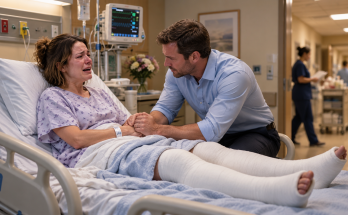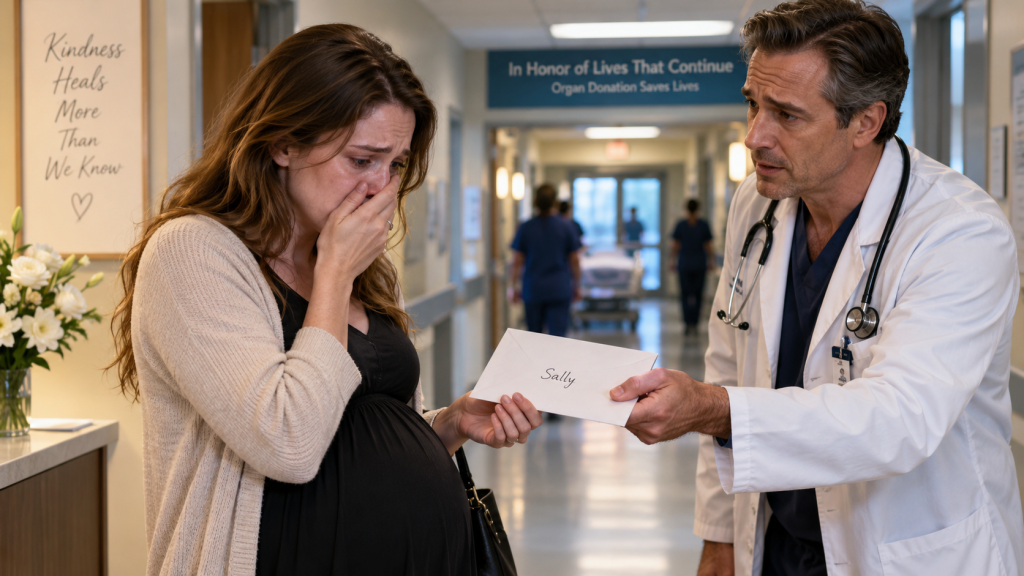
My husband’s last wish was to become an organ donor—but after he passed away, his doctor hurried after me and said, “There’s something Mark made me promise not to give you until after he was gone.”
Mark and I had been married for three years when I finally became pregnant with the baby we had dreamed of for so long.
For six months, we were happier than we had ever been.
Then everything changed.
Mark became gravely ill, and the doctors told us he likely had no more than three months left.
There was a very real possibility he would never get the chance to meet our daughter.
That evening, we sat side by side on the porch while he rested one hand softly over my stomach.
The baby kicked beneath his palm.
Then Mark quietly said,
“If anything is still healthy enough when the time comes, I want it donated.”
I looked at him immediately.
“Please don’t talk about dying while she’s kicking.”
His expression softened.
“That’s exactly why I need to.”
He glanced down at my belly.
“If I can’t be here to watch her grow up, maybe I can at least give someone else more time with the people they love.”
I wanted to argue with him.
I wanted to tell him we weren’t ready to discuss what would happen after he was gone.
But somewhere deep inside, I knew Mark had already made up his mind.
And I knew I would respect it.
His condition worsened much faster than either of us had expected.
By the time I entered my eighth month of pregnancy, I was helping him fasten the buttons on his shirts every morning.
Sometimes he had to stop halfway down the hallway simply to catch his breath.
I tried not to let him see how frightened I was.
And he tried not to let me see how weak he was becoming.
Then, a few weeks before he passed away, Mark began asking to speak privately with his doctor.
The first time, I didn’t think much about it.
The second time, I started wondering.
By the third time, I finally asked him.
“What are you two talking about?”
Mark squeezed my hand gently.
“There’s something I need to arrange.”
“Without me?”
“Yes.”
I stared at him.
Mark and I had never hidden things from each other.
Especially not then.
“What are you arranging?”
He gave me the faintest smile.
“Please trust me, Sally.”
Something in the way he said those words told me he wasn’t going to explain.
So despite every instinct telling me otherwise, I let it go.
I trusted him.
Mark died in the hospital on a rainy Tuesday with my hand holding tightly onto his.
Afterward, everything turned into a blur.
Doctors.
Forms.
Quiet conversations.
People telling me how sorry they were.
Then came the organ donation paperwork.
My hands trembled as I signed the pages.
Tears dropped onto the forms, but I kept reminding myself of what Mark had told me that night on our porch.
This was what he wanted.
No matter how much it hurt me, I was going to honor his final wish.
When everything was completed, I walked out of the hospital alone.
I had almost reached the end of the hallway when I heard someone running behind me.
“Sally! Wait!”
I stopped walking.
Mark’s doctor was rushing toward me.
His face looked strangely pale.
And one of his hands was tucked behind his back.
“Please, wait.”
Something in his voice made my stomach twist.
“What is it?”
Slowly, he brought his hand forward.
There was a simple envelope in his hand.
My name was written across the front in Mark’s handwriting.
I stopped breathing.
The doctor looked directly at me.
“Mark gave this to me three weeks ago.”
I stared at the envelope.
“Why?”
He hesitated for a moment.
Then he said,
“He was very specific about this, Sally.”
My heart started pounding.
“You weren’t supposed to see it while he was still alive.”
And suddenly, I understood that all those private conversations between my husband and his doctor had never been about his medical treatment at all.
PART 2 — THE DAUGHTER MARK NEVER TOLD ME ABOUT
I did not open the envelope in the hallway.
I wish I could say that was because I was calm.
It wasn’t.
I was eight months pregnant, widowed less than an hour, and holding the last thing my husband had written while his body was still somewhere behind two sets of hospital doors.
My hands had stopped working properly.
The envelope trembled between my fingers.
Mark’s doctor, Dr. Adrian Cole, stood in front of me with the exhausted expression of a man who had already had one terrible conversation that day and knew he was about to begin another.
“What is this?”
I asked.
“A letter.”
“I can see that.”
My voice cracked.
“What did he tell you?”
Dr. Cole looked toward the row of empty chairs beside the wall.
“Can we sit down?”
“No.”
“Sally.”
“No.”
I pressed one hand beneath my stomach.
Our daughter shifted inside me.
Alive.
Warm.
Unaware that her father had just become a past tense.
“Tell me.”
Dr. Cole took a breath.
“Mark asked me to hold that envelope until after his death.”
“I know.”
“He also asked me to tell you something before you opened it.”
My heart started pounding.
“What?”
“That the private conversations you noticed were not about changing his treatment.”
I stared.
“Then what were they about?”
“Mostly advance planning.”
“That could have included me.”
“Yes.”
He did not argue.
That frightened me.
Then he said:
“And one thing he believed he had waited too long to tell you himself.”
My stomach tightened.
“What thing?”
Dr. Cole’s eyes dropped to the envelope.
“He wanted you to hear it from him.”
I laughed bitterly.
“He’s dead.”
“I know.”
“Then I’m hearing it from paper.”
Dr. Cole flinched.
Good.
Some small, ugly part of me wanted someone else in that hospital to hurt too.
Then I hated myself for that.
Grief had been living in my body for less than an hour and was already teaching me how cruel pain can make a person.
I looked down at Mark’s handwriting.
SALLY.
Nothing else.
No heart.
No date.
Just my name.
I opened it.
The first page began:
My love,
I almost stopped there.
He had called me that every morning.
Even when he could barely speak.
My love.
I pressed one fist against my mouth.
Then continued.
If you are reading this, Adrian kept his promise, which means I am gone and you are probably furious with me already.
A sound escaped me.
Half laugh.
Half sob.
Even dying, Mark knew me.
Then:
You should be.
My body went still.
Not:
Please forgive me.
Not:
Try to understand.
You should be.
I kept reading.
There is something about my life I should have told you before we married.
The hallway seemed to narrow around me.
My daughter kicked.
Once.
Hard.
I sat down.
Dr. Cole sat across from me but said nothing.
I read the next line.
I have a daughter.
Everything inside me stopped.
Not metaphorically.
For several seconds, I genuinely could not understand the words.
I read them again.
I have a daughter.
No.
Mark and I had spent three years trying to have a child.
We had gone through appointments.
Tests.
Hormone injections.
One miscarriage at nine weeks.
Another pregnancy that ended before we ever heard a heartbeat.
We had cried in parking lots.
Fought over calendars.
Held each other on bathroom floors.
And not once—
not once—
had my husband said:
I already have a child.
I looked up.
Dr. Cole’s face answered the question before I spoke.
“You knew.”
He closed his eyes briefly.
“Yes.”
My voice rose.
“You knew?”
“Sally—”
“You sat across from me for three months.”
People farther down the hallway looked over.
I did not care.
“You watched me sit beside his bed.”
“You watched me talk about our daughter.”
“You knew he already had one?”
Dr. Cole said quietly:
“I learned six weeks ago.”
That stopped me.
“What?”
“Mark told me during one of the private conversations.”
My chest tightened.
“Why?”
“Because it was connected to his donation request.”
I stared.
“How?”
He nodded toward the letter.
“Keep reading.”
I hated him for saying that.
Then I did.
Her name is Anna.
Anna.
A name entered my marriage after my husband had already left it.
She is seventeen years old.
I calculated automatically.
Mark was thirty-nine.
He had become a father at twenty-two.
Before me.
Long before me.
That should have made it easier.
It didn’t.
Her mother’s name is Rebecca Lawson. We were never married.
I swallowed.
Anna was born when I was twenty-two and Rebecca was twenty-one.
Then:
For the first eight years of Anna’s life, I was her father in every ordinary sense of the word.
My hands started shaking harder.
Photographs.
Birthdays.
School pickups.
Fevers.
A whole fatherhood I had never known existed.
Then something happened that changed all three of us.
I looked at Dr. Cole.
He nodded faintly.
Read.
When Anna was seven, she developed acute liver failure.
My breath caught.
It happened quickly. One month she was learning to ride a bicycle. A few weeks later, she was in a pediatric transplant unit.
The organ donation.
Suddenly Mark’s words on the porch sounded different.
If I can’t be here to watch her grow up, maybe I can at least give someone else more time with the people they love.
He had not invented that belief while dying.
He had carried it for years.
I kept reading.
Anna was listed for transplant.
For eleven days, Rebecca and I watched machines keep our daughter alive while another family somewhere experienced the worst day of their life.
Tears blurred the page.
Then a liver became available.
I stopped.
My daughter shifted inside me.
Anna lived.
Obviously.
She was seventeen.
Still, my entire body relaxed for a second as though the seven-year-old in the letter had only just survived.
The transplant saved her life.
Mark wrote.
I never knew the donor’s name. I never asked for more than the family chose to share. Years later, we exchanged anonymous letters through the transplant program.
His handwriting became less steady there.
The donor was a nineteen-year-old young man. His mother wrote that he had registered as a donor when he got his driver’s license. She said knowing part of him helped a little girl live did not make her grief smaller, but it gave the grief somewhere generous to go.
I had to stop.
There it was.
The source.
The reason Mark had spoken about organ donation with such strange certainty.
Not courage born from death.
A debt of gratitude carried for a decade.
“Why didn’t he tell me?”
I whispered.
Dr. Cole did not answer.
The letter did.
You are going to wonder why I hid Anna.
The ugliest answer is that at first I was ashamed.
My jaw tightened.
Not of her. Never of her.
Of myself.
Then the story changed.
After Anna’s transplant, Mark became terrified.
Not relieved.
Terrified.
Every fever became rejection.
Every blood test became disaster.
Every medication change became proof that death might still return.
Rebecca coped by becoming organized.
Schedules.
Doctors.
Support groups.
Mark coped by drinking.
My stomach dropped.
I had known Mark stopped drinking at twenty-nine.
He always said:
“I got tired of being stupid.”
That was all.
I had never known what his stupidity had cost.
He wrote:
I did not become violent. I need you to know that, but I also refuse to use the absence of violence as proof I was a good man.
I closed my eyes.
Even now, precise.
I became unreliable.
I missed appointments.
I forgot one dose of Anna’s medication when Rebecca trusted me to manage a weekend.
My hand tightened around the page.
For a transplant patient, missing anti-rejection medication could be serious.
Mark knew.
He wrote:
Nothing happened medically. She was fine. But Rebecca found out, and she should have.
Then:
That was the day she stopped trusting me alone with our daughter.
My chest hurt.
Mark entered treatment months later.
Got sober.
But by then the relationship with Rebecca had collapsed.
Not one dramatic betrayal.
A thousand smaller ones.
He became a weekend father.
Then an every-other-weekend father.
Then Rebecca accepted a job three states away.
There were court discussions.
Travel.
Money.
Resentment.
Mark wrote:
I could have fought harder.
Then:
For years I told myself Rebecca kept Anna from me. That was partly true and partly something I said because it hurt less than admitting I had helped make distance feel safer to her.
There it was.
The Mark I knew.
The man who could eventually look at his own failures without decorating them.
But apparently only on paper.
After death.
Anna grew older.
She answered some calls.
Ignored others.
Mark sent birthday cards.
Some returned.
Some not.
When Anna was thirteen, she told him she did not want visits.
At fourteen, she asked him not to contact her for a year.
He obeyed.
At fifteen, she sent one email.
The letter quoted only one sentence:
I know you got better, Dad. I’m glad. That doesn’t mean I’m ready to have you back.
I closed my eyes.
A child old enough to understand improvement does not erase impact.
Mark respected it.
Then he met me.
When you asked whether I had children on our third date, I said no.
My entire body went cold.
There was the lie.
Not omission.
Not confusion.
A direct lie.
I remembered the restaurant.
Italian place near my apartment.
Mark eating too much bread.
Me asking:
“Any kids?”
He shook his head.
“No.”
Then asked me.
I said:
“Someday, I hope.”
That memory now had a crack through the middle.
I wanted to tear the letter.
Instead, I kept reading.
That was cowardice.
Good.
I told myself Anna no longer considered me her father.
I told myself telling you would force me to discuss parts of my life I had finally escaped.
I told myself if Anna never wanted contact again, the truth would only hurt you for no reason.
Then:
Those were explanations. None were permission.
Tears ran down my face.
I hated him.
For perhaps thirty seconds, I hated my dead husband so cleanly that it frightened me.
Then grief arrived underneath the anger.
Both.
I loved him.
He had lied.
Both.
I planned to tell you before we married.
He did not.
Then after the wedding.
He did not.
Then before we started trying for a baby.
He did not.
That one hurt the most.
I pressed the page against my knee.
“You coward.”
I whispered.
Dr. Cole looked away.
Mark had written the same word himself.
By the time you became pregnant, every month I waited made the truth larger.
Then you miscarried.
My vision blurred.
I told myself I would not add pain to pain.
Then we lost another pregnancy.
Again, I waited.
When you became pregnant with our daughter, I promised myself I would tell you after the first trimester.
He did not.
Then I got sick.
There.
The trap he built himself.
Cancer.
Pregnancy.
Death.
A lie he could no longer confess without changing the limited time we had left.
That was how he saw it.
I understood.
I still hated it.
The next paragraph was the reason for Dr. Cole.
When Adrian told me the illness was progressing faster than expected, I finally told him about Anna.
I looked up.
Dr. Cole nodded.
His eyes were wet now.
He said:
“He told me because he wanted to know whether his donation request could somehow be directed if she ever needed another transplant.”
My heart stopped.
“What?”
He raised a hand immediately.
“I told him it doesn’t work that way.”
Of course.
Organ allocation follows medical criteria, compatibility, allocation rules.
A dying father cannot simply write a daughter’s name on a kidney.
Dr. Cole continued.
“I explained that we could register and honor his general donation wishes if medically possible, but we could not promise any organ to Anna.”
“And?”
“He understood.”
Then:
“He said he needed to ask anyway.”
That sounded like Mark.
I returned to the letter.
Anna’s transplanted liver is functioning well. She does not currently need another transplant.
Relief I had no right to feel moved through me.
I knew that before I asked Adrian.
Of course.
But fathers are not rational where daughters are concerned. I wanted one impossible loophole. Adrian refused to give me one. He was right.
Despite everything, I laughed.
Dr. Cole almost smiled.
Then:
So I asked him for something else.
My pulse quickened.
I asked him to help me document my medical history properly for both of my daughters.
Both.
The word hurt.
Anna’s transplant was not caused by anything hereditary from me. My current illness is also not believed to create a specific inherited risk to the baby, but I wanted both of them to have accurate records rather than family mythology.
Good.
Grounded.
Practical.
Mark.
There were copies attached.
Family medical history.
Genetic counseling notes where relevant.
Medication histories.
A summary Dr. Cole had prepared at Mark’s request.
Not secret wealth.
Not drama.
Information.
The kind of information daughters sometimes spend decades trying to reconstruct after fathers die.
Mark had made sure they would not have to.
Then came the part that changed the letter again.
I contacted Anna.
My hand went still.
When?
Three weeks ago.
Exactly when the private doctor conversations began.
I told her I was dying.
I swallowed.
She already knew I had married. She found your name online years ago.
My chest tightened.
A seventeen-year-old girl somewhere had known about me.
I had not known she existed.
She also knew we were expecting a baby.
I looked down at my stomach.
How?
Mark answered.
I told her.
Anger rose again.
He had told the daughter he hid about the daughter he was having.
Before telling me he had a daughter.
I gripped the paper.
She was angry.
Good.
At least one person in this story reacted appropriately.
She asked whether you knew about her.
I stopped breathing.
I told her no.
Then:
She said, “Then you’re doing it again.”
I closed my eyes.
There it was.
A seventeen-year-old understood Mark’s pattern instantly.
Avoid discomfort.
Call it protection.
Wait until the truth becomes someone else’s burden.
Mark wrote:
She was right.
Then:
I asked whether I could tell you before I died.
I stared.
Anna said no.
Not exactly.
She said:
Tell her because she deserves the truth. Do not tell her because you want me to become part of your redemption story.
That sentence was so sharp, so wounded, so mature that I immediately knew I wanted to meet the girl who wrote it.
Then felt guilty for wanting anything from her.
Mark continued.
I asked if she wanted to meet you.
Anna answered:
Not while you’re alive.
My breath caught.
Why?
Because if I meet her while you’re alive, you’ll spend your last weeks watching our faces and hoping we fix what you broke. I don’t want that job.
I covered my mouth.
Dr. Cole looked down.
The hallway disappeared again.
Mark had accepted her boundary.
That was why the letter waited.
Not simply because he lacked courage.
Because Anna refused to become part of his final emotional repair.
That complicated my anger.
Did not erase it.
Complicated.
Anna gave me permission to give you her contact information after my death.
My heart started pounding.
Permission. Not obligation.
Important.
She does not owe you a relationship.
You do not owe her one.
Our daughter does not owe anyone a particular version of family.
There was Mark.
Finally learning something.
Too late to benefit from it himself.
Maybe that is still learning.
Then:
If you contact Anna, do not apologize for me.
Do not explain me.
Do not ask her to forgive me because I died.
My eyes burned.
Let her tell you who I was to her.
That sentence mattered.
Because I already knew who Mark was to me.
Tender.
Funny.
Terrible at folding towels.
Patient through fertility treatments.
A liar.
A dying man who let our baby kick against his palm and still did not tell me the whole truth.
All of those could exist together.
Anna had her own Mark.
I would not steal him from her.
At the bottom of the envelope was a smaller sealed packet.
Across the front:
FOR SALLY — AFTER YOU FINISH THE LETTER.
I almost laughed.
My husband had apparently discovered organization just in time to die.
Inside was a photograph.
Anna.
Sixteen or seventeen.
Brown hair.
Gray-green eyes.
Mark’s eyes.
There was no possibility of denying resemblance.
She stood beside a lake wearing a red sweatshirt.
One hand raised against sunlight.
She had Mark’s half-smile.
The smile he used when he wanted to look serious and failed.
I started sobbing.
Not because she looked like him.
Because my daughter moved inside me at the exact same moment.
Two daughters.
One father.
One knew him too early.
One would never know him at all.
I pressed the photograph against my chest.
There was also a phone number.
An email address.
And a note from Anna.
Not a letter.
Three sentences.
Sally,
I’m sorry you’re learning about me this way.
I told Dad you deserved the truth even if it made him look worse.
Then:
If you want to talk after the funeral, text first.
No heart.
No:
Love.
No:
Your stepdaughter.
Nothing she had not chosen.
I respected her immediately.
I looked at Dr. Cole.
“How long did he know he was going to do this?”
“Give you the letter?”
“Yes.”
“About three weeks.”
“So every time he asked me to leave the room…”
“Not every time.”
“What else?”
Dr. Cole took a breath.
“He made recordings.”
My chest tightened.
“What recordings?”
“For the baby.”
I stared.
“He didn’t tell me.”
“No.”
Anger again.
Then Dr. Cole said gently:
“He didn’t want the final weeks to become a production.”
I flinched.
“He said if you knew he was recording messages for birthdays and graduations, every ordinary dinner would feel like a goodbye scene.”
My eyes filled.
That sounded exactly like Mark.
And it sounded unfair.
Both.
“What did he record?”
“Some here.”
“Some with the hospital social worker.”
“Mostly on his phone.”
Then:
“He gave me access instructions.”
I covered my face.
How many pieces had he arranged while I thought we were simply surviving another day?
Dr. Cole continued.
“There are messages for your daughter.”
“Her first birthday.”
“First day of school.”
“Her sixteenth.”
“Graduation.”
“A wedding, if she has one.”
“And one labeled ‘for a day when she thinks she disappointed her mother.’”
That broke me.
I bent forward and sobbed.
Dr. Cole sat beside me.
Did not touch me until I reached for his sleeve.
Then he put one hand over mine.
“He loved you.”
he said.
I looked up sharply.
“Do not use that to excuse him.”
“I’m not.”
Good.
Because I could not tolerate love being used as bleach.
Mark loved me.
Mark lied to me.
Both sentences would have to survive.
The recordings were not in the envelope.
Dr. Cole said he would release them to me once I was home and had someone with me.
I almost argued.
Then the baby tightened low in my abdomen.
A cramp.
Not labor.
Probably stress.
Still, fear shot through me.
Dr. Cole noticed immediately.
“Sit back.”
“I’m fine.”
“Sally.”
“I’m fine.”
He checked the time.
Then called obstetrics.
That made me angry.
Then grateful.
Within twenty minutes, I was upstairs being monitored.
My daughter’s heartbeat filled the room.
Fast.
Steady.
Alive.
I cried harder hearing it than I had when Mark died.
That made me feel guilty.
Then a nurse said:
“You don’t have to rank grief and relief.”
I looked at her.
She smiled sadly.
Apparently hospitals are full of people carrying sentences the rest of us do not know we need.
I was discharged three hours later.
No labor.
No acute problem.
Dehydrated.
Overwhelmed.
A widow.
That last diagnosis did not appear in the chart.
It should have.
My sister Beth picked me up.
She drove without asking questions.
I held Mark’s envelope against my stomach the whole way home.
When we reached the house, I stopped on the porch.
The same porch where Mark had placed his hand on our daughter and told me he wanted to donate whatever could still help someone.
Rainwater shone on the boards.
His chair sat beside mine.
Empty.
I could not go inside.
Beth waited.
Then finally said:
“What did he leave you?”
I looked at her.
“A daughter.”
Her face went blank.
“What?”
I started laughing.
Then crying.
Then somehow both.
I told Beth everything at the kitchen table.
She swore.
Often.
On my behalf.
It helped.
When I reached the part about Anna, Beth said:
“Are you going to call her?”
“I don’t know.”
“That’s fair.”
Then:
“Are you going to forgive him?”
I stared at her.
“He died this morning.”
“Right.”
“Could we maybe not resolve my marriage before breakfast tomorrow?”
Beth nodded.
“Also fair.”
We sat in silence.
Then she asked:
“Do you still love him?”
That was worse.
I looked toward the hallway.
His coat.
His shoes.
The stupid baseball cap he wore until the brim became soft.
“Yes.”
The answer came instantly.
I hated that.
Then:
“I’m furious.”
Beth reached for my hand.
“Those can live in the same house.”
Apparently everyone had sentences tonight.
Mark’s funeral was four days later.
Small.
He had requested that.
No long speeches.
No slideshow.
He hated slideshows.
“People turn thirty years into twelve songs and a dissolve transition.”
he once said.
So we did not.
I spoke for five minutes.
I told the truth I was ready to tell.
Mark was generous.
Stubborn.
Afraid of being a burden.
He loved terrible coffee.
He wanted to be an organ and tissue donor if medically possible.
The donation team later told me that because of his illness, not everything could be donated.
Some tissues were eligible.
Some were not.
No miracle harvest.
No dramatic list of lives saved.
Just what medicine safely allowed.
That felt more honest.
Mark had wanted to give what remained usable.
He did.
Enough.
I did not mention Anna.
Not because I was ashamed.
Because she had not given me permission to make her part of Mark’s funeral story.
That distinction mattered.
Afterward, people hugged me.
Said Mark would live on through the baby.
I hated that sentence by the tenth time.
My daughter was not a memorial project.
She was herself.
I began understanding why Anna had been so careful about language.
That evening, after everyone left, I sat alone in our bedroom.
Mark’s side of the closet remained full.
I had not moved a thing.
His phone was on the nightstand.
Dr. Cole had given me the access code.
Our daughter kicked as I picked it up.
The home screen was a photograph of me asleep on the couch with one hand across my pregnant stomach.
Terrible angle.
Of course.
I opened the folder labeled:
FOR HER.
There were twenty-three recordings.
I did not watch them all.
I could not.
The first was titled:
WHEN YOU ASK ABOUT ME.
I pressed play.
Mark appeared on the screen.
Three weeks before death.
Thinner.
Pale.
Still Mark.
He looked into the camera for several seconds before speaking.
Then:
“Hi, bug.”
I stopped the recording immediately.
Bug.
That was what he called the baby before we chose a name.
I sobbed for ten minutes.
Then started again.
“Hi, bug.”
Mark smiled faintly.
“If your mother is showing you this, it means she has decided you’re old enough to hear from a man who has the unfair advantage of never being interruptible.”
I laughed through tears.
Then his expression changed.
“There are things about me you should know.”
My body tensed.
“I loved your mother.”
Then:
“I also hurt her.”
I went still.
“I lied to her about something important because I was afraid telling the truth would make me lose the life I wanted.”
My chest tightened.
He was not making the recordings a monument to himself.
Good.
“I had a daughter before you.”
Anna.
“I hope, by the time you see this, you know her name.”
My daughter kicked hard.
I pressed my palm against the place.
Mark continued.
“Her name is Anna.”
“I failed her in ways I spent years trying to understand.”
“I got sober.”
“I became more reliable.”
“I learned to apologize.”
“Those things matter.”
Then:
“They do not turn backward.”
My eyes filled.
“I want you to know that because someday you will hurt someone.”
“Everybody does.”
“And when you do, becoming better afterward is important.”
“But becoming better does not give you ownership over the other person’s forgiveness.”
There.
A dying father teaching a daughter from the mistake he never fully repaired.
Then he said:
“And your mom…”
Mark smiled.
That smile.
The one that still hurt.
“She is going to be furious with me.”
I whispered:
“You have no idea.”
On screen, he laughed faintly as though he heard.
“She should be.”
Then:
“If she ever tells you I was a good man, do not make her prove it.”
My throat closed.
“If she tells you I was a coward sometimes, believe that too.”
“I was both.”
I stopped the recording.
Could not continue.
Not that night.
At two in the morning, I picked up my phone.
Anna’s number was written on the paper beside me.
I typed:
This is Sally.
Deleted it.
Typed:
Hi, Anna. Your dad gave me your number.
Deleted.
Too much Dad.
Too little.
Finally:
Anna, this is Sally. I read Mark’s letter. I’m not asking anything from you. I just wanted you to know I received your note. If you still want to talk after the funeral, I’m ready when you are.
I stared.
Then sent it.
My heart started pounding as though I had done something irreversible.
Maybe I had.
She replied twelve minutes later.
Okay. Tomorrow evening?
That was all.
No drama.
No accusation.
Just:
Tomorrow evening.
I wrote:
Yes.
Then put the phone down.
The next evening, Anna called.
Not video.
Voice.
Smart girl.
“Hello?”
Her voice was younger than I expected.
Of course.
Seventeen.
“Hi.”
I said.
Silence.
Then:
“I’m sorry.”
I almost laughed.
“For what?”
“That he did this to you.”
My throat tightened.
“You didn’t.”
“I know.”
Then:
“He was really bad at telling the truth when he thought the truth might make someone leave.”
There was no cruelty in her voice.
That made it worse.
“You knew him well.”
“Once.”
One word.
Heavy.
Then:
“Did you hate him?”
I asked.
Silence.
“Sometimes.”
Honest.
“Did you love him?”
Longer silence.
“Sometimes.”
Both.
There it was again.
Anna asked about his final days.
Not details at first.
“Was he scared?”
“Yes.”
“Did he know he was dying?”
“Yes.”
“Did he suffer?”
I answered carefully.
“Some.”
Then:
“But they kept him comfortable as much as they could.”
She breathed.
“Was anyone with him?”
“I was.”
Silence.
Then:
“Good.”
That one word broke me.
A daughter who had stayed away still did not want her father dying alone.
Human beings are impossible.
Thank God.
I told her about the porch.
The baby kicking.
Mark’s donation wish.
Anna went quiet.
Then:
“He told you that?”
“Yes.”
She started crying.
I could hear it.
“Anna?”
“I’m okay.”
She wasn’t.
I waited.
Then she whispered:
“The donor thing.”
“What?”
“He used to make me write a thank-you letter every transplant anniversary.”
My chest tightened.
“To the donor family?”
“Through the program.”
“Yes.”
“He said we never got to forget that my extra years started on someone else’s worst day.”
There was Mark.
Not the liar.
Not the sick husband.
Another version.
Her version.
I let it exist.
Then Anna asked:
“What are you naming the baby?”
I put one hand over my stomach.
“We hadn’t decided.”
That was technically true.
Mark liked Elise.
I liked Clara.
We had argued gently for months.
“I don’t want to name her after him.”
I said.
Anna surprised me by laughing.
“Good.”
I laughed too.
Then she said:
“He’d hate it.”
“He would.”
“He said memorial names were pressure.”
I smiled.
“That sounds like him.”
Then silence.
Different this time.
Softer.
Shared.
The first bridge.
We talked for almost an hour.
Not family.
Not yet.
Two women comparing notes about the same complicated man.
Before hanging up, Anna said:
“Sally?”
“Yes?”
“He gave me something too.”
My pulse shifted.
“What?”
“A letter.”
“After he died?”
“Yes.”
“What did it say?”
Anna hesitated.
Then:
“He told me not to contact you unless you contacted me first.”
My throat tightened.
Good.
He respected the boundary all the way through.
Then she added:
“But there was another thing.”
“What?”
“He told me that if you did contact me, I had to ask you one question.”
I went still.
“What question?”
Anna’s voice changed.
Nervous now.
“He said you would know what it meant after reading everything.”
My chest tightened.
“Ask me.”
She took a breath.
Then:
“Did Dr. Cole give you the second envelope?”
I frowned.
“Second?”
Silence.
Then Anna whispered:
“Oh.”
My stomach dropped.
“What?”
“He didn’t.”
“Anna.”
“What second envelope?”
She hesitated.
Then said:
“Dad told me there were two.”
I stood so quickly the chair scraped backward.
I remembered Dr. Cole.
One envelope in his hand.
My name.
Nothing else.
“Anna.”
“What was in the second one?”
Her voice became very quiet.
“I don’t know exactly.”
“That’s not an answer.”
“He only told me it was for after you spoke to me.”
My heart started pounding.
“Why?”
Another pause.
Then she said:
“Because it wasn’t about his past.”
I stopped breathing.
“What was it about?”
Anna swallowed.
“Our sister.”
I stared at the dark kitchen.
My hand moved automatically to my stomach.
“Our what?”
“Your baby.”
I could barely hear myself.
“What did he know?”
Anna’s next words turned every fear in my body awake at once.
“He said Dr. Cole had something about her that you weren’t supposed to see until after Dad knew whether I would speak to you.”
I grabbed my phone with both hands.
“Anna, what are you talking about?”
“I don’t know.”
She sounded frightened now.
“He just told me there was a medical envelope.”
Silence.
Then:
“And Sally…”
“Yes?”
“He said whatever was inside it was the real reason he kept asking Dr. Cole to meet without you.”
PART 3 — WHAT MARK WAS REALLY TRYING TO LEAVE BEHIND
I called Dr. Cole before Anna and I had even finished saying goodbye.
He answered on the second ring.
“Sally?”
“There’s another envelope.”
Silence.
Not confusion.
Recognition.
That frightened me.
“You knew.”
“Yes.”
I stood in the middle of my kitchen with one hand pressed beneath my stomach.
“Why didn’t you give it to me?”
“Because Mark gave me explicit instructions.”
“My husband died yesterday.”
“I know.”
“You handed me one secret daughter in an envelope and somehow decided that was enough information for the evening?”
Dr. Cole exhaled.
“Sally, listen to me carefully.”
“I am listening.”
“The second envelope does not contain a diagnosis we withheld from you.”
I stopped.
“It does not contain information about your pregnancy that your obstetrician should have disclosed.”
My shoulders loosened slightly.
“If Mark had asked me to conceal an urgent medical fact about you or the baby, I would have refused.”
That mattered.
A lot.
“Then what is it?”
“Something he arranged.”
“For the baby?”
“Yes.”
“Why did Anna know about it?”
“Because part of what he arranged came from something he asked me after discussing her transplant history.”
My stomach tightened again.
“Is my baby supposed to help Anna?”
“No.”
The answer came immediately.
“Absolutely not.”
I closed my eyes.
“Then explain.”
“I’d rather do it in person.”
I almost shouted.
Then he added:
“I can be at your house in forty minutes.”
That stopped me.
“All right.”
Dr. Cole arrived carrying a slim hospital envelope and a small black case.
Beth stayed.
I was glad.
After twenty-four hours of discovering that my husband had hidden an entire daughter from me, I no longer trusted grief not to rearrange the English language while someone was speaking.
We sat at the kitchen table.
Mark’s chair remained empty.
Dr. Cole placed the envelope between us.
Then he put the black case beside it.
“What is that?”
I asked.
“We’ll get there.”
“I am beginning to hate that sentence.”
“That’s fair.”
Beth folded her arms.
“I already hate you a little on her behalf.”
Dr. Cole nodded.
“Also fair.”
At least everyone was being realistic.
He pushed the envelope toward me.
Across the front, Mark had written:
FOR SALLY — AFTER ANNA KNOWS SHE IS NOT A SECRET ANYMORE.
My throat closed.
Not:
After Anna forgives me.
Not:
After Anna joins the family.
After she is no longer a secret.
For once, he had understood exactly what he had done wrong.
Too late.
Still.
I opened it.
The first page was not a letter.
It was a medical summary.
Mark’s full history.
Diagnoses.
Medications.
Family illnesses.
Dates.
Testing.
His father’s heart disease.
His mother’s diabetes.
A grandfather’s colon cancer.
Everything doctors ask while patients sit under fluorescent lights trying to remember whether Uncle Frank’s stroke happened at fifty-eight or sixty-eight.
At the top, Dr. Cole had written:
Prepared at patient request for biological daughters Anna Lawson and unborn daughter of Sally Bennett.
Both daughters.
Equal on paper.
That hurt less than I expected.
Maybe because medical history is one of the few inheritances nobody should have to compete for.
I turned the page.
There was a laboratory consent.
I frowned.
“What is this?”
Dr. Cole answered.
“Mark had blood and a small tissue sample stored before he died.”
My eyes moved to him.
“Why?”
“Future genetic clarification.”
“Did he have something hereditary?”
“No known disease-causing inherited condition.”
That matched what I had already read.
“Then why preserve anything?”
Dr. Cole folded his hands.
“Because medicine changes.”
I waited.
He continued.
“Some testing performed during Mark’s illness produced findings that were not clinically meaningful now.”
“What findings?”
“Variants of uncertain significance.”
I frowned.
“That sounds bad.”
“It mostly sounds uncertain.”
He almost smiled.
“Which is exactly what it means.”
Then he explained.
Nothing found currently justified telling me our daughter had a disease.
Nothing currently demanded special intervention beyond ordinary pediatric care.
But genetic knowledge evolves.
Variants get reclassified.
New associations appear.
Old records become difficult to retrieve.
Mark had asked:
If ten years from now one of his daughters became sick and doctors needed paternal DNA to answer a question, could some part of him still be available for testing?
Dr. Cole had said yes.
With proper consent and storage.
So Mark arranged it.
Not immortality.
Information.
I looked at the black case.
“That?”
“No.”
Dr. Cole shook his head.
“The samples are stored through the medical center’s approved biorepository.”
“Then what is that?”
He opened the case.
Inside were paper documents and a prepaid enrollment packet.
At the top:
NEWBORN CORD BLOOD STORAGE — OPTIONAL.
My entire body stiffened.
Beth noticed.
“What is cord blood doing in this?”
Dr. Cole said:
“This is the part Mark struggled with.”
Of course.
I looked at him.
“Tell me everything.”
So he did.
During one of Mark’s private appointments, he had asked the impossible question.
“If Anna’s transplant ever fails, could the baby help her?”
My heart twisted.
Not because the question was reasonable.
Because it was exactly what a terrified father would ask while dying.
Dr. Cole told him no promise like that could be made.
Anna’s history involved a liver transplant.
Cord blood was not some hidden replacement liver.
A future sibling could not be born carrying an obligation to become a donor.
Even if, years later, some medical compatibility mattered for some separate treatment, any decision would have to be made ethically, medically, and according to the child’s welfare and consent as appropriate.
Mark had apparently sat silently for nearly a minute.
Then said:
“I knew that was stupid.”
Dr. Cole replied:
“It wasn’t stupid.”
“It was desperate.”
That distinction mattered.
Then Mark asked something better.
Could our baby’s cord blood simply be stored—
not for Anna specifically—
but because it was biological material that otherwise might be discarded, and because he had watched transplantation save one daughter once already?
Dr. Cole explained the limitations.
Private banking was not a guarantee of future usefulness.
It could be expensive.
Many families would never use it.
Public donation might be possible depending on hospital program and circumstances.
There were no promises.
Mark listened.
Then paid for an initial private storage plan anyway.
But he added a condition.
Sally decided.
Not Mark.
Not Anna.
Me.
If I wanted to cancel it, cancel it.
If I preferred public donation and it was available, choose that.
If I wanted none of it, do nothing.
His money had bought an option.
Not an obligation.
I stared at the paperwork.
“He paid already?”
“The initial collection and storage fee.”
“Without asking me.”
“Yes.”
Anger returned instantly.
Dr. Cole raised a hand.
“I argued with him about that.”
“Good.”
“He said if paying made you feel pressured, I was to tell you to throw the packet away.”
Beth muttered:
“That man really waited until death to become self-aware.”
A laugh escaped me.
Then I cried.
Because yes.
He had.
Dr. Cole continued.
“Mark was very clear that this was not supposed to turn your daughter into biological insurance for Anna.”
I looked down.
“How clear?”
He reached into the envelope.
“There’s a note.”
Of course there was.
Mark’s handwriting had become weaker.
Sally,
Before you get angry, Adrian already got angry for you.
I laughed through tears.
Dr. Cole said:
“He’s not lying.”
I read.
I asked whether the baby could someday help Anna because dying has made me stupid in very specific ways.
My chest tightened.
Adrian explained that children are not spare-parts cabinets for their relatives.
Beth covered her mouth to stop a laugh.
Even I smiled.
Then:
He was less rude about it, but that was the point.
I looked at Dr. Cole.
“Was it?”
“Essentially.”
I kept going.
So understand this before anything else: our daughter owes nobody her blood, tissue, organs, stem cells, future, forgiveness, grief, name, or life plan.
I had to stop.
There.
The lesson Mark had finally learned.
Consent.
Not just donation.
Not just generosity.
The difference between giving and assigning someone else the job of giving.
Neither does Anna.
My eyes filled.
If Anna ever needs medical help again, that is not the baby’s destiny.
If the baby ever needs help, Anna is not responsible for saving her either.
Then:
I spent too much of my life deciding what truths other people should carry and when they should carry them. I am trying, very late, not to make the same mistake with their bodies.
I lowered the page.
No one spoke.
That sentence was perhaps the closest thing to an apology Mark could have written.
Not pretty.
Accurate.
The rest of the note explained the optional cord blood plan.
No pressure.
No memorial.
No promise.
Then:
I am leaving the decision to the person who will actually be there when our daughter is born.
Me.
That should have been my standard more often.
My throat tightened.
Yes.
It should have.
“What is the real reason he kept meeting with you?”
I asked Dr. Cole.
He looked at me for a long moment.
“All of this.”
“The samples.”
“The family history.”
“The cord-blood questions.”
“The donation discussions.”
“Anna.”
Then he paused.
“And the recordings.”
I nodded.
I already knew.
“But why secretly?”
Dr. Cole’s face changed.
“Because once he told me about Anna, I told him he needed to tell you.”
My body went still.
“You did?”
“Yes.”
“Every visit?”
“Almost.”
“What did he say?”
Dr. Cole looked exhausted.
“That he would.”
Of course.
Tomorrow.
After the scan.
After the weekend.
After I slept.
After the baby shower.
After one more ordinary day.
Mark’s favorite hiding place had always been later.
“He was afraid.”
Dr. Cole said.
“That isn’t an excuse.”
“No.”
“Good.”
Then he continued.
“He was also worried stress might affect your pregnancy.”
I laughed bitterly.
“There it is.”
“Yes.”
“He used the baby to justify it.”
“Sometimes.”
I closed my eyes.
“And you let him?”
“I kept telling him the truth belonged in your marriage.”
“But?”
“He was my competent adult patient.”
“I could advise.”
“I could not force a personal disclosure unrelated to an immediate safety issue.”
I hated that.
Because it was reasonable.
Grief had no use for reasonable things.
Then Dr. Cole pushed one final item toward me.
A flash drive.
“What is this?”
“One recording.”
“Another?”
“Not for your daughter.”
My chest tightened.
“For me?”
He nodded.
“Mark made it the night before he died.”
I stared at it.
“Why isn’t it on his phone?”
“He did not want you finding it accidentally before the letter.”
I almost laughed.
Even his apology required project management.
Dr. Cole stood.
“I think the rest belongs to you.”
I looked up.
“Adrian.”
He paused.
“Did he know how angry I would be?”
A sad smile crossed his face.
“Yes.”
“Was he scared of that?”
“Terrified.”
“Did he still love me?”
The question escaped before I could stop it.
Dr. Cole’s face softened.
“Yes.”
Then he added:
“And he still lied to you.”
I nodded.
Thank you.
That was what I needed.
No bleach.
No halo because he died.
Love.
And harm.
Both.
I did not watch Mark’s recording that night.
Or the next.
Instead, I talked to Anna again.
I told her what was in the medical envelope.
All of it.
Especially the part about Mark asking whether the baby could help her someday.
Anna went silent.
Then said:
“Oh God.”
“I know.”
“I never asked him to do that.”
“I know.”
“I’m fine.”
“I know.”
“My transplant is fine.”
“I know.”
Then:
“He always did that.”
“What?”
“Got scared and started trying to solve three years from now.”
That sounded familiar.
I sat back.
“Did he ever make you feel like you owed your donor?”
Anna thought.
“No.”
That surprised me.
“He made me write letters.”
“But he always said the donor gave because they chose to.”
Her voice softened.
“He said the worst thing I could do was turn being alive into punishment.”
My throat tightened.
There was another Mark.
Again.
He had learned generosity before he learned honesty.
Some people do.
“I’m not banking the cord blood for you.”
I said.
Anna laughed.
“Please don’t.”
“I haven’t decided what I’m doing at all.”
“Good.”
Then:
“I’d feel weird.”
“I would too.”
“Dad probably knew that.”
“Eventually.”
She laughed.
I smiled.
Then Anna said:
“Sally?”
“Yes?”
“If you keep it privately, don’t tell me.”
I frowned.
“What?”
“I mean—you can tell me it exists.”
“But don’t make me part of the decision.”
My heart hurt.
“I won’t.”
“And if you donate it publicly, that’s good too.”
“I know.”
“And if you throw the whole packet away because Dad annoyed you…”
I laughed.
“Also possible.”
“Also fair.”
There.
A boundary.
Clean.
No one died from it.
Mark would have benefited from learning that earlier.
Three weeks later, my water broke at four in the morning.
I was thirty-six weeks and five days.
Too early for my comfort.
Close enough that the obstetrician did not panic.
I did enough for everyone.
Beth drove me.
I called Dr. Cole by mistake instead of my obstetrician because his name sat near the top of my recent calls.
He answered sleepily.
“Sally?”
“I’m in labor.”
A pause.
“I am absolutely the wrong doctor.”
I started laughing so hard I had a contraction halfway through.
“You’re useless.”
“Yes.”
Then:
“Call your obstetrician.”
“I am.”
“Sally?”
“What?”
“Mark would be losing his mind.”
That sentence hit me so hard I stopped laughing.
“I know.”
“I’m sorry.”
“No.”
I closed my eyes.
“It’s okay.”
For once, it was.
I had decided not to use the private cord-blood plan.
Not because Mark arranged it.
Not to defy him.
Because after discussing it with my obstetric team and understanding the realistic benefits and limitations, I decided it was not necessary for us.
The hospital did participate in a public donation program under certain circumstances.
I consented to donate if collection remained feasible.
It did.
No promise it would ever be used.
No story about saving Anna.
No destiny.
Just an option offered outward.
That felt right to me.
My choice.
Not Mark’s.
That distinction made the choice peaceful.
My daughter was born at 2:18 that afternoon.
Six pounds, four ounces.
Furious.
Perfect.
She screamed before the nurse had fully lifted her.
I began sobbing.
Someone placed her against my chest.
Warm.
Slippery.
Real.
For months, she had been Mark’s hand on my belly.
A photograph on an ultrasound screen.
A future we were afraid he would miss.
Now she was here.
And he wasn’t.
Grief entered the delivery room at exactly the same time joy did.
No one asked one of them to leave.
“What’s her name?”
the nurse asked.
I looked down at her.
Mark had liked Elise.
I had liked Clara.
For months we had argued.
Then he died before we settled it.
I had considered using both names.
Then worried that giving him the middle name choice was letting death decide too much.
Eventually, I realized that was ridiculous.
I still liked Elise.
Not because Mark did.
Because I did too.
So I said:
“Clara Elise.”
Beth cried.
The nurse smiled.
“Beautiful.”
Clara opened one eye.
Unimpressed.
Good.
I did not call Anna immediately.
Again, no performance.
No dramatic video introduction from the hospital bed.
I sent one text after we had slept.
She’s here. Clara Elise. We’re both okay.
Anna replied:
I’m glad.
Then, a minute later:
Can I see a picture?
I stared at that question.
Can I.
Permission.
Not entitlement.
I sent one.
Clara wrapped in a white blanket.
Tiny mouth open.
Anna replied:
She has his forehead. Sorry.
I laughed so hard the nurse thought I was hurting.
Anna did not meet Clara for five months.
Her choice.
Mine too.
We spoke regularly first.
Not every day.
Not instant sisters.
Not me trying to become her mother because I had married her father.
Anna had Rebecca.
A mother who had raised her.
Protected her.
Been angry at Mark.
Been right sometimes.
Wrong sometimes.
Human.
I had no interest in competing.
I spoke with Rebecca once before Anna visited.
That conversation was harder than speaking to Anna.
Rebecca’s first sentence was:
“I’m sorry he lied to you.”
No defensiveness.
I appreciated that.
I said:
“I’m sorry he hurt you too.”
She went quiet.
Then:
“He also loved Anna.”
“I know.”
“And he got better.”
“I know.”
“That doesn’t mean I should have trusted him again when he wanted me to.”
“I know.”
Silence.
Then Rebecca exhaled.
“You really are mad at him.”
“Very.”
She laughed.
That was the beginning of our strange peace.
When Anna finally came, she stood on my porch holding no gift.
I loved that.
No flowers.
No stuffed animal trying to prove sisterhood.
Just Anna.
Seventeen.
Nervous.
Mark’s eyes.
I opened the door.
For one second, neither of us spoke.
Then Clara began crying from the living room.
Anna laughed.
“Good timing.”
“Family trait.”
She stepped inside.
I did not hug her.
Neither did she.
We had already learned enough about consent.
Clara was on a blanket.
Anna crouched beside her.
“She’s tiny.”
“She was tinier.”
“Gross.”
I laughed.
Then Clara grabbed one of Anna’s fingers.
Anna froze.
Her face changed.
Not magical.
Not instant love.
Something quieter.
Recognition maybe.
The fact of biology made physical.
Anna whispered:
“Hi.”
Clara drooled.
Excellent contribution.
Then Anna looked at me.
“Can I hold her?”
“Yes.”
That was the first time.
Watching them hurt.
There is no beautiful way to say that.
Anna held my daughter and I saw Mark between them.
His eyes in Anna.
His forehead in Clara.
His absence everywhere.
For a moment I resented him so much I could barely breathe.
He should have been sitting beside us.
He should have told me sooner.
He should have given Anna years instead of a death notice.
He should have held Clara.
He should have been alive enough to make new mistakes and apologize badly and burn pancakes.
Instead, I had two daughters in a room and one dead man controlling the emotional weather.
I hated him for that.
Then Clara sneezed directly onto Anna’s shirt.
Anna stared.
I started laughing.
She did too.
The weather changed.
Life does that.
That evening, after Anna left, I finally watched Mark’s last recording.
I sat alone.
Clara asleep against my chest.
Laptop open.
Flash drive inserted.
Mark appeared.
The night before he died.
He looked exhausted.
Older than thirty-nine.
Eyes still clear.
For nearly twenty seconds, he said nothing.
Then:
“Sally.”
I started crying immediately.
Not:
My love.
Just my name.
He knew this message was different.
“I have practiced this four times.”
He smiled faintly.
“They all sounded like I was trying to convince a jury I’m basically a decent person.”
Despite myself, I laughed.
Then he looked down.
“When you watch this, I hope Anna is no longer a secret.”
I looked toward Clara.
“She isn’t.”
Mark continued.
“I keep wanting to explain why I lied.”
“I can explain it.”
“I was ashamed.”
“I was scared.”
“I thought I would lose you.”
“I thought I was protecting your pregnancy.”
“I thought Anna wanted distance.”
“All of those things are partly true.”
Then:
“None of them gave me the right.”
My throat tightened.
There it was.
No defense.
Finally.
“I have a habit.”
he said.
“When I am afraid of someone’s reaction, I make their decision for them.”
My entire body went still.
“I tell myself I’m protecting them.”
“Usually I’m protecting myself from the possibility that they will say no.”
Anna.
Me.
Rebecca.
The truth.
His pattern in one sentence.
“I did that to you.”
He looked directly into the camera.
“I stole years in which you could have known the whole person you married.”
Tears ran down my face.
“That was wrong.”
Then:
“I am not asking you to forgive me because I’m dead.”
Good.
“I’m not asking you to tell Clara I was better than I was.”
Good.
“And please, for the love of God, don’t make Anna explain me.”
I laughed through tears.
“She’s had enough.”
Yes.
Then Mark’s face softened.
“I do want one thing.”
I tensed.
Of course.
“I want you to let my daughters become whatever they become to each other.”
My chest hurt.
“Not sisters because I say so.”
“Not strangers because I failed.”
“Their choice.”
He paused.
“Same for you and Anna.”
Then:
“If she never wants to come over for Christmas, do not turn that into tragedy.”
I smiled.
“If she shows up and eats all the pie, also do not make that destiny.”
That sounded like him.
He continued.
“And Clara…”
He stopped.
Looked away.
Collected himself.
“I don’t get to know her.”
His voice broke.
That was the first time I had ever seen Mark cry on one of the recordings.
“I hate that.”
I held Clara tighter.
He wiped his face.
“But I don’t want my absence to become her job.”
My throat closed.
“Do not make her live enough life for both of us.”
“Do not tell her she has to make me proud.”
“Tell her I loved her before I met her.”
“Then let that be mine.”
That sentence undid me.
He talked about the medical sample next.
“Use it if a doctor someday tells you it would help.”
“If nobody ever needs it, wonderful.”
“I hope it becomes the most boring frozen tube in the hospital.”
I laughed.
Then:
“The same with the cord blood.”
“If you donated it, good.”
“If you stored it, good.”
“If the whole plan annoyed you and you threw it away, I probably deserved that.”
I whispered:
“Public donation.”
He could not hear.
Still.
Then Mark took a long breath.
“The thing I kept trying to leave behind was time.”
I stopped.
“That’s what organ donation meant to me after Anna.”
“Time.”
“A donor I never met gave my daughter years.”
“I could never repay that.”
“I don’t think gifts like that are supposed to be repaid.”
My eyes filled.
“They’re supposed to move.”
There.
“If any part of me helps somebody after I’m gone, good.”
“If my medical records help our daughters, good.”
“If the scholarship fund we talked about someday exists, good.”
I frowned.
Scholarship?
That was new.
Then he smiled.
“You’ll find that in the boring financial folder. Sorry.”
Of course.
“But Sally…”
His expression changed.
“Do not turn any of this into proof that I died well.”
I stared.
“People love making the dead noble.”
His voice softened.
“Dying did not fix my character.”
That sentence stayed with me forever.
“I was generous about donation.”
“I was cowardly about truth.”
“Both belong in the obituary even if only one fits nicely.”
I covered my mouth.
Then:
“You deserved better from me.”
Simple.
No poetry.
Good.
“I’m sorry.”
The words I had needed.
Late.
Still.
“I love you.”
Then the screen went black.
I did not forgive him that night.
Forgiveness is not a switch death gets to flip.
For months, my grief changed shape every day.
Sometimes I missed him so badly I slept wearing his T-shirt.
Sometimes I looked at his picture and said:
“You absolute coward.”
Sometimes both before breakfast.
I told a therapist once:
“I feel disloyal being angry at a dead man.”
She said:
“Death did not make your marriage fictional.”
Good therapist.
So I stayed angry until anger stopped needing so much room.
Not because Mark deserved release.
Because I did.
The organ-donation organization contacted me months later.
Because of Mark’s illness, donation had been limited.
That mattered.
Real death had boundaries medicine respected.
Some donated tissue was accepted.
His corneas were eligible.
Later, through the program’s anonymous process, I learned that two recipients had received corneal tissue.
No names.
No dramatic meeting.
One family sent a letter.
The recipient was a retired school librarian.
She wrote:
I know nothing I say makes your loss smaller. I only want you to know that your husband’s decision gave me back part of the world I was losing.
I cried.
Then smiled.
Mark had wanted time.
Maybe sight was another kind of time.
More mornings visible.
More faces.
More pages of books.
Enough.
I never tried to find the recipient.
Neither did Anna.
We respected the program.
Anna said:
“Dad would’ve wanted to know everything.”
Then:
“And then he’d pretend he didn’t.”
I laughed.
She knew him.
The scholarship Mark mentioned turned out to be modest.
Not secret millions.
He had redirected part of a life-insurance benefit into a small educational fund.
The beneficiary structure still left most of the policy to me and Clara’s needs.
But a portion established an annual grant through the transplant foundation for young recipients transitioning into adulthood.
His note said:
Not because transplant kids owe the world success. Because medical childhoods are expensive enough without making adulthood expensive too.
Anna hated the name Mark proposed.
So we changed it.
That mattered.
The foundation allowed us to.
No “Mark Bennett Memorial Scholarship.”
Anna said:
“Too much Dad.”
Instead, we called it:
More Time Grant.
That felt right.
Anna went to college the following year.
Not medicine.
Everyone assumed medicine.
She chose architecture.
Mark would have been surprised.
Good.
Children should surprise their dead parents.
She visited us twice that first semester.
Skipped Thanksgiving because she spent it with Rebecca.
No tragedy.
Came at Christmas.
Ate almost all the pie.
I sent Mark’s recording a silent accusation.
Clara grew.
The first time she asked where her father was, she was three.
I said:
“Daddy died before you were born.”
She considered.
Then asked:
“Did he know me?”
That question destroyed me.
I answered carefully.
“He knew you were coming.”
“Did he love me?”
“Yes.”
That answer was easy.
The next questions got harder as she grew.
At eight:
“Why didn’t Dad tell you about Anna?”
I had decided early that our house would not build another generation around strategic silence.
So I said:
“Because he was afraid.”
“Of you?”
“Of what I might decide after hearing the truth.”
Clara frowned.
“That’s dumb.”
“Yes.”
Eight-year-olds are excellent moral philosophers.
Then:
“Was he bad?”
I thought.
“No.”
“Was he good?”
I smiled sadly.
“Sometimes.”
She hated that.
Good.
Complexity deserves practice.
Anna was twenty-five when Clara first asked about the transplant scar.
We were at a lake house.
Anna had changed into a swimsuit.
Clara, ten, pointed before I could stop her.
“What happened?”
Anna looked down.
Long scar.
Faded.
She sat beside Clara.
“When I was little, my liver stopped working.”
Clara’s eyes widened.
“Did you almost die?”
“Yes.”
“Then what?”
“Someone died and donated an organ.”
Clara went quiet.
“Did you know them?”
“No.”
“Were you sad they died?”
Anna thought.
“I’m sad they had to die.”
Then:
“But they didn’t die because of me.”
Important.
Clara nodded.
Anna continued.
“Their family chose to let part of them help somebody else.”
Clara looked fascinated.
“Dad donated too.”
“Yes.”
“Did Dad save you?”
Anna’s face changed.
For one second, I saw the danger.
The story children naturally want.
Father.
Daughter.
Donation.
Destiny.
Anna answered perfectly.
“No.”
She smiled.
“Dad loved me.”
“But somebody else saved me.”
There.
Truth without stealing anyone’s role.
Later that evening, Anna sat beside me on the porch.
“Was that okay?”
“What?”
“What I told her.”
“Yes.”
She looked toward Clara through the window.
“Sometimes I worry she’ll think I’m the reason Dad became a donor.”
I considered.
“You were part of the reason.”
Anna looked at me.
“That isn’t the same as responsibility.”
Her shoulders loosened.
No.
It wasn’t.
Then she said:
“I used to think if I hadn’t gotten sick, maybe Dad wouldn’t have started drinking.”
My heart broke.
“Anna.”
“I know.”
She looked at me.
“I know now.”
There are debts children invent because adults fail to name what belongs to whom.
We were trying not to pass those down.
Years passed.
Dr. Cole retired.
Mark’s stored genetic sample remained unused.
Every few years, the biorepository sent an administrative notice.
Consent status.
Storage.
Nothing important.
Exactly what Mark hoped.
The most boring frozen tube in the hospital.
I loved that.
Eventually, one variant from his original testing was reclassified as benign.
No consequence.
One less uncertainty.
I told both girls.
Anna replied:
Dad would be annoyed the dramatic mystery became paperwork.
Clara sent:
Good.
Perfect.
I never remarried.
Not because Mark was the only person I could ever love.
I dated.
Loved someone for a while.
It ended.
Life remained full.
I did not build a shrine around widowhood.
Mark would have hated that.
More importantly, I would have.
His recordings stayed in a secure folder.
Clara did not receive each one automatically.
That became another choice.
A dead parent should not control the calendar of a living child.
At five, I showed her one.
At sixteen, she asked for two more.
At graduation, I offered the recording Mark labeled for that day.
She thought.
Then said:
“Tomorrow.”
So we waited.
Her graduation belonged to her first.
The next morning, she watched it.
Cried.
Then went for pancakes.
Life.
Anna and Clara became sisters.
Not because Mark ordered it.
Not immediately.
They chose it slowly.
Birthday texts.
Inside jokes.
Arguments.
Anna teaching Clara to drive terribly.
Clara borrowing clothes without asking.
Then learning to ask.
When Anna married at thirty-one, Clara was in the wedding.
Not maid of honor.
That was Anna’s best friend.
Again—
no symbolic job invented to make the family story prettier.
Clara stood beside her because Anna asked.
Enough.
Before Anna walked down the aisle, she found me in the hallway.
“Sally.”
“Yes?”
She looked nervous.
More nervous than the bride usually admits.
“Dad made a wedding recording for me too.”
I stared.
“He did?”
“Rebecca had it.”
Of course.
“Did you watch it?”
“No.”
“Why?”
She looked toward the chapel.
“I didn’t want him here today.”
My heart tightened.
Then I understood.
“Okay.”
“You don’t think that’s horrible?”
“No.”
She started crying.
“I love him.”
“I know.”
“But I don’t want every good thing to become about him missing it.”
There.
Mark’s own lesson.
Do not make absence her job.
I hugged her then.
She let me.
“Go get married.”
I said.
She laughed.
“Bossy.”
“Family trait.”
We watched Mark’s recording together six months later.
Anna chose the day.
Not the wedding.
Mark appeared younger than the version in my final recording.
He smiled.
“If you are watching this because you got married, congratulations.”
Then:
“If you are watching because Rebecca or Sally ignored my labels and played these randomly, please complain loudly.”
Anna laughed.
Mark told her something simple.
“I am sorry I missed so much while I was alive.”
Not:
I’m sorry I died.
The right apology.
“I hope I learned before the end that loving you did not entitle me to be invited back into every room.”
Anna cried.
So did I.
Then Mark said:
“If you are happy, let it belong to you.”
The screen ended.
Anna sat quietly.
Then whispered:
“He finally got it.”
“Yes.”
Too late for some things.
In time for others.
Clara became an elementary-school teacher.
Mark would have loved that.
Anna became an architect.
Rebecca and I learned how to sit at the same Thanksgiving table without discussing old custody disputes that were never mine.
We did not become best friends.
We became women who refused to make younger people inherit our discomfort.
Good enough.
And eventually, I forgave Mark.
Not in one moment.
Not completely.
I stopped needing the word to mean acquittal.
I could forgive the frightened man who lied and still say the lie was wrong.
I could honor his donation without turning him into a saint.
I could tell Clara:
“Your father loved you.”
And also:
“Your father made choices that hurt people.”
Neither sentence destroyed the other.
That became the legacy I trusted most.
Truth sturdy enough to hold contradiction.
I still have the second envelope.
The cord-blood brochure is gone.
The program paperwork expired decades ago.
The medical summaries were copied into both daughters’ records.
The genetic sample remained stored until both girls were adults and could participate in decisions about future retention.
But Mark’s handwritten note stayed with me.
Especially one sentence:
Our daughter owes nobody her blood, tissue, organs, future, forgiveness, grief, name, or life plan.
That sentence began as a dying father trying not to turn one child into a resource for another.
It became something larger in our family.
Anna did not owe Mark forgiveness.
I did not owe Mark sainthood.
Clara did not owe Mark a memorial life.
Rebecca did not owe me friendship.
And Mark’s organ recipients did not owe us closure.
Generosity is only generosity when it leaves the receiver free.
I think Mark finally understood that.
The last recording I watched was not labeled for me.
It was labeled:
IF YOU TWO EVER MEET.
Anna and I discovered it years after Clara was born.
We waited until Clara was old enough to decide whether she wanted to watch too.
She did.
Three of us sat on my couch.
Mark appeared on the screen.
Thin.
Tired.
Smiling.
“I don’t know who is watching this.”
he said.
“Maybe Sally.”
“Maybe Anna.”
“Maybe the baby.”
Then he laughed.
“Maybe nobody, because Sally threw my phone into a lake.”
I smiled.
Considered it.
Then he became serious.
“I spent years thinking family was something I could preserve if I controlled enough information.”
My chest tightened.
“I was wrong.”
“Family built on hidden rooms eventually makes people afraid of doors.”
Anna reached for Clara’s hand.
Mark continued.
“So if you are all in one room someday, please understand something.”
He paused.
“That is not proof I fixed anything.”
Good.
“It is proof you made choices after me.”
Better.
“Let those choices belong to you.”
The recording ended there.
No goodbye.
No music.
No final speech.
Just black screen.
For a while, the three of us sat quietly.
Then Clara said:
“He really liked talking.”
Anna laughed so hard she cried.
So did I.
Mark’s last wish had been to donate whatever his illness left healthy enough to give.
For years, I thought that was the center of the story.
It wasn’t.
His body gave what it could.
His corneas helped two people see.
Other tissue went where medicine safely allowed.
That mattered.
But Mark’s harder gift was something he never learned to give easily while alive.
Truth without controlling what happened after it.
He gave me Anna’s name.
Then stopped deciding what Anna and I had to become.
He gave us medical information.
Then stopped deciding how it had to be used.
He offered an option for our baby.
Then wrote, finally and clearly, that her body belonged to her.
He left recordings.
Then asked us not to turn them into commandments.
Late.
Imperfect.
Still meaningful.
The night before Mark died, he believed he was leaving behind two daughters who might never stand in the same room.
He was right to be afraid.
He was wrong to think the answer was arranging the room for us.
We did that ourselves.
Years later.
Carefully.
Freely.
And that became the difference between the family he tried to preserve and the family we eventually built.
No secrets required for admission.
No forgiveness demanded by death.
No one born to repair someone else’s mistakes.
Just people.
Choosing.
Again and again.
To answer the phone.
To tell the truth sooner.
To ask before touching.
To wait when someone says not yet.
To love without turning love into permission.
Sometimes I still sit on the porch where Mark first told me he wanted to become an organ donor.
I can remember his hand resting over my pregnant stomach.
Clara kicking beneath it.
Rain in the distance.
His voice saying:
“If I can’t be here to watch her grow up, maybe I can at least give someone else more time with the people they love.”
He did.
Not as much as he wanted.
Not in the dramatic way stories sometimes promise.
But enough.
Someone saw more mornings because of him.
Anna already had years because a stranger once made the same kind of choice.
Clara grew up with a medical history instead of a mystery.
And I eventually received something I once thought grief had made impossible.
Not more time with Mark.
A more truthful understanding of the time we actually had.
That was enough too.
If Clara ever asks me what her father’s greatest gift was, I will not say his donated tissue.
I will not say the scholarship.
I will not say the recordings.
I will tell her:
“Your father learned very late that loving someone does not give you the right to choose their truth for them.”
Then I will tell her he tried, before he died, to leave that lesson behind.
Not beautifully.
Not perfectly.
But honestly.
And sometimes, honesty that arrives late cannot repair the years behind it.
It can still change the years ahead.
Mark did not live long enough to meet our daughter.
He did not live long enough to repair everything with Anna.
He did not live long enough for me to shout at him the way I deserved to.
But the people he left behind did something he had struggled to do for most of his life.
We stopped protecting one another with silence.
We told the truth.
We let people choose what to do with it.
And in the end, that became the part of him that gave us the most time.
THE END STORIES! THANK YOU FOR READING GOOD LUCK !❤️
Related Posts