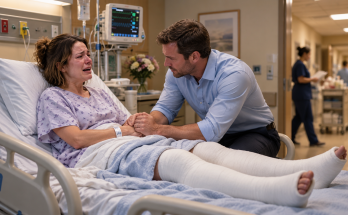
My four-year-old son called me at work, crying: “Dad, Mom’s boyfriend hit me with a baseball bat.” I was 20 minutes away… so I called the only person who could get there faster.

My phone had buzzed twice against the conference-room table. The room smelled like old coffee and dry marker ink, and I was trying to keep my eyes on a budget slide when I finally answered.
“Hey, buddy. You okay?”
For a second, all I heard was Noah breathing. Broken. Wet. Scared. Then my four-year-old whispered, “Dad… please come home.”
I pushed my chair back. “Where’s Mom?”
“She’s not here,” he said. “Mom’s boyfriend… Travis… hit me with a baseball bat. My arm hurts really bad. He said if I cry, he’ll hit me again.”
Then a grown man’s voice exploded behind him.
“Who are you talking to? Give me the phone!”
The line went dead.
The conference room froze around me. A woman from accounting stopped with her paper coffee cup halfway to her mouth. Pens hovered above legal pads. The air conditioner clicked while everyone stared at me, waiting for me to explain what they had just heard.
“My son has been attacked,” I said. “I’m leaving.”
By the time I reached the hallway, my hands were shaking hard enough that I nearly dropped my keys. It was 2:14 PM on a Tuesday. My call log showed Noah’s calls and thirty-one seconds of audio that would later be marked in a police report with the dispatcher’s incident number.
But I wasn’t thinking about evidence.
I was thinking about distance.
Twenty minutes. Downtown traffic. Red lights. And my four-year-old alone in my house with the man who had just threatened to hit him again.
I knew I couldn’t get there fast enough. I knew someone else could. I knew exactly who.
My older brother, Derek.
Derek had been there since the day we brought Noah home wrapped in a blue hospital blanket. He taught him to fist-bump. He fixed his little bike after Noah bent a training wheel. He once stayed beside Noah’s bed all night during a fever.
He showed up. Always.
I dialed him while running for the elevator.
“Hey, what’s up?” he answered.
“I just got a call from Noah. Lena’s boyfriend hit him with a baseball bat. I’m twenty minutes away. Where are you?”
There was a tiny pause.
“I’m about fifteen minutes from your house,” Derek said. “Do you want me to go by?”
“Go now. I’m calling 911.”
“I’m already moving.”
Derek had fought in regional mixed martial arts years earlier, before a shoulder injury ended it. But fighting wasn’t what made that change in his voice frightening. Control was.
He knew when to move. He knew when not to. He knew Noah was waiting.
I hit the parking garage and called 911. I gave the dispatcher Noah’s name, Lena’s name, Travis’s first name, our address, what Noah had told me, and the threat I heard before the call ended.
“Is your child injured?”
“Yes.”
“Is the adult male still inside?”
“I believe so.”
She told me units were being sent. Then I told her Derek was closer and already heading there.
“Tell him not to engage if he can avoid it,” she said.
Traffic barely moved. Every red light felt like another locked door between me and my son. Then Derek’s name flashed on my phone.
“I’m two blocks out,” he said.
“Stay on the line.”
A few seconds later, his voice dropped almost to a whisper.
“I see the house.”
His engine cut. Then a truck door slammed through the line, and Derek’s footsteps started up the driveway.
PART 2 — WHAT NOAH HAD BEEN AFRAID TO TELL ME
Derek did not knock.
He stopped at the bottom of my driveway and stayed on the phone with me.
I could hear his breathing.
Steady.
Controlled.
Too controlled.
That was how I knew he was terrified.
“Front door is closed,” he said.
“Any movement?”
“Curtain just moved.”
My hands tightened around the steering wheel.
Traffic in front of me crawled beneath a red light.
I wanted to drive over the median.
Wanted to abandon the car and run.
Wanted twenty minutes to become nothing.
Instead, I heard Derek say:
“I can see Noah.”
My whole body went cold.
“Where?”
“Living-room window.”
“Is he standing?”
“No.”
Pause.
“He’s on the floor.”
I stopped breathing.
Then Derek’s voice sharpened.
“He moved. He’s moving.”
Relief hit so hard it hurt.
“Can he see you?”
“I don’t think so.”
Then:
“Wait.”
A tiny voice came faintly through Derek’s phone.
Not words.
Crying.
My son.
Derek spoke toward the house.
“Noah!”
I heard his voice echo through the speaker.
“It’s Uncle Derek!”
Then something crashed inside.
A man shouted.
Derek immediately lowered his voice.
“Police?”
I glanced at my own phone.
The 911 dispatcher was still connected through my car system.
“Units are less than three minutes away,” she said.
Derek heard.
“Good.”
Then:
“I’m staying outside.”
That sentence probably saved us all from making the afternoon worse.
Because Derek could have gone through that door.
Every instinct in him wanted to.
Mine too.
But the dispatcher had told him not to engage unless necessary.
So he waited.
For thirteen seconds.
Then Noah screamed.
“UNCLE DEREK!”
Everything changed.
The front door flew open.
I heard it through the call.
Footsteps.
Then Derek cursed.
“Bat.”
My stomach dropped.
“Travis has the bat?”
“Yes.”
The dispatcher immediately began speaking.
“Tell your brother to create distance. Officers are almost there.”
I repeated it.
“Derek, back up.”
“I am.”
Travis shouted something I couldn’t fully hear.
Then Derek answered.
His voice remained frighteningly calm.
“Put the bat down.”
Another shout.
“You’re on my brother’s property. There’s a four-year-old inside who says you hurt him. Police are coming.”
Travis yelled:
“He fell!”
Derek said:
“Then you won’t mind explaining that to them.”
A siren appeared faintly through the phone.
Then louder.
Travis must have heard it too.
Because suddenly there was silence.
Derek whispered:
“Noah’s at the door.”
My heart stopped.
“Can you get him?”
“Not yet.”
Then Derek raised his voice.
“Noah, buddy, stay right there.”
Travis shouted:
“Get back inside!”
Noah started crying harder.
Then I heard the sound I will probably remember until I die.
Small feet.
Fast.
Slapping across concrete.
Derek gasped.
Then:
“I’ve got him.”
My eyes filled so fast I could barely see the road.
“You have him?”
“I have him.”
“Is he okay?”
Pause.
Too long.
“Derek.”
“He’s awake.”
My throat closed.
“What does that mean?”
“His arm looks bad.”
I pulled into the shoulder because I could no longer trust myself to drive.
The dispatcher told me to stay where I was for a moment.
Breathe.
Give location.
Officers had arrived.
Derek’s voice became muffled.
He was holding Noah.
I could hear my son sobbing against his chest.
Then Derek whispered:
“You’re safe, buddy.”
And for the first time since the phone rang at 2:14, I believed that might be true.
Police reached the porch within seconds.
Travis did not swing the bat at them.
He did not charge Derek.
He dropped it.
Raised his hands.
Started talking.
Fast.
Too fast.
Noah fell.
Noah was dramatic.
He had barely touched him.
The bat was a plastic training bat.
Then one officer lifted it from the lawn.
Aluminum.
Adult size.
The story changed again.
It always does when evidence enters the room.
I reached the house eleven minutes later.
Two police cruisers.
An ambulance.
Neighbors watching from lawns.
My front door open.
Derek sat on the curb with Noah wrapped against him.
My son’s face was red from crying.
One arm was held awkwardly against his stomach.
I stopped the car in the street.
Did not park correctly.
Did not care.
When Noah saw me, he screamed:
“Dad!”
I ran.
I dropped to my knees beside him.
“Hey.”
My voice broke.
“Hey, buddy.”
He launched himself toward me with his good arm.
I held him.
Carefully.
So carefully.
His entire body shook.
“I called you.”
“I know.”
“I called.”
“I know.”
“I’m sorry.”
That destroyed me.
I pulled back.
“Sorry?”
“I wasn’t supposed to use Mom’s phone.”
My vision blurred.
“You never apologize for calling me when you’re scared.”
“But Travis said—”
“I don’t care what Travis said.”
I stopped.
Too sharp.
Noah flinched.
I softened immediately.
“You did exactly the right thing.”
His lip trembled.
“Really?”
“Yes.”
“Really.”
He leaned into me.
Then whispered:
“My arm hurts.”
The paramedic examined him.
Swelling.
Tenderness.
Possible fracture.
No obvious head injury.
No loss of consciousness reported.
No bleeding.
They wanted him transported.
I rode in the ambulance.
Derek followed in his truck after speaking with police.
Travis left in handcuffs.
I saw him once through the rear ambulance window.
His face looked almost annoyed.
That expression stayed with me.
Not furious.
Not broken.
Annoyed.
As though being arrested were the inconvenience.
Not a four-year-old with an injured arm.
At the hospital, imaging confirmed a fracture of Noah’s left ulna.
Not shattered.
Not requiring surgery that afternoon.
A painful fracture.
Immobilization.
Orthopedic follow-up.
Pain control.
Observation.
I listened to every word.
Asked questions.
Signed forms.
Then went into the bathroom and vomited.
Fear has terrible timing.
It waits until someone says:
He’s stable.
Then your body finally admits what nearly happened.
When I returned, Noah was asleep.
Derek sat beside him.
His hands were clasped so tightly his knuckles were white.
I sat.
For a while, neither of us spoke.
Then I said:
“Thank you.”
Derek stared at Noah.
“Don’t.”
“What?”
“Don’t thank me yet.”
I frowned.
His jaw tightened.
“There were bruises.”
My stomach turned.
“What bruises?”
“When the paramedic lifted his shirt.”
I stopped breathing.
“Where?”
“Back.”
“Side.”
“Maybe older.”
I looked toward Noah.
Small chest rising beneath the hospital blanket.
Four years old.
Four.
“Did they say what caused them?”
“No.”
Then Derek looked at me.
“But one didn’t look like today.”
My hands began shaking.
A pediatric social worker arrived twenty minutes later.
Maria Alvarez.
She introduced herself quietly.
Explained that because Noah was so young, the injury involved an adult caregiver, and there were additional marks of uncertain age, the hospital was required to report concerns to child protective services.
Good.
Report everything.
I wanted every person in the state to know.
Then Maria said something important.
“Please don’t question Noah repeatedly.”
I looked at her.
“Why?”
“Because children can become overwhelmed.”
“And because if there is an investigation, we want his account gathered carefully.”
That stopped me.
I had been about to ask him everything.
When?
How often?
What did Travis do?
Did Mom know?
Instead, I nodded.
“What should I do?”
“Be his dad.”
Simple.
Harder.
Lena arrived at 5:11.
I knew because her voice exploded in the hallway.
“Where is my son?”
My entire body tightened.
Derek stood.
I touched his arm.
“No.”
He looked at me.
I repeated:
“No.”
Not because Lena deserved protection.
Because Noah did not need two adult men creating another crisis outside his hospital room.
Derek sat back down.
Barely.
Lena entered crying.
Her makeup had streaked.
Hair half out of its clip.
She rushed toward the bed.
I stood between them.
Not blocking Noah.
Slowing her.
“Calm down.”
“Move.”
“Lower your voice.”
“That’s my son.”
“I know.”
“Move!”
Noah woke.
The second he saw her, something in his face changed.
Not relief.
Fear.
Tiny.
Fast.
But I saw it.
So did Maria, standing near the doorway.
Lena did too.
Her voice immediately softened.
“Baby.”
Noah turned his face toward me.
My stomach dropped.
Lena froze.
“Noah?”
He reached for my hand.
Not hers.
That was when she noticed the cast.
She covered her mouth.
“Oh my God.”
Then she looked at me.
“What did Travis do?”
I stared.
“You tell me.”
Her face changed.
“What does that mean?”
“You left him alone with Noah.”
“I went to get my nails done for forty minutes.”
“With a man you’ve known six months.”
“He’s watched him before.”
There.
My body became cold.
“How many times?”
Lena looked confused.
“What?”
“How many times has Travis been alone with Noah?”
She looked toward Maria.
Then back to me.
“This isn’t the time.”
“It became the time when our son called me saying your boyfriend hit him with a baseball bat.”
Her face went white.
“He said Noah fell.”
I stared at her.
“When?”
“What?”
“When did Travis tell you Noah fell?”
Silence.
Wrong silence.
“Lena.”
She looked down.
“He texted me.”
“When?”
“Before you called me.”
I had not called her.
That was the point.
“What time?”
“I don’t know.”
“Show me.”
Her hand tightened around her purse.
“Michael—”
There.
My name.
Finally.
Michael.
Apparently I had existed again.
“Show me.”
Maria stepped forward.
“We should avoid turning this into an interrogation here.”
Correct.
I hated it.
But correct.
Lena sat.
Then the police arrived.
Two detectives.
Not because an entire homicide squad descended on us.
Because an allegation of serious assault against a young child required follow-up.
They spoke with Lena separately.
Then me.
Then Derek.
Noah was not repeatedly questioned in the room.
Instead, arrangements were made for a child-friendly forensic interview when medically appropriate.
Again.
Process.
Every part of me wanted answers that night.
Good professionals kept forcing patience into the room.
Police already had the bat.
Photographs.
My call recording.
Derek’s observations.
Body-camera footage.
The house.
Then an officer showed me something they had photographed in the living room.
A dent in the drywall.
Low.
Child height.
I stared.
“What caused that?”
“We don’t know.”
The detective was careful.
Then:
“We also found a broken toy near the wall.”
Noah’s toy fire truck.
The red one.
His favorite.
My throat tightened.
Then another detail.
The baseball bat had been inside the house.
Not brought by police.
Not from Derek.
It belonged to Travis.
He kept sports equipment in Lena’s car and had apparently carried some things inside earlier.
That did not prove intent.
But it destroyed one explanation Travis gave officers—that he had grabbed the nearest lightweight object only after Noah “came at him.”
A four-year-old.
Came at him.
I nearly laughed.
Nothing came out.
Lena returned after speaking with police.
She looked smaller.
Then angry.
At me.
Of course.
“They said Noah may stay with you tonight.”
“Yes.”
“That was already the plan.”
“No.”
She shook her head.
“I’m his mother.”
“And I’m his father.”
“We have shared custody.”
“Yes.”
The existing schedule gave her that week.
But emergency safety concerns changed the practical question.
Child protection could create a temporary safety plan.
Courts could later review custody.
Nothing magically transferred because I was angrier.
I knew that.
Lena apparently didn’t.
“You’re using this.”
she whispered.
My body went cold.
“Using what?”
“My worst day.”
“Your worst day?”
I looked at Noah.
“He has a broken arm.”
Her face crumpled.
“You know what I mean.”
“No.”
“I really don’t.”
Then Lena said the sentence that changed everything.
“Travis loses his temper sometimes.”
Silence.
Even Derek looked at her.
I spoke slowly.
“What does that mean?”
She realized.
Too late.
“Not with Noah.”
“Then with who?”
“Me.”
There.
Another layer.
I stared at her.
“Has he hit you?”
She looked away.
Maria stepped closer.
The conversation changed immediately.
Domestic violence.
Safety.
Support resources.
Separate risk assessment.
For one second, anger moved aside and something else took its place.
Fear for her.
I hated that too.
People want betrayal to make compassion disappear cleanly.
It doesn’t.
“He hasn’t hit me.”
Lena said.
“Not exactly.”
Not exactly.
The phrase no one ever wants attached to violence.
“He’s grabbed me.”
“Punched a wall.”
“Thrown things.”
My stomach tightened.
“And you left Noah alone with him.”
She started crying.
“I thought he’d never hurt a child.”
“You knew he couldn’t control his temper.”
“I thought he loved Noah.”
My voice broke.
“So did Noah know he was dangerous?”
“No.”
Too fast.
Then:
“I don’t think so.”
The uncertainty mattered.
Maria asked Lena whether Travis had ever disciplined Noah physically.
Lena answered:
“No.”
Then changed it.
“He smacked his hand once.”
My chest tightened.
“When?”
“Last month.”
“Did you tell me?”
“No.”
“Why?”
“It wasn’t a big deal.”
There.
The sentence every investigation eventually finds.
Not a big deal.
Until it is.
The detective asked for Lena’s phone with consent for limited review relevant to the incident.
She hesitated.
Then agreed after speaking with counsel.
That would take time.
I had to accept that too.
Everything took time.
Meanwhile Noah slept.
His cast looked enormous on his tiny arm.
CPS arranged a temporary safety plan that night.
Noah would stay with me.
No unsupervised contact with Travis.
Lena’s contact would be structured while investigators assessed risk.
Not permanent custody.
Not punishment.
Immediate protection.
That was enough for one night.
I took Noah home at almost midnight.
Not Lena’s place.
Mine.
The house where the assault happened was technically mine too, but I could not take him back there yet.
So we went to Derek’s.
Noah fell asleep in my brother’s guest room holding three fingers of my hand.
I sat on the floor until sunrise.
At 3:40 in the morning, he woke crying.
“Don’t leave.”
“I’m here.”
“Door.”
“What about it?”
“Lock it.”
My heart stopped.
I locked the bedroom door.
Then sat beside him again.
He fell asleep.
I did not.
The next morning, Derek made pancakes.
Noah ate half of one.
Then asked:
“Is Travis in jail?”
I chose my words carefully.
“He’s not here.”
“Can he come?”
“No.”
“Promise?”
“Yes.”
That promise I could make.
Noah stared at his plate.
Then:
“Mom said he gets mad because I don’t listen.”
My hand froze.
Derek turned away from the stove.
I remembered Maria’s warning.
Do not interrogate.
So I did not ask:
What else did Mom say?
Instead:
“Adults are responsible for what they do when they’re angry.”
Noah looked at me.
“Even Mom?”
My chest tightened.
“Yes.”
“Even me?”
“Yes.”
He seemed to think.
Then:
“Even you?”
I swallowed.
“Yes.”
Especially me.
The forensic interview took place two days later.
I was not in the room.
Neither was Lena.
A trained interviewer spoke with Noah.
I waited in a hallway with Derek.
Longest forty-eight minutes of my life.
When it ended, the investigator did not tell me every detail immediately.
Good.
Noah’s privacy still mattered.
But enough was disclosed for safety planning.
The bat incident was not the first time Travis had hurt him.
My stomach dropped.
According to Noah, Travis had squeezed his arm hard enough to hurt.
Pushed him into a chair.
Taken away food as punishment once.
Locked him in his room.
And several times forced him to stand facing a wall for long periods while telling him:
“Big boys don’t cry.”
Not every claim could be independently verified immediately.
But there was enough to investigate.
The older bruises suddenly had context.
Not proof of every event.
Context.
Then came something worse.
Noah said:
“Mom knows Travis gets mad.”
That alone did not establish she knew about specific abuse.
But he also said:
“Mom tells me not to make him upset.”
My chest tightened.
Children absorb family systems in small sentences.
Do not make him mad.
Be good.
Stop crying.
Don’t tell Dad everything.
Wait.
My head snapped up.
“What?”
The investigator looked at me.
I had spoken aloud.
“Did he say don’t tell Dad?”
She nodded carefully.
“He reported being told that some things happening at Mom’s house were private.”
My hands went cold.
“Who told him?”
“That’s part of what we’re still assessing.”
Again.
Not enough.
Not yet.
The police search of Lena’s phone produced more by the end of the week.
Messages between her and Travis.
At first, ordinary.
Groceries.
Dinner.
Work.
Then parenting.
Travis:
He whines every time I tell him no.
Lena:
His dad babies him.
Travis:
He needs structure.
Lena:
I know. Just don’t go too hard.
My stomach tightened.
Not authorization to hurt him.
But awareness.
Then another conversation two weeks later.
Travis:
He kicked me when I put him in time-out.
Lena:
He’s four.
Travis:
Exactly. Old enough to learn.
Lena:
Just handle it. I can’t fight with both of you every night.
I stopped reading.
“Just handle it.”
Three words.
Not:
Hit him.
Not:
Use a bat.
But a withdrawal.
A permission not to ask.
A mother exhausted enough, frightened enough, or attached enough to hand discipline to a man whose temper she already knew.
That was not the same as intending what happened.
It still mattered.
Then investigators found a photograph Lena had taken of Noah’s upper arm three weeks before the bat incident.
A faint bruise.
She had sent it to Travis.
Her message:
This is from you grabbing him yesterday. You have to stop leaving marks.
My vision blurred.
There.
Awareness became harder to deny.
Travis answered:
Then teach him to listen.
Lena:
I’m serious.
Travis:
So am I.
No response after that.
My hands shook.
“She knew.”
Derek whispered.
I did not answer.
The evidence could speak without me.
Lena called that evening.
Not directly.
Through our lawyers, a supervised call was arranged.
Her face appeared on my screen.
She looked terrible.
I felt no satisfaction.
No one wins when a child’s mother looks destroyed.
“I’m sorry.”
she said.
I waited.
“I should have told you about the bruise.”
“Yes.”
“I should have ended it.”
“Yes.”
“I thought I could manage him.”
My jaw tightened.
“You thought Noah could absorb the risk while you managed him.”
She started crying.
“I didn’t think of it like that.”
“I know.”
That was the problem.
Then she said:
“He was different with me after.”
“What?”
“After the bruise.”
“How?”
“He apologized.”
“Promised he wouldn’t grab Noah again.”
My stomach turned.
“And you believed him.”
“Yes.”
“Why?”
Her face crumpled.
“Because I needed to.”
There it was.
Not love.
Need.
The house.
Relationship.
Fear of being alone.
Whatever combination allowed her to accept the apology faster than the risk deserved.
I wanted to scream.
Instead, I asked:
“Why tell Noah not to tell me?”
Her eyes widened.
“I didn’t.”
“You’re sure?”
“Yes.”
“Then who did?”
“Travis.”
Maybe.
Likely.
Not proven yet.
Then she said:
“I did tell Noah that what happens in my house doesn’t always need to become an argument with you.”
I stared.
There.
A softer version.
A child hears:
Don’t tell Dad.
An adult says:
Privacy.
Again, language doing dangerous work.
The custody hearing happened the following week.
Temporary.
Not final.
The court reviewed medical records.
Police reports.
The emergency call.
The safety plan.
Lena’s messages.
Travis’s arrest.
The judge did not declare Lena an unfit mother forever.
The court did order that Noah remain primarily with me pending further evaluation.
Lena received supervised parenting time at first.
She was ordered not to allow Travis contact.
She agreed to domestic-violence counseling and parenting support.
Travis was already under a no-contact order.
No triumph.
No applause.
Just Noah sleeping at my house every night.
Safe.
For now.
That was enough.
Travis’s criminal case moved separately.
Assault.
Child-endangerment-related allegations.
Other conduct under investigation.
He denied intentionally striking Noah with full force.
Claimed he was trying to scare him.
Claimed Noah moved into the swing.
Maybe prosecutors would prove more.
Maybe less.
I learned quickly that anger does not decide charges.
Evidence does.
The medical findings.
Noah’s statement.
The call.
Scene evidence.
Prior messages.
All of it would matter.
I stopped trying to predict the sentence.
My job was Noah.
Then came the part I did not expect.
A pediatric specialist reviewing Noah’s records requested earlier medical files.
Routine.
He had seen Noah several times over the previous six months for minor complaints.
A sore wrist.
A bump on the head.
Stomach pain.
Nothing dramatic in isolation.
But patterns sometimes appear only after someone places the pages side by side.
One urgent-care visit three months earlier recorded a bruise on Noah’s shoulder.
Lena told the clinician he fell off playground equipment.
Possible.
Children fall constantly.
But Noah had apparently said something during triage that never received follow-up because the wording seemed childish.
The nurse documented:
Child states “T made me do strong game.”
I stared at the note.
“What is strong game?”
No one knew.
Not yet.
Maria arranged for the interviewer to explore the phrase carefully in a second session only because the new record made it relevant.
Again.
No coaching.
No leading questions.
No me in the room.
I hated every minute.
When they finished, Maria asked me to sit down.
I already knew.
Bad news always invites chairs.
“Noah described something he called the strong game.”
My hands went cold.
“What is it?”
Maria spoke slowly.
“According to Noah, Travis would make him hold heavy objects with his arms extended.”
“For punishment?”
“That appears to be how Noah described it.”
My stomach turned.
“He’s four.”
“I know.”
“What objects?”
“We don’t need every detail right now.”
Good.
She continued.
“When Noah dropped them or cried, Travis became angry.”
I covered my mouth.
Then:
“Did Lena know?”
Maria’s expression changed.
“That is the next issue.”
Noah said Mom had seen the strong game once.
My chest stopped.
“He said that?”
“Yes.”
“What did she do?”
Maria was careful.
“He reported that she told Travis to stop because Noah was too little.”
Relief.
Tiny.
Then:
“And later?”
My voice barely worked.
Maria continued.
“Noah said they argued.”
“He remembers Mom crying.”
“That may indicate she objected.”
Good.
Important.
Then Maria’s eyes lowered.
“But Noah also said the strong game happened again after that.”
The relief disappeared.
Lena was questioned.
This time she admitted it.
She had seen Travis forcing Noah to hold two grocery bags out from his sides.
Noah was crying.
Travis called it discipline.
Lena told him to stop.
They fought.
Travis punched the kitchen cabinet.
Lena threatened to leave.
Then Travis apologized.
Again.
She stayed.
Again.
That happened six weeks before the baseball bat.
Six weeks.
My son had lived inside a danger she recognized and then chose to reinterpret.
I did not know what to do with that.
When I confronted her through counsel, her answer came back in a written statement.
I thought I had stopped it.
I read that sentence over and over.
Maybe she believed it.
Maybe she needed to.
Either way, Noah had been the one left inside the uncertainty.
Derek found me sitting on the back steps that night.
Noah was asleep upstairs.
He handed me a bottle of water.
Did not speak.
Eventually I said:
“I picked Lena.”
He looked at me.
“What?”
“I married her.”
“Had a child with her.”
“Trusted her.”
My voice broke.
“What does that say about me?”
Derek sat beside me.
“It says you trusted someone.”
“That’s not a character flaw.”
“It feels like one.”
“I know.”
We sat quietly.
Then:
“What if I missed things too?”
“You probably did.”
I looked at him.
He shrugged.
“We all miss things.”
“The question is what you do when you finally see them.”
I hated how much sense that made.
The next morning, Noah asked if he could have cereal in the living room.
Normally no.
That morning yes.
He sat cross-legged on the rug with his cast propped on a pillow.
Cartoons playing.
Spoon too big for his mouth.
Ordinary.
Beautiful.
Then he looked at me.
“Dad?”
“Yeah?”
“Is Mom bad?”
My chest tightened.
“No.”
The answer came carefully.
“Mom made some bad choices.”
“Travis bad?”
I considered.
“Travis hurt you.”
“That was wrong.”
“Very wrong.”
Noah nodded.
Then:
“Mom said sorry.”
“I know.”
“Do I have to hug her?”
Everything inside me stopped.
“No.”
His eyes widened.
“No?”
“No.”
“You can hug Mom when you want to.”
“What if she cries?”
“That can be hard.”
“But her crying doesn’t make your body belong to her.”
I heard myself say it.
Then understood it was bigger than the moment.
Noah stirred his cereal.
“Okay.”
One word.
Safe.
Weeks passed.
His arm began healing.
The bruise faded.
The fear did not disappear as quickly.
He hated closed bedroom doors.
Flinched at loud male voices.
Once, at a park, someone swung a baseball bat on a nearby field.
Noah froze.
Then screamed.
I carried him back to the car.
No shame.
No:
Big boys don’t cry.
We cried together.
Healing looks embarrassingly unimpressive from the outside.
Mostly repetition.
You are safe.
Again.
Again.
Again.
Until one day the body believes it faster.
Lena’s supervised visits continued.
At first, Noah barely spoke.
Then he played blocks.
Then allowed her to read a book.
One afternoon he crawled into her lap on his own.
She cried.
Did not squeeze him harder.
Did not turn the moment into proof she deserved more access.
That was the first time I thought maybe she could learn.
Not undo.
Learn.
Different.
Her therapist later provided reports to the court through appropriate channels.
Lena had been living inside a coercive relationship.
Travis controlled more than I knew.
Her friendships.
Money.
Phone.
Clothes.
He frightened her.
That context mattered.
It did not erase her duty to protect Noah.
The court treated both truths seriously.
So did I.
Eventually.
I began to understand that if I turned Lena into nothing but a monster, Noah would pay for that too.
She was his mother.
He loved her.
Children should not have to choose between loving a parent and acknowledging that parent failed them.
Adults can carry the contradiction.
That is part of our job.
So I stopped saying:
“How could she?”
And started saying:
“She failed to protect him.”
Specific.
Painful.
True.
Possibly repairable.
Then, almost two months after the bat incident, police returned to the house.
The one Lena and I still jointly owned.
Travis had left belongings there.
A warrant allowed investigators to collect specific items.
I was present only because ownership issues required notification.
One officer carried out a duffel bag.
Then another.
Then a small locked case.
Nothing dramatic.
Until they called me inside.
In the hall closet, behind a stack of blankets, they found an old baby monitor.
Not ours.
A newer model.
Camera-enabled.
I stared.
“What is that?”
The detective asked the same question.
I had never seen it.
Lena later said she had not either.
Travis apparently installed it.
Where?
Noah’s bedroom.
My stomach turned.
The device itself was not automatically sinister.
Parents use cameras.
But Travis was not Noah’s parent.
Neither Lena nor I had authorized him to install a hidden camera.
Investigators obtained the storage account tied to it.
Some clips remained.
Mostly empty room.
Noah sleeping.
Playing.
Nothing criminal by itself.
Then audio.
Travis talking to Noah.
Angry.
Teaching him what not to say.
My hands became numb.
One clip was dated nine days before the baseball bat.
Travis’s voice:
“You don’t call Daddy every time you get mad.”
Noah crying.
“I want Dad.”
Then Travis:
“Your dad doesn’t run this house.”
Silence.
Then:
“You tell him we have fun.”
My stomach turned.
Another clip.
Noah:
“Mom said no strong game.”
Travis:
“Mom isn’t here.”
The room inside me went dark.
That phrase.
Mom isn’t here.
He knew she had objected.
He continued anyway.
Then came one final clip.
Dated four days before the assault.
Lena’s voice.
Not Travis.
My entire body froze.
She was in Noah’s room.
He was crying.
Lena said:
“Baby, you cannot call Dad every time Travis gets strict.”
Noah:
“He scares me.”
Long pause.
Lena:
“I know.”
My breathing stopped.
She knew.
Not vaguely.
Not afterward.
He had told her.
Then Lena said:
“I’m going to talk to him.”
Noah:
“Can I go Dad house?”
Another pause.
Too long.
Then Lena whispered:
“Not tonight.”
The clip ended.
I sat down.
Because my legs stopped working.
“She knew he was scared.”
I whispered.
The detective said nothing.
No one needed to.
Then the technician said:
“There’s one more file.”
Of course.
Always one more.
This one was timestamped the morning of the attack.
2:02 p.m.
Twelve minutes before Noah called me.
Lena and Travis arguing in the kitchen.
The camera caught only audio from down the hall.
Lena:
“I told you not to do that stuff anymore.”
Travis:
“He needs discipline.”
Lena:
“I’m serious.”
Then Travis:
“Go to your appointment. I’ll handle him.”
Silence.
Lena:
“Don’t make him cry.”
My heart stopped.
Then a door closed.
She left.
Twelve minutes later, Noah called me.
I stared at the waveform on the screen.
Not because it proved Lena expected a baseball bat.
It didn’t.
Not because she ordered Travis to hurt him.
She didn’t.
Because it proved something subtler and, in some ways, more painful.
She knew enough to say:
Don’t do that anymore.
Knew enough to say:
Don’t make him cry.
Knew enough to hear Noah say:
He scares me.
Then left him there anyway.
That night, I thought I had reached the bottom.
I hadn’t.
The detective called at 8:17.
“There’s another person we need to speak with.”
I gripped the phone.
“Who?”
“A neighbor.”
“What neighbor?”
“Woman across the street.”
I knew her vaguely.
Mrs. Caldwell.
Retired teacher.
Always watering plants.
The detective continued.
“She says Noah came to her house once.”
My blood went cold.
“When?”
“About three weeks before the bat incident.”
“What happened?”
“He knocked on her door.”
“Alone?”
“Yes.”
My heart stopped.
Noah had crossed the street alone.
Four years old.
“Why?”
The detective paused.
Then:
“He told her he was hiding from Travis.”
I could not speak.
Mrs. Caldwell had walked him back.
Lena was home by then.
According to the neighbor, Lena apologized and said Noah had slipped outside during an argument.
Mrs. Caldwell believed her.
Why wouldn’t she?
Then the detective said:
“She also remembers something Noah said.”
My hand tightened around the phone.
“What?”
“He asked whether he could stay with her until his dad came.”
I closed my eyes.
My son had been trying to get to me for weeks.
Not once.
More than once.
The phone call at 2:14 had only been the first time he succeeded.
Then the detective added:
“We found an older call attempt on the house tablet.”
My pulse stopped.
“What call?”
“Your number.”
“When?”
“Three weeks earlier.”
I sat down.
“Did it connect?”
“No.”
“It was canceled after four seconds.”
“By who?”
“We don’t know yet.”
Then:
“There are several more attempts.”
I stopped breathing.
“How many?”
“Six.”
Six.
Six times my four-year-old son had apparently tried to call me before the day he finally whispered:
Dad, please come home.
My hands began shaking so badly I had to set the phone on speaker.
Then the detective said:
“Michael, there’s one more thing.”
I almost laughed.
Of course.
“What?”
“One of the canceled calls was followed by a text from the tablet.”
“To me?”
“No.”
“Then who?”
A pause.
“Lena.”
My skin went cold.
“What did it say?”
The detective read it slowly.
Mom, please come home. Travis says I can’t call Dad.
I stopped breathing.
Timestamp:
Three weeks before the baseball bat.
The message showed as read.
No reply.
And in that moment, I understood that Part 2 of my son’s story had never really begun with a baseball bat.
It had begun weeks earlier—
when a frightened four-year-old asked the adults around him for help,
and too many of us failed to hear him in time.
PART 3 — THE CALL I NEVER WANTED HIM TO BE AFRAID TO MAKE
For three days after the detective told me about the six canceled calls, I could not look at my phone without feeling sick.
Six.
That number followed me everywhere.
Six attempts.
Six moments when my four-year-old son had apparently tried to reach me before the afternoon I finally answered.
I kept imagining them one by one.
Noah standing somewhere in that house with the tablet held in both hands.
His little thumb searching for my name.
His heart pounding.
Calling.
Stopping.
Calling again another day.
Maybe hearing footsteps.
Maybe hearing Travis’s voice.
Maybe deciding silence was safer.
And every time my mind built the scene, guilt arrived before reason could stop it.
I should have known.
I should have noticed.
I should have been there.
I should have—
My therapist eventually interrupted me.
“You keep describing a four-year-old’s hidden fear as though it were information you consciously received and ignored.”
I stared at her.
“It was information.”
“Not all information is visible when it is happening.”
“He tried to call me.”
“And the calls did not connect.”
“He asked to come to my house.”
“You were not there when he asked.”
“He went to a neighbor.”
“And the neighbor returned him to his mother.”
My jaw tightened.
“That does not make me feel better.”
“It isn’t supposed to.”
She leaned forward.
“It is supposed to keep your guilt from becoming another adult emotion Noah eventually has to take care of.”
That sentence stopped me.
Because I had spent two months telling everyone else that Noah should not have to manage adult feelings.
Not Lena’s tears.
Not Travis’s anger.
Not my fury.
And yet there I was, quietly building a cathedral of guilt around myself.
Children notice those too.
So I changed the question.
Not:
How did I miss it?
But:
What does Noah need now?
That answer was easier.
Consistency.
Safety.
Therapy.
Sleep.
Food.
School.
Play.
A father who believed him without turning every conversation into an investigation.
A house where crying did not trigger punishment.
A bedroom door he could close if he wanted and leave open if he didn’t.
And one promise repeated so often it eventually became boring.
You can always call me.
The legal cases moved at the speed legal cases move.
Slowly enough to make anger impatient.
Travis remained under strict no-contact orders involving Noah.
The prosecutor eventually filed several charges supported by the evidence the investigation had gathered.
The baseball-bat assault.
Prior physical mistreatment.
Threats.
Conduct captured in the recordings.
The case did not rely on one frightened child’s memory alone.
That mattered.
There were medical records.
The emergency call.
The bat.
Photographs.
Lena’s messages.
The monitor audio.
Mrs. Caldwell’s statement.
The prior bruising.
Noah’s forensic interviews.
Records lining up beside one another until excuses had less room to breathe.
Travis’s lawyer initially argued that he had been a strict caregiver whose discipline was being exaggerated after a custody dispute.
That argument weakened when the recordings were admitted.
Especially one clip.
Noah crying.
Travis saying:
“Your dad doesn’t run this house.”
Then:
“You tell him we have fun.”
I was not in the courtroom the first time it was played.
Victim advocates had warned me that listening might not help Noah.
They were right.
I heard it later only because I needed to verify one factual issue with the prosecutor.
Once was enough.
There are voices you do not need to memorize.
Months later, Travis accepted a plea agreement covering the most serious provable conduct.
It included incarceration.
Not life.
Not some fantasy sentence designed to make strangers online cheer.
Years.
Then supervised release.
A long-term no-contact order concerning Noah.
Required treatment conditions.
Restrictions appropriate to the case.
The judge spoke about the difference between discipline and domination.
I barely heard it.
I watched Travis instead.
For the first time since the ambulance, he did not look annoyed.
He looked small.
I expected satisfaction.
What I felt was relief.
That surprised me.
Revenge imagines the other person’s suffering as the ending.
Safety only asks whether the door is finally closed.
I preferred the second.
Lena’s case was harder.
Legally.
Emotionally.
Every way.
The prosecutor did not accuse her of swinging the bat.
She had not.
There was no evidence she told Travis to hurt Noah.
She had told him to stop before.
She had argued with him.
She had threatened to leave.
Those facts mattered.
So did the others.
Noah told her he was scared.
She knew Travis had grabbed him hard enough to bruise him.
She had seen the “strong game.”
She had heard him cry.
She had told Travis not to do it again.
Then she left Noah alone with him anyway.
Again.
And again.
Until one Tuesday afternoon, the thing she kept hoping would not happen became an ambulance.
Child protection substantiated serious safety concerns against her.
Family court kept Noah primarily with me.
Her supervised parenting time continued.
The prosecutor separately reviewed whether her conduct met the threshold for criminal child endangerment.
Eventually Lena resolved a lower-level charge supported by the evidence through an agreement that included probation, mandatory counseling, parenting education, domestic-violence treatment, and continued compliance with family-court safety orders.
No prison.
That angered some people.
Derek, at first.
My father too.
But law is not supposed to punish the person who did not swing the bat exactly as though she did.
Accountability has to remain accurate or it becomes another kind of anger.
Lena’s failure was not that she wanted Noah hurt.
It was that she kept requiring stronger proof before allowing herself to believe he was in danger.
And the person paying for that uncertainty was four years old.
That was serious enough without lying about it.
The first time Lena said that out loud, it happened during a parenting conference almost nine months later.
Noah was not in the room.
Good.
Adults should confess adult failures to one another before expecting children to hear them.
Her attorney was there.
Mine.
A parenting coordinator.
Lena looked thinner.
Different.
Not magically transformed.
Just stripped of the excuses she had once worn like armor.
She said:
“I kept waiting for something undeniable.”
No one interrupted.
“The bruise wasn’t enough.”
“The wall wasn’t enough.”
“Noah saying he was scared wasn’t enough.”
“Travis punching the cabinet wasn’t enough.”
Her hands shook.
“I kept thinking if the next thing was worse, then I would leave.”
My stomach turned.
Then she looked at me.
“And then the next thing was worse.”
Silence.
“The problem was that I made Noah live inside my waiting.”
I closed my eyes.
There.
That was the sentence.
Not:
I was abused too.
Though she had been.
Not:
I was afraid.
Though she was.
Not:
Travis manipulated me.
He did.
Those things explained part of the road.
They did not erase where the road led.
I asked her:
“Why didn’t you tell me?”
She looked down.
“Pride.”
That surprised me.
“Not fear?”
“Fear too.”
“But mostly pride.”
She wiped her face.
“You had warned me about him.”
I remembered.
Not dramatically.
Months earlier I had said Travis seemed controlling.
He corrected Noah too harshly.
He spoke about my custody time like it irritated him.
Lena told me I was jealous.
I let it go.
Of course I did.
Divorced parents learn quickly that every criticism of a new partner can be interpreted as bitterness.
Lena continued:
“If I called you and said you were right, I thought you’d use it against me.”
“I would have come for Noah.”
“I know that now.”
“No.”
I said quietly.
“You knew it then.”
She started crying.
Maybe that was cruel.
Maybe necessary.
Because yes.
She knew I would come.
That was why she did not call.
Sometimes people hide danger not because help is unavailable.
Because accepting help requires surrendering the story they wanted to keep.
Noah’s therapist was named Dr. Priya Menon.
He disliked her for exactly three visits.
Then she discovered dinosaurs.
After that, she became acceptable.
Therapy at four does not look like adults imagine therapy.
No tiny couch.
No profound monologues.
Blocks.
Drawings.
Toy houses.
Stuffed animals.
A box of plastic people.
Noah would make the large figure stand in front of the smallest one.
Then push it over.
Again.
Again.
Again.
Priya never gasped.
Never told him what the game meant.
She followed.
Let him control the story.
Eventually the little figure started getting back up.
That was the first change.
The baseball bat stayed gone from our world for almost a year.
I avoided baseball fields.
Sporting-goods aisles.
Anything shaped remotely like one.
Then Priya told me avoidance could become its own prison if we treated every trigger like a permanent danger.
So we started small.
Pictures.
Cartoons.
A foam bat in her office.
Noah would not touch it.
Fine.
Next week, he did.
Then dropped it immediately.
Fine.
Months later, Derek brought over a bright plastic bat and left it in the yard.
No lesson.
No demand.
One afternoon, Noah picked it up.
Swung at a foam ball.
Missed completely.
Derek cheered as though he had hit a home run.
I cried behind the kitchen window where neither of them could see me.
Eventually Noah joined T-ball.
His idea.
That mattered.
The first practice, I sat on the bleachers so tense I probably looked ill.
Derek nudged me.
“You’re scaring the other parents.”
“I’m fine.”
“You’re sitting like someone is about to defuse a bomb.”
“Sports are dangerous.”
“It’s T-ball.”
“Exactly.”
He laughed.
I did not.
Then Noah walked toward home plate holding a tiny aluminum bat.
For half a second, he froze.
The coach noticed.
Did not touch him.
Just said:
“Take your time, buddy.”
Noah looked toward me.
I raised one hand.
Not rescue.
Not instruction.
Just:
I’m here.
He turned back.
Swung.
Hit the ball three feet.
Then ran toward third base instead of first.
The entire field exploded in laughter.
Including Noah.
Especially Noah.
I laughed until my chest hurt.
Some objects deserve to become ordinary again.
My relationship with Lena changed more slowly.
For almost a year, supervised visits remained necessary.
Then professionally supervised visits transitioned to a trusted family supervisor.
Then short unsupervised daytime visits after sustained treatment and review.
No overnights.
Not yet.
The court did not restore everything because she completed a checklist.
Trust is not a vending machine.
But progress mattered.
Lena complied.
No Travis.
No secret contact.
No minimization.
She moved apartments.
Changed jobs.
Built friendships she had lost during that relationship.
And, most importantly, stopped asking Noah to reassure her.
At the beginning, he would sometimes say:
“Mom, are you sad?”
She used to cry.
Then say:
“I miss you so much.”
That made his face tighten.
Priya worked with her.
Later, Lena learned to say:
“I have grown-up people who help me with sad feelings. You don’t have to fix them.”
The first time Noah told me that, I nearly cried.
Not because it was beautiful.
Because it was correct.
Sometimes correct is beautiful enough.
There was one visit I watched from the parking lot.
Noah was six by then.
Lena had taken him to a children’s museum.
Halfway through, he apparently became overwhelmed by a loud exhibit.
He said he wanted Dad.
Years earlier, that sentence might have frightened her.
Made her defensive.
Made her think my existence inside his emotions meant she was losing.
This time she called me.
“Can you come?”
No accusation.
No delay.
I drove over.
When I arrived, Noah was sitting beside her on a bench.
She did not make him choose who to hug.
He came to me.
Then turned back and reached for her hand too.
So the three of us stood there awkwardly in a museum hallway while robotic dinosaurs screamed nearby.
Family repair is rarely cinematic.
Sometimes it smells like popcorn and exhausted children.
Eventually the custody order changed again.
Not back to what it was before.
Forward.
Noah remained primarily with me.
Lena received increasing parenting time under a gradual plan supported by professionals and the court.
When overnight visits eventually resumed, Noah decided which stuffed animal traveled with him.
He packed his own small backpack.
Priya helped us create a safety plan.
A phone.
Numbers memorized.
A phrase Noah could use if he wanted to leave without explaining in front of anyone.
No secrecy rules.
No:
What happens here stays here.
That sentence was banned from both homes.
If something scared Noah, he could tell either parent.
Teacher.
Doctor.
Derek.
Grandparents.
Anyone safe.
Secrets about birthday presents were fine.
Secrets about pain were not.
That distinction became family law in our house.
Derek remained Noah’s favorite person.
Unfairly.
I did all the parenting.
Derek arrived with pancakes and immediately became royalty.
One Saturday when Noah was seven, Derek handed him a wrench and they repaired a bicycle together.
I stood in the garage watching.
Noah frowned at something.
Then said:
“Uncle Derek?”
“Yeah?”
“What if someone hurts me again?”
The wrench stopped moving.
I did too.
Derek looked at him.
“You tell.”
“What if they say not to?”
“You tell louder.”
“What if Dad’s far?”
My throat closed.
Derek glanced at me.
Then back to Noah.
“Then you call me.”
Noah smiled.
“What if you’re far?”
Derek thought.
“Then we keep going down the list.”
“Grandpa.”
“Teacher.”
“Police.”
“Neighbor.”
“Anybody safe.”
He tapped Noah gently on the chest.
“You do not have to find the perfect person.”
“You just have to keep telling until somebody helps.”
I turned away before they saw my face.
That became our rule.
Not:
Call Dad.
Because what if Dad does not answer?
Not:
Call Derek.
Because Derek might be twenty miles away.
The rule was bigger.
Keep telling.
Mrs. Caldwell became part of Noah’s life too.
At first I could barely look at her without thinking:
Why didn’t you ask more?
Then I remembered she had walked a four-year-old home and accepted his mother’s explanation.
Most people would have.
She did not know the context.
Once she learned, she cried for days.
“I should have called you.”
she told me.
“I should have called someone.”
Maybe.
Maybe not.
Guilt loves certainty after the fact.
So I told her what I was learning to tell myself.
“You did what made sense with the information you had.”
Then:
“Now you know more.”
What matters next?
Mrs. Caldwell became one of Noah’s approved safe adults.
He watered her plants when she traveled.
She attended his school play.
Years later, he would still cross the street sometimes just to steal cookies.
Something good grew in the exact place he once ran for refuge.
I loved that.
The house itself took longer to reclaim.
For months, I hated the living room.
The dent in the drywall.
The hallway closet.
Noah’s bedroom.
Every room carried evidence.
Eventually the police released the scene.
I considered selling.
Derek said:
“Do you want to?”
“No.”
“Then don’t sell because Travis made a room ugly.”
So I repaired it.
Not all at once.
The wall first.
Then paint.
Noah chose the color.
Blue.
Very blue.
Painfully blue.
The kind of blue visible from neighboring states.
I accepted it.
His bedroom became space-themed.
Glow-in-the-dark stars.
Planets.
No camera.
No hidden monitor.
Before installing anything electronic in his room later, I asked.
Every time.
“Is this okay?”
He once rolled his eyes.
“Dad, it’s just a night-light.”
Good.
Let consent become boring too.
I did not date for several years.
At first because I was terrified.
Any adult near Noah felt like risk.
Then Priya called me out.
Not directly.
Therapists prefer questions.
“Do you believe every future partner is Travis?”
“No.”
“Does your behavior?”
Annoying.
Accurate.
I eventually dated someone named Claire Bennett, a physical therapist I met through a friend.
Slowly.
Painfully slowly.
Noah did not meet her for nearly eight months.
When he did, it was at a park.
Public.
Daytime.
No romantic performance.
Claire never disciplined him.
Never babysat early.
Never tried to become Mom.
She built her place one boring afternoon at a time.
Eventually Noah asked if she could come to his birthday.
That mattered more than anything I could have arranged.
When Claire and I became serious, we had a conversation that would have sounded ridiculous before everything.
“What happens if Noah says he’s uncomfortable with me?”
she asked.
“We listen.”
“Even if he’s wrong about something?”
“We still listen.”
“Listening isn’t the same as deciding he is automatically correct about every interpretation.”
“Good.”
She understood.
Then:
“And if you ever think I’m being too strict?”
“You tell me.”
“And if I hate hearing it?”
“You still get to hate it.”
I smiled.
“Then we figure out the facts.”
No ego.
No secrecy.
No one gets to become too important to question.
That became the standard.
Lena met Claire eventually.
Awkward.
Civil.
No territorial scene.
No demand that Noah pretend all adults loved one another.
At one point Lena pulled me aside.
“She seems good with him.”
“She is.”
Then:
“I’m glad.”
I believed her.
That might have been the first time I realized Lena’s recovery had become more than compliance.
Years earlier, another woman being safe with Noah might have felt like competition.
Now she wanted safe people around him even when those people were not hers.
That is what parenting should have been all along.
Noah turned eight.
Then ten.
The memories changed shape.
At four, they lived in his body.
At ten, they became questions.
“Why did Mom stay with Travis?”
I answered age-appropriately.
“She was scared and made unsafe choices.”
“Did she love him more than me?”
“No.”
“But she picked him.”
My chest tightened.
“She chose to stay in a situation that hurt you.”
“That was wrong.”
“It does not mean she loved him more.”
He frowned.
“How can both be true?”
I smiled sadly.
“Adults ask that too.”
He hated the answer.
So did I.
Still true.
At twelve, he asked to read parts of the case file.
I said no.
At first.
Then talked to Priya, now no longer his regular therapist but still someone we occasionally consulted.
She suggested gradual truth.
Not graphic detail.
Not hidden forever.
So Noah read the transcript of his emergency call.
Thirty-one seconds.
He sat at the kitchen table.
I sat across from him.
He read his four-year-old words.
Dad… please come home.
Then the threat.
Then the line went dead.
Noah stared at the paper for a long time.
Finally:
“I don’t remember sounding like that.”
“I do.”
He looked up.
“Were you scared?”
“Yes.”
“How scared?”
I swallowed.
“Enough that I still know the exact time.”
“2:14.”
His eyes widened.
“You remember?”
“Yes.”
Then he asked:
“Why did you call Uncle Derek before you got there?”
I almost laughed.
“Because he was closer.”
Noah smiled.
“Obviously.”
Maybe to him it was obvious.
To me, that decision had once felt like admitting failure.
I couldn’t reach my son first.
So I called someone who could.
Years later, I finally understood that was not failure.
That was parenting.
You use every safe hand available.
Derek never turned that day into a heroic story.
People tried.
Family members said:
“You saved Noah.”
Derek always corrected them.
“Noah saved himself enough to make the call.”
Then:
“Michael got help moving.”
Then:
“Police showed up.”
Then:
“A lot of people did their jobs.”
He refused the cape.
I loved him for that.
Noah loved him anyway.
Possibly more.
Still unfair.
Travis eventually completed his sentence and supervision years later.
I learned only because the victim-notification system informed me.
My body reacted before my mind did.
Sweaty palms.
Tight chest.
Old fear.
Noah was older by then.
We reviewed the no-contact protections.
Addresses.
School security.
Privacy.
Nothing dramatic happened.
Travis did not appear at our house.
Did not call.
Did not send letters.
The absence of harm was better than any satisfying confrontation I could have imagined.
People do not always understand that.
They think endings need a final showdown.
Sometimes the best ending is that the person never comes back.
Lena remained in Noah’s life.
Not as before.
More honestly.
She never regained the exact custody arrangement we had when he was four.
By then, no one wanted to pretend time could reverse.
But she became a reliable parent.
Not perfect.
Reliable.
That word was earned.
She showed up.
Respected boundaries.
Did not ask Noah to keep adult secrets.
Did not bring partners around him casually.
And when she eventually dated again years later, she told me before introducing anyone.
Not because she legally needed my permission for every relationship.
Because trust sometimes includes voluntarily giving information you once hid.
Her partner, Daniel Ortiz, met Noah slowly.
No pressure.
No replacement father nonsense.
He was simply Daniel.
That was enough.
When Noah was fourteen, Lena apologized to him directly in a family-therapy session.
Not for the first time.
The first age-appropriate apology had happened years earlier.
This one was different.
Adult enough to carry more truth.
She said:
“You told me you were scared.”
Noah looked down.
“I heard you.”
“I did not act fast enough.”
His eyes filled.
“I kept hoping I could fix Travis without changing our whole life.”
Her voice broke.
“And while I was trying to avoid losing the life I wanted, I made you live inside something you were afraid of.”
Noah said nothing.
Lena continued:
“I am sorry.”
Then the most important part:
“You do not owe me forgiveness because I apologized.”
Noah looked at her.
For a long time.
Then:
“I already love you.”
Lena started crying.
Noah added:
“That’s not the same thing.”
My throat tightened.
He had learned.
Forgiveness.
Love.
Trust.
Access.
Different words.
Different doors.
Their relationship survived.
Changed.
Deepened.
Not because the past disappeared.
Because no one required it to.
There were things Noah never wanted to discuss with Lena.
She respected that.
There were days he preferred my house.
She did not take it personally.
There were times he wanted her.
I drove him there.
That became the quietest victory of all.
I stopped seeing his love for his mother as a threat to the safety I had built.
If she remained safe, he was allowed to love her fully.
Children should not have to amputate affection to prove they understand what happened.
Years passed.
The blue room became gray.
Then dark green.
Glow-in-the-dark stars came down.
Baseball trophies appeared on the shelf.
Yes.
Baseball.
Noah became a catcher.
Of course he did.
Life has a sense of humor.
At sixteen, he was broad-shouldered, stubborn, and permanently hungry.
One afternoon I found an aluminum bat leaning beside the garage door.
For half a second, the old terror returned.
Then Noah shouted from the kitchen:
“Dad, have you seen my batting gloves?”
The bat became sports equipment again.
Nothing more.
I touched the handle once.
Then walked inside.
Healing sometimes announces itself by becoming boring.
On the day Noah got his driver’s license, I handed him the keys.
Then immediately wanted them back.
He laughed.
“You trust me?”
“No.”
“Dad.”
“I trust you. I distrust everyone else on the road.”
“Very normal.”
“Extremely.”
He started toward the door.
Then turned.
“Hey.”
“Yeah?”
“Remember when I called you from Mom’s house?”
My chest tightened.
“Yes.”
“Do you ever wish you’d gotten there before Uncle Derek?”
There it was.
The question I had asked myself for years.
I looked at my son.
Not four.
Almost grown.
“No.”
He seemed surprised.
“Really?”
“Really.”
“Why?”
I thought about traffic.
The red lights.
The panic.
Derek’s truck door slamming.
The dispatcher telling him not to engage.
Noah’s small feet running across concrete.
Then:
“Because getting there myself was never the point.”
He waited.
“The point was getting someone safe to you as fast as possible.”
I smiled.
“Sometimes loving someone means being the person who runs through the door.”
“Sometimes it means calling the person who can get there before you.”
Noah nodded slowly.
Then grinned.
“So Uncle Derek still saved the day.”
“Leave.”
He laughed all the way to the car.
I stood in the doorway watching him pull out.
Too fast.
Probably.
I texted:
Slow down.
He replied at the stop sign:
I am literally doing 8 mph.
Parenting remained humiliating.
Good.
Ordinary.
Derek came over that evening.
Older.
More gray.
Shoulder still terrible when it rained.
We sat outside while Noah was gone.
I told him about the conversation.
Derek smiled.
“You finally figured that out?”
“I dislike you.”
“I’ve known for years.”
Then he became quiet.
“I was scared that day.”
I looked at him.
“You never told me.”
“You had enough.”
“How scared?”
He stared toward the yard.
“When I saw him on the floor through the window, I thought…”
He stopped.
I knew.
Neither of us needed the sentence.
Then:
“I almost went through the door.”
“I know.”
“The sirens stopped me.”
“Good.”
“Yeah.”
He looked at me.
“I used to think control meant knowing when to fight.”
My throat tightened.
“And now?”
“Knowing what the actual goal is.”
He smiled faintly.
“The goal was Noah.”
Not Travis.
Not pride.
Not revenge.
Noah.
It had always been Noah.
Years later, when Noah left for college, he packed his car badly.
Derek repacked it.
I pretended to help.
Lena arrived with snacks.
Claire brought a first-aid kit.
Daniel brought jumper cables.
Too many adults loving one boy in slightly irritating ways.
Perfect.
Before Noah got into the car, he looked around.
Then said:
“Everybody stop acting like I’m leaving forever.”
Lena cried anyway.
He hugged her.
Then Claire.
Then Derek.
Then me.
Longer.
Not because he loved me more.
Because some histories have gravity.
He whispered:
“You know I can call.”
I pulled back.
“What?”
He smiled.
“You spent fifteen years telling me.”
My throat closed.
Then he took out his phone.
Held it up.
“Dad.”
“Uncle Derek.”
“Mom.”
“Claire.”
“Grandma.”
“Emergency services.”
“The entire known population of North America.”
I laughed through tears.
“Keep telling until somebody helps.”
He nodded.
“Exactly.”
Then got in the car.
I watched him drive away.
And for once, distance did not frighten me.
Twenty minutes had once felt unbearable.
Now he was going three states away.
But safety had stopped meaning I needed to be physically closest.
It meant he knew how to reach people.
How to recognize fear.
How to say:
Something is wrong.
How to keep saying it if the first person did not understand.
That was what I wanted him to carry.
Not my panic.
Not Travis’s shadow.
A voice.
His own.
Sometimes people ask me what I would change about that Tuesday.
Everything.
Obviously.
I would prevent the first bruise.
The first threat.
The first strong game.
The first moment Lena heard Noah say he was scared and convinced herself she had more time.
I would erase the bat.
The ambulance.
The cast.
The six canceled calls.
All of it.
I do not believe suffering happens so people can learn beautiful lessons afterward.
Noah did not need to be hurt so I could become wiser.
Lena did not need to fail him so she could rebuild.
Derek did not need to race across town so I could understand brotherhood.
Pain does not earn meaning by existing.
We gave meaning to what we did after it.
That is different.
If I could speak to the man sitting in that conference room at 2:14 p.m., staring at a budget slide while his phone buzzed twice, I would not tell him:
Answer faster.
He did answer.
I would not tell him:
Drive faster.
He drove as fast as he safely could.
I would not tell him:
Be stronger.
Strength had nothing to do with it.
I would tell him:
When you hear your child say please come home, believe the fear before you understand every detail.
Call everyone who can help.
Do not turn rescue into a competition about who arrives first.
Then afterward, when the police leave and the cast comes off and the court files become old paper, keep listening.
Because children do not stop needing safety when the emergency ends.
Sometimes that is when the real work begins.
Noah is twenty-one now.
Tall.
Too confident.
Studying civil engineering.
Still plays baseball recreationally.
Still calls Derek before buying a used car because apparently my opinions mean nothing.
He calls Lena every Sunday.
Calls me less often than I would prefer.
Which, if I am being reasonable, is probably healthy.
Last month my phone buzzed during a meeting.
Once.
Then twice.
For a fraction of a second, my body remembered everything.
The conference room.
The stale coffee.
The red lights.
2:14.
I answered immediately.
“Hey, buddy. You okay?”
Noah laughed.
“Dad, I’m twenty-one.”
“You didn’t answer the question.”
“I’m fine.”
Then:
“I got the internship.”
I stood up so fast three coworkers looked at me.
“You did?”
“Yes.”
“I wanted to tell you first.”
My eyes filled.
No screaming.
No broken breathing.
No adult voice grabbing for the phone.
Just my son calling because something good had happened.
For years, I had wanted that old phone call erased from memory.
Instead, life finally placed another one beside it.
Same name on the screen.
Different reason.
“Dad?”
“I’m here.”
“Why are you quiet?”
I looked around the conference room.
New building now.
Better coffee.
No dry-marker smell.
Different life.
“I’m proud of you.”
“Thanks.”
Then he laughed.
“You sound like you’re crying.”
“I have allergies.”
“Indoors?”
“Severe.”
He let me lie.
Kind boy.
Before hanging up, he said:
“Hey.”
“Yeah?”
“Tell Uncle Derek too.”
“Absolutely not.”
“Dad.”
“He already gets too much credit.”
Noah laughed.
Then:
“Love you.”
“Love you too.”
The call ended.
I sat down.
My hands were steady.
That was when I finally understood that the most important thing I had given Noah was never the promise that I would always be twenty minutes away.
Life does not permit that promise.
Children grow.
Roads lengthen.
Parents age.
Phones die.
Flights get delayed.
Doors close.
The better promise was this:
Your fear is allowed to interrupt me.
Your pain is never an inconvenience.
No adult gets to make secrecy the price of peace.
And if the first person cannot reach you, we call the next.
And the next.
And the next.
Until somebody comes.
That Tuesday, my brother got there before I did.
For years, I thought that meant I had failed the one job a father should never fail.
I know better now.
Derek reached Noah because I called him.
Police reached Noah because I called them.
Doctors treated Noah because people kept moving.
Lena eventually became safer because the truth was finally allowed to stay spoken.
And Noah grew up because one frightened four-year-old, after being told not to cry and not to call his father, picked up a phone anyway.
That was the bravest person in the whole story.
Not me.
Not Derek.
Noah.
He called.
We answered.
And from that day forward, we built him a life where he would never again have to wonder whether asking for help was something he was allowed to do.
THE END STORIES! THANK YOU FOR READING GOOD LUCK !❤️
Related Posts