The doorbell rang again. Tessa stared at me. “And that’s the person who knows where the vacation money went.” Mark slowly stood. “Rachel, what did you do?” “I asked questions.” Tessa’s face had already gone pale.
“Who is it?” I walked toward the front door. Behind me, Mom remained standing beside the dining table, one hand gripping the back of her chair. Mr. Calder quietly closed his folder. Nobody touched their food.
I opened the door. Paige stood on the porch. Tessa’s older sister. The woman Mark had just been told had paid for their luxury trip. Paige looked past me into the dining room. When she saw Tessa, she closed her eyes for half a second. “Oh, God.” Tessa pushed away from the table.
“You called Paige?”
“I did.”
“You had no right.”
Paige stepped inside.
“Actually, she called because I answered her questions.”
Tessa’s voice sharpened.
“Why would you do that?”
Paige removed her coat slowly.
“Because you used my name in a lie.”
Mark looked between them.
“What lie?”
Nobody answered immediately.
Mark’s voice rose.
“Tessa told me you paid for the December trip as our anniversary present.”
Paige stared at him.
“I didn’t.”
His face emptied.
“You didn’t?”
“No.”
Tessa whispered:
“Paige.”
Her sister turned toward her.
“You asked me not to correct him.”
“That isn’t the same as—”
“Yes.”
Paige cut her off.
“It is.”
Mark stepped away from the table.
“Wait.”
“You knew about the trip?”
Paige nodded.
“I helped her find the package.”
“That’s all.”
“You didn’t pay for it?”
“Not one dollar.”
Mark turned slowly toward his wife.
“Tessa.”
She crossed her arms.
“I was going to explain.”
He gave a short, broken laugh.
“When?”
“After the trip?”
She looked down.
Mom sat again.
I watched her face.
No anger now.
That somehow hurt more.
Only disappointment.
The kind an older person wears when something confirms a truth they were hoping not to learn.
Paige took the empty chair beside me.
Then she pulled a printed sheet from her purse.
“I brought this.”
Tessa stared.
“What is that?”
“The reservation.”
Mark reached for it.
His eyes moved across the page.
Two adults.
Five nights.
Ocean-view suite.
Private transfer from the airport.
Spa credit.
Dinner package.
Departure date: December 11.
Total package cost: $4,786.
Deposit and payments received: $4,200.
Outstanding balance: $586.
Mark looked up.
“We still owe money?”
Tessa didn’t answer.
He read again.
“The trip isn’t even paid off?”
No answer.
Paige said quietly:
“She needed another six hundred before the end of the month.”
Mark laughed once.
It sounded nothing like amusement.
“Where was that coming from?”
Tessa snapped:
“I would’ve figured it out.”
Mom finally spoke.
“With whose emergency fund?”
The room went silent.
Tessa’s face crumpled.
“Linda, I’m sorry.”
Mom looked at her.
“No.”
Not loud.
Not cruel.
Just no.
“I don’t want ‘sorry’ yet.”
Tessa swallowed.
Mom continued.
“I want to understand.”
“That’s all.”
“Why did you tell me the car needed five thousand dollars?”
Tessa looked toward Mark.
Mom noticed.
“Don’t look at him.”
Tessa’s eyes returned to her.
“You asked me for the money.”
“I handed it to you.”
“Look at me.”
Tessa did.
Mom’s voice trembled.
“Why?”
Tessa wiped beneath one eye.
“The accident scared me.”
Mom waited.
“The insurance was taking forever.”
Mr. Calder shifted.
“Mrs. Hayes—”
Tessa stopped herself.
Then shook her head.
“No.”
“You’re right.”
“That’s not true.”
Mark stared.
“So tell the truth.”
She turned toward him.
“You really want this here?”
Mom answered before he could.
“Yes.”
Tessa looked at all of us.
Her shoulders dropped.
Finally:
“I had already booked the trip.”
Mark went still.
“What?”
“Before the accident.”
“You told me Paige surprised us with it.”
“I know.”
Mark stared at the page again.
“Why would you book a five-thousand-dollar trip without telling me?”
Tessa’s voice cracked.
“Because you would have said no.”
There it was.
A sentence I had heard in a hundred different family arguments.
A sentence people often use as though anticipating a boundary gives them permission to cross it.
Mark whispered:
“Of course I would have said no.”
“We had been fighting.”
“I thought we needed something.”
“A vacation?”
“We hadn’t gone anywhere in three years.”
“We have two kids.”
“We replaced the roof.”
“My hours were cut.”
“That’s why.”
She looked desperate now.
“I knew if I asked, you’d say it wasn’t responsible.”
“Because it wasn’t.”
“I wanted us to feel normal again.”
Mark stared at her.
“Normal?”
“You told me we couldn’t afford dinner out two weeks ago.”
“I know.”
“And you had a resort booked?”
“Yes.”
Paige rubbed her forehead.
“Tessa.”
Tessa turned.
“Please don’t.”
“No.”
Paige’s voice softened.
“You need to tell him all of it.”
Mark looked at her.
“All of what?”
Tessa’s face lost what little color remained.
“Paige.”
Mark said:
“What does she mean?”
Paige looked at her sister.
“I told Rachel because I thought Linda deserved her money back.”
“I didn’t agree to expose everything.”
“You didn’t agree?”
Paige stared at her.
“Linda didn’t agree to finance your vacation either.”
Tessa started crying.
Not theatrically.
Not loudly.
Her whole body seemed to collapse inward.
Mark looked frightened now.
“What else?”
Tessa sat.
For several seconds she could not speak.
Then:
“I have credit cards you don’t know about.”
Mark did not move.
“How many?”
“Three.”
“How much?”
Silence.
“How much, Tessa?”
“Eighteen thousand seven hundred.”
Mark’s chair scraped backward.
Mom gasped.
Paige closed her eyes.
I stared.
Even I had not known the full number.
Paige had only told me there were other debts.
Mark’s voice came out almost inaudible.
“Eighteen thousand?”
“Seven hundred.”
He laughed weakly.
As if precision might somehow make the number less impossible.
“You have almost nineteen thousand dollars in credit-card debt?”
“Yes.”
“Since when?”
“Some of it is old.”
“How old?”
“Before we refinanced.”
Mark stopped breathing for a moment.
“You told me those cards were paid off.”
“I paid down the ones you knew about.”
“Those.”
He stared at her.
“The ones I knew about.”
Tessa covered her face.
Mark started pacing.
“Where are the cards?”
“Mark—”
“Where?”
“In my purse.”
“Are they maxed?”
She hesitated.
“Yes.”
“All of them?”
“Almost.”
He looked at the $800 payment.
“That’s what this was.”
She nodded.
“You used eight hundred dollars of my mother’s emergency fund to free up room on a credit card.”
Mom whispered:
“So you could finish paying for a vacation.”
Tessa sobbed.
“Yes.”
Nobody spoke.
I thought I would feel triumph.
I didn’t.
There is nothing triumphant about watching a family discover that the lie was larger than the amount that first exposed it.
Mr. Calder stood.
“I think my part here is finished.”
Mom looked up.
“Thank you for coming.”
He nodded.
“I’m sorry this happened.”
“It wasn’t your doing.”
He left quietly.
Nobody stopped him.
When the front door closed, Paige said:
“There’s one more thing.”
Tessa snapped:
“No.”
Mark turned.
“What?”
Paige held her sister’s stare.
“Tell him.”
“I said no.”
“Tessa.”
“Stop!”
Mom flinched.
That ended it.
Paige lowered her voice.
“You called me before Linda.”
Mark looked at Tessa.
“What?”
Paige nodded.
“She asked me for five thousand dollars.”
“When?”
“Three days before Linda gave it to her.”
Tessa stared at the table.
Paige continued.
“She told me the insurance company might total the car and she needed money immediately.”
“I said no.”
“Why?”
Mark asked.
Paige looked embarrassed.
“Because she still owes me twelve hundred dollars from last Christmas.”
Mom’s hand rose to her mouth.
I felt sick.
This had not been one desperate decision.
It was a pattern.
Mark sat down slowly.
“You owe Paige too?”
Tessa whispered:
“Yes.”
“How many people?”
No answer.
“Tessa.”
She looked at him.
“How many people do you owe money?”
“Just Paige and Linda.”
Paige said:
“And Mom.”
Tessa’s head snapped toward her.
“Paige.”
Mark nearly shouted:
“Your mother?”
Paige looked at him.
“Two thousand.”
“When?”
“March.”
Tessa began crying again.
Mark sat frozen.
I thought about what she had said to me on the phone.
Your mom is retired. Her house is paid off. Why does she need $5,000 sitting around? I needed it more.
It had not been carelessness.
It had been a philosophy.
People with savings had “extra.”
She had needs.
Therefore the money was available.
I looked at Mom.
She was staring at Tessa.
Then she asked:
“Did you choose me because you thought I wouldn’t make you pay it back?”
Tessa shook her head quickly.
“No.”
Mom’s eyes filled.
“Then why me?”
No answer.
Mom repeated it.
“Why me?”
Tessa whispered:
“Because I knew you had it.”
That hurt.
I saw it happen.
Mom leaned back as though someone had struck her.
Not because Tessa had asked.
Because she had apparently been watching.
Knowing.
Calculating.
Mom said:
“How?”
Tessa swallowed.
“You told me last year.”
“When?”
“When we were talking about Dad’s life insurance.”
“You said you finally had five thousand saved.”
Mom stared.
A private conversation.
A moment of pride.
Turned into a target.
Tessa continued:
“I knew you wouldn’t be using it for anything.”
Mom’s expression changed.
“I was using it.”
Tessa blinked.
Mom tapped the table lightly.
“I was using it every night I went to bed knowing that if the furnace died, I could fix it.”
“I was using it every winter when the pipes froze.”
“I was using it every time my car made a sound and I didn’t have to call Rachel.”
“I was using it every morning I woke up seventy years old and did not have to wonder which of my children I would have to ask for money if something went wrong.”
Her voice broke.
“That five thousand dollars was doing its job while sitting in the bank.”
Nobody moved.
Mom continued.
“You saw money that was doing nothing.”
“I saw the ability to stay independent.”
Tessa covered her mouth.
Mom’s tears fell.
“You didn’t just borrow money.”
“You borrowed my ability to feel safe.”
That sentence ended the argument.
There was nothing Tessa could say to make it smaller.
Mark left the room.
Not dramatically.
He walked into the kitchen.
Opened a drawer.
Closed it.
Opened another.
I could hear him breathing.
Paige looked at me.
“Should I go?”
Mom shook her head.
“No.”
“Please stay.”
Mark returned carrying his checkbook.
Tessa looked up.
“What are you doing?”
He sat beside Mom.
“Writing her a check.”
Mom shook her head.
“No.”
He stopped.
“Mom.”
“This is not yours to fix.”
“It’s our money.”
“No.”
She looked at Tessa.
“She asked me.”
“She owes me.”
Mark’s voice cracked.
“She’s my wife.”
“I know.”
“And if the money comes from your household account, then that is between the two of you.”
“But I don’t want you rescuing her so quickly that nobody has to look at what happened.”
Tessa started crying harder.
Mark put the pen down.
Mom surprised all of us.
“I want my five thousand dollars.”
“I’m not forgiving the debt.”
“I’m not telling you to wait.”
“I’m saying I want a real plan.”
She turned to me.
“Rachel.”
“Yes?”
“You said the vacation can still be canceled?”
Paige answered.
“Yes.”
“Mostly.”
“How much comes back?”
“Thirty-six hundred and fifty if it’s canceled before Monday night.”
“The rest?”
“Part of the deposit is nonrefundable.”
Mom nodded.
She looked at Tessa.
“Cancel it.”
Tessa stared.
“You’re asking me to—”
Mom’s expression hardened.
“Yes.”
“You paid for it with money you told me would repair your car.”
“I want whatever can be recovered.”
Tessa nodded.
“Okay.”
“Tonight.”
“Yes.”
“Then the remaining thirteen hundred and fifty dollars.”
Tessa wiped her face.
“I can pay two hundred a month.”
Mom considered.
“No.”
Tessa looked surprised.
“Why not?”
“Because you owe other people too.”
Mom pointed toward Paige.
“Your sister.”
“Your own mother.”
“Your cards.”
“If you make promises to all of us separately, you’ll start lying again.”
Tessa flinched.
Mom wasn’t wrong.
Mark looked at her.
“What do you want?”
“I want everything on paper.”
That surprised me.
Then she looked at me.
“Can you help me?”
“Of course.”
“No.”
She shook her head.
“Not do it for me.”
“Help me understand what I’m agreeing to.”
I smiled through tears.
“Yes.”
That was my mother.
Seventy.
Embarrassed that morning because she could not replace a refrigerator.
Now sitting at the head of the table demanding terms.
Not revenge.
Clarity.
Paige spoke.
“I know someone who does debt counseling.”
Tessa groaned.
“I don’t need—”
Mark turned.
“Yes.”
She stared at him.
He repeated:
“Yes, you do.”
His voice was not cruel.
That made it stronger.
“And so do I.”
Tessa frowned.
“What?”
He looked down.
“If you had almost nineteen thousand dollars in hidden debt and I didn’t know, then our finances are not functioning.”
“You lied.”
“But I was also apparently not looking.”
He rubbed his face.
“I don’t know where anything stands.”
“Mortgage.”
“Cards.”
“Savings.”
“Nothing.”
Tessa whispered:
“I didn’t want you to be disappointed in me.”
Mark laughed painfully.
“So you made sure I would be devastated instead?”
She started crying again.
Paige reached for her sister’s hand.
Tessa pulled away at first.
Then allowed it.
I stood.
Mom looked at me.
“Where are you going?”
“Getting dessert.”
Everyone stared.
I shrugged.
“You made pie.”
Mom actually laughed.
A broken little laugh.
But a laugh.
Dinner ended at nearly midnight.
The vacation was canceled before anyone left.
We watched Tessa do it.
Not because we needed to humiliate her.
Because trust had been spent.
The cancellation confirmation showed a refund of $3,650.
Seven to ten business days.
Tessa transferred the remaining $214 she had in her checking account to Mom that night.
Mom objected.
“You need gas money.”
Mark said:
“I’ll cover gas.”
Mom considered.
Then accepted.
The next morning, I took her refrigerator shopping.
She chose the third-cheapest model.
Of course.
“Mom.”
“What?”
“You can get the one with the bottom freezer.”
“I have survived seventy years bending down.”
“You complain every time.”
“I complain recreationally.”
I laughed.
She bought the better refrigerator.
I paid for it temporarily on my card.
She wrote me an IOU.
I tore it up.
She wrote another.
I gave up.
The refund from the canceled trip arrived eight days later.
Tessa transferred the full $3,650 to Mom.
Total returned:
$3,864.
Remaining debt:
$1,136.
Mom and Tessa signed a simple repayment agreement.
One hundred dollars a month.
No interest.
No late penalty.
But one condition:
If Tessa could not make a payment, she had to tell Mom before the due date.
Not after.
No excuses invented afterward.
No disappearing.
Just truth.
Tessa made the first payment early.
Then the second.
The third arrived three days late.
She called Mom the day before.
“My hours got cut this week.”
“I can pay Friday.”
Mom said:
“Thank you for telling me.”
That was it.
The agreement worked because it measured honesty as carefully as money.
Mark and Tessa’s marriage did not recover as quickly.
For two weeks, Mark stayed with me.
I hated it.
Not him.
His coffee habits.
The man used one mug for every cup and left it beside my sink as though dishwashers were mythology.
On his third night, I found him sitting in my living room at one in the morning.
“You okay?”
“No.”
“Fair.”
He looked toward the hallway.
“I keep thinking about the amount.”
“Which amount?”
“All of them.”
He rubbed his hands together.
“Eighteen thousand seven hundred.”
“Twelve hundred to Paige.”
“Two thousand to her mom.”
“Five thousand to Mom.”
“She was moving money around constantly.”
“I don’t know how I missed it.”
I sat across from him.
“Do you want my opinion?”
“No.”
“Good.”
He looked at me.
“I’m going to give it anyway.”
He almost smiled.
I continued.
“You missed it because you trusted your wife.”
“That isn’t stupidity.”
“Then I’m an idiot for trusting her.”
“No.”
“You would be an idiot if you learned this and changed nothing.”
He stared at the floor.
“I don’t know if I can stay married.”
I let that sit.
Then:
“You don’t need to decide tonight.”
“She lied to my face.”
“Yes.”
“For years.”
“Yes.”
“She stole from Mom.”
I corrected him.
“Mom gave her a loan based on a lie.”
“That distinction matters.”
His jaw tightened.
“Why?”
“Because Mom still had agency.”
“Tessa manipulated it.”
“But don’t turn Mom into someone who was helpless if she doesn’t see herself that way.”
Mark looked at me.
“You sound like her.”
“Terrifying, isn’t it?”
He laughed.
Then cried.
He and Tessa separated for three months.
Not because I told him to.
Not because Mom demanded it.
Because Mark said he could not share a bank account with someone he no longer trusted.
Tessa stayed in their house with the children.
Mark rented a small apartment nearby.
They told the kids:
“We’re working through adult problems.”
Nothing more.
No:
Mom lied.
No:
Dad left.
No children should be turned into judges before they are old enough to understand the evidence.
Tessa began meeting weekly with a nonprofit financial counselor.
The first full debt inventory was worse than dinner.
$18,700 in hidden credit cards.
$1,200 to Paige.
$2,000 to her mother.
$1,136 remaining to Mom after the canceled trip refund.
A $740 medical payment plan.
Two buy-now-pay-later accounts totaling $1,080.
Almost twenty-five thousand dollars.
Mark sat through the disclosure.
He did not yell.
Tessa later told me that frightened her more.
She said:
“I kept waiting for him to explode.”
“He just asked questions.”
“How long?”
“What purchases?”
“What interest rate?”
“What did you tell me?”
She could not hide behind emotion when faced with a spreadsheet.
I admit I appreciated the irony.
Tessa’s problem had not begun with luxury.
That surprised me.
The first secret card had been opened six years earlier when Mark was unemployed for three months.
Groceries.
Daycare.
Utilities.
She had been ashamed to tell him their checking account could not cover everything.
Then Mark returned to work.
Instead of revealing the debt, she made minimum payments.
Interest grew.
Then she used another card to transfer the balance.
Then another.
Soon some spending was necessity.
Some was comfort.
Some was appearance.
Christmas gifts.
Clothes.
Restaurant dinners.
A weekend hotel for a friend’s wedding.
A kitchen appliance she did not need.
Nothing on its own looked like the cause of disaster.
That is how financial holes often grow.
Not one grand purchase.
A hundred decisions made to avoid one painful conversation.
The vacation was different.
It was the first time she borrowed directly from family to preserve the illusion.
Paige told me later:
“She wanted Instagram to look like their marriage was perfect.”
I sighed.
“Did she say that?”
“Not exactly.”
“Then don’t make it simpler than it was.”
Paige smiled.
“You sound like your mom.”
Apparently everybody did.
Tessa explained it herself months later.
She and Mark had been fighting constantly about money.
She thought a vacation might make them feel like the couple they used to be.
I asked:
“Did you really believe five days at a resort would fix hidden debt?”
She looked embarrassed.
“No.”
“Then why?”
“Because I wanted five days when I didn’t have to be the version of myself I had become.”
That answer I understood.
Still wrong.
But human.
People spend money for strange reasons.
Sometimes they are not buying an object.
They are buying a temporary identity.
Tessa wanted to feel successful.
Romantic.
Secure.
Generous.
Not like a woman juggling minimum payments and hiding envelopes before her husband came home.
The problem was that she bought that identity with Linda’s security.
Understanding that did not erase the debt.
But it prevented us from turning Tessa into a cartoon villain.
Mom refused that from the beginning.
One afternoon, I complained:
“I still cannot believe she said you didn’t need five thousand dollars.”
Mom looked at me.
“You’ve said that six times.”
“Because it was awful.”
“Yes.”
“She treated you like your money mattered less because you’re retired.”
“Yes.”
“Aren’t you furious?”
Mom thought.
“I was.”
“And now?”
“I’m careful.”
That stopped me.
She continued.
“Anger tells you something happened.”
“It doesn’t have to become where you live.”
I stared.
“Do you save these lines up for me?”
“Yes.”
She smiled.
“I’m retired.”
“I have time.”
Her emergency fund became something almost sacred after that.
When the final repayment arrived eleven months later, the account held exactly $5,000 again.
Mom stared at the balance.
Then transferred another $500 into it from her monthly savings.
I frowned.
“Why?”
“Inflation.”
Of course.
Eventually she grew it to $7,200.
She stopped telling anyone the exact number.
Including me.
I approved.
“Good.”
She raised an eyebrow.
“You don’t get to approve.”
Fair.
The refrigerator ran beautifully.
The first time Tessa came to Mom’s house after the dinner, she stood beside it awkwardly.
“Nice fridge.”
Mom said:
“It keeps food cold.”
I nearly choked.
Tessa deserved that one.
Then Tessa handed Mom an envelope.
Mom frowned.
“What’s this?”
“Payment number six.”
“It’s not due until Friday.”
“I know.”
Mom opened it.
One hundred dollars.
And a letter.
She read silently.
Then handed it back.
Tessa looked confused.
“You don’t want it?”
Mom said:
“I want you to read it.”
“Out loud?”
“Yes.”
Tessa went pale.
“Linda.”
“You wrote it.”
Tessa looked at me.
I lifted both hands.
Not involved.
She unfolded the page.
Her voice shook.
“I have been trying to apologize without explaining myself.”
“I keep wanting you to understand why I did it because part of me thinks understanding will make it less ugly.”
Mom’s eyes softened.
Tessa continued.
“It wasn’t your responsibility to finance my fear.”
“It wasn’t your responsibility to save my marriage.”
“And it wasn’t my right to decide you had more money than you needed.”
She stopped.
Tears fell.
Mom waited.
Tessa read:
“When I said, ‘Why does a retired woman need five thousand dollars?’ I was not only disrespecting your money.”
“I was disrespecting the life you built.”
“You saved because you wanted independence.”
“I treated your independence like unused cash.”
“I am sorry.”
Silence.
Then:
“I don’t expect you to trust me with money again.”
“I hope someday you trust me in other ways.”
Tessa lowered the letter.
Mom cried.
So did I.
Mom reached across the table.
Not for the letter.
For Tessa’s hand.
“I believe you’re sorry.”
Tessa sobbed.
“Thank you.”
Mom squeezed her hand.
“That doesn’t mean I’m lending you money.”
We all laughed.
Even Tessa.
Especially Tessa.
That was the beginning.
Not forgiveness completed.
Beginning.
Mark moved home after three months.
With conditions.
Full financial transparency.
A shared budget.
No new debt without mutual discussion.
Credit freezes unless both agreed to open something.
Separate small personal spending accounts.
Monthly review.
And counseling.
Not because marriage is a corporation.
Because trust sometimes needs structure while it grows back.
They fought.
Of course.
Tessa accused him once of treating her like a child.
Mark replied:
“I’m not checking because you’re a child.”
“I’m checking because you hid twenty-five thousand dollars.”
She had no answer.
Later, he admitted his own part.
He had made money conversations difficult.
Not unsafe.
Not abusive.
But unpleasant.
When bills were higher than expected, he became sharp.
When spending exceeded a plan, he lectured.
Tessa learned to delay bad news.
Then hide it.
Again:
Explanation.
Not excuse.
Mark had to become someone his wife could tell uncomfortable financial truth to.
Tessa had to tell it regardless.
Both jobs mattered.
Two years after that dinner, they were still married.
Most of the debt was gone.
Tessa had taken a weekend job for eighteen months.
Not forever.
Long enough.
Mark received a raise.
They applied most of it to debt instead of lifestyle.
The luxury trip never happened.
Instead, for their anniversary, they drove three hours to a state park.
Stayed two nights.
Paid cash.
Tessa sent Mom one photograph.
A cheap cabin.
Rain.
Mark holding a burned hamburger.
Caption:
Trip fully funded by the people actually taking it.
Mom laughed for five minutes.
Then replied:
Progress.
Paige got her twelve hundred dollars back too.
Their mother got her two thousand.
Nobody charged interest.
Nobody forgot.
The credit cards took longer.
By year three, every hidden balance was gone.
Tessa brought the last statement to Mom’s Sunday dinner.
Zero.
Mark said:
“We aren’t framing it.”
Tessa said:
“I considered it.”
Mom said:
“Frame the refrigerator receipt instead.”
We laughed.
Then something happened that surprised me.
Mom took five thousand dollars out of her emergency fund.
I nearly lost my mind.
“Mom.”
She looked innocent.
“What?”
“Why is there a five-thousand-dollar transfer?”
“You said you don’t know my balance.”
“You left the bank statement on the table!”
“That sounds like a you problem.”
“Where did it go?”
She smiled.
“Come with me.”
We drove across town.
A community college.
Mom had enrolled.
One class.
Introduction to watercolor.
I stared at her.
“You spent money on school?”
“Three hundred and forty dollars.”
“Then where is the rest?”
She pulled into a travel agency parking lot.
“No.”
She smiled.
“Yes.”
My seventy-three-year-old mother used part of the fund she had spent years protecting to take a ten-day train trip through Canada.
Alone?
No.
With three women from church.
She bought travel insurance.
Naturally.
I said:
“Isn’t that emergency money?”
She looked at me.
“It was.”
“What changed?”
“I did.”
She parked.
Then looked directly at me.
“I saved because after your father died, I was terrified of needing anyone.”
“I needed proof I could survive a broken furnace.”
“A hospital bill.”
“A refrigerator.”
“And I still keep enough for that.”
“But I realized something.”
“What?”
“There is a difference between protecting the future and refusing to live in the present.”
I smiled.
“So you’re spending it?”
“Some.”
“On yourself?”
“Obviously.”
That word made me emotional.
Mom had denied herself little things for years.
Coffee out.
New curtains.
Trips.
Better shoes.
Not poverty.
Fear.
Tessa taking the money had violated something real.
But recovering the balance did not mean Mom had to worship it forever.
She had earned the right to decide.
That was the lesson.
Her money mattered because her choices mattered.
Whether the money sat in savings or bought a train ticket was nobody else’s business.
Including mine.
When she returned from Canada, she brought me a refrigerator magnet.
“Really?”
“Emergency souvenir fund.”
I put it on my fridge.
Years passed.
The dinner became one of those family stories nobody told around strangers.
Not because it was secret.
Because we stopped wanting it to be Tessa’s defining story.
She had done something selfish.
Dishonest.
Cruel, in the casual way entitlement can be cruel.
She also repaid the money.
Told the truth.
Changed habits.
Accepted that some trust would never return in its old form.
All of those things belonged in the same biography.
One Christmas, six years later, Mom sat beside Tessa while wrapping gifts.
I heard Mom say:
“Can you put my purse upstairs?”
Tessa froze.
For only half a second.
Then:
“Sure.”
She carried it upstairs.
Came back.
Nothing happened.
Later, Tessa cried in the bathroom.
I found her.
“What happened?”
“Your mom asked me to carry her purse.”
I smiled.
“So?”
“She trusted me with it.”
I leaned against the door.
“She trusts you to carry a purse.”
“That is not the same as giving you her debit PIN.”
Tessa laughed through tears.
“I know.”
Then:
“I didn’t think I cared whether she trusted me again.”
“I did.”
That was healing.
Quiet.
Almost ridiculous.
A purse moved up a staircase.
Sometimes that is what forgiveness looks like years later.
Mom died at eighty-six.
Not suddenly.
Heart failure.
Slow enough for conversations.
Fast enough that she kept some dignity.
Her final month was in a small hospice room overlooking a garden.
Tessa visited every Wednesday.
Mark more often.
Paige came twice.
I came almost every day.
One afternoon, Mom asked me to open the bottom drawer.
Inside was an envelope labeled:
EMERGENCY FUND
I laughed.
“Seriously?”
“Open it.”
Inside was not cash.
A letter.
Rachel,
If you are reading this before I’m dead, put it back.
I looked at her.
“You’re alive.”
“Technicality.”
I kept reading.
My emergency fund was never really about money.
It was about knowing I had choices.
After your father died, choice became the thing I was most afraid of losing.
That was why Tessa taking the money hurt so much.
Not because $5,000 is a fortune.
Because I believed that money stood between me and helplessness.
But I learned something afterward.
People are not independent because they never need anyone.
They are independent when help is offered without ownership.
I cried.
Mom watched.
“Keep reading.”
So I did.
Rachel helped me replace my refrigerator without taking over my life.
Mark offered repayment without demanding I forgive his wife.
Tessa learned that needing help did not entitle her to someone else’s security.
And I learned that savings are useful, but people matter too.
My account now contains enough for final expenses and a little extra.
Do not fight over it.
Spend some on lunch.
A good lunch.
Not the cheap place you like.
I laughed through tears.
The final paragraph said:
Tell Tessa I forgave her years ago.
But also tell her if she ever asks why a retired woman needs savings again, I will come back and haunt her.
I had to stop reading.
Mom was laughing so hard her oxygen tube shifted.
A nurse came in thinking something was wrong.
Nothing was.
For once.
After Mom died, we gathered at my house.
Not hers.
I could not handle hers yet.
Mark.
Tessa.
Paige.
Children.
Grandchildren.
I read the letter.
When I reached the haunting line, Tessa covered her face.
“Oh, Linda.”
Then she laughed and cried.
She said:
“She absolutely would.”
Mom’s remaining emergency fund was $8,460.
After final bills, the rest was divided equally between Mark and me under her will.
Nothing dramatic.
No secret fortune.
No million-dollar revenge.
Just money.
I used part of mine to take my daughter on a trip.
Mark put his portion into his kids’ education accounts.
Tessa did not touch his decision.
That mattered.
Before we sold Mom’s house, the refrigerator buyer asked how old the appliance was.
I said:
“Sixteen years.”
“Still runs great.”
He nodded.
“Good model.”
I touched the handle.
For one ridiculous second, I thought about keeping it.
Not the house.
The refrigerator.
That stupid refrigerator had begun everything.
Then I laughed at myself.
Objects become symbols when we are grieving.
But Mom had spent the last sixteen years teaching me not to confuse symbols with the thing itself.
So I let the refrigerator go.
The new owner probably never knew.
Good.
Years later, Tessa and I sat together at her daughter’s wedding.
She was older.
So was I.
Mark had gone gray.
Paige danced badly.
During dinner, the bride mentioned that she and her husband were opening a joint emergency account.
Tessa nearly choked on her champagne.
I looked at her.
She whispered:
“Do not.”
I smiled.
“Five thousand sounds like a nice goal.”
She kicked me under the table.
Hard.
I deserved it.
Then her expression softened.
She looked toward the dance floor.
“I’m glad you called me that day.”
“The day Mom’s refrigerator broke?”
“Yes.”
“I hated you for months.”
“I know.”
“I thought you wanted to humiliate me.”
“I wanted Mom’s money back.”
“I know that now.”
She turned toward me.
“Do you know what scared me most?”
“What?”
“When your mom asked why I chose her.”
I remembered.
Tessa swallowed.
“Because there wasn’t a good answer.”
“I chose her because she was kind.”
“Because she trusted me.”
“Because I thought she wouldn’t make a scene.”
“That’s awful.”
“Yes.”
She looked at me.
“I spent years thinking kind people were the safest people to disappoint.”
That sentence stayed with me.
Because I had seen it elsewhere.
Families sometimes load the heaviest burden onto the person least likely to complain.
The patient one.
The retired one.
The widow.
The sibling with savings.
The child without children.
The relative with the paid-off house.
We tell ourselves:
They can handle it.
They don’t need as much.
They’ll understand.
Often what we mean is:
They are the least likely to punish me for taking from them.
Mom taught us something better.
Kindness is not unused capacity.
Savings are not communal property.
Age does not make someone’s security less important.
Having less debt does not create an obligation to absorb someone else’s.
And family help means almost nothing if the person helping never had a real choice.
I used to think the dinner changed Tessa.
It didn’t.
Not by itself.
The dinner exposed her.
The change happened afterward.
The canceled trip.
The payments.
The humiliating budget meetings.
The truth told before due dates.
The apology read aloud.
The card balances shrinking month after month.
The separation.
The counseling.
The repaired marriage.
The years of asking instead of assuming.
Change is rarely one dramatic moment.
It is hundreds of boring decisions made differently after the dramatic moment ends.
Mom knew that.
She did not want Tessa destroyed.
She wanted her five thousand dollars back.
Then she wanted peace.
She got both.
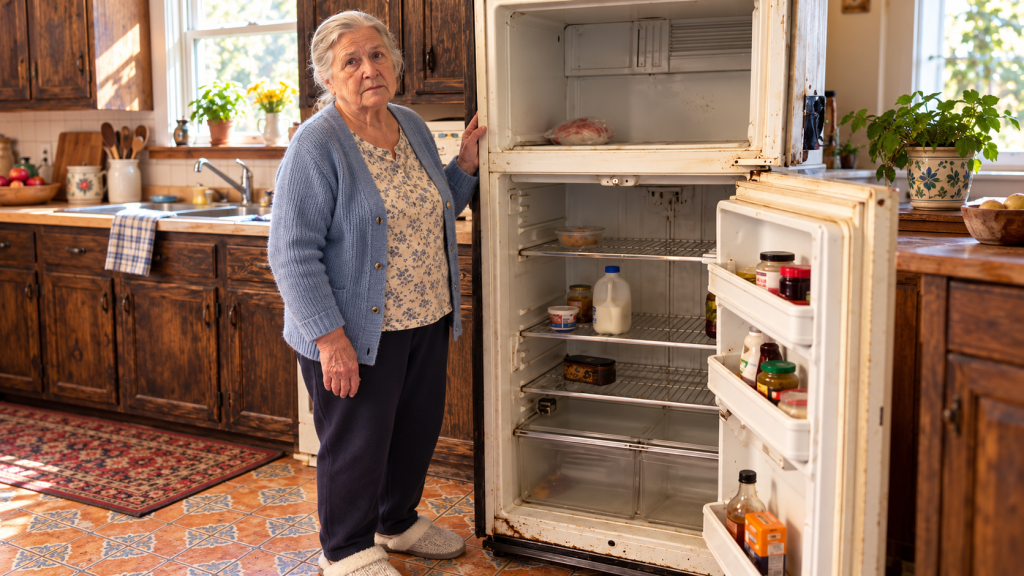
And whenever I remember that Saturday morning—the water spreading across Mom’s kitchen floor, the spoiled food, the old towels under the refrigerator—I no longer think first about Tessa.
I think about Mom.
Seventy years old.
Widowed.
Standing beside a broken appliance.
Ashamed because she needed money that belonged to her.
That shame was the part I could never accept.
Nobody should feel ashamed for needing their own money.
Nobody should have to justify why they saved it.
Nobody should be asked why they need security simply because somebody else wants the cash more.
Mom had spent years building a small wall between herself and fear.
Five thousand dollars.
Not wealth.
Not greed.
A wall.
Tessa borrowed every brick.
Then wondered why Mom cared.
Eventually, she understood.
That was why Mom forgave her.
Not because the money stopped mattering.
Because Tessa finally understood what it had meant.
THE END STORIES! THANK YOU FOR READING GOOD LUCK! ❤️
Related Posts



