The investigator’s words hung in the morning air like a sentence nobody wanted to hear. “And the witness signature belongs to your son.” For a moment, I couldn’t move. I had spent twenty-eight years investigating fraud. I’d questioned dishonest executives,
examined forged documents, uncovered elaborate financial schemes, and watched powerful people crumble when the evidence finally caught up with them. But nothing in those twenty-eight years had prepared me to hear my own son’s name connected to a fraudulent transfer of the home his father and I had built together.
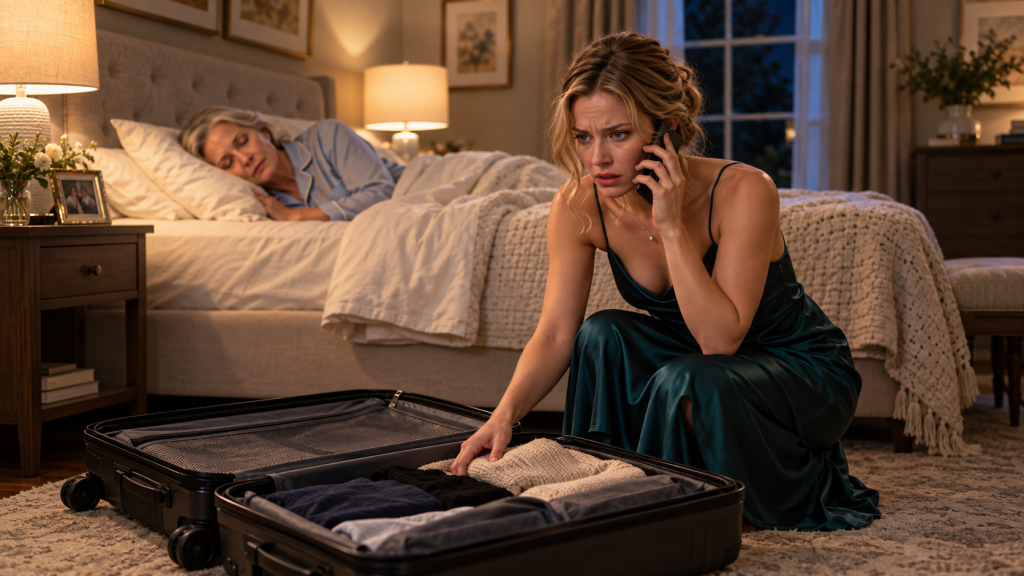
Ethan stood in the hallway wearing an old gray T-shirt. His hair was messy. His face was pale. And his eyes were fixed on the investigator. “What?” His voice sounded almost childlike. The investigator studied him. “Mr. Wilson, are you aware of a document filed yesterday concerning your mother’s lakefront property?”
Ethan shook his head.
“No.”
Brittany let out a nervous laugh.
“Oh, for heaven’s sake. There must be some misunderstanding.”
Nobody looked at her.
Ethan stepped forward.
“What document?”
The investigator opened his folder.
“A deed purporting to transfer ownership of the property from your mother into a limited liability company.”
My heart began pounding.
“What company?”
He glanced down.
“Silver Pine Development Group.”
The name meant nothing to me.
But the effect it had on Brittany was immediate.
Her shoulders stiffened.
Her lips parted.
Then she turned toward her husband.
“Ethan, don’t say anything.”
And that was when I understood something far more frightening than the pouch in my suitcase.
The airport trap wasn’t the whole plan.
It was only the distraction.
I looked directly at my daughter-in-law.
“Brittany.”
She avoided my eyes.
“What?”
“Who owns Silver Pine Development Group?”
She folded her arms.
“How would I know?”
I nodded slowly.
Then looked toward the investigator.
“Could I have the filing reference?”
He explained that a copy could be obtained through the appropriate records process and that the document’s authenticity was under review.
I knew better than to demand that he hand over material he wasn’t authorized to disclose.
But I also knew what mattered.
The filing date.
The named parties.
The signature.
The notarial acknowledgment.
And the identity of whoever submitted it.
Twenty-eight years had taught me that paperwork often tells a more reliable story than the people standing around it.
I turned toward Ethan.
“Son, look at me.”
He slowly raised his head.
“Did you sign anything yesterday?”
His face tightened.
“Mom…”
My stomach sank.
“Ethan.”
He swallowed.
“I signed some documents.”
Brittany spun toward him.
“Ethan!”
He flinched.
And the terrible silence that followed told me my son had been keeping something from me.
“What documents?” I asked.
Ethan looked down.
“Brittany said they were preliminary.”
“Preliminary to what?”
He rubbed his face.
“A property investment.”
My throat tightened.
“What property?”
He didn’t answer.
I took a breath.
“Ethan, did you sign a document concerning my house?”
He began crying.
“Mom, I didn’t know it was already being filed.”
Something inside me cracked.
Not loudly.
Not dramatically.
Just a small, terrible fracture in a place that had once held complete trust.
I looked toward Brittany.
She was staring at the front door.
Not at me.
Not at her husband.
At the door.
As though she were calculating how quickly she could reach it.
The older investigator noticed too.
“Mrs. Wilson,” he said gently, “we need to finish securing the luggage and speak to everyone separately.”
I nodded.
“Of course.”
Then I looked at Ethan.
The boy I’d raised.
The child whose scraped knees I’d bandaged.
The teenager whose first heartbreak had kept us talking until midnight.
The man who had stood beside his father’s hospital bed and promised we’d always look after each other.
And I whispered, “How much did you know?”
He covered his face.
“Not enough.”
I nodded slowly.
“Then you need to tell the truth before the rest of it finds you.”
The next hour unfolded with the careful, uncomfortable precision of an investigation.
Officers documented the suitcase.
The camera footage.
The room where Brittany had entered.
The position of the black pouch.
And the statements each of us gave.
Nobody opened the pouch in front of us.
The officers handled it according to their procedures, and I was grateful.
Whatever Brittany had planted, I didn’t want a single careless action to compromise the evidence.
Brittany kept insisting she had done nothing wrong.
First, she said she’d merely been checking my luggage.
Then she claimed she’d been putting a surprise gift inside.
When someone asked why a gift required a secret phone call about airport security, she began crying.
“Margaret has never liked me.”
I stood quietly beside the dining table.
There it was.
The first familiar defense.
Not an explanation of her actions.
An attack on my character.
She wiped her eyes.
“She thinks I’m after her money.”
I looked at her.
“Brittany, I think someone entered my room after midnight and placed an unknown object in my suitcase.”
Her face hardened.
“See? She always makes everything sound criminal.”
I said nothing.
I didn’t need to.
The camera recording had already shown what happened.
At seven fifteen, Daniel Brooks arrived.
My former colleague looked older than when we’d worked together.
His once-dark hair had gone mostly silver.
He wore a navy jacket and carried a folder beneath his arm.
When he saw me, his expression softened.
“Margaret.”
I nodded.
“Daniel.”
He approached.
Then asked quietly, “Are you all right?”
I almost answered automatically.
Of course.
I’m fine.
But my voice wouldn’t cooperate.
I looked toward the hallway where Ethan was speaking with an investigator.
Then whispered, “I don’t know.”
Daniel followed my gaze.
He understood.
He had worked enough family fraud cases to know that money could divide relatives more brutally than almost anything else.
He touched my shoulder.
“Tell them everything you know.”
I nodded.
“I intend to.”
Then I asked the question that had been burning inside me.
“Have they identified the contents of the pouch?”
Daniel’s expression grew serious.
“The examination is ongoing. You’ll receive verified information through the investigators.”
I sighed.
He continued.
“Don’t speculate. Don’t confront Brittany about the contents. Let the evidence establish what it is.”
I nodded.
He was right.
A good investigator doesn’t decide the conclusion first and then search for proof.
And I refused to abandon that principle simply because the suspects were people I loved.
By eight thirty, Brittany had stopped crying.
Her expression had changed completely.
She was cold now.
Angry.
Almost bored.
She sat at the kitchen table, tapping her fingernails against the wood.
Ethan stood by the window.
He hadn’t looked at me in nearly an hour.
Finally, the older investigator returned.
He spoke first to Brittany and Ethan.
Then asked whether he could update me privately.
We stepped into the living room.
“Mrs. Wilson, the pouch contained several items that require further examination.”
I nodded.
He continued.
“They include identification documents bearing your information and other materials investigators believe may relate to the property transaction.”
My stomach tightened.
“Identification documents?”
“Yes.”
“Were they genuine?”
“That hasn’t been fully established.”
I swallowed.
“And the airport report?”
“We’re examining communications indicating that someone intended to make a report concerning your luggage.”
I closed my eyes.
So Brittany had planned to direct attention toward my suitcase.
Perhaps she expected an inspection.
Perhaps she hoped someone would believe the documents proved I was involved in something improper.
Or perhaps the plan was even more elaborate.
But one fact was already clear.
She had entered my room secretly.
Placed documents in my belongings.
And discussed calling airport security.
Then, hours earlier, someone had filed a deed purporting to transfer my property.
I opened my eyes.
“Please preserve everything.”
The investigator nodded.
“We are.”
At nine twelve, my phone rang.
The caller was my attorney, Caroline Mercer.
I’d worked with Caroline years earlier when my husband, Robert, died.
She’d helped me settle his estate and update the documents concerning our lakefront property.
Now her voice sounded unusually tense.
“Margaret.”
“Yes?”
“I just received an alert concerning your property.”
My heart tightened.
“I know about the deed.”
A pause.
Then Caroline asked, “How?”
I told her.
Everything.
The camera.
The pouch.
The airport trap.
Ethan’s signature.
Brittany’s behavior.
When I finished, Caroline remained silent for several seconds.
Then she said something I would remember for the rest of my life.
“Margaret, you need to come to my office as soon as the officers say you’re free to leave.”
“Why?”
“Because the property transfer isn’t the only document.”
I gripped the phone.
“What else?”
Her voice became quieter.
“Someone also submitted paperwork claiming that you’re no longer capable of managing your financial affairs.”
My blood turned cold.
For a moment, I couldn’t speak.
I had investigated fraud for nearly three decades.
I’d retired with commendations.
Kept my finances organized.
Managed my investments.
Maintained my own home.
And planned my own travel.
Now someone was apparently trying to portray me as mentally incapable of making decisions.
I stared across the living room.
At the photographs on the mantel.
Robert smiling beside the lake.
Ethan as a child holding a fishing rod.
Our family standing outside the house on its twentieth anniversary.
Then I looked toward Brittany.
She was drinking coffee at my kitchen table.
Calmly.
As though nothing had happened.
My stomach twisted.
“Caroline,” I whispered, “what exactly did they submit?”
She explained that a petition or supporting materials appeared to have been prepared concerning my decision-making capacity, though its legal status and accuracy still needed verification.
The contents included troubling allegations about my memory.
My judgment.
And my supposed inability to manage property.
I closed my eyes.
Suddenly, dozens of little moments came rushing back.
Brittany asking whether I’d remembered taking my vitamins.
Brittany telling dinner guests I’d become forgetful.
Brittany laughing when I misplaced my reading glasses.
Brittany insisting I should stop driving at night.
Brittany suggesting Ethan needed authority over my bank accounts.
At the time, I’d dismissed those comments as irritating.
Now they formed a pattern.
A pattern I’d seen in other investigations.
Not proof by itself.
But enough to make the hair on my arms rise.
I remembered a dinner from two months earlier.
We’d been sitting in Brittany and Ethan’s dining room.
I had brought homemade lemon chicken.
Brittany was telling a story about her coworker.
Then she abruptly stopped.
“Margaret, did you forget the salt again?”
I looked down at the dish.
“No.”
She smiled.
“Oh, sweetheart. You’ve been so forgetful lately.”
Ethan laughed awkwardly.
“Brit…”
She shrugged.
“I’m only worried.”
Then she turned toward the guests.
“She’s getting older. You know how it is.”
I had smiled politely.
Changed the subject.
And ignored the discomfort settling in my chest.
Now I wished I’d asked her what she meant.
Because I was beginning to understand.
Brittany wasn’t simply trying to steal my property.
She was trying to make the theft appear protective.
At ten thirty, I sat across from Caroline in her office.
Daniel accompanied me.
I didn’t need him to investigate on my behalf.
I had plenty of experience.
But that morning, I needed someone who understood how painful it was when evidence pointed toward family.
Caroline spread documents across the conference table.
The lakefront property.
Forty acres.
A two-story home.
A private dock.
A guest cottage.
A stretch of shoreline Robert and I had spent decades restoring.
It wasn’t merely valuable land.
It was the place where our marriage had unfolded.
The place where Ethan learned to swim.
Where Robert taught him to fish.
Where we celebrated anniversaries.
Where we scattered wildflower seeds every spring.
And where I had held my husband’s hand during his final summer.
I touched the photograph Caroline placed before me.
The house looked beautiful beneath the autumn trees.
My throat tightened.
“Why does Brittany want it so badly?”
Caroline hesitated.
“Margaret, we may have found an answer.”
She opened another folder.
Inside was a proposal from a real estate development company.
A luxury resort project.
Private villas.
A marina.
Restaurants.
And a proposed access road crossing part of my property.
I stared.
Then read the number printed near the bottom.
$4.8 million.
I stopped breathing.
Four million.
Eight hundred thousand dollars.
I looked at Caroline.
“Is that an offer?”
“It’s part of a preliminary development proposal. We still need to establish the exact status.”
I stared at the figure.
Robert and I had purchased the property thirty years earlier for a fraction of that amount.
We hadn’t bought it as an investment.
We bought it because the lake made him happy.
He loved watching the water at sunrise.
Loved rowing out before breakfast.
Loved the sound of rain against the screened porch.
When he died, I’d promised myself I would never sell simply because someone waved a check.
The house was not a burden to me.
It was home.
I looked toward Daniel.
His expression was serious.
Then Caroline turned another page.
“Margaret, the developer’s correspondence indicates they’ve been communicating with someone claiming to represent your interests.”
My stomach tightened.
“Who?”
Caroline looked directly at me.
“Silver Pine Development Group.”
I closed my eyes.
There it was.
The company named in the disputed deed.
The company Brittany denied knowing.
The company someone had used to initiate a transfer of my home.
I looked at the proposed transaction again.
Then at a series of emails.
Some messages discussed land access.
Others referred to preliminary title arrangements.
One mentioned the need for the owner to vacate the property before certain work could proceed.
My heart tightened.
“Vacate?”
Caroline nodded.
“It’s part of the proposed timetable.”
I stared at the word.
Vacate.
Such a cold, ordinary word.
As though my life could be packed into cardboard boxes and removed to make room for expensive houses.
As though Robert’s garden could be cleared because someone wanted a better view.
As though the kitchen where I raised my son was nothing more than square footage.
I looked up.
“Who benefits?”
Caroline remained careful.
“That depends on the actual ownership and contractual arrangements. We’re obtaining the relevant records.”
I swallowed.
“And Brittany?”
Her expression tightened.
“She has connections to people associated with the company.”
I leaned back.
The room seemed to tilt.
The pouch.
The false allegations about my memory.
The deed.
The developer.
The airport.
All connected by one thing.
My home.
Then Caroline showed me a copy of the witness signature.
Ethan Robert Wilson.
My son’s full name.
Written in familiar handwriting.
I stared.
I knew that signature.
I’d watched him practice it when he was sixteen.
He used to write it in the margins of his schoolbooks.
He said he wanted a grown-up signature like his father.
And now it appeared on a document connected to the attempted transfer of the home where that father had raised him.
I pressed a hand against my mouth.
Daniel looked away.
Caroline let me sit quietly.
Finally, I whispered, “He signed it.”
She nodded.
“The copy appears to show his signature, though the circumstances and document still require examination.”
I looked at her.
“Did he know?”
“We don’t know enough yet.”
I closed my eyes.
That uncertainty hurt more than I expected.
Because part of me wanted Caroline to say he’d been tricked.
That Brittany had forged everything.
That my son was innocent.
But the investigator in me refused to accept comforting answers without proof.
And the mother in me was terrified of what proof might reveal.
That afternoon, Ethan called.
I watched his name appear on my phone.
For a moment, I couldn’t answer.
Then I did.
“Hello?”
“Mom.”
His voice broke immediately.
I closed my eyes.
“Ethan.”
“Can we talk?”
I took a breath.
“About what?”
He began crying.
“Everything.”
I looked toward the window.
The sun was shining.
Cars moved through the parking lot.
The world looked painfully normal.
I swallowed.
“Ethan, I love you.”
He sobbed.
“I love you too.”
“But that doesn’t mean I can ignore what happened.”
“I know.”
I took a breath.
“Then tell me the truth.”
He was silent.
Finally, he whispered, “Brittany said you were going to sell the house.”
My heart tightened.
“What?”
“She said you’d already agreed.”
I closed my eyes.
“And you believed her?”
He began crying harder.
“She showed me papers.”
I swallowed.
“What papers?”
“An agreement.”
My stomach twisted.
“She said the buyer needed preliminary signatures to keep the offer open.”
I stared at the floor.
“Did you speak to me?”
Silence.
“Ethan?”
His voice became almost inaudible.
“No.”
I wanted to scream.
Not because he’d made a mistake.
People make mistakes.
But because he had allowed someone else to speak for me about something that mattered more than money.
The house was my home.
My history.
My choice.
And my son hadn’t even asked.
I took a shaky breath.
“Why?”
He was quiet.
Then whispered, “Because I needed the money.”
My eyes filled.
There it was.
The first truth.
I sat down.
“What money?”
He began sobbing.
“Mom, I made some bad decisions.”
I closed my eyes.
“How bad?”
A long silence.
Then he said, “I owe people money.”
My heart dropped.
“How much?”
He couldn’t answer.
I waited.
Then he whispered, “Almost two hundred thousand dollars.”
I felt as though someone had struck me.
Two hundred thousand.
I stared at the wall.
Ethan worked as a project manager.
He and Brittany lived in a comfortable house.
They drove expensive cars.
Took vacations.
Hosted parties.
And always seemed to have money for things I considered unnecessary.
I’d assumed they were doing well.
Now I began wondering how much of their lifestyle had been built on debt.
“Ethan,” I whispered, “what happened?”
He took a trembling breath.
“Investments.”
“What kind?”
“Real estate.”
I closed my eyes.
Of course.
He continued.
“A project fell through.”
“And?”
“I borrowed to cover the losses.”
My heart tightened.
“From whom?”
He hesitated.
Then said, “A private lender.”
I swallowed.
“Does Brittany know?”
Silence.
Then Ethan whispered, “She introduced me to him.”
I stared at the phone.
The pieces were beginning to fit.
Brittany wanted my property.
Ethan owed money.
A development company wanted the shoreline.
Someone had filed a deed.
And someone had tried to create a record suggesting I couldn’t manage my affairs.
I took a breath.
“Ethan, did Brittany tell you what she put in my suitcase?”
He went silent.
My throat tightened.
“Son?”
His voice broke.
“No.”
I waited.
Then he whispered, “But I knew she was planning something.”
I closed my eyes.
There are moments when a parent’s heart breaks so quietly that nobody else can hear it.
That was mine.
“What did you know?” I asked.
Ethan began crying.
“She said you were going to create problems with the sale.”
My stomach twisted.
“What problems?”
“That you’d change your mind.”
I looked down.
“She said we needed to make sure the documents couldn’t be challenged.”
I swallowed.
“And?”
He was quiet.
Then he whispered, “She said she had a way to make you leave for a while.”
My heartbeat quickened.
“Leave?”
“Just until everything was settled.”
I felt sick.
“Ethan, I was already leaving for Denver.”
“I know.”
My voice broke.
“Then why did she need to do anything?”
He began sobbing.
“I don’t know.”
I closed my eyes.
He continued.
“I swear, Mom, I didn’t know she was putting something in your bag.”
I wanted to believe him.
Every part of me wanted to.
But his ignorance didn’t erase what he’d admitted.
He’d known something was being planned.
He’d known it involved me leaving.
And he hadn’t warned me.
I told Ethan to speak with his attorney and cooperate truthfully with the investigation.
Then I ended the call.
For a long time, I sat alone.
I thought about him as a little boy.
Running barefoot through the grass.
Holding a jar of fireflies.
Begging Robert to take him fishing.
I remembered the first time he fell off his bicycle.
He’d scraped both knees.
Cried into my shoulder.
And whispered, “Mommy, don’t let go.”
I hadn’t.
I held him until he stopped shaking.
I held him when he was frightened.
When he was sick.
When he failed an exam.
When his first girlfriend broke his heart.
When Robert died.
But now I understood something painful.
I could love my son without protecting him from the consequences of his decisions.
And I couldn’t save him by surrendering the home his father and I had built.
That night, I drove to the lake.
The road wound through tall pines.
Golden light filtered between the branches.
When I reached the property, the water was almost perfectly still.
I parked beside the house.
Stepped out.
And listened.
Birds.
Wind.
The soft movement of waves against the dock.
Nothing extraordinary.
But the familiar sounds made tears rise immediately.
I walked toward the porch.
Ran my hand along the wooden railing.
Robert had repaired it himself twelve years earlier.
He always insisted he could fix anything.
Sometimes he could.
Sometimes his repairs looked terrible.
But he loved the work.
I sat on the porch swing.
The same one he’d built for our twentieth anniversary.
And whispered, “Robert, what happened to our boy?”
The lake offered no answer.
Only the quiet sound of water touching the shore.
I stayed until sunset.
Then went inside.
The house smelled faintly of cedar and lemon polish.
Family photographs lined the hallway.
Ethan at five.
Ethan at ten.
Ethan graduating high school.
Ethan standing beside Brittany on their wedding day.
I stopped before that photograph.
His smile was enormous.
Brittany wore a lace dress.
Her hand rested against his chest.
They looked happy.
I remembered crying during the ceremony.
Not because I was losing my son.
But because I believed he had found someone who would love him well.
Now I wondered how much of their marriage had been shaped by secrets.
And how much Ethan had allowed himself to become someone he would once have despised.
I opened the cedar chest beneath the bedroom window.
Inside were Robert’s letters.
Old photographs.
A fishing hat.
A folded blanket.
And a small notebook.
I’d forgotten about the notebook.
It contained little things Robert wanted to repair around the property.
Loose boards.
A leaking faucet.
The guest cottage roof.
I opened it.
His handwriting filled the pages.
Then I found a note dated six months before he died.
Margaret wants to keep this place forever.
I hope she does.
My throat tightened.
Below it, he had written:
The house isn’t worth what someone offers.
It’s worth what it holds.
I pressed the notebook against my chest.
And finally began crying.
The next morning, I called Caroline.
“I want to challenge every unauthorized filing concerning the property.”
She answered calmly.
“We’re already preparing the appropriate actions.”
I swallowed.
“And I want to understand exactly what Silver Pine was trying to do.”
“We’ll obtain the records.”
I looked out over the lake.
Then said something I hadn’t expected.
“I also want to update my estate plan.”
Caroline paused.
“Of course.”
I took a breath.
“I need to make sure my property can’t become a weapon against me again.”
She nodded.
“Let’s review all your options carefully.”
I ended the call.
Then sat on the porch with a cup of coffee.
For the first time since the airport incident, I felt something other than fear.
Resolve.
The investigation continued.
Slowly.
Methodically.
The black pouch was examined.
The electronic communications were reviewed.
The purported deed and supporting papers were scrutinized.
Investigators looked into the circumstances surrounding the capacity-related documents.
And the financial connections between Brittany, Silver Pine Development Group, and the private lender who had extended credit to Ethan became clearer.
The pouch had contained forged identification materials and documents that appeared intended to connect me to financial activity I hadn’t authorized.
But it was the accompanying communications that mattered most.
They supported the allegation that Brittany wanted airport authorities to discover the pouch in my luggage.
The records did not prove every motive she had expressed to other people.
But they made one thing impossible to explain away.
She had not been trying to help me pack.
Then investigators uncovered messages between Brittany and a man named Victor Hale.
He was connected to the proposed development.
And to financial arrangements involving Ethan.
The messages suggested Brittany believed controlling my property was the fastest way to resolve their financial crisis.
Some referred to the lakefront parcel as “the key.”
Others discussed the timing of my Denver trip.
And one message contained a sentence that made my blood run cold.
“Once she’s out of the picture, we can finish everything.”
I stared at the words when Caroline showed me an authorized summary of the evidence.
Out of the picture.
Such an ordinary phrase.
Such an ugly meaning in context.
I’d been their mother.
Their mother-in-law.
A woman who cooked holiday dinners and remembered birthdays.
A woman who helped when bills were tight.
And somewhere along the way, I’d become an obstacle to be moved.
I asked Caroline whether Brittany had intended to have me arrested.
She answered carefully.
“The evidence indicates an attempt to trigger an airport security response. Her precise expectations are among the matters being investigated.”
I nodded.
It wasn’t the dramatic answer part of me wanted.
But it was honest.
And honesty mattered.
Especially now.
Brittany’s story changed repeatedly.
First, she claimed she was protecting me.
Then she said the documents were only temporary.
Then she insisted someone else had prepared everything.
Eventually, the evidence was presented through the proper legal process.
Some allegations resulted in charges.
Others were addressed through civil proceedings.
The disputed deed was challenged.
The property records were corrected through the appropriate procedures.
And the attempted transfer did not result in the loss of my home.
That was the first victory that truly mattered to me.
Not seeing Brittany frightened.
Not hearing relatives gossip about her.
Not watching her reputation collapse.
Keeping my home.
My choices.
My name.
But the most painful part came later.
Ethan asked to meet.
Not at my house.
Not privately.
Through a meeting arranged with appropriate legal advice.
I agreed.
Because despite everything, he was still my son.
We met in a quiet conference room.
He looked thinner.
Exhausted.
His eyes were red.
When he saw me, he stood.
“Mom.”
I nodded.
“Ethan.”
For several seconds, neither of us moved.
Then he began crying.
“I don’t know what to say.”
I sat down.
“Then start with the truth.”
Ethan explained the debt.
The failed investments.
The private lender.
The mounting interest.
The lies he’d told himself.
Brittany had encouraged him to believe that selling my property would solve everything.
She said I didn’t need such a large house.
That I could live somewhere smaller.
That I was getting older.
That Ethan would inherit the property someday anyway.
And eventually, he began repeating those arguments to himself.
I listened.
Then asked, “Did you believe I wanted to sell?”
His eyes filled.
“At first.”
“And later?”
He looked down.
“No.”
My heart broke.
I swallowed.
“So you knew.”
He began crying.
“I thought we could convince you.”
I nodded slowly.
“And when I refused?”
He covered his face.
“I let Brittany handle it.”
I closed my eyes.
There it was.
Not innocence.
Not complete ignorance.
Cowardice.
And greed.
And the decision to look away because looking directly at what was happening would have required him to stop it.
“Ethan.”
He looked up.
I swallowed.
“Do you remember when your father built the dock?”
His face crumpled.
“Mom…”
“Do you?”
He nodded.
“Yes.”
“You were twelve.”
Tears filled my eyes.
“You dropped the entire box of screws into the lake.”
A broken laugh escaped him.
“I remember.”
“Your father laughed so hard he nearly fell into the water.”
Ethan began crying.
I looked down.
“He made us promise not to tell anyone.”
My voice broke.
“And now you were willing to help take that place from me.”
Ethan covered his mouth.
“I know.”
I stared at him.
“No, son.”
A tear slipped down my cheek.
“I don’t think you understand yet.”
He reached across the table.
I withdrew my hand.
His face crumpled.
That hurt.
I saw it.
And it hurt me too.
But I needed him to understand that my love did not erase the distance his choices had created.
“You don’t get to treat me like an obstacle,” I whispered.
He nodded through tears.
“I know.”
“You don’t get to decide what I need without asking me.”
“Yes.”
“And you don’t get to risk my home because you’re afraid of facing your own financial problems.”
His shoulders shook.
“I know.”
I took a breath.
“Then what are you going to do?”
He looked up.
“Tell the truth.”
I nodded.
“And?”
“Cooperate.”
I waited.
He swallowed.
“Accept whatever happens.”
I stared at him.
For the first time in months, I saw a glimpse of the boy I’d raised.
Not because he was crying.
Not because he was apologizing.
But because he was beginning to understand that responsibility meant more than saying he was sorry.
Before leaving, Ethan stood near the door.
He turned.
“Mom?”
I looked up.
“Yes?”
“Do you still love me?”
The question pierced me.
I closed my eyes.
For a moment, I saw him at six years old, standing beside his father’s fishing boat.
Sunlight on his face.
A crooked smile.
A life still untouched by the mistakes waiting in adulthood.
I opened my eyes.
“Yes, Ethan.”
He began crying.
“I love you.”
My voice broke.
“But love doesn’t mean I can pretend this never happened.”
He nodded.
“I understand.”
I looked at him.
“I hope one day you truly do.”
Ethan and Brittany eventually separated.
Their marriage had been strained long before the investigation, though I hadn’t known the extent.
They had been hiding debts.
Arguing about money.
Blaming each other.
And making decisions that placed other people at risk.
I didn’t celebrate their separation.
I understood what broken marriages could do to a family.
But I also knew I couldn’t repair theirs.
That was their responsibility.
And for once, I was going to allow other adults to solve their own problems.
Several months later, Caroline called with news about the property records.
“Margaret, the corrective process is complete.”
I was sitting at the kitchen table.
I closed my eyes.
“The house?”
“Your ownership remains intact. The improper filing has been addressed.”
Tears filled my eyes.
I looked toward the window.
The lake shimmered in the afternoon sunlight.
For a moment, I couldn’t speak.
Then I whispered, “Thank you.”
Caroline laughed softly.
“You did the right thing by acting quickly and documenting what you knew.”
I smiled through tears.
“I had some practice.”
She laughed.
“Yes, you did.”
That afternoon, I walked down to the dock.
The wood creaked beneath my feet.
A heron stood near the reeds.
The water was still.
I sat at the end of the dock, exactly where Robert used to sit.
For a long time, I watched the lake.
Then whispered, “We kept it.”
My voice trembled.
“Robert, we kept our home.”
The wind moved gently through the trees.
And for the first time since that terrible night at 12:17, I allowed myself to feel relief.
But relief was not the same as healing.
For months, I startled whenever someone approached my suitcase.
I double-checked locks.
Reviewed my financial statements more often than necessary.
Felt uneasy when unfamiliar cars passed the property.
And struggled to trust the people who’d once moved freely through my home.
Sometimes I woke in the middle of the night, convinced someone was standing beside my bed.
I would sit up.
Look toward the luggage rack.
And remember Brittany bending over my suitcase.
The black pouch.
The whispered phone call.
Tell airport security at six.
I knew the immediate danger had passed.
But my body hadn’t learned that yet.
Daniel encouraged me to speak with someone.
Not because he doubted my strength.
But because betrayal by family leaves wounds that professional experience doesn’t automatically heal.
I began meeting with a counselor.
At first, I felt foolish.
I had questioned criminals.
Testified in court.
Handled complicated investigations.
Surely I could manage my own emotions.
But during our first session, the counselor asked a simple question.
“What hurts most?”
I opened my mouth.
Then stopped.
I thought about the property.
The forged documents.
The airport trap.
Brittany’s lies.
And Ethan’s signature.
Then I whispered, “My son didn’t protect me.”
Tears filled my eyes.
I looked down.
“I spent my whole life protecting him.”
The counselor waited quietly.
And I cried harder than I had in years.
Healing wasn’t a straight line.
Some days, I felt peaceful.
Other days, I was furious.
Sometimes I wanted Ethan to call.
Sometimes I couldn’t bear the thought of hearing his voice.
Sometimes I remembered Brittany as the woman who brought flowers on my birthday and helped me decorate Christmas cookies.
Then I remembered her opening my suitcase in the dark.
And the sadness returned.
I learned that two things could be true.
I could remember moments of kindness.
And still acknowledge deliberate harm.
One did not erase the other.
My younger sister, Susan, recovered well from her surgery.
The trip to Denver I’d planned was postponed during the immediate investigation.
But several months later, I finally visited.
This time, I packed my own suitcase.
Checked it carefully.
And traveled after arranging everything appropriately.
When I arrived, Susan was waiting at the airport.
She looked healthier.
Her hair was neatly styled.
And she held a ridiculous homemade sign.
WELCOME, DETECTIVE MARGARET.
I burst out laughing.
Then began crying.
She dropped the sign.
Wrapped her arms around me.
And whispered, “You made it.”
I held her tightly.
“Yes.”
That evening, we sat in her living room drinking tea.
Susan listened as I told her more about the investigation.
She shook her head.
“I can’t believe Brittany did that.”
I stared into my cup.
“Neither can I.”
Susan reached across the table.
“And Ethan?”
My throat tightened.
I took a breath.
“I love him.”
She nodded.
“But?”
I looked down.
“I don’t trust him.”
Susan’s eyes filled.
She squeezed my hand.
“You don’t have to pretend that trust is still there.”
I began crying.
She moved beside me.
And held me until I could breathe again.
Before returning home, Susan gave me a small gift.
A silver keychain.
Shaped like a little house.
On the back were three engraved words.
YOUR LIFE. YOUR CHOICE.
I stared at it.
My eyes filled.
Susan smiled.
“Thought you might like it.”
I hugged her.
“I love it.”
And for the first time, I understood that the greatest thing I had defended wasn’t simply a house.
It was my right to decide what happened to my life.
The following spring, I began restoring the garden.
Robert had planted roses along the western fence.
Over the years, some had grown wild.
Others had stopped blooming.
I spent weekends pruning.
Pulling weeds.
Planting new flowers.
And repairing the stone path toward the lake.
The work was slow.
Sometimes exhausting.
But I loved it.
Each small improvement reminded me that the property wasn’t simply an asset on a spreadsheet.
It was a living place.
A home that responded to care.
One afternoon, Daniel visited.
He brought lunch.
Turkey sandwiches.
Fruit.
And the terrible coffee he’d always insisted was better than anything I made.
We sat on the porch.
He looked toward the lake.
“Beautiful place.”
I smiled.
“Always has been.”
He nodded.
“Robert loved it.”
My throat tightened.
“Yes.”
Daniel looked at me.
“Have you thought about what you want to do with it long term?”
I considered.
“Yes.”
He waited.
I smiled.
“Something different.”
I’d begun working with Caroline on a revised estate plan.
I wanted clear protections.
Thoughtful instructions.
And arrangements that reflected my own values rather than assumptions about inheritance.
I wasn’t trying to punish Ethan forever.
But I also wasn’t going to leave decisions about my home to chance.
There were options.
Trust arrangements.
Beneficiary designations.
Conservation measures.
Other planning tools.
Each carried legal and financial considerations.
I examined them carefully.
Then began developing an idea.
Robert had always loved children.
Especially children who had never experienced the peace of the outdoors.
He used to invite neighborhood families to fish at the dock.
Teach kids to identify birds.
Show them how to paddle safely.
He believed the lake belonged to the living world, not simply to whoever held the deed.
I thought about that.
And decided I wanted part of the property to support something meaningful.
Over the next year, I worked with local organizations to explore a small environmental education program.
Nothing grand.
No enormous construction project.
No luxury marina.
Just guided visits.
Nature education.
Birdwatching.
And opportunities for children to learn about the lake.
We reviewed safety.
Accessibility.
Insurance.
Conservation rules.
And practical logistics.
I wanted to do it responsibly.
And eventually, we organized our first small visit.
Twelve children.
Two teachers.
Several volunteers.
And one very nervous retired fraud investigator.
Me.
On the morning of the visit, I stood near the dock watching the bus arrive.
The children poured out.
Laughing.
Pointing toward the water.
Asking questions.
One little boy stared at the lake.
Then whispered, “It’s huge.”
I laughed.
“Yes, it is.”
He looked up.
“Do you live here?”
I nodded.
“I do.”
His eyes widened.
“Every day?”
I smiled.
“Every day.”
He looked around.
Then said something that made my heart ache.
“You’re lucky.”
I glanced toward the house.
The roses.
The dock.
The trees Robert loved.
Then nodded.
“Yes.”
My voice trembled.
“I am.”
We spent the morning learning about the lake.
The children looked for birds.
Sketched leaves.
Asked a thousand questions.
And laughed when a frog jumped into the water.
At noon, we ate sandwiches beneath the big oak tree.
I sat beside a little girl named Emma.
She had dark braids and serious brown eyes.
She looked at me.
“Miss Margaret?”
“Yes?”
“Why do you let people come here?”
I considered.
Then smiled.
“Because beautiful places can mean more when they’re shared carefully.”
She thought about that.
Then nodded.
“That’s nice.”
I looked toward the lake.
And felt tears rise.
Because years earlier, someone had tried to take this place from me for profit.
Now I was choosing to share a small part of it for something entirely different.
Education.
Wonder.
Joy.
After the children left, I sat on the porch.
Exhausted.
Happy.
Covered in a little dirt.
Daniel called.
“How did it go?”
I laughed.
“Wonderful.”
He smiled through the phone.
“Any disasters?”
“One child dropped a sandwich in the grass.”
“Tragic.”
“Another insisted the frog was waving at him.”
Daniel laughed.
I smiled.
“And nobody tried to sell the property.”
He went quiet.
Then laughed softly.
“That’s progress.”
I smiled.
“Yes.”
“It is.”
The program grew slowly.
We added seasonal visits.
Worked with educators.
Brought in local naturalists.
And created simple lessons about lake ecosystems.
I wasn’t trying to turn the property into a business.
I wanted it to remain a home.
But I also wanted Robert’s love of the land to continue beyond my own lifetime.
Each time children visited, I imagined him standing beside me.
Smiling.
Making terrible jokes.
And pretending he knew more about birds than he actually did.
Then, almost two years after the suitcase incident, Ethan wrote me a letter.
It arrived on a rainy Tuesday.
His handwriting was familiar.
I recognized it immediately.
I sat at the kitchen table.
Held the envelope for several minutes.
Then opened it.
Dear Mom,
I’ve rewritten this letter more times than I can count.
My throat tightened.
I know saying I’m sorry isn’t enough.
I continued.
I signed documents I should never have signed.
I ignored warning signs because I wanted money to solve problems I’d created.
And when Brittany began making plans that involved you, I chose silence instead of protecting you.
A tear slipped down my cheek.
I kept telling myself I wasn’t really hurting you because the property would eventually come to me anyway.
I stopped breathing.
There it was.
The thought beneath everything.
The belief that someday becoming the owner meant he could act as though the property already belonged to him.
I swallowed.
Then continued.
I understand now how cruel that was.
Dad didn’t build that house for me to take from you.
He built it with you.
My face crumpled.
You were supposed to feel safe there.
And I helped make you afraid.
I began sobbing.
Ethan continued.
He wrote about counseling.
About dealing with his debts through lawful arrangements.
About taking responsibility for his actions.
He didn’t ask for money.
Didn’t ask about the house.
Didn’t mention inheritance.
He simply wrote:
I don’t expect you to trust me because I finally understand what I did.
I know trust takes time.
But if you ever decide to speak with me again, I will listen.
Then came the final sentence.
I miss my mother, and I know I have no right to ask her to pretend nothing happened.
I folded the letter.
Pressed it against my chest.
And cried.
Not because everything was repaired.
But because, for the first time, Ethan’s apology didn’t contain an excuse.
I didn’t answer immediately.
I discussed the letter with my counselor.
Spoke with Caroline about appropriate boundaries.
And gave myself time.
A few weeks later, I wrote back.
Dear Ethan,
I love you.
That has never changed.
But my trust was deeply damaged by your decisions.
I am glad you’re taking responsibility.
I hope you continue doing so, regardless of whether our relationship improves.
I am willing to begin with a conversation.
Slowly.
Honestly.
Without discussing money or property.
Love, Mom.
I mailed the letter.
Then went outside to tend the roses.
Our first conversation took place at a small café.
Not at my house.
Not near the lake.
Neutral ground.
Ethan arrived early.
He stood when he saw me.
For a moment, we simply stared at each other.
He looked older.
There were faint lines around his eyes.
His hair was shorter.
He wore a plain blue shirt.
No expensive watch.
No carefully polished appearance.
Just my son.
He whispered, “Mom.”
I nodded.
“Ethan.”
He swallowed.
“Thank you for coming.”
I sat down.
“So did you.”
He smiled sadly.
Then we talked.
Not about the property.
Not about the legal case.
At first, we talked about ordinary things.
His work.
Susan’s recovery.
The garden.
The weather.
It felt awkward.
Strange.
As though we were two people trying to remember how to speak a language we’d once known by heart.
But we kept talking.
After an hour, Ethan looked down.
“Mom?”
“Yes?”
“Can I ask you something?”
I nodded.
He swallowed.
“Do you think we can ever be close again?”
My throat tightened.
I considered carefully.
“I don’t know.”
His eyes filled.
I continued.
“But I’m willing to see whether we can build something honest.”
He nodded.
Then whispered, “That’s more than I deserve.”
I looked at him.
“Ethan, this isn’t about what you deserve.”
My voice softened.
“It’s about what is safe and healthy for both of us.”
He wiped his eyes.
“I understand.”
I smiled sadly.
“I hope so.”
We began meeting occasionally.
Coffee.
Lunch.
Walks in public parks.
Short conversations.
There were difficult moments.
Times when anger returned.
Times when he became defensive.
Times when I needed space.
But Ethan kept showing up.
He listened.
Answered questions.
Respected boundaries.
And didn’t ask for money.
That mattered.
Not because ordinary respect deserved applause.
But because it was necessary if trust was ever going to grow again.
Brittany’s legal troubles continued through the appropriate proceedings.
The evidence concerning the planted pouch and property documents was evaluated.
Her involvement in the attempted transfer was addressed.
I did not attend every hearing.
I didn’t read every article.
I didn’t spend my retirement following every detail of her life.
I had already given her more time than I wanted to.
And I understood that accountability did not require me to turn my existence into a permanent punishment campaign.
The legal system had its role.
My attorney had hers.
And I had a life to live.
One day, Ethan told me he and Brittany’s divorce was final.
We were sitting in a café.
He looked down at his coffee.
“I wanted you to know.”
I nodded.
“Thank you.”
He swallowed.
“I’m not asking you to say anything.”
I looked at him.
He continued.
“I know I made my own choices.”
My heart tightened.
He raised his eyes.
“I used to blame everything on Brittany.”
I remained quiet.
He nodded slowly.
“But she didn’t make me sign those papers.”
I felt tears rise.
He continued.
“She didn’t force me to ignore you.”
He looked down.
“I did that.”
For a long moment, neither of us spoke.
Then I whispered, “Thank you for recognizing that.”
Our relationship changed slowly.
It never returned to the innocence it once held.
I no longer assumed Ethan would always make good decisions.
I no longer believed being someone’s mother meant I could prevent every betrayal.
But we began developing something different.
A relationship between two adults.
With boundaries.
Accountability.
And the understanding that love does not erase responsibility.
It was imperfect.
Sometimes painful.
But honest.
One autumn afternoon, I invited Ethan to visit the lake.
It had been nearly four years since the suitcase incident.
I had thought carefully before making the invitation.
He arrived carrying a small paper bag.
Inside were two sandwiches.
Turkey.
Just like Robert used to make.
He smiled nervously.
“Thought you might be hungry.”
I laughed softly.
“Thank you.”
We sat on the porch.
The lake shimmered beneath the afternoon sun.
For a long time, neither of us spoke.
Then Ethan looked toward the dock.
“Dad loved that place.”
My throat tightened.
“Yes.”
He swallowed.
“I miss him.”
I nodded.
“Me too.”
A tear slipped down his cheek.
Then he whispered, “I think he’d be disappointed in me.”
My heart ached.
I considered.
Then said, “I think he’d want you to take responsibility and become better.”
Ethan nodded.
“I hope so.”
We walked toward the dock.
The old boards creaked.
Ethan stopped near the end.
Then laughed softly.
“Remember when I dropped all those screws?”
I smiled.
“Yes.”
He shook his head.
“Dad was laughing so hard.”
I began laughing too.
“He said you were testing whether the lake needed more metal.”
Ethan laughed through tears.
For a moment, the years disappeared.
I saw the little boy.
The husband I’d loved.
The summer sunlight.
The family we’d once been.
Then the memory faded.
And I stood beside my adult son, knowing love had survived but trust still required care.
Ethan looked at me.
“Mom?”
“Yes?”
“I’m glad you kept the house.”
My throat tightened.
I nodded.
“So am I.”
He looked toward the trees.
Then whispered, “It’s yours.”
I stared at him.
He continued.
“It always was.”
Tears filled my eyes.
I reached for his hand.
He took it.
And for a moment, we stood quietly beside the water.
Not pretending the past had never happened.
But allowing ourselves to share one peaceful moment in the present.
The environmental program became one of the happiest parts of my retirement.
Children came in spring to study birds.
In summer to learn about water safety and conservation.
In autumn to collect leaves and draw trees.
Every year, we made small improvements.
A walking path.
Educational signs.
A covered picnic area.
And a garden planted in Robert’s memory.
I called it Robert’s Garden.
Not because he had been perfect.
But because he had loved this place.
And because love can become something beautiful when it is expressed through care rather than control.
One afternoon, a little girl stood beside the garden reading the sign.
She looked up.
“Miss Margaret?”
“Yes?”
“Who’s Robert?”
My eyes filled.
I smiled.
“He was my husband.”
She nodded.
“Where is he?”
I swallowed.
“He died several years ago.”
The little girl’s expression softened.
“Oh.”
I knelt beside her.
“He loved flowers.”
She smiled.
“Then he’d like this garden.”
I looked toward the roses.
The lavender.
The yellow daisies.
The little stone path.
Then whispered, “Yes.”
My voice broke.
“I think he would.”
As I grew older, I began thinking more carefully about what it meant to leave something behind.
Money mattered.
Property mattered.
Legal documents mattered.
But what I wanted to preserve wasn’t simply the market value of the house.
It was the possibility that someone else might find peace here.
I worked with appropriate advisers to put a thoughtful plan in place.
It balanced my own needs, the property’s future, and the educational work I’d begun.
I didn’t announce the details at family dinners.
I didn’t use it to threaten Ethan.
I didn’t make inheritance a test of his love.
I simply made decisions that reflected my wishes.
Clearly.
Legally.
And without surrendering control of my life.
On my seventieth birthday, Susan organized a celebration at the lake.
Daniel came.
Caroline stopped by.
Several friends from my old agency attended.
Volunteers from the education program brought flowers.
Ethan arrived with a homemade chocolate cake.
He’d never been much of a baker.
The frosting was crooked.
The lettering was uneven.
And one corner had collapsed during the drive.
When he placed it on the table, I burst out laughing.
“Ethan.”
He grinned nervously.
“I tried.”
I smiled.
“I can see that.”
He laughed.
“Don’t judge the appearance.”
I looked at the cake.
Then at him.
My eyes filled.
“Your father used to say that.”
Ethan’s smile softened.
“I know.”
Everyone gathered beneath the oak tree.
There were sandwiches.
Lemonade.
Flowers.
Music.
And laughter.
At some point, Daniel stood.
He raised his glass.
“To Margaret.”
I groaned.
“Don’t you dare make a speech.”
Everyone laughed.
He smiled.
“After twenty-eight years investigating fraud, she retired and somehow found an even harder job.”
I raised an eyebrow.
“What’s that?”
He grinned.
“Keeping twelve-year-olds from falling into a lake while teaching them about birds.”
The crowd laughed.
I shook my head.
Daniel continued.
“But seriously.”
His expression softened.
“Margaret has always believed that the truth matters.”
My eyes filled.
“Even when it’s inconvenient.”
“Even when it hurts.”
“Even when the people involved are close to her.”
I swallowed.
He looked toward the garden.
“And she has shown us something else.”
His voice warmed.
“That a life doesn’t have to become smaller after betrayal.”
“It can become more generous.”
“More purposeful.”
“More beautiful.”
Tears streamed down my cheeks.
Daniel raised his glass.
“To Margaret.”
Everyone echoed him.
I covered my face.
Then laughed through tears.
Later that evening, after the guests had gone, Ethan stayed to help clean.
We carried plates inside.
Put away chairs.
Folded tablecloths.
And washed dishes together.
It felt strangely ordinary.
For years, those simple moments had been interrupted by resentment and secrets.
Now they were simply a mother and son cleaning up after a birthday party.
At one point, Ethan handed me a towel.
“Here.”
I took it.
“Thank you.”
He smiled.
Then looked toward the window.
The sun was setting over the lake.
He became quiet.
I noticed.
“What’s wrong?”
He shook his head.
“Nothing.”
I waited.
Then he whispered, “I’m grateful you let me come today.”
My heart tightened.
I took a breath.
“I’m glad you came.”
He smiled sadly.
Then continued drying dishes.
After Ethan left, I sat on the porch.
The house was quiet.
The birthday decorations moved gently in the breeze.
The lake reflected the last light of evening.
I looked toward the dock.
And thought about the night everything began.
12:17 a.m.
Brittany opening my suitcase.
The black pouch.
The whispered phone call.
The hidden camera.
I’d spent twenty-eight years uncovering fraud.
Yet the hardest investigation of my life had unfolded inside my own family.
Not because the evidence was the most complicated.
But because I loved the people connected to it.
People sometimes ask whether I regret installing that camera.
I don’t.
It documented what happened.
And without it, I might have faced a far more confusing and frightening situation.
But I don’t pretend the camera solved everything.
It didn’t repair my relationship with Ethan.
It didn’t erase Brittany’s choices.
It didn’t make the legal process painless.
And it didn’t restore the trust I’d lost.
It simply helped establish the truth.
The rest required time.
Professional help.
Boundaries.
And a willingness to let facts matter more than the stories people wanted me to believe.
I also learned something about being underestimated.
Brittany thought my age made me vulnerable.
She assumed that because I was sixty-three, I would panic.
That I wouldn’t understand the documents.
That I’d be too frightened by police involvement to defend myself.
That my love for Ethan would prevent me from challenging anything he signed.
But she made a mistake.
She confused kindness with helplessness.
And age with weakness.
I wasn’t invincible.
I was frightened.
Deeply.
But I knew how to ask questions.
How to document facts.
How to seek appropriate support.
And how to refuse a story that didn’t match the evidence.
The most difficult thing wasn’t protecting the property.
It was learning to protect myself emotionally.
For years, I’d treated being a good mother as an endless responsibility.
If Ethan needed money, I helped.
If he made a mistake, I guided him.
If he was unhappy, I worried.
But there came a moment when helping became something else.
A way of shielding him from consequences he needed to face.
And I had to stop.
Not because I loved him less.
Because loving him did not require me to surrender my judgment.
One winter evening, Ethan came over for dinner.
We ate soup beside the fireplace.
Outside, snow fell lightly.
He looked toward the mantel.
Robert’s photograph stood beside a little wooden carving of a fish.
Ethan smiled.
“Dad made that?”
I nodded.
“Unfortunately.”
He laughed.
“It looks like a potato.”
I burst out laughing.
“That’s exactly what I told him.”
For a moment, we laughed until our eyes watered.
Then Ethan became quiet.
“Mom?”
“Yes?”
“Thank you for not giving up on me.”
My heart tightened.
I considered carefully.
Then said, “Ethan, I never stopped loving you.”
He nodded.
“But I did have to stop allowing you to make decisions for me.”
His eyes filled.
“I know.”
I looked at him.
“And trust is something we keep working on.”
He nodded.
“I understand.”
I smiled gently.
“Good.”
After dinner, Ethan helped carry wood inside.
He stacked it beside the fireplace.
Then checked the porch steps for ice.
Small things.
Ordinary things.
Not grand apologies.
Not expensive gifts.
Not emotional speeches.
Just practical acts of care.
I noticed.
And slowly, I began recognizing that genuine change often looks less dramatic than regret.
It looks like showing up.
Respecting boundaries.
Telling the truth.
And continuing to do the right thing when nobody is applauding.
The anniversary of the suitcase incident passed quietly.
I didn’t mark it on the calendar.
Didn’t hold a celebration.
Didn’t call anyone.
But that morning, I found myself standing beside the guest bedroom.
The room where Brittany had entered while I pretended to sleep.
I opened the door.
Sunlight filled the space.
A clean quilt covered the bed.
Fresh flowers stood beside the window.
And the luggage rack sat in the corner.
For a moment, I felt the old fear.
The memory of the zipper.
The whispered phone call.
The black pouch disappearing into my carry-on.
Then I looked around.
The room was peaceful.
Empty.
Safe.
I took a slow breath.
And smiled.
Because the past had happened.
But it wasn’t happening now.
I walked toward the window.
Outside, the lake shimmered.
The garden was blooming.
Birds gathered near the feeder.
Somewhere down the path, volunteers were preparing for another educational visit.
I stood there listening to the sounds of a life I had chosen.
And suddenly, I felt gratitude.
Not for the betrayal.
Never for that.
But for the people who had helped me through it.
Daniel.
Caroline.
Susan.
My friends.
The honest investigators who followed the evidence.
The professionals who helped me heal.
And eventually, Ethan, who had begun taking responsibility for the harm he’d caused.
I thought about the woman I had been at sixty-three.
Sitting awake in the dark.
Listening to Brittany leave the room.
Holding a phone with trembling fingers.
Trying to decide what to do.
She was frightened.
But she knew one thing.
She had to preserve the truth.
And that decision changed everything.
Today, when I tell the story, people often focus on the dramatic details.
The secret pouch.
The airport call.
The hidden camera.
The forged deed.
The multimillion-dollar development proposal.
But those were only pieces of a larger lesson.
The real story was about control.
Someone wanted to decide what happened to my property.
My reputation.
My freedom.
My future.
Without asking me.
And they believed love and family would make me surrender those choices.
They were wrong.
I have never believed that age automatically makes someone wise.
Wisdom requires learning.
Listening.
And sometimes admitting painful truths.
But I do believe experience can teach us something valuable.
Not to ignore small warning signs.
Not to confuse promises with proof.
And not to let another person’s urgency become a reason to abandon our own judgment.
Brittany had spent months telling me that managing property was too complicated.
That I needed help.
That Ethan should take over.
She spoke as though my age meant my choices mattered less.
But I was the one who had purchased the property with Robert.
Maintained it.
Paid its expenses.
Protected it.
And loved it.
No one had the right to erase that simply because they wanted the land.
One afternoon, a volunteer named Grace asked me something.
We were planting wildflowers near the educational path.
“Margaret?”
“Yes?”
“Why didn’t you just sell the property?”
I smiled.
“Because I didn’t want to.”
She laughed.
“That’s it?”
I nodded.
“That’s enough.”
Grace considered that.
Then smiled.
“You’re right.”
I looked toward the lake.
And felt something warm settle in my chest.
Sometimes the strongest explanation is also the simplest.
I didn’t want to sell.
It was my decision.
And that mattered.
Years ago, I watched my daughter-in-law enter my room at 12:17 in the morning.
She believed I was asleep.
She believed I was defenseless.
She believed I’d be too frightened to challenge what she’d planted in my luggage.
And she believed that by the next morning, I’d be dealing with airport security while her plans for my property moved forward.
But she hadn’t accounted for something.
I had spent my professional life learning that people who manipulate documents often make one crucial mistake.
They underestimate the importance of a reliable record.
And that night, the camera recorded what she did.
Yet the camera was only the beginning.
The truth required much more.
Investigators.
Attorneys.
Bank records.
Property filings.
Witness statements.
And the difficult willingness to examine my son’s involvement without pretending he was innocent simply because I loved him.
That was the hardest part.
Not outsmarting Brittany.
Not defending the house.
But accepting that love does not exempt anyone from responsibility.
If I could speak to the younger version of myself, I’d tell her something.
You are going to be hurt.
You are going to discover things you don’t want to know.
You are going to question whether you’ve failed as a mother.
And there will be nights when the betrayal feels heavier than anything you’ve carried before.
But you will survive it.
Not because you are fearless.
Because you will ask for help.
Trust the evidence.
Protect your choices.
And allow yourself to grieve without surrendering your future.
You will keep the house.
You will restore the garden.
You will teach children about the lake.
You will hear laughter beneath the oak tree.
And one day, your son will stand beside you on the dock and acknowledge what he did.
The relationship won’t become magically perfect.
But it may become honest.
And honesty is where genuine repair begins.
I also learned that revenge and accountability are not the same thing.
Revenge wants someone else to suffer.
Accountability asks that actions be acknowledged and addressed.
I didn’t need Brittany to experience fear simply because she’d frightened me.
I needed the truth established.
The improper documents challenged.
My rights protected.
And the people involved held responsible through the appropriate processes.
Once those things were underway, I chose to turn my attention toward living.
Because life is too precious to spend every remaining year standing guard over the worst thing someone has done to you.
I had a lake to enjoy.
A garden to tend.
A sister to visit.
Friends to laugh with.
Children to teach.
And a future that deserved more attention than Brittany’s mistakes.
One morning, long after the legal matters were resolved, I walked down to the dock before sunrise.
The water was smooth.
Mist hovered above the surface.
A heron stood near the reeds.
And the sky slowly turned pink.
I carried two cups of coffee.
An old habit.
One for me.
One for Robert.
I’d stopped doing it after he died.
But that morning, I felt like sharing the sunrise with his memory.
I set one cup beside his favorite chair.
Then sat down.
For a long time, I watched the lake.
Finally, I whispered, “We kept it, darling.”
My eyes filled.
“We kept our home.”
The wind moved gently through the trees.
And in the quiet, I remembered his words.
The house isn’t worth what someone offers.
It’s worth what it holds.
I looked toward the shore.
The garden.
The porch.
The trees where Ethan once built a rope swing.
The path where schoolchildren now walked carrying notebooks and binoculars.
The guest cottage.
The old dock.
The place where Robert and I had spent a lifetime.
Then I smiled.
Because the property had become something even more meaningful.
Not a luxury resort.
Not a prize for someone else’s debt.
Not a number on a development proposal.
A home.
A place of learning.
A place where memories were honored rather than sold without consent.
And for the first time, I understood something.
Keeping the property wasn’t simply about holding on to the past.
It was about protecting my right to decide what the future could become.
When I returned to the house, Ethan was standing on the porch.
He had come to help repair a loose step.
We’d arranged it the week before.
He smiled when he saw me.
“Morning, Mom.”
I smiled back.
“Morning.”
He glanced toward the lake.
“Beautiful sunrise?”
I nodded.
“Very.”
He picked up his tools.
“Ready for me to fix this?”
I laughed.
“Are you sure you know what you’re doing?”
He grinned.
“Dad taught me.”
I raised an eyebrow.
“That’s what worries me.”
We both laughed.
And the sound filled the morning air.
For a moment, I watched him working.
His hands moving carefully.
The same hands that had once held a fishing rod beside his father.
The same hands that had signed a document he should never have signed.
Now repairing a step in the house he’d nearly helped take from me.
I felt a quiet ache.
Because redemption isn’t erasing the past.
It’s choosing differently after facing it.
And I hoped Ethan would continue choosing differently for the rest of his life.
When he finished, he stood.
“Try it.”
I stepped carefully onto the repaired board.
It felt solid.
I smiled.
“Good work.”
He grinned.
“Thanks.”
Then he hesitated.
“Mom?”
“Yes?”
“Can I ask you something?”
I nodded.
He looked toward the lake.
“Do you think Dad would’ve wanted me to inherit this place?”
My heart tightened.
For a moment, I wondered whether everything was beginning again.
The entitlement.
The assumptions.
The belief that someday the property would automatically belong to him.
But then Ethan continued.
“Because if he did, I want you to know something.”
I waited.
He swallowed.
“I don’t expect it.”
My eyes filled.
He looked at me.
“It’s your home.”
His voice broke.
“And whatever you decide to do with it, I want it to be your choice.”
I stared at him.
Then nodded slowly.
“Thank you.”
He smiled sadly.
“I should’ve understood that years ago.”
I took a breath.
“Yes.”
Then I touched his arm.
“But I’m glad you understand it now.”
That evening, after Ethan left, I sat at the kitchen table and opened my old investigation notebook.
I hadn’t looked at it in years.
The pages contained notes from the suitcase incident.
Dates.
Times.
Names.
Questions.
Evidence references.
I turned to the first page.
At the top, I’d written:
12:17 A.M. — UNAUTHORIZED ENTRY INTO GUEST ROOM.
I stared at the words.
Then remembered how frightened I’d been.
The darkness.
The zipper.
Brittany whispering into her phone.
My pulse pounding while I pretended to sleep.
I turned the page.
More notes.
More questions.
More uncertainty.
And then, near the bottom of one page, I found something I’d written several days after the incident.
Do not allow emotion to replace evidence.
I smiled sadly.
For years, those words had guided my investigations.
But this case taught me something else.
Emotion mattered too.
Grief.
Love.
Anger.
Fear.
They didn’t determine the facts.
But they were part of what those facts meant to the people involved.
I closed the notebook.
Then opened a fresh journal.
On the first page, I wrote:
THINGS WORTH PROTECTING.
I paused.
Then began.
My right to make decisions.
My safety.
My home.
My relationships.
My peace.
My future.
I looked at the list.
Then added one final line.
Myself.
The following week, another group of children visited the lake.
They arrived in a yellow school bus.
Carrying notebooks.
Lunch boxes.
And more questions than I thought humanly possible.
One little boy stood beside the dock and asked, “Miss Margaret, how old is this house?”
I smiled.
“Older than you.”
He laughed.
“Everything is older than me.”
I laughed too.
Then another child asked, “Are you going to live here forever?”
The question caught me off guard.
I looked toward the house.
The porch.
The roses.
The lake.
Then smiled.
“Not forever.”
The little girl frowned.
“Why?”
I knelt beside her.
“Because nobody lives forever, sweetheart.”
She considered that.
Then asked, “Will the lake still be here?”
My eyes filled.
I looked toward the water.
“Yes.”
I smiled.
“I hope people will still be caring for it long after I’m gone.”
She nodded thoughtfully.
Then ran toward her friends.
I stood beside the dock for a moment.
Watching the children.
Listening to their laughter.
And realized that the best answer to Brittany’s attempt to take my future wasn’t anger.
It was creating one.
A future where the property remained meaningful.
Where children could discover nature.
Where memories could grow alongside the old ones.
Where Robert’s love of the lake continued through people he’d never meet.
That night, I called Susan.
We talked about ordinary things.
Her garden.
My volunteer program.
Daniel’s terrible coffee.
Ethan’s repaired porch step.
Then Susan became quiet.
“Margaret?”
“Yes?”
“Are you happy?”
I considered.
Then looked around the kitchen.
The warm lights.
The framed photographs.
The vase of flowers.
The notebook on the table.
I smiled.
“Yes.”
She laughed softly.
“Good.”
I looked toward the window.
Then whispered, “I really am.”
And I meant it.
Not because everything was perfect.
Not because the past had disappeared.
Not because Ethan and I had returned to the closeness we once shared.
But because I had built a life that no longer revolved around fear.
I had protected what mattered.
Asked for help.
Faced difficult truths.
And allowed myself to experience joy again.
I used to think the most frightening thing about that night was the possibility of being falsely accused at an airport.
But years later, I realized the deeper danger.
Brittany wanted me to doubt my own authority over my life.
She wanted others to view me as confused.
Incapable.
Unreliable.
A woman who should step aside while younger people decided what happened to her property.
And the saddest part was that my own son had begun believing some of those arguments because they served his financial interests.
But I wasn’t finished living.
I wasn’t finished making choices.
I wasn’t finished learning.
And I certainly wasn’t finished deciding what happened to the home Robert and I had built.
Sometimes, when the lake is quiet and the sun is setting, I imagine Robert sitting beside me.
His fishing hat.
His old sweater.
The way he used to smile without saying anything.
I tell him about the children.
The garden.
The repaired dock.
Ethan’s progress.
And the difficult years we somehow survived without him.
Then I sit quietly.
Because grief has changed with time.
It no longer feels like a storm every day.
Sometimes it’s simply the wish to share a beautiful moment with someone who isn’t there.
I still keep the silver keychain Susan gave me.
The little house.
The words engraved on the back.
YOUR LIFE. YOUR CHOICE.
Every time I pick up my keys, I see them.
And smile.
Because there was a time when someone tried to take both away.
My home.
And my right to decide what happened to it.
They failed.
Not because I was cleverer than everyone else.
Not because I could predict every move.
But because I paid attention.
Preserved evidence.
Asked for help.
And refused to surrender my choices simply to keep my family comfortable.
The last time I saw Brittany, it was during a legal proceeding.
She looked different.
Tired.
Older.
Her confidence had faded.
For a moment, our eyes met.
I remembered her standing in my kitchen with a glass of wine.
Smiling.
Warning me that airport security could be strict.
Then I remembered her slipping the pouch into my suitcase.
The camera recording.
The forged documents.
The attempts to portray me as incapable.
I expected to feel rage.
Instead, I felt distance.
She had made her choices.
Those choices had consequences.
And I no longer needed to spend my life thinking about her.
I looked away.
And turned my attention toward the future.
That evening, I returned home.
Walked through the garden.
Sat on the porch swing.
And watched the lake shimmer beneath the setting sun.
The air smelled of pine and roses.
A breeze moved through the trees.
Somewhere across the water, a bird called.
I closed my eyes.
And felt peace.
If someone had told me at sixty-three that my greatest professional lesson would come after retirement, inside my own family, I would have laughed.
But that’s exactly what happened.
I learned that evidence matters.
That silence can enable wrongdoing.
That love must have boundaries.
And that protecting yourself doesn’t mean becoming cruel.
I also learned that being a mother doesn’t require me to surrender my identity.
I can love Ethan.
Hope for his future.
Support his honest efforts to change.
And still make decisions about my own home.
My finances.
My relationships.
And my life.
That was the lesson Brittany never understood.
She believed my love made me easy to control.
She believed age made me powerless.
She believed a forged document could replace my consent.
And she believed a frightened woman would simply step aside.
But she was wrong.
Because at 12:17 that morning, while she thought I was sleeping, I made a decision.
I wasn’t going to panic.
I wasn’t going to touch the suspicious pouch.
I wasn’t going to confront her in a way that destroyed evidence.
I was going to ask for help.
Preserve what happened.
And follow the facts wherever they led.
Even if they led to my own son.
Years later, I stood in the guest room once again.
The same bedroom.
The same window.
The same luggage rack.
But the room no longer held fear.
Sunlight poured across the quilt.
Fresh flowers stood beside the bed.
A framed photograph of Robert and Ethan fishing hung on the wall.
I smiled.
Then picked up my suitcase.
I was leaving for Denver again.
Susan had invited me to celebrate her birthday.
This time, I packed slowly.
Carefully.
And with a heart far lighter than it had been years earlier.
I zipped the suitcase.
Placed it beside the door.
Then looked around the room.
For a moment, I remembered Brittany’s whispered words.
It’s in her carry-on.
Tell airport security at six.
I took a breath.
Then smiled.
Because the woman who’d once sat frozen in that bed was no longer afraid of the memory.
She had faced what came afterward.
Survived the betrayal.
Protected her home.
And built a future filled with meaning.
Before leaving, I walked down to the dock.
The morning sun was rising.
Mist floated above the lake.
I stood beside the water.
Then whispered, “See you soon, Robert.”
A breeze moved through the trees.
I smiled.
And returned to the house.
Ethan arrived to take me to the airport.
We had agreed on the arrangements beforehand.
He carried my suitcase to the car.
Then stopped.
Looked at it.
And smiled sadly.
“Mom?”
“Yes?”
“I know this probably sounds strange.”
I waited.
“But I’m glad you trusted yourself that night.”
My throat tightened.
I looked at him.
He continued.
“And I’m sorry I gave you reasons not to trust me.”
Tears filled my eyes.
For a moment, I couldn’t speak.
Then I whispered, “Thank you.”
He nodded.
I touched his arm.
“We keep working on it.”
His eyes filled.
“Yes.”
“We do.”
The drive to the airport was quiet.
Not uncomfortable.
Just peaceful.
We talked about Susan.
The weather.
The children visiting the lake next month.
And the new roses Ethan had helped me plant.
When we reached the terminal, he carried my suitcase to the entrance.
Then turned toward me.
“Have a good trip, Mom.”
I smiled.
“I will.”
He hesitated.
Then asked, “Can I hug you?”
My eyes filled.
I nodded.
“Yes.”
He wrapped his arms around me.
I held him.
Not as a helpless child.
Not as a man whose choices I needed to excuse.
But as my son.
Someone I loved.
Someone I hoped would continue becoming better.
Someone whose trust I was slowly learning to rebuild.
I pulled away.
Smiled.
Then took the suitcase handle.
Ethan looked at me.
“Text me when you land?”
I nodded.
“I will.”
Then I walked into the terminal.
Past the check-in counters.
Toward security.
The place Brittany once expected to become the beginning of my humiliation.
My heartbeat quickened for a moment.
A memory.
Nothing more.
I took a breath.
Presented my documents.
Followed the screening instructions.
And continued toward my gate.
No confrontation.
No accusations.
No hidden pouch.
Just a woman traveling to visit her sister.
An ordinary morning.
And after everything, ordinary felt extraordinary.
When I reached the gate, I sat beside the window.
The runway stretched beneath the morning sky.
Planes moved slowly toward departure.
Travelers drank coffee.
Children laughed.
Someone nearby was reading a newspaper.
I looked at my phone.
Then opened a message to Susan.
Boarding soon. See you in Denver.
She replied immediately.
Can’t wait. I made your favorite lemon cake.
I smiled.
Then looked out the window.
And for a moment, tears filled my eyes.
Because years earlier, I’d believed this airport would become the setting for one of the worst days of my life.
Now it was simply the beginning of a family visit.
I placed my phone in my purse.
Leaned back.
And smiled.
Brittany thought she could destroy my reputation by planting something in my luggage.
She thought she could take my home while I was distracted.
She thought my age would make me helpless.
And she thought my love for Ethan would keep me silent.
But she underestimated something important.
Not my career.
Not my experience.
Not even the camera.
She underestimated my willingness to face the truth.
And if there’s one thing I hope anyone remembers from my story, it’s this:
Never surrender your judgment simply because someone claims to be acting in your best interest.
Ask questions.
Protect your records.
Understand what you sign.
Seek trustworthy advice.
And remember that your age does not make your choices less valuable.
I learned something else too.
A person can love their family deeply and still say no.
Still protect their property.
Still refuse manipulation.
Still expect accountability.
And still build a peaceful life after betrayal.
When my flight was called, I stood.
Picked up my suitcase.
And walked toward the gate.
The morning light poured through the terminal windows.
I felt calm.
Safe.
Ready.
And for the first time, I thought about how far I’d come.
From a dark bedroom at 12:17 a.m.
To a sunlit airport terminal years later.
From fear.
To truth.
To accountability.
To healing.
I handed the attendant my boarding pass.
Then stepped forward.
Not running from anyone.
Not defending myself against someone else’s lies.
Just going somewhere I wanted to go.
On my own terms.
As I walked toward the plane, I thought about Robert’s old notebook.
The line he’d written before he died.
The house isn’t worth what someone offers.
It’s worth what it holds.
I smiled.
Because the house now held more than memories.
It held lessons.
Friendships.
Children’s laughter.
A garden growing in his honor.
And the quiet confidence of a woman who had fought for her right to decide what happened next.
Brittany had wanted to turn that home into a transaction.
Ethan had nearly helped her.
And I had been forced to confront a truth no mother ever wants to face.
But the house remained.
And so did I.
At 12:17 a.m., my daughter-in-law opened my suitcase and planted a black pouch.
She expected me to face trouble at airport security.
She expected confusion.
Fear.
And a convenient distraction while unauthorized property documents moved forward.
But what she didn’t know was that I’d spent twenty-eight years learning how to recognize deception.
And what none of us knew was how much that night would change our family.
I lost trust.
I gained clarity.
I faced my son’s wrongdoing.
And slowly learned that love and boundaries can exist together.
I protected my home.
Rebuilt my peace.
And discovered that my retirement still held beautiful things I hadn’t imagined.
The plane began moving away from the gate.
I looked through the window.
The airport buildings slid past.
The runway stretched ahead.
And the morning sky shone pale gold.
I closed my eyes.
Then whispered something I wished Robert could hear.
“We’re going to be all right.”
For years, I’d believed my greatest accomplishment was the fraud cases I’d solved.
The people I’d helped.
The wrongdoing I’d uncovered.
But now, looking back, I understand that my most important achievement happened after retirement.
It was learning to protect my peace without surrendering my compassion.
It was refusing to let betrayal turn me bitter.
It was keeping my home while allowing my son the difficult work of taking responsibility for his own life.
And it was choosing to keep living fully after someone tried to make my future smaller.
The plane lifted into the air.
Austin spread beneath us.
Roads.
Neighborhoods.
Fields.
And somewhere beyond the city, a lake surrounded by trees.
My lake.
My home.
The place Robert and I built together.
I imagined the morning sunlight touching the dock.
The roses moving in the breeze.
The little garden sign bearing his name.
And the children who would soon return to learn about the water and the wildlife.
My eyes filled.
But this time, the tears weren’t from fear.
They were from gratitude.
I pressed my hand against the window.
Smiled.
And whispered, “See you soon.”
Then I leaned back in my seat.
Opened my book.
And began reading.
No hidden pouch.
No secret call.
No forged deed waiting to take my life away.
Just a woman traveling to see her sister.
With her choices intact.
Her future still her own.
And a heart finally beginning to rest.
Brittany thought the black pouch would be the thing that destroyed me.
Instead, the truth hidden around it became the reason I finally understood how much of my life was worth protecting.
And in the end, the greatest victory wasn’t watching her plan collapse.
It was returning to the life I’d chosen.
A home filled with memories.
A future filled with purpose.
And the knowledge that no one could make my decisions for me simply because they believed I was too old to fight back.
I wasn’t helpless.
I wasn’t finished.
And I was never going to disappear from my own story.
THE END STORIES! THANK YOU FOR READING GOOD LUCK !❤️
Related Posts