The doctor stood beside my daughter’s hospital bed, holding a clipboard against his chest. His expression was serious. And in that moment, every terrible possibility I had been trying not to imagine came rushing back. My four-month-old daughter, Emma, lay beneath a white hospital blanket.
Her tiny cheeks were flushed. A small intravenous line had been secured to her hand. Her breathing was quieter than it had been a few hours earlier, but she still looked terribly fragile. I moved closer. “What is it, Doctor?” He glanced at my sister, Rachel, then back at me.
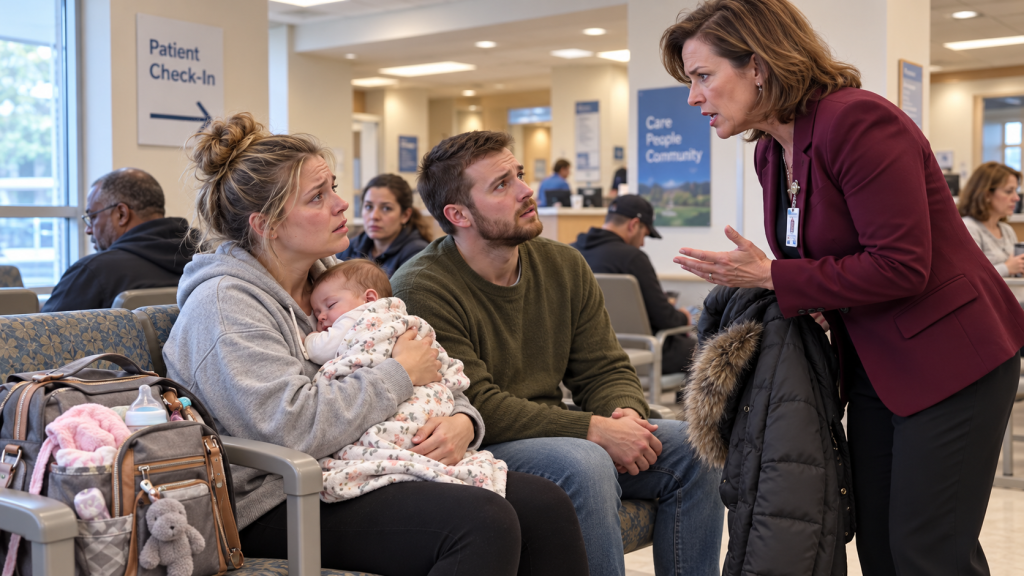
“Your daughter’s condition is stable, and her fever is responding to treatment. But her test results suggest a bacterial infection that requires continued hospital care while we complete additional testing.” My heart seemed to stop.
“An infection?”
He nodded.
“We’re treating her promptly. At her age, a high fever can be a sign of serious illness, so we take it very seriously.”
I felt my knees weaken.
Rachel immediately placed a hand against my back.
I stared at Emma.
My beautiful little girl.
The child I had carried beneath my heart for nine months.
The child whose tiny fingers curled around mine whenever she fell asleep.
The child who had entered the world only four months earlier and somehow become the entire center of mine.
“Is she going to be okay?” I whispered.
The doctor looked at me with compassion.
“We’re encouraged by how she’s responding, but she needs monitoring and treatment. We’ll keep you informed as the results come back.”
I nodded.
Then he asked a question that made my throat tighten.
“Is her father available? I’d like both parents to understand the treatment plan.”
I looked down.
My phone was resting on the chair.
There were eleven unread messages from Ethan.
Not one had asked whether Emma’s condition had worsened.
The most recent read:
Mom says you owe her an apology for embarrassing her in front of everyone.
I stared at it.
Then looked at the doctor.
“Her father went home.”
The doctor paused.
Rachel’s fingers tightened around mine.
I swallowed.
“He was tired.”
The doctor didn’t comment.
He simply explained the next steps.
Medication.
Observation.
More testing.
And what the nurses would be watching for during the following hours.
I listened carefully.
Asked questions.
Wrote down what I could remember.
Because suddenly there was no room inside me for anger.
Only fear.
And love.
An enormous, desperate love that made everything else feel painfully small.
After the doctor left, I pulled my chair closer to Emma.
Her eyes opened briefly.
She made a little sound.
Weak.
Uncomfortable.
But familiar.
I gently stroked her forehead.
“Mommy’s here, sweetheart.”
Her tiny fingers moved.
I placed one finger in her palm.
She held it.
And I began crying.
Rachel knelt beside me.
“Hey.”
I shook my head.
“I should’ve brought her sooner.”
Rachel’s expression softened.
“You called the pediatrician and came when you were told to. You’re getting her the care she needs.”
I wiped my cheeks.
“I was so afraid.”
“I know.”
I stared at Emma.
“She’s so little.”
Rachel’s own eyes filled.
“I know.”
Then she whispered, “But she’s getting help.”
For a long time, we stayed beside the bed.
Listening to the machines.
Watching Emma sleep.
Waiting for every small change.
At some point, Rachel brought me a cup of coffee.
I couldn’t drink it.
She placed it beside me anyway.
Then wrapped a blanket around my shoulders.
It was such a small act.
So ordinary.
And somehow, it nearly broke me.
Because my sister had been there for less than three hours.
Yet she had shown more concern for me than my husband had shown all night.
At seven thirty in the morning, Ethan finally called.
I stared at his name.
My heart began racing.
Rachel looked toward me.
“Are you going to answer?”
I took a breath.
“Yes.”
I pressed the button.
“Hello?”
Ethan sounded irritated.
“Finally.”
I closed my eyes.
“Ethan.”
“I’ve been calling.”
“I was talking to the doctor.”
There was a pause.
Then he asked, “So can you come home?”
I stared at the wall.
“What?”
“I need my presentation notes. They’re on the dining room table.”
For several seconds, I couldn’t speak.
Then I looked at Emma.
Her tiny hand rested against the blanket.
The IV tubing lay beside her arm.
And my husband was asking me to leave the hospital to collect his presentation notes.
“Ethan,” I whispered, “our daughter has a bacterial infection.”
Silence.
Then he said, “Okay. How serious?”
My voice broke.
“Serious enough that she’s being admitted for treatment.”
He sighed.
And I heard it.
That familiar, exhausted sigh.
The one he made when something interfered with his plans.
“Seriously?”
I closed my eyes.
“Yes, seriously.”
He was silent for a moment.
Then said, “Well, what am I supposed to do?”
Something inside me went still.
Not angry.
Not frightened.
Just terribly clear.
I looked at the little girl in front of me.
Then answered quietly.
“You’re supposed to be her father.”
Ethan didn’t speak.
I continued.
“You’re supposed to ask what she needs.”
“You’re supposed to want to be here.”
“You’re supposed to understand that she isn’t an interruption to your life.”
My voice trembled.
“She’s your life too.”
He exhaled.
“Don’t start.”
I looked down.
And for the first time, the words didn’t make me feel guilty.
They made me understand something.
For months, Ethan had treated my exhaustion as a personal inconvenience.
If Emma woke at night, I handled it.
If she cried, I handled it.
If she needed an appointment, I arranged it.
If I asked for help, he reminded me how hard he worked.
And if I became overwhelmed, Sylvia told me motherhood required sacrifice.
Apparently, fatherhood did not.
“Ethan,” I said, “I’m not bringing you your notes.”
He went silent.
Then laughed in disbelief.
“Are you serious?”
“Yes.”
“I have a presentation.”
“And Emma is in the hospital.”
His tone hardened.
“Do you realize what this could cost me?”
I looked at my daughter.
Then whispered, “Do you realize what we could lose?”
For a moment, neither of us spoke.
Then Ethan said something I would remember for the rest of my life.
“Mom was right. You always make everything dramatic.”
I closed my eyes.
When I opened them, Rachel was looking at me.
She had heard enough.
I took a breath.
“Goodbye, Ethan.”
Then I ended the call.
My hands were trembling.
But my voice had remained steady.
Rachel reached for my phone.
“Do you want me to put it away?”
I nodded.
“Please.”
She placed it inside my bag.
Then sat beside me.
For a long time, we didn’t speak.
Finally, I whispered, “I think my marriage is over.”
Rachel looked at me.
Her expression was gentle.
“You don’t have to make that decision while you’re sitting in a hospital with your sick baby.”
I nodded.
She continued.
“But whatever you decide, you deserve a partner who treats your child’s well-being as a shared responsibility.”
I stared at Emma.
Then whispered, “I know.”
And that was the first time I truly believed it.
At nine fifteen, Ethan’s mother called.
I didn’t answer.
At nine seventeen, she called again.
Then a text arrived.
You have embarrassed Ethan enough. He’s under tremendous professional pressure. You should be ashamed of yourself.
I read it twice.
Then placed the phone face down.
Rachel glanced at me.
“Sylvia?”
I nodded.
She sighed.
“Does that woman ever stop?”
I shook my head.
“No.”
Rachel looked toward Emma.
Then said quietly, “You know something?”
I turned.
“What?”
“She behaves as though protecting Ethan from discomfort is more important than teaching him how to be a responsible adult.”
I swallowed.
Rachel continued.
“And Ethan has spent years letting her do it.”
I stared at the hospital window.
Outside, morning sunlight moved across the parking lot.
Cars arrived.
People hurried through the entrance.
Life continued.
Completely unaware that something inside my marriage had broken overnight.
At eleven o’clock, Emma’s fever began rising again.
The nurse returned.
Then another.
The doctor came to reassess her.
My heart pounded so hard I thought I might faint.
Rachel stood beside me.
I held Emma’s little foot.
“Sweetheart, please.”
My voice broke.
“Please be okay.”
The nurses moved calmly.
Checked her vital signs.
Adjusted the treatment plan according to the doctor’s orders.
And continued monitoring her closely.
No one promised that everything would be fine.
But they explained what was happening.
They answered my questions.
And they treated my daughter like the precious person she was.
When Emma finally settled, I sat down.
My entire body shook.
Rachel brought me water.
“Drink.”
I took a few sips.
Then began crying.
“I can’t do this.”
She crouched beside me.
“You don’t have to do it alone.”
I looked at her.
“But Ethan—”
Rachel shook her head gently.
“I’m here.”
Two words.
I’m here.
Not an excuse.
Not a complaint.
Not a lecture about whose responsibility the baby was.
Just a promise.
And she was keeping it.
That afternoon, I called Ethan again.
Not because I wanted to argue.
Because he needed to know his daughter was ill.
He answered on the third ring.
“Yeah?”
I swallowed.
“Emma’s fever went up again.”
His voice changed slightly.
“What?”
“The doctors are monitoring her.”
He was silent.
Then asked, “Is she okay?”
I looked toward the bed.
“She’s receiving treatment.”
He breathed heavily.
“Should I come?”
For a moment, I stared at the phone.
Should he come?
As though caring for his own daughter required an invitation.
I took a breath.
“Ethan, that’s your decision.”
He hesitated.
“Mom thinks I should get some rest first.”
I closed my eyes.
Then whispered, “Goodbye.”
I ended the call.
And something inside me hardened.
Not toward Emma.
Not toward life.
Toward the belief that I had to keep explaining why our daughter mattered.
That evening, the hospital room became quiet.
Rachel went downstairs to find dinner.
I sat beside Emma.
Her little chest rose and fell beneath the blanket.
I watched her.
Counted her breaths.
Listened to the soft sounds she made in her sleep.
And remembered the day she was born.
Ethan had cried in the delivery room.
He held her against his chest.
Kissed her forehead.
And whispered, “Daddy’s girl.”
I had believed that moment meant something permanent.
Maybe it had.
Maybe he truly loved her.
But love that only appears when everything is beautiful is not enough.
Children need parents when they’re frightened.
Sick.
Tired.
Difficult.
And inconvenient.
I brushed Emma’s cheek.
Then whispered, “Whatever happens, sweetheart, I promise you won’t have to wonder whether you’re worth showing up for.”
Tears slipped down my face.
“You are.”
Later that night, Rachel returned carrying soup.
She sat beside me.
Then said, “I talked to Mom.”
I looked up.
Our mother lived two states away.
She was sixty-eight.
Kind.
Practical.
And known for telling uncomfortable truths without raising her voice.
I felt my throat tighten.
“What did she say?”
Rachel smiled sadly.
“She asked whether you wanted her to come.”
My eyes filled.
“She doesn’t have to.”
Rachel looked at me.
“She knows.”
Then she added gently, “She wants to.”
I covered my mouth.
For a moment, I couldn’t speak.
Then whispered, “Tell her yes.”
Our mother arrived the following afternoon.
She came straight from the airport.
Still wearing her traveling coat.
Carrying a small suitcase.
When she entered Emma’s room, she didn’t ask whether Ethan had caused trouble.
She didn’t demand explanations.
She looked at the baby.
Then at me.
And opened her arms.
I stepped into them.
And broke.
I cried against my mother’s shoulder like a little girl.
All the exhaustion.
Fear.
Resentment.
Loneliness.
Everything I’d been holding inside poured out.
Mom stroked my hair.
“It’s all right, sweetheart.”
I shook my head.
“No, it isn’t.”
She held me closer.
“I know.”
For a long time, she simply let me cry.
Then she looked toward Emma.
And whispered, “Now tell me what the doctors have said.”
I explained everything.
The fever.
The infection.
The treatment.
The additional tests.
The uncertainty.
Mom listened carefully.
Asked sensible questions.
And wrote down the information she wanted to remember.
Then she looked at me.
“Have you eaten?”
I stared.
She raised an eyebrow.
“Properly?”
I shook my head.
She sighed gently.
“Then you’re going to eat.”
I almost laughed.
“Mom…”
She squeezed my hand.
“Your baby needs you cared for too.”
I sat quietly.
Then smiled through tears.
Because there it was again.
Care.
Not dramatic.
Not loud.
Not conditional.
Just love expressed through action.
Emma remained in the hospital while the medical team completed its evaluation and treatment.
The doctors eventually identified the infection and adjusted her care accordingly.
Her temperature gradually stabilized.
She began feeding more comfortably.
Her color improved.
And little by little, the frightening tension in her body seemed to ease.
The first time she smiled again, I cried so hard the nurse handed me tissues.
It was only a tiny smile.
Brief.
Sleepy.
But I had never seen anything more beautiful.
Rachel laughed.
“There she is.”
Mom covered her mouth.
“Oh, sweetheart.”
I kissed Emma’s forehead.
“There’s my girl.”
For the first time in days, hope felt stronger than fear.
Ethan finally arrived on the third evening.
He entered carrying flowers.
For me.
Not a stuffed animal for Emma.
Not the extra baby clothes we’d needed.
Not the supplies I’d asked him to bring.
Flowers.
A large expensive bouquet wrapped in silver paper.
I stared at it.
Then at him.
He looked uncomfortable.
“Hey.”
I said nothing.
He stepped closer.
“How’s she doing?”
I looked toward Emma.
“Better.”
He nodded.
“Good.”
For a moment, he stood awkwardly beside the bed.
Then said, “I brought you flowers.”
I looked at the bouquet.
Then quietly answered, “Thank you.”
He seemed relieved.
As though flowers might repair everything.
Mom sat beside the window.
Rachel stood near the door.
Neither spoke.
Ethan looked around.
Then frowned.
“Why is everyone here?”
My mother raised her eyes.
“Because Emma is sick.”
He looked away.
Then said, “I would’ve come sooner, but work was insane.”
I stared at him.
For a moment, I thought about responding.
Explaining again.
Begging him to understand.
Instead, I asked quietly, “Did you call the hospital?”
He frowned.
“What?”
“While you were gone. Did you call to ask about Emma?”
He hesitated.
“No.”
“Did you call the pediatrician?”
“No.”
“Did you come by after your presentation?”
He looked down.
“No.”
I nodded.
Then whispered, “Okay.”
He frowned.
“What does that mean?”
I shook my head.
“Nothing.”
He looked irritated.
“Come on. Don’t do this.”
Rachel took a step forward.
But Mom gently touched her arm.
She looked at Ethan.
Then said calmly, “You should spend some time with your daughter.”
His expression changed.
“Of course.”
He approached Emma’s bed.
Looked down.
Then placed his hand gently beside hers.
For the first time since entering the room, his face softened.
“Hey, baby girl.”
Emma moved slightly.
He smiled.
Then whispered, “Daddy’s here.”
I watched him.
And felt something painful twist inside my chest.
Because Emma deserved that tenderness.
She deserved a father who loved her.
And I wanted desperately for Ethan to become that father.
But I could no longer pretend that one gentle moment erased days of absence.
After a few minutes, he turned toward me.
“Can we talk?”
I nodded.
“Outside.”
We stepped into the hallway.
The same kind of hallway where my marriage had begun unraveling two nights earlier.
Ethan looked at me.
Then sighed.
“Look, I’m sorry things got out of hand.”
I stared.
“Things?”
He rubbed his forehead.
“You know what I mean.”
I shook my head.
“Not really.”
He looked frustrated.
“Mom was worried about me.”
I took a breath.
“Ethan, your mother tried to take you home while our infant daughter had a dangerously high fever.”
He opened his mouth.
I continued.
“She told me you hadn’t signed up for that much stress.”
He looked away.
“And you stood there.”
His jaw tightened.
“I was exhausted.”
“So was I.”
He sighed.
“You don’t understand the pressure I’m under at work.”
I stared at him.
Then whispered, “You’re right.”
He looked surprised.
I continued.
“I don’t know everything you’re carrying at work.”
His expression softened.
Then I added, “But you don’t know everything I’ve been carrying at home.”
For a moment, he said nothing.
I continued.
“You sleep through most of Emma’s night feedings.”
“You rarely attend appointments.”
“You complain when I ask you to hold her so I can shower.”
His face tightened.
“And when she became seriously ill, you acted as though staying with her was an unreasonable demand.”
He swallowed.
“That’s not fair.”
I shook my head.
“No.”
My voice broke.
“What’s unfair is making one parent responsible for everything and calling it normal.”
Ethan leaned against the wall.
Then looked at me.
“What do you want me to say?”
I felt tears rise.
“The truth.”
He frowned.
“About what?”
“About whether you actually want to be a parent when it isn’t easy.”
His expression changed.
For several seconds, he didn’t speak.
Then whispered, “Of course I do.”
I looked at him.
“Then why haven’t you been acting like one?”
He had no answer.
I took a breath.
“Ethan, I don’t want another bouquet.”
He looked down.
“I don’t want promises you’ll forget next week.”
My voice trembled.
“And I don’t want your mother deciding which responsibilities you should be allowed to avoid.”
He looked at me.
“What do you want?”
I swallowed.
“A partner.”
The word hung between us.
Small.
Simple.
And apparently enormous.
Ethan looked away.
Then whispered, “I don’t know how to do everything you do.”
I stared.
For a moment, anger rose.
Then sadness.
Because perhaps, beneath all his selfishness, that was the truth.
He didn’t know.
He had never learned.
And instead of admitting it, he had treated my ability to cope as proof that I should carry the burden alone.
I took a breath.
“Then learn.”
He looked up.
I continued.
“Ask questions.”
“Show up.”
“Take responsibility.”
“And stop acting as though being tired makes you less of a father.”
His eyes filled.
For the first time, he seemed genuinely ashamed.
Then he whispered, “Okay.”
I looked at him.
“Ethan, I need more than okay.”
He nodded.
“I know.”
I wasn’t sure he did.
But at least the conversation had finally begun.
The next morning, Sylvia arrived.
Uninvited.
Again.
I was sitting beside Emma, who was finally sleeping comfortably, when the door opened.
Sylvia stepped inside carrying an enormous shopping bag.
Her hair was perfectly styled.
Her lipstick flawless.
She wore a pale beige coat and an expression of exaggerated concern.
“Oh, my poor baby.”
For one hopeful second, I thought she meant Emma.
Then she rushed toward Ethan.
“Sweetheart, you look terrible!”
He stood.
“Mom…”
She touched his cheek.
“You haven’t been sleeping.”
I stared.
Rachel slowly turned toward me.
Her eyebrows rose.
I almost laughed.
Almost.
Sylvia finally looked at Emma.
Then said, “Well, she looks fine now.”
My hands tightened around the blanket.
Mom stood quietly near the window.
Sylvia continued.
“All this fuss over a fever.”
The room went silent.
I felt the old anger rise.
But before I could speak, my mother stepped forward.
She was a gentle woman.
Rarely confrontational.
But something about the way Sylvia dismissed Emma’s illness made her face become very still.
“Sylvia,” Mom said quietly, “the baby was hospitalized with a serious infection.”
Sylvia blinked.
“I know.”
Mom continued.
“Then please don’t dismiss what she’s been through.”
Sylvia’s cheeks flushed.
“I wasn’t dismissing anything.”
Mom nodded.
“Good.”
For a moment, Sylvia seemed unsure what to do.
Then she turned toward Ethan.
“Come on, sweetheart. You’ve been here long enough.”
My heart stopped.
Not again.
Ethan looked at his mother.
Then at Emma.
Then at me.
For a moment, I saw the old hesitation.
The familiar pull.
The instinct to make Sylvia comfortable.
To avoid displeasing her.
To let her decide.
She picked up his coat.
“Let’s go.”
And then my husband did something I hadn’t expected.
He shook his head.
“No, Mom.”
Sylvia froze.
“What?”
Ethan swallowed.
“I’m staying.”
For a moment, nobody spoke.
Sylvia laughed sharply.
“Don’t be ridiculous.”
He looked down.
Then raised his eyes.
“Emma needs me.”
My throat tightened.
Sylvia’s expression hardened.
“She has her mother.”
Ethan took a breath.
“And she has her father.”
The room became completely still.
Sylvia stared at him.
“Excuse me?”
He looked at her.
“I’m not leaving.”
She scoffed.
“You have responsibilities.”
He nodded.
“Yes.”
Then looked toward Emma.
“I do.”
For the first time, Sylvia had no immediate response.
She stood holding his coat.
Her mouth slightly open.
Then she turned toward me.
“This is your doing.”
I felt anger rise.
But Ethan spoke before I could.
“No.”
His voice trembled.
“Mom, this is my decision.”
Sylvia looked wounded.
“After everything I’ve done for you?”
He swallowed.
“I love you.”
She crossed her arms.
“But I’m responsible for my daughter.”
Sylvia’s face crumpled.
Then hardened again.
“Well, don’t come crying to me when your career suffers.”
Ethan took a breath.
“I won’t.”
She stared at him.
Then placed his coat on the chair.
Turned.
And walked out.
The door closed.
For several seconds, nobody moved.
Then Rachel let out a breath.
“Well.”
Mom looked toward Ethan.
He seemed shaken.
Almost frightened.
As though he’d just done something monumental.
I watched him carefully.
Then he approached Emma’s bed.
Sat beside her.
And took her tiny hand.
For the first time, I saw him choose his daughter even when choosing her meant disappointing his mother.
It didn’t fix everything.
But it mattered.
Emma was discharged after the medical team determined she was well enough to continue recovery at home with the appropriate follow-up plan.
I cried when the doctor gave us the news.
Rachel hugged me.
Mom kissed Emma’s forehead.
And Ethan stood beside the hospital bed looking both relieved and overwhelmed.
Before we left, the nurse reviewed the discharge instructions.
Medications.
Follow-up appointments.
Warning signs.
When to call the doctor.
When to seek urgent care.
For years, Ethan had handed every medical detail to me.
But this time, I stepped back.
And said quietly, “Ethan, please listen carefully.”
He looked at me.
Then nodded.
He took out his phone.
Made notes.
Asked questions.
And repeated the instructions to make sure he understood.
It was a small thing.
Something he should have been doing all along.
But I watched him.
And wondered whether this was the beginning of real change.
When we returned home, I expected relief.
Instead, I felt afraid.
Because a hospital is full of people who know what they’re doing.
Doctors.
Nurses.
Monitors.
Instructions.
But at home, the responsibility returned to us.
And I had spent months carrying most of it alone.
That first night, Emma woke crying.
I began getting out of bed automatically.
But Ethan touched my arm.
“I’ve got her.”
I stared.
“What?”
He looked nervous.
“I’ll check her.”
I hesitated.
Then nodded.
He walked toward the crib.
Lifted Emma carefully.
Checked what needed checking according to the discharge plan.
Changed her diaper.
Comforted her.
Then brought her to me when she needed feeding.
For a moment, I watched him.
The man who’d complained about sitting in an emergency room.
Now standing in our bedroom at three in the morning, gently rocking our daughter.
I wanted to feel hopeful.
But I was careful.
One good night wasn’t enough.
The following morning, Ethan made breakfast.
Toast.
Eggs.
Coffee.
He brought a plate to the table.
Then looked at me.
“Eat while I hold Emma.”
I stared.
He smiled weakly.
“You need breakfast too.”
I felt tears rise.
Then laughed quietly.
“Ethan, this is the bare minimum.”
His expression changed.
Then he nodded.
“I know.”
That mattered more than an argument would have.
He wasn’t asking for praise.
Not this time.
He was acknowledging how little he’d been doing before.
But the real test came three days later.
I was folding baby clothes when Sylvia called.
Ethan answered.
I heard her voice through the speaker.
“Sweetheart, I’ve been thinking.”
He said nothing.
She continued.
“Your wife has been very emotional lately.”
My hands stopped moving.
Sylvia sighed.
“Perhaps she needs a few days away from the baby.”
I looked toward Ethan.
He frowned.
“Mom…”
Sylvia continued.
“I could come stay with you.”
Then she added casually, “You could sleep at my house until everything settles down.”
For a moment, the old fear returned.
I imagined Ethan agreeing.
Leaving.
Allowing his mother to take control again.
But he took a breath.
“No.”
Sylvia paused.
“What?”
He looked toward me.
Then answered firmly.
“We’re handling things together.”
She scoffed.
“Ethan, you’re not a nurse.”
He nodded.
“No.”
“But I’m Emma’s father.”
I felt my throat tighten.
Sylvia sighed dramatically.
“She’s turning you against me.”
Ethan looked down.
Then said something important.
“Mom, please stop making my responsibilities as a father about your relationship with me.”
Silence.
Then Sylvia said coldly, “I don’t recognize you anymore.”
Ethan closed his eyes.
His voice trembled.
“I’m trying to become someone better.”
He ended the call shortly afterward.
Then sat quietly.
I approached.
“Are you okay?”
He looked up.
His eyes were wet.
“I feel terrible.”
I sat beside him.
“Because of your mom?”
He nodded.
“She sounded so hurt.”
I took a breath.
“Ethan, you can care about her feelings without allowing them to decide how you treat your daughter.”
He looked at me.
Then nodded slowly.
“I know.”
For the first time, I could see how deeply Sylvia’s approval had shaped him.
He wasn’t simply selfish.
He was also a man who had never learned that loving his mother and establishing boundaries with her could coexist.
But understanding that didn’t excuse what he’d done.
It only explained part of the work ahead.
A week later, Ethan made an appointment with a family therapist.
He told me over dinner.
I looked up.
“A therapist?”
He nodded.
“Yes.”
I stared.
“Why?”
He swallowed.
“Because I don’t want to keep repeating this.”
My throat tightened.
He continued.
“I spent the whole night after Emma came home thinking about what I said in the hospital.”
His eyes filled.
“And what I didn’t say.”
I looked down.
He swallowed.
“I watched Mom humiliate you.”
His voice broke.
“And I let her.”
For several seconds, I couldn’t speak.
Then whispered, “Yes.”
He began crying.
“I was ashamed.”
I looked up.
He continued.
“And instead of apologizing, I blamed you.”
My eyes filled.
He reached across the table.
“I don’t want Emma growing up thinking that’s how a husband treats his wife.”
I stared at him.
Then said quietly, “Neither do I.”
He nodded.
“I want to change.”
I swallowed.
“Then show me.”
He did.
Slowly.
Imperfectly.
And not without setbacks.
There were nights when he forgot something.
Mornings when he became frustrated.
Times when work overwhelmed him and he slipped into old habits.
But now, when I pointed it out, he didn’t always become defensive.
Sometimes he stopped.
Apologized.
And corrected himself.
We began attending counseling together.
I wasn’t sure I wanted to save the marriage.
Not at first.
I loved Ethan.
But love had become tangled with resentment.
I was tired of being the default parent.
Tired of feeling invisible.
Tired of explaining why exhaustion wasn’t a personal failure.
During our first joint session, the therapist asked me a question.
“What would you need to see in order to feel safe in this partnership again?”
I sat quietly.
Then whispered, “Consistency.”
Ethan looked at me.
I continued.
“I don’t need flowers.”
“I don’t need speeches.”
“I don’t need him to become perfect.”
My eyes filled.
“I need to know that when something frightening happens, he won’t leave me alone because it’s inconvenient.”
Ethan began crying.
The therapist turned toward him.
“What do you hear her saying?”
He swallowed.
“That she doesn’t trust me.”
I nodded.
He looked down.
“And that I gave her reasons not to.”
For the first time, I felt understood.
Not completely.
Not permanently.
But enough to continue.
We developed practical agreements.
Shared responsibilities.
Clear expectations.
Plans for night care.
Medical appointments.
Household work.
And what to do when either of us became overwhelmed.
Ethan began taking Emma to routine appointments.
Not as a favor to me.
As her father.
He learned her feeding routine.
Her favorite songs.
The way she liked being held when tired.
How she rubbed her eyes before falling asleep.
And how she calmed when someone gently sang the same melody twice.
One evening, I came home from buying groceries.
The house was quiet.
I walked toward the living room.
And stopped.
Ethan was sitting on the sofa.
Emma asleep against his chest.
His hand resting protectively on her back.
He was reading a book.
Softly.
Not because she understood the words.
But because she seemed to enjoy the sound of his voice.
I stood in the doorway.
My heart tightened.
He looked up.
Then smiled.
“Hey.”
I smiled weakly.
“Hey.”
He glanced down at Emma.
Then whispered, “She finally fell asleep.”
I nodded.
“Good.”
For a moment, I watched them.
The same father who once tried to leave her in an emergency room.
Now sitting in the afternoon sunlight, holding her as though there was nowhere else he wanted to be.
I felt hope.
Careful hope.
The kind that doesn’t erase the past.
But allows room for a different future.
Sylvia, however, was not pleased.
She continued making comments.
About my parenting.
My exhaustion.
My supposed sensitivity.
And Ethan’s increasing involvement with Emma.
One Sunday afternoon, she arrived for a visit.
Emma was eight months old.
Healthy.
Curious.
And fascinated by everything she could reach.
Sylvia sat on the sofa holding a cup of tea.
Then looked toward Ethan, who was preparing Emma’s lunch.
She laughed lightly.
“My goodness. Look at you.”
Ethan glanced up.
“What?”
Sylvia smiled.
“Playing housewife.”
My stomach tightened.
Ethan stopped.
Then turned toward his mother.
“I’m feeding my daughter.”
Sylvia waved a hand.
“Oh, don’t be so sensitive.”
He looked at her.
“Mom, please don’t call taking care of Emma women’s work.”
Her expression hardened.
“It was a joke.”
He nodded.
“Then choose a different one.”
For a moment, the room became silent.
Sylvia looked at me.
Then back at Ethan.
“You’ve changed.”
He smiled slightly.
“Yes.”
She stared.
Then said coldly, “I don’t think it’s for the better.”
Ethan took a breath.
“I do.”
I looked down.
My eyes filled.
Because he had finally begun understanding that being a father wasn’t something to be embarrassed about.
It was something to embrace.
But the most difficult moment came when Sylvia tried to turn Emma against me.
Emma was almost two.
She had begun speaking in short sentences.
Loved strawberries.
And carried a stuffed rabbit named Mr. Buttons everywhere.
One afternoon, Sylvia watched her while Ethan and I attended an appointment.
When we returned, Emma ran toward me.
“Mommy!”
I lifted her.
Kissed her cheek.
And asked if she’d had a good day.
She nodded.
Then said something that made my heart stop.
“Grandma says Daddy works hard and Mommy just stays home.”
I stared at my daughter.
For a moment, I couldn’t speak.
Then I looked toward Sylvia.
She was standing beside the kitchen counter.
Her expression innocent.
“What?”
I swallowed.
“Did you say that to Emma?”
She laughed.
“Oh, she’s two. Children repeat everything.”
I took a breath.
“Sylvia.”
Her smile faded.
“What?”
“Did you tell her I don’t work hard?”
She rolled her eyes.
“Don’t be ridiculous.”
Ethan stepped forward.
“Mom.”
She looked at him.
He continued.
“Please answer the question.”
Sylvia crossed her arms.
“I may have said that your wife is fortunate she doesn’t have to go to an office.”
My chest tightened.
I looked at her.
Then whispered, “I care for our daughter.”
She waved a hand.
“Of course.”
Her tone made the words feel like an insult.
Ethan shook his head.
“Mom, that’s not acceptable.”
She looked startled.
“Excuse me?”
He took a breath.
“You’re not going to belittle my wife to our daughter.”
Sylvia’s cheeks flushed.
“I raised you!”
Ethan nodded.
“Yes.”
“And I appreciate that.”
His voice remained steady.
“But that doesn’t give you permission to undermine Emma’s mother.”
For a moment, Sylvia simply stared.
Then she picked up her handbag.
“Well, clearly I’m no longer welcome.”
Ethan looked at her.
“You’re welcome when you can respect our boundaries.”
Her mouth fell open.
I watched her.
Waiting.
Wondering whether she’d finally understand.
Instead, she marched toward the door.
After she left, I sat on the sofa holding Emma.
My hands were shaking.
Ethan knelt beside us.
He looked at our daughter.
Then said gently, “Sweetheart, Mommy works very hard.”
Emma looked at him.
He smiled.
“Daddy works hard too.”
She nodded.
Then he added, “And we both take care of you because we love you.”
Emma considered.
Then wrapped her little arms around my neck.
“Love Mommy.”
I began crying.
I kissed her cheek.
“Love you too, sweetheart.”
That night, Ethan and I had a difficult conversation.
About Sylvia.
Her influence.
The comments.
The years of interference.
And how much contact would be healthy for our family.
We agreed that visits needed to be respectful.
That Sylvia would not be allowed to undermine either parent.
And that any childcare arrangement would depend on her willingness to follow our rules and treat us both appropriately.
It was not about punishing her.
It was about protecting our child from being drawn into adult conflicts.
For several months, Sylvia remained distant.
She sent birthday gifts.
Occasional messages.
And long texts to Ethan about how hurt she felt.
He answered politely.
But he didn’t surrender the boundaries.
One evening, he showed me a message.
I don’t understand why you’re choosing your wife over your own mother.
I looked at him.
My stomach tightened.
“What are you going to say?”
He thought for a moment.
Then typed:
Mom, I’m not choosing one family member to hurt another. I’m fulfilling my responsibilities as a husband and father. I love you, but I won’t allow disrespect toward my wife or daughter.
I stared at the message.
Then at him.
He looked nervous.
“Is that okay?”
I smiled sadly.
“It’s honest.”
He pressed send.
Then set the phone down.
And for the first time, he didn’t spend the rest of the evening waiting for her approval.
The following year, Emma turned three.
We held a small birthday party in our backyard.
Pink balloons.
A strawberry cake.
A little inflatable pool.
And a table covered in colorful paper plates.
Rachel came.
Mom came.
Our friends came.
Several children from Emma’s preschool came.
And Sylvia, after agreeing to respect our boundaries, attended for a short visit.
For most of the afternoon, things went well.
Sylvia brought Emma a beautiful yellow dress.
Emma squealed.
“Pretty!”
Sylvia smiled.
“Just like you.”
Later, I was cutting cake when I noticed Sylvia standing alone near the fence.
She was watching Ethan.
He was kneeling beside Emma, helping her open a gift.
His shirt was stained with frosting.
His hair messy.
And he was laughing.
Really laughing.
Sylvia looked strangely sad.
I approached cautiously.
“Would you like some cake?”
She turned.
For a moment, I expected another sharp remark.
Instead, she nodded.
“Thank you.”
I handed her a plate.
We stood quietly.
Then she looked toward Ethan again.
“He seems happy.”
I followed her gaze.
“Yes.”
She swallowed.
“He used to come to me for everything.”
My throat tightened.
I looked at her.
Then said gently, “He still loves you.”
Her eyes filled.
“But he doesn’t need me the same way.”
I took a breath.
“No.”
For several moments, she stared at her son.
Then whispered, “I suppose that’s what growing up is.”
I looked at her.
“Yes.”
She laughed sadly.
“I was afraid of losing him.”
I swallowed.
“Sylvia, having a family of his own doesn’t mean he stops being your son.”
Her eyes filled.
“I know.”
I hesitated.
“Sometimes loving someone means allowing their responsibilities to change.”
She looked toward me.
Then nodded slowly.
For the first time, I saw something beneath her controlling behavior.
Fear.
Fear of becoming unnecessary.
Fear of losing her place in her son’s life.
It didn’t excuse the cruelty.
But it helped me understand why she resisted every sign of Ethan becoming independent.
Then Sylvia said something unexpected.
“I was wrong that night.”
I froze.
“What?”
She looked toward the garden.
“At the hospital.”
My heart began pounding.
She continued.
“I shouldn’t have tried to take Ethan home.”
My eyes filled.
She swallowed.
“And I shouldn’t have spoken to you that way.”
For a moment, I couldn’t speak.
I had imagined hearing those words so many times.
But now that they were here, I felt strangely quiet.
Sylvia looked at me.
“I was frightened.”
I nodded.
“So was I.”
Her eyes filled.
She whispered, “I thought protecting my son meant keeping him away from everything painful.”
I took a breath.
“And I needed him beside me.”
She closed her eyes.
“I know.”
For a moment, we stood silently.
Then she whispered, “I’m sorry.”
I looked toward Emma.
She was running across the lawn.
Laughing.
Ethan following behind her.
Rachel taking photographs.
Mom sitting beneath the umbrella, smiling.
I turned back to Sylvia.
“Thank you for saying that.”
Her eyes filled.
Then I added gently, “But the boundaries still matter.”
She nodded.
“I understand.”
I wanted to believe her.
But trust takes time.
And this time, I was willing to let actions prove what words could only promise.
Over the following years, Sylvia slowly changed.
Not perfectly.
She still had opinions.
Still made occasional comments.
Still believed her way was usually best.
But she began catching herself.
Apologizing.
And asking instead of assuming.
She learned to respect that Ethan was Emma’s father, not merely her son.
And that I was Emma’s mother, not someone who needed Sylvia’s approval to be considered capable.
One afternoon, Emma was five.
Sylvia visited for lunch.
I was washing dishes when I heard her speaking to Emma in the living room.
I paused.
Not intentionally eavesdropping.
Just listening.
Emma asked, “Grandma, were you nice to Mommy when I was little?”
My hands stopped moving.
For a moment, there was silence.
Then Sylvia answered quietly.
“Not always.”
My throat tightened.
Emma sounded confused.
“Why?”
Sylvia sighed.
“Because sometimes grown-ups make mistakes.”
Emma considered.
Then asked, “Did you say sorry?”
My eyes filled.
Sylvia answered.
“Yes.”
Then added softly, “And I tried to do better.”
I stood at the sink.
Water running over my hands.
And began crying.
Because that was all I had ever wanted.
Not perfection.
Not submission.
Not the impossible promise that nobody would ever hurt me again.
Just accountability.
Respect.
And the willingness to change.
When Emma started school, Ethan insisted on taking her on the first morning.
I smiled.
“Are you sure?”
He laughed.
“Of course.”
Emma wore a tiny backpack with butterflies.
Her hair was tied into two ponytails.
She held Ethan’s hand tightly.
When they reached the classroom door, she began crying.
“I don’t want to go.”
Ethan knelt.
Wrapped his arms around her.
And whispered, “It’s okay to be nervous.”
She sniffled.
“Will you come back?”
His eyes softened.
“Always.”
I stood a few feet away.
My heart tightening.
Because years earlier, during the most frightening night of our daughter’s life, he’d left.
Now he was making a promise.
And I believed he understood what it required.
Emma entered the classroom.
Then turned.
Waved.
And disappeared behind the door.
Ethan stood beside me.
His eyes were wet.
I smiled.
“Are you crying?”
He laughed.
“No.”
I raised an eyebrow.
He wiped his cheek.
“Maybe.”
We stood together.
Watching the empty doorway.
Then he whispered, “I almost missed all of this.”
I looked at him.
“What?”
He swallowed.
“The ordinary things.”
His voice broke.
“Taking her to school.”
“Reading bedtime stories.”
“Being there when she’s sick.”
He looked toward me.
“I thought providing money was the same as being present.”
My throat tightened.
He continued.
“But I was wrong.”
I took his hand.
“I’m glad you learned.”
He nodded.
“So am I.”
Our marriage didn’t become perfect.
No marriage does.
We still disagreed.
About schedules.
Money.
Chores.
And the thousand ordinary things that come with raising a child.
But something fundamental had changed.
I no longer accepted being treated as the only parent.
Ethan no longer treated caring for Emma as something he did to help me.
We were both responsible.
And when either of us became overwhelmed, we learned to say so before resentment took over.
Sometimes, when Emma was asleep, we’d sit at the kitchen table.
Drink tea.
And talk.
Really talk.
One evening, Ethan looked toward me.
Then whispered, “Do you ever think about that night?”
I stared.
“The hospital?”
He nodded.
I took a breath.
“Yes.”
His eyes filled.
“Me too.”
For several moments, we sat quietly.
Then he whispered, “I’m ashamed of who I was.”
I looked at him.
“I know.”
He swallowed.
“Sometimes I wonder why you gave me another chance.”
I considered.
Then answered honestly.
“Because I saw you begin taking responsibility.”
His eyes filled.
I continued.
“But I also knew that if you stopped, I could still choose a different life.”
He nodded.
“That’s fair.”
I smiled sadly.
“It had to be.”
He reached across the table.
Took my hand.
And whispered, “Thank you for expecting more of me.”
My throat tightened.
I squeezed his fingers.
“Thank you for finally expecting more of yourself.”
Years passed.
Emma grew taller.
Her baby curls became long waves.
Her little shoes became sneakers.
Her stuffed rabbit lost one ear.
But she refused to throw it away.
She loved drawing.
Music.
Animals.
And asking questions so complicated that Ethan and I often looked at each other in helpless amusement.
One evening, when she was eight, she asked about the photograph on our bookshelf.
It showed the three of us outside the hospital.
Emma was tiny.
Wrapped in a pink blanket.
Ethan stood beside me.
And I looked exhausted.
“Mommy?”
I smiled.
“Yes?”
“Why do you look sad in this picture?”
My heart tightened.
I looked at the photograph.
Then at Ethan.
He was sitting nearby.
He looked up.
For a moment, our eyes met.
I considered.
Then answered gently.
“You were very sick when you were a baby.”
Emma’s eyes widened.
“Really?”
I nodded.
“Yes.”
She looked toward Ethan.
“Was Daddy scared?”
He smiled sadly.
“Very.”
Emma frowned.
“Were you scared too, Mommy?”
I nodded.
“More than I can explain.”
She considered.
Then asked, “Did I get better?”
I laughed softly.
“Yes, sweetheart.”
I hugged her.
“You got better.”
Emma smiled.
Then returned to her coloring book.
But Ethan remained quiet.
Later that evening, after she went to bed, he approached me.
“Thank you.”
I frowned.
“For what?”
“For telling her the truth without making her carry our mistakes.”
My eyes filled.
I nodded.
“She’ll learn more when she’s ready.”
He swallowed.
“I know.”
When Emma turned twelve, she learned about that hospital night in more detail.
Not because we wanted to burden her.
But because she began asking thoughtful questions about our family history.
She wanted to understand.
And we believed she deserved honest, age-appropriate answers.
One evening, Ethan sat beside her.
I sat nearby.
Emma looked between us.
Then asked, “Dad, did you really leave the hospital?”
Ethan’s face grew pale.
He swallowed.
“Yes.”
Emma frowned.
“Why?”
He took a breath.
“Because I was selfish and overwhelmed, and I let fear and other people’s expectations influence me.”
She looked down.
“Were you mad at me?”
His eyes filled.
“No.”
He leaned forward.
“Never at you.”
Emma looked toward me.
Then back at him.
“So why did you go?”
His voice broke.
“Because I hadn’t learned how to handle being responsible when things were difficult.”
For a moment, Emma said nothing.
Then whispered, “That must’ve made Mommy sad.”
Ethan nodded.
“Yes.”
His eyes filled.
“Very sad.”
Emma looked down.
Then asked quietly, “Did you say sorry?”
He swallowed.
“Yes.”
She looked toward me.
“Did you forgive him?”
I considered.
Then answered gently.
“Over time, we rebuilt trust.”
Emma nodded slowly.
Then looked at Ethan.
“Did you learn?”
His voice broke.
“Yes.”
She considered.
Then leaned against him.
“Good.”
Ethan wrapped his arms around her.
And began crying.
Later, after Emma went to bed, he sat quietly in the living room.
I approached.
“Are you okay?”
He looked up.
His eyes were wet.
“She asked whether I was mad at her.”
My heart tightened.
“I know.”
He shook his head.
“I hate that she even wondered.”
I sat beside him.
“Then keep showing her she never caused your mistake.”
He nodded.
“I will.”
And he did.
By the time Emma reached high school, Ethan had become the father I’d once hoped he would be.
Not because he never made mistakes.
He did.
But because he knew how to apologize.
How to listen.
How to show up.
And how to make our daughter’s needs part of his own responsibilities.
He attended school events.
Helped with homework.
Learned to cook her favorite meals.
And stayed beside her during illnesses without treating the inconvenience as a personal injustice.
One winter evening, Emma caught a bad cold.
Nothing like the infection she’d had as a baby.
But she was miserable.
Feverish.
Exhausted.
And unable to sleep comfortably.
I entered her room carrying water.
Ethan was sitting beside her bed.
Reading quietly.
Emma looked up.
“Mom?”
I smiled.
“Yes?”
“Dad’s been here forever.”
I looked at him.
He smiled sheepishly.
“She keeps asking for another chapter.”
Emma grinned.
“Because he does the voices.”
I laughed.
Then looked at Ethan.
For a moment, the years fell away.
I saw the ER.
The plastic chair.
The winter coat.
Sylvia’s angry voice.
My husband’s silence.
Then I looked at the man sitting beside our daughter.
Holding a book.
Tired.
But present.
My eyes filled.
Ethan noticed.
He looked at me.
A silent question in his expression.
I smiled through tears.
Then whispered, “Nothing.”
But it wasn’t nothing.
It was everything.
When Emma graduated from high school, I cried before the ceremony even began.
Ethan teased me gently.
“You haven’t even seen her walk yet.”
I laughed.
“I know.”
Sylvia sat beside us.
Older now.
Her hair completely silver.
Her hands resting in her lap.
When Emma’s name was called, we all stood.
She crossed the stage.
Accepted her diploma.
And smiled toward the audience.
Ethan cheered.
I cried.
Sylvia clapped until her hands were red.
Rachel whistled.
Mom, now elderly and walking with a cane, smiled through tears.
After the ceremony, Emma ran toward us.
She hugged me first.
Then Ethan.
Then everyone else.
When she reached Sylvia, her grandmother held her tightly.
“My beautiful girl.”
Emma smiled.
“Thanks, Grandma.”
Sylvia’s eyes filled.
Then she looked toward me.
And quietly said, “You raised a wonderful daughter.”
For a moment, I couldn’t speak.
Then smiled.
“Thank you.”
Sylvia looked toward Ethan.
Then added, “You both did.”
I felt my throat tighten.
Because those words represented years of change.
Not just in our marriage.
But in the way our family understood parenting.
Later that evening, after the graduation dinner, Emma approached me.
She wore her blue dress.
Her hair falling over her shoulders.
Her eyes bright with happiness.
“Mom?”
I smiled.
“Yes?”
“Can I tell you something?”
“Of course.”
She hesitated.
Then said, “I know you’ve done so much for me.”
My eyes filled.
“Emma…”
She shook her head.
“Let me finish.”
I smiled.
“All right.”
She took my hands.
“You were there when I was sick.”
“You were there when I was scared.”
“You were there when I needed help.”
Her voice trembled.
“And I know it wasn’t always easy.”
I began crying.
Emma smiled through tears.
“But you never made me feel like I was too much.”
I covered my mouth.
My beautiful girl.
The baby I’d held in the emergency room.
The child whose fever had terrified me.
Now standing before me as a young woman.
Thanking me for something I’d never considered optional.
I hugged her.
Tightly.
Then whispered, “You were never too much, sweetheart.”
She held me.
And for a moment, I felt every sleepless night.
Every worry.
Every sacrifice.
Every joyful moment.
All of it.
Gathered into one embrace.
Then Emma pulled back.
She looked toward Ethan.
He stood nearby, watching us.
She smiled.
“And Dad?”
He laughed nervously.
“Yes?”
She opened her arms.
“Come here.”
He stepped forward.
She hugged him.
Then whispered, “Thank you for learning how to show up.”
Ethan began sobbing.
I looked away.
Because some apologies take years to become believable.
And some forgiveness is built through thousands of ordinary days.
That evening, after everyone left, Ethan and I sat in the backyard.
The stars were bright.
The air warm.
Emma was inside laughing with Rachel.
Ethan held my hand.
Then whispered, “Do you remember what you said in the ER?”
I looked at him.
“What?”
He smiled sadly.
“When Mom told you to figure it out.”
My throat tightened.
I nodded.
“Yes.”
He continued.
“You picked up your phone.”
I smiled faintly.
“And told me you were figuring it out.”
For a moment, I remembered exactly how I’d felt.
The exhaustion.
The humiliation.
The fear for Emma.
The terrible clarity that came when Ethan chose silence instead of standing beside us.
I took a breath.
“I was.”
He nodded.
His eyes filled.
“You were figuring out how to protect yourself and Emma.”
I looked at him.
“Yes.”
He swallowed.
“And I’m grateful you did.”
I stared.
He continued.
“Not because you fixed me.”
His voice broke.
“But because you stopped pretending my behavior was acceptable.”
I smiled sadly.
“Ethan, you had to do the changing yourself.”
He nodded.
“I know.”
For a long time, we sat quietly.
Then he whispered, “I nearly lost everything because I didn’t understand that being a father meant staying when things were hard.”
My eyes filled.
I squeezed his hand.
“But you learned.”
He nodded.
“Yes.”
Years passed.
Emma became a nurse.
She said she wanted to help frightened families feel less alone during the worst nights of their lives.
When she told us, I began crying.
She laughed.
“Mom!”
I wiped my eyes.
“I’m sorry.”
She smiled.
“Why are you crying?”
I looked at her.
Then whispered, “Because I remember the people who helped us.”
Emma’s expression softened.
She nodded.
“So do I.”
She worked hard.
Studied.
Completed her training.
And eventually began working in a pediatric hospital.
One evening, she called me after a difficult shift.
“Mom?”
I smiled.
“Yes, sweetheart?”
She sounded tired.
“I had a little patient today.”
My heart tightened.
“Oh?”
“A baby.”
I sat down.
She continued.
“The parents were terrified.”
I swallowed.
Emma’s voice softened.
“And I kept thinking about you.”
My eyes filled.
I stared toward the window.
“Me?”
She nodded.
“Yeah.”
She swallowed.
“I remembered what you told me about the hospital.”
“And how frightened you were.”
For a moment, neither of us spoke.
Then Emma whispered, “I sat beside the mother for a few minutes.”
My heart tightened.
“She kept apologizing for crying.”
Emma’s voice broke.
“So I told her she didn’t have to apologize.”
I began crying.
Emma continued.
“I told her she could ask questions.”
“That she could take things one step at a time.”
“And that we were going to explain what we knew.”
I covered my mouth.
Then whispered, “Oh, Emma.”
She laughed softly.
“I think she needed someone to sit with her.”
My throat tightened.
“Yes.”
I closed my eyes.
“Sometimes that’s exactly what someone needs.”
After the call, I sat quietly.
Thinking about that frightened young mother.
The baby in the hospital.
And the nurse who had taken a moment to offer kindness.
My daughter.
The baby who once lay against my chest with a dangerous fever.
Now helping families through their own frightening nights.
I looked toward Ethan.
He was reading nearby.
I smiled.
“She called.”
He looked up.
“Emma?”
I nodded.
“She helped a frightened mother at work today.”
His expression softened.
Then he smiled.
“That’s our girl.”
I nodded.
“Yes.”
“Our girl.”
As the years passed, Sylvia grew older.
Her steps slowed.
Her opinions softened.
And her relationship with Emma remained warm.
One afternoon, when Sylvia was in her late eighties, she asked me to visit.
I arrived carrying flowers.
She was sitting beside the window.
A blanket across her knees.
Her silver hair neatly brushed.
She smiled when she saw me.
“Hello, dear.”
I smiled.
“Hello, Sylvia.”
We drank tea.
Talked about Emma.
Ethan.
And ordinary family news.
Then Sylvia grew quiet.
She looked toward the window.
And whispered, “I’ve been thinking about that hospital night.”
My heart tightened.
After all those years, the memory could still make my chest ache.
I looked at her.
“Yes?”
Sylvia swallowed.
“I was afraid.”
I nodded.
“You told me.”
She looked down.
“But I never explained properly.”
I waited.
She continued.
“When Ethan was little, his father worked constantly.”
Her eyes filled.
“He missed birthdays.”
“School events.”
“Christmas mornings.”
“And I spent years telling myself that men worked and women handled everything else.”
I listened.
Sylvia looked toward me.
“By the time Ethan became a father, I thought I was protecting him by letting him avoid the parts that frightened him.”
Her voice broke.
“But I was teaching him to repeat the very thing that had hurt our family.”
My throat tightened.
She began crying.
“I was wrong.”
I nodded slowly.
“Yes.”
She looked up.
“And you were right to expect more.”
For a moment, I couldn’t speak.
Then I reached across the table.
Took her hand.
And whispered, “Thank you.”
Sylvia began crying harder.
“I wish I’d understood sooner.”
I squeezed her fingers.
“Me too.”
We sat quietly.
Two women.
Once divided by resentment.
Now looking back at a painful history with more honesty than we’d ever managed before.
Then Sylvia smiled sadly.
“Emma is a wonderful young woman.”
My eyes filled.
“Yes.”
She nodded.
“And Ethan became a good father.”
I smiled.
“He worked hard to become one.”
Sylvia looked at me.
Then whispered, “You all did.”
I nodded.
“Yes.”
When Sylvia died several years later, I grieved her.
Not because I’d forgotten what she’d done.
But because our relationship had changed.
Because she’d eventually learned to respect me.
And because Emma loved her grandmother.
At the funeral, Ethan stood beside me.
His eyes filled.
He squeezed my hand.
Then whispered, “Thank you for coming.”
I looked at him.
Then smiled sadly.
“Of course.”
He swallowed.
“I know things weren’t always easy.”
I nodded.
“No.”
He looked toward the flowers.
Then whispered, “But you gave her a chance to become better.”
I took a breath.
“She chose what to do with that chance.”
He nodded.
Then held my hand more tightly.
Years later, Emma had a daughter of her own.
A beautiful little girl named Sophie.
When I first held her, I cried.
Emma laughed softly.
“Mom, you’re going to make me cry too.”
I smiled through tears.
“She’s beautiful.”
Sophie opened her tiny eyes.
Looked toward me.
Then yawned.
And for a moment, I remembered Emma at four months old.
The emergency room.
The fever.
The fear.
I swallowed.
Then kissed Sophie’s forehead.
“Hello, sweetheart.”
Emma watched me.
Her eyes filled.
Then whispered, “Now I understand.”
I looked up.
“What?”
She smiled sadly.
“How much you loved me.”
My throat tightened.
I looked at her.
Then whispered, “Oh, Emma.”
She continued.
“I thought I understood before.”
Her voice broke.
“But holding Sophie…”
She looked down at her daughter.
“I can’t imagine leaving her when she’s frightened.”
For a moment, neither of us spoke.
Then I reached for her hand.
“Sweetheart, being a parent will sometimes scare you more than you ever imagined.”
She nodded.
“But you won’t have to do everything alone.”
Emma smiled.
“I know.”
Then she looked toward her husband.
He stood nearby holding the diaper bag.
Already checking whether Sophie needed anything.
I smiled.
Because my daughter had built a relationship where responsibility was shared.
Not perfectly.
But consciously.
And she understood that love meant more than beautiful words.
It meant being present.
One evening, after Sophie was a few months old, Emma came to visit.
She looked exhausted.
Her hair was messy.
There were shadows beneath her eyes.
And she carried the baby close to her chest.
“Mom?”
I smiled.
“Yes?”
“Can I stay for a little while?”
My heart softened.
“Of course.”
She sat on the sofa.
Sophie sleeping against her.
Then Emma whispered, “I’m so tired.”
I sat beside her.
“I know.”
She looked embarrassed.
“I feel terrible saying that.”
I shook my head.
“Why?”
She swallowed.
“Because I love her so much.”
I smiled sadly.
“Oh, sweetheart.”
I took her hand.
“Loving your baby doesn’t mean you never get tired.”
Her eyes filled.
I continued.
“You can love someone more than anything and still need rest.”
Emma began crying.
Then whispered, “I think I needed to hear that.”
I hugged her.
For a moment, I remembered myself.
Twenty-something.
Exhausted.
Afraid.
Sitting in an emergency room while my husband complained about work.
I looked at Emma.
Then whispered, “There’s something else I want you to remember.”
She looked up.
“What?”
“You don’t have to prove you’re a good mother by doing everything alone.”
Her eyes filled.
I continued.
“Ask for help.”
“Share the responsibility.”
“And when someone offers support, let them.”
Emma nodded.
Then leaned against me.
A little later, her husband arrived to take Sophie home.
He kissed Emma.
Asked if she’d eaten.
Then gently took the baby so she could rest.
I watched them.
And felt something warm settle inside me.
Not because their life was perfect.
But because my daughter had learned that partnership meant facing hard things together.
That was the lesson I’d wanted her to carry.
One summer evening, our entire family gathered in the backyard.
Emma.
Her husband.
Sophie.
Rachel.
Our mother, now very elderly.
And Ethan.
We sat beneath strings of warm lights.
Children laughed.
Someone burned the vegetables.
Rachel complained about the mosquitoes.
And Mom insisted nobody was eating enough.
I looked around.
Then smiled.
There was a time when I believed my family might break completely.
That night in the hospital, I looked at Ethan and saw a man who wasn’t prepared to stand beside his wife and daughter.
I didn’t know whether our marriage would survive.
I didn’t know whether Emma would recover.
And I didn’t know how much longer I could continue carrying everything alone.
But I made one decision.
I stopped pretending the situation was acceptable.
I asked for support.
I protected my daughter.
I spoke the truth.
And I refused to accept that motherhood meant endless sacrifice while fatherhood remained optional.
Ethan eventually chose to change.
Not because I rescued him.
Not because Sylvia suddenly became different.
But because he accepted responsibility.
And kept accepting it, even when doing so was difficult.
Our marriage survived.
But not because I forgot.
Not because I swallowed my feelings.
Not because I allowed the old pattern to continue.
It survived because we rebuilt it.
Slowly.
Honestly.
With boundaries.
With counseling.
And with the understanding that love must be accompanied by action.
One evening, long after Emma had grown up, Ethan and I sat on the porch.
The sun was setting.
The garden quiet.
He looked toward me.
Then smiled.
“Can I tell you something?”
I laughed softly.
“You can try.”
He chuckled.
Then grew serious.
“I think about the ER sometimes.”
My throat tightened.
I looked at him.
He continued.
“I remember Mom holding my coat.”
“I remember Emma crying.”
“And I remember you standing there.”
His eyes filled.
“You looked so tired.”
I swallowed.
“I was.”
He nodded.
“I know.”
For a moment, he stared at his hands.
Then whispered, “I wish I could go back.”
My eyes filled.
“And?”
He looked at me.
“I’d put the coat down.”
His voice broke.
“I’d sit beside you.”
“I’d hold our daughter.”
“And I’d tell Mom we were staying.”
I began crying.
Ethan reached for my hand.
He continued.
“I’d tell you that you weren’t alone.”
For a long moment, neither of us spoke.
Then I squeezed his fingers.
“You can’t go back.”
He nodded.
“I know.”
I smiled through tears.
“But you can keep showing up.”
He looked toward the house.
Where Emma was laughing with Sophie.
Then nodded.
“I will.”
And he did.
Years later, when Sophie started school, Emma sent us a photograph.
Her little girl standing beside her father.
Wearing a backpack.
Smiling.
Beneath the picture, Emma had written:
First day of school. Dad cried more than Sophie.
I laughed so hard I nearly spilled my coffee.
Ethan looked over.
“What?”
I showed him.
He smiled.
Then wiped his eyes.
I stared.
“Are you crying?”
He laughed.
“Maybe.”
We sat together.
Looking at the photograph.
And for a moment, I felt the full weight of everything we’d survived.
Emma’s fever.
The emergency room.
Sylvia’s shouting.
Ethan’s silence.
Rachel arriving with clean clothes.
Mom flying in.
The doctors.
The treatment.
The long conversations.
The counseling.
The difficult work of rebuilding trust.
All of it.
Then I looked at the picture of Sophie.
A little girl standing beside a father who wanted to be there.
And I smiled.
Because sometimes the greatest change in a family isn’t announced with dramatic words.
Sometimes it appears quietly.
In a father taking his child to school.
In a husband making breakfast while his wife rests.
In a grandmother learning to respect boundaries.
In a mother discovering she doesn’t have to carry everything alone.
And in a daughter growing up believing that both parents are responsible for loving her.
I placed the phone on the table.
Then looked at Ethan.
He smiled.
“What?”
I shook my head.
“Nothing.”
But it wasn’t nothing.
It was everything.
That night in the hospital, when Sylvia shouted that Ethan hadn’t signed up for so much stress, I believed I was standing at the edge of losing my family.
But I learned something important.
A family cannot survive simply because one person keeps sacrificing enough to hold everyone else together.
Real family requires responsibility.
Respect.
Care.
And the courage to show up when things become difficult.
I didn’t need Ethan to become a perfect husband.
I needed him to become a present one.
I didn’t need Sylvia to agree with every decision I made.
I needed her to respect that I was Emma’s mother.
And I didn’t need anyone to tell me that motherhood was hard.
I already knew.
I needed them to understand that I was a person too.
A tired person.
A frightened person.
A woman who loved her baby desperately.
And who deserved support rather than criticism.
That night, when I reached for my phone and told Ethan I was figuring it out, I wasn’t making a dramatic announcement.
I was choosing to stop carrying the entire weight of our family in silence.
I was choosing to ask for help.
To protect my daughter.
And to refuse the belief that being a good mother meant accepting mistreatment.
Years later, when I looked at our family gathered around the dinner table, I knew the decision had changed everything.
Not because it guaranteed a happy ending.
It didn’t.
But because it gave us the opportunity to build one honestly.
Emma grew into a compassionate woman.
Ethan became the involved father she’d always deserved.
Sylvia eventually learned that protecting her son meant allowing him to grow.
And I learned that love could be strong without requiring me to disappear.
Sometimes, when the house became quiet, I would remember the hospital room.
Emma’s tiny fingers wrapped around mine.
The sound of the monitors.
The fear.
The exhaustion.
Then I’d remember Rachel’s voice.
I’m here.
Two simple words.
Words that carried me through one of the hardest nights of my life.
And I would smile.
Because that was what family was supposed to mean.
Not perfect people.
Not endless agreement.
Not sacrifice without limits.
People who show up.
People who stay.
People who learn.
And people who understand that love is not a burden to escape when life becomes frightening.
It’s a responsibility we choose to honor.
One evening, as I prepared for bed, Emma called.
“Mom?”
I smiled.
“Yes, sweetheart?”
“Thank you.”
I laughed softly.
“For what?”
She paused.
Then whispered, “For staying that night.”
My throat tightened.
I sat down.
“Oh, Emma.”
Her voice broke.
“I know I was too little to remember.”
I closed my eyes.
“But you told me what happened.”
For a moment, neither of us spoke.
Then she whispered, “And I know you were scared.”
I nodded, tears falling.
“Yes.”
Emma continued.
“But you stayed.”
I covered my mouth.
Then smiled through tears.
“Of course I did, sweetheart.”
She whispered, “I love you.”
I closed my eyes.
“I love you too.”
After the call, I sat quietly.
Then looked toward the hallway.
Ethan was standing there.
He had heard the last few words.
His eyes were wet.
He approached.
Sat beside me.
And took my hand.
For a long time, neither of us spoke.
Then he whispered, “You saved more than Emma that night.”
I looked at him.
He smiled sadly.
“You saved the possibility that we could become a better family.”
My eyes filled.
I shook my head gently.
“We both had to choose that.”
He nodded.
“I know.”
Then he kissed my forehead.
And whispered, “Thank you for not accepting less than we should have been.”
I leaned against him.
For a moment, I remembered the young woman sitting in the emergency room with her sick baby.
The woman who wondered whether she was asking too much.
The woman who thought exhaustion was something she simply had to endure.
I wished I could sit beside her.
Hold her hand.
And tell her what I know now.
You are not asking too much when you expect your child’s father to show up.
You are not unreasonable for needing help.
You are not weak because you’re exhausted.
And you are not selfish for refusing to carry responsibilities that belong to two parents.
Love should not leave one person struggling while everyone else decides whether helping is convenient.
Real love shows itself when things become difficult.
In hospital waiting rooms.
In sleepless nights.
In frightening diagnoses.
In ordinary mornings.
And in the choice to stay when leaving would be easier.
That was the lesson my family learned.
It began with a terrified mother.
A sick baby.
A husband holding his coat.
And a mother-in-law shouting words I would never forget.
But it ended differently.
With a daughter who recovered.
A father who learned.
A marriage rebuilt through responsibility.
And a family that finally understood the difference between being present and merely being related.
I looked toward Ethan.
Then toward Emma’s photograph on the mantel.
She was smiling.
Healthy.
Happy.
Holding Sophie in her arms.
I smiled through tears.
Because the little girl I’d once held in a hospital chair had grown up surrounded by people who had learned how to love her well.
And no matter how many years passed, I would never forget what that night taught me.
A mother’s strength should never become an excuse for everyone else to abandon their responsibilities.
And a father’s love is not measured by how much stress he avoids, but by whether he stays when his child needs him most.
I closed my eyes.
And whispered a quiet thank-you for the life we’d built.
Not perfect.
Not painless.
But honest.
And ours.
THE END STORIES! THANK YOU FOR READING GOOD LUCK !❤️
Related Posts



