For a moment, I couldn’t hear anything except the sound of my own heartbeat. “The one you named after Mary.” My mother-in-law’s words seemed to hang between us. I looked toward the nursery. Three months earlier, I’d carried two tiny girls through our front door while their mother remained behind at the hospital.
One was Ella Rose, named after the flowers Mary loved. The other was Mary Katherine, whom we’d decided to call Maisie. Mary had chosen the nickname herself. “If we’re going to have two babies,” she’d told me, laughing as she rested her hands on her enormous belly, “at least one of them deserves a name that sounds like sunshine.”
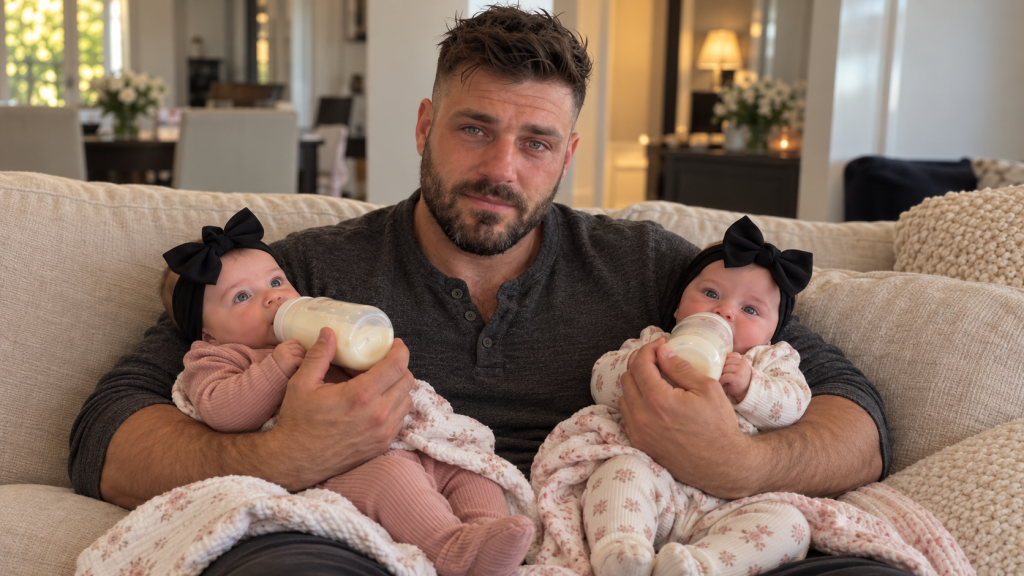
Now her mother was telling me there was something wrong with Maisie’s heart. I gripped the kitchen counter. “What did the result say?” Helen looked down at the envelope. “Ben, please sit.” “No.” My voice cracked. “Please don’t tell me to sit down. Just tell me whether my daughter is dying.”
Her face crumpled.
“No, sweetheart. That’s not what this means.”
I stared at her.
“Then what does it mean?”
She opened the envelope with trembling fingers.
“Maisie’s screening ECG showed a longer-than-expected QT interval. The pediatrician wants a specialist to review it because of what they found in Mary’s genetic testing.”
The medical words sounded distant.
Unreal.
“Longer than expected?”
Helen nodded.
“It’s a measurement of how the heart’s electrical system resets between beats. Sometimes the measurement can be affected by other things. But in a family with Mary’s condition, it needs careful attention.”
I looked at the paper.
There were numbers.
Abbreviations.
A recommendation for pediatric cardiology assessment.
A note about family history.
I didn’t understand half of it.
All I understood was that something might be wrong with my baby.
“How did you get these results before me?” I demanded.
Helen flinched.
“You gave me access to the girls’ medical portal when you were overwhelmed after the hospital. Remember? At their last appointment, the pediatrician recommended an ECG for both girls, and you agreed. You asked me to help coordinate the follow-up.”
I closed my eyes.
I remembered signing a form.
I remembered a technician placing little adhesive patches on Maisie’s chest while she fussed.
I remembered holding Ella with my free arm.
But I hadn’t understood why the doctor wanted the test.
I’d been so tired that most conversations felt like listening underwater.
“The clinic sent the report yesterday,” Helen continued. “I read it this morning. I should have called you immediately.”
My stomach tightened.
“Does Ella have it too?”
“We don’t know. Her ECG was reassuring, but the specialist still wants to review both girls because of Mary’s history.”
I stared at her.
“What history?”
Helen swallowed.
“Mary had long QT syndrome.”
I repeated the words slowly.
“Long QT syndrome.”
She nodded.
“It’s an inherited heart rhythm condition.”
“And you knew?”
Tears filled her eyes.
“Only near the end of the pregnancy.”
“Near the end?”
“She told me after the specialist confirmed it.”
My voice rose.
“And neither of you thought I should know?”
Helen began crying.
“Ben—”
“I’m their father!”
I pointed toward the nursery.
“They’re three months old. I barely know how to keep them alive on a normal day, and you’re standing here telling me one of them might have the same condition that killed their mother.”
Helen covered her mouth.
“I know.”
“No, you don’t!”
The words escaped before I could stop them.
Then I saw her face.
This woman had buried her only daughter.
And I was shouting at her in the kitchen where Mary used to sing while washing dishes.
A thin cry came from the nursery.
Maisie.
I knew her cry already.
Ella cried in quick, indignant bursts, as though somebody had personally offended her.
Maisie started softly, with a little questioning sound before the full complaint arrived.
I went to her.
She was lying in her crib, waving one tiny fist.
I lifted her carefully.
“There you are, sweetheart.”
She settled against my chest.
Her cheek was warm.
Her breathing was steady.
Her fingers curled around the collar of my shirt.
I stared at her.
How could a child look so perfectly ordinary when a piece of paper suggested something might be wrong inside her?
I pressed my lips to her forehead.
“Daddy’s here.”
Behind me, Helen began crying.
I turned.
She stood in the doorway, staring at the baby in my arms.
“Mary used to hold her exactly like that,” she whispered.
My throat closed.
For a second, I saw my wife.
Not in the hospital.
Not with monitors around her.
But standing in our bedroom weeks before the birth, cradling a pillow against her chest and practicing how she’d hold the babies.
She’d laughed when I teased her.
“You’re rehearsing?”
“Of course,” she’d said. “I’ve never had two newborns before.”
Then she’d kissed me.
And told me we were going to be wonderful parents.
I looked at Helen.
“When is the specialist appointment?”
“Tomorrow morning. I called the pediatrician after seeing the report. They’ll review it with you directly and arrange urgent care sooner if needed.”
I nodded.
“I’m going.”
“Of course.”
“And I want every piece of Mary’s medical information you’re allowed to share.”
Helen wiped her cheeks.
“I brought what she gave me.”
I looked down at Maisie.
Then whispered:
“Why did she keep this from me?”
Helen stood very still.
Finally, she answered.
“Because she was frightened, Ben. And because there was another death in our family that she wanted to understand before she told you.”
I looked up.
“What death?”
Helen’s eyes filled again.
“My son.”
I stared.
“Mary had a brother?”
She nodded slowly.
“His name was Caleb.”
My stomach tightened.
I’d been married to Mary for six years.
She’d told me she was an only child.
And now her mother was standing in my nursery telling me she’d lost a son.
“How?” I whispered.
Helen looked toward the window.
“He was sixteen.”
Her voice broke.
“He collapsed during a school swimming competition.”
I stared at her.
“They said he drowned. But years later, a doctor suggested his heart might have stopped before he went under.”
I couldn’t breathe.
“Did Mary know?”
Helen nodded.
“She was twelve when he died.”
Then she said something that made my knees weaken.
“Ben, Mary had spent most of her life believing the same thing you believe now.”
I swallowed.
“What?”
“That if someone had made one different choice, Caleb might still be alive.”
I stood in the nursery holding our daughter.
And for the first time since Mary’s death, I realized there were parts of my wife’s grief I had never known existed.
She’d been carrying a brother I’d never heard about.
A fear she’d never explained.
And a medical secret that might affect the two little girls sleeping beneath our roof.
I looked at Helen.
“Tell me everything.”
She nodded.
But before she could speak, Ella began crying in the other crib.
Maisie stirred against my chest.
And suddenly, there we were.
Two grieving adults.
Two hungry babies.
An envelope full of frightening information.
And no choice but to keep caring for the living while we tried to understand the dead.
Helen took Ella.
I warmed two bottles.
We sat together in the nursery, feeding the girls in a silence broken only by their small swallowing sounds.
For the first time in three months, I didn’t feel completely alone in that room.
But I had never been more afraid.
Because the woman holding my daughter wasn’t just my mother-in-law anymore.
She was the only person who could explain the secret my wife had carried into the delivery room.
And I needed to know whether that secret had changed the way Mary died.
Later that night, after both girls had fallen asleep, Helen and I sat at the kitchen table.
The envelope lay between us.
For three months, this was the table where I’d sat alone after midnight, eating cereal because I couldn’t remember when I’d last cooked a proper meal.
It was where I’d opened sympathy cards without reading them.
Where I’d stared at Mary’s empty chair and wondered how much longer I could keep pretending I was managing.
Now Helen sat across from me, holding a photograph I’d never seen.
It showed two children standing beside a swimming pool.
A boy with dark hair had one arm around a younger girl.
The girl was Mary.
I recognized her smile immediately.
“That’s Caleb,” Helen whispered.
I took the photograph.
He looked about sixteen, wearing a blue swimming-team sweatshirt. Mary couldn’t have been older than twelve.
“He looks like her.”
Helen nodded.
“They had the same eyes.”
I studied them.
“How could I have been with Mary for six years and never known she had a brother?”
Helen looked down.
“After Caleb died, people stopped mentioning him. My husband couldn’t bear it. Mary learned that speaking about her brother made everybody cry.”
Her voice trembled.
“Eventually, when strangers asked whether she had siblings, she started saying she was an only child.”
I swallowed.
“She never told me differently.”
“I know.”
Helen wiped her eyes.
“I should have encouraged her to talk about him instead of teaching her that silence made life easier.”
She explained that Caleb had been an excellent swimmer.
Not a champion.
Not a future Olympian.
Just a boy who loved the water.
He was the kind of teenager who carried a towel for somebody who’d forgotten theirs and stayed after practice to help put equipment away.
One afternoon, during a competition, he collapsed in the pool.
The people around him responded as quickly as they could.
Paramedics arrived.
Doctors tried to revive him.
But Caleb died.
At the time, the family was told he had drowned after an unexplained collapse.
No one could explain exactly why he’d lost consciousness.
Years later, when a relative experienced a sudden cardiac problem, a doctor raised the possibility of an inherited heart rhythm disorder.
But by then, Helen’s marriage had ended.
The family had scattered.
And Mary had grown accustomed to carrying her brother’s memory alone.
“Did you ever have her tested?” I asked.
Helen shook her head.
“Not then.”
“Why?”
“There wasn’t a confirmed family diagnosis to test her for. We were advised to discuss the history with her doctors. I didn’t always do that as clearly as I should have.”
I stared at her.
“Why not?”
She pressed her hands together.
“Because I was afraid of discovering something else was wrong.”
Her eyes filled.
“And because every time a doctor asked about Caleb, I had to tell that story again.”
I looked toward the nursery.
For a moment, I wanted to be furious.
But I recognized the feeling she was describing.
I’d been afraid to open Mary’s hospital bag.
Afraid to return her calls.
Afraid even to read the information about Maisie’s test because some part of me believed that not knowing might keep my daughters safe.
Fear could make people do strange things.
It couldn’t excuse leaving others uninformed.
But it could explain why they did it.
“What happened during Mary’s pregnancy?” I asked.
Helen pulled another document from the envelope.
“At twenty-seven weeks, she had an episode of dizziness and a racing heartbeat.”
I frowned.
“She told me she was dehydrated.”
“She might have been. But her doctor recommended further testing because of the symptoms and the family history she eventually disclosed.”
I looked at the report.
Mary had been evaluated by a cardiologist.
Her ECG had raised concerns.
Additional testing had identified a disease-associated genetic variant linked to long QT syndrome.
The cardiologist had recommended a management plan and careful coordination with her maternity team.
I recognized the date.
Seven weeks before the twins were born.
The same week Mary had insisted on going to lunch with her mother without me.
I’d teased her afterward about keeping secrets.
She’d laughed and said a woman was allowed a few.
Now I felt sick remembering it.
“She wanted to tell you,” Helen whispered.
“Then why didn’t she?”
“She said she needed one more appointment. She wanted to understand what the diagnosis actually meant before frightening you.”
I leaned back.
“Instead, she frightened herself alone.”
Helen closed her eyes.
“Yes.”
I stared at Mary’s handwriting in the medical folder.
“She told you not to say anything?”
“She asked me to give her a few days.”
“Seven weeks is more than a few days.”
Helen nodded, crying.
“I know.”
There was an appointment card beneath the report.
It was scheduled for the following week.
Two days after Mary died.
A consultation for Mary and her husband to discuss the diagnosis, treatment, and genetic risk to the babies.
My name was written beside hers.
Ben and Mary.
I stared at it.
“She was going to bring me?”
Helen nodded.
“Yes.”
I touched the card.
For three months, I’d been angry with myself for not asking one more question in the delivery room.
Now I was angry about an appointment we never reached.
A conversation we never had.
A chance to face the fear together.
“Ben,” Helen said quietly, “I know you’re angry.”
I looked up.
“I don’t even know what I am.”
She wiped her cheeks.
“You have every right to be angry that you weren’t told.”
I stared at her.
She continued.
“But Mary didn’t keep it secret because she didn’t trust you as a husband.”
My voice broke.
“Then why?”
Helen looked toward the nursery.
“Because she knew how much you loved those girls already. And she was terrified you’d stop being happy about their arrival.”
I covered my face.
I’d spent the pregnancy assembling two cribs.
Measuring car seats.
Reading ridiculous articles about how to survive twins.
Mary had watched me paint the nursery while carrying a diagnosis that frightened her.
I’d thought she was simply tired.
Sometimes she’d stared at me longer than usual.
I remembered asking what was wrong.
She’d smile and say, “Nothing. I just like looking at you.”
I began crying.
Helen came around the table.
She knelt beside me.
For a moment, neither of us spoke.
Then she whispered:
“I need to tell you why I stayed away.”
I looked up.
“I thought you blamed me.”
Her face crumpled.
“No.”
“Then why didn’t you come?”
She swallowed.
“Because the day Mary died, I realized I’d lost both my children.”
I stared at her.
She continued.
“And I was afraid that if I came here and saw the girls, I’d spend every minute looking for signs of the same thing happening again.”
Her voice broke.
“I was ashamed of being afraid of my own granddaughters.”
I looked at the doorway.
Helen continued.
“I’d get dressed to visit. I’d pack food. I’d drive as far as the end of your street.”
A tear slid down her cheek.
“Then I’d remember Caleb in the hospital. Mary in the delivery room. And I’d turn around.”
I could barely breathe.
“I wasn’t punishing you, Ben.”
She reached for my hand.
“I was running away from the one place where I could see everything I’d lost.”
I remembered the unanswered messages.
The photographs I’d sent.
The one-word replies.
I’d convinced myself Helen hated me.
That every image of the twins reminded her I’d chosen them over her daughter.
Now I understood she had been trapped by something almost as cruel as my guilt.
She was terrified of loving two children she might lose.
“Why come today?” I asked.
Helen looked down at the ECG report.
“Because this time, I refused to let fear decide for me.”
She squeezed my hand.
“I should have come sooner. I should have told you everything. I’m sorry.”
I nodded.
For a long time, I couldn’t speak.
Then I whispered:
“I needed you.”
She began crying again.
“I know.”
“I didn’t know how to do any of this.”
“I know, sweetheart.”
My voice broke.
“I still don’t.”
Helen wrapped her arms around me.
And for the first time since Mary’s funeral, I let somebody hold me while I cried.
The next morning, we took both girls to the pediatric cardiology clinic.
I barely slept the night before.
Every time Maisie moved in her crib, I sat upright.
Every time Ella made a small sound, I crossed the room to check her.
By dawn, I’d convinced myself that if I watched them carefully enough, nothing terrible could happen.
But Helen found me standing between the cribs, exhausted and shaking.
“Ben,” she whispered, “you can’t stay awake forever.”
I looked at her.
“What if something happens when I’m asleep?”
Her face softened.
“Then we make sure you have a medical plan that doesn’t depend on never closing your eyes.”
I wanted to argue.
Instead, I began crying.
Because that was exactly what I needed someone to say.
Dr. Priya Desai was a pediatric cardiologist who worked with an electrophysiology team.
She greeted us calmly, introduced herself to the girls as though they could understand every word, and waited until I’d settled both carriers beside my chair.
Then she looked at me.
“Ben, I understand this has been a frightening few days.”
I gave a hollow laugh.
“That’s one way to put it.”
She nodded.
“Let’s go through what we know, what we don’t know, and what we can do next.”
I gripped the folder.
“Is Maisie going to die?”
Dr. Desai didn’t look offended by the question.
She leaned forward.
“An ECG finding is not a prediction of that. I also can’t tell you she has long QT syndrome based on one measurement without proper review.”
My throat tightened.
“But her mother died.”
“Yes. And that makes the family history very important.”
She spoke carefully.
“Some inherited heart rhythm conditions increase the risk of dangerous arrhythmias. The risk and the treatment vary considerably from person to person. Many affected people live long lives with appropriate care.”
I stared at her.
“Can you treat it?”
“There are ways to reduce risk, including medication and an individualized safety plan when indicated. First, we need to establish which girls inherited Mary’s genetic variant and understand their heart findings.”
She reviewed Maisie’s ECG.
Then repeated the measurement.
A technician gently placed small patches on my baby’s chest.
Maisie protested loudly.
I stroked her tiny fingers.
“It’s okay, sweetheart.”
She stared up at me with those familiar dark eyes.
Mary’s eyes.
The thought made my throat close.
Ella’s ECG was also reviewed.
It appeared reassuring.
For a moment, I felt relief.
Then Dr. Desai explained something that stopped me.
“A normal ECG does not always exclude an inherited susceptibility, especially when we know a specific variant was present in a parent.”
I looked up.
“So Ella still needs testing?”
“Yes. Both girls should be considered for targeted testing of Mary’s confirmed variant, with appropriate consent and genetic counseling.”
I stared between the two carriers.
“But Maisie’s ECG was the abnormal one.”
“That’s true. It’s one important part of the picture, but it isn’t the entire picture.”
I swallowed.
“What do we do while we wait?”
Dr. Desai outlined a temporary plan based on the information available.
She explained which symptoms required urgent assessment, how the family history would affect medication decisions, and why we should review any new prescriptions with the care team.
She discussed the importance of keeping routine appointments and learning emergency response measures appropriate to the girls’ ages.
She didn’t tell me to live in fear.
She didn’t promise nothing bad could happen.
She gave me something far more useful.
A plan.
When she finished, I sat quietly.
Then whispered:
“I keep thinking about the delivery room.”
Dr. Desai looked at me.
I swallowed.
“They asked what to prioritize. Mary said the girls. And I agreed.”
My hands trembled.
“I’ve been thinking that maybe if I’d said something different, she would still be here.”
Dr. Desai’s expression softened.
“Ben, I wasn’t part of Mary’s obstetric team, so I won’t pretend I can explain that conversation from memory or determine what caused her death.”
I nodded.
“But we can arrange for you to review her records with the clinicians involved, if that’s something you want.”
I looked at Helen.
She squeezed my hand.
Dr. Desai continued.
“An emergency team works to protect both the mother and the babies. Your words alone do not establish that the team withheld care from Mary. You deserve to know what happened, rather than having to reconstruct it from the most frightening minutes of your life.”
I covered my face.
For three months, I’d been replaying those minutes as though they were evidence against me.
Maybe it was time to find out what actually happened.
A week later, I returned to the hospital where Mary died.
I hadn’t been back since the day I carried her belongings to the parking garage.
The building looked exactly the same.
The glass entrance.
The little coffee kiosk.
The blue signs pointing toward maternity services.
I hated that.
Somehow, I’d expected a place where my life ended to look different.
Instead, people walked through the doors carrying flowers and overnight bags.
A man pushed a wheelchair toward the elevators.
A pregnant woman laughed at something her husband said.
The world continued.
It had been continuing for three months.
And I still didn’t understand how.
Helen came with me.
My sister, Rebecca, stayed home with the twins.
She’d insisted.
“You’ve spent three months making sure everybody else is okay,” she’d told me. “Go find out what happened to Mary. I’ve got the girls.”
So I kissed both babies goodbye and drove to the hospital with my mother-in-law.
Halfway there, I started shaking so badly I had to pull over.
Helen didn’t tell me to be strong.
She sat quietly while I tried to breathe.
Then she said:
“Mary was proud of you.”
I stared at the steering wheel.
“What?”
“She used to tell me how patient you were with her.”
I laughed bitterly.
“I wasn’t patient in that delivery room.”
“You were frightened.”
“I agreed to let her die.”
Helen’s eyes filled.
“Ben, that is what you’ve been telling yourself. Let’s hear what the doctors say before you decide it’s the truth.”
We met with Dr. Amelia Ford, the obstetrician who’d overseen Mary’s emergency delivery, and a senior nurse named Naomi Brooks.
A patient liaison had helped arrange the meeting.
Dr. Ford greeted me gently.
“Ben, I’m very sorry we have to meet under these circumstances.”
I nodded.
I didn’t trust myself to speak.
She opened Mary’s records.
Then waited.
“Would you like me to walk you through what happened, or would you rather ask your questions first?”
I stared at the folder.
For three months, I’d had only one question.
So I asked it.
“Did I tell you to let my wife die?”
The room went completely still.
Dr. Ford’s expression changed.
“No, Ben.”
My eyes filled.
I shook my head.
“I remember somebody asking what we wanted you to prioritize.”
She nodded slowly.
“There was a conversation about Mary’s wishes when her condition began deteriorating.”
“She said to save the girls.”
“Yes.”
“And I agreed.”
“You did.”
My throat tightened.
“Then why are you saying I didn’t choose?”
Dr. Ford leaned forward.
“Because those words were not an instruction to stop treating Mary.”
I stared.
She continued.
“We had separate teams working on the emergency delivery and neonatal care. We were trying to save all three patients.”
I could barely breathe.
“But Mary died.”
Dr. Ford’s eyes filled.
“Yes.”
She explained that Mary had developed a sudden, life-threatening obstetric complication requiring urgent delivery.
Her heart condition made the situation more complex.
The team worked to stabilize her while preparing the babies for birth.
The twins were delivered prematurely and transferred to neonatal care.
Mary then suffered a severe cardiac arrhythmia and arrest.
The clinicians attempted resuscitation.
Despite their efforts, she did not survive.
I stared at the table.
“Did you stop trying because I said to save the babies?”
Dr. Ford shook her head.
“No.”
My chest tightened.
“You kept trying?”
“Yes.”
“How long?”
She showed me the documented timeline.
Not because numbers could explain grief.
But because I’d asked.
I studied the record.
Interventions.
Medications.
Resuscitation measures.
Specialists called.
Times carefully recorded.
Every entry represented somebody trying to keep Mary alive.
For three months, I’d pictured the medical team turning away from her the moment I agreed with her wishes.
As though my sentence had shut a door.
But the record didn’t show that.
It showed people fighting for her.
Even after the girls were born.
Even after she lost consciousness.
Even when her heart stopped.
I looked up.
“Then why did someone ask us to choose?”
Naomi spoke gently.
“Ben, I remember how frightened you both were. The team was discussing the urgency of delivery and what Mary wanted us to know if her condition changed. In an emergency, those conversations can sound much more absolute than they’re intended to.”
She swallowed.
“If we left you believing you were responsible for whether Mary received life-saving care, we failed to explain it clearly enough.”
My eyes filled.
Dr. Ford nodded.
“Mary’s wishes were important. So were yours as her husband. But her medical care was not abandoned because either of you spoke those words.”
I covered my mouth.
The question I’d carried like a stone inside me began to change shape.
I hadn’t killed Mary.
But I had been present when she died.
I had agreed with her.
And I’d spent three months confusing those facts.
“Could her heart condition have caused it?” I whispered.
Dr. Ford answered carefully.
“It was an important risk factor and may have contributed to the cardiac event. But retrospective certainty about the precise mechanism is difficult. Mary’s complication was severe, and we can’t honestly tell you that one different conversation would have changed the outcome.”
I looked down.
“Could anything have saved her?”
Dr. Ford’s voice softened.
“We reviewed her care. There are always questions worth examining, and we’re prepared to discuss any concerns you have. But I can’t promise there was a single missed action that would have guaranteed her survival.”
I nodded.
It wasn’t the comforting answer I’d once imagined.
There was no secret sentence that would bring Mary back.
No hidden switch I could have flipped.
No alternative version of the evening waiting for me to discover it.
Helen began crying quietly.
I turned toward her.
She was staring at Mary’s name on the records.
“Did she ask for me?” Helen whispered.
Dr. Ford looked at Naomi.
The nurse nodded gently.
“Before the emergency became critical, Mary asked whether her mother had been called.”
Helen covered her mouth.
“I was on my way.”
“I know,” Naomi said.
Her voice was warm.
“Mary knew you were coming.”
Helen began sobbing.
For months, she too had carried a question.
Not whether she’d made the wrong medical choice.
Whether her daughter had died thinking she’d been abandoned.
I reached for her hand.
She gripped mine.
And for the first time since the funeral, we were grieving in the same room without trying to decide who deserved the blame.
Before we left, Naomi gave me a small envelope.
“I wanted you to have this,” she said.
Inside was a copy of a note from Mary’s chart.
It wasn’t a long letter.
Just an entry documenting something she’d said while the team was preparing for the delivery.
Patient asks that husband be told she loves him and that he must not blame himself.
I stared at the words.
My vision blurred.
“Did she say that?”
Naomi nodded.
“Yes.”
I looked up.
“Was she frightened?”
The nurse’s eyes filled.
“Very.”
My chest tightened.
“Was she alone?”
“No, Ben. We stayed with her.”
I pressed the paper against my chest.
I had spent three months imagining Mary looking for me while the doctors chose to save our daughters instead.
Now I knew she’d been surrounded by people trying to help.
And that somewhere in the middle of her fear, she’d thought about mine.
In the parking lot, I sat behind the steering wheel for a long time.
Helen waited.
Finally, I whispered:
“She knew what I’d do.”
Helen looked at me.
“She knew I’d blame myself.”
Her eyes filled.
“Yes.”
I began crying.
“I wish she’d told me about Caleb. About her heart. About all of it.”
Helen reached for my hand.
“I do too.”
I stared at the paper.
Then whispered:
“But I would still have married her.”
Helen smiled sadly.
“I know.”
I looked toward the hospital entrance.
“I would still have wanted those girls.”
Her voice broke.
“I know that too.”
That night, after the twins were asleep, I opened the bag of Mary’s belongings.
For three months, it had sat inside my closet.
Untouched.
I pulled out her sweatshirt.
Blue.
Soft.
A little worn near the cuffs.
I pressed it against my face.
For a moment, I could almost smell her shampoo.
Then I cried until there was nothing left to do but sit quietly.
I found other things in the bag.
Her hair tie.
A small tube of lip balm.
A grocery receipt.
A packet of crackers she’d apparently tucked into the front pocket.
And her phone.
I’d forgotten it was there.
I plugged it in.
When the screen finally lit up, her photograph appeared.
Mary standing in our kitchen with a wooden spoon in her hand.
She was laughing at me for taking the picture.
For a long time, I just looked at her face.
Then I found a voice message she’d sent me two days before the delivery.
Her voice filled the bedroom.
“Ben, please remember to buy bananas. Not the green ones. The girls are already kicking me enough without making me wait for fruit to ripen.”
I laughed through tears.
Then she added:
“Oh, and I love you. Even when you forget bananas.”
I played it three times.
Then saved a copy.
For three months, the only voice I’d heard in my memory was Mary saying, The girls. Obviously the girls.
Now I had another one.
Mary laughing about bananas.
Mary teasing me.
Mary saying she loved me.
And I realized how desperately I’d allowed the final hours of her life to swallow every ordinary thing that came before them.
When Helen called to check on me, I answered.
“Ben?”
“Hi.”
“How are the girls?”
“Asleep.”
“And you?”
I looked at Mary’s sweatshirt.
Then at her photograph.
“I listened to her laugh.”
Helen was quiet.
Then she whispered:
“What did it sound like?”
I smiled through tears.
“Exactly like Mary.”
A week later, the genetics counselor called with the results of the girls’ targeted testing.
I was sitting on the nursery floor.
Ella was awake, studying the ceiling fan as though she’d discovered a personal enemy.
Maisie was sleeping beside her in a bassinet.
The counselor confirmed my identity and asked whether I was somewhere private.
My pulse quickened.
“Yes.”
She paused.
“Ben, I have the first confirmed result to discuss.”
I gripped the telephone.
“Maisie?”
“Maisie did not inherit the specific familial variant identified in Mary.”
I stared.
“What?”
She repeated the finding.
I looked at my sleeping daughter.
The child whose unusual ECG had brought us to the specialist.
My eyes filled.
“So she’s okay?”
“The familial result is reassuring, but the cardiologist still needs to interpret her ECG findings and determine whether any follow-up is needed. This result doesn’t answer every possible heart question.”
I nodded.
I was beginning to learn that medicine rarely offered the kind of absolute certainty grieving people wanted.
Then I asked:
“And Ella?”
There was a pause.
The counselor’s voice became gentler.
“Ben, Ella’s test identified the familial variant.”
I stopped breathing.
I looked toward my other daughter.
Ella was waving her fists at the ceiling fan.
Perfectly ordinary.
Perfectly alive.
I remembered Dr. Desai explaining that a reassuring ECG didn’t necessarily exclude an inherited condition.
I’d heard her.
But somewhere inside, I’d still been holding on to the idea that Maisie was the one we needed to fear for.
Because her name was Mary.
Because she looked like her mother.
Because her first test had raised the alarm.
Now I understood how little any of those things had to do with what was happening inside their bodies.
My voice shook.
“What does this mean for Ella?”
The counselor explained that the result identified a susceptibility requiring specialist management, not a prediction of when or whether a dangerous event would occur.
Her normal ECG didn’t cancel the genetic finding.
Her care team would assess her individual risk, discuss treatment, and make a long-term plan.
I listened carefully.
I wrote everything down.
Then I asked the question I hated most.
“Is she going to die like Mary?”
The counselor paused.
“Ben, this result does not mean Ella will have her mother’s outcome. We have an opportunity to identify the risk early and make a plan with specialists. That matters.”
I closed my eyes.
An opportunity.
For the first time in three months, the word felt real.
When the call ended, I picked up Ella.
She stared at me.
Then yawned enormously.
I held her against my chest.
“You little troublemaker,” I whispered.
A tear fell onto her blanket.
“Daddy’s going to learn everything he needs to know.”
From the bassinet, Maisie stirred.
I looked toward her.
Then at Ella.
Two daughters.
Different risks.
Different futures.
The same father.
And I made myself one promise.
I would never let a medical report become the whole story of either of their lives.
The appointment after Ella’s genetic result was different from the first.
I still carried fear into the clinic.
But this time, I also carried questions.
I had written them on three pages of a notebook.
Would Ella need medication?
What did her particular variant mean?
What signs should I watch for?
What did the daycare need to know when the girls were old enough to attend?
And what could I do to make sure I didn’t spend their childhood treating every laugh, every tumble, and every ordinary fever as a sign of disaster?
Dr. Desai read the questions carefully.
Then looked at me.
“Ben, these are exactly the things we should be talking about.”
I felt myself breathe a little easier.
The specialist team assessed Ella’s results, reviewed her ECG, and discussed a treatment plan tailored to her age and family history.
The doctors recommended a preventive medication and explained how they would monitor her response.
They also gave me written information about urgent symptoms, medication interactions, and when to seek emergency care.
We discussed infant CPR training and creating a clear plan for anyone caring for the girls.
I wrote everything down.
Then I looked at Dr. Desai.
“Will I ever stop being scared?”
She smiled gently.
“I can’t promise you’ll never worry. You’re their father.”
I gave a tired laugh.
“But the goal is to give you enough reliable information and support that fear doesn’t have to make every decision.”
I nodded.
That was the first time anyone had described a future in which I could be careful without being terrified.
Helen came with us.
She listened to every word.
When the doctor finished, Helen asked whether she and other close relatives should consider family screening.
Dr. Desai explained that a genetics professional could help assess which relatives might benefit from evaluation.
Helen nodded.
“I should have done this years ago.”
The doctor looked at her kindly.
“What matters now is making informed decisions with the information you have.”
I watched my mother-in-law.
She looked exhausted.
But she wasn’t running away.
Not anymore.
On the drive home, she glanced toward me.
“Ben, I have something else for you.”
My stomach tightened.
“What?”
She hesitated.
“Mary left an envelope in my care.”
I stopped at a red light.
“Helen.”
Her eyes filled.
“I know.”
I stared at her.
“Please tell me we’re finished with secrets.”
She nodded quickly.
“We are. I should have brought it with the other papers. I was afraid it would hurt you before you understood the medical results.”
I gripped the steering wheel.
“That decision wasn’t yours to make.”
She looked down.
“You’re right.”
The light changed.
I drove on.
For a moment, neither of us spoke.
Then Helen whispered:
“I’m sorry, Ben. I don’t want to become another person who thinks hiding something is the same as protecting you.”
I swallowed.
“Then don’t.”
That evening, she gave me the envelope.
It was thick and pale yellow.
Mary had written my name across the front.
Not Benjamin, the name she used when she was pretending to be angry.
Just Ben.
In the bottom corner she’d drawn a tiny heart.
I recognized it immediately.
She’d drawn hearts on lunch notes, grocery lists, and the backs of receipts when she wanted to make me smile.
I sat at the kitchen table.
Helen took the babies into the living room.
Then I opened the envelope.
Ben,
I hope I never have to give you this letter.
But after the appointment today, I realized there are some things I need you to know in case I don’t get the chance to say them properly.
First, I’m scared.
I covered my mouth.
Mary had always seemed so certain.
Even when we found out we were having twins.
Even when our apartment felt too small and we couldn’t agree on a stroller.
She’d joke.
Make lists.
Tell me we’d figure things out.
But here, in her own handwriting, she was admitting fear.
I’m scared of becoming a mother.
I’m scared I won’t know how to care for two babies at once.
I’m scared of the hospital.
And yes, I’m scared of the heart condition the doctors found.
But I’m also happy, Ben.
Please don’t forget that.
My eyes filled.
I love the girls already.
I love the way Ella kicks whenever you talk near my stomach.
I love that Maisie seems to turn away every time I try to get comfortable.
I love watching you pretend you understand how the stroller folds.
A laugh escaped through my tears.
I still didn’t understand that stroller.
Three months later, I occasionally stood in parking lots fighting with it while both girls watched me from their car seats.
The specialist says we need to make a plan, and I promise I’m going to bring you to the next appointment.
I know I should have told you sooner.
I’ve been trying to find the words.
After Caleb died, my family acted as though saying his name might make everything fall apart again.
I think I learned that silence was safer than frightening the people I loved.
It wasn’t fair to you.
I stopped reading.
My chest tightened.
There it was.
Mary knew.
Even before she died, she understood that she’d made a mistake by keeping me outside her fear.
If anything happens to me, please remember that I wanted to live.
I wanted to grow old with you.
I wanted to embarrass the girls at school concerts.
I wanted to complain about their teenage music and cry when they left for college.
I wanted every ordinary day we could get.
Tears slid onto the page.
If I don’t get those days, please don’t let my absence become the only thing our daughters know about me.
Tell them how much I laughed.
Tell them I burned toast almost every morning.
Tell them I loved thunderstorms as long as I was inside with a blanket.
Tell them their dad makes terrible jokes and that I married him anyway.
I laughed through tears.
Then read the final paragraph.
And Ben, if the worst happens, I know what you’ll do.
You’ll blame yourself because you think loving somebody means you should be able to keep them safe.
But love can’t control everything.
It can’t promise that nobody gets sick.
It can’t make every terrible thing turn out differently.
Sometimes love is simply staying beside someone when the future is frightening.
You have always done that for me.
Whatever happens, I know you’ll do it for our girls.
I love you.
Mary.
I sat at the table for a long time.
Then I folded the letter carefully.
For months, I’d repeated the same thought.
I chose the girls.
I lost Mary.
Therefore I caused her death.
But Mary had known her own wishes.
She’d participated in her care.
She’d been frightened and hopeful and desperate to live.
And she’d still trusted me.
Not because I could prevent every tragedy.
Because she knew I would keep loving our children after she was gone.
Helen found me nearly an hour later.
I was sitting with the letter pressed against my chest.
She didn’t speak.
She simply sat beside me.
After a while, I looked toward her.
“Mary wanted to tell me.”
Helen nodded.
“Yes.”
I swallowed.
“And she knew she was wrong to wait.”
“Yes.”
I looked down.
“I’m angry with her.”
Helen’s eyes filled.
“I know.”
“Does that make me a terrible husband?”
She shook her head.
“No.”
My voice broke.
“I love her so much. And I’m furious that she didn’t trust me enough to let me be frightened beside her.”
Helen put her hand over mine.
“You can love someone and still wish they’d made a different choice.”
For a long moment, I said nothing.
Then whispered:
“I wish we’d had more time.”
Helen began crying.
“So do I.”
The next few months were filled with appointments, ordinary routines, and the slow process of learning how to be a father without Mary.
Ella adjusted to her treatment plan under the specialists’ supervision.
Maisie continued her follow-up because of the earlier ECG finding, although she hadn’t inherited Mary’s known familial variant.
I learned the difference between a real reason to seek help and the frightened thoughts that arrived whenever the house became quiet.
I took an infant CPR course.
Then Helen took it too.
My sister joined us.
By the end, all three of us were exhausted from practicing on training mannequins.
Helen laughed so hard when she struggled with the instructions that she had to sit down.
I stared at her.
Then laughed too.
It was the first time I’d heard her laugh since Mary’s death.
On the drive home, Helen wiped her eyes.
“Mary would’ve teased me mercilessly.”
I smiled.
“She would’ve made you practice until you could do it blindfolded.”
Helen laughed again.
Then suddenly began crying.
I pulled into a parking lot.
She covered her face.
“Sometimes I forget she’s gone for a second.”
I nodded.
“Me too.”
Her voice broke.
“Then it comes back.”
I looked at her.
“Yeah.”
We sat quietly.
Then Helen wiped her cheeks.
“Should we go pick up the girls?”
I smiled sadly.
“Yes.”
And we went home.
One night, when the twins were almost eight months old, Ella developed a fever.
At first, I followed the pediatrician’s instructions.
I checked her temperature.
Made sure she was feeding.
Watched for symptoms the doctors had told us to take seriously.
But when she became unusually difficult to wake and seemed less responsive than normal, I felt the floor disappear beneath me.
My hands shook as I contacted emergency services.
For one terrible second, I was back in the delivery room.
Mary’s hand in mine.
People speaking urgently.
A decision I thought had cost her life.
Then I looked at Ella.
My daughter.
Not Mary.
Not Caleb.
Ella.
A little girl who needed her father to respond to what was happening now.
I gave the dispatcher the information the medical team had asked me to keep available.
I followed the instructions I was given.
And I called Helen after help was on the way.
She answered immediately.
“Ben?”
My voice trembled.
“Ella’s sick.”
There was a pause.
Then Helen said:
“Tell me what you need.”
Not calm down.
Not don’t worry.
Not this can’t be happening again.
Just those words.
Tell me what you need.
At the hospital, the doctors assessed Ella promptly.
They were aware of her cardiac history.
They reviewed her symptoms and monitored her while treating the underlying illness.
The evaluation did not reveal the dangerous arrhythmia I’d been terrified of.
She had a significant viral infection and needed supportive care, but she improved.
I was relieved.
And shaken.
Both feelings remained with me as I sat beside her hospital cot.
Helen arrived carrying a bag of clothes and bottles.
She found me holding Ella’s little hand.
For a moment, she stopped in the doorway.
I saw the fear on her face.
The memories that must have come rushing back.
Caleb.
Mary.
Hospital corridors.
Monitors.
But she didn’t leave.
She came inside.
Put the bag down.
And sat beside me.
“How is she?” Helen whispered.
“Better.”
Her shoulders dropped.
“Thank God.”
I looked at her.
“I was terrified.”
She nodded.
“So was I.”
I swallowed.
“But I called for help. I followed the plan.”
Helen smiled through tears.
“You did.”
I looked at Ella sleeping peacefully.
For years, I’d believed love meant finding the one perfect decision that would guarantee a happy ending.
Now I was learning something else.
Love meant preparing.
Paying attention.
Asking for help.
And refusing to let fear convince you that you had to face everything alone.
By the time the girls’ first birthday approached, our house had changed.
Not dramatically.
There were still toys everywhere.
The laundry basket was still permanently full.
I still occasionally put my coffee in the refrigerator and the milk in the cupboard because I was too tired to think.
But I no longer felt as though every morning began with a test I was destined to fail.
We had routines.
People to call.
Medical appointments on the calendar.
A grandmother who visited without asking whether she was welcome.
And two little girls who seemed determined to learn how to walk before I was emotionally prepared for it.
Maisie took her first independent steps three weeks before her birthday.
She stood beside the sofa, holding a stuffed elephant.
Then she let go.
Took three wobbly steps.
And fell directly into my arms.
I cheered so loudly that Ella started crying.
Helen burst out laughing.
“Oh, Mary would’ve loved that.”
I looked up.
There was a time when hearing my wife’s name unexpectedly felt like being stabbed.
Now, sometimes, it felt like opening a window.
I kissed Maisie’s cheek.
“Yes,” I whispered. “She would’ve.”
Ella followed two days later.
Naturally, she did it while I was changing Maisie’s diaper.
She toddled across the nursery carrying one sock, looking enormously pleased with herself.
By the time I realized what was happening, she’d already reached the door.
“Ella!”
She laughed.
I hurried after her.
Helen watched from the hallway, laughing so hard she nearly dropped the basket of clean towels.
And for one wonderful moment, the house sounded like a home again.
We planned a small birthday party.
Not because the girls understood birthdays.
They were far more interested in wrapping paper than presents.
But I wanted to mark the year we’d survived.
Helen offered to bake the cake.
Rebecca brought balloons.
A few close friends came with their children.
Nothing elaborate.
Just people who had loved us through the hardest year of our lives.
The morning of the party, I woke early.
I stood in the nursery watching the twins sleep.
Maisie’s hand rested above her head.
Ella was curled sideways, her blanket pushed toward the end of the crib.
I smiled.
Then the sadness came.
Mary should have been here.
She should have been helping me decide whether one birthday cake was enough for two children.
She should have been teasing me because I bought balloons in three different shades of pink.
She should have been taking photographs.
Complaining that I was standing in the light.
Laughing.
Living.
I sat in the rocking chair and cried.
A little while later, Helen found me.
She didn’t ask whether I was all right.
She simply sat on the floor beside the chair.
For a long time, neither of us spoke.
Then she whispered:
“Mary’s first birthday was a disaster.”
I looked up.
“What?”
Helen smiled through tears.
“I made a beautiful cake. Pink frosting, little sugar flowers, everything.”
I laughed weakly.
“And?”
“Caleb got to the table before I did.”
My eyes widened.
“He was four. He ate half the frosting with a spoon.”
I began laughing.
Helen’s face softened.
“Mary put her hand directly into the cake and grabbed a handful.”
I shook my head.
“Sounds familiar.”
Helen nodded toward Maisie.
“Very.”
We laughed together.
Then cried.
Then laughed again.
It was strange how grief worked.
It no longer arrived by itself.
Sometimes it brought a memory so beautiful that smiling became unavoidable.
That afternoon, the girls destroyed their birthday cakes.
Maisie smeared frosting across her forehead.
Ella tried to feed a piece of cake to her stuffed elephant.
Rebecca took photographs.
Helen laughed.
And I sat beside my daughters, realizing that for months I’d been frightened of this day because Mary wasn’t here to see it.
But I was seeing it.
And I could tell them about it.
After the guests left, I opened a small notebook.
I’d bought it a few weeks earlier.
On the cover were the words:
FOR ELLA AND MAISIE — STORIES ABOUT MOM.
I had begun writing down ordinary memories.
How Mary danced barefoot in the kitchen.
How she always stole the crispy potatoes from my plate.
How she hated folding fitted sheets.
How she’d laughed when the ultrasound technician told us there were two babies.
And how she’d said:
“Ben, I think we’ve just been promoted from nervous adults to a full-time circus.”
That evening, I added another page.
Dear girls,
Today you turned one.
You got frosting everywhere.
Your grandmother told me about the birthday cake your mother destroyed when she was little.
I think she would’ve been proud of both of you.
I wish she could have been here.
But I want you to know your birthday is still a happy day.
The day you were born was also the day we lost your mom, and I know that will be complicated when you’re older.
We’ll talk about it whenever you need to.
But I never want you to think that your lives caused something wrong.
You were loved before you were born.
You are loved now.
And nothing about your mother’s death changes that.
Love, Dad.
I closed the notebook.
For the first time, I realized I wasn’t writing to explain my guilt.
I was writing to tell my daughters about their mother.
The way Mary had asked me to.
As the years went on, Ella continued receiving specialist care.
Her treatment and monitoring changed as she grew, guided by the clinicians who knew her condition.
Maisie had follow-up when needed, with the reassurance that she hadn’t inherited Mary’s identified familial variant.
We learned how to talk about Ella’s condition without making it her identity.
She was a child who loved climbing onto the couch to announce that she was a mountain explorer.
A child who laughed whenever Maisie made funny faces.
A child who could argue for ten minutes about which pajamas she wanted to wear.
She was not simply a diagnosis.
And Maisie wasn’t simply the healthy twin.
They were two entirely different little girls.
Each with her own fears, joys, and stubborn ideas.
Helen became part of our daily life again.
Some mornings she helped with breakfast.
Other days she picked up groceries or took the girls to the park.
She also began telling them stories about Mary and Caleb.
Not frightening stories.
Stories about their personalities.
Caleb’s terrible singing.
Mary’s stubbornness.
The time the two of them tried to build a treehouse and ended up arguing over which branch was the front door.
One evening, Helen told me she’d started attending a grief support group.
I looked at her.
“Is it helping?”
She nodded.
“Some days.”
Then she smiled sadly.
“I finally said Caleb’s name in a room full of strangers.”
My eyes filled.
“How did that feel?”
She thought for a moment.
“Like opening a door I should never have kept closed.”
I understood.
For months, I’d treated Mary’s death like a moment I could solve.
A question with a correct answer I’d failed to find.
But grief wasn’t a test.
It was love continuing after the person you loved could no longer answer.
Some days it hurt.
Some days it made me smile.
And some days it did both before breakfast.
On the second anniversary of Mary’s death, I took the girls to the cemetery.
Helen came too.
Ella carried a small bunch of yellow flowers.
Maisie held the notebook against her chest.
They were still too young to understand everything.
But they knew Mommy Mary was someone we loved and remembered.
I knelt beside the headstone.
For a long moment, I couldn’t speak.
Then Ella stepped closer.
“Daddy?”
I looked at her.
“Yes, sweetheart?”
“Is Mommy Mary in the picture?”
I nodded toward the photograph set into the stone.
“Yes.”
Ella smiled.
“She looks happy.”
My eyes filled.
“She was.”
Maisie reached for my hand.
“Tell us a story?”
I looked at Helen.
She was already crying.
Then I smiled.
“Okay.”
I told them about the morning before they were born.
How Mary and I argued about names.
How she said twins didn’t need matching names.
How I teased her because we’d waited far too long to decide.
And how she laughed and asked me to pass her the water.
Such an ordinary moment.
For so long, I’d remembered it only because of what happened afterward.
Now I could remember her laughter.
When I finished, Ella placed her flowers beside the stone.
Maisie leaned against me.
And I looked at Mary’s name.
For two years, I’d wished I could return to that delivery room and change my answer.
Now, finally, I understood.
I had not chosen our daughters instead of my wife.
Mary and I had faced a terrible emergency together.
We had both wanted our children to live.
And the people caring for her had fought for her life too.
Her death was not a punishment for loving our girls.
Nor was it proof that I’d failed her.
I reached for Helen’s hand.
She squeezed mine.
Then I whispered:
“Mary, they’re doing well.”
My voice trembled.
“Ella has good doctors. Maisie is determined to climb everything in the house. Your mother is helping me keep them out of trouble.”
Helen laughed through tears.
“And they know your name.”
The girls grew restless.
Ella wanted a snack.
Maisie wanted to walk.
Life, as always, was demanding our attention.
I smiled.
Then stood.
Before leaving, I looked back one last time.
I remembered Mary’s letter.
Sometimes love is simply staying beside someone when the future is frightening.
I hadn’t understood it when she wrote those words.
I did now.
For years, I’d thought love meant protecting the people I cared about from every possible danger.
But love didn’t give me that power.
It gave me something else.
The courage to show up.
To listen.
To ask for help.
To care for my daughters through uncertainty.
And to keep living even when part of my heart would always belong to the woman I’d lost.
My daughters didn’t need a father who never felt afraid.
They needed one who wouldn’t let fear become the only thing they remembered about their childhood.
And Mary didn’t need me to spend the rest of my life punishing myself for the night she died.
She needed me to remember the life we’d shared.
As we walked toward the car, Ella slipped her tiny hand into mine.
Maisie reached for my other hand.
Helen followed behind us, carrying the flowers and the notebook.
For a moment, I looked down at my daughters.
Then up at the sky.
And I smiled through tears.
I had spent so long believing I chose our twins over my wife.
But the truth was, Mary and I made our last decision together.
She gave our daughters life.
She gave me her trust.
And even after she was gone, her love was still teaching me how to be their father.
THE END STORIES! THANK YOU FOR READING GOOD LUCK !❤️
Related Posts