The first thing I did was reach for my stomach. Not because anything hurt. My baby was moving gently beneath my ribs, the same familiar flutter I’d been feeling for weeks. But suddenly, that movement frightened me. For five months, I’d imagined my daughter with dark hair, tiny fingers, and Emily’s children growing up beside her.
Now I was wondering whether the man whose donation had made her existence possible might be my own biological brother. Emily was standing beside the kitchen counter, gripping the faded hospital bracelet. My mother’s voice came through the speakerphone. “Sarah, sweetheart, please say something.” I stared at the screen. For thirty-two years, I had believed my best friend was simply my best friend.
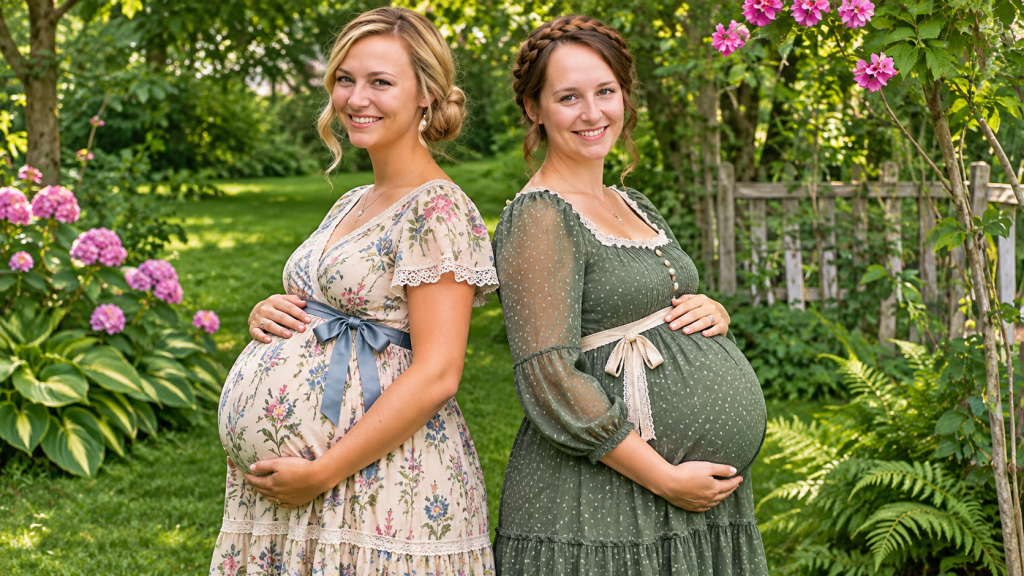
For thirty-two years, I had believed my father was a man who abandoned my mother before I was born. And for five months, I had believed the sperm donor we’d chosen was a healthy stranger whose medical history had been carefully reviewed. Now all three beliefs were unraveling. “Mom,” I whispered, “what was our father’s name?” She didn’t answer. Emily leaned closer. “Please,” she said. “You have to tell us.” A long silence followed.
Then my mother said, “Thomas Bennett.”
I closed my eyes.
“And his son?”
Another pause.
“Daniel.”
My chest tightened.
“Daniel what?”
“Daniel Bennett. At least, that’s the name I knew him by.”
Emily sank into a chair.
I stared at the phone.
Our donor’s profile had identified him as Daniel Bennett.
Thirty-five years old.
Healthy.
College educated.
No reported family history of serious inherited disease.
I suddenly felt as though the air had disappeared from the room.
“Mom,” I said, “you need to tell us everything.”
She began crying.
And for the first time in my life, I didn’t move to comfort her.
Because two unborn children deserved the truth more urgently than my mother needed reassurance.
My name is Sarah Bennett.
I was thirty-two when the secret that had shaped my entire childhood finally came into the light.
Emily Carter was thirty-one.
We had lived next door to each other for twenty-five years.
We shared birthday parties, school lunches, first heartbreaks, and the kind of friendship that survives the difficult years when people change and grow apart.
I’d always called her my sister.
It was a joke.
Or so I thought.
Her mother, Patricia, had been like a second mother to me.
When my own mother worked late, Patricia picked me up from school.
She taught me to bake brownies.
Helped me choose a prom dress.
And cried when I graduated from college.
I had trusted her with almost every secret I possessed.
Yet the two women who had raised us had concealed the most important fact about our lives.
Emily and I weren’t simply friends.
We were biological twins.
And the sperm donor we’d chosen together might have been our paternal half brother.
“Start at the beginning,” I told my mother.
She was quiet for so long that I thought the call had disconnected.
Then she said, “I was eighteen when I met Thomas.”
I sat down.
Emily reached for my hand.
“He was older than me,” Mom continued. “Twenty-seven. Charming. Always dressed nicely. He told me his marriage was over.”
I closed my eyes.
“It wasn’t?”
“No.”
Her voice trembled.
“He had a wife. And a little boy.”
“Daniel?”
“Yes.”
I swallowed.
“How old was Daniel?”
“About three or four, I think.”
Emily began shaking her head.
“This is unbelievable.”
Mom continued.
“When I discovered I was pregnant, Thomas told me he couldn’t leave his family. He offered money. He said he’d help me find somewhere to live.”
I stared at the kitchen table.
“What did you tell him?”
“That I didn’t want his money. That I wanted my children.”
She paused.
“I didn’t know there were two of you until the ultrasound.”
Emily looked at me.
Our hands tightened around each other.
Mom began crying harder.
“Patricia and Michael had been trying for a baby for years. They’d suffered several losses. Patricia was my closest friend.”
I felt a sickening sense of familiarity.
Two friends.
Two women longing for motherhood.
A dream of raising children together.
Only our mothers had taken a path neither Emily nor I would ever have chosen.
“Mom,” I whispered, “what happened after we were born?”
She drew a shaky breath.
“Patricia came to me with an idea.”
I closed my eyes.
“She wanted one of us.”
Mom began sobbing.
“She said we could raise you side by side. That neither child would ever be lonely. That we’d always be together.”
Emily stared at the wall.
“And you agreed?”
My mother didn’t answer immediately.
Then she whispered, “Yes.”
I wanted to scream.
Instead, I asked the question that mattered most.
“Was it a legal adoption?”
My mother hesitated.
“There were papers.”
“What papers?”
“An attorney helped us.”
“Did a court approve it?”
“I believe so.”
Emily covered her mouth.
“Mom told me she gave birth to me.”
My mother made a sound like a wounded animal.
“Patricia planned to tell you both someday.”
“When?” Emily whispered. “At our fiftieth birthday party?”
Silence.
Emily stood so suddenly that her chair scraped across the floor.
“She watched us grow up together. She watched us talk about how much we wished we were sisters.”
Tears streamed down her face.
“She watched us choose the same donor so our children could share a biological connection.”
Her voice broke.
“And she said nothing.”
My mother whispered, “We never imagined this could happen.”
I looked at the phone.
“That’s the problem, Mom. You thought keeping the secret meant it couldn’t hurt anyone.”
I ended the call a few minutes later.
Not because I had all the answers.
Because I couldn’t bear to hear another explanation that began with love and ended with deception.
Emily sat opposite me.
Her face was pale.
“What do we do?”
I looked at her stomach.
Then at mine.
“We call Dr. Harrison.”
She nodded.
Even though it was nearly midnight, I left a message through the clinic’s urgent contact line explaining that we’d received significant new family-history information.
We weren’t experiencing a pregnancy emergency.
But we needed our genetic counselor to know what had happened.
Then I called my obstetrician’s office and left the same information.
When I finally put down my phone, Emily was crying quietly.
I moved beside her.
She looked up.
“Sarah, what if our babies are sick?”
I felt my own tears falling.
“I don’t know.”
“What if this is our fault?”
I took her face between my hands.
“No.”
She shook her head.
“We chose him.”
“We chose a donor based on the information we were given. We didn’t know.”
Emily leaned against me.
For twenty-five years, we’d comforted each other through broken hearts, failed relationships, and disappointments we thought were enormous.
Now we were two pregnant women sitting in my kitchen, terrified that an inherited family secret might have harmed our children.
I held her until the sun began to rise.
At nine the next morning, Dr. Harrison called.
He spoke carefully.
“Sarah, Emily, I’ve reviewed your message. First, I want you to know that a name alone does not establish a biological relationship.”
I closed my eyes.
“Even though our mother says her former partner had a son named Daniel Bennett?”
“Even then. We need to confirm identities and relationships before making conclusions.”
Emily leaned toward the phone.
“What about the screening results?”
Dr. Harrison paused.
“The earlier findings raised questions about relatedness, but those screening data weren’t designed to establish a complete family tree. We need diagnostic-quality evidence and a clinical genetics review.”
I swallowed.
“And if the donor really is our half brother?”
His voice softened.
“Then your pregnancies involve a closer biological relationship between the genetic parents than the clinic understood at the time of treatment. That can increase the chance of certain inherited conditions, particularly recessive disorders.”
Emily began crying.
I gripped the phone.
“Does that mean our babies are going to be ill?”
“No,” he answered firmly. “An increased risk is not a diagnosis. It doesn’t tell us that either baby has a condition.”
I took a slow breath.
“Then what happens now?”
“We’ll arrange appointments with maternal-fetal medicine and genetic counseling. They’ll review your histories, the specific laboratory findings, the donor’s verified records, and which tests may provide useful answers.”
He paused.
“Some prenatal tests are screening tools. Others can evaluate specific genetic conditions more directly. Each has limitations and, in the case of invasive procedures, risks that your clinicians will explain. You will make informed decisions about what you want.”
I looked at Emily.
For the first time since the phone call with my mother, I felt something other than panic.
We didn’t have answers.
But we had a plan for seeking them.
Our appointment was scheduled for the following morning.
I barely slept.
Every time I closed my eyes, I imagined the future we’d planned.
Two babies in matching blankets.
Two birthday cakes.
Two children learning to walk within weeks of each other.
Emily and I sitting on a park bench while they played nearby.
Then another image intruded.
A doctor explaining a condition neither of us knew existed.
A hospital room.
A future filled with fear.
I hated myself for imagining it.
Then I hated myself for feeling guilty.
Pregnancy had been something I’d waited years to experience.
Now I was afraid even to look at the little yellow sweater hanging inside the nursery closet.
At three in the morning, I got up and stood in the doorway of that unfinished room.
The walls were pale green.
A wooden crib stood near the window.
A stuffed rabbit sat on the rocking chair.
I pressed my hands against my stomach.
“Whatever happens,” I whispered, “I’m here.”
My daughter moved.
A small, gentle flutter.
I began crying.
“I love you already.”
The next morning, Emily and I met with Dr. Harrison and a genetic counselor named Dr. Lena Patel.
She was calm, precise, and unwilling to offer reassurance unsupported by evidence.
I appreciated that more than I expected.
She reviewed the results that had prompted the urgent appointment.
The initial laboratory findings suggested an unexpected pattern of genetic relatedness.
But she explained that the tests were not sufficient to determine every relationship confidently.
“We need to separate three questions,” she said.
She turned a sheet of paper toward us.
“First, are Sarah and Emily biologically related, and if so, how?”
I nodded.
“Second, is the sperm donor biologically related to either of you?”
Emily swallowed.
“And third?”
“Whether either pregnancy has an identifiable medical concern requiring additional assessment or care.”
I looked at her.
“Those aren’t automatically the same question?”
“No,” she answered. “A family relationship may change how we assess genetic risk. But it does not tell us the health status of a particular child.”
Emily began crying quietly.
Dr. Patel handed her a tissue.
Then continued.
“We can review parental carrier testing, the donor’s records, and the available prenatal screening. Depending on your preferences and the findings, additional diagnostic testing might be considered.”
I nodded.
“Will the babies be tested immediately?”
She shook her head.
“We’ll explain which investigations are appropriate, what they can and cannot tell us, and when results might be available. You won’t be rushed into a decision without understanding your options.”
For the first time, I felt like a person rather than a medical emergency.
Then Dr. Harrison said something unexpected.
“We have also begun an internal review of the donor records.”
I straightened.
“Why?”
“Because your new information suggests the family history supplied with the donor profile may be incomplete.”
Emily looked at him.
“Did Daniel lie?”
“We don’t know.”
“Did the clinic make a mistake?”
“That is also being examined.”
I stared at him.
“Can we speak to the donor?”
Dr. Harrison hesitated.
“The donor arrangement has privacy and consent provisions. We can’t simply release identifying information outside the applicable process. But we can contact the responsible donor program, request verification of relevant information, and determine what communication or testing is permitted.”
I clenched my hands.
“What if his name really is Daniel Bennett?”
“Then we’ll need reliable evidence establishing whether he’s the same Daniel Bennett described in your family history.”
He looked directly at me.
“Sarah, please don’t make decisions about your pregnancy based on an unverified identity.”
I nodded.
But inside, I was already terrified of what verification might reveal.
That afternoon, I called my mother.
She answered immediately.
“Sarah?”
“I need you to come here.”
Her voice trembled.
“Of course.”
“And bring every document you have about our births.”
She went quiet.
“Everything?”
“Everything.”
I swallowed.
“No more deciding which parts of our lives we’re allowed to know.”
She began crying.
“I understand.”
I stared at the wall.
“I hope you do.”
My mother arrived the next morning carrying a cardboard storage box.
She looked older than she had three days earlier.
Her hair was pulled back.
There were dark circles beneath her eyes.
And for the first time in my life, she seemed frightened of me.
Emily was already sitting in the living room.
When Mom entered, Emily didn’t stand.
My mother looked at her.
“Emily.”
Emily’s voice was quiet.
“Hello, Susan.”
Mom flinched.
For twenty-five years, Emily had called her Aunt Susan.
Now she knew Susan was her biological mother.
But she didn’t know whether she wanted to use either name.
I took the box.
“Is this everything?”
Mom nodded.
“Everything I could find.”
I placed it on the coffee table.
Then opened it.
Inside were old photographs, hospital records, letters, a yellowed envelope from an attorney, and two pink baby blankets.
I lifted one blanket.
A faded embroidered initial appeared in the corner.
S.
The second carried an E.
Emily began crying.
My mother sat down.
“I made those while I was pregnant.”
I looked at her.
“Did you know which baby would go to Patricia?”
She nodded.
“Yes.”
A terrible silence settled over the room.
Then Emily asked, “Did you ever regret it?”
Mom covered her mouth.
“Every day.”
Emily shook her head.
“Then why didn’t you tell us?”
My mother had no answer that could repair what she’d done.
And I think she finally understood that.
My mother opened the yellowed envelope.
Inside was a copy of a court order from more than three decades earlier.
Emily’s adoption.
I read the document slowly.
The names were there.
Susan Bennett.
Patricia and Michael Carter.
And two infant girls born on the same day.
A sealed portion of the record contained information the family attorney had advised my mother not to discuss with the children until they were older.
I looked up.
“Who decided we weren’t old enough?”
Mom lowered her eyes.
“At first, Patricia said we should wait until you were teenagers.”
Emily gave a bitter laugh.
“We were teenagers.”
“I know.”
“Then what?”
My mother wiped her cheeks.
“She worried you’d feel differently about her. She was afraid you’d think she wasn’t your real mother.”
Emily’s voice broke.
“She was my real mother. She raised me.”
Mom nodded.
“Yes.”
“But she didn’t have to lie about where I came from.”
My mother began crying again.
Emily turned away.
I looked at the papers.
“Did Michael know?”
Mom nodded.
“He knew about the adoption from the beginning.”
Emily stared at her.
“My dad knew?”
“Yes.”
Her eyes filled.
Michael Carter had died when Emily was seven.
She remembered him as a gentle man who taught her to ride a bicycle and carried her on his shoulders at the fair.
She’d spent years wishing she could ask him questions.
Now she had another one.
Why hadn’t he told her?
Near the bottom of the box, I found three photographs.
The first showed my mother in a hospital bed holding two newborn babies.
One wore a white knitted hat.
The other wore a pink one.
My hands began trembling.
I’d never seen a photograph of Emily and me together as infants.
Mom had always told me I was born after a difficult labor and that no pictures had been taken until I came home.
Yet here was proof that we’d entered the world together.
I turned the photograph over.
In my mother’s handwriting were the words:
My two little miracles.
I looked at her.
“You called us miracles.”
She nodded.
“I did.”
“Then why did you separate us?”
She looked down.
I waited.
Eventually, she whispered, “Because I convinced myself that giving Patricia one daughter meant giving her the happiness she deserved.”
I stared at her.
“And what about what we deserved?”
My mother began crying.
I didn’t raise my voice.
I didn’t need to.
“What about the right to know we were sisters? What about the right to know our father?”
She shook her head.
“I was wrong.”
Emily looked toward the photograph.
Then said something that silenced both of us.
“You didn’t just keep us from knowing the truth. You allowed us to make medical decisions without knowing our own family history.”
Mom covered her face.
And I realized that our childhood secret had now reached into the lives of the next generation.
The third photograph showed a man standing beside a dark blue car.
He had thick black hair and a serious expression.
My mother stared at it for a long time.
“That’s Thomas.”
I took the picture.
My biological father.
The man I’d spent thirty-two years imagining.
He didn’t look familiar.
Not exactly.
But something about his eyes disturbed me.
Emily leaned closer.
“He looks like you.”
I swallowed.
“Or I look like him.”
Mom nodded.
Then reached for another envelope.
“After he died, his wife sent me something.”
I looked up.
“He died?”
“Almost fifteen years ago.”
I sat back.
For years, I’d told myself I didn’t care whether my father was alive.
But hearing that he was gone hurt more than I expected.
Mom continued.
“His widow contacted me after finding correspondence about the pregnancy. She wanted to know whether Thomas had any other children.”
I stared at her.
“What did you say?”
“I denied it.”
Emily closed her eyes.
My mother whispered, “I was afraid.”
I looked at her.
“Mom, how many people had to live without the truth so you could avoid being afraid?”
She began crying.
But this time, neither Emily nor I tried to make her feel better.
The widow’s letter contained another name.
Daniel Bennett.
There was also an old mailing address.
Emily leaned forward.
“That’s the donor’s name.”
I nodded.
But Dr. Patel’s warning echoed in my mind.
A name alone isn’t proof.
I photographed the documents and sent them to Rebecca Sloan, the attorney my mother had used years earlier.
Rebecca had retired, but her former firm still maintained certain records and could advise us about obtaining the adoption documents through the proper channels.
We also provided the relevant family-history information to our genetic counselor.
Then we waited.
Waiting was becoming the most difficult part.
Our babies continued growing.
Their appointments continued.
We still bought groceries, paid bills, answered emails, and tried to sleep.
But every ordinary day carried a question neither of us could answer.
Who was Daniel?
And what had we unknowingly passed to our children?
A week later, the genetics clinic called.
The donor program had confirmed that Daniel’s date of birth was consistent with the family records we’d supplied.
The program also verified that Thomas Bennett was listed as his father in the donor’s submitted family history.
I sat down before Dr. Harrison finished speaking.
Emily was beside me.
Her face went white.
“Then it’s him?” I asked.
“The records strongly support that possibility,” he answered. “But the program is arranging further identity and genetic verification with the donor’s consent.”
I pressed a hand against my stomach.
“Does he know?”
“He has been informed that significant new family-history information may be relevant to prior donations. The appropriate team is speaking with him.”
Emily whispered, “Imagine getting that call.”
I looked at her.
For the first time, I considered Daniel as a person rather than a name on a donor profile.
He’d donated sperm believing it would help people have children.
He hadn’t known that two women who might be his paternal half sisters would select him.
He hadn’t even known we existed.
Whatever the verification showed, he was about to discover a family secret as devastating as ours.
That evening, Emily came to my apartment carrying two containers of takeout.
She placed them on the table.
“I brought dinner.”
I looked at her.
“You’re not hungry.”
“Neither are you.”
We sat anyway.
For a while, we ate in silence.
Then she said, “Do you regret it?”
I looked up.
“What?”
“Choosing the same donor.”
I stared at her.
The question hurt.
Not because I blamed her.
But because I’d been asking myself something similar whenever I couldn’t sleep.
I took a breath.
“I regret that we didn’t have the information we needed.”
She nodded.
“But do you wish we’d never done it?”
I looked down at my stomach.
My daughter moved beneath my palm.
I thought about the months of consultations.
The appointments.
The hope I’d felt when the pregnancy test turned positive.
The first heartbeat.
The ultrasound photograph taped above my desk.
Then I looked at Emily.
“No.”
Her eyes filled.
“I don’t wish my baby away.”
She began crying.
“Neither do I.”
I reached across the table.
“We can be frightened about what happens next without regretting that they exist.”
Emily squeezed my hand.
And for the first time in days, we managed to finish dinner.
The definitive confirmation came after additional consented testing and comparison.
Dr. Patel met with both of us in person.
She sat across from us with a folder on her desk.
Before speaking, she asked whether we wanted anyone else present.
We shook our heads.
Then she took a breath.
“The genetic findings confirm that you and Emily are identical twins.”
I stared at her.
“Identical?”
She nodded.
“Monozygotic twins. The results are consistent with that relationship.”
Emily let out a small, stunned laugh.
“All those years everyone said we looked like sisters.”
I smiled weakly.
“We were more than sisters.”
Dr. Patel continued.
“And the additional testing confirms that the donor is your paternal half brother.”
The room went silent.
I felt as though I’d fallen through the floor.
Emily covered her mouth.
I stared at the wall.
Daniel.
The biological father of both our unborn children.
Our half brother.
It was true.
I don’t remember much of the next few minutes.
Only fragments.
Emily crying.
My hand gripping the edge of the chair.
Dr. Patel speaking calmly.
A glass of water being placed in front of me.
Then I heard myself ask, “What does this mean for our babies?”
Dr. Patel leaned forward.
“It means we have confirmed close biological relatedness between the genetic parents. That increases concern about conditions caused by recessive variants inherited from a common ancestor.”
I closed my eyes.
“But it doesn’t tell us whether either baby has a condition?”
“Correct.”
Emily whispered, “How do we find out?”
“We can review the genetic testing already performed, assess the family history, and discuss further carrier testing and diagnostic options. Some findings may be detectable before birth. Others cannot be ruled out by a normal ultrasound or a single test.”
I took a breath.
“Can you promise they’ll be healthy?”
Her expression softened.
“No. I couldn’t promise that in any pregnancy. But I can help you understand the known risks and what the available evidence shows.”
Something about her honesty steadied me.
She wasn’t pretending everything would be fine.
She wasn’t declaring our babies doomed.
She was telling us the truth.
And after everything our mothers had concealed, the truth felt like the only solid ground left beneath us.
We spent almost two hours discussing our options.
Dr. Patel reviewed the family history and the donor’s screening information.
She explained why routine donor screening could not guarantee the absence of every inherited condition, particularly when important biological relationships were unknown.
She also explained that healthy carrier-screening results and reassuring ultrasounds could reduce concern about certain conditions without eliminating every possible risk.
We asked about further prenatal diagnostic testing.
She described what each procedure could assess, the limitations of laboratory analysis, the timing, and the procedure-related risks.
Neither Emily nor I was pressured.
We were allowed to ask the same questions more than once.
And we were given time to decide.
That evening, we sat in my living room reading the written information.
Eventually, Emily looked at me.
“Do you know what’s strange?”
I shook my head.
“I thought the worst part would be hearing that Daniel is our brother.”
I looked at her.
“And?”
“The worst part is realizing our mothers let us enter adulthood without knowing who we were.”
I nodded.
The medical uncertainty frightened me.
But the betrayal had a different kind of weight.
Our mothers hadn’t merely hidden an embarrassing chapter of their youth.
They’d concealed information that could affect our health, relationships, and children.
And we’d never been given the opportunity to make choices with the truth in front of us.
Two days later, Dr. Harrison asked whether we’d be willing to receive a message from Daniel through the donor program.
We agreed.
The message was short.
Sarah and Emily,
I have learned that we share a biological father. I did not know either of you existed when I became a donor. I am devastated that my incomplete family history may have created medical uncertainty for your pregnancies.
I want to cooperate fully with any appropriate medical review. I have provided the information requested by the specialists.
I understand you may not wish to speak with me. If you ever do, I would welcome the opportunity.
Daniel.
I read the message three times.
Then handed it to Emily.
She began crying.
“He didn’t know.”
I shook my head.
“No.”
For several days, I’d been carrying anger without knowing where to place it.
I’d been angry at my mother.
At Patricia.
At the donor clinic.
At Thomas, the father I’d never met.
And, unfairly, at Daniel.
Now I was beginning to understand that he might be another person whose life had been shaped by someone else’s secrecy.
The following week, we arranged a carefully supported video call with Daniel.
A counselor was available beforehand, and we agreed that the conversation would focus on understanding one another rather than making immediate decisions about future relationships.
When his face appeared on the screen, I stopped breathing.
He had my eyes.
Not exactly.
But close enough that I felt a sudden shock of recognition.
His hair was dark.
His jaw resembled the man in the photograph my mother had shown us.
And when he smiled nervously, a small dimple appeared near his mouth.
“Sarah? Emily?”
I nodded.
“Hello.”
He swallowed.
“Thank you for speaking with me.”
Emily took my hand.
For a moment, nobody knew what to say.
Then Daniel whispered, “I had no idea.”
My eyes filled.
“Neither did we.”
He shook his head.
“I knew my father had been unfaithful to my mother. I found out when I was in college. But he never told me there were children.”
I stared at him.
“He knew about us?”
Daniel nodded slowly.
“From the documents your mother provided, it appears he did.”
My chest tightened.
My father had known.
He’d lived the remainder of his life knowing he had two daughters somewhere in the world.
And he had never sought us out in a way that reached either of us.
Daniel looked down.
“I’m sorry.”
I shook my head.
“You didn’t do anything to us.”
His eyes filled.
“I still wish I had known.”
“So do we,” Emily whispered.
Daniel explained why he’d become a donor.
His wife, Laura, had undergone treatment for a serious illness several years earlier, and the experience had changed the way they thought about families.
They had one child of their own.
They knew people who struggled to conceive.
When Daniel learned about sperm donation, he decided he wanted to help.
“I thought I was doing something good,” he said.
“You were trying to,” I answered.
He looked at me.
“I never imagined something like this.”
Emily squeezed my hand.
“Neither did we.”
He drew a shaky breath.
“Whatever the doctors need from me, I’ll cooperate.”
I nodded.
“Thank you.”
He hesitated.
“And if you don’t want a relationship with me, I understand.”
I studied his face.
For years, I’d wondered what it might feel like to discover a brother.
Now I was looking at one.
Under circumstances none of us would have chosen.
“I don’t know what happens next,” I said.
Daniel nodded.
“Neither do I.”
Then Emily spoke.
“Maybe we don’t have to decide today.”
For the first time, all three of us smiled.
Our next appointments were with maternal-fetal medicine.
Emily and I chose to proceed with the prenatal evaluations recommended after counseling, including additional diagnostic testing.
We were informed about the risks and limitations and made our decisions separately, even though we supported each other through every appointment.
There were long days.
More blood samples.
Careful ultrasound examinations.
Conversations about possible findings and what they might mean.
Some results came back reassuring.
Others took longer.
We learned that a normal test didn’t mean every possible disorder had been excluded.
We also learned that uncertainty was not the same thing as catastrophe.
One afternoon, during an ultrasound, I heard my daughter’s heartbeat.
Strong.
Steady.
Familiar.
The specialist examined her anatomy carefully.
Then turned toward me.
“Everything we’re able to assess on today’s scan appears reassuring.”
I began crying.
“Really?”
She nodded.
“Yes. We’ll continue appropriate follow-up and review the remaining results.”
I knew she wasn’t promising a perfect future.
But hearing that my daughter was developing without an identified structural concern felt like sunlight breaking through a storm.
Emily’s appointment was the following morning.
She called me afterward.
“Sarah?”
I sat upright.
“What happened?”
Her voice trembled.
“The ultrasound looks reassuring.”
I closed my eyes.
“Thank God.”
She began crying.
“The doctor said we still need to review everything, but there weren’t any major structural abnormalities identified.”
I pressed a hand against my stomach.
“That’s good news.”
She laughed through tears.
“It is.”
For several minutes, neither of us said anything.
Then Emily whispered, “Can we be excited again?”
My own tears began falling.
“Yes.”
I smiled.
“We can be excited and careful at the same time.”
The most painful confrontation came several days later.
Patricia invited Emily and me to her house.
It was the same house where we’d spent countless afternoons baking cookies and watching old movies.
The yellow curtains were still hanging in the kitchen.
The wooden clock still ticked above the refrigerator.
And on the mantelpiece was a photograph of Emily and me on our eighth birthday.
We were wearing matching pink dresses.
Our mothers stood behind us, smiling.
I looked at the photograph.
Then at Patricia.
“Did you ever look at that picture and think about telling us?”
Her face crumpled.
“Yes.”
Emily stood beside me.
“Then why didn’t you?”
Patricia sat down.
“I was afraid you’d stop loving me.”
Emily’s voice trembled.
“You were my mother. You changed my diapers. You taught me to read. You stayed up when I was sick.”
Tears rolled down Patricia’s face.
“I know.”
“Then why did you think the truth would erase that?”
Patricia couldn’t answer.
Emily took a breath.
“You didn’t have to pretend you gave birth to me to be my mother.”
I saw Patricia’s shoulders begin shaking.
And for a moment, I understood how deeply fear had controlled both our mothers.
But understanding it didn’t excuse what they’d done.
Then Emily asked a question neither of us had considered until that morning.
“When I told you about the donor, did the name Daniel Bennett mean anything?”
Patricia went still.
I felt a chill move through me.
“Patricia?” I whispered.
She looked toward the window.
Emily’s voice sharpened.
“Did you recognize his name?”
A long silence followed.
Then Patricia whispered, “I wondered.”
My stomach dropped.
“What do you mean, you wondered?”
She began crying.
“Thomas had a son named Daniel. I knew that much. But I didn’t know where he’d gone or what he’d become.”
Emily stared at her.
“We told you our donor’s name.”
“I know.”
“We told you his age.”
Patricia covered her face.
“I told myself it was a coincidence.”
I stepped backward.
She continued.
“I didn’t think it could be the same person. I thought the clinic would have checked everything.”
Emily began shaking.
“You thought it might be our brother, and you didn’t say anything?”
Patricia sobbed.
“I didn’t know.”
“But you suspected,” I whispered.
She looked at me.
“Yes.”
The word seemed to split the room in half.
For the first time since discovering the truth, I felt genuine fury.
Not confusion.
Not disbelief.
Fury.
“You could have told us there was a possibility.”
Patricia cried harder.
“I was frightened.”
I shook my head.
“Again.”
She stared at me.
“Every time you were frightened, someone else paid the price.”
Emily began crying.
I moved closer to her.
Patricia reached toward us.
“Please.”
Emily stepped back.
“No.”
Her voice was quiet.
But firm.
“You don’t get to make us comfort you for what you hid.”
Patricia lowered her hand.
I looked at the photograph on the mantelpiece.
Two little girls in matching dresses.
Two little girls who had no idea their lives were built around a secret.
Then I turned toward the door.
“We need time.”
Patricia began sobbing.
“I love you both.”
I stopped.
I believed her.
That was what made everything so complicated.
“I know,” I whispered.
“But love should have made you tell us.”
Then Emily and I left.
The months that followed changed all of us.
My mother began individual counseling.
Patricia did too.
They stopped sending long messages explaining their decisions and started acknowledging that we had the right to be angry.
Emily needed more distance than I did.
Some weeks she didn’t speak to Patricia at all.
Other weeks they exchanged brief messages about ordinary things.
I continued talking to my mother, but our conversations were different.
When I asked a question, I expected a truthful answer.
If she didn’t remember, I wanted her to say so.
I no longer accepted silence disguised as protection.
Our mothers had spent decades controlling the truth because they feared losing us.
Now they were learning that rebuilding trust required giving up that control.
One evening, Daniel sent us a photograph.
It showed him as a young boy standing beside Thomas.
Our father.
The man who’d connected three children without allowing any of us to know the others existed.
I studied the photograph for a long time.
Daniel called shortly afterward.
“Are you okay?”
I nodded, though he couldn’t see me.
“I think so.”
He hesitated.
“I used to believe my father was a good man who made some mistakes.”
I looked at the photograph.
“And now?”
Daniel sighed.
“Now I think he was more complicated than I wanted to admit.”
I understood.
I’d spent my entire childhood imagining a father who’d abandoned me.
Daniel had spent his childhood loving a father who’d hidden two daughters.
Neither of us had the complete story.
And neither of us could ask Thomas to explain himself now.
Daniel was quiet.
Then he said, “I don’t want his secrets to determine whether we can know each other.”
My eyes filled.
“Neither do I.”
We began speaking occasionally.
Not because we had suddenly become a perfect family.
But because we were curious about each other.
About our childhoods.
Our favorite foods.
The books we liked.
The ridiculous little habits we shared.
I learned Daniel hated olives.
So did I.
He loved old mystery novels.
Emily did too.
Sometimes those similarities made us laugh.
Sometimes they made us cry.
We were finding pieces of a family we hadn’t known existed.
The remaining prenatal results did not identify any of the specific genetic conditions assessed through our testing.
The doctors explained that this was encouraging, but it could not rule out every inherited disorder or guarantee a particular outcome.
Emily and I continued appropriate prenatal care.
Our clinicians discussed plans for delivery, newborn assessment, and follow-up with pediatric providers.
We were encouraged to preserve the corrected family history for our children’s future medical care.
That mattered deeply to me.
Our babies would never have to spend thirty years searching for the truth about their biological origins.
We might have difficult things to explain.
But we would explain them.
In age-appropriate ways.
With compassion.
Without making them feel ashamed of circumstances they hadn’t chosen.
Because if there was one thing I’d learned, it was that hiding the truth doesn’t protect children from having a history.
It only prevents them from understanding it.
Emily went into labor first.
It happened on a rainy Thursday evening.
She called me at nine seventeen.
“Sarah?”
I was sitting on the couch folding tiny baby blankets.
“What’s wrong?”
She gasped.
“I think she’s coming.”
I stood up so quickly that the blankets fell onto the floor.
“Are you serious?”
Emily laughed nervously.
“Unless this is the world’s most convincing false alarm.”
I grabbed my keys.
Within minutes, I was at her apartment.
We followed the instructions from her maternity team and went to the hospital.
I stayed beside her while she labored.
Held her hand.
Brought her water when she was allowed to drink.
And reminded her to breathe whenever fear threatened to overwhelm her.
At one point, she looked at me and began crying.
“Sarah, what if something’s wrong?”
I squeezed her hand.
“Then we’ll listen to the doctors and take care of what needs taking care of.”
She shook her head.
“I’m scared.”
“So am I.”
I leaned closer.
“But you’re not alone.”
At four thirty-two the next morning, Emily’s daughter was born.
A beautiful little girl with dark hair and an indignant cry.
The doctor placed her against Emily’s chest after the immediate assessments.
Emily began sobbing.
“Oh, sweetheart.”
I stood beside the bed, crying too.
For months, we’d been afraid of what might happen.
Now there was a real baby in front of us.
Warm.
Breathing.
Moving her tiny hands.
Her name was Isabelle Grace Carter.
Emily had chosen it weeks earlier.
When she finally looked toward me, she smiled through tears.
“She’s here.”
I nodded.
“She’s here.”
Isabelle underwent the usual newborn assessments and the additional follow-up her medical team considered appropriate.
Her early examinations were reassuring.
We knew future checkups would still matter.
But that morning, for the first time in months, Emily allowed herself to hold her daughter without imagining every possible diagnosis.
She kissed Isabelle’s forehead.
And whispered, “I’m going to tell you the truth about everything, little one.”
My daughter arrived nineteen days later.
I was thirty-eight weeks pregnant when labor began.
Emily came to the hospital carrying a bag full of snacks and a blanket.
She looked exhausted.
Isabelle was at home with Emily’s mother-in-law, who had offered to help.
Emily settled into the chair beside my bed.
“Ready?”
I laughed nervously.
“Absolutely not.”
She smiled.
“Too late.”
I reached for her hand.
And suddenly, we were little girls again.
Holding hands before the first day of school.
Before dentist appointments.
Before anything that frightened us.
Only this time, we weren’t simply best friends.
We were sisters.
At six eighteen that evening, my daughter was born.
She had a small, perfect nose.
Dark lashes.
And the strongest cry I’d ever heard.
When the nurse placed her in my arms, the world seemed to narrow to the warmth of her body against mine.
I looked at her.
And cried.
“Hello, sweetheart.”
Her fingers curled around mine.
I thought about the night my mother told me the truth.
The fear.
The questions.
The uncertainty.
Then I looked at the little girl I’d carried through it all.
“I’ve been waiting for you,” I whispered.
I named her Clara Hope Bennett.
Clara, after my grandmother.
Hope, because there had been days when hope was the only thing that kept me moving forward.
Like Isabelle, Clara’s initial newborn assessments were reassuring.
Her pediatric team had the updated family history and plans for appropriate follow-up.
Nobody promised us that her life would be free of medical problems.
No parent receives that promise.
But that evening, I held a living, breathing daughter whose future was still full of possibilities.
And I loved her with every part of me.
Six months later, Emily and I sat together in my backyard.
Isabelle was asleep in her stroller.
Clara was lying on a blanket, kicking her little feet.
The afternoon sunlight filtered through the trees.
A breeze carried the smell of freshly cut grass.
Emily looked at our daughters.
“Do you ever think about how different things could have been?”
I nodded.
“Every day.”
She swallowed.
“If we’d known we were sisters, we might never have chosen the same donor.”
“Probably not.”
“And if we’d known Daniel was our brother…”
“We wouldn’t have chosen him.”
She nodded.
There was no point pretending otherwise.
The decision we’d made had been based on incomplete and inaccurate information.
But our daughters were here now.
And they deserved to be loved without carrying the burden of the adults’ mistakes.
Emily leaned back.
“Do you think we can give them a normal childhood?”
I looked at Clara.
Then at Isabelle.
“I don’t know what normal means anymore.”
Emily laughed softly.
“Neither do I.”
I smiled.
“But we can give them an honest one.”
Our relationship with our mothers continued slowly.
Patricia had apologized to Emily more than once.
My mother had answered questions she’d avoided for decades.
Neither woman was automatically forgiven because the babies had been born.
We established boundaries.
We decided what information our children would receive as they grew.
And we made it clear that no adult would ever be allowed to rewrite their family history simply because the truth felt uncomfortable.
Daniel also remained part of our lives in a carefully considered way.
He respected our parental roles and the boundaries of the donor arrangement.
We shared relevant medical information through appropriate channels.
And, gradually, we developed a personal relationship as siblings.
It was complicated.
Sometimes awkward.
Often emotional.
But real.
One afternoon, he visited with Laura and their daughter, Sophie.
Watching Sophie sit beside Isabelle and Clara, I thought about how many relationships Thomas’s secrecy had hidden.
Then Daniel looked at me.
“What are you thinking?”
I smiled sadly.
“That our father never knew what he was missing.”
Daniel nodded.
“No.”
He looked toward the children.
“But we don’t have to keep missing it.”
When Clara and Isabelle turned one, we celebrated with a small family gathering.
There were two birthday cakes.
Pink balloons.
A table covered in photographs.
And little paper crowns the girls immediately tried to pull off.
Emily stood beside me while everyone sang.
For a moment, I looked at our daughters.
Biologically, their relationship was unusual and more genetically close than we’d originally intended.
But to them, none of that meant anything yet.
They were simply two little girls reaching for the same toy.
Laughing.
Babbling.
Growing.
One day, they would have questions.
And when those questions came, we would answer them truthfully, with the help of appropriate professionals when needed.
We would not make their origins a shameful secret.
We would not tell them they were accidents.
We would tell them they were loved.
That the circumstances of their conception were complicated.
That adults had made choices without knowing important facts.
And that none of those choices diminished their worth.
Later that evening, after the guests left, Emily found me standing near the birthday cakes.
She slipped her arm around my shoulders.
“Remember when we were little?”
I smiled.
“Which time?”
She laughed.
“When we used to pretend our dolls were sisters.”
I nodded.
“I remember.”
“We said we’d grow up and have babies together.”
I looked toward the living room, where our daughters were sleeping.
“We did.”
Emily’s eyes filled.
“Not the way we imagined.”
“No.”
I took her hand.
“But we’re here.”
She rested her head against my shoulder.
For twenty-five years, we’d thought our friendship was the reason we felt so connected.
Now we knew there had always been another connection beneath it.
But the truth didn’t make those years of friendship less meaningful.
Blood hadn’t taught us to be loyal.
It hadn’t taught us to comfort each other after heartbreak.
It hadn’t made us share our lunches, hold hands through difficult appointments, or show up when life became unbearable.
We had chosen to do those things.
Long before we knew we were sisters.
Sometimes people ask whether I regret discovering the truth.
The answer is no.
I regret that our mothers hid it.
I regret that we made a medical decision without knowing our biological family history.
I regret the fear and uncertainty that followed.
But I will never regret learning who I am.
And I will never regret my daughter.
The future still holds questions.
Every family faces them.
We follow the medical advice appropriate for our children, keep their records accurate, and make room for conversations that may be difficult.
We don’t pretend that reassuring early assessments guarantee perfect health.
We don’t pretend the betrayal never happened.
And we don’t demand that forgiveness arrive before trust is ready to return.
Last night, I was putting Clara to bed when Emily called.
“Sarah?”
“Yes?”
“Isabelle said her first word.”
I laughed.
“What was it?”
Emily paused dramatically.
“Ball.”
I burst out laughing.
“Of course.”
“What about Clara?”
I looked down at my daughter.
She was staring up at me with wide, sleepy eyes.
“She’s still working on it.”
Emily chuckled.
“Give her time.”
We talked a little longer.
About diapers.
Teething.
Sleep.
And the wonderful exhaustion of motherhood.
Before hanging up, Emily grew quiet.
“Sarah?”
“Yeah?”
“I’m glad you’re my sister.”
I felt tears gather.
I looked at Clara.
Then at the family photograph beside her crib.
Two mothers.
Two daughters.
Two women who had spent most of their lives believing they were simply best friends.
I smiled.
“Me too.”
Then I kissed Clara’s forehead and whispered something I wished our mothers had understood thirty-two years earlier.
The truth may frighten us, but the people we love deserve to grow up knowing it.
Because families are not made stronger by hiding the past.
They become stronger when we find the courage to face it together.
And when my daughter someday asks where she came from, I will not hand her a comforting lie.
I will hold her close.
Tell her the truth.
And remind her that from the moment I knew she existed, she was wanted.


