The signature at the bottom of the document made my knees feel weak. Nathan Sterling. My brother. My father’s only other child. The man I hadn’t spoken to in eight years. For several seconds, I couldn’t understand what I was seeing. The officers were standing in my living room. My husband, Julian, had gone pale. My mother-in-law, Eleanor, was staring at the floor. And my father was sitting in the armchair Julian had always treated as his personal throne.
But none of those things mattered at that moment. Because the name on the document belonged to someone I had once trusted almost as much as my own father. “Nathan?” I whispered. Dad stood immediately. “Audrey?” I held up the paper. “Why is Nathan’s name on a document involving my house?” Julian moved toward me. “Give me that.” One of the officers stepped between us. “Sir, stay where you are.” Julian stopped. I looked at him. “Why is my brother involved?”

He pressed his lips together. Then said something that made my blood run cold. “Because your brother knows how unreasonable you’ve been. “I stared at him. “Unreasonable?” He gestured toward my face. Then seemed to remember the bruises he had ordered me to cover. His expression changed. “Audrey, I didn’t mean—” “Don’t.” My voice was barely above a whisper. But it stopped him. I’d spent five years listening to Julian explain what I meant, what I remembered, what I should feel, and what other people supposedly thought of me.
For once, he wasn’t going to finish my sentences.
I turned to the officer holding the paperwork.
“Where did this come from?”
He answered carefully.
“The copy was supplied with the financial documents referenced in your report. It appears to identify a company associated with your brother. We haven’t established whether the signature is genuine or who authorized the property transaction.”
I swallowed.
“So you don’t know if Nathan signed it?”
“Not yet.”
Dad moved beside me.
“Audrey, we need to let the investigators examine this properly.”
I looked at him.
For a moment, I was a little girl again, standing in our kitchen while he helped me with a problem too complicated for my small hands.
But I wasn’t a little girl anymore.
I was a thirty-eight-year-old woman with a split lip, bruised ribs, and a husband who’d tried to take my home.
I looked back at the document.
“Then I want every signature examined.”
The officer nodded.
“And I want the truth about my brother.”
My name is Audrey Sterling.
I’m a senior forensic accountant, and for most of my professional life I’ve worked with records other people hoped nobody would examine closely.
I know how to follow money.
I know how to compare signatures, trace transactions, and identify inconsistencies in business documents.
But nothing about that experience prepared me for the moment my own marriage became an investigation.
The townhouse had belonged to me before Julian and I married.
I’d bought it with money I’d saved over years of careful budgeting, long workdays, and refusing luxuries I couldn’t afford.
It wasn’t enormous.
Three bedrooms.
A small courtyard.
A sunny kitchen.
A little study overlooking the street.
But it was mine.
I remember standing in the empty living room after the closing, holding the keys in my palm.
I’d called my father that afternoon.
“Dad, I did it.”
He’d laughed.
“Bought yourself a house?”
“Yes.”
“Then I suppose you’ll never need to listen to your old father again.”
I’d laughed too.
“Was that an option?”
He’d come over that evening carrying a toolbox and a bottle of sparkling cider.
We spent three hours assembling shelves.
Then sat on the floor eating pizza because I didn’t own a dining table yet.
Back then, we were close.
Painfully close, Julian would later say.
But the distance between my father and me didn’t begin all at once.
It began with little disagreements.
Then misunderstandings.
Then stories I heard from Julian about things Dad had supposedly said.
One conversation at a time, I became convinced that my father’s concern was really control.
And one year, after an argument I can barely remember clearly now, I stopped calling him.
Julian said it was the healthiest decision I’d ever made.
I believed him.
That morning, after I called Dad from the hidden phone, he had asked one question before anything else.
“Audrey, are you in immediate danger?”
“I don’t think Julian will return before noon.”
“Then we’re going to make a plan. I want you to get medical care, and we’re going to contact the authorities. You don’t have to handle this by yourself.”
He didn’t ask why I’d stayed.
Didn’t ask how I could have let things become so bad.
Didn’t say he’d warned me.
He simply listened.
I told him about the bruises.
The threats.
The pressure to sell my townhouse.
The unauthorized financial documents.
And the second phone I’d been hiding for three months.
At one point, his breathing became uneven.
“Dad?”
“I’m here, sweetheart.”
“Are you angry?”
There was a long silence.
Then he whispered, “I’m angry that someone hurt you.”
My throat tightened.
“And I’m sorry you’ve been facing this alone.”
I began crying.
Because that was the moment I realized how completely Julian had controlled the story of my family.
For years, I’d believed my father would judge me for having problems in my marriage.
Instead, the first thing he offered was help.
Dad arrived that morning with a neighbor who had agreed to drive us to an urgent medical appointment.
He’d contacted a lawyer he trusted, but he made something clear before anyone else arrived.
“I’m retired, Audrey. I’m not here as a judge. I’m here as your father.”
I nodded.
He continued.
“We’ll work with the proper professionals. No favors. No special influence. Just the protection and advice you’re entitled to receive.”
I was grateful.
Not because he’d once presided over serious criminal cases.
But because he understood the importance of doing things correctly.
The doctor documented my injuries and explained what symptoms would require further urgent evaluation.
My ribs were painful, but the initial examination hadn’t identified an immediate complication requiring hospitalization.
I was told to seek further care if my breathing worsened, the pain changed, or other concerning symptoms appeared.
The bruising was photographed.
The examination was recorded.
And a domestic violence advocate helped me consider safe places to stay and practical next steps.
I gave the authorities a statement about what had happened.
Then I returned to the townhouse briefly with my father and appropriate support to collect essential belongings.
The cosmetics bag remained on the bed.
Exactly where Julian had thrown it.
I didn’t touch it.
Not because it had become important evidence of a financial crime.
But because I couldn’t bear to look at the little tubes of concealer without hearing my husband’s voice.
Cover up those bruises and act like nothing happened.
That sentence had become the final proof that Julian wasn’t interested in whether I was hurt.
Only whether other people could see it.
By the time Julian returned at noon with Eleanor, I had decided I wouldn’t remain alone with him again.
My suitcase had been moved to a safe location.
My important documents were secured.
My father was present.
And arrangements had been made for the officers to respond to the report.
Julian had walked into the living room expecting an obedient wife.
Instead, he found a woman who had finally stopped protecting his reputation.
That should have been the end of his control over me.
But the document bearing Nathan’s name revealed something I’d never imagined.
My husband hadn’t simply wanted me to sell the house.
He’d been trying to arrange a financial transaction in which my home was the asset.
And my estranged brother appeared to be involved.
The officers separated us while they completed their initial inquiries.
Julian was warned against interfering with my statement.
The reported assault was handled through the appropriate investigative process.
His presence in the house and any immediate restrictions would be governed by the relevant legal procedures, not simply by my wishes or Dad’s status as a retired judge.
I understood that.
I wanted accountability.
Not special treatment.
Eleanor sat stiffly on the couch.
Her carefully styled hair looked almost absurd beside the chaos unfolding around her.
She’d arrived expecting lunch.
Instead, she was watching her son answer questions about an alleged assault and disputed financial documents.
At one point, she looked toward me.
“Audrey, is all of this really necessary?”
I stared at her.
My face was bruised.
My lip was swollen.
I could barely stand comfortably.
And she was asking whether the consequences were necessary.
“Yes, Eleanor.”
She looked away.
Then whispered, “Families should handle their problems privately.”
I took a breath.
“Violence isn’t a family secret.”
Dad stood beside the window.
He said nothing.
He didn’t need to.
For once, I was speaking for myself.
When Julian and Eleanor finally left under arrangements directed by the officers and the legal advice I’d received, the townhouse became quiet.
Not peaceful.
Not yet.
Just quiet.
I stood in the living room, looking at the place where Julian had been standing.
Then I noticed the lunch table.
I’d set it the previous night.
Four plates.
Four glasses.
A linen tablecloth.
Everything arranged for a meal that would never happen.
Dad approached.
“Audrey?”
I looked at him.
“I was going to make roast chicken.”
His expression softened.
I laughed once.
The sound startled me.
“Can you imagine? He hurt me, and I was still thinking about whether his mother would approve of lunch.”
My eyes filled.
Dad took a step closer.
“Sweetheart—”
I began crying.
Not the quiet tears I’d learned to hide.
The kind that shake your entire body.
Dad opened his arms.
I walked into them.
And for the first time in five years, I let my father hold me.
We didn’t stay in the townhouse that night.
I went to a small furnished apartment arranged through people I trusted.
The location wasn’t shared with Julian.
I changed passwords.
Reviewed my financial accounts.
Placed appropriate fraud protections on my credit information.
And worked with my employer’s security team to make sure nobody could use my professional credentials or access to reach me.
The security recordings, documents, messages, and photographs were preserved in their original forms where possible, with copies provided through the proper channels.
My attorney, Rebecca Hale, helped coordinate the civil and family-law issues.
A separate attorney with experience in financial disputes assisted with the attempted property transaction.
For the first time, I didn’t have to solve everything alone.
That was surprisingly difficult to accept.
I’d become so accustomed to managing fear privately that help felt almost unfamiliar.
But each time I caught myself apologizing for needing support, Dad would say the same thing.
“Audrey, needing help doesn’t make you incapable.”
I wanted to believe him.
And slowly, I began to.
Three days later, my brother called.
His name appeared on my phone.
Nathan Sterling.
I hadn’t spoken to him in eight years.
My hand shook as I answered.
“Hello?”
For a moment, there was only breathing.
Then a voice I’d known since childhood said, “Audrey?”
My throat tightened.
“Nathan.”
He exhaled.
“Thank God.”
I closed my eyes.
“Why is your signature on a document involving my house?”
He went silent.
Then he said something I hadn’t expected.
“Because I made a terrible mistake.”
I sat down.
“What kind of mistake?”
He swallowed.
“Julian approached me about a business deal.”
My stomach tightened.
“When?”
“Last year.”
I gripped the phone.
“Last year?”
“Yes.”
I stared at the wall.
Nathan continued.
“He told me you knew about it.”
I took a breath.
“What business deal?”
“He said Eleanor wanted to consolidate some property debt. He had a company that was supposed to acquire and renovate distressed properties.”
I closed my eyes.
“Was that company yours?”
“Partly.”
My heart began pounding.
“Nathan.”
“I know.”
His voice broke.
“I should’ve called you.”
I stared at the floor.
“Then tell me everything.”
And for the first time in eight years, my brother did.
Nathan had always been the charming one.
He was four years younger than me, with our mother’s brown eyes and our father’s stubborn chin.
As children, we’d been inseparable.
He followed me into trees he couldn’t climb down from.
Broke my favorite music box and spent three weeks secretly saving his allowance to replace it.
And once, when a boy at school made me cry, Nathan appeared at our front door with a black eye and announced, “He won’t bother you again.”
Dad grounded him for fighting.
I snuck him cookies.
That was Nathan.
Impulsive.
Protective.
Sometimes reckless.
But never someone I imagined might help my husband take my home.
Eight years earlier, Nathan had started a property investment business.
He wanted to purchase neglected houses, renovate them, and sell them.
Dad warned him that his projected returns were unrealistic.
I reviewed his budget and pointed out several expenses he’d overlooked.
Nathan was offended.
He accused us of wanting him to fail.
Then his first deal collapsed.
He lost money.
Dad refused to guarantee another loan.
I declined to invest.
What followed was a family argument so bitter that Thanksgiving dinner ended before dessert.
Nathan moved away.
And our relationship never recovered.
Julian had been there that evening.
He’d heard every accusation.
Every painful word.
He knew exactly which wounds could be reopened.
“Julian contacted me last September,” Nathan said over the phone.
“He claimed Eleanor owned several properties that could be refinanced or sold.”
I frowned.
“Eleanor only owns her house, as far as I know.”
“That’s what I understand now.”
Nathan sighed.
“He wanted me to help establish a company that would acquire property interests and negotiate with investors. I had experience forming businesses, so I agreed to discuss it.”
I stared at my hands.
“Did you create the company?”
“Yes. Haven Ridge Holdings.”
The name matched the document.
I closed my eyes.
“Did you sign the company paperwork?”
“Some of it.”
“Did you sign anything using my townhouse as collateral?”
“No.”
His answer came quickly.
I didn’t respond.
Nathan continued.
“Audrey, listen to me. Julian told me you were already planning to sell your townhouse and that you wanted the proceeds invested through the company.”
My throat tightened.
“He told you that?”
“Yes.”
“And you believed him?”
Nathan went quiet.
Then whispered, “I wanted to.”
That was the most painful answer he could have given.
Not that he’d been fooled completely.
That he’d seen reasons to question the story and decided it was easier not to.
I took a breath.
“Why?”
He sighed.
“Because the deal would’ve helped me.”
I closed my eyes.
He continued.
“I’d been struggling financially. He offered me a management fee and a share of any profit.”
I swallowed.
“So you thought you could make money from my house without even speaking to me.”
His voice broke.
“Yes.”
For several seconds, neither of us spoke.
Then I asked, “Did Julian tell you why I hadn’t spoken to Dad?”
Nathan hesitated.
“Yes.”
“What did he say?”
“That Dad had interfered in your marriage. That he’d tried to control your finances. That you wanted distance from the whole family.”
I stared at the wall.
“Did he tell you I was mentally unstable?”
Nathan went quiet.
Then whispered, “Yes.”
My stomach tightened.
“He said you were under tremendous stress at work and sometimes made accusations that weren’t true.”
I swallowed.
“And you believed that too?”
Nathan’s voice shook.
“I didn’t know what to believe.”
I thought of every family event I’d missed.
Every holiday I’d spent listening to Julian explain why calling my father would only upset me.
Every time I’d almost reached for the phone, then stopped because Julian insisted Dad would use the conversation against me.
“Did you ever try to contact me?” I asked.
Nathan took a breath.
“Three years ago.”
I went still.
“What?”
“I sent you an email.”
My heart began pounding.
“What did it say?”
Nathan hesitated.
“That I was sorry about the argument. That I missed you. That I wanted to talk.”
I closed my eyes.
“I never received it.”
“I know that now.”
“What do you mean?”
He swallowed.
“Julian replied from your email address.”
I sat motionless.
Nathan continued.
“The response said you didn’t want contact, that I should stop interfering in your life, and that you were done with the family.”
My throat tightened.
I remembered Julian using my laptop.
Remembered him offering to organize my passwords after a security incident at work.
Remembered the day he convinced me to stop using an old email account because he said it was vulnerable.
“Nathan,” I whispered, “I never sent that message.”
He began crying.
“I know.”
“How?”
“Because after the property deal started falling apart, I checked the email history. The message contained wording Julian later used in conversations with me. I realized I might not have been speaking to you at all.”
I covered my mouth.
For five years, Julian had told me my family didn’t want me.
And he’d apparently been telling my family that I didn’t want them.
The isolation I’d blamed on our old disagreements had been carefully maintained.
Not by one dramatic act.
But by small, repeated deceptions.
Nathan agreed to meet with investigators and provide his company records.
He admitted he’d signed legitimate formation documents and certain preliminary business papers.
He also admitted he’d failed to verify whether I had approved the proposed transaction.
He had not, according to his account, authorized anyone to forge my signature or use my house without my permission.
Those claims would need to be tested against the evidence.
I didn’t assume he was innocent simply because he was my brother.
Nor did I assume he was guilty of everything Julian had done because his name appeared on a page.
I wanted the facts.
Nathan sent his records to his attorney and agreed to cooperate with the appropriate requests for information.
Within a week, another piece of the puzzle emerged.
The company had been seeking a substantial loan secured by proposed real estate interests.
My townhouse was listed among the assets expected to support the financing.
But the legal documents purporting to show my consent didn’t match anything I’d signed.
One contained a signature that looked like mine at first glance.
Yet the lettering was uneven in ways I recognized immediately.
Whoever had produced it had copied the general shape of my name without understanding how I actually wrote certain letters.
It was an imitation.
The lender had not advanced funds against my townhouse.
That was an enormous relief.
But the attempted transaction and use of my personal information still required investigation.
I worked with Rebecca to preserve the records and dispute any representations made in my name.
I also obtained appropriate title records and arranged for monitoring so I would know if anyone attempted to file new instruments affecting my property.
For months, Julian had warned me that refusing to sell the house would ruin our future.
Now I understood what he’d meant.
He’d already planned a future using money that wasn’t his.
Eleanor called me repeatedly.
At first, I didn’t answer.
Then she began leaving messages.
“Audrey, please. We need to talk.”
“I didn’t know Julian had gone this far.”
“I think there’s been a misunderstanding.”
I listened to one message in which she said she’d always considered me a daughter.
Then I remembered the evenings she’d called to criticize my spending.
The times she’d told me a good wife shouldn’t argue with her husband about money.
The repeated suggestions that I was selfish for wanting to keep a house I’d purchased before marriage.
I remembered her sitting across from me at Sunday dinner, smiling while Julian explained how easily the townhouse could be sold.
And I wondered what she had actually known.
Rebecca advised me to keep any necessary communication through counsel.
So I did.
Eventually, Eleanor provided a written account.
She acknowledged that Julian had discussed using proceeds from a future townhouse sale to help with her mortgage and living expenses.
She claimed she believed I had agreed to the plan.
But other messages painted a different picture.
In one, Eleanor had written:
She’ll refuse if you ask too directly. Keep reminding her that families share what they have.
In another:
If she continues being difficult, perhaps someone should question whether she understands the financial consequences.
I read those words three times.
Then put the phone down.
Eleanor might not have known every detail of the forged paperwork.
But she had known I was resisting.
And rather than respecting that answer, she’d encouraged her son to push harder.
The deepest betrayal came from a document I’d almost overlooked.
It was a draft statement Julian had prepared for a proposed evaluation of my decision-making capacity.
He hadn’t obtained a legal finding against me.
He hadn’t successfully transferred control of my affairs.
But he’d collected notes intended to portray me as forgetful, paranoid, and financially irresponsible.
Some were absurd.
He’d written that I frequently misplaced household objects.
That I questioned ordinary purchases.
That I became suspicious of conversations involving his mother.
Reading those claims felt like looking into a distorted mirror.
I had questioned purchases because Julian was spending money we hadn’t agreed to spend.
I had become suspicious because he repeatedly lied about finances.
And I’d misplaced objects partly because he’d moved them, then insisted I’d forgotten where I’d left them.
I remembered one evening when I searched for my car keys for nearly an hour.
Julian watched me panic.
Then found them in a drawer I’d already checked.
“You’re becoming so forgetful,” he’d said gently.
He’d kissed my forehead.
I’d apologized.
Now I wondered whether the keys had been moved deliberately.
I couldn’t prove every incident.
And I didn’t need to.
The larger pattern was documented.
Julian had used my ordinary reactions to dishonesty as material for a story that I couldn’t be trusted.
I sat in Rebecca’s office holding the draft.
“He wanted people to think I wasn’t competent.”
She nodded.
“That’s what the document appears designed to suggest.”
My eyes filled.
“I’ve spent my career checking complicated financial records.”
Rebecca looked at me gently.
“Professional expertise doesn’t prevent someone close to you from using manipulation.”
I stared at the paper.
For years, I’d been ashamed that I couldn’t manage my marriage better.
Now I was beginning to understand that Julian had made the relationship impossible to manage honestly.
Because he controlled the information I received.
And punished me when I questioned it.
Dad learned about the false capacity allegations during one of our meetings.
I expected him to become furious.
He did.
But not in the way Julian had always described.
He didn’t threaten to call old judicial colleagues.
Didn’t offer to make the investigation go his way.
Instead, he sat quietly beside me.
Then asked Rebecca, “What does Audrey need to do to protect herself from any further false filings or representations?”
She explained the appropriate steps.
Dad listened.
Then turned toward me.
“I’m sorry.”
I frowned.
“Dad, you didn’t do this.”
He looked down.
“I know.”
His voice broke.
“But I let you believe our relationship had to stay broken.”
My throat tightened.
“Dad—”
He raised his hand gently.
“Let me finish.”
I waited.
He took a breath.
“Five years ago, when you told me you didn’t want me involved in your life, I thought respecting you meant stepping back completely.”
Tears filled his eyes.
“I wrote letters. I tried calling. But eventually I accepted what I believed was your decision.”
I looked at him.
He continued.
“I didn’t know Julian was controlling what reached you.”
I swallowed.
“Neither did I.”
Dad reached for my hand.
“Still, I wish I’d found a way to make certain you knew you could always come home.”
My eyes filled.
I squeezed his fingers.
“Dad, I called you once.”
He looked up.
“And you answered.”
His face crumpled.
“Always, sweetheart.”
The divorce process began soon afterward.
Julian objected.
He said we should attend marriage counseling.
He claimed I was overreacting.
He insisted the violence had been a single terrible mistake.
But it hadn’t been a single mistake.
It was the latest incident in a pattern of intimidation, control, and financial deception.
I wasn’t willing to attend joint counseling with someone who had used fear to control my decisions.
I focused instead on independent support, safety planning, and the legal process.
The criminal investigation into the assault proceeded separately from the financial review.
I understood that different allegations required different evidence and that no outcome could be assumed simply because I had filed reports.
But I no longer felt responsible for shielding Julian from scrutiny.
I had photographs.
Medical documentation.
Messages.
Relevant recordings.
And records of attempts to use my identity in transactions I hadn’t authorized.
The townhouse’s ownership history was clear.
I’d purchased it before the marriage.
Nevertheless, Rebecca explained that the final financial issues of a divorce depended on the applicable law, marital contributions, debts, and other circumstances.
I didn’t assume one document would automatically settle every question.
We addressed the issues through the proper procedures.
There were no dramatic courtroom declarations.
No judge instantly handing me everything because my husband had behaved badly.
Just careful preparation, evidence, and the slow work of untangling a marriage from a life.
One evening, Nathan came to visit Dad’s house.
It was the first time I’d seen my brother in eight years.
When the door opened, I almost didn’t recognize him.
His hair had thinned.
There were lines around his eyes.
And the confident grin he’d worn as a young man was gone.
He stood on the porch holding a small paper bag.
“Audrey.”
I looked at him.
“Nathan.”
He swallowed.
“I brought your favorite cookies.”
I stared at the bag.
Chocolate shortbread.
From the bakery near our childhood home.
I nearly laughed.
“You still remember?”
He smiled sadly.
“Some things are hard to forget.”
Dad stood behind me.
For several seconds, the three of us simply looked at one another.
Then Nathan’s eyes filled.
“I’m sorry.”
I took a breath.
“For what?”
He lowered his head.
“For the things I said when the business failed.”
I waited.
“For believing Julian without speaking to you.”
His voice broke.
“And for agreeing to a deal involving your property when I hadn’t heard you say you wanted it.”
I studied him.
“Why didn’t you call me directly?”
He wiped his face.
“Because I was ashamed of how we’d left things.”
I nodded.
“And because part of me wanted the deal to be real. I didn’t want to ask questions that might make it disappear.”
That answer hurt.
But I appreciated its honesty.
I stepped aside.
“Come in.”
Nathan looked startled.
“Really?”
I nodded.
“We have a lot to talk about.”
He crossed the threshold.
And for the first time in eight years, my brother was standing inside the same room as my father and me.
It wasn’t reconciliation.
Not yet.
But it was a beginning.
We sat around Dad’s dining table until nearly midnight.
Nathan told us about the years we’d missed.
The business he’d tried to rebuild.
The relationship that had ended.
The apartment he’d moved into after losing his first house.
And the loneliness he’d been too proud to admit.
Then he asked about my marriage.
I told him enough.
Not every painful detail.
Not every moment of fear.
But the truth.
He listened without interrupting.
When I finished, he covered his face.
“Audrey, I helped that man get closer to your property.”
I looked at him.
“Yes.”
His voice broke.
“I didn’t understand what he was doing to you.”
I took a breath.
“You didn’t understand all of it. But you did know I hadn’t personally confirmed the deal.”
Nathan lowered his hands.
“You’re right.”
I studied him.
“That’s the part you need to take responsibility for.”
He nodded.
“I will.”
Dad looked at us.
Then said quietly, “I spent years thinking the greatest failure of this family was that we couldn’t agree on money.”
I turned toward him.
He continued.
“But money was only part of it. We stopped speaking honestly to each other.”
Nathan wiped his cheeks.
Dad looked at me.
“And in that silence, someone else became the source of everything we believed about one another.”
For a long time, none of us spoke.
Then Nathan looked at me.
“Can we start again?”
My eyes filled.
“Not from the beginning.”
He looked confused.
I smiled sadly.
“We can’t pretend these eight years didn’t happen.”
He nodded.
“But we can start from here.”
Nathan began crying.
And when I reached across the table, he took my hand.
The following months were difficult.
Julian continued attempting to contact me through different channels until the necessary boundaries were formally communicated and enforced through the available legal processes.
I didn’t engage with his emotional messages.
Some claimed he still loved me.
Others blamed me for destroying the marriage.
One said his mother had suffered greatly because I refused to cooperate.
I read that sentence twice.
Then put the message away with the other records.
For years, Julian had trained me to treat his mother’s disappointment as an emergency.
Now I could recognize it as something I wasn’t required to fix.
Eleanor eventually stopped contacting me directly.
Her attorney handled the necessary questions arising from the financial dealings.
The records showed that she had been involved in discussions about using the townhouse sale proceeds to address debts connected with her home.
Her exact knowledge of the disputed signatures was investigated rather than assumed.
I didn’t need to establish that she was responsible for every document to understand that she had repeatedly encouraged Julian to disregard my refusal.
Our relationship was over.
I no longer wanted to spend Sunday afternoons defending my right to own the home I’d bought before marriage.
The financial investigation also clarified Nathan’s role.
He had signed the company formation paperwork and certain business documents.
He’d received correspondence that should have prompted him to verify the proposed transaction directly with me.
But the records did not establish that he’d signed my name or authorized Julian to imitate it.
Nathan provided relevant messages and cooperated with the investigation.
He also accepted independent legal advice about his own responsibilities.
I was relieved when the evidence supported some of what he’d told me.
But I didn’t rush to restore complete trust.
He understood that.
One afternoon, while helping Dad repair a broken garden gate, Nathan said something I never forgot.
“Audrey, I kept asking you to believe I wasn’t the one who forged your signature.”
I looked at him.
“You weren’t.”
He nodded.
“But I finally understand that not committing the worst act doesn’t mean I handled things properly.”
I smiled faintly.
“That’s a good place to begin.”
He took a breath.
“I want to be somebody you can trust again.”
I studied him.
“Then keep telling me the truth, especially when it’s uncomfortable.”
He nodded.
“I will.”
And over time, he began doing exactly that.
The assault case proceeded through the criminal justice process.
The financial matters were reviewed through their own investigative and civil channels.
Julian eventually acknowledged responsibility for the physical assault as part of the resolution of that case, which included court-imposed consequences and restrictions.
The unauthorized financial documents were addressed through the relevant investigation, with disputed applications stopped and corrections made where required.
The final outcomes were more complicated than the dramatic punishment I’d imagined during my angriest moments.
Some questions were resolved through documented admissions and records.
Others through formal disputes, negotiations, and orders.
I learned that justice doesn’t always arrive as one spectacular scene in a courtroom.
Sometimes it comes as a corrected financial record.
An enforceable boundary.
A signed document recognizing that somebody acted without your permission.
Or a day when you realize the person who frightened you no longer controls where you sleep.
My divorce was finalized after the necessary proceedings.
I retained the townhouse, subject to the financial settlement and legal determinations that applied.
And when the last required paperwork was complete, I sat in Rebecca’s office holding a copy of the final order.
For a moment, I couldn’t speak.
Then I began crying.
Rebecca handed me a tissue.
“Are you all right?”
I nodded.
“I think so.”
She smiled gently.
“There’s a lot to process.”
I looked down at the page.
“All this time, I thought I needed someone to give me permission to leave.”
My voice broke.
“But I didn’t.”
I didn’t move back into the townhouse immediately.
That surprised everyone, including me.
I’d fought to protect it.
Preserved records.
Challenged unauthorized transactions.
And endured months of legal proceedings to keep the home I’d purchased before marrying Julian.
But when I first walked through the front door after the divorce, my stomach tightened.
The kitchen reminded me of Eleanor’s demands.
The bedroom reminded me of the cosmetics bag.
The living room reminded me of Julian’s angry footsteps.
I stood just inside the entrance.
Then called Dad.
“Can you come over?”
He arrived twenty minutes later.
He found me sitting on the stairs.
“What’s wrong, sweetheart?”
I looked around.
“I fought so hard to keep this place.”
He sat beside me.
“I know.”
My eyes filled.
“But I don’t know if I want to live here anymore.”
Dad was quiet for a moment.
Then he said, “You don’t have to decide today.”
I looked at him.
“You mean that?”
“Of course.”
I swallowed.
“I thought keeping the townhouse meant I’d won.”
Dad shook his head.
“Keeping it means you protected an important choice. But protecting a choice doesn’t mean you must make the same one forever.”
I stared at the floor.
He continued.
“You can live here. Rent it out if that’s appropriate. Sell it someday. Remodel it. Whatever you choose, you get to make the decision.”
Tears slipped down my face.
For years, my husband had insisted that the townhouse had to be sold.
I’d spent so long defending my right to keep it that I’d forgotten I also had the right to change my mind.
Not because I was pressured.
Not because someone threatened me.
But because my future belonged to me.
Eventually, I decided to renovate.
Not dramatically.
I didn’t tear down walls simply to erase memories.
I made deliberate changes.
I painted the bedroom pale blue.
Replaced the heavy curtains Julian preferred.
Moved the dining table closer to the windows.
And turned his favorite armchair toward the garden.
The cosmetics bag was no longer on my bed.
I’d preserved what needed preserving, then removed the reminders I didn’t want in my daily life.
Nathan helped me repair the courtyard gate.
Dad assembled shelves for my study.
And one Saturday, the three of us sat on the living room floor eating pizza from cardboard boxes.
Just as Dad and I had done when I first bought the townhouse.
I looked around.
The room was bright.
The windows were open.
And nobody was waiting for permission to speak.
Nathan raised his paper cup.
“To fresh starts.”
Dad smiled.
“To second chances.”
I looked at them.
Then raised mine.
“To telling the truth.”
We laughed.
And for the first time in years, the house felt like mine again.
I continued working.
For a while, I’d considered taking extended leave.
I was exhausted.
My confidence had suffered.
And I worried that returning to a job focused on fraud and deception would be overwhelming.
But I found comfort in the familiar structure of my work.
There were numbers to reconcile.
Documents to evaluate.
Conclusions that needed evidence.
I also found a therapist experienced in working with survivors of domestic abuse.
During one session, I admitted something I’d been too embarrassed to tell anyone else.
“I feel foolish because I knew how to recognize financial manipulation professionally.”
She looked at me.
“Why does that make you foolish?”
“Because I didn’t recognize it in my own home soon enough.”
She paused.
“Your professional knowledge gave you useful tools. It didn’t make you immune to fear, attachment, intimidation, or someone deliberately manipulating your trust.”
I looked down.
She continued.
“You did recognize important signs. You preserved records. You sought help. And you took steps to protect yourself.”
I thought about the hidden phone.
The folder marked Tax Receipts.
The months I’d spent trying to gather enough courage to act.
Then I whispered, “I wish I’d left sooner.”
She nodded.
“Many people wish they’d been able to make a difficult decision earlier.”
I looked up.
“But wishing that doesn’t mean you deserve blame for the harm someone else chose to cause.”
I sat quietly.
For the first time, those words didn’t feel like an excuse.
They felt like permission to stop punishing myself.
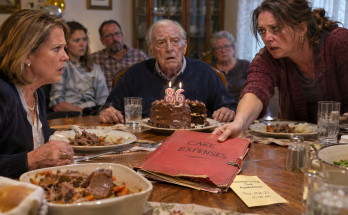
My father turned seventy-five that autumn.
Nathan and I organized a small birthday dinner at the townhouse.
Nothing extravagant.
Just family, a few old friends, and the chocolate cake Dad had loved since childhood.
At the end of the evening, he stood beside the table holding a glass of sparkling cider.
“I’d like to say something.”
Nathan groaned.
“Dad, please don’t give us a judicial opinion.”
Everyone laughed.
Dad smiled.
“Retired judges are allowed birthday speeches.”
Then he looked at me.
His expression changed.
“Years ago, I thought I’d lost my daughter.”
My throat tightened.
He continued.
“I told myself I was respecting her wishes by staying away. And perhaps part of that was true. But I never stopped hoping she’d know there was room for her at my table.”
His eyes filled.
“Then one morning, the telephone rang.”
I covered my mouth.
Dad looked toward Nathan.
“And eventually, another door opened.”
Nathan wiped his eyes.
Dad took a breath.
“I don’t believe families become strong because they never make mistakes.”
He paused.
“I believe they become stronger when people stop hiding from the truth and take responsibility for what they can repair.”
He raised his glass.
“To finding our way back.”
I couldn’t speak.
So I stood, walked around the table, and hugged him.
A year after I left Julian, I found an old photograph while cleaning my study.
It showed me standing in front of the townhouse on the day I bought it.
I was smiling.
My hair was tied back.
I held the keys in one hand and a bottle of sparkling cider in the other.
Dad stood beside me, grinning proudly.
I studied the photograph for a long time.
I’d forgotten how happy I looked.
How certain.
How excited about the future.
For years, Julian had made me feel as though the woman in that photograph was selfish.
Too independent.
Too stubborn.
Too attached to property.
But looking at her now, I saw someone else.
A young woman who had worked hard.
Saved carefully.
And built something of her own.
I placed the photograph on my desk.
Beside it, I put a newer one.
Dad, Nathan, and me, standing in the freshly renovated courtyard.
There were years of hurt between those two pictures.
Mistakes.
Silence.
Manipulation.
And loss.
But there was also something remarkable.
I was smiling in both.
Not the careful smile I’d worn for Julian’s photographs.
A real one.
The kind that reaches your eyes.
My name is Audrey Sterling.
I spent five years believing that keeping my husband happy was the only way to keep my marriage safe.
I stopped calling my father.
Lost contact with my brother.
Questioned my own memory.
And learned to measure every word before speaking.
When Julian struck me for refusing to sell my townhouse, I finally understood that compliance had never made me safe.
It had only taught him to expect more.
The following morning, he ordered me to conceal the bruises.
He wanted a perfect lunch.
A smiling wife.
And another opportunity to persuade me to surrender the home I’d purchased with my own savings.
Instead, I called my father.
That decision didn’t solve everything immediately.
It began a difficult process involving medical care, safety planning, legal proceedings, financial investigation, and rebuilding relationships.
I learned painful truths about my husband.
About my mother-in-law.
About my brother.
And about how easily silence could become a weapon when someone controlled the stories people heard about one another.
But I also learned that the people who love us don’t require us to disappear to make room for them.
Last Sunday, Dad came over for lunch.
He arrived carrying a loaf of bread from my favorite bakery.
Nathan came twenty minutes later with flowers from a roadside stand.
We sat at the dining table, laughing about a vacation Dad was planning.
At one point, Nathan spilled water across his napkin.
He looked horrified.
I laughed.
“It’s water, Nathan.”
Dad grinned.
“Somebody fetch an emergency towel.”
We all started laughing.
Then I stopped.
Because I realized something.
A year earlier, an accident at the dining table might have made me flinch.
I would’ve worried about Julian becoming angry.
About Eleanor criticizing me.
About whether I’d embarrassed somebody.
Now there was only laughter.
A little spilled water.
And three people enjoying lunch.
Dad noticed my expression.
“Audrey?”
I looked at him.
“Yes?”
“You all right, sweetheart?”
I smiled.
“Yes.”
He studied me.
“Really?”
I glanced around the room.
At the sunlight falling across the table.
At Nathan trying to mop up the spill with an absurd number of napkins.
At the house I’d fought to protect.
Then I looked at my father.
“Really.”
He smiled.
And we went back to lunch.
The cosmetics bag Julian had thrown onto my bed was long gone.
The bruises had healed.
The legal documents were filed away.
And the townhouse was no longer a place where I waited anxiously for someone else’s footsteps.
It was a home again.
A home is not simply property we own. It is a place where we can live without fear, make our own choices, and know that love will never demand our silence as its price.
That morning, when I called my father after five years apart, I thought I was asking someone to rescue me.
Now I understand what really happened.
He reminded me that I wasn’t alone.
And with the support of people who respected my choices, I found the courage to reclaim my own life.