The phone nearly slipped from my hand. For fourteen days, I’d been trying to accept that my family had rejected me. Now my sister was telling me that someone had signed documents transferring ownership of the company I’d spent years building. My company. My property. My future. And the most frightening part wasn’t Vanessa’s trembling voice. It was the realization that I knew exactly where the original corporate seal had been kept. My father had access to it. Three years earlier, when his travel business was struggling, I’d allowed him to use a locked office inside Harborstone Holdings’ headquarters.
It was supposed to be temporary, a place where he could meet creditors and reorganize his records without paying for another commercial lease. He knew which filing cabinet held our old corporate documents. He knew where the administrative keys were kept. And until that moment, I’d never had a reason to believe he would use that knowledge against me. “Claire?” Vanessa was crying. “Are you listening?” I gripped the phone. “Where did you see this transfer document?”
“The investors sent Dad a copy.” “What investors?” “The people from Atlantic Crest Capital.” My stomach tightened. That was the company listed on the six-million-dollar financing proposal. The one that claimed Vanessa’s business had authority to pledge my beachfront estate as collateral. “Send me every document they gave you,” I said. Vanessa sniffled. “Will you help us?” I closed my eyes. I could hear music behind her. Resort music. The cheerful sound of a vacation I’d once agreed to help finance.
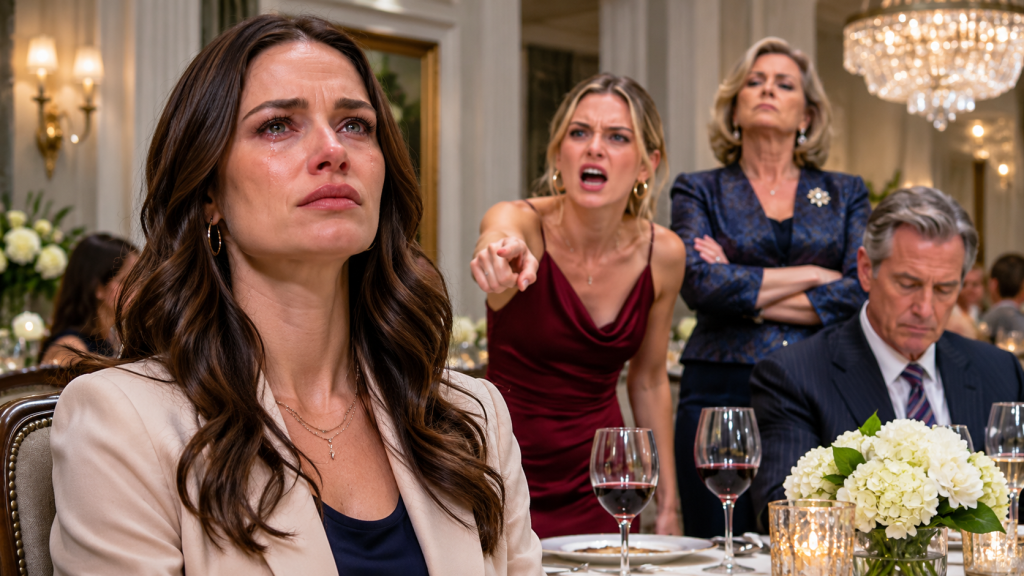
I thought about the dinner table.
My mother’s folded arms.
My father’s lowered eyes.
Vanessa’s triumphant smile.
You don’t belong in our family.
I took a slow breath.
“I will protect my property and investigate anything involving my name.”
“But what about us?”
I swallowed.
“You need to deal honestly with the resort and your financial obligations. I never guaranteed those expenses.”
Vanessa began sobbing harder.
“Claire, please!”
My voice remained steady.
“Send the documents.”
Then I ended the call.
For several seconds, I stood alone in my kitchen, staring at the dark screen.
I had imagined that separating myself from my family would be painful.
I hadn’t imagined it might reveal something far worse than their lack of affection.
I picked up my phone again.
This time, I called my attorney.
“Rebecca,” I whispered, “someone may have tried to transfer my company without my permission.”
There was a brief silence.
Then she said, “Claire, don’t sign anything. Send me what you have, and we’ll start by verifying exactly what was filed.”
I looked toward the framed photograph of my grandmother on the kitchen wall.
And suddenly, the betrayal felt painfully personal.
Because Harborstone Holdings wasn’t merely a company.
It was the place where I’d put everything I’d learned from the only person in my childhood who had ever made me feel unquestionably loved.
My name is Claire Morgan.
I’m thirty-four years old, and for most of my life, I’ve been the person my family called when something went wrong.
Not when they wanted to celebrate.
Not when they planned a vacation.
Not when they had wonderful news to share.
Only when the bills arrived.
When a business needed financing.
When my sister Vanessa found herself facing another failure.
When my father’s travel agency couldn’t meet its obligations.
For years, I convinced myself that being needed meant being loved.
It took one dinner to understand how wrong I was.
My parents had told me I didn’t belong in the family because I refused to let Vanessa falsely represent my beachfront property as something her company owned.
That should have been the end of it.
Instead, two weeks later, thirty-four missed calls led me to a document bearing my signature.
A signature I had never written.
And a company transfer I had never authorized.
Rebecca arrived at my office less than an hour after I called.
She was forty-eight, composed, and exceptionally careful about separating what we suspected from what we could prove.
She’d represented Harborstone Holdings for nearly seven years.
She knew the company structure.
She knew the property’s ownership history.
And she knew my family well enough to understand why I looked as though I hadn’t slept in a week.
She placed her briefcase on the conference table.
“Show me the documents.”
I opened my laptop.
Vanessa had finally forwarded the attachment.
There were eleven pages.
A purported corporate ownership transfer.
A resolution supposedly approved by Harborstone’s sole shareholder.
A certification bearing the company’s seal.
And a document claiming I had authorized Vanessa to negotiate financing and dispose of certain company assets.
Rebecca read silently.
I watched her expression change.
Then she reached the signature page.
“Claire, did you sign any of this?”
“No.”
“Did you authorize Vanessa to sign for you?”
“No.”
“Did you attend a meeting approving this transaction?”
I almost laughed.
“Rebecca, I’m the only shareholder. There was no such meeting.”
She nodded.
“Then we need to determine whether these documents were merely prepared, presented to the lender, or actually used to make changes to any official records.”
I swallowed.
“Can they take the company?”
“Not lawfully based on a fabricated authorization. But unauthorized documents can create serious complications if they’re relied upon, so we need to act quickly.”
She looked at the pages again.
Then pointed toward the corporate seal.
“Where was the original kept?”
I told her about my father’s temporary office.
Her expression tightened.
“Who else had access?”
“Our former administrative manager, Elaine. But she retired last year, and the cabinet keys were returned.”
Rebecca nodded.
“And your father?”
“He had access to the office.”
“Did he have permission to use the seal?”
“No.”
She folded her hands.
“Then we investigate. We don’t assume who used it until we have evidence.”
I nodded.
But inside, I already knew something awful.
The family that had spent nine years relying on my generosity had apparently begun treating my generosity as ownership.
Rebecca contacted a corporate records specialist while I called my operations director, Helen.
Helen had worked with me since Harborstone was a small property management business operating from a two-room office.
She was fifty-one, practical, and fiercely protective of our employees.
When I explained what had happened, she went quiet.
Then asked, “Does this involve the beach house?”
“Yes.”
I heard her exhale.
“Claire, I need to tell you something.”
My chest tightened.
“What?”
“Vanessa came to the office last Thursday.”
I froze.
“Last Thursday?”
Helen hesitated.
“She said you were traveling and needed her to collect some corporate records.”
I stared at the wall.
“I wasn’t traveling.”
“I know that now.”
I closed my eyes.
Helen continued.
“She asked for copies of the company’s formation documents and the original property acquisition file.”
“Did you give them to her?”
“No.”
Relief washed through me.
Helen’s voice hardened.
“She became angry when I refused. Said I was forgetting who the family belonged to.”
I almost laughed at the absurdity of it.
Then Helen added, “She told me your father had approved the request.”
My stomach dropped.
“Did she say anything else?”
There was a pause.
“She said Harborstone would soon have new management.”
I gripped the desk.
For a moment, everything seemed terribly clear.
Vanessa hadn’t simply been trying to impress wealthy investors.
She’d been preparing to represent herself as someone with control over my company.
Whether she believed the transfer would succeed or intended to pressure me into accepting it, I didn’t yet know.
But she had been acting as though my refusal was irrelevant.
I took a breath.
“Helen, preserve the security footage and visitor logs from that day. Don’t alter anything. Rebecca will coordinate what needs to be reviewed.”
“Of course.”
Then Helen’s voice softened.
“Claire, are you all right?”
I stared at the photograph of my grandmother.
“No.”
I swallowed.
“But I will be.”
Grandmother Eleanor had been the first person to teach me that a person’s value wasn’t measured by how useful they were to someone else.
She lived alone in an old beachfront house on the North Carolina coast.
The house was weathered.
The shutters needed painting.
The wooden deck creaked in the wind.
But to me, it was the most beautiful place in the world.
When I was eleven, I spent an entire summer with her.
My parents said they were busy.
Vanessa had been invited to a special arts camp.
I was told to pack a bag and behave myself.
I arrived at Grandmother’s house feeling unwanted.
On my first evening, I sat at her kitchen table and tried not to cry.
She placed a bowl of strawberries in front of me.
“What’s wrong, Claire?”
I shook my head.
“Nothing.”
She sat beside me.
“Sweetheart, you don’t have to pretend with me.”
That was all it took.
I began crying.
I told her about Vanessa’s camp.
About the way Mom always praised my sister.
About Dad saying I was the responsible one, as though responsibility were a consolation prize.
Grandmother listened.
Then took my hand.
“Claire, being dependable is a wonderful quality.”
I wiped my eyes.
“But it doesn’t mean your needs matter less.”
I stared at her.
She continued.
“You are allowed to want things. You are allowed to be disappointed. And you are allowed to say no.”
I never forgot those words.
Years later, when Grandmother died, her estate included the beachfront house and several other assets.
The property interests were divided according to her estate plan.
My parents and Vanessa received their respective shares.
I purchased the remaining interests at independently supported values, using my own funds and properly documented agreements.
Then I spent years restoring the house.
I replaced the roof.
Repaired the foundation.
Restored the original hardwood floors.
And transferred the property into Harborstone Holdings as part of a legitimate business restructuring.
It became one of the company’s most valuable assets.
But to me, it was still Grandmother Eleanor’s house.
The place where I’d first learned that saying no didn’t make me unlovable.
And now my family was trying to use that very place to punish me for saying it.
By late afternoon, Rebecca had confirmed something important.
The official ownership records did not show a completed transfer of Harborstone Holdings.
I was still the registered owner.
The beachfront property remained titled to the company.
There was no verified recording of a deed transferring the estate.
I sat back in my chair.
For the first time that day, I could breathe.
“So they haven’t taken it?”
“Based on the records we’ve checked, no.”
Rebecca continued.
“But the paperwork appears to have been presented to a prospective lender. We need to address the false representations and protect the company from any further unauthorized activity.”
I nodded.
She looked at me.
“Claire, I also want you to consider whether the original corporate records and seal should be moved to a more secure location.”
“Absolutely.”
“Good.”
She paused.
“And there’s another issue.”
My stomach tightened.
“What?”
“The financing proposal claims that Vanessa’s company already had a binding agreement to use the beachfront estate for investor events.”
I stared at her.
“We never signed one.”
“I know.”
She turned the document toward me.
There, on page six, was a purported management agreement.
It described the property as the primary venue for an exclusive coastal hospitality venture.
It listed projected revenue from weddings, private retreats, and luxury corporate events.
And beneath the agreement, once again, appeared my signature.
I stared.
“Rebecca, I’ve never seen this.”
She nodded.
“Then we may be dealing with several separate unauthorized documents, not one.”
My throat tightened.
I thought of all the times Vanessa had called me difficult because I insisted on written agreements.
Now she had apparently discovered the usefulness of paperwork.
Not to establish the truth.
But to create the appearance of it.
That night, Dad called.
For the first time in two weeks, his name appeared on my phone without Vanessa’s number preceding it.
I stared at the screen.
Then answered.
“Hello.”
“Claire.”
His voice sounded exhausted.
“Hi, Dad.”
There was a pause.
“Are you all right?”
I almost laughed.
Two weeks earlier, he’d told me it might be better if I wasn’t part of the family.
Now he was asking whether I was all right.
“I’m dealing with the situation,” I said.
He cleared his throat.
“Vanessa says the investors are threatening to sue.”
I looked toward the documents on my desk.
“She should speak with her attorney.”
Dad sighed.
“Claire, we’re in a terrible position.”
I swallowed.
“Then I suggest everyone stop making decisions without understanding the consequences.”
He went quiet.
After a moment, he whispered, “We didn’t mean what we said at dinner.”
I closed my eyes.
“All three of you said it.”
He exhaled.
“Things got heated.”
I stared at the wall.
“Dad, you told me it might be better if I didn’t belong to this family.”
His breathing changed.
“I was upset.”
I took a slow breath.
“So was I.”
Silence followed.
Then he said, “We need your help.”
Those words.
The words I’d heard for nine years.
They should have surprised me.
They didn’t.
I closed my eyes.
“With what?”
Dad hesitated.
“The vacation expenses. The business. Vanessa’s investors.”
I felt a familiar exhaustion wash over me.
Not concern for my well-being.
Not regret over the years of favoritism.
A list of bills.
I swallowed.
“Dad, I am not paying to resolve problems created by documents I never authorized.”
He sighed sharply.
“Claire, can’t we just talk as a family?”
I looked down at my grandmother’s photograph.
“We can talk when everyone is prepared to be honest.”
Then I asked the question that mattered.
“Dad, did you give Vanessa access to Harborstone’s corporate seal?”
The line went completely silent.
And in that silence, I heard my answer.
“Dad?”
I waited.
He cleared his throat.
“Vanessa said she needed it for the financing presentation.”
My fingers tightened around the phone.
“You gave her the corporate seal?”
“She said you knew.”
I closed my eyes.
“Did you ask me?”
He didn’t answer.
“Dad, did you call me? Did you email me? Did you ask whether I’d authorized her to use company property?”
His breathing grew unsteady.
“No.”
I stared at the ceiling.
My father was sixty-three years old.
He’d run a travel business for more than thirty years.
He understood agreements.
He understood signatures.
He understood the importance of verifying authority before making financial commitments.
Yet somehow, when Vanessa asked him for something belonging to me, he’d accepted her explanation without a single question.
“Why?” I whispered.
He sounded confused.
“What?”
“Why was it so easy to believe Vanessa had permission to use my company?”
He sighed.
“She said she’d discussed it with you.”
I swallowed.
“And you believed her.”
“She’s your sister.”
I felt something inside me fracture.
“Yes, Dad. And I’m your daughter.”
He went quiet.
I continued.
“Why did her word matter more than mine?”
For several seconds, he said nothing.
Then, in a voice so small I barely recognized it, he answered.
“Because I knew you’d say no.”
I closed my eyes.
There it was.
Not a misunderstanding.
Not confusion.
My father had suspected I wouldn’t consent, and he’d given Vanessa access anyway.
I took a slow breath.
“Thank you for finally telling me the truth.”
He began speaking quickly.
“Claire, I never thought she’d actually transfer anything. She said it was for a presentation. I thought you’d eventually agree once you saw how much the business could make.”
I stared at the wall.
“Dad, you cannot use somebody else’s property to negotiate a deal and assume they’ll surrender it later.”
His voice broke.
“I know that now.”
“No,” I whispered. “You knew it then.”
He began crying.
And although hearing my father cry hurt, I didn’t rush to comfort him.
For once, I allowed him to sit with the consequences of what he’d done.
The next morning, I gave Rebecca the details of our conversation.
She advised me to document my father’s admission accurately and preserve the call history and related messages.
We also arranged to have the original company seal and corporate record books secured under a new access procedure.
Helen supervised the inventory.
The security footage showed Vanessa entering the building on Thursday afternoon.
She spent nearly forty minutes in the temporary office my father had once used.
She wasn’t accompanied by an employee.
Her access to that area had apparently remained active because Dad had never returned his building pass.
I stared at the footage.
Vanessa entered carrying a leather handbag.
When she left, the bag appeared slightly fuller.
It wasn’t proof of exactly what she’d taken.
But it was enough to justify a careful review of the office records and access permissions.
Rebecca arranged for appropriate preservation of the footage and additional evidence.
Then she looked at me.
“Claire, I know this is difficult.”
I nodded.
She continued.
“Your priority is protecting the company and making sure nobody relies on unauthorized documents.”
I took a breath.
“What happens to Vanessa?”
“That depends on what the evidence establishes and which authorities or affected parties decide to pursue the matter.”
I looked away.
For most of my life, I’d protected Vanessa from consequences.
Paid bills.
Explained away failures.
Helped her recover after reckless decisions.
Now the possibility that she might face legal scrutiny frightened me.
But another thought frightened me more.
What if I protected her again?
What would she do next?
Who else would be harmed?
I stared at the documents.
Then I whispered, “Do what we need to do.”
Rebecca nodded.
And for the first time in my life, I chose accountability over the desperate hope that my sister might finally love me if I rescued her one more time.
Three days later, my parents and Vanessa returned from the Bahamas.
They had resolved their immediate resort bill through a combination of their own funds and additional payment arrangements.
I hadn’t sent a dollar.
Vanessa called me the moment their plane landed.
“You humiliated us.”
I was standing in my office.
I nearly laughed.
“How?”
“Everyone at the resort knew the payment failed.”
I took a breath.
“Vanessa, I never guaranteed that vacation.”
She scoffed.
“You knew we were going.”
“Knowing about a vacation doesn’t make me responsible for paying for it.”
Her voice sharpened.
“You’ve changed.”
I looked toward my grandmother’s photograph.
“Yes.”
She was quiet for a moment.
Then said something astonishing.
“Mom thinks you’ve been waiting for a chance to destroy us.”
I closed my eyes.
“Does she?”
“She says you’ve always resented me.”
I leaned against the desk.
For a moment, I was eleven years old again.
Watching Vanessa open presents while I tried to convince myself that being the responsible daughter was enough.
But I wasn’t eleven anymore.
“Vanessa, I spent nine years helping you.”
She laughed bitterly.
“Only because you wanted control.”
I felt a sharp ache in my chest.
“Is that what you believe?”
“You always had to make everyone feel indebted to you.”
I swallowed.
I thought about the failed boutique.
The marketing company that lasted eleven months.
The online luxury accessories venture that collapsed after Vanessa spent most of its operating budget on branding and travel.
Each time, she’d come to me crying.
Each time, I’d helped.
And now she was rewriting those years as though I’d forced her to accept my money.
I took a breath.
“Then you should be relieved that my financial support has ended.”
She went silent.
I continued.
“You won’t have to worry about feeling indebted to me again.”
“Claire—”
“Any communication about Harborstone’s property or documents should go through Rebecca.”
Then I ended the call.
My hands were trembling.
But I didn’t regret a word.
The most painful discovery came the following week.
It wasn’t from the bank.
Or the investors.
Or the corporate records.
It came from my mother.
She appeared at my house on a Sunday afternoon.
I hadn’t invited her.
When I opened the door, she stood on the porch holding a small paper bag.
“Claire.”
I looked at her.
“Mom.”
Her eyes moved past me into the hallway.
“May I come in?”
I hesitated.
Then stepped aside.
She walked into my living room and sat on the edge of the couch.
For a moment, she stared at the photographs on my mantel.
Then she placed the bag on the coffee table.
“I brought your favorite lemon cookies.”
I looked at the bag.
When I was little, she’d occasionally baked lemon cookies.
I loved them.
But she’d usually made them for Vanessa, who preferred them with extra frosting.
I sat across from her.
“Why are you here?”
Mom’s expression tightened.
“Can’t a mother visit her daughter?”
I swallowed.
“Of course.”
Then I waited.
She looked toward the window.
“Your father is very upset.”
I nodded.
“He should be.”
She sighed.
“Vanessa’s business is in terrible trouble.”
I remained silent.
Mom clasped her hands.
“The investors are demanding explanations. They say the property documents were misleading.”
I looked at her.
“They were.”
Her eyes filled.
“Claire, surely there’s a way to settle this privately.”
I took a breath.
“What would you like me to do?”
She hesitated.
“Perhaps you could authorize the estate after all.”
For a moment, I couldn’t speak.
My mother had come to my home carrying cookies and asking me to validate documents I hadn’t signed.
I stared at her.
“You want me to approve the transaction?”
She looked uncomfortable.
“Only enough to avoid a scandal.”
I felt my stomach turn.
“Mom, there’s a proposed six-million-dollar investment involved.”
She nodded.
“I know.”
“Vanessa represented my property as collateral without permission.”
Her expression tightened.
“She was desperate.”
I swallowed.
“And you want me to make the documents legitimate because she’s desperate?”
Mom sighed.
“You’ve always had more than your sister.”
I stared at her.
The words were so familiar that they almost felt rehearsed.
Then I asked quietly, “Mom, why do you think that is?”
She looked confused.
“What?”
“Why do you think I have more?”
She folded her arms.
“Because you’ve always been fortunate.”
I felt tears gathering.
“Fortunate?”
My voice shook.
“I worked through college. I built Harborstone from a small business. I took financial risks, worked long hours, and paid for the estate interests myself.”
Mom looked away.
I continued.
“Vanessa received help too. From you. From Dad. From me.”
Her cheeks reddened.
“She has a different temperament.”
I stared at her.
“Yes.”
My voice cracked.
“She expects to be rescued.”
Mom opened her mouth.
Then closed it.
I wiped my eyes.
“And I spent nine years proving that expectation was reasonable.”
My mother stared at the floor.
Then whispered, “You were always the strong one.”
I felt something in my chest break.
There it was again.
The phrase that had followed me since childhood.
The strong one.
The sensible one.
The dependable one.
As though strength meant I didn’t need tenderness.
As though responsibility meant I didn’t deserve protection.
As though my ability to survive without attention justified never receiving it.
I looked at her.
“Mom, did you ever consider that I became strong because nobody came when I needed help?”
Her eyes filled.
She stared at me.
I continued.
“When Vanessa cried, you comforted her. When she failed, you gave her another chance. When she wanted something, you tried to make it happen.”
My voice trembled.
“When I struggled, you told me to be mature.”
Mom began crying.
I took a breath.
“I wasn’t born needing less love.”
She covered her mouth.
I whispered, “I just learned not to ask.”
For a long time, neither of us spoke.
Then Mom said something I hadn’t expected.
“Your grandmother used to tell me that.”
I looked up.
“What?”
She wiped her eyes.
“Eleanor said I was unfair to you.”
I stared.
Mom continued.
“She said I praised Vanessa for trying and praised you only when you succeeded.”
My chest tightened.
“She told you that?”
Mom nodded.
“Many times.”
I looked toward the photograph of Grandmother Eleanor.
All those years, I’d thought she was the only person who noticed.
Now I knew she’d tried to make my mother notice too.
I swallowed.
“What did you say?”
Mom began crying harder.
“I told her she didn’t understand our family.”
I closed my eyes.
My grandmother had understood perfectly.
My mother simply hadn’t wanted to hear it.
After several minutes, Mom opened her handbag.
She took out a small cream-colored envelope.
My name was written across the front.
The handwriting was familiar.
Grandmother Eleanor’s.
My breath caught.
“Where did you get that?”
Mom looked down.
“Eleanor gave it to me before she died.”
I stared.
“Why?”
“She asked me to give it to you when you finally stopped sacrificing yourself to keep everyone happy.”
My hands began trembling.
“And you kept it?”
Mom nodded.
“For years?”
Tears slid down her cheeks.
“I was angry with her.”
I stared at the envelope.
For a moment, I couldn’t move.
Then I reached for it.
Inside was a single folded page.
The paper had yellowed slightly.
I recognized Grandmother’s handwriting immediately.
My dear Claire,
If you’re reading this, I hope you’ve finally begun choosing a life that belongs to you.
My eyes filled.
I’ve watched you spend years trying to earn the affection of people who should have loved you without conditions.
You are kind, clever, and generous.
But generosity is not a debt you owe simply because someone knows how to ask.
I covered my mouth.
I hope you remember our summer by the ocean.
You asked me once why I loved you.
I told you I loved you because you were you.
That answer has never changed.
Tears fell onto the page.
The house may be worth money, but its greatest value is the peace it gave us.
Don’t let anyone turn it into another place where you feel unwanted.
Whatever you choose to do with your life, remember this: you belong wherever you are loved and respected. You do not have to purchase your place at anyone’s table.
With all my love,
Grandma Eleanor.
I pressed the letter against my chest.
Then I began sobbing.
My mother sat across from me, crying too.
For once, I didn’t comfort her.
I simply held the words my grandmother had left behind.
Words I should have received years earlier.
“Why didn’t you give it to me?” I whispered.
Mom wiped her eyes.
“Because I knew what it meant.”
I looked up.
She continued.
“I knew Eleanor was telling you to stop letting us depend on you.”
I stared at her.
“And you didn’t want that?”
Mom closed her eyes.
“No.”
The honesty hurt.
But it also freed something inside me.
For years, I’d wondered whether my family understood how much they were taking.
Now I knew.
At least my mother had understood enough to fear what would happen if I stopped giving.
I folded the letter carefully.
Then looked at her.
“Mom, I need you to leave.”
Her face crumpled.
“Claire—”
“Please.”
She began crying.
“I know I’ve made mistakes.”
I nodded.
“Yes.”
She reached for my hand.
I gently moved mine away.
“I need time to decide what kind of relationship, if any, we can have.”
Her shoulders shook.
“But I’m your mother.”
I swallowed.
“I know.”
Then I said the words I should have said years earlier.
“Being my mother doesn’t give you unlimited permission to hurt me.”
She stared at me.
For several seconds, she seemed unable to speak.
Then she stood.
I walked her to the door.
Before leaving, she turned.
“I’m sorry, Claire.”
I looked at her.
For the first time, I wanted to believe her.
But I wasn’t ready.
“Thank you for the letter,” I whispered.
Then I closed the door.
And held Grandmother Eleanor’s words against my heart.
The investigation continued through the following months.
The prospective lender confirmed that it had suspended the financing process after receiving my notice disputing Vanessa’s representations.
No six-million-dollar investment had been released on the strength of the documents.
That was an enormous relief.
But the absence of a completed loan didn’t make the attempted transaction harmless.
Vanessa had solicited investors using material claims about property and corporate authority that she couldn’t substantiate.
Rebecca worked with the appropriate professionals to determine what corrective notices were needed and which records should be preserved or reported.
The investors retained their own legal advisers.
The company maintained its official ownership records.
And Harborstone’s employees were informed only of what they needed to know to protect their work and the business.
I refused to turn the situation into a family spectacle.
But I also refused to make it disappear.
Dad’s travel company was facing its own reckoning.
For nine years, I’d provided emergency financial support when the business struggled.
Some of that support had been structured through documented loans.
Other payments were voluntary contributions I made because I believed I was helping preserve my father’s life’s work.
When I stopped providing new money, the company had to operate on its actual revenue.
And the numbers were unforgiving.
Its expenses were too high.
Its booking volume had declined.
And several obligations had been postponed for too long.
Dad tried negotiating with creditors.
He reduced overhead.
Sold equipment.
And eventually arranged an orderly closure after receiving professional advice.
It was painful.
The company had existed since I was a child.
I remembered sitting behind his desk, coloring on old brochures while he spoke with customers.
I remembered how proud he was when he booked his first large corporate travel account.
But I also remembered the years when I’d been told that another emergency payment would solve everything.
It never did.
Sometimes a business doesn’t need another rescue.
Sometimes it needs an honest ending.
Dad eventually acknowledged that.
And although I felt sad watching the company close, I didn’t confuse that sadness with an obligation to restart the cycle.
Vanessa’s business also collapsed.
The investors withdrew from negotiations.
Prospective partners stopped returning calls.
And the financing proposal became the subject of disputes that required professional attention.
Vanessa hired an attorney.
For a while, she insisted she’d done nothing wrong.
She told relatives I’d sabotaged her opportunity.
She claimed the beachfront estate had always been a family property.
She said I was using technicalities to punish her.
I stopped trying to correct every accusation.
The ownership documents were clear.
I’d purchased the remaining estate interests.
Harborstone Holdings held title to the property.
And no one had authority to pledge it without the necessary approvals.
The truth didn’t require a shouting match.
It required records.
Over time, Vanessa stopped calling every day.
Then every week.
For several months, I barely heard from her.
I didn’t know whether she was angry, ashamed, or simply exhausted.
But for the first time since childhood, her feelings weren’t the center of my life.
I began spending more time at the beachfront estate.
On my first visit after the family confrontation, I walked barefoot across the restored hardwood floors.
The house smelled faintly of cedar and salt air.
Sunlight poured through the tall windows.
Outside, the ocean stretched toward the horizon.
I’d loved this place before it was valuable.
Before renovations.
Before investors.
Before anyone thought of it as a luxury venue.
I loved it because it had once been the only place where I didn’t feel like an obligation.
I walked into Grandmother’s old bedroom.
Her rocking chair still stood beside the window.
I had restored the chair but kept the worn wooden arms exactly as they were.
I sat down.
Then unfolded her letter.
You do not have to purchase your place at anyone’s table.
I read that sentence several times.
For years, I’d believed being useful was the price of belonging.
I helped Dad.
Rescued Vanessa.
Paid Mom’s expenses.
Organized celebrations.
Solved emergencies.
And waited for someone to say that I mattered.
Now I understood that I’d been trying to buy something that should never have had a price.
I began crying.
Then I looked out at the ocean.
And whispered, “I finally understand, Grandma.”
That summer, I made a decision about the estate.
I would keep it within Harborstone Holdings.
But I would change how part of it was used.
Instead of allowing Vanessa to turn it into the exclusive luxury event destination she’d imagined, I created a modest community program through a separately organized, properly funded initiative.
Several times a year, the property would host small retreats for young adults who had grown up in unstable homes or were transitioning out of foster care.
The retreats would focus on financial literacy, career planning, and practical independence.
We partnered with experienced local organizations.
Their professionals helped design the program.
Harborstone provided appropriate venue access under documented arrangements.
It wasn’t a grand rescue mission.
I didn’t believe one weekend could repair a difficult childhood.
But I knew the value of having a peaceful place where someone listened.
And I wanted other young people to experience something like the summer Grandmother had given me.
During the first retreat, a nineteen-year-old named Maya approached me after a workshop.
She was studying business administration at a community college.
She’d worked two jobs to afford tuition.
And she was worried that asking for help would make her appear weak.
I listened.
Then told her something Grandmother had once told me.
“Being dependable is wonderful. But it doesn’t mean your needs matter less.”
Maya looked at me.
Her eyes filled.
“Nobody’s ever said that to me.”
My throat tightened.
I smiled gently.
“Then I’m glad somebody finally did.”
That evening, after the participants left, I sat alone on the porch.
The ocean breeze moved through the tall grass.
And for the first time, I felt that the estate was becoming something even more meaningful than it had been before.
Not a symbol of wealth.
A place where people could learn that their worth existed independently of what they provided for others.
Nearly ten months after the dinner that shattered our family, Dad requested a meeting.
He didn’t call asking for money.
Didn’t mention creditors.
Didn’t ask me to speak with Vanessa’s attorney.
He simply sent an email.
Claire, I owe you an apology. If you’re willing, I’d appreciate the chance to say it in person. I understand if you’re not ready.
I read it twice.
Then called Rebecca.
Not because I needed permission to see my father.
Because I wanted to be certain no unresolved legal matters would be complicated by the meeting.
After discussing appropriate boundaries, I agreed to see him.
We met at a quiet café.
Dad arrived early.
He looked older.
His shoulders seemed narrower.
His hair was almost entirely gray.
He stood when I approached.
“Claire.”
“Hi, Dad.”
We sat.
For several minutes, he stared at his coffee.
Then he reached into his jacket and removed a small notebook.
I recognized it.
Dad had always used notebooks to record travel itineraries.
He placed it on the table.
“I’ve been writing things down.”
I looked at him.
He swallowed.
“Things I should have told you years ago.”
I remained quiet.
He opened the notebook.
Then began.
“When your mother was pregnant with Vanessa, I promised myself I’d never let either of my daughters feel unwanted.”
His voice broke.
“I failed.”
My eyes filled.
He looked at me.
“I told myself you didn’t need much because you were capable.”
I swallowed.
He continued.
“You got good grades. Worked hard. Solved problems. You rarely complained.”
He shook his head.
“I mistook that for proof that everything was fine.”
I looked down.
Dad continued.
“And whenever Vanessa needed help, I turned to you because I knew you’d know what to do.”
His hands trembled.
“I made you responsible for problems that weren’t yours.”
For the first time, I heard him name the pattern without calling it family duty.
I took a shaky breath.
“Dad, why did you give her access to the seal?”
He closed his eyes.
“Because I wanted her business to succeed.”
I waited.
“And because I convinced myself you’d eventually forgive us if the financing worked.”
My chest tightened.
He looked at me.
“I understand now that I was gambling with something you built.”
I nodded.
“Yes.”
His eyes filled.
“I’m sorry.”
I stared at him.
Then whispered, “Why did you say I didn’t belong?”
He began crying.
“Because Vanessa was angry, and I wanted the argument to stop.”
I shook my head.
“So you chose me.”
He looked down.
“Yes.”
The answer hurt.
But it mattered that he didn’t deny it.
I took a breath.
“Dad, I can’t forget that dinner.”
He nodded.
“I know.”
“And I can’t go back to being the person who fixes everything.”
He wiped his eyes.
“I don’t want you to.”
I studied him.
For the first time, I wondered whether the end of his business had forced him to confront how much he’d relied on me.
Not simply financially.
Emotionally.
I’d made it easy for him to avoid hard decisions.
Now he was learning to make them himself.
I didn’t forgive everything that afternoon.
But I agreed we could begin talking again.
Carefully.
Honestly.
Without money.
Mom’s apology came several weeks later.
She wrote a letter.
Not a text demanding I call.
Not a request for help disguised as affection.
A handwritten letter.
She acknowledged the favoritism.
The years of comparing me with Vanessa.
The expectation that I would always sacrifice because I was the dependable daughter.
And the decision to withhold Grandmother Eleanor’s letter.
That last part was the hardest to read.
Mom wrote:
I kept the letter because I knew your grandmother was telling you something I didn’t want you to believe: that you were allowed to stop taking care of us.
I sat at my kitchen table, tears slipping down my cheeks.
She continued.
I see now how selfish that was. You deserved the letter when Eleanor gave it to me. You deserved kindness long before you learned how to provide it for everyone else.
I folded the pages.
For several minutes, I stared out the window.
Then I placed the letter beside Grandmother’s.
I wasn’t ready to resume Sunday dinners.
I wasn’t ready for family vacations.
But I did send Mom a message thanking her for acknowledging what had happened.
We began meeting occasionally for coffee.
She learned not to turn every conversation toward Vanessa.
I learned that I could end a visit when I felt uncomfortable.
Neither of us was particularly good at it at first.
But we were trying.
And for now, trying honestly was enough.
Vanessa was the last person to reach out.
By then, almost a year had passed since she’d told me I didn’t belong in the family.
Her business was gone.
The financing dispute had required extensive documentation, and she was still dealing with the consequences of representations made to prospective investors.
The disputed corporate documents had been withdrawn from use, and the relevant records were preserved.
Legal professionals had helped the affected parties address the issues.
I wasn’t informed of every private discussion or decision involving Vanessa.
Nor did I need to be.
My responsibility had been to protect Harborstone and cooperate honestly when information was required.
I had done that.
One evening, Vanessa sent me a message.
Claire, can we talk? I won’t ask you for money.
I stared at it for a long time.
Then agreed to meet her at the beachfront estate.
It was the place where our conflict had begun.
And perhaps, I thought, it was where we needed to confront what had happened.
Vanessa arrived on a quiet Saturday morning.
She wore jeans and a simple sweater.
No designer handbag.
No expensive jewelry.
Her hair was tied back.
She looked tired.
For several moments, we stood facing each other on the porch.
Then she whispered, “Hi.”
“Hi.”
I stepped aside.
She entered the house slowly.
Her eyes moved around the living room.
“I haven’t been here in years.”
I nodded.
“I know.”
She stopped beside Grandmother’s old rocking chair.
For a moment, her expression softened.
“I remember this.”
I waited.
Vanessa touched the worn wooden arm.
“Grandma used to sit here.”
“Yes.”
She looked toward the ocean.
Then whispered, “I was jealous of you.”
I stared at her.
It was the last thing I’d expected.
“Jealous?”
She nodded.
“Everyone always said you were smart. Responsible. Successful.”
I swallowed.
“Vanessa, you received almost everything you asked for.”
She looked down.
“I know.”
For a moment, neither of us spoke.
Then she said, “But I always felt like you were the one who could actually do things.”
I stared at her.
She continued.
“Whenever I failed, Mom and Dad told me not to worry. They’d help. You’d help.”
Her voice broke.
“So I never learned how to handle failure.”
I looked away.
Vanessa began crying.
“And when you refused to let me use this house, I felt like you were telling me I wasn’t good enough.”
I took a breath.
“I was telling you that you didn’t own it.”
She nodded.
“I know that now.”
I studied her.
Then asked, “Did you really believe you could transfer Harborstone without my permission?”
She closed her eyes.
“No.”
My stomach tightened.
She continued.
“I thought if I prepared enough paperwork and got the investors excited, you’d eventually agree because you’d be afraid of disappointing everyone.”
I stared at her.
It was the truth I’d suspected all along.
Vanessa hadn’t simply misunderstood ownership.
She had tried to create a situation where my refusal would become inconvenient enough that I’d surrender.
I swallowed.
“And my signature?”
Her face crumpled.
“I used an old electronic copy.”
My hands tightened.
“Vanessa.”
She began sobbing.
“I know.”
I looked toward Grandmother’s chair.
Then back at her.
“You understand that you had no right to do that?”
She nodded.
“I do.”
For a long moment, I couldn’t speak.
Then I whispered, “You weren’t just trying to borrow a house.”
Her shoulders shook.
“You were willing to put everything I’d built at risk because you thought I would eventually rescue you.”
She covered her face.
“I’m sorry.”
I looked at her.
I wanted that apology to fix something.
I wanted to feel the easy closeness I’d imagined having with my sister when we were children.
But apologies don’t erase years of hurt.
And tears don’t remove consequences.
I took a breath.
“Vanessa, I hope you build a good life.”
She looked up.
“But it can’t be built on taking mine.”
Her face crumpled.
She nodded.
“I understand.”
We talked for nearly two hours.
Vanessa admitted she had begun working an ordinary salaried job while resolving the remaining financial and legal matters with professional assistance.
She was learning to budget.
Learning to answer difficult questions.
And learning that failure wasn’t something another person was obligated to erase.
I listened.
I didn’t offer money.
Didn’t suggest a business idea.
Didn’t promise to speak with investors.
For once, I allowed my sister to tell me about her life without stepping in to manage it.
When she prepared to leave, she stopped beside the front door.
“Claire?”
“Yes?”
Her eyes filled.
“What I said at dinner…”
I waited.
She swallowed.
“You do belong in our family.”
My throat tightened.
For a moment, the words I’d wanted to hear all my life seemed to hang between us.
Then I smiled sadly.
“Vanessa, I know.”
She looked surprised.
I continued.
“But I don’t need you to give me permission to belong anymore.”
Tears rolled down her cheeks.
She nodded.
Then she stepped forward.
“Can I hug you?”
I hesitated.
For years, I’d hugged her while she cried over problems I was expected to solve.
This time, I wanted the choice to be mine.
Finally, I nodded.
“Yes.”
She wrapped her arms around me.
I hugged her back.
It didn’t mean everything was forgiven.
It didn’t mean the past had disappeared.
But it meant we were both standing there without asking the other to pretend.
And for that moment, it was enough.
Today, more than two years have passed since the dinner that changed my life.
Harborstone Holdings is still mine.
The beachfront estate remains part of the company, protected by clearer access controls and careful governance.
My parents have learned to manage their lives without assuming I’ll pay every bill.
Dad occasionally calls to ask how I’m doing.
Not what I can do for him.
Mom sends me photographs of her garden.
Not invoices.
Vanessa works, handles her own finances, and continues rebuilding her life.
Our relationships aren’t perfect.
There are uncomfortable conversations.
Occasional misunderstandings.
And boundaries that still need to be respected.
But there’s something different now.
I’m no longer afraid of disappointing them.
And they are learning that love doesn’t disappear simply because I say no.
Last month, I spent a weekend alone at Grandmother Eleanor’s house.
The weather was beautiful.
The ocean glittered beneath the afternoon sunlight.
I made coffee, opened the windows, and sat in her old rocking chair.
Beside me was the letter Mom had kept hidden for so many years.
I unfolded it.
Read it again.
Then looked toward the waves.
I thought about the little girl who used to stand outside her parents’ bedroom, waiting for someone to remember her birthday.
The teenager who worked hard because she believed achievement might earn affection.
The young woman who built a company and then spent years using its success to rescue people who rarely thanked her.
And the thirty-four-year-old who finally stood up from a dinner table and walked away.
For a long time, I’d believed that moment was the day I lost my family.
Now I understood it differently.
It was the day I stopped losing myself.
I picked up my phone.
There was a message from Dad.
Beautiful morning here. Hope you’re enjoying the beach. Love you.
I smiled.
Then replied.
I am. Love you too.
No request followed.
No emergency.
No money.
Just a father and daughter exchanging an ordinary expression of affection.
It was such a small thing.
Yet it meant more to me than all the expensive celebrations I’d financed.
As the sun began setting, I walked down to the beach.
The sand was cool beneath my feet.
Waves rolled gently onto the shore.
And somewhere behind me stood the house where my grandmother had taught me the most important lesson of my life.
That I was worthy of love before I accomplished anything.
Before I earned a dollar.
Before I rescued anyone.
Before I became useful.
I looked toward the horizon and whispered, “Thank you, Grandma.”
The wind carried my words across the water.
Then I smiled.
Because I finally understood what she’d meant all those years ago.
A family should be a place where love is given freely, not a place where someone must continually sacrifice to prove they deserve to stay.
I still love my parents.
I still love my sister.
But I no longer measure that love by how much money I give them or how many problems I solve.
I can care about them without controlling their lives.
I can forgive without forgetting.
I can help when I freely choose to, rather than because guilt demands it.
And I can walk away from disrespect without believing I’m unworthy of belonging.
Two years ago, Vanessa told me I didn’t belong in our family.
Mom agreed.
Dad said it might be better that way.
I picked up my jacket and left.
At the time, it felt as though my entire world had collapsed.
But sometimes the moment everything falls apart is the moment we finally discover what was holding us back.
I looked toward Grandmother’s house glowing warmly in the evening light.
Then turned and walked home.
Not to earn a seat at someone else’s table.
Not to rescue a family that refused to see me.
But to live a life I had finally learned was worth protecting.
And this time, I knew exactly where I belonged.