I was 500 miles away on business when I got a call from my neighbor. “Your daughter is sitting in your driveway. She has blood all over her. She’s alone. It’s midnight.” I called my wife. No answer. I called my mother-in-law. “Oh, she’s not our problem.” My daughter was there for 5 hours. I called my brother. He picked her up. When I got home two days later… What my brother did, no one expected. I found the horrifying truth.

The drive from Minneapolis toward Chicago felt longer than any road I had ever been on, even with the GPS insisting it was seven hours. Rain misted across the windshield. The gas station coffee tasted burned. Every mile carried Carolyn Sherwood’s words back to me.
Carolyn was my sixty-four-year-old neighbor, a retired school librarian who brought zucchini bread to our porch every August. She did not make midnight calls for attention.
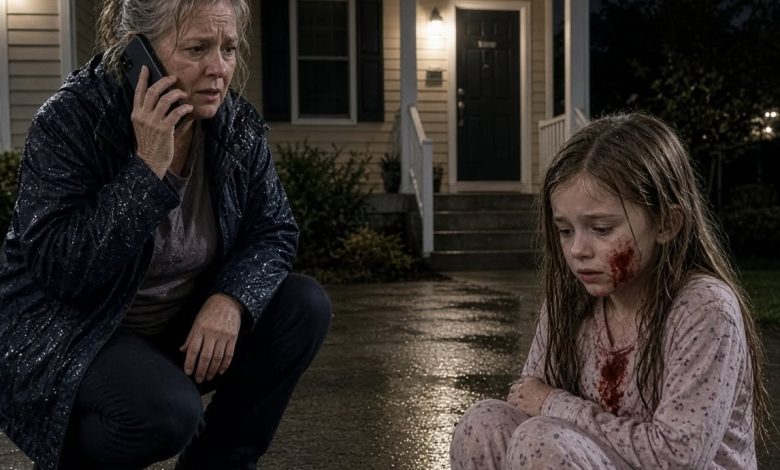
“James, I don’t know what to do,” she whispered. “Sarah is sitting in your driveway. She has blood on her face and pajamas. She’s alone. She won’t move. I tried Melissa, but nobody is answering.”
My daughter was eight.
Eight.
She still asked me to check the closet when the hallway light flickered. She still saved the red gummy bears for me because she hated them.
I told Carolyn to stay with her, keep the porch light on, and wrap Sarah in a blanket if Sarah would let her. Then I called my wife.
Melissa didn’t answer.
I called again. Again. Again. Twenty calls changed nothing.
At 12:17 a.m., rain hammering the roof of my car, I called my mother-in-law, Norma Richard.
She answered on the fourth ring.
“Norma, where is Sarah? What happened at my house?”
She paused like she was choosing which version of the truth she could still sell.
Then she said, “Oh, James. She’s not our problem anymore.”
I pulled onto the shoulder of I-94 so fast the passing trucks rocked my car.
“She is eight years old.”
Norma sighed. “You should speak to Melissa.”
“Melissa won’t answer.”
“That is between you and your wife.”
Then she hung up.
I wanted to call back. I wanted to scream until something human came out of her mouth. Instead, I stared at the wet white line beside my tire and called my younger brother.
Christopher answered half-asleep. The second he heard my voice, he was awake.
“Go to my house,” I said. “Now.”
“I’m going.”
Chris had always been that way. He became a criminal defense attorney because he understood people at their worst. I became a consultant because I understood systems. Different paths. Same instinct when somebody we loved was in trouble.
Thirty-two minutes later, my phone rang.
“I’ve got her,” Chris said.
His voice was too quiet.
“Is she alive?”
“She’s alive, Jamie. She’s with me. I’m taking her to the ER.”
Then I heard Sarah in the background—not crying, not speaking. Just one thin little breath, like she was afraid even breathing would take up too much space.
“What happened?”
Chris waited.
“Drive safe,” he said. “Don’t call Melissa again. Don’t call Norma. Don’t call anyone.”
“Chris.”
“When you get here, we need to talk.”
Then, from somewhere in that ER hallway, my brother turned away from the phone.
PART 2
I kept the phone pressed to my ear as Chris spoke to someone beside him.
“Start a hospital intake form,” he said. “And document every mark.”
The words hit harder than anything Norma had said.
Chris was an attorney. He knew what details mattered when people started changing their stories. He knew the difference between panic and preparation. And whatever he had seen when he reached Sarah, he was already making sure it couldn’t simply disappear into somebody else’s explanation.
I tightened both hands around the steering wheel.
Sarah had been alone in our driveway for five hours. Melissa still hadn’t answered. Norma had called my eight-year-old daughter “not our problem anymore.” Now my brother was standing inside an ER telling staff to document every mark on her.
Suddenly, getting home wasn’t the only thing I was thinking about.
I needed to know what had happened inside my own house before Sarah ended up outside it—and why the two adults who should have protected her had gone silent.
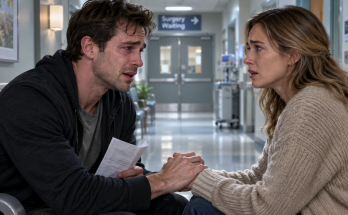
Chris came back toward the phone, but before he spoke, I heard a sheet of paper change hands beside him.
The paper that changed hands in the emergency room was not just another hospital form. It was the moment a father realized the night his daughter was found alone in the driveway was becoming something much bigger than a family misunderstanding.
James was still hundreds of miles away when his phone rang after midnight.
He had been on a business trip, focused on getting home after a long day, when the voice of his neighbor Carolyn Sherwood cut through everything else.
She was not the kind of person who called people in the middle of the night without a reason. At sixty-four, Carolyn was known as the retired school librarian who remembered birthdays, dropped off zucchini bread, and quietly looked after the neighborhood.
So when she said James’s eight-year-old daughter Sarah was sitting outside his home alone, covered in blood, wearing pajamas, and refusing to move, he immediately knew something was wrong.
The details did not make sense.
Sarah was a child who still wanted someone to check the closet when the hallway light flickered. She was the kind of kid who saved the red gummy bears she disliked because she knew her father loved them.
She was not supposed to be outside alone at midnight.
She was not supposed to need a neighbor to protect her.
James told Carolyn to stay with Sarah, keep the porch light on, and wrap her in a blanket if she would allow it.
Then he called the one person he expected to answer.
His wife.
Melissa did not pick up.
He called again.
Nothing.
Another call.
Nothing.
Again.
Nothing.
The road toward home became a blur of rain, headlights, and panic. The GPS said the drive would take hours, but every minute felt impossible to survive.
The coffee he bought from a gas station tasted burned. The windshield filled with mist. The highway stretched ahead while one thought kept repeating in his mind.
His daughter was alone.
At 12:17 a.m., James made another call.
This time, he reached Melissa’s mother, Norma Richard.
He asked the question every parent would ask.
Where is Sarah?
For a moment, Norma said nothing.
Then she gave an answer James would never forget.
She said Sarah was not their problem anymore.
The words were so cold that James pulled his car onto the shoulder.
He stared through the rain and tried to understand what he had just heard.
His daughter was eight years old.
His daughter was sitting outside their house alone.
And an adult who should have cared was saying she was no longer their responsibility.
James wanted to scream. He wanted answers immediately. But he knew he needed someone who would act instead of argue.
He called his younger brother Christopher.
Chris answered half asleep, but the second he heard James’s voice, everything changed.
There was no hesitation.
No excuses.
No questions about whether it was inconvenient.
He simply said he was going.
That was always who Chris had been.
James built his career solving complicated systems. Chris became a criminal defense attorney because he understood what happened when people were pushed into their worst moments.
Different lives.
Different skills.
But when someone they loved was in danger, they reacted the same way.
They moved.
Thirty-two minutes later, James’s phone rang again.
Chris had found Sarah.
His voice sounded different.
Not angry.
Not confused.
Careful.
He told James she was alive and that he was taking her to the emergency room.
Then James heard something in the background.
A small breath.
Sarah was not crying.
She was not talking.
She was simply breathing quietly, almost as if she was afraid making noise would cause another problem.
That was the moment James understood the situation was worse than he had imagined.
A child who normally ran toward her father was now trying not to take up space.
He asked Chris what happened.
His brother paused.
Then he said something that frightened James even more.
Drive safely.
Do not call Melissa again.
Do not call Norma.
Do not call anyone.
When you get here, we need to talk.
The hours after that were filled with questions that had no answers.
How did Sarah end up outside?
Why was Melissa ignoring every call?
Why did Norma say what she said?
What happened inside the house before Sarah reached the driveway?
By the time James arrived home two days later, the situation was no longer about a single frightening night.
It was about finding out what had been hidden from him.
Chris had already started documenting everything.
That was not because he wanted to create a fight.
It was because he knew stories changed when people became afraid of consequences.
A person could forget a detail.
A person could change an explanation.
A person could suddenly remember events differently when someone started asking serious questions.
But records were harder to rewrite.
The emergency room had its own timeline.
The intake information.
The condition Sarah arrived in.
The notes from the people who saw her first.
Every detail mattered.
For James, the hardest part was realizing the people closest to Sarah were the ones he needed answers from.
He had trusted Melissa completely.
He had believed his daughter was safe when he left for work.
He believed family meant that when something went wrong, everyone would step forward.
Instead, the person who stepped forward was the one he called in desperation.
His brother.
Chris did not make promises he could not keep.
He did not offer dramatic speeches.
He did the practical things first.
He got Sarah somewhere safe.
He made sure people recorded what happened.
He protected the facts before anyone could erase them.
That mattered because the truth was still incomplete.
James knew what happened outside the house.
He knew his daughter had been alone.
He knew his wife had not answered.
He knew Norma had refused to help.
But he did not yet know what caused an eight-year-old child to leave her home in the middle of the night.
And that question was the one he feared most.
When James finally sat with Sarah, he did not begin with anger.
He did not demand a perfect explanation from a scared child.
He simply reminded her that she was safe now.
That she could tell him anything.
That none of it was her fault.
Slowly, the pieces began to come together.
The truth was not a single dramatic moment.
It was a series of choices.
Small choices.
Choices made by adults who should have protected a child.
Choices that left Sarah believing the safest place was outside with a neighbor instead of inside her own home.
For James, that realization hurt more than the miles he drove.
A parent can handle a long road.
A parent can handle exhaustion.
A parent can handle fear.
What is harder is discovering that the danger was closer than expected.
Chris stayed beside James through every conversation that followed.
He helped separate emotion from action.
He reminded James that protecting Sarah was not about revenge.
It was about making sure she never believed again that nobody would come when she needed help.
The family would never return to what it was before that night.
Some things change permanently once a child learns who shows up and who does not.
But one thing became clear.
Sarah was not alone anymore.
The person who answered the desperate call was not the person everyone expected.
And the document created in that hospital was only the beginning of the truth coming out.
THE END STORIES! THANK YOU FOR READING GOOD LUCK !❤️
Related Posts