
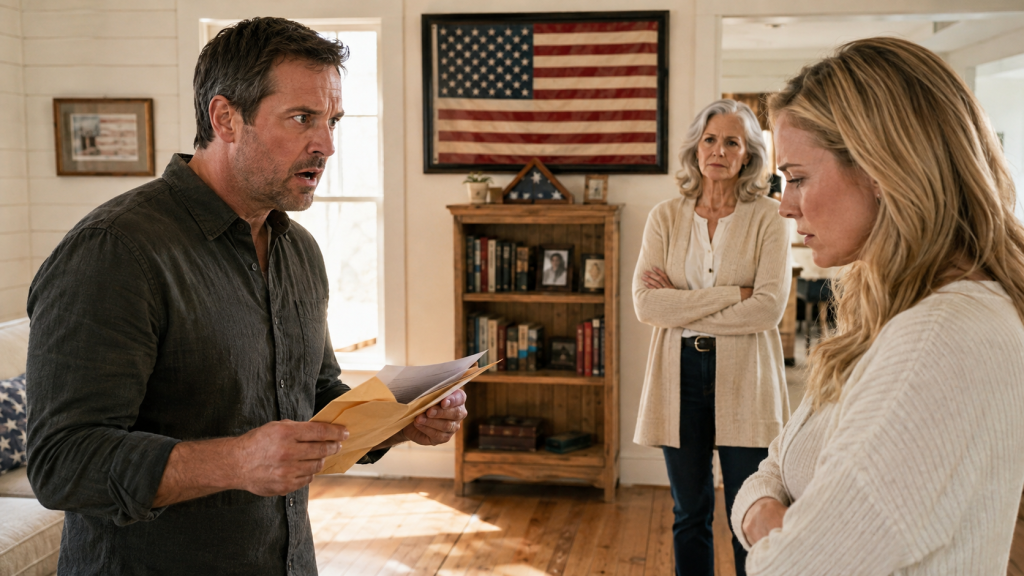
The day before my son’s wedding, his fiancée looked directly at me and said,
“The best wedding present you could give us is to remove yourself from our lives.”
I didn’t raise my voice.
I didn’t defend myself.
I simply went home, canceled every expense I was still covering, removed everything from the house they clearly believed would eventually become theirs, and left behind only one slightly crooked bookshelf and a manila envelope.
What was inside that envelope would eventually wipe the confidence straight off her face.
My name is Wendy Finch.
I’m sixty-eight years old, and for thirty-one years, I served as a family court judge.
I spent most of my career listening to people argue over divorces, custody, inheritances, houses, money, and broken promises.
I never imagined the most painful family dispute I would ever face would involve my own son.
My husband, Richard, built our home outside Cedar Falls almost entirely with his own hands.
It took him three years.
Every wooden beam, every cabinet door, every hinge, and every white oak floorboard carried some piece of him.
When our son Derek was nine, Richard brought him into the workshop one Saturday and helped him build a small pine bookshelf.
It came out imperfect.
One joint didn’t sit correctly, so the entire shelf leaned slightly to the left.
Derek adored it anyway.
Before they finished, he took Richard’s wood-burning pen and carefully marked two words on the back.
Dad + me.
Twenty-seven years passed.
The bookshelf never left our living room.
And shortly before Derek’s wedding, I made a decision I thought would honor both him and his father.
I had paperwork prepared to transfer the entire house into Derek’s name.
The property was worth nearly $700,000.
Everything was ready.
All that remained was my signature.
Morgan, Derek’s fiancée, knew nothing about my plan.
But she definitely knew the value of the house.
From the first time I met her, there was something about the way she viewed the property that unsettled me.
She never looked at it like someone excited to become part of a family.
She evaluated it.
During her first dinner at my house, she asked about the square footage before she asked about the family photographs sitting on the mantel.
A few weeks later, her brother Gavin, who worked as a contractor, showed up with almost no notice.
He walked from room to room.
Knocked on walls.
Photographed the foundation.
Examined the floors.
And repeatedly remarked that the house had “excellent bones.”
I noticed every detail.
But thirty-one years on the bench had taught me something important.
Suspicion was not proof.
So I convinced myself I was being overly cautious.
Then came the rehearsal dinner.
I had paid for the winery.
The catering.
The floral arrangements.
The dinner.
And most of the remaining wedding expenses.
Yet somehow, my assigned seat was at a table beside the restroom.
Inside my blazer that evening was a manila envelope.
Inside that envelope was the unsigned deed to my house.
I had planned to hand it to Derek privately after dinner.
Instead, Morgan found me alone in one of the hallways.
She appeared completely composed.
Almost rehearsed.
Then she said,
“The greatest gift you could give us would be to disappear from this family. Derek doesn’t need you anymore. He has me.”
I stared at her.
For several seconds, neither of us spoke.
Then I became very aware of the envelope inside my jacket.
Richard’s house.
The floors he installed.
The kitchen cabinets he built himself.
The workshop where he had spent weekends teaching Derek how to use a saw.
That crooked little bookshelf.
All of it flashed through my mind.
I looked Morgan directly in the eyes.
“I understand.”
That was all.
Then I left.
I returned home alone and went straight into Richard’s workshop.
I stayed there until nearly two in the morning.
Under the old fluorescent light, I laid the deed across the workbench Richard had built decades earlier.
The signature line was still blank.
I picked up my pen.
But I didn’t sign my name.
Instead, across the empty line, I wrote a single word in large letters.
DENIED.
The following morning, I did not attend the wedding.
Derek called repeatedly.
He asked where I was.
He asked why I wasn’t answering.
He asked whether I still had Richard’s wedding ring because he had hoped to use it during the ceremony.
But there was one question he never asked.
He never asked whether Morgan had said anything to me.
I couldn’t stop thinking about that.
Three days later, Morgan called.
Her apology lasted perhaps twelve seconds.
Then she immediately changed the subject.
She asked about the “special gift” Derek had apparently mentioned.
That same week, something else happened.
An envelope arrived at my house by mistake.
I opened it before realizing it wasn’t intended for me.
Inside was a professionally prepared real-estate market analysis.
There were photographs of nearly every room Richard had built.
The living room.
Kitchen.
Bathrooms.
Bedrooms.
Workshop.
At the top of the report was the client’s name.
M. Ellis.
Morgan Ellis.
My stomach tightened.
The report had been ordered three months before the wedding.
Three months.
Then I saw the handwritten notes in the margins.
They were Gavin’s.
Estimated costs for replacing the kitchen.
Renovating the bathrooms.
Changing the floors.
Modernizing several rooms.
At the bottom was something even worse.
A projected resale calculation.
Purchase value.
Renovation costs.
Expected selling price.
Projected profit.
They had already calculated how much money they could make by selling my husband’s house.
Except there was one very important problem.
They didn’t own it.
Derek didn’t own it.
Morgan didn’t own it.
I did.
And I had never signed the deed.
Suddenly, everything made sense.
The questions about square footage.
Gavin’s surprise inspections.
Morgan examining every room.
Their interest in the property value.
She hadn’t been imagining a future in our family home.
She had been calculating an exit price.
By Tuesday, I placed the property into a legal structure that neither Morgan nor Derek could access.
By Wednesday, movers arrived.
Thirty-four years of my life began disappearing into boxes.
I took Richard’s tools.
His old engineering sketches.
His work jacket.
Even the carpenter’s pencil he used to keep inside the breast pocket.
By Thursday, I canceled every remaining part of the wedding celebration that I was still financially responsible for.
Altogether, it amounted to nearly $72,000.
But I did not empty the house completely.
I deliberately left one thing behind.
Derek’s crooked pine bookshelf.
It stood alone in the empty living room, still tilting slightly to the left after all those years.
Beside it, on the bare white oak floor, I placed a manila envelope.
Inside were three documents.
The first was a copy of Morgan’s real-estate market analysis.
The second was a letter describing exactly what she had said to me the night before the wedding.
The third was the deed I had originally intended to give Derek.
Across the signature line, in my handwriting, remained one word.
DENIED.
Eventually, Derek returned to the house.
Morgan followed him inside, already demanding to know why everything had disappeared.
Derek didn’t respond.
He walked into the living room.
Then he saw the bookshelf.
He stopped.
For a few seconds, he simply stared at it.
Then he slowly knelt beside it.
His fingertips moved across the old pine until they reached the faded words burned into the back twenty-seven years earlier.
Dad + me.
His expression changed.
That was when he noticed the envelope on the floor.
He picked it up.
Morgan stood behind him.
Derek opened the letter first.
Then the deed.
Finally, he reached the market analysis.
His hands began trembling.
He flipped through the photographs of his childhood home.
Then he found Gavin’s handwritten renovation numbers.
And finally, the projected profit they expected to make after selling the property.
Derek stared at those figures for a long time.
Then he slowly stood.
He turned toward his new wife.
Morgan’s face had already lost its color.
And Derek asked her the one question she had clearly never prepared herself to answer.
PART 2: THE QUESTION SHE NEVER EXPECTED HIM TO ASK
Derek stood in the empty living room with the market analysis shaking in his hands.
Morgan did not move.
For several seconds, neither of them spoke.
The house echoed around them.
No sofa.
No rugs.
No framed photographs.
No curtains.
No piano.
Nothing remained except the slightly crooked bookshelf.
And Richard’s white oak floors.
Every footstep sounded louder than it should have.
Derek looked down at the final page again.
Projected resale value: $1,060,000.
Estimated renovation costs: $118,000.
Projected net profit after sale: approximately $242,000.
His eyes moved over Gavin’s handwritten notes.
Remove old cabinetry.
Refinish or replace floors.
Open wall between kitchen/living.
Workshop could become guest suite or gym.
That last one nearly destroyed him.
Richard’s workshop.
The room where his father had taught him how to hold a hammer.
The room where he had built the crooked bookshelf.
The room where Richard had spent the final healthy months of his life repairing an old rocking chair for a granddaughter he never lived long enough to meet.
Morgan had reduced it to a line item.
Guest suite or gym.
Derek looked at his wife.
Then he asked the question she had clearly never prepared for.
“Did you marry me because you thought I was getting this house?”
Morgan blinked.
“What?”
Her voice was too fast.
Too offended.
Too practiced.
Derek did not raise his voice.
That frightened her more.
“You heard me.”
Morgan crossed her arms.
“This is insane.”
“No.”
Derek lifted the market analysis.
“This is professionally prepared.”
“It has your name on it.”
“It was ordered three months before our wedding.”
He turned the page.
“Your brother’s handwriting is all over it.”
Morgan stared at the document.
Then at him.
“You’re twisting this.”
Derek laughed once.
Not because anything was funny.
“How?”
“We were planning.”
“For what?”
“Our future.”
“In my mother’s house?”
Morgan’s jaw tightened.
“She was giving it to you.”
Derek went completely still.
That sentence changed the room.
Not:
We thought she might.
Not:
You said maybe one day.
Morgan said it like fact.
Like something promised.
Like something expected.
Derek lowered the papers.
“How did you know?”
Morgan’s expression shifted.
“Knew what?”
“That Mom was planning to give me the house.”
“I didn’t.”
“Yes, you did.”
“No.”
“You just said she was giving it to me.”
Morgan looked away.
“I assumed.”
Derek took one step closer.
“Why?”
“You’re her only son.”
“So?”
“She’s sixty-eight.”
His face changed.
I learned later that this was the moment something inside Derek turned cold.
Not because sixty-eight was old.
Because he suddenly heard how Morgan had been counting time.
Not memories.
Not relationships.
Years remaining.
Morgan continued.
“She doesn’t need that much house anymore.”
Derek stared.
“She lives there.”
“She lived there.”
Morgan gestured around the emptiness.
“Apparently not anymore.”
His expression hardened.
“Because you told her to disappear.”
Morgan flinched.
“I apologized.”
“For twelve seconds.”
“That’s not fair.”
“You apologized and then asked about the gift.”
She went quiet.
Derek laughed bitterly.
“You didn’t call because you were sorry.”
“You called because you wanted to know whether insulting my mother had cost you seven hundred thousand dollars.”
Her face flushed.
“Stop making me sound like some gold digger.”
He held up the report.
“I’m not making you sound like anything.”
“This is your name.”
“Your plan.”
“Your numbers.”
Morgan’s eyes filled.
“You said this house would probably be yours one day.”
Derek’s breath caught.
“I said Dad built it for our family.”
“Exactly.”
“That does not mean Mom was supposed to hand it to us.”
“Come on, Derek.”
Her voice sharpened.
“What was she going to do with it?”
There it was.
Not ownership.
Entitlement.
I had heard that tone hundreds of times from my bench.
People who believed another person’s property was somehow being wasted simply because they themselves wanted it.
Derek looked around the empty room.
“What did you plan to do?”
Morgan sighed.
“I told you.”
“Improve it.”
“Sell it?”
“Eventually.”
“How eventually?”
She said nothing.
“Morgan.”
“Maybe a year.”
His face changed.
“A year?”
“Maybe two.”
He stared.
“You planned to sell my father’s house a year after my mother gave it to me?”
“Derek, houses are assets.”
He closed his eyes.
That sentence hurt more than the market analysis.
Houses are assets.
Yes.
Technically.
I had said similar words in court.
But Richard’s house was also sawdust in his hair.
Coffee rings on blueprints.
Derek sleeping under a workbench when he was ten because he refused to go inside before Dad finished building a cabinet.
Some things can be both property and memory.
Morgan understood only one side.
She continued.
“The market is strong.”
“Your mom is sitting on almost seven hundred thousand dollars in equity.”
“Once renovated—”
“Stop.”
Derek’s voice cracked.
Morgan froze.
“Just stop talking like you’re presenting to investors.”
Her face tightened.
“I’m trying to explain.”
“No.”
“You’re trying to make it sound practical.”
He looked at the bookshelf.
“I need to know something.”
“What?”
“Did Gavin come here to inspect the house?”
Morgan looked away.
“Yes.”
“With Mom’s permission?”
“No.”
“With mine?”
“No.”
“Then why?”
“He knows construction.”
Derek almost laughed.
“That wasn’t my question.”
Morgan’s eyes filled with frustration.
“Because I wanted to know what needed updating.”
“In a house we didn’t own.”
“You were going to own it.”
Again.
Certain.
Derek heard it too.
“How did you know?”
Morgan stayed silent.
Then he asked another question.
“Did someone tell you?”
Her face changed.
That was enough.
Derek stared.
“Who?”
“Nobody.”
“Morgan.”
“Nobody told me anything.”
He watched her.
Thirty-one years watching his mother on the bench had taught him one thing even if he never admitted it.
Silence often matters more than the first answer.
He waited.
Finally, Morgan snapped.
“Fine.”
“My mother mentioned something.”
Derek frowned.
“Your mother?”
“Yes.”
“What does she know about my mother’s estate?”
“Nothing.”
“Apparently more than me.”
Morgan rubbed her forehead.
“She heard Wendy talking at your engagement dinner.”
Derek stared.
“Talking about what?”
“The house.”
“What did Mom say?”
“She said she wanted to make sure Richard’s work stayed in the family.”
My stomach would turn later when Derek repeated that part to me.
Because I remembered the sentence.
I had said it to my sister.
Not to Morgan’s mother.
Not as a promise.
As emotion.
One overheard sentence.
And somewhere inside Morgan’s family, it became a financial forecast.
Derek whispered,
“That’s what you built this on?”
Morgan shrugged.
“It made sense.”
“No.”
He shook his head.
“You wanted it to make sense.”
Her face hardened.
“You’re acting like wanting a secure future is a crime.”
“It isn’t.”
“Then why are you attacking me?”
“Because you didn’t plan a future with me.”
His voice broke.
“You planned around what you thought my mother would give us.”
Morgan crossed her arms.
“That’s not true.”
“Then why didn’t you show me this?”
Silence.
“Why did you order a resale analysis without telling me?”
Nothing.
“Why did Gavin photograph every room?”
Nothing.
“Why did you calculate profit before the wedding?”
Her eyes filled.
“I knew you’d get emotional.”
That sentence did it.
Derek laughed.
Not loudly.
Just once.
“About my dead father’s house?”
“I knew you’d get sentimental.”
“Same thing.”
“No, it isn’t.”
She looked at the bookshelf.
“That thing is exactly what I mean.”
Derek followed her gaze.
The crooked shelf.
Dad + me.
Morgan continued.
“You keep broken furniture because your dad touched it.”
“It’s a bookshelf.”
“It leans.”
“He built it with me.”
“You were nine.”
“Yes.”
She sighed.
“Derek, you cannot build an adult life around childhood memories.”
He looked at her.
“No.”
He whispered.
“But maybe I shouldn’t build one with someone who thinks memories are clutter.”
Morgan’s face changed.
For the first time, fear entered it.
Real fear.
Not about the house.
About him.
“Derek.”
He turned away.
“I need you to leave.”
“What?”
“Leave.”
“This is our wedding week.”
“We’re married.”
“I know.”
“You can’t just—”
“I’m not ending anything right now.”
He looked at her.
“But I cannot have this conversation while you’re standing in the house you were already planning to sell.”
She stared.
“Where am I supposed to go?”
He almost smiled at the irony.
“Your brother’s.”
Morgan’s expression became furious.
“This is because of your mother.”
“No.”
Derek shook his head.
“This is because of you.”
That distinction mattered.
She grabbed her purse.
Then stopped at the doorway.
“You’re going to call Wendy.”
“Yes.”
“She planned this.”
He stared at her.
“What?”
“The empty house.”
“The envelope.”
“The deed with DENIED on it.”
Morgan laughed bitterly.
“She wanted this reaction.”
Derek looked at the papers.
Then at the shelf.
“No.”
“My mother spent thirty-one years making decisions with evidence.”
His eyes hardened.
“She didn’t make you order this report.”
Morgan’s face went pale.
Then she left.
Derek stayed in the empty house for another hour.
He sat on the floor beside the bookshelf.
Not a chair.
There were none.
Just hardwood.
He ran his fingers across the scorched letters on the back.
Dad + me.
Then he cried.
He had not cried at the wedding.
Not when I failed to appear.
Not when relatives whispered.
Not when Morgan told everyone I had become overwhelmed.
Not even when they exchanged vows without Richard’s ring.
He cried beside that shelf.
Because that was where his father suddenly felt closest.
And where his own failure felt clearest.
I did not know any of this yet.
I was two states away.
By then, I had temporarily moved to a small furnished cottage near Lake Geneva.
Richard and I had vacationed there once when Derek was little.
He hated fishing.
Loved skipping stones.
I had always told myself I would return someday.
I just never expected someday to begin with movers.
I was sitting on the porch with tea when Derek called.
I looked at his name for a long time.
Then answered.
“Hello.”
Silence.
“Mom.”
His voice broke on one word.
I closed my eyes.
“Hello, Derek.”
“Where are you?”
“Safe.”
“Where?”
“I’m not ready to tell you.”
That hurt him.
I could hear it.
“Okay.”
For once, he did not push.
Then he whispered,
“I found the envelope.”
“I assumed you would.”
“The house is empty.”
“Yes.”
“You took Dad’s tools.”
“Yes.”
“Everything?”
“Everything that mattered to me.”
Silence.
Then:
“You left the bookshelf.”
“Yes.”
“Why?”
My throat tightened.
“Because it belongs to you.”
He cried quietly.
I looked out at the lake.
He asked,
“Why didn’t you come to the wedding?”
I laughed sadly.
“That question is several days late.”
“I know.”
“Do you?”
“Yes.”
I waited.
Then Derek said the thing I had needed.
“Did Morgan tell you to leave us?”
My eyes closed.
Finally.
“Yes.”
Silence.
“What exactly did she say?”
I repeated it.
Every word.
“The best wedding present you could give us is to remove yourself from our lives.”
Derek made a sound like someone had struck him.
Then:
“And you said?”
“I understand.”
“That’s it?”
“That’s it.”
He started crying harder.
“Mom.”
I did not rescue him from the silence.
Eventually he said,
“I knew something happened.”
My chest tightened.
“What?”
His breathing changed.
“I knew.”
That was worse.
Much worse.
“What did you know?”
“Not what she said.”
“But I knew something happened at the rehearsal dinner.”
I sat straighter.
“How?”
“Morgan came back upset.”
“She said you were being dramatic.”
My hand tightened around the mug.
“And?”
“I asked what happened.”
“She said you were having trouble letting go.”
The lake blurred.
“What did you do?”
Silence.
“Derek.”
“I let it go.”
There it was.
Not ignorance.
Avoidance.
I had spent my career watching families break because somebody chose not to ask the second question.
Now my son had done the same thing.
I whispered,
“That is why I left.”
He cried.
“I know.”
“No.”
“You left because Morgan said something.”
“I left because she said something and my son never came after me to ask why.”
Silence.
“I waited.”
My voice broke despite everything.
“I waited that night.”
“In the workshop.”
“I thought you would call.”
“I thought you would come.”
“I thought maybe somebody at dinner had seen enough to tell you.”
I swallowed.
“Then midnight came.”
“One o’clock.”
“Two.”
“Nothing.”
Derek whispered,
“I’m sorry.”
I closed my eyes.
Thirty-one years as a judge had taught me apologies are evidence only when behavior follows.
Still.
I needed to hear it.
“Why didn’t you ask?”
He answered honestly.
“Because I didn’t want another fight before the wedding.”
That hurt.
More than excuses would have.
Peace.
He had chosen peace.
At my expense.
I looked at the water.
“Your father used to say there are two kinds of quiet.”
Derek sniffed.
“What?”
“The kind you earn.”
“And the kind everyone else pays for.”
Silence.
“You made me pay for yours.”
He cried harder.
“I know.”
“Good.”
My voice softened.
“That means maybe we can start somewhere.”
He took a shaky breath.
“Mom?”
“Yes?”
“Did you really mean to give me the house?”
I stared at the lake.
There it was.
The question.
Not greedy.
Painful.
“Yes.”
He went silent.
“The deed was real?”
“Yes.”
“All that was missing was your signature?”
“Yes.”
He whispered,
“Jesus.”
“I had the envelope in my jacket that night.”
Derek began sobbing.
Not because of seven hundred thousand dollars.
At least I hoped not.
But because he finally understood how close the moment had been to becoming something entirely different.
I continued.
“I planned to sign after dinner.”
“I wanted to give you the deed and Richard’s ring.”
My voice broke.
“I thought it would feel like your father was there somehow.”
“Mom.”
“But Morgan asked for a different gift.”
He could not speak.
So I finished.
“I gave her the only one I was willing to give.”
“I left.”
We sat in silence over the phone.
Then Derek said,
“I don’t want the house.”
That surprised me.
“What?”
“Not now.”
He swallowed.
“Maybe not ever.”
“That is emotion talking.”
“Maybe.”
“But I’m telling you anyway.”
He continued.
“I want Dad’s shelf.”
“You have it.”
“And I want a chance to fix this with you.”
My eyes filled.
“That is harder.”
“I know.”
“Good.”
Then I asked,
“What happened with Morgan?”
His voice changed.
“I told her to leave.”
“For good?”
“I don’t know.”
At least he was honest.
Then:
“She admitted she knew there was a chance you were giving me the house.”
“How?”
He told me.
The overheard conversation.
Her mother.
The assumptions.
Gavin’s inspection.
The projected sale.
Each detail landed exactly where I expected.
Nothing shocked me.
Until he said,
“Mom, there’s something else.”
My body tensed.
“What?”
“I found a second envelope.”
I frowned.
“What second envelope?”
“Behind the bookshelf.”
I sat up.
“I didn’t leave anything behind it.”
“I know.”
My stomach tightened.
“Then what was it?”
He exhaled slowly.
“Mail.”
“Addressed to Morgan.”
My chest went cold.
“At my house?”
“Yes.”
“What kind?”
“A lender.”
Silence.
“What lender?”
“Private bridge financing company.”
Thirty-one years on the bench returned in one second.
Bridge financing.
Short-term.
Expensive.
Often tied to property transactions.
“What amount?”
Derek swallowed.
“Two hundred thousand.”
My grip tightened.
“Approved?”
“Conditional.”
“For what?”
“Renovation and acquisition costs.”
I went completely still.
“Acquisition of what?”
He was quiet.
“The house.”
My heart stopped.
“That’s impossible.”
“I know.”
“My house was never for sale.”
“I know.”
“How could she apply for financing against a property she didn’t own?”
“That’s why I’m calling.”
I stood.
“Read me the borrower name.”
“MGE Property Ventures.”
“Morgan?”
“Yes.”
“Gavin?”
“I think so.”
I closed my eyes.
The market analysis was no longer just dreaming.
They had begun creating financing around a property they did not own.
“Derek.”
“Yes?”
“Do not confront her.”
Silence.
“Do not call Gavin.”
“Do not send pictures.”
“Do not accuse.”
“Take the documents.”
“Photograph everything.”
“Put the originals somewhere secure.”
His breathing changed.
“Mom.”
“Listen to me.”
My voice became the one that had silenced courtrooms for three decades.
“If your wife and her brother represented ownership, expected ownership, or control over my property to obtain financing, that is no longer a marital argument.”
He went quiet.
“That is evidence.”
He whispered,
“I understand.”
“Good.”
I looked toward the lake.
“Call my attorney.”
“Your estate attorney?”
“No.”
“Martin Cole.”
Derek recognized the name.
“Mom.”
“Yes.”
“You used to appoint him as special master.”
“Yes.”
“He’s terrifying.”
“He’s efficient.”
“That’s worse.”
Despite everything, I smiled.
“Call him.”
Thirty minutes later, Derek sent me photographs.
I opened them on my laptop.
The financing letter.
MGE Property Ventures, LLC.
Morgan Ellis.
Gavin Ellis.
Proposed project address:
My home.
Purpose:
Acquisition / redevelopment / resale.
I stared at those words.
Acquisition.
There had never been a purchase agreement.
No offer.
No negotiation.
No permission.
Then I saw the estimated acquisition cost.
$520,000.
My eyebrows lifted.
They expected to acquire a $700,000 property for $520,000.
Why?
Another page answered.
Family transfer / below-market transaction expected.
There it was.
They thought Derek would receive the house from me.
Then apparently transfer or sell it into their LLC at an artificially low value.
Why?
Maybe tax planning.
Maybe financing.
Maybe because they believed sentiment would make him easy to control.
My anger settled into something colder.
I called Martin.
He answered.
“Judge Finch.”
“Retired.”
“Not in tone.”
Fair.
I explained.
He did not interrupt.
When I finished, he said,
“Do you want revenge or protection?”
“Protection.”
“Good.”
“Revenge makes clients stupid.”
“I know.”
“What did you do with the property?”
“Transferred it Tuesday.”
“To?”
“Richard Finch Preservation Trust.”
Martin went silent.
Then laughed.
“You move fast.”
“I spent thirty-one years watching people wait until after disaster.”
“Fair.”
He reviewed the documents.
Then requested the full financing application if we could lawfully obtain it.
Derek found more in Morgan’s bag.
That raised an issue.
Martin told him to stop searching.
“Do not become clever.”
He said.
“Preserve what you already came across.”
“Then let counsel do the rest.”
That line mattered.
Evidence gathered badly can become its own problem.
So Derek stopped.
The next morning, Morgan called me.
I almost ignored it.
Then I answered.
“Wendy.”
“Hello, Morgan.”
Her voice sounded strained.
“Can we please stop escalating this?”
I almost smiled.
“What exactly am I escalating?”
“The house.”
“My house?”
“You know what I mean.”
“Yes.”
“I do.”
Silence.
She tried again.
“Derek is devastated.”
“I’m aware.”
“You are destroying his marriage.”
“No.”
My voice stayed calm.
“I am refusing to finance it.”
She inhaled sharply.
“That’s cruel.”
“Which part?”
“Taking everything away.”
I looked around my cottage.
Richard’s work jacket hung on a hook near the door.
His tool chest sat in the corner.
Nothing had been taken from Derek.
Nothing had belonged to him yet.
That distinction matters.
I said,
“You cannot lose something you never owned.”
Morgan went silent.
Then:
“You told people the house would stay in the family.”
“Yes.”
“I am family.”
“No.”
That slipped out faster than I intended.
Not because marriage made her outside the family.
Because family requires conduct, not just paperwork.
I corrected myself.
“You are Derek’s wife.”
“You were becoming part of my family.”
“That did not give you ownership.”
Her voice became sharper.
“You were giving Derek the house.”
“Yes.”
“Then it would have been ours.”
“No.”
Silence.
“That is where your thinking went wrong.”
I continued.
“I intended to give my son a house.”
“I did not intend to fund a renovation partnership between you and your brother.”
“You don’t know what we planned.”
“I have your market analysis.”
Silence.
“And the bridge financing letter.”
Complete silence.
There.
Confidence disappeared.
Morgan whispered,
“What?”
“I also know about MGE Property Ventures.”
Her breathing changed.
“Wendy—”
“Do not explain.”
“We weren’t doing anything illegal.”
“I didn’t say you were.”
That frightened her more.
Judges learn this.
Never argue with someone into giving you information you did not ask for.
Let silence work.
Morgan rushed to fill it.
“The financing was preliminary.”
I said nothing.
“We never closed.”
Still nothing.
“We never represented that we owned the house.”
Interesting.
I wrote that down.
Then I asked,
“What did you represent?”
Silence.
“Morgan.”
“We said there was an expected family transfer.”
“Based on what document?”
She hesitated.
“Nothing formal.”
“Exactly.”
Her voice rose.
“Derek told me the house would probably be his!”
“That is not title.”
“I know.”
“Do you?”
She began crying.
I did not know whether the tears were real.
It did not matter.
Facts do not change based on tears.
Then she said,
“I was trying to build something for us.”
“No.”
I answered softly.
“You were trying to build something around property that belonged to someone else.”
“That is different.”
She stopped crying.
I continued.
“And the night before your wedding, you told the owner of that property to disappear.”
Her voice cracked.
“I was angry.”
“No.”
“You were confident.”
That silenced her.
I could still see her in the winery hallway.
Calm.
Composed.
Almost bored.
She did not think she was risking anything.
She thought the house was already effectively theirs.
That confidence made sense now.
“You believed the deed was inevitable.”
I said.
Morgan did not answer.
“You believed I had already made the decision.”
Still nothing.
“So you decided you no longer needed to tolerate me.”
Her breathing changed.
There it was.
Truth without confession.
Finally, she whispered,
“I didn’t want you controlling our marriage.”
I almost laughed.
“By giving you seventy-two thousand dollars for the wedding?”
“You know what I mean.”
“No.”
“I don’t.”
She became angry again.
“You always had influence over Derek.”
“I am his mother.”
“You made him feel guilty.”
“For what?”
“Leaving you alone.”
My chest tightened.
This was partly true.
After Richard died, Derek called more.
Visited.
Worried.
I had never asked him to stop living.
But grief can create gravity even without intention.
I said,
“If Derek felt burdened by me, he had every right to tell me.”
Morgan went quiet.
“You had no right to do it for him.”
That landed.
Then I asked,
“Did Derek ask you to tell me to disappear?”
“No.”
Immediate.
Good.
“Did he know you were going to?”
“No.”
“Then do not use my son as justification for your decision.”
Silence.
I softened slightly.
“Morgan.”
“Yes?”
“If you love him, tell him everything.”
She started crying again.
“I do love him.”
“Then respect him enough to let him decide what the truth means.”
I hung up.
Two days later, Derek arrived at my cottage.
Alone.
I had finally given him the address.
He parked beside my car.
Then stood on the porch holding the crooked bookshelf.
I stared.
“You brought it?”
He nodded.
“I didn’t want it alone in that house.”
My throat tightened.
I opened the door.
He carried it inside.
The shelf looked ridiculous beside the neat rental furniture.
It leaned left.
As always.
Perfect.
Derek set it against the wall.
Then reached into his coat.
“Mom.”
“What?”
“There’s more.”
I almost laughed.
“I am beginning to hate that sentence.”
“Me too.”
He handed me a small folder.
Inside were copies of text messages.
Morgan had given them to him voluntarily.
That surprised me.
“She gave you these?”
“Yes.”
“Why?”
“Because I told her if she hid one more thing, I would file for divorce immediately.”
My chest tightened.
“And?”
“She gave me access to everything.”
I sat.
The messages were between Morgan and Gavin.
Months of them.
At first, harmless.
Renovation ideas.
Listings.
Contractor estimates.
Then more specific.
Gavin:
Wendy will transfer it after wedding, right?
Morgan:
Derek is sure.
My eyes narrowed.
Was he?
Or had Morgan heard certainty where Derek gave hope?
Next:
Gavin:
Once deed clears we can roll into LLC.
Morgan:
Derek may resist selling too fast.
Gavin:
Then renovate first. Once he sees numbers he’ll get over sentiment.
My stomach turned.
Another.
Morgan:
Wendy might object.
Gavin:
Why would she matter after transfer?
I closed my eyes.
There it was.
The sentence underneath everything.
Why would she matter?
Once the property moved, I became irrelevant.
Maybe that was why Morgan felt comfortable telling me to disappear.
In her mind, my usefulness had expired.
Derek sat across from me.
His face looked hollow.
“I saw that one.”
I looked up.
He continued.
“I read it four times.”
My eyes filled.
“I’m sorry.”
“No.”
He shook his head.
“You don’t apologize.”
He swallowed.
“I do.”
Then he handed me one final page.
A message sent two days before the rehearsal dinner.
Morgan:
Need Wendy calm through signing. After that boundaries change.
Gavin:
Just survive the weekend.
I stared.
My anger vanished.
Completely.
In its place came something colder than anger.
Clarity.
They had not merely assumed the house would transfer.
They had planned behavior around the moment of transfer.
Tolerate Wendy until the signature.
Then boundaries change.
That explained the hallway.
Morgan thought I had already signed.
Or would.
She believed the asset was secured.
So the mask came off one day early.
Derek whispered,
“She thought you’d signed already.”
I looked at him.
“What?”
“She told me.”
My stomach tightened.
“She thought the paperwork had been completed before the rehearsal dinner.”
“How?”
“I told her you said you had something important for me.”
My eyes closed.
There it was.
Not malicious.
A son sharing excitement with his fiancée.
Morgan filled in the rest.
Derek continued.
“She thought the envelope in your jacket was a copy of the finished deed.”
I almost smiled.
Instead, it contained the unsigned version.
Timing.
One signature.
That was the only distance between Morgan’s confidence and her disaster.
Derek began crying.
“If she had waited one more day…”
I looked at him.
“Yes.”
I knew.
If Morgan had smiled.
Hugged me.
Thanked me.
If she had waited until after the ceremony.
If she had waited until after I signed.
The house might have been Derek’s.
And soon after, perhaps moved into their LLC.
Renovated.
Sold.
Richard’s workshop demolished.
The crooked bookshelf thrown out.
My husband’s thirty-four years of work converted into projected profit.
All because Morgan could not wait twenty-four more hours to tell me what she really thought.
People often blame arrogance for ruining plans.
Sometimes arrogance saves the person being targeted.
Morgan believed she had already won.
So she spoke.
Derek looked at me.
“What are you going to do?”
I folded the messages.
“Nothing impulsive.”
He almost laughed.
“Of course.”
“I will protect my property.”
“Already done.”
“Yes.”
“I will preserve the evidence.”
“Yes.”
“And your marriage?”
He stared at the floor.
“That’s mine.”
I nodded.
“Good.”
He looked surprised.
“You’re not going to tell me to leave her?”
“No.”
“Why?”
“Because if I decide your marriage for you, then I become another person treating you like you cannot think.”
His eyes filled.
Thirty-one years on the bench had taught me that too.
You can protect someone and still let them choose.
I continued.
“But I will say this.”
He waited.
“Do not ask whether Morgan deserves another chance.”
“Ask whether the marriage can exist without you becoming responsible for policing her honesty.”
That hit him.
He leaned back.
I continued.
“Forgiveness is about the past.”
“Trust is about predicting the future.”
“They are not the same decision.”
Derek stared at Richard’s bookshelf.
Then nodded.
“I don’t know yet.”
“That is allowed.”
We spent the afternoon talking.
Not about Morgan only.
About us.
That was harder.
Derek admitted he had let years of small tension between Morgan and me become my responsibility.
Every time Morgan complained I called too often, he asked me to call less.
Every time I wanted family dinner, he asked me not to pressure them.
Every time she made a dismissive comment, he translated it into stress.
I listened.
Then told him what I had done too.
I gave advice when he had not asked.
I corrected financial decisions because thirty-one years on a bench made me think every family problem was asking for analysis.
I sometimes treated silence from Derek as permission instead of discomfort.
He laughed.
“You do cross-examine people at breakfast.”
“Occupational damage.”
“But Mom?”
“Yes?”
“None of that makes what she did okay.”
“No.”
“It doesn’t.”
That distinction mattered.
Family repair does not require pretending only one person ever made mistakes.
It requires knowing which mistakes are equivalent.
Mine were intrusive.
Morgan’s involved planning around property she did not own and deliberately telling me to disappear.
Not the same.
That evening, Derek slept on the sofa.
I woke at two and found him in the kitchen drinking water.
He looked toward the bookshelf.
“Do you remember building that?”
“Of course.”
“Dad let me use the wood-burning pen.”
“He regretted it immediately.”
Derek smiled.
“I burned the workbench.”
“Three inches.”
“He said you’d kill him.”
“I almost did.”
We both laughed.
Then Derek became serious.
“I miss him.”
My throat tightened.
“Me too.”
“I wish he were here.”
“Yes.”
“What would he tell me?”
I thought about Richard.
Patient.
Practical.
Infuriatingly slow before making decisions.
Then I smiled.
“He’d tell you the shelf leaned because you refused to measure twice.”
Derek laughed.
“Probably.”
“Then he’d tell you not to make the same mistake with your life.”
His eyes filled.
“Measure twice.”
“Yes.”
“Before deciding?”
“Before cutting.”
That stayed with him.
The next morning, Morgan called.
Derek stepped onto the porch.
I did not listen.
He returned forty minutes later.
His face was pale.
“What happened?”
“She told me one more thing.”
Of course.
I waited.
“She and Gavin weren’t planning to keep all the profit.”
I frowned.
“That almost sounds generous.”
“It isn’t.”
He handed me his phone.
A message from Gavin.
Once sale closes, we can cover Mom’s debt and still clear over 150.
My stomach tightened.
“Whose mom?”
“Morgan’s.”
I stared.
“How much debt?”
“One hundred eighty thousand.”
I looked at Derek.
He nodded.
“She never told me.”
The picture shifted again.
Not just greed.
Pressure.
Morgan’s mother apparently owed enormous medical and business debts after a failed salon expansion.
Morgan and Gavin had been helping.
Secretly.
The house had become their solution.
My property.
Richard’s work.
Derek’s expected inheritance.
A way to erase their family debt.
Derek looked sick.
“She said she was scared.”
I nodded slowly.
“I believe her.”
He stared.
“You do?”
“Yes.”
Fear makes people do terrible things.”
I had seen that from the bench too.
“Understanding motive is not the same as excusing conduct.”
He sat down.
“She said once the house was mine, it would be marital property anyway.”
“Possibly not.”
His eyebrows lifted.
“The original deed transfer I prepared included language keeping the property separate.”
His mouth fell open.
“What?”
“Yes.”
“Why?”
“Because I spent thirty-one years watching inheritances destroy marriages.”
Despite everything, he laughed.
“Of course you did.”
“I loved Morgan.”
“I still protected the asset.”
He stared at me.
“So even if you’d signed…”
“The house would have been yours alone unless you later changed that.”
His face changed.
Morgan and Gavin’s plan depended on a legal assumption that had been wrong from the start.
“Did she know?”
“No.”
“Did I?”
“No.”
“You were going to surprise me with seven hundred thousand dollars and legal restrictions?”
“Romantic, isn’t it?”
He laughed despite himself.
Then cried.
The absurdity hurt.
All that planning.
All that manipulation.
Built around property no one had bothered to understand properly.
Derek wiped his face.
“I think my marriage is over.”
I did not move.
“Because of the debt?”
“No.”
He looked at me.
“Because I don’t know who I was married to.”
That was the right reason.
Not punishment.
Not house.
Identity.
Trust.
He continued.
“If she had come to me and said her mom was in trouble…”
“What would you have done?”
“I would have helped.”
“Maybe not one hundred eighty thousand.”
“No.”
“But something.”
“Yes.”
He laughed bitterly.
“She didn’t trust me enough to tell me the problem.”
“So instead she built a plan around money she assumed I’d get.”
I said nothing.
He had reached the answer himself.
That mattered.
Derek returned home that afternoon.
Not to the empty house.
To the apartment he and Morgan had rented before marriage.
Two days later, he called.
He had asked for a separation.
Not divorce yet.
Separation.
Morgan moved in with Gavin.
That detail told Derek more than he wanted to know.
Weeks passed.
The financing company withdrew its preliminary approval after being informed the property was not available and had never been under contract.
Martin handled the correspondence.
Calmly.
Professionally.
No dramatic accusations.
Just facts.
The property belonged to a trust.
No sale was contemplated.
No transfer had occurred.
No authority existed for MGE Property Ventures to treat it as pending acquisition.
That ended that.
Gavin called me once.
I answered.
He started with,
“This is all a misunderstanding.”
I almost laughed.
Thirty-one years.
Same opening line.
Divorces.
Hidden accounts.
Secret deeds.
Always misunderstanding.
I said,
“Then explain it to your attorney.”
And hung up.
I did not need a confession.
I had documents.
That was enough.
Morgan wrote me a letter.
Six pages.
I read all of it.
She told me about her mother’s debt.
Her fear of poverty.
Her resentment toward people born into stability.
Her belief that Derek had opportunities her family never had.
Some parts moved me.
Some angered me.
Then near the end, she wrote:
I told myself you had more than you needed, so taking something from your future felt less wrong than losing mine.
I read that line twice.
There it was.
The clearest explanation.
And the reason I could never trust her with the house.
People become dangerous when they decide somebody else has enough.
Enough money.
Enough property.
Enough comfort.
Enough years.
Because then taking begins to feel like balance.
I wrote back only once.
One page.
No lecture.
No judgment.
I told her:
Your fear deserved compassion.
Your choices still require accountability.
Then:
The house was never the test. What mattered was whether you could look at another person’s property, history, and boundaries and accept that wanting them did not create entitlement.
I signed my name.
Nothing more.
Derek and Morgan entered counseling.
I stayed out of it.
Completely.
That was difficult.
Possibly the hardest thing I did.
Every maternal instinct wanted updates.
Details.
Judgments.
But he was thirty-six.
He needed to make an adult decision.
Three months later, he asked me to lunch.
He looked tired.
But calm.
“I filed.”
My throat tightened.
“For divorce?”
“Yes.”
I reached for his hand.
Not celebration.
Not victory.
My son was grieving.
He loved her.
That does not disappear simply because trust does.
“I’m sorry.”
He nodded.
“Me too.”
“Are you sure?”
“Yes.”
“Why?”
He thought for a long moment.
“Because every session turned into me trying to decide whether the next truth was complete.”
That was it.
Policing honesty.
Exactly what I had warned him about.
He continued.
“She finally admitted there was another financing application.”
My eyebrows lifted.
“For what?”
“A rental property.”
“Using expected proceeds from our house sale as liquidity.”
I closed my eyes.
More layers.
Always.
That ended the question for him.
Not because she made one more financial mistake.
Because each admission required another discovery.
Trust cannot survive permanent discovery.
The divorce took nearly a year.
No children.
Fortunately.
Some shared assets.
Manageable.
Painful.
Morgan did not receive the house because Derek never owned it.
There was nothing to divide.
She eventually closed MGE Property Ventures.
Gavin returned to ordinary contracting work.
Their mother negotiated her debts separately.
Real life continued.
Less dramatic than their plan.
Probably healthier.
The house remained in the preservation trust.
For a while, I did nothing with it.
Then one spring morning, I returned.
First time in almost a year.
The empty rooms smelled like wood and dust.
Sunlight crossed Richard’s floors.
I walked into the workshop.
Nothing remained except screw marks on the walls where his tools once hung.
I cried.
Hard.
Not because Morgan almost sold it.
Because Richard was still dead.
Sometimes anger gives grief a temporary costume.
When anger fades, grief is waiting underneath.
Derek found me there an hour later.
He carried two coffees.
And the crooked bookshelf.
Again.
I laughed through tears.
“You keep moving that poor thing.”
“It’s sturdy.”
“It leans.”
“Character.”
He set it in the workshop.
Against the wall.
Then said,
“I have an idea.”
I looked at him.
“Dangerous.”
“Probably.”
He smiled.
“What if we don’t sell the house?”
“I wasn’t planning to.”
“No.”
He looked around.
“What if we use it?”
“For what?”
“Dad.”
I frowned.
He explained.
Richard had been a carpenter before becoming a construction manager.
He loved teaching teenagers how to build things.
Especially kids who did not think college was their path.
Derek wanted to convert part of the house and workshop into a small nonprofit training space.
Weekend woodworking.
Basic construction skills.
Scholarships for trade certification.
I stared at him.
“What about the house itself?”
“Keep most of it intact.”
“Office upstairs.”
“Classroom downstairs.”
“Workshop stays a workshop.”
My throat tightened.
“And the crooked shelf?”
He smiled.
“Reception.”
I laughed.
Then cried again.
We named it the Richard Finch Workshop Foundation.
The trust leased the property to the nonprofit for one dollar a year.
Martin complained about paperwork.
Secretly, he loved it.
The first class had twelve teenagers.
One built a terrible stool.
It wobbled.
Derek refused to fix it.
I knew exactly why.
The girl loved it anyway.
When she turned it over to sign her name, I had to leave the room for a minute.
History repeats.
Sometimes beautifully.
Two years after the wedding that almost transferred the house, Derek stood beside me in the workshop during an open house.
Families walked through.
Tools hung neatly again.
Richard’s sketches were framed on the walls.
The old carpenter’s pencil sat inside a glass case because Derek insisted on being sentimental despite accusing me of it.
And in the front room stood the pine bookshelf.
Still crooked.
Still holding books.
On the back:
Dad + me.
I touched it.
Derek came beside me.
“You okay?”
“Yes.”
Then I corrected myself.
“No.”
He smiled.
“Better answer.”
I laughed.
That had become something we said.
He grew serious.
“Mom?”
“Yes?”
“Do you regret not giving me the house?”
I thought.
“No.”
His face softened.
“Do you?”
He looked around.
“No.”
Then he smiled.
“I think Dad would’ve hated the kitchen being renovated.”
“Absolutely.”
“He spent eleven months building those cabinets.”
“Eleven and a half.”
“He counted?”
“I counted.”
Derek laughed.
Then his eyes filled.
“I almost lost all this.”
I looked at him.
“No.”
“What?”
“You almost inherited it.”
“That was different.”
He frowned.
I continued.
“If I had signed that deed, you still would have had a choice.”
“Morgan did not remove your agency.”
“You might have made a bad decision.”
“You might have protected it.”
“You might have sold it.”
“We’ll never know.”
He stared at the floor.
I touched his shoulder.
“Do not build your healing around pretending someone else controlled every possible future.”
“That gives them too much power.”
He nodded slowly.
Thirty-one years as a judge.
Still giving rulings.
Apparently retirement did not cure me.
A year later, Derek started dating again.
Slowly.
Painfully.
A woman named Hannah.
Public school librarian.
First time she visited the workshop, she ignored the house value completely.
She spent twenty minutes looking at the crooked shelf.
Then asked Derek,
“Why does it lean?”
He smiled.
“Because I was nine and stubborn.”
She laughed.
“Keep it that way.”
I liked her immediately.
Not because she was uninterested in money.
Because she was interested in the story first.
That mattered.
I never offered Derek the house again.
He never asked.
Maybe one day the trust will pass it to the foundation permanently.
Maybe not.
Legal structures change.
Needs change.
But Richard’s work is still there.
Used.
Alive.
Not sealed like a museum.
Teenagers scratch his workbench.
People spill coffee on the floor.
Cabinets get fingerprints.
Good.
A home built by hand deserves to keep being touched.
And the manila envelope?
I kept it.
The original deed with DENIED across the signature line now sits in my desk.
Not framed.
Not displayed.
I am not that dramatic.
Derek disagrees.
He says the word should be printed on a T-shirt.
I have threatened to disinherit him.
Empty threat.
Mostly.
Sometimes people hear this story and think the satisfying part is that Morgan lost a seven-hundred-thousand-dollar house.
She didn’t.
That is the entire point.
It was never hers to lose.
They think I took revenge by canceling seventy-two thousand dollars in wedding expenses.
I didn’t.
Some charges were already committed.
Some deposits were lost.
Some vendors had to be paid under contract.
I paid what I legally owed and canceled what remained within my control.
That was not revenge.
It was boundary.
There is a difference.
The real loss was trust.
Mine in Morgan.
Derek’s in his marriage.
Morgan’s opportunity to join a family without treating it like a transaction.
And Derek lost something too.
The comforting belief that avoiding confrontation keeps relationships safe.
It doesn’t.
Sometimes silence simply gives dishonesty room to become organized.
That lesson hurt him.
It hurt me too.
Because I realized I had done my own version of the same thing.
I suspected Morgan.
The square-foot questions.
Gavin’s inspections.
The way she looked at the property.
I saw everything.
Then told myself suspicion was not proof.
That part was correct.
What I forgot was that lack of proof does not require ignoring discomfort.
I could have asked questions.
I didn’t.
Maybe because I wanted Derek’s wedding to be happy.
Maybe because retired judges get tired of sounding suspicious.
Maybe because I did not want to become the mother-in-law everyone complains about.
So I kept quiet.
Then Morgan solved the uncertainty herself.
She told me to disappear.
I listened.
That is the strangest thing.
She meant those words as a rejection.
They became information.
The best wedding present you could give us is to remove yourself from our lives.
I did not disappear.
I simply stopped volunteering to be used.
Those are not the same thing.
Years later, Derek asked me whether writing DENIED across the deed had felt good.
I thought about it.
“About four seconds.”
“That’s all?”
“Yes.”
“What happened after?”
“I cried in your father’s workshop for three hours.”
He went quiet.
Because that is the truth revenge stories often skip.
Boundaries can be satisfying and devastating at the same time.
I loved my son.
I had wanted to give him the house.
I had imagined handing him Richard’s ring.
I had imagined him raising children beneath the same roof where his father taught him to build.
Losing that future hurt.
Even though keeping the deed was right.
A right decision can still require mourning.
That became another lesson.
Do not measure a boundary by whether it feels good.
Measure it by whether it protects what matters.
The house mattered.
My dignity mattered.
Derek’s ability to make a choice based on truth mattered.
And strangely, Morgan mattered too.
She needed consequences more than she needed another person smoothing over what she had done.
Years later, I heard she remarried.
I hope she is happy.
I mean that.
I also hope she never again looks at somebody else’s home and sees only projected profit.
The last time Derek and I talked about her, he said,
“I don’t hate her anymore.”
I nodded.
“Good.”
“Do you?”
“No.”
“Why?”
I smiled.
“Hate is terribly time-consuming.”
He laughed.
Then looked around Richard’s workshop.
Twelve teenagers were sanding boards.
One was using a drill incorrectly.
Derek shouted,
“Other direction!”
The kid rolled his eyes.
I saw Richard in that moment.
Not literally.
I am too old and too judicial for ghosts.
But I saw continuation.
That was enough.
Derek leaned against the crooked shelf.
It tilted under him.
I pointed.
“Careful.”
He smiled.
“Dad built it.”
“You built it.”
“He supervised.”
“Exactly.”
Derek ran his hand over the burned words.
Dad + me.
Then said,
“You know what I think?”
“Dangerous beginning.”
“I think you gave me the house after all.”
I frowned.
“What?”
He gestured around.
“This.”
“The foundation.”
“The workshop.”
“The kids.”
He smiled.
“You gave me what the house meant instead of what it was worth.”
My throat tightened.
For once, my son rendered me speechless.
That rarely happened.
He looked concerned.
“You okay?”
I wiped my eyes.
“Objection.”
He laughed.
“On what grounds?”
“Emotional manipulation.”
“Overruled.”
I stared at him.
“Thirty-one years on the bench and this is the respect I get?”
“Retired.”
“Still.”
We laughed.
And somewhere beneath that laughter were all the things we had lost.
Richard.
A marriage.
A wedding.
A future I once imagined.
But there were other things too.
Truth.
Repair.
Work worth continuing.
A son who finally learned the difference between peace and avoidance.
A mother who learned that generosity does not require surrender.
And a crooked bookshelf that survived every version of the family.
That shelf became my favorite thing in the building.
Not because Richard built it.
He didn’t.
Derek did.
Badly.
That was why.
It was imperfect.
Still useful.
Still standing.
Like us.
And whenever someone asks why it leans, Derek tells the truth.
“I was nine.”
“I didn’t measure properly.”
“Dad told me to redo it.”
“I refused.”
Then he always smiles.
“And he let me keep it anyway.”
Maybe that is what family should be.
Not people who pretend mistakes never happened.
People who tell the truth about what went crooked—
and decide whether it can still hold weight.
My relationship with Derek could.
His marriage to Morgan could not.
The deed never got signed.
The house never became their renovation project.
The projected profit disappeared.
And the manila envelope Morgan thought would destroy her confidence did something more important.
It made everyone stop pretending.
Because the most valuable thing inside that envelope was never the $700,000 deed.
It was the blank signature line.
The place where my consent still belonged to me.
And the one word I wrote across it when I finally understood that love, family, marriage, and inheritance all require the same thing before they mean anything at all.
Respect.
Without it—
every promise leans.
And some things should never be signed.
PART 3: THE LAST THING RICHARD LEFT US WASN’T THE HOUSE
Three years after Derek’s divorce, I found one final thing Richard had left behind.
It wasn’t money.
It wasn’t another deed.
And it wasn’t hidden inside a bank vault.
It was tucked behind a drawer in the old workbench.
By then, the house no longer looked abandoned.
The Richard Finch Workshop Foundation had changed it.
Teenagers filled the rooms on Saturdays.
The dining room had become a classroom.
The sunroom held drafting tables.
Richard’s workshop had tools on the walls again.
And that crooked pine bookshelf still stood near the front entrance, leaning stubbornly to the left as if twenty-seven years had done absolutely nothing to improve Derek’s carpentry.
Every time I walked past it, I smiled.
Sometimes I cried.
Usually both.
That Saturday, Derek was helping a seventeen-year-old boy named Mateo build a coffee table.
I was in Richard’s workshop looking for an old measuring square we kept for display.
I pulled open one of the original workbench drawers.
It jammed halfway.
“Of course,” I muttered.
Richard built a magnificent house.
But one drawer in that workbench had fought me for thirty years.
Apparently death had not improved his craftsmanship either.
I pulled harder.
Something slipped behind it.
A small yellow envelope fell onto the floor.
Dust covered one corner.
My name was written across the front.
Wendy.
I stopped breathing.
There are some kinds of handwriting you never forget.
Thirty-one years as a judge taught me to examine handwriting calmly.
Slant.
Pressure.
Spacing.
Formation.
None of that mattered.
I knew my husband’s hand.
I sat down immediately.
For several minutes, I only held the envelope.
Richard had been gone for almost eight years by then.
I had learned to live around his absence.
That is what grief becomes eventually.
Not smaller.
Familiar.
You learn which side of the bed feels too large.
Which songs you skip.
Which restaurants you avoid.
Which jokes you still turn to tell someone who isn’t there.
But there are moments when the years collapse.
One envelope.
One name.
And suddenly you are a wife again instead of a widow.
I called Derek.
He came running.
“What happened?”
I held up the envelope.
His face changed.
“Dad?”
I nodded.
Neither of us opened it immediately.
Finally Derek sat beside me.
“You do it.”
“Why me?”
“It has your name.”
“You’re his son.”
“You’re his wife.”
I almost corrected him.
Was.
Then I stopped.
Maybe some words do not need tense.
I opened the envelope.
Inside were four pages of notebook paper.
Richard had written the date at the top.
Nine months before he died.
I started reading silently.
Then my hands began shaking.
Derek noticed.
“What?”
I handed him the letter.
He read the first paragraph aloud.
“Wendy, if you’ve found this because I finally cleaned the workshop, congratulations. It only took me thirty years.”
Derek laughed.
So did I.
Then I covered my mouth.
That was Richard.
Even from the grave, he refused to begin anything serious without making me roll my eyes first.
Derek continued.
“If you found this after I’m gone, then I suppose you were right about my never throwing anything away.”
My eyes filled.
“Keep reading.”
He did.
“I’ve been thinking about the house.”
That sentence changed everything.
Derek looked at me.
I nodded.
Continue.
“I know you think I built it for you. Sometimes you tell people that. It isn’t completely true.”
My chest tightened.
Richard continued through Derek’s voice.
“I built it because I was afraid.”
Derek stopped.
“What?”
I took the letter.
Read the next lines myself.
My father rented his whole life.
Every year, when I was a kid, I worried the landlord would raise the rent or sell the place.
Your family had more stability than mine.
I wanted one place nobody could take from us just because somebody else made a decision.
I swallowed.
I had known Richard grew up poor.
I had not known the fear stayed inside him that long.
The letter continued.
So yes, I built you a house.
But I also built twelve-year-old me a house.
That kid needed one.
My tears fell onto the page.
Derek looked away.
Then I read:
Someday, the house will become yours alone.
I know how you are, Wendy.
You will preserve every cabinet because I made it.
I laughed through my tears.
“You were absolutely right.”
Derek nodded.
“Painfully.”
I continued.
Please don’t turn it into a shrine.
That one hurt.
Houses are supposed to get scratched.
Children are supposed to spill things.
Floors are supposed to wear down.
Someone should eventually paint a room a color I would hate.
I laughed again.
Richard had forbidden purple walls.
Declared them “an architectural crime.”
Derek whispered,
“Hannah is going to love that line.”
I gave him a look.
He smiled.
I returned to the letter.
Then came the part that silenced us.
And one day, if keeping the house starts hurting the people I built it for, let it go.
My breath caught.
Derek leaned closer.
I read again.
Slower.
If Derek wants it, give it to him.
If he doesn’t, don’t make him feel guilty.
If you need to sell it, sell it.
If somebody else lives there someday, that doesn’t erase me.
Wood is wood.
Family is what happened around it.
Neither of us spoke.
I thought about the unsigned deed.
Morgan.
The market analysis.
Projected profit.
The word DENIED.
For years, I had told myself I protected Richard’s house.
Maybe I had.
But perhaps, in some ways, I had also been protecting my grief.
Derek whispered,
“Mom.”
I nodded.
“I know.”
The next section was addressed to him.
And if Derek is reading this, tell him the shelf still leans because he didn’t listen to me.
Derek laughed loudly.
One of the teenagers outside shouted,
“Everything okay?”
Derek called back,
“My dead father is insulting my woodworking!”
Someone yelled,
“Sounds deserved!”
That made us laugh harder.
When the room quieted, I continued.
Son, you do not owe me the preservation of every object I touched.
I would rather you become a decent man than a careful museum curator.
Derek’s eyes filled.
Build something yourself.
It can be ugly.
It can lean.
Just make sure it holds what matters.
Derek covered his face.
That was the line that broke him.
I put my arm around him.
For several minutes, my sixty-eight-year-old son—
No.
He was thirty-nine by then.
But grief does strange things to time.
For several minutes, my grown son cried against my shoulder like the nine-year-old who built that crooked bookshelf.
“I screwed up, Mom.”
“No.”
“Yes.”
He wiped his face.
“With Morgan.”
“With you.”
“I knew something happened and I chose not to ask.”
“I almost lost you because I wanted one peaceful wedding weekend.”
I took his face in my hands.
“Derek.”
He looked at me.
“Your father did not write this so you could use it as a weapon against yourself.”
He laughed through tears.
“You really can turn anything into a ruling.”
“Occupational damage.”
I became serious.
“You made a mistake.”
“A painful one.”
“You faced it.”
“You apologized.”
“You changed.”
I touched his chest.
“That is what accountability is supposed to produce.”
“Not permanent self-hatred.”
He nodded.
Then he pointed to the letter.
“There’s more.”
The final paragraph was for me.
I almost could not read it.
Wendy, you have spent your whole life deciding what is fair.
After I’m gone, remember you are allowed to choose what is kind too.
I closed my eyes.
Thirty-one years on the bench.
Evidence.
Orders.
Findings.
Law.
Fairness mattered.
But Richard had always been softer than I was.
Not weak.
Soft.
There is a difference.
The final lines read:
Give Derek whatever helps him become himself.
Keep whatever helps you remember me without becoming trapped by me.
And when those two things conflict, choose the living.
I stopped.
The workshop became completely silent.
Choose the living.
That sentence changed the house for me.
Again.
I folded the letter carefully.
Derek whispered,
“What are you thinking?”
I looked around Richard’s workshop.
At the teenagers.
The new tools.
The scratches appearing on the workbench.
The crooked shelf.
Then I smiled.
“I think your father just overruled me.”
Derek laughed.
“Finally.”
That night, I did something I had been postponing.
I pulled out the trust documents.
Not the denied deed.
Different papers.
The Richard Finch Preservation Trust still owned the property.
I had structured it that way after Morgan’s scheme because I wanted control.
Protection.
Certainty.
All reasonable things.
But Richard’s letter made me ask a different question.
What was the house for now?
Not what had it been.
What was it for?
I called Martin Cole the next morning.
He groaned when he answered.
“Judge Finch, it is Sunday.”
“Retired.”
“That has never made you less dangerous.”
“I need to change the trust.”
Silence.
“Why?”
“I want the foundation to eventually own the house.”
Another silence.
Then:
“Permanently?”
“Yes.”
“Derek agrees?”
“I haven’t asked.”
“Maybe start there.”
I hated when attorneys became sensible.
So I called Derek.
He arrived with Hannah.
By then, Hannah had been in his life almost two years.
They were serious.
But careful.
That mattered to me.
Morgan had taught all of us that speed can hide questions.
Hannah did not avoid questions.
She asked too many.
The first time she saw the foundation budget, she spent forty minutes asking why we paid so much for lumber.
I liked her immediately.
We sat at my kitchen table.
Richard’s letter lay between us.
Derek had already told Hannah.
Her eyes were red.
I said,
“I want to transfer the house permanently to the foundation after my death.”
Derek stared.
Then smiled.
“Okay.”
“That’s it?”
“What did you expect?”
“A property dispute.”
“You really miss the bench.”
“Sometimes.”
Hannah laughed.
I pointed at Derek.
“You understand what this means?”
“Yes.”
“The house does not become yours.”
“Yes.”
“No seven-hundred-thousand-dollar inheritance.”
“Mom.”
He reached across the table.
“I already told you.”
“I don’t want Dad’s house as money.”
My throat tightened.
“What do you want?”
He smiled.
“This.”
He looked toward the foundation property through my photographs on the wall.
“Kids building terrible furniture.”
“Dad’s workshop being used.”
“The shelf insulting everyone’s sense of geometry.”
Hannah added,
“I love the shelf.”
Derek looked offended.
“It’s structurally sound.”
“It leans.”
“Character.”
I smiled.
There it was.
Family again.
Not the family I imagined before Morgan.
Different.
More honest.
I eventually amended the trust.
The property would remain protected during my lifetime.
Afterward, ownership would pass to the foundation permanently, subject to strict charitable-use restrictions.
No one could sell it casually.
No future spouse could claim it.
No renovation company could turn it into a speculative project.
But the foundation could adapt it.
Use it.
Let it breathe.
That distinction mattered.
When we signed the documents, Martin handed me the pen.
“Are you going to write DENIED across this one too?”
I stared.
Derek burst out laughing.
“Everybody’s a comedian.”
I signed.
My real signature.
Full name.
Clean.
Final.
Then Martin looked at Derek.
“You understand you’re giving up a valuable potential inheritance?”
Derek nodded.
“Yes.”
Martin asked,
“Any objection?”
Derek smiled.
“No.”
Then he added,
“I think I’m finally getting the part that matters.”
I looked at him.
“What part?”
He nodded toward Richard’s letter.
“Build something yourself.”
That became Derek’s next chapter.
Not the foundation.
Something personal.
He had spent years working in corporate operations.
Good salary.
Good benefits.
No passion.
After the divorce, he started volunteering more at the workshop.
Then teaching.
Then training.
Eventually, he left his corporate job.
I almost had a heart attack.
“What do you mean you resigned?”
“Exactly what it sounds like.”
“You had excellent retirement matching!”
Hannah laughed so hard she choked on coffee.
Derek grinned.
“You’re supportive.”
“I’m financially literate.”
He became executive director of the foundation.
Less money.
Much more satisfaction.
He built partnerships with high schools.
Trade unions.
Community colleges.
Local contractors.
The first year, twenty-eight teenagers completed the program.
The second year, sixty-three.
By year five, more than two hundred young people had learned basic carpentry, electrical safety, drafting, construction math, and job-site skills inside the house Richard once built because a frightened boy wanted somewhere secure to live.
One of those students was Mateo.
The boy building the coffee table the day we found Richard’s letter.
He became an electrician.
Three years later, he returned as a volunteer instructor.
The first time I saw him teaching a nervous fifteen-year-old how to use a measuring tape, I had to walk outside.
Derek found me crying on the porch.
“You okay?”
“Yes.”
He raised an eyebrow.
I sighed.
“No.”
“Better answer.”
That phrase became ours.
Morgan disappeared from our daily lives.
Not maliciously.
Simply naturally.
Divorce does that sometimes.
At first, she and Derek exchanged information through attorneys.
Then the paperwork ended.
There was nothing left requiring contact.
Years passed.
One December, I received a Christmas card.
No return name.
Inside was a photograph.
Morgan standing beside another man and a little girl.
She looked older.
Happy.
On the back, she had written:
I hope the workshop is doing well.
Then:
I think about what happened more often than I wish I did. I am sorry for the person I was when I believed fear gave me the right to plan with things that weren’t mine.
I read it twice.
There was no request for forgiveness.
No explanation about debt.
No mention of the house value.
Just accountability.
I showed Derek.
He stared at it.
Then smiled sadly.
“I hope she’s okay.”
“So do I.”
He looked surprised.
“You do?”
“Yes.”
“Hate is terribly time-consuming.”
He laughed.
“You’ve said that before.”
“I’m old.”
“I repeat myself.”
I mailed no response.
Not punishment.
There simply was nothing more we needed from each other.
Sometimes closure is not a final conversation.
Sometimes it is realizing you no longer need one.
Derek eventually married Hannah.
Small wedding.
Forty people.
No winery.
No extravagant florals.
No seventy-two-thousand-dollar expenses.
Thank God.
They married in the backyard of the foundation house.
Richard’s house.
Except by then, I no longer thought of it only that way.
It belonged to its purpose.
The ceremony took place beneath an oak tree Richard had planted when Derek was eleven.
Before the wedding, Derek found me inside the workshop.
I was holding Richard’s wedding ring.
The same ring Derek had asked about on the morning of his first wedding.
The call I ignored.
The ring I once planned to give him beside an unsigned deed.
He stared at it.
“Mom.”
“I thought you might want it.”
His eyes filled.
Then he surprised me.
“No.”
I frowned.
“No?”
“I want Dad there.”
He touched the ring gently.
“But I don’t want to use his marriage as a substitute for mine.”
My throat tightened.
That was maturity.
Not rejecting Richard.
Separating memory from repetition.
Derek held out his own wedding band.
Simple gold.
“I picked this with Hannah.”
I smiled.
“Good.”
Then he looked at Dad’s ring.
“Can we put it on the bookshelf during the ceremony?”
I laughed.
“Your father’s expensive wedding ring on your crooked childhood furniture?”
“Perfect.”
So we did.
The bookshelf stood near the front row.
Still leaning.
Richard’s ring rested on the top shelf beside a framed photograph of him.
No shrine.
Just presence.
Before walking outside, Hannah found me alone.
She wore a simple ivory dress.
No dramatic train.
No photographer following every breath.
She looked nervous.
“Wendy?”
“Yes?”
“Can I ask you something?”
“Always.”
She swallowed.
“I know what happened before.”
“With Morgan.”
“Yes.”
“I know the house is protected.”
“Yes.”
“I know Derek won’t inherit it personally.”
“Yes.”
She smiled.
“Good.”
I stared.
“That’s an unusual reaction.”
She took my hand.
“I don’t want my marriage beginning with everyone wondering what I’m waiting to receive.”
My eyes filled.
“Hannah.”
“I want Derek.”
She laughed nervously.
“Unfortunately, that comes with you too.”
I narrowed my eyes.
“Be careful.”
She hugged me.
And just like that, the part of me that had remained defensive after Morgan softened.
Not because Hannah had passed some secret test.
That would have been unfair.
Because she did not know there was a test.
She simply saw relationships before assets.
That mattered.
The wedding was beautiful.
Not because everything was expensive.
Because nothing felt performative.
When the officiant asked who supported their marriage, I did not say anything.
Neither did anyone else.
Derek and Hannah had chosen each other.
That was enough.
At the reception, Derek danced with me.
Halfway through, he whispered,
“Are you happy?”
“Yes.”
He gave me the look.
I laughed.
“Actually yes.”
“Good.”
Then he looked toward the house.
“Do you think Dad would approve?”
I considered it.
“No.”
Derek stared.
“What?”
“He’d complain about the catering.”
Derek burst out laughing.
“Fair.”
Then I became serious.
“Yes.”
“I think he’d approve.”
Derek’s eyes filled.
“Of Hannah?”
“Of you.”
He looked confused.
I squeezed his hand.
“You built something yourself.”
His face changed.
The letter.
He remembered.
It can be ugly.
It can lean.
Just make sure it holds what matters.
Derek looked around.
Hannah dancing with teenagers from the foundation.
Mateo arguing with Martin about football.
Students who had graduated returning with spouses and children.
Me.
The house.
The shelf.
Richard’s ring.
“It holds.”
Derek whispered.
“Yes.”
I said.
“It does.”
I turned seventy-five three years later.
I retired again.
This time from the foundation board.
Derek objected.
“You can’t retire from everything.”
“Watch me.”
“Who will terrify the accountants?”
“You.”
“I’m too nice.”
“Tragic.”
The board surprised me with a small ceremony.
I hated ceremonies.
Thirty-one years as a judge meant enough plaques to build an additional wall.
But this one was different.
They brought the crooked bookshelf into the workshop.
I stared.
“What are you doing?”
Mateo smiled.
“Turn it around.”
On the back, beneath the old burned words—
Dad + me
—dozens of names had been carefully added in smaller lettering.
Students.
Teachers.
Volunteers.
Every person who had built their first project there.
I covered my mouth.
Derek stood beside me.
“We started this three years ago.”
“You vandalized Richard’s shelf?”
“He would approve.”
“No chance.”
Then I saw the final line.
Newly burned into the wood.
Still holding.
I cried.
Of course I did.
There are indignities age refuses to spare you.
Public crying becomes one of them.
I touched the old letters.
Dad + me.
Then the new names.
Richard built a house because he feared losing one.
Derek built a shelf that leaned.
Morgan almost turned both into projected profit.
I protected them so fiercely that for a while I nearly mistook preservation for purpose.
Then a dead man’s letter reminded me.
Choose the living.
That became the final ruling of my life.
Not legal.
Personal.
I kept Richard’s work jacket.
His pencil.
Several tools.
The wedding ring.
The letter.
Things that helped me remember without stopping me from moving.
The rest?
I let it be used.
Damaged.
Repaired.
Changed.
One teenager accidentally drilled through the side of Richard’s favorite cabinet.
I nearly had a stroke.
Derek said,
“Choose the living.”
I told him never to quote his father at me again.
He laughed for ten minutes.
The cabinet stayed damaged.
Eventually I stopped seeing the hole.
That was healing too.
People still ask about Morgan.
They want a punishment.
They want me to say she ended penniless.
That Gavin went to prison.
That their lives collapsed.
None of that happened.
Their financing plan died because the property was never theirs.
Their LLC closed.
Her marriage ended.
She rebuilt somewhere else.
That is enough.
Consequences do not need to be theatrical to be real.
Morgan lost access to a future she assumed belonged to her.
More importantly, she had to live with the knowledge that one sentence revealed what months of planning had hidden.
Remove yourself from our lives.
She thought she was speaking from power.
She was really speaking before the signature.
That timing changed everything.
For years, people focused on the word I wrote across the deed.
DENIED.
They loved that part.
I admit, it makes a good story.
Retired family court judge.
Greedy daughter-in-law.
Unsigned seven-hundred-thousand-dollar deed.
One enormous word.
But if you ask me now what the most important word in the story was, it was not denied.
It was unsigned.
Because an unsigned line meant something still belonged to me.
Choice.
Consent.
The right to change my mind.
People forget that love does not erase those things.
Neither does family.
Neither does marriage.
Neither does inheritance.
A gift remains a gift only while the giver is free to give it.
The moment somebody begins treating generosity like a debt already owed, the meaning changes.
That is what Morgan did not understand.
And perhaps, for a while, what I did not understand either.
I thought giving Derek the house would prove how deeply I loved him.
Then I thought withholding it would prove I had boundaries.
Both ideas were too simple.
In the end, the house became something neither of us expected.
Not his inheritance.
Not my monument.
Not Morgan’s investment.
A place where people learned to build.
That felt right.
One summer evening, years after all of it, Derek and I sat on the front steps after the last students went home.
I was eighty-one.
He was fifty.
I hated that.
I complained regularly.
The crooked shelf was visible through the front window.
Derek handed me lemonade.
I took one sip.
“Too much sugar.”
“You say that every time.”
“Because you keep doing it.”
He smiled.
Then we sat quietly.
Eventually he asked,
“Mom?”
“Yes?”
“If Morgan had never said what she said that night…”
I knew the question.
“If you had signed the deed.”
“Yes.”
“What do you think would have happened?”
I looked toward the workshop.
For years, I avoided that question.
Now I could answer.
“I don’t know.”
Derek nodded.
“Me neither.”
“Maybe you would have refused to sell.”
“Maybe.”
“Maybe your marriage would have broken later.”
“Maybe.”
“Maybe Morgan would have changed.”
“Maybe.”
I squeezed his hand.
“We do ourselves no favors creating certainty about lives we never lived.”
He smiled.
“That sounds judicial.”
“It’s wisdom.”
“Same thing?”
“Absolutely not.”
We laughed.
Then he became serious.
“I’m glad you didn’t sign.”
“So am I.”
“But not because of the money.”
I looked at him.
“Why?”
“Because I think I needed to learn I was never entitled to what you planned to give me.”
My throat tightened.
He continued.
“And I needed to learn that loving someone doesn’t mean making their consequences disappear.”
“Morgan?”
“And me.”
He looked at me.
“You didn’t punish me.”
“But you didn’t pretend I hadn’t failed you either.”
I nodded.
“That helped.”
We sat quietly again.
Then a car pulled into the driveway.
Hannah.
Their teenage daughter climbed out behind her.
My granddaughter, Sophie, ran toward us holding a lopsided wooden box.
“Grandma!”
I braced myself.
“What did you build?”
“A jewelry box.”
Derek looked at it.
“It leans.”
Sophie glared at him.
“So does your shelf.”
I laughed so hard my lemonade spilled.
She handed it to me.
One hinge sat crooked.
The lid did not quite close.
Inside, she had burned three words into the wood.
Grandma + me.
I stopped laughing.
My eyes filled instantly.
Derek saw.
“Oh no.”
Sophie looked worried.
“Do you hate it?”
I pulled her close.
“No.”
My voice broke.
“It’s perfect.”
“It’s crooked.”
“Family tradition.”
Behind her, Derek smiled.
Through the window, the old shelf leaned left.
In my lap, the little jewelry box tilted slightly right.
Richard would have laughed.
That evening, after everyone left, I placed his wedding ring inside Sophie’s box.
Not because I was giving it away yet.
Because it belonged somewhere imperfect.
Somewhere alive.
Not locked behind glass.
Not hidden in an envelope.
Just held.
That was the final thing I learned from Richard’s house.
The strongest things in a family are not the things nobody touches.
They are the things strong enough to be used.
Truth.
Trust.
Memory.
Forgiveness.
Boundaries.
Love.
All of them get scratched.
All of them sometimes lean.
Some can be repaired.
Some cannot.
And wisdom is knowing the difference without pretending either answer is painless.
The deed I once meant to give Derek still exists.
DENIED remains across the signature line.
I never threw it away.
But beside it now sits Richard’s letter.
And if I had to choose which one tells our family’s story better, I would choose his.
Mine protected the house.
His taught me what to do with it.
Mine said no.
His reminded me what the no was supposed to protect.
The living.
Derek.
Me.
The teenagers in the workshop.
Hannah.
Sophie.
All the imperfect people still here to make new scratches in old floors.
That is why the final thing Richard left us was never really the house.
It was permission to stop treating love like preservation.
To stop confusing ownership with belonging.
And to understand that sometimes the best inheritance is not receiving what someone built.
It is learning how to build something worthy after they are gone.
The bookshelf still leans.
The house still stands.
And so do we.
Not because nothing broke.
Because enough of us finally learned what was worth repairing.
THE END STORIES! THANK YOU FOR READING GOOD LUCK !❤️
Related Posts


