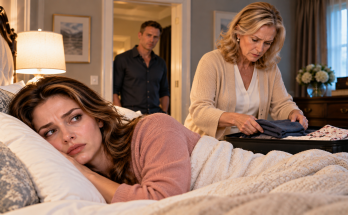
I stared at the signature until the letters began to blur. Eleanor Price. My younger sister. The woman who had held my hand when Harold died. The woman who called every Sunday evening because she knew that was when the silence in my house became unbearable.
The woman who knew where I kept my emergency house key, which medications I took for arthritis, and why I still slept on Harold’s side of the bed when I missed him. Eleanor was the person I trusted to tell me the truth even when it hurt. And according to the document Patricia had just placed before me, she had sworn under oath that I was no longer capable of managing my own affairs.

I felt something cold settle behind my ribs. “Margaret?” Patricia asked gently. I couldn’t answer. Across the patio table, Ashley was watching my face with an expression I couldn’t quite identify. It wasn’t guilt. It wasn’t surprise. It looked almost like satisfaction. As though she’d been waiting for this particular wound to open.
David reached toward the document.
“Mom, please. This isn’t what it looks like.”
I pulled it away.
“Then tell me what it is.”
He glanced at Ashley.
That was the first thing I noticed.
My son, a forty-three-year-old man, couldn’t answer a simple question without looking at his wife.
Ashley folded her arms.
“We were concerned about you, Margaret.”
“Concerned?”
“Yes. You’ve been making questionable financial decisions for months.”
I looked at her.
“You mean giving you money.”
She stiffened.
“That’s not what I said.”
“But it’s what you meant.”
Richard Hartwell leaned forward.
“Ashley, what exactly have you filed?”
She turned toward her father.
“Dad, this is a private family matter.”
Richard’s face hardened.
“You brought us here for a birthday celebration. Now we’re looking at a legal document claiming the woman who paid for everything is incompetent. I think an explanation is reasonable.”
Linda picked up the paper.
She read the heading.
Then looked at me with genuine distress.
“Margaret, you didn’t know about this?”
I shook my head.
“No.”
Her expression changed.
She turned toward her daughter.
“Ashley, tell me you haven’t tried to take control of Margaret’s finances.”
Ashley let out a short, irritated laugh.
“Everybody is making this sound sinister.”
Patricia opened another folder.
“Then perhaps we should examine the actual petition.”
She spoke calmly, without raising her voice.
“David and Ashley have requested that David be appointed emergency temporary guardian of Margaret’s person and property, alleging that she’s unable to protect herself from financial exploitation.”
Linda frowned.
“But they’re the ones receiving her money.”
“That’s one of several issues requiring examination,” Patricia replied.
David rubbed his forehead.
“Mom, we thought we were helping.”
I looked at him.
“Helping me do what?”
He said nothing.
“David, answer me.”
His eyes filled.
“Protecting you from making mistakes.”
For a moment, I could only stare.
Then I asked quietly, “When did loving you become evidence that something was wrong with me?”
Nobody answered.
The wind moved through the terrace curtains.
Beyond the railing, the Atlantic rolled steadily toward the shore.
I had chosen this house because Harold and I used to come to Cape Cod every summer.
We never stayed anywhere luxurious.
We rented little cottages with mismatched furniture and made sandwiches to take to the beach.
But I’d wanted my seventieth birthday to be special.
I wanted my family together.
I wanted the ocean.
I wanted one weekend when being a widow didn’t mean pretending that loneliness was something I’d learned to enjoy.
Instead, I was sitting outside the house I’d paid for, discovering that my son and daughter-in-law had attempted to turn my generosity into evidence against me.
I looked down at Eleanor’s signature again.
Then I noticed something.
The affidavit claimed Eleanor had personally observed me becoming confused during a visit on June 14.
I read the sentence twice.
June 14.
I remembered that date.
I remembered it because Eleanor had sent me photographs from Ireland that morning.
She’d been visiting her oldest daughter in Dublin.
I looked at Patricia.
“May I use your phone?”
She studied me for a moment.
Then nodded.
“Of course.”
I dialed my sister.
She answered on the fourth ring.
“Margaret! Happy birthday, sweetheart!”
Her cheerful voice nearly undid me.
I swallowed.
“Eleanor, I need to ask you something.”
Her tone changed immediately.
“What’s wrong?”
“Did you sign a sworn statement saying I’m mentally incapable of handling my money?”
Silence.
Then she said, “What?”
I closed my eyes.
“There’s a document in front of me with your signature.”
“Margaret, I haven’t signed anything like that.”
Ashley shifted in her chair.
I looked toward her.
“Eleanor, were you with me on June fourteenth?”
“No, honey. I was in Ireland. You remember. I sent you pictures from the botanical gardens.”
I felt my hands begin trembling.
Patricia leaned closer.
“May I speak with her?”
I handed over the phone.
Patricia introduced herself and explained the document.
Eleanor became increasingly upset.
She confirmed that she’d never authorized a guardianship petition, never sworn that I was incompetent, and never appeared before the notary identified on the affidavit.
She offered to send travel records, messages, and photographs establishing where she’d been.
When Patricia ended the call, she looked at me.
“Margaret, we have a substantial reason to challenge this affidavit.”
I stared at Ashley.
Her face had lost its color.
Then I asked the question that changed everything.
“Where did you get my sister’s signature?”
Ashley stood abruptly.
“This is ridiculous. I’m not sitting here being interrogated.”
She turned toward the sliding door.
“Sit down, Ashley.”
The voice belonged to Linda.
It was quiet.
But there was something in it I had never heard before.
Ashley froze.
Linda looked at her daughter.
“If that woman’s signature was forged, I want to know how it happened.”
Ashley stared at her mother.
Then at David.
And for the first time that weekend, nobody moved to rescue her from the truth.
Patricia closed the blue folder.
“We’re not going to conduct a trial on Margaret’s birthday,” she said. “The petition will be addressed through the proper legal process. But there are immediate issues this family needs to understand.”
She looked at David.
“First, no court has found your mother incapable of managing her affairs.”
He lowered his eyes.
“Second, filing a petition does not give you authority over her property.”
Ashley opened her mouth.
Patricia continued.
“And third, Margaret has already arranged for independent legal and financial assistance. She is perfectly entitled to decide how she spends her money, including whether she gives any more of it to either of you.”
I looked at my son.
He still hadn’t met my eyes.
I wanted to ask him where the boy had gone who used to run through our kitchen with scraped knees, begging me to make pancakes shaped like dinosaurs.
The boy Harold carried on his shoulders.
The boy who once cried because he’d accidentally broken my favorite vase.
Somewhere along the way, that child had become a man willing to ask a court to strip his mother of her independence.
I wondered when the change began.
Or whether I’d simply been too busy loving him to notice it.
Linda reached across the table and touched my hand.
“Margaret, I’m so sorry.”
I shook my head.
“You haven’t done anything wrong.”
She glanced toward Ashley.
“I’m beginning to think I don’t know everything my daughter has been doing.”
Richard stood.
“Then perhaps it’s time we found out.”
Ashley grabbed her handbag.
“I’m leaving.”
I looked at her.
“You’re welcome to leave.”
She stopped.
“But before you go, please remove your belongings from the master bedroom.”
Her face flushed.
“Excuse me?”
“I booked this house. I paid for it. I specifically requested that room.”
David finally looked up.
“Mom, don’t make this about a bedroom.”
I turned toward him.
“It was never just about the bedroom.”
My voice remained steady.
“It was about the ease with which you watched someone take something from me and told yourself I wouldn’t mind.”
He stared.
I continued.
“The money. The room. The stories about my mental health. Every time you took another little piece of my dignity, you called it something harmless.”
I paused.
“But I’m seventy years old, David. Not invisible.”
Nobody spoke.
Then I added, “Your father spent forty-eight years reminding me that my wishes mattered. I will not let the two of you convince me otherwise.”
Outside, the caterers were arranging flowers beneath a white canopy.
Soft music drifted through the garden.
My birthday celebration was still scheduled to begin at noon.
And I suddenly realized I had no intention of canceling it.
They had taken enough of my happiness already.
Ashley refused to move her suitcases.
At least at first.
She stood beside the patio door with her chin raised, as though refusing to surrender the master bedroom would somehow restore her authority over everything else.
“This is humiliating,” she announced.
I looked at her.
“Yes, Ashley. It is.”
For one brief moment, she seemed pleased.
Then I continued.
“I know exactly how humiliating it feels to be treated like a nuisance in a place where you’re supposed to belong.”
Her expression changed.
Richard walked toward the stairs.
“I’ll help you carry your things.”
“Dad!”
“Your mother-in-law is seventy years old, Ashley. This is her birthday. She paid for this house, and she asked for that room.”
Ashley looked at David.
“Are you seriously going to let them speak to me like this?”
My son stood motionless.
I watched him.
Seven years earlier, when Harold died, David had held me in the hospital corridor while I cried.
He had promised I’d never be alone.
For a while, he’d kept that promise.
Then the visits became less frequent.
The telephone calls became shorter.
Eventually, almost every conversation began with some version of Mom, we’ve had a little problem.
A broken appliance.
An unexpected bill.
A car repair.
A tax emergency.
I began to wonder whether David had gradually stopped thinking of me as his mother and started thinking of me as the solution to whatever problem appeared next.
Finally, he said, “Ash, let’s just move the bags.”
She stared at him.
“You’ve got to be kidding.”
But Richard was already climbing the stairs.
Ten minutes later, my suitcases were in the master bedroom.
Ashley and David had moved into the small den downstairs, where the pull-out sofa stood beneath a landscape painting.
I didn’t celebrate the reversal.
I didn’t smile when Ashley complained about the mattress.
I simply closed the bedroom door.
For a moment, I stood alone beside the enormous windows.
The Atlantic stretched beneath a pale morning sky.
There was a white bedspread, a little sitting area, and a bathroom with a deep soaking tub.
Exactly what I’d wanted.
I placed Harold’s photograph on the bedside table.
It was a small silver-framed picture from our fortieth wedding anniversary.
He was laughing, his arm around my waist.
I touched the glass.
“Well, darling,” I whispered, “it took me long enough.”
Then I sat on the edge of the bed and cried.
Not because I’d finally gotten the master suite.
Because I realized how many times I’d apologized for needing something.
Even after Harold died, I’d tried to be easy.
Undemanding.
Grateful for whatever attention my family had time to offer.
I had mistaken being convenient for being loved.
And that morning, surrounded by the room I’d paid for, I began to understand the difference.
Patricia found me twenty minutes later.
She knocked softly.
“Margaret?”
“Come in.”
She stepped inside carrying two cups of tea.
“I thought you could use one.”
I smiled.
“You’re a good friend.”
She sat across from me.
Patricia and I had met six months earlier after my accountant recommended that I review several unusual transactions.
Until then, I’d handled most of my finances myself.
Harold and I had saved carefully.
He’d owned a small electrical contracting business, which we sold before his retirement.
We invested conservatively, paid off our house, and made sure we could support ourselves without relying on David.
After Harold died, I discovered that he’d also established a substantial investment account in my name.
He had always said he wanted me to be comfortable if he went first.
At the time, I thought that meant enough money for groceries and electricity.
I hadn’t understood how much planning he’d done.
Now, according to Patricia, that planning had become one of the reasons my son and daughter-in-law wanted control.
She placed a document on the table.
“There’s something I haven’t shown you yet.”
I looked at her.
“What?”
“It’s a preliminary financial plan attached to the guardianship materials.”
I frowned.
“Financial plan?”
“The petition identifies several assets they want authority to manage if David is appointed.”
I took the document.
Our family home was listed.
So were my investment accounts.
And the small cottage Harold and I owned near the coast.
Then I reached a section labeled Proposed Residential Arrangement.
My stomach tightened.
“They want to put me in assisted living?”
Patricia nodded carefully.
“That appears to be the recommendation they’re proposing.”
I stared at the page.
The facility was nearly ninety minutes from my home.
It was a basic assisted-living community I’d never visited.
There was a proposed monthly budget.
And beneath it was a recommendation that my house be sold to fund future care and reduce maintenance responsibilities.
I turned the page.
Another paragraph discussed liquidating certain investments.
I swallowed.
“My house is paid for.”
“I know.”
“And I don’t need assisted living.”
“There’s no professional assessment in these papers establishing that you do.”
I stared at the document.
Then my eyes reached the final section.
Available proceeds may be managed for the benefit of the ward, subject to court approval and fiduciary obligations.
It sounded respectable.
Responsible.
Almost comforting.
But behind the formal language was a plan to take away the home where Harold and I had spent thirty-four years.
The kitchen where our children had learned to bake.
The porch where we’d watched thunderstorms.
The garden where I’d buried the ashes of our old golden retriever.
The bedroom where I’d held Harold’s hand during the last weeks before hospice care became necessary.
I looked at Patricia.
“Why do they need control of my house?”
She hesitated.
“We’re investigating their finances. I suspect the petition may be related to debts they haven’t disclosed.”
I leaned back.
“How much?”
“We don’t know the full amount yet.”
I stared at the ocean.
Then said, “Patricia, I spent six months trying to understand why every emergency required another check.”
She nodded.
“You were right to begin keeping records.”
I looked down at my hands.
“Part of me still feels guilty.”
“For what?”
“For wondering whether my own child was lying.”
Patricia’s expression softened.
“Margaret, asking questions about money you’ve given someone is not a betrayal.”
I wiped my eyes.
She continued.
“Neither is protecting yourself.”
I nodded.
Then I asked, “What do we do now?”
She closed the folder.
“We follow the evidence. We respond to the petition. And we make sure your wishes are represented accurately.”
I looked at Harold’s photograph.
Then whispered, “I think I’ve been waiting for someone to give me permission to stop rescuing them.”
Patricia smiled sadly.
“You don’t need permission.”
At noon, the birthday party began.
It was supposed to be a celebration for twenty guests.
I’d invited old neighbors, two cousins, several friends from church, and three women I’d met through a widows’ walking group.
They arrived carrying cards and flowers.
My friend Ruth brought a homemade lemon cake even though I’d already ordered an elaborate birthday dessert.
“Yours is too fancy,” she announced. “Mine tastes like actual food.”
I laughed.
For the first time that day, the laughter came naturally.
Linda helped arrange the buffet.
Richard greeted guests near the garden gate.
Ashley remained upstairs for most of the afternoon.
David moved between the house and the terrace, looking as though he wanted to disappear.
I hadn’t planned to announce the dispute to everyone.
My birthday wasn’t going to become an audience for family cruelty.
But I also wasn’t going to pretend the entire weekend belonged to Ashley.
When the caterer brought out the cake, everyone gathered beneath the canopy.
Seventy tiny candles would have been a fire hazard, so they’d placed seven elegant candles around a gold number seventy.
Ruth insisted I make a wish.
I looked at the candles.
For years, I’d wished for Harold to come back.
Not seriously.
I knew death didn’t bargain.
But every birthday after his passing, some foolish part of my heart still wished I could hear him sing off-key one more time.
That afternoon, I made a different wish.
Not for my son to change.
Not for Ashley to apologize.
Not even for the money to return.
I wished for the courage to live the years I still had without asking anyone’s permission.
Then I blew out the candles.
Everyone applauded.
And I felt something warm and unexpected.
Joy.
Not the old joy of having a family that seemed perfect.
But the quieter joy of realizing that even after terrible disappointment, a beautiful afternoon could still belong to me.
Later, Linda found me beside the roses near the garden wall.
Her expression was troubled.
“Margaret, may I ask you something?”
“Of course.”
She hesitated.
“Did Ashley tell you she needed money because Richard and I were having financial difficulties?”
I looked at her.
“No.”
Linda swallowed.
“She told us the same thing about you.”
I frowned.
“What do you mean?”
“Last November, she said you were embarrassed to ask for help with your property taxes. She told us Harold had left you less than everyone realized.”
I stared.
“Linda, my property taxes have always been paid on time.”
She nodded slowly.
“Richard gave her twelve thousand dollars.”
I felt my stomach turn.
“For me?”
“That’s what she said.”
I shook my head.
“I never saw a penny.”
Linda looked away.
Then whispered, “In February, she asked for another eight thousand. She said you needed dental treatment but didn’t want David to know.”
My mouth fell open.
“I haven’t had any dental treatment.”
Linda covered her face.
For a moment, we stood in silence.
Then she said, “Richard and I thought we were helping you preserve your dignity.”
I reached for her hand.
“Oh, Linda.”
Her eyes filled.
“She made us believe you were too proud to ask us yourself.”
I looked toward the house.
Ashley had borrowed from me while telling her parents that I was the one borrowing.
She had used my widowhood to manufacture pity.
Then used the money she received as proof that I couldn’t manage my finances.
Linda took a trembling breath.
“I think we need to compare everything she’s told us.”
I nodded.
“Yes.”
Then she said, “Margaret, I want you to know something.”
I looked at her.
“I am ashamed of what my daughter has done. But I won’t protect her by pretending it isn’t happening.”
I squeezed her hand.
“Thank you.”
And suddenly, I wasn’t standing there with an opposing family.
I was standing beside another mother who had just discovered how thoroughly her trust had been exploited.
On Sunday morning, Eleanor arrived at the beach house.
She had taken the earliest flight she could find.
When I opened the front door, she was standing there in a wrinkled blue cardigan, holding a handbag and wearing the expression she used to have when we were children and one of us had been hurt.
“Oh, Margaret.”
That was all she said.
Then she wrapped her arms around me.
I buried my face in her shoulder.
For a little while, we were no longer seventy and sixty-seven.
We were two sisters sitting on our mother’s kitchen floor, holding each other after something terrible had happened.
Eleanor stepped back and studied me.
“Are you all right?”
I nodded.
Then shook my head.
Then began crying again.
She guided me to the sofa.
Patricia joined us with the copy of the affidavit.
Eleanor read every page.
By the time she finished, her hands were shaking.
“This is a lie.”
I nodded.
“Look at the signature,” Patricia said.
Eleanor leaned closer.
“That’s copied from something.”
Patricia waited.
“My signature used to have a much longer final stroke. I changed it after I broke my wrist.”
She pointed to the document.
“This is how I signed things years ago.”
I stared.
“When did you break your wrist?”
“Four years ago.”
She looked at me.
“Remember? Harold was still alive. He brought soup over when I came home from the hospital.”
My throat tightened.
Of course I remembered.
Harold had insisted Eleanor needed proper food.
He made chicken soup in an enormous pot and drove it to her house himself.
The affidavit bore a version of Eleanor’s signature that hadn’t been current for years.
Patricia made a note.
“We’ll have a document examiner compare it with known samples, and we’ll obtain whatever records exist for the notarization.”
Eleanor looked at me.
“Margaret, I would never say those things about you.”
I reached for her hand.
“I know.”
And I did.
For a few horrible minutes on the terrace, I’d been afraid the last person I trusted had betrayed me.
Now I understood something even worse.
Ashley had tried to use my relationship with Eleanor as a weapon.
She hadn’t merely wanted control of my bank accounts.
She had wanted me to believe even my own sister thought I was incapable.
Eleanor’s eyes filled.
“She wanted you to feel alone.”
I looked at her.
Then nodded.
“Yes.”
She squeezed my hand.
“Well, she made a mistake.”
I managed a small smile.
“What’s that?”
“You aren’t.”
The real explanation for the missing money emerged during the following weeks.
Patricia engaged a forensic accountant, and Linda and Richard provided records of the funds they’d given Ashley.
We gathered my bank statements, transfer confirmations, text messages, and the invoices Ashley had sent whenever she described another emergency.
The pattern was astonishing.
Some payments had gone to a small business Ashley operated under the name Harbor Bloom Events.
She had started it three years earlier, planning luxury parties and corporate retreats.
At first, I believed it was doing well.
Ashley frequently posted photographs of elegant venues, designer table settings, and clients enjoying expensive celebrations.
But the business had suffered substantial losses.
Several large bookings had been canceled.
Ashley had borrowed money to maintain appearances.
Instead of acknowledging the losses and restructuring the business, she’d continued spending.
The fake roofing invoice covered business debts.
The nonexistent tax emergency corresponded to a repayment owed to a private lender.
Other funds had been transferred to accounts used for boat payments, credit cards, and personal expenses.
David’s boat, which he’d proudly shown me the previous summer, had been purchased shortly after one of their supposed household emergencies.
He’d told me a friend had offered him an excellent deal.
Now the numbers made sense.
But the most painful discovery wasn’t that they’d been careless with money.
It was a series of messages between David and Ashley.
They had been obtained during the financial review from records David ultimately agreed to provide through counsel.
One message from Ashley read:
If Margaret starts questioning the transfers, we need to move faster on the guardianship.
David replied:
She won’t understand why we’re doing it.
Ashley wrote:
That’s the point. Once the court gives you authority, we can get the house listed and settle everything.
I stared at the message.
Then the next one appeared.
She trusts me, David had written. I hate doing this.
Ashley’s reply was immediate.
Then stop feeling guilty and think about our future.
I read those words over and over.
I hate doing this.
My son hadn’t been entirely unaware.
He knew there was a plan.
He understood that his mother’s home and financial freedom were being placed at risk.
He felt guilty.
And he continued anyway.
I thought of all the times I’d defended him.
All the times I’d told Harold that David had a good heart, even when he made foolish choices.
All the times I’d assumed that whatever happened, he would never intentionally harm me.
Now I was staring at proof that he’d known enough to object.
And had chosen not to.
I put the documents down.
For a long time, I couldn’t speak.
Patricia sat beside me.
Finally, I whispered, “When Harold died, David promised he’d look after me.”
She said nothing.
I wiped my cheeks.
“I didn’t know that one day I’d have to protect myself from him.”
The petition was heard several weeks later.
By then, the court had received our response, Eleanor’s sworn denial, travel records, and supporting evidence concerning the questionable affidavit.
An independent clinical assessment found no basis for the claim that I was unable to manage my affairs.
I had also undergone a careful review of my finances with professionals who confirmed that I understood my assets, expenses, and obligations.
I wasn’t perfect.
I occasionally forgot why I’d walked into a room.
Sometimes I misplaced my reading glasses.
I still spoke aloud to Harold when I was lonely.
But grief wasn’t incapacity.
Aging wasn’t evidence that I should lose my independence.
And giving money to my son, even unwisely, didn’t make me incapable of deciding what to do with the rest of my life.
When the judge asked whether I understood the purpose of the hearing, I answered plainly.
“Yes, Your Honor. My son and daughter-in-law are asking the court to appoint someone to control decisions I am perfectly capable of making.”
The judge asked why I’d made the payments described in their petition.
I took a breath.
“Because I believed my son needed help.”
“And do you still intend to give him that assistance?”
“No.”
“Why?”
I looked toward David.
He sat beside his attorney.
Ashley was next to him, staring at the table.
Then I answered.
“Because I now have information showing that several requests were based on false representations. I’ve made arrangements to protect my finances and pursue appropriate remedies.”
The judge studied the records.
Then asked, “Mrs. Margaret, what would you like to happen now?”
I sat a little straighter.
“I would like to go home, tend my garden, and make my own decisions.”
A faint smile crossed the judge’s face.
The petition was dismissed after the court considered the evidence and the lack of a sufficient basis for guardianship.
The questions surrounding the affidavit were referred for further examination.
The investigation into its preparation and notarization continued separately.
I didn’t walk out of that courtroom believing every problem had disappeared.
But I walked out knowing that nobody had succeeded in turning my love for my family into a legal reason to take away my freedom.
Eleanor was waiting near the exit.
She hugged me.
“Well?”
I smiled through tears.
“I get to remain an inconvenient old woman.”
She laughed.
“Good. I’ve always preferred you that way.”
The investigation into the forged affidavit brought one final revelation.
The signature had been reproduced from a document Eleanor signed years earlier when Harold was helping her update her estate records.
David had been present at the meeting.
He had received a digital copy of the paperwork afterward.
And the electronic records associated with the guardianship filing showed that the image of Eleanor’s old signature had been inserted into the affidavit during its preparation.
Further examination raised serious questions about the purported notarization.
Ashley denied creating the false document.
But the evidence concerning how it had been assembled was sufficiently troubling that the matter was referred to the appropriate authorities.
I wasn’t told every detail of the investigation.
Nor did I need to know every argument her attorney intended to make.
What mattered most was that the affidavit could no longer be used to portray my sister as someone who believed I was incompetent.
Eleanor had never said those things.
And the people who wanted control of my life had been willing to make it appear that she had.
David came to see me three months after the hearing.
I’d already told him that any discussion of the financial dispute needed to occur through our attorneys.
But he’d written asking whether we could have one conversation about the harm he’d caused.
I agreed to meet him at a quiet café.
He arrived early.
When I walked inside, he stood.
“Hi, Mom.”
I looked at him.
“Hello, David.”
For a moment, I saw the little boy he’d once been.
He had Harold’s brown eyes.
Harold’s slightly crooked smile.
And the same habit of rubbing his hands together when nervous.
It hurt to realize that someone could resemble the person I’d loved most in the world and still make choices that person would have been ashamed of.
We sat.
David stared at his coffee.
Finally, he spoke.
“I don’t know where to begin.”
I waited.
He swallowed.
“I knew we were in trouble financially. Ashley’s business was failing, and I kept thinking we’d find a way out.”
I nodded.
“I know.”
He looked up.
“At first, I honestly thought asking you for money was temporary.”
“And afterward?”
His eyes filled.
“Afterward, I knew we were lying.”
I felt my throat tighten.
He continued.
“I told myself it was different because you had money, because you weren’t using most of it, because I’d repay everything eventually.”
I stared at him.
“David, you knew I was giving you money because I believed you needed it for things like taxes and repairs.”
He nodded.
“I know.”
“And then you filed a petition to take control of what I had left.”
His face crumpled.
“I convinced myself you were making bad decisions.”
I leaned forward.
“Bad decisions because I gave money to you?”
He lowered his head.
“Yes.”
The admission hung between us.
Then I asked, “Did you ever think about where I would live if you sold my house?”
He began crying.
“Ashley found a place. She said it would be safer.”
I stared at him.
“My house is safe.”
He nodded.
“Mom, I know.”
“No, David. I don’t think you did.”
He wiped his eyes.
I continued.
“I lived in that house with your father for thirty-four years. I buried him three years ago. Some mornings, the only reason I get out of bed is to make coffee in the kitchen where he used to sit.”
My voice broke.
“And you were prepared to take even that away because you didn’t want to face your debts.”
He covered his face.
For a long time, neither of us spoke.
Then David whispered, “Dad would hate what I’ve done.”
I looked out the window.
Harold had been a gentle man.
But gentleness was never the same as weakness.
When David was fifteen, he’d stolen money from his father’s wallet to buy a video game.
Harold didn’t shout.
He made David return the game, repay the money, and spend the following Saturdays helping at the family business.
“An apology matters,” Harold told him, “but accountability is what makes it worth believing.”
I turned back toward my son.
“Your father would want you to take responsibility.”
David nodded.
“I know.”
I looked at him.
“Then start there.”
The financial dispute was not simple.
Some of the money I’d given David and Ashley had been transferred voluntarily, and Patricia explained that recovering gifts made under mistaken beliefs could involve difficult legal questions.
Other payments were supported by messages that described specific purposes or promises of repayment.
Those distinctions mattered.
I wasn’t going to pretend I had a guaranteed right to recover every dollar simply because I regretted giving it.
But neither was I going to accept another vague promise.
Eventually, David agreed to a formal repayment arrangement covering a substantial portion of the disputed transfers.
He sold the boat.
Reduced his expenses.
And began making documented payments.
Ashley and her attorney addressed the claims against her separately.
The business was closed, and the couple’s financial arrangements changed significantly.
I received some of my money back.
The rest remained subject to the agreements and legal processes in place.
But I stopped measuring my peace by the balance of those repayments.
The greatest change was that nobody could call me on a Tuesday evening and make their emergency my obligation.
I learned to say no without explaining it.
Sometimes I still felt guilty afterward.
Then I reminded myself that a person’s disappointment didn’t mean I’d done something wrong.
That winter, I made a change Harold would have loved.
I established a small annual scholarship for students studying the electrical trades at the community college near our old home.
Harold had started his career as an apprentice.
He always believed that practical skills deserved as much respect as expensive degrees.
I’d wanted to honor him for years.
But each time I began planning something meaningful, another financial crisis in David’s household seemed to interrupt.
Now I had the time.
And the freedom.
At the scholarship ceremony, a nineteen-year-old young woman named Isabel received the first award.
She shook my hand and told me her father had been an electrician before an injury forced him to retire.
“I want to do the kind of work he taught me to respect,” she said.
I smiled.
“Then I think Harold would have been very proud of you.”
She looked at the photograph I’d placed beside the award certificate.
“Was he your husband?”
I nodded.
“For forty-eight years.”
She smiled.
“That’s a long time.”
I laughed softly.
“Not nearly long enough.”
Then I told her something Harold used to say.
“Good work is what you leave behind after you’ve gone home.”
As I watched Isabel accept the scholarship, I felt something I hadn’t experienced for months.
The simple happiness of helping someone without fear that my kindness would be used against me.
For years, I’d believed being needed was the same as being loved.
Now I understood that generosity should be freely given.
Not extracted through guilt.
Not demanded as proof of devotion.
And certainly not turned into evidence that the giver was incapable of making decisions.
On my seventy-first birthday, I returned to Cape Cod.
Not to the enormous rental house with the expensive flowers and caterers.
I booked a little cottage near the water.
It had two bedrooms, a small kitchen, and a porch where the floorboards creaked when you walked across them.
Eleanor came with me.
So did Ruth, my friend from the walking group.
Linda and Richard visited for lunch.
Our friendship had survived what happened with Ashley, though none of us pretended it was uncomplicated.
Linda never asked me to excuse her daughter’s actions.
Instead, she continued showing up.
Sometimes with a phone call.
Sometimes with flowers.
Sometimes simply to sit beside me when I missed Harold.
That mattered more than any apology she could have offered on Ashley’s behalf.
On the morning of my birthday, Eleanor found me sitting on the porch watching the waves.
She carried two cups of coffee.
“Happy birthday, old woman.”
I laughed.
“You’re only three years behind me.”
“Don’t remind me.”
She sat beside me.
For a while, we listened to the ocean.
Then Eleanor asked, “Do you regret any of it?”
I looked at her.
“Which part?”
“Standing up for yourself. The court hearing. All the unpleasantness.”
I considered the question.
I regretted that David and Ashley had lied.
I regretted the money I’d given them under false pretenses.
I regretted the years I spent believing that keeping everyone comfortable was the same as keeping a family close.
But I didn’t regret finding the courage to protect myself.
“No,” I said finally.
Eleanor smiled.
“Good.”
I took a sip of coffee.
Then I looked toward the water.
“I regret that it took me seventy years to understand I was allowed to matter.”
My sister reached for my hand.
“You always mattered, Margaret.”
I squeezed her fingers.
“I know.”
And this time, I meant it.
David called that afternoon.
We had begun speaking occasionally again.
Our conversations were cautious.
Sometimes awkward.
He no longer asked me for money.
He kept making the payments he’d agreed to.
And when I told him I wasn’t ready for another family vacation, he accepted my answer without argument.
Those were small things.
But trust, once broken, could only be rebuilt through what a person repeatedly chose to do.
“Happy birthday, Mom,” he said.
“Thank you, sweetheart.”
There was a pause.
Then he asked, “Are you having a good time?”
I looked toward the beach.
“Yes. A lovely time.”
“I’m glad.”
I heard him take a breath.
“Mom?”
“Yes?”
“I was thinking about Dad this morning.”
My throat tightened.
“Oh?”
“He would have made you that terrible birthday breakfast he always made.”
I laughed.
“Burned toast and eggs swimming in butter.”
David chuckled.
Then his voice grew quiet.
“I miss him.”
“So do I.”
We sat with the silence for a moment.
Then he said, “I hope someday you’ll be able to trust me again.”
I looked at the horizon.
“I hope so too, David.”
I didn’t promise him something I couldn’t yet give.
And he didn’t ask me to.
For the first time in a long while, that felt like the beginning of an honest relationship.
That evening, my friends surprised me with a little birthday cake.
There were seven candles and one extra for good luck.
We sang.
We laughed.
Ruth insisted on taking photographs.
And when everyone went to bed, I remained on the porch with Harold’s picture in my lap.
I looked at his familiar smile.
Then toward the ocean.
“You know, darling,” I whispered, “I think you’d like this place.”
The waves answered softly against the shore.
I smiled.
“I’ve finally learned something you spent forty-eight years trying to teach me.”
I held the photograph close.
“Taking care of people doesn’t mean I have to disappear.”
A cool breeze moved across the porch.
For a moment, I could almost hear Harold laughing.
Then I stood and carried his photograph inside.
I placed it on the bedside table.
Opened the window.
And climbed into a comfortable bed in a room overlooking the sea.
There was no pull-out sofa.
No argument about who deserved the best bedroom.
No family member deciding that because I was widowed, my comfort mattered less than everyone else’s.
Just the sound of the ocean.
And a woman who had finally stopped apologizing for taking up space.
Before turning out the light, I thought about that terrible birthday morning one year earlier.
Ashley had called me a lonely old widow.
She’d expected me to sleep on the floor.
And she’d believed that seventy years of living had somehow made me too weak to recognize when someone was taking advantage of me.
She was wrong.
A widow is not an empty chair waiting for someone else to claim it. She is a person with memories, dignity, choices, and a future that still belongs to her.
I switched off the lamp.
The moonlight stretched across the floor.
And I whispered into the darkness, “Happy birthday, Margaret.”
Because after seventy-one years, I had finally learned that my own happiness deserved a place at the table.
And this time, I wasn’t giving that place away.
THE END STORIES! THANK YOU FOR READING GOOD LUCK !❤️
Related Posts