My son, his wife, her parents, and the kids left before sunrise for the $12,500 Christmas vacation I paid for—two cars, ten people, and a family group chat they had quietly removed me from. When I called, my daughter-in-law said, “We forgot to tell you.” I just replied, “Merry Christmas,” opened my laptop, and made three clicks they would not discover until they reached the mountains.

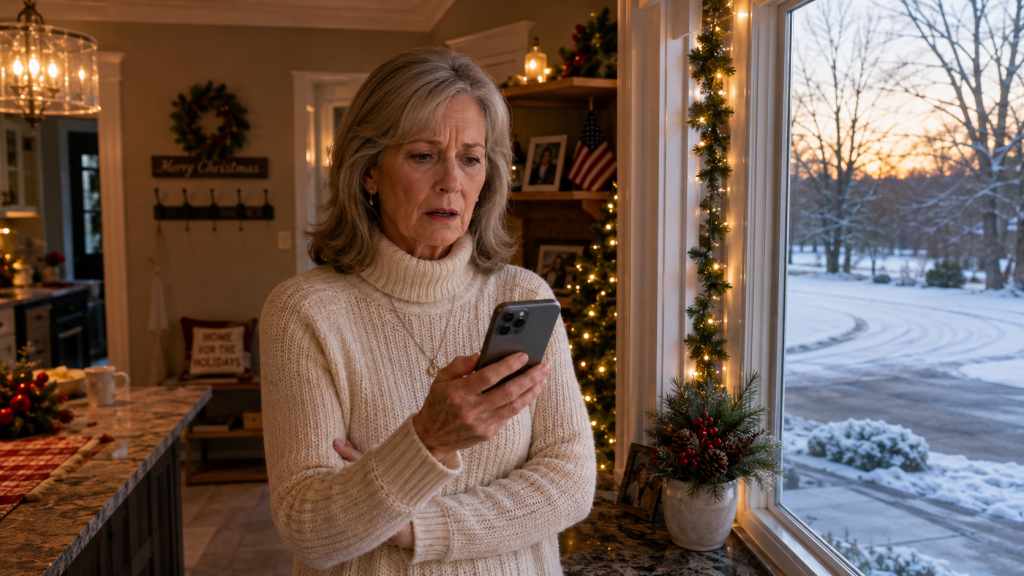
At exactly 6:00 on Christmas Eve morning, I woke up because my house was too quiet.
For three years, quiet had been almost impossible. My son Caleb and his wife, Sloan, lived downstairs with their children, and Sloan’s parents had a habit of appearing whenever there was free food, free space, or something I was paying for.
But that morning, there were no footsteps, no children arguing, no doors slamming downstairs.
I walked to the window.
Caleb’s SUV was gone. So was the rental van Sloan had insisted we needed for our Christmas vacation.
Then I looked toward the entryway.
Every suitcase was gone. Every winter coat. Every ski bag.
I picked up my phone and opened our family group chat.
It wasn’t there.
I searched again, thinking maybe I had archived it by accident. Nothing came up. Someone had removed me from the chat sometime during the night.
So I called Caleb.
Sloan answered.
Wind rushed through the speaker, and underneath it I could hear the steady hum of tires against the highway.
“Good morning, Sloan. Where are you?”
There was a pause, followed by a small, uncomfortable laugh.
“Oh, Helena… we’re already on the road.”
“To the mountains?”
“Yes. Things got hectic. The kids were restless, my parents wanted to leave early, so we figured it would be easier to get going.”
I stood at the kitchen window staring at my empty driveway.
“And when were you planning to tell me?”
Another pause.
“Helena, please don’t make this dramatic.”
That almost made me laugh.
Ten people had left before sunrise for a vacation I had spent months arranging. Seven nights at a luxury mountain lodge. Private suites. A holiday package. All of it paid for with my $12,500.
And somehow I was the one being dramatic.
“You’ve been stressed lately,” Sloan continued. “Maybe staying home will be good for you. You can relax, watch television, enjoy some peace and quiet.”
I looked around the kitchen in the house where she and my son had been living rent-free for three years.
“I see.”
Her voice softened immediately. “So you’re not upset?”
“Not at all.”
Then I smiled.
“Merry Christmas, Sloan.”
I ended the call.
For nearly a minute, I stood there with my phone still in my hand. Then I walked into my office and opened my laptop.
The reservation confirmation was sitting in my inbox.
Seven nights. Luxury mountain lodge. Private suites. Holiday package.
$12,500.
The entire reservation was under my name.
I rested my hand beside the trackpad, but before I touched anything, I remembered something I had noticed in the kitchen trash the night before: a crumpled piece of paper I had assumed belonged to one of the kids.
Suddenly, I wanted to see it again.
I went back to the kitchen, reached into the trash, and pulled the crumpled sheet into my hand.
PART 2: THE THREE CLICKS THEY NEVER SAW COMING
I unfolded the paper on my kitchen counter.
At first, I thought it was nothing.
A printed packing list.
Sloan loved lists.
She made lists for groceries, birthdays, school supplies, even family movie nights.
But this one was different.
At the top, in bold letters, were the words:
MOUNTAIN CHRISTMAS — FINAL ROOM ASSIGNMENTS
I stared.
My name was nowhere on it.
Caleb and Sloan had the master suite.
Sloan’s parents, Robert and Diane, had the second king suite.
The children were divided between two bunk rooms.
Sloan’s sister and her husband had another room.
Ten people.
Exactly ten.
Not eleven.
I had paid for a vacation that had been reorganized to exclude me before anyone ever packed a suitcase.
My chest went strangely cold.
Then I noticed handwritten notes along the bottom.
Sloan’s handwriting.
I recognized the sharp S and the way she looped her lowercase g.
Leave by 5:15 before H wakes up.
Below it:
Caleb — make sure van is packed tonight.
And underneath that:
Mom says Helena will probably be upset for a day, but honestly she needs to stop expecting to be included in everything.
I read that sentence twice.
Then a third time.
Stop expecting to be included.
In everything.
I looked around my kitchen.
My house.
The house where Caleb and Sloan had lived rent-free for three years after Caleb’s business failed.
The house where their children had their own bedrooms.
The house where Sloan’s parents ate dinner at least four nights a week without ever bringing groceries.
I paid property taxes.
Utilities.
Internet.
Most of the food.
I had covered dance classes when Sloan said money was tight.
I paid Caleb’s car insurance after his premiums increased.
When the oldest child needed braces, I quietly handled the deposit because Caleb said he would reimburse me after Christmas.
He never did.
And now I was apparently a woman who expected too much because I assumed I would be included in a vacation I had purchased.
I placed the paper flat on the counter.
There was one more note.
Smaller.
Almost squeezed into the margin.
Remember to change lodge card on arrival if possible. H’s card is still attached for incidentals.
My heartbeat stopped.
My credit card.
They had not simply planned to leave without me.
They planned to use my card after they arrived.
Meals.
Spa charges.
Ski rentals.
Alcohol.
Room service.
Whatever else they decided Christmas required.
Something inside me became very quiet.
That was the moment my feelings stopped arguing with me.
Until then, some foolish part of my heart had still been trying to protect Caleb.
Maybe Sloan pushed him.
Maybe the departure really was spontaneous.
Maybe the group chat was an accident.
Maybe my son would call from the road and apologize.
Mothers become extraordinarily talented at inventing explanations that hurt less than the truth.
But there it was in black ink.
Leave before H wakes up.
They had planned it.
My son knew.
My son had packed the van.
My son had helped remove me from the vacation I paid for.
I folded the paper carefully.
Then I walked into my office.
The reservation confirmation was still glowing on my laptop.
Seven nights.
Luxury mountain lodge.
Holiday dining package.
Five-bedroom private chalet.
Ski concierge.
Christmas Eve reception.
Christmas dinner.
Airport-style luggage service.
Total paid:
$12,487.62
I stared at that number.
Then I clicked.
First click.
Remove authorized guests.
The reservation website gave me a warning.
Only the primary guest would retain check-in privileges unless additional names were added again.
Perfect.
I removed all ten names.
Caleb.
Sloan.
Robert.
Diane.
Everyone.
The reservation remained active.
Under one name.
Mine.
Second click.
I opened the payment settings.
The card connected to incidentals was the same premium card Sloan had apparently expected to use after arriving.
I removed it.
Then I logged into my bank portal and locked the authorized-user card Caleb carried.
Not canceled.
Locked.
That distinction mattered.
I wanted every existing legitimate payment record intact.
I simply did not want another dollar leaving through his hands.
Third click.
I changed the digital access code to the chalet.
The lodge had sent it two days earlier.
Sloan had apparently saved the original code.
I replaced it with a new one.
Six digits.
My mother’s birthday.
Then I leaned back.
Three clicks.
Nothing dramatic.
No screaming.
No threatening messages.
No Christmas curse.
I simply restored control over things that belonged to me.
My reservation.
My card.
My room.
I closed the laptop.
Then I made coffee.
At 7:12, Caleb texted me.
Morning Mom. Hope you’re okay. Kids say Merry Christmas. We’ll call tonight.
I stared at the message.
No apology.
No explanation.
Not even an acknowledgment that he had left me behind.
Just:
Hope you’re okay.
I typed:
Drive safely.
Then deleted it.
I typed:
How could you do this?
Deleted that too.
Finally, I sent:
Merry Christmas.
That was enough.
At eight, I made eggs.
Only two.
For myself.
It was surprisingly difficult.
For three years, I had cooked breakfast according to noise.
Who was awake?
Who wanted toast?
Did Mason want syrup?
Had Ava decided she hated eggs again?
Was Sloan doing that cleanse she abandoned every Wednesday?
The kitchen usually belonged to everyone.
That morning, it belonged to me.
I sat by the window and ate slowly.
The silence that had frightened me at six began to feel different by nine.
Not empty.
Spacious.
At 9:43, my sister Ruth called.
“Merry Christmas Eve.”
I smiled.
“Merry Christmas.”
“You sound strange.”
Ruth had been my younger sister for sixty-one years.
There was very little I could hide from her.
“I’m alone.”
“What do you mean, alone?”
I told her.
Not all at once.
The missing cars.
The group chat.
Sloan’s phone call.
The crumpled itinerary.
When I finished, Ruth did not speak for several seconds.
Then:
“They left you?”
“Yes.”
“On the vacation you paid for?”
“Yes.”
“Without telling you?”
“Yes.”
“And planned it?”
“Yes.”
Another silence.
Then Ruth said a word I will not repeat because she was raised better than that.
I laughed.
It was the first genuine laugh I had managed all morning.
“I’m serious,” she said.
“I know.”
“Where are they now?”
“Probably two hours from the lodge.”
“And you canceled the trip?”
“No.”
Ruth went quiet.
“You didn’t?”
“No.”
“Helena.”
“I changed the guest list.”
A pause.
Then she understood.
“Oh.”
“I removed my card.”
“Oh.”
“And changed the door code.”
This time Ruth laughed so loudly I had to move the phone away from my ear.
“Helena.”
“What?”
“That may be the most elegant thing you have ever done.”
“I’m not trying to be elegant.”
“What are you trying to be?”
I thought about it.
“Done.”
Her laughter disappeared.
She knew what I meant.
Not done loving Caleb.
A mother does not switch that off because someone behaves shamefully.
Done cushioning him.
Done making his choices affordable.
Done calling disrespect misunderstanding because the alternative hurt more.
Ruth spoke gently.
“Come here.”
“What?”
“Christmas.”
“Come to my house.”
I looked around.
“I don’t want to ruin your plans.”
“You think I’m letting my sister sit alone because her grown son temporarily misplaced his character?”
I smiled.
“Ruth.”
“I have ham.”
“I bought a turkey.”
“Leave it frozen.”
“It’s thawed.”
“Bring it.”
“What?”
“Bring the turkey.”
“You already have ham.”
“Then we’ll have too much food like respectable Americans.”
I laughed again.
“I’ll think about it.”
“You have until noon.”
Then she hung up.
At 10:16, my phone rang.
Caleb.
I let it ring three times.
Then answered.
“Hello?”
“Mom.”
His voice was tense.
Not frightened yet.
Just irritated.
“Are you having trouble with the credit card?”
I almost admired the speed.
“No.”
“We stopped for gas.”
“Good.”
“My card declined.”
“Did it?”
“Yes.”
A pause.
“Did you freeze it?”
“Yes.”
Silence.
Then:
“Why?”
I looked toward the crumpled itinerary.
“You left.”
“What does that have to do with the card?”
More than he realized.
“The card is tied to my account.”
“I know that.”
“Then you know why I control it.”
His voice hardened.
“Mom, we have kids in the car.”
“You also have jobs.”
“That’s not the point.”
“It is part of the point.”
He sighed.
That familiar sigh.
The one he used when I was supposedly being difficult.
“Can we not do this right now?”
“We aren’t doing anything.”
“You shut off my card.”
“I locked my card.”
“It has my name on it.”
“As an authorized user.”
He went quiet.
Then lowered his voice.
“Sloan is already upset.”
I almost laughed.
Of course she was.
“What is Sloan upset about?”
“She thinks you’re punishing everyone.”
“For what?”
“You know.”
“No, Caleb.”
My voice remained calm.
“Say it.”
A pause.
“For leaving early.”
I looked out the window.
“That is not what happened.”
“Mom.”
“You did not leave early.”
“You left without me.”
Silence.
“That is different.”
He exhaled.
“We thought you would make a whole thing about the schedule changing.”
“The schedule did not change.”
“What?”
I picked up the itinerary.
“You planned to leave at 5:15 before I woke up.”
Nothing.
I continued.
“You removed me from the family chat.”
Still nothing.
“You assigned every room without me.”
His breathing changed.
“Where did you get that?”
“You threw it in my trash.”
A long silence.
Then he said:
“Mom, listen.”
“No.”
The word surprised even me.
Caleb stopped.
“I’ve listened for three years.”
My voice shook slightly.
“To why you couldn’t afford rent.”
“Why the kids needed more space.”
“Why Sloan’s parents needed to stay for dinner again.”
“Why the braces couldn’t wait.”
“Why Christmas had to be special.”
I swallowed.
“And apparently special meant without me.”
“Mom, it wasn’t like that.”
“Then tell me what it was like.”
He did not.
Because there was no graceful version.
Finally, he said:
“Sloan thought you would be more comfortable at home.”
I closed my eyes.
There it was.
Cowardice by committee.
“Sloan thought.”
“Yes.”
“What did you think?”
No answer.
That hurt more.
Because for all my anger at Sloan, Caleb was my son.
I needed his answer.
Not hers.
“What did you think, Caleb?”
He sighed.
“I thought maybe one Christmas where everyone wasn’t walking on eggshells could be nice.”
I stopped breathing.
There are sentences that do not sound violent until they land.
That was one.
“Walking on eggshells around whom?”
He did not answer immediately.
Then:
“You.”
I sat down.
My kitchen suddenly felt colder.
“Me.”
“Mom, you can be…”
He stopped.
“Can be what?”
“Particular.”
I almost smiled.
“Particular.”
“You want everything planned.”
“I planned this vacation because everyone asked me to.”
“I know.”
“You said the kids dreamed about skiing at Christmas.”
“I know.”
“Sloan sent me the lodge.”
“I know.”
“Your father-in-law chose the package.”
Silence.
“And I paid.”
“I know.”
My voice softened.
“So tell me which part of that made everyone afraid of me.”
Caleb had no answer.
Then, faintly, I heard Sloan in the background.
“Give me the phone.”
Caleb said something I couldn’t hear.
Then Sloan came on.
“Helena.”
“Yes?”
“This is getting ridiculous.”
“Is it?”
“You freezing Caleb’s card while we have children traveling is manipulative.”
I looked at my coffee.
“You have your own cards.”
“That’s not the point.”
“I’m beginning to notice that phrase gets used whenever the actual point is inconvenient.”
She inhaled sharply.
“We didn’t abandon you.”
“What would you call it?”
“We thought you needed rest.”
“You keep saying that.”
“Because it’s true.”
“Then why did you remove me from the group chat?”
Silence.
“Was that for my health too?”
“Helena—”
“And why did your packing sheet say to leave before I woke up?”
Another silence.
“And why were you planning to use my card for incidentals after I stayed home?”
Her voice changed.
“What are you talking about?”
“I found the note.”
I heard movement in the car.
Then Sloan said:
“You went through the trash?”
I laughed.
That actually made me laugh.
“Yes, Sloan.”
“I investigated the garbage in my own kitchen.”
“You’re twisting things.”
“No.”
“For the first time, I’m reading them exactly as they are written.”
Her tone hardened.
“We’re almost there.”
“Wonderful.”
Then she said:
“You didn’t cancel the lodge, did you?”
There it was.
Not:
Are you hurt?
Not:
Can we fix this?
The lodge.
“No.”
She exhaled.
“Good.”
I smiled.
“You should probably call before check-in.”
A pause.
“Why?”
“Merry Christmas, Sloan.”
I hung up.
My hands shook afterward.
That annoyed me.
I wanted to feel powerful.
Instead, I felt sad.
Boundaries are often portrayed as triumphant things.
Sometimes they are.
Sometimes they are simply grief with better posture.
At noon, I packed the turkey into a cooler and drove to Ruth’s.
She opened the door before I knocked.
My niece Hannah stood behind her holding a glass of wine.
She was thirty-four, newly divorced, and had inherited Ruth’s ability to become furious on someone else’s behalf.
“Aunt Helena.”
She hugged me.
“I heard.”
“Of course you did.”
“My mother has no respect for classified information.”
Ruth appeared behind her.
“I have no respect for Caleb.”
“Mom.”
“What?”
I stepped inside.
Their house smelled like cinnamon and ham.
Christmas music played somewhere in the kitchen.
People were laughing.
For the first time that morning, my chest loosened.
I had thought I was being left out of Christmas.
Apparently Christmas had simply changed addresses.
At 1:38, my phone started ringing.
Sloan.
Then Caleb.
Then Sloan again.
I looked at Ruth.
“They’ve arrived.”
She poured me wine.
“Answer.”
“I shouldn’t.”
“Absolutely answer.”
I picked up.
“Hello?”
Caleb spoke first.
“Mom, something is wrong with the reservation.”
“What?”
“The desk says none of our names are authorized.”
“Oh.”
“Mom.”
“Yes?”
“Did you remove us?”
“Yes.”
Ruth silently lifted her glass.
I looked away so I wouldn’t laugh.
Caleb’s voice dropped.
“Why would you do that?”
“Because you removed me.”
“This is not the same thing.”
“No.”
I agreed.
“One involves a group chat.”
“The other involves twelve thousand five hundred dollars.”
“Exactly.”
He went silent.
Then Sloan took the phone.
“You cannot be serious.”
“I am.”
“We drove six hours.”
“I thought it was three.”
“We hit traffic.”
“That sounds stressful.”
“Helena.”
Her voice became sharp.
“The children are standing in a hotel lobby.”
“That sounds like an excellent time for their parents to make arrangements.”
“You paid for this.”
“I did.”
“For the family.”
“I thought I was family.”
Silence.
Ruth stopped smiling.
So did I.
That sentence hurt because it was true.
Sloan recovered first.
“You’re punishing the kids for something they didn’t do.”
“No.”
“I’m not asking them to pay me back.”
“They can’t get into the chalet!”
“Neither could I.”
“You were home!”
“Because you left me there.”
The silence became thick.
Then I heard Diane in the background.
Sloan’s mother.
“Tell her this is childish.”
I closed my eyes.
“Put Diane on.”
A moment later, Diane’s voice filled the phone.
“Helena.”
“Yes, Diane?”
“I think everybody is emotional.”
I almost smiled.
“That is a generous way to describe it.”
“The kids were excited.”
“I know.”
“You really want to ruin Christmas over a misunderstanding?”
“There was no misunderstanding.”
“Things got hectic.”
“The itinerary was printed.”
Silence.
I continued.
“You knew too.”
Diane hesitated.
That was enough.
“You knew I was not coming.”
“Well…”
“There it is.”
She sighed.
“Helena, sometimes you make everything about money.”
I stared toward Ruth’s Christmas tree.
“That’s interesting.”
“What?”
“Because nobody called me until my card stopped working.”
She went silent.
Ruth covered her mouth to hide a laugh.
I continued.
“You had six hours in the car.”
“Not one of you called to apologize.”
“Not Caleb.”
“Not Sloan.”
“Not you.”
“Not Robert.”
“But the moment the reservation became inconvenient, suddenly everyone remembered my phone number.”
Diane’s voice cooled.
“That’s unfair.”
“No.”
“It’s measurable.”
I handed the phone back to Caleb by saying:
“Put my son on.”
A second later:
“Mom.”
His voice sounded smaller.
“What are we supposed to do?”
There it was.
The question he had asked me in one form or another for three years.
What are we supposed to do?
When the rent increased.
When his car needed repairs.
When the children’s summer camp deposit was due.
When Sloan wanted to quit her job.
Every crisis eventually arrived at my door disguised as a question.
And I answered with money.
Again.
And again.
And again.
I thought I was helping my son recover.
Maybe I had only helped him forget how to stand.
“Find a hotel.”
“On Christmas Eve?”
“Yes.”
“Everything is booked.”
“Then call around.”
“The prices are insane.”
“I know.”
“We can’t afford seven nights up here.”
“Then come home.”
Silence.
“You want us to turn around?”
“No.”
“I want you to make your own decision.”
He breathed heavily.
“Mom, the kids are crying.”
My heart tightened.
That part hurt.
They were innocent.
Mason was eleven.
Ava nine.
The twins six.
They had probably spent weeks imagining snow and presents by a fireplace.
I had purchased gifts that were already packed in the SUV.
“I don’t want the children punished.”
“Then let us into the chalet.”
“No.”
“Why not?”
“Because this is no longer about the children.”
He became quiet.
I continued.
“If I unlock that door now, what happens?”
“You spend a week at a luxury lodge I paid for.”
“You charge meals to a card I own.”
“You come back to my house.”
“You sleep in rooms I provide.”
“And everyone learns that excluding me has no consequence as long as the grandchildren are nearby.”
Caleb whispered:
“Mom.”
“I love them.”
My voice broke.
“Do not mistake my love for them as permission to use them against me.”
He said nothing.
Tears filled my eyes.
I hated that I was crying.
Ruth reached for my hand.
I continued.
“You are their father.”
“Take care of them.”
Then I hung up.
I cried afterward.
Of course I did.
I cried in my sister’s kitchen while she held me.
Not because I regretted the decision.
Because I wished the decision had never been necessary.
At 2:20, the lodge called me.
A woman named Clara.
“Mrs. Bennett?”
“Yes?”
“We have several people here stating they are part of your reservation.”
“I know.”
“They say there has been some confusion.”
“There hasn’t.”
A pause.
“Understood.”
Her professionalism was impressive.
“Would you like us to cancel the reservation?”
I looked at Ruth.
Then at the snow beginning outside.
“No.”
“Keep it.”
“For you?”
I had not thought that far.
Then Hannah said from across the kitchen:
“Go.”
I covered the phone.
“What?”
She smiled.
“Go use your vacation.”
Ruth’s eyes widened.
“Oh, absolutely.”
I stared at them.
“I’m not driving six hours.”
“It’s three.”
“Traffic.”
“Tomorrow morning.”
I looked back toward the phone.
Clara waited.
“Mrs. Bennett?”
I smiled.
“Yes.”
“The reservation remains mine.”
“Of course.”
“And I may arrive tomorrow.”
“We’ll be ready.”
When I hung up, Ruth looked delighted.
“You’re going.”
“I don’t know.”
“You are.”
“I’m not going alone.”
“Who said alone?”
That was how, at sixty-four years old, after being abandoned on Christmas Eve by the family whose vacation I had paid for, I somehow ended up planning a completely different Christmas trip.
Ruth.
Hannah.
My old friend June, whose husband had died the previous year.
June’s sister Patricia.
Five women.
One mountain chalet.
Apparently betrayal had excellent availability.
By four o’clock, we were laughing.
Actually laughing.
Packing wine.
Moving my turkey back into a cooler.
Ruth insisted on bringing twelve pounds of mashed potatoes.
Nobody understood why.
She said potatoes were emotionally stabilizing.
I decided not to argue.
Then my phone rang again.
Caleb.
This time, his voice was quiet.
“Mom.”
“Yes?”
“We found somewhere.”
“Good.”
“A motel.”
I said nothing.
“It’s forty minutes away.”
“Okay.”
“Sloan’s parents are furious.”
“I imagine.”
“Sloan’s furious too.”
“What about you?”
That question surprised him.
“What?”
“Are you angry?”
Long pause.
“Yes.”
I nodded even though he couldn’t see me.
“Thank you for being honest.”
He sounded confused.
Then:
“I’m also embarrassed.”
That landed differently.
I waited.
“I knew.”
My heart tightened.
“Knew what?”
“That they wanted to leave without you.”
There it was.
Clean.
No Sloan.
No misunderstanding.
My son.
“I knew last week.”
I sat down.
Ruth watched my face.
“Why?”
Caleb’s voice broke.
“Because Sloan’s parents kept saying you made vacations tense.”
“How?”
“I don’t know.”
“Caleb.”
“You correct plans.”
“You worry.”
“You ask what time people will be back.”
“You get quiet when people overspend.”
I almost laughed.
“I paid for everything.”
“I know.”
He swallowed.
“And I think that made it worse.”
“What does that mean?”
“I think everybody felt like because you paid, you were in charge.”
I closed my eyes.
“So their solution was to take my money and remove me.”
“When you say it like that…”
“How else would you say it?”
He had no answer.
Then he whispered:
“I should have stopped it.”
My throat tightened.
“Yes.”
“I should have told you.”
“Yes.”
“I’m sorry.”
There it was.
The first apology.
It did not fix anything.
But it mattered.
“I love you.”
I said it because I did.
His voice cracked.
“I love you too.”
“And you cannot keep living in my house.”
Silence.
This time, a different kind.
“What?”
I closed my eyes.
The words frightened me.
Which was how I knew I needed to say them.
“When you come back, we are going to make a move-out plan.”
“Mom.”
“Not tomorrow.”
“Not this week.”
“I’m not putting my grandchildren on the street.”
“But three years was supposed to be temporary.”
He did not speak.
“I made things too easy.”
“That is my responsibility.”
“Living there helped us.”
“I know.”
“But it also allowed you to treat my home like something guaranteed.”
His breathing changed.
“How long?”
“We’ll discuss that when you’re back.”
“Are you doing this because of the trip?”
“No.”
I looked around Ruth’s kitchen.
“The trip showed me something that has been true for a while.”
“What?”
“That everyone became so comfortable receiving from me that nobody noticed when they stopped giving me basic respect.”
He went silent.
“That cannot continue.”
I heard him crying.
Quietly.
My heart broke.
He was still my son.
I remembered him at six with a missing front tooth.
At seventeen, nervous before his driving test.
At twenty-nine, standing beside Sloan at their wedding.
Being a mother means carrying every version of your child while speaking to the adult one in front of you.
“I’m sorry, Mom.”
“I know.”
“Can we fix this?”
I looked toward the tree.
“Maybe.”
“Maybe?”
“Yes.”
“Not with money.”
“Not with one apology.”
“With behavior.”
He inhaled shakily.
“Okay.”
Then he said:
“Merry Christmas.”
I smiled through tears.
“Merry Christmas, sweetheart.”
We ended the call.
The next morning, the five of us drove to the mountains.
The roads were clear.
Snow covered the trees.
By late afternoon, the lodge appeared at the end of a winding road, lit with thousands of tiny golden lights.
It was beautiful.
More beautiful than the photographs.
Clara met us at reception.
“Mrs. Bennett?”
“Yes.”
She smiled.
“Welcome.”
Those two words affected me more than they should have.
Welcome.
I had paid twelve thousand five hundred dollars to create Christmas for people who had decided I did not belong in it.
Now a stranger said the word as though it were obvious.
Of course I belonged.
The chalet was enormous.
Five bedrooms.
Stone fireplace.
Tall windows overlooking white mountains.
Someone had placed a Christmas tree near the staircase.
The original welcome baskets remained.
Wine.
Chocolate.
Fruit.
Hot cocoa for children who were not there.
For one second, sadness hit me.
I pictured my grandchildren.
They should have been there.
I wished they were.
Boundaries do not erase love.
Then June put her hand on my shoulder.
“You okay?”
“Yes.”
I looked around.
“No.”
Then I smiled.
“But I will be.”
That evening, we ate my turkey.
Ruth’s absurd quantity of mashed potatoes.
We opened wine.
We told stories about our husbands.
Our children.
Mistakes.
Grief.
The ways women spend half their lives taking care of people and then feel guilty the first time they choose themselves.
At midnight, I stood on the balcony.
Snow fell over the valley.
My phone buzzed.
A message from Ava.
My nine-year-old granddaughter.
Merry Christmas Grandma. I miss you.
My heart split open.
I typed:
I miss you too, sweetheart. None of this is your fault. Grandma loves you very much.
Three dots appeared.
Then:
Mom said you changed the hotel.
I stared.
Children should not carry adult blame.
I called her.
Sloan answered.
Her voice was cold.
“What?”
“I want to speak to Ava.”
“She’s upset.”
“I know.”
“Because of you.”
My chest tightened.
“No.”
“Do not do that.”
“Do what?”
“Do not teach my grandchildren that I ruined Christmas because the adults around them made a choice.”
Silence.
“You want to be angry with me?”
“Be angry.”
“But keep the children out of it.”
Sloan said nothing.
Then I heard Caleb.
“Give me the phone.”
A moment later, Ava came on.
“Grandma?”
My eyes filled.
“Merry Christmas, baby.”
“Where are you?”
“In the mountains.”
She gasped.
“You came?”
“Yes.”
“Are you in our cabin?”
The word our hurt.
“I’m in the cabin I booked.”
“Can we come?”
I closed my eyes.
Every instinct said yes.
Immediately.
Undo everything.
Make the child happy.
Then I remembered what I had told Caleb.
Love could not keep becoming the lever everyone pulled when they wanted access to me.
“Not this trip, sweetheart.”
She sounded disappointed.
“But we’ll do something together when you come home.”
“Just us?”
“If you want.”
She brightened.
“Can we bake cookies?”
“Absolutely.”
“Dad burns them.”
“I know.”
I heard Caleb protest in the background.
Ava laughed.
There.
Christmas.
Not the lodge.
Not the money.
That laugh.
When the call ended, I stood in the snow for a long time.
Then Ruth came outside with two blankets.
“You freezing?”
“A little.”
She wrapped one around my shoulders.
“You regret it?”
I thought about the question.
“No.”
“Sad?”
“Yes.”
She nodded.
“Those can exist together.”
She was right.
Three days into the vacation, Caleb sent me another message.
Not asking for money.
Not complaining.
A photograph.
The kids outside their motel building a crooked snowman beside the parking lot.
Beneath it:
Not the Christmas we planned, but they’re okay. I’m figuring it out.
I stared at those last four words.
I’m figuring it out.
Maybe that was the best gift I could have given him.
Not the resort.
The opportunity to discover he could survive disappointment without me paying to erase it.
I replied:
Good. Give them hugs from me.
Then I put my phone away.
When we returned home after New Year’s, Caleb and Sloan were waiting.
The children ran toward me first.
I hugged all four until my arms hurt.
I gave them the gifts I had saved.
No punishment.
No speeches.
Children should not pay for adults.
Then they went upstairs.
Caleb remained in the kitchen.
Sloan sat beside him.
For once, nobody occupied my chair.
That mattered.
Caleb slid a paper toward me.
“What is this?”
“A budget.”
I looked at him.
He seemed embarrassed.
“I made one.”
I almost smiled.
“Good.”
“And apartment listings.”
My throat tightened.
“When?”
“End of March.”
Three months.
Reasonable.
Painful.
Necessary.
I nodded.
“Okay.”
Sloan looked at me.
For a long time, she said nothing.
Then:
“I was wrong.”
I waited.
She clearly hated saying it.
That did not diminish its value.
“I thought…”
She stopped.
Then started again.
“I thought because you always paid, it meant you wanted control.”
I looked at her.
“And instead of telling me that?”
“We excluded you.”
“Yes.”
She swallowed.
“I’m sorry.”
I nodded.
“Thank you.”
She looked almost surprised.
“You’re not going to say anything else?”
“What would you like?”
“I don’t know.”
“Forgiveness?”
Her face changed.
“Maybe.”
I thought carefully.
“I’m not ready.”
That hurt her.
But I refused to lie for comfort.
“Okay.”
She nodded.
“I understand.”
That was more grace than she would have shown a month earlier.
Maybe consequence had taught all of us something.
By spring, Caleb and Sloan moved into a three-bedroom townhouse fifteen minutes away.
Smaller than my house.
No finished basement.
No marble counters.
No free utilities.
They complained occasionally.
Then stopped.
Caleb picked up consulting work.
Sloan increased her hours.
The children adjusted faster than anyone.
They always do.
Sunday dinners continued.
Not every Sunday.
Twice a month.
Sometimes they brought groceries.
The first time Sloan arrived carrying two bags and said:
“I bought everything for dinner,”
I almost cried.
Not because of the cost.
Because contribution feels different from consumption.
A year later, Christmas came again.
This time, I did not book a twelve-thousand-dollar vacation.
We celebrated at Caleb’s townhouse.
He cooked.
The turkey was dry.
Sloan forgot cranberry sauce.
The twins argued over a game.
Robert and Diane came for dessert and, for the first time in my memory, brought something themselves.
A pie.
Store-bought.
But theirs.
After dinner, Caleb handed me a small box.
Inside was a framed photograph.
The picture had been taken the previous Christmas.
The motel parking lot.
Four children beside their crooked snowman.
Behind them stood Caleb.
Sloan.
Robert.
Diane.
Everyone smiling.
Not because the trip had gone well.
Because apparently, somehow, they had made Christmas anyway.
On the back, Caleb had written:
The year Mom stopped rescuing us and made us remember we had legs.
I laughed.
Then cried.
He hugged me.
“I hated you for about forty-eight hours.”
“I assumed.”
“Then I understood.”
“What?”
He looked around his small townhouse.
At his children.
His wife.
The dinner he had paid for.
“You weren’t taking Christmas away.”
He smiled sadly.
“You were giving responsibility back.”
My throat tightened.
I touched his cheek.
“My mother used to say help should make a person stronger.”
“I think I forgot that.”
“So did I.”
Because the truth was, Caleb had not become entitled alone.
I had participated.
Every time he struggled, I rushed in before he could learn what the struggle might teach him.
Every financial inconvenience became something I could solve.
And because I could solve it, I did.
Again.
And again.
Until my help became invisible.
Then expected.
Then apparently something they believed could continue even after I was removed from the experience it purchased.
I had confused being generous with never letting anyone feel consequences.
That was my mistake.
Their disrespect was theirs.
Both could be true.
Later that Christmas night, Ava sat beside me on the sofa.
She was ten now.
“Grandma?”
“Yes?”
“Do you remember when we went to the mountains without you?”
I almost laughed.
“I remember.”
“Mom says we were rude.”
I looked toward Sloan.
She heard.
Her cheeks turned pink.
“That was an adult problem.”
I told Ava.
“You didn’t do anything wrong.”
“I know.”
She leaned against me.
“But next time you pay for vacation, I’m checking your room myself.”
I laughed so hard the entire room looked over.
Caleb called from the kitchen:
“There is no next twelve-thousand-dollar vacation.”
“Good answer,” I shouted.
Everyone laughed.
And that was when I realized something.
The memory no longer hurt the same way.
It had changed.
Not disappeared.
Changed.
That Christmas Eve morning, I had stood alone in an empty house believing my family had discarded me.
What I did not understand was that three quiet clicks on a laptop would become the beginning of something all of us needed.
Caleb became more responsible.
Sloan learned that gratitude mattered more than access.
I learned that money should never be the price of belonging.
And my grandchildren learned something too.
Grandma could love them endlessly without saying yes to everything.
Especially when the yes required saying no to herself.
I still have the crumpled itinerary.
It sits in the back of my desk drawer.
I could throw it away.
I probably should.
But occasionally, I look at it.
Leave by 5:15 before H wakes up.
The sentence does not make me angry anymore.
It reminds me of the woman who woke at six that morning.
Confused.
Hurt.
Standing in an empty kitchen asking what she had done wrong.
I wish I could go back and tell her.
Nothing.
You did not become less valuable because people became too accustomed to what you gave them.
You were not difficult because you noticed disrespect.
You were not selfish because you finally protected your own generosity.
And you were never meant to purchase a seat at your own family’s table.
That lesson cost twelve thousand five hundred dollars.
Fortunately, I finally got my money’s worth.
PART 3: THE CHRISTMAS I STOPPED BUYING MY PLACE IN THE FAMILY
By the following Christmas, the story had changed.
Not the facts.
Facts do not change because time passes.
Caleb had still left before sunrise.
Sloan had still removed me from the family group chat.
Her parents had still climbed into a vacation I paid for and driven toward the mountains without me.
And I had still been standing alone in my kitchen when I realized every suitcase was gone.
But memory is a strange thing.
At first, it preserves humiliation.
Later, if you are lucky, it preserves the lesson.
That year, I hosted Christmas Eve at my house again.
Not because Caleb asked.
Not because Sloan apologized enough.
Not because I had forgotten.
I hosted because I finally understood the house belonged to me too.
For years, I had treated it like headquarters for everyone else’s comfort.
Children’s backpacks by the stairs.
Sloan’s grocery preferences in my refrigerator.
Robert’s favorite whiskey in my cabinet.
Diane’s allergy medication in my guest bathroom.
I knew everyone’s needs.
Everyone’s schedules.
Everyone’s favorite foods.
And somehow, somewhere inside all that care, I had become almost invisible.
So when I decorated that Christmas, I did it differently.
I bought the wreath I liked.
Not the enormous one Sloan preferred.
I used my mother’s old ornaments.
The mismatched glass ones.
The faded angels.
The wooden star Caleb made in kindergarten.
For years, Sloan had suggested replacing them with a coordinated set.
Gold and white.
Elegant.
“More modern,” she called it.
That year, I hung every ugly ornament I loved.
Even the chipped red bell.
Especially the chipped red bell.
There is something healing about choosing your own Christmas tree.
At four in the afternoon, my doorbell rang.
I opened it.
Caleb stood there with two casserole dishes.
Behind him were Mason, Ava, and the twins.
Sloan stood beside the car carrying a pie.
Not store-bought this time.
Crooked crust.
Juice leaking through one side.
Beautiful.
“Mom.”
Caleb smiled.
“Merry Christmas.”
“Merry Christmas.”
The kids rushed inside.
Ava hugged me first.
“Grandma, I made you something.”
“Is it expensive?”
She gasped.
“I’m ten.”
“Then I can afford it.”
She laughed.
Caleb looked embarrassed.
He still did whenever money became a joke.
I considered that healthy.
He carried the food into the kitchen.
Then paused.
“You changed the tree.”
“Yes.”
He stared at the old wooden star near the top.
“Is that…”
“The one you made.”
His face softened.
“You kept that?”
“Of course.”
He looked at it for a long second.
Then whispered:
“It’s terrible.”
“It is.”
We both laughed.
That was how healing often happened with us.
Not through dramatic speeches.
Through small moments where shame did not win.
Sloan entered last.
She placed the pie on the counter.
“Apple.”
I looked at it.
“I made it.”
“I can tell.”
Her eyes widened.
Then I smiled.
“Kidding.”
She laughed nervously.
We were still learning how to speak to each other without searching for hidden weapons.
That mattered too.
Robert and Diane arrived twenty minutes later.
They brought wine.
Two bottles.
Not asking whether I already had any.
Not assuming I would.
Diane hugged me.
A little stiffly.
But honestly.
“Thank you for having us.”
“You’re welcome.”
Robert held up the wine.
“We brought something.”
“I see that.”
He laughed.
Then he said:
“We’re trying.”
I believed him.
That was enough.
Dinner was imperfect.
The casserole Caleb made was too salty.
Sloan’s pie collapsed when she cut it.
One twin knocked over cranberry sauce.
Robert forgot the rolls in his car.
And somehow, it was one of the best Christmas dinners I had ever had.
Because nobody performed gratitude.
They practiced it.
There is a difference.
After dessert, the children ran downstairs to play.
Caleb stayed in the kitchen while I loaded plates into the dishwasher.
He picked up a towel.
“I’ll dry.”
I handed him a plate.
For a while, neither of us said anything.
Then he spoke.
“Mom?”
“Yes?”
“I’ve been thinking about last year.”
I smiled faintly.
“That makes one of us.”
He gave me a look.
“Liar.”
“Fine.”
I rinsed another plate.
“I think about it too.”
He dried slowly.
“I still feel awful.”
“I know.”
“I should.”
I turned.
“No.”
He looked surprised.
“You should remember it.”
“That’s different.”
He stared at the towel in his hands.
“Sometimes I wake up thinking about you standing here alone.”
That hurt.
Not because I wanted him to suffer.
Because for the first time, he was imagining my experience instead of his consequence.
“I’m sorry.”
His voice broke slightly.
“I know I said it before.”
“But I’m sorry for a different reason now.”
I waited.
“At first, I was sorry because everything blew up.”
“The hotel.”
“The motel.”
“The money.”
“The moving out.”
He looked at me.
“Now I’m sorry because I can finally picture what we did to you.”
My throat tightened.
He continued.
“You paid for the trip because you thought we were all going together.”
“And we took the gift and removed the person who gave it.”
I said nothing.
There was nothing to add.
He already understood.
“I think I kept telling myself you’d be fine.”
His mouth twisted.
“You’re always fine.”
That sentence felt familiar.
People say strong women are fine when what they mean is:
You’ve never made me deal with your pain before.
I touched his arm.
“I wasn’t fine.”
“I know.”
“But I became fine.”
He looked at me.
“How?”
I thought about Ruth.
The mountain chalet.
Snowfall.
Mashed potatoes.
Women laughing around a table.
The first quiet morning I drank coffee without listening for everyone else’s needs.
“Because I stopped waiting for all of you to decide I deserved to be included.”
His eyes filled.
“I don’t know what to say to that.”
“You don’t need to.”
I handed him another plate.
“Keep drying.”
He laughed.
And we did.
Later, Sloan found me near the fireplace.
She sat on the opposite end of the sofa.
Not too close.
“Can I ask you something?”
“Sure.”
“Do you hate me?”
The question surprised me.
“No.”
She looked relieved.
Then I added:
“But I didn’t like you very much for a while.”
Her mouth opened.
Then she laughed.
“Fair.”
I smiled.
She stared into the fire.
“I was jealous of you.”
That I did not expect.
“Of me?”
“Yes.”
“Why?”
She rubbed her hands together.
“Because you made everything look easy.”
I almost laughed.
“Nothing was easy.”
“I know that now.”
She looked toward the kitchen where Caleb was helping Mason with a puzzle.
“When we moved in, I thought it would be temporary.”
“So did I.”
“Then temporary became comfortable.”
Her mouth tightened.
“Too comfortable.”
She looked at me.
“You handled everything.”
“Bills.”
“School emergencies.”
“Birthday deposits.”
“Groceries.”
“If the car broke, you knew someone.”
“If a kid got sick, you rearranged your schedule.”
“I started feeling like a child in your house.”
I listened.
“And instead of fixing that, I resented you.”
She laughed bitterly.
“That makes no sense.”
“It makes some.”
She frowned.
“How?”
“Dependence can become humiliating when you stop choosing it.”
She stared at me.
I continued.
“But the person helping is not necessarily the one humiliating you.”
Sloan’s eyes filled.
“That’s what I did.”
“I made you the reason I felt small.”
I nodded.
“I think so.”
She swallowed.
“And then the vacation…”
She looked away.
“My mom kept saying we should have one Christmas without you managing everything.”
I stayed quiet.
“I agreed.”
Her voice became smaller.
“I told myself you would be relieved.”
“I told myself you’d like the quiet.”
“I told myself you were tired.”
She looked back at me.
“But really…”
She stopped.
“Really what?”
“I wanted to know what it felt like to be the one in charge.”
There it was.
Not cruelty.
Not exactly.
Immaturity.
Resentment.
Entitlement.
A need to feel powerful by excluding the person whose generosity had made the experience possible.
“I’m ashamed of that.”
She cried quietly.
I did not rush to reassure her.
Not because I wanted her to hurt.
Because shame only becomes useful when we allow it to become responsibility instead of demanding immediate comfort.
“I don’t want to be that person anymore.”
I believed her.
Not because of tears.
Because for eleven months, I had watched her change.
She paid her own bills.
She brought groceries.
She stopped asking Caleb to call me whenever something went wrong.
When Ava needed new glasses, Sloan saved for them instead of hinting.
When the twins wanted summer camp, they chose a cheaper one.
No crisis.
No resentment.
No silent expectation that Grandma would fill the gap.
“You’re not the same person.”
I told her.
She looked at me.
“Do you forgive me?”
I thought carefully.
Then nodded.
“Yes.”
Her eyes filled harder.
“But forgiveness does not mean we go back.”
She smiled through tears.
“I know.”
“Good.”
“That’s probably why I can forgive you.”
She leaned back.
For a moment, we simply watched the fire.
Then she whispered:
“I really did think you were controlling.”
I smiled.
“I probably was sometimes.”
Her eyebrows rose.
“You admit that?”
“Of course.”
“I had money.”
“I had space.”
“I had experience.”
“And I was used to solving things.”
I looked toward the Christmas tree.
“Sometimes help becomes control when nobody checks whether it is still wanted.”
She nodded.
“And sometimes receiving help becomes entitlement when nobody remembers it is a gift.”
She looked at me.
“That’s us.”
“Yes.”
“Both sides.”
“Yes.”
That conversation mattered more than any apology we had exchanged.
Because blame is easy.
Understanding requires everyone to give something up.
By March, Caleb and Sloan had been out of my house for a full year.
Their townhouse still felt small.
The twins shared a room.
The kitchen cabinets barely closed.
Their laundry machine made a noise like an aircraft taking off.
They were happier.
Not richer.
Happier.
Caleb told me one Sunday:
“I didn’t know how anxious I was living in your house.”
I frowned.
“Why were you anxious?”
“Because every day I knew we weren’t supposed to still be there.”
That made sense.
Shame often grows in rooms where gratitude has gone stale.
He continued.
“I kept thinking I needed one big break to move us out.”
“A better contract.”
“More money.”
“Something.”
“But really, we just needed to accept a smaller life for a while.”
I smiled.
“Smaller houses can hold good lives.”
He looked around his crowded living room.
“I’m starting to believe that.”
The children loved their townhouse.
That surprised everyone except the children.
Adults obsess over square footage.
Kids care about whether their favorite blanket is nearby.
Ava decorated her room with paper stars.
The twins built forts from couch cushions.
Mason started helping Caleb cook.
Their life was imperfect.
And because it belonged to them, it was better.
That summer, something else happened.
Diane called me.
Not Sloan.
Diane.
“Helena?”
“Yes?”
“I need advice.”
I almost laughed.
There was a time when she would have asked for money.
Now she said advice.
“About what?”
“Robert’s retirement account.”
I stiffened.
Then she quickly added:
“Not money from you.”
We both laughed.
That mattered.
She explained the issue.
I gave her the name of a financial planner.
Nothing more.
Two weeks later, she sent me a handwritten thank-you card.
It said:
I realize now how often we confused your resources with our right to access them. I’m sorry.
I kept that card.
Not because I needed proof of guilt.
Because it marked change.
Christmas came again.
Then another.
We never returned to that mountain lodge as a whole family.
People sometimes asked why.
The answer was simple.
Some memories deserve to stay where they happened.
I went back once.
Three years later.
With Ruth.
Just the two of us.
The lodge looked exactly the same.
Stone fireplace.
Tall windows.
Snow thick on the roof.
We checked into a smaller suite this time.
No private chalet.
No twelve-thousand-dollar package.
Just two sisters with books, wine, and no responsibility for anyone’s breakfast.
On our second night, we sat outside beneath heaters while snow fell.
Ruth looked at me.
“You know what I still can’t believe?”
“What?”
“You almost gave them the chalet.”
I frowned.
“When?”
“That day they called from the lobby.”
“You were crying.”
“I thought you were going to cave.”
I smiled.
“I almost did.”
She stared.
“Seriously?”
“Yes.”
“Why?”
“The grandchildren.”
Of course.
I remembered Ava crying.
Caleb telling me the kids were upset.
That old instinct had risen immediately.
Fix it.
Pay.
Unlock the door.
Make everyone happy.
“What stopped you?”
Ruth asked.
I thought about it.
“Something Caleb said.”
“What?”
“He said, ‘What are we supposed to do?’”
Ruth nodded.
“And?”
“I realized he had asked me that too many times.”
Not literally.
Emotionally.
Every problem became mine to solve.
Every discomfort became a call to me.
What are we supposed to do?
Maybe the most loving answer I ever gave was:
I don’t know.
You decide.
Ruth smiled.
“You finally let him be an adult.”
“Yes.”
“And?”
“I finally let myself stop being everyone’s emergency plan.”
She raised her glass.
“To retirement.”
I laughed.
“I’m not retired.”
“Emotionally.”
“Fair.”
We toasted.
The following year, Caleb turned forty.
We had dinner at his house.
After the cake, he handed me a small envelope.
Inside was a check.
I stared.
“What is this?”
He smiled nervously.
“Part of what I owe you.”
My expression changed.
“No.”
“Mom.”
“No.”
“I’m serious.”
“So am I.”
He looked frustrated.
“You paid for our life for years.”
“I gave you that money.”
“Not all of it.”
He pushed the check toward me.
“The braces.”
“The insurance.”
“Some of the household stuff.”
“I want to pay something back.”
I looked at the amount.
Five thousand dollars.
It was not about the money.
Five thousand dollars would not change my life.
It would change his.
“Caleb.”
“I have savings now.”
“I know.”
“I can afford it.”
“Then keep it.”
His face fell.
“I need to do this.”
That changed my answer.
Not because he owed me.
Because maybe repayment was part of how he rebuilt respect for himself.
I took the check.
Then tore it in half.
His mouth fell open.
“Mom!”
I smiled.
“Sit down.”
He stared at the pieces.
“Why would you do that?”
“Because I don’t want your money.”
“I want your independence.”
He opened his mouth.
I continued.
“But I heard you.”
“I know why you offered.”
His eyes filled.
“That matters.”
Then I reached into my purse.
I handed him another envelope.
He frowned.
“What is this?”
“A savings account statement.”
He opened it.
I had been putting money aside for each grandchild since birth.
Nothing extravagant.
College money.
Emergency money.
Future money.
He stared.
“Mom.”
“Before you start…”
I raised one hand.
“This money is not for you.”
He laughed through tears.
“Okay.”
“It is for them.”
“And there are rules.”
“Of course there are.”
“Tuition.”
“Training.”
“First homes.”
“Emergencies.”
“Not luxury vacations.”
He laughed harder.
“Understood.”
I looked at him.
“My generosity didn’t die.”
“Only the assumption that it had no limits.”
He nodded.
“I get that now.”
That was everything.
Not repayment.
Understanding.
Years passed.
The grandchildren grew.
Mason went to college.
Ava became obsessed with photography.
The twins became teenagers and somehow survived.
Caleb and Sloan bought a house of their own after five years.
Not large.
Not fancy.
The day they closed, Caleb called me.
His voice shook.
“Mom.”
“Yes?”
“We got the keys.”
My throat tightened.
“To your house?”
“Our house.”
That word mattered.
Our.
Not mine.
Not yours.
Not temporary.
Theirs.
I drove over that afternoon.
The place needed work.
Old carpet.
Tiny yard.
Dated kitchen.
Sloan stood in the middle of it glowing.
“I love it.”
I smiled.
“So do I.”
She looked surprised.
“You do?”
“Yes.”
“It needs everything.”
“No.”
I looked around.
“It needs you.”
Her face softened.
We ordered pizza and sat on the floor because the furniture had not arrived.
At one point, Caleb disappeared into the garage.
When he came back, he carried something.
A framed piece of paper.
He handed it to me.
I frowned.
“What is this?”
The old mountain itinerary.
The one from my trash.
My heart stopped.
“Where did you get this?”
“You left it on your desk years ago.”
“You took it?”
“I asked Ruth.”
Of course he did.
Traitor.
I unfolded it.
There it was.
Leave by 5:15 before H wakes up.
Except someone had drawn a line through the sentence.
Beneath it, Caleb had written:
Never again confuse someone’s generosity with their obligation to tolerate disrespect.
I stared.
Then looked up at him.
He smiled nervously.
“I thought maybe we should frame the expensive lesson.”
I laughed.
Then cried.
Sloan came closer.
“I hated that paper.”
“So did I.”
“Now?”
I looked at it again.
“Now it reminds me we survived it.”
Caleb hugged me.
I held him tightly.
My son.
Still imperfect.
Still mine.
Then I whispered:
“You know what I wish?”
“What?”
“That none of it happened.”
He nodded.
“Me too.”
“That’s how I know we actually healed.”
He frowned.
“What do you mean?”
“Because healing doesn’t require pretending the wound was useful.”
I looked at him.
“I’m glad we learned.”
“But I wish we had learned without hurting each other first.”
His eyes filled.
“Me too.”
That became the truth of our family.
We stopped turning pain into mythology.
Nobody said:
Everything happens for a reason.
Sometimes people make selfish choices.
Sometimes families wound each other.
Sometimes consequences arrive.
Sometimes love survives.
Sometimes it doesn’t.
We were lucky.
Ours did.
But it survived because the rules changed.
Love was no longer measured by what I paid for.
Respect was no longer optional because we shared blood.
Help had boundaries.
Apologies required behavior.
And Christmas?
Christmas became simpler.
No luxury lodges.
No grand packages.
No pressure to create magic with money.
One year, we rented a cabin two hours away.
Everyone paid their own portion.
Even Robert and Diane.
When the reservation email came, Caleb forwarded it to me with a message:
You are still coming, right?
I laughed so hard I called him.
“Are you asking me?”
“Yes.”
“Why?”
“Because I’m traumatized.”
“Good.”
“Mom.”
“Yes.”
“Are you coming?”
I smiled.
“Yes.”
This time, we left at eight in the morning.
Together.
Caleb loaded my suitcase.
Sloan brought coffee.
Diane forgot gloves.
Robert complained about traffic.
The kids argued over music.
Normal.
Beautifully normal.
Halfway there, Ava leaned forward from the back seat.
“Grandma?”
“Yes?”
“You okay?”
I looked out the window.
Snow covered the fields.
Caleb was driving.
Sloan sat beside him.
Everyone knew I was there.
No one had to ask whether I belonged.
“I’m good.”
Ava smiled.
“Good.”
Then she went back to her phone.
I looked at my son’s reflection in the rearview mirror.
He caught my eye.
For a second, neither of us spoke.
Then he smiled.
I smiled back.
And that was enough.
I still keep the framed itinerary.
It hangs in my office now.
Not where guests can see.
Just where I can.
Every now and then, when someone asks too much of me and I feel that old instinct rising—
Fix it.
Pay.
Smooth it over.
Keep everyone comfortable—
I look at that sentence.
Leave by 5:15 before H wakes up.
And I remember.
Generosity should feel like love.
Not admission.
Not rent.
Not insurance against abandonment.
If someone only includes you when your wallet is open, that is not belonging.
If people call you difficult the moment you close the account, they may have valued access more than affection.
And if your own family forgets the difference?
Sometimes love means reminding them.
Not with screaming.
Not with revenge.
Not with cruelty.
Sometimes it takes three quiet clicks.
One to remove the names.
One to lock the card.
One to change the code.
Then you close the laptop.
Make coffee.
And allow grown people to discover something you should never have protected them from.
Consequences.
That Christmas Eve, they believed they had left me behind.
They were wrong.
They had simply left me alone long enough to realize I could stop chasing them.
And once I stopped?
They finally had to decide whether they wanted me—
or only what I provided.
Years later, I got my answer.
They wanted me.
Not perfectly.
Not immediately.
But genuinely.
And because they learned how to show it, I stayed.
Not because I paid for the room.
Not because I owned the house.
Not because everyone needed something.
I stayed because I was invited.
Because I was respected.
Because my presence finally mattered more than my credit card.
And that was the Christmas gift none of us knew we needed.
THE END STORIES! THANK YOU FOR READING GOOD LUCK !❤️
Related Posts