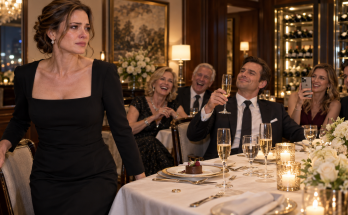
I came back for a folder and found my eight-month-pregnant wife crouched under our dining table while my mother shoved fish b0nes toward her mouth.

Six relatives watched.
“She needs to learn what happens when she embarrasses this family,” my mother said, right before my wife coughed and a thin line of bl00d hit her dress.
I carried her out and photographed every plate before anyone could clear them.
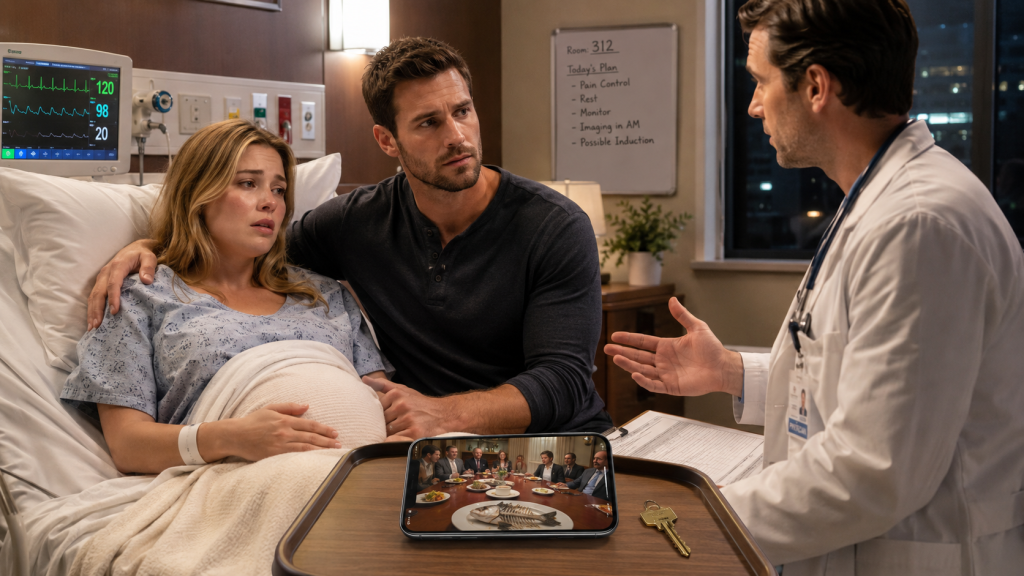
Three hours later, the doctor showed me an older injury my wife had never told me about—and asked whether my mother still had access to our house.
“Yes,” I said. “She has an emergency key.”
The doctor looked at my wife instead of me. “Is she using that key with your permission?”
Emma’s fingers tightened around the edge of the hospital blanket. She shook her head once, so slightly I almost missed it.
That answer frightened me more than anything my mother had said at the table.
I pulled up the photographs while the doctor stepped outside. Six plates held neatly cut pieces of fish. Emma’s plate was different. The meat had been pushed aside, and a pile of sharp bones had been arranged directly in front of her chair. Her water glass was overturned. One dining chair had been wedged behind hers.
The pictures could not show who had moved each object, but they destroyed the story my family would eventually tell—that Emma had panicked during an ordinary dinner.
I sat beside her and placed my phone facedown.
“I’m not calling anyone yet,” I said. “Tell me what you need.”
“Change the locks,” she whispered. “Save every picture. And don’t let your mother know where they’re discharging me.”
I wanted to demand names, dates, and explanations. Instead, I asked the only question that mattered.
“Was the older injury from her?”
Emma stared at the hospital wristband around her arm. Six weeks earlier, while I was working late, my mother had let herself into our house and criticized how Emma was preparing the nursery. The argument moved into the hallway. My mother shoved her against the corner of a dresser, then told her the pain was proof she was too emotional to become a good mother.
Emma had nearly called me.
Then my mother reminded her that the entire family already thought pregnancy had made her unstable.
“She said they would all back her up,” Emma told me. “She said you’d have to choose between your wife and everyone who raised you.”
I reached for her hand, but she pulled it beneath the blanket—not because she was angry with me, but because she was ashamed of trembling.
“You never had to protect me from the truth,” I said.
“I wasn’t protecting you.” Her voice cracked. “I was trying to make it to the delivery without losing our home, our family, or you.”
I promised her the locks would be changed before we returned. I promised nobody would enter the hospital room without her permission. Then I asked why tonight had been different—why six people had simply stood there while my mother forced her beneath our table.
Emma closed her eyes.
“Because they weren’t all just watching,” she said. “Your brother Caleb took my phone and stood between me and the back door.”
I felt the room tilt.
Emma looked directly at me.
PART 2: THE SIX PEOPLE WHO STOOD THERE
Emma looked directly at me.
“Caleb took my phone and stood between me and the back door.”
For a few seconds, I could hear nothing except the monitor beside her bed.
Beep.
Pause.
Beep.
The sound was steady.
My thoughts were not.
“My brother?”
Emma nodded.
“Caleb?”
Another nod.
I stood.
Then sat back down almost immediately because anger had filled my body so quickly that standing felt dangerous.
I pressed both hands against my knees.
“Why?”
Emma looked toward the hospital-room door.
“I don’t know.”
“That’s not true.”
I regretted the words the moment they left me.
Her shoulders tightened.
I softened my voice.
“Sorry.”
I looked at the floor.
“You don’t owe me a perfect explanation.”
She said nothing.
I tried again.
“What happened before I came in?”
Emma pulled the blanket higher over her stomach.
Our baby moved beneath it.
A small rise beneath white cotton.
That brought me back into the room.
Wife.
Baby.
Hospital.
Now.
Not revenge.
Not Caleb.
Not my mother.
Emma.
“What happened?”
I asked.
Her lips trembled.
“Your mom came early.”
“To our house?”
“Yes.”
“With everybody?”
“No.”
She shook her head.
“Caleb came first.”
My stomach tightened.
“How did he get in?”
“He knocked.”
That mattered.
Caleb did not have a key.
At least I had never given him one.
“I opened the door.”
Emma swallowed.
“He said Mom was bringing dinner over because she thought I shouldn’t be cooking this close to the due date.”
I almost laughed.
Not because it was funny.
Because my mother had spent the last month criticizing Emma for “using pregnancy as an excuse” whenever I cooked instead.
“She brought fish?”
“Yes.”
“And the others?”
“They arrived after.”
“Who?”
Emma counted slowly.
“Caleb.”
“Your aunt Denise.”
“My cousin Mark.”
“Uncle Peter.”
“My sister Nora.”
“And Mom.”
Six.
Exactly six people around that table.
The same six I had photographed.
“Why were they there?”
Emma looked ashamed again.
I hated that.
Not her.
The shame.
Something had happened to her, yet her face kept reacting as though she had committed the offense.
“She said it was an intervention.”
My blood went cold.
“About what?”
Emma laughed weakly.
“Me.”
I stared.
“She said I had been turning you against the family.”
My jaw tightened.
“She said I was using the baby to control you.”
“What?”
“That I didn’t come to enough family dinners.”
“You’re thirty-four weeks pregnant.”
“Thirty-five.”
Her voice almost sounded amused.
I looked at her.
“Sorry.”
“You always forget when the week changes.”
For half a second, she smiled.
So did I.
Then it disappeared.
She continued.
“She said I had become disrespectful.”
“How?”
“Because I stopped answering her calls.”
I knew that.
At least I thought I did.
Emma told me she needed quiet because my mother had become overwhelming about the nursery.
Paint colors.
Bassinet placement.
Whether breastfeeding was “necessary.”
Whether Emma should quit working permanently.
I had told Mom to back off.
She said:
Of course. Whatever Emma wants.
Apparently that sentence had been less agreement than declaration of war.
Emma continued.
“She told everyone I was isolating you.”
I stared at her.
“That’s insane.”
She looked away.
I realized immediately.
“Did they believe her?”
Silence.
“Emma?”
“Some of them already did.”
My chest tightened.
“How long?”
“I don’t know.”
“Who?”
She whispered:
“Caleb.”
Of course.
My older brother.
Forty-one.
Three children.
The man who called himself “family first” because he hosted football Sundays and remembered everyone’s birthdays.
“What did he say?”
“He said you had changed since we got married.”
I felt something hollow open inside me.
I had heard that sentence before.
At Christmas.
At Easter.
After I skipped a weekend trip because Emma had been sick.
You’ve changed.
As though becoming a husband meant betrayal.
Emma continued.
“He said you used to show up.”
“I do show up.”
“I know.”
“No.”
My voice rose.
I stopped.
Breathed.
Then:
“I show up when I can.”
She nodded.
“I know.”
I looked at her.
“Keep going.”
Emma took a slow breath.
“They sat me down.”
“At the dining table?”
“Yes.”
“Voluntarily?”
“At first.”
That phrase changed everything.
“At first?”
She looked down.
“Mom started asking why I was trying to separate you from everyone.”
“I said I wasn’t.”
“Then Denise said she had noticed it too.”
“Peter said family gatherings had become tense because of me.”
“Nora barely said anything.”
My sister.
Twenty-nine.
The one who had texted Emma last week asking for baby-name ideas.
“What did Nora do?”
“She cried.”
I frowned.
“Why?”
“She kept saying she didn’t want to be involved.”
My stomach turned.
But she stayed.
That was involvement.
Emma continued.
“I stood up.”
“Then what?”
“Caleb stepped in front of the back door.”
I closed my eyes.
He had not touched her.
He did not need to.
Six-foot-three.
Broad shoulders.
A pregnant woman.
A doorway.
The message was enough.
“I said I wanted everyone out.”
“What did he say?”
Emma hesitated.
“Caleb?”
“Yes.”
“He said…”
She stopped.
I waited.
“He said, ‘Nobody is leaving until you stop lying about Mom.’”
My hands curled into fists.
I opened them again.
“Did you try the front door?”
“Your mother was standing there.”
My breathing changed.
Two exits.
Two people.
Nobody physically dragging her.
Nobody needed to.
“And your phone?”
“It was on the table.”
“Caleb took it when I reached for it.”
“Did he say why?”
“He said I was not calling you to make another scene.”
Another.
As though I had attended the first.
As though Emma’s request for help already existed as family propaganda.
“What happened after he took it?”
Emma’s eyes filled.
“Mom told me to apologize.”
“For what?”
“For telling you about the nursery argument.”
I stared.
“You didn’t tell me.”
“I know.”
Silence.
My mother had punished Emma for a disclosure she never even made.
“She thought you had?”
Emma nodded.
“She said you were cold to her after.”
I remembered.
Six weeks earlier.
Mom called asking whether we had chosen curtains.
I told her:
Stop showing up at the house without calling. Emma needs space.
That was all.
I had said it because I was tired of her letting herself in.
Not because Emma told me about the shove.
Mom had assumed.
And then punished Emma for it.
My stomach turned.
“What did you say?”
“I told her you noticed things yourself.”
“She called me a liar.”
“Then?”
Emma stared at her wristband.
“She said if I wanted to behave like a child, they would treat me like one.”
My skin went cold.
“The fish.”
She nodded.
I did not ask for every detail.
Not yet.
“What happened to the plate?”
“Mom said I was going to eat what she served.”
“I told her the bones were still in it.”
“She said I was being dramatic.”
Of course.
“And then?”
“Denise said there was nothing wrong with the fish.”
“I pointed at everyone else’s plates.”
Emma’s voice cracked.
“Their fish was cleaned.”
I had the photographs.
Proof.
Not of the act.
But of the difference.
“Who prepared yours?”
“Mom.”
“Did anyone see?”
“Caleb did.”
I closed my eyes.
Of course he did.
“She put the bones there on purpose?”
“Yes.”
“Did she say why?”
Emma looked at me.
“She said mothers who embarrass a family should learn what discomfort feels like before they raise children.”
My chest tightened.
It was the kind of sentence Mom loved.
Cruelty dressed as wisdom.
Something that sounded like a proverb until you looked at the person being hurt.
I whispered:
“What happened under the table?”
Emma started crying.
Not loudly.
That frightened me more.
“She pushed the chair toward me.”
“Who?”
“Your mom.”
“She told me to pick up what I dropped.”
“What did you drop?”
“My fork.”
Emma wiped her cheek.
“When I bent down, she kicked it farther.”
My throat closed.
“I reached.”
“Then she pushed the chair behind me.”
I remembered the photograph.
One chair wedged behind Emma’s.
“Caleb moved another chair.”
My breathing stopped.
“Caleb?”
She nodded.
“He said, ‘Just finish this and everybody can go home.’”
That sentence hurt differently.
Because he had understood.
Enough to know there was something to finish.
Enough to understand Emma could not simply leave.
Yet he framed compliance as the solution.
“What did everyone else do?”
Emma looked away.
“Nora kept saying Mom should stop.”
“Did she move?”
“No.”
“Did she call anyone?”
“No.”
“Did Denise?”
“No.”
“Peter?”
“No.”
“Mark?”
“No.”
Six people.
One pregnant woman.
And a room full of adults waiting for obedience.
Emma whispered:
“Your mom kept pushing pieces toward me.”
“I told her I couldn’t.”
“She said I had spent years pretending the family was dangerous, so now I could learn what dangerous actually felt like.”
My stomach turned.
I wanted to ask if anyone had touched her throat.
Held her.
Forced her mouth open.
But the doctor had already documented the injury, and Emma was trembling.
Details could wait for professionals.
I reached across the bed.
Stopped before touching her.
“Can I hold your hand?”
She looked at me.
Then slowly pulled it from beneath the blanket.
I took it gently.
“Thank you for telling me.”
Her face collapsed.
“You’re not mad?”
I stared.
“At you?”
She nodded.
The question nearly broke me.
“No.”
I swallowed.
“I’m furious.”
Her hand tensed.
“Not at you.”
I looked directly at her.
“Never at you for telling me what happened.”
She started crying harder.
Then:
“I should’ve told you after the dresser.”
“Yes.”
The word left my mouth before I softened it.
Emma looked hurt.
I squeezed her hand.
“You should have been able to tell me.”
“That’s different.”
Her eyes filled.
“I should have made it easier.”
“What could you have done?”
“Not dismiss Mom as annoying.”
My throat tightened.
“I kept treating her behavior like personality.”
“She’s pushy.”
“She’s dramatic.”
“She thinks she’s helping.”
“I made all of it sound smaller.”
Emma said nothing.
I continued.
“I didn’t know she shoved you.”
“No.”
“But I knew she was using the key.”
Her eyes lifted.
That stopped me.
“What?”
“You knew?”
“Not that she came when I was alone.”
My stomach dropped.
Emma stared at me.
I thought back.
Mom watering plants while we were out.
Mom dropping food inside.
Mom once texting:
I put your mail on the counter.
I had asked how she got in.
Emergency key. Relax.
I laughed.
Told Emma:
That’s Mom. Boundaries are theoretical to her.
The memory made me sick.
“I knew she let herself in sometimes.”
Emma’s face tightened.
“How many times?”
“I don’t know.”
“You never told her to stop?”
“I did.”
“When?”
I searched.
Could not remember.
Not clearly.
Maybe I had joked.
Maybe I had complained.
That was not the same thing.
“I didn’t make it a boundary.”
Emma nodded.
Not cruelly.
Just accurately.
“No.”
I covered my face.
Then remembered what the social worker in another life might say.
Do not make the harmed person comfort your guilt.
I lowered my hands.
“I’m sorry.”
Emma cried.
“I know.”
Then:
“But right now I need you to fix it.”
“Yes.”
That I could do.
I called a locksmith from the hospital hallway.
Emergency change.
Front.
Back.
Garage entry.
Side door.
Digital code.
Every lock.
I asked a neighbor I trusted, Marcus, to meet the locksmith and stay until everything was finished.
Then I changed our security-account password.
Disabled every old access code.
Removed Mom from the emergency-contact list connected to the smart doorbell.
I did not text her.
Not one word.
When I returned to Emma’s room, the doctor had come back with a hospital social worker.
Her name was Ms. Valdez.
She spoke to Emma first.
Not me.
Good.
She explained that because Emma was pregnant and had described intentional physical harm and being prevented from leaving, the hospital wanted to make sure discharge was safe.
Emma looked at me.
I said:
“You choose.”
Ms. Valdez noticed.
“So where do you feel safest tonight?”
Emma answered immediately.
“Not home.”
That hurt.
But it mattered more than my feelings.
“Okay.”
“Anywhere specific?”
“My friend Leah.”
I knew Leah.
College roommate.
Lived twenty minutes away.
Mom did not know the address.
Good.
Emma called her.
Leah answered.
Emma managed:
“Can I stay with you?”
Leah said:
“For as long as you need.”
No interrogation.
No family politics.
Another open door.
Ms. Valdez asked whether Emma wanted law enforcement contacted.
Emma froze.
My first instinct was yes.
I swallowed it.
She looked at me.
“What do you think?”
I answered carefully.
“I think what happened was serious.”
Her eyes filled.
“But I think you decide whether you want to speak tonight.”
Ms. Valdez added:
“There may be reporting considerations depending on the medical findings, but we can explain those separately. You don’t have to make every decision in one minute.”
Emma exhaled.
“Can I talk to someone?”
“Yes.”
“Without his family here?”
“Yes.”
“With him?”
She pointed toward me.
“If I want?”
“Absolutely.”
A police officer arrived later.
Emma chose to speak with me present.
She told the story again.
More clearly than she had told me.
Not because she trusted him more.
Because telling once had opened a door.
The officer asked whether anyone touched the exits.
“Caleb stood at one.”
“His mother at the other.”
“Did either tell you that you could not leave?”
Emma thought.
Then:
“Caleb said nobody was leaving until I apologized.”
The officer wrote that down.
“Did you believe you were free to leave?”
“No.”
“Why?”
Emma looked at him as though the answer should have been obvious.
“I was eight months pregnant and there were six of them.”
He nodded.
No challenge.
Just record.
Then he asked about her phone.
Emma said Caleb took it.
“Did he return it?”
“No.”
My stomach turned.
I had forgotten.
“Where is it now?”
Emma looked at me.
“I don’t know.”
I stood.
“Her phone is still at the house?”
“Probably.”
My photographs suddenly mattered in a new way.
When I came in, Caleb had still been there.
So had everyone else.
Emma’s phone was nowhere near her.
I had carried her out.
Did not think to find it.
The officer asked:
“Do you have Find My Phone or similar tracking?”
Emma nodded.
I opened the laptop she kept in her hospital bag.
Logged into her account with permission.
Her phone appeared.
Not at our house.
My breathing stopped.
The location showed another address.
Ten miles away.
I knew it.
Caleb’s house.
Emma whispered:
“Oh my God.”
I stared.
“Why would he take it home?”
The officer said:
“We don’t know.”
He took down the location information.
Then asked:
“Is there anything on the phone someone might want access to?”
Emma became pale.
“What?”
“Messages.”
“Photographs.”
“Recordings.”
She looked at me.
Then closed her eyes.
I knew before she answered that this mattered.
“What’s on it?”
I asked.
Emma swallowed.
“I recorded something.”
My stomach dropped.
“When?”
“Six weeks ago.”
The dresser.
She nodded.
“Not the shove.”
“After.”
I stared.
“What did you record?”
“Your mother.”
The room went still.
Emma had called Mom the following morning.
She had intended to say the emergency key needed to be returned.
Instead, Mom spent twenty minutes explaining what happened.
Not apologizing.
Explaining.
Emma recorded because she had started doubting herself.
“She said I fell into the dresser.”
Emma whispered.
“Then later she said she barely touched me.”
“Then she said if I hadn’t raised my voice, she wouldn’t have had to move me out of her way.”
Three versions in one conversation.
“Did you save it?”
“Yes.”
“Where?”
“Voice memos.”
On the phone currently sitting at Caleb’s house.
My blood turned cold.
“Is it backed up?”
Emma stared.
“I don’t know.”
We checked.
Some audio synced automatically.
Her most recent files appeared in cloud storage.
We found it.
Thirty-two minutes.
Date.
Time.
Mom’s voice.
Safe.
Emma cried with relief.
The officer asked permission to note its existence.
She agreed.
I uploaded a copy to secure cloud storage.
Then another.
Then sent one to myself.
Then to Emma’s lawyer friend at her request.
Not because one recording would solve everything.
But because it existed.
Because Caleb could no longer make it disappear by holding her phone.
That night, Mom finally texted me.
You need to hear what actually happened.
I stared.
Then another.
Emma became hysterical.
Another.
Everyone there can confirm it.
Six witnesses.
Just like Emma said Mom threatened.
I did not respond.
Then Caleb.
Bro, call me before you ruin the family over this.
I looked at Emma.
She was asleep.
Finally.
One hand resting over her stomach.
I saved the messages.
Screenshots.
Backups.
No replies.
The next morning, my family group chat exploded.
Aunt Denise wrote:
Nobody forced anyone to eat anything.
Uncle Peter:
Things got heated but your mom was trying to calm her down.
Cousin Mark:
Emma crawled under the table on her own after panicking.
Nora wrote nothing.
Caleb:
This is getting insane. We were all there.
There it was.
Consensus manufacturing itself in real time.
Everyone telling the same story after leaving the same room.
But not quite the same.
Nobody forced.
Mom was calming.
Emma panicked.
Then Caleb added:
She could have left whenever she wanted.
I stared at that message.
Then typed one sentence.
Deleted it.
Typed another.
Deleted that too.
I remembered Priya-type wisdom from another world:
Records are better.
I saved the entire chat.
Then muted it.
At eleven, Nora called.
I answered.
She was crying before I said hello.
“Is Emma okay?”
“What do you think?”
Silence.
“I’m sorry.”
“That isn’t enough.”
“I know.”
“Why didn’t you help her?”
Nora sobbed.
“I was scared.”
“Of Mom?”
“Yes.”
The answer surprised me.
Nora was twenty-nine.
Own apartment.
Own salary.
No financial dependence.
Still scared.
“How long?”
She whispered:
“My whole life.”
My anger shifted.
Not gone.
But widened.
“What happened last night?”
Nora took a breath.
Then told me.
Not exactly Emma’s story.
Because witnesses see different pieces.
But enough aligned.
Mom arranged the bones.
Caleb took the phone.
Caleb blocked the door.
Denise told Emma to “just apologize.”
Peter said everybody should sit down.
Mark laughed once when Emma coughed, then stopped when he saw the blood.
Nora told Mom to stop twice.
But never moved toward Emma.
Never called me.
Never challenged Caleb.
“Why?”
I asked.
Nora cried.
“Because Mom told us before Emma arrived that she was trying to destroy the family.”
“What?”
Silence.
“Before?”
“Yes.”
My stomach dropped.
“This was planned?”
“I didn’t know about the fish.”
“That wasn’t my question.”
Nora swallowed.
“Mom asked everyone to come.”
“When?”
“Two days ago.”
“Why?”
“She said we needed to confront Emma.”
The room went cold.
Not spontaneous.
Not dinner that went wrong.
Planned confrontation.
“Did Caleb know?”
“Yes.”
“How much?”
“I don’t know.”
“Nora.”
“He knew she wanted Emma’s phone taken.”
I stopped breathing.
“What?”
“He said if Emma called you before everyone finished talking, you would come home and shut it down.”
My stomach turned.
So Caleb’s part was assigned.
Not impulsive.
A role.
“Who suggested blocking the door?”
“I didn’t hear anyone say that.”
“But he did it.”
“Yes.”
“Did Mom tell him to?”
“I don’t know.”
At least she said she didn’t know.
No invented certainty.
“Why are you telling me this now?”
Nora cried.
“Because they’re lying.”
“Who?”
“All of them.”
My chest tightened.
“Mom called this morning.”
“She told everyone we need to say Emma panicked.”
“She said if police ask, we should remember that she was under emotional strain because of pregnancy.”
There it was.
The old injury.
The warning.
The entire family already thinks you are unstable.
Not threat.
Preparation.
My mother had been building the explanation before anyone officially asked.
“Will you tell police?”
Nora went silent.
“Nora.”
“I’m scared.”
“I know.”
“Will you?”
Another silence.
Then:
“Yes.”
I closed my eyes.
“Thank you.”
“But Caleb will never forgive me.”
I thought of Emma beneath our dining table.
“Then Caleb can live with that.”
Nora cried harder.
After the call, I sat in my car outside Leah’s building for almost ten minutes.
Emma had been discharged there that morning.
Baby stable.
No immediate labor.
Throat injured but expected to heal.
Bruising from the older dresser incident still visible enough on imaging to concern the doctor.
When I entered Leah’s apartment, Emma was sitting on the couch wearing borrowed pajamas.
No makeup.
Hair loose.
A bowl of cereal in her lap.
She looked more beautiful to me than she ever had at any family wedding or holiday photograph.
Not because she looked fragile.
Because she was eating.
Safe enough to swallow.
I sat beside her.
“Nora called.”
Emma froze.
“What does she want?”
“To tell the truth.”
She stared.
“Really?”
“She says Mom planned the confrontation.”
Emma looked down.
“I figured.”
“What?”
“Your mom texted me yesterday morning.”
My heart stopped.
“What did she say?”
Emma took out Leah’s spare tablet.
She had restored some messages from cloud backup.
There it was.
Mom:
Dinner at your house tonight. Family only. We’re clearing the air before the baby comes.
Emma:
No. I’m tired. Another time.
Mom:
This is not optional.
My breathing changed.
Then:
I still have my key. We’ll let ourselves in if you decide to be childish.
I stared.
Written.
Not memory.
Not interpretation.
Written.
Emma had not shown me because she thought refusing would make things worse.
“And Caleb?”
Emma scrolled.
A message from him.
Just hear Mom out tonight. Don’t drag my brother into it before we talk.
Timestamp:
Three hours before dinner.
My stomach dropped.
He had known.
Maybe not the bones.
Maybe not all of it.
But enough.
“What else?”
Emma hesitated.
“I sent him one.”
She showed me.
I don’t want six people in my house while he’s gone. Please tell them not to come.
Caleb’s response:
Then don’t make it a fight.
I stared at those six words.
Then don’t make it a fight.
As though she controlled whether six people entered her house.
As though peace meant submission.
I saved everything.
Again.
Evidence had become almost ritual.
Not because I doubted her.
Because I had learned how quickly families rewrite what everyone saw.
The locksmith finished that afternoon.
Every lock changed.
Every code revoked.
Mom’s emergency key became worthless metal.
But Emma still did not want to return home.
I did not push.
So we stayed at Leah’s.
I slept on an air mattress.
Emma slept in the guest room.
For the first few nights, she woke whenever someone walked through the hallway.
Pregnant.
Exhausted.
Still listening for a key in a door that no longer worked.
The police interviewed Nora.
Then Denise.
Peter.
Mark.
Caleb.
Stories shifted.
That mattered.
Caleb first denied taking Emma’s phone.
Then said he moved it “for safekeeping.”
Then admitted bringing it home accidentally.
Except phone-location logs showed it remained at his house nearly eighteen hours.
He returned it only after police contacted him.
The device was examined.
One thing had changed.
The voice memo of Mom from six weeks earlier had been deleted locally.
But cloud backup preserved it.
When I learned that, I sat in my car and cried.
Not rage.
Recognition.
Caleb had not merely failed to help.
Someone had opened Emma’s phone.
Someone had tried to remove the oldest evidence.
Investigators would determine who.
Not me.
I did not need to invent certainty.
What mattered was the deletion had occurred while the phone was out of Emma’s control.
That fact existed.
Mom continued sending messages.
First outrage.
Then sorrow.
Then bargaining.
I was trying to protect your marriage before she separated you from everyone.
Then:
You will regret turning your back on blood.
Then:
Your baby deserves grandparents.
That one almost got a reply.
I wanted to write:
Our baby deserves adults who do not terrorize his mother.
Instead, I saved it.
Muted her.
Emma watched me.
“You can answer if you want.”
“I don’t.”
“Because of me?”
I looked at her.
“No.”
She waited.
I corrected myself.
“Not only because of you.”
She frowned.
I continued.
“I don’t want a relationship with people who require me to treat what happened to you as negotiable.”
Her eyes filled.
That was different.
Not choosing wife over family.
Choosing reality over denial.
She leaned back.
The baby moved.
I put my hand near her stomach.
“Can I?”
She nodded.
I felt the kick.
Strong.
Alive.
Emma whispered:
“I’m scared they’re going to say I ruined everything.”
“They already are.”
She looked at me.
“That doesn’t bother you?”
“Yes.”
“Then why do you look calm?”
I thought.
“Because being bothered doesn’t mean being confused.”
Her face changed.
I continued.
“I’m devastated.”
“Caleb is my brother.”
“Mom raised me.”
“Denise held me when I broke my arm at twelve.”
“Peter taught me to drive.”
“Nora is terrified of all of them.”
“I can love history with people and still refuse what they’re doing now.”
Emma started crying.
I kissed her forehead.
Carefully.
Three days later, Nora came to Leah’s apartment.
Emma decided whether she could enter.
She said yes.
Nora stood in the living room holding a grocery bag.
“What is that?”
Emma asked.
“Food.”
Nora looked embarrassed.
“I didn’t know what else to bring.”
Emma almost smiled.
“Food has been complicated lately.”
Nora began sobbing.
She put the bag down immediately.
“I’m sorry.”
Emma stared.
Nora continued.
“I should have stood up.”
“Yes.”
Emma’s answer was quiet.
Nora cried harder.
“I kept telling Mom to stop.”
“You stayed.”
“Yes.”
“You watched.”
“Yes.”
“You saw Caleb take my phone.”
“Yes.”
“You saw him block the door.”
Nora covered her face.
“Yes.”
Emma’s voice cracked.
“And you still thought telling her to stop twice was enough?”
Nora lowered her hands.
“No.”
Silence.
Good apologies survive silence.
They do not demand rescue.
Finally Nora whispered:
“I was scared of becoming next.”
Emma closed her eyes.
That sentence changed the room.
Not excused.
Explained.
“Next?”
I asked.
Nora looked at me.
Then immediately wished she had not.
“What does that mean?”
She went pale.
“Nora.”
She stared at the floor.
“Mom has done things before.”
My stomach dropped.
“To you?”
Nora started crying again.
Emma sat straighter.
“What things?”
Nora shook her head.
“I don’t want to talk about it.”
I almost pressed.
Then stopped.
Her story.
Her timing.
“Okay.”
But she kept crying.
Then:
“When I was nineteen…”
She swallowed.
“Mom locked me in the laundry room overnight.”
The apartment went silent.
“What?”
I whispered.
“She said I was drunk.”
“Were you?”
“I had one beer.”
She wiped her face.
“She found out I was dating someone she hated.”
“So she took my phone.”
“Locked the laundry room.”
“Told Dad I had come home drunk and needed to sleep it off.”
My chest turned cold.
Dad.
Our father had died four years earlier.
He had believed that story?
“Did he know you were locked in?”
“No.”
Nora shook her head.
“Mom told him I locked myself in because I was embarrassed.”
I stared.
Same architecture.
Restriction.
Then explanation.
Child or adult made to look unstable.
Witnesses given a cleaner story.
“Nora…”
“How many times?”
She looked at me.
“What?”
“How many times did Mom do something like that?”
Nora whispered:
“I don’t know.”
My stomach twisted.
Then Emma asked:
“Did Caleb know?”
Nora’s face changed.
I saw the answer before she gave it.
“Yes.”
My chest stopped moving.
“What did he do?”
Nora looked at me.
“He helped.”
I stared.
“With the laundry room?”
“He brought the outside lock.”
Everything inside me went quiet.
Caleb.
Again.
Not one terrible dinner.
Not one panic-driven loyalty choice.
A pattern.
Older than my marriage.
Older than Emma.
Nora continued.
“When I got out the next morning, Mom said if I told Dad, she’d show him pictures of me at a party and say I was using drugs.”
“Were you?”
“No.”
“Caleb knew that?”
“Yes.”
“Why did he help her?”
Nora looked broken.
“Because Mom told him he was the only child she could rely on.”
There it was.
The reward.
Loyalty made into identity.
Caleb was not simply defending our mother.
He had spent years being told that helping her control everyone else proved he was the good child.
Emma looked at me.
My skin felt cold.
Nora wiped her face.
“There’s more.”
Of course.
I almost did not want it.
“What?”
“Mom keeps a box.”
My throat tightened.
“What kind of box?”
“Documents.”
“Pictures.”
“Notes.”
I stared.
“Where?”
“In her bedroom closet.”
Nora looked at Emma.
“She keeps things on everybody.”
Emma went pale.
“What things?”
“Screenshots.”
“Emails.”
“Copies of medical papers.”
“Anything she thinks proves someone is unstable, selfish, irresponsible, ungrateful.”
The room felt suddenly smaller.
Our mother had not only bullied.
She archived.
Built versions of people.
Prepared narratives.
I thought of Emma six weeks earlier.
Pregnancy made unstable.
I thought of last night.
Panicking under the table.
I thought of Nora at nineteen.
Drunk.
Unreliable.
And then I thought of Dad.
Our father.
The man who spent his last two years believing memory problems were getting worse.
Mom handled all his medical appointments.
His medications.
His paperwork.
Something about that thought frightened me.
“Nora.”
She looked at me.
“Did she keep a file on Dad?”
Her face drained.
She said nothing.
Emma watched her.
“Nora.”
I whispered.
“Did Mom keep a file on Dad?”
Nora began crying again.
Then nodded.
I stopped breathing.
“What was in it?”
“I don’t know.”
“That’s a lie.”
“I only saw the label.”
“What label?”
Her voice became almost inaudible.
DECLINE — DOCUMENTATION.
The room went completely still.
Our father had died after complications from a stroke.
For months beforehand, Mom told us he had become forgetful.
Confused.
Difficult.
She had gradually taken over finances.
Medical decisions.
Everything.
At the time, we called it care.
I stared at Nora.
“How long before his stroke did she start that file?”
Nora shook her head.
“I don’t know.”
“When did you see it?”
“About a year before he died.”
My entire body turned cold.
Emma reached for my hand.
This time I was the one trembling.
One year before Dad died.
A box labeled decline.
A mother who kept evidence on everyone.
A brother who helped enforce her version of family loyalty.
A pregnant wife who had just survived the newest chapter.
And suddenly the dinner no longer looked like a horrifying exception.
It looked like something inherited from a much older system.
Nora whispered:
“I’m sorry.”
I stared at her.
“For what?”
She looked toward me.
Then Emma.
“Because after Dad died…”
Her voice cracked.
“…Mom told Caleb to get rid of some of his papers.”
My heart stopped.
“What papers?”
“I don’t know.”
“Where?”
“His desk.”
“Why?”
“She said they were old medical records and financial documents we didn’t need.”
My breathing changed.
“And Caleb did?”
Nora nodded.
Then:
“But I saved one envelope.”
Everything inside me froze.
“What envelope?”
She looked terrified now.
Not of me.
Of the answer.
“I didn’t understand it.”
“Where is it?”
“At my apartment.”
“What’s in it?”
She swallowed.
Then said:
“A letter Dad wrote to you.”
I stared.
“To me?”
“Yes.”
“When?”
“Three months before his stroke.”
My heart pounded.
“What does it say?”
Nora closed her eyes.
“I never opened it.”
Silence.
Then:
“But Mom had written something across the front.”
My throat went dry.
“What?”
Nora looked at me.
And whispered:
DO NOT GIVE HIM THIS. HE’LL CHOOSE HIS WIFE OVER US TOO.
No one moved.
Emma’s fingers tightened around mine.
My mother had written that three years before I married Emma.
Which meant the wife mentioned on the envelope was not Emma.
It was someone else.
Someone connected to my father.
Someone my mother had apparently been afraid I would choose.
I stared at Nora.
“What wife?”
She shook her head.
“I don’t know.”
Then she whispered:
“But Dad’s letter has a woman’s name written under yours.”
My heartbeat became painfully loud.
“What name?”
Nora looked at me.
Then at Emma.
And said:
Clara.
I stopped breathing.
I knew that name.
Not well.
Only from childhood.
Clara was the woman Mom had always told us destroyed our father’s first marriage.
The woman we were taught never to mention.
The woman Dad supposedly left before Caleb was born.
The woman I believed had vanished from our family decades ago.
But apparently three months before his stroke, my father had written me a letter about her.
A letter Mom tried to destroy.
A letter Nora secretly saved.
And as I sat beside my pregnant wife in a borrowed apartment, with our locks changed and my brother’s messages preserved, I finally understood something far more frightening than the dinner.
My mother had not started deciding which stories this family was allowed to believe when Emma entered it.
She had been doing it for most of my life.
And somewhere in Nora’s apartment was a sealed letter from my dead father that she had spent years making sure I never read.
PART 3: THE LETTER MY FATHER NEVER GOT TO GIVE ME
Nora brought the envelope the next morning.
She held it with both hands.
Not because it was heavy.
Because some things become heavier the longer a family refuses to open them.
Emma was resting in Leah’s guest room.
The baby had been moving normally all morning.
The locks on our house had been changed.
My mother’s emergency key no longer opened anything.
And yet when Nora placed that old envelope on the coffee table, I felt as if my mother had somehow found another way inside.
My name was written across the front in Dad’s handwriting.
Beneath it:
About Clara. Please read this yourself.
And across the top, in my mother’s dark blue ink:
DO NOT GIVE HIM THIS. HE’LL CHOOSE HIS WIFE OVER US TOO.
I stared at that sentence.
Emma and I had not been married then.
We had been dating seriously.
Mom had already started referring to Emma as “your little wife” whenever I chose plans with her over family gatherings.
I had thought it was teasing.
Now it looked different.
Most things did.
Nora whispered:
“I’m sorry.”
I looked at her.
“For saving it?”
“For waiting.”
She sat opposite me.
“I found it after Dad’s stroke.”
“Where?”
“In his desk.”
“Mom had a stack of papers she told Caleb to throw away.”
Her mouth trembled.
“I saw your name.”
“So I kept it.”
“Why didn’t you give it to me?”
Nora looked ashamed.
“Because Mom scared me.”
That answer would once have made me angry.
Now I understood it too well.
I picked up the envelope.
The paper had yellowed along one edge.
Dad had been dead four years.
For four years, I had believed his last months were exactly as Mom described them.
Confused.
Forgetful.
Dependent.
Grateful she had taken over everything.
Now I no longer knew which parts of that story belonged to him.
I broke the seal.
There were six handwritten pages.
Dad’s handwriting started neat.
By the final page, the letters leaned unevenly across the paper.
The first line read:
Son, if you are reading this, I finally found enough courage to tell you something I should have told all of you years ago.
I stopped.
Nora began crying before I had even reached the second paragraph.
Dad continued.
Clara did not destroy my first marriage.
My throat tightened.
All my life, Mom’s version had been simple.
Clara was jealous.
Clara was unstable.
Clara embarrassed Dad.
Clara accused him of things.
Clara eventually disappeared.
Then Dad met Mom.
Mom rescued him from the wreckage.
That was the family history we were given.
Dad’s letter said:
I destroyed that marriage myself.
I stared at the words.
Then kept reading.
Dad admitted his marriage to Clara had been struggling.
Money.
Long hours.
Arguments neither one of them knew how to finish.
Then he met my mother.
She worked in the accounting department of the company where Dad was a supervisor.
They began talking.
Then meeting outside work.
Then having an affair.
I closed my eyes.
Nora whispered:
“Dad?”
I nodded.
“He says he cheated.”
She covered her mouth.
Dad had never told us.
Mom certainly had not.
The letter continued.
When Clara discovered the affair, she became angry. She had every right.
Your mother later used that anger as proof that Clara was unstable.
I stopped breathing.
There it was.
The word.
Unstable.
Emma.
Nora.
Dad.
Clara.
Different decades.
Same weapon.
Dad wrote:
I let myself believe the version that made me less ashamed.
That sentence hurt more than if he had blamed Mom for everything.
He did not.
He placed his own failure where it belonged.
Your mother told my family that Clara threatened us. Some of that was exaggerated. Some was simply false. I knew enough to question it and chose not to because it made leaving easier.
Nora whispered:
“Oh, Dad.”
I kept reading.
Clara had written him after the divorce.
Several times.
Dad never answered.
He believed she wanted money.
Revenge.
Control.
Years later, he discovered Mom had opened two of those letters before he ever saw them.
One had been thrown away.
Another had been hidden.
Exactly like his letter to me.
My stomach turned.
I am not telling you this because Clara was perfect. She wasn’t. Neither was I. I am telling you because your mother has spent years turning other people’s reactions into evidence that her own behavior was justified.
I looked toward the hallway.
Emma was asleep only twenty feet away.
Thirty-five weeks pregnant.
Recovering from injuries inflicted by the same woman Dad had tried to warn me about.
I forced myself to continue.
Then I reached Emma’s name.
I have noticed how your mother talks about Emma.
My hands began shaking.
Controlling.
Sensitive.
Separating you from family.
Too emotional.
I stopped.
The exact language Mom had used before the dinner.
The exact story she had given Caleb.
Dad had seen it years earlier.
Before our wedding.
Before the emergency key.
Before the nursery.
Before fish bones arranged on a plate.
Emma is not Clara. You are not me. But the pattern frightens me.
Tears blurred the page.
If your mother tells you that loving your partner means betraying the family, ask yourself who is requiring the choice.
I covered my mouth.
Nora cried openly now.
Dad continued:
A good family does not need someone else to become smaller in order to stay close.
Then:
If Emma asks for a boundary, do not automatically call it distance. Sometimes a door closes because someone kept walking through it without knocking.
I could not read for several seconds.
The emergency key.
Mom appearing inside our house.
My jokes.
My shrug.
That’s Mom. Boundaries are theoretical to her.
Dad had warned me before I understood the warning.
Except I never received it.
Because Mom had hidden the letter.
Still, another truth sat beside that one.
I had seen enough later to ask more questions.
And I had not.
Dad’s final pages became shakier.
He described discovering Mom’s file on him.
The one labeled:
DECLINE — DOCUMENTATION.
My heart stopped.
He knew.
Dad had found it months before his stroke.
Inside were notes about missed appointments.
Forgotten names.
Arguments.
Times he repeated himself.
Some things were true.
Dad had begun experiencing occasional memory problems.
He had scheduled medical testing.
Privately.
Not because he believed himself incompetent.
Because he wanted answers before Mom transformed symptoms into authority.
I am frightened that your mother is building a case for why I should no longer make my own decisions.
I read the line twice.
Nora stared.
“He knew?”
“Yes.”
Dad wrote that he had consulted an attorney about updating his power of attorney.
He wanted joint safeguards.
Not Mom controlling everything automatically.
He had not finished the process before his stroke.
Then the stroke came.
And afterward, the man who had been trying to protect his independence became exactly as dependent as Mom had predicted.
My stomach turned.
The letter was careful.
Dad never accused her of causing his illness.
Neither would I.
He had a stroke.
A medical event.
There was no sinister mystery hidden inside that fact.
The frightening part was simpler.
She had already been preparing a story in which his illness meant she should control everything afterward.
And once he became too sick to argue clearly, she got exactly that.
The final paragraph destroyed me.
I called Clara last week.
I stopped.
Nora leaned forward.
“What?”
Dad had spoken to Clara.
After decades.
I apologized. Not because I want her back. That life is gone. I apologized because I allowed the woman I hurt to become the villain in the story I told my children.
My eyes filled.
Clara told me forgiveness was not mine to request on a schedule. She was right.
Then:
If I lose my chance to give you this myself, find her if you need the truth. Do not ask her to clear my conscience. I earned my part. Just listen if she agrees to speak.
The final line was written darker than everything above it.
As though Dad had pressed the pen hard against the page.
And if anyone ever tells you that keeping your wife safe means choosing her over your family, remember that a family asking you to ignore harm has already made the choice for you.
I lowered the letter.
Nobody spoke.
Then Emma’s voice came from the hallway.
“How long have you known?”
I turned.
She stood at the doorway.
One hand resting beneath her stomach.
Pale.
Tired.
Beautiful.
“I didn’t know you were awake.”
“I heard Clara’s name.”
Nora stood immediately.
“I can leave.”
Emma shook her head.
“No.”
Then looked at me.
“What did your dad know?”
I told her.
Not every detail.
Enough.
Dad had noticed.
Dad had tried to warn me.
Mom intercepted it.
Emma listened.
When I finished, she sat down slowly.
Then said something I did not expect.
“Don’t make your father into a hero.”
I stared at her.
She looked gently at the letter.
“He saw it.”
“Yes.”
“He also stayed.”
That hurt.
But she was right.
“He was trying to do something.”
“Yes.”
“And that matters.”
She swallowed.
“But so does everything before he tried.”
I nodded.
No saint.
No monster.
A man who failed.
Then understood part of his failure.
Then ran out of time before repairing much of it.
Human.
That was harder than a cleaner story.
Also more useful.
Nora whispered:
“Should we call Clara?”
I looked at Emma.
She answered before I could.
“If she wants to speak.”
That distinction again.
Permission.
Choice.
The things my mother had treated as obstacles.
We found Clara through Dad’s attorney.
She was seventy-three.
Living in Vermont.
When I called, she answered on the fourth ring.
“Hello?”
I almost hung up.
Instead:
“My name is…”
I gave my name.
Silence.
Then:
“I know who you are.”
My throat tightened.
“You do?”
“Your father told me about you.”
“When?”
“A few months before his stroke.”
I closed my eyes.
“He wrote me a letter.”
Long pause.
“Then he finally wrote one of you too.”
I stared at the table.
“You knew?”
“He said he planned to.”
“Did he tell you what was in it?”
“Some.”
I swallowed.
“Would you be willing to talk to me?”
Clara was quiet.
Then:
“About your father?”
“And my mother.”
Another silence.
Longer.
Finally:
“Yes.”
We met by video first.
Clara had white hair cut to her jaw.
Sharp eyes.
A purple scarf wrapped around her shoulders.
She did not look like the dangerous woman from my childhood stories.
But that meant nothing by itself.
Dangerous people can look kind.
Kind people can look severe.
I had finally learned not to judge truth by presentation.
Clara said:
“I am not going to tell you your mother ruined everything.”
I blinked.
“She didn’t.”
“Your father and I were already unhappy.”
“He cheated.”
“Yes.”
“I said terrible things.”
“I broke a lamp once.”
“I screamed at him in a parking lot.”
She gave a sad smile.
“I was not the dignified abandoned wife people prefer in stories.”
Then her expression hardened.
“But none of that made the lies true.”
“What lies?”
“That she was afraid I would hurt you.”
“What?”
Clara nodded.
“Your mother told people I threatened her pregnancy.”
My stomach turned.
“Did you?”
“No.”
“She told people I came to your house.”
“I never did.”
“She said I called constantly.”
“I called your father twice.”
Then:
“She learned something very early.”
“What?”
“If she could make everyone afraid of somebody’s emotions, nobody looked very closely at what happened before those emotions appeared.”
I sat back.
Emma’s trembling.
Nora’s fear.
Dad’s confusion.
Clara’s anger.
Mom always began the story one sentence late.
She never described the shove.
Only the crying afterward.
Never the locked door.
Only the hysteria afterward.
Never the invasion.
Only the rude boundary afterward.
I whispered:
“Why did Dad contact you?”
Clara’s face softened.
“Because he was scared.”
“Of Mom?”
“Of repeating himself.”
I frowned.
“He said he saw her starting on your girlfriend.”
Emma.
Even then.
“He said she kept complaining you were changing.”
“That you were spending less time at family events.”
“That Emma made you harder to control.”
Clara paused.
“He recognized the language late.”
My eyes filled.
“Too late?”
“For him?”
She looked away.
“Probably.”
Then:
“Maybe not too late for you.”
We spoke for nearly an hour.
Clara had no secret evidence that solved our current case.
No magical recording.
No hidden confession.
And I was glad.
Emma did not need Clara’s past to make the present true.
We already had the messages.
The photographs.
The medical findings.
Nora’s statement.
Emma’s phone location.
The deleted voice memo preserved in the cloud.
The family group chat.
Clara gave context.
Not proof.
That distinction mattered.
The investigation into the dinner continued.
So did the examination of my mother’s document box.
Police did not simply raid her home because Nora said a box existed.
There were procedures.
Statements.
Legal steps.
I learned patience because I had no alternative.
Eventually, investigators documented extensive files.
Not illegal simply because they existed.
But disturbing.
Folders on Nora.
Caleb.
Me.
Emma.
Dad.
Copies of private messages.
Printed photographs.
Medical paperwork.
Handwritten observations.
Mom had reduced decades of family conflict into categories.
Nora — impulsivity.
Emma — emotional instability.
Dad — decline.
My folder was labeled:
Wife influence / family withdrawal.
I laughed when I heard.
Then cried.
My marriage had been filed like a disease.
The current case did not depend on those folders alone.
It depended on what happened that night.
My mother was ultimately held accountable for her conduct toward Emma.
Caleb too.
I will not turn the legal process into entertainment.
There were charges.
Protective orders.
Negotiations.
Consequences involving unlawful restraint, interference with Emma’s phone, and the physical acts documented by investigators.
Caleb eventually admitted he took Emma’s phone because Mom told him she would “weaponize” it.
He also admitted trying to remove the voice memo.
He claimed he believed he was protecting Mom from being misrepresented.
The recording itself made that defense difficult to swallow.
He had deleted evidence because he disliked what it preserved.
My aunt Denise cooperated.
Uncle Peter eventually did too.
Cousin Mark apologized for laughing when Emma coughed.
Emma did not forgive him.
Not then.
Maybe not ever.
That was allowed.
Nora became one of the strongest witnesses.
Not because she suddenly became fearless.
She cried before every interview.
Shook in courthouse hallways.
Once vomited in a bathroom because she knew Caleb was nearby.
Courage did not erase fear.
It just stopped letting fear make every decision.
My relationship with Caleb ended.
At least for a long time.
He sent me one message before his attorney told him to stop contacting us.
You’re choosing her over your own blood.
I stared at it.
Then thought of Dad’s letter.
A family asking you to ignore harm has already made the choice for you.
I did not answer.
Emma and I never moved back into that house.
The locks had been changed.
Security upgraded.
Mom’s key useless.
Still, Emma stood in the front hallway once and started trembling.
No argument.
No pushing.
I asked:
“Do you want to leave?”
“Yes.”
So we left.
We sold the house the following year.
Some relatives called that dramatic.
I no longer cared.
A home is not a successful investment if the person you love cannot breathe inside it.
For the final weeks of pregnancy, we stayed with Leah.
Then rented a small townhouse.
No relatives had keys.
Not even emergency keys.
Leah had a sealed code stored with our attorney for a true emergency.
Emma chose that arrangement.
That mattered.
Our daughter was born four weeks later.
Healthy.
Loud.
Furious about light.
Emma labored for fourteen hours.
When the nurse asked who was permitted in the room, Emma answered:
“My husband.”
Then:
“Leah, if I ask.”
Nobody else.
No mother-in-law waiting outside.
No family committee.
No person entering because they shared blood.
The nurse wrote the names down.
Then asked:
“And anyone explicitly not allowed?”
Emma looked at me.
I said nothing.
Her answer.
She gave my mother’s name.
Then Caleb’s.
The nurse nodded.
No judgment.
No:
But Grandma.
No:
But uncle.
Just:
“Understood.”
I loved that nurse for the simplicity.
Our daughter arrived just before dawn.
The first thing Emma did was cry.
The second was count fingers.
Ten.
Then toes.
Ten.
I laughed.
“You checked twice.”
“I’m allowed.”
“Yes.”
She looked at me.
“Ask before you tell your family.”
My throat tightened.
“Of course.”
She closed her eyes.
“Not today.”
“Okay.”
That single word became one of the foundations of our marriage.
Okay.
Not persuasion.
Not guilt.
Not:
They deserve to know.
Okay.
We told Nora two days later.
Leah already knew.
My mother learned through her attorney nearly a week after the birth because necessary legal communication mentioned Emma had delivered safely.
She sent a letter.
We did not open it immediately.
Six months later, Emma did.
It contained an apology.
Parts were good.
Parts were not.
Too much about misunderstanding.
Too much about how pregnancy had made everyone emotional.
Too much about losing her granddaughter.
Emma folded it.
“She still thinks the tragedy is what she lost.”
I nodded.
“What do you want to do?”
“Nothing.”
So we did nothing.
Years passed.
Nora remained in our lives.
She became our daughter’s favorite aunt.
The first time we gave her a house key was seven years later.
Nora stared at it.
Then immediately handed it back.
“I don’t want one.”
I laughed.
“Why?”
“Your family has key trauma.”
Even Emma laughed.
Eventually we gave Nora a temporary code for feeding our cat during a vacation.
She texted before entering every single time.
I’m at the door. Still okay to go in?
It was almost ridiculous.
Almost.
But sometimes healing is built from people being excessively careful until care becomes normal.
Clara stayed in my life too.
Not as a replacement mother.
That would have been unfair to everyone.
We spoke a few times a year.
Once she met Emma.
They sat on our porch drinking iced tea.
At one point Clara said:
“Your mother hated boundaries.”
Emma smiled faintly.
“She hated mine.”
Clara shook her head.
“No.”
“She hated everybody’s.”
That was probably the clearest description anyone ever gave.
Dad’s letter stayed in my desk.
I read it every year on his birthday.
For a long time, I was angry with him.
Then sad.
Then angry again.
Grief does not respect sequence.
I wished he had told me sooner.
Wished he had confronted Mom while he was healthy.
Wished he had handed me the letter himself.
Wished he had protected Nora.
Wished he had questioned Caleb’s loyalty to Mom.
Wished.
Wished.
Wished.
Eventually I stopped turning wishes into alternate childhoods.
He had failed in ways that mattered.
He had also tried to name the pattern before he died.
Both remained true.
Mom’s relationship with Nora ended for several years.
With me, longer.
She never met our daughter as a baby.
That was not revenge.
It was safety.
People accused me of punishment.
They were wrong.
A boundary can hurt someone without being designed to hurt them.
That lesson took our family generations to learn.
When our daughter was six, Mom requested contact through a therapist.
Emma and I discussed it for weeks.
Then I asked our daughter nothing.
She was six.
This was not her burden.
Adults made the decision.
We agreed to one supervised meeting with Mom.
No promises beyond that.
Mom looked smaller.
Gray hair.
No handbag full of keys.
No courtroom confidence.
She saw our daughter coloring at a little table.
Her face broke.
But she did not run toward her.
Good.
She waited.
I introduced them.
Our daughter said:
“Are you Daddy’s mom?”
Mom swallowed.
“Yes.”
Then our daughter asked:
“Why haven’t I met you?”
The therapist looked toward us.
Mom answered herself.
“Because I hurt your mother and father, and they needed to keep you safe while I learned how to behave better.”
Emma looked at me.
Specific enough.
No self-pity.
Our daughter accepted that explanation with the brutal efficiency of children.
“Oh.”
Then:
“Do you like unicorns?”
Mom laughed through tears.
“I can learn.”
That meeting did not repair everything.
There was no cinematic embrace.
No instant grandmotherhood.
Mom saw her occasionally under boundaries.
Never alone.
Never with a key.
Never allowed to frame the past as misunderstanding.
If she tried, visits stopped.
Over time, she improved.
Not perfectly.
Enough for limited relationship.
Caleb took much longer.
My daughter did not meet him until she was a teenager.
By then, he had completed treatment, respected years of no contact, and written separate apologies to Emma and Nora.
Emma read his.
She cried.
Then placed it in a drawer.
“Do you forgive him?”
I asked once.
She looked at me.
“I don’t know.”
I nodded.
That was enough.
We stopped treating forgiveness like graduation.
Years later, my daughter asked why Uncle Caleb seemed nervous around Mom.
Emma and I told her an age-appropriate version of the truth.
Not fish bones.
Not blood.
Not every frightening detail.
Simply:
“Before you were born, some relatives treated Mom badly and Uncle Caleb helped them. He has spent years taking responsibility for that.”
Our daughter looked at me.
“Did you forgive him?”
“I have a relationship with him now.”
“That’s not what I asked.”
She inherited Emma’s precision.
I smiled.
“I forgave some things.”
“And others?”
“I still remember them.”
She nodded.
“Seems fair.”
It did.
Our daughter is nineteen now.
Emma and I are older.
Our dining table is different.
Round.
Oak.
No chairs can be wedged beneath it the way they were that night.
I did not choose it for that reason.
At least I tell myself I didn’t.
We host dinner often.
Nora comes.
Leah comes.
Sometimes Clara did before she passed away peacefully at eighty-one.
Mom attended a few holidays later in life under boundaries everyone understood.
Caleb came only when Emma invited him.
No one has an emergency key.
That became almost a family joke.
Whenever someone asks:
“Where’s your spare?”
Emma says:
“In a place you can’t have it.”
Then smiles.
The strange thing is that I used to think family closeness meant unrestricted access.
Keys.
Drop-ins.
Knowing everything.
Showing up without asking.
Now I think closeness is nearly the opposite.
It is knowing the door will open because you are welcome.
Not because you possess metal that lets you override the answer.
The night I found Emma beneath our dining table, I thought the worst thing in front of me was my mother.
Then Caleb.
Then the six relatives.
Then the old injury.
Then the phone.
Then Nora’s story.
Then Dad’s letter.
For months, every answer opened into another room.
Eventually I understood something.
The real inheritance in our family was not violence.
It was permission.
Permission for one person to decide what everyone else’s feelings meant.
Permission to enter homes.
Take phones.
Block doors.
Rewrite arguments.
Keep files.
Hide letters.
Call fear instability.
Call obedience loyalty.
Call control family.
That inheritance ended badly.
But it ended.
Not because I became brave enough to defeat my mother.
That would give me too much credit.
Emma spoke.
Nora spoke.
Clara spoke.
Dad had tried to speak.
Doctors documented.
Investigators asked.
Friends opened doors.
And slowly the family version of reality stopped belonging to whoever talked the loudest.
Sometimes I still think about the photograph I took before carrying Emma out.
Six plates.
Five ordinary.
One different.
Bones gathered deliberately in front of her chair.
At the time, I thought I was photographing dinner.
I was really photographing a family structure.
Everyone else allowed something safe.
One person expected to endure harm so the rest could remain comfortable.
That structure had existed long before Emma.
It simply became visible on a plate.
My father wrote:
A good family does not need someone else to become smaller in order to stay close.
I wish he had lived long enough to see what happened when we finally believed him.
Emma did not become smaller.
Nora stopped disappearing.
I stopped translating cruelty into personality.
Our daughter grew up in a house where closed doors were respected.
And when somebody knocks—
we answer.
Or we don’t.
Because love can wait on the other side.
Years ago, my mother had an emergency key.
She treated it like proof she belonged inside our home.
Today, nobody outside Emma and me has one.
Not because we fear everyone.
Because a locked door no longer means rejection to me.
Sometimes it means:
This home belongs to the people inside it.
And anyone who loves them will knock.
THE END STORIES! THANK YOU FOR READING GOOD LUCK !❤️
Related Posts