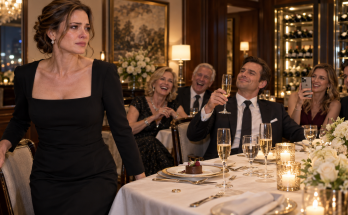
“My mom texted on my wedding day that they were skipping my “”mistake,”” but when I saw their family beach photo in Maui, I just replied, “”Check your bank apps,”” wiping out their funds and watching my dad come pounding on my door a week later.

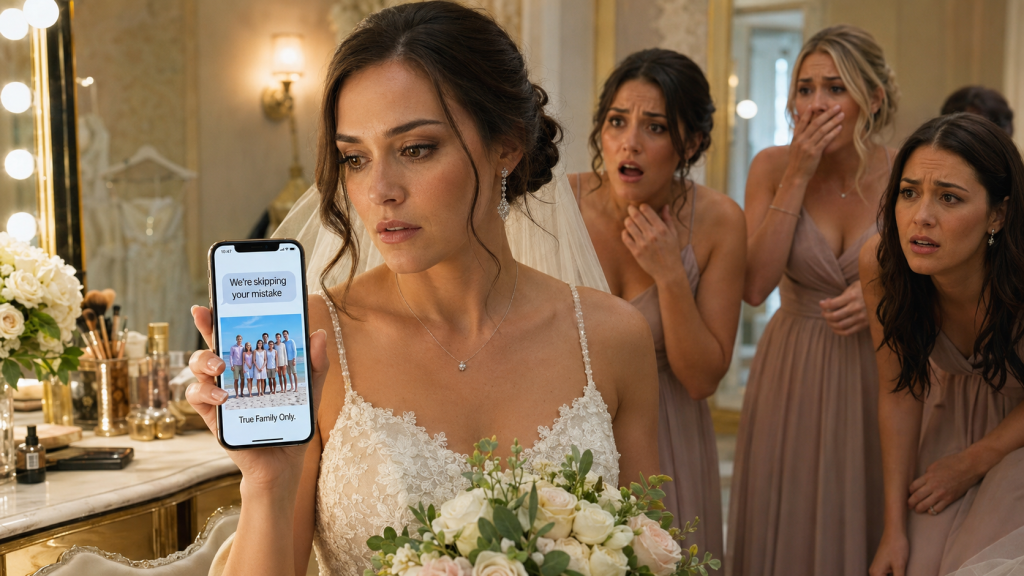
The wedding march was supposed to start in five minutes, but my phone buzzed in my bouquet with a text message that turned my blood to ice. It was from my mother. I looked down, and the words hit me like a physical blow: We’re skipping your mistake. Before I could even process the cruelty of it, a family group chat notification lit up my screen. I tapped it, and there was a photo: my mother, my father, my siblings, and my entire extended family standing on a sun-drenched private beach in Maui, holding flutes of champagne. The caption across the top read in bold, smug letters: True Family Only.
They weren’t stuck in traffic. They hadn’t missed their flight. They had deliberately boycotted my wedding, jetting off to Hawaii on the exact morning of my ceremony to humiliate me, signaling to everyone that I was an outcast, a black sheep not worthy of sharing their sacred bloodline. My bridesmaids stared at me in horrified silence, waiting for the tears to break, waiting for me to collapse in the dressing room.
Instead, a chilling, dead-eyed calm washed over me. I didn’t cry. I didn’t scream. My thumb hovered over my screen, and I opened a new message to the group chat. I didn’t waste words on begging, pleading, or crying. I typed just five words: Check your bank apps.
I hit send, locked my phone, handed my bouquet to my maid of honor, and walked down the aisle with my head held high, marrying the man who actually loved me. But that was only the opening salvo. That very night, after the reception lights went down, I opened my laptop and executed the ultimate nuclear option. I liquidated my entire two-and-a-half-million-dollar ownership share of the family business charter, pulling every single cent out of our joint corporate accounts. At the exact same moment, I logged into the corporate portal and canceled every single platinum corporate credit card they were currently using to fund their lavish tropical vacation.
A week later, the consequences came hammering violently at my front door. I was standing in my downtown condo kitchen, peacefully sipping my morning coffee, when a heavy, frantic pounding shook the frame. I walked over, unlocked the deadbolt, and pulled the door open. There stood my father, red-faced, sweating through an expensive designer shirt, trembling with a rage so intense he could barely form a coherent sentence.
PART 2: THE MONEY THEY THOUGHT I WOULD NEVER TAKE BACK
My father stood outside my door looking less like the man who had raised me and more like someone who had just discovered the ground beneath his feet belonged to somebody else.
His face was crimson.
His shirt was wrinkled.
There was a pulse jumping violently in his temple.
“What did you do?”
No hello.
No congratulations.
No apology for missing my wedding.
Just:
“What did you do?”
I took one slow sip of coffee.
“Good morning, Dad.”
His jaw tightened.
“Do not play games with me, Olivia.”
That was my name.
Olivia Hart.
Thirty-one years old.
Married exactly seven days.
Apparently still expected to tremble whenever my father used the tone that worked when I was twelve.
I opened the door wider.
“Come in.”
He hesitated.
Maybe he expected me to keep him in the hallway so he could later tell everyone I had become cruel.
I refused to give him that story.
He stepped inside.
My husband, Nathan, was down the hall taking a shower.
Dad looked around our condo as though he had never seen it before.
He had.
Three times.
Every visit ended with some comment about how downtown living was “temporary” and someday I would understand the importance of real family property.
I closed the door.
Then turned.
“What exactly are you asking me about?”
His eyes widened.
“You know exactly what.”
“Do I?”
“The cards.”
“What about them?”
“They stopped working.”
I nodded.
“Yes.”
“At the resort.”
“I assumed so.”
“In front of everyone.”
“That sounds inconvenient.”
His mouth fell open.
For one glorious second, he had no words.
Then:
“Your mother had to put dinner on her personal card.”
I almost laughed.
My mother owned three personal credit cards with limits most people would call obscene.
She survived.
Dad stepped closer.
“You embarrassed us.”
There it was.
Not:
We hurt you.
Not:
We should never have skipped your wedding.
Not:
Your mother’s message was cruel.
Embarrassment.
Their favorite emergency.
I set my coffee on the kitchen counter.
“You flew thirty-two people to Maui on the morning of my wedding.”
His face hardened.
“That has nothing to do with this.”
“It has everything to do with this.”
“No.”
He pointed at me.
“What you did was financial sabotage.”
I stared at his finger.
Then at him.
“Put your hand down.”
He froze.
Maybe because I had never said that to him.
Not in that tone.
Slowly, his hand fell.
I continued.
“I did not empty corporate bank accounts.”
His eyes narrowed.
“You pulled two and a half million dollars.”
“No.”
I spoke carefully.
“I exercised the redemption clause in my ownership agreement.”
He stared.
“That money came from company reserves.”
“Because that is how the agreement was structured when Granddad gave me my shares.”
His expression changed.
Tiny.
But I saw it.
He knew.
Of course he knew.
My grandfather, Samuel Hart, founded Hartwell Hospitality forty-two years earlier.
What began as two roadside hotels had become a regional company managing luxury resorts, boutique properties, and private vacation rentals across five states.
When he died, ownership was divided.
My father, Richard, received the largest block.
My mother received some.
My brother Evan.
My sister Chloe.
And me.
Twenty-two percent.
The family called it inheritance.
Granddad called it protection.
He had made every one of us sign a charter years before his death.
At the time, everyone treated it like boring paperwork.
I did not.
I had always read things.
That habit had annoyed my father for years.
The charter included a redemption mechanism allowing a minority owner to force the company to purchase their interest under specific conditions if the family attempted to exclude them from governance while continuing to use their capital or personal guarantees.
That part was complicated.
The point was simple.
They could not call me family when they needed my balance sheet and a stranger when they wanted photographs.
My father knew that.
He just never thought I would use it.
He said:
“You could have talked to us.”
I almost smiled.
“You mean like Mom talked to me before skipping my wedding?”
His face tightened.
“That was different.”
“How?”
“She was emotional.”
I laughed.
“Wonderful.”
“So when Mom acts emotionally, we charter a plane to Hawaii.”
“When I react, it’s sabotage.”
“You canceled cards people were relying on.”
“Cards issued under a facility I personally guaranteed.”
His mouth closed.
Again.
Facts were cruel that morning.
I continued.
“I removed my guarantee.”
“You knew that would freeze them.”
“Yes.”
“Why?”
“Because I was no longer willing to be personally responsible for family spending after being informed I was not family.”
He stared.
The sentence landed.
Not because it was poetic.
Because it was contractual.
Dad hated when my boundaries had paperwork.
He rubbed his forehead.
“You’ve put the company in a liquidity crisis.”
“No.”
His eyes flashed.
“You don’t know what you’ve done.”
“I know exactly what I did.”
“Olivia—”
“The company still has operating cash.”
I said.
“The payroll account was untouched.”
“Vendor obligations were untouched.”
“Property accounts were untouched.”
“Employee cards were untouched.”
His anger flickered.
I continued.
“I canceled family discretionary cards tied to my guarantee.”
“Then I exercised my contractual redemption right.”
“That is not the same thing as draining the company.”
He looked away.
I knew why.
Because he had arrived hoping I did not understand my own actions.
He wanted a reckless daughter.
Not a prepared shareholder.
It is much easier to punish someone when you can call them hysterical.
Dad whispered:
“Where did you learn all this?”
I almost laughed.
“Granddad.”
His face hardened.
“Of course.”
There it was.
The old wound.
Granddad had trusted me with numbers.
Dad had always resented it.
When I was sixteen, Granddad taught me how to read income statements.
At eighteen, he taught me debt ratios.
At twenty-one, he made me sit through a six-hour meeting about property refinancing.
I complained the entire time.
He told me:
“One day, Olivia, someone will tell you a story about money and expect emotion to keep you from checking the numbers.”
He was right.
I just never imagined the storyteller would be my own father.
Dad walked toward the window.
“You ruined your mother’s vacation.”
I stared at his back.
“You keep saying vacation.”
He turned.
“What else should I call it?”
“My wedding boycott.”
His face tightened.
“It wasn’t a boycott.”
I laughed.
“You sent a photograph captioned True Family Only.”
He looked away.
“Your mother did that.”
“And you stood in the picture.”
Silence.
That was the first time I saw something other than anger in him.
Shame.
Small.
Unwelcome.
He said:
“It wasn’t supposed to go to you.”
I froze.
“What?”
“The photo.”
He rubbed his jaw.
“It was meant for the cousins’ chat.”
I stared.
“So the cruelty was accidental only because I accidentally saw it.”
“That is not what I mean.”
“It is exactly what you mean.”
He exhaled hard.
“Your mother was upset.”
“With me?”
“Yes.”
“For getting married?”
“For marrying Nathan.”
There it was.
Finally.
Nathan.
My husband.
The mistake.
Nathan was not poor.
That would have made the family’s reaction easier to explain.
He was a public-school history teacher.
Stable.
Kind.
Financially ordinary.
Which in my family was apparently worse.
My mother called him “sweet” the way rich people sometimes call something sweet when they mean unimportant.
My father had once asked Nathan at dinner:
“What is your long-term plan?”
Nathan answered:
“Teach history.”
Dad thought he was joking.
Nathan was not.
That offended him more.
My mother wanted me to marry someone named Graham Ellison.
Private equity.
Family money.
Vacation house in Nantucket.
Teeth too perfect.
I went on three dates with Graham years earlier and spent all three wondering whether he had ever opened his own refrigerator.
Then I met Nathan at a charity lecture.
He did not ask what my family owned.
He asked what book I had in my purse.
I fell in love slowly.
Then completely.
My mother never forgave him for making me happy without impressing her.
Dad said:
“She thought you were throwing your future away.”
“My future?”
“You know what she meant.”
“No.”
I folded my arms.
“Say it.”
He hated that.
“She thought Nathan wasn’t your equal.”
I smiled without humor.
“Financially.”
Dad said nothing.
“Right.”
I continued.
“So Mom skipped my wedding because my husband teaches eleventh graders instead of moving numbers between companies?”
“That’s unfair.”
“No.”
I shook my head.
“It’s embarrassingly accurate.”
Dad sank into one of the dining chairs.
The anger was leaving him.
What replaced it looked heavier.
“I didn’t want to go to Maui.”
I stared.
That surprised me.
“Then why did you?”
He rubbed both hands over his face.
“Your mother said if we attended the wedding, it would validate the marriage.”
I laughed softly.
“Dad, I was legally married whether you validated it or not.”
“I know.”
“Did you?”
Silence.
I stepped closer.
“You were supposed to walk me down the aisle.”
His face changed.
For the first time that morning, my voice broke.
“I stood behind those doors in my wedding dress waiting for five minutes because I still thought maybe you would come.”
He looked at me.
My eyes filled.
“I kept thinking maybe the Maui photo was old.”
“Maybe someone scheduled the message.”
“Maybe Mom was furious but you would show up anyway.”
I laughed through tears.
“Do you know who walked me?”
Dad’s eyes dropped.
“My uncle?”
“No.”
“My brother-in-law?”
“No.”
He looked up.
“I walked alone.”
That hurt him.
Good.
Not because I wanted pain.
Because he needed to know the cost of his obedience.
“I walked myself.”
His eyes filled.
“Olivia…”
“And halfway down the aisle, I realized I wasn’t alone.”
I swallowed.
“Nathan was waiting.”
“He was crying.”
“My bridesmaids were crying.”
“Two hundred people stood up.”
I looked directly at him.
“And somehow the only empty seats that mattered less by the time I reached the altar were yours.”
Dad’s mouth trembled.
“I’m sorry.”
First apology.
Tiny.
Late.
Still real.
I nodded.
“Thank you.”
His face lifted.
That was all he got.
Acknowledgment.
Not absolution.
Then Nathan entered the kitchen.
Wet hair.
Gray T-shirt.
He stopped when he saw Dad.
“Richard.”
Dad stood.
“Nathan.”
The air changed.
Nathan looked at me.
“You okay?”
“Yes.”
One word.
He believed me.
No interrogation.
No masculine performance.
He poured coffee.
Dad watched.
Then said:
“You knew about this?”
Nathan turned.
“About what?”
“The redemption.”
“Yes.”
My father stared.
Nathan sipped.
“She spoke to counsel before the wedding.”
My father looked at me sharply.
“Before?”
“Yes.”
His face changed.
“You planned this?”
I shook my head.
“I prepared.”
“That’s the same thing.”
“No.”
I sat.
“The redemption documents were drafted months ago.”
“Why?”
“Because I knew the company was using my guarantees while increasingly excluding me from decisions.”
Dad’s eyes narrowed.
“What decisions?”
“Three property acquisitions.”
“The Arizona expansion.”
“The refinancing of the Charleston portfolio.”
He went still.
I continued.
“I was removed from the investment committee.”
“Who told you that?”
“No one.”
“That was the problem.”
Nathan leaned against the counter quietly.
This was my fight.
He knew that.
Dad said:
“You were busy planning a wedding.”
I laughed.
“So you removed a twenty-two-percent owner from governance because she had a florist appointment?”
His face tightened.
“That’s ridiculous.”
“Yes.”
“You were distracted.”
“There.”
I pointed at him.
“That.”
“What?”
“That is exactly what the redemption clause exists for.”
He looked stunned.
I continued.
“You decided my capital remained serious while my voice became optional.”
Silence.
“And the wedding was the moment I understood this wasn’t temporary.”
Dad sat again.
“So when Mom sent that message…”
“I knew.”
“Knew what?”
“That the family had already decided I could be separated from everything except my financial usefulness.”
Dad looked down.
Nathan handed me fresh coffee.
He kissed the top of my head.
Dad watched.
Something in his expression softened.
Maybe for the first time, he saw why I chose this man.
Then Dad whispered:
“We can fix this.”
I looked at him.
“What does fix mean?”
“We reverse the redemption.”
“No.”
His face tightened.
“Olivia.”
“No.”
“The valuation was too low.”
I almost smiled.
Interesting.
Not:
Please stay.
Valuation.
There he was.
“The valuation was calculated under the charter formula.”
“That formula was written fifteen years ago.”
“And updated four years ago.”
He looked away.
“By the board.”
“Which you chaired.”
Silence.
Nathan nearly smiled into his coffee.
Dad looked at him.
Nathan suddenly became fascinated by the wall.
I continued.
“You approved that formula when you assumed no one would exercise it.”
Dad rubbed his face.
“This is going to damage everyone.”
“Then maybe everyone should have considered that before using me as a balance-sheet accessory.”
He stood.
“Your siblings did not make this decision.”
I stared.
“Really?”
“Evan thought Maui was stupid.”
“He went.”
“He didn’t want Mom angry.”
“Chloe?”
“She…”
He stopped.
“Exactly.”
I sighed.
“Dad, being afraid of Mom’s anger does not turn participation into innocence.”
He stared.
I knew he understood.
Because that had been his excuse too.
Then he said something that changed the entire conversation.
“You don’t know why your mother was so determined.”
My stomach tightened.
“What does that mean?”
Nathan looked toward him.
Dad immediately seemed to regret speaking.
I leaned forward.
“Why?”
He shook his head.
“Nothing.”
“Dad.”
“Leave it.”
“No.”
I had spent my entire childhood watching adults say leave it whenever truth became expensive.
Not anymore.
“Why was Mom so determined to stop my wedding?”
His face went pale.
“Because she thinks Nathan cost us the Ellison deal.”
Nathan frowned.
“What Ellison deal?”
I looked at him.
“I don’t know.”
Dad closed his eyes.
Too late.
“What deal?”
I asked.
He sat slowly.
“Graham’s father.”
My stomach tightened.
“Charles Ellison?”
“Yes.”
“What about him?”
“Hartwell was negotiating a joint acquisition with Ellison Capital.”
I stared.
“When?”
“Last year.”
Around the time my mother suddenly began inviting Graham to everything.
Christmas cocktails.
A charity auction.
Even my birthday dinner.
I had thought she was being socially awkward.
Apparently she had been conducting business through my love life.
Dad continued.
“Charles wanted stronger alignment between the families.”
Nathan laughed once.
“Alignment?”
My father looked uncomfortable.
I asked:
“Was my marriage part of a business negotiation?”
“No.”
Too fast.
I stared.
“Dad.”
He exhaled.
“Not formally.”
“That sentence should not exist.”
Nathan set down his mug.
Even he looked furious now.
Dad continued quickly.
“There was never a contract.”
“No one traded you.”
“Good to know.”
I snapped.
“But Charles believed if you and Graham married, it would make a long-term partnership more stable.”
My entire body went cold.
“And Mom knew?”
“Yes.”
“Did she encourage it?”
Silence.
“Dad.”
“Yes.”
I stood.
The chair scraped violently.
Nathan moved toward me.
I raised one hand.
Not yet.
I needed space.
“So when I chose Nathan…”
“The Ellisons cooled.”
Dad said quietly.
I laughed.
The sound came out broken.
“My mother called my wedding a mistake because she lost a business deal.”
“It was more complicated.”
“No.”
I turned.
“It is suddenly very simple.”
“Olivia—”
“She was trying to marry me into a transaction.”
Dad stood.
“She thought Graham was a good match.”
“For me?”
I looked at him.
“Or for the company?”
He could not answer.
That answer was worse than any word.
Nathan came beside me.
Not touching until I reached for him.
Then I did.
His hand closed around mine.
Steady.
Dad whispered:
“The Ellison partnership would have changed the company.”
I stared.
“There it is.”
“What?”
“The price.”
I swallowed.
“You all decided my life had a price.”
Dad’s face broke.
“No.”
“Yes.”
“You decided the company deserved influence over who I married.”
“No.”
“Mom did.”
He stopped.
“And you let her.”
Silence.
I thought the conversation could not become uglier.
Then my phone rang.
Chloe.
My younger sister.
I almost ignored it.
Dad looked at the screen.
“Answer.”
Something in his voice made me do it.
“Hello?”
Chloe was crying.
“Olivia.”
My stomach tightened.
“What happened?”
“Mom found out Dad came to see you.”
I looked at him.
His face fell.
“So?”
“She’s furious.”
“That sounds survivable.”
“No.”
Chloe’s breathing shook.
“She called an emergency board meeting.”
Dad cursed.
“What?”
I put the call on speaker.
Chloe continued.
“She says she’s going to have the board challenge your redemption.”
Dad grabbed the phone from the table.
“She can’t.”
Chloe cried:
“She says you breached your fiduciary duties.”
I almost laughed.
“By getting married?”
“No.”
Chloe hesitated.
“By canceling the cards.”
Dad closed his eyes.
“She’s bluffing.”
Chloe said:
“She has Evan with her.”
“Of course.”
“And Uncle Mark.”
My stomach tightened.
Uncle Mark controlled eight percent.
With Mom’s shares, Evan’s, and Mark’s, she could create noise.
Not necessarily win.
But fight.
Chloe whispered:
“There’s something else.”
I hated those words immediately.
“What?”
“Mom says if you don’t withdraw the redemption, she’s releasing documents proving Nathan used confidential company information.”
Nathan went completely still.
I turned.
“What?”
He looked as confused as I felt.
Dad whispered:
“Oh no.”
I stared at him.
“You know what she means.”
He did not answer.
“Dad.”
He looked sick.
“The Ellison file.”
My heart pounded.
“What file?”
He looked toward Nathan.
Then me.
“Six months ago, someone anonymously sent Nathan financial documents showing the Ellison acquisition would saddle Hartwell with hidden liabilities.”
Nathan’s face changed.
I turned to him.
“You got documents?”
He swallowed.
“Yes.”
My chest tightened.
“You never told me.”
“I couldn’t.”
“Why?”
“They came to my school email.”
Dad continued.
“Nathan forwarded them to Hartwell’s outside counsel.”
I stared.
“What?”
Nathan said quietly:
“I thought your company was about to enter a terrible deal.”
“You knew?”
“I knew enough to be worried.”
“Why didn’t you tell me?”
His eyes filled.
“Because the sender claimed somebody inside your family was manipulating the numbers.”
The room went still.
Dad lowered his head.
My heart started pounding.
“Who?”
Nathan looked at Dad.
My father did not move.
I whispered:
“Dad.”
Then Chloe’s voice came through the speaker.
“Olivia…”
I stared at the phone.
“What?”
“Mom thinks Dad sent them.”
Silence.
Dad closed his eyes.
Everything changed.
I looked at him.
“Did you?”
He did not answer.
My chest tightened.
“Did you send confidential documents to my husband?”
Nathan whispered:
“Richard?”
Dad sat down.
Then, very quietly:
“Yes.”
I stopped breathing.
“Why?”
He looked at me.
And for the first time since pounding on my door, my father looked less like an angry businessman than a terrified husband.
“Because your mother was going to ruin the company to make the Ellison marriage happen.”
The room went silent.
He continued.
“She knew Charles Ellison had hidden debt.”
“She knew the acquisition projections were manipulated.”
“She knew.”
My skin turned cold.
“And she pushed the deal anyway?”
“Yes.”
“Why?”
Dad looked toward the floor.
“Because she had already invested personally.”
I froze.
“What?”
“In Ellison Capital.”
“How much?”
His voice barely came out.
“Almost four million dollars.”
Nathan exhaled sharply.
Dad continued.
“She borrowed against assets.”
“Her Hartwell shares.”
“Other investments.”
“She needed the deal to go through.”
I stared.
“So my mother wanted me to marry Graham…”
My voice broke.
“…because she needed his father’s company rescued.”
Dad cried.
“Yes.”
That hurt in a place I did not know existed.
Not because Mom had skipped my wedding.
That wound suddenly looked smaller.
She had not simply rejected Nathan.
She had needed my marriage to become a financial bridge.
And when I refused without even knowing the bridge existed, she called my life a mistake.
I sat down.
Nathan crouched beside me.
This time I let him touch me.
Dad whispered:
“I should have told you.”
“Yes.”
“I was afraid.”
“Of her?”
“Yes.”
I looked at him.
“For thirty years?”
His face collapsed.
That answer was enough.
Chloe was still on the phone.
Quietly crying.
Then she said:
“Olivia, the board meeting is in two hours.”
I closed my eyes.
My wedding was one week ago.
Seven days.
That was all.
I should have been looking at honeymoon photographs.
Instead, my mother was threatening litigation to protect a failing investment tied to a marriage she had tried to engineer.
I opened my eyes.
“Chloe.”
“Yes?”
“Do not vote on anything you do not understand.”
Silence.
Then:
“Okay.”
“Do not let Mom tell you family loyalty requires speed.”
Another pause.
“Okay.”
“And send every board notice to your attorney.”
Dad looked at me.
Proud.
Sad.
Both.
Chloe whispered:
“I’m sorry I went to Maui.”
That surprised me.
My eyes filled.
“I know.”
“No.”
She cried harder.
“I knew it was wrong.”
“I went because Mom said if I attended your wedding, she would cut me out.”
I closed my eyes.
There it was again.
Fear disguised as family.
“I should have come.”
“Yes.”
I said.
Not cruelly.
Simply.
“You should have.”
She cried.
“I’m sorry.”
“Thank you.”
Then I ended the call.
Dad looked at me.
“What are you going to do?”
I stared at the wedding photograph on the shelf.
Nathan and me.
My dress.
His smile.
No parents behind us.
No siblings.
Still beautiful.
I whispered:
“I’m going to stop treating this like a family fight.”
His face tightened.
“What does that mean?”
“It means attorneys.”
“Independent directors.”
“Records.”
“Votes.”
“Facts.”
Nathan looked at me.
I continued.
“If Mom thinks she can challenge my redemption, she can try.”
“If she thinks you leaked confidential information improperly, that gets reviewed too.”
Dad nodded slowly.
“And the Ellison transaction?”
I looked directly at him.
“That gets examined by people who aren’t married to each other.”
For the first time all morning, he almost smiled.
The board meeting did not end the company that afternoon.
Life rarely gives you instant justice in conference rooms.
But it did start something.
Outside counsel received Nathan’s copies of the documents.
Independent board members requested review.
My mother’s personal Ellison investment was disclosed.
Then the extent of it.
Then the fact that she had participated in discussions about the Hartwell-Ellison deal without fully disclosing how much she personally stood to lose if the transaction collapsed.
That mattered.
A lot.
The meeting was postponed.
Then reconvened.
Then expanded into a formal governance review.
My redemption remained in place pending contractual verification.
Dad’s anonymous disclosure through Nathan became a separate issue.
He had violated internal protocols.
He admitted it.
But the underlying information also pointed toward serious conflicts inside the proposed acquisition.
Nothing became clean simply because one side was right about another side being wrong.
That was the hardest lesson.
Dad could expose misconduct and still have handled it badly.
Mom could love us and still use fear to control us.
Chloe could regret Maui and still have chosen to board the plane.
I could be hurt and still be responsible for what I did next.
The only person who seemed uncomplicated was Nathan.
Then even that became harder.
Three days after Dad’s visit, Nathan told me something over dinner.
“I know who sent the first message telling me to check my school email.”
I froze.
“What?”
He looked guilty.
“What do you mean?”
“There was a voicemail.”
“From who?”
“I didn’t recognize the number.”
“Did you save it?”
“Yes.”
My stomach tightened.
“Why didn’t you tell me?”
“Because I thought it was part of the anonymous leak.”
He played it.
A woman’s voice.
Older.
Quiet.
Mr. Wells, you don’t know me, but before you marry Olivia Hart, you should know her family is trying to use that marriage to cover a transaction. Check your email. Then protect her from all of us.
I stared.
All of us.
Not:
Them.
Us.
“Play it again.”
He did.
I knew the voice.
Barely.
But I knew.
My chest tightened.
Dad did too when I sent it to him.
He called immediately.
“Where did you get that?”
“Who is it?”
Silence.
“Dad.”
He whispered:
“Your aunt Miriam.”
My mother’s older sister.
The one person not in the Maui photograph.
The relative everyone said had “other plans.”
I had not even noticed.
“Why would she know?”
Dad exhaled.
“Because she loaned your mother part of the money.”
My entire body went cold.
“How much?”
“Almost a million.”
I closed my eyes.
Of course.
Another layer.
Another person.
Another secret dressed as family business.
I whispered:
“Where is she?”
Dad hesitated.
Then:
“She’s coming to town tomorrow.”
And suddenly the person who had refused to stand in the photograph labeled True Family Only was on her way to explain why my mother had risked millions, my marriage, and the family company on a deal she could no longer afford to let fail.
PART 3: THE WOMAN WHO REFUSED TO STAND IN THE PHOTO
Aunt Miriam arrived the next morning carrying one suitcase and the expression of a woman who had spent too many years knowing something she wished she did not.
She was my mother’s older sister by six years.
Where Mom was polished, warm in public, and almost frighteningly skilled at making a room admire her, Miriam had always been quieter.
Sharper.
The kind of woman who listened long enough to make people uncomfortable.
She had not attended my wedding.
But she had not gone to Maui either.
Until Nathan played that voicemail, I had barely stopped to ask why.
Now I stood in my condo doorway looking at her.
She looked older than I remembered.
Not physically.
Tired in the eyes.
“Olivia.”
“Aunt Miriam.”
Her gaze moved past me.
Nathan stood near the kitchen.
Dad was sitting at the dining table.
The moment she saw him, her mouth tightened.
“Richard.”
Dad looked down.
“Miriam.”
That was when I knew whatever she had come to say was not going to make anyone comfortable.
I stepped aside.
“Come in.”
She entered.
No hugs.
No family performance.
Good.
I had become allergic to ceremonies that covered lies.
Miriam placed her bag beside the sofa.
Then looked at me.
“I owe you an apology.”
I folded my arms.
“For what?”
“For missing your wedding.”
My throat tightened.
She continued.
“I did not go to Maui.”
“I know.”
“But I still wasn’t there.”
“Yes.”
She nodded.
“I was afraid if I came, your mother would know I had warned Nathan.”
I stared at her.
“That mattered more than standing beside me?”
The question hurt to ask.
It hurt her to hear.
Good.
Some truths deserve pain on both sides.
“No.”
She said quietly.
“It shouldn’t have.”
I looked away.
She continued.
“I thought protecting the information mattered more than showing up.”
“And now?”
“Now I understand I used strategy to excuse cowardice.”
That stopped me.
No:
I did my best.
No:
You have to understand.
Just cowardice.
I looked at her again.
“Thank you.”
Her eyes filled.
I did not hug her.
Not yet.
Dad cleared his throat.
“Miriam, tell her everything.”
She looked at him.
“Are you sure you want me to?”
He flinched.
Interesting.
I sat.
“Start at the beginning.”
Miriam took the chair across from me.
For several seconds, she looked at her hands.
Then:
“Your mother did not invest four million dollars in Ellison Capital all at once.”
I waited.
“It happened over nearly three years.”
My stomach tightened.
“How?”
“She began with five hundred thousand.”
“Her own money?”
“Yes.”
“Why?”
“Charles Ellison promised early access to a private investment vehicle tied to resort development.”
Dad looked away.
Miriam continued.
“At first, it performed well.”
“Or appeared to.”
Nathan asked:
“What does that mean?”
Miriam looked at him.
“Distributions came in.”
“Enough to make investors comfortable.”
“But much of the underlying value depended on refinancing and future acquisitions.”
I understood.
Not an obvious scam.
Something more dangerous.
A structure that looked healthy as long as new money and new deals kept arriving.
“When did Mom realize she was in trouble?”
I asked.
“About eighteen months ago.”
My chest tightened.
That was when she started aggressively inviting Graham everywhere.
Miriam continued.
“Ellison Capital had borrowed against several properties.”
“Some loans were personally guaranteed.”
“Others were cross-collateralized.”
Dad said quietly:
“And Hartwell looked like the rescue.”
I stared.
“So the acquisition was supposed to stabilize Ellison.”
“Yes.”
Miriam answered.
“And increase the value of the investment positions your mother already held.”
“How much had she put in by then?”
“About two point eight million.”
I frowned.
“Then where did the rest come from?”
Miriam’s face tightened.
“Me.”
My chest went cold.
“How much?”
“Nine hundred thousand.”
I stared.
“You loaned Mom nine hundred thousand dollars?”
“Yes.”
“Why?”
“She asked.”
“That isn’t an answer.”
Miriam looked down.
“She was my sister.”
There it was.
Again.
Family as explanation.
Family as permission.
Family as the word people use when they do something they know they would question if a stranger asked.
I said:
“Did you know what it was for?”
“Not at first.”
“When did you find out?”
“Six months later.”
“And you didn’t ask for it back?”
Her mouth trembled.
“I did.”
“What happened?”
“She cried.”
My anger rose.
Not at tears.
At how often tears had been used as leverage in this family.
“She said if I called the loan, she would have to liquidate Hartwell shares at a terrible time.”
Dad looked away.
Miriam continued.
“She said the Ellison deal would solve everything.”
“And you believed her?”
“No.”
“Then why stay quiet?”
She looked at me.
“Because I loved her.”
I laughed without humor.
“I am beginning to hate that sentence.”
Miriam nodded.
“You should.”
Silence.
Then she said:
“Love without boundaries made all of us stupid in different ways.”
That was the first sentence that felt honest enough to keep.
Nathan sat beside me.
His hand rested near mine.
Not touching.
Waiting.
I chose to take it.
Miriam continued.
“Your mother became convinced the Ellison acquisition had to happen.”
“She believed once Hartwell purchased certain assets, the debt could be restructured.”
“She would recover her investment.”
“I would recover mine.”
“And Charles would keep his company.”
I swallowed.
“And Graham?”
Miriam looked ill.
“She believed you marrying him would make the partnership almost impossible to unwind.”
I closed my eyes.
There it was.
Not just social preference.
Not just elitism.
My future had become structural reinforcement for a deal.
Nathan squeezed my hand.
I whispered:
“Did Graham know?”
Miriam hesitated.
That answer frightened me.
“Some.”
I opened my eyes.
“How much?”
“He knew his father liked the idea of joining the families.”
“That is not what I asked.”
She nodded.
“He knew your mother had financial exposure.”
My body turned cold.
“Did he date me because of the deal?”
“I cannot answer that.”
Dad spoke.
“I can.”
We all turned.
He looked wrecked.
“Graham knew.”
Nathan went still.
I stared at Dad.
“How?”
“Charles told me.”
“When?”
“The night after Graham’s engagement to someone else fell apart.”
I frowned.
Years earlier.
Before Nathan.
Dad continued.
“Charles joked that maybe Graham should finally marry someone useful.”
My stomach twisted.
“And you said nothing?”
“I told him to go to hell.”
That surprised me.
Dad gave a sad laugh.
“Believe it or not, Olivia, I did occasionally have a spine.”
I almost smiled.
Almost.
“Then what changed?”
“Your mother.”
He swallowed.
“She told me I was being childish.”
“She said everyone in our world understood marriages could align interests.”
Nathan looked disgusted.
Dad continued.
“I told her you were not a hotel asset.”
My chest tightened.
That mattered.
Not enough.
But it mattered.
“What did she say?”
He looked at me.
“She said you would like Graham if you gave him a chance.”
I laughed.
“I gave him three.”
Nathan murmured:
“Heroic.”
I looked at him.
“Not helping.”
“Sorry.”
A tiny smile escaped me.
Then vanished.
I turned back to Dad.
“When did you decide to leak the Ellison documents?”
“After I saw the revised acquisition model.”
“What was wrong with it?”
“The liabilities were buried.”
“Not literally hidden.”
He corrected himself.
“Reclassified.”
“Deferred.”
“Presented in ways I thought understated the real risk.”
“And Mom knew?”
“Yes.”
“How?”
“She had seen the private Ellison materials through her investment.”
I stared.
“So she had information our company board did not fully have?”
Dad nodded.
“And she still pushed the acquisition.”
“Yes.”
That hurt differently.
This was no longer about being controlling.
It was governance.
Conflict.
Trust.
Miriam whispered:
“I told her to disclose.”
I turned.
“What did she say?”
“That if she disclosed the extent of her investment, the board would exclude her from negotiations.”
I laughed bitterly.
“Which is exactly what should have happened.”
“Yes.”
Miriam’s eyes filled.
“I know.”
There were so many people in that room saying I know after the damage.
Maybe that was adulthood.
Realizing knowledge often arrives after courage was required.
I asked:
“Why did you contact Nathan instead of me?”
Miriam looked at him.
“Because I thought Olivia would confront your mother immediately.”
She was right.
That irritated me.
“And Nathan?”
“He seemed careful.”
Nathan frowned.
“You barely knew me.”
“I researched you.”
I stared.
“You what?”
Miriam almost smiled.
“Teachers leave surprisingly public trails.”
Nathan looked offended.
“What did you find?”
“That you were boring.”
He laughed.
I did too.
For one second.
Miriam continued.
“No hidden business interests.”
“No family money.”
“No obvious incentive.”
“So I thought if I sent you a warning, you might protect Olivia without turning it into a war before the wedding.”
I looked at Nathan.
“And you never told me.”
He swallowed.
“No.”
“Why?”
“Because the documents were company confidential.”
“That didn’t stop you from sending them to counsel.”
“No.”
“I thought getting them to the right people mattered more than dragging you into a corporate fight a month before the wedding.”
I leaned back.
Another person protecting me by withholding information.
I hated how familiar that felt.
Nathan read my face.
“You’re angry.”
“Yes.”
“Fair.”
I looked at him.
“You don’t get extra points for saying fair.”
“I know.”
“Stop saying that too.”
He almost smiled.
Then became serious.
“I should have told you enough to let you choose.”
There.
That was what I needed.
Not:
I was protecting you.
Choice.
He continued.
“I decided the risk for you.”
“I’m sorry.”
My anger softened.
Not disappeared.
Softened.
“Thank you.”
Dad looked at Miriam.
“So why did you come now?”
She stared at him.
“Because Susan is about to burn everything down.”
My mother.
Susan Hart.
Somehow hearing her name made the situation feel more intimate.
Miriam opened her bag.
Pulled out a thick envelope.
Placed it on the table.
“What is that?”
I asked.
“Copies of loan agreements between Susan and me.”
Dad closed his eyes.
Miriam continued.
“Emails.”
“Messages.”
“Notes from conversations.”
My stomach tightened.
“Why bring them now?”
“Because she called me yesterday.”
“What did she want?”
“Another seven hundred thousand dollars.”
I stared.
“For what?”
“To meet a collateral call tied to her Ellison position.”
Nathan exhaled.
Dad whispered:
“She’s worse off than I thought.”
Miriam nodded.
“She said if I didn’t help, she would lose shares.”
My chest tightened.
“Hartwell shares?”
“Yes.”
My father stood.
“How many?”
“Enough to matter.”
Miriam looked at me.
“And she said if the board stopped the Ellison deal, she would make sure Olivia never saw another dollar from the company.”
I almost laughed.
“Little late for that.”
Miriam’s mouth twitched.
“Yes.”
Then:
“She also said she would make Nathan the reason everything collapsed.”
Nathan’s expression hardened.
“How?”
“Accuse you of knowingly receiving stolen corporate documents.”
Dad swore.
Miriam continued.
“She believes if she creates enough scandal around Nathan, Olivia will back down to protect him.”
I stared.
My mother had learned nothing.
Still trying to turn marriage into leverage.
Just with a different man.
I whispered:
“She thinks I’ll choose the company over him.”
Dad looked at me sadly.
“No.”
“She thinks you’ll choose him over yourself.”
That landed.
Hard.
Because maybe once, I would have.
Not anymore.
The next week changed Hartwell Hospitality.
Not in one dramatic meeting.
Through process.
Independent counsel reviewed the Ellison acquisition.
The board created a special committee without Mom.
Without Dad.
Without me.
That mattered.
Nobody directly involved got to control the investigation.
Miriam’s loan records were reviewed.
Dad’s leak through Nathan was reviewed.
Nathan provided the original files he received.
Metadata.
Voicemail.
Everything.
My mother’s Ellison holdings were disclosed.
Then verified.
The board learned she had substantially more personal exposure than she had previously revealed.
The acquisition was suspended.
Then abandoned.
Charles Ellison threatened litigation.
His lenders became less patient.
Ellison Capital entered restructuring months later.
Not because Hartwell destroyed it.
Because Hartwell stopped volunteering to become its rescue boat.
Mom’s personal investment collapsed in value.
Not to zero.
But close enough to hurt.
She lost millions.
Miriam recovered only part of her loan after years of settlement arrangements.
That was painful.
But she never blamed me.
Once, when I said I was sorry, she stopped me.
“No.”
“You didn’t borrow the money.”
“You didn’t hide the risk.”
“You didn’t ask me to stay quiet.”
Then she added:
“Do not inherit guilt just because you inherited shares.”
I remembered that.
The governance review into Mom was worse.
She had not stolen company money.
That distinction mattered.
But she had failed to properly disclose a major personal conflict while advocating for a transaction that could have materially benefited her.
The board removed her from certain leadership roles.
Eventually she resigned from the board entirely.
Her ownership remained hers, subject to financing claims she had created.
She was not arrested.
Not ruined overnight.
Not dragged from some penthouse.
She simply lost influence.
And for my mother, influence had always been more important than money.
That loss broke something in her.
At first, she blamed everyone.
Dad.
Miriam.
Nathan.
Me.
Mostly me.
She sent an email titled:
You Destroyed Your Own Family.
I did not answer.
Then a letter.
Then another.
Finally, six months later, she came to my condo.
No pounding.
She rang the bell.
I looked through the camera.
Saw her standing there.
Smaller somehow.
I opened the door.
“Mom.”
She stared at me.
For a moment, I saw the woman who once braided my hair before school.
The mother who sat beside me when I had pneumonia.
The woman who also skipped my wedding because I would not marry the man useful to her finances.
Both existed.
That hurt.
“May I come in?”
“Yes.”
Nathan was out.
I was glad.
Not because he was unsafe around her.
Because this conversation belonged to me.
Mom sat at the dining table.
The same place Dad had sat months earlier.
She looked around.
“Still living here.”
I almost laughed.
“Yes.”
“You could afford a house.”
“I like this place.”
She nodded.
Old habits almost made her comment.
She stopped herself.
Progress, maybe.
Then she whispered:
“I’m sorry.”
I waited.
“For Maui.”
Good.
“For the message.”
Better.
“For the photograph.”
Her eyes filled.
“For calling your marriage a mistake.”
I said nothing.
She continued.
“I told myself I was protecting you.”
My chest tightened.
“There it is.”
She stopped.
“What?”
“The excuse.”
Her face fell.
I leaned forward.
“You were not protecting me.”
“No.”
She swallowed.
“I know.”
“Were you protecting the company?”
She looked down.
“No.”
“What were you protecting?”
Her voice broke.
“Myself.”
There.
Finally.
She cried.
“I had put so much money into Ellison.”
“I had borrowed from Miriam.”
“I had convinced myself the acquisition would work.”
“And when Graham’s father suggested a marriage between you two would make the partnership stronger…”
Her mouth trembled.
“…I let myself treat you like another piece of the deal.”
I cried too.
Not because the apology erased it.
Because I had waited my whole life to hear my mother name a selfish act without disguising it as maternal love.
“I hated Nathan.”
she whispered.
“I know.”
“No.”
“You don’t.”
I looked at her.
“I hated what he represented.”
“What?”
“That you could build a life I had no control over.”
Silence.
Her honesty was almost brutal.
“You didn’t need Hartwell.”
“You didn’t need Graham.”
“You didn’t need my approval.”
“And Nathan made that obvious.”
My throat tightened.
“So you punished me.”
“Yes.”
She covered her face.
“Yes.”
We sat there while she cried.
I did not comfort her immediately.
That was new for me.
I let her finish feeling something she had earned.
Eventually she lowered her hands.
“Can you forgive me?”
I thought.
Really thought.
Then:
“Not today.”
Her face fell.
But she nodded.
“Okay.”
That mattered.
No argument.
No guilt.
No:
I’m your mother.
Just okay.
I continued.
“If we have a relationship again, Nathan is not discussed as a mistake.”
She nodded.
“You do not insult his work.”
“Yes.”
“You do not use money to threaten my siblings into choosing sides.”
Her eyes tightened.
“That is between me and them.”
“No.”
I shook my head.
“That behavior affects whether I trust you.”
She looked down.
“Okay.”
“And no more True Family Only.”
Her eyes filled.
“I hate that photo.”
“So do I.”
“I deleted it.”
I almost laughed.
“Mom, the internet exists.”
For one second, she smiled.
Then cried again.
We did not become close overnight.
That would have been fake.
For the first year, I saw her four times.
Neutral places.
Lunch.
Coffee.
No business.
If she mentioned Hartwell, I ended the conversation.
She tested the boundary once.
Only once.
Then learned.
Dad moved out six months after the governance review.
Not because Mom threw him out.
Because after thirty-four years of marriage, he finally admitted fear had become the main thing holding them together.
They separated.
Later divorced.
That broke him.
It broke her too.
I did not celebrate.
A marriage ending after decades is not a victory simply because the marriage had become unhealthy.
Dad went to therapy.
Actual therapy.
Not golf with friends.
He apologized to Chloe and Evan for teaching them that avoiding Mom’s anger was family loyalty.
Chloe forgave him faster than I did.
Evan took longer.
That was his right.
My siblings changed too.
Chloe came to our first anniversary dinner.
She brought a framed photo of my wedding.
One without empty chairs.
She whispered:
“I wish I had been in it.”
I hugged her.
That was the first real forgiveness I gave anyone from Maui.
Evan was harder.
For months, he insisted he had only gone because Mom paid.
One day I finally said:
“Free airfare does not remove free will.”
He got angry.
Then did not speak to me for three months.
When he returned, he said:
“You were right.”
That was all.
Sometimes one sentence is enough to reopen a door.
Aunt Miriam became part of our lives again.
Slowly.
Nathan forgave her before I did.
I accused him of being emotionally reckless.
He said:
“History teachers are trained to appreciate flawed alliances.”
I married an idiot.
A good one.
Miriam never asked me to repay her loan loss.
Never hinted.
Never treated me as the consolation prize for Mom’s bad decisions.
That helped.
Two years later, she walked into my office with a box.
Inside was the champagne flute from the Maui trip.
I stared.
“Why do you have this?”
“Your mother gave me the souvenirs she no longer wanted.”
I looked at the glass.
“What am I supposed to do with it?”
Miriam shrugged.
“Break it?”
I laughed.
“No.”
I kept it.
Not on display.
In a cabinet.
A reminder.
Not of betrayal.
Of how expensive belonging becomes when people confuse exclusion with power.
Hartwell survived.
That mattered.
For a while, employees had been terrified family chaos would destroy their livelihoods.
I hated that.
Hundreds of people had nothing to do with our wedding drama.
So after my redemption, I stayed out of day-to-day ownership disputes.
I was no longer a shareholder.
The company hired an outside CEO three years later.
Dad supported it.
Mom opposed it initially.
Then did not have the votes.
Good.
Family companies often pretend blood is a qualification.
Sometimes the healthiest inheritance is professional management.
Hartwell became smaller.
More disciplined.
It sold two weak properties.
Reduced debt.
Abandoned the culture of family cards disguised as corporate spending.
Chloe kept her shares.
Evan too.
Neither joined management.
They learned something.
So did I.
My redemption proceeds were placed mostly into boring investments.
Nathan celebrated by making a spreadsheet called:
HOW NOT TO BECOME YOUR FAMILY.
I made him rename it.
He changed it to:
OLIVIA’S RESPONSIBLE FINANCIAL PLAN.
The first title was better.
We bought a house eventually.
Not enormous.
Four bedrooms.
A garden Nathan murders every spring.
I funded most of the down payment.
Nathan insisted on making sure every ownership document reflected our actual arrangement clearly.
Not because he distrusted me.
Because he had watched what unspoken assumptions did to my family.
We signed everything.
Discussed everything.
No romantic mystery.
It was one of the most loving things anyone had ever done for me.
Our marriage survived the secrecy around the Ellison documents too.
But not automatically.
I was furious with him for weeks.
“You should have told me.”
“I know.”
“You decided I was too fragile for the truth.”
“I did.”
“That is what my family does.”
His face fell.
“Yes.”
That was the moment he understood why it hurt so deeply.
Not because he had wanted to protect me.
Because protection without choice felt too much like control.
He apologized.
Then changed.
Years later, when something difficult happened at his school, he told me before he knew what the outcome would be.
He said:
“I am practicing not deciding what you can handle.”
I kissed him.
“That is wildly unattractive wording.”
“Still working on delivery.”
We laughed.
That was marriage.
Not grand gestures.
Correction.
My mother came to our fifth anniversary dinner.
So did Dad.
Separate cars.
Separate seats.
Miriam.
Chloe.
Evan.
Nathan’s parents.
For the first time since my wedding, almost everyone who should have been there was in one room.
Nobody called it family only.
Nobody took a beach photo.
Mom approached Nathan before dinner.
He looked wary.
Reasonable.
She said:
“I owe you something.”
He waited.
“I was cruel about your work.”
Nathan almost smiled.
“You were.”
“I treated teaching like it meant you lacked ambition.”
“Yes.”
Her eyes filled.
“I think I did that because you were the one person around Olivia who never seemed impressed by our money.”
Nathan looked at me.
Then back at her.
“I was impressed.”
Mom looked surprised.
“By what?”
“How complicated all of you made dinner.”
I nearly choked.
Mom laughed.
Actually laughed.
Then she became serious.
“I’m sorry.”
Nathan nodded.
“Thank you.”
No hug.
No magical reunion.
Enough.
By our tenth anniversary, Dad had become the person who called Nathan for book recommendations.
Mom volunteered with a financial-literacy nonprofit.
That irony did not escape anyone.
Once, I asked why.
She looked embarrassed.
“Because I spent most of my life believing sophistication meant knowing how to make money.”
“And now?”
“Now I think it means knowing when enough is enough.”
That sentence stayed with me.
She never fully recovered her Ellison losses.
Miriam never recovered every dollar either.
But they repaired their relationship.
Slowly.
The first time I saw them eating lunch together, I almost cried.
Not because sisters always reconcile.
They do not.
Because these two chose to after finally learning that silence had nearly cost them more than money.
Mom apologized to Miriam for treating the loan like proof of sisterly loyalty.
Miriam apologized for enabling her.
No one pretended both mistakes were equal.
They did not need to be equal to be addressed.
Years later, Dad gave me something.
A printed copy of the Maui photograph.
I stared at it.
“Why?”
“Turn it over.”
I did.
On the back, he had written:
The day I learned standing in a picture can still mean abandoning someone.
My throat tightened.
“Dad…”
“I keep one too.”
“Why?”
“So I don’t rewrite it.”
That mattered.
Families rewrite history constantly.
They turn cruelty into misunderstanding.
Cowardice into confusion.
Manipulation into concern.
Dad refused.
He let the photograph remain evidence.
Not legal evidence.
Moral evidence.
I framed mine.
Not in the living room.
In my office.
Beside a wedding photograph.
In one, my family stood on a beach without me.
In the other, I walked down an aisle without them.
For a long time, I thought those photographs contradicted each other.
Now I understand they tell the same story.
People show you what they choose.
And then you choose what happens next.
My parents skipped my wedding because they thought absence would frighten me back into obedience.
Instead, absence clarified something I had spent years refusing to see.
Their approval was expensive.
And I was tired of paying for it.
When I typed:
Check your bank apps,
I thought I was angry.
I was.
But beneath the anger was something steadier.
I was done allowing people to treat my financial value as evidence of family membership while treating my actual life as negotiable.
I did not destroy the family company.
I stopped subsidizing a version of family that required silence.
I did not bankrupt my parents.
I let their own decisions meet reality.
I did not choose Nathan over my family.
I chose a marriage I had entered freely over a transaction I had never agreed to.
That distinction matters.
A lot.
Nathan and I have two children now.
A daughter and a son.
They know their grandparents.
All of them.
But our house has one rule that sounds simple and took me thirty years to learn.
Nobody buys belonging here.
Not with money.
Not with obedience.
Not with silence.
Not with sacrifice.
If you love someone, you tell them the truth before the consequence forces you to.
If you disagree with their life, you can say so.
Then you respect that it remains theirs.
And if somebody gets married?
You show up.
That one is nonnegotiable.
Last year, Chloe got married.
Mom arrived three hours early.
Dad arrived two.
Evan joked that we had all developed wedding trauma.
He was not entirely wrong.
Before the ceremony, Chloe found me in the dressing room.
She handed me her phone.
A message from Mom.
Parking now. Don’t worry. I’m here.
Chloe began crying.
So did I.
I whispered:
“That is growth.”
She laughed through tears.
Then:
“Did you ever think we’d get here?”
I looked through the window.
Mom walking toward the venue.
Dad behind her, holding the gift.
Nathan outside helping an elderly guest with the stairs.
Miriam arguing with someone about flowers.
Messy.
Imperfect.
Present.
“Yes.”
I said.
Then corrected myself.
“No.”
We laughed.
At the reception, Mom raised her glass.
Everyone became nervous.
Fair.
She looked at Chloe.
Then at me.
Then said:
“I used to believe family meant people staying where I put them.”
The room went quiet.
Her eyes filled.
“I was wrong.”
She raised the glass.
“Family is people you do not have to control to keep.”
I cried.
Dad did too.
Nathan leaned over.
“Your mother just became emotionally competent.”
I elbowed him.
Hard.
Later that night, I checked my phone.
No bank alerts.
No emergency board meetings.
No threats.
Just photographs.
People dancing.
Laughing.
Showing up.
I thought of Maui.
The sun.
Champagne.
True Family Only.
That caption once made me feel discarded.
Now it feels small.
Embarrassing.
Almost childish.
Because real family is not a photograph taken to prove who has been excluded.
Real family is the people willing to return after they have failed.
The people willing to apologize specifically.
The people willing to lose control rather than lose you.
And sometimes—
the people waiting at the end of an aisle when everyone else has chosen a beach.
Nathan was waiting for me that day.
That was enough.
Everything after was simply learning who else was willing to walk back.
THE END STORIES! THANK YOU FOR READING GOOD LUCK !❤️
Related Posts