I was only eight years old when I returned a billionaire’s wallet instead of keeping the money that could have saved my family. But the moment he noticed the pink eviction notice sticking out of my backpack,

his face turned ghost white, and he shouted, “Lock every door. No one leaves!” I thought I was in trouble, but I had no idea I was standing in the middle of a secret that had been buried for twelve years.
The wallet was lying beneath a rusty bus bench on Aldridge Street, half-covered in dirt. At first, I thought it was empty, but when I opened it, my heart nearly stopped. Crisp hundred-dollar bills were stacked so perfectly they almost didn’t look real.
I counted them once.
Then again.
Nine hundred dollars.
That was more money than my mom earned in two weeks. It could have paid our overdue rent, kept our lights from being shut off, and stopped the quiet crying I heard through the bathroom door every night after she thought I had fallen asleep.
For one painful moment, I almost put the wallet into my backpack and walked home.
No one had seen me.
No one would ever know.
Then I heard my mother’s voice inside my head.
“We may not have much, Ruby, but we always have our honesty. Doing the right thing matters most when nobody’s watching.”
I swallowed hard and searched for some kind of identification. Tucked inside was a sleek black business card with silver lettering.
Nathaniel Graves, Chief Executive Officer, Graves Energy Corporation.
Even at eight years old, I recognized the name. I’d seen him on television. He was one of the richest men in the state.
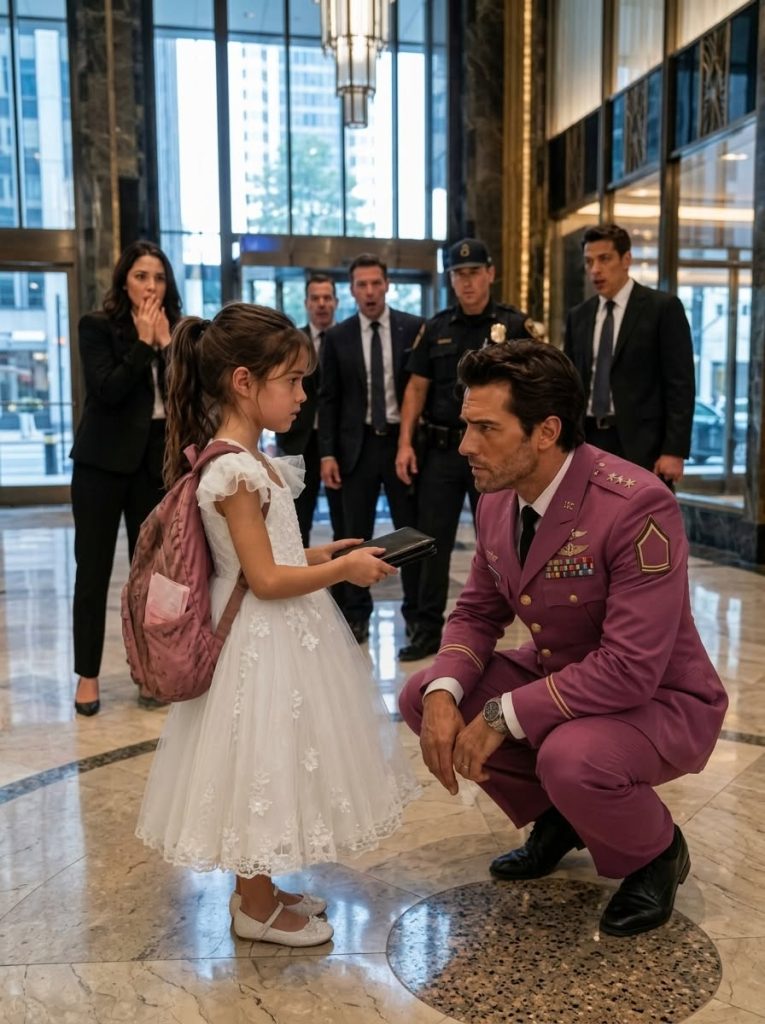
I spent nearly every dollar of my lunch money on a bus ride downtown. By the time I reached Graves Tower, my faded dress clung to me with sweat, my worn sneakers were coated in dust, and my stomach growled from skipping lunch.
The building looked like another world.
Shining marble floors stretched across the lobby, golden lights reflected from the ceiling, and people in expensive suits hurried past without even noticing me.
“I need to see Mr. Graves,” I told the receptionist.
She glanced at my patched backpack, then at my clothes.
“Do you have an appointment?”
“No, ma’am. I found something that belongs to him.”
Her eyes immediately locked onto the wallet.
“Give it to me. I’ll make sure he gets it.”
I hugged it tightly against my chest.
“I’m sorry, but I need to give it to him myself.”
Her expression hardened.
“Children don’t walk in here demanding to see Mr. Graves.”
“I’m not demanding anything,” I said quietly. “I just want to do the right thing.”
“You have ten seconds to hand it over before I call security.”
People stopped walking.
Several employees turned to watch.
Two security guards stepped toward me from the entrance.
My knees were shaking so badly I thought I might fall over, but I refused to let go of the wallet.
Then the elevator doors opened.
A tall man with silver hair stepped into the lobby.
The receptionist instantly straightened.
“Mr. Graves, this little girl claims she found your wallet.”
He looked at me.
Then at the wallet.
Then his eyes settled on the pink eviction notice sticking halfway out of my backpack.
Every bit of color drained from his face.
“Where did you get that?” he asked in a voice that barely sounded human.
Before I could answer, he turned toward the security guards, his voice echoing across the silent lobby.
“Lock every door.”
Everyone froze.
“No one leaves.”
I stood there clutching a stranger’s fortune, completely unaware that the worn piece of paper in my backpack was about to uncover a twelve-year-old secret… and somehow, my name was written all over it.
PART 2 — THE NAME ON THE EVICTION NOTICE
For several seconds, nobody in the lobby moved.
Not the receptionist.
Not the security guards.
Not the businessmen who had stopped walking beneath the golden lights.
Not even me.
Nathaniel Graves stood ten feet away, staring at the pink eviction notice sticking out of my backpack as though he had seen a ghost.
His wallet was still clutched against my chest.
Nine hundred dollars inside.
Money I had wanted desperately.
Money I had returned anyway.
But suddenly, nobody seemed to care about the wallet.
“Lock every door,” Mr. Graves repeated.
His voice was lower this time.
More controlled.
Which somehow made it scarier.
One of the security guards moved immediately toward the entrance.
The heavy glass doors clicked.
People began whispering.
The receptionist looked nervous.
“Sir, is there a threat?”
Mr. Graves did not answer her.
He kept looking at me.
Then he slowly walked closer.
“What is your name?”
My throat tightened.
“Ruby.”
“Ruby what?”
“Ruby Bennett.”
His face changed.
It was small.
A flicker.
But I saw it.
His eyes dropped toward my backpack again.
Then back to my face.
“Your mother’s name?”
I hugged the wallet tighter.
“Claire.”
“Claire Bennett?”
I nodded.
The receptionist whispered something under her breath.
Mr. Graves closed his eyes.
For one second, he looked old.
Not rich.
Not powerful.
Just tired.
When he opened his eyes again, they were shiny.
“Who gave you that notice?”
“My landlord.”
“What landlord?”
I swallowed.
“Mr. Caldwell.”
His jaw tightened.
“Henry Caldwell?”
I nodded.
Mr. Graves turned so sharply that the receptionist flinched.
“Get Martin upstairs.”
She blinked.
“Sir?”
“Now.”
“Yes, sir.”
“And call legal.”
The security guard near the door asked, “Should we call the police?”
Mr. Graves looked at me again.
“No.”
Then, after a pause:
“Not yet.”
My stomach dropped.
Not yet?
I suddenly wondered whether returning the wallet had been a terrible mistake.
Maybe Mom had been wrong.
Maybe honesty did not always make things better.
Maybe sometimes it just got you trapped inside a billionaire’s building with locked doors.
“Am I in trouble?” I asked.
Mr. Graves looked startled.
“What?”
“Because I took your wallet.”
“You returned it.”
“I opened it.”
“That’s fine.”
“I counted the money.”
His mouth almost smiled.
“Also fine.”
“I didn’t take any.”
“I know.”
My eyes burned.
“How?”
He looked at the wallet.
“Because there’s nine hundred dollars in it.”
I handed it over.
His fingers touched mine for just a second.
Then he looked down at the leather as if it no longer mattered.
“You spent money coming here, didn’t you?”
I said nothing.
“Ruby?”
“My lunch money.”
He slowly lifted his eyes.
“How much?”
“Two dollars and seventy-five cents.”
The receptionist looked away.
Mr. Graves stared at me.
“You skipped lunch?”
I shrugged.
“We don’t always have lunch.”
His face went rigid.
Then he asked the strangest question yet.
“How old are you?”
“Eight.”
The color drained from his face all over again.
“Eight.”
“Yes, sir.”
He whispered the number once more.
Then he crouched down until we were nearly eye level.
“Ruby, I’m going to ask you something important.”
I nodded.
“Did your mother know you were coming here?”
“No.”
“Does she know you found the wallet?”
“No.”
“Does she know you have that eviction notice?”
“Yes.”
His eyes moved toward my backpack.
“Can I see it?”
I hesitated.
That paper felt private.
It had made Mom cry.
Adults were not supposed to see the things that made your parents feel ashamed.
At least, that was how it felt when you were eight.
Mr. Graves seemed to understand.
“You don’t have to give it to me.”
I looked at him.
“Then why did you lock the doors?”
He was silent.
The entire lobby seemed to be waiting for his answer.
Finally, he said:
“Because there may be someone in this building who knows exactly why that notice exists.”
I stared.
“I don’t understand.”
“I know.”
His voice softened.
“And I’m sorry.”
Before I could ask what he meant, an older man came hurrying across the lobby from a side corridor.
He wore a dark blue suit and carried a leather folder.
“Mr. Graves.”
Nathaniel stood.
“Martin.”
The older man glanced at me.
Then at the eviction notice.
His steps slowed.
“What is this?”
“That’s what I want you to tell me.”
Martin’s face tightened.
“I’m afraid I don’t understand.”
Nathaniel’s voice turned cold.
“Henry Caldwell.”
The man stopped breathing for a moment.
I saw it.
Nathaniel saw it too.
“Interesting,” Mr. Graves said.
Martin forced a laugh.
“Henry Caldwell is a common name.”
“No, it isn’t.”
Nathaniel stepped closer.
“And you know exactly which one I mean.”
Martin looked toward the security guards.
Then toward the locked doors.
His hand tightened around the leather folder.
“Sir, perhaps we should discuss this privately.”
“We will.”
Nathaniel’s voice was so calm now that everyone went silent.
Then he looked at me.
“Ruby, would you come upstairs with me?”
My heart thudded.
“Why?”
“Because I think your mother has been lied to for a very long time.”
The elevator ride felt like flying.
My ears popped.
I had never been that high inside a building.
The numbers above the doors kept climbing.
Thirty-four.
Thirty-five.
Thirty-six.
Mr. Graves stood beside me.
Martin stood on the other side.
Two security guards remained behind us.
Nobody spoke.
I hugged my backpack against my chest.
Finally, I whispered:
“Are you going to make us leave our apartment?”
Nathaniel turned.
“What?”
“The notice.”
My voice cracked.
“It says we have three days.”
His face softened.
“No.”
“How do you know?”
“Because I’m going to make sure you don’t.”
Martin suddenly spoke.
“Sir, you should not make promises before we review the lease.”
Nathaniel looked at him.
Martin’s mouth closed.
The elevator doors opened onto a floor so quiet that my sneakers squeaked on the polished wood.
Huge windows stretched from the floor to the ceiling.
The city looked tiny below.
For a moment, I forgot I was scared.
“Wow.”
Nathaniel smiled faintly.
“First time this high up?”
I nodded.
“It looks like toys.”
“That’s what I used to think too.”
“You used to be a kid?”
Martin made a strange choking sound.
Nathaniel almost laughed.
“A very long time ago.”
I liked him a little more after that.
Then we entered his office.
It was bigger than our entire apartment.
Bookshelves.
Paintings.
A long table.
A silver airplane model.
And behind the desk, a photograph.
I stopped.
My stomach felt strange.
The picture showed a young woman standing beside a lake.
She had dark hair.
A yellow dress.
And a smile that looked familiar.
Not exactly Mom.
But close enough that I stepped forward without meaning to.
“Who’s that?”
Nathaniel followed my eyes.
His face changed.
“My daughter.”
I looked at him.
“You have a daughter?”
His throat moved.
“I had one.”
The room became quiet.
“What happened?”
Martin spoke sharply.
“Ruby, perhaps you should sit down.”
Nathaniel raised one hand.
“No.”
Then he looked at me.
“She died twelve years ago.”
Twelve years.
The same number he had whispered when he asked my age.
A strange feeling moved through me.
“What was her name?”
Nathaniel looked toward the photograph.
“Emily.”
My heart thumped.
Mom’s middle name was Emily.
Claire Emily Bennett.
I had written it on forms for school.
I swallowed.
“She looks like my mom.”
Martin dropped the folder.
It hit the floor with a loud slap.
Everybody turned.
Nathaniel stared at him.
Martin bent quickly.
“Sorry.”
But his hands were shaking.
Nathaniel looked back at me.
“Ruby.”
“Yes?”
“What is your mother’s full name?”
“Claire Emily Bennett.”
His face went white.
“Did she ever have another last name?”
I thought.
Mom hated talking about when she was younger.
But once, when I asked why Grandma’s last name was different, she had said families could be complicated.
“I don’t know.”
Nathaniel moved toward his desk.
“Does she have a birth certificate?”
“Probably.”
“Do you know where?”
“No.”
Martin spoke again.
“Sir, this is getting highly inappropriate.”
Nathaniel ignored him.
He picked up the phone.
“Bring me the Caldwell property files. Anything associated with Bennett, Claire. Address on Aldridge Street.”
Martin’s face drained of color.
“You don’t need to do that.”
Nathaniel slowly lowered the phone.
“What did you say?”
Martin swallowed.
“I mean, we should allow legal to handle it.”
Nathaniel stared at him.
Then I understood something without really understanding it.
Martin was scared.
Not nervous.
Scared.
And Mr. Graves knew why.
He pointed toward a chair.
“Sit down.”
Martin did not move.
Nathaniel’s voice hardened.
“Now.”
Martin sat.
I climbed into the chair beside him.
My feet did not touch the floor.
That made everything feel even stranger.
Nathaniel walked behind his desk and opened a drawer.
He took out an old photograph.
The corners were bent.
He placed it in front of me.
Two women.
The same girl from the lake picture.
And beside her, a younger woman holding a baby.
The young mother looked tired.
Thin.
But I knew the eyes immediately.
“Mom.”
My voice barely came out.
Nathaniel gripped the desk.
“What?”
I pointed.
“That’s my mom.”
No one moved.
I looked closer.
Mom looked maybe sixteen or seventeen.
The baby in her arms wore a tiny pink blanket.
Nathaniel sat down.
He looked like someone had taken all the air out of him.
“Are you sure?”
“Yes.”
I touched the photo.
“She has the same scar.”
“What scar?”
“Here.”
I pointed beneath my chin.
“Mom got it when she fell off a bike.”
Nathaniel looked toward Martin.
Martin stood.
“I’m leaving.”
The security guard moved in front of the door.
“No.”
Martin’s face tightened.
“You cannot detain me.”
Nathaniel’s voice was quiet.
“Then explain why a child from Aldridge Street recognizes Claire in a photograph taken twelve years ago at my daughter’s house.”
Martin said nothing.
I looked from one adult to another.
“What happened twelve years ago?”
Nobody answered.
I asked again.
“What happened?”
Nathaniel sat beside me.
His face had changed completely.
The billionaire from television was gone.
In his place was a man with wet eyes and shaking hands.
“Twelve years ago, my daughter Emily disappeared.”
I frowned.
“But you said she died.”
“We believed she died.”
“How?”
“Her car was found after an accident near Hollow Creek.”
I knew Hollow Creek.
The bus crossed it sometimes.
Nathaniel continued.
“There was a fire.”
My stomach tightened.
“They found enough evidence to believe she was inside.”
“But she wasn’t?”
Nathaniel looked at the photograph.
“We don’t know.”
“Then why is Mom with her?”
“That’s what I need to find out.”
Martin suddenly said:
“This proves nothing.”
Nathaniel looked at him.
“Then you won’t mind if we ask Claire.”
Martin’s mouth tightened.
“You should leave the woman alone.”
For the first time, Nathaniel smiled.
It was not a kind smile.
“Why?”
No answer.
“Why are you so worried about Claire Bennett?”
Martin stood.
“I’m not.”
“Then sit down.”
He did not.
Nathaniel looked at security.
“Take his phone.”
“You cannot—”
“Take it.”
Martin stepped backward.
And that was when the lobby receptionist’s voice came through the desk phone.
“Sir?”
Nathaniel picked up.
“What?”
“Police are downstairs.”
Martin froze.
Nathaniel looked at him.
“I didn’t call them.”
The receptionist sounded frightened.
“They say they received a report of an endangered child.”
Everyone looked at me.
My stomach dropped.
“Me?”
Then the receptionist continued:
“They’re asking for Ruby Bennett.”
Nathaniel stood.
“Who called?”
“They won’t say.”
Martin looked toward the door.
And suddenly, I knew.
He knew.
Nathaniel knew too.
His eyes sharpened.
“Do not let anyone take this child out of the building until I speak to the officers personally.”
Martin snapped:
“That’s kidnapping.”
Nathaniel turned.
“No.”
His voice was ice.
“That is caution.”
The police came upstairs.
Two officers.
One woman and one man.
They asked me if I was safe.
I said yes.
They asked whether I knew Mr. Graves.
I said no.
They asked how I got there.
I explained the wallet.
Then they asked something that frightened me.
“Ruby, did your mother know where you were?”
“No.”
The female officer crouched.
“What’s her phone number?”
I told her.
They called.
No answer.
Again.
No answer.
My stomach tightened.
“Mom always answers.”
Nathaniel looked at me.
“When did you last see her?”
“This morning.”
“Was she home?”
“Yes.”
“What time did you leave?”
“Seven-thirty.”
His face tightened.
It was almost noon now.
I suddenly imagined Mom waking from a nap.
Finding me gone.
Panicking.
I started crying.
“I’m in trouble.”
The female officer shook her head.
“No.”
“Mom’s going to think I ran away.”
“We’ll find her.”
Nathaniel looked at one of the guards.
“Send a driver to the address.”
The male officer raised a hand.
“We’ll handle that.”
Nathaniel looked ready to argue.
Then stopped himself.
“Fine.”
Martin said quietly:
“This is becoming ridiculous.”
The male officer looked at him.
“And you are?”
“Martin Vale. Chief financial officer.”
The officer wrote it down.
Martin did not like that.
I noticed.
Adults think children do not see things.
We see plenty.
We just do not always know the names for what we see.
The officer asked:
“Do you know Henry Caldwell?”
Martin hesitated.
Then:
“Professionally.”
Nathaniel laughed without humor.
“Interesting.”
Martin glared.
The officer looked between them.
“What’s going on?”
Nathaniel picked up the eviction notice.
“This property is owned through a Graves subsidiary.”
Everyone froze.
Even me.
“What?”
Nathaniel looked at me.
“Your building.”
I stared.
“You own our apartment?”
“Apparently.”
I swallowed.
“Then why are we being kicked out?”
“That is exactly what I intend to find out.”
He turned toward Martin.
“You oversee the property division.”
Martin’s face tightened.
“Yes.”
“And Caldwell?”
“Regional manager.”
“And he issued an eviction against Claire Bennett.”
“I don’t review individual tenant notices.”
“Of course not.”
Nathaniel’s voice became dangerously calm.
“Then perhaps you can explain why her file is missing from the digital system.”
Silence.
“What?”
Nathaniel turned the computer toward the officers.
“My assistant just sent me the records.”
He clicked.
Nothing.
No Claire Bennett.
No Ruby Bennett.
No lease.
Yet we had lived there my entire life.
Mr. Graves opened another document.
“Her unit is recorded as vacant.”
My heart started pounding.
“But we live there.”
“I know.”
“For how long has it been listed vacant?”
Nathaniel asked.
His assistant answered through the speakerphone.
“Eleven years.”
The room went silent.
Eleven years.
I was eight.
Mom and I had lived there as long as I could remember.
Nathaniel looked at Martin.
“Eleven years of rent.”
Martin said nothing.
“Where did it go?”
“I don’t know what you’re suggesting.”
Nathaniel slammed one hand on the desk.
I jumped.
He saw it and immediately softened.
“Sorry, Ruby.”
Then he looked back at Martin.
“Claire Bennett has apparently been paying rent for eleven years on a unit my company says is empty.”
Martin’s face was pale.
“That can be investigated internally.”
“No.”
Nathaniel stood.
“It is being investigated now.”
The officer asked:
“Who collected the rent?”
I answered.
“Mr. Caldwell.”
“Cash or check?”
“Money order.”
“Made out to?”
I thought.
Mom always wrote it carefully.
“H.C. Property Services.”
The officer looked at Nathaniel.
Nathaniel went still.
“That isn’t one of ours.”
Martin’s shoulders dropped.
Just slightly.
But it was enough.
Nathaniel saw it.
“So that’s the scheme.”
Martin looked away.
“What scheme?”
“You buried her off the books.”
I did not understand.
Nathaniel did.
The officer did.
Martin definitely did.
The billionaire walked around the desk.
“You made Claire invisible.”
His voice shook.
“Why?”
No answer.
“Why her?”
Martin whispered:
“You should ask Emily.”
Nathaniel stopped.
The room turned cold.
“What did you say?”
Martin lifted his eyes.
“You want the truth?”
Nathaniel stepped closer.
“Try me.”
Martin laughed bitterly.
“Your daughter wasn’t some innocent victim.”
Nathaniel’s face hardened.
“What did she do?”
“She stole.”
“From whom?”
“You.”
Nathaniel frowned.
Martin continued.
“Twelve years ago, Emily discovered money being moved out of one of the family charitable accounts.”
Nathaniel’s breathing changed.
“What money?”
“She thought I was taking it.”
“Were you?”
Martin looked away.
That was answer enough.
Nathaniel moved forward.
The officer stepped between them.
“Sir.”
Nathaniel stopped.
Martin continued.
“She threatened to expose everything.”
“How much?”
“Two point three million.”
Nathaniel’s face went white.
“And Claire?”
Martin looked at me.
For the first time, there was something like guilt in his face.
“Claire worked for Emily.”
My heart thudded.
“Mom?”
“She was seventeen.”
Nathaniel closed his eyes.
“Emily hired a seventeen-year-old?”
“As a live-in helper.”
Martin’s voice became bitter.
“She had nobody.”
I remembered Mom telling me once that she left home young.
Never why.
Martin continued.
“Emily trusted her.”
“Then what happened?”
Martin swallowed.
“The night Emily disappeared, she sent Claire away with documents.”
Nathaniel’s eyes snapped open.
“What documents?”
“Evidence.”
My chest tightened.
“Evidence of what?”
Martin ignored me.
“Emily told Claire to disappear until she could make things safe.”
Nathaniel whispered:
“And then Emily’s car burned.”
“Yes.”
“Where was Claire?”
“I don’t know.”
“You’re lying.”
“I swear.”
Nathaniel stepped closer.
“But you found her later.”
Martin said nothing.
“You found Claire.”
Silence.
“And instead of killing her, you kept her quiet.”
Martin looked down.
The officer asked:
“How?”
Nathaniel answered before he could.
“The apartment.”
I stared.
Nathaniel turned to me.
“Ruby…”
His voice cracked.
“Your mother may have been hidden inside one of my properties.”
I did not understand.
“Why?”
Martin finally spoke.
“Because Claire had something.”
“What?”
His eyes went to my backpack.
Then the pink notice.
“She had proof.”
My skin prickled.
“What proof?”
Martin looked at Nathaniel.
“Enough to destroy everything.”
At 12:26, the police received word from our apartment.
Mom was gone.
The door was unlocked.
Her purse was still there.
So was her phone.
I stopped hearing people for a while.
Everything became fuzzy.
Mom gone.
Purse there.
Phone there.
I started crying so hard I could not breathe.
Nathaniel knelt in front of me.
“We are going to find her.”
“You don’t know that.”
“No.”
He swallowed.
“But I’m going to try.”
“Mr. Caldwell took her.”
Martin’s eyes flickered.
Everyone noticed.
Nathaniel stood.
“What do you know?”
“Nothing.”
The officer stepped closer.
“Mr. Vale.”
Martin cracked.
Not dramatically.
Quietly.
Like an old wall finally giving way.
“Henry was supposed to scare her.”
My heart stopped.
“What?”
“Only scare her.”
Nathaniel looked murderous.
“About what?”
“The eviction.”
“Why now?”
Martin’s eyes filled.
“Because Claire called me three days ago.”
No one moved.
“She said she knew Emily never died in that car.”
Nathaniel’s face became blank.
I stared at him.
Martin continued.
“She said she found something.”
“What?” Nathaniel whispered.
“I don’t know.”
“You do.”
“I don’t.”
Nathaniel shouted:
“What did she find?”
Martin flinched.
“A key.”
Silence.
“A key to what?”
Martin looked toward me.
“Emily’s old safe-deposit box.”
Nathaniel stopped breathing.
My mother had found a key.
And suddenly, I remembered something.
Two weeks earlier, Mom had been sewing the torn lining inside my backpack.
She had accidentally cut her finger on something hidden in the seam.
A tiny silver key.
She stared at it for a long time.
When I asked what it opened, she whispered:
“I thought I lost this years ago.”
My whole body went cold.
I opened my backpack.
Books.
Pencils.
The pink eviction notice.
A sweater.
I dug deeper.
My fingers touched the inside seam.
There was a small rip.
Mom had stitched it recently.
I pulled at the thread.
Something hard slid into my palm.
A key.
Silver.
Tiny.
Everybody in the room froze.
Nathaniel stared at it.
Martin whispered:
“Oh God.”
I looked at him.
“What?”
His face went white.
“That’s not Emily’s safe-deposit key.”
Nathaniel’s voice lowered.
“Then whose is it?”
Martin looked at me.
“Yours.”
I stared.
“I’m eight.”
He swallowed.
“The box was created before you were born.”
Nothing made sense.
Nathaniel seemed to understand something before I did.
He stared at Martin.
“Who is Ruby?”
Martin closed his eyes.
“Don’t.”
“Who is she?”
No answer.
Nathaniel shouted:
“WHO IS RUBY?”
Martin looked at me.
And in his face I saw something terrible.
Not hatred.
Pity.
Then he whispered:
“Emily Graves had a daughter.”
Nathaniel went completely still.
“No.”
Martin continued.
“She gave birth shortly before she disappeared.”
The room tilted.
Nathaniel looked at me.
Then at the photograph of Emily.
Then back at me.
My face.
My eyes.
My hair.
“No,” he whispered again.
Martin said:
“Claire took the baby.”
My heartbeat seemed to disappear.
Nathaniel gripped the desk.
“Emily’s daughter died.”
“That’s what you were told.”
No one breathed.
Martin looked directly at Nathaniel.
“She didn’t die.”
My hands began shaking.
The tiny key slipped onto the carpet.
Nathaniel’s eyes filled with tears.
Martin turned toward me.
“And Claire Bennett isn’t Ruby’s biological mother.”
The world stopped.
I stared at him.
“What?”
Nobody answered.
My voice came louder.
“What did you say?”
Nathaniel looked like he might collapse.
Martin whispered:
“Ruby…”
I backed away.
“No.”
My mother was my mother.
She braided my hair.
She made pancakes shaped like stars.
She slept beside me when thunder scared me.
She worked late.
She cried over rent.
She kissed my forehead every morning.
“You’re lying.”
Martin shook his head.
“No.”
“You’re lying!”
Nathaniel moved toward me.
I stepped back.
“Don’t!”
He stopped immediately.
I started sobbing.
“My mom is my mom.”
Nathaniel’s voice broke.
“Yes.”
I looked at him.
“No!”
He crouched several feet away.
“Ruby…”
“My mom is Claire.”
“Yes.”
“She’s my mom.”
“Yes.”
He nodded through tears.
“She is.”
I stopped.
He did not try to take that from me.
He did not say blood.
He did not say family.
He just said yes.
Then Nathaniel looked at Martin.
“But Emily gave birth to her.”
Martin nodded.
Tears ran down Nathaniel’s face.
I had never seen a grown man cry like that.
Not quietly.
Not politely.
He covered his mouth.
His shoulders shook.
“My granddaughter.”
The words barely existed.
I stared at him.
Granddaughter.
Me.
The billionaire.
The photograph.
My backpack.
The key.
Twelve years of secrets.
Nothing fit.
Then one officer’s radio crackled.
Everyone turned.
A voice spoke.
Apartment search.
Vehicle located.
Henry Caldwell.
Possible hostage.
My heart stopped.
The female officer grabbed her radio.
“Location?”
Static.
Then:
“Old Graves storage facility near Hollow Creek.”
Nathaniel’s face changed.
Hollow Creek.
The same place where Emily’s car burned twelve years ago.
The officer looked at him.
“Do you own that property?”
Nathaniel whispered:
“Not anymore.”
“Who does?”
He looked at Martin.
Martin closed his eyes.
“H.C. Property Services.”
Henry Caldwell.
My stomach turned.
The officer moved toward the door.
“We need to go.”
I grabbed Nathaniel’s sleeve.
“Mom?”
He looked down at my hand.
“Mom is there?”
“We don’t know.”
“Bring her back.”
His face broke all over again.
He placed one hand over mine without squeezing.
“I will do everything I can.”
The officers left.
Security moved.
Phones started ringing.
The room erupted.
I remained frozen beside the desk.
Eight years old.
Hungry.
Still wearing dusty sneakers.
I had walked into Graves Tower to return nine hundred dollars.
I thought that was the hardest decision I would make that day.
I was wrong.
Because sitting in front of me was a man who had just learned his dead daughter might have left behind a child.
And somewhere across the city, the only mother I had ever known was missing because she had spent twelve years protecting me from whatever happened the night Emily Graves disappeared.
Nathaniel slowly picked up the silver key from the carpet.
On the tiny metal tag was one number.
317.
His face drained of color.
“What?” I whispered.
He looked at me.
“Box 317.”
“So?”
His hands began shaking.
“That was Emily’s private box.”
I frowned.
“But Martin said it was mine.”
Nathaniel looked toward the photograph of his daughter.
Then back at the key.
“Because Emily opened it in your name.”
My heart pounded.
“How do you know?”
His eyes filled again.
“Because I signed the paperwork.”
Silence.
“Before you were born.”
I stared.
“That doesn’t make sense.”
“No.”
Nathaniel’s voice dropped to a whisper.
“It doesn’t.”
Then he picked up the phone and called his bank.
And when he gave them the box number, the person on the other end apparently said something that made him sit down very slowly.
“What?” I asked.
Nathaniel looked at me.
Inside his eyes was a terror deeper than anything I had seen that day.
“Box 317 was accessed yesterday.”
My mouth went dry.
“By Mom?”
He shook his head.
“No.”
“Then who?”
Nathaniel listened to the person on the phone.
His face turned completely white.
Then he whispered:
“Emily.”
The office became silent.
I stared at him.
“But Emily is dead.”
Nathaniel lowered the phone.
His eyes moved toward the photograph on his desk.
“Twelve years ago,” he whispered.
“That is what they told me.”
And suddenly, the secret buried beneath my name was no longer only about where I came from.
Because if the bank records were correct…
Emily Graves was still alive.
PART 3 — THE WOMAN WHO CAME BACK FROM THE DEAD
Nathaniel Graves remained seated for several seconds after lowering the phone.
Nobody in the office moved.
Nobody seemed to know how.
The entire room had narrowed to one impossible sentence.
Emily accessed the box yesterday.
I stared at the photograph on his desk.
The young woman in the yellow dress.
The woman everyone said had died twelve years ago.
The woman Martin claimed had given birth to me.
My fingers tightened around the straps of my backpack.
“But dead people can’t go to banks.”
My voice sounded very small.
Nathaniel looked at me.
“No.”
His eyes were wet.
“They can’t.”
“Then maybe the bank made a mistake.”
“Maybe.”
He said it gently.
But his face did not believe it.
Martin sat in the corner with one security guard standing beside him.
He had stopped trying to leave.
All the fight had gone out of him.
He looked old now.
Older than Nathaniel.
Older than the building.
Nathaniel turned toward him.
“Tell me the truth.”
Martin said nothing.
Nathaniel stood.
“Not the convenient truth.”
His voice shook.
“Not whatever version you built twelve years ago.”
He stepped closer.
“The truth.”
Martin stared at the carpet.
Then he whispered:
“Emily survived the crash.”
Nathaniel closed his eyes.
The words hit him like something physical.
I watched his shoulders tremble.
“How?”
Martin rubbed both hands across his face.
“She got out before the fire spread.”
Nathaniel opened his eyes.
“You knew.”
“Yes.”
The word barely came out.
“You knew my daughter was alive.”
Martin looked ashamed.
“Yes.”
Nathaniel took one step forward.
The security guard tensed.
I thought he might hit him.
He didn’t.
Instead, Nathaniel stopped.
And somehow that was worse.
“How long?”
Martin swallowed.
“Since the night of the crash.”
Nathaniel’s breathing became unsteady.
“Twelve years.”
“Yes.”
“Twelve years, Martin.”
His voice broke.
“You stood beside me at her funeral.”
Martin looked away.
“You carried her photograph.”
No answer.
“You watched me bury an empty casket.”
Martin’s face crumpled.
“I was scared.”
Nathaniel laughed once.
There was no humor in it.
“You were scared?”
Martin looked at him.
“She had evidence.”
“Of your theft.”
“Yes.”
“And that justified stealing twelve years of her life?”
“No.”
“Then explain it.”
Martin’s eyes shifted toward me.
Then back to Nathaniel.
“Emily discovered the charity transfers.”
He spoke slowly now.
Like every word cost something.
“She confronted me.”
“And Nathan?”
Martin hesitated.
Nathaniel’s face hardened.
“Nathan who?”
“Caldwell.”
My stomach tightened.
“Henry Caldwell?”
Martin nodded.
“He wasn’t just a property manager then. He handled some off-book transactions.”
Nathaniel looked sick.
“You were laundering money through company properties.”
Martin said nothing.
That was answer enough.
“And Emily found it.”
“Yes.”
“What happened the night of the crash?”
Martin’s voice dropped.
“She met with Claire.”
My heartbeat jumped.
“Mom?”
He nodded.
“Claire worked for Emily, but they became close.”
Nathaniel looked toward the old photograph.
“Claire was seventeen.”
“She had nowhere else.”
Martin continued.
“Emily trusted her more than anyone.”
“What was Claire supposed to do?”
“Take documents somewhere safe.”
“Where?”
“A lawyer.”
“Did she?”
Martin shook his head.
“Not that night.”
“Why?”
“Because Emily changed the plan.”
Nathaniel frowned.
Martin looked toward me.
“Ruby had been born three weeks earlier.”
My chest tightened.
Everything inside me felt upside down.
I was eight years old.
But somehow adults were telling me I had existed before the night everyone thought Emily died.
Nathaniel looked at me too.
His face softened.
“Why was the birth secret?”
Martin answered.
“Emily didn’t want your family involved.”
Nathaniel stared.
“What family?”
“The father’s.”
A new silence entered the room.
Nathaniel’s eyes narrowed.
“Who was Ruby’s father?”
Martin swallowed.
“I don’t know.”
Nathaniel clearly did not believe him.
Neither did I.
But before he could ask again, the office phone rang.
Everyone froze.
Nathaniel grabbed it.
“Yes?”
His face changed almost immediately.
“What do you mean they found Claire?”
My heart stopped.
I ran toward him.
“Mom?”
He looked at me.
His eyes widened.
Then he covered the phone.
“They found your mother.”
“Where?”
“At the storage facility.”
“Is she okay?”
He listened.
His face went tight.
“She’s alive.”
My knees nearly gave out.
“Alive?”
“Yes.”
I started crying immediately.
Not politely.
Not quietly.
I dropped my backpack and covered my face.
“Can I see her?”
Nathaniel said something into the phone.
Then hung up.
“They’re taking her to Saint Matthew’s Hospital.”
“I want to go.”
“Of course.”
“Now.”
“We’ll go now.”
I grabbed my backpack.
Then stopped.
“What about Emily?”
Nobody answered.
Because apparently finding one person alive did not mean the dead woman had suddenly returned too.
But I knew one thing.
Mom was alive.
At eight years old, that was enough for the next five minutes.
Nathaniel rode with me in the back of a black car.
One security officer sat in front.
The city blurred past the windows.
I hugged my backpack against my stomach.
Nathaniel sat beside me.
He kept looking at me.
Not in a creepy way.
Not even curiously.
He looked like someone staring at a photograph that had started breathing.
Finally, I said:
“Stop.”
He blinked.
“What?”
“Looking at me.”
“I’m sorry.”
“You keep doing it.”
He turned toward the window.
“I know.”
I watched him for a moment.
“You think I look like her.”
He closed his eyes.
“Yes.”
“How much?”
He looked back at me.
“Your eyes.”
I touched my face.
“Mom says my eyes are weird.”
Nathaniel almost smiled.
“Emily hated hers.”
“Really?”
“She said they looked gray when she was tired.”
“Mine do that.”
His face broke slightly.
He looked away again.
I did not know how to feel.
Some strange man was maybe my grandfather.
A billionaire.
A man whose building had more bathrooms than our apartment had rooms.
But my mother was Claire.
That part felt simple.
Whatever the blood said, Claire was the woman who cut the crusts off my sandwiches.
Claire waited outside my classroom.
Claire worked late and still read to me.
Claire held me during storms.
Blood felt like information.
Love felt like history.
I hugged my backpack tighter.
Nathaniel noticed.
“You don’t have to call me anything.”
I looked at him.
“What?”
“You don’t have to call me grandfather.”
“I wasn’t going to.”
He gave a tiny laugh.
“Fair.”
Then he grew serious.
“You don’t owe me anything.”
I studied him.
Adults said that when they wanted something sometimes.
But he sounded different.
“I just want my mom.”
“I know.”
“And if Emily is alive…”
My voice shook.
“Then what?”
Nathaniel’s eyes filled.
“I don’t know.”
That was the first answer all day that made me trust him.
Because everybody else kept pretending they knew what came next.
Nathaniel didn’t.
Mom was sitting upright in a hospital bed when I ran into the room.
A bruise darkened one side of her forehead.
There were red marks around one wrist.
But she was alive.
“Mom!”
Her face crumpled.
“Ruby.”
I launched myself into her arms.
She cried out in pain.
I immediately pulled back.
“Sorry!”
“No.”
She grabbed me again.
“Come here.”
I buried my face against her chest.
She smelled like hospital soap.
And sweat.
And Mom.
I started crying so hard my whole body shook.
“I thought you died.”
“No.”
“I thought he took you.”
“He did.”
“Mr. Caldwell?”
Mom went still.
She looked over my head.
Nathaniel stood in the doorway.
Their eyes met.
Something passed between them.
Fear.
Recognition.
Grief.
Nathaniel whispered:
“Claire.”
Mom’s arms tightened around me.
“Mr. Graves.”
He took one step into the room.
“I’m not here to take her.”
Mom’s face hardened.
“You don’t get to decide that.”
“I know.”
Her eyes widened slightly.
I pulled back.
“Mom.”
She looked at me.
“They told me.”
Color left her face.
“They told you what?”
“That you’re not my real mom.”
Mom closed her eyes.
The pain that crossed her face hurt worse than hearing the secret.
“Ruby…”
“Are you?”
Her eyes snapped open.
“I am your mother.”
“Did you give birth to me?”
She froze.
I started crying again.
“That’s different.”
Mom covered her mouth.
Then she looked at Nathaniel.
He turned away.
Giving us privacy inside a room he still stood in.
Mom took my face gently between her hands.
“No.”
My stomach dropped.
“I didn’t give birth to you.”
Tears ran down her cheeks.
“But I have loved you every single day since you were three weeks old.”
I looked down.
“Emily did?”
Mom nodded.
My heart hurt.
“Why didn’t you tell me?”
“Because I was scared.”
“Of what?”
She looked toward the door.
“Of the people who were looking for you.”
I swallowed.
“Mr. Caldwell?”
“Yes.”
“Martin?”
“Yes.”
“Who else?”
Mom did not answer.
That silence frightened me.
Nathaniel heard it too.
“Claire.”
She looked at him.
“You don’t want the answer.”
His face hardened.
“Try me.”
Mom stared at him for several seconds.
Then asked:
“Do you remember David Shaw?”
Nathaniel’s expression changed.
“Yes.”
“Who is that?” I asked.
Neither answered me.
Mom continued.
“He was Emily’s fiancé.”
Nathaniel nodded slowly.
“He died six months before she disappeared.”
Mom looked at me.
“No.”
Nathaniel frowned.
“What do you mean no?”
“He didn’t die.”
The room went still.
Nathaniel stared at her.
“His plane went down.”
“The plane went down.”
Mom’s voice was quiet.
“David wasn’t on it.”
Nathaniel’s face went completely white.
“What?”
Mom looked exhausted.
“He found out Martin and Caldwell were moving money.”
“Emily knew?”
“She and David found it together.”
Nathaniel sat down slowly.
“My God.”
Mom continued.
“David thought somebody inside Graves Energy was helping them.”
Nathaniel looked toward the floor.
“Who?”
Mom swallowed.
“Your brother.”
Nathaniel’s head snapped up.
“William?”
“Yes.”
The name seemed to poison the air.
I had never heard it before.
Nathaniel looked furious.
“My brother has been dead nine years.”
“I know.”
“Are you saying William helped steal from me?”
Mom shook her head.
“I’m saying Emily thought he did.”
Nathaniel stared.
“What happened to David?”
“He went into hiding.”
“For twelve years?”
“No.”
Mom looked at me.
“Only for three.”
I felt cold.
“Then what happened?”
“He came back.”
“When?”
“Nine years ago.”
Nathaniel whispered:
“William died nine years ago.”
Mom nodded.
Something clicked inside his face.
“You think David killed him?”
“No.”
“I think William tried to kill David.”
Silence.
“And failed.”
I did not understand half of it.
But I understood danger.
Adults with money had done terrible things.
Mom had hidden me.
And now the past was suddenly standing up everywhere.
Nathaniel rubbed both hands over his face.
“Where is David now?”
Mom looked at me.
Then away.
“Claire.”
“I don’t know.”
Nathaniel’s voice hardened.
“You do.”
“No.”
“Then why does your face say you do?”
Mom’s eyes filled.
“Because he was Ruby’s father.”
My whole world stopped again.
I stared at her.
“What?”
Mom reached for me.
I pulled away.
Not because I hated her.
Because I could not fit another secret inside myself.
“David is my dad?”
“Yes.”
“Where is he?”
“I don’t know.”
“When did you last see him?”
Mom whispered:
“Three years ago.”
I stepped backward.
“You told me my dad was dead.”
“I know.”
“Why?”
“To keep you safe.”
“From him?”
“No.”
“Then from who?”
Mom looked at Nathaniel.
“Everybody who would use Ruby to find Emily.”
Nathaniel stood.
“Emily is alive.”
Mom’s eyes closed.
I froze.
“You knew.”
Nathaniel moved closer.
“You knew she survived.”
Mom nodded.
I started crying again.
“You knew too?”
Mom opened her eyes.
“I’m sorry.”
“Where is she?”
Mom looked at me.
“I don’t know now.”
Nathaniel’s voice sharpened.
“When did you last see my daughter?”
“Seven years ago.”
He flinched.
“Where?”
“Montana.”
“Why Montana?”
“She was living under another name.”
“Why didn’t she come home?”
Mom laughed bitterly.
“Because somebody had already made one dead daughter useful.”
Nathaniel’s face changed.
“What does that mean?”
Mom looked directly at him.
“After the crash, someone accessed Emily’s trust.”
Nathaniel froze.
“That’s impossible.”
“It happened.”
“I would have known.”
“No.”
Her voice broke.
“That was the point.”
Nathaniel sat again.
For a billionaire, he looked terribly helpless.
Mom continued.
“Emily believed whoever stole from the company had also arranged for her death to unlock accounts tied to her estate.”
“Who?”
“She never knew for sure.”
Nathaniel whispered:
“Martin?”
“Partly.”
“Caldwell?”
“Yes.”
“William?”
Mom hesitated.
“Maybe.”
“And David?”
“No.”
She said that quickly.
Too quickly.
Nathaniel noticed.
I did too.
“Mom.”
She looked at me.
“Did Dad do something bad?”
Mom closed her eyes.
“I don’t know.”
That was not comforting.
But at least it sounded true.
Police arrested Henry Caldwell that afternoon.
He had kept Mom inside an old office at the storage facility for nearly four hours.
He told investigators he only intended to scare her.
Adults seemed to use that sentence a lot after doing frightening things.
Only scare her.
Only pressure her.
Only make her understand.
Mom had bruises on her wrist where he tied her with plastic cord.
The police did not seem impressed by the word only.
Martin Vale was taken into custody later that evening after investigators found old financial records in his home office.
He started cooperating almost immediately.
Maybe he was afraid.
Maybe he was tired.
Maybe twelve years is simply too long to carry the same lie.
Either way, the story finally began opening.
And the truth was uglier than I understood at eight years old.
But years later, when I was old enough to read the court records myself, I learned what had happened.
Martin and Caldwell had stolen more than nine million dollars from Graves Energy and several affiliated charitable accounts over a period of years.
William Graves—Nathaniel’s younger brother—had helped cover portions of the scheme.
Emily discovered it.
So did David Shaw.
David disappeared after receiving threats.
His supposed plane death had been staged with help from a private investigator who believed his life was in danger.
Emily stayed behind because she was pregnant.
With me.
Three weeks after I was born, she tried to expose everything.
Someone tampered with her car.
She survived the crash.
But when she realized her supposed death had triggered movements inside company accounts, she made a terrible decision.
She stayed dead.
Not because she wanted to leave me.
Because she believed whoever had tried to kill her would find me next.
Claire took me.
Seventeen years old.
Almost no money.
No family willing to help.
And somehow, she raised me anyway.
Emily spent the next several years collecting proof.
Moving.
Hiding.
Watching from far away.
She met Claire secretly a handful of times.
The last meeting happened when I was one.
Then again when I was nearly two.
Then once more when I was three.
After that, contact became too dangerous.
Emily vanished completely.
Claire never knew where she went.
Until the safe-deposit box.
Box 317.
The police recovered the contents two days later.
I was not allowed inside the bank vault.
I complained.
Nobody cared.
Adults have strange rules about children and criminal investigations.
Nathaniel went.
So did detectives.
So did Mom.
When they returned, Mom carried a small white envelope.
My name was written on it.
RUBY.
Not Ruby Bennett.
Not Ruby Graves.
Just Ruby.
My hands shook.
“Who wrote that?”
Mom started crying.
“Emily.”
“Is she here?”
Mom shook her head.
Inside the envelope was a letter.
I could read, but some words were hard.
Mom helped me.
The first line said:
My beautiful Ruby, if you are reading this, then the truth has finally become safer than the secret.
I remember that sentence more clearly than almost anything else from that year.
Emily explained that she loved me.
That leaving me with Claire was the hardest thing she had ever done.
That Claire had not stolen me.
Claire had saved me.
She wrote:
You may someday be angry with me. You have every right to be. But never let anyone make you believe Claire is less your mother because she did not give birth to you. She gave you what I could not safely give you then: a childhood.
Mom could not finish reading.
Neither could Nathaniel.
So I kept going.
Emily said she hoped to come back one day.
If she could not, she wanted me to know my family had not forgotten me.
Then the final page contained something else.
An address.
No name.
Just a rural road in Wyoming.
And a date.
Three months earlier.
Nathaniel stared at it.
Police checked immediately.
The house was empty.
But someone had lived there recently.
A woman.
Mid-thirties.
Dark hair.
Paid cash.
Kept to herself.
Left two weeks before.
Emily.
Alive.
Again.
But gone.
Nathaniel was devastated.
I think he imagined the bank key would lead directly to his daughter.
Instead, it gave him proof she existed somewhere.
Sometimes proof hurts more than uncertainty.
Because hope suddenly becomes a living thing you can lose again.
It took four months to find her.
Four months.
At eight, that felt like forever.
Nathaniel hired investigators.
Police followed the financial records.
Federal agents became involved because of the money.
Mom and I moved out of our apartment almost immediately.
Not to Graves Tower.
I refused.
Mom refused harder.
Nathaniel offered us a huge apartment overlooking the river.
Mom said:
“No.”
He offered a house.
“No.”
He offered a driver.
“No.”
He offered security.
That one she accepted.
Eventually.
We moved into a small townhouse owned by no Graves company.
Mom insisted on paying rent.
Nathaniel argued.
They fought beautifully.
Not cruelly.
Just stubbornly.
I started thinking maybe I had inherited that from somewhere.
The eviction notice disappeared.
Not only ours.
Investigators discovered Caldwell had been using at least six “vacant” units to collect money off the books.
Several tenants got refunds.
One old man cried when Nathaniel personally returned eleven years of illegally collected fees.
I watched that.
It changed the way I understood money.
Nine hundred dollars had seemed like the biggest amount in the world beneath that rusty bus bench.
Then I met people who stole millions.
And people who could own entire buildings.
But the most important money I ever saw was still the two dollars and seventy-five cents I spent getting downtown.
Because that little bus fare changed everything.
Emily was found in a small town outside Santa Fe.
She was working under the name Elena Morris.
A librarian.
That detail made me laugh years later.
A woman hiding from financial criminals had chosen to spend her days organizing books.
The investigators confirmed her identity first.
Nathaniel did not fly there immediately.
That surprised everybody.
He waited until she agreed.
“I’ve already had enough people decide what happens to her,” he said.
When Emily finally said yes, he went alone.
Mom and I stayed home.
I was furious.
“She’s my biological mother.”
Mom looked at me.
“Yes.”
“I should go.”
“Not yet.”
“Why?”
“Because she deserves one reunion at a time.”
I hated that answer.
Mostly because it made sense.
Three days later, Nathaniel came back.
He cried the entire drive from the airport.
At least that was what his driver told Mom.
Emily had agreed to meet me.
I did not sleep the night before.
I imagined a hundred versions.
She would hug me.
She would cry.
She would be beautiful.
She would hate me.
I would hate her.
She would ask me to call her Mom.
I would refuse.
I would run away.
Reality was quieter.
She came to our townhouse wearing jeans and a gray sweater.
No fancy car.
No dramatic entrance.
She stood on the porch holding nothing.
Not flowers.
Not presents.
Just herself.
Mom opened the door.
Emily and Claire stared at each other for almost a minute.
Then Emily whispered:
“You kept her safe.”
Mom started crying.
“I tried.”
Emily hugged her.
That was the first thing she did.
Not look for me.
Not claim me.
She hugged the woman who raised me.
Something inside me relaxed.
Then Emily saw me.
She stopped.
Her hand flew to her mouth.
I stared at her.
The photograph had not prepared me.
She was older.
Of course.
Lines around her eyes.
A small scar near her temple.
But I knew the eyes.
Mine.
Neither of us moved.
Then she said:
“Hi, Ruby.”
“Hi.”
A terrible awkward silence.
Finally, I asked:
“Are you going to cry?”
She laughed.
Then cried immediately.
“Yes.”
I nodded.
“Okay.”
She crouched.
Not touching me.
Just getting closer to my height.
“I don’t expect anything from you.”
“Grandpa said that too.”
Her face broke at the word Grandpa.
“You call him that?”
“Sometimes.”
She smiled through tears.
“Good.”
I studied her.
“Why did you leave me?”
Mom tensed.
Emily didn’t.
She answered.
“Because I was afraid.”
“Of dying?”
“Yes.”
“Of them hurting me?”
“Yes.”
“Did you want to come back?”
“Every day.”
My eyes filled.
“Then why didn’t you?”
“Because wanting something and believing it is safe are different.”
I hated that answer.
Because it sounded like something Mom would say.
“What if I’m mad?”
“You should be.”
“What if I don’t love you?”
Emily swallowed.
“That’s okay.”
“What if Claire is more my mom?”
“She is your mom.”
Mom started crying again.
I looked at both of them.
“This is weird.”
Emily laughed.
“It really is.”
That was the beginning.
Not a perfect embrace.
Not instant family.
A weird conversation in a small townhouse.
But beginnings do not have to be beautiful to be real.
The trials took almost two years.
Martin testified.
Caldwell fought everything.
He lost.
Several former executives were charged.
The financial scheme became public.
Nathaniel stepped down temporarily from daily management of Graves Energy while outside investigators reviewed the company.
He did something nobody expected.
He admitted publicly that his own failure to question the right people had allowed corruption to grow.
Mom said rich men rarely apologized without lawyers forcing them.
Nathaniel said:
“I’m trying something new.”
They eventually became friends.
Sort of.
They still argued constantly.
Emily testified too.
So did Claire.
David Shaw was found fourteen months after Emily.
Alive.
In Oregon.
He had lived under another name.
He was terrified to return.
But he did.
And yes.
He was my biological father.
Meeting him was harder.
Not because he was cruel.
Because he felt like an unfinished sentence.
He had stayed away longer than Emily.
He carried enormous guilt.
Our relationship grew slowly.
Very slowly.
Nathaniel hated him at first.
Then learned most of the story.
Then only disliked him moderately.
Family progress.
When I was ten, Nathaniel took me back to Aldridge Street.
The rusty bus bench was still there.
I sat on it.
He stood beside me.
“You remember?”
“Yes.”
“I was terrified that day.”
I laughed.
“You?”
He nodded.
“Why?”
“Because I thought the past had finally walked into my building.”
I looked at him.
“It did.”
He smiled.
“Yes.”
Then he handed me a wallet.
I frowned.
“What’s this?”
“Open it.”
Inside was no money.
Just a bus pass.
A new one.
Unlimited rides for a year.
And behind it, a tiny card.
I pulled it out.
HONESTY FUND — RUBY BENNETT
“What’s this?”
Nathaniel sat beside me.
“A program.”
“For what?”
“Kids whose families need emergency rent, food, or transportation.”
I stared at him.
“You named it after me?”
“With permission.”
“You didn’t ask.”
“I was hoping for retroactive permission.”
I rolled my eyes.
He laughed.
The fund eventually helped hundreds of families.
But Nathaniel refused to let reporters use my story without Mom’s approval.
That mattered.
I had spent enough time being somebody else’s secret.
I did not want to become somebody else’s advertisement.
Years passed.
The story became something I understood differently as I grew older.
At eight, I thought honesty had magically saved us.
It had not.
Honesty opened a door.
After that came police.
Lawyers.
Fear.
Anger.
DNA tests.
Courtrooms.
Therapy.
Family arguments.
Reunions that did not look like movies.
Healing that took much longer than anyone wanted.
Claire remained Mom.
Always.
Emily became Mom Emily eventually.
David became David for years before I ever called him Dad.
Nathaniel became Grandpa almost immediately, mostly because he was terrible at pretending he didn’t desperately want it.
He spoiled me.
Mom stopped him whenever possible.
He found creative loopholes.
At sixteen, I discovered the nine hundred dollars from the wallet had been framed in his office.
Every bill.
Untouched.
Beneath it was a brass plate.
RETURNED BY RUBY BENNETT, AGE 8.
I was horrified.
“You framed money?”
“It was evidence.”
“Of what?”
He smiled.
“That I met the richest person in my life before I knew her name.”
I groaned.
“That is painfully cheesy.”
“I’m old. I’ve earned it.”
But I secretly loved it.
Claire never became wealthy because of the Graves family.
Not the way people expected.
Nathaniel offered.
She refused.
Eventually, he set up education accounts and family trusts for me, but Claire insisted our daily life remain ours.
She went back to school.
Became a social worker.
Specialized in helping teenagers leaving unstable homes.
When I asked why, she said:
“Someone should have helped me at seventeen.”
Emily eventually returned to work too.
Not at Graves Energy.
Never.
She worked with financial-crime victims.
David became a mechanic in Oregon and visited often.
And Nathaniel rebuilt his company around oversight so aggressive that executives complained endlessly.
He considered that a compliment.
When I was twenty, I visited the old Graves storage facility near Hollow Creek.
It had been demolished.
A public park stood there now.
Nathaniel donated the land to the county.
I sat on a bench overlooking the creek.
Mom joined me.
Claire.
My mother.
The woman who had raised me through poverty while carrying a secret bigger than either of us.
“I used to be angry you didn’t tell me.”
“I know.”
“I’m still a little angry.”
“I know.”
I looked at her.
“Would you do it the same way again?”
She thought about it.
“No.”
That surprised me.
“Why?”
“Because secrets protect children until they start imprisoning them too.”
I stared at the water.
“Then why didn’t you tell me earlier?”
“I kept waiting for the perfect safe moment.”
She smiled sadly.
“There isn’t one.”
I leaned against her shoulder.
“Were you scared I’d leave you for Emily?”
Mom went quiet.
That was enough.
I sat up.
“You were.”
“A little.”
“Mom.”
“I was human.”
I laughed.
Then took her hand.
“You’re stuck with me.”
She smiled.
“Good.”
Nathaniel died when I was twenty-six.
Peacefully.
At home.
Emily beside him.
Me holding his hand.
His last words to me were not about money.
Or the company.
Or the scandal.
He whispered:
“Did I ever pay you back for the bus fare?”
I laughed through tears.
“No.”
“Damn.”
I squeezed his hand.
“You still owe me two seventy-five.”
He smiled.
Then closed his eyes.
After the funeral, his attorney handed me an envelope.
Inside was three dollars.
And a note.
Keep the change.
I cried for an hour.
Today, I still have the backpack.
The faded one.
Patched corner.
Broken zipper.
Inside the front pocket is a copy of the pink eviction notice.
Not the original.
That sits in an archive with the legal records.
I keep the copy because it reminds me of how little I understood that day.
I thought the notice was proof my family had failed.
Nathaniel looked at it and saw a name that should never have been connected to one of his buildings.
That one piece of pink paper broke open twelve years of fraud, grief, disappearance, and lies.
But sometimes people ask me whether I regret returning the wallet.
After all, nine hundred dollars could have helped us.
Maybe we could have paid rent.
Bought groceries.
Kept the lights on.
At eight, that money felt like salvation.
But if I had kept it, I would have gone home.
Nathaniel would never have seen the eviction notice.
Martin might never have panicked.
The hidden apartment records might never have surfaced.
Mom might never have found the courage to use the key.
Emily might still be living under another name.
And I might never have learned the strange, painful, beautiful truth of where I came from.
So no.
I do not regret returning it.
Not because honesty always gets rewarded.
It doesn’t.
Sometimes you do the right thing and still lose.
Sometimes nobody notices.
Sometimes nobody says thank you.
My mother Claire taught me that the right thing matters most when nobody is watching.
She was right.
But she forgot something.
Sometimes somebody is watching.
Sometimes the smallest honest choice puts you exactly where the truth has been waiting.
I was eight years old when I found nine hundred dollars beneath a rusty bus bench.
I could have taken it.
Nobody would have blamed me.
Maybe nobody would ever have known.
Instead, I spent my last lunch money getting downtown.
I walked into a building where I did not belong.
I refused to hand the wallet to someone else.
And I placed it back into the hands of the man who lost it.
That wallet belonged to Nathaniel Graves.
But the life it returned belonged to all of us.
Claire.
Emily.
David.
Nathaniel.
And me.
The little girl with dusty shoes, an empty stomach, and a pink eviction notice sticking out of her backpack.
I thought I had walked into Graves Tower to return something valuable.
I was wrong.
I had walked in to find everything that had been stolen from us.
A daughter.
A mother.
A family.
A name.
A truth.
And twelve years of life that finally refused to stay buried.
THE END STORIES! THANK YOU FOR READING GOOD LUCK !❤️
Related Posts