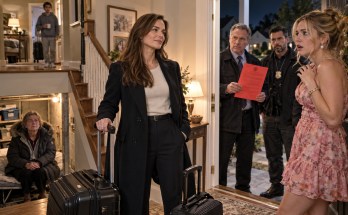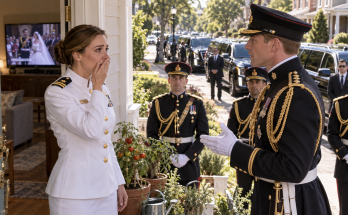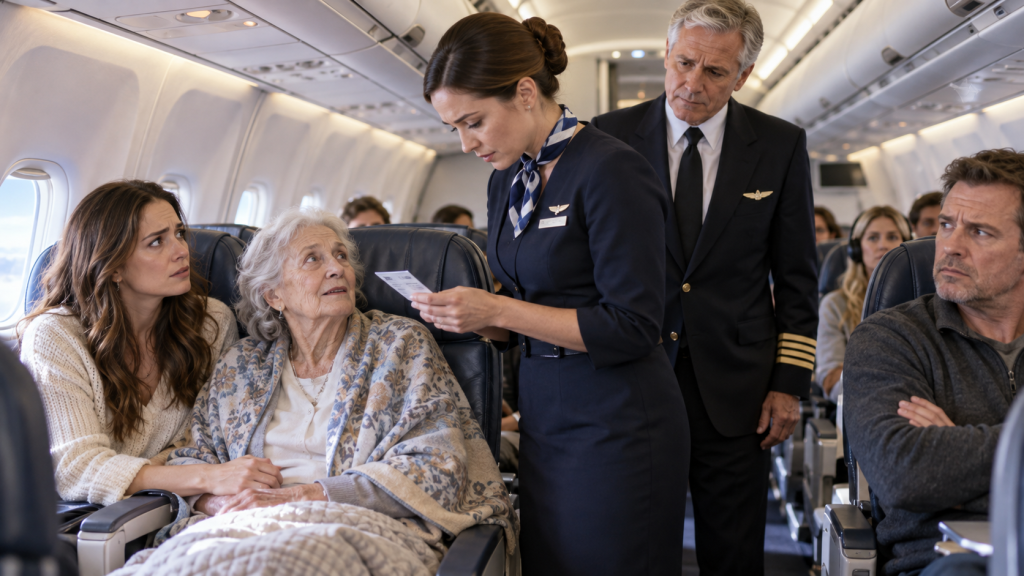
“Keep it down or get out!” a passenger shouted at me on a flight — then the flight attendant asked to see my mom’s boarding pass. I had booked the window seat because my mom had always loved looking at the clouds.

She had spent the last six months going in and out of hospitals, and this trip meant far more to her than she wanted to admit.
It was the first time since her diagnosis that she had felt strong enough to travel.
I wanted everything to go perfectly.
Mom was nervous about flying, so I kept talking to her.
Pointing out the planes outside.
Making little jokes.
Asking if she wanted water.
Every few minutes, she would smile and whisper something back.
Then, about an hour after takeoff, the man sitting across the aisle suddenly slammed his magazine shut.
He turned toward us.
And loud enough for half the cabin to hear, he snapped:
“Keep it down or get out!”
The entire row went silent.
Passengers looked up from their phones.
Someone behind us even sighed as though they agreed with him.
I felt my face grow hot.
“I’m sorry,” I said quietly. “We’re trying not to bother anyone.”
He rolled his eyes.
“Trying?”
His voice became even louder.
“You’ve been talking nonstop since takeoff. Some of us paid for a peaceful flight.”
I wanted to argue.
Instead, I bit my tongue.
Mom reached beneath the armrest and gently squeezed my hand.
“It’s okay,” she whispered.
I looked at her.
“No,” I whispered back. “It’s not.”
A flight attendant had noticed the tension and walked over.
“Is everything all right here?”
Before I could answer, the man pointed directly at us.
“They’ve been talking the entire flight. Either move them or make them be quiet.”
The flight attendant looked at me.
Then at Mom.
Something in her expression shifted.
She crouched beside my mother’s seat.
“Ma’am,” she said softly, “may I see your boarding pass for just a moment?”
Mom looked confused but handed it over.
The attendant studied the pass.
Then her eyes stopped on something printed near the bottom.
Her expression changed immediately.
She looked at Mom again.
Then toward the closed cockpit door.
For several seconds, she said nothing.
The rude passenger leaned back with a satisfied expression, clearly assuming we were about to be moved.
Instead, the flight attendant stood.
She picked up the intercom phone.
And in a much quieter voice, she said:
“Captain… I think you need to come out here. Right now.”
The man across the aisle frowned.
I looked at Mom.
She seemed just as confused as I was.
Then the cockpit door opened.
And when the captain stepped into the cabin and saw my mother, he stopped walking.
His face changed completely.
That was when I realized there was something about Mom’s boarding pass she had never told me.
And suddenly, the passenger’s complaint was the least important thing happening on that plane.
PART 2 — THE CODE ON MY MOTHER’S BOARDING PASS
The captain stopped in the aisle.
Not slowed.
Stopped.
His hand was still resting against the edge of the cockpit door when he looked at my mother.
For a moment, every trace of professional calm disappeared from his face.
The irritated passenger across from us noticed too.
So did half the cabin.
Mom did not.
She was still looking down at her boarding pass as though the answer might somehow be printed in larger letters if she stared long enough.
The captain finally whispered:
“Eleanor?”
My mother’s head lifted.
Everything in her face changed.
“David?”
The man across the aisle frowned.
I looked between them.
“You know each other?”
Neither answered immediately.
Then the captain crossed the remaining distance between us and crouched beside my mother’s seat.
He did not offer his hand.
He simply stared at her with the expression of someone seeing a person who belonged to a much older part of his life.
“I was told you were traveling today.”
he said.
Mom looked embarrassed.
“I asked them not to make a fuss.”
The captain laughed once.
His eyes were already wet.
“You have been asking people not to make a fuss for thirty years.”
Thirty years.
I stared at my mother.
“What is he talking about?”
Mom closed her eyes.
And that was the moment I realized the secret was not something the airline knew about her.
It was something everyone seemed to know except me.
The flight attendant still held Mom’s boarding pass.
Her name was Maya.
I saw it on the small silver badge pinned above her jacket pocket.
She handed the pass back carefully.
Near the bottom, below the ordinary flight information, was a short line I had noticed when checking us in but never thought to question.
LEGACY HONOREE — NS226
I had assumed it was some harmless frequent-flyer notation.
Maybe medical assistance.
Maybe an airline loyalty code.
Instead, Maya looked at Mom as though she had just discovered a photograph had climbed out of a history book.
“I’m sorry.”
she said.
“I didn’t realize when you boarded.”
Mom smiled weakly.
“That was the idea.”
The captain shook his head.
“Of course it was.”
The passenger across the aisle cleared his throat.
Not apologetically.
Impatiently.
“Can somebody explain what’s happening?”
For the first time, the captain looked at him.
The warmth disappeared from his face.
Not anger.
Command.
“Sir, I’ll be with you in a moment.”
The man leaned back.
Apparently even he understood there were tones you did not challenge at thirty-five thousand feet.
Then the captain looked at me.
“You’re Eleanor’s daughter?”
“Yes.”
He smiled.
“You have no idea who your mother is, do you?”
I looked at Mom.
She sank slightly into her seat.
“I’m beginning to suspect I don’t.”
Mom sighed.
“David.”
“Yes?”
“You’re supposed to be flying the airplane.”
“The first officer is doing an excellent job.”
“That is not comforting.”
“It should be.”
“Go back up front.”
“In a minute.”
My mother gave him a look I had seen approximately ten thousand times during my childhood.
The look that meant:
I raised you better than this.
Except apparently she had not raised him at all.
So why did it work?
David smiled.
“There it is.”
“What?”
“That look.”
Mom muttered:
“You were always dramatic.”
I stared.
“Mom.”
She turned toward me.
“Who is he?”
The captain answered.
“Someone your mother kept alive long enough to become a pilot.”
The cabin went completely silent.
Even the rude passenger stopped moving.
I thought I had misheard.
“What?”
Mom immediately shook her head.
“That is not what happened.”
David looked at her.
“It is exactly what happened.”
“No.”
“I was thirteen.”
“You were ambulatory.”
“I was terrified.”
“So was everyone.”
“You shoved me through an emergency exit.”
“You were blocking it.”
Someone behind us laughed.
Mom glanced back, visibly mortified.
David did not care.
He looked at me.
“Thirty years ago, your mother was the lead flight attendant on Northstar Flight 226.”
I stared at her.
“My mother worked in airline reservations.”
Mom turned toward the window.
David blinked.
Then looked at her.
“Reservations?”
“It was easier.”
“Eleanor.”
“David.”
“You were a senior cabin attendant and later a safety instructor.”
Mom’s face tightened.
“I did reservations too.”
David laughed.
I did not.
“You were a flight attendant?”
I asked.
“For a few years.”
“How many?”
Mom hesitated.
“Twelve.”
Twelve years.
I was thirty-four.
My mother had managed to reduce twelve years of her life to the sentence:
I used to work for an airline before you were born.
I felt strangely betrayed.
Not because she owed me every story.
Because suddenly the way she had acted all morning made sense.
The way her hands shook at security.
The way she touched the cabin wall when we boarded.
The way she stared at the safety card even though she could probably have recited it from memory.
“You told me you were nervous because you hadn’t flown in a long time.”
“I haven’t.”
“That isn’t the whole reason, is it?”
Mom did not answer.
David did.
“No.”
Maya glanced toward the galley.
Another flight attendant had quietly taken over the nearby service area.
Nobody was rushing us.
Nobody was making announcements.
I appreciated that.
This was already too public.
David seemed to understand.
He lowered his voice.
“Do you want me to tell her?”
Mom looked at him.
Then at me.
Her expression softened.
“No.”
She said.
“I should have done that years ago.”
I waited.
The rude passenger waited.
Apparently the entire section was now unwillingly invested in my family history.
Mom took a breath.
“Flight 226 had an engine fire during takeoff.”
Her voice changed.
Not trembling.
Flattening.
The way people sometimes speak when they have told themselves a story so often that emotion has been sanded away.
“We rejected the takeoff.”
“Smoke entered the cabin.”
“There was confusion during the evacuation.”
David interrupted gently.
“There was more than confusion.”
Mom ignored him.
“People were scared.”
“Of course they were.”
“We got most of them out.”
Most.
That word sat differently.
“How many people were onboard?”
I asked.
“Hundred and forty-three passengers.”
“Six crew.”
My stomach tightened.
“And?”
Mom looked at her hands.
“One hundred and forty-seven survived.”
I did the arithmetic.
Two did not.
David looked away.
The cabin seemed quieter now.
Mom continued.
“The aircraft stopped near the end of the runway.”
“One exit became unusable.”
“People started moving toward the front.”
“Smoke thickened faster than we expected.”
Her fingers tightened around the boarding pass.
“I was responsible for the rear cabin.”
I imagined my mother younger.
Not the woman beside me now, thin from treatment, scarf covering hair that had begun falling out.
A thirty-something woman in an airline uniform inside a cabin filling with smoke.
I could not reconcile them.
Maybe children are never meant to understand that their parents existed before they knew them.
David spoke quietly.
“My mother and my younger brother were with me.”
Mom glanced at him.
“They were three rows behind my station.”
“My mother had been injured during the rejected takeoff.”
David continued.
“She couldn’t stand.”
“I froze.”
Mom said:
“You were thirteen.”
“I was blocking the aisle.”
“You were thirteen.”
David smiled sadly.
“She keeps saying that because she has spent thirty years pretending what she did was ordinary.”
Mom looked irritated.
“What was I supposed to do?”
“Leave a child there?”
The question sounded almost offensive to her.
As though the answer were so obvious that gratitude itself was embarrassing.
David turned to me.
“She got my brother out first.”
“Then came back for me.”
“Then went back again for my mother.”
Mom shook her head.
“Another passenger helped carry her.”
“Yes.”
“Because you went back into smoke to reach her.”
“I was working.”
David looked at her for several seconds.
Then whispered:
“That sentence changed my life.”
Mom’s eyes filled.
She looked away.
I suddenly understood why the captain had stopped walking.
Not celebrity.
Not royalty.
Not wealth.
Memory.
He had once been a frightened boy in a burning airplane.
And my mother had been the adult who came back.
“What happened to the two people who died?”
I asked.
Mom’s face changed completely.
David looked at me, then at her.
That question belonged to Mom.
She swallowed.
“They were seated near the front.”
“One died from injuries sustained during the evacuation.”
“The other…”
She stopped.
Her breathing changed.
I touched her hand.
“You don’t have to.”
“Yes.”
she whispered.
“I do.”
The rude passenger across the aisle was no longer looking annoyed.
He was staring at the magazine in his lap.
Mom continued.
“The other passenger was a man named Thomas Bell.”
“He was fifty-two.”
“He went back for his briefcase.”
My chest tightened.
“He shouldn’t have.”
“No.”
“Could you stop him?”
“I tried.”
There it was.
The wound.
“I grabbed him.”
Mom whispered.
“He pulled away.”
“People were moving.”
“Smoke was everywhere.”
“I shouted.”
“He went back.”
Then silence.
David closed his eyes.
Mom continued.
“We found him after the fire department entered.”
I squeezed her hand.
She stared at the boarding pass.
“They gave medals.”
“Commendations.”
“Newspapers called us heroes.”
Her mouth tightened.
“I hated it.”
Now I understood why she had hidden twelve years of her life beneath the word reservations.
“You saved one hundred and forty-seven people.”
I said.
Mom turned sharply.
“No.”
“I was part of a crew that evacuated one hundred and forty-seven people.”
“That is different.”
Her voice was firm.
“Somebody in the cockpit rejected the takeoff correctly.”
“Someone opened the right exits.”
“Passengers helped strangers.”
“Firefighters arrived quickly.”
“Ground crews responded.”
“We were a system.”
I stared at her.
“Okay.”
Then more gently:
“You were part of the system.”
She nodded.
That she could accept.
David glanced toward the cockpit.
“I really do need to return.”
Mom gave him a look.
“Finally.”
He ignored her.
Then looked toward the passenger across the aisle.
“Sir.”
The man stiffened.
David’s voice remained professional.
“You are entitled to a reasonable level of comfort onboard.”
The passenger nodded, apparently expecting vindication.
“But other passengers are also entitled to speak quietly to one another.”
The man’s expression changed.
David continued.
“If the volume becomes excessive, our crew will address it.”
“It had not.”
Maya confirmed:
“No, Captain.”
The man opened his mouth.
David raised one hand.
“Your request for quiet was reasonable.”
“The way you addressed them was not.”
No humiliation.
No threats.
Just a boundary.
The man looked toward us.
His face reddened.
“I didn’t know she was…”
Mom interrupted.
“That shouldn’t matter.”
Everyone looked at her.
She continued:
“You didn’t need to know anything about me to speak kindly.”
The passenger lowered his eyes.
That was the end of it.
And somehow Mom had managed to make even her own dramatic reveal irrelevant to the point that mattered.
David smiled.
“Still you.”
“Go fly.”
“Yes, ma’am.”
He turned.
Then stopped.
Looked back.
“Eleanor.”
“What?”
“Does she know why you’re really on this flight?”
My mother froze.
My stomach tightened again.
“Know what?”
David’s expression changed.
Mom whispered:
“Don’t.”
He stared at her.
“You haven’t told her?”
“David.”
He closed his eyes briefly.
Then nodded.
“Not my story.”
He returned to the cockpit.
The door closed.
And suddenly Flight 226 was no longer the secret I cared about most.
I turned toward Mom.
“Why are we really traveling?”
She looked out the window.
Clouds stretched beneath us in bright white layers.
For the first time since takeoff, Mom did not seem interested in them.
“I told you.”
“You said you wanted to see California again.”
“I do.”
“That’s not what he meant.”
Mom adjusted the blanket over her knees.
A delay tactic.
I had inherited it from her.
“Mom.”
She closed her eyes.
“I’m tired.”
“So am I.”
“I don’t want to do this here.”
“Then tell me enough that I’m not imagining something worse.”
She looked at me.
That landed.
“I’m going to a memorial.”
My anger softened slightly.
“For Flight 226?”
“Yes.”
“Thirty years?”
“Thirty years next week.”
“Why didn’t you tell me?”
“Because you would have made it into a bigger thing.”
“You mean I would have understood why you were willing to get on an airplane six months into chemotherapy?”
Mom winced.
Fair.
“You told your oncologist this was a relaxation trip.”
“He knows about the memorial.”
Of course he did.
Everyone knew except me.
Again.
“Who invited you?”
“The airline.”
“David?”
“He wrote too.”
“Who else?”
Mom hesitated.
There.
Someone else.
“Mom.”
“A woman named Rebecca Bell.”
Bell.
Thomas Bell.
The passenger who went back for his briefcase.
My stomach dropped.
“His daughter?”
Mom nodded.
“How old was she?”
“Sixteen when he died.”
“And now?”
“Forty-six.”
I stared at her.
“Why does she want to meet you?”
Mom’s eyes filled.
“She’s wanted to for years.”
The plane seemed to tilt beneath me even though I knew it hadn’t.
“For years?”
“Yes.”
“How many?”
“About eight.”
“And you kept saying no?”
Mom nodded.
“Why?”
She looked at me as though the answer were obvious.
“Because I’m the last person she should have to comfort.”
“What makes you think she wants to comfort you?”
Mom looked away.
Exactly.
She did not know.
She had simply written the other woman’s feelings in advance.
Apparently that habit was not limited to me.
“What does Rebecca want?”
I asked.
Mom took a long breath.
“She wrote after an anniversary article.”
“She said she had spent most of her life angry at her father.”
That surprised me.
“Why?”
“Because he went back for a briefcase.”
Mom’s voice became quiet.
“He had a wife.”
“Three children.”
“He had been told to leave everything.”
“And he went back.”
“She said her mother spent twenty years blaming the airline.”
“Then after her mother died, Rebecca requested the investigation records.”
My stomach tightened.
“What did they say?”
“That her father made his own decision.”
Mom nodded.
“She found witness statements.”
“Mine.”
“And?”
Mom’s mouth trembled.
“She learned I tried to stop him.”
I understood before she finished.
For decades, Mom had remembered the man she could not save.
Rebecca had spent decades believing nobody had tried.
Two women carrying opposite versions of the same moment.
“What did she write to you?”
Mom reached beneath the blanket.
Into her handbag.
She removed an envelope worn soft at the folds.
Of course she had brought it.
She handed it to me.
“Read it.”
The letter was eight years old.
Rebecca’s handwriting was small and precise.
Mrs. Brooks,
I do not know whether you remember my father, Thomas Bell. I hope you don’t, because I hope you were able to live a full life without carrying every passenger you could not save.
My throat tightened.
I continued.
I recently read your statement from the investigation. You wrote that you physically tried to stop my father from moving back into the cabin and that he pulled away from you.
My mother never knew that. Neither did I.
Then:
For years, I thought everyone simply left him behind.
I looked at Mom.
She was crying silently.
Rebecca continued.
I am not writing to ask for an apology. You do not owe me one.
I am writing because I think perhaps nobody ever told you that either.
I had to stop.
My vision blurred.
Mom whispered:
“Keep going.”
So I did.
My father made a terrible decision in a terrifying moment. I wish he had listened to you. But his decision was not yours.
If you have been carrying it, please put it down.
I lowered the letter.
Eight years.
Mom had carried those words for eight years and still kept the guilt.
“Why didn’t you meet her then?”
Mom’s answer came almost soundlessly.
“Because I didn’t believe her.”
Not believed the facts.
Believed the permission.
That was harder.
“I thought she was trying to make me feel better.”
Mom continued.
“I thought if she saw me, she might realize she hated me.”
“So you avoided her.”
“Yes.”
“For eight years.”
“Yes.”
Then she looked at her hands.
“And now you’re dying.”
I hated saying it.
Her eyes closed.
“Yes.”
The diagnosis had entered our lives six months earlier.
Pancreatic cancer.
Late.
Aggressive.
Treatment bought time.
Nobody used the word cure.
Mom hated conversations about prognosis because she said doctors were not fortune tellers.
But I had seen the numbers.
She knew I had.
We had both become very skilled at talking around endings.
Apparently she had done the same thing with beginnings.
“Does Rebecca know you’re sick?”
“Yes.”
“How?”
“David.”
I almost laughed.
“Does everyone in aviation exchange my mother’s medical information?”
Mom smiled faintly.
“I told him.”
“Of course.”
“He wrote after my diagnosis.”
“Northstar keeps in contact with surviving Flight 226 crew.”
I shook my head.
“There is an entire world of your life I didn’t know existed.”
Mom looked at me.
“I know.”
“Why?”
Her eyes filled.
Not guilt this time.
Something older.
“Because I was afraid you’d be proud.”
That stunned me.
“What?”
She looked toward the window.
“You were little when I left flying.”
“I told you I wanted more stable hours.”
“That was true.”
“But not all of it.”
“What was the rest?”
“I couldn’t board without counting exits.”
“I smelled smoke when there wasn’t any.”
“I woke up hearing people shouting.”
I stopped breathing.
“I hated when passengers left bags in aisles.”
“I hated when anyone ignored instructions.”
“I would finish a flight and sit in my car for twenty minutes before driving home.”
She laughed softly.
“Back then we didn’t use the language we use now.”
“People told you to take time off.”
“Get back in the air.”
“Be professional.”
“So I did.”
Until she couldn’t.
“I transferred into training.”
she continued.
“Then ground operations.”
“Then reservations.”
“So that part wasn’t a lie.”
“No.”
“It was just the last chapter you let me see.”
Mom nodded.
I touched her hand.
“Why would me being proud scare you?”
“Because I wasn’t proud.”
There.
That was the secret beneath the secret.
She continued.
“Everyone told me what we had done right.”
“All I could see was Thomas Bell going back.”
“So when people called me brave, I felt like a fraud.”
I squeezed her hand.
“You weren’t.”
“You don’t get to decide that for me either.”
The answer stung.
Then I understood.
She was right.
I could not force pride into the place where guilt had lived.
But perhaps Rebecca could help Mom question who owned that guilt.
The rude passenger across the aisle shifted.
I realized he had been hearing everything.
He looked uncomfortable.
Then quietly said:
“Ma’am?”
Mom turned.
He swallowed.
“I owe you both an apology.”
Mom studied him.
“You owe us one for yelling.”
“Yes.”
“Not because of what happened thirty years ago.”
“No.”
He looked ashamed.
“You’re right.”
Good.
Mom nodded once.
Apology accepted without ceremony.
The man put on his headphones.
And for the rest of the flight, he became what he should have been from the beginning.
Just another passenger.
Maya returned with tea for Mom.
Water for me.
Then quietly said:
“Captain Morales asked me to tell you there will be no announcement.”
Mom visibly relaxed.
I stared.
“You thought they were going to announce you?”
“They’ve done it before.”
“Oh, absolutely not.”
Mom smiled.
“See?”
“What?”
“This is why I didn’t tell you.”
I laughed.
Actually laughed.
“Because I agree with you?”
“Because now there are two of us to fight them.”
“That seems useful.”
Her smile became brighter.
For a few minutes, she looked less sick.
Not healthy.
Just herself.
I had missed the distinction.
We talked for nearly an hour.
Not continuously.
The irony was not lost on me.
The passenger who wanted us quiet had accidentally opened the most important conversation my mother and I had ever had.
I asked about her airline years.
She told me about training new crews.
About the ridiculous old uniforms.
About David at thirteen.
“He bit a paramedic.”
I stared.
David had neglected that part.
“Why?”
“He was in shock.”
“Still.”
“I told you he was dramatic.”
Apparently some truths survived three decades.
Then I asked the question I had been avoiding.
“What happens at the memorial?”
Mom became quiet.
“There’s a private ceremony.”
“Crew.”
“Survivors.”
“Families.”
“Rebecca?”
“Yes.”
“Do you want me with you?”
Mom looked at me.
For once, I did not say:
I’m coming.
I asked.
That mattered.
“Yes.”
she whispered.
Then immediately:
“But if it’s too much—”
“Mom.”
She stopped.
“You said yes.”
A small smile.
“I said yes.”
“Then I’ll be there.”
No argument.
No rescuing.
Just her answer.
The captain returned shortly before descent.
This time he stayed standing.
Professional again.
“Eleanor.”
“Yes?”
“Rebecca will be at arrivals.”
Mom went pale.
I looked at him.
“What?”
David’s expression changed.
“You didn’t know?”
Mom shook her head.
“No.”
“I thought the foundation told you.”
“No.”
He closed his eyes.
“Wonderful.”
Apparently communication failure was a hereditary condition in every organization.
“What does she think?”
Mom whispered.
David crouched again.
“She thinks you agreed to meet her at the airport.”
Mom gripped the armrest.
“I agreed to the memorial.”
“The organizers apparently interpreted that as agreement to the welcome.”
“I can’t.”
Her breathing quickened.
I recognized panic.
Not theoretical nervousness.
Real.
I took her hand.
“Mom.”
“No.”
“She shouldn’t meet me like this.”
“Like what?”
She looked down at herself.
The scarf.
Thin wrists.
Hospital bracelet still beneath one sleeve because she had been at an infusion appointment two days earlier.
“Dying.”
My chest tightened.
David’s face softened.
“She knows you’re ill.”
“That’s worse.”
“Why?”
Mom looked furious.
“Because then she’ll feel obligated to forgive me.”
There it was again.
Mom’s obsession with an apology nobody had asked for.
David shook his head.
“Eleanor.”
“She has spent eight years trying to tell you she does not blame you.”
“You have spent eight years deciding she does anyway.”
Mom looked at him.
He did not retreat.
Then he said:
“You taught me something thirty years ago.”
“What?”
“That fear does not get to reorganize the cabin.”
Her face crumpled.
David continued gently.
“Maybe it doesn’t get to organize this either.”
I looked away because somehow the captain had just said the thing I had been trying to understand all morning.
Mom whispered:
“What if I can’t do it?”
David smiled.
“Then you tell her.”
“What if I only last thirty seconds?”
“Then you last thirty seconds.”
“What if I cry?”
He laughed.
“You are not the first person to cry in an airport.”
Mom looked at me.
I squeezed her hand.
“No performance.”
I said.
“No hero speech.”
“No apology unless you actually want to give one.”
“You just meet her.”
Mom breathed slowly.
Then nodded.
Once.
David stood.
“There’s something else.”
Of course.
My mother actually groaned.
“David.”
He smiled sadly.
“Rebecca isn’t coming alone.”
Mom froze.
“Who is with her?”
David’s expression softened.
“Her brother Daniel.”
“Her sister Anne.”
Mom closed her eyes.
All three of Thomas Bell’s children.
“Why?”
she whispered.
“They asked to come.”
The color drained from her face.
I thought she might faint.
Then David added:
“And one other person.”
Mom opened her eyes.
“What other person?”
He hesitated.
That was when I knew the answer mattered.
“Thomas Bell’s widow.”
Mom stopped breathing.
I stared.
“You said her mother died.”
I whispered.
Mom looked at me.
“She did.”
David shook his head.
“Rebecca’s mother died.”
Then he looked directly at Mom.
“Thomas remarried before Flight 226.”
The cabin seemed to disappear around us.
Mom frowned.
“I don’t understand.”
David swallowed.
“His widow from his second marriage is alive.”
“And she asked to meet you.”
Mom stared.
“Why?”
David looked toward the cockpit.
Then back.
“Because she has something that belonged to Thomas.”
My mother’s hands began shaking.
“What?”
David did not answer immediately.
Then:
“A letter he wrote the night before Flight 226.”
Mom went completely still.
David’s voice became quieter.
“He mentions you.”
I stared at him.
“How could he mention her before the flight happened?”
“That.”
David said.
“Is what she has been trying to understand for thirty years.”
The seatbelt sign illuminated.
A soft chime passed through the cabin.
Outside the window, clouds broke apart beneath us, revealing the coastline.
Mom stared down at the earth coming closer.
The trip I thought was about seeing California one last time had never been about the ocean.
She was flying toward the family of a man she had spent thirty years believing she failed.
And somewhere below us was a letter written before the accident—
a letter containing my mother’s name before Thomas Bell had ever supposedly met her.
Mom turned to me.
For the first time all day, she looked genuinely frightened.
Then she whispered:
“I think there’s something about Flight 226 I was never told.”
PART 3 — THE PASSENGER SHE COULDN’T SAVE
My mother did not speak again until the plane touched the runway.
For the final twenty minutes of the flight, she held my hand and stared through the window.
California rose toward us.
Roads.
Warehouses.
Tiny moving cars.
Sunlight catching the edges of buildings.
The world beneath us looked ordinary.
That almost offended me.
Somewhere down there were people my mother had spent thirty years avoiding.
A family who had built half their understanding of a dead man around one decision he made inside a burning airplane.
And a letter written the night before that flight containing my mother’s name.
I wanted to ask a hundred questions.
Mom had none of the answers.
So for once, I let silence remain silence.
When we reached the gate, Captain David Morales appeared at the front of the cabin.
He did not make an announcement.
No applause.
No public introduction.
He simply waited until most passengers had deplaned.
The man who had yelled at us stopped before leaving.
He looked at Mom.
Then at me.
“I’m sorry again.”
Mom nodded.
“Safe travels.”
That was all.
No humiliation.
No revenge.
No lesson delivered loudly enough for social media.
Just a man who had behaved badly and, after being corrected, managed to behave a little better.
Mom watched him disappear up the jet bridge.
Then whispered:
“That’s enough.”
I understood what she meant.
Not every wrong requires a spectacle.
David came toward us.
Mom struggled to stand.
He immediately reached for her arm.
She glared.
“I can still walk.”
He released her as though burned.
“Yes, ma’am.”
I laughed.
Mom gave me the same look.
Apparently cancer had not reduced her ability to command a room.
Maya brought the wheelchair Mom had reluctantly agreed to use through the airport.
When she saw it, she sighed.
“I hate that thing.”
“You hate being tired more.”
“I can hate both.”
“Multitasking.”
She almost smiled.
We entered the terminal last.
The crowd had thinned.
A few airport employees stood near the windows.
No cameras.
No airline executives holding flowers.
Someone had listened when Mom said she did not want a fuss.
Then I saw four people waiting beyond the secured exit.
A woman about Mom’s age.
Silver hair cut to her chin.
Beside her stood Rebecca.
I recognized her without introduction.
She had the same careful handwriting somehow.
That probably made no sense.
But grief had made me sentimental.
A man stood beside Rebecca.
Daniel.
And another woman.
Anne.
Thomas Bell’s children.
All grown now.
Older than Mom had been when Flight 226 burned.
No one moved at first.
Mom’s hands gripped the wheelchair armrests.
“Which one is his widow?”
she whispered.
The silver-haired woman stepped forward.
“I am.”
Her voice trembled.
“My name is Margaret Bell.”
Mom went pale.
Margaret stopped several feet away.
She did not reach for Mom.
Did not hug her.
Did not say she had waited thirty years.
She simply asked:
“Eleanor?”
Mom nodded.
“Yes.”
Margaret smiled sadly.
“Thomas wrote that you had kind eyes.”
My mother started crying.
Not the quiet tears she had shed on the plane.
Her whole body folded.
I knelt beside her.
Rebecca began crying too.
For several seconds, nobody knew what to do.
Then Mom managed:
“He knew my name?”
Margaret nodded.
“He knew your name before the flight.”
“How?”
“That’s why we came.”
We did not have the conversation in baggage claim.
Thank God.
A representative from the memorial foundation had arranged a private airport conference room nearby.
Nothing fancy.
Gray carpet.
Plastic water bottles.
A table designed for meetings nobody remembers.
It was perfect.
Mom sat at one end.
Margaret across from her.
Rebecca, Daniel, and Anne sat together.
I took the chair beside Mom.
David remained by the door.
Mom looked at him.
“You don’t have to stay.”
“I know.”
“Then why are you?”
He smiled.
“Because I’ve waited thirty years to find out what was in that briefcase.”
Nobody laughed at first.
Then Rebecca did.
One startled sound.
Mom followed.
The tension loosened just enough for everyone to breathe.
Margaret placed an old leather folder on the table.
Inside was a single sheet of paper.
Yellowed.
Folded twice.
My mother stared at it as though it might explode.
Margaret did not slide it across immediately.
Instead she said:
“I need to explain something first.”
Mom nodded.
Margaret folded her hands.
“Thomas and I had been married nineteen months when he died.”
Rebecca stared down at the table.
Their mother—Thomas’s first wife—had still been alive then.
The divorce had apparently been difficult.
Thomas’s relationship with his children had suffered.
Rebecca had been sixteen.
Daniel fourteen.
Anne eleven.
“He loved them.”
Margaret said.
“But he had made a mess of things.”
Rebecca gave a small smile without humor.
“That’s polite.”
Margaret looked at her.
“I’m old now.”
“I’ve earned polite.”
That made Daniel smile.
Families survive tragedy partly by learning where humor can safely sit.
Thomas had left home two years earlier.
Not for Margaret.
She came later.
But children do not experience timelines like attorneys.
Their father left.
Then eventually had another wife.
Those were the facts that mattered to them.
Rebecca had stopped answering his calls.
Daniel spoke to him occasionally.
Anne still wrote letters because she was young enough to believe people would return if you kept the door unlocked.
Thomas kept every one.
“He was flying home that morning because of us.”
Rebecca said.
Mom looked at her.
Rebecca continued.
“We didn’t know.”
My chest tightened.
“Home where?”
“Ohio.”
Of course.
Thomas had been traveling for work.
His final destination after Flight 226 and a connection was Columbus.
He planned to spend three days near his children.
He had not told them he was coming.
“He thought showing up might be romantic.”
Rebecca said.
“It would have been infuriating.”
Daniel added.
“He had a gift for choosing the wrong version of sincere.”
Margaret smiled sadly.
“Yes.”
He did.
The night before Flight 226, weather disrupted several departures.
Thomas’s original flight was canceled.
He was rebooked for the following morning.
The airline placed some passengers in an airport hotel.
Northstar crew members stayed there too.
Mom’s face changed.
“I remember the hotel.”
Margaret nodded.
“You met him in the restaurant.”
Mom stared.
Then slowly:
“The man with the brown briefcase.”
Margaret smiled.
“Yes.”
Mom covered her mouth.
“Oh my God.”
Memory had found him thirty years late.
Mom leaned back.
“There was a man at the bar.”
“He kept checking a briefcase.”
“He was nervous.”
Margaret nodded.
“That was Thomas.”
Mom closed her eyes.
“I didn’t know his name.”
“He knew yours.”
“Your badge.”
Of course.
Mom whispered:
“What did we talk about?”
Margaret finally pushed the letter toward her.
“Read.”
Mom did not touch it.
“You read it.”
Margaret looked surprised.
“Please.”
So Margaret unfolded the page.
Her hands shook.
Then she began.
Margaret,
The weather has apparently decided I need another evening to reconsider whether surprising three angry children is courage or stupidity. At the moment, I suspect stupidity.
Rebecca smiled through tears.
“That sounds like him.”
Margaret continued.
I met a Northstar flight attendant downstairs named Eleanor Brooks. She caught me checking the briefcase for the tenth time and asked if it contained crown jewels.
Mom laughed suddenly.
“I said that.”
David leaned against the wall.
“Of course you did.”
Margaret kept reading.
I told her it contains three things more expensive than jewels: letters from children who currently think I am an idiot.
My throat tightened.
Rebecca stared at the table.
She asked why I was carrying the originals instead of copies. I told her because some things only matter because somebody touched the actual paper.
Anne wiped her face.
Margaret paused.
Then continued.
Eleanor informed me, with very little sympathy, that luggage gets lost and papers burn, and that if I care about them as much as I say, I should make copies before breakfast.
Mom whispered:
“I told him to use the hotel copier.”
Margaret nodded.
“He did.”
Everyone looked at her.
“What?”
Rebecca asked.
Margaret smiled.
“He made copies.”
My mother stopped breathing.
Margaret continued reading.
She also told me that in an emergency, I am to leave the briefcase behind because no piece of paper is worth making someone come back for me.
The room became silent.
My mother began shaking.
Margaret’s voice broke.
But she continued.
I told her she had not seen the letters.
She said, “Then memorize them.”
David lowered his head.
Mom covered her face.
Thirty years.
She had warned him.
Not during smoke.
Not while people screamed.
The night before.
Calmly.
Directly.
No briefcase is worth making someone come back for you.
And the next morning, he had done exactly what she told him not to do.
Margaret read the final paragraph.
I think I liked her because she talks to me the way Rebecca used to before Rebecca stopped talking to me at all.
Rebecca made a broken sound.
If tomorrow goes badly, remind me that showing up is not the same thing as repairing something. I cannot walk into my children’s lives holding apologies like tickets and expect admission.
Then:
I have to ask. They get to answer.
Margaret lowered the page.
No one spoke.
Mom was crying so hard she could barely breathe.
I rubbed her back.
Eventually she whispered:
“What was in the briefcase?”
Rebecca closed her eyes.
Margaret answered.
“The originals.”
“The letters?”
“All three children’s letters.”
“And?”
Margaret hesitated.
“His replies.”
Thomas had spent months writing each child.
Not sending everything.
Trying to find the correct words.
Apologies.
Memories.
Explanations.
Some defensive.
Some honest.
He had finally written one letter to each child that he believed said what mattered without asking them to comfort him.
They were in the briefcase.
Along with photographs.
A watch that had belonged to Thomas’s father.
And three savings bonds he planned to give the children.
Not documents worth millions.
No state secrets.
Nothing that justified going back into smoke.
Only paper carrying meaning.
“I think he panicked.”
Margaret said.
“He had spent so long believing those letters were his one chance to fix things that when someone shouted to leave everything behind, he left the plane physically.”
“But not emotionally.”
Daniel whispered.
“He got outside.”
“Then thought the chance was still inside.”
Mom began crying harder.
Rebecca turned toward her.
“For years, I was furious that he went back for a briefcase.”
Mom looked at her.
“I thought it meant we mattered less than whatever business papers were inside.”
Rebecca shook her head.
“When Margaret showed us the copies after our mother died, I learned the truth.”
“He went back because the briefcase held us.”
That sentence sat heavily between us.
Then Rebecca added:
“But that doesn’t make what he did right.”
Mom stared.
Rebecca continued.
“He still made a terrible decision.”
“He had copies.”
“He had us alive.”
“He had the possibility of trying again.”
“He chose an object because he was scared of losing what it represented.”
Mom’s mouth trembled.
“I couldn’t stop him.”
“I know.”
“I grabbed him.”
“I know.”
“I should have—”
“No.”
Rebecca’s voice became firm.
The same word Mom had used on the plane.
“No.”
Rebecca leaned forward.
“My father was fifty-two years old.”
“You were doing your job.”
“He heard you.”
“He pulled away.”
“The investigation says that.”
“Three witnesses said that.”
“You did not leave him behind.”
“He left safety.”
Mom’s face collapsed.
Rebecca continued.
“I needed you to hear that from me.”
Mom whispered:
“Why?”
“Because I spent twenty-two years blaming the airline.”
“Then eight years wishing I could tell you I didn’t blame you.”
Rebecca laughed sadly.
“And you kept refusing to meet me.”
Mom lowered her head.
“I was afraid.”
“I know.”
“Of me?”
“Yes.”
Rebecca smiled through tears.
“You should have called.”
Mom looked up.
There was no accusation in Rebecca’s voice.
Only sadness.
“I know.”
Two women.
Eight years of letters.
Thirty years of grief.
And the solution had always been a conversation neither trusted themselves to survive.
Then Margaret reached into her bag.
“There’s something else.”
David straightened.
Mom stared.
Margaret pulled out a clear archival sleeve.
Inside was a photocopy.
Three handwritten letters.
Thomas’s letters to his children.
“The originals burned.”
Margaret said.
“These are the copies he made at the hotel.”
Because Eleanor told him to.
Mom stopped breathing.
Rebecca pushed them toward her.
“He listened to you once.”
she whispered.
“Maybe you should remember that too.”
I turned away.
There are some sentences too intimate to watch land.
Mom touched the plastic sleeve.
Not the letters themselves.
“I didn’t save them.”
“No.”
Rebecca said.
“You reminded him to make copies.”
“That’s all.”
Mom nodded slowly.
The distinction mattered.
Not hero.
Not failure.
A person who said one sensible thing.
Another person listened.
Then later, under terror, he forgot another sensible thing.
Human beings are inconsistent even at the edges of life.
Maybe especially there.
David finally spoke.
“I remember him.”
Everyone looked at him.
“I didn’t know his name then.”
He turned toward Mom.
“I remember you grabbing a man near the rear aisle.”
Mom nodded.
“He turned back.”
“Yes.”
“I always thought you blamed yourself because you couldn’t reach him again.”
Mom stared.
David continued.
“But Eleanor…”
He smiled sadly.
“You had already reached him the night before.”
Mom began crying again.
“David.”
“I know.”
He wiped his own eyes.
“I’m dramatic.”
That finally made everyone laugh.
The memorial took place the next afternoon.
It was held in a small aviation museum near the airport.
Not glamorous.
A retired Northstar aircraft sat outside beneath the California sun.
Inside were photographs from Flight 226.
Newspaper clippings.
A copy of the official investigation summary.
Names of the crew.
Names of the passengers.
The two people who died were listed with exactly the same size lettering as everyone else.
I appreciated that.
Death did not need larger font to matter.
Mom almost backed out that morning.
We were in the hotel.
She stood in front of the mirror wearing a dark blue dress.
No wig.
A pale scarf tied around her head.
“I can’t.”
I sat on the bed.
“Okay.”
She turned.
“What?”
“If you can’t, we don’t go.”
Mom frowned.
“That easy?”
“No.”
“But it’s still your choice.”
She stared at me.
Then sat beside me.
“What if this is my only chance?”
“That sounds like a reason to go.”
“It is.”
“But?”
“You’re allowed to be scared.”
She cried.
I held her.
Five minutes later she stood.
“Help me fix this scarf.”
So I did.
The memorial did not call her a hero.
That had been one of Mom’s conditions.
They honored the entire crew.
Ground responders.
Firefighters.
Passengers who assisted others.
The captain who rejected the takeoff.
Everyone whose action formed part of the survival chain.
David spoke briefly.
Rebecca spoke too.
She talked about her father.
Not as the man who died foolishly.
Not as a martyr protecting precious letters.
As a complicated father who was trying to repair relationships and ran out of time.
“I wish he had left the briefcase.”
she said.
Her voice did not shake.
“I wish he had trusted that we could have heard his apology without paper.”
Then she looked at Mom.
“But I’m grateful someone told him the night before that things can be copied and people cannot.”
Mom covered her mouth.
No spotlight.
No standing ovation.
Just truth.
That was better.
Afterward, Rebecca asked if Mom wanted to see the copies of Thomas’s letters.
Mom shook her head.
“They’re yours.”
Rebecca smiled.
“Good answer.”
Then Mom said:
“But I’d like to see his handwriting once.”
Rebecca opened the sleeve.
Mom looked.
One minute.
Maybe less.
Then handed it back.
That was enough.
She did not need to enter the most private part of Thomas’s relationship with his children just because his final decision had entangled their histories.
Boundaries can arrive thirty years late and still be worth honoring.
We stayed in California three more days.
Not for memorial events.
Mom wanted the ocean.
The real reason she had used as the fake reason for the trip turned out to be something she wanted after all.
We sat on a beach north of San Diego wrapped in blankets because the wind was colder than she expected.
Mom complained.
“You said California was warm.”
“I did not personally arrange the weather.”
“You booked the trip.”
“Those are separate industries.”
She laughed.
We watched pelicans dive.
For a while, cancer disappeared from conversation.
Not from her body.
Just from language.
Sometimes that is the closest thing sick people get to a vacation.
On our final evening, Mom said:
“I wasted eight years.”
I looked at her.
“On what?”
“Being afraid of Rebecca.”
“You also had eight years of other things.”
“That sounds like therapy.”
“Maybe I’m growing.”
She smiled.
Then:
“I wasted thirty years blaming myself.”
I thought carefully.
“You also spent thirty years raising me.”
Mom looked at me.
“Working.”
“Annoying everyone.”
“Apparently terrifying pilots.”
She laughed.
“Fair.”
I continued.
“I don’t think a life becomes wasted because one part stayed hurt.”
She stared toward the water.
“That sounds better than therapy.”
“Much more expensive.”
Then Mom said:
“I should’ve told you about Flight 226.”
“Why didn’t you?”
“I didn’t want you turning me into something.”
“What?”
“Brave.”
I frowned.
“You were brave.”
She looked irritated.
“You are impossible.”
“Genetics.”
Mom sighed.
Then:
“I wanted to be your mother.”
“Not a story.”
That I understood.
Children sometimes flatten parents too.
Mom.
Dad.
Strong.
Weak.
Good.
Difficult.
As though the people who raised us arrived fully formed on the day we were born.
Eleanor had been thirty-three once.
Afraid inside a burning airplane.
Then afraid outside every airplane afterward.
She had made decisions.
Regretted some.
Survived.
Changed careers.
Raised a daughter.
Got cancer.
Flew again.
A person.
Not a symbol.
We flew home four days later.
David was not our captain.
Mom approved.
“Maybe we can finally travel without a reunion.”
Our flight attendant glanced at Mom’s boarding pass.
Paused.
Then smiled.
“Welcome aboard, Mrs. Brooks.”
Nothing more.
Mom looked relieved.
We took the same seats.
Window for her.
Aisle for me.
When we reached cruising altitude, she stared outside.
Clouds again.
I waited.
Then asked:
“What do you actually like so much about them?”
Mom smiled.
“You can’t tell how fast you’re moving.”
I looked outside.
She was right.
From above, everything appeared almost still.
Halfway home, Mom fell asleep against the window.
I covered her with the airline blanket.
Her boarding pass remained tucked inside the seat pocket.
LEGACY HONOREE — NS226
I removed it.
Not because the code mattered anymore.
Because I wanted the date.
The route.
Proof of one ordinary trip I had taken with my mother near the end of her life.
I folded it into my wallet.
She woke later and noticed.
“Stealing airline property?”
“It’s your boarding pass.”
“Technically paper stock belongs to the carrier.”
“You really were an airline employee.”
“Reservations.”
I laughed so loudly the passenger across the aisle looked over.
Then smiled.
Nobody told us to keep it down.
Mom lived seven more months.
Not days.
Not years.
Seven months.
Long enough for another Christmas.
Long enough to complain about hospital food.
Long enough to meet Rebecca twice more.
The second meeting happened at our house.
Rebecca brought lemon cake.
Mom hated lemon cake.
She ate two pieces because she did not want to be rude.
After Rebecca left, Mom said:
“If I survive cancer only to be killed by frosting, I’ll be furious.”
I laughed until I cried.
She wrote to David.
One letter.
Not an apology.
Thank God.
She thanked him for remembering her as a whole person rather than the worst day of her career.
He replied:
You were the adult who came back for me. I was never going to remember you any other way.
Mom read it.
Then shook her head.
“He’s still dramatic.”
She kept the letter beside her bed.
Near the end, Mom entered hospice.
At home.
Her choice.
I sat beside her one afternoon while rain tapped against the window.
She had become very thin.
Her voice barely carried.
“Did I ever tell you why I booked the window seat?”
I smiled.
“Clouds.”
She shook her head.
“Partly.”
“What else?”
She looked embarrassed.
“I wanted to know if I could do it.”
“Fly?”
“Yes.”
“After all those years?”
She nodded.
“I thought if I got scared, I could look out and remember there was an outside.”
My throat closed.
An outside.
Beyond the cabin.
Beyond smoke.
Beyond one terrible moment.
Beyond thirty years of guilt.
“Were you scared?”
I asked.
“Yes.”
“The whole time?”
“Mostly.”
“You looked calm.”
Mom gave me a tired smile.
“That does not mean the same thing.”
No.
It didn’t.
I finally understood.
Courage had never meant she felt no fear.
It meant she had boarded anyway because something mattered enough to bring the fear with her.
Mom died on a Tuesday morning.
Quietly.
No dramatic final sentence.
No sudden confession.
I was holding her hand.
She was asleep.
Then she stopped breathing.
That was all.
For a while, I hated the simplicity.
A life that had contained fire, evacuation slides, motherhood, grief, cancer, airports, laughter, and thirty years of hidden guilt ended with one soft absence.
Then I understood that perhaps peaceful endings are allowed to be small.
At her funeral, David came.
So did Rebecca.
Margaret.
Daniel.
Anne.
Maya sent flowers.
The card said:
For Eleanor, who knew people mattered more than luggage.
I laughed at a funeral.
Mom would have approved.
We did not mention Flight 226 first in the eulogy.
I talked about burnt toast.
Her refusal to replace a bathrobe that was practically transparent.
The way she hid emergency cash in ridiculous places and then forgot where.
Her habit of correcting television flight scenes aloud.
Then, near the end, I spoke about the plane.
Only briefly.
I said:
“My mother spent much of her life believing courage meant being the person who got everyone out.”
I looked toward Rebecca.
David.
The old crew.
“But near the end, she taught me something else.”
“Sometimes courage is getting on the plane after you know what can happen.”
“Sometimes it is meeting the person you have been afraid to face.”
“Sometimes it is admitting you could not save someone because their final choice was never yours to control.”
Then I stopped.
No hero.
No saint.
My mother.
That was enough.
Months later, Rebecca mailed me a copy of Thomas Bell’s letter.
Not the original.
That stayed with his family.
At the bottom she had written:
Your mother told him people matter more than paper. I thought you might want the paper anyway.
I smiled.
Humans are inconsistent.
Thankfully.
I framed only one line.
Not the part mentioning Mom.
Not the accident.
The sentence Thomas had written about his children:
I have to ask. They get to answer.
I kept it in my office.
It reminded me of more than Flight 226.
You can love someone.
Regret something.
Need forgiveness.
Want another chance.
None of those things give you ownership of the other person’s answer.
Thomas learned it the night before he died.
Mom learned it over thirty years.
I learned it watching both of them.
I still have her boarding pass.
The paper has softened at the fold.
The ink is beginning to fade.
Sometimes I look at the code that started everything.
NS226.
For years, I thought the number represented the worst thing that happened to her.
Now I think it represented something else.
One flight.
One day.
One chapter.
Not an entire woman.
The passenger who shouted at us probably never knew any of this.
He may remember only that he complained about two women talking and accidentally summoned the captain.
That makes me smile.
But he was never the important part.
His complaint simply caused someone to look closely at a boarding pass.
And sometimes that is all a buried story needs.
Someone finally looks closely.
My mother spent thirty years believing one passenger defined what she had failed to do.
Thomas Bell’s family spent years believing nobody tried to stop him.
David remembered the woman who returned for him.
I remembered a mother who claimed she worked in reservations.
Every one of us possessed one piece.
None of us possessed the whole person.
That may be the kindest thing grief finally taught me.
Nobody fits entirely inside the worst thing they did.
Or the bravest.
Thomas was not merely the man who went back for a briefcase.
He was a father frightened he had waited too long to apologize.
Mom was not merely the attendant who could not stop him.
She was a frightened woman doing her job inside smoke.
Rebecca was not merely the daughter who blamed an airline.
She was a child who grew older and went looking for facts.
David was not merely a boy who survived.
He became a pilot.
And I was not merely the daughter caring for a dying mother.
I was lucky enough to meet a part of her before there was no time left to ask.
That is what I remember most about our trip now.
Not the rude passenger.
Not the captain stepping into the aisle.
Not even the code on the boarding pass.
I remember Mom at the window on the flight home.
Clouds beneath us.
Her face turned toward the light.
Still afraid.
Still flying.
And for the first time in thirty years, no one inside that cabin needed her to save them.
She could simply sit by the window.
Look out.
And let herself be carried home.
THE END STORIES! THANK YOU FOR READING GOOD LUCK !❤️
Related Posts