Victor stared at the document as if the paper itself had just threatened him. For the first time in all the years I had worked under him, Victor Vance had nothing to say. No sarcastic remark.
No lecture about delivery windows. No tapping his pen against a clipboard while reminding me how easily drivers could be replaced. Just silence. Julian leaned back in the chair.
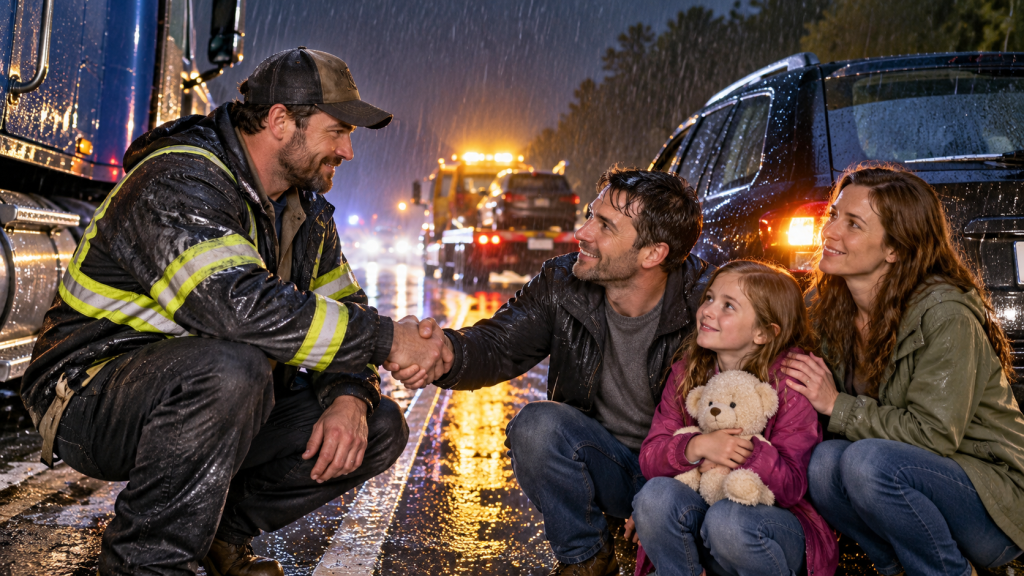
“I asked you a question, Mr. Vance.” Victor swallowed. “Our disciplinary procedures aren’t relevant to the contract.” Julian’s expression didn’t change. “They became relevant the moment your employee was punished for protecting my family while transporting my company’s property.”
Victor glanced at me.
There was anger in his eyes.
Not embarrassment.
Not regret.
Anger.
At me.
As if I had arranged this.
“Marcus,” he said sharply, “wait outside.”
Julian immediately answered.
“No.”
Victor blinked.
“Excuse me?”
“He stays.”
“This is a confidential business discussion.”
“Then perhaps you should have scheduled it before bringing the employee whose conduct we’re discussing into the room.”
Victor’s jaw tightened.
Julian tapped the document again.
“I came here because Northstar Electronics is conducting its annual transportation review. Apex currently handles approximately eight million dollars of our freight movement annually. That contract expires in six weeks.”
Victor forced a smile.
“Yes, and Apex has maintained excellent performance metrics.”
“Has it?”
“Yes.”
Julian looked at me.
“Marcus, what time did you arrive at our Detroit distribution center after the storm?”
“8:26.”
“And your scheduled appointment?”
“Seven.”
“Was the shipment rejected?”
“No.”
“Damaged?”
“No.”
“Seal broken?”
“No.”
“Inventory missing?”
“No.”
Julian looked back at Victor.
“So Northstar received an intact shipment eighty-six minutes late during a severe weather event after the driver stopped to assist a family stranded in hazardous conditions.”
Victor shifted.
“The issue isn’t the individual circumstances. It’s compliance. Drivers cannot simply decide—”
Julian raised a hand.
“Do you have a policy prohibiting drivers from stopping when they reasonably believe human life is at risk?”
Victor hesitated.
“No.”
“Do you have a policy requiring drivers to continue driving through unsafe conditions to preserve delivery schedules?”
“Of course not.”
“Did Marcus notify dispatch?”
“He left a voicemail.”
“And you?”
Victor didn’t answer.
Julian opened another page in his portfolio.
“Because I have screenshots.”
Victor’s face changed.
I stared at Julian.
Screenshots?
He looked at me.
“When I tracked you down, I asked whether you had anything documenting the delay. Your wife answered the phone.”
My eyebrows rose.
“Sarah?”
“She was reluctant to speak to me until I explained who I was.”
Of course she was.
Sarah could smell nonsense through concrete.
Julian continued.
“She forwarded me the screenshots you had already given her permission to keep for your records.”
Victor’s eyes moved toward me.
Julian read aloud.
“Marcus: ‘There’s a kid in the car. They’re dangerously close to the travel lane. I’ll leave the second help gets here.’”
Then:
“Victor: ‘Miss that delivery window, and you may have just cost yourself your job.’”
Victor leaned forward.
“Those messages lack context.”
Julian almost smiled.
“What context makes that better?”
Victor said nothing.
I felt something unfamiliar.
For years, Victor had controlled every conversation because he controlled the schedule.
The miles.
The overtime.
The routes.
He decided who got home Friday night and who spent the weekend sleeping behind a steering wheel at a truck stop.
But now the room belonged to someone he couldn’t intimidate.
Julian closed the portfolio.
“Show me the disciplinary notice.”
Victor’s voice hardened.
“I can’t disclose employee records.”
I spoke.
“I can.”
Both men looked at me.
I pulled out my phone.
I had photographed the warning before leaving Victor’s office two weeks earlier.
Sarah had insisted.
At the time, I’d thought she was being overly cautious.
Now I understood why she had said:
“People behave differently when they think there won’t be a record.”
I opened the photograph and handed my phone to Julian.
He read silently.
Then his expression changed.
“Unauthorized delay.”
He looked up.
“You classified it as misconduct?”
Victor crossed his arms.
“Marcus failed to follow a direct instruction.”
“An instruction to abandon my family.”
“An instruction to continue his assigned route after contacting emergency services.”
Julian stared at him.
“My daughter was six years old.”
“The state police had been contacted.”
“They hadn’t arrived.”
“A tow truck had been dispatched.”
“It hadn’t arrived either.”
Victor leaned back.
“Mr. Hayes, I understand this is emotional for you.”
That was the wrong sentence.
Julian became completely still.
“This isn’t emotional.”
His voice was quieter now.
“It’s operational.”
Victor blinked.
Julian continued.
“Northstar contracts carriers because we expect judgment, not robots. A driver transporting hundreds of thousands of dollars in electronics through a severe storm is already making continuous safety decisions. If your management culture punishes that driver for exercising reasonable judgment around immediate danger, I need to know what other unsafe decisions your employees are being pressured to make.”
Victor’s mouth opened.
Julian wasn’t finished.
“Do drivers here falsify hours?”
“No.”
“Drive fatigued?”
“No.”
“Skip required inspections?”
“No.”
“Exceed safe speeds to preserve appointments?”
“No.”
“Then why did your supervisor threaten Marcus’s job for an eighty-six-minute weather-related delay?”
Victor pointed toward me.
“Because this isn’t his first performance issue.”
My head snapped around.
“What?”
Victor looked almost pleased.
“You’ve had three late deliveries this year.”
I stared at him.
“One was when Interstate 75 was closed because of a fatal accident.”
“Late is late.”
“The second was when Apex’s own trailer had a brake chamber failure.”
“You accepted the equipment.”
“After your maintenance department signed it out.”
Julian watched us carefully.
“And the third?” he asked.
I answered.
“A warehouse in Toledo changed the appointment time after I had already left.”
Victor interrupted.
“Excuses.”
Something inside me changed.
I had spent years explaining reality to a man who treated circumstances as character flaws.
Weather.
Traffic.
Mechanical failures.
Human beings.
To Victor, anything interfering with a spreadsheet was incompetence.
Julian looked at him.
“Those are the performance issues?”
“There are others.”
“Show me.”
Victor froze.
Julian waited.
“Show me the others.”
“I don’t have the complete file in front of me.”
I pointed at the folder.
“My name is on that.”
Victor’s face reddened.
Julian said:
“Marcus, would you authorize Apex’s human resources department to review your disciplinary history in connection with Northstar’s carrier audit?”
“Yes.”
Victor snapped:
“You don’t understand what you’re agreeing to.”
I looked at him.
“I understand perfectly.”
Julian stood.
“Good.”
He gathered his papers.
“I’ve already requested a meeting with your regional vice president tomorrow.”
Victor stood too.
“Mr. Hayes, there’s no need to escalate this.”
Julian looked almost amused.
“I’m the customer.”
Then he turned toward me.
“Marcus, I’m sorry.”
“For what?”
“For causing trouble.”
I shook my head.
“You didn’t.”
Victor made a frustrated sound.
Julian ignored him.
“My wife wanted me to tell you Lily still talks about the big truck.”
Despite everything, I smiled.
“Is she okay?”
“Perfectly fine.”
“And your wife?”
“Fine.”
“The SUV?”
He laughed.
“Very dead.”
“Sorry.”
“Don’t be. It had 190,000 miles.”
Then Julian extended his hand.
I shook it.
The same handshake as the highway.
Except this time his fingers were warm.
“I’ll be in touch.”
He walked out.
Victor waited until the door closed.
Then turned toward me.
“What did you do?”
I stared.
“What?”
“You contacted him.”
“No.”
“You knew who he was.”
“I didn’t.”
“Bullshit.”
My anger finally surfaced.
“Be careful.”
Victor laughed.
“You think because some executive wandered into my office you’re suddenly untouchable?”
“I don’t think I’m untouchable.”
“Good.”
He stepped closer.
“Because Northstar doesn’t run this company.”
“No.”
“But they pay us.”
Victor’s face tightened.
“You’re suspended for the rest of the week.”
I stared at him.
“For what?”
“Insubordination.”
“When?”
“Just now.”
“What did I say?”
“You challenged me in front of a client.”
I almost laughed.
“You challenged yourself.”
His face turned red.
“Get out.”
I took out my phone.
“What are you doing?”
“Writing down the time.”
His expression changed.
“Why?”
“Because my wife told me people behave differently when there’s a record.”
For the first time, Victor looked nervous.
I walked out.
By the time I reached the parking lot, my hands were shaking.
Not from fear.
From adrenaline.
I called Sarah.
She answered immediately.
“Well?”
“How much did you tell Julian?”
“Enough.”
“Sarah.”
“He called yesterday.”
“You didn’t mention that.”
“You were sleeping.”
“I was awake at breakfast.”
“You were eating cereal and worrying about Chloe’s orthodontist bill. I decided one crisis at a time.”
Despite myself, I smiled.
“He’s the COO.”
“I know.”
“Of Northstar.”
“I know.”
“Eight-million-dollar contract.”
“I know.”
“Anything else you’d like to tell me?”
She hesitated.
“Yes.”
“What?”
“He asked for the towing receipt.”
I remembered the carbon slip.
“What about it?”
“Apparently you paid $412.”
“Yeah.”
“You never told me it was that much.”
“I knew you’d worry.”
“Marcus.”
“I was going to put it back after payday.”
“With what money? Victor cut your hours.”
I closed my eyes.
“Sarah.”
Her voice softened.
“I know why you did it.”
“I’m sorry.”
“We’ll discuss the part where you spent four hundred dollars without telling me.”
“Fair.”
“But I’m not angry that you helped them.”
“I know.”
“What happened with Victor?”
“He suspended me.”
Silence.
“For what?”
“Insubordination.”
“What did you do?”
“Answered questions.”
Another silence.
Then Sarah said something I had never heard her say in eleven years of marriage.
“Oh, hell no.”
I laughed.
She didn’t.
“Come home.”
“I will.”
“And Marcus?”
“Yeah?”
“Don’t call Victor.”
“I wasn’t going to.”
“Don’t text him.”
“Okay.”
“Don’t post anything online.”
“I don’t even have Facebook.”
“Good.”
“Why do you sound like an attorney?”
“Because I called one.”
I stopped walking.
“You what?”
“Come home.”
That evening, I sat at our kitchen table with Sarah and a labor attorney named Melissa Grant.
Sarah had found her through a coworker’s husband.
Melissa was in her early fifties, wore rectangular glasses, and had the unnerving ability to listen without changing expression.
I showed her everything.
Texts.
Warning.
Pay stubs.
Schedules.
The reduction in hours.
The suspension.
She asked questions for almost two hours.
Finally she removed her glasses.
“The strongest thing you have isn’t the original write-up.”
“What is?”
“The schedule reduction.”
I frowned.
“Why?”
“Because discipline can be discretionary. Retaliation is different.”
“Retaliation for what?”
“That depends on company policy and applicable law. But first we establish facts. You reported a safety-related incident. You documented it. Then your hours fell sharply.”
Sarah leaned forward.
“Can he get Marcus fired?”
“Victor?”
“Yes.”
“He can probably recommend termination.”
My stomach tightened.
Melissa continued.
“But Apex is larger than Victor.”
“How much larger?”
“Much.”
I knew Apex had terminals across several states.
I had never thought about anyone above our regional office.
Melissa looked at me.
“Do you know the corporate safety director?”
“No.”
“HR?”
“Name on emails. Never met her.”
“Good.”
“Why good?”
“Because we’re going to let them discover Victor themselves.”
The next morning, Apex called before I woke up.
Not Victor.
Human resources.
A woman named Denise Harper asked whether I could attend a meeting at 11:00.
Melissa came with me.
Sarah wanted to.
Melissa told her not yet.
When we arrived, Victor wasn’t in the room.
That surprised me.
Instead, there were four people.
Denise from HR.
A regional operations director named Paul Brennan.
A corporate safety manager named Renee Watkins.
And Julian.
Victor’s chair was empty.
Paul stood.
“Marcus, thank you for coming.”
I sat beside Melissa.
Denise folded her hands.
“We want to clarify something immediately. Your suspension issued yesterday has been rescinded pending review.”
I nodded.
“Am I being paid?”
Paul blinked.
Melissa almost smiled.
“Yes,” Denise said. “You will be paid for the missed scheduled work.”
“Okay.”
Renee opened a folder.
“We’ve reviewed the incident report from the storm.”
“What incident report?”
She looked at Denise.
Then at me.
“The one Mr. Vance submitted.”
My stomach tightened.
“What did it say?”
Renee hesitated.
Melissa spoke.
“My client authorizes disclosure.”
Renee slid a copy across the table.
I read.
Driver voluntarily stopped for non-emergency roadside assistance despite explicit direction to continue route. Emergency services had already secured scene. Delay resulted in missed customer delivery appointment.
I stared.
“That’s false.”
Renee nodded slowly.
“We know.”
“The trooper arrived twenty minutes after I stopped.”
“Yes.”
“And Victor’s text came before the trooper arrived.”
“Yes.”
“He knew that.”
“We have the messages.”
I kept reading.
Another line:
Driver did not notify dispatch prior to stopping.
“I called overnight dispatch.”
Renee nodded.
“We retrieved the voicemail.”
My jaw tightened.
Victor hadn’t simply punished me.
He had rewritten what happened.
Julian sat quietly.
Paul said:
“Marcus, did Victor ask you to amend or sign this incident report?”
“No. I only signed the disciplinary notice.”
Denise showed me another document.
My signature appeared at the bottom.
I stared.
“That isn’t my signature.”
Melissa leaned forward.
“May I?”
Denise slid it over.
Melissa studied it.
“Is this an electronic acknowledgment?”
“Yes.”
“Who entered it?”
“We’re investigating.”
My stomach dropped.
Someone had marked an internal incident report as acknowledged by me.
I had never seen it.
Paul looked uncomfortable.
“This is now broader than your disciplinary action.”
Julian finally spoke.
“Which is why Northstar has paused contract renewal discussions.”
Paul’s face tightened.
I looked at Julian.
“Paused?”
“Yes.”
“Are people going to lose jobs because of me?”
Everyone looked at me.
Julian frowned.
“No.”
“If Northstar leaves Apex—”
“Marcus.”
He leaned forward.
“Listen carefully. You did not create this problem.”
I looked down.
He continued.
“If a customer audit exposes a management failure, the employee who behaved safely is not responsible for the consequences.”
Melissa nodded.
“He’s right.”
I wasn’t convinced.
I’d driven with these people for years.
Mason had twins.
Eric’s wife had cancer.
Ray was three years from retirement.
An eight-million-dollar contract wasn’t abstract.
It was routes.
Hours.
Mortgages.
Groceries.
Paul seemed to understand.
“We are not assuming the contract is lost.”
Julian added:
“Northstar doesn’t want to leave Apex. We want confidence in Apex.”
That helped.
A little.
Then Renee asked:
“Marcus, have other drivers complained about pressure to continue driving in unsafe circumstances?”
I hesitated.
Melissa looked at me.
“Answer only what you personally know.”
I thought.
“I’ve heard people complain.”
“Specific incidents?”
I remembered one.
“Last winter, Ray Benson called because freezing rain had shut down a section of Route 20.”
Renee wrote the name.
“What happened?”
“Victor told him if state police hadn’t physically closed the road, he should keep moving.”
“Did Ray?”
“No. He parked at a truck stop.”
“Discipline?”
“Lost his preferred route for a month.”
Renee wrote.
“Anyone else?”
I remembered Eric.
“Eric Martinez had a tire issue.”
“What kind?”
“Steer tire showing sidewall damage.”
“Did he report it?”
“Yes.”
“What happened?”
“Victor told him to run it seventy miles to the terminal.”
Renee stopped writing.
“Did he?”
“No. Eric called maintenance directly.”
“Discipline?”
“Weekend routes for six weeks.”
Paul’s face changed.
Renee looked at him.
“Were these reported to corporate?”
“I’ve never seen them.”
Neither had I.
By the end of the meeting, my anger had changed shape.
This wasn’t about one storm.
Victor had built a culture.
Maybe not alone.
Maybe others knew.
But the pattern was there.
Punish delay.
Reward silence.
Make drivers afraid of losing miles.
Safety became something printed on posters while the schedule taught the real rules.
Before we left, Julian stopped me in the hallway.
“Marcus.”
“Yeah?”
He handed me an envelope.
I frowned.
“What is this?”
“The tow.”
I immediately shook my head.
“No.”
“You told me I could pay you back.”
“I said that because you were standing in freezing rain.”
“And I’m holding you to it.”
“I don’t want—”
“Marcus.”
He smiled.
“Take the money.”
I accepted the envelope.
“Thank you.”
“There is something else.”
I groaned.
“What?”
“Lily wrote you a letter.”
He handed me a folded piece of purple paper.
Crayon covered the front.
A truck.
At least, I thought it was a truck.
It had approximately eighteen wheels, so she had clearly done research.
Above it:
THANK YOU MR. MARCUS
Inside, in uneven handwriting:
Thank you for not leaving us in the rain. Daddy said you were late because you waited for us. I am sorry your boss got mad. I think you did the right thing.
I couldn’t finish reading for a minute.
Julian looked away politely.
Then I noticed the bottom.
P.S. Your truck is still bigger than the tow truck.
I laughed.
Julian smiled.
“She insisted.”
I folded the letter carefully.
“Tell her thank you.”
“You can tell her yourself sometime.”
“I’d like that.”
When I got home, Chloe was doing homework at the kitchen table.
She was thirteen.
Old enough to know money was tight.
Young enough that I hated that she knew.
She saw the purple paper.
“What’s that?”
“A letter.”
“From who?”
“The little girl from the highway.”
Her eyes widened.
“She wrote you?”
I handed it over.
Chloe read it.
Then looked at me.
“Dad?”
“Yeah?”
“You really paid for their tow?”
I glanced at Sarah.
She crossed her arms.
“Your father neglected to mention the exact amount to both of us.”
I winced.
Chloe looked impressed.
“How much?”
“None of your business.”
Sarah said:
“Four hundred and twelve dollars.”
“Sarah.”
“What? Transparency is healthy.”
Chloe’s mouth fell open.
“Dad!”
“I got reimbursed.”
“That’s like half my braces.”
The sentence hit me.
There it was.
The thing I’d been trying not to think about.
Four hundred and twelve dollars.
Chloe’s teeth.
Groceries.
Electric bill.
I sat beside her.
“I’m sorry.”
She frowned.
“For helping them?”
“For spending that much without talking to Mom.”
“Oh.”
She thought.
“Would you do it again?”
I looked at Sarah.
She waited.
“Yes.”
Chloe smiled.
“Good.”
Sarah pointed at me.
“With a phone call.”
“Yes.”
“Before the credit card.”
“Yes.”
“Excellent.”
Chloe rolled her eyes.
“Marriage is weird.”
“You have no idea.”
Two days later, Victor was placed on administrative leave.
The news traveled through the terminal faster than diesel fumes.
Nobody knew why officially.
Everybody knew why unofficially.
Drivers started calling me.
Ray first.
“Did you do this?”
“No.”
“Come on.”
“I stopped for a family.”
“That’s it?”
“That’s it.”
Ray laughed.
“Victor’s been asking for this for years.”
“Don’t celebrate yet.”
“I’m not celebrating.”
He paused.
“Okay, a little.”
Then Eric called.
Then Denise from HR.
Then a driver I barely knew named Tanya Brooks.
Her call changed everything.
“Marcus, you don’t know me well.”
“I know who you are.”
“I need to ask you something.”
“Okay.”
“Did corporate talk to you about Victor changing records?”
My stomach tightened.
“Why?”
Silence.
“Tanya?”
“He changed mine.”
I sat down.
“What?”
“Last year.”
“What happened?”
“I reported fatigue.”
I remembered.
Tanya had been working brutal routes after another driver quit.
“I had reached my limit. I told dispatch I wasn’t safe to continue.”
“And?”
“Victor told me to take thirty minutes and finish.”
“Did you?”
“No.”
“Good.”
“He wrote me up for refusing a load.”
I closed my eyes.
“What did the report say?”
“That I had available hours and refused for personal reasons.”
“Did you sign it?”
“No.”
“Did it say you did?”
Silence.
“Yes.”
My skin went cold.
“Call HR.”
“I don’t trust HR.”
“Call a lawyer.”
“I can’t afford one.”
I thought about Melissa.
“Let me ask mine if she can recommend someone.”
Tanya started crying.
“I thought I was crazy.”
“You’re not.”
“I thought maybe I had signed something and forgotten.”
“You didn’t.”
“I have a screenshot of the message where I told him I was too tired.”
“Keep it.”
“I almost deleted it.”
“Don’t.”
That evening, Melissa called Apex.
By Monday, the review had become a formal corporate investigation.
Victor remained suspended.
Then another supervisor was suspended.
Then the overnight dispatcher manager.
Suddenly everyone became very careful around me.
Too careful.
People who had ignored me for years asked whether I wanted coffee.
Paul Brennan personally called to ask how my route went.
It was ridiculous.
I didn’t want special treatment.
I wanted normal treatment.
Safe equipment.
Honest records.
Fair routes.
The ability to stop in a storm without gambling my daughter’s orthodontic care.
Three weeks after Julian first appeared in Victor’s office, Apex held a driver meeting.
Corporate executives came from headquarters.
No customers.
No Julian.
Just us.
The president of operations stood in front of sixty drivers.
“My name is Elaine Foster.”
Most of us knew.
Nobody had met her.
She didn’t waste time.
“Over the past three weeks, Apex conducted a review of dispatch and disciplinary practices at this terminal.”
The room was silent.
“We identified serious violations of company policy.”
Someone behind me whispered:
“No kidding.”
Elaine continued.
“Those violations included inaccurate incident reporting, inappropriate modification of employee records, retaliatory scheduling practices, and documented instances in which drivers were pressured to prioritize delivery targets over reasonable safety concerns.”
My stomach tightened.
“In response, several management changes are effective immediately.”
Victor was terminated.
The overnight dispatch manager was terminated.
Another supervisor received final discipline and was transferred pending retraining.
But Elaine wasn’t finished.
“All affected disciplinary records will be reviewed.”
Ray raised his hand.
Elaine nodded.
“What about lost pay?”
Good question.
Elaine answered:
“Where our investigation substantiates retaliatory reduction of scheduled work, Apex will provide appropriate wage adjustments.”
The room changed.
Men and women who had spent years believing nothing would ever happen started looking at one another.
Then Elaine said:
“Marcus Thorne.”
Every head turned toward me.
I wanted to disappear.
“Would you stand?”
I did.
Elaine looked directly at me.
“Mr. Thorne’s disciplinary notice from the storm incident has been rescinded in full.”
A few drivers clapped.
I hated it.
Then more joined.
Soon the entire room was applauding.
I looked down.
Elaine raised a hand.
Silence returned.
“But I want to be clear about something.”
She looked around the room.
“Mr. Thorne is not receiving recognition because a major customer happened to be stranded on that highway.”
That mattered.
“He could have stopped for any family.”
She paused.
“The conduct would have been equally worthy.”
I swallowed.
“Apex expects drivers to protect life first, freight second, schedule third.”
Someone behind me said:
“Put that on Victor’s old office.”
People laughed.
Even Elaine smiled.
Then she became serious.
“If anyone in management tells you otherwise, document it and report it.”
After the meeting, Elaine asked me to stay.
I groaned internally.
I had developed an allergy to offices.
Inside were Paul, Denise, and Renee.
Elaine closed the door.
“We’d like to offer you a position.”
I stared.
“What?”
“Driver safety liaison.”
I almost laughed.
“No.”
They looked surprised.
Elaine smiled.
“Can I finish?”
“Sorry.”
“The role would keep you driving three days a week and spend two days working with safety training and driver reporting.”
I shook my head.
“Why me?”
Renee answered.
“Because drivers trust you.”
“You don’t know that.”
“We interviewed thirty-seven.”
That shut me up.
Elaine continued.
“The role includes a salary increase.”
“How much?”
She told me.
I stared.
It was nearly twenty percent.
Chloe’s braces flashed through my mind.
Then I became suspicious.
“Is this because of Julian?”
“No.”
“Northstar?”
“No.”
“Are you trying to keep me from suing?”
Melissa would have been proud.
Elaine actually laughed.
“No. Your attorney has already made it clear that any employment offer is separate from your claims.”
I liked Melissa more every day.
“Then why?”
Renee answered.
“Because the person who stopped on that highway demonstrated the judgment we keep claiming we want drivers to exercise.”
I thought.
“I don’t have management experience.”
“Good.”
I looked at her.
“Good?”
“We have enough managers.”
Elaine leaned forward.
“We need a driver.”
I didn’t answer immediately.
“Can I talk to my wife?”
“Please.”
Sarah’s response was immediate.
“Take it.”
“Can I finish explaining?”
“Does it pay more?”
“Yes.”
“Do you drive less overnight?”
“Yes.”
“Take it.”
“Sarah.”
“What?”
“What if I hate office work?”
“You’ll be home four nights a week.”
“Good point.”
“And Chloe’s braces.”
“Good point.”
“And maybe someday we replace the dishwasher that screams like a dying raccoon.”
“It’s still working.”
“It is threatening us.”
I laughed.
Then Sarah became serious.
“Do you want it?”
“I think so.”
“Then take it.”
I did.
But the biggest surprise came a week later.
Julian called.
“Marcus, Northstar made its carrier decision.”
My stomach tightened.
“Okay.”
“We’re renewing Apex.”
I exhaled.
“Good.”
“For three years.”
“That’s great.”
“With conditions.”
Of course.
“What conditions?”
“Quarterly safety audits. Driver feedback review. No retaliation clauses. Expanded weather-delay protocols.”
I smiled.
“Sounds reasonable.”
“One more.”
“What?”
“We asked for you.”
My smile disappeared.
“What does that mean?”
“As the driver representative on quarterly reviews.”
“Julian.”
“It’s not a favor.”
“It sounds like one.”
“It isn’t.”
“Then why me?”
“Because when I was stranded in the rain, you didn’t know who I was.”
I became quiet.
He continued.
“If you’d known I controlled an eight-million-dollar contract, stopping wouldn’t tell me anything about you.”
That landed.
“But you thought I was just some guy with a dead SUV.”
“You were.”
“Exactly.”
He laughed.
Then his voice softened.
“That’s why I trust you.”
I looked toward the kitchen.
Sarah was helping Chloe floss around the new braces we’d finally scheduled.
Life had become strange.
“You know something?” I said.
“What?”
“I almost didn’t stop.”
Julian was silent.
“I saw you waving.”
I continued.
“I thought about the deadline.”
“You stopped.”
“After I saw Lily.”
“That counts.”
“I don’t want you thinking I’m some hero.”
“I don’t.”
I laughed.
“Thanks.”
“You’re welcome.”
“No, seriously.”
“So am I.”
Julian continued.
“You were a tired truck driver who made one decent decision during a bad night.”
“That sounds more accurate.”
“Most important decisions are made by ordinary people who don’t feel heroic while making them.”
I remembered that.
A month later, we had dinner with Julian’s family.
Not at some expensive restaurant.
Pizza.
Their house.
Lily opened the door before we reached the porch.
“MR. MARCUS!”
She launched herself at me.
I nearly dropped the pie I was carrying.
“Hi, Lily.”
“You brought pizza!”
“I did.”
“Is that your daughter?”
Chloe stood behind me.
“Yes.”
Lily stared at her braces.
“Those are cool.”
Chloe, who had complained about them every day, suddenly smiled.
“Thanks.”
Within fifteen minutes, they disappeared upstairs.
Julian’s wife, Rachel, hugged Sarah.
Then she hugged me.
“You saved us.”
I shook my head.
“The trooper and tow driver did most of it.”
“You stayed.”
Two words.
You stayed.
I remembered sitting in my cab watching their hazards flash.
At the time, it had felt like sixty wasted minutes.
Now it felt different.
Julian handed me a beer.
“Come outside.”
We stood on his back porch.
For a while, we said nothing.
Then he asked:
“Can I tell you something embarrassing?”
“Please.”
“I almost didn’t wave.”
I looked at him.
“What?”
“I saw your truck coming.”
“Yeah?”
“I thought, ‘He’s freight. He’s never stopping.’”
I laughed.
“Fair assumption.”
“I almost stayed inside.”
“What changed?”
“Lily asked whether the big truck could help.”
I smiled.
“So this is all her fault.”
“Basically.”
We laughed.
Then Julian became serious.
“I didn’t tell you who I was because it didn’t matter that night.”
“I know.”
“But there’s another reason.”
“What?”
“I wasn’t supposed to be on that road.”
I frowned.
“What do you mean?”
“My sister had asked us to stay another night because of the weather.”
“Okay.”
“Rachel wanted to.”
I looked toward the house.
“I insisted we leave.”
“Why?”
“Work.”
Of course.
“I had an executive meeting the next morning.”
I stared.
Julian gave a bitter smile.
“I spent years expecting employees and vendors to bend their lives around deadlines. That night, I made my wife and daughter drive into a storm because I thought missing a morning meeting would be irresponsible.”
I said nothing.
“Then our SUV died.”
He looked down.
“And the man carrying my company’s shipment was the one who stopped.”
I understood.
“This wasn’t only about Victor.”
“No.”
“Was it about you too?”
“Yes.”
Julian nodded.
“I canceled the meeting.”
“Good.”
“Then I changed some things.”
“What?”
“Northstar’s logistics policies.”
I raised an eyebrow.
“We had penalties for certain late arrivals that didn’t adequately distinguish safety delays.”
“You changed them?”
“Yes.”
“Because of one night?”
“Because one night made me read policies I’d spent years approving.”
I smiled.
“Funny how that works.”
“Painfully.”
He looked through the window at Lily.
“I kept thinking about what would have happened if you followed Victor’s instruction.”
I knew.
So did he.
Maybe nothing.
Maybe a trooper arrived five minutes later.
Maybe the SUV remained safely on the shoulder.
Maybe not.
A truck could have drifted.
A distracted driver.
Hydroplaning.
A thousand possibilities.
We didn’t need to dramatize them.
Danger had been real enough.
Julian lifted his bottle.
“To being late.”
I laughed.
“To being late.”
We clinked bottles.
My new job was harder than I expected.
Drivers trusted me until I started asking them to complete paperwork.
Then apparently I became the enemy.
“Marcus,” Ray complained one morning, “you’ve changed.”
“Fill out the inspection form.”
“You used to be cool.”
“I was never cool.”
“True.”
I threw a pen at him.
But slowly, things changed.
Not perfectly.
No company transforms because one supervisor gets fired.
Deadlines still mattered.
Customers still complained.
Drivers still made mistakes.
Managers still got impatient.
But now we had a weather escalation process.
If a driver declared conditions unsafe, dispatch documented it.
No supervisor could override the decision without involving safety.
Mechanical concerns went directly to maintenance and safety, not only dispatch.
Disciplinary reports required driver acknowledgment through a secure system.
No more signatures appearing from nowhere.
Anonymous reporting went to corporate.
And quarterly, I sat across from Julian and Northstar’s logistics team.
He treated me exactly the same as everyone else.
Sometimes worse.
“You’re late,” he said at our second meeting.
“Three minutes.”
“I’m disappointed.”
“Fire me.”
“Wrong company.”
We laughed.
Then we argued for forty minutes about trailer dwell time.
Real business.
Not gratitude.
I liked that.
A year passed.
Then two.
Chloe got her braces off.
The day she did, she came home and smiled at herself in every reflective surface.
“Worth it?” I asked.
She grinned.
“Maybe.”
Sarah laughed.
I looked at that smile and remembered sitting in the rain wondering whether stopping would cost me the money we needed for those braces.
Instead, that stop had changed my career.
But I was careful about the lesson.
I never told Chloe:
“Do good things and you’ll be rewarded.”
Because that isn’t true.
Sometimes you do the right thing and lose.
Sometimes nobody important is watching.
Sometimes the stranded father isn’t an executive.
Sometimes he’s broke.
Sometimes your boss never gets exposed.
Sometimes kindness costs exactly what you feared it would cost.
The point isn’t that goodness guarantees reward.
The point is deciding who you are when reward is impossible to predict.
I told Chloe that.
She rolled her eyes.
“Dad, I asked whether I could borrow the car.”
“I know.”
“So?”
“No.”
“Why?”
“You’re sixteen.”
“That’s legal.”
“So is saying no.”
“Mom!”
Sarah shouted from the kitchen:
“I’m staying out of this!”
She wasn’t.
She never stayed out of anything.
Three years after the storm, Victor contacted me.
I hadn’t seen him since the investigation.
His name appeared in my email.
For ten minutes, I didn’t open it.
Then I did.
Marcus,
I don’t expect a response. I’m applying for a logistics position, and the company asked about my departure from Apex. I know you were involved in the investigation. I am not asking you to lie. I would like to speak with you before they contact Apex.
I read it twice.
Sarah read it.
Then:
“No.”
“That’s your advice?”
“Very sophisticated legal analysis.”
“I’ll ask Melissa.”
“Her answer will be longer and also no.”
Melissa’s answer was indeed longer.
But not exactly no.
“Don’t interfere with his employment,” she said. “Don’t volunteer yourself as a reference. If contacted, stick to verifiable facts.”
Victor emailed again.
I ignored it.
Then he called.
I almost didn’t answer.
Curiosity won.
“Hello?”
“Marcus.”
His voice sounded older.
“Victor.”
“Thanks for answering.”
“What do you want?”
“To apologize.”
I said nothing.
“I handled that storm wrong.”
“Yes.”
“I handled a lot wrong.”
“Yes.”
He sighed.
“I thought pressure made people perform.”
“Sometimes it does.”
“I thought if drivers believed there was always an excuse, we’d lose control.”
“Safety isn’t an excuse.”
“I know that now.”
I looked out the window.
“Why are you telling me?”
“Because losing Apex forced me to look at myself.”
“You didn’t lose Apex.”
“My job.”
“You know what I meant.”
“Yeah.”
Silence.
Then Victor said:
“My wife left.”
I closed my eyes.
I didn’t want this.
I didn’t want to become the person he confessed to.
“I’m sorry.”
“She said I treated our family like dispatch.”
That sentence was so sad I couldn’t respond.
“Everything was a schedule. Everything was performance. If the kids were late, I punished them. If she changed plans, I got angry.”
He laughed bitterly.
“I spent twenty years thinking efficiency was character.”
“Victor.”
“I know you don’t owe me anything.”
“I don’t.”
“I just wanted you to know.”
“Okay.”
“And the incident report.”
My jaw tightened.
“I changed it.”
“I know.”
“I marked the acknowledgment.”
“I know.”
“I told myself it was administrative.”
“It was dishonest.”
“Yes.”
“Why?”
“Because if corporate saw you had reported a roadside safety concern before the delay, they’d ask questions.”
“So you changed the record.”
“Yes.”
I waited.
“I’m sorry.”
I believed he was sorry.
That didn’t erase anything.
“Thank you for saying it.”
“Would you tell the company I’m applying to that?”
There it was.
I closed my eyes.
“Victor.”
“I know.”
“Your apology can’t be payment for a reference.”
“I know.”
“Then don’t turn it into one.”
He was silent.
Finally:
“You’re right.”
“I won’t contact them.”
“Thank you.”
“If they contact me directly, I’ll tell the truth.”
“I understand.”
We hung up.
Sarah asked:
“Well?”
“He apologized.”
“Good.”
“He wanted a reference.”
“Of course.”
“He backed off.”
“Better.”
I sat beside her.
“Do you think people change?”
She looked at me.
“Some do.”
“How do you know?”
“You don’t.”
“Helpful.”
She smiled.
“You watch what they do next.”
That was Sarah.
No speeches.
No philosophy.
Just the next thing.
Years later, I learned Victor had found another job.
Not management.
Dispatch.
A smaller company.
Then eventually safety coordination.
One afternoon, he emailed me a photograph.
A highway.
Snowstorm.
Several trucks parked at a rest area.
Underneath:
Closed the route for weather before any driver had to ask. Thought you’d appreciate the irony.
I smiled.
Then replied:
Good call.
Nothing more.
People don’t always need to become friends to acknowledge change.
Sometimes a two-word reply is enough.
Apex grew.
Northstar renewed again.
Then expanded the contract.
But by then, Julian had moved into the CEO role.
At the announcement, I texted:
Not bad for a guy who couldn’t keep an SUV running.
He replied:
Not bad for a driver who missed his delivery window.
I wrote:
Still got the load there.
86 minutes late.
Let it go, Julian.
Never.
Our friendship remained like that.
Sarcasm with gratitude underneath.
When Lily graduated high school, our family attended.
She found me afterward.
“Mr. Marcus!”
“You’re eighteen. You can call me Marcus.”
“No.”
“Why?”
“You’re Mr. Marcus.”
“Fine.”
She hugged me.
Then handed me a small box.
“What is this?”
“Open it.”
Inside was a keychain.
A tiny silver semi-truck.
On the back:
THANK YOU FOR STOPPING
I stared.
“Lily.”
“I know you don’t like people making a big deal.”
“I don’t.”
“So I’m making a medium deal.”
I laughed.
She smiled.
“I barely remember the storm.”
“That makes sense.”
“But my parents told me the story.”
“I’m sure they exaggerated.”
“Dad definitely does.”
“Good.”
“He says you saved our lives.”
“I called a tow truck.”
“You stayed.”
There were those words again.
I looked at the keychain.
“I was afraid to leave.”
“Why?”
“Because something might happen.”
She nodded.
“Then you stayed because you cared what happened.”
I couldn’t argue.
Lily continued.
“I’m going to nursing school.”
“Really?”
“Yes.”
“That’s wonderful.”
“Emergency nursing eventually.”
“Your family has a problem.”
She laughed.
“What?”
“You all keep turning one rainy night into careers.”
“Maybe.”
Then she became serious.
“I want to be the person who stays.”
That nearly broke me.
I hugged her.
“Then you’ll be a good nurse.”
By the time I was fifty-five, I had stopped driving full-time.
I became regional director of driver safety.
Me.
The guy who once considered quitting because Victor cut my hours.
I still drove occasionally.
I insisted.
“You’re an executive now,” Julian teased.
“Director.”
“Same disease.”
“Shut up.”
I kept my commercial license current.
Once a month, I took a route.
Not for nostalgia.
Because people making policies about roads should occasionally remember what roads feel like.
The vibration.
The fatigue.
The weather.
The endless headlights.
The loneliness at 3:00 a.m.
The temptation to drive another thirty minutes when your body says stop.
The pressure when dispatch calls.
The knowledge that every delay has a person waiting at the other end.
Spreadsheets don’t feel rain.
Drivers do.
That became something I repeated in every training.
“Policies written by people who never feel the consequences become dangerous.”
One young manager asked:
“Isn’t productivity important?”
“Absolutely.”
“So where’s the balance?”
I thought about that night.
“Productivity matters until it asks you to gamble with something you can’t replace.”
“What can’t you replace?”
“People.”
Simple.
A shipment can arrive tomorrow.
A truck can be repaired.
A contract can be renegotiated.
A human life does not come with a reschedule button.
Not long after my sixtieth birthday, I received a call from a driver named Devon.
It was after midnight.
I was technically off duty.
“Marcus?”
“Yeah?”
“I’ve got a situation.”
“What?”
“Family on the shoulder.”
I sat up.
Sarah groaned beside me.
“Seriously?”
I put the phone on speaker.
Devon continued.
“Minivan. Flat tire. Two kids. Snowing hard.”
“Where?”
He gave me the mile marker.
“Did you call state patrol?”
“Yes.”
“Dispatch?”
“Yes.”
“What did they say?”
“They said help is forty-five minutes out.”
“And?”
“I’m parked behind them with hazards.”
“Good.”
“But I’m carrying Northstar.”
I smiled in the dark.
“What time’s your appointment?”
“Six.”
“Will you miss it?”
“Probably.”
“What do you think you should do?”
Devon was silent.
“Stay.”
“Then why are you calling me?”
“I wanted it documented.”
I laughed.
“Smart man.”
Sarah mumbled:
“Tell him to take a screenshot.”
I said:
“My wife says take a screenshot.”
Devon laughed.
“I heard.”
“Stay until emergency services arrive. Keep yourself safe. Don’t exit the vehicle unless necessary.”
“Copy.”
“And Devon?”
“Yeah?”
“If anyone gives you trouble about the delay, send them to me.”
“Thanks, Marcus.”
We hung up.
Sarah rolled toward me.
“Full circle?”
“Apparently.”
“Can we sleep?”
“Yes.”
Five minutes later, she said:
“You’re smiling.”
“No.”
“You are.”
“Go to sleep.”
The next morning, Devon’s shipment arrived ninety-two minutes late.
Northstar accepted it.
No discipline.
No threats.
No altered report.
Just a weather delay.
That’s how I knew things had truly changed.
Not because someone got rewarded.
Because nothing dramatic happened.
A driver made a safe decision.
Management supported it.
The customer understood.
Everyone moved on.
Healthy systems are often boring.
That’s the point.
At sixty-three, I retired.
Apex threw a party at the terminal.
I told them not to.
They ignored me.
Sarah had apparently been conspiring for months.
Chloe came with her husband and our two grandchildren.
She was an orthodontist by then.
Life has a sense of humor.
I spent years worrying about paying for braces.
My daughter built a career putting them on other people’s children.
At the party, she stood beside me.
“You know this is all because of my teeth.”
I laughed.
“How?”
“If I hadn’t needed braces, you wouldn’t have been so scared of losing hours.”
“That’s a stretch.”
“You still stopped.”
“Yes.”
“So technically my crooked teeth tested your character.”
“Please never say that publicly.”
Too late.
She said it during her speech.
Everyone laughed.
Then Renee spoke.
Then Elaine.
Then several drivers.
Finally Julian walked up.
Older now.
Gray hair.
Still annoyingly expensive suits.
He carried something covered with a cloth.
“Oh no.”
He smiled.
“Oh yes.”
He pulled the cloth away.
It was a framed towing receipt.
The original.
$412.
My name.
His vehicle.
Date.
Time.
I stared.
“You kept that?”
“For thirty years.”
“Why?”
“Because it was the cheapest consulting fee Northstar ever paid.”
Everyone laughed.
Below the receipt was a small engraved plaque:
THE DELAY THAT CHANGED THE DEADLINE
I shook my head.
“That’s terrible.”
“Lily wrote it.”
“Then it’s beautiful.”
More laughter.
Julian waited.
Then said:
“Marcus and I have told the storm story enough times that most of you know it.”
I groaned.
“But there’s something I don’t usually mention.”
He looked at me.
“When I came to Apex two weeks later, I intended to terminate the contract.”
The room became silent.
I stared.
“You what?”
Julian smiled slightly.
“You never knew?”
“No.”
“I was furious.”
He looked toward the crowd.
“My family had been endangered by weather, and when I learned the driver who helped us had been disciplined, I assumed Apex had a culture I wanted nothing to do with.”
He turned back to me.
“Then Marcus asked whether people would lose jobs.”
I remembered.
“Before he knew whether his own job was safe, he worried about other drivers.”
Julian paused.
“That changed my mind.”
I stared at him.
“I decided to give Apex an opportunity to correct the problem.”
Elaine nodded from the audience.
Julian continued.
“They did.”
He gestured around.
“And the result became one of Northstar’s longest transportation partnerships.”
I shook my head.
“You never told me.”
“You never asked.”
“That is extremely annoying.”
He laughed.
Then became serious.
“Marcus, you changed more than one night for my family.”
I looked down.
“You changed how I led my company.”
My throat tightened.
“You changed how Apex treated safety.”
He pointed toward several drivers.
“And apparently you changed how a generation of drivers understood the word delay.”
He lifted his glass.
“So here’s to the man who arrived eighty-six minutes late.”
Everyone laughed.
“And right on time.”
That got me.
I looked toward Sarah.
She was crying.
Chloe too.
I hated speeches.
I had to give one anyway.
I stood.
For a few seconds, I looked at the room.
Drivers.
Dispatchers.
Managers.
Family.
People I had known thirty years.
Then I said:
“I almost didn’t stop.”
The room quieted.
“I think people leave that part out.”
Julian smiled.
“I was worried about the delivery.”
I looked toward Chloe.
“I was worried about money.”
Then Sarah.
“I was worried about my job.”
Then back at everyone.
“I saw Julian waving and thought somebody else would help.”
Silence.
“Then I saw Rachel.”
She was there.
“And Lily.”
Lily smiled.
“And I thought about what would happen if everybody passing them decided somebody else would stop.”
I swallowed.
“So I stopped.”
I looked at the framed receipt.
“I didn’t know Julian ran Northstar.”
People laughed.
“I didn’t know anybody would ever hear about it.”
I looked toward the old dispatch office.
Victor’s office.
Different person behind the glass now.
“I actually thought I might get fired.”
More laughter.
“Almost did.”
Then I became serious.
“So if you’re looking for a lesson, don’t take the wrong one.”
I paused.
“The lesson isn’t that kindness comes back with a promotion.”
The room became very still.
“Sometimes it doesn’t.”
I looked around.
“Sometimes you stop and nobody thanks you.”
“Sometimes you pay the tow bill and never get reimbursed.”
Julian raised his eyebrows.
I laughed.
“Not this guy. He reimbursed me.”
People laughed.
“But sometimes doing the right thing costs you.”
I thought of Victor.
Tanya.
Ray.
Eric.
All the drivers who had made safety decisions before anyone important was watching.
“The reason you do it anyway is because who you are can’t depend on whether the stranded person turns out to be powerful.”
I looked at Julian.
“That night, he wasn’t a COO.”
Julian nodded.
“He was a dad.”
Rachel took his hand.
“Rachel was a mother.”
Then Lily.
“And she was a scared little girl holding a flashlight.”
My voice cracked.
“That was enough.”
Silence.
Then applause.
I hated every second.
And loved it.
Retirement was strange.
For forty years, my life had been measured in miles.
Departure times.
Fuel stops.
Appointments.
Then suddenly nobody cared where I was at 6:00 a.m.
For the first month, I woke at 4:30 anyway.
Sarah threatened divorce.
“Stop making coffee before sunrise.”
“My body wakes up.”
“Your body can wake up silently.”
Eventually, I adjusted.
We traveled.
Ironically, I hated long road trips.
Sarah never stopped making fun of me.
“You drove millions of miles.”
“For money.”
“So?”
“Now airplanes exist.”
We visited Chloe.
Watched grandchildren grow.
I fixed things badly around the house.
Sarah hired professionals behind my back.
Life became smaller.
Quieter.
Good.
Then, one autumn evening, Julian called.
His voice sounded different.
“Marcus.”
“What happened?”
“Rachel died this morning.”
I sat down.
“Oh, Julian.”
Cancer.
Fast.
Cruel.
Lily had been with them.
I went to the funeral.
Sarah came.
Afterward, Julian and I stood outside.
He looked suddenly old.
Older than me.
“She remembered the storm,” he said.
“What?”
“Last week.”
I waited.
“She was on morphine. In and out.”
His eyes filled.
“She said, ‘Do you remember the truck driver?’”
I swallowed.
“What did you say?”
“I said yes.”
Julian laughed through tears.
“She said, ‘He stayed until we were safe.’”
I looked down.
“She remembered that?”
“She remembered everything.”
We stood quietly.
Then Julian said:
“You know what I realized?”
“What?”
“That was the first time Lily ever saw a stranger help us.”
I hadn’t considered it.
“She was six.”
“Yes.”
“She built something from it.”
“She became a nurse.”
He nodded.
“She says it influenced her.”
I shook my head.
“She had good parents.”
“She did.”
Julian smiled faintly.
“Rachel would like that answer.”
Then he hugged me.
Two old men standing outside a church.
Thirty-something years after a rainstorm.
No contracts.
No bosses.
No deadlines.
Just people.
Julian died six years later.
Heart attack.
Sudden.
Lily called me.
“Mr. Marcus.”
She was in her forties and still called me that.
“I’m sorry.”
“I know.”
At his memorial, she handed me his old leather wallet.
I frowned.
“Why?”
“Open it.”
Inside was a folded piece of paper.
Faded almost beyond recognition.
The original tow receipt copy I’d handed him that night.
Not the framed original from the company records.
His copy.
He had carried it for decades.
On the back, in Julian’s handwriting:
Remember what leadership looked like before you knew his name.
I read it three times.
Lily smiled through tears.
“Dad kept it behind his driver’s license.”
“Why?”
“He said whenever he started thinking titles made people important, he looked at it.”
I couldn’t speak.
She hugged me.
“You were one of his best friends.”
“He was one of mine.”
Funny.
I had met him soaking wet beside a dead SUV.
Life is strange that way.
A year later, I found Lily’s childhood letter while cleaning my desk.
Purple paper.
Crayon truck.
THANK YOU MR. MARCUS
I sat there for a long time.
Then my grandson came into the room.
He was seventeen.
“What’s that?”
I handed it to him.
He read.
“Who is Lily?”
I smiled.
“Long story.”
“I’ve got time.”
So I told him.
The storm.
The SUV.
The tow.
Victor.
The write-up.
The office.
Julian.
All of it.
When I finished, he asked:
“Would you really have gotten fired?”
“Maybe.”
“And you still would’ve stopped if you knew?”
I thought.
“Yes.”
He frowned.
“Even with Mom needing braces?”
I laughed.
“Your mother survived.”
“That’s not what I mean.”
“I know.”
I looked at him.
“There’s something nobody tells you when you’re young.”
“What?”
“You almost never get to make important decisions with complete information.”
He listened.
“You don’t know whether stopping will help.”
“You don’t know whether speaking up will cost you.”
“You don’t know whether the person you’re helping will ever remember your name.”
“You don’t know whether doing the right thing will produce a good ending.”
I handed the letter back.
“You decide with what you know.”
“What did you know?”
I smiled.
“There was a kid in the car.”
He nodded.
“That was enough?”
“Yes.”
It still was.
Near the end of my seventies, Sarah and I moved into a smaller place.
While packing the garage, she found my old Apex jacket.
“Keep?”
I looked at it.
Faded logo.
Reflective strips.
Diesel smell somehow still trapped in the fabric after decades.
“Keep.”
She smiled.
“You’re sentimental.”
“Don’t tell anyone.”
She reached into the pocket.
“What is this?”
A piece of paper.
Old.
Folded.
I took it.
Victor’s original write-up.
I had forgotten I kept it.
UNAUTHORIZED DELAY
I laughed.
Sarah looked over my shoulder.
“Wow.”
“What?”
“He really was awful.”
“He got better.”
“Eventually.”
I studied the paper.
For years, it had represented humiliation.
Fear.
Anger.
Now it seemed almost ridiculous.
An unauthorized delay.
I thought of everything that delay had authorized instead.
A family reaching safety.
A company changing policy.
Drivers speaking up.
Tanya correcting her record.
Ray getting back his route.
Eric refusing unsafe equipment without retaliation.
Lily choosing emergency nursing.
Julian changing his leadership.
Victor eventually changing too.
Me finding a career I never planned.
One hour on the shoulder.
So much afterward.
Sarah pointed toward the trash box.
“You keeping that too?”
I thought.
Then tore the write-up in half.
“No.”
She smiled.
“Good.”
I dropped it into recycling.
The purple letter stayed.
So did Julian’s receipt.
So did the tiny silver truck.
Not everything from the past deserves equal preservation.
Some things teach you by staying.
Others teach you by finally being thrown away.
That night, Sarah and I sat on the porch of our new place.
Rain began.
Soft at first.
Then heavier.
I listened.
Even after all those years, heavy rain took me back to Interstate 75.
Hazards blinking.
Spray.
A man waving.
A little girl holding a flashlight.
Sarah leaned against me.
“You’re thinking about it.”
“How do you know?”
“Forty-eight years.”
“Fair.”
“Do you ever wish you kept driving?”
I looked at her.
“Never.”
“Even when Victor cut your hours?”
“Ask me then, maybe different answer.”
She laughed.
“Honest.”
“But now?”
I watched rain run from the roof.
“No.”
She squeezed my hand.
“Good.”
We sat quietly.
Eventually she said:
“You know what my favorite part of that story is?”
“What?”
“Not Julian.”
“Really?”
“Not the contract.”
“Okay.”
“Not Victor getting fired.”
“That was a pretty good part.”
She laughed.
“No.”
“What then?”
“The voicemail.”
I frowned.
“What voicemail?”
“You called dispatch.”
“Oh.”
“Nobody answered.”
“Right.”
“So you left a message anyway.”
I waited.
“What does that have to do with anything?”
“You documented where you were before you knew documentation would matter.”
I laughed.
“That’s your favorite part?”
“Yes.”
“You’re weird.”
“Probably.”
Then she became serious.
“You did what you were supposed to do even when nobody answered.”
I looked at her.
There it was again.
A different version of the same lesson.
Sometimes nobody answers.
You do the right thing anyway.
Sometimes nobody notices.
You do it anyway.
Sometimes the person notices decades later.
Sometimes never.
The action has to stand on its own.
I kissed Sarah’s forehead.
“What would I do without you?”
“Spend four hundred dollars without telling anyone.”
“Fair.”
The rain kept falling.
Cars moved along the road beyond our neighborhood.
Headlights blurred against wet pavement.
Somewhere, someone was late.
Somewhere, a dispatcher was watching a clock.
Somewhere, a family might need help.
I hoped the person approaching them understood what took me half a lifetime to put into words.
Deadlines matter.
Promises matter.
Work matters.
Providing for your family matters.
But there are moments when life places something more important directly in front of you.
You don’t always get a warning.
You don’t always get permission.
You don’t always know whether stopping will cost you.
You just see someone standing in the rain.
And then you decide what kind of person is driving the truck.
That night, I was Marcus Thorne.
Freight driver.
Husband.
Father.
Employee.
Worried about money.
Worried about my job.
Eighty-six minutes away from a formal warning I didn’t know was coming.
Two weeks away from meeting a man whose name would change my career.
Decades away from understanding what that hour would mean.
But none of that mattered when I looked through the rain and saw a little girl holding a flashlight.
I didn’t stop because Julian Hayes was important.
I stopped because, in that moment, his family was.
And if I had known everything that would happen afterward—the write-up, the lost hours, the investigation, the promotion, the friendship, the changed policies, the speeches, the funerals, the purple letter, the silver truck—I don’t think the decision would have felt any clearer.
Because the clearest part had already happened.
Someone needed help.
I could help.
So I stopped.
Sometimes that’s the whole reason.
Sometimes it should be.
THE END STORIES! THANK YOU FOR READING GOOD LUCK! ❤️
Related Posts



