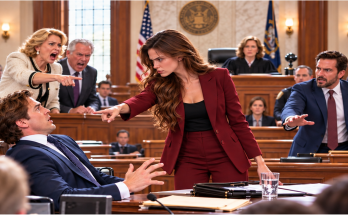
The detective did not speak for several seconds. Neither did I. Renata’s sealed uniform bag sat on a stainless-steel chair against the hospital wall. Daniela’s missing red backpack was thirty miles away at the retreat house.
And somehow, the initials stitched inside it belonged to the principal of Saint Emily’s Academy. Dr. Adrian Vale. The man who shook my hand every September. The man who sent Christmas letters about character, discipline, and faith.
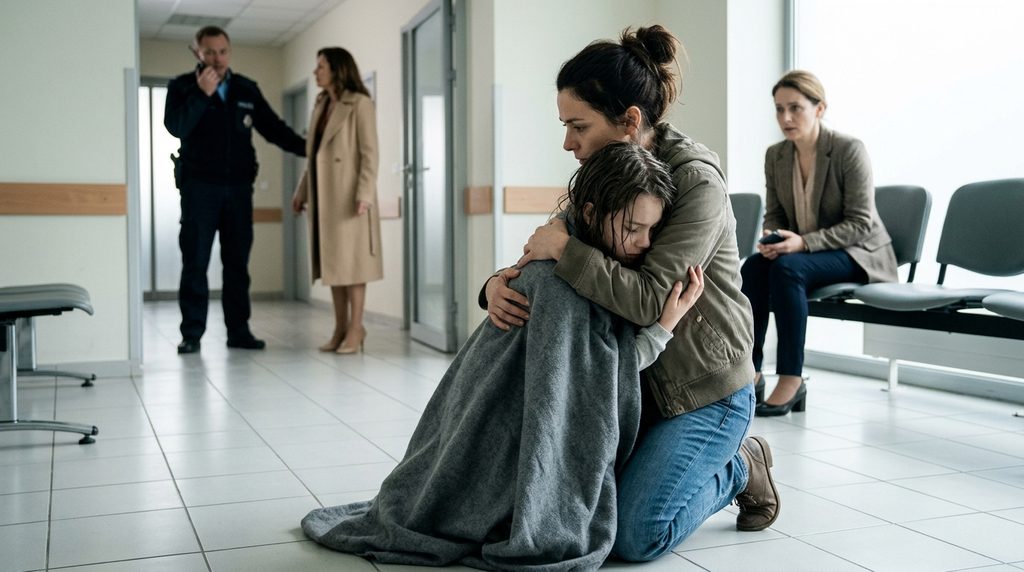
The man who stood onstage at school assemblies and told parents that Saint Emily’s was “a second home.” I looked at the coordinator. Her name was Marissa Cole. She had spent the entire evening trembling beneath a thin hospital blanket after police separated her from Director Beatrice.
Now she was crying so hard she could barely breathe.
The detective crouched in front of her.
“What do you mean, ask the principal?”
Marissa covered her mouth.
Beatrice turned toward her.
“Don’t.”
One word.
Quiet.
But Marissa flinched as if she had been struck.
The detective noticed.
So did I.
He looked at Beatrice.
“You’re done telling anyone what to do.”
Then back to Marissa.
“Who owns the red backpack?”
Marissa whispered,
“Daniela.”
“We know that.”
“She didn’t bring it from home.”
My pulse changed.
“What?”
Marissa looked at me.
Then at the floor.
“Dr. Vale gave it to her.”
Beatrice stood.
“That is enough.”
Two officers moved instantly.
“Sit down.”
She did.
Not because she wanted to.
Because for the first time all evening, authority did not belong to her.
The detective asked:
“Why would the academy principal give one student a backpack?”
Marissa wiped her face.
“Because Daniela was on scholarship.”
That made no sense.
At first.
Then it made too much sense.
Saint Emily’s ran something called the Shepherd Fund.
Donors paid for uniforms, books, retreat fees, field trips, and emergency expenses for children whose families could not afford them.
Daniela Morales had been one of those children.
Her mother, Isabel, cleaned office buildings at night.
Her father was gone.
Daniela’s camp fee had been waived.
Her supplies came through the school.
Including the red backpack.
Dr. Vale had personally approved them.
The detective asked,
“What does that have to do with what happened at camp?”
Marissa shook her head.
“You don’t understand.”
“Then help me understand.”
She looked toward Beatrice.
Beatrice stared straight ahead.
Marissa whispered,
“The punishment program came from the academy.”
The hallway became silent.
I felt Renata’s fingers tighten around mine.
The detective’s voice changed.
“What punishment program?”
Marissa cried harder.
“We weren’t supposed to call it punishment.”
“What did you call it?”
“Reflection.”
That word made my stomach turn.
Reflection.
A gentle word.
A respectable word.
A word parents would nod at during orientation.
The detective said,
“Explain.”
Marissa took a breath.
Children who broke camp rules could be placed on “reflection restriction.”
No swimming.
No activities.
No phone calls.
Extra chores.
Separate meals.
Sometimes temporary isolation.
I felt sick.
“How old were these children?”
The detective asked.
“Ten to thirteen.”
“And who approved this?”
“Dr. Vale.”
Beatrice finally spoke.
“That is not accurate.”
Marissa spun toward her.
“You made us use the forms.”
Beatrice’s face went white.
The detective looked between them.
“What forms?”
Marissa said,
“Behavior correction sheets.”
“Signed by?”
“Counselors.”
“Director.”
“And sometimes Dr. Vale.”
I thought about the locked cabinets police had found.
The punishment logs.
Renata’s name.
Witness—manage before departure.
I pulled her closer.
She whispered,
“Mom, am I in trouble?”
My heart broke.
“No.”
“Not for anything.”
“Not now.”
“Not later.”
“Never for telling the truth.”
Her eyes filled.
That was the first thing she needed.
Not answers.
Permission.
Permission to stop carrying adult guilt.
Agent after agent began moving through the hospital corridor.
Phones rang.
Warrants were requested.
The local police were no longer treating this as one camp incident.
They were looking at the academy.
The retreat program.
Records.
Donations.
Scholarships.
Discipline practices.
Everything.
At 1:46 a.m., Daniela arrived at the same hospital.
I did not see her.
We were kept separate.
Good.
Children are not evidence exhibits to be reunited for adult reassurance.
Her mother arrived less than ten minutes later.
I heard her before I saw her.
A woman screaming her daughter’s name.
Not dramatically.
Desperately.
The kind of sound that comes from a parent who has spent hours being told not to worry.
Later, I learned what Saint Emily’s had told her.
The camp bus had supposedly broken into two groups because of a transportation issue.
Daniela was “safe with staff.”
Then:
She had become ill.
Then:
She had stayed behind with a counselor.
Then:
There had been a paperwork mistake.
Four different stories.
All within three hours.
Isabel Morales had been driving toward the retreat house when police called and told her Daniela had been found.
Alive.
That word became everything.
Alive.
Not okay.
Not unharmed.
Not untouched by what happened.
Alive.
Enough for the first breath.
The next morning, the hospital moved Renata to a quieter pediatric room.
The doctor spoke to me privately.
She chose every word carefully.
There were signs that Renata had been handled roughly.
Bruising.
Skin irritation.
Dehydration.
Stress.
Nothing that required surgery.
Nothing that proved the worst thing my imagination had already tried to create.
I cried anyway.
Not from relief exactly.
Relief can coexist with horror.
The doctor said,
“She needs specialized follow-up.”
I nodded.
“We’ll arrange it.”
“Trauma counseling.”
“Yes.”
“And Gabriela?”
“Yes?”
“Do not make her repeat the story to every adult who loves her.”
That sentence stayed with me.
Families sometimes turn concern into interrogation.
What happened?
Then what?
Who touched you?
Did you tell anyone?
Are you sure?
Why didn’t you run?
All questions that make adults feel active.
Questions that can make a child feel responsible.
So I learned to say something else.
“You can tell me when you want.”
And:
“You don’t have to protect me from the answer.”
And:
“I believe you.”
That became enough.
By noon, Saint Emily’s Academy had sent an email to parents.
Due to an unforeseen incident at the summer retreat, all upcoming camp activities are suspended pending review.
Unforeseen.
I read the word three times.
Renata was asleep.
Her hair had dried naturally.
I sat beside her and felt rage rise so sharply I almost became dizzy.
Unforeseen.
Children had been isolated in a windowless room.
Phones confiscated.
Records altered.
A child removed from an attendance roster.
My daughter washed and sent home after witnessing something she had been ordered to deny.
That was not unforeseen.
That was a system.
And systems leave paperwork.
The police found a lot of it.
The first search of the retreat house produced more than anyone expected.
Three years of behavior logs.
Incident reports.
Medication sheets.
Confiscation forms.
Parent communication templates.
Staff instructions.
Some legitimate.
Some not.
Then investigators found a locked filing cabinet in Beatrice’s office.
Inside were documents marked:
SCHOLARSHIP BEHAVIOR MANAGEMENT
Daniela’s name appeared repeatedly.
So did the names of other low-income students.
Not because scholarship students misbehaved more.
Because, according to internal emails later recovered, administrators believed their parents were less likely to complain.
That realization made me physically ill.
One message from Beatrice to Dr. Vale read:
Fund families usually cooperate. They cannot risk losing placement.
Another:
Use internal correction before involving parents unless medically necessary.
Another:
We need to protect retention metrics.
Retention metrics.
Ten-year-olds reduced to numbers.
Fear converted into administration.
The red backpack mattered because police found something sewn beneath the lining.
A small tracking tag.
Registered to Saint Emily’s Academy.
Not Daniela.
Not her mother.
The school.
At first, investigators thought it was for stolen-property recovery.
Then they found six more.
All in bags issued through the Shepherd Fund.
The academy had been tracking certain scholarship students during off-campus programs.
Dr. Vale later claimed it was a safety measure.
Parents had never been told.
That alone caused outrage.
But the tracking data did something nobody expected.
It proved Daniela had been at the retreat house.
Even though her official attendance sheet said she had never checked in.
The location history showed her backpack arrived Friday afternoon.
Moved between cabins.
The dining hall.
The lake.
Then, on Sunday evening, stopped behind the laundry building.
For nine hours.
That digital trail destroyed the academy’s first defense.
They had altered paper.
They forgot about the tag.
The next development came from Renata’s uniform.
The sealed one.
I hated looking at the evidence bag.
It contained the blue polo shirt I had ironed the night before camp.
The shorts she had complained were “too long.”
One sock.
A camp wristband.
Dirt.
Soap residue.
And fibers.
Gray fibers.
Matching the blanket placed around her shoulders before she was sent home.
The blanket had come from a linen closet beside the windowless room.
That proved staff had not simply found Renata “carsick” on the bus.
She had been in the restricted area.
The soap on her hair and uniform matched industrial cleanser stocked at the retreat.
Again, not proof of every terrible possibility.
Proof that the camp’s story was false.
Sometimes lies collapse not because one witness speaks perfectly.
Because objects refuse to cooperate.
Soap.
Fabric.
Location data.
A backpack.
The things adults forget children carry.
Three days after the rescue, police arrested Director Beatrice on charges connected to unlawful confinement, evidence tampering, child endangerment, and obstruction.
Marissa was not arrested immediately.
She had participated.
That mattered.
But she had also cooperated once the truth began coming out.
Her role would be judged later.
I hated her at first.
I wanted everyone in uniform from that camp punished equally.
Then Renata said something that complicated my anger.
“Marissa gave Daniela water.”
I looked at her.
“When?”
Renata was coloring at the kitchen table.
She had been home for two days.
Still sleeping with my bedroom door open.
Still refusing to enter a bathroom unless the light was already on.
She did not look at me.
“Before the bus.”
“Did she help her leave?”
“No.”
“Did she tell anyone?”
Renata shook her head.
“She cried.”
I swallowed.
“What did she say?”
Renata colored harder.
“She said she was sorry.”
That was not innocence.
But it was not nothing.
People inside harmful systems rarely divide cleanly into monsters and heroes.
Some create the system.
Some enforce it.
Some obey because they are afraid.
Some resist too little.
Some finally speak.
Accountability still matters.
So does accuracy.
Dr. Adrian Vale was harder to reach.
He issued a statement through the academy board.
He denied knowing any child had been isolated improperly.
He called the retreat operation “independently managed.”
He said Saint Emily’s disciplinary framework was based on “restorative reflection.”
He expressed concern for “all students affected by recent misunderstandings.”
Misunderstandings.
Another soft word.
Another attempt to make harm sound like weather.
But Marissa had saved emails.
Beatrice had saved forms.
The tracking tags were registered through the academy’s own technology office.
Then financial investigators found something stranger.
The Shepherd Fund was much larger than parents knew.
Donors had contributed nearly $2.7 million over five years.
Scholarship children received uniforms, tuition support, and activity waivers.
But a significant portion of the fund paid Saint Emily’s for “behavioral retention services,” “residential intervention support,” and “family stabilization.”
Those were internal charges.
Money moved from a charity-controlled fund into academy operating accounts.
Some of those charges related to real services.
Counseling.
Transportation.
Tutoring.
Others were vague.
And several were billed on behalf of children whose parents had never been told they were receiving “behavioral intervention.”
Daniela had more than $18,000 in charges attached to her file.
Her mother knew about none of them.
I sat in a meeting with investigators and felt my anger change direction.
The camp was not only hiding mistreatment.
It was financially incentivized to classify vulnerable children as needing additional services.
The more “difficult” the child appeared on paper, the more internal fund money could be justified.
Dr. Vale had approved the accounting structure.
That did not automatically prove he intended every act committed at camp.
But it destroyed his claim that the retreat had nothing to do with him.
He had built the machinery.
Beatrice had operated part of it.
And children had been trapped inside.
The academy board placed Dr. Vale on leave.
Then fired him.
Parents began withdrawing students.
Some demanded the entire school close.
I understood.
I also understood that hundreds of children still needed classrooms in September.
Justice and demolition are not always the same thing.
A court-appointed monitor entered.
The board was replaced.
Outside child-safety experts reviewed policies.
The Shepherd Fund was frozen.
Families received independent counsel.
Every disciplinary file from the previous five years was audited.
Not every complaint turned out to be abuse.
Some were ordinary school disputes.
That mattered too.
Truth should widen carefully.
Not greedily.
But enough serious cases emerged that nobody could call Renata’s experience isolated.
A twelve-year-old boy had been made to sleep alone in a staff office overnight after trying to run away from a retreat activity.
An eleven-year-old girl lost phone privileges for six days while staff told her parents she “preferred not to call.”
Two scholarship students had disciplinary reports removed from parent portals after internal staff discussions about “protecting donor confidence.”
No child had disappeared permanently.
Thank God.
No hidden grave.
No secret network of kidnapped children.
The truth was both less cinematic and more believable.
Adults had created a closed culture where reputation mattered more than transparency.
And once that happened, escalation became easy.
Daniela’s case was the worst.
The night she disappeared from the bus roster, she had tried to call her mother using another student’s phone.
Why?
Because she wanted to go home.
She had been punished for refusing a water activity after an earlier panic episode.
Staff described her as defiant.
Daniela called it being scared.
When she tried to contact her mother, Beatrice ordered the phone confiscated.
Daniela screamed.
Other girls heard.
Renata followed.
That was the beginning.
Daniela was moved to the windowless room because Beatrice believed separation would “de-escalate” her.
No medical professional approved that.
No parent knew.
She was left there with periodic staff checks.
When she kicked the door and demanded to leave, the restriction continued.
Renata later found her.
Renata tried to open the door.
A counselor caught her.
Everything after that became cover-up.
Renata was dragged away.
Showered because she had gotten dirty and wet during the struggle.
Changed.
Warned.
Her backpack was misplaced during the chaos.
When administrators realized Renata had seen Daniela, they added the note:
Witness—manage before departure.
Then they altered Daniela’s attendance record.
Beatrice’s plan, according to prosecutors, was to delay until she could construct a story that Daniela had left camp earlier with approved transportation.
She never got the chance.
Because I called 911.
That fact haunted me.
Not proudly.
Terribly.
What if I had listened to the coordinator?
What if I had bathed Renata?
Washed the uniform?
Returned the blanket?
Put her to bed?
What if I had waited until morning?
I asked the detective once.
He looked at me for a long time.
Then said,
“Don’t build a second crime scene in your head.”
I frowned.
“What?”
“You acted on what you saw.”
“Stay there.”
He was right.
Fear likes alternate timelines.
They feel responsible because you can torture yourself with them.
But the only timeline we had was the one where Renata came home.
I believed her body before I understood her words.
And Daniela was found alive.
That had to be enough.
Renata’s recovery was not dramatic.
There was no morning when she woke up fearless.
Healing came in embarrassing little victories.
The first time she entered our downstairs bathroom alone, she left the door open.
I sat in the hallway pretending to scroll through my phone.
She washed her hands.
Came out.
I smiled too quickly.
She rolled her eyes.
“Mom.”
“Sorry.”
The next week, she closed the door halfway.
A month later, all the way.
Then reopened it immediately.
That counted too.
Showers were harder.
For weeks she washed her hair over the kitchen sink while I stood nearby.
Then a therapist named Dr. Elaine Park helped her create a plan.
Renata chose the music.
The towel.
The soap.
The door position.
The time.
Control returned one tiny decision at a time.
The first full shower took four minutes.
She came out crying.
So did I.
But I did not say:
“You did it!”
She hated celebration around things she wished were ordinary.
Instead I handed her the towel and asked,
“Pizza?”
She nodded.
That became our ritual.
Hard therapy day?
Pizza.
Court preparation?
Pizza.
First day back at school?
Pizza.
By thirteen she was tired of pizza.
That may have been the clearest evidence of recovery.
Daniela healed differently.
I did not become deeply involved in her treatment.
That boundary mattered.
Her story belonged to her family.
But Isabel and I became friends.
At first because lawyers kept putting us in the same rooms.
Then because nobody else understood what it felt like to receive polished emails from adults who had endangered our daughters.
We would sit in waiting areas and translate institutional language.
We regret any distress.
Means:
We have lawyers.
Policies may not have been followed.
Means:
Someone knew.
We are committed to learning.
Means:
Please stop talking to reporters.
Dark humor kept us breathing.
Daniela returned to school the following year.
Not Saint Emily’s.
Never Saint Emily’s.
A public magnet program near her home.
Renata changed schools too.
She wanted to.
I would have transferred her even if she had not.
But I asked.
That mattered.
“What do you want?”
She thought for two days.
Then said,
“I don’t want everyone to look at me like I’m the camp girl.”
So we left.
At the new school, nobody knew at first.
She liked that.
She became ordinary again.
Bad at fractions.
Good at art.
Annoyed by homework.
Jealous when her friend got a better role in the school play.
Normal problems.
I welcomed every one.
Dr. Vale was indicted almost a year after the camp rescue.
The charges did not accuse him of physically harming Renata or Daniela himself.
The evidence did not support that.
Instead, prosecutors focused on conspiracy, financial misconduct, falsification, obstruction, and child-endangerment-related offenses tied to policies and concealment.
I appreciated that.
I wanted truth.
Not a monster enlarged beyond evidence.
Dr. Vale’s defense argued he had been a distant administrator.
That Beatrice exceeded policy.
That financial classifications were made by staff.
That isolated failures did not equal a conspiracy.
Some of those arguments had weight.
Then the emails came.
One from two years earlier.
Beatrice had written:
Parents are beginning to ask why scholarship students are restricted more often.
Dr. Vale replied:
Do not put discipline comparisons in writing. Handle internally.
Another.
A counselor reported that a child had been placed alone in a room for three hours.
Dr. Vale responded:
No formal incident unless parent escalation is likely. We cannot feed panic.
Another.
The most damaging.
Beatrice:
Daniela Morales continues to challenge authority. Her mother is emotional and could become difficult.
Dr. Vale:
Use residential reset at retreat. Keep communication controlled.
Residential reset.
The phrase that sent Daniela to the windowless room before anyone even knew exactly what would happen there.
Dr. Vale did not lock the door himself.
He built a culture where locking it could be described as care.
That mattered.
At trial, the prosecutor asked him:
“What does ‘keep communication controlled’ mean?”
He answered:
“It means avoid confusing families with incomplete information.”
I sat behind Isabel.
She whispered,
“Meaning lie.”
I squeezed her hand.
The defense objected.
She was right anyway.
Beatrice eventually pleaded guilty under an agreement.
Her testimony became central.
I expected to hate her forever.
Then I watched her on the stand.
She looked smaller without the beige coat.
No expensive purse.
No polished smile.
She admitted she altered attendance records.
Admitted ordering Renata cleaned and returned to the bus.
Admitted telling staff Daniela was not to appear on departure lists.
Admitted she knew the windowless room violated academy rules as written.
Then the prosecutor asked:
“Why?”
Beatrice cried.
“At first?”
“Yes.”
“I thought Daniela needed to calm down.”
“And later?”
She closed her eyes.
“I was afraid.”
“Of what?”
“Losing my job.”
“Losing the retreat contract.”
“Dr. Vale.”
“Parents.”
“Everything.”
The prosecutor waited.
“And so you left a ten-year-old child isolated while trying to erase evidence she had been there?”
Beatrice whispered,
“Yes.”
No noble explanation.
Good.
She served time.
Lost her professional licenses where applicable.
Was barred from working in child residential programs.
Marissa received a lesser sentence and probation after cooperating.
Some parents thought that was too light.
Maybe.
But she had preserved messages.
She had eventually told investigators where records were hidden.
She testified.
Accountability sometimes includes cooperation.
Not absolution.
Dr. Vale was convicted on several charges and acquitted on others.
That mattered too.
The jury did not rubber-stamp rage.
He was punished for what prosecutors proved.
Not what the public imagined.
Financial restitution was ordered.
The academy’s insurers and remaining assets funded civil settlements with multiple families.
Renata’s settlement went into a protected trust.
I told her very little about the amount until she was older.
Money cannot compensate for terror.
But therapy costs money.
Educational choices cost money.
Time away from work costs money.
Accountability can be emotional and financial at once.
We used part of the funds for treatment.
Most remained hers.
When Renata turned eighteen, she asked what was left.
I showed her everything.
Every statement.
Every expense.
Every deposit.
No surprises.
She stared at the number.
Then at me.
“This is weird.”
“Yes.”
“I don’t want camp money.”
I nodded.
“You don’t have to use it now.”
“It feels dirty.”
“I understand.”
Dr. Park had prepared me for that reaction.
I said,
“The money is not payment for what happened.”
Renata looked at me.
“It is money the system owes you because recovery cost you things.”
She was quiet.
Then:
“Can I use some for college?”
“Yes.”
“Would that be bad?”
“No.”
She smiled faintly.
“Then maybe they can pay for something useful.”
Good.
At twenty-one, she used a small portion to help fund a student legal clinic supporting minors navigating institutional complaints.
Not because she turned trauma into destiny.
She did not become a crusader.
She became a graphic designer.
She loved typography.
Hated camping.
Refused every corporate retreat invitation that involved cabins.
That was enough.
The legal clinic was simply one thing she chose to support.
Choice.
Always choice.
Daniela chose something else.
She studied nursing.
Not because of what happened.
At least not entirely.
She told Renata years later:
“I like that nurses have keys.”
That sentence made them both laugh.
They did not become inseparable best friends.
People expected that.
Shared trauma does not automatically create lifelong friendship.
They stayed loosely connected.
Birthday messages.
Occasional coffee.
A strange intimacy that required little explanation.
When Daniela graduated, Renata sent her a red backpack.
Isabel called me crying.
I panicked.
“Was that okay?”
She laughed.
“Yes.”
Inside, Renata had embroidered new initials.
D.M.
Daniela Morales.
Not Adrian Vale.
Not Saint Emily’s.
Hers.
That backpack became one of the most meaningful objects in the whole story.
Not because it erased the old one.
Because Daniela chose what her name meant afterward.
The original red backpack stayed in evidence for years.
Eventually, police asked Isabel whether she wanted it returned.
She said no.
Daniela said no.
It was destroyed according to procedure.
Good.
Some objects do not need museums.
Renata’s gray blanket came back too.
I held the evidence bag and felt sick.
The hospital asked whether we wanted it.
Renata said,
“No.”
Then changed her mind.
“Wait.”
I looked at her.
She was fourteen by then.
“Can we donate blankets somewhere?”
I stared.
“Not that one.”
“No.”
She rolled her eyes.
“I mean new ones.”
So we did.
Every summer, on the week camp had happened, we donated blankets, toiletries, and backpacks to a family shelter.
No speeches.
No social media.
No foundation with Renata’s name.
She insisted.
“I don’t want to be inspirational.”
Fair.
We delivered boxes.
Left.
Got ice cream.
That was enough.
I changed too.
For the first year, I became unbearable.
I checked every adult.
Every school trip.
Every sleepover.
Every closed door.
Renata finally told me:
“Mom, I survived camp.”
“I don’t want to survive you.”
That stopped me.
I sat down.
She was twelve.
Brutal.
Correct.
Trauma had taught me vigilance.
Love required me to relearn proportion.
I started therapy too.
That surprised people.
“What happened to you?”
Someone once asked.
I almost slapped them.
Parents are not the primary victims when their child is harmed.
I knew that.
But witnessing your child’s fear changes your nervous system.
If I did not manage mine, Renata would have to live inside it.
So I learned.
Ask, do not assume.
Prepare, do not imprison.
Listen, do not interrogate.
Protect, do not control.
Those distinctions saved our relationship.
Years later, Saint Emily’s Academy reopened under another name after restructuring.
That angered some families.
“How can they just rebrand?”
The answer was complicated.
The physical school served hundreds of children.
The original nonprofit dissolved.
The board changed.
Leadership changed.
Licenses changed.
Policies changed.
Some teachers had done nothing wrong.
Some had been whistleblowers.
I decided not to spend the rest of my life policing the sign outside a building.
Instead, I cared about whether the systems changed.
Mandatory external reporting.
No closed-door isolation.
Parent notification standards.
Independent scholarship oversight.
No hidden tracking devices.
No disciplinary charges billed without consent.
No private retreat punishments.
Student advocate access.
Anonymous reporting.
Surprise inspections.
Boring protections.
That is what real reform looks like.
Not dramatic.
Specific.
The windowless room was demolished.
Isabel and I were invited.
We declined.
Renata and Daniela were asked too.
They laughed.
“No thanks.”
Exactly.
Children do not owe institutions closure ceremonies.
The building came down without us.
Good.
I saw a photo later.
Concrete dust.
Broken studs.
Sunlight where the room had been.
That was enough.
Director Beatrice wrote Renata a letter from prison.
We did not give it to her immediately.
At sixteen, she asked.
I handed it over.
Beatrice wrote:
I told myself I was protecting the camp.
Then:
What I was really protecting was my position inside it.
Renata read quietly.
The moment I told you to say Daniela had never been there, I knew I had crossed from bad judgment into deliberate harm.
Renata stopped.
Looked at me.
“She knew.”
“Yes.”
She continued.
I am sorry I used your fear as a tool.
Renata folded the letter.
“What do I do with this?”
“Whatever you want.”
She tore it in half.
Then stopped.
“Is that immature?”
“No.”
She tore it again.
Then threw it away.
No forgiveness.
No revenge.
Just trash.
Dr. Vale never wrote.
That almost suited him better.
He appealed.
Lost some issues.
Won minor procedural ones.
His sentence was adjusted slightly.
Life moved on.
Years later, a journalist contacted Renata for a retrospective story.
She declined.
The journalist asked me instead.
I declined too.
The public already knew enough.
There is a point when awareness becomes consumption.
Renata’s worst night did not need to remain available forever just because people found it compelling.
That was another thing Saint Emily’s had failed to understand.
Children are not institutional property.
Neither are their stories.
Isabel understood that too.
Daniela rarely spoke publicly.
Once, at nineteen, she testified before a state committee about residential youth programs.
She did not describe what happened in the room.
She said only:
“I told adults I wanted my mother.”
Then:
“They treated wanting my mother as misconduct.”
The room went silent.
That was enough.
Policy changed.
Not everywhere.
Not perfectly.
Enough to matter.
Renata watched the hearing online.
She cried.
Then texted Daniela:
You were terrifyingly good.
Daniela replied:
I almost threw up.
Renata:
Same vibe as confidence.
They had survived long enough to joke.
That mattered too.
By twenty-five, Renata barely talked about camp.
Not because she forgot.
Because life became larger.
Work.
Rent.
A boyfriend named Marcus who learned quickly never to shut a bathroom door behind her as a joke.
She dumped one man before him because he laughed when she said that.
Good.
Marcus asked questions.
Better.
When he proposed, he did it in our backyard.
No surprise crowd.
No hidden photographer.
He asked first if she wanted a public proposal.
She said absolutely not.
He listened.
Small things.
Huge things.
At their wedding, Daniela attended.
So did Isabel.
Dr. Park too.
I cried through most of it.
Not because I was remembering the hospital.
Because I wasn’t.
That surprised me.
I watched Renata dance and realized an entire hour had passed without camp entering my mind.
Healing had become absence.
Not of memory.
Of domination.
Later that evening, Renata found me alone near the garden.
“You okay?”
“Yes.”
“Crying.”
“I’m your mother.”
“Fair.”
She smiled.
Then said:
“Do you remember the blanket?”
My throat tightened.
“Yes.”
“I don’t.”
I stared at her.
She clarified.
“I mean, I remember there was one.”
“But I can’t remember how it felt anymore.”
My eyes filled.
“That’s good.”
“Yeah.”
She leaned against me.
“For years I thought that blanket would always be the first thing you saw when you looked at me.”
I shook my head.
“No.”
“What do you see?”
I looked at my daughter.
Thirty-one.
Strong without needing to perform strength.
Funny.
Impatient.
Compassionate.
Alive in every direction.
“You.”
That was the answer.
Not victim.
Not witness.
Not brave camp survivor.
Renata.
Just her.
Years after the convictions, I cleaned out a cabinet in my house and found the camp packing list.
I almost threw it away.
Then I read it.
Two swimsuits.
Flashlight.
Toothbrush.
Bug spray.
Notebook.
Uniform.
No valuables.
Label all belongings.
At the bottom, in my handwriting:
Have fun. Call me if you need anything.
I sat on the kitchen floor.
Because she had needed me.
And someone had tried to make calling me a violation.
That was the part I never forgave.
Not the bathroom.
Not the lies.
Not the blanket.
The idea that a child’s instinct to reach for home could be treated as something adults had the right to suppress.
I kept the packing list.
Not framed.
Not displayed.
In a file.
Beside the hospital discharge papers.
One day Renata may throw them away.
That will be her choice.
I have learned not to make shrines out of survival.
The thing about that night is people always ask me how I knew.
How did you know to call 911?
I did not know.
That answer disappoints them.
They want intuition.
A mother’s supernatural instinct.
Some dramatic certainty.
I had none.
I had clues.
Wet hair.
Wrong blanket.
No backpack.
Fear.
Pain.
An adult answering for my child.
Another adult telling me it was nothing.
Then my daughter said:
The teacher said I wasn’t supposed to say anything.
That was enough.
Not proof.
Enough to stop treating the evening like an ordinary homecoming.
You do not need certainty to take a child seriously.
You need enough humility to admit you might not understand yet.
The ambulance did the rest.
The doctor did the rest.
The police did the rest.
Renata did the hardest part.
She told enough truth for adults to finally start doing their jobs.
And Daniela survived long enough to be found.
That is the sentence I return to.
Daniela survived.
Renata spoke.
We listened.
Everything after that was paperwork, courtrooms, therapy, reform, years.
But the first act was smaller.
A child looked afraid.
And instead of telling her she was fine, I believed that she wasn’t.
The academy had trained itself to protect reputation.
Beatrice protected the retreat.
Vale protected funding.
Marissa protected her job until fear finally broke her.
Parents protected the idea that Saint Emily’s was safe because admitting otherwise felt impossible.
Everyone protected something.
Renata protected Daniela.
A ten-year-old girl, terrified herself, still said:
Another girl.
That was her courage.
Not surviving pain without crying.
Not becoming fearless.
Remembering someone else was still behind the green door.
I asked her about that once when she was older.
“Why did you tell them about Daniela?”
She looked confused.
“What do you mean?”
“You were scared.”
“She was still there.”
Simple.
That was all.
Children understand morality before adults bury it under liability.
She was still there.
So Renata said her name.
Daniela.
The name Beatrice tried to erase from a roster.
The name that reopened the retreat house.
The name that turned a hospital concern into a rescue.
The name that eventually exposed a system built on silence.
Sometimes institutions become powerful because they convince everyone the problem is complicated.
It usually is.
But the first duty is often simple.
Is a child safe?
If you cannot answer yes, stop protecting everything else.
The school did not understand that.
My daughter did.
I carry that with me.
Not proudly exactly.
Pride feels too neat.
Gratefully.
And whenever I think back to the bus arriving at 8:40 p.m., I no longer see only the gray blanket.
I see the moment Renata stepped down.
Slowly.
Terrified.
Still carrying a truth bigger than her body.
I did not know it then.
But another child’s life was already hidden inside my daughter’s silence.
All I had to do was take the silence seriously.
I called 911.
And that call did not make me a hero.
It made me her mother.
The people who failed those children had titles.
Director.
Principal.
Counselor.
Coordinator.
The people who saved them did not need impressive ones.
A mother who believed.
A paramedic who noticed.
An officer who listened.
A doctor who refused a convenient explanation.
A frightened employee who finally spoke.
A child who said another child’s name.
That was enough to break a system built by adults who thought children could be managed into silence.
They were wrong.
Because eventually, someone always remembers the missing backpack.
Someone saves the text message.
Someone notices the soap.
Someone asks why the attendance sheet changed.
Someone says:
“Where is Daniela?”
And once that question is asked by people willing to hear the answer, a locked room stops being invisible.
So when I think about that summer now, I do not think of the room without windows.
I think of what happened after the door opened.
Sunlight.
Police.
A mother running toward her daughter.
A hospital bracelet.
A red backpack with the wrong initials.
Years of therapy.
Pizza after showers.
Two girls growing into women no institution gets to define.
That is the ending Saint Emily’s never planned for.
Not scandal.
Not lawsuits.
Not convictions.
Life.
Renata’s life.
Daniela’s life.
Messy.
Ordinary.
Their own.
And if there is one thing I learned from the night my daughter came home with wet hair and someone else’s blanket, it is this:
Children do not owe adults convenient stories.
Adults owe children safe places to tell the inconvenient truth.
THE END STORIES! THANK YOU FOR READING GOOD LUCK !❤️
Related Posts