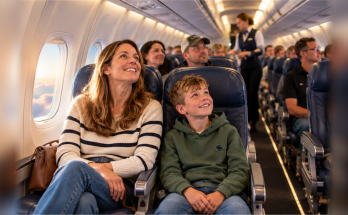
“Sarah, get away from Emily! Mom just found out you took the folder, and she’s coming for it!” Mark’s voice trembled through the speaker. For the first time since I had known him, he sounded genuinely frightened. Not embarrassed. Not guilty. Frightened. Sarah tightened her arms around my three-month-old son.
“Your mother is coming here?” she asked. “Yes! She knows where Emily lives!” My stomach dropped. I looked toward the apartment door. The deadbolt was locked. The chain was fastened. But suddenly, those small pieces of metal didn’t feel like enough. “Mark,” Sarah said coldly, “what exactly is your mother afraid we’ll discover?”

Silence. Then he whispered, “You don’t understand.” Sarah gave a bitter laugh. “Then explain it.” “I can’t.” “Your son is sitting in this apartment.” “I know.” “He’s three months old, Mark. He’s been through medical appointments, sleepless nights, and more examinations than any baby should have to endure without his father even asking how he’s doing.”
His breathing became uneven.
“Sarah, please—”
“No.”
Her voice cracked.
“You don’t get to disappear for months and suddenly start giving orders because your secrets are in danger.”
I felt tears sliding down my cheeks.
Matthew stirred in her arms.
He made a small sound, then settled against her chest.
Sarah looked down.
Her expression softened.
Then she said something that made Mark fall completely silent.
“I’m holding your son.”
A long pause.
“Does he look like me?” Mark whispered.
I closed my eyes.
Those were the first words he’d spoken about Matthew as a person.
Not a problem.
Not a scandal.
Not a mistake.
A son.
And somehow, hearing that question hurt more than all the unanswered messages.
Sarah looked at the baby.
“He has your eyes.”
Mark began crying.
I stood there, watching the woman whose marriage I had unknowingly helped destroy hold my son with a tenderness his own father had never shown him.
Then Sarah’s voice hardened again.
“And unless you tell us the truth, Mark, you’re going to lose the chance to know the beautiful little boy you abandoned.”
Before he could answer, someone knocked.
Three slow knocks.
Then a woman’s voice called from the hallway.
“Emily?”
My entire body went cold.
“Open the door, sweetheart.”
Sarah’s face drained of color.
Mark shouted through the phone.
“DON’T OPEN IT!”
Because the woman standing outside my apartment was his mother.
And she wasn’t alone.
For several seconds, none of us moved.
Matthew began fussing.
Sarah slowly rose from the couch.
I stared at the door.
Another knock.
Harder this time.
“Emily, I know you’re home.”
The woman’s voice was familiar.
Too familiar.
I had heard it in the hospital.
In the waiting room.
Beside Matthew’s incubator.
She had introduced herself as Margaret Wells.
A volunteer.
A kind woman who helped mothers navigate complicated medical appointments.
She had brought me coffee.
Held Matthew while I signed forms.
Told me I was brave.
And once, when I couldn’t stop crying, she had placed a hand on my shoulder and whispered, “Some mothers are chosen for difficult children because they’re strong enough.”
At the time, I had been grateful for the comfort.
Now that memory made my stomach twist.
Because Matthew wasn’t a difficult child.
He was my child.
And the woman who had spoken so gently about him had been hiding her relationship to his father.
Sarah whispered, “That’s Victoria.”
“Who?”
“Victoria Bennett. Mark’s mother.”
I looked toward the door.
My knees weakened.
The voice came again.
“Emily, there’s been a misunderstanding.”
A man’s voice followed.
“Mrs. Bennett, perhaps we should call first.”
Sarah’s eyes narrowed.
“She’s brought someone.”
My hands began trembling.
“What do we do?”
Sarah looked at me.
Then at Matthew.
“We don’t open the door.”
She lowered her voice.
“And we call the police if they refuse to leave.”
I nodded.
My heart hammered so violently that I could hear it.
Then Sarah spoke through the door.
“Victoria, this is Sarah.”
Silence.
A long, terrible silence.
Then the older woman answered.
“Sarah?”
“Yes.”
“What are you doing here?”
Sarah laughed bitterly.
“Meeting my husband’s son.”
There was a faint sound from the hallway.
Someone shifting.
A sharp intake of breath.
Then Victoria said, “We need to talk.”
“No,” Sarah replied. “You need to leave.”
“Sarah, sweetheart—”
“Don’t call me sweetheart.”
Her voice shook.
“You knew.”
Victoria didn’t answer.
Sarah continued.
“You knew about Emily.”
Silence.
“You knew about Matthew.”
Another silence.
“And you knew your son was lying to both of us.”
Victoria finally spoke.
“It’s more complicated than that.”
Sarah closed her eyes.
I saw tears gathering beneath her lashes.
Then she whispered, “It always is when someone gets caught.”
The man in the hallway introduced himself as Daniel Price.
He claimed to be a private attorney representing Victoria.
Sarah asked him to leave his contact information with the building manager.
He agreed.
Victoria did not.
She kept demanding to speak with me.
At one point, she raised her voice.
“That child belongs to our family too!”
Something inside me snapped.
For months, I’d been exhausted.
Frightened.
Overwhelmed.
I’d held Matthew through blood tests.
Rocked him through the night.
Learned medical words I never imagined I’d need to know.
And spent countless hours wondering whether I was doing enough.
Now a woman who had secretly entered our lives was standing outside my door speaking about my son as though he were property.
I stepped closer.
Sarah gently touched my arm.
I nodded.
Then I spoke.
“Victoria?”
Silence.
“It’s Emily.”
Her voice softened immediately.
“Oh, sweetheart.”
I swallowed.
“Please don’t call me that.”
A pause.
“I know you’re upset.”
“No.”
My voice trembled.
“You don’t know what I am.”
She sighed.
“Emily, I only wanted to protect everyone.”
I looked toward Matthew.
His little hand curled around Sarah’s finger.
My throat tightened.
“Did you arrange a genetic test on my baby without my permission?”
The hallway became silent.
Then Victoria said, “We needed certainty.”
I covered my mouth.
Sarah’s expression hardened.
“Did you obtain my son’s genetic information without his mother’s informed consent?”
Victoria hesitated.
Then replied, “You don’t understand the circumstances.”
That was not an answer.
But it told me enough.
I reached for my phone.
“Please leave.”
“Emily—”
“I said leave.”
My voice grew stronger.
“If you want to communicate about Matthew, you can do it through an attorney. But you will not come into my apartment and frighten me.”
Victoria’s tone changed.
“You should think carefully before making this difficult.”
Sarah immediately stepped beside me.
“Victoria, the conversation is over.”
The older woman said nothing.
A few seconds later, footsteps moved down the hallway.
Then the elevator chimed.
And they were gone.
Or at least, I hoped they were.
I sank onto the couch.
My hands were shaking.
Sarah placed Matthew in his bassinet.
Then sat beside me.
For several minutes, neither of us spoke.
Finally, I whispered, “She knew about him.”
Sarah nodded.
“Yes.”
“She knew I was pregnant.”
“Yes.”
“She knew I was alone.”
Sarah’s eyes filled.
I looked at her.
“And she came to the hospital pretending to be a stranger.”
Sarah swallowed.
“Yes.”
I covered my face.
The tears came suddenly.
Not delicate tears.
Not the kind you can wipe away and pretend never happened.
They were deep, painful sobs that seemed to rise from months of loneliness.
Sarah moved closer.
I expected her to remain distant.
After all, I had been involved with her husband.
I had become the mother of his child.
I represented a betrayal she had never asked for.
But instead of pulling away, she wrapped one arm around my shoulders.
And let me cry.
“I didn’t know,” I whispered.
“I know.”
“I would never have—”
“I know, Emily.”
My voice broke.
“I thought he loved me.”
Sarah closed her eyes.
For a long moment, she said nothing.
Then whispered, “So did I.”
And somehow, those four words made us both fall apart.
We cried until Matthew woke.
Then life reminded us that broken hearts don’t stop babies from needing their mothers.
I changed his diaper.
Sarah warmed a bottle.
He fussed while I adjusted his blanket.
Then settled against my chest.
I looked down at him.
His tiny fingers opened and closed.
His eyes searched my face.
And I felt something steady return.
Whatever Mark had done, whatever Victoria had hidden, Matthew was not a mistake.
He was not the unfortunate consequence of someone else’s dishonesty.
He was a child.
My child.
A beautiful little boy with his own future.
His diagnosis did not make him less worthy of love.
It meant I needed good information, appropriate support, and people who would see him as a whole person rather than as a collection of medical concerns.
I kissed his forehead.
“Mommy’s here.”
He made a soft sound.
I smiled through tears.
“Always.”
That afternoon, Sarah called her cousin.
His name was Andrew Miller.
He was a family law attorney in Brooklyn.
She explained what had happened.
The hidden records.
The apparent genetic testing.
The photographs.
Victoria’s visit.
The transfers made in my name.
Andrew listened carefully.
Then said, “First, don’t assume every document is authentic or lawful simply because Mark’s mother says it is.”
I nodded, even though he couldn’t see me.
“Second, preserve everything.”
Sarah looked toward the folder.
“And third?”
Andrew paused.
“Do not let them pressure either of you into signing anything before you understand what it does.”
My stomach tightened.
“Why would they want us to sign something?”
Andrew’s voice became serious.
“That’s what we need to find out.”
He asked us to send copies of the records securely.
Then he recommended that I obtain my own attorney, since my interests and Sarah’s might not always be identical.
I appreciated that.
Because kindness didn’t mean pretending our circumstances were simple.
Sarah was Mark’s wife.
I was the mother of his child.
We had different legal positions.
Different losses.
Different decisions ahead.
But neither of us deserved to be manipulated.
And Matthew deserved to have his interests protected.
The following morning, I received an email.
The sender’s address was unfamiliar.
The subject line read:
MATTHEW BENNETT — FAMILY MEDICAL HISTORY
I stared at the screen.
My chest tightened.
Matthew had my last name.
Not Mark’s.
I had registered his birth that way.
Yet the email used his father’s surname.
My hands trembled as I opened it.
There was no greeting.
Only a sentence.
Before you accuse Victoria of wrongdoing, ask why Mark has been hiding his medical history for seventeen years.
Below it was an attachment.
A scanned photograph.
I opened it.
Three people stood outside a hospital.
A much younger Mark.
Victoria.
And a little boy in a blue sweater.
The boy had dark hair.
A bright smile.
And facial features that reminded me of Matthew.
I stared at the picture.
At first, my mind refused to understand what I was seeing.
Then I noticed the date.
Seventeen years earlier.
And the caption written beneath it.
MARK AND HIS BROTHER, JONAH.
My mouth went dry.
Brother?
Mark had told me he was an only child.
He had said his father died when he was young and that his mother had raised him alone.
There had never been a brother.
Not in any photograph he showed me.
Not in any story.
Not in any conversation.
But there he was.
A little boy standing beside Mark.
Smiling.
Alive.
I called Sarah immediately.
When she answered, I could barely speak.
“Sarah.”
“Emily?”
“Mark has a brother.”
Silence.
Then she whispered, “What?”
I looked at the photograph.
“His name is Jonah.”
Another pause.
Then Sarah said something that made my blood run cold.
“Emily, Mark told me his brother died when they were children.”
I sat down so suddenly that my knees struck the coffee table.
“What?”
Sarah’s breathing became uneven.
“Mark told me Jonah drowned when he was nine.”
I stared at the photograph.
The little boy smiling in his blue sweater.
The hospital behind him.
“But this picture…”
Sarah interrupted.
“I know.”
She took a shaky breath.
“I need to call you back.”
“Sarah—”
“I’m going to find something.”
The line went dead.
I sat there holding Matthew.
My phone glowed in my hand.
And suddenly, the entire story seemed to shift.
A wife.
A mistress who hadn’t known she was one.
A hidden child.
A secret genetic test.
A grandmother pretending to be a volunteer.
And now a brother whose existence had been erased.
I looked down at Matthew.
He blinked up at me.
I kissed his cheek.
Then whispered, “What else have they been hiding from us, sweetheart?”
Sarah called back two hours later.
Her voice was trembling.
“I found him.”
My heart stopped.
“Who?”
“Jonah.”
I gripped the phone.
“Where?”
She took a breath.
“An assisted-living residence outside Albany.”
I stared at the wall.
“Jonah is alive?”
“Yes.”
I covered my mouth.
Sarah continued.
“He’s thirty-one.”
My eyes filled.
“And he has Down syndrome.”
I closed my eyes.
For several seconds, I couldn’t speak.
Then whispered, “Mark lied about his brother being dead?”
Sarah’s voice broke.
“Yes.”
“Why?”
She hesitated.
“I don’t know yet.”
Then she said, “But I think his mother has spent years making sure nobody asks.”
Sarah drove to my apartment that evening.
She arrived carrying her laptop, several printed records, and the exhausted expression of someone who had discovered her marriage was built on locked doors.
I made coffee.
She barely touched it.
Instead, she opened a photograph.
Jonah at a birthday party.
He was sitting beside a chocolate cake.
Smiling.
Holding up three fingers and a zero.
Thirty.
The photograph was from the previous year.
A woman in a purple sweater stood beside him.
Two other residents smiled in the background.
There was nothing frightening about the image.
Nothing shameful.
Nothing that explained why Mark had lied about his brother.
It was simply a photograph of a man celebrating his birthday.
I looked at Sarah.
“How did you find him?”
She took a breath.
“An old family friend.”
I frowned.
“Who?”
“Judith Parker. She used to work with Victoria.”
Sarah swallowed.
“I called her because I remembered hearing Jonah’s name once at Christmas.”
I stared.
“She knew?”
Sarah nodded.
“She thought I already knew.”
My stomach tightened.
“What did she say?”
Sarah looked down.
“That Jonah has lived in supported housing for several years. Before that, he lived with a relative.”
I felt tears rise.
“Does Mark visit him?”
Sarah’s expression changed.
“No.”
My chest tightened.
“Never?”
“According to Judith, not for a very long time.”
I looked toward Matthew.
He was asleep.
Peaceful.
Unaware that his father’s family had turned a human being into a secret.
I whispered, “Why would they do that?”
Sarah stared at the photograph.
Then said softly, “I think we need to ask Jonah.”
The next morning, Sarah and I met Andrew at his office.
We showed him the photograph.
The email.
The genetic report.
The transfer records.
He examined everything.
Then looked at us.
“I want to separate what we know from what we suspect.”
Sarah nodded.
“We know Mark lied about being married,” Andrew said.
I looked down.
“We know he disappeared after Emily told him about the pregnancy.”
Sarah folded her arms.
“We know Victoria had access to information she has not adequately explained.”
I swallowed.
“And we know Jonah is alive.”
Andrew nodded.
“Yes.”
He turned toward the genetic report.
“But this document doesn’t prove why Mark concealed his brother.”
I frowned.
“What do you mean?”
He spoke carefully.
“A confirmed diagnosis of Down syndrome in Matthew does not establish wrongdoing by anyone, and Jonah’s diagnosis doesn’t tell us why Mark lied.”
Sarah nodded slowly.
Andrew continued.
“Down syndrome is usually caused by a random chromosomal event. There are less common forms involving a chromosome rearrangement that can sometimes have inherited implications. But we need qualified medical professionals to interpret any test results.”
I looked at the report.
“So this isn’t necessarily some terrible family secret?”
Andrew’s expression softened.
“Jonah isn’t a terrible secret because he has Down syndrome. If someone hid his existence or mistreated him, that conduct is the concern.”
My eyes filled.
Of course.
He was right.
I had been so frightened by Mark’s deception that I’d begun looking at medical records as though a diagnosis itself were something sinister.
But the real question wasn’t why Jonah had Down syndrome.
It was why his family had pretended he was dead.
And what they were trying to hide now.
Andrew recommended that any contact with Jonah be handled respectfully.
He was an adult.
He had his own rights.
His own privacy.
His own life.
We couldn’t simply arrive at his residence and demand answers because his relatives had lied.
I understood.
So Sarah asked Judith whether Jonah would be comfortable receiving a letter.
Judith agreed to pass along the request through the appropriate staff and arrangements.
We wrote carefully.
Not asking for confidential medical information.
Not demanding anything.
Just explaining that we were connected to Mark and would welcome contact if Jonah wanted it.
Sarah signed first.
Then I added my name.
I hesitated.
Then wrote one more sentence.
I have a little boy named Matthew. He would be your nephew.
I stared at those words.
Nephew.
A family connection Mark had tried to erase before Matthew even understood what family meant.
I folded the letter.
And hoped Jonah would answer.
Three days later, he did.
Not with a letter.
With a phone call.
I was feeding Matthew when Sarah called.
“Emily, can you talk?”
“Yes.”
Her voice trembled.
“Jonah wants to meet us.”
My heart began pounding.
“Really?”
“Yes.”
I looked down at Matthew.
He had milk on his chin.
His little hand rested against my shirt.
I smiled through tears.
“Then let’s meet him.”
We arranged the visit for the following Saturday.
I barely slept the night before.
I worried about everything.
Would Jonah be angry?
Would he know about Mark’s lies?
Would meeting us upset him?
Would he want anything to do with a baby whose father had hidden him?
Sarah called early that morning.
“Ready?”
I laughed nervously.
“Not even close.”
She smiled through the phone.
“Me neither.”
Then she paused.
“Emily?”
“Yes?”
“Whatever we find out, let’s remember something.”
I waited.
“Jonah doesn’t owe us an explanation for his life.”
My throat tightened.
I nodded.
“I know.”
“He’s not evidence.”
I looked toward Matthew.
“No.”
Sarah’s voice softened.
“He’s a person.”
“Yes.”
And somehow, saying that aloud steadied me.
The residence was a warm brick building surrounded by trees.
Flowers bloomed near the entrance.
A small garden sat beside the walkway.
Through the windows, I could see people talking in a lounge.
A woman was working on a puzzle.
Someone was laughing.
Music played quietly.
It looked like a place where people lived.
Not a place where someone had been hidden away.
That distinction mattered.
I carried Matthew in his car seat.
Sarah walked beside me.
A staff member greeted us.
“Jonah’s excited.”
My stomach tightened.
“He is?”
She smiled.
“Very.”
Then she led us toward a bright common room.
And there he was.
Jonah Bennett.
Thirty-one years old.
Dark hair.
A round face.
A warm smile.
He wore a green sweater and sneakers with bright blue laces.
When he saw us, he stood.
Then looked at Matthew.
His face lit up.
“Baby!”
I began crying before I could stop myself.
Jonah smiled.
“That’s Matthew?”
I nodded.
“Yes.”
He stepped closer.
Then stopped.
“Can I see him?”
I smiled through tears.
“Of course.”
I lifted Matthew carefully from the car seat.
Jonah looked down at him.
For a long moment, he said nothing.
Then he whispered, “He’s beautiful.”
My heart broke.
Not from sadness.
From the sheer tenderness of it.
He looked at me.
“I’m Uncle Jonah?”
I nodded.
“Yes.”
His smile widened.
“Uncle Jonah.”
He repeated the words slowly.
As though they were something precious.
Then he looked at Sarah.
“Mark’s wife?”
Sarah swallowed.
“Yes.”
Jonah’s smile faded.
He looked down.
Then said quietly, “Mark doesn’t come anymore.”
We sat together near the window.
Jonah asked about Matthew.
His age.
His favorite toys.
Whether he slept at night.
I laughed.
“Not very much.”
Jonah grinned.
“Babies do that.”
Sarah smiled.
“Yes, they do.”
For a while, we talked about ordinary things.
Jonah liked music.
Bowling.
Cooking classes.
And old detective shows.
He worked part-time at a community café with job support.
He had friends.
Activities.
A favorite baseball team.
And an impressive collection of colorful socks.
He showed us pictures.
Spoke about his recent birthday.
Laughed when Sarah admitted she was terrible at bowling.
He was funny.
Warm.
Direct.
And unmistakably his own person.
Then Sarah gently asked whether he wanted to talk about Mark.
Jonah’s expression changed.
He looked toward the window.
“Mark used to play baseball with me.”
Sarah listened.
“When we were kids?”
He nodded.
“He taught me to throw.”
A small smile touched his face.
“He was good.”
Then it disappeared.
“He stopped coming.”
I swallowed.
“Do you know why?”
Jonah shook his head.
“Mom said he was busy.”
Sarah’s eyes filled.
Jonah continued.
“He forgot my birthday.”
His voice became smaller.
“Then another one.”
He looked down at his hands.
“I stopped waiting.”
The room became painfully quiet.
I wanted to say something comforting.
Something that would make the years disappear.
But there were no words that could undo them.
So I simply said, “I’m sorry.”
Jonah looked at me.
Then shrugged.
“It’s okay. I have friends here.”
I nodded.
But my heart ached.
Because nobody should have to become used to being forgotten by people who promised to love them.
Before we left, Jonah asked to hold Matthew.
I helped him sit comfortably.
Then placed the baby in his arms.
He looked down.
Matthew blinked.
Opened his mouth.
And made a small noise.
Jonah laughed.
“He’s talking!”
I smiled.
“What do you think he’s saying?”
Jonah looked serious.
Then grinned.
“Hello, Uncle Jonah.”
We all laughed.
And for a moment, the tension disappeared.
Jonah gently touched Matthew’s hand.
The baby’s fingers curled around his.
Jonah stared.
Then whispered, “He likes me.”
Tears filled my eyes.
“Yes.”
Jonah smiled.
“I like him too.”
Sarah turned away.
I could tell she was crying.
Then Jonah looked at me.
“Can I see him again?”
My throat tightened.
I smiled.
“If you’d like that, we’d love to arrange another visit.”
He nodded enthusiastically.
“Good.”
And just like that, Matthew gained an uncle.
Not through a dramatic revelation.
Not through a courtroom fight.
But because one man wanted to hold his nephew.
And one mother was finally learning not to let Mark’s lies decide who belonged in her child’s life.
On the drive home, Sarah was quiet.
I watched the road through the windshield.
Matthew slept in the back seat.
Finally, Sarah whispered, “Mark told me Jonah drowned.”
I nodded.
“He told me he had to grow up quickly because his mother lost a child.”
Her voice broke.
“He used Jonah’s supposed death to explain everything.”
I looked at her.
“What do you mean?”
She swallowed.
“Why he didn’t like hospitals.”
“Why he was protective of his mother.”
“Why he became withdrawn when family came up.”
Tears slid down her cheeks.
“I spent ten years comforting him over a brother who was still alive.”
I reached across the center console and touched her hand.
She laughed bitterly.
“Can you imagine?”
I shook my head.
“No.”
She looked toward the road.
“And all that time, Jonah was waiting for a birthday card.”
I began crying too.
That evening, Mark called.
I almost ignored it.
Then I remembered Andrew’s advice about documenting communications.
I let it go to voicemail.
A few minutes later, a message appeared.
“Emily, I know you met Jonah.”
My stomach tightened.
His voice sounded exhausted.
“Mom told me.”
A pause.
Then:
“I don’t know what he’s been saying, but you need to understand that our family is complicated.”
I stared at the screen.
There it was again.
Complicated.
The word people use when they don’t want to name what they’ve done.
He continued.
“I know I handled things badly with you.”
Badly.
As though abandoning a pregnant woman and secretly monitoring her medical appointments were a minor social mistake.
Then his voice cracked.
“I want to meet Matthew.”
My chest tightened.
I listened.
He began crying.
“Please.”
For a moment, I felt the old instinct return.
To comfort him.
To explain.
To make things easier.
But then Matthew stirred beside me.
And I remembered something.
My son’s future mattered more than Mark’s discomfort.
I forwarded the voicemail to Andrew.
Then returned to Matthew.
Two days later, Sarah discovered why Victoria had been so desperate to retrieve the folder.
It wasn’t simply because the documents revealed Jonah’s existence.
It was because the folder contained records related to a trust established by Mark’s late father.
And Jonah was one of its named beneficiaries.
Sarah called me from Andrew’s office.
“Emily, can you come?”
My stomach tightened.
“What’s wrong?”
She took a breath.
“We found out what the transfers were for.”
I looked at Matthew.
He was asleep in his swing.
“What do you mean?”
“The money in your name.”
My heart began pounding.
Sarah’s voice trembled.
“It wasn’t meant for you.”
I frowned.
“Then why was my name on the receipt?”
A long pause.
Then she whispered, “Because Victoria was trying to make it look as though funds had been used for Matthew’s medical support.”
I stared at the wall.
“What?”
Sarah continued.
“Andrew is reviewing the records, but there are indications that money associated with Jonah’s trust was routed through accounts connected to Mark.”
My stomach dropped.
“And some transactions were labeled as payments for Matthew’s care.”
I looked toward my son.
His little chest rose and fell peacefully.
The child who had never received those funds.
The child whose bills were piling up on my kitchen table.
I swallowed.
“Why would they do that?”
Sarah’s voice broke.
“Because someone was trying to explain where the money went.”
I arrived at Andrew’s office an hour later.
Sarah sat near the window.
Her face was pale.
Andrew had several folders open.
He looked tired.
“Emily, before we discuss this, I want to be clear about one thing.”
I sat down.
“What?”
“These records raise concerns. They don’t yet establish criminal wrongdoing.”
I nodded.
“We need bank verification, trust documents, and proper accounting.”
He turned a page.
“But the discrepancies are serious.”
I looked toward Sarah.
She swallowed.
Andrew explained.
Mark’s father, Robert Bennett, had established a trust intended to support Jonah’s long-term needs and independence.
The trust included provisions for educational, residential, therapeutic, and other appropriate expenses.
Victoria had been involved in administering some of the arrangements.
There were also professionals and financial institutions responsible for different parts of the trust.
Over time, questions had arisen about certain transfers.
Some appeared to be legitimate expenses.
Others were less clear.
And several payments had been described in ways that did not match the documentation Sarah had found.
I listened carefully.
Then asked, “What does Matthew have to do with any of this?”
Andrew looked at me.
“That’s the troubling part.”
He slid a receipt across the table.
The transfer was dated shortly after my twenty-week prenatal appointment.
It was labeled as reimbursement for pediatric genetic consultation and future care planning.
My name appeared beside it.
But the destination account was not mine.
I stared.
“Where did it go?”
Andrew pointed toward the account information.
“To a company associated with Victoria.”
My mouth went dry.
I looked at Sarah.
Her eyes filled.
Andrew continued.
“It appears someone used Matthew’s anticipated medical needs as a description for expenses that were not paid to you.”
I covered my mouth.
For several seconds, I couldn’t speak.
Then whispered, “They used my baby.”
Nobody answered.
Because that was exactly what the documents appeared to suggest.
The next week was a blur.
Andrew helped us coordinate with appropriate legal counsel.
The trust’s administration was reviewed.
Financial records were requested.
And the questionable transactions were referred for further examination.
I hired a family law attorney named Natalie Brooks to represent Matthew’s interests concerning parentage and support.
Sarah had her own attorney for her separation from Mark.
Jonah’s interests were handled separately through his authorized representatives and independent advice.
That distinction became important.
Because the last thing any of us wanted was to repeat Victoria’s mistake.
Treating people as pieces in someone else’s plan.
Jonah was an adult.
Matthew was a baby.
Sarah was a betrayed wife.
I was a mother who’d been deceived.
We needed protection.
Not another person deciding what was best for everyone without asking.
Victoria tried calling me again.
I didn’t answer.
She left a message.
“Emily, sweetheart, people are misunderstanding the situation.”
I stared at the screen.
She continued.
“Your baby has special needs. I was trying to make sure resources would be available.”
My jaw tightened.
Then came the sentence that made my blood run cold.
“You don’t understand how expensive a child like that can become.”
I stopped listening.
Not because I couldn’t handle the truth about medical costs.
Matthew did have health needs.
He required monitoring, early intervention services, and appointments based on his individual medical situation.
I knew that.
I lived it.
But Victoria spoke as though his existence were a financial disaster.
As though his value could be calculated in dollars.
As though money justified secrecy.
I deleted nothing.
I preserved the message.
Then picked up Matthew.
He smiled at me.
A small, beautiful smile.
And I whispered, “You are not a burden.”
He made a happy sound.
I kissed his forehead.
“Not today.”
“Not tomorrow.”
“Not ever.”
The first time Mark met Matthew, it happened in a supervised setting arranged through the appropriate legal process.
I was terrified.
Not because I wanted to prevent my son from knowing his father.
But because I had no idea whether Mark could separate genuine responsibility from the shame that had shaped his choices.
Natalie explained the process.
We discussed boundaries.
Communication.
The importance of consistency.
And the fact that Matthew’s well-being mattered more than anyone’s desire for a dramatic reunion.
When the day came, I dressed Matthew in a soft yellow sweater.
He was nearly six months old.
His dark hair had grown thicker.
He loved music.
Disliked cold wipes.
And had recently discovered that kicking his feet made people laugh.
I kissed him before we entered.
“Okay, sweetheart.”
He stared at me.
“Let’s go meet your dad.”
Mark was already sitting in the room.
He wore a gray sweater.
No expensive suit.
No perfect cologne.
No charming smile.
He looked exhausted.
When he saw Matthew, he stood too quickly.
Then stopped.
His eyes filled.
“Emily…”
I didn’t answer.
His gaze moved toward the baby.
“Oh.”
One word.
Barely audible.
I carried Matthew closer.
The supervisor guided the interaction.
Mark sat down.
Then looked at his son.
For several seconds, he didn’t speak.
Finally, he whispered, “Hi, buddy.”
Matthew blinked.
Then smiled.
Mark covered his mouth.
Tears slid down his cheeks.
“He smiled.”
I nodded.
“Yes.”
Mark looked at me.
“He’s beautiful.”
My throat tightened.
“I know.”
He reached toward Matthew.
Then stopped.
“Can I?”
I looked toward the supervisor.
The visit continued according to the agreed plan.
When Mark finally held Matthew, he began crying.
Not quietly.
Not gracefully.
He sobbed.
Matthew stared at him.
Then reached for the collar of his sweater.
Mark laughed through tears.
“Hey.”
He swallowed.
“Hey, little guy.”
For one brief moment, I saw the man I had once loved.
The tenderness.
The vulnerability.
The possibility that he could become someone better.
Then I remembered the months of silence.
The lies.
The hidden records.
Jonah.
And I understood something important.
A beautiful moment did not erase harmful choices.
But it could become the beginning of better ones.
If Mark was willing to do the work.
After the visit, Mark asked whether he could speak with me.
I agreed to a brief conversation with the appropriate professional present.
He looked down at his hands.
“I’m sorry.”
I said nothing.
He swallowed.
“I should have told you I was married.”
“Yes.”
“I should have answered when you told me you were pregnant.”
“Yes.”
“I should have been there when Matthew was born.”
My throat tightened.
“Yes.”
Mark began crying.
“I was scared.”
I looked at him.
“So was I.”
He closed his eyes.
“I know.”
“No.”
My voice trembled.
“I don’t think you do.”
He looked up.
I continued.
“I was twenty weeks pregnant when I learned Matthew had Down syndrome.”
Tears filled my eyes.
“I was frightened because I didn’t know what support he’d need.”
Mark stared at me.
“I wanted someone to talk to.”
My voice broke.
“I wanted you.”
He looked down.
“But you disappeared.”
A tear slipped down my cheek.
“And while I was lying awake wondering how I would pay for appointments, your mother was collecting information about my baby without telling me who she was.”
Mark covered his face.
I continued.
“You didn’t just leave me alone.”
My voice steadied.
“You made me believe I was alone because nobody cared.”
Silence.
Then I looked directly at him.
“If you want a relationship with Matthew, it has to be built on consistency.”
He nodded.
“No more secrets.”
Another nod.
“No promises you don’t keep.”
His eyes filled.
“And no treating his diagnosis like something shameful.”
Mark began sobbing.
“I know.”
I shook my head.
“You don’t get to fix this with tears.”
He looked at me.
“You fix it by showing up.”
To his credit, Mark began trying.
Not perfectly.
Not dramatically.
But steadily.
He attended scheduled visits.
Learned about Matthew’s developmental needs.
Participated appropriately in care discussions.
Complied with support arrangements as they were established.
He asked questions.
Listened.
Sometimes made mistakes.
And gradually learned something he should have understood from the beginning.
Matthew was not a tragedy.
He was a child.
A child who laughed when someone blew raspberries on his belly.
Who loved music.
Who watched ceiling fans with enormous fascination.
Who cried when he was tired.
Who smiled when he recognized familiar voices.
Who needed medical care and developmental support tailored to him.
And who deserved a father willing to know him.
Sarah filed for divorce.
That was her decision.
Not mine.
And I never tried to influence it.
One evening, she called me after meeting with her attorney.
Her voice was exhausted.
“It’s happening.”
I looked toward Matthew.
He was playing on the floor.
“The divorce?”
“Yes.”
My heart tightened.
“Sarah…”
She laughed sadly.
“Don’t apologize.”
I swallowed.
“I feel like I’ve ruined your life.”
She became quiet.
Then said something I will never forget.
“Emily, you didn’t make my husband lie.”
My eyes filled.
“You didn’t make him hide his brother.”
A tear slipped down my cheek.
“You didn’t make him abandon his son.”
I covered my mouth.
“And you didn’t make him deceive me for ten years.”
She paused.
“Those were his choices.”
I began crying.
Sarah’s voice softened.
“We both believed the man he pretended to be.”
I looked toward Matthew.
Then whispered, “I’m sorry you got hurt.”
She sighed.
“So am I.”
A pause.
Then she said, “But I’m glad Matthew has you.”
I smiled through tears.
“And I’m glad he has you too.”
Over time, Sarah became part of our lives.
Not in some unrealistic, perfect way.
There were awkward moments.
Painful memories.
Days when she needed distance.
Times when seeing Matthew reminded her of everything Mark had hidden.
I respected that.
She never owed me friendship simply because we’d both been deceived.
But she kept choosing kindness.
Sometimes she brought groceries.
Sometimes she helped when I had appointments.
Sometimes she simply sat beside me while Matthew played.
We talked about work.
Books.
Her children.
My fears.
Her plans.
Eventually, we learned to laugh together.
And that was one of the most unexpected gifts of my life.
Sarah’s two children were named Lily and Owen.
Lily was nine.
Owen was six.
When they learned Matthew was their half-brother, Sarah explained it gently.
They had questions.
Of course they did.
Lily wanted to know why Daddy had kept him secret.
Owen wanted to know whether the baby liked dinosaurs.
Sarah answered what she could truthfully.
She didn’t place adult blame on their shoulders.
And she didn’t ask them to pretend nothing had happened.
The first time they met Matthew, Owen brought a stuffed dinosaur.
Lily carried a picture book.
They sat beside the baby.
Owen placed the dinosaur gently near his hand.
Matthew reached for it.
Then smiled.
Owen gasped.
“He likes it!”
Lily laughed.
“I told you.”
Sarah looked at me.
Her eyes filled.
I smiled through tears.
And for one beautiful moment, the children reminded us that family relationships could be built without asking them to carry the bitterness of adults.
The trust investigation continued for more than a year.
Independent professionals reviewed the accounts.
Disputed transactions were traced.
Documentation was examined.
Victoria’s explanations were challenged where records did not support them.
Some funds had been used for legitimate purposes.
Others had been improperly diverted or inadequately accounted for.
The legal consequences developed through the applicable processes.
Victoria eventually lost control over the trust-related functions she had exercised.
Restitution and other remedies were pursued concerning the improper transactions.
But the most important outcome, at least to me, was that Jonah’s interests received independent protection.
He was no longer simply the son whose existence could be hidden behind a family story.
He was a person whose rights mattered.
One afternoon, Sarah and I visited Jonah again.
He was sitting in the garden.
Wearing sunglasses.
Listening to music.
When he saw us, he grinned.
“Matthew!”
My son was nearly two now.
He had recently started taking supported steps.
He loved clapping.
And his favorite word was “more.”
Especially when snacks were involved.
Jonah opened his arms.
Matthew reached toward him.
I smiled.
“Looks like someone remembers his uncle.”
Jonah laughed.
“Of course.”
They sat together on the grass.
Jonah showed Matthew a bright red ball.
Matthew squealed.
Then threw it approximately six inches.
Jonah cheered as though he’d just scored the winning point in a championship game.
We all laughed.
Sarah sat beside me.
For a while, we watched them play.
Then she whispered, “Look at them.”
I smiled.
“I am.”
She wiped her eyes.
“Two people Mark spent so long refusing to see.”
My throat tightened.
I nodded.
Then looked toward Jonah.
He was laughing as Matthew clapped.
And I whispered, “Not anymore.”
Victoria wrote me a letter after the financial proceedings reached a resolution.
I almost refused to read it.
But I decided to.
Not because she deserved my attention.
Because I wanted to understand what she might finally be willing to admit.
The letter was handwritten.
Careful.
Formal.
She apologized for approaching me under a false identity.
She acknowledged that she should not have handled Matthew’s information without being transparent and obtaining proper permission.
She wrote that she had spent years convincing herself that controlling information was the same as protecting her family.
Then came a paragraph that made me stop.
When Jonah was born, I was frightened of what people would say.
I stared at the words.
I was frightened of the medical appointments, the uncertainty, and the judgment.
My throat tightened.
Instead of learning how to support my son, I learned how to hide my fear behind decisions that made other people smaller.
I continued.
I taught Mark that appearances mattered more than honesty.
My eyes filled.
And when Matthew was born, I repeated the same terrible mistake.
I closed my eyes.
There it was.
Not a medical diagnosis.
Not a family tragedy.
A pattern of fear turning into shame.
Shame turning into secrecy.
Secrecy turning into harm.
Victoria ended with a simple sentence.
I am sorry I treated Matthew’s existence as something to manage instead of someone to love.
I folded the letter.
And sat quietly.
Then I looked toward my son.
He was playing with his blocks.
Completely unaware of the apology.
Completely uninterested in the years of family deception.
He only wanted me to help him build a tower.
I smiled.
And went to sit beside him.
I did not invite Victoria back into our lives immediately.
Trust wasn’t something I could rebuild with one letter.
Matthew’s safety and well-being mattered too much.
Any contact would need to happen under appropriate boundaries.
And Jonah’s relationship with his mother was his own.
I had learned not to confuse compassion with unrestricted access.
Someone could regret what they’d done.
They could change.
They could make amends.
But forgiveness did not erase consequences.
And love did not require us to pretend painful things had never happened.
When Matthew turned three, he started preschool.
I cried the entire morning.
He wore a little blue backpack.
His hair was neatly combed.
His shoes had bright yellow straps.
He looked so proud.
I knelt beside him at the classroom door.
“Ready, sweetheart?”
He smiled.
“School!”
I laughed through tears.
“Yes.”
His teacher greeted us warmly.
She had experience supporting children with different learning and developmental needs.
She asked about Matthew’s interests.
His communication.
His routines.
The things that helped him feel comfortable.
Not just his diagnosis.
That mattered to me.
Because for years, people had asked what was wrong with Matthew before asking what made him happy.
But his teacher wanted to know him.
The whole child.
I kissed his forehead.
“Have fun.”
He waved.
Then walked into the classroom.
I stood in the hallway.
And began crying.
Another mother nearby smiled.
“First day?”
I laughed through tears.
“Is it that obvious?”
She grinned.
“Very.”
I smiled.
Then looked through the classroom window.
Matthew was sitting beside another child.
Both were looking at a picture book.
And suddenly I remembered the cold bathroom floor where I’d discovered I was pregnant.
The five positive tests.
Mark’s frightened expression.
The unanswered messages.
The diagnosis.
The loneliness.
The hospital bills.
And the night I finally contacted Sarah.
I had been so afraid.
Not of Matthew.
But of the future I couldn’t see.
Now that future was sitting in a classroom wearing a blue backpack.
And smiling.
Life continued.
Not easily.
Not perfectly.
There were therapy appointments.
Medical follow-ups.
School meetings.
Paperwork.
Financial pressures.
Unexpected illnesses.
Difficult days when I was exhausted enough to cry in the shower.
But there were also ordinary joys.
Birthday parties.
Pancakes.
Trips to the park.
Bedtime stories.
Songs in the kitchen.
Lily and Owen teaching Matthew new games.
Jonah cheering whenever his nephew learned something.
Sarah sending photographs of the children together.
Lauren arriving with takeout when I forgot to eat.
And Mark gradually learning that fatherhood wasn’t defined by biology alone.
It was defined by showing up.
Again.
And again.
And again.
When Matthew was five, he said something that changed my life.
We were sitting on the living room floor.
He was building a tower from colorful blocks.
I was folding laundry.
He looked up.
“Mommy?”
“Yes, sweetheart?”
“Happy?”
I smiled.
“Are you happy?”
He nodded.
Then pointed at me.
“Mommy happy?”
My heart tightened.
I thought about the years.
The fear.
The exhaustion.
The uncertainty.
The complicated family relationships.
The legal proceedings.
The nights I cried.
Then I looked at him.
His bright eyes.
His smile.
The little tower he’d built.
I felt tears rise.
“Yes.”
He grinned.
“Good.”
Then he placed another block on top.
The tower collapsed.
He stared.
Then burst out laughing.
I laughed too.
And for one extraordinary moment, happiness wasn’t complicated.
It was simply a little boy asking whether his mother was happy.
And being able to answer yes.
Sarah came over that evening.
She brought dinner.
Matthew ran toward her.
“Sarah!”
She laughed.
“Hello, handsome.”
He hugged her legs.
She bent down.
Kissed his forehead.
Then handed me a bag.
“Pasta.”
I smiled.
“You’re saving my life.”
She laughed.
“Again?”
“Frequently.”
We sat at the kitchen table while Matthew played.
Sarah looked around my apartment.
The toys.
The school photographs.
The little drawings on the refrigerator.
Then she smiled.
“You’ve made a good home.”
My eyes filled.
“It’s small.”
“So?”
I laughed.
She reached for my hand.
“Emily, you don’t need a big house to make someone feel loved.”
I looked toward Matthew.
He was singing softly to himself.
I smiled.
“I know.”
A few years later, I moved into a larger apartment.
Not luxurious.
Just enough room for Matthew to have his own bedroom and for me to have a small home office.
I was working steadily again.
My career had changed.
I began doing communications work for nonprofit organizations that supported families and people with disabilities.
At first, I took small contracts.
Then larger ones.
Eventually, I became part of a team that helped organizations tell stories with dignity.
Not pity.
Not sensationalism.
But honesty.
I learned that language mattered.
The way we described people mattered.
The way we listened mattered.
And I found meaning in work that reminded me of Matthew.
Not because my son needed to become a lesson for the world.
But because loving him had made me more attentive to the ways people could be overlooked.
When Matthew turned eight, he asked about his family.
We were making pancakes.
He wore an apron covered in little stars.
He loved stirring batter.
Mostly because he enjoyed getting flour everywhere.
He looked at me.
“Mom?”
“Yes?”
“Two families?”
I smiled.
“You mean your family with Daddy and your family here?”
He nodded.
I set down the spoon.
“Families can look different.”
He thought about that.
“Lily. Owen.”
“Yes.”
“Jonah.”
“Yes.”
“Sarah.”
I smiled.
“Yes.”
He grinned.
“Big family.”
My eyes filled.
I laughed softly.
“Very big.”
He looked satisfied.
Then pointed toward the pancakes.
“More.”
I burst out laughing.
“Of course.”
Jonah became one of Matthew’s favorite people.
They shared a love of music.
They both enjoyed bowling.
They both laughed at the same silly jokes.
But they were also different.
Jonah loved detective shows.
Matthew preferred cartoons.
Jonah was patient with puzzles.
Matthew preferred dancing.
They had different personalities.
Different strengths.
Different frustrations.
And I loved watching their relationship grow.
Because it reminded me that a diagnosis might describe certain aspects of a person’s development or health.
But it never tells the whole story of who that person is.
Mark’s relationship with Jonah changed slowly.
At first, Jonah wasn’t interested in reconnecting.
That was his choice.
He had spent years being disappointed.
One apology couldn’t undo it.
Mark eventually asked whether he could write a letter.
Jonah agreed to receive it.
Then decided whether to respond.
Months passed.
Then Mark attended one of Jonah’s bowling games.
He stayed in the background.
Didn’t demand a hug.
Didn’t make a speech.
He simply watched.
When Jonah noticed him, he looked surprised.
Then returned to his game.
Afterward, Mark approached carefully.
“Hi, Jonah.”
Jonah looked at him.
“Hi.”
A long silence.
Mark swallowed.
“Good game.”
Jonah nodded.
“Thanks.”
Then he said something that brought tears to my eyes when Sarah told me later.
“You missed a lot of games.”
Mark closed his eyes.
“I know.”
Jonah looked at him.
“I was good.”
Mark began crying.
“I know.”
Jonah shook his head.
“No. You don’t.”
Then he walked away.
And Mark stood there.
Finally facing the cost of years he’d chosen not to show up.
Their relationship did not magically heal.
But over time, with Jonah setting the pace and boundaries, they began having more contact.
Occasional phone calls.
Shared meals.
A birthday visit.
A baseball game.
Sometimes things went well.
Sometimes Jonah needed distance.
Mark learned to accept that.
And I quietly hoped he would continue.
Not because I wanted a perfect family story.
But because I believed people could make better choices without pretending their earlier choices hadn’t hurt anyone.
The day Matthew turned ten, we held a birthday party in the park.
Balloons.
Cupcakes.
Music.
A bright blue cake decorated with stars.
Lily was nearly grown.
Owen had become a lanky teenager.
Sarah arrived with a picnic basket.
Lauren brought party hats.
Jonah came wearing a shirt that said BEST UNCLE EVER.
Matthew laughed so hard when he saw it that everyone began laughing too.
Mark arrived later.
He carried a carefully wrapped gift.
He greeted Matthew.
Then helped set up the games.
For a while, I watched him.
The man who had once disappeared when I told him I was pregnant.
Now helping his son blow up balloons.
It didn’t erase the past.
But it mattered.
Because Matthew deserved consistency.
And Mark was finally learning how much love required.
During the party, Matthew pulled me toward the picnic table.
“Mommy!”
“Yes?”
“Speech!”
I laughed.
“A speech?”
He nodded enthusiastically.
“Speech!”
Everyone turned toward us.
I smiled.
Then stood beside the cake.
I looked at Matthew.
Ten years old.
Bright-eyed.
Laughing.
Surrounded by people who loved him.
I thought about the first time I held him.
The hospital room.
His tiny fingers gripping mine.
The fear I felt.
The love that arrived so suddenly it almost frightened me more than the diagnosis.
Then I looked toward Sarah.
Our eyes met.
She smiled.
I began.
“Ten years ago, I became a mother.”
My voice trembled.
“I was frightened.”
The gathering grew quiet.
“I didn’t know what the future would look like.”
I smiled through tears.
“But then Matthew arrived.”
He grinned.
“And the future became a person.”
A few people laughed softly.
I continued.
“A little boy who loves music.”
“Who laughs at the same jokes every time.”
“Who has taught me that patience isn’t always easy.”
More laughter.
“And who believes pancakes are a perfectly reasonable dinner.”
Matthew shouted, “YES!”
Everyone burst out laughing.
I smiled.
“But most importantly, he’s taught me something about love.”
My throat tightened.
“Not that love makes every difficulty disappear.”
“Because it doesn’t.”
“But that love gives us reasons to keep learning, asking for help, and showing up.”
I looked toward the people gathered around us.
“Matthew has a family full of different people.”
“Some related by blood.”
“Some connected through marriage.”
“Some through friendship.”
“And some through choices nobody expected.”
My eyes filled.
“But every person standing here has helped make his life richer.”
I looked at Sarah.
Then Jonah.
Then Mark.
Then Lily and Owen.
And finally, Matthew.
I smiled through tears.
“Happy birthday, sweetheart.”
He clapped.
Everyone joined him.
And the park filled with applause.
After the party, Sarah helped me pack the decorations.
The sun was setting.
Matthew was playing with Jonah.
Lily and Owen carried folding chairs toward the cars.
Mark was collecting trash.
Sarah looked toward him.
Then back at me.
“Strange, isn’t it?”
I smiled.
“What?”
“How different life turned out.”
I nodded.
“Yes.”
She laughed softly.
“Ten years ago, I thought my marriage was the center of everything.”
My throat tightened.
“I thought Mark was the love of my life.”
I looked down.
Sarah continued.
“Then I discovered he had lied to me.”
She paused.
“And for a while, I thought the whole world had ended.”
I swallowed.
She smiled sadly.
“But it hadn’t.”
I looked toward Matthew.
He was laughing.
Jonah was pretending to dance badly.
Owen was taking photographs.
Sarah continued.
“We were just standing at the beginning of lives we couldn’t imagine yet.”
My eyes filled.
I took her hand.
“I’m sorry for the pain.”
She squeezed my fingers.
“I know.”
Then she smiled.
“But I’m not sorry I met Matthew.”
A tear slipped down my cheek.
“Neither am I.”
That evening, after everyone left, I found an envelope tucked inside Matthew’s birthday bag.
It was from Sarah.
I opened it carefully.
Inside was a photograph.
The first photograph of her holding Matthew in my apartment.
The day she arrived with diapers and formula.
The day I thought she would hate me.
The day she learned the truth about Mark.
In the picture, Sarah sat on my couch.
Matthew slept against her chest.
Her eyes were red.
But she was smiling.
On the back, she’d written:
THE DAY WE STOPPED BELIEVING WE WERE ENEMIES.
I stared at the words.
Then began crying.
Because that was exactly what had happened.
Mark’s lies could have made us hate each other.
His secrecy could have turned two women into rivals fighting over a man who had betrayed them both.
But Sarah chose something else.
She chose to see a baby.
An exhausted mother.
A situation that wasn’t as simple as blame.
And when she showed up at my door, she brought more than diapers.
She brought the beginning of a friendship neither of us knew we needed.
Years later, Matthew became interested in photography.
He loved taking pictures of everything.
Dogs.
Clouds.
Street signs.
His breakfast.
His shoes.
Me.
Especially me.
“Smile, Mom!”
I laughed.
“Again?”
He nodded.
“Again!”
I smiled.
Click.
Another picture.
He had an eye for small things.
A flower growing between sidewalk cracks.
A shadow across a wall.
A bird resting on a fence.
He noticed details that many people passed without seeing.
I encouraged him.
We enrolled him in a photography program with appropriate support.
He practiced.
Learned.
Experimented.
Sometimes he became frustrated.
Sometimes he wanted help.
Sometimes he proudly announced that a picture was perfect even when the camera had been pointed at the floor.
I loved every minute.
At sixteen, Matthew participated in a small community photography exhibition.
His photographs hung along a white gallery wall.
There were pictures of city streets.
Colorful doors.
People laughing.
A dog sleeping in sunlight.
And one photograph that made me stop breathing.
Sarah.
Standing in my kitchen.
Holding a cup of coffee.
Laughing.
The light from the window touched her face.
She looked happy.
Not the devastated woman who had arrived at my door years earlier.
But someone who had survived heartbreak and rebuilt her life.
Beneath the photograph, Matthew had written:
SARAH MAKES PEOPLE FEEL SAFE.
My eyes filled instantly.
I stood there staring.
Then Sarah appeared beside me.
She read the caption.
Her face crumpled.
“Oh, Matthew.”
He grinned.
“Good picture?”
She laughed through tears.
“The best.”
Then she hugged him.
And I stood beside them crying.
Because I realized something.
Matthew didn’t understand every detail of our history.
He didn’t need to.
What he understood was how Sarah made him feel.
Safe.
Loved.
Welcome.
And perhaps that was the most important truth of all.
At the exhibition, Matthew also displayed a photograph of Jonah.
His uncle stood in a bowling alley holding a bright red ball.
He was laughing.
Beneath it, Matthew had written:
MY UNCLE IS FUNNY.
Jonah loved it.
He insisted on taking pictures of himself standing beside the photograph.
We laughed until our sides hurt.
Then Mark arrived.
He stood quietly near the entrance.
I watched him examine the photographs.
The people.
The places.
The little details his son had chosen to capture.
When he reached Sarah’s photograph, he stopped.
For a long time, he didn’t move.
Then he looked toward Matthew.
And I saw tears in his eyes.
I wondered what he was thinking.
Perhaps about the family he’d nearly destroyed.
Perhaps about the years he’d missed.
Perhaps about Jonah.
Perhaps about the woman who had responded to his betrayal with more courage than he had ever shown.
But I didn’t ask.
Because his regret belonged to him.
And Matthew’s achievement deserved the attention.
That evening, Matthew received a small recognition award from the community arts program.
He walked toward the front.
Accepted his certificate.
Then smiled for the camera.
I cried.
Of course.
Sarah cried too.
Jonah cheered.
Lily and Owen clapped.
Mark applauded quietly from the back.
And Matthew stood proudly beneath the lights.
A young man.
An artist.
A son.
A nephew.
A brother.
A person with dreams.
Not a diagnosis.
Not a scandal.
Not a symbol of anyone else’s mistakes.
Simply Matthew.
On his eighteenth birthday, Matthew asked to visit the hospital where he was born.
I was surprised.
“Why?”
He smiled.
“Baby pictures.”
I laughed.
“You want to see where you were born?”
He nodded.
“Yes.”
So we arranged a visit to the public areas and met with a staff member from the hospital’s family support program.
I brought his baby album.
He loved looking at the photographs.
The tiny yellow hat.
The hospital blanket.
My exhausted face.
The first picture of his hand wrapped around my finger.
We sat together in the courtyard.
He looked at the photograph.
Then at me.
“Mom?”
“Yes?”
“Little Matthew.”
I smiled.
“Very little.”
He laughed.
Then pointed to my face.
“Mom sad?”
My heart tightened.
In the picture, I looked exhausted.
My eyes were swollen from crying.
But I was smiling down at him.
I took a breath.
“I was tired.”
He nodded.
“And scared.”
He looked at me.
“Why?”
I considered how to answer honestly without placing the burden of my fear on him.
Then said, “Because I didn’t know how to do everything yet.”
He looked thoughtful.
I smiled.
“But I loved you.”
His face brightened.
“Always?”
I nodded.
“Always.”
He grinned.
Then hugged me.
And whispered, “Love you, Mom.”
I closed my eyes.
Held him close.
And felt the years disappear.
That night, after Matthew went to bed, I sat alone in the living room.
The apartment was quiet.
His photographs covered one wall.
A framed picture of Sarah holding him as a baby stood on the bookshelf.
Beside it was a photograph of Jonah laughing.
And another of Lily and Owen teaching Matthew to ride a bicycle.
I looked around.
Then remembered the night I first messaged Sarah.
I had been terrified.
My hands shook.
My stomach hurt.
I believed she would hate me.
I believed she would blame me.
I believed contacting her would destroy whatever remained of my life.
But I had reached a point where I couldn’t keep surviving alone.
I needed help.
Matthew deserved support.
And the truth mattered.
So I sent the message.
Then turned off my phone.
I had no idea what would happen next.
And now, eighteen years later, I was sitting in a home filled with photographs of people who had become family.
Some through blood.
Some through love.
Some through forgiveness.
Some through choices that took enormous courage.
I began crying.
Not because everything had been easy.
It hadn’t.
Not because every relationship had healed perfectly.
It hadn’t.
But because life had grown around the truth instead of the lie.
I sometimes think about the five pregnancy tests.
The bathroom floor.
The silence after I told Mark.
The twenty-week appointment.
The ultrasound screen.
The doctor gently explaining Matthew’s diagnosis.
The fear I felt.
I wish I could go back and hold that younger version of myself.
Not to tell her everything would be simple.
It wouldn’t.
Not to promise that love would erase every difficulty.
It wouldn’t.
But to tell her that fear did not make her a bad mother.
That she didn’t have to know everything on the first day.
That support existed.
That she could learn.
That Matthew would be his own person.
With his own personality.
His own interests.
His own challenges.
His own joys.
And that one day, she would watch him hang photographs in a gallery and feel so proud her heart could barely hold it.
I also think about Sarah.
The woman I believed would destroy me.
The woman whose husband had lied to us both.
The woman who arrived at my apartment carrying shopping bags instead of accusations.
She was not obligated to help me.
Her compassion did not erase her pain.
She still had to grieve her marriage.
Explain the separation to her children.
Rebuild her finances.
Reimagine her future.
And she deserved space to do all of that.
But in the middle of her own heartbreak, she chose not to punish an innocent baby.
She chose to see him.
To hold him.
To recognize that the person responsible for the deception was the one who had lied.
That choice changed our lives.
Sarah eventually remarried.
Her new husband was named David.
He was a school counselor.
Gentle.
Funny.
Terrible at cooking.
Wonderful with children.
The first time I met him, he was helping Owen repair a bicycle.
Sarah introduced us.
David smiled.
“So you’re Emily.”
I laughed nervously.
“Hopefully she’s said good things.”
He grinned.
“Mostly that you make excellent pasta and cry during animated movies.”
I burst out laughing.
“Both true.”
He smiled.
Then looked toward Matthew.
“And this must be the famous photographer.”
Matthew grinned.
“Pictures!”
David laughed.
“I’d love to see them.”
And just like that, he sat beside my son and looked through his photographs.
No awkwardness.
No pity.
No strange questions.
Just genuine interest.
I looked toward Sarah.
She smiled.
And I knew she’d found someone who made her feel safe.
I was happy for her.
Truly happy.
Because sometimes healing means being able to celebrate another person’s new beginning without wishing your own story had unfolded differently.
Mark did not become a perfect father.
He still made mistakes.
Sometimes he struggled with communication.
Sometimes he needed reminders about appointments.
Sometimes his regret made him defensive.
But he learned to take responsibility without expecting his past to be forgotten.
His relationship with Matthew grew through consistent effort.
He also continued rebuilding contact with Jonah according to Jonah’s wishes.
There were boundaries.
Setbacks.
Difficult conversations.
And moments of genuine warmth.
I stopped measuring his progress by how sorry he sounded.
I measured it by whether he kept his commitments.
Because fatherhood isn’t a speech.
It’s a pattern.
It’s being present when things are ordinary.
When a child is sick.
When homework is difficult.
When an appointment runs late.
When a birthday comes around.
When the excitement has passed and the work remains.
Matthew deserved that.
Every child does.
On Matthew’s twenty-first birthday, we gathered at Sarah’s house.
The backyard was decorated with blue and yellow lights.
Jonah brought balloons.
Lily arrived with a homemade cake.
Owen handled the music.
David grilled food.
Lauren came with flowers.
And Mark arrived carrying a framed photograph.
It was Matthew’s first gallery picture.
Enlarged.
Beautifully framed.
Matthew stared at it.
Then smiled.
“Mine!”
Mark laughed.
“Yes, buddy.”
He handed it to him.
“I thought you might want this in your room.”
Matthew looked at the picture.
Then at his father.
“Thank you, Dad.”
Mark’s eyes filled.
He nodded.
“You’re welcome.”
I watched quietly.
Not because every past wound had healed.
But because I knew how much effort had gone into making that ordinary exchange possible.
Later, Sarah and I sat on the porch.
The party continued behind us.
Music played.
Matthew laughed with Jonah.
Lily and Owen were teasing each other.
David was asking Lauren whether she wanted more lemonade.
The night was warm.
Peaceful.
Sarah looked at me.
“Remember the first time we met?”
I laughed.
“How could I forget?”
She smiled.
“I was terrified.”
I stared at her.
“You?”
She nodded.
“Of course.”
I shook my head.
“I thought you were going to scream at me.”
She laughed softly.
“I thought I might.”
My eyes widened.
She smiled.
“Not because I blamed you.”
Her voice softened.
“Because I was so hurt I didn’t know where to put it.”
I nodded.
She looked toward Matthew.
“Then you brought him into the room.”
Her eyes filled.
“And I realized he had nothing to do with the lies.”
I began crying.
Sarah smiled through tears.
“He was just a baby.”
I took her hand.
“Yes.”
She squeezed my fingers.
“And you were just a frightened mother trying to do your best.”
My face crumpled.
I looked down.
Then whispered, “You changed my life.”
Sarah shook her head.
“We helped each other.”
I looked at her.
She smiled.
“And Matthew helped us remember what mattered.”
I don’t know what would have happened if Sarah had answered my message differently.
Perhaps I would have spent years fighting alone.
Perhaps Mark would have continued hiding.
Perhaps Victoria’s secrets would have remained buried.
Perhaps Jonah would still have been someone Mark pretended had died.
I can’t know.
But I do know what happened.
One woman received a message that shattered her marriage.
She had every reason to be devastated.
Every reason to cry.
Every reason to feel angry.
And she did.
But the next morning, she came to my apartment.
Carrying diapers.
Formula.
Baby clothes.
And the truth.
She didn’t pretend the betrayal was harmless.
She didn’t excuse Mark.
She didn’t demand that I comfort her.
She simply looked at my son.
Held him gently.
And recognized his innocence.
That moment changed everything.
The greatest secret Mark’s family had hidden was not that Down syndrome existed in more than one generation of their family.
There was no shame in that.
The real secret was the way fear and concern for appearances had been allowed to shape their treatment of people.
Jonah had been hidden from parts of the family.
Matthew had been treated as a problem to manage.
Money intended for legitimate purposes had been mishandled.
Information had been concealed.
And love had been confused with control.
The truth did not make those choices harmless.
But it gave us a chance to stop repeating them.
I learned something else.
I learned that the people who hurt us are not always the ones we expected.
And the people who help us are not always the ones we imagined.
Mark called me sweetheart.
Promised me love.
Made me believe I was building a future with him.
Then disappeared when that future required responsibility.
Sarah had every reason to see me as a painful reminder of her husband’s betrayal.
Yet she showed up.
Not with revenge.
But with help.
Not because she was weak.
Not because she didn’t care about her marriage.
But because she understood that compassion and accountability could exist together.
She could hold Mark responsible.
Protect herself.
And still refuse to punish a child for his father’s choices.
One Sunday morning, many years later, Matthew came into the kitchen carrying his camera.
I was making pancakes.
He was twenty-five.
Tall.
Smiling.
Wearing the same blue apron he’d worn since he was a teenager.
“Mom!”
I looked up.
“Yes?”
“Picture!”
I laughed.
“Again?”
He nodded.
“Again.”
I smiled.
He lifted the camera.
Click.
Then he looked at the screen.
Grinned.
“Good.”
I walked toward him.
“Can I see?”
He turned the camera.
The photograph showed me standing beside the stove.
Sunlight through the window.
A plate of pancakes.
A little flour on my cheek.
I looked older.
Of course.
There were lines around my eyes.
Silver strands in my hair.
But I looked peaceful.
Happy.
I stared at the image.
Then whispered, “Matthew, that’s beautiful.”
He smiled proudly.
“Mom beautiful.”
My eyes filled.
I laughed through tears.
“Oh, sweetheart.”
He hugged me.
And I held him.
For a moment, I remembered his tiny hand wrapped around my finger in the hospital.
The way I had looked down at him and wondered whether I was strong enough.
The way I had feared a future I couldn’t see.
Now that future stood in my kitchen.
Holding a camera.
Smiling.
Calling me beautiful.
I closed my eyes.
And whispered, “Thank you.”
He pulled back.
“For what?”
I smiled through tears.
“For making me your mom.”
He laughed.
“Love you.”
I kissed his cheek.
“Love you more.”
He shook his head.
“No.”
I laughed.
“No?”
He grinned.
“Love you most.”
That afternoon, Sarah visited.
She was older too.
Her hair had silver in it.
Her smile was softer.
David came with her.
Jonah arrived later.
Lily and Owen called from out of town.
Mark stopped by for the birthday dinner we’d arranged.
And the house filled with people.
Not a perfect family.
Not a traditional one.
Not one without painful history.
But a family that had learned to respect boundaries, tell the truth, and celebrate the person at the center of it all.
Matthew.
At the end of dinner, Matthew asked everyone to gather for a photograph.
We stood in the living room.
Sarah beside David.
Jonah holding his favorite colorful socks as a joke.
Lauren laughing.
Mark standing near the edge.
Me beside Matthew.
Lily and Owen joining through a video call on a tablet propped safely on the table.
The camera clicked.
Then Matthew studied the picture.
He smiled.
“Family.”
My throat tightened.
I looked at the screen.
All those faces.
All those stories.
All those different paths that had somehow led us into the same room.
I smiled through tears.
“Yes, sweetheart.”
I placed one arm around him.
“Family.”
Later that night, after everyone left, I found Matthew asleep on the couch.
His camera rested beside him.
A blanket had slipped onto the floor.
I picked it up.
Covered him gently.
Then sat in the chair across from him.
For a long time, I simply watched him sleep.
I thought about the night I messaged Sarah.
The message I’d written with shaking hands.
The apology.
The photograph.
The fear.
I had believed I was opening the door to disaster.
Instead, I had opened the door to the truth.
And eventually, to a kind of support I never expected.
If I could speak to the younger woman I was, sitting alone in an apartment with a sleeping newborn and a pile of medical bills, I would tell her something simple.
You are allowed to be frightened.
You are allowed to ask questions.
You are allowed to need help.
You are allowed to grieve the future you imagined without loving your child any less.
And you are allowed to recognize that someone else’s deception is not your responsibility to carry.
You do not have to become perfect overnight.
You do not have to understand every diagnosis, appointment, or decision immediately.
You simply have to keep learning.
Keep loving.
Keep asking for support.
And remember that your child is a person before he is anything else.
A person with a name.
A smile.
A voice.
A personality.
A future.
And a right to be loved without being treated as a burden.
I would also tell her not to assume every painful relationship has to become a war.
Sometimes two people have been hurt by the same dishonesty.
Sometimes the person you fear most is carrying grief you cannot see.
And sometimes compassion appears in the last place you expect it.
That doesn’t mean everybody becomes friends.
It doesn’t mean every betrayal can be repaired.
It doesn’t mean forgiveness is owed.
But it means we can choose not to turn innocent people into targets for our pain.
Sarah taught me that.
And I will always be grateful.
Years later, whenever someone asks me how I found the courage to raise Matthew, I tell them the truth.
I didn’t feel courageous.
I felt tired.
Confused.
Frightened.
Sometimes overwhelmed.
I cried in elevators.
In hospital waiting rooms.
In grocery stores.
In the shower.
I made mistakes.
Asked questions.
Needed help.
And learned as I went.
But courage isn’t always a feeling.
Sometimes it’s making one more appointment.
Filling out one more form.
Holding your baby through one more difficult night.
Calling a friend.
Asking for support.
Standing up for your child’s needs.
And getting up again the next morning.
The night before Matthew’s twenty-sixth birthday, I found the old blue folder.
Sarah had given it to me years earlier.
The one containing the documents she’d discovered in Mark’s drawer.
Most of the legal matters connected to it had long since been resolved.
But I’d kept it.
Not because I wanted to remember every painful detail.
Because it reminded me how close I’d come to believing I was entirely alone.
I opened the folder.
Inside was the first photograph Sarah ever saw of Matthew.
Three months old.
Wrapped in a yellow blanket.
His tiny hand resting against his cheek.
I stared at it.
Then smiled through tears.
On the back, I had written a date.
The day I sent Sarah the message.
Underneath, years later, I had added a sentence.
THE DAY EVERYTHING BEGAN TO CHANGE.
I held the photograph against my chest.
Then walked into Matthew’s room.
He was sitting at his desk editing photographs.
He looked up.
“Mom?”
I smiled.
“Just wanted to say goodnight.”
He grinned.
“Night, Mom.”
I kissed his forehead.
Then looked at the pictures on his wall.
Sarah laughing.
Jonah bowling.
Lily and Owen.
Lauren holding baby Matthew.
Mark standing beside his son at a birthday party.
And one photograph of me.
Standing in the kitchen.
Sunlight on my face.
Smiling.
I looked at it.
Then whispered, “You know something, sweetheart?”
Matthew looked up.
“What?”
I smiled through tears.
“You have a beautiful life.”
He grinned.
“Good life.”
I nodded.
“Yes.”
He reached for my hand.
“Mom too.”
My throat tightened.
I squeezed his fingers.
“Yes, Matthew.”
I smiled.
“Mom too.”
I went back to the living room.
The apartment was quiet.
City lights shone beyond the windows.
Somewhere below, a car horn sounded.
The world kept moving.
I sat beside the window.
And thought about Mark.
The man who had once called me sweetheart.
The man who lied about being single.
The man who disappeared when I became pregnant.
The man whose mother had hidden a son and tried to hide a grandson.
I didn’t hate him anymore.
But that didn’t mean I excused what he’d done.
I had learned that moving forward didn’t require pretending the past was harmless.
It simply meant refusing to let it define every day that followed.
And I thought about Sarah.
The woman who stood at my door wearing sunglasses.
Her eyes red from crying.
Shopping bags in her hands.
A marriage breaking apart behind her.
She could have walked away.
She could have left me to handle everything alone.
She could have decided my baby was a reminder of betrayal she couldn’t bear to see.
But she didn’t.
She stepped inside.
Asked to meet Matthew.
Held him gently.
And said the words that changed my life.
“Your father is a coward, but you are innocent.”
She saw him.
Before she saw the scandal.
Before she saw the betrayal.
Before she saw the future she’d lost.
She saw a baby who deserved love.
And that choice helped all of us find a different future.
Sometimes the world teaches us to believe that women who love the same man must become enemies.
That betrayal has to end in revenge.
That pain gives us permission to hurt someone else.
But Sarah showed me something better.
She showed me that accountability doesn’t require cruelty.
That compassion doesn’t mean surrendering your boundaries.
That a child shouldn’t carry the consequences of adult dishonesty.
And that sometimes, the most powerful thing a person can do is choose to help when hatred would be easier.
I look at Matthew now and see everything I couldn’t imagine when he was born.
His laughter.
His stubborn determination.
His love of music.
His photographs.
His friendships.
His relationship with Jonah.
His place in a complicated but loving family.
His growing independence.
His particular strengths.
The support he still needs.
The choices he makes.
And the future he continues creating.
He isn’t a miracle because he has Down syndrome.
He isn’t a tragedy because he has Down syndrome.
He is simply Matthew.
A human being whose life is valuable because it is his.
And being his mother has been one of the greatest privileges of my life.
That night, before turning off the lights, I opened my phone.
Found Sarah’s contact.
And wrote a message.
Do you remember the morning you came to my apartment with diapers and formula?
She replied almost immediately.
How could I forget?
I smiled.
Then typed:
I thought you were going to hate me.
A moment passed.
Then her reply appeared.
I was hurt. But I never hated Matthew.
Tears filled my eyes.
I wrote:
Thank you for seeing him.
Sarah answered:
Thank you for letting me know him.
I covered my mouth.
And cried.
Because after all these years, those words still meant everything.
The next morning, sunlight filled the apartment.
Matthew was already awake.
Music played softly from his room.
I could smell coffee.
And something burning.
I hurried into the kitchen.
Matthew stood beside the toaster.
Looking guilty.
I stared.
“Sweetheart?”
He grinned.
“Breakfast!”
I looked at the dark toast.
Then at him.
And burst out laughing.
He laughed too.
I opened the window.
Turned off the toaster.
And made fresh bread.
We sat at the kitchen table.
Shared breakfast.
Talked about his plans.
And laughed about the smoke alarm he’d nearly set off.
Nothing extraordinary.
Nothing dramatic.
Just another ordinary morning.
And I thought about how desperately I had once wanted an ordinary life.
A life where I didn’t wake up frightened.
Where I didn’t have to wonder whether Mark would answer.
Where Matthew’s future wasn’t something I viewed only through fear.
Now we had it.
Not because every difficulty had disappeared.
But because we’d built a life around honesty, support, and love.
I sometimes imagine what my life might have looked like if Mark had told the truth when we first met.
Perhaps I would have walked away.
Perhaps Matthew would never have been born.
Perhaps Sarah and I would never have met.
Perhaps Jonah would still be someone I knew nothing about.
But I can’t live inside those imagined possibilities.
I can only live the life I have.
And in this life, Matthew exists.
He laughs.
He learns.
He loves.
He takes photographs.
He calls me Mom.
And every day, I am grateful to know him.
I no longer think of myself as the woman who got pregnant by a married man.
That happened.
It was part of my story.
But it isn’t the whole story.
I am Emily.
A mother.
A friend.
A woman who has worked hard to build a stable life.
Someone who made choices based on information that turned out to be false.
Someone who learned to ask for help.
Someone who found unexpected kindness.
Someone whose greatest joy is watching her son become more fully himself.
And that is the story I choose to carry forward.
On Matthew’s twenty-sixth birthday, we gathered for dinner.
Sarah arrived with a cake.
David brought flowers.
Jonah came wearing bright blue socks.
Lily and Owen called.
Lauren brought balloons.
Mark arrived with a photo album.
And Matthew stood in the center of the room grinning.
“Family!”
Everyone laughed.
I smiled.
Then looked toward Sarah.
Our eyes met.
For a brief moment, we were back in my old apartment.
She was holding a three-month-old baby.
I was crying.
Mark was hiding.
The future was uncertain.
And a blue folder sat between us on the table.
Now the room was filled with people who had chosen, in different ways, to be part of Matthew’s life.
Sarah smiled.
I smiled back.
And I felt something warm settle in my chest.
Not victory.
Not revenge.
Peace.
After dinner, Matthew asked for a family photograph.
We gathered together.
He set the timer.
Then hurried into the frame.
The camera flashed.
He checked the picture.
Smiled.
“Perfect.”
I laughed.
“Really?”
He nodded.
“Perfect.”
I looked at the image.
It wasn’t perfect in the usual sense.
Jonah’s eyes were closed.
Owen was laughing.
Lauren was leaning sideways.
Mark looked slightly awkward.
David had one arm raised.
Sarah was smiling.
Matthew stood beside me, beaming.
And I realized something.
Perhaps perfect was never the point.
Perhaps the beauty was in how real it all was.
The mistakes.
The growth.
The boundaries.
The effort.
The love.
The people who kept showing up.
I looked at Matthew.
Then smiled.
“You’re right, sweetheart.”
I kissed his cheek.
“It’s perfect.”
That night, after the guests left, I sat beside the window.
The city lights shimmered against the glass.
Matthew’s birthday photographs lay on the table.
I picked up the oldest one.
His tiny hand around my finger.
The hospital blanket.
His peaceful face.
I remembered whispering to him on the day he was born.
Hold on tight, Mommy, because the journey is going to be hard.
I smiled through tears.
Then shook my head.
No.
That wasn’t quite right.
I had been so frightened back then that I thought the future would be defined by hardship.
But Matthew had taught me something different.
Life could be difficult.
And still be beautiful.
It could contain uncertainty.
And still contain joy.
It could require support.
And still offer independence.
It could be complicated.
And still be worth celebrating.
I touched the photograph.
Then whispered, “We made it, sweetheart.”
Not to some perfect destination.
Not to a life without challenges.
But to another birthday.
Another family dinner.
Another ordinary morning.
Another chance to keep learning and loving.
I will always remember the day Sarah knocked on my door.
The sunglasses.
The red eyes.
The shopping bags.
The way she looked at my son.
The way she held him.
The way she told me she knew Mark had lied.
I thought that moment would destroy me.
Instead, it became the beginning of a different kind of strength.
The strength to ask for help.
To tell the truth.
To set boundaries.
To protect my child.
To recognize that compassion can exist even in the middle of heartbreak.
And to understand that no one person’s dishonesty has the right to determine the rest of our lives.
If our story has taught me anything, it is this:
The people who hurt us may change our circumstances, but they do not get to decide who we become afterward.
Mark’s lies caused pain.
Victoria’s secrecy caused harm.
The financial deception required consequences.
And our family relationships were forever changed.
But Sarah and I were still free to choose how we treated each other.
We could be honest.
We could respect boundaries.
We could protect the children.
We could allow Jonah to have his own voice.
And we could refuse to let shame become the inheritance passed to another generation.
That was our real victory.
Not making someone suffer.
Not proving who deserved blame more.
But creating a future where the truth could finally live without fear.
I placed Matthew’s baby photograph beside the newer one.
Two images.
Twenty-six years apart.
In the first, he was a newborn.
Tiny.
Warm.
Holding my finger.
In the second, he was a grown man.
Smiling.
Surrounded by people who loved him.
I looked at them for a long time.
Then I turned off the lamp.
From his room, Matthew called, “Night, Mom!”
I smiled.
“Goodnight, sweetheart!”
“Love you!”
My eyes filled.
“Love you too!”
The apartment became quiet.
And I stood there for one final moment, remembering how frightened I’d been when I sent that first message to Sarah.
I thought I was about to lose everything.
But I was wrong.
I was about to discover the truth.
I was about to find help.
I was about to meet a woman whose compassion would change my life.
And I was about to learn that the little boy sleeping against my chest was not the end of my dreams.
He was part of a future I hadn’t yet learned how to imagine.
Sarah once told me that the night she discovered Mark’s betrayal, she thought the world had become cruel beyond repair.
But the next morning, when she held Matthew, she realized something.
Cruelty had been a choice.
And kindness could be one too.
She could not undo Mark’s lies.
She could not recover the years he’d stolen from her marriage.
She could not erase the pain.
But she could decide whether to pass that pain to a baby who had done nothing wrong.
She chose not to.
And that choice echoed through decades.
Through birthdays.
School days.
Family dinners.
Hospital visits.
Photographs.
Laughter.
And all the quiet moments that made our lives worth living.
Today, when I look at my son, I don’t see the secret Mark tried to hide.
I see Matthew.
My beautiful boy.
The child who taught me that love is not measured by how simple a journey becomes.
It’s measured by whether we keep showing up with honesty, patience, and respect.
I see the boy who held my finger in the hospital.
The toddler who loved music.
The student with the blue backpack.
The teenager with the camera.
The young man who fills our home with photographs and laughter.
And I see a future that belongs to him.
Not to his father’s shame.
Not to his grandmother’s secrets.
Not to the mistakes that surrounded his birth.
To him.
I once believed the worst thing that could happen was discovering I’d loved a married man.
Then I believed the hardest thing would be raising my child without his father.
Then I believed the truth about Mark’s family would destroy whatever peace I’d managed to build.
But life taught me that even painful revelations can become the beginning of necessary change.
Not because the pain was good.
It wasn’t.
Not because betrayal was a blessing.
It wasn’t.
But because once the truth was known, we could finally stop building our lives around lies.
If Sarah had arrived at my apartment screaming, I would have understood her anger.
If she’d needed distance, I would have respected it.
She owed me nothing.
But she walked through my door holding diapers and formula.
And when she saw Matthew, she chose to see him as an innocent child.
That is why I will always remember her with gratitude.
Not because she was perfect.
Not because forgiveness came easily.
But because she was willing to remain human in a moment when heartbreak could have hardened her completely.
One evening, years later, Sarah said something I never forgot.
We were sitting beside the window while Matthew worked on photographs in the next room.
She looked at me.
“Emily?”
“Yes?”
“Do you remember asking why I helped you?”
I smiled.
“Yes.”
She looked toward Matthew.
Then whispered, “I think I know the answer better now.”
I waited.
She smiled through tears.
“Because when I saw him, I realized the world had already given him enough uncertainty.”
My eyes filled.
“He didn’t need another person refusing to love him.”
I began crying.
Sarah took my hand.
“And neither did you.”
For a long time, neither of us spoke.
Then I squeezed her fingers.
“Thank you.”
She smiled.
“Always.”
And that is how a message I sent with shaking hands became the beginning of an extraordinary story.
Not a story about two women fighting over a dishonest man.
Not a story about a child defined by a medical diagnosis.
Not a story where everyone magically forgave everything and the past disappeared.
But a story about truth.
Accountability.
Dignity.
Unexpected friendship.
And the courage to build something better after life breaks the future we expected.
Mark’s lies brought us together.
But they did not define our relationship.
Matthew’s existence gave us a reason to look beyond the betrayal.
And over time, we discovered that family can sometimes grow in places where trust was once destroyed.
Not without boundaries.
Not without difficulty.
But with honesty.
And with love.
On the final page of Matthew’s baby album, I wrote a sentence.
Just one.
The sentence I wished someone had told me when I was sitting on the bathroom floor holding five positive pregnancy tests.
Your life may not unfold the way you imagined, but that does not mean it cannot become beautiful.
I closed the album.
Placed it on the shelf.
And looked toward the living room.
Matthew was laughing.
Sarah was visiting.
Jonah was telling a joke.
The house was full of warmth.
And for the first time in a very long time, I didn’t wonder what tomorrow might take away.
I thought about everything we still had to look forward to.
Another photograph.
Another birthday.
Another breakfast.
Another ordinary day.
Another chance to love.
I smiled.
Then walked toward the people waiting for me.
Not because the story had become perfect.
But because it had become ours.
And sometimes, after all the heartbreak, all the fear, and all the unexpected turns, that is the most beautiful ending a person can hope for.
THE END STORIES! THANK YOU FOR READING GOOD LUCK !❤️
Related Posts