My mother’s words silenced two hundred wedding guests. “Darling, the missing money isn’t the worst thing your father took from you.” For a moment, I forgot the chandeliers, the flowers, the expensive champagne, and the people who had been laughing at me only minutes earlier.
All I could see was my mother’s face. She stood beside the head table, trembling so violently that the diamonds on her necklace flashed beneath the ballroom lights My father turned toward her. “Margaret.” His voice was quiet. Dangerously quiet. “Sit down.” But my mother didn’t move.
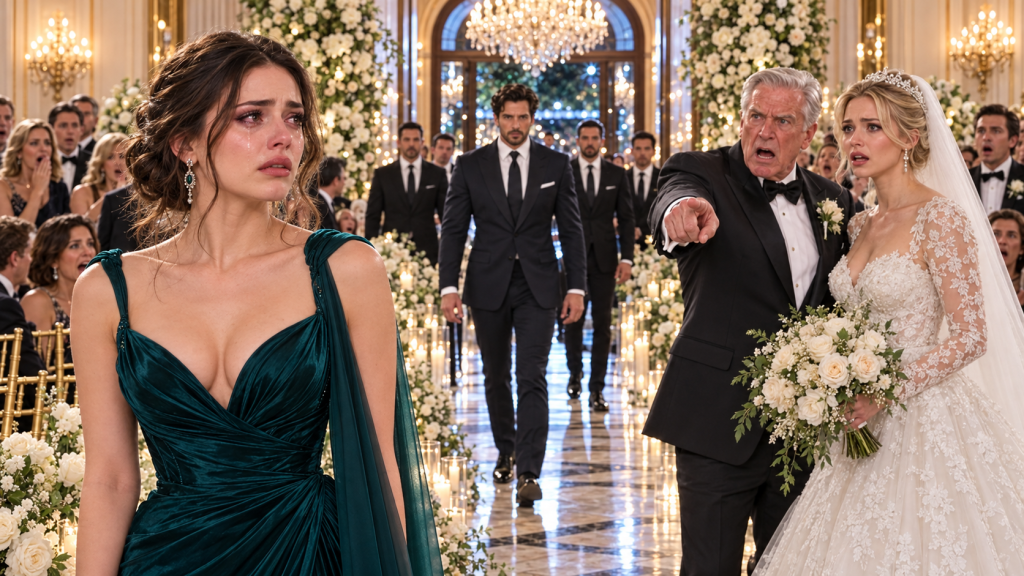
Instead, she looked straight at me. And began to cry. “Emma, sweetheart, there’s something I should have told you six years ago.” My throat tightened. Six years. The same year my grandmother died. The same year my father began controlling everything she’d left behind.
The same year my own family started treating me like an embarrassment.
I swallowed.
“What happened, Mom?”
My father slammed his champagne glass onto the table.
“Margaret, not another word!”
Several guests gasped.
Vanessa rose from her chair, clutching the front of her wedding gown.
“Mother, what are you doing?”
But my mother ignored both of them.
Her eyes remained on mine.
“Your grandmother didn’t die believing you had abandoned her, Emma.”
I stopped breathing.
The room seemed to tilt.
“What?”
My mother’s lips trembled.
“She spent her final three days asking for you.”
I took a step backward.
“No.”
My voice sounded unfamiliar.
“No, Mom. Dad told me she didn’t want visitors.”
Tears streamed down my mother’s cheeks.
“He lied.”
I stared at her.
Six years of memories rushed through me.
The last telephone call with Grandma Eleanor.
The hospital.
The unanswered messages.
The receptionist who told me I wasn’t on the approved visitors list.
The way my father had met me outside the medical center and said, almost impatiently:
“Emma, your grandmother is exhausted. She doesn’t need you making things worse.”
I’d believed him.
Not completely.
Something inside me had resisted.
But he was my father.
And I’d spent twenty-six years being taught that questioning Richard Hale was the same as disrespecting the family.
“Mom,” I whispered, “what are you saying?”
She covered her mouth.
Then forced the words out.
“Your grandmother asked me to bring you to the hospital.”
My knees weakened.
“She wanted to see you?”
My mother nodded.
“Every day.”
I felt the air leave my lungs.
“She kept asking, ‘Where’s my Emma? Why isn’t my girl here?’”
My hands began shaking.
I remembered Grandma Eleanor’s little apartment.
The smell of cinnamon.
Her glasses hanging from a silver chain.
The afternoons she spent teaching me to balance her checkbook.
I remembered the last time I’d seen her.
She’d held my face between her hands.
“Don’t let anybody convince you that you’re difficult just because you ask questions, darling.”
I’d laughed.
“Even Dad?”
She’d looked at me for a long moment.
Then smiled sadly.
“Especially when the questions are about things that matter.”
Now my mother was telling me my grandmother had spent her final days waiting for me.
And my father had made sure I never arrived.
“Why?” I whispered.
My mother started sobbing.
“Because she discovered what he’d done with the trust.”
The ballroom seemed to disappear.
I looked toward my father.
Richard Hale stood perfectly still.
His face had turned a frightening shade of gray.
“Dad?”
He opened his mouth.
Then closed it.
I took another step forward.
“Did you stop me from seeing Grandma?”
He reached for his glass.
His hand was shaking.
“Emma, your grandmother was very ill.”
“That wasn’t my question.”
Vanessa stepped between us.
“Oh, for God’s sake, Emma!”
She looked furious.
“Are you seriously doing this at my wedding?”
I turned toward her.
“Vanessa, Mom just told me Grandma died asking for me.”
She rolled her eyes.
“You always make everything about yourself.”
Something inside me went cold.
“I’m asking whether our father lied about a dying woman’s final wishes.”
Vanessa opened her mouth.
But before she could answer, Julian Cross moved beside me.
He didn’t grab the microphone.
Didn’t threaten anybody.
Didn’t announce his fortune or his connections.
He simply stood close enough that I knew I wasn’t alone.
“Emma,” he whispered, “you don’t have to handle this in front of everyone.”
I looked at him.
His eyes were gentle.
And for one terrible second, I almost fell apart.
But then I looked back at my mother.
She was still crying.
Still standing alone.
Still trying to say something she’d apparently been too frightened to say for six years.
“No,” I whispered.
“I need to hear this.”
My father stepped forward.
“Emma, that’s enough.”
I looked at him.
For thirty-two years, those words had worked.
At birthday dinners.
At family meetings.
During holidays.
Whenever I asked why Vanessa received everything I was told I hadn’t earned.
That’s enough, Emma.
But the woman who’d taught me how to follow money had spent her final days believing I didn’t care enough to visit.
And my father was standing in front of me, demanding silence again.
I took a breath.
“No, Dad.”
He froze.
“For once, I’m going to finish asking my question.”
My voice broke.
“Did you tell Grandma I refused to come?”
The room became so quiet that I heard someone set down a fork.
My father stared at me.
Then said:
“She was confused.”
I shook my head.
“Did you?”
He looked toward my mother.
“Margaret, you’ve said enough.”
But she suddenly lifted her chin.
“No, Richard.”
Her voice was barely a whisper.
“Not this time.”
She reached into her handbag.
My father lunged toward her.
“Margaret!”
Julian immediately stepped between them, keeping his hands visible and his voice calm.
“Mr. Hale, let her speak.”
My father’s eyes flashed.
“Stay out of my family!”
Julian met his gaze.
“Emma is asking a question. Your wife is choosing to answer it.”
My mother removed a small white envelope.
It was worn around the edges.
Yellowed slightly from age.
Across the front, in familiar handwriting, were three words.
For my Emma.
I stopped breathing.
Grandma Eleanor’s handwriting.
The elegant E.
The little curl beneath the final letter.
The same handwriting that had appeared on birthday cards, recipes, and every check she mailed me when I was in college.
My mother held the envelope toward me.
“She wrote this the night before she died.”
I reached for it.
My fingers wouldn’t stop trembling.
“Why didn’t you give it to me?”
My mother looked down.
“Your father said it would make things worse.”
Tears burned my eyes.
“Worse for whom?”
She began sobbing again.
I stared at my father.
He couldn’t look at me.
For the first time in my life, I saw something beneath his polished confidence.
Not authority.
Not dignity.
Fear.
I looked down at the envelope.
My grandmother had held this paper.
Written my name.
Folded it.
Sealed it.
And believed it would reach me.
Six years.
It had taken six years for her last words to find their way into my hands.
I carefully opened it.
Inside was a single sheet.
I unfolded it.
And began reading.
My darling Emma,
If you’re reading this, I hope you are sitting somewhere warm, preferably with a cup of the terrible tea you insist tastes better than mine.
A broken laugh escaped me.
Grandma always complained that I made tea too strong.
I have so much I want to tell you, and suddenly there seems to be very little time.
First, I love you.
I loved you before you could speak, when you insisted every dog in Chicago belonged to you.
I loved you when you cried over your first failed mathematics exam.
And I love you now, when you’ve become a young woman who is much braver than she realizes.
Tears blurred the page.
There are things about the trust that concern me.
I have requested an independent review, and I want you to know that what I left you is meant to be yours.
Not a reward for pleasing your father.
Not a loan to the family.
Yours.
I covered my mouth.
I’ve also learned that some people close to us have been less honest than I believed.
That hurts me.
But I don’t want their choices to make you bitter.
My eyes filled.
Emma, money can be replaced.
The years we spend being afraid of one another cannot.
Please come see me if you can.
There are things I’d rather tell you while I can still hold your hand.
I began shaking.
And remember what I always told you: never let anybody make you ashamed of standing alone.
Standing alone is better than sitting beside people who demand you betray yourself.
The last line was written more shakily than the rest.
I am proud of you, my girl.
Always.
Grandma Eleanor.
The letter slipped from my fingers.
Julian caught it before it reached the floor.
But I barely noticed.
All I could hear was one sentence.
Please come see me if you can.
I had tried.
God, I’d tried.
I called the hospital.
I sent flowers.
I begged my father to let me visit.
And when he told me she was too ill to see me, I’d stayed home and cried.
For six years, I’d carried the guilt of believing I hadn’t fought hard enough.
Now I knew someone had deliberately put that guilt inside me.
I looked toward my father.
And asked the question that changed everything.
“Did you tell her I didn’t want to come?”
Richard Hale’s face crumpled.
Just for a second.
Then he straightened his jacket.
“Emma, your grandmother was interfering with arrangements she didn’t fully understand.”
The words struck me harder than a slap.
I stared.
“She was dying.”
He swallowed.
“She was asking to see me.”
He looked away.
“And you thought your financial arrangements were more important?”
He said nothing.
Then my mother whispered:
“Yes.”
I turned.
She was staring at the floor.
“That was exactly what he thought.”
For several seconds, nobody moved.
Then Vanessa laughed sharply.
“This is unbelievable.”
I looked at her.
She was standing beneath thousands of dollars’ worth of flowers.
Her wedding gown glittered.
The diamond bracelet our father had given her rested against her wrist.
“This is supposed to be my wedding,” she snapped.
I stared at her.
“And you couldn’t even let me have one beautiful night.”
My throat tightened.
I looked around the ballroom.
The champagne.
The chandeliers.
The gold-rimmed plates.
The guests who had laughed when I arrived alone.
Then I looked back at my sister.
“Vanessa,” I whispered, “Grandma died believing I abandoned her.”
She folded her arms.
“And I’m sorry about that.”
Her expression hardened.
“But you don’t need to ruin my life over it.”
Something inside me finally broke.
Not in anger.
In understanding.
My sister wasn’t frightened of losing me.
She was frightened of losing the evening that made her feel important.
And my father wasn’t frightened of the truth hurting our family.
He was frightened of the truth ending his control.
I looked toward Julian.
He gently returned Grandma’s letter.
Then he said quietly:
“Emma, you decide what happens next.”
I stared at him.
For years, my family had made every important decision for me.
Where I sat.
What I deserved.
How much money I was allowed to know about.
Whether I was permitted to grieve.
But Julian wasn’t telling me to stay.
Or leave.
Or forgive.
Or retaliate.
He was reminding me that the decision belonged to me.
I took a breath.
Then looked toward my father.
“Dad, there are documents you need to see.”
His expression changed.
I opened my silver clutch.
Removed the flash drive.
And placed it on the table.
The room went still.
My father stared at it.
“Where did you get that?”
I smiled sadly.
“You taught me something when I was little.”
He narrowed his eyes.
“You said people can lie, but numbers don’t.”
I looked at the flash drive.
“So I followed the numbers.”
And for the first time that evening, my father looked as though he understood that humiliating me in front of two hundred guests might be the smallest mistake he’d made.
The man who had arrived with Julian stepped forward.
He was tall, silver-haired, and carried a leather folder beneath his arm.
I’d met him twice during the past month.
His name was Graham Whitfield.
He chaired the board of Continental Lakeshore Bank, the institution considering my father’s latest financing request.
Richard had been trying to impress Graham for almost a year.
He’d invited him to charity dinners, investment conferences, and private golf weekends.
And now Graham stood in the middle of Vanessa’s wedding reception, looking at my father with an expression I’d never seen anyone direct at him before.
Disappointment.
“Richard,” Graham said quietly, “I think you should know our credit committee has received information raising serious questions about the source and ownership of certain assets listed in your financing application.”
My father’s mouth opened.
Nothing came out.
Graham continued.
“The bank is preserving the relevant application materials and has paused the pending transaction while those questions are reviewed.”
My father looked toward Julian.
“You did this?”
Julian’s expression remained calm.
“Emma raised concerns supported by documents. The bank has its own obligations to examine them.”
Richard’s face reddened.
“You’re trying to destroy my company because of a family argument!”
Graham shook his head.
“This isn’t about an argument at a wedding. It’s about financial representations that need independent verification.”
The distinction mattered.
I hadn’t spent six months tracing transactions so someone could wave a magic wand and bankrupt my father.
I wanted an investigation that could withstand lawyers, accountants, and judges.
I wanted the truth documented so thoroughly that my father couldn’t dismiss it as the bitterness of an unmarried daughter.
Vanessa stepped forward.
“Emma, you can’t seriously be doing this!”
I looked toward her.
“Doing what?”
“Bringing bankers to my wedding!”
I glanced at Julian.
Then back at her.
“He came because he’s my boyfriend, Vanessa.”
Several guests began whispering.
Vanessa’s face tightened.
“And because you have spent the last year telling everybody I invented him.”
A woman near the front table lowered her gaze.
I recognized her.
Aunt Patricia.
The same aunt who’d asked me at Christmas whether my imaginary boyfriend would be joining us for dinner.
Vanessa swallowed.
“That’s not fair.”
I almost laughed.
“Fair?”
I looked around the room.
“Vanessa, you told the wedding planner to seat me near the photographers because you thought it would embarrass me.”
She looked away.
“Dad announced that nobody wanted to come with me.”
My voice shook.
“And Mom just told me Grandma died asking for me.”
For a moment, even Vanessa had no answer.
Then my father pointed toward the flash drive.
“That’s company property.”
I turned slowly.
“What?”
He straightened.
“Whatever files you’ve stolen, Emma, you had no right to access them.”
I felt a cold calm settle over me.
“I didn’t steal company records.”
He laughed sharply.
“You expect me to believe that?”
I nodded toward the forensic accounting report.
“The evidence includes trust statements provided through lawful requests, public records, bank documentation obtained with authorization, and materials preserved by people who were entitled to keep them.”
My father stared.
I continued.
“Some documents came from an independent former employee who was tired of being told to misstate the numbers.”
His face changed.
For the first time, I saw genuine panic.
“Miriam.”
The name escaped his mouth before he could stop it.
I watched him.
Then nodded.
“Yes, Dad.”
“Miriam Price.”
My father’s hand slipped from the back of his chair.
Vanessa looked confused.
“Who’s Miriam?”
My mother closed her eyes.
I looked toward her.
“Mom knows.”
Margaret Hale began trembling again.
My father shook his head.
“Miriam was fired for misconduct.”
I looked directly at him.
“Was she?”
He said nothing.
I continued.
“Or was she fired because she refused to approve a transfer out of Grandma’s trust?”
The ballroom went silent.
My father’s expression hardened.
“You have no idea how business works.”
I smiled sadly.
“Actually, Dad, forensic accounting is how I earn my living.”
He stared.
“And the difference between a legitimate expense and someone else’s money disappearing into a related company is precisely the kind of thing I investigate.”
Julian touched my elbow gently.
Not to stop me.
To remind me that I could take a breath.
I did.
Then I looked at my father one final time.
“I don’t need to prove anything else in this ballroom.”
His face relaxed slightly.
He thought I was surrendering.
But I continued.
“The evidence is already with my attorneys.”
His expression changed.
“The relevant records are being preserved under the court’s order.”
He swallowed.
“And nobody here gets to decide that a family secret is more important than the truth.”
My father stared at me.
Then whispered:
“You’ll regret this.”
I felt my heart tighten.
For thirty-two years, those words had been enough to frighten me.
But tonight, something had changed.
I looked down at Grandma’s letter.
Then back at him.
“Maybe.”
I swallowed.
“But I already regret the six years I spent believing your lies.”
I turned away.
And for the first time in my life, I walked out of a family gathering before Richard Hale gave me permission.
Julian followed.
Not immediately.
He let me reach the hallway on my own.
Then I heard his footsteps behind me.
“Emma?”
I stopped beside a window overlooking Michigan Avenue.
Rain traced silver lines down the glass.
Outside, the convoy of black cars waited beneath the hotel entrance.
I pressed my grandmother’s letter against my chest.
Then I began crying.
Not beautiful tears.
Not one graceful drop on my cheek.
I sobbed so hard I couldn’t breathe.
Julian moved closer.
“May I hold you?”
I nodded.
He wrapped his arms around me.
And I finally fell apart.
“Six years,” I whispered.
He held me tighter.
“Six years, Julian.”
My voice broke.
“I thought she didn’t want me.”
He didn’t interrupt.
“I thought she’d stopped loving me.”
I pressed my face against his coat.
“And Dad let me believe it.”
Julian stroked my hair.
“Emma, your grandmother’s letter tells you exactly how she felt.”
I shook my head.
“But I wasn’t there.”
He waited.
“She died without me.”
My shoulders shook.
“And I’ll never get that time back.”
Julian’s voice was gentle.
“No. You won’t.”
I looked up at him.
Tears blurred his face.
He continued.
“Nothing I say can change that.”
He brushed a tear from my cheek.
“But someone kept you away. That wasn’t your choice.”
I covered my mouth.
“And her love for you didn’t disappear because you weren’t allowed into that room.”
I closed my eyes.
Then whispered:
“I just wish I could hear her voice one more time.”
Julian held me.
For a long time, neither of us spoke.
Then my telephone vibrated.
An unfamiliar number.
I stared at the screen.
Julian looked toward me.
“Do you want to answer it?”
I wiped my cheeks.
Then pressed the button.
“Hello?”
A woman’s voice answered.
“Emma Hale?”
“Yes?”
“My name is Miriam Price.”
I froze.
She continued.
“I’m sorry to call during your sister’s wedding.”
My heart began pounding.
“But Margaret contacted me.”
I looked back toward the ballroom.
“My mother?”
“Yes.”
There was a pause.
Then Miriam whispered something that made my blood run cold.
“Emma, Richard has been looking for a document your grandmother signed two days before she died.”
I gripped the telephone.
“What document?”
Miriam took a breath.
“An instruction removing Richard’s authority to make certain decisions involving your trust.”
I stopped breathing.
“Does it exist?”
“Yes.”
My knees weakened.
“Where is it?”
There was a long silence.
Then Miriam answered:
“Your grandmother gave it to me. And I’ve kept it safe for six years.”
I looked toward Julian.
For a moment, the entire world seemed to stand still.
Then I whispered:
“Why didn’t you come to me?”
Miriam began crying.
“Because your father told me you knew everything.”
My throat tightened.
“He said you’d agreed to the family arrangement.”
I closed my eyes.
“And when I challenged him, I lost my job.”
I pressed my hand against the window.
Miriam continued.
“I should have tried harder to reach you.”
Her voice broke.
“But I’m trying now.”
I took a shaking breath.
“Mrs. Price, please don’t destroy anything.”
“I won’t.”
“And don’t hand it to anybody who says they’re acting for my father.”
“I understand.”
I swallowed.
“Please speak directly with my attorney.”
“I already have her number.”
For a moment, neither of us spoke.
Then Miriam whispered:
“Emma, there’s something else.”
My heart tightened.
“What?”
“Your grandmother wasn’t only worried about your money.”
I stared at the rain.
“She believed Richard had been using your trust to keep the entire Hale company afloat.”
I stopped breathing.
Miriam continued.
“And if the records are accurate, your sister’s wedding isn’t the largest family expense involved.”
My throat tightened.
“What is?”
She answered quietly:
“The downtown building your father has been calling his greatest business success.”
I looked through the ballroom doors.
Beyond the flower arrangements, I could see Richard Hale standing beside Vanessa.
He was speaking rapidly into his phone.
For years, he’d bragged about Hale Tower.
The thirty-two-story office building bearing his name in the center of Chicago.
He called it proof that hard work and ambition could turn a small family business into an empire.
Now Miriam was telling me the foundation of that empire might belong to the trust he’d stolen from.
I swallowed.
“Mrs. Price, which part of Hale Tower?”
There was a pause.
Then she whispered:
“Emma, according to the original investment records, your grandmother’s trust may have financed the controlling partnership interest.”
I pressed my hand against my mouth.
The building.
The company.
The money.
The luxurious wedding.
And my father, who had laughed because his younger daughter arrived alone.
He had spent years treating me like someone who owned nothing.
While apparently building his reputation on assets he’d taken from the inheritance my grandmother meant me to have.
We didn’t return to the ballroom.
Julian took me to a quiet sitting room on the hotel’s upper floor, away from the music and the people who’d spent the evening turning my loneliness into entertainment.
My navy dress was damp at the hem.
My mascara had run.
My grandmother’s letter was folded carefully inside my clutch.
And for the first time since I began investigating my father’s finances, I felt less like an accountant and more like a little girl who wanted her grandmother.
Julian brought me a glass of water.
I took it with both hands.
“I’m sorry,” I whispered.
He sat beside me.
“For what?”
I looked down.
“For ruining your evening.”
He frowned gently.
“Emma.”
I swallowed.
“You flew back from New York for a wedding that’s turned into a disaster.”
Julian looked at me for a long moment.
Then said:
“I didn’t come for the wedding.”
I raised my eyes.
He smiled faintly.
“I came for you.”
Tears filled my eyes again.
“Even if there hadn’t been a single document in your clutch, I still would have come.”
I looked away.
“You don’t have to earn someone’s company by having a crisis worth attending.”
The words struck me.
Because that’s exactly what my family had taught me.
If I couldn’t impress them, I didn’t deserve attention.
If I disagreed, I was difficult.
If I needed something, I was demanding.
If I arrived alone, I was pathetic.
And here was a man who had crossed the country simply because he’d promised to be beside me.
I leaned against his shoulder.
“Thank you.”
He kissed my hair.
“Always happy to attend an uncomfortable family gathering.”
A laugh escaped me.
He smiled.
“There she is.”
For several minutes, we sat quietly.
Then he asked:
“Do you want to know what happened after we left?”
My stomach tightened.
“Not really.”
He nodded.
“Then we don’t have to discuss it.”
I looked at him.
“Do you know?”
“A little. Graham received a call from one of the bank’s counsel before he left.”
I hesitated.
Then whispered:
“Tell me.”
Julian took a breath.
“Your father tried to argue that the documents were a misunderstanding and the financing should continue as planned.”
I closed my eyes.
“Of course he did.”
“Graham explained that the bank’s review would proceed independently.”
I nodded.
Then asked:
“And Vanessa?”
Julian hesitated.
“From what I heard, her husband wanted to leave the reception.”
I looked up.
“What?”
“Adrian was upset about what had been said to you.”
I stared.
Adrian Mercer.
Vanessa’s new husband.
A reserved architect from a respected Chicago family.
He had always been polite to me, though we’d never been particularly close.
Julian continued.
“He also appeared concerned about the financial allegations. I don’t know what he knew before tonight.”
I looked down.
A small, guilty part of me felt sorry for Vanessa.
It was her wedding.
The day she’d dreamed about.
And now the celebration had become a public unraveling.
Then I remembered her smirk.
Her joke about seating me with the photographers.
The way she’d watched our father humiliate me and said nothing.
I swallowed.
“I didn’t want to ruin her wedding.”
Julian looked toward me.
“I wanted to understand what happened to Grandma’s money.”
He nodded.
“And I wanted Dad to stop treating me as though I was foolish for asking.”
My voice broke.
“I didn’t know Mom was going to tell everyone about Grandma.”
Julian took my hand.
“You didn’t make your mother speak. And your father made his own decisions long before tonight.”
I nodded slowly.
But I also understood that what happened next wouldn’t be simple.
Truth could reveal wrongdoing.
It could also break relationships that had existed for decades.
And I would have to decide which relationships deserved repairing.
At eleven forty-seven, my phone rang.
Mom.
I stared at the screen.
For a moment, I wanted to ignore her.
Six years.
She’d known for six years.
She had watched me cry on Grandma’s birthday.
Watched me place flowers on her grave.
Watched my father say I should stop being dramatic about the past.
And she’d kept quiet.
Julian looked toward me.
“You don’t have to answer.”
I swallowed.
Then pressed the button.
“Mom?”
Her voice was trembling.
“Emma.”
I closed my eyes.
“Sweetheart, where are you?”
“Somewhere quiet.”
She began crying.
“I’m so sorry.”
I looked toward the dark window.
“Mom, I need to ask you something.”
“Yes.”
“Did you know Dad was taking money from the trust?”
Silence.
Then she whispered:
“I knew there were irregularities.”
I squeezed my eyes shut.
“What does that mean?”
She swallowed.
“I knew your grandmother was asking questions about transfers Richard had approved.”
My throat tightened.
“And you didn’t tell me.”
“No.”
“Why?”
She began crying harder.
“Because I was afraid of what would happen to our family.”
For a moment, I couldn’t speak.
Then I asked:
“What did you think was happening to me?”
My mother went silent.
I continued.
“Every birthday, you watched me wonder why Grandma hadn’t wanted to see me.”
My voice shook.
“Every time Dad called me a failure, you looked down.”
Tears ran down my cheeks.
“When he told everybody I was broke because I’d made bad decisions, you knew he’d been controlling money Grandma left me.”
My mother sobbed.
“And you didn’t say anything.”
I covered my mouth.
Finally, she whispered:
“I know.”
I took a breath.
“Mom, I can’t comfort you about that tonight.”
There was a long silence.
Then she answered:
“You shouldn’t have to.”
For the first time, I heard something different in her voice.
Not a request for immediate forgiveness.
An acknowledgment that what she’d done had hurt me.
She continued.
“Emma, there’s something else I need to tell you.”
My stomach tightened.
“Please.”
She hesitated.
Then whispered:
“Your father took Grandma’s telephone away during her final hospital stay.”
My entire body went cold.
“What?”
“He told the staff she was becoming confused by calls.”
I pressed a hand against my chest.
“But she kept asking to speak with you.”
Tears filled my eyes.
“And I let him convince me it was better to wait until she was stronger.”
I stopped breathing.
“Mom, did she ever get stronger?”
My mother began sobbing.
“No.”
I looked toward Julian.
He took my hand.
Then my mother whispered:
“Emma, on the morning she died, she asked me to call you.”
My throat closed.
“And did you?”
There was silence.
Then she answered:
“I called Richard first.”
I closed my eyes.
For a moment, I felt something inside me go completely still.
“Why?”
My mother’s voice was barely audible.
“Because I’d spent thirty years asking him what I should do.”
I swallowed.
“And he told you not to call me.”
“Yes.”
I gripped the edge of the sofa.
“Mom…”
She began crying harder.
“By the time I understood how wrong that was, Eleanor was gone.”
I couldn’t speak.
I wanted to scream.
Wanted to ask what kind of mother lets a man stand between her child and a dying grandmother.
Wanted to make Margaret Hale experience every lonely birthday, every unanswered question, every nightmare about those final hospital days.
But beneath the anger was something even sadder.
My mother had lived so long under my father’s authority that she’d stopped trusting her own conscience.
And somehow, she expected her silence to count as keeping the peace.
I took a shaking breath.
“Mom, I need some time.”
She swallowed.
“I understand.”
“And I need you to tell my attorneys everything you know.”
“I will.”
“No more secrets.”
Her voice broke.
“No more secrets, Emma.”
I ended the call.
Then I put my phone beside me.
For several minutes, I couldn’t move.
Julian wrapped an arm around my shoulders.
And I whispered:
“Grandma was calling for me.”
He held me.
“And somebody kept saying no.”
For a long time, he didn’t speak.
Then he answered:
“She knew you loved her.”
I looked up.
“How can you know?”
He touched the folded letter in my hand.
“Because she wrote it down.”
My eyes filled.
“And because the way you talk about her makes it impossible to imagine she didn’t know.”
I closed my eyes.
For the first time that evening, I stopped trying to think like an investigator.
I allowed myself to grieve.
Not just the money.
Not even only the betrayal.
The three days I’d never get back.
The chance to hold Grandma’s hand.
The chance to thank her.
The chance to tell her that the little girl who sat beside her balancing checkbooks had grown into a woman who could finally follow numbers all the way to the truth.
I cried until my throat hurt.
Then Julian quietly asked whether I wanted to go home.
I nodded.
And together, we left the hotel.
As we descended in the private elevator, I caught a glimpse of myself in the mirror.
My hair had come loose.
My dress was wrinkled.
My eyes were swollen.
I looked nothing like the graceful woman Vanessa had wanted standing beside the wedding party.
But for the first time in years, I didn’t feel ashamed of my reflection.
I had arrived alone.
And that had never been the humiliation my father believed it was.
The humiliation was what he’d done to people who trusted him.
The following morning, my attorney, Rebecca Shaw, called at seven fifteen.
I was sitting at Julian’s kitchen table wearing an oversized sweater, staring at a cup of coffee I hadn’t touched.
“Emma?”
“I’m here.”
Rebecca’s voice was serious.
“We need to discuss Miriam’s documents.”
I sat upright.
“Did she send them?”
“She provided copies through counsel. We’re arranging to examine and authenticate the originals.”
My heart pounded.
Rebecca continued.
“The records include instructions Eleanor prepared to limit Richard’s authority over certain trust decisions.”
I covered my mouth.
“But there are important questions about whether every document was properly executed, delivered, and incorporated into the governing arrangements.”
I nodded.
“We can investigate those questions.”
“Yes.”
Then she hesitated.
“Emma, there’s something else.”
My stomach tightened.
“What?”
“The original financial records show transfers from the trust into Hale-affiliated investment entities.”
I took a breath.
“How much?”
Rebecca paused.
“Across the transactions we’ve identified so far, approximately eleven million dollars moved through arrangements that require serious examination.”
I stopped breathing.
Eleven million dollars.
For years, my father had told me Grandma’s trust was practically empty.
That I’d been lucky to receive anything.
That he had spent years trying to protect me from the consequences of bad investments.
Now Rebecca was telling me eleven million dollars had moved through entities associated with his company.
I whispered:
“Was all of it stolen?”
Rebecca answered carefully.
“We can’t make that conclusion from the gross amount transferred. Some transactions may have been authorized investments or legitimate expenses. We need to trace the funds, examine the governing trust documents, and determine which transfers were improper.”
I nodded.
That was why I trusted her.
She didn’t promise millions because I was grieving.
She asked what the documents actually proved.
“Do we know where the money went?”
“Some of it.”
She paused.
“And Emma, one set of transactions leads directly to an entity that helped finance Hale Tower.”
I closed my eyes.
The building.
Again.
Rebecca continued.
“Miriam has also identified invoices from companies that appear connected to Richard’s personal expenditures.”
My stomach tightened.
“What expenditures?”
“Luxury property renovations, certain family expenses, and payments to event vendors.”
I stared at the wall.
“Vanessa’s wedding?”
“We’re examining whether any of those payments were improperly made using trust funds. We don’t yet have a complete accounting.”
I swallowed.
“Rebecca, I want every transaction examined.”
“That’s the plan.”
“And I want whoever signed off on them questioned.”
“Yes.”
I took a breath.
“But I don’t want people who had nothing to do with this punished because Dad used their company as a hiding place.”
Rebecca paused.
Then answered:
“That’s an important distinction. The goal is to identify responsible parties, protect the trust, and pursue appropriate remedies.”
I looked toward Julian, who was quietly making breakfast.
“Good.”
Rebecca continued.
“And there’s another matter.”
I closed my eyes.
“Of course there is.”
She hesitated.
“Your grandmother’s former nurse has contacted Miriam.”
My heart stopped.
“What nurse?”
“Teresa Navarro.”
I frowned.
The name stirred a memory.
A kind woman with short dark hair.
She’d cared for Grandma Eleanor during her final hospital stay.
Rebecca continued.
“She remembers you calling repeatedly.”
My throat tightened.
“And she remembers Eleanor asking to see you.”
I covered my mouth.
“Is she willing to speak?”
“Yes.”
Tears filled my eyes.
Then Rebecca added:
“Emma, Teresa says your grandmother left one more message. And she believes it was never delivered.”
Teresa Navarro lived in a small brick house outside Evanston.
There were wind chimes beside her front door, potted herbs on the steps, and a faded wooden bench beneath the window.
Nothing about her home suggested she held a secret that had tormented me for six years.
But when she opened the door and saw me, her eyes filled with tears.
“Emma.”
I stopped.
She remembered me.
For a moment, I was twenty-six again.
Standing outside a hospital room.
Begging someone to let me see my grandmother.
“Mrs. Navarro?”
She nodded.
Then quietly said:
“You have your grandmother’s eyes.”
I began crying.
I hadn’t expected that.
Not a question about money.
Not a conversation about legal documents.
Just someone telling me I looked like the woman I’d loved most.
Teresa reached toward me.
“May I?”
I nodded.
She hugged me.
And I cried in the doorway of a woman I barely knew.
Rebecca had arranged the visit after Teresa agreed to speak with us.
Julian offered to drive, but I asked him to let me go with Rebecca.
There were pieces of this story I needed to hear without leaning on anyone else’s strength.
He understood.
Inside, Teresa served tea.
Real tea.
Not the bitter kind Grandma used to tease me about.
We sat at a round wooden table.
Family photographs covered one wall.
A clock ticked softly above the refrigerator.
For a moment, Teresa looked nervous.
Then she took a breath.
“I’ve wanted to speak to you for a long time.”
I wrapped my hands around the cup.
“Why didn’t you?”
She lowered her eyes.
“I wish I’d tried harder.”
The answer hurt.
But I could see she wasn’t asking me to pretend the past hadn’t happened.
Teresa continued.
“Your grandmother was very ill. She had periods of exhaustion and confusion, but she also had many clear moments.”
I nodded.
“She talked about you constantly.”
My throat tightened.
“She told me you wanted to become an accountant because you believed numbers could reveal secrets.”
A broken laugh escaped me.
“That sounds like her.”
Teresa smiled sadly.
“She told me you used to count the coins in her purse and then ask why the total changed after she bought groceries.”
I covered my mouth.
I remembered.
I was eight.
Grandma had given me a little notebook.
She called it my first accounting ledger.
I whispered:
“She kept that notebook in her kitchen drawer.”
Teresa nodded.
“She told me.”
For a moment, we smiled.
Then her expression became serious.
“Emma, your father controlled much of the communication around her medical care.”
I looked down.
“He told staff there were complicated family issues.”
My stomach tightened.
“He said calls from you could upset her.”
I closed my eyes.
“But she kept asking to speak with you.”
Tears filled my eyes.
Teresa continued carefully.
“Some decisions about visitors and communication were disputed, and I can’t tell you that every staff member understood what was happening.”
She paused.
“But I remember hearing Eleanor clearly ask for you.”
I squeezed my hands together.
“Did she think I didn’t love her?”
Teresa’s face crumpled.
“No.”
I looked up.
She shook her head.
“She was hurt and frightened that she hadn’t heard from you.”
Tears rolled down her cheeks.
“But she kept saying, ‘My Emma would come if she knew I needed her.’”
I covered my face.
For six years, I’d imagined my grandmother turning away from me.
Giving up on me.
Choosing not to see me.
Now Teresa was telling me she’d believed in my love even while someone kept us apart.
I sobbed.
Rebecca gently placed a hand on my shoulder.
Teresa waited.
When I could finally speak, I whispered:
“Rebecca said she left another message.”
Teresa nodded.
She stood and walked to a small cabinet.
From a drawer, she removed an older mobile phone.
Its screen was scratched.
A protective case had yellowed around the edges.
“I preserved this because I knew it might matter someday.”
My heart hammered.
Teresa sat again.
“During one of your grandmother’s clearer afternoons, she asked whether I could help her record something for you.”
I stopped breathing.
“She gave me permission to record a personal message.”
Teresa looked down.
“She said if she couldn’t see you, she wanted you to hear her voice.”
My eyes filled.
“I tried to arrange delivery later, but Richard told me everything should go through the family.”
Her voice broke.
“I should have pushed harder for another way.”
I couldn’t answer.
Rebecca spoke gently.
“We’ll document the recording and its circumstances appropriately.”
Teresa nodded.
Then looked at me.
“Would you like to hear it?”
My hands began shaking.
I wanted to say yes.
But suddenly, I was terrified.
For six years, I’d wished for one more moment with Grandma.
Now somebody was offering me her voice.
What if it hurt too much?
What if I couldn’t bear to hear how weak she sounded?
What if the last message of the woman who’d loved me unconditionally made everything I’d been trying to survive collapse?
I looked toward Rebecca.
Then back at Teresa.
Finally, I whispered:
“Yes.”
Teresa touched the screen.
There was a soft click.
A little rustling.
Then a voice.
“Is it working, dear?”
My hand flew to my mouth.
Grandma.
I knew her voice immediately.
The gentle rasp.
The little laugh at the end of certain sentences.
Teresa’s younger voice answered:
“Yes, Eleanor. You can begin whenever you’re ready.”
A pause.
Then Grandma said:
“Hello, my beautiful Emma.”
I began sobbing.
“I hope you’re not drinking too much coffee.”
A broken laugh escaped me.
“And I hope you’ve finally learned to make a proper cup of tea.”
Tears streamed down my cheeks.
“Sweetheart, I don’t know why we’ve had such trouble finding each other these last few days.”
My chest tightened.
“But I want you to know I’m not angry.”
I closed my eyes.
“Whatever anyone tells you, I never stopped wanting to see you.”
My shoulders shook.
“I’m tired now.”
There was a pause.
The sound of breathing.
“But I wanted to tell you something before I rest.”
I gripped Rebecca’s hand.
“Your father and I have disagreed about the money I set aside for you.”
A pause.
“I’ve asked that someone independent make certain it’s protected.”
Her voice weakened.
“But money is not the most important thing I’m leaving you.”
I could barely breathe.
“The most important thing is the right to become the woman you want to be.”
Her voice trembled.
“Emma, don’t spend your life shrinking so somebody else can feel big.”
I covered my face.
“You are kind.”
“You are clever.”
“And you are not difficult simply because you notice when something is wrong.”
I began crying harder.
Then Grandma laughed softly.
“Now, if your father is anywhere nearby, tell him I said he’s being stubborn.”
For one moment, I laughed through the tears.
Teresa smiled sadly.
Then Grandma continued.
“I love you, sweetheart.”
Her voice became very quiet.
“I wish I could hold your hand.”
The next words were almost a whisper.
“But wherever you go, I hope you remember how proud I am to be your grandmother.”
There was a pause.
Then:
“Goodbye for now, my girl.”
The recording ended.
For a long time, I couldn’t move.
I sat at Teresa Navarro’s kitchen table, sobbing as though six years had collapsed into a single afternoon.
Grandma hadn’t rejected me.
She hadn’t decided I was too disappointing to see.
She’d been waiting.
Trying.
Reaching toward me.
And somebody had built a wall between us.
But even through that wall, she’d managed to send love.
I looked at Teresa.
“Thank you.”
The older woman began crying.
“I’m sorry it took so long.”
I shook my head.
“I wish I’d heard it earlier.”
My voice broke.
“But I’m glad you kept it.”
Teresa nodded.
Then she reached across the table.
“Your grandmother also made me promise one thing.”
I looked up.
“What?”
Teresa smiled through tears.
“She said if I ever found you, I should tell you to stop being afraid of your father’s disappointment.”
I laughed weakly.
“That’s definitely Grandma.”
Teresa nodded.
“Then she said…”
Her voice trembled.
“‘Emma doesn’t need my permission to be brave. She only needs to realize she already is.’”
I lowered my head.
And cried again.
That evening, I returned to Julian’s apartment.
He was sitting at the kitchen table reviewing a report.
When he saw my face, he closed his laptop immediately.
“Emma?”
I stood in the doorway.
“I heard her.”
His expression softened.
“Your grandmother?”
I nodded.
“She left a message.”
Tears filled his eyes.
“Do you want to tell me about it?”
I considered.
Then walked toward him.
“Not yet.”
He nodded.
“Okay.”
I leaned against him.
“Can you just hold me?”
Julian stood.
Wrapped his arms around me.
And held me while I cried.
For the first time since the wedding, the tears weren’t only about betrayal.
They were about love.
Love that had survived silence.
Love that had survived six years.
Love that no forged document, stolen dollar, or cruel public joke could erase.
The following Monday, the first serious consequences reached my father’s company.
Continental Lakeshore Bank formally suspended consideration of the disputed financing pending its due diligence and other reviews.
A court-appointed process began preserving records relevant to my civil claim.
And Richard’s attorneys received notice that the trust transactions were being challenged.
None of it happened because Julian was rich.
It happened because the evidence raised legal and financial questions my father could no longer avoid.
That distinction mattered to me.
I’d spent my life being told that only powerful men could solve problems.
My father.
His bankers.
His lawyers.
His friends.
But it was my grandmother who’d taught me to follow numbers.
Miriam who’d saved records.
Teresa who’d preserved a voice.
Rebecca who’d built the legal case.
My mother who’d finally decided to tell the truth.
And me.
The daughter Richard Hale had spent years calling useless.
I had brought the questions to the people who were required to answer them.
Three days later, my father called.
I stared at his name.
For a moment, I felt the old instinct to answer immediately.
The familiar fear of what would happen if I kept him waiting.
Then I remembered Grandma’s voice.
Don’t spend your life shrinking so somebody else can feel big.
I let the call ring.
A message arrived.
Emma, we need to talk. Alone. No lawyers.
I stared.
Then another.
This is a family matter.
I closed my eyes.
For years, those four words had been used to bury anything inconvenient.
A family matter.
When Vanessa borrowed money and never repaid it.
A family matter.
When Dad told me my trust was gone.
A family matter.
When Grandma died before I could see her.
Now Richard wanted to use those words again.
I replied:
If you want to discuss the trust, contact Rebecca.
Then I set down my phone.
For once, I didn’t explain myself.
And for once, the world didn’t end.
But my father wasn’t finished.
That Friday, a letter arrived at my apartment.
It contained a proposed settlement.
I took it to Rebecca.
We read it together.
The offer was substantial.
Two million dollars.
Payable in installments.
In exchange, I would release certain claims, agree not to pursue further accounting remedies against specified family entities, and accept strict confidentiality provisions.
I stared at the number.
Two million dollars.
More money than I’d ever personally held.
Enough to buy a beautiful apartment.
Pay off every debt I had.
Travel.
Start my own firm.
My hands trembled.
Rebecca watched me quietly.
“What do you think?”
I looked up.
“Is it a fair settlement?”
She took a breath.
“We don’t yet have enough information to say. We would need to examine the full accounting, collectability, tax consequences, security for payments, and the scope of the releases.”
I nodded.
Then asked:
“Would accepting this mean we stop examining the other transfers?”
“As drafted, you’d be giving up significant rights to pursue additional claims against certain parties.”
I looked down.
“And there’s no complete explanation?”
“Not in these documents.”
I stared at the offer again.
Two million dollars.
A number designed to make a person stop asking questions.
Then I remembered what Miriam had said.
Eleven million dollars in transactions requiring examination.
Hale Tower.
The trust.
The wedding.
The financial representations.
And above all, Grandma’s voice.
What I left you is meant to be yours.
I looked toward Rebecca.
“Then I’m not signing this.”
She nodded.
“We can respond with a request for full information and discuss settlement when we can assess what is fair.”
I took a breath.
“Exactly.”
For the first time, I wasn’t refusing my father out of anger.
I was refusing to make another decision in the dark.
And that frightened him more than anything I’d said at Vanessa’s wedding.
Vanessa came to see me two weeks later.
She arrived without announcing herself.
I opened my apartment door expecting a delivery.
Instead, I found my sister standing in the hallway.
She wore jeans, a cream sweater, and sunglasses despite the gray afternoon.
There were no photographers.
No glittering earrings.
No designer handbag clutched like a trophy.
“Emma.”
I stared at her.
“Vanessa.”
For several seconds, neither of us spoke.
Then she removed her sunglasses.
Her eyes were swollen.
“Can I come in?”
I hesitated.
Part of me wanted to close the door.
Not because I hated her.
Because every time we’d been alone for the past ten years, Vanessa had found a way to make me feel smaller.
But she looked different now.
Not kinder, necessarily.
Just frightened.
I stepped aside.
“Come in.”
She walked into my small apartment and looked around.
A secondhand sofa.
Books stacked beside the window.
A little dining table.
Photographs of Grandma Eleanor on the shelf.
For a moment, she stared at the photographs.
Then whispered:
“You still have those.”
I frowned.
“Of course I do.”
She looked down.
We sat opposite each other.
“Would you like coffee?” I asked.
She shook her head.
“No, thank you.”
I waited.
Finally, Vanessa took a breath.
“Adrian is staying with his brother.”
My stomach tightened.
“I’m sorry.”
She laughed bitterly.
“Are you?”
I looked at her.
“I didn’t ask him to leave.”
Her eyes flashed.
“Your little performance at the wedding certainly helped.”
I felt the old familiar sting.
But this time, I didn’t scramble to defend myself.
“Vanessa, you invited me.”
She looked away.
“You seated me at the back.”
Her jaw tightened.
“You laughed while Dad humiliated me.”
I swallowed.
“And when Mom said Grandma had been asking for me, you told me I was ruining your wedding.”
Vanessa’s face reddened.
“I was upset.”
“So was I.”
She opened her mouth.
Then closed it.
For a long moment, we sat silently.
Then she whispered:
“Adrian thinks I knew about the money.”
I looked at her.
“Did you?”
She looked down.
My stomach tightened.
“Vanessa.”
Tears appeared in her eyes.
“I knew Dad was using money from Grandma’s investments for some family expenses.”
I stopped breathing.
She continued quickly.
“He told me the trust was part of the family business.”
I stared.
“And you believed him?”
She swallowed.
“I wanted to.”
Those three words hurt more than an excuse.
I wanted to.
She’d seen something questionable.
And decided not to look.
Because looking might have meant losing the things she enjoyed.
I took a breath.
“Did you know he told me my inheritance was gone?”
Vanessa hesitated.
“Yes.”
My heart tightened.
“Did you know that wasn’t true?”
She began crying.
“I knew there were investments still producing money.”
For a moment, I couldn’t speak.
Then I whispered:
“You let me believe I had nothing.”
Her shoulders shook.
“Emma, I didn’t know the details.”
I looked away.
“But you knew enough to ask.”
She covered her face.
For several minutes, neither of us spoke.
Then she whispered:
“I was afraid Dad would cut me off.”
I looked toward Grandma’s photograph.
“And I was afraid Grandma didn’t love me.”
Vanessa lifted her head.
Our eyes met.
I continued.
“We were both afraid, Vanessa.”
My voice broke.
“But only one of us got to keep the money.”
She began sobbing.
For the first time, my sister didn’t argue.
She didn’t tell me I was jealous.
Didn’t accuse me of overreacting.
Didn’t insist that our father was simply doing his best.
She cried.
Then she whispered:
“I’m sorry.”
I looked at her.
“I don’t know what to do with that yet.”
She nodded.
“That’s fair.”
I took a breath.
“Have you spoken with a lawyer?”
She looked surprised.
“Why?”
“Because you signed some of the event and vendor documents my father’s office processed.”
Her face turned pale.
“How do you know?”
I watched her carefully.
“Vanessa, I reviewed transaction records.”
She swallowed.
“Dad told me those payments were authorized.”
“Then you need independent advice about what you signed and what you knew.”
Her hands began trembling.
“I didn’t think—”
I held up one hand.
“I know.”
The words came out softer than I expected.
“I think that was part of the problem.”
Vanessa lowered her head.
For a long time, she stared at her hands.
Then whispered:
“Grandma used to tell me I could be anything I wanted.”
I nodded.
“She told me that too.”
Vanessa’s lips trembled.
“I always thought she liked you more.”
I stared.
“What?”
She gave a broken laugh.
“You were the smart one.”
I almost smiled.
“Vanessa, you got better grades than I did.”
She shook her head.
“But Grandma talked to you about everything.”
I thought about those afternoons in Grandma’s kitchen.
The checkbook.
The little notebook.
The questions.
Then I answered quietly:
“Because I asked.”
Vanessa looked up.
“Grandma loved you too.”
Her eyes filled.
“She went to all your dance recitals.”
I smiled sadly.
“She saved every program.”
Vanessa began crying again.
“But Dad kept telling us we had to compete.”
I looked toward her.
She nodded.
“He told me you resented me.”
My throat tightened.
“And he told me you were spoiled.”
She stared.
Then we both laughed.
Not because anything was funny.
Because suddenly, we could see how carefully we’d been placed on opposite sides of an argument neither of us had chosen.
For years, our father had rewarded Vanessa for agreeing with him.
And punished me for asking questions.
She learned that obedience brought affection.
I learned that independence brought ridicule.
Neither lesson was love.
Vanessa looked toward Grandma’s photograph.
Then whispered:
“I wish I’d known.”
I took a breath.
“You know now.”
She nodded.
I continued.
“What you do next matters.”
For a long time, she sat quietly.
Then she stood.
“Emma?”
I looked up.
“I’m going to tell Rebecca what I know.”
My heart tightened.
“Even if it gets me in trouble?”
I nodded.
“Tell the truth, Vanessa. Get your own advice, and don’t hide anything.”
She swallowed.
Then whispered:
“I think it’s time.”
I walked her to the door.
Before leaving, she turned.
“Emma, Adrian said something after the wedding.”
I waited.
“He said he didn’t know whether we could build a marriage when I was willing to ignore what was happening to my own sister.”
My throat tightened.
Vanessa’s eyes filled.
“I told him I’d done what Dad expected.”
She swallowed.
“And he said being expected to do something isn’t the same as being forced.”
I looked at her.
For a moment, neither of us spoke.
Then Vanessa whispered:
“I don’t know if he’ll come back.”
I felt a quiet ache.
“I’m sorry.”
She nodded.
“But I think he was right.”
And for the first time in our adult lives, my sister left my apartment without trying to prove she was better than me.
Three months later, we met again.
Not in a ballroom.
In a conference room.
Rebecca had arranged a meeting to review documents relevant to the trust accounting.
An independent fiduciary specialist attended.
So did counsel for the various parties.
My father entered wearing a charcoal suit.
He looked older.
His hair seemed grayer.
His shoulders less certain.
But his eyes still had that familiar sharpness.
He sat across from me.
“Emma.”
I nodded.
“Richard.”
For a moment, the room went still.
I’d never called my father by his first name before.
His jaw tightened.
“Is that what we’ve come to?”
I looked at him.
“I’m here to review the financial records.”
He stared.
“You can still call me Dad.”
My heart tightened.
Then I answered quietly:
“Being my father is a relationship. It doesn’t make the questions disappear.”
He looked away.
Rebecca opened the meeting.
She explained the purpose.
The records under review.
The need to distinguish legitimate trust investments from unauthorized transfers and possible self-dealing.
My father shifted impatiently.
“This is ridiculous.”
Rebecca remained calm.
“Mr. Hale, the transactions are documented. The question is whether they were authorized and properly accounted for.”
He looked toward me.
“Emma, you know how much pressure the company was under after your grandmother became ill.”
I said nothing.
He continued.
“We were trying to protect jobs.”
I looked up.
“Whose money did you use?”
He frowned.
“The family had investments tied to the business.”
“Whose money?”
His expression hardened.
“Emma, you don’t understand the way these things work.”
I felt the old anger rise.
Then I remembered Grandma’s recording.
You are not difficult simply because you notice when something is wrong.
I took a breath.
“Richard, the trust was established for my benefit. Its terms controlled what could be done with its assets.”
He shifted.
“The money would’ve remained in the family.”
I looked directly into his eyes.
“The beneficiary’s rights don’t disappear because you use the word family.”
Silence.
I continued.
“Did you approve transfers into companies you controlled?”
He looked toward his attorney.
His attorney spoke quietly.
“We will address the questions through the document process.”
I nodded.
That was fine.
I didn’t need a confession delivered across a conference table.
The records would be examined.
The witnesses questioned.
And the governing documents applied.
But before the meeting ended, my father said something that revealed more about him than any financial statement.
“I built Hale Tower.”
Everyone looked up.
His voice became louder.
“I took a struggling family enterprise and made it worth something.”
He looked at me.
“And now you want to destroy everything I’ve built.”
For a moment, the room was silent.
Then I answered:
“I didn’t ask to destroy it.”
His face tightened.
“I asked where my grandmother’s money went.”
I swallowed.
“If your company depended on using assets you weren’t entitled to use, that isn’t a problem created by my questions.”
He stared at me.
“And if there are honest employees who depend on those jobs, they deserve better than having their livelihoods put at risk by decisions they never approved.”
My father looked away.
For a moment, I saw the man he’d always tried to hide.
Not a titan of industry.
A frightened person whose entire identity depended on appearing successful.
But understanding him didn’t erase what he’d done.
The meeting ended without agreement.
Outside, Rebecca touched my shoulder.
“You handled that well.”
I exhaled.
“I wanted to scream.”
She smiled faintly.
“I noticed.”
I laughed.
Then she said:
“But you stayed focused on the evidence.”
I looked down.
“Grandma would’ve liked that.”
Rebecca’s expression softened.
“I think she would.”
The following month, Margaret Hale moved out of the family mansion.
She rented a modest apartment overlooking a small park.
It was the first time she’d lived separately from my father in thirty-six years.
She called me once.
Not to ask for money.
Not to demand forgiveness.
Just to tell me she had provided a formal statement concerning Grandma’s final hospital stay and the communications she’d witnessed.
I listened.
Then she said:
“Emma, I’m beginning to understand that being afraid of Richard doesn’t excuse what I allowed.”
I looked toward the window.
“Mom, I needed you.”
Her voice broke.
“I know.”
I swallowed.
“I needed you when Grandma was dying.”
She began crying.
“I know.”
“And I needed you when Dad told everyone I was worthless.”
For a long time, she said nothing.
Then she whispered:
“I should have protected you.”
Tears filled my eyes.
“Yes.”
We sat in silence through the telephone.
Then Mom said quietly:
“I can’t change what I did.”
I looked down.
“No.”
“But I can stop lying about it.”
I closed my eyes.
For a moment, I felt something soften.
Not forgiveness.
Not yet.
But the possibility that my mother was finally willing to become honest, even when honesty cost her something.
And that was more than she’d given me in years.
Six months after Vanessa’s wedding, the trust case reached a turning point.
An independent forensic review, combined with bank records, corporate ledgers, trust statements, and witness testimony, identified multiple transactions that lacked sufficient authorization or were inconsistent with the trust’s governing terms.
Some funds had gone into legitimate investments.
Some had been repaid.
Some had produced income.
But a substantial portion had been used in ways that benefited entities controlled by Richard without the protections, disclosures, and approvals required.
Among the most troubling transfers were payments routed through related companies to support investments connected to Hale Tower.
The legal ownership structure was complicated.
The trust didn’t simply own the building outright.
But the records supported significant claims concerning diverted trust assets and the benefits earned from them.
There were also payments involving family expenses.
Including certain costs tied to Vanessa’s wedding preparations.
When Rebecca showed me the completed preliminary accounting, I stared at the pages.
For years, I’d imagined my father opening a safe and stealing cash.
The truth was more elaborate.
Money moved between accounts.
Was labeled as consulting fees.
Was transferred into investment partnerships.
Was used to satisfy corporate obligations.
Then appeared in reports as loans, distributions, reimbursements, or management expenses.
Some entries looked ordinary by themselves.
It was the pattern that told the story.
I ran a finger down one column.
Then another.
And thought about Grandma’s kitchen.
The little ledger she’d given me.
Every number has a story, Emma.
I could almost hear her.
But sometimes people work very hard to make sure you never read the whole story.
I looked toward Rebecca.
“Now I understand why Dad hated it when I became a forensic accountant.”
She smiled sadly.
“Your training certainly helped you recognize the warning signs.”
I nodded.
Then whispered:
“He thought he could make me feel too ashamed to ask questions.”
I looked down at the report.
“But shame doesn’t change a ledger.”
And for the first time in six years, I knew we were no longer relying on suspicion.
The money trail was finally being reconstructed.
The civil proceedings lasted longer than the wedding that had exposed everything.
Much longer.
There were depositions.
Financial examinations.
Arguments about trust authority.
Disputes over asset values.
And endless requests for documents my father once claimed no longer existed.
Some mornings, I woke feeling determined.
Other mornings, I wanted to pull the blankets over my head and forget Richard Hale had ever been my father.
I learned that seeking justice didn’t make grief disappear.
It simply gave grief somewhere useful to go.
Through it all, Julian remained beside me.
Not as a man waiting to solve every problem with money.
As someone willing to listen when I was exhausted.
One evening, I came home after a particularly difficult legal meeting.
I’d spent six hours reviewing statements about the way my father had used trust funds to support a failing investment.
The numbers were devastating.
Not because of their size.
Because I recognized the dates.
A transfer made the month Grandma died.
Another on what would have been her eighty-second birthday.
Another just weeks after my twenty-eighth birthday, when Dad had told me there was nothing left to distribute.
I walked into Julian’s apartment and dropped my bag.
He looked up from the kitchen.
“Bad day?”
I laughed bitterly.
“Excellent day if you’re a person who enjoys learning that her father lied to her for six years.”
He turned off the stove.
“Emma.”
I shook my head.
“I’m tired, Julian.”
He approached slowly.
“Of course you are.”
“No.”
My voice broke.
“I’m tired of being the person who has to find every lie.”
I began crying.
“Why couldn’t Dad just tell me the truth?”
Julian took my hand.
“Emma—”
“Why wasn’t I worth honesty?”
The question escaped before I could stop it.
I stared at him.
Then covered my mouth.
Julian’s eyes filled.
“Sweetheart.”
He pulled out a chair.
I sat.
For a moment, I couldn’t speak.
Then he knelt beside me.
“Your father’s choices are not a measure of your worth.”
I shook my head.
“But he treated Vanessa as though she deserved everything.”
Tears ran down my face.
“And me as though I was lucky to be invited.”
Julian looked toward me.
“Emma, you have spent so much of your life trying to earn the kindness that should have been yours without a performance.”
I began sobbing.
He continued gently.
“And I’m sorry the people who should have given it most freely made you question whether you deserved it.”
I leaned against him.
For a long time, he simply held me.
Then he asked:
“Would you like to stop discussing the case tonight?”
I nodded.
“Please.”
He smiled.
“Good. I made dinner.”
I looked toward the stove.
“What is it?”
He hesitated.
“Pasta.”
I narrowed my eyes.
“Julian, last time you made pasta, it was crunchy.”
He laughed.
“I’ve evolved.”
I gave him a suspicious look.
He lifted the lid.
Steam rose from a saucepan.
I stared.
“You ordered takeout.”
He grinned.
“An important evolutionary step.”
For the first time all day, I laughed.
And it felt wonderful.
A month later, Richard Hale resigned from his leadership role at the company he’d spent decades treating as an extension of himself.
The resignation followed pressure from lenders, independent directors, and advisers working to address the financial and governance problems.
The business did not disappear overnight.
It had employees.
Contracts.
Tenants.
Suppliers.
And legitimate operations that deserved consideration.
But Richard no longer controlled it without challenge.
An independent management team took responsibility for the restructuring process.
Certain assets were sold or refinanced through properly reviewed transactions.
Some creditors recovered less than they’d expected.
The company had to address losses and correct misleading financial records.
I won’t pretend the process was painless.
It wasn’t.
People who’d worked hard for the company feared for their jobs.
Families worried about mortgages.
Small suppliers worried about being paid.
I thought about those people often.
I didn’t want them to suffer because my father had confused personal power with corporate ownership.
But I also understood that hiding misconduct to protect appearances would only create more damage.
The restructuring eventually preserved a significant part of the viable business.
Not all of it.
But enough that many employees could continue working under different leadership.
Richard’s personal holdings were reduced substantially.
He sold his lakefront vacation home.
His private club memberships ended.
And the enormous house where I’d spent my childhood went on the market.
The news delighted some people.
They treated it like a spectacle.
A wealthy man losing his fortune.
A powerful family humiliated.
But I couldn’t celebrate quite that way.
Because behind the headlines was a man who had once lifted me onto his shoulders at the county fair.
A man who taught me to ride a bicycle.
A man whose approval I’d spent years trying to earn.
His actions deserved consequences.
But I still grieved the father I wished he’d been.
One afternoon, Rebecca called with an update.
“Emma, we’re close to resolving the central trust claims.”
I sat upright.
“What does that mean?”
“After the independent accounting and legal proceedings, the parties have reached the outline of a resolution covering the identified improper transfers, associated claims, and recovery arrangements.”
My heart pounded.
“Has it been finalized?”
“Not yet. The details still require approval and documentation.”
I nodded.
“Tell me what you can.”
She explained the proposed terms.
Some assets would be transferred.
Other amounts repaid over time with security and oversight.
Certain disputed investments would be liquidated or reallocated.
Independent fiduciary arrangements would replace the conflicted decision-making structures.
There would be ongoing tax, valuation, and administration work.
Not a magical transfer of eleven million dollars into my checking account.
But for the first time, I had a clear picture of what my grandmother had left me and what could be recovered.
I closed my eyes.
“Rebecca, is this really happening?”
Her voice softened.
“Yes, Emma.”
I began crying.
“For years, Dad told me there was nothing.”
“I know.”
I looked toward Grandma’s photograph.
“And now somebody has finally written down what was actually there.”
Rebecca paused.
Then said:
“Your grandmother made a careful plan for you. We are working to ensure that plan is respected.”
I covered my mouth.
“Thank you.”
The central civil resolution was completed later that year.
The court approved or incorporated the necessary arrangements, and the remaining disputed rights were resolved through properly documented agreements and orders.
My father lost the ability to control the trust funds as he once had.
The financial consequences were significant.
The record of his conduct was no longer something he could rewrite at dinner.
The evidence also prompted separate examination of potential criminal violations, including the treatment of financial statements and fiduciary assets.
Those questions followed their own procedures.
I didn’t demand that anyone be convicted simply because I was angry.
But I insisted that the truth be examined.
Eventually, Richard accepted criminal responsibility in connection with substantiated financial misconduct through proceedings supported by the evidence.
The sentence and related penalties were determined by the court.
His reputation suffered.
His personal finances changed.
And the man who had once controlled every room he entered could no longer make a problem disappear by ordering everyone to be quiet.
I attended the final hearing.
Rebecca sat beside me.
Julian waited outside, because I’d asked to hear the outcome without feeling as though I needed a bodyguard.
Richard stood before the court looking older than I’d ever seen him.
His shoulders were stooped.
His face drawn.
For a moment, I felt a terrible urge to look away.
Then I remembered Grandma Eleanor.
The hospital.
The undelivered letter.
The voice message Teresa had kept.
And I stayed.
When the proceedings ended, Richard turned toward me.
For a moment, our eyes met.
He opened his mouth.
Then hesitated.
I waited.
Finally, he whispered:
“Emma.”
I looked at him.
“Dad.”
The word surprised us both.
His eyes filled.
“I never thought it would come to this.”
I swallowed.
“Neither did I.”
He looked toward the courtroom.
“I was trying to keep the company alive.”
I nodded slowly.
“I know that’s what you’ve told yourself.”
His face tightened.
Then he whispered:
“I made mistakes.”
I looked directly into his eyes.
“You made choices.”
For a moment, he stared.
I continued.
“Mistakes are things we do without understanding.”
My voice shook.
“You knew Grandma didn’t want you using the trust that way.”
He looked down.
“You knew I was asking for the money.”
His shoulders trembled.
“And you knew she wanted to see me.”
Tears filled my eyes.
“That last part wasn’t about saving a company.”
Richard covered his face.
For the first time in my life, I saw my father cry.
Not a tear at a funeral.
Not a polished expression of grief.
He cried openly.
Then whispered:
“I was afraid she’d tell you everything.”
The words struck me.
I stared.
He lowered his hands.
“I thought if you knew, you’d hate me.”
For a moment, I couldn’t breathe.
Then I whispered:
“So you made sure I thought she hated me instead.”
Richard’s face crumpled.
He didn’t answer.
He didn’t need to.
I felt tears roll down my cheeks.
For years, I’d imagined some complicated reason for the hospital lies.
Something about legal paperwork.
Some horrible misunderstanding.
But the truth was painfully simple.
My father had been afraid of being exposed.
And he had chosen to protect himself by leaving me with grief he knew I didn’t deserve.
I took a shaky breath.
“Dad, I don’t know whether I can forgive you.”
He lowered his head.
I continued.
“And I won’t promise something just because you’re finally crying.”
His shoulders shook.
“But I hope you learn to tell the truth without waiting until someone proves you’re lying.”
I stepped backward.
Then turned toward the exit.
He called after me.
“Emma?”
I stopped.
His voice broke.
“Your grandmother loved you.”
I closed my eyes.
For a moment, I saw Teresa’s kitchen.
Heard Grandma’s voice.
Felt the warmth of her hands when she used to brush my hair away from my face.
Then I turned toward my father.
“I know.”
My voice was quiet.
“She told me herself.”
And I walked away.
Outside, Julian was waiting beside the courthouse steps.
The afternoon sun reflected off the windows across the street.
Cars moved through the city.
People hurried along the sidewalk carrying groceries, coffee, briefcases, and umbrellas.
Life continued.
As though nothing extraordinary had happened.
Julian looked at me.
“How are you?”
I considered.
Then answered:
“Sad.”
He nodded.
“And relieved.”
He smiled gently.
“Both can be true.”
I took his hand.
“Yes.”
For a moment, I looked toward the courthouse.
Then I whispered:
“I’m not waiting for Dad to tell me who I am anymore.”
Julian squeezed my fingers.
“Good.”
We walked down the steps together.
And I felt something loosening inside me.
Not the love I’d once felt for my family.
Not every painful memory.
The belief that I had to become smaller to belong to them.
That belief was finally leaving.
Months later, I made a decision about the recovered trust assets.
I would keep enough invested responsibly to provide security.
I would build my own career without using the trust as an excuse to stop working.
And I would honor something Grandma had cared about all her life.
Education.
Especially for young women who’d been told they weren’t clever enough, wealthy enough, or important enough to deserve opportunities.
Grandma Eleanor had grown up sharing a bedroom with three sisters.
Her father worked in a machine shop.
Her mother cleaned offices.
She’d earned her accounting qualifications at night while holding down a full-time job.
She used to tell me:
“Emma, being poor teaches you how expensive opportunity can become.”
So, after consultation with the appropriate advisers and a careful financial plan, I established a small educational fellowship in her name.
The Eleanor Hale Financial Literacy Fellowship.
It supported practical financial education, mentoring, and scholarships for students entering accounting and related fields.
I didn’t create it because Grandma’s money had to become a public spectacle.
I created it because she’d spent her entire life opening doors for people who were told to wait outside.
And I wanted that part of her life to continue.
At the first fellowship gathering, I stood beside a photograph of Grandma.
It showed her at thirty.
Wearing a plain dress.
Holding an accounting certificate.
Smiling as though the future belonged to her.
Several students sat in the front row.
Young women from different neighborhoods.
Different families.
Different circumstances.
I looked at them.
Then at Grandma’s photograph.
And began speaking.
“My grandmother taught me that money is never only money.”
I smiled.
“Sometimes it represents somebody’s sacrifice.”
A few students nodded.
“Sometimes it represents the opportunity to leave a situation where you’re being mistreated.”
My throat tightened.
“And sometimes it represents a promise someone made to a child they loved.”
I looked toward the photograph.
“My grandmother believed knowledge could give people choices.”
I took a breath.
“She wanted me to know how to ask questions.”
My eyes filled.
“And she wanted me to understand that I didn’t need anyone’s permission to be capable.”
The room became quiet.
I smiled through tears.
“So that’s what I hope this fellowship gives you.”
“Not just information.”
“Not just qualifications.”
“But the confidence to speak when something doesn’t add up.”
For a moment, I couldn’t continue.
Then I looked toward the photograph again.
“And the courage to believe you deserve to be heard.”
The applause was warm.
Genuine.
I thought about the applause at Vanessa’s wedding.
How my father had raised his glass and waited for people to laugh at me.
Now a room full of strangers was applauding the values Grandma had tried to teach me.
The contrast made my eyes fill.
Because it proved something I’d spent years forgetting.
There were people in the world who didn’t need me to be humiliated before they could feel important.
There were people who wanted others to succeed.
And some of them were sitting in front of me, holding notebooks and dreaming about their futures.
Two years after Vanessa’s wedding, I received an invitation.
It came in a cream-colored envelope.
My sister’s handwriting was on the front.
For a moment, I simply stared.
Vanessa and I had spoken several times since the financial proceedings ended.
She had provided truthful information about the transactions she’d witnessed.
Taken independent legal advice.
And begun addressing the financial obligations arising from her own involvement.
Her marriage to Adrian had not recovered.
They’d separated after months of difficult conversations.
The divorce was painful.
And Vanessa, for the first time in her adult life, had to learn how to make decisions without assuming our father would finance the consequences.
She found work with a small event-planning company.
Not glamorous work.
Not the kind that came with a private driver or a personal shopper.
She organized conferences, charity breakfasts, and local celebrations.
Sometimes she complained about the hours.
Sometimes she laughed about the ridiculous things customers requested.
But she was earning her own money.
And slowly, she seemed to be discovering that independence wasn’t the punishment our father had taught us to fear.
I opened the envelope.
Inside was a handwritten note.
Emma,
I’m hosting a small dinner for Mom’s birthday next month.
Nothing fancy.
Just family, if you’d like to come.
I know things aren’t the way they were.
Maybe that’s not entirely bad.
I would really like to see you.
Love, Vanessa.
I read it twice.
Then I sat beside the window.
For years, my sister had invited me to family gatherings because appearances required it.
Someone always made a joke.
Someone always compared our careers.
And my father always found a way to remind me who mattered most.
Now Vanessa was inviting me simply because she wanted my company.
It was such a small change.
And yet it meant something.
I took out my phone.
Typed a message.
Then stopped.
For a moment, I considered all the things that still hurt.
The wedding.
The laughter.
The years of silence.
Then I remembered Grandma’s voice.
Don’t spend your life shrinking so somebody else can feel big.
I smiled sadly.
And replied:
I’d like to come. Thank you for inviting me.
Vanessa answered almost immediately.
Really?
I laughed softly.
Then typed:
Really.
A moment later, she sent another message.
Emma, I’m glad.
I looked toward Grandma’s photograph.
Then whispered:
“Me too.”
Mom’s birthday dinner was held in Vanessa’s modest apartment.
There were six guests.
A homemade cake.
A vase of grocery-store flowers.
And a roast chicken Vanessa had cooked herself.
It was slightly dry.
She apologized three times.
I finally laughed.
“Vanessa, it’s fine.”
She looked embarrassed.
“Dad would have complained.”
The room went quiet.
Then Mom said softly:
“Richard complained about a lot of things that didn’t need complaining about.”
For a moment, nobody spoke.
Then Vanessa began laughing.
I joined her.
And somehow, the tension broke.
We ate dinner.
Talked about work.
Shared old stories.
Mom told us about the time Grandma accidentally locked herself out of her apartment wearing slippers and had to convince the neighbor’s teenage son she wasn’t trying to burglarize her own building.
Vanessa laughed so hard she spilled water.
I remembered the story too.
“She gave that boy twenty dollars for helping her climb through the kitchen window.”
Mom smiled.
“And told him not to tell anyone.”
I laughed.
“Then she told everybody herself.”
For a moment, we were three women remembering someone we loved.
Not a family divided by a stolen inheritance.
Not a courtroom.
Not a headline.
Just three women sitting around a kitchen table.
After dinner, Mom approached me near the window.
“Emma?”
I turned.
She looked nervous.
“I’m glad you came.”
I smiled gently.
“Me too.”
For a moment, she stared at her hands.
Then whispered:
“I know things will never be exactly the way they were.”
I considered.
“Maybe they shouldn’t be.”
She nodded.
Tears filled her eyes.
“I want to keep trying.”
I looked toward her.
For years, she’d watched while Dad humiliated me.
I couldn’t erase that.
And I didn’t want to pretend her decision to tell the truth had undone everything.
But she had moved out.
Given evidence.
Stopped defending his conduct.
And begun making choices that didn’t depend on his approval.
I took a breath.
“Then keep being honest with me, Mom.”
Her eyes filled.
“I will.”
I nodded.
“That’s where we start.”
She reached toward me.
I hesitated.
Then allowed her to hug me.
It wasn’t the embrace of a family magically healed.
It was the embrace of two people willing to see whether trust could grow again.
And for that evening, it was enough.
A few months later, Julian and I visited Grandma Eleanor’s grave.
It was a bright Sunday morning.
The trees were covered in fresh spring leaves.
I carried white roses.
Julian carried two cups of tea.
I looked at him suspiciously.
“Did you make those?”
He smiled.
“I ordered them from a place that understands your unreasonable standards.”
I laughed.
“Grandma would’ve approved.”
We walked slowly through the cemetery.
When we reached her grave, I knelt and placed the roses beneath the headstone.
ELEANOR HALE
BELOVED MOTHER, GRANDMOTHER, AND FRIEND
For a moment, I couldn’t speak.
Then I touched the cool stone.
“Hi, Grandma.”
A gentle breeze moved through the trees.
“It’s Emma.”
I smiled through tears.
“I know it’s been a while.”
Julian stepped back slightly, giving me privacy.
I took a breath.
“I finally heard your message.”
Tears filled my eyes.
“Teresa kept it.”
I smiled.
“You were right about the tea, by the way. Mine is still terrible.”
I laughed softly.
Then my voice broke.
“Grandma, I’m sorry I wasn’t there.”
For a moment, the old grief returned.
The hospital.
The unanswered calls.
The empty space beside her bed.
I closed my eyes.
Then remembered her words.
I never stopped wanting to see you.
I took a slow breath.
“I know now.”
Tears slid down my cheeks.
“I know you wanted me.”
I looked toward the photograph tucked into my handbag.
Grandma at thirty.
Smiling with her accounting certificate.
“You left me more than money.”
My voice trembled.
“You left me a way to understand what was happening when nobody else wanted me to ask questions.”
I smiled sadly.
“And you helped me find the courage to stop believing everything Dad said about me.”
For a moment, I couldn’t speak.
Then I whispered:
“Thank you.”
I remained there for several minutes.
Not asking for answers.
Not regretting every moment I couldn’t change.
Just remembering.
Then I stood.
Julian approached.
“Ready?”
I looked toward the grave.
Then nodded.
“Yes.”
As we walked toward the car, Julian took my hand.
“Emma?”
I looked up.
“Can I ask you something?”
I smiled.
“Of course.”
He stopped beneath a flowering tree.
For a moment, he looked unusually nervous.
Then he took a small velvet box from his coat pocket.
I stared.
“Julian…”
He smiled.
“I promise this is not another legal document.”
I burst out laughing.
Then he knelt.
And my heart nearly stopped.
“Emma Hale,” he said softly, “I met you when you were asking questions nobody wanted answered.”
Tears filled my eyes.
“You were brave even when you were frightened.”
He swallowed.
“And you kept trying to do what was right, even when the truth hurt.”
My lips trembled.
“I love the way you think.”
“The way you laugh.”
“The way you insist on reading every contract before you sign anything.”
I laughed through tears.
He smiled.
“And I love that you don’t need me to give you a life.”
His voice softened.
“You already have one.”
Tears streamed down my face.
“I’d just be honored to keep sharing it.”
He opened the box.
Inside was a simple diamond ring.
Elegant.
Beautiful.
Nothing like the enormous stone my father once said a respectable woman should demand.
Julian looked into my eyes.
“Emma, will you marry me?”
For a moment, I thought about my sister’s wedding.
The laughter.
The champagne.
My father announcing that no man wanted to accompany me.
I thought about the black cars arriving through the rain.
Julian stepping inside.
My father’s face turning pale.
But more than any of that, I thought about the man standing before me now.
The man who never made me feel smaller.
The man who didn’t insist on buying my gratitude.
The man who let me cry without telling me I was too emotional.
I smiled through tears.
“Yes.”
Julian laughed with relief.
“Really?”
I nodded.
“Yes, Julian.”
He stood and wrapped his arms around me.
For a moment, I held him tightly.
Then I whispered:
“Grandma would’ve loved you.”
His eyes filled.
“I wish I could have met her.”
I looked back toward the grave.
Then smiled.
“In a way, I think you already have.”
He looked confused.
I touched his hand.
“Every time you remind me that I don’t have to earn my place beside you.”
Julian kissed my forehead.
And we stood beneath the spring blossoms, holding each other while the world moved quietly around us.
We married the following autumn.
Not in a ballroom filled with strangers.
Not beneath chandeliers purchased to impress people who barely knew us.
We chose a small garden ceremony.
There were close friends.
People who had stood beside us during the difficult years.
Rebecca attended.
Miriam Price came.
Teresa Navarro sat in the second row, dabbing her eyes with a handkerchief.
Vanessa helped arrange the flowers.
She asked me what I wanted.
Actually asked.
And when I chose something simpler than she’d suggested, she smiled and said:
“Then that’s what we’ll do.”
Mom attended too.
Our relationship was still finding its shape.
But she was there.
Present.
Honest.
Trying.
My father wasn’t invited.
It was a difficult decision.
But I made it with a clear mind.
I didn’t choose it to punish him.
I chose it because the day I married Julian deserved to be safe from the pressure and control I’d spent years escaping.
We left an empty chair in the front row.
On it rested Grandma Eleanor’s photograph.
Beside the frame was a little silver teacup.
When I walked down the aisle, I carried white roses.
My navy dress from Vanessa’s wedding had long since been packed away.
Now I wore a simple ivory gown.
Julian stood waiting beneath the trees.
When he saw me, his eyes filled.
And I smiled.
Not because a powerful man had finally chosen me.
Because I had chosen a relationship where I could remain myself.
When we exchanged vows, I said something I’d never imagined saying in front of other people.
“Julian, I spent a long time believing love was something I had to earn by being easy to please.”
My voice trembled.
“Then you showed me that love can be a place where I don’t have to pretend.”
Tears filled his eyes.
“I promise to tell you the truth.”
“To listen.”
“To stand beside you when life becomes difficult.”
“And never to confuse loving you with giving up who I am.”
Julian squeezed my hands.
Then whispered:
“That’s all I could ever ask.”
We kissed.
The guests applauded.
And for a moment, I heard Grandma Eleanor laughing somewhere in my memory.
Not because I’d finally arrived at a wedding with a man.
Because I’d arrived at a life where no one needed to laugh at someone else for standing alone.
Years later, people sometimes asked me about Vanessa’s wedding.
The night my father mocked me in front of two hundred guests.
The convoy of black cars.
Julian’s arrival.
The court case.
The money.
The spectacular collapse of Richard Hale’s carefully constructed reputation.
They always wanted to know one thing.
“Was it satisfying when your father saw who your boyfriend was?”
I would smile.
And answer honestly.
“For a moment.”
Because yes, I’d seen the fear on his face.
I’d watched the man who called me worthless suddenly realize the people he wanted to impress knew I was capable.
But that wasn’t the moment that changed my life.
It wasn’t even the day the trust case was resolved.
Or the day the financial records showed where the money had gone.
It was the day I sat in Teresa Navarro’s kitchen and heard my grandmother say:
My beautiful Emma.
And realized she had never stopped loving me.
For six years, my father had allowed me to believe I wasn’t worth one final goodbye.
But I was.
I’d always been.
And no amount of money could have given me that knowledge.
One evening, after Julian and I were married, I stood in our kitchen making tea.
I accidentally poured too many leaves into the pot.
As usual.
Julian tasted it.
Made a face.
“Emma, this could strip the paint off a car.”
I burst out laughing.
Then I remembered Grandma.
Her kitchen.
Her little ledger.
Her glasses on their silver chain.
I placed the teapot on the counter.
Looked toward her photograph beside the window.
And whispered:
“You were right, Grandma.”
Julian approached.
“About the tea?”
I smiled.
“About something much more important.”
He wrapped his arms around me.
I leaned against him.
And thought about how my family had laughed when I arrived at Vanessa’s wedding alone.
My father had believed arriving without a man made me unworthy.
My sister had believed money made her better than me.
And my mother had believed keeping quiet was the only way to hold a family together.
We had all been taught the wrong things.
But the truth had finally given us the chance to learn something different.
Your worth is not measured by who stands beside you at a wedding.
Your inheritance is not permission for someone else to control your life.
And your family’s approval is never more valuable than your dignity.
I looked toward Julian.
Smiled.
And kissed his cheek.
Then I poured out the terrible tea and made another pot.
This time, I measured carefully.
Grandma would’ve been proud.
And somewhere inside me, the little girl who once believed nobody wanted her finally understood the truth.
She had been loved all along.
She had simply needed to stop believing the people who told her otherwise.
THE END STORIES! THANK YOU FOR READING GOOD LUCK !❤️
Related Posts