For three seconds, nobody at that dinner table moved. Not Aunt Maribel. Not Aurelia. Not Graham, whose phone still displayed the document bearing my signature. And certainly not Stellan. His eyes moved from the screen to my face, then back again. “Rowan,” he said quietly, “tell me that’s not real.”
I looked at the document one more time. The official-looking letterhead. The department name. The neat signature at the bottom. My name, rank, and service credentials presented as proof that a private company deserved a government security contract. I had spent twenty years in the Navy learning the difference between an authorized document and a dangerous imitation.
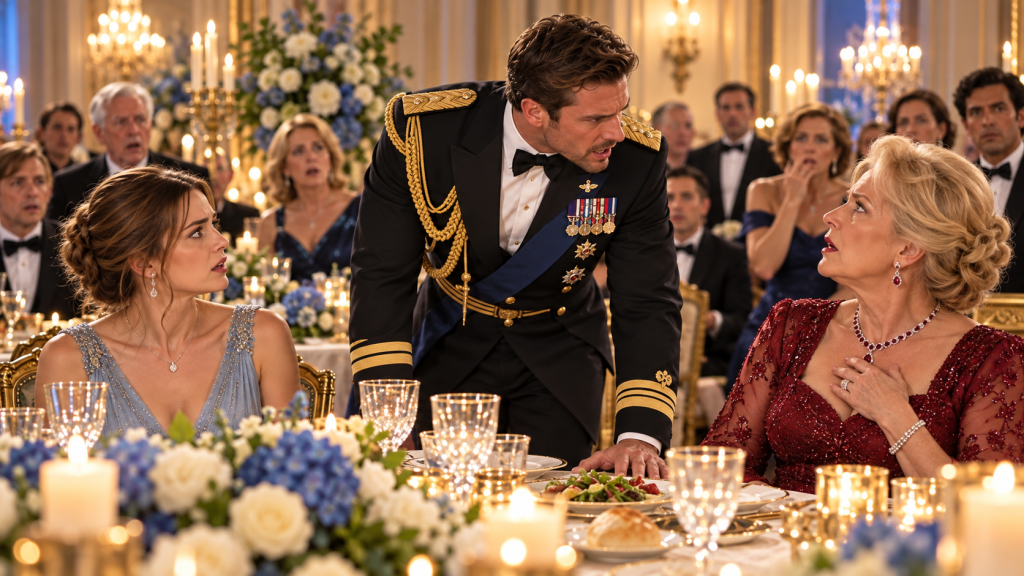
I recognized this one immediately. And what frightened me wasn’t how convincing it looked. It was how much damage it could do before someone questioned it. “No,” I said. My voice was calm enough that I almost didn’t recognize it. “That is not real.” Graham swallowed.
“But it has your signature.”
“I can see that.”
“Then how—”
“I didn’t sign it.”
The words landed with a weight that seemed to press every person into their chair.
Aunt Maribel cleared her throat.
“Oh, Rowan. Don’t be ridiculous.”
I turned toward her.
“Excuse me?”
She gave an airy laugh.
“Surely you’re not suggesting anyone forged your signature. It’s probably some administrative misunderstanding.”
I looked at the phone again.
Then back at her.
“Maribel, I haven’t authorized a private security company to use my rank, name, or endorsement.”
Her smile tightened.
“There’s no need to become so dramatic.”
For the first time all evening, I smiled.
It wasn’t a pleasant smile.
“I’m not being dramatic.”
I held out my hand toward Graham.
“May I see the original email?”
He hesitated.
Then gave me his phone.
I studied what he had shown me.
The document purported to be an endorsement from a Navy directorate. It stated that Harborlight Strategic Solutions, the company employing Graham as director of business development, had demonstrated capabilities suitable for a proposed maritime security training and logistics contract.
Beneath that language was a claim that I had personally reviewed and supported the company’s qualifications.
It was false.
Every word connecting me to the recommendation was false.
And several details in the formatting were wrong.
I knew that because I had spent enough of my life reviewing official correspondence to recognize when someone had dressed up an ordinary PDF to resemble an authorized government communication.
But the bigger issue wasn’t typography.
It was intent.
Someone had put my professional identity on a document and used it to influence a government procurement process.
An approximately eight-million-dollar process.
And according to Graham, an evaluation committee had already recommended his company for the award.
“Graham,” I asked, “who sent this to you?”
He shifted in his chair.
“My proposal manager.”
“Who sent it to your proposal manager?”
“I don’t know.”
“Then please find out.”
Aurelia suddenly reached across the table.
“Graham, don’t show her anything else.”
Every head turned.
I looked at my cousin.
“Why?”
She went pale.
“I just mean this isn’t the place to discuss business.”
“Interesting.”
Aurelia swallowed.
I placed Graham’s phone carefully beside his plate.
“A minute ago, nobody minded discussing my career.”
Stellan made a sound somewhere between a laugh and a sigh.
My aunt glared at him.
“Stellan, sit down.”
He remained standing.
“Mom, I think you should stop talking.”
Maribel’s cheeks flushed.
“This is my house.”
“And that’s a document with Rowan’s name on it.”
“Then let Rowan explain how it got there!”
I folded my hands.
“I’d be delighted to know that myself.”
Graham’s father, Richard Barlow, finally spoke.
He was a broad-shouldered man in his early sixties who chaired several private investment companies and had helped finance Harborlight’s expansion.
“Captain Whitaker,” he said carefully, “are you telling us you never communicated with Harborlight about this contract?”
“Correct.”
“Never reviewed its proposal?”
“Correct.”
“Never gave permission for your credentials to be included?”
“No.”
He looked at Graham.
His expression hardened.
“Son, this is serious.”
Graham nodded miserably.
“I understand.”
But he wasn’t looking at his father.
He was looking at Aurelia.
And Aurelia was looking at Maribel.
I had learned something in twenty years of service.
When people in a room stop looking at the person asking questions and start looking toward the person whose reaction frightens them, pay attention.
It doesn’t prove wrongdoing.
But it tells you where the real conversation is happening.
Aunt Maribel rose.
“Well, I refuse to let a family celebration turn into an interrogation.”
She picked up her wineglass.
“This is Aurelia’s engagement dinner. We have guests.”
I remained seated.
“Yes, we do.”
She lifted her chin.
“And perhaps we can remember that family matters should stay within the family.”
Something cold settled in my chest.
I looked up at her.
“Not when they involve a disputed government document.”
Her expression flickered.
I continued.
“I’ll report what I’ve seen through the proper channels. Graham should preserve the original message and any related records.”
Richard Barlow nodded immediately.
“Agreed.”
Graham stared at me.
“Will the contract be canceled?”
“I don’t know.”
“Will there be an investigation?”
“That’s for the responsible authorities to determine.”
Aurelia made a small, frightened sound.
Then Maribel said sharply:
“Rowan, you wouldn’t do that to your own family.”
I looked at her for a long moment.
For twenty years, she’d called me a clerk.
For twenty years, she’d laughed about my supposed lack of ambition.
For twenty years, she’d made certain I sat near the kitchen entrance while she celebrated relatives whose accomplishments she could display like expensive silverware.
And now, suddenly, we were family.
I rose slowly.
“Maribel, somebody used my name without permission.”
Her lips tightened.
“I didn’t say they hadn’t.”
The room went perfectly still.
I watched her.
“Then you know something about it?”
She blinked.
“I didn’t mean—”
“What did you mean?”
She looked toward Aurelia.
And there it was again.
That frightened glance.
“Rowan.”
Stellan’s voice was quiet.
I turned.
He was standing beside his chair.
His face had lost all color.
“Can we talk outside?”
I nodded.
“Yes.”
Maribel opened her mouth.
“Stellan—”
He didn’t even look at her.
“Not now, Mom.”
We stepped onto the back terrace.
The evening air was cool.
Beyond the garden wall, the lights of neighboring houses shone through the trees.
I could hear faint traffic in the distance.
Ordinary sounds.
A normal evening.
Yet something inside me had shifted so sharply that the world felt unfamiliar.
Stellan closed the terrace door behind us.
Then he turned toward me.
“I’m sorry.”
I looked at him.
“For what?”
“For what she said.”
I gave a tired smile.
“Which year?”
He winced.
“That bad?”
“Stellan, your mother once introduced me at Thanksgiving as the family member who’d never quite figured out what she wanted to do.”
His jaw tightened.
“I remember.”
“I’d been commissioned for years at that point.”
He looked away.
“I know.”
For a moment, neither of us spoke.
Then he said:
“You could have corrected her.”
I smiled sadly.
“Would she have believed me?”
He didn’t answer.
We both knew the answer.
Stellan rested his hands against the terrace railing.
“Rowan, I never understood why you let her say those things.”
I looked toward the dark garden.
“Because my work didn’t become more meaningful when your mother approved of it.”
He nodded.
“And because there are things I can’t discuss at a dinner table.”
“Exactly.”
He turned toward me.
“Still, she should have known better.”
I looked at him.
“You know, there’s something I’ve wanted to ask you.”
He frowned.
“What?”
“Why tonight?”
His expression changed.
“Why did you finally stand up?”
He lowered his head.
For a moment, he didn’t speak.
Then he whispered:
“Because I was tired of being praised for a story that wasn’t only mine.”
I studied him.
Stellan had always been a serious boy.
He was thirteen years younger than I was, and when he was little, he followed me around family gatherings, asking about ships and aircraft.
By the time he joined the Navy, I’d already spent years in uniform.
He knew I had responsibilities his mother didn’t understand.
But even he knew only the unclassified fragments of my career.
“Stellan,” I said carefully, “you don’t owe anyone an explanation of your service.”
He nodded.
“I know.”
“And you don’t need to explain anything sensitive about your last assignment.”
“I won’t.”
He looked toward the house.
Then back at me.
“But I can tell them this much.”
His voice became rough.
“During one of the worst days of my life, when my team was waiting for help and people were working from incomplete information, you refused to let an administrative mistake become our fate.”
My throat tightened.
He continued.
“You got the right people talking to each other.”
I looked away.
“You had a lot of people working to help you.”
“I know.”
“Good people.”
“I know.”
I swallowed.
“Don’t turn their work into a story about one person.”
Stellan gave a sad smile.
“You’re doing it again.”
“What?”
“Making yourself smaller so everyone else gets the credit.”
I looked at him.
He shook his head.
“I’m not saying you walked through fire and carried us out. I’m saying you did your job when doing it well mattered more than anybody in that room understands.”
My eyes filled.
He continued.
“And I’ve never forgotten it.”
For a moment, I couldn’t speak.
I had spent my career trying to make sure the people depending on our decisions received sound support.
Good information.
Clear coordination.
The resources their commands needed.
Most of that work was invisible.
That was how it was supposed to be.
But hearing Stellan describe what it meant to him touched a place inside me I had kept protected for years.
“Thank you,” I whispered.
He nodded.
Then his expression changed.
“Rowan, there’s something else.”
I looked at him.
“What?”
He hesitated.
“Three months ago, Mom asked me about you.”
I frowned.
“That’s unusual.”
He gave a bitter laugh.
“Very.”
“What did she ask?”
“Whether your position meant you could recommend companies for government contracts.”
My stomach tightened.
I turned fully toward him.
“What did you tell her?”
“That it wasn’t appropriate to ask me about your responsibilities, and that any procurement decision had to follow the proper process.”
I swallowed.
“And?”
He looked down.
“She laughed and said she was only making conversation.”
For several seconds, neither of us spoke.
Then Stellan added:
“She also asked for a copy of that photograph of us from my retirement ceremony.”
I went still.
It was a picture taken several years earlier after a change in his assignment.
He stood in uniform beside me.
I wore mine.
Both of us smiling.
Nothing sensitive.
Nothing secret.
Just two relatives at an official family event.
“Did you send it?” I asked.
He nodded miserably.
“Yes.”
I looked toward the illuminated windows of the dining room.
Behind the glass, Maribel was speaking animatedly to Richard Barlow.
Aurelia stood beside her.
Graham was staring at his phone.
I took a long breath.
“Stellan, don’t delete any messages about that conversation.”
His eyes sharpened.
“Rowan?”
“Just preserve what you have.”
He stared at me.
Then nodded.
“All right.”
I stepped toward the garden.
For the first time all evening, I felt real fear.
Not because Maribel had mocked me.
Not because Graham had seen my rank.
Because someone had gathered fragments of my identity and assembled them into a false professional endorsement.
And the people seated around that table might have been much more involved than they were admitting.
Stellan touched my arm.
“Are you okay?”
I looked at him.
Then answered with the truth.
“Not yet.”
When we returned inside, the mood had changed.
The music was off.
Aurelia was crying quietly near the fireplace.
Graham’s parents were speaking in low voices.
And Maribel stood at the head of the table, looking like a woman whose carefully arranged evening had been stolen.
She saw us.
“Finally.”
Stellan’s expression hardened.
“Mom.”
She ignored him.
“Rowan, I’d like to resolve this privately.”
I looked at her.
“There’s nothing to resolve until we know who created the document.”
Her lips tightened.
“I was only trying to help Aurelia.”
I stopped.
Graham turned sharply.
“Aunt Maribel?”
She froze.
I looked at her.
“Help Aurelia do what?”
For a moment, nobody spoke.
Then Maribel lifted her chin.
“Aurelia works very hard, Rowan. She’s built connections. She’s helped Graham with his career. I thought it was only fair that the family finally support her.”
I stared.
“What does that have to do with my signature?”
She waved a hand.
“It was a recommendation. Don’t act as though someone emptied the Treasury.”
Richard Barlow stood.
“Maribel, exactly what did you recommend?”
She looked suddenly uncertain.
I spoke before she could answer.
“Did you provide my name for this proposal?”
A long silence.
Then she said:
“I may have mentioned that you had relevant experience.”
“Did you provide my signature?”
She looked away.
My heart began pounding.
“Maribel.”
She swallowed.
“You’ve signed hundreds of things over the years.”
The room went silent.
I stared at her.
Then asked:
“Which one did you use?”
Aurelia began crying harder.
Maribel looked toward her daughter.
“Don’t say anything.”
Graham turned.
“Aurelia?”
She covered her mouth.
He took a step closer.
“What have you done?”
For several seconds, Aurelia couldn’t speak.
Then she whispered:
“It wasn’t supposed to be a problem.”
I closed my eyes.
That was the sentence people always seemed to reach for when consequences arrived.
It wasn’t supposed to be a problem.
Not I had permission.
Not I told the truth.
Just an expectation that nobody would ever look too closely.
Graham stared at her.
“What wasn’t supposed to be a problem?”
Aurelia’s voice cracked.
“Mom said Rowan would never find out.”
And in that moment, the engagement dinner ended.
Not with a toast.
Not with applause.
Not with the elegant photographs Maribel had planned.
But with a silence so complete I could hear the kitchen refrigerator humming through the doorway.
I picked up my handbag.
Stellan moved beside me.
Maribel looked horrified.
“Rowan, you can’t leave this unfinished!”
I turned.
“I’m not leaving it unfinished.”
I looked at Graham.
“Preserve the original records. I’ll make the necessary report.”
Then I looked toward my aunt.
“And from now on, nobody in this family is authorized to speak for me.”
I walked out without raising my voice.
But as I reached my car, my phone vibrated.
A message from an unfamiliar number.
Only one sentence.
Captain Whitaker, you are not the only person whose signature appears on that proposal.
I stared at the message until the screen dimmed.
Then I read it again.
You are not the only person whose signature appears on that proposal.
The sender’s number was unfamiliar.
No name.
No explanation.
Just eleven words that made the evening suddenly feel much larger than Aunt Maribel’s dining room.
For a moment, I considered calling.
Instead, I took a screenshot.
I knew better than to assume an anonymous message was trustworthy.
But I also knew better than to ignore a possible warning.
Stellan appeared beside my car.
“Rowan?”
I looked up.
He stopped when he saw my face.
“What happened?”
I showed him the screen.
He read the message.
His expression changed.
“Who sent that?”
“I don’t know.”
He looked toward the house.
“Do you think Mom knows?”
“I think we’re going to find out a great deal about what people knew.”
He watched me carefully.
Then said:
“I’m coming with you.”
I shook my head.
“No.”
“Rowan—”
“Stellan, you need to make your own decisions tonight. Don’t let your mother put you in the middle of something you aren’t responsible for.”
His jaw tightened.
“She already put me there.”
I looked at him.
He continued.
“She used that photograph I sent her.”
“You didn’t know what she intended.”
“But I should have asked.”
“Perhaps.”
I touched his arm.
“Ask now. Preserve what you have. And tell the truth if you’re questioned.”
He swallowed.
Then nodded.
I got into my car.
Before starting the engine, I looked back toward the house.
Through the brightly lit windows, I could see Maribel standing near the dining table.
She looked smaller from a distance.
Less like a queen surveying her kingdom.
More like a frightened woman trapped inside a room she’d spent years trying to control.
I felt no satisfaction.
Only a deep, tired sadness.
The next morning, I reported the matter through my command and the appropriate security and legal channels.
I provided the document Graham had preserved, the circumstances in which I saw it, and the anonymous message.
I made one thing absolutely clear.
I had not endorsed Harborlight Strategic Solutions.
I had not authorized anyone to use my signature.
And I had no role in choosing that company for a contract.
My superior, Rear Admiral Evelyn Shaw, listened without interrupting.
We’d worked together for years.
She was the sort of leader who could make a room go silent without raising her voice.
When I finished, she folded her hands.
“Rowan, do you understand how serious this could become?”
“Yes, ma’am.”
“The document makes it appear you used your position to influence a procurement.”
“I understand.”
“And your relationship to the people involved creates additional questions.”
“Yes, ma’am.”
She studied me.
Then said:
“Good. Then we’ll handle it properly.”
I swallowed.
For the first time, I allowed myself to ask the question I’d been avoiding.
“Ma’am, could this affect my command?”
Her expression softened.
“It may require you to step back from certain duties while the facts are examined.”
My stomach tightened.
She continued.
“That’s a precaution, not a conclusion.”
I nodded.
“Understood.”
Then she leaned forward.
“Captain Whitaker, you have built a career around sound judgment. The best way to protect that career now is not to defend yourself at family dinners. It’s to preserve evidence, cooperate fully, and let the process work.”
I took a breath.
“Yes, ma’am.”
She paused.
Then added:
“And Rowan?”
I looked up.
“You did the right thing by reporting it.”
For some reason, those words almost made me cry.
I had endured years of relatives dismissing my work without feeling particularly wounded.
But the possibility that someone could use my name to compromise the integrity of that work frightened me more than I wanted to admit.
The official review began quickly.
The responsible contracting office was notified that a document in the proposal was disputed.
The recommended award was placed on hold pending review.
No one pretended that the evaluation committee’s recommendation meant a contract had already been lawfully executed.
There were procedures.
Approvals.
Records.
And officials responsible for determining what had actually happened.
That was comforting.
But it was also frightening.
Because until the authenticity of the documents was established, my name remained on paper where it had no business appearing.
Two days after the dinner, I met Special Agent Elena Ruiz.
She worked with investigators reviewing the suspected false documents and related conduct.
She was calm, direct, and seemed entirely unimpressed by the fact that my family had turned a formal procurement matter into a dinner-table scandal.
Which I appreciated.
“Captain Whitaker,” she said, “I’d like to start with your signature.”
I nodded.
“Of course.”
She placed a copy of the disputed endorsement on the table.
“Do you recognize the way it’s written?”
I looked closely.
“Yes.”
“Explain.”
I traced the air above the page without touching it.
“It’s mine, but it isn’t from this document.”
She tilted her head.
“What makes you say that?”
I swallowed.
“There’s a particular loop on the final letter. I wrote it that way on a set of invitations several months ago.”
Ruiz made a note.
“What invitations?”
I closed my eyes.
Of course.
The memory returned.
Maribel had called me in early spring.
Her voice unusually sweet.
Rowan, darling, would you sign a letter for our veterans’ scholarship luncheon? Just a little personal message. People would be delighted to know someone in uniform supports the students.
I’d agreed to a carefully worded personal note encouraging education.
Nothing official.
Nothing endorsing any company.
I’d signed the note by hand.
I looked at Agent Ruiz.
“My aunt asked me to contribute a personal message to a community scholarship event.”
“When?”
“Approximately four months ago.”
“Do you still have a copy?”
“I believe so.”
“Please preserve it.”
I nodded.
Then remembered something else.
Maribel had asked for a photograph of me in uniform.
I’d declined to give her a new one.
She’d laughed.
Don’t be so modest, Rowan. Your cousin sends pictures all the time.
I hadn’t thought much of it.
Now I understood why she wanted the image.
“Agent Ruiz,” I said, “my aunt also had access to a photograph that identified my rank.”
She looked up.
“From whom?”
“Her son.”
She made another note.
The meeting continued for nearly two hours.
I answered questions about my relationship with the Barlow family.
About my aunt’s scholarship event.
About whether I’d met anyone from Harborlight.
About whether I’d ever received compensation or gifts connected to the proposal.
I had not.
When the interview ended, Ruiz closed her folder.
“Captain, have you heard from the anonymous sender?”
I shook my head.
“No.”
She nodded.
“We’re following up.”
Then she asked:
“Has anyone in your family pressured you to withdraw your report?”
I thought about Maribel’s words.
You wouldn’t do that to your own family.
I swallowed.
“Yes.”
Ruiz waited.
I gave her an accurate account.
No embellishment.
No speculation.
Just what had been said.
When I walked out of that office, I felt exhausted.
The kind of exhaustion that doesn’t come from lack of sleep.
The kind that comes from realizing people you love have turned your ordinary memories into evidence.
That afternoon, my mother called.
Her name was Judith Whitaker.
She was Maribel’s younger sister.
For most of my childhood, she’d spent family gatherings trying to keep the peace between strong personalities.
She hated arguments.
Hated raised voices.
And had a lifelong habit of telling me to ignore Maribel because that’s simply the way she is.
“Rowan?”
“Hi, Mom.”
Her voice trembled.
“I heard about dinner.”
I closed my eyes.
“I assumed you would.”
“Your aunt says you’ve threatened to ruin Aurelia’s future.”
I stared at the wall.
“Did she tell you why?”
Mom hesitated.
“She said there was confusion about a recommendation.”
I gave a tired laugh.
“That’s one way of describing it.”
My mother was quiet.
Then said:
“Sweetheart, I know Maribel can be difficult.”
I closed my eyes.
There it was.
The beginning of the familiar speech.
She’s difficult, but she means well.
She’s family.
Don’t make things worse.
“Mom,” I interrupted gently, “somebody used my signature on a document I never approved.”
She went silent.
I continued.
“It isn’t a disagreement about seating arrangements.”
“I understand.”
“Do you?”
A long pause followed.
Then she whispered:
“Not completely.”
I sat down.
For the first time, I didn’t feel angry with her.
I felt tired.
“Mom, I cannot discuss every detail of my work with you.”
“I know.”
“But you have known for twenty years that I’m an officer.”
She swallowed.
“Yes.”
“And you’ve listened to Maribel call me a secretary without correcting her.”
Silence.
My voice trembled.
“Why?”
My mother began crying softly.
“I thought you didn’t mind.”
I looked at the ceiling.
“I didn’t mind enough to fight with her every holiday.”
She sniffled.
“But that isn’t the same thing as believing it was true.”
For a moment, neither of us spoke.
Then Mom whispered:
“You always seemed so strong.”
Something inside me broke.
I closed my eyes.
“Mom, being strong doesn’t mean I don’t notice when people are cruel.”
She cried.
And for the first time, I let her cry without rushing to make her feel better.
That evening, the anonymous sender contacted me again.
I worked on Harborlight’s proposal. I reported the signatures before the recommendation. Nobody listened.
My heart began pounding.
A second message appeared.
I have records. I don’t want them to disappear.
I took a breath.
Then replied briefly, asking the sender to contact the authorized investigators and preserve the original records.
I forwarded both messages to Agent Ruiz.
I wasn’t going to conduct a private investigation using my position.
That would create more problems than it solved.
But I could make sure the information reached people empowered to examine it.
An hour later, Agent Ruiz called.
“Captain Whitaker, we’ve identified the sender.”
My pulse quickened.
“Who?”
“Ellen Park. Former compliance manager at Harborlight Strategic Solutions.”
I sat straighter.
“Former?”
“Yes.”
“Why former?”
Ruiz paused.
“According to her preliminary account, she raised concerns about the provenance of several endorsement documents and was removed from the proposal team.”
My stomach tightened.
“Does she have evidence?”
“She says she preserved communications and revision histories. We’re working to obtain and verify them.”
I closed my eyes.
Then asked:
“Several endorsement documents?”
“Yes.”
The room seemed to grow colder.
Ruiz continued.
“We’re investigating whether your signature was part of a broader effort to misrepresent outside support for the proposal.”
For a moment, I couldn’t speak.
Then I thought of the anonymous message.
You are not the only person.
Agent Ruiz added:
“Captain, one more thing. Please be prepared for questions about your service history.”
My stomach tightened.
“What part?”
“Publicly available assignments and awards, for now. The proposal included descriptions of your experience that appear designed to make the endorsement especially influential.”
I swallowed.
“And where did those descriptions come from?”
“We’re looking into that.”
After ending the call, I sat alone in my apartment.
Outside, rain moved across the windows.
A cup of tea sat untouched beside me.
For twenty years, my family had insisted they didn’t know what I did in the Navy.
But someone had known enough to construct an endorsement that made me appear both knowledgeable and authoritative.
The contradiction was impossible to ignore.
Then I remembered something Maribel had said at the dinner.
I was only trying to help Aurelia.
Not Graham.
Not Harborlight.
Aurelia.
Why would my cousin’s mother consider a multimillion-dollar government contract a gift to her daughter?
Aurelia wasn’t an employee at Harborlight.
She didn’t manage proposals.
She didn’t work in security.
She organized high-end charity events and social functions.
And she was engaged to a man who worked for the bidder.
I opened the email Graham had sent the previous evening.
There were several attachments.
The disputed endorsement.
The proposal cover letter.
And a schedule of outside advisers.
I scanned the names.
Then stopped.
Whitaker Civic Outreach.
Consulting and community engagement.
Proposed compensation:
$240,000.
I stared at the screen.
Two hundred and forty thousand dollars.
Payable under the proposed arrangement if the company secured the contract and completed specified milestones.
A name appeared beneath the line item.
Executive Director: Aurelia Mercer.
For a long moment, I didn’t move.
Then I whispered:
“Oh, Aurelia.”
My cousin hadn’t merely wanted her fiancé to succeed.
She had arranged to profit personally from his company’s contract.
And the false endorsement bearing my signature was being used to help make that contract happen.
My phone rang.
Graham.
I answered.
“Graham?”
His voice was strained.
“Rowan, I need to speak with you.”
I looked at the screen.
“About what?”
He took a shaking breath.
“About Aurelia.”
A pause.
Then he whispered:
“I just found out the consulting company isn’t the only payment she was supposed to receive.”
Graham didn’t ask to come to my apartment.
He asked whether we could speak with our attorneys present.
That alone told me his understanding of the situation had changed.
Two days earlier, he’d been a proud young executive discussing an important contract.
Now he sounded like a man who had discovered the floor beneath his feet was not as solid as he’d believed.
We arranged to meet the following afternoon.
Nora wasn’t part of this story; the attorney advising me was Commander Thomas Reed, a military lawyer assisting with the service-related questions, alongside Caroline Hayes, the civilian attorney I’d retained for personal matters.
Caroline had a reputation for being patient with clients and exceptionally impatient with evasive answers.
I liked her immediately.
Graham arrived with his company’s outside counsel.
He looked awful.
His shirt collar was open.
His eyes were bloodshot.
His engagement ring wasn’t something he wore, of course, but I’d grown accustomed to seeing Aurelia’s diamond sparkle whenever she touched his arm.
Now he sat alone.
For some reason, that made me sad.
“Captain Whitaker,” he began.
“Graham, we’re family acquaintances. You can call me Rowan.”
He looked down.
“I don’t think I deserve that kindness right now.”
I studied him.
“Then tell me what happened.”
He placed a folder on the table.
“Harborlight hired Whitaker Civic Outreach for stakeholder engagement.”
I nodded.
“I saw the consulting schedule.”
“The proposed fee was two hundred and forty thousand dollars.”
“Yes.”
He swallowed.
“But there was another agreement.”
He slid a page toward me.
My stomach tightened.
The document named Maribel Mercer Events and Philanthropy as a subcontracted public-relations consultant.
The proposed fee was one hundred and twenty thousand dollars.
For access to events.
Community contacts.
Veteran outreach.
And promotional services.
I stared at the number.
Three hundred and sixty thousand dollars.
That was the combined value of the proposed arrangements benefiting Aurelia’s organization and my aunt’s company.
I looked at Graham.
“Did Harborlight know the consultants were your fiancée and her mother?”
His face turned red.
“Some people did.”
“Did your compliance team?”
He hesitated.
“Not when the agreements were first prepared.”
Caroline leaned forward.
“Why not?”
Graham looked down.
“Because I didn’t disclose the relationships properly.”
For a moment, nobody spoke.
Then I asked:
“Did you know they were using my signature?”
He swallowed.
“I knew they were gathering support letters.”
I watched him.
“And?”
“I saw your name on a draft list.”
My chest tightened.
“Did you question it?”
His eyes filled.
“Yes.”
“What were you told?”
“Aurelia said you’d agreed.”
I sat back.
Graham continued.
“She said her mother had spoken with you privately, and that you didn’t want your involvement discussed at family gatherings.”
I almost laughed.
It was the perfect lie.
I was private about my work.
I didn’t brag.
I rarely corrected my aunt.
And Graham had accepted that silence as evidence of secret cooperation.
“Graham,” I asked, “did you ever call me?”
“No.”
“Email me?”
“No.”
“Ask your compliance team to verify the endorsement directly?”
He shook his head.
“No.”
Caroline studied him.
“Were any concerns raised inside Harborlight?”
His expression changed.
“Yes.”
“By whom?”
“Ellen Park.”
My stomach tightened.
Graham continued.
“She said the source documents hadn’t been authenticated.”
I swallowed.
“What happened?”
He lowered his head.
“Her concerns were referred to senior management.”
“And?”
“She was removed from the proposal team.”
For a moment, I stared at him.
He looked miserable.
But he wasn’t finished.
“I should have insisted on a review,” he whispered.
I nodded.
“Yes.”
He swallowed.
“I wanted the contract.”
His voice broke.
“My father had invested heavily in Harborlight. We’d spent nearly two years trying to expand into the government market.”
I watched him.
“And you thought my name might help.”
He looked up.
Tears stood in his eyes.
“Yes.”
There it was.
Not an elaborate excuse.
Not a claim that he’d been completely innocent.
A simple admission that he had wanted something badly enough to ignore warning signs.
I looked toward Caroline.
Then back at Graham.
“Are you cooperating with the investigators?”
He nodded.
“Fully. Our attorneys are providing the records.”
“Good.”
He wiped his eyes.
Then said:
“Rowan, there is one more thing.”
My stomach tightened.
“What?”
He reached into the folder.
Removed a presentation slide.
And placed it on the table.
It showed a photograph.
Stellan.
Wearing his uniform.
Standing beside me at the ceremony his mother had asked about.
Beneath the image was a caption suggesting that Harborlight’s approach had received support from experienced members of the naval special operations community.
I stopped breathing.
“No,” I whispered.
Graham lowered his head.
“The slide appeared in an earlier version of our proposal presentation.”
I stared at Stellan’s face.
My cousin had served his country for years.
He had endured dangerous assignments, painful losses, and long separations from his family.
He had returned from one particularly difficult deployment a changed man.
And now his mother and sister had allowed his image to become a marketing instrument.
“Did Stellan approve this?” I asked.
Graham shook his head.
“Not that we can establish.”
My hands began trembling.
Caroline spoke gently.
“Rowan, we need to preserve that document and establish where it originated.”
I nodded.
I knew.
But for a moment, my professional judgment seemed very far away.
All I could see was the photograph.
Two relatives in uniform.
Smiling.
Trusting the person behind the camera.
Graham looked at me.
“I’m sorry.”
I swallowed.
“You need to tell Stellan.”
He nodded.
“I know.”
“And you need to tell your father what you ignored.”
His face crumpled.
“I already have.”
I waited.
He whispered:
“He told me to step away from the company while the review proceeds.”
I nodded slowly.
“And Aurelia?”
Graham looked down.
For several seconds, he couldn’t speak.
Then he said:
“I’ve postponed the wedding.”
My heart tightened.
“I see.”
He swallowed.
“I still love her.”
I looked at him.
“But I don’t know whether I trust her.”
For a moment, I felt unexpected compassion.
Not because he had done nothing wrong.
He had.
He’d ignored warnings.
Failed to disclose conflicts.
And accepted supposed support from a naval officer without verifying it.
But I understood what it felt like to discover someone you loved had told you only the version of the truth that helped them get what they wanted.
“Graham,” I said quietly, “love and trust aren’t the same thing.”
He nodded.
“I know that now.”
The following morning, Stellan came to see me.
I’d called him after the meeting and asked him to speak with the investigators about the photograph and related correspondence.
He arrived carrying a folder.
His face was pale.
“Rowan,” he said, “I saw the slide.”
I nodded.
“I’m sorry.”
He shook his head.
“No. Don’t apologize.”
He sat across from me.
Then stared at his hands.
“Mom asked me for that picture because she said she wanted to make a family album.”
My throat tightened.
“I know.”
He gave a bitter laugh.
“She made me promise not to complain about how I looked.”
I smiled sadly.
“That sounds like Maribel.”
For a moment, neither of us spoke.
Then he whispered:
“She told Graham’s father I supported the company.”
My heart tightened.
“Did you?”
“No.”
His voice became sharp.
“I’ve never reviewed their work. I’ve never made a recommendation.”
I nodded.
“Then say exactly that to the appropriate people.”
“I will.”
He looked toward the window.
Then said:
“Rowan, there’s something I’ve never told you.”
I studied him.
“What?”
He swallowed.
“After that assignment when you helped coordinate support for my team, Mom wanted to know why I spoke about you with so much respect.”
I listened.
“I told her you were one of the officers I trusted most.”
My throat tightened.
He continued.
“She laughed.”
I looked away.
“She said I was probably confusing you with someone important.”
For a moment, I couldn’t speak.
Then Stellan said quietly:
“I stopped telling her stories about you after that.”
I looked at him.
He had spent years serving in difficult places.
Years learning to make decisions under pressure.
And yet he had still been a son trying to convince his mother that he knew what he was talking about.
“Stellan,” I whispered, “you didn’t need her approval to respect me.”
He nodded.
“I know.”
Then his voice broke.
“But I wanted her to respect you.”
My eyes filled.
For a long moment, I couldn’t answer.
Then I leaned forward.
“Thank you.”
He wiped his face.
Then said:
“I’m going to speak to Mom.”
I studied him.
“About the photograph?”
“About all of it.”
I nodded.
“Just remember that you don’t have to argue her into telling the truth. Preserve your records. Be honest with investigators. Let her make her own choices.”
He smiled sadly.
“You always sound like my commanding officer.”
I laughed.
“Old habits.”
He grew serious again.
“Rowan?”
“Yes?”
“Don’t let this make you think your career has been ruined.”
I looked away.
He continued.
“I know what people say about reputation.”
My eyes filled.
“And I know how much it matters to you.”
I took a breath.
“I’ve worked twenty years for that reputation, Stellan.”
He nodded.
“I know.”
“Twenty years of difficult decisions.”
“Twenty years of trying to be fair when nobody was watching.”
He swallowed.
“And now somebody can put my name on a page and make it appear I traded that judgment for family favors.”
Stellan leaned forward.
“Then let the truth do its work.”
I closed my eyes.
It was exactly what I’d been telling other people.
Funny how difficult good advice becomes when you’re the one who needs it.
The following weeks were painful.
The procurement review continued.
Harborlight’s bid was reevaluated in light of the disputed materials and the company’s compliance issues.
The documents were examined by appropriate officials.
Investigators reviewed emails, payment arrangements, and communications among Maribel, Aurelia, Graham, and people involved in preparing the proposal.
I cooperated.
Answered questions.
Provided records.
And stepped away from duties that could create even the appearance of a conflict while the review proceeded.
Some colleagues were kind.
Others became awkward.
A few people stopped inviting me to informal lunches.
Not because they’d decided I was guilty.
Because uncertainty makes people uncomfortable.
One afternoon, I walked into a break room and heard two junior officers stop talking.
Their expressions changed when they saw me.
I smiled politely.
Poured coffee.
And left.
In the corridor, I stood beside a window.
For a moment, the feeling was almost unbearable.
Twenty years.
All those early mornings.
The long nights.
The deployments.
The paperwork that had to be correct because somebody else’s safety depended on it.
And now I was wondering whether people who barely knew me believed I had traded my integrity for an eight-million-dollar contract.
I called my mother.
She answered immediately.
“Rowan?”
“Hi, Mom.”
Her voice softened.
“Sweetheart, how are you?”
I looked through the window.
Then told her the truth.
“I’m having a difficult day.”
She was quiet.
Then whispered:
“Do you want me to come over?”
I hesitated.
For years, whenever Maribel insulted me, Mom had told me to ignore it.
But something in her voice sounded different.
Less like an attempt to avoid conflict.
More like someone who had finally realized silence wasn’t always kindness.
“Yes,” I said.
Her breath caught.
“Really?”
“Yes.”
That evening, she arrived with homemade soup.
For a moment, I nearly laughed.
No matter how old I became, my mother still believed soup could make the world less frightening.
We sat at my kitchen table.
She watched me eat.
Then said:
“Rowan, there’s something I need to tell you.”
I looked up.
She folded her hands.
“I knew your aunt wasn’t telling the truth about your career.”
I went still.
Mom’s eyes filled.
“She knew you were an officer.”
My throat tightened.
“Of course she did.”
Mom shook her head.
“No, sweetheart. I mean she knew more than she admitted.”
I stared.
“What do you mean?”
She swallowed.
“Last year, she asked me for copies of the public articles about your career.”
My stomach tightened.
“What articles?”
“Your service award announcement. Your promotion notice. The photograph from the community ceremony.”
I stopped breathing.
Those were all public materials.
Nothing classified.
Nothing inherently dangerous.
But they were more than enough to establish that I held a senior commissioned rank and had a substantial service record.
“Did you give them to her?” I asked.
Mom nodded miserably.
“Yes.”
I stared.
“Why?”
“She said Aurelia was arranging a veterans’ scholarship event.”
I closed my eyes.
Mom began crying.
“I thought she was finally going to acknowledge what you’ve accomplished.”
My chest tightened.
She continued.
“And when she called you a secretary at dinner, I understood how wrong I’d been.”
For several seconds, I couldn’t speak.
Then I whispered:
“Mom, she knew.”
Tears ran down her face.
“Yes.”
“She knew all along that I wasn’t what she told people.”
“Yes.”
I sat back.
The truth was almost more insulting than ignorance.
Maribel hadn’t spent twenty years belittling me because she couldn’t understand my career.
She’d understood enough to use it when it became profitable.
She simply hadn’t wanted to give me credit when there was nothing in it for her.
My mother reached for my hand.
“Rowan, I’m sorry.”
I looked at her.
Her eyes were full of tears.
“I should have spoken up.”
I swallowed.
“Yes.”
She nodded.
“I know.”
For a moment, we sat quietly.
Then I whispered:
“Mom, sometimes I wonder whether it would have been easier to tell everyone exactly what I did.”
She shook her head.
“Your aunt would still have found something to criticize.”
I looked up.
Mom gave a sad smile.
“People who need to feel superior don’t always care what the truth is.”
I stared at her.
For the first time, I heard my mother say something about Maribel that wasn’t an excuse.
She squeezed my hand.
“I can’t change all the years I stayed quiet.”
Her voice broke.
“But I can stop staying quiet now.”
And for the first time in a long while, I believed her.
Two days later, Caroline called with an update.
“Rowan, Ellen Park’s records have been authenticated in part.”
My pulse quickened.
“And?”
“They show the source of the endorsement files.”
I sat straighter.
“Who prepared them?”
Caroline paused.
“An outside document consultant working under a subcontract arranged through Aurelia’s organization.”
My stomach tightened.
“Did the consultant know the signatures were unauthorized?”
“That’s being investigated.”
I took a breath.
“And the second signature?”
Caroline was quiet for a moment.
Then said:
“It belonged to a retired rear admiral.”
My heart tightened.
“Who?”
“Martin Keene.”
I closed my eyes.
I knew the name.
Retired Rear Admiral Martin Keene had served as a senior leader years earlier.
He was respected.
Widely known.
And very much alive.
“Did he endorse Harborlight?” I asked.
“No. He has denied signing the document, and the investigators have obtained an account from him.”
I swallowed.
Then Caroline added:
“Rowan, the records show that whoever prepared the false endorsements didn’t choose names at random.”
My stomach tightened.
“What do you mean?”
“They selected people whose reputations would make the proposal appear especially credible.”
I looked toward the folder on my desk.
The photograph of Stellan.
The public announcement of my promotion.
The scanned signature from the scholarship letter.
And now another senior officer’s name.
My family had taken public recognition earned through years of service and turned it into a set of props for a business deal.
Caroline continued.
“There’s one more document.”
I went still.
“What?”
“A message from Aurelia to the outside consultant.”
My heart began pounding.
“What does it say?”
Caroline took a breath.
Then read it.
“Use Rowan’s actual rank in the proposal. At home, everyone thinks she’s only administrative staff, so she won’t realize what we’ve submitted until it’s too late.”
For several seconds, I couldn’t speak.
Then I began to cry.
Not loud, dramatic tears.
Just the quiet, exhausted kind that arrive when something you’ve suspected for years is finally written in black and white.
They hadn’t simply underestimated me.
They’d counted on me being underestimated.
And suddenly, my aunt’s dinner-table cruelty looked different.
Every joke.
Every dismissive remark.
Every time she told me not to make a fuss.
The woman who insisted I was nobody had been relying on my reputation behind my back.
I looked at Caroline’s email.
Then whispered:
“Please make sure the investigators have the original message.”
She answered gently.
“They do.”
I wiped my cheeks.
For a moment, I wanted to call Aurelia.
Ask how she could do that.
Ask whether she’d ever loved me.
Ask whether she understood what she’d risked.
But I didn’t.
Because one thing had finally become clear.
The greatest danger wasn’t that my family didn’t know who I was.
It was that they knew just enough to use me—and assumed I’d never stand up for myself.
Three weeks later, Aunt Maribel made her final attempt to control the story.
She didn’t call me.
She didn’t apologize.
Instead, she sent a letter to the officials reviewing the disputed procurement documents.
In it, she claimed that I’d encouraged the family to use my professional standing to support Harborlight.
She described the endorsement as something I had approved informally.
And she suggested that my complaint was the result of a personal disagreement after I became embarrassed by the way my career had been discussed at dinner.
When Caroline called to tell me, I sat in silence.
For a moment, I couldn’t even feel angry.
I was simply astonished.
“She’s blaming me?”
Caroline’s voice was steady.
“She’s disputing your account. The investigators will assess it against the evidence.”
I closed my eyes.
“The messages show what happened.”
“Yes.”
“The signature wasn’t authentic.”
“That is the issue being examined.”
“And the consultant’s correspondence shows Aurelia knew I hadn’t approved it.”
Caroline paused.
“Rowan, the records are important. But don’t confuse strong evidence with an excuse to skip the process.”
I took a breath.
She was right.
I looked toward the window.
Rain was falling again.
There had been so much rain since the engagement dinner.
Some mornings, it felt as though the whole world had turned gray.
“Caroline,” I whispered, “do you think Maribel actually believes her version?”
She was quiet.
Then answered:
“I don’t know.”
A pause.
“But whether she believes it isn’t the same question as whether it’s true.”
I sat with that sentence for a long time.
Because I’d spent years wondering whether my aunt understood how she hurt people.
Now I realized the answer didn’t change my responsibility.
I could feel compassion for her.
I could remember the times she’d been kind.
I could even hope she would change.
But I couldn’t protect a lie because she was frightened of the consequences.
The next day, I met Agent Ruiz again.
She asked about the scholarship letter.
The scanned signature.
The family photograph.
The dinner.
And Maribel’s recent written statement.
I answered every question.
Then Ruiz placed two documents side by side.
One was the personal message I’d signed for the scholarship event.
The other was the purported Navy endorsement.
“Captain Whitaker,” she asked, “is there anything distinctive about these signatures?”
I leaned forward.
The loop.
The angle.
The tiny mark beneath the final letter.
Even the spacing.
They were identical.
Not merely similar.
Exactly the same arrangement of lines.
“Yes,” I said.
“They appear to be copies of the same signature image.”
Ruiz nodded.
“That is consistent with the technical review so far.”
She turned another page.
“This is the revision history from the outside consultant’s files.”
I looked down.
It recorded several versions of the endorsement.
An early draft without a signature.
A later version with the signature inserted.
And a subsequent version adding the official-looking header.
My stomach tightened.
I stared at the timestamps.
The document had been assembled in stages.
Long after the date on which it claimed to have been signed.
I looked at Ruiz.
“Can I ask something?”
“Of course.”
“Why would they go to so much trouble?”
She studied me for a moment.
“Sometimes people convince themselves that if the outcome is desirable enough, the steps they take to reach it don’t matter.”
I swallowed.
“And sometimes?”
She closed the folder.
“Sometimes they believe nobody will challenge them.”
I thought of Aurelia’s message.
Everyone thinks she’s only administrative staff.
That was what they’d counted on.
Not merely my silence.
My supposed inability to understand what they’d done.
The investigation continued.
The company provided records.
The consultant was interviewed.
Retired Rear Admiral Keene gave a statement about the document bearing his name.
Stellan confirmed that he had never endorsed Harborlight or permitted his image to be used as evidence of support.
And Graham supplied communications showing how the questionable materials entered the proposal process.
He also acknowledged the warnings he’d ignored.
I respected that.
Not because it erased his mistakes.
Because admitting a mistake without insisting it was someone else’s fault is harder than people think.
Ellen Park, the compliance manager who’d warned about the documents, provided records showing she had repeatedly asked for the endorsements to be verified.
Her concerns had been dismissed.
Later, people described her as difficult.
Negative.
An obstacle to progress.
I recognized the pattern.
Sometimes the person who asks an inconvenient question becomes the problem simply because answering it would cost somebody money.
When I eventually met Ellen, she looked nervous.
We spoke in a setting arranged so that neither of us interfered with the official review.
She was a slight woman with short dark hair and tired eyes.
“Captain Whitaker,” she began, “I’m sorry I didn’t do more.”
I shook my head.
“You raised concerns.”
“They ignored me.”
“You documented them.”
She looked down.
“I lost my job.”
My chest tightened.
I studied her.
Then said:
“Ellen, you shouldn’t have had to choose between keeping your job and asking whether the records were authentic.”
Her eyes filled.
For a moment, she couldn’t speak.
Then whispered:
“Thank you.”
I smiled sadly.
“Most of my career has involved paperwork, Ellen.”
She gave a surprised laugh.
I continued.
“And I’ve never thought of it as a small thing.”
She wiped her cheeks.
I leaned forward.
“An accurate document can protect people. A false one can harm them.”
She nodded.
“That’s what I kept telling them.”
I smiled.
“Then please don’t stop believing it.”
That conversation stayed with me.
Because it reminded me of something I’d almost forgotten during the chaos.
My aunt had intended secretary and clerk as insults.
But there was nothing shameful about answering telephones or keeping records.
There was nothing small about careful administrative work.
People who did those jobs well kept institutions functioning.
Some of the finest service members I’d known had spent long hours maintaining records, verifying information, and ensuring other people received the support they needed.
The insult wasn’t that Maribel had mistaken one job for another.
The insult was that she believed certain kinds of work made a person less worthy of respect.
And that belief had blinded her to the importance of the very documents she’d manipulated.
As summer approached, the procurement review reached a decision.
The contracting officials determined that Harborlight’s proposal could not proceed as originally recommended because the evaluation had relied in part on materially unreliable representations and the bidder’s compliance failures required further action.
The proposed award did not go forward.
A new evaluation or procurement process would be undertaken as appropriate.
There was no dramatic ceremony.
No announcement that my family had cost the government eight million dollars.
No giant check suddenly returned to a vault.
The contract had not been executed.
But a recommendation influenced by false materials had been stopped before becoming an award.
I sat in Caroline’s office when she explained the outcome.
For a long moment, I couldn’t speak.
Then I whispered:
“So my name isn’t being used to support the contract anymore?”
“Correct.”
I closed my eyes.
“What about my career?”
Caroline’s expression softened.
“The service-related review has been examining whether you authorized or participated in the endorsement. The evidence we’ve discussed strongly supports your account, and the responsible officials will make their formal determination.”
I nodded.
I knew better than to celebrate before a process was complete.
But for the first time in months, I felt I could breathe.
A few weeks later, I received the formal notification.
The review found no evidence that I had authorized the false endorsement or participated in the improper proposal arrangements.
The restrictions placed on certain duties during the review were lifted.
I had cooperated fully.
The disputed documents were no longer being treated as evidence of my professional recommendation.
I read the letter twice.
Then a third time.
Finally, I placed it on my desk.
And cried.
Not because I had received praise.
Because something I’d worked twenty years to build had survived another person’s attempt to use it.
Rear Admiral Shaw called that afternoon.
“Captain Whitaker.”
“Yes, ma’am.”
“I understand you’ve received the notification.”
“Yes, ma’am.”
A pause.
Then she said:
“I’m glad this matter has been resolved as far as your participation is concerned.”
My eyes filled.
“Thank you, ma’am.”
She continued.
“You’ve handled a very difficult situation with restraint.”
I swallowed.
“I didn’t always feel restrained.”
She chuckled softly.
“Professionalism isn’t the absence of emotion, Rowan. It’s knowing what responsibilities you have when emotions run high.”
For a moment, I couldn’t speak.
Then she said something I would remember.
“Your family may have misunderstood your career.”
I closed my eyes.
“But the people who’ve worked beside you haven’t.”
After we ended the call, I sat quietly.
Outside, sunlight was finally breaking through the clouds.
The legal proceedings involving the forged records continued separately.
Investigators referred evidence for decisions about appropriate charges.
Maribel, Aurelia, and the outside consultant had to answer questions about their respective roles.
Harborlight faced contractual and compliance consequences, and people within the company who’d ignored warnings were subject to their own review.
The personal consulting payments Maribel and Aurelia expected never materialized.
Their organizations faced financial and reputational consequences of the arrangements they’d made.
The disputed documents were withdrawn from use.
And the people involved could no longer count on their connections to keep questions away.
Over time, parts of the matter were resolved through formal admissions, agreements, and penalties.
Other consequences depended on the separate decisions of the responsible authorities.
I didn’t need to know every detail of every negotiation.
I needed the truth established.
I needed my professional identity protected.
And I needed the people who had knowingly participated to take responsibility.
That was enough.
Graham eventually withdrew from his planned wedding.
He told me in a short message.
Aurelia and I have ended our engagement.
I care about her, but I cannot build a marriage on explanations that change whenever new evidence appears.
I also know I have to take responsibility for the warnings I ignored.
Thank you for insisting on the truth.
I stared at the message.
Then typed a brief reply.
I hope you both learn from what happened.
It wasn’t my place to decide whether Graham and Aurelia might someday reconcile.
It wasn’t my place to announce who deserved happiness.
But I was glad he understood that trust couldn’t be rebuilt merely by pretending the problem had never existed.
Stellan’s relationship with his mother changed more painfully.
He stopped attending family celebrations where Maribel expected him to defend her version of events.
He spoke honestly about the photograph.
He protected his own records.
And he refused to let his service become a credential she could distribute whenever it benefited a business proposal.
One evening, he called me.
“Rowan?”
“Yes?”
“I told Mom I won’t let her use pictures of me in uniform for her events without asking.”
I smiled.
“That sounds reasonable.”
He sighed.
“She cried.”
My heart tightened.
“And?”
“She said I was choosing you over her.”
I closed my eyes.
“What did you say?”
He was quiet.
Then answered:
“I told her this wasn’t a contest.”
I smiled sadly.
“Good.”
Stellan continued.
“I told her I wasn’t choosing between people.”
His voice became firm.
“I was choosing whether to tell the truth.”
For a moment, I couldn’t speak.
Then whispered:
“I’m proud of you.”
He laughed softly.
“Funny. I was going to say the same thing.”
The greatest surprise came from Aurelia.
She wrote to me several months after the engagement ended.
Not a text.
Not a hurried apology.
A handwritten letter.
At first, I didn’t want to open it.
Aurelia had spent years sitting beside her mother, laughing politely whenever Maribel belittled me.
She hadn’t created all those insults.
But she’d accepted the comfortable position they gave her.
And when she saw an opportunity to profit from my name, she’d treated my quietness as permission.
I left the envelope on my kitchen counter for three days.
Then, one Sunday morning, I opened it.
Rowan,
I used to think you were the easiest person in our family to ignore.
You never fought for attention.
You never corrected Mom.
You never seemed to care whether anyone considered you successful.
I mistook that for weakness.
I sat down.
My hands began trembling.
When Graham’s company began pursuing the contract, Mom told me your position could be useful.
I knew we should ask you directly.
I knew that an official endorsement was not the same thing as a personal note.
But I wanted the consulting agreement.
I wanted to look important to Graham’s family.
And I wanted people to believe I had built something valuable.
Tears filled my eyes.
The truth is that I tried to borrow your importance while continuing to treat you as though you had none.
That wasn’t a misunderstanding.
It was selfish.
I stopped reading.
For a moment, I thought of Aurelia as a little girl.
She’d been seven when I graduated from officer training.
She used to follow me around my parents’ house.
Ask to try on my shoes.
Beg me to tell her stories about the ships I’d seen.
Then, gradually, Maribel began comparing us.
Aurelia was graceful.
Ambitious.
Socially talented.
Destined, according to her mother, for a glamorous life.
I was quiet.
Practical.
Too serious.
Too willing to settle.
Aurelia had grown up inside those comparisons.
Perhaps she’d learned to measure her worth by how much brighter she looked beside someone else.
That explained something.
But it didn’t excuse what she’d done.
I unfolded the final page.
I’m cooperating with the process and accepting the consequences that follow.
I don’t expect you to forgive me.
I don’t even expect you to answer.
But I want you to know I was wrong about the person you are.
You never needed to tell us your rank.
We should have treated you with respect even if you really had spent twenty years answering phones.
Aurelia.
I sat quietly for a long time.
Then I placed the letter beside my coffee cup.
And cried.
It wasn’t a perfect apology.
It couldn’t recover the months of stress.
It couldn’t restore the trust I’d lost.
But it was the first time Aurelia had acknowledged the heart of the problem without hiding behind her mother.
Several weeks later, I wrote back.
Only a few lines.
Aurelia,
I appreciate that you have acknowledged your choices.
I hope you continue taking responsibility, not because it will restore your old life, but because honesty is the only way to build a better one.
I need time and distance.
I wish you well.
Rowan.
I mailed it.
Then let the matter rest.
Autumn arrived.
The air turned crisp.
Leaves gathered along the streets.
And for the first time in months, my days began to feel like my own again.
I returned fully to my duties.
Worked with colleagues I respected.
Helped newer officers learn how to make difficult decisions carefully.
And remembered why I’d chosen the Navy in the first place.
It wasn’t because I wanted my aunt to admire me.
It wasn’t because I wanted the best seat at a family dinner.
And it wasn’t because I believed rank made a person more important than someone without it.
I had joined because I wanted to serve.
Because I believed that hard work mattered.
Because I wanted to be part of something larger than myself.
Twenty years had changed me.
I was less certain about some things than I’d been at twenty-three.
More patient with complexity.
Less impressed by loud confidence.
More aware that the people doing quiet work often carried enormous responsibility.
And perhaps most importantly, I had finally learned that silence could be honorable without becoming surrender.
Near the end of the year, Stellan invited me to a small gathering.
Not a family party.
A dinner with several former colleagues.
Nothing formal.
Just people sharing stories about life after demanding assignments.
I almost declined.
I was tired.
And after everything that happened, the thought of another dinner made me uneasy.
But Stellan insisted.
“Rowan, you’ll like them.”
I laughed.
“You said that about your mother’s guests.”
He groaned.
“Don’t remind me.”
I agreed.
The restaurant was modest.
Warm lighting.
Wooden tables.
A fireplace near the entrance.
No elaborate seating chart.
No expensive centerpieces.
When I arrived, Stellan stood.
“Rowan!”
He crossed the room and hugged me.
Then introduced me to the others.
Some recognized my name.
Others knew me only through Stellan.
There were no grand speeches.
No dramatic revelations.
One man, retired Chief Petty Officer Marcus Hale, shook my hand.
“Captain Whitaker.”
I smiled.
“Marcus.”
He nodded.
“It’s good to finally meet you.”
I studied him.
“Have we spoken before?”
He chuckled.
“Years ago, during a particularly miserable period of scheduling and coordination.”
I laughed.
“That doesn’t narrow it down.”
The table burst into laughter.
Marcus smiled.
“Fair point.”
Then he grew serious.
“I remember you asking whether we’d checked on the people who were going to have to carry out the plan.”
My throat tightened.
He continued.
“Everyone was focused on finishing the briefing.”
I nodded slowly.
“That sounds familiar.”
“You asked whether the team had the resources they actually needed.”
He smiled.
“That question changed the conversation.”
For a moment, I couldn’t speak.
Then I looked around the table.
Ordinary people.
Different careers.
Different ranks.
Different experiences.
And memories of moments when someone had paid attention.
We spent the evening laughing.
Telling unclassified stories.
Talking about retirement plans, children, hobbies, and the terrible coffee people somehow managed to drink in government buildings.
At one point, Stellan leaned toward me.
“Having a good time?”
I smiled.
“Yes.”
He grinned.
“No one has asked you to answer the phone.”
I laughed so hard I nearly spilled my water.
Later, as we left, he walked me to my car.
The air was cold.
Stars shone above the parking lot.
“Rowan?”
I turned.
“Yes?”
He looked thoughtful.
“Do you think Mom will ever understand?”
I knew what he meant.
Not the contract.
Not the forged signatures.
The years beneath those decisions.
The need to make some people feel small so others could feel important.
I considered.
“I don’t know.”
He nodded.
Then asked:
“Do you want her to?”
My throat tightened.
“Yes.”
I smiled sadly.
“But I don’t need to keep waiting for it.”
He looked at me for a long moment.
Then nodded.
“I think I’m learning that too.”
We hugged.
And for the first time in years, I felt our relationship existed independently of Maribel’s approval.
Several months later, I received an invitation to a public recognition ceremony.
My command was honoring a group of service members and civilian personnel for their sustained contributions.
My name was among those included.
I stared at the invitation.
For a moment, I almost declined.
I’d never enjoyed being the center of attention.
A quiet acknowledgment from colleagues usually meant more to me than a room full of applause.
Then my mother called.
“Rowan, Stellan told me about the ceremony.”
I smiled.
“Did he?”
“Yes.”
She hesitated.
“Would you like me to come?”
I looked at the invitation.
For a long moment, I said nothing.
Then whispered:
“Mom, I’d love that.”
She began crying.
“Really?”
“Yes.”
A pause.
Then she said:
“I should have attended more of these things.”
My throat tightened.
“Maybe.”
She swallowed.
“I can’t change the past.”
“No.”
Her voice softened.
“But I can show up now.”
I smiled.
“Then show up.”
The ceremony was held in a large auditorium.
Families filled the seats.
Colleagues greeted one another.
Children whispered excitedly.
A band played before the program began.
My mother arrived early.
She wore a dark blue dress.
Stellan came in a suit.
They sat together near the front.
When I stepped onto the stage with the others being recognized, I saw Mom lift a hand to her mouth.
Her eyes filled.
Stellan smiled.
And for one brief moment, I was no longer thinking about the investigation.
The contract.
The family dinner.
The months of uncertainty.
I was thinking about the young woman I’d been twenty years earlier.
The one who stood in a recruitment office with nervous hands.
The one who wasn’t sure she could succeed.
The one who learned that leadership involved serving people whose names might never appear in an award citation.
I thought about the officers who taught me patience.
The chiefs who corrected me when I was wrong.
The people who trusted me with difficult responsibilities.
And those whose lives were affected by decisions made in rooms far from where they served.
When my name was called, I stepped forward.
Accepted the recognition.
Shook hands.
And returned to my place.
The applause was warm.
Respectful.
Ordinary.
And it meant more to me than I expected.
Afterward, Mom hugged me.
She was crying.
“Rowan.”
I smiled.
“Hi, Mom.”
She pulled back.
Looked at my uniform.
Then shook her head.
“Captain.”
I laughed gently.
“You’ve known that for a while.”
“I know.”
Her voice broke.
“I just wish I’d understood how much I missed by not asking about your life.”
I looked at her.
For a moment, I felt the old hurt rise.
Then I touched her arm.
“You can ask now.”
She began crying again.
Stellan joined us.
He looked toward my mother.
Then grinned.
“See? I told you she was impressive.”
I rolled my eyes.
“Stellan.”
He laughed.
“Sorry, Captain.”
My mother smiled through tears.
And for the first time, the three of us stood together without anyone needing to make another person smaller.
A photographer approached.
“Would you like a family picture?”
I hesitated.
Then looked at Stellan.
He smiled.
Mom nodded eagerly.
We stood beside one another.
My mother in the middle.
Stellan on one side.
Me on the other.
The photographer raised her camera.
“Ready?”
I smiled.
And the flash went off.
It was just a photograph.
No sensitive information.
No hidden credentials.
No secret message.
Just three people who loved one another, trying to learn how to do it better.
Several weeks later, Maribel sent me a final letter.
She said she was sorry for mocking my career.
She acknowledged using my name without permission and recognized that her choices had contributed to serious consequences.
She asked whether we might someday have dinner together.
I read it slowly.
Then placed it beside Aurelia’s letter.
For a moment, I considered accepting.
Part of me wanted to believe we could return to family gatherings as though the last year had been a terrible misunderstanding.
But another part remembered the blue flowers on the dinner plate.
The careful fold of my napkin.
The laughter.
The fake endorsement.
The way Maribel looked at Aurelia before speaking.
I wasn’t ready.
And I no longer felt guilty about that.
I wrote back.
Maribel,
I appreciate your acknowledgment of what happened.
I hope you continue taking responsibility for your choices.
But respect cannot depend on someone’s rank, income, title, or usefulness to you.
I needed that respect twenty years ago.
I needed it at your dinner table.
And I need it now.
I’m not ready to resume our old relationship.
If that changes, I will let you know.
Rowan.
I sealed the envelope.
And mailed it.
That evening, I returned home to find a message from Stellan.
He had sent me the photograph from the ceremony.
Beneath it, he wrote:
Mom asked if you could send her a copy.
I stared at the image.
Then laughed.
Because this time, I knew exactly what photograph he meant.
My mother.
Judith.
Not Maribel.
I replied:
Of course.
Then, after a moment, added:
And Stellan?
He answered almost immediately.
Yes?
I smiled.
Thank you for standing up at dinner.
There was a pause.
Then his message arrived.
Thank you for standing up for us long before anyone in that room understood it.
I sat with the phone in my hand.
For a long moment, I couldn’t move.
Then tears filled my eyes.
I had spent twenty years learning to remain calm when circumstances were uncertain.
To make decisions based on evidence.
To protect information entrusted to me.
To respect the limits of my authority.
And to understand that the work behind a closed door could matter just as much as the work performed in public.
But it had taken one humiliating dinner to teach me something about my personal life.
I didn’t have to keep accepting disrespect simply because the people offering it shared my blood.
My aunt had called me a secretary.
A clerk.
A woman who’d wasted twenty years without accomplishing anything worth mentioning.
She’d laughed because she thought my silence meant I had nothing to say.
She was wrong.
But the most important thing I’d learned wasn’t that my rank could silence her.
It was that my worth had never depended on whether she knew my rank at all.
If I had spent twenty years answering phones, I would still have deserved respect.
If I had spent twenty years maintaining records, I would still have deserved kindness.
And if I’d never earned a single promotion, I would still have deserved a family that valued me for who I was.
The Navy had given me a career.
Responsibility.
Friendships.
Lessons I’d carry for the rest of my life.
And the privilege of serving alongside people whose courage and professionalism often went unnoticed.
My family had given me something else.
A painful reminder that not everyone who claims to love you knows how to respect you.
And that sometimes the greatest act of courage is refusing to make yourself small for someone else’s comfort.
I placed Stellan’s photograph on my desk.
Beside it was the invitation to the recognition ceremony.
Beneath both sat the formal letter confirming that the disputed endorsement had not been authorized by me.
I looked at the three items.
Then smiled.
One represented the work I’d done.
One represented the people who’d seen it.
And one represented the truth that had survived an attempt to misuse it.
For twenty years, Maribel had given me the seat nearest the kitchen door.
The one she reserved for the relative she considered least important.
The next time someone invited me to dinner, I chose my own seat.
Not at the head of the table.
Not in a place reserved for important people.
Just beside the people who were genuinely glad I had come.
Because I no longer needed anyone to announce who I was.
I knew.
My aunt spent twenty years calling me nobody because she believed silence meant weakness.
Then she tried to use the very reputation she’d spent years mocking to secure a multimillion-dollar contract.
But the truth didn’t need a dramatic speech to defeat her.
It needed records, courage, and people willing to stand behind what was right.
And when the last question had been answered, the last document reviewed, and the final family argument had faded into memory, one truth remained.
I had never been embarrassed by my quiet career.
The only people who had reason to be embarrassed were those who mistook my dignity for permission to disrespect me.
My name is Rowan Whitaker.
I served my country for twenty years.
I answered telephones.
I handled paperwork.
I made decisions that mattered.
I helped people whose names the world would never know.
And I never needed my aunt’s applause.
I only needed the courage to stop accepting her contempt.
THE END STORIES! THANK YOU FOR READING GOOD LUCK !❤️
Related Posts