I read the first sentence of Dr. Evelyn Shaw’s letter three times. Your treatment records were altered, and you were never told whose sperm was used. The words blurred together. For six years, Caleb and I had prayed for a child. Six years of appointments, injections, negative pregnancy tests, and nights when I cried quietly in the bathroom because I couldn’t bear to see another disappointment on his face.
And now, less than a week after finally holding our daughter, I was learning that someone might have interfered with the very treatment that had brought her into the world. My knees gave way. My mother caught me before I hit the floor. “Anna! Honey, look at me.”
I barely heard her. I could only stare at Caleb. “Whose sperm?” I whispered. He was still kneeling on the doorstep. Tears rolled down his cheeks. “Anna, I didn’t know.” I looked at Margaret. She had gone strangely still. “What does that mean?” Caleb reached toward me. I pulled back so violently that my mother tightened her arms around my shoulders. “Don’t touch me.”
His face crumpled.
“Please. Let me explain.”
I held up the letter.
“Explain this.”
He swallowed.
“Dr. Shaw contacted me yesterday. She said the clinic discovered inconsistencies in our treatment records.”
“Inconsistencies?”
I almost laughed.
“You’re talking about our daughter, Caleb. Not a missing receipt.”
“I know.”
“Do you?”
My voice broke.
“Because three days ago, you looked at our newborn baby and told me she wasn’t the child you wanted.”
He lowered his head.
Margaret stepped forward.
“Anna, this is extremely complicated.”
I turned toward her.
“Then make it simple.”
She pressed her lips together.
“Some things are better left alone.”
My mother straightened.
“Margaret, you have ten seconds to leave my porch before I call someone to escort you off it.”
Margaret looked offended.
“I am Nora’s grandmother.”
“You called her a disappointment,” my mother snapped. “You don’t get to use the word grandmother as though it excuses that.”
For the first time since arriving, Margaret seemed uncertain.
I looked down at Nora.
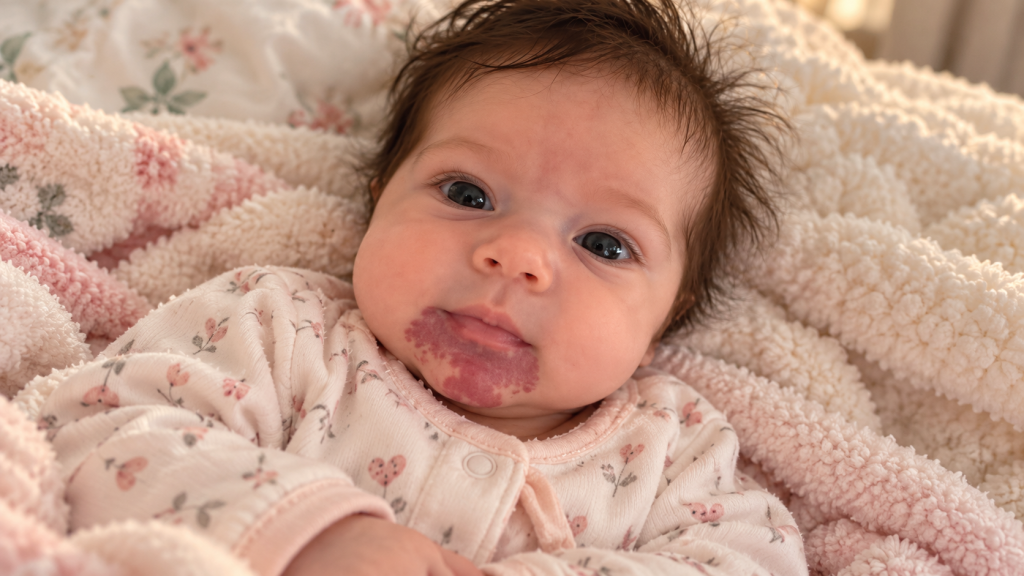
She was sleeping against my chest, her tiny mouth moving as though she were dreaming of milk.
Her cheeks were pink.
Her fingers curled around the edge of her blanket.
She had no idea that the adults who should have been celebrating her existence were arguing over the circumstances of her conception.
And suddenly, anger cut through my shock.
“Look at her,” I told Caleb.
He lifted his eyes.
“Really look.”
His lips trembled.
“Anna—”
“She’s four days old. She doesn’t know anything about Lily, your mother’s secrets, or a fertility clinic’s records.”
I swallowed hard.
“She only knows whether somebody holds her when she cries.”
Caleb began sobbing.
“I know what I did.”
“No,” I whispered. “I don’t think you do.”
My mother helped me into a chair.
I was still recovering from childbirth. Every movement reminded me that my body had just done something enormous.
Caleb had thrown me out when I could barely walk comfortably.
He had left our daughter without so much as touching her goodbye.
And now he expected me to listen because he’d finally discovered something frightening.
I looked at the folder.
“Why did Dr. Shaw write to me instead of calling?”
Caleb rubbed his face.
“She tried to reach you through the contact details the clinic had on file.”
I frowned.
“What contact details?”
He hesitated.
“Mom’s number was listed as the secondary contact.”
A cold feeling spread through my chest.
Margaret looked away.
My mother noticed.
“Why would the clinic contact you about Anna’s confidential treatment?” she asked.
Margaret lifted her chin.
“I helped organize the appointments. I paid for part of the treatment.”
“That doesn’t make you her doctor,” my mother replied.
I looked back at Caleb.
“Did Dr. Shaw give you permission to read my records?”
He shook his head.
“She told me she couldn’t disclose everything without your authorization. She gave me the sealed letter and said you needed to contact her directly.”
I stared at him.
“And you opened it?”
“No. Mom recognized her handwriting on the envelope. She said we should bring it.”
For a moment, Margaret’s expression changed.
It was brief.
But I saw it.
Fear.
Not confusion.
Not concern.
Fear.
I held up my hand.
“Both of you need to leave.”
Caleb’s face collapsed.
“Anna, please let me see Nora.”
“You saw her at the hospital.”
“I panicked.”
“You abandoned us.”
He began crying harder.
“I know.”
“You put my clothes into garbage bags.”
His voice broke.
“Yes.”
I looked directly at him.
“You don’t get to walk back into our lives because a doctor has frightened you.”
He lowered his head.
“Please don’t keep her from me forever.”
I swallowed.
“I haven’t made decisions about forever. I’m deciding what is safe for us today.”
Then I turned to Margaret.
“And you are not to contact me until I’ve spoken to Dr. Shaw and an attorney.”
Margaret’s face hardened.
“You cannot simply cut off my family.”
I looked down at Nora.
“This little girl is not a possession your family gets to claim.”
My mother opened the door wider.
“Goodbye, Margaret.”
After they left, I sat in the living room with Nora against my chest.
My mother, whose name was Diane, brought me water and a plate of toast.
I couldn’t eat.
“Sweetheart,” she said gently, “we need to take care of you too.”
I stared at the letter.
“Mom, what if Nora isn’t Caleb’s?”
Diane looked at me.
“Then we’ll find out what that means.”
“What if someone deliberately used another man’s sperm?”
Her expression tightened.
“Then somebody has done something terribly wrong.”
I began crying.
“I wanted this baby so much.”
Diane sat beside me.
“And you have her.”
I looked down at Nora.
“Doesn’t any of this frighten you?”
“Of course it does.”
She touched my shoulder.
“But nothing about a laboratory record changes who this child is.”
I dialed Dr. Shaw’s office.
A receptionist transferred me to a private line.
A few moments later, I heard the familiar voice that had guided me through years of disappointment.
“Anna?”
“Dr. Shaw?”
Her voice softened.
“I’m so sorry.”
My eyes filled.
“Tell me what happened.”
There was a long pause.
“First, are you somewhere safe and private?”
“Yes.”
“And is Nora well?”
I looked at my daughter.
“She was healthy at discharge.”
“I’m glad.”
I swallowed.
“Please don’t make me wait.”
Dr. Shaw took a breath.
“Your embryo was created using a sperm sample whose identification trail does not match the consent and treatment summary you were given.”
I stared at the wall.
“Whose sample was it?”
“The records currently identify a donor specimen. But because we discovered alterations in the laboratory documentation, I’m not willing to tell you a name is certain until an independent investigation confirms the source.”
My hand began shaking.
“You’re saying my husband might not be her biological father.”
“Yes.”
The room seemed to go quiet.
“Did Caleb know?”
“I don’t have evidence that he consented to donor sperm.”
“And me?”
“Your signed consent forms specified Caleb’s sperm.”
I covered my mouth.
Dr. Shaw’s voice broke.
“Anna, that is why I contacted you. You had a right to know.”
I looked at Nora.
Our miracle.
Our long-awaited daughter.
Then I asked the question that frightened me most.
“Is there something medically wrong with her?”
“We have no reason from these records alone to conclude that Nora is ill,” Dr. Shaw said. “But given Lily’s history and the uncertainty about the sample, I’d recommend a pediatric evaluation and genetic counseling so you can make informed decisions.”
I closed my eyes.
“And Caleb?”
“He should also speak with a specialist about the hereditary condition identified in Lily.”
I nodded, though she couldn’t see me.
Then asked:
“Doctor, why are you only discovering this now?”
Dr. Shaw was quiet.
When she finally answered, her voice sounded different.
“Because an internal audit uncovered access to your laboratory records by someone who had no legitimate reason to change them.”
My stomach tightened.
“Who?”
She hesitated.
“The investigation is still underway. I don’t want to accuse anyone without complete evidence.”
I looked toward the front door Margaret had just walked through.
“Was my mother-in-law involved?”
Dr. Shaw said nothing for several seconds.
Then whispered:
“Anna, please save every message Margaret sent you during your fertility treatment.”
I ended the call and sat motionless.
Then I opened my phone.
Six years of messages.
Appointment reminders.
Encouragement.
Photographs of baby clothes.
Margaret had been involved in everything.
She’d picked me up after procedures when Caleb was working.
She’d brought soup when the hormones made me sick.
She’d held my hand after the third failed transfer.
I’d once told my mother I didn’t know how I would have survived without her.
Now I was staring at her name on my screen, wondering how much of that kindness had concealed something else.
And then I remembered a message she’d sent during our successful treatment cycle.
Don’t worry about the medical details, sweetheart. I’ve made sure the right arrangements are in place.
At the time, I’d thought she meant the appointments.
Now I wasn’t so sure.
I took screenshots of the message before I did anything else.
Then I scrolled backward.
At first, there was nothing alarming.
Margaret reminding me to drink water.
Margaret asking how an appointment went.
Margaret sending heart emojis after every transfer.
But the deeper I went, the more I noticed something I’d overlooked.
She frequently asked which medication I was taking and whether Caleb had attended an appointment.
She requested photographs of paperwork.
She offered to deliver sealed laboratory forms because, she said, it would save us another drive.
And shortly before the embryo that became Nora was created, she’d sent me a message.
Caleb doesn’t need another disappointment. Let me handle the arrangements with the clinic.
I stared at it.
At the time, I’d been exhausted from fertility medication and terrified another cycle would fail.
Margaret had told me to rest.
I’d thanked her.
Now I wanted to know exactly what she had handled.
The following morning, Diane drove Nora and me to my obstetrician’s office.
I hadn’t slept much.
Nora had been awake feeding every few hours, and between those precious, ordinary newborn needs, my mind kept returning to Dr. Shaw’s words.
The identification trail does not match.
My obstetrician, Dr. Helen Brooks, examined me and listened while I explained what had happened.
She didn’t interrupt when I started crying.
When I finished, she said, “Anna, recovering from childbirth is demanding even under ideal circumstances. I want you to have support for the medical recovery and the emotional strain.”
I nodded.
She asked about my sleep, eating, pain, and mood.
She explained which physical symptoms would require urgent care and offered additional postpartum mental health support.
For the first time since leaving the hospital, someone asked questions about me without making Nora’s genetics the center of the conversation.
I hadn’t realized how badly I needed that.
Dr. Brooks arranged a pediatric appointment and helped us obtain a referral to a genetics service.
She also said something I wrote down afterward.
“Even if the clinic used a donor specimen without your consent, Nora is not the mistake. The possible misconduct lies in what was done to the adults’ informed consent and to the medical records.”
I looked at my sleeping daughter.
Nora’s little mouth twitched.
A tiny bubble formed on her lower lip.
I almost laughed.
Nothing about her looked like a scandal.
She was a baby.
And she deserved a childhood that wasn’t defined by what someone had done in a laboratory.
That afternoon, I called an attorney recommended by Dr. Brooks.
Her name was Rebecca Lane.
She had experience with medical consent disputes and reproductive negligence.
I explained the letter, the possible specimen substitution, and the altered records.
Rebecca listened carefully.
Then asked whether I had signed consent for donor sperm.
“No,” I answered. “Caleb and I were told we were using his sperm.”
“Do you have copies?”
“Yes. I kept everything in a folder.”
“Good. Don’t alter any of it. We’ll request the complete clinic records and preservation of the original electronic audit logs through the appropriate process.”
I looked toward Nora’s bassinet.
“Can someone take her away if Caleb isn’t her biological father?”
Rebecca answered carefully.
“A genetic result does not automatically decide parentage. There are legal presumptions and rules concerning children born during marriage, assisted reproduction, consent, and the child’s interests. We need the documents and the law of your state before anyone can give you a definitive answer.”
I exhaled shakily.
“I just want to protect her.”
“I understand.”
Then she added, “And Anna, you have legal rights of your own. A clinic cannot simply substitute reproductive material and assume nobody will question it.”
For the next several days, Caleb called constantly.
I didn’t answer most of the calls.
I had neither the strength nor the desire to listen to him cry while I was learning to nurse our daughter, recover physically, and arrange medical appointments.
But one afternoon, he left a voicemail that was different.
He wasn’t begging.
He wasn’t asking to come inside.
His voice was quiet.
“Anna, I met with a counselor this morning. I also made an appointment for genetic testing. I should have done both years ago.”
He paused.
“I know saying I’m sorry doesn’t undo what I did. I just wanted you to know I’m finally trying to understand it.”
I listened twice.
Then set the phone down.
For the first time, I wondered whether Caleb’s cruelty had come from a secret he’d never learned how to survive.
It didn’t excuse him.
But I wanted to understand it.
Two days later, I agreed to meet him at Rebecca’s office.
Diane came with me and waited nearby with Nora.
Caleb arrived looking exhausted.
His eyes were swollen.
He’d shaved, but there was a small cut beneath his jaw, as though his hands had been shaking.
When he saw me, he stood.
“Anna.”
I sat down.
“Tell me about Lily.”
He swallowed.
For a long moment, he stared at his hands.
Then he began.
He’d been twenty-three when his first girlfriend, Rachel Morgan, became pregnant.
They hadn’t planned to have a baby.
Their relationship was unstable.
But when Lily was born, Caleb said he’d felt something inside him change.
“I loved her the moment I saw her,” he whispered.
I looked down.
“Then what happened?”
He began crying.
“Everything was fine for a while. She was healthy. She smiled. She made these little noises when she was sleepy.”
His voice broke.
“Then one morning, Rachel found her unresponsive.”
I pressed a hand against my mouth.
Caleb continued.
The emergency team had tried to save Lily.
Doctors investigated the cause of her death.
At first, the explanations were uncertain.
Years later, after further review and advances in genetic testing, specialists identified a variant associated with an inherited heart-rhythm disorder.
Caleb had never gone through comprehensive family testing.
Margaret had insisted Rachel’s family history was responsible.
“Why didn’t you tell me?” I whispered.
Caleb stared at me.
“Because I was ashamed.”
“Of having a daughter?”
“Of losing her.”
He began sobbing.
“Mom kept saying Rachel had failed to notice something. I knew that wasn’t fair, but I couldn’t bear to talk about any of it.”
I swallowed.
“You let me believe you’d never been a father.”
“Yes.”
“We spent six years trying for a baby. Six years, Caleb. And you never once told me another child had died.”
He nodded miserably.
“I know.”
I studied him.
“Were you afraid our baby might inherit the same condition?”
“Yes.”
“Then why did you never tell our fertility specialist?”
He covered his face.
“Mom told me not to. She said the condition came from Rachel’s side and that bringing it up would only frighten you.”
I stared.
“And you believed her?”
“I wanted to.”
Those words hurt more than an excuse.
Because they showed how willing he’d been to let someone else carry the consequences of his silence.
I took a breath.
“Why did Nora frighten you?”
Caleb closed his eyes.
“When I bent over her in the hospital, she made a little expression. Her forehead wrinkled. She turned her head toward my voice.”
His shoulders trembled.
“Lily used to do that.”
I watched him.
“For a second, I wasn’t seeing Nora. I was remembering holding Lily before the ambulance came.”
He began crying.
“I felt terrified that if I loved Nora, I’d lose her too.”
I swallowed.
“So you rejected her first.”
He lowered his head.
“Yes.”
“And Margaret?”
He looked away.
“She told me I was right to be worried. She said another daughter might mean another tragedy.”
I stared.
“Another daughter?”
Caleb nodded miserably.
“Mom convinced herself it was a sign.”
I felt sick.
A perfectly healthy newborn had been treated like a curse because of a resemblance and an unaddressed trauma.
I leaned forward.
“Caleb, grief doesn’t make your behavior harmless.”
“I know.”
“You put us outside your home when I could barely walk.”
Tears streamed down his face.
“I know.”
“You didn’t ask whether Nora had diapers, whether I could manage the stairs at Mom’s house, or whether I had enough support to recover.”
He sobbed.
“I don’t have an excuse.”
I stared at him.
“Then stop trying to make your fear the most important thing in the room.”
He lowered his head.
For the first time, I saw him listen without defending himself.
When the meeting ended, Caleb asked whether he could see Nora.
I hesitated.
Then brought Diane into the room.
She placed the baby in my arms.
Caleb stood several feet away.
He looked at Nora as though he were seeing her for the first time.
“She’s beautiful,” he whispered.
I didn’t move.
He began crying.
“Can I hold her?”
I looked at him carefully.
“Not today.”
His face fell.
But he nodded.
“Okay.”
I swallowed.
“I need to know you’re capable of being here when you’re frightened, not just when it’s easy.”
He wiped his eyes.
“I understand.”
As I carried Nora toward the door, he whispered something so softly I nearly missed it.
“I’m sorry, little girl.”
I kept walking.
Because apologies mattered.
But our daughter needed more than apologies.
She needed someone who would stay.
That evening, after Nora finally fell asleep, I opened the folder Caleb had left with Rebecca.
Inside was Lily’s photograph.
I hadn’t been ready to look at it during our meeting.
Now I sat beside the living room lamp and carefully removed it from its sleeve.
She was beautiful.
A little girl with dark hair, enormous brown eyes, and a dimple near her chin.
She wore a yellow dress covered in tiny flowers.
I looked at Nora, sleeping in her bassinet.
Then at Lily.
Caleb was right about the resemblance.
There was something familiar about the way both babies held their mouths.
But I also understood how little resemblance proved.
Babies make the same expressions.
They wrinkle their foreheads.
They turn toward familiar voices.
Grief can make an ordinary likeness feel like a message from the past.
Still, seeing Lily made me cry.
Because suddenly Caleb’s first daughter was no longer an invisible tragedy.
She was a child.
A child who should have grown up.
At the bottom of the folder was Rachel Morgan’s name.
I stared at it.
The woman who had carried Lily.
The woman who’d found her.
The woman Margaret had apparently blamed for years.
I wondered what it felt like to lose a child and then be told you were responsible.
My stomach tightened.
Then I thought about Nora.
If something happened to her, I wasn’t sure I’d survive.
And if someone told me it was my fault—
I couldn’t finish the thought.
The next morning, I called Rebecca.
“I want to speak with Rachel.”
She paused.
“Have you discussed this with Caleb?”
“He told me her name. I don’t want to interfere with her privacy. But she might know something important about Lily’s medical history.”
Rebecca agreed to have a neutral message forwarded through an appropriate contact, making clear that Rachel had no obligation to respond.
I waited three days.
Then a message arrived.
Anna, this is Rachel. Caleb told me you’ve had a daughter. I’m sorry things have been so difficult. If you’d like to talk, I’m willing.
I sat staring at the screen.
Then typed:
Thank you. I would.
We met at a small café.
Rachel arrived wearing a navy sweater and carrying a canvas handbag.
She was a little older than me.
Her hair was pulled into a loose braid.
She looked tired, though not in the way someone looks after a poor night’s sleep.
There was an old sadness in her eyes.
When she sat down, she smiled gently.
“Anna?”
I nodded.
“Rachel.”
For a moment, neither of us knew what to say.
Then she glanced at the photograph of Nora on my phone.
“She’s lovely.”
My throat tightened.
“Thank you.”
Rachel smiled sadly.
“Caleb told me her name.”
“Nora.”
“It’s beautiful.”
I looked at her.
“I’m so sorry about Lily.”
Her expression softened.
“Thank you.”
We spoke about the medical records first.
Rachel explained that Lily’s death had initially been classified as unexplained after the usual investigations.
Years later, a specialist had contacted the family about additional genetic testing and the possibility of a cardiac channel disorder.
A previously stored sample had been examined with appropriate permission.
The findings identified a pathogenic variant associated with long QT syndrome.
Rachel had undergone testing.
She did not carry that particular variant.
I stared at her.
“Did Caleb get tested?”
Rachel looked away.
“He was asked to.”
“And?”
“He never came.”
My chest tightened.
“Margaret told him the condition came from your family.”
Rachel’s eyes filled.
“I know.”
I looked at her.
“How could she say that when your test was negative?”
Rachel took a shaky breath.
“Because she didn’t want the answer to point toward her son.”
Rachel reached into her bag.
She removed a copy of a letter from the pediatric genetics service.
It explained that Lily’s variant might have arisen spontaneously or been inherited from her biological father.
Caleb’s testing had been recommended.
The letter didn’t accuse anyone.
It didn’t predict that another baby would die.
It simply identified an important medical question that deserved proper evaluation.
Rachel touched the page.
“I sent Caleb a copy. I wanted him to know.”
I swallowed.
“What happened?”
“He called me crying. Then Margaret called and told me to stop tormenting him.”
Rachel’s voice trembled.
“She said I’d already cost him one child and had no right to frighten him about another.”
I covered my mouth.
For a moment, we sat silently.
Then I whispered:
“I believed Margaret was the kindest mother-in-law in the world.”
Rachel gave a sad smile.
“So did I, once.”
I looked at her.
She continued.
“When Lily was born, Margaret brought meals. Bought blankets. Held her for hours.”
Her eyes filled.
“Then Lily died, and suddenly Margaret needed someone to blame.”
I stared down at the coffee I hadn’t touched.
Rachel continued.
“I was that person.”
“Why didn’t you fight back?” I whispered.
Rachel looked at me gently.
“I did.”
I swallowed.
She continued.
“But after a while, I realized no amount of explaining would make Margaret accept that she couldn’t control what happened to Lily.”
A tear slid down her cheek.
“So I stopped arguing and tried to survive.”
I looked at her.
“Do you hate Caleb?”
Rachel considered the question.
“I hated how he disappeared.”
My throat tightened.
“He let his mother speak for him when he should have stood beside me.”
She looked toward the window.
“But I don’t spend much time hating him anymore. I’ve got a life to live.”
I nodded slowly.
Then asked:
“Did you ever have another child?”
Rachel smiled faintly.
“No.”
There was a pause.
Then she added:
“But I remarried. My husband is kind. We foster older children. Our house is noisy in ways I never expected.”
My eyes filled.
She reached across the table.
“Anna, listen to me. Lily died from a serious medical condition. But she wasn’t a warning that daughters should be feared.”
I began crying.
Rachel squeezed my hand.
“And Nora isn’t responsible for making Caleb feel safe.”
Before we left, Rachel handed me one final photograph.
It showed Lily sleeping in Caleb’s arms.
He looked impossibly young.
His face was full of wonder.
“This is who he used to be with her,” Rachel whispered.
I stared.
Rachel continued.
“I don’t know whether Caleb can become a good father now. That’s something he’ll have to prove.”
She smiled sadly.
“But don’t let Margaret convince you he was born incapable of loving a daughter.”
That afternoon, Dr. Shaw called with permission to discuss additional findings from the clinic’s investigation.
I put her on speakerphone while Rebecca took notes.
The embryo transfer records had been compared with laboratory inventory records, witness logs, consent documentation, and electronic access histories.
One important entry identified a donor sperm specimen under code D-417.
It had been used in the fertilization procedure that produced the embryo transferred to me.
But the consent form in my patient record identified Caleb as the intended sperm provider.
I stared at the wall.
“So the clinic used donor sperm without telling us?”
“The records now strongly indicate that,” Dr. Shaw answered.
Rebecca asked whether the clinic had established which staff members made the substitution.
Dr. Shaw paused.
“The internal evidence identifies unauthorized changes to the specimen assignment and consent workflow. An external investigation is underway.”
I swallowed.
“Who changed them?”
Her voice became quieter.
“A senior laboratory manager named Susan Pike had access to the relevant systems.”
I didn’t recognize the name.
Then Dr. Shaw added:
“Anna, we have also found correspondence between Ms. Pike and a third party who was not part of your treatment team.”
I stared.
“Margaret.”
Dr. Shaw didn’t immediately answer.
Then she said:
“The correspondence identifies Margaret as the person requesting changes to your treatment plan.”
I looked down at Nora.
She was sleeping in my mother’s arms.
“Why would Margaret do that?”
Dr. Shaw took a breath.
“I can’t establish her personal motives. But the messages refer repeatedly to eliminating what she called the family’s hereditary risk.”
My stomach twisted.
Margaret had known about Lily.
She’d known about the genetic concerns.
And she’d apparently decided to solve the problem by secretly substituting donor sperm.
But she had never told me.
Never asked my permission.
Never asked whether I was willing to build a family under those circumstances.
She’d taken a decision that belonged to Caleb and me and made it herself.
“Was the donor medically screened?” I asked.
“Yes, according to the existing donor records, but those records are also being independently verified.”
“Can you tell me who he is?”
“The donor program has its own consent and information-release provisions. Your attorney can help you understand what records can be obtained now and what rights Nora may have as she grows older.”
I pressed my hand against my chest.
“Does this mean Caleb isn’t her biological father?”
Dr. Shaw’s voice softened.
“The laboratory evidence points to donor sperm, but a properly arranged genetic parentage test would be needed to establish Caleb’s biological relationship to Nora independently.”
I closed my eyes.
Six years of treatments.
Countless injections.
All those nights we imagined which parent Nora might resemble.
Someone had stolen the truth from us before she was even conceived.
Then Rebecca asked the question I hadn’t thought to ask.
“Dr. Shaw, when did you first become aware of the alteration?”
There was a long pause.
“Five weeks before Anna delivered.”
I went cold.
“Five weeks?”
Dr. Shaw’s voice broke.
“Yes.”
I stared at the phone.
“You knew while I was still pregnant?”
“Suspicious records were identified then. We were investigating whether they reflected a clerical discrepancy or an actual specimen error.”
“Why didn’t you tell me immediately?”
She was quiet.
Then said:
“We should have communicated the concern sooner. The clinic’s response was not adequate, and I’m sorry.”
I sat motionless.
For the second time in a week, I was hearing someone apologize for withholding information because they’d wanted to be certain before frightening me.
And for the second time, their silence had cost me the chance to prepare.
I took a trembling breath.
“Doctor, did Caleb know five weeks ago?”
“No evidence currently indicates that he did.”
I swallowed.
“Did Margaret?”
Dr. Shaw paused.
Then answered:
“The records suggest she knew about the donor substitution before your embryo was transferred.”
I didn’t confront Margaret immediately.
Every part of me wanted to.
I wanted to drive to her house, place the laboratory records on her dining room table, and ask how she could spend six years calling me her daughter while secretly deciding what kind of baby I was allowed to have.
But Rebecca advised me to preserve the evidence and let the independent investigation proceed.
And Diane reminded me of something even more important.
“You have a newborn, Anna. You don’t have to walk into another fight just because Margaret expects you to.”
So I stayed home.
I fed Nora.
I changed her.
I slept when I could.
And I began keeping two folders.
One held the documents concerning the clinic.
The other held photographs of my daughter.
I needed that separation.
Because Nora’s life was not a legal case, even though her conception had become one.
The following week, Caleb attended his appointment with a specialist in inherited heart-rhythm conditions.
He called afterward.
I hesitated before answering.
“Anna?”
“Yes.”
His voice was shaky.
“They’re doing targeted genetic testing and checking my heart.”
I sat down.
“Did you tell them about Lily?”
“Everything.”
“And Margaret?”
He swallowed.
“I told them what she said.”
I looked at Nora.
“Good.”
There was a long silence.
Then Caleb whispered:
“Dr. Shaw told me the clinic probably used donor sperm.”
I closed my eyes.
“Yes.”
He took a trembling breath.
“Anna, I swear I didn’t know.”
“I believe you didn’t know before the investigation.”
He began crying.
“But that doesn’t change what happened after Nora was born,” I continued.
“I know.”
He was quiet for a moment.
Then said:
“Mom called me.”
My stomach tightened.
“What did she want?”
“She said the clinic was trying to blame her for its mistakes.”
I looked away.
“And?”
“She said I shouldn’t get emotionally attached to Nora until we knew whether she was mine.”
My chest went cold.
“What did you say?”
Caleb’s voice broke.
“I told her she’s my daughter.”
I closed my eyes.
“She said that wasn’t necessarily true.”
“And?”
He swallowed.
“I told her being frightened doesn’t give me permission to abandon a child.”
For a moment, I couldn’t speak.
Then I whispered:
“That’s what I needed you to understand at the hospital.”
He began sobbing.
“I know.”
A few days later, Caleb asked for a supervised visit with Nora.
I discussed the request with Rebecca, and we agreed on a temporary arrangement that preserved everyone’s legal position while prioritizing Nora’s care and stability.
He came to my parents’ house.
Diane stayed nearby.
Caleb washed his hands, sat on the couch, and waited while I placed Nora in his arms.
For several seconds, he simply stared at her.
Then his face crumpled.
“Hello, sweetheart.”
Nora blinked.
He gave a shaky laugh.
“I’m your dad.”
I felt tears rise.
He looked toward me.
“I’m sorry, Anna.”
I shook my head gently.
“Talk to her.”
He looked back at Nora.
His voice trembled.
“I’m sorry I wasn’t brave when you needed me.”
A tear fell onto his shirt.
“I should’ve held you the day you were born.”
He swallowed.
“I should’ve told you you were beautiful.”
Nora yawned.
Caleb laughed through tears.
“I know. I’m talking too much.”
I watched them.
Part of me wanted to rush into his arms.
Another part remembered my belongings in garbage bags.
I didn’t know whether our marriage could survive.
But I knew this moment mattered.
For the first time, Caleb was holding Nora without waiting for reassurance that loving her would be safe.
Two weeks later, the independent genetic parentage testing was completed with the necessary consents.
I sat in Rebecca’s office when she explained the results.
They did not support Caleb being Nora’s biological father.
The findings were consistent with the clinic’s records showing that donor sperm had been used.
I had thought I was prepared.
I wasn’t.
For years, Caleb and I had imagined a child who might inherit his dimples or my curls.
Now I was being told that part of the story we’d imagined had been taken from us without our permission.
I began crying.
Rebecca waited until I could breathe again.
Then said:
“Anna, this doesn’t erase Nora’s relationship with Caleb. Nor does it resolve the legal parentage questions by itself.”
I nodded.
“I know.”
But knowing something intellectually and feeling it in your heart were two different things.
I called Caleb that evening.
He answered immediately.
“Anna?”
“The results are back.”
He went quiet.
I told him.
For a long moment, all I heard was his breathing.
Then he asked:
“Is Nora okay?”
I closed my eyes.
“Yes. She’s eating and sleeping like a newborn. We have her specialist appointment scheduled.”
“Good.”
He swallowed.
“Does this mean I can’t be her dad?”
My throat tightened.
“Caleb, that’s not something a genetic test alone decides.”
He began crying.
“I want to be.”
I looked down.
“Then you have to understand that wanting isn’t enough.”
“I know.”
“She needs consistency. Care. Someone who doesn’t disappear because he’s frightened.”
His voice broke.
“I want to become that person.”
I closed my eyes.
For the first time, I believed he might mean it.
But belief still wasn’t trust.
The following month, Caleb received his genetic test results.
He called me after meeting with the specialist.
“Anna, I have the same variant they found in Lily.”
I sat motionless.
“What?”
His voice trembled.
“It’s associated with long QT syndrome. The doctor says it can affect electrical signaling in the heart. Some people have symptoms, and some don’t.”
I pressed a hand against my mouth.
“Are you all right?”
“I’ve had an ECG and other assessments. They’re discussing what monitoring and treatment I need.”
He paused.
“They said genetic results aren’t a prediction of exactly what will happen. But I should’ve been evaluated years ago.”
My eyes filled.
“Rachel was right.”
“Yes.”
His voice broke.
“Mom blamed her. And all that time, it may have come from me.”
The specialist recommended that the broader family history be reviewed and that relatives be informed about the option of testing.
Caleb told Margaret.
Her response was immediate.
According to him, she insisted the laboratory had made another mistake.
She said Lily’s condition had nothing to do with the Whitmore family.
Then Caleb found something in an old box of his father’s papers.
A letter addressed to Margaret from a cardiology clinic.
Dated more than twenty years earlier.
It referred to a familial long QT syndrome variant identified in relatives on her side of the family.
Margaret had undergone genetic counseling at the time.
The enclosed report indicated she carried that same variant.
I stared at the copy Caleb sent me.
“Your mother knew?”
His voice broke.
“Apparently.”
“For twenty years?”
“Yes.”
I couldn’t breathe.
“She blamed Rachel.”
“I know.”
“She convinced you not to get tested.”
“Yes.”
“And she secretly arranged donor sperm because she was afraid your child would inherit the condition?”
Caleb began crying.
“That seems to be what happened.”
I looked at Nora.
My perfect, sleeping girl.
Margaret had known the family might carry an inherited condition.
Instead of telling the people affected, she had hidden it.
Then she’d arranged a reproductive decision without our consent.
And when Nora was born, she’d treated her as though she were a disappointment.
I whispered:
“Caleb, your mother wasn’t trying to protect us.”
He was quiet.
Then he answered:
“She was trying to control what everybody knew.”
I closed my eyes.
For the first time, I heard him say it without defending her.
The next day, Margaret came to my parents’ house without an invitation.
Diane answered the door.
I heard Margaret’s voice from the hallway.
“I’m here to see my granddaughter.”
My stomach tightened.
Diane replied calmly.
“This isn’t a good time.”
Margaret pushed past the conversation.
“Anna needs to stop being dramatic.”
I stepped into the hallway.
Nora was sleeping upstairs.
“Margaret, leave.”
She stared at me.
“We need to discuss this foolish accusation against me.”
I held up the copy of her genetic report.
Her face changed.
I watched the blood drain from her cheeks.
Then I asked quietly:
“How long were you planning to let Rachel believe Lily’s death was her fault?”
Margaret stood in my parents’ hallway staring at the paper.
For several seconds, she didn’t move.
Then she reached for it.
“Where did you get that?”
I held it away from her.
“Caleb found it among his father’s records.”
Her expression hardened.
“Those are private medical documents.”
“So were mine.”
She flinched.
I stepped closer.
“Do you remember how you told me to trust the fertility clinic? How you said you were arranging everything so I could concentrate on getting pregnant?”
Her mouth tightened.
“Anna, you don’t understand.”
“Then help me understand.”
My voice shook.
“Help me understand why you knew your family carried a genetic condition and blamed Rachel for Lily’s death.”
Margaret looked toward Diane.
“This is not a conversation for an audience.”
My mother crossed her arms.
“You came into my house without permission. You don’t get to set the rules.”
Margaret looked back at me.
“I lost a granddaughter.”
I swallowed.
“Yes.”
Her eyes filled.
“You have no idea what that was like.”
My anger sharpened.
“Rachel does.”
Margaret recoiled.
I continued.
“She lost her daughter. Then she spent years carrying your accusation.”
Margaret looked away.
“I never meant to hurt her.”
“You told Caleb she was responsible.”
Her face twisted.
“I was frightened.”
“And that gave you permission to lie?”
She began crying.
I stared at her.
For six years, I had watched Margaret cry with me after failed fertility treatments.
I’d believed every tear.
Now I wondered how often those tears had been accompanied by information she chose not to share.
“Did you arrange for donor sperm to be used?” I asked.
Margaret wiped her cheeks.
“Anna—”
“Answer me.”
She looked at the floor.
“I wanted to prevent another tragedy.”
My breath caught.
“Did you arrange it?”
A long silence followed.
Finally, she whispered:
“Yes.”
I felt as though the air had disappeared from the hallway.
I had suspected it.
I’d seen the correspondence.
The altered records.
The evidence from the clinic.
But hearing Margaret admit it was different.
“You did that to me?”
She covered her face.
“I thought you would thank me one day.”
I stared at her.
“Thank you?”
“You were desperate for a baby. Caleb was terrified. I knew his family history.”
My voice rose.
“Then you should have told us.”
Margaret shook her head.
“He would have refused treatment.”
“That would have been his decision.”
“And you might have left him.”
“That would have been mine.”
She stared at me.
I stepped closer.
“You took both decisions away from us.”
Margaret began crying harder.
“I paid Susan to make sure the embryo was created without the family risk.”
I felt sick.
“Paid her?”
She nodded.
“Susan Pike. She said she could arrange a screened donor sample and correct the laboratory assignment.”
I stared.
“Correct it?”
Margaret lowered her eyes.
“I didn’t understand all the technical details.”
“But you understood we hadn’t consented.”
She said nothing.
“You understood the records would have to lie.”
Her shoulders shook.
“Anna, I was trying to keep you from losing a child.”
I swallowed.
“Then why did you call Nora a disappointment?”
Margaret looked up.
Her face crumpled.
“Because when Caleb reacted to her, I panicked. I thought everything I’d done had failed.”
I stared.
“Because she looked like Lily?”
“Yes.”
“That’s your explanation?”
Her voice broke.
“I couldn’t bear the thought of watching another baby die.”
I shook my head.
“So you helped throw a healthy newborn out of her home.”
Margaret reached toward me.
I stepped away.
“No.”
“Anna, please.”
“You had years to tell us the truth.”
She began sobbing.
“I know.”
“You could have told Caleb about his family history before Lily was born.”
Her face collapsed.
“You could have encouraged him to get tested after she died.”
She covered her mouth.
“You could have told me the truth before I ever began fertility treatment.”
Tears streamed down my cheeks.
“But instead, you decided our lives belonged to you.”
Margaret sank onto a chair near the doorway.
For the first time, she looked old.
Not powerful.
Not imposing.
Just a woman surrounded by the consequences of decisions she’d convinced herself were acts of love.
But I didn’t feel ready to comfort her.
I had Nora to protect.
And the woman in front of me had repeatedly chosen control over honesty.
“Margaret,” I said, “you’re going to cooperate with the investigation.”
She nodded weakly.
“And you are not to contact me or come here without permission.”
Her face crumpled.
“Don’t take Nora away from me.”
I looked at her.
“You were willing to reject her the moment you believed she wasn’t the baby you wanted.”
She began crying harder.
I swallowed.
“You don’t get to demand access now just because you’re afraid of losing something.”
Diane opened the front door.
Margaret slowly stood.
Before leaving, she turned toward me.
“Will you ever forgive me?”
I looked down.
“I don’t know.”
She began to cry again.
Then I added:
“But you don’t need my forgiveness to start telling the truth.”
The clinic investigation lasted many months.
An independent review identified serious failures in its consent verification, specimen controls, and audit procedures.
Evidence showed that Susan Pike had deliberately changed the specimen assignment and falsified parts of the clinical record.
Margaret’s payments and communications formed part of the investigation.
Dr. Shaw cooperated and acknowledged that the clinic had failed to inform us promptly when suspicious records were discovered.
The relevant professional and regulatory authorities reviewed the staff conduct and the institution’s failures.
There were civil proceedings as well.
Rebecca explained every step carefully.
I wanted accountability.
I wanted accurate information about Nora’s conception.
I wanted the clinic to preserve records so that when my daughter grew older, she wouldn’t have to spend years discovering her own history through fragments and secrets.
The clinic eventually reached a settlement with us resolving our civil claims without requiring us to pretend what had happened was an ordinary clerical error.
The settlement included financial compensation and provisions for access to verified medical and donor-origin information as permitted by law.
Separate disciplinary and investigative processes continued according to their own rules.
No amount of money could give back the informed choice we’d lost.
But at least the truth was no longer being hidden inside altered charts.
With the guidance of the genetic counselor, we reviewed the medical information available for Nora.
Because the laboratory records had initially been unreliable, the clinicians carefully confirmed what could be established about the donor source and whether any additional testing was appropriate.
Nora’s pediatric assessments remained reassuring.
The family’s known long QT syndrome variant was not identified in her targeted testing.
I cried when I heard the result.
Not because I believed a child with that condition would be worth less.
Lily had been beautiful and deeply loved.
I cried because, after weeks of frightening uncertainty, we finally had reliable information that could guide Nora’s care.
Her pediatrician reminded me that no genetic test guarantees a child will never become ill.
But she was healthy, growing, and receiving appropriate care.
That was enough for today.
Caleb continued seeing the cardiac specialist.
He received individualized advice about monitoring, medications where appropriate, and precautions related to his specific condition.
He also began therapy focused on Lily’s death and the grief he had avoided for years.
At first, he wanted to tell me everything after every appointment.
I listened sometimes.
Other times, I told him gently that I couldn’t carry his recovery for him.
He needed to do that work himself.
For Lily.
For Nora.
And for the person he might still become.
Several months after Nora’s birth, Caleb asked to speak with Rachel.
I didn’t arrange the meeting.
That belonged to them.
But afterward, Rachel sent me a message.
He apologized. For the first time, he didn’t blame anyone or hide behind Margaret.
I read the words twice.
Then asked whether the conversation had helped.
Rachel replied:
It doesn’t change what happened to Lily. But it matters that he finally said her name without shame.
A week later, Caleb brought a little framed photograph to one of his visits with Nora.
It was the picture of Lily in her yellow dress.
He looked at me nervously.
“I was thinking that someday, when Nora is older, she could know about Lily.”
My throat tightened.
“Her sister.”
Caleb nodded.
“Biologically, maybe not. But Lily was my daughter, and I want to be Nora’s father.”
I looked at the photograph.
Then at Caleb.
“There are different kinds of family,” I said.
He nodded.
“And none of them should have to be hidden.”
He began helping with practical things.
Not dramatic gestures.
Not expensive gifts.
He learned how Nora liked to be held when she was tired.
He showed up for scheduled visits.
He contributed financially under the temporary arrangements we’d established.
He changed diapers without acting as though he deserved applause.
When Nora had a mild fever, he called to ask what the pediatrician advised rather than panicking or disappearing.
And when he felt overwhelmed, he told me instead of allowing fear to become cruelty.
Some days, watching him made me hopeful.
Other days, I remembered what he’d done at the hospital and felt the old hurt return.
Both feelings were real.
One evening, after Nora fell asleep during a visit, Caleb sat across from me at my mother’s kitchen table.
“Anna,” he whispered, “do you think we could ever be married again the way we were before?”
I looked at him for a long time.
Then shook my head.
“No.”
His face crumpled.
I continued.
“Even if we repair our relationship, it can’t be the marriage we had before. That marriage was built around secrets I didn’t know existed.”
He stared at his hands.
“Do you want a divorce?”
I swallowed.
“I think I do.”
He began crying.
I reached for a tissue and placed it beside him.
I didn’t hate him.
I didn’t want him destroyed.
But I was beginning to understand that compassion for someone else’s suffering didn’t obligate me to return to a life where I’d been hurt.
Caleb nodded slowly.
“I understand.”
Then he looked toward Nora’s bassinet.
“Can I still be her dad?”
My eyes filled.
“I want her to have adults who love her and keep their promises.”
He swallowed.
“I want to be one of them.”
I looked at him.
“Then keep showing up.”
Our attorneys addressed the legal parentage questions and worked toward a stable parenting arrangement consistent with the applicable assisted-reproduction laws and Nora’s interests.
The outcome wasn’t decided by a single DNA result.
There were records of our marriage, our original treatment intentions, the clinic’s misconduct, and Caleb’s commitment to assuming parental responsibilities.
Eventually, we reached an arrangement that recognized his legal parental role and provided a gradual, age-appropriate schedule.
I would remain Nora’s primary caregiver while she was very young.
Caleb would continue building his relationship with her through consistent involvement.
And major decisions would be handled according to the final orders, rather than Margaret’s demands.
When the divorce was finalized, I cried.
Not because I believed I’d made the wrong decision.
Because I had loved Caleb.
I’d imagined growing old beside him.
I’d spent six years waiting for the child I thought would complete our family.
And now I was letting go of the marriage while trying to preserve something good for the daughter we’d both wanted.
It was painful.
But it was honest.
And after everything that had happened, honesty had become the one thing I refused to surrender.
The first time I took Nora to the park without feeling that everyone was looking at me, she was nearly six months old.
It was a beautiful spring morning.
The trees were beginning to turn green again, and sunlight fell across the walking paths.
I spread a blanket beneath a maple tree and laid Nora on her back.
She waved her arms at the leaves overhead.
Then she laughed.
Not a little newborn squeak.
A real laugh.
Bright and delighted.
I stared at her.
Then began laughing too.
For a moment, there was nothing else.
No clinic records.
No lawyers.
No secret donor.
No arguments about paternity.
Just my daughter discovering that leaves moved when the wind blew.
I pulled out my phone to record her.
Then stopped.
For the first few months of her life, I’d constantly documented everything.
Photographs for doctors.
Messages for attorneys.
Appointment dates.
Feeding records.
I had become so accustomed to gathering evidence that sometimes I forgot I was allowed to simply enjoy being her mother.
So I put the phone away.
And watched her laugh.
Several weeks later, Rebecca called with another update concerning the donor records.
The independent review had verified the identity and relevant medical information associated with specimen D-417.
The donor had participated in a program whose consent arrangements included provisions for possible identity release to donor-conceived offspring when they reached adulthood.
The available records contained medical history and information about the donor’s background.
They did not give us permission to intrude into his private life or assume that he wanted immediate involvement with Nora.
Rebecca explained that the material could be preserved for my daughter.
“When she’s old enough to understand,” I said.
“Yes.”
I looked toward the living room, where Nora was sleeping.
“And what do I tell her before then?”
Rebecca’s voice softened.
“The truth, in language that fits her age. You don’t need to make it frightening or shameful.”
That afternoon, I began a notebook.
On the first page, I wrote:
FOR NORA — THE STORY OF HOW YOU CAME INTO OUR LIVES.
I included photographs from my pregnancy.
The first ultrasound.
The little yellow socks I’d bought before we knew whether the treatment had worked.
The photograph of Caleb crying when I showed him the positive pregnancy test.
And a picture of Nora on the day she was born.
I didn’t remove Caleb from the story because his sperm hadn’t been used.
He’d been there through years of appointments and loss.
He’d wanted her.
Then he’d failed her terribly.
Now he was working to become someone who could be trusted.
All of those facts belonged to her history.
I added a separate folder containing the verified donor-origin information, relevant medical records, and the documents she might need as an adult.
I didn’t want Nora to discover her conception through a family argument.
I didn’t want her to feel that questions about her biological origins meant betraying Caleb or me.
And I didn’t want her to spend thirty years wondering why the adults who loved her had decided the truth was too dangerous to share.
Margaret wrote to me several times.
At first, her letters were full of explanations.
She described the terror of losing Lily.
Her fear of an inherited condition.
The nights she’d spent imagining another tiny coffin.
I read them, but I didn’t answer.
Then her letters changed.
She stopped explaining why she thought she had to interfere.
Instead, she began acknowledging what she’d actually done.
One letter said:
Anna, I told myself that choosing donor sperm without your knowledge would prevent suffering.
But I was so determined to prevent something I feared that I caused suffering I could have avoided.
I took your right to choose.
I took Caleb’s right to know his own medical history.
And when Nora was born, I treated an innocent child as though she were responsible for my terror.
There is no excuse for that.
I read the letter twice.
Then placed it in the folder with the others.
I wasn’t ready to allow Margaret into Nora’s life.
Her remorse might have been sincere.
But trust required more than a well-written apology.
Margaret would have to continue accepting responsibility, respecting boundaries, and demonstrating that she understood Nora was a person—not a second chance to correct what happened to Lily.
For now, distance was the safest choice.
Caleb continued attending counseling.
His relationship with Nora developed slowly.
At nine months, she began reaching for him when he arrived.
The first time it happened, he froze.
Then looked at me with tears in his eyes.
“She wants me?”
I smiled faintly.
“She recognizes you.”
He began crying.
Nora grew impatient and reached harder.
I laughed.
“Caleb, pick her up before she files a complaint.”
He lifted her carefully.
She grabbed his nose.
He laughed through tears.
For a moment, I saw something of the young man in Lily’s photograph.
A father holding his daughter with wonder instead of fear.
One afternoon, Caleb asked if he could bring Lily’s picture to Nora’s first birthday.
I thought about it.
Then nodded.
“Of course.”
He looked surprised.
“Really?”
I smiled sadly.
“Lily shouldn’t have to disappear for Nora to belong.”
His eyes filled.
He nodded.
“Thank you.”
A month before Nora’s birthday, Rachel sent me a small package.
Inside was a children’s book.
A story about a little star that kept shining even when the people who loved it couldn’t see it.
There was a note.
Anna,
I hope Nora grows up surrounded by love and honesty.
Lily loved being read to. I thought this might be something the girls could share in their own way.
With love, Rachel.
I held the book against my chest.
Then I called her.
When she answered, I began crying.
“Rachel, thank you.”
Her voice softened.
“Did it arrive?”
“Yes.”
There was a pause.
Then I whispered:
“Would it be all right if Nora someday knew about Lily?”
Rachel was quiet.
When she finally answered, her voice trembled.
“I would love that.”
On Nora’s first birthday, we held a small party in my parents’ backyard.
Diane made a strawberry cake.
My father hung paper decorations from the patio.
Caleb brought a little wooden rocking horse he’d spent weeks restoring.
Nora wore a yellow dress.
Not because anyone had told me she looked like Lily.
Because yellow was beautiful on her.
Caleb arrived early to help.
He carried folding chairs.
Set out plates.
Checked the gate so Nora couldn’t crawl toward the driveway.
Small things.
Ordinary things.
The kind of things a father should do without needing praise.
When the guests arrived, he stood beside me holding Nora.
People laughed as she tried to grab the candle.
My mother took photographs.
And when everyone sang happy birthday, Nora stared at us as though we’d all lost our minds.
I laughed so hard I cried.
After the cake, Caleb asked whether we could have a quiet moment.
We stepped beneath the maple tree.
He held Lily’s photograph.
I carried Nora.
He looked at the picture for a long time.
Then whispered:
“Happy birthday, little sister.”
My throat tightened.
Nora reached toward the photograph.
Caleb smiled through tears.
“That’s Lily.”
He swallowed.
“She was my first daughter.”
I looked down at Nora.
“And she’s part of the story of how we learned to take care of you.”
Caleb nodded.
For the first time, he spoke about Lily without apologizing for her existence.
Without turning her death into a warning.
Without treating Nora’s life as a threat.
He simply remembered her.
Later that evening, after the guests had left and Nora was asleep, Caleb helped me carry the remaining decorations inside.
At the doorway, he stopped.
“Anna?”
I turned.
“Yes?”
He looked at me.
“I know we can’t go back.”
My throat tightened.
He continued.
“I used to think if I apologized enough, you might forget what happened at the hospital.”
I said nothing.
He swallowed.
“But you shouldn’t have to forget it.”
I looked down.
He continued.
“I was her father from the moment we chose to have a child together. When I rejected her, I failed at the first responsibility I had.”
His voice broke.
“I won’t pretend that didn’t happen.”
I watched him carefully.
Then whispered:
“Caleb, I don’t want Nora to grow up believing love disappears when people are frightened.”
He nodded.
“Neither do I.”
I took a breath.
“Then help me teach her something different.”
He began crying.
“I will.”
And over time, he did.
Not perfectly.
There were missed details, disagreements, and moments when parenting felt more complicated than either of us had expected.
But Caleb learned to communicate rather than disappear.
He followed the parenting arrangements.
He kept his medical appointments.
He listened when Nora needed him.
And when he made mistakes, he acknowledged them without making someone else responsible.
We didn’t become husband and wife again.
Our marriage ended.
But we found a way to become parents who could speak respectfully about the daughter we both loved.
By Nora’s second birthday, our lives looked nothing like the future I’d imagined during those six years of trying to conceive.
I lived in a little house with a garden.
Nora had her own bedroom, filled with books, stuffed animals, and colorful drawings.
I had returned to work gradually and built routines that allowed me to care for her with support from my family.
Caleb remained involved in her life.
Rachel occasionally sent books and stories about Lily.
And Margaret, after continued accountability and respecting the boundaries we’d established, was no longer demanding anything of us.
She still had much to repair.
I still hadn’t decided what relationship, if any, she would eventually have with Nora.
That decision would not be made out of guilt.
One evening, I sat beside Nora’s bed while she held the little star book Rachel had sent.
“Again,” she demanded.
I smiled.
“We’ve read it twice.”
“Again, Mommy.”
I laughed.
“All right.”
I opened the book.
As I read, Nora rested her head against my arm.
When the story ended, she pointed at the star on the last page.
“Pretty.”
“Yes,” I whispered.
“Very pretty.”
She looked up at me.
“Love you, Mommy.”
I froze.
Then my eyes filled.
“I love you too, sweetheart.”
She smiled.
And in that small, ordinary moment, something inside me finally settled.
For a long time, I’d wondered whether the truth about Nora’s conception would always make me feel that something had been stolen from us.
And something had been stolen.
Our informed choice.
Our trust.
The chance to begin parenthood without deception.
But Nora herself had never been the loss.
She was the child I’d waited six years to hold.
The little girl who laughed at moving leaves.
Who demanded stories twice.
Who loved strawberries and hated having her hair washed.
Who reached for her father when he arrived.
Who called me Mommy.
I thought about the day Caleb stood beside my hospital bed and said Nora wasn’t the baby he wanted.
I remembered Margaret’s disappointed expression.
The garbage bags outside our house.
The nights I cried at my parents’ home, terrified of raising a daughter alone.
Then I looked at the child sleeping beside me.
And I understood something I wished I’d known from the beginning.
A baby’s worth is not determined by whose DNA she carries.
A mother’s love is not measured by how long she waited to conceive.
And a father’s love is not proven by biology, but by whether he chooses to show up and care for his child.
Caleb had been given a second chance to become a father.
Not a second chance to replace Lily.
Not a way to erase what had happened.
A chance to love Nora for exactly who she was.
And I had been given something too.
Not the perfect family I’d once imagined.
Something more difficult.
A family built around truth instead of silence.
Around boundaries instead of guilt.
Around love that didn’t require anyone to pretend painful things hadn’t happened.
I kissed Nora’s forehead.
She stirred slightly.
Then settled back into sleep.
“Goodnight, my beautiful girl,” I whispered.
I reached for the light.
Then stopped and looked at her once more.
For six years, I’d begged the world for a child.
When she finally arrived, the people I trusted most made me feel that our miracle was somehow wrong.
But they were wrong.
Nora had never been the disappointment.
The disappointment was what the adults had done out of fear.
And my greatest victory wasn’t proving whose child she was.
It was making sure she would grow up knowing she was loved, wanted, and never responsible for someone else’s secrets.
I turned off the light.
And for the first time in a very long while, I felt at peace.
THE END STORIES! THANK YOU FOR READING GOOD LUCK !❤️
Related Posts