Skyla stood beside the dining table, her fingers wrapped around a set of keys that no longer belonged to her. They were the keys to the old blue Honda she’d sold three days earlier. She’d kept them until the buyer could collect the car, and I realized she was holding them out of habit, the way someone reaches for something familiar when everything else in life has become uncertain.
“There’s one more thing you don’t know about those five days,” she repeated. Her voice was so quiet that I almost didn’t hear her. I stood motionless. The folder remained open between us. The medical assistance applications, the bus ticket, and the pawnshop receipt lay scattered across my expensive dining table.
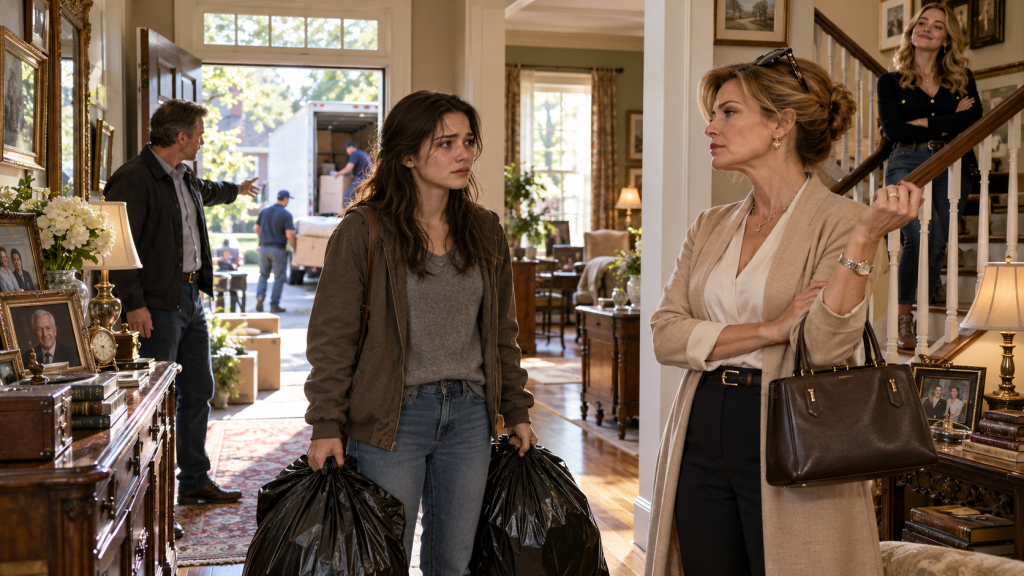
Five days earlier, I’d been pleased with myself. I’d believed I had devised a clever way to uncover whether my girlfriend loved me or my money. Now the woman I’d deliberately frightened was standing in front of me, exhausted, heartbroken, and holding evidence of sacrifices I had never deserved.
“What is it?” I whispered.
Skyla looked at me for a long moment.
Then she reached into her coat pocket and placed a folded piece of paper beside the folder.
It was a bank check.
I glanced down.
The amount made my stomach twist.
$100,000.
The check was made payable to Skyla Morgan.
And the signature belonged to my mother.
I stared at it.
“Where did you get this?”
Skyla gave a sad little laugh.
“Your mother.”
I looked up.
“What?”
“On the second day, when you told me your treatment was impossible to afford, I went to your parents.”
My pulse began pounding.
“I thought maybe they were angry with you, or maybe something had happened with the business. I didn’t understand why people with your family’s resources couldn’t help you get medical care.”
She paused.
“So I went to their house and begged them to help.”
I closed my eyes.
I could picture it.
Skyla standing outside my parents’ enormous house, probably wearing the same inexpensive jacket she wore to class.
My mother answering the door.
My father looking at her over his reading glasses.
And Skyla, who had never once asked my family for a dollar, asking them to save my life.
“What did they say?” I asked.
She looked down at the check.
“Your father told me you were a grown man and that your problems were your responsibility.”
I swallowed.
“Skyla—”
“Your mother asked how much I loved you.”
I felt cold.
“She said that?”
Skyla nodded.
“I told her I loved you enough to do whatever I could to help.”
Her eyes filled.
“Then she said she had a proposal.”
I stared at her.
“She offered me this money if I agreed to leave you permanently.”
The room seemed to tilt.
I gripped the back of a chair.
“She offered you a hundred thousand dollars to break up with me?”
Skyla nodded.
“She said she could arrange the transfer immediately. All I had to do was sign a statement saying our relationship had ended voluntarily and promise not to contact you again.”
My hands began trembling.
“And you took the check?”
“She handed it to me as proof that she was serious. She wanted me to look at the amount before I answered.”
Skyla looked directly at me.
“I told her I didn’t want her money.”
My eyes burned.
“She said everyone has a price.”
I felt sick.
Then Skyla said the words that truly destroyed me.
“And when I told her you might die without treatment, she said, ‘Ethan isn’t dying. He’s finding out what kind of woman you really are.’”
My name is Ethan Caldwell.
I was thirty-three years old when I made the worst decision of my life.
Until that evening, I’d believed money could protect me from most things.
Uncertainty.
Failure.
Embarrassment.
Even heartbreak.
I had grown up watching my father negotiate deals across polished conference tables, and I’d learned early that people often behaved differently when there was something valuable to gain.
What I hadn’t learned was that love wasn’t a transaction.
And that the moment you started treating someone you loved like a suspect, you risked becoming the person who betrayed the relationship.
I stared at Skyla.
“Mom knew?”
She nodded.
“She knew there was no diagnosis.”
“And Dad?”
“Your mother said he knew too.”
I shook my head.
“No.”
Skyla’s expression changed.
“Ethan, please don’t make me prove another thing to you.”
The words struck me harder than any accusation.
I looked at the check again.
My mother’s signature was unmistakable.
I’d seen it on birthday cards, investment documents, and thousands of family papers.
But I’d never seen it beneath an offer designed to purchase somebody’s departure from my life.
“I didn’t ask her to do this,” I whispered.
Skyla nodded.
“I believe you.”
Relief flashed through me.
Then she continued.
“But you told them about your plan, didn’t you?”
I couldn’t answer.
Her face crumpled.
“You told them you were going to pretend you were dying.”
I looked down.
“Yes.”
“Then you gave them a chance to join your little experiment.”
I felt tears gathering.
“Skyla, I never wanted—”
“You never wanted what?”
Her voice rose for the first time.
“For me to be frightened? For me to cry? For me to think I might have to bury you?”
I swallowed.
She gestured toward the folder.
“Or did you just never expect me to take you seriously?”
I opened my mouth.
Nothing came out.
Because that was the truth I’d been avoiding.
I had expected her to disappoint me.
I’d prepared myself for her to ask for money, disappear, or reveal some hidden selfishness.
I hadn’t prepared myself for what would happen if she loved me.
Skyla slowly pulled out a chair and sat down.
She looked so tired.
I’d seen her after long college lectures and double shifts at the diner.
I’d seen her fall asleep over textbooks, still holding a pen.
But I’d never seen her look as exhausted as she did that evening.
“Do you know what I did after your mother told me?” she asked.
I shook my head.
“I walked outside and sat on the curb.”
She stared at the tabletop.
“I sat there for almost an hour.”
My chest tightened.
“I kept thinking there had to be some misunderstanding. I thought maybe she was angry with me, maybe she wanted to scare me, maybe there really was something wrong with you and she was lying to protect the family.”
A tear slipped down her cheek.
“So I kept searching for treatment options.”
I stared at her.
“Even after she told you?”
“Yes.”
“Why?”
She looked up.
“Because if there was even a chance you were really sick, I couldn’t live with myself for walking away.”
The tears I’d been fighting finally fell.
Skyla continued.
“I took the six-hour bus trip. I went to the treatment center. I explained that I was trying to help someone with a serious diagnosis but couldn’t get the medical records from him.”
I remembered the letters from specialists in her folder.
“Did you tell them my name?”
“Not to the doctors reviewing general assistance options. I asked what kind of records and referrals would be needed for someone with the illness you described.”
She took a shaky breath.
“They told me I couldn’t arrange treatment for a person whose diagnosis hadn’t been established. One of the specialists encouraged me to ask you directly for your records.”
I looked down.
“I didn’t have any.”
“I know that now.”
Then her expression softened with a sadness I could barely bear.
“But while I was there, I met someone.”
I looked up.
“A little boy named Oliver.”
Oliver was nine years old.
He had a genuine medical condition that required specialized care.
His mother had traveled for hours to attend an appointment, and although the family’s medical expenses were partly covered, transportation, temporary lodging, and lost work made continuing treatment difficult.
Skyla met them in the waiting area while asking the patient-support office about assistance programs.
Oliver had been sitting beside his mother, drawing spaceships on a sheet of paper.
His mother, Marisol, looked exhausted.
Skyla recognized the expression because she’d seen it in her own mirror.
They started talking.
Then Marisol began crying.
She explained that she wasn’t sure how she’d afford the next trip.
Skyla listened.
She told Marisol about the programs she’d discovered.
She showed her how to contact the hospital’s patient navigator.
And she helped her fill out an application.
Then Skyla did something I would remember for the rest of my life.
She used part of the money she’d received from selling her car to help cover their immediate transportation and lodging expenses.
I stared at her.
“You gave them money?”
She nodded.
“Not everything. I still had bills to pay and a way home to find. But I could help them get through the next appointment.”
“Skyla, you barely had enough money for yourself.”
“I know.”
“Then why?”
Her eyes filled again.
“Because they were frightened about something real.”
I couldn’t speak.
She looked down.
“I’d spent days thinking I was going to lose you. Then I discovered you were perfectly healthy, and I met a mother who had no way to make her child’s illness disappear.”
She wiped her cheeks.
“I couldn’t help you with an illness you invented. But I could help somebody who actually needed it.”
I covered my face.
My entire body shook.
I had lied to her because I wanted proof that she wouldn’t use me.
And when she discovered my lie, she used what little she possessed to help a stranger.
“Skyla,” I whispered.
She shook her head.
“Don’t.”
I looked up.
“Please let me apologize.”
“You can apologize.”
Her voice was gentle.
“But that doesn’t mean I have to stay.”
The words broke something inside me.
I stood quickly.
“I love you.”
She looked at me with tears in her eyes.
“I loved you too, Ethan.”
“Loved?”
She closed her eyes.
“Right now, I don’t know what I feel.”
I took a step toward her.
“I can fix this.”
She shook her head.
“No.”
“Your car, your bracelet, your tuition. I’ll pay for everything.”
Her expression changed.
For the first time that evening, I saw anger beneath her grief.
“Do you hear yourself?”
I stopped.
“You think this is about replacing things?”
I swallowed.
“I’m trying to make it right.”
“You can’t purchase your way out of what you did.”
I looked at her.
She continued.
“I sold my car because I believed the man I loved might die. I pawned my grandmother’s bracelet because I thought I was running out of time to help him.”
Her voice broke.
“You sat in this beautiful house and waited to see whether I’d abandon you.”
I began crying harder.
“I know.”
“No, Ethan.”
She stood.
“I don’t think you do.”
Skyla reached for her coat.
I moved toward the doorway, then stopped myself.
The old Ethan would have tried to convince her to remain.
He would have made another promise.
Offered more money.
Said something dramatic about how he couldn’t live without her.
But I’d already manipulated her with the possibility of death.
I couldn’t turn my guilt into another burden she had to carry.
“Where will you go?” I asked quietly.
“My roommate’s place.”
“Do you have a ride?”
“My cousin is picking me up.”
I nodded.
She gathered the papers into her folder.
Then she stopped beside the pawnshop receipt.
For a moment, her fingers lingered on it.
“Your grandmother gave you that bracelet?” I asked.
Skyla nodded.
“She raised me after my mother died.”
I knew that.
Of course I knew that.
But until that evening, I hadn’t understood what the bracelet meant.
Skyla had told me once that her grandmother wore it through thirty years of working as a school cafeteria manager.
When she died, she’d left it to Skyla with a note.
For the girl who always finds a way.
I looked at the receipt.
“You pawned the last thing she gave you.”
Skyla’s eyes filled.
“I thought I could earn enough to get it back.”
I covered my mouth.
She gave a small, broken smile.
“My grandmother used to say that when you love somebody, you show up. Even when you’re scared.”
Then she looked at me.
“But she also said you should never stay where someone makes you beg to be believed.”
I couldn’t breathe.
She picked up her bag.
At the doorway, she turned once more.
“Ethan?”
“Yes?”
“I hope you understand something.”
I waited.
“I didn’t fail your test.”
My tears fell harder.
“You failed mine.”
Then she walked out.
I heard her cousin’s car pull away.
For several minutes, I stood in the doorway staring at the empty driveway.
Two years of laughter.
Midnight phone calls.
Burned pancakes.
Study sessions at my kitchen island.
The way she danced barefoot while cooking pasta.
The way she always thanked me for the smallest things, even when she had done most of the work herself.
All of it felt suddenly fragile.
I’d spent months searching for evidence that she was taking advantage of me.
And when she finally gave me proof of her love, it arrived alongside proof of my cruelty.
I closed the door.
Then I sat on the kitchen floor.
And I cried.
Not elegantly.
Not quietly.
I cried so hard I struggled to breathe.
I had never felt so ashamed.
But even through the shame, one thought kept returning.
Skyla had given me something I hadn’t earned: the truth.
And now I had to decide what kind of man I would become after hearing it.
The next morning, I woke on the living room sofa with a headache and an ache in my chest that had nothing to do with the illness I’d invented.
For one beautiful second, I forgot what had happened.
Then I saw Skyla’s sweater folded across the arm of the chair.
And everything returned.
I reached for my phone.
There was no message from her.
I typed:
I’m sorry. Please let me explain.
Then I deleted it.
She had already listened to my explanation.
What she needed now wasn’t another message asking her to comfort me.
She needed peace.
I set down the phone and stared at the ceiling.
For thirty-three years, I’d considered myself a decent person.
I paid my employees fairly.
I donated to charity.
I sent flowers to my mother on her birthday.
I helped friends with business problems.
And somewhere along the way, I’d decided that those things made me incapable of serious cruelty.
I was wrong.
A person could be generous in one part of life and selfish in another.
I knew that now.
At nine, I called my father.
He answered from his office.
“Ethan. How did your experiment turn out?”
The casualness of the question made my stomach turn.
“What?”
“Your girlfriend. Did she show her true colors?”
I closed my eyes.
“Dad, Skyla came back.”
He chuckled.
“Of course she did. She knows what you have.”
I gripped the phone.
“She sold her car.”
Silence.
“She pawned the bracelet her grandmother left her. She spent five days looking for treatment because she believed I was dying.”
My father cleared his throat.
“Well, that was unnecessary.”
I stared out the window.
“Unnecessary?”
“She should have asked questions before making financial decisions.”
Something inside me snapped.
“Dad, I was the one who lied!”
He sighed.
“Lower your voice.”
“No.”
There was a pause.
“Ethan, you’re being emotional.”
I almost laughed.
For years, that was how my father ended conversations he didn’t want to have.
He called the other person emotional.
Then returned to whatever he considered practical.
But I wasn’t thirteen anymore.
“Mom offered Skyla a hundred thousand dollars to leave me.”
My father said nothing.
“Did you know?”
A long silence followed.
Then he answered:
“Your mother thought it would simplify the situation.”
I stared at the wall.
“Simplify what?”
“Finding out whether the girl was interested in your money.”
I covered my eyes.
“You knew I wasn’t sick.”
“Of course.”
“And you let her believe I was dying?”
“Ethan, you started the whole thing.”
The words struck me.
Because they were true.
My father continued.
“We simply used the opportunity to establish her intentions.”
I felt sick.
“She’s a human being, Dad.”
“So are you.”
I shook my head.
“She isn’t a business acquisition.”
His voice hardened.
“Don’t lecture me about business. I’ve spent thirty-five years protecting what this family has built.”
“And I’ve spent the last two years loving somebody I was too cowardly to trust.”
My father became quiet.
Then he said:
“Sounds like you learned something.”
I ended the call.
I drove to my parents’ house an hour later.
The driveway curved through perfectly manicured gardens toward a limestone mansion.
A fountain splashed beside the entrance.
My mother had once told me the roses alone cost more to maintain than some families spent on rent.
Growing up, I never questioned things like that.
Money was simply present.
It paid for everything before I noticed there was a need.
Now I thought about Skyla standing outside those gates, exhausted and frightened, begging for help.
I parked beside the entrance and walked inside.
My mother was sitting in the sunroom with a cup of tea.
She smiled when she saw me.
“Darling. What a surprise.”
I stopped in the doorway.
“Why did you offer Skyla money to leave?”
Her smile disappeared.
“Ethan—”
“Why?”
She placed her cup down carefully.
“Because I was worried about you.”
I stared at her.
“You knew I wasn’t sick.”
She looked away.
“Your father told me about the test.”
“And instead of telling me it was cruel, you decided to make it worse.”
Her expression hardened.
“I wanted to show you what kind of woman she was.”
I laughed bitterly.
“She refused your money.”
My mother folded her hands.
“Yes.”
I blinked.
“You knew?”
“Of course.”
“And that didn’t tell you anything?”
She hesitated.
Then said something I would never forget.
“Perhaps she thought holding out would earn her more later.”
I stared at the woman who had raised me.
The woman who taught me manners, compassion, and the importance of writing thank-you notes.
“Mom.”
She looked up.
“How much would she have needed to refuse before you believed her?”
My mother didn’t answer.
“One hundred thousand? A million? Everything we own?”
“Don’t be ridiculous.”
I stepped closer.
“That’s exactly what you were doing. You were putting prices on her choices.”
She stood.
“I will not be spoken to like this in my own home.”
I took a breath.
“Then I’ll leave.”
Her expression changed.
“Ethan.”
I stopped.
She looked suddenly uncertain.
“Did the girl really sell her car?”
I nodded.
“And her grandmother’s jewelry?”
“Yes.”
Mom looked down.
For a moment, I thought I saw regret.
Then she whispered:
“I never expected her to go that far.”
Neither had I.
That was what made the whole thing unforgivable.
As I turned toward the door, my father entered.
He had apparently returned home after our phone call.
“Ethan,” he said firmly. “Enough drama.”
I stopped.
He looked from me to my mother.
“You’ve both made your points.”
I shook my head.
“No, Dad.”
He folded his arms.
“The girl has left. That should settle the matter.”
I felt a wave of anger.
“She didn’t leave because I’m poor.”
“Obviously.”
“She left because I lied.”
My father shrugged.
“Then find someone else.”
I stared at him.
He continued.
“You’re successful, you’re young, and you have options.”
For years, I’d heard those words whenever something went wrong.
Lost a client?
Find another.
Missed an investment?
Move on.
A relationship ended?
Find someone else.
To my father, everything was replaceable.
People included.
“I don’t want someone else,” I said.
He sighed.
“Then go win her back.”
I shook my head.
“You still don’t understand.”
He looked irritated.
“Explain it to me.”
I swallowed.
“She isn’t a prize I lost in a game.”
My father stared.
I continued.
“She’s someone I hurt. Whether she ever wants me in her life again is up to her.”
For once, he had no answer.
I left without another argument.
On the drive home, my phone rang.
It was Gavin, one of my oldest friends.
He’d been among the loudest voices telling me Skyla was only interested in my money.
I let the call go unanswered.
Then a message appeared.
So? Did she fail the five-day challenge?
I stared at the screen.
The words made my skin crawl.
A few seconds later, another message appeared.
You owe Miles dinner if she lasted the whole week, remember?
My hands tightened around the steering wheel.
I pulled into a parking lot.
Then called Gavin.
He answered laughing.
“There he is! Come on, tell me everything.”
I said nothing.
“Did she leave you?”
I swallowed.
“What dinner?”
He hesitated.
“What?”
“You said I owe Miles dinner.”
Gavin laughed awkwardly.
“Come on, don’t make a thing of it.”
I stared through the windshield.
“Gavin.”
He sighed.
“We made a little bet at poker night.”
My stomach turned.
“What kind of bet?”
He hesitated.
“Whether she’d stick around after you told her you were broke.”
I closed my eyes.
“Who knew?”
“Just a few of us.”
“How many?”
“Ethan, seriously—”
“How many?”
He exhaled.
“Four.”
I felt sick.
Four grown men.
Sitting around a poker table.
Laughing about how long a young woman would remain with a boyfriend she believed was dying.
Gavin continued.
“Honestly, I thought she’d disappear immediately. Miles said she’d hang around long enough to see if you could still pay her bills.”
I couldn’t breathe.
“And you thought that was funny?”
He went quiet.
I stared at the dashboard.
“Gavin, she sold her car.”
Silence.
“She pawned her grandmother’s bracelet.”
Still nothing.
“She believed I was going to die.”
Finally, he whispered:
“Wait. Seriously?”
“Yes.”
He muttered something under his breath.
Then said:
“Man, that got out of hand.”
I closed my eyes.
“No, Gavin.”
I took a shaky breath.
“It was wrong before she sold anything.”
I ended the call.
Then I opened the group conversation I’d been ignoring all week.
There were messages I’d barely noticed while waiting for Skyla to reveal her supposed intentions.
Jokes about her disappearing.
Memes about gold diggers.
Predictions that she’d ask for money.
One message from Miles made my stomach tighten.
Five days of silence? She’s already shopping for a replacement.
Another from Gavin:
He’ll find out what she’s really worth.
I read every message.
Then I typed:
Skyla believed I was seriously ill because I lied to her. She spent five days trying to find treatment. She sold her car and pawned a family keepsake. She did not ask me for money. What I did was cruel, and the jokes in this conversation were cruel too. Don’t contact her or discuss her as though she participated in a game.
I sent it.
Then I left the group.
Within minutes, Gavin called again.
I didn’t answer.
That evening, I sat at my kitchen island holding the receipt Skyla had left behind.
The pawnshop address was printed at the bottom.
A familiar impulse rose inside me.
I could drive there.
Pay whatever it cost.
Retrieve the bracelet.
Buy Skyla another car.
Pay her tuition.
Make all her financial problems disappear.
It would be easy.
A few calls.
A few transfers.
A fraction of what I spent on vacations.
For the first time, I understood why my money had made me careless.
I’d spent my entire adult life assuming that if I could pay for the consequences of a mistake, I had solved the mistake itself.
But Skyla had told me exactly what she needed.
Honesty.
Respect.
The freedom to decide whether she wanted to remain with me.
None of those things could be purchased.
I put the receipt down.
Then I opened my laptop.
Instead of calling a dealership, I searched for a therapist.
Her name was Dr. Naomi Ellis.
She was in her late fifties and had an office in a modest building twenty minutes from my home.
At our first appointment, I told her what I’d done.
All of it.
The fake diagnosis.
The lie about treatment costs.
The friends who encouraged me.
The five days of silence.
The moment Skyla returned.
And the check my mother had offered her.
Dr. Ellis listened carefully.
When I finished, she asked:
“What did you hope the test would prove?”
I stared at my hands.
“That Skyla loved me.”
“Why didn’t you believe the ordinary evidence of her love?”
I swallowed.
“I was afraid she wanted my money.”
“Had she asked you for it?”
“No.”
“Had she pressured you to pay her expenses?”
“No.”
“Had she behaved dishonestly with you?”
I shook my head.
Dr. Ellis waited.
Then she asked:
“Who taught you that love becomes more trustworthy when someone has to suffer to prove it?”
The question landed somewhere deep inside me.
I thought about my father.
About being told that everyone wanted something.
About the way my parents evaluated people according to what they could gain.
About how easily I’d mistaken suspicion for intelligence.
“I think I’ve believed that most of my life,” I whispered.
Dr. Ellis nodded.
“Beliefs can be examined and changed. But you also need to recognize that your fear did not justify your behavior.”
I looked up.
“I know.”
She leaned forward.
“Then we can begin there.”
I attended therapy every week.
At first, I wanted instructions.
A list of things to do.
An apology that would work.
A way to become trustworthy quickly enough that Skyla might come back.
Dr. Ellis wouldn’t give me one.
Instead, she kept bringing the conversation back to the choices I’d made.
Why did I prefer imaginary evidence to what Skyla actually showed me?
Why did I trust wealthy friends who knew almost nothing about her?
Why did I treat her independence as suspicious rather than admirable?
And why, after hurting her, was my first instinct to offer financial help instead of asking what she wanted?
The questions were uncomfortable.
Some afternoons, I left the office feeling worse than when I arrived.
But gradually, I began to understand something.
I had never learned how to tolerate uncertainty in love.
I wanted guarantees.
I wanted proof.
I wanted a relationship in which the other person could be trusted only after surviving a challenge I’d secretly designed.
And the harder I tried to eliminate the possibility of being hurt, the more dangerous I became to the person I claimed to love.
Three weeks after Skyla left, I received an email from her.
My heart began pounding when I saw her name.
I opened it immediately.
Ethan,
I’m writing because there are a few things I need to say without being interrupted.
I cared about you deeply. I would have stayed beside you through a genuine illness, financial hardship, or any other difficulty we faced honestly.
But what happened wasn’t a difficult circumstance we faced together.
It was something you created to measure me.
You watched me suffer without telling me the truth.
I need time away from you. Please respect that.
I also need you to understand that I didn’t leave because you failed to give me money. I left because you made my love feel like something I had to prove under examination.
I hope you learn from this, whether or not we ever speak again.
Skyla.
I read it three times.
Then I closed my laptop.
I wanted to reply immediately.
I wanted to tell her about therapy.
About confronting my parents.
About ending my friendship with Gavin.
But the email wasn’t an invitation to present my progress.
It was a boundary.
So I respected it.
And for the first time in my life, doing nothing was harder than writing a check.
Two months passed.
I learned how quiet a large house could become when the person who filled it with warmth was gone.
Skyla had always loved the small kitchen near the back garden.
It wasn’t the grandest room in the house.
The countertops were ordinary, the stools mismatched, and the morning sunlight came through a narrow window above the sink.
But she liked it because it reminded her of her grandmother’s kitchen.
She used to leave little notes on the refrigerator.
Don’t forget to eat breakfast.
Good luck with your meeting.
I love you, even when you steal my fries.
I’d kept the last one.
Not because I thought keeping it would bring her back.
Because I wanted to remember what uncomplicated affection had looked like before I turned it into a problem to solve.
At work, I began noticing things I’d ignored for years.
One of our junior employees, Maria, had been asking to adjust her schedule because her son needed recurring medical appointments.
Previously, I might have approved the request through human resources and thought nothing more about it.
Now I found myself wondering how many people around me were quietly organizing their entire lives around responsibilities I could barely imagine.
I didn’t ask Maria for private details.
But I worked with our human resources director to review whether employees had practical access to flexible scheduling and whether our policies created unnecessary hardship.
The review uncovered gaps.
Some staff were afraid to request leave because they worried about falling behind.
Others had difficulty arranging transportation.
We made improvements.
I was proud of that.
But I didn’t pretend it erased what I’d done to Skyla.
It was simply one way to stop allowing my privileged life to make me indifferent.
Around that time, the hospital’s community support office contacted my company about sponsoring a transportation assistance program.
We had supported healthcare initiatives before.
This time, I asked to meet the program director.
Her name was Dr. Simone Park, and she had spent fifteen years helping patients navigate the financial and practical barriers that could prevent them from reaching specialized care.
She explained that sometimes a family had insurance coverage for treatment but couldn’t afford repeated travel, lodging, childcare, or unpaid time away from work.
“People imagine medical hardship is always about a hospital bill,” she told me.
“Often it’s about everything surrounding the treatment.”
I thought of Skyla traveling six hours by bus.
Selling her car.
Searching for a doctor who didn’t exist.
And meeting Oliver’s frightened mother in a waiting room.
I swallowed.
“What happens when someone can’t afford to travel?”
“We work with social workers and charitable programs to find assistance. But resources are limited.”
I looked at the papers on her desk.
Then I made a decision.
Our company would fund a transportation and temporary lodging assistance initiative for eligible patients.
The program would be administered independently by the hospital’s established charitable organization.
I didn’t want to pick families.
I didn’t want recipients to know my story.
I didn’t want photographs, speeches, or a plaque bearing my name.
Dr. Park studied me.
“May I ask why anonymity matters to you?”
I considered giving a polished answer.
Instead, I told her a simpler truth.
“Because this shouldn’t be about me.”
I went home that evening feeling thoughtful rather than triumphant.
A donation was easy for someone in my position.
Writing a check had never required courage.
What I’d needed courage for was admitting to Skyla that I’d lied.
And I’d failed when it mattered.
Still, I hoped the program would help people whose problems couldn’t be fixed by pretending nothing was wrong.
Three days later, my mother called.
I’d spoken to her only briefly since our confrontation.
“Ethan, darling. Your father and I are hosting dinner on Saturday.”
I remained silent.
“We’ve invited several family friends. It would be lovely to see you.”
“I don’t think I’ll come.”
She sighed.
“Are you still angry about that girl?”
I closed my eyes.
“Her name is Skyla.”
“I know her name.”
“Then please use it.”
My mother became quiet.
Then said:
“Ethan, you can’t punish us forever because a relationship didn’t work out.”
I stared at the wall.
“You still think that’s what happened?”
“What else would you call it?”
I took a breath.
“I’d call it a relationship I damaged by lying and by listening to people who had already decided Skyla wasn’t good enough.”
My mother sighed.
“We were trying to protect you.”
“You’ve said that.”
“Because it’s true.”
I looked toward the window.
“Mom, protecting someone doesn’t give you the right to humiliate the person they love.”
She didn’t answer.
Then she said:
“People have been asking what happened between you two.”
My stomach tightened.
“What have you told them?”
She hesitated.
“Nothing improper.”
I sat up.
“Mom.”
She sighed.
“I may have mentioned that Skyla was offered money and left afterward.”
I felt cold.
“You told people she took the money?”
“I didn’t say that exactly.”
“What did you say?”
My mother became defensive.
“I said we’d made an offer and the relationship ended.”
I closed my eyes.
That was how rumors began.
Not always through outright lies.
Sometimes through carefully arranged fragments of truth that created a false picture.
“Mom, she rejected your check.”
“I know.”
“Then tell people that.”
“Ethan—”
“No. You offered her a hundred thousand dollars to leave me. She refused. I fabricated an illness, and she left because she discovered I’d lied.”
My voice broke.
“That’s the truth.”
She was silent.
Then I added:
“If you’ve told people something misleading, please correct it.”
The next morning, I received a message from Gavin.
Your mom told my wife Skyla got paid to break up with you. Is that true?
I stared at the screen.
Then I replied:
No. Skyla accepted no money from my family. She rejected the offer. I lied about being seriously ill, and she left because I betrayed her trust. Do not repeat false claims about her.
Gavin called immediately.
I answered.
“Ethan, I wasn’t accusing her.”
“Then why did you ask?”
“Because people are talking.”
I closed my eyes.
“Who?”
He hesitated.
“A few people from your parents’ circle.”
I stared out the window.
The same people who’d warned me Skyla was after my money were now using a lie to make her look guilty of exactly what she’d refused to do.
I felt ashamed.
My suspicion hadn’t remained a private mistake.
I’d brought other people into it.
And now Skyla’s reputation was being discussed in rooms she couldn’t defend herself in.
That afternoon, I wrote a short, factual message to the people I knew had heard the story.
I didn’t reveal Skyla’s financial hardships or the details of her sacrifices.
Those were hers to share.
I said that I had invented the diagnosis, that no real treatment costs existed, and that Skyla had not accepted a financial payment for leaving me.
I made it clear that responsibility for the deception was mine.
I also told my parents I would not attend social gatherings where they continued spreading misleading claims about her.
My father called furious.
“Do you realize how embarrassing that statement is?”
I looked at the phone.
“Yes.”
“Then why would you send it?”
“Because it’s true.”
He exhaled sharply.
“You’re damaging your own reputation.”
I thought of Skyla, sitting on a curb outside my parents’ mansion, believing I might die.
Then I answered:
“My reputation was damaged by what I did, Dad. Not by admitting it.”
A week later, I received another email from Skyla.
I almost didn’t open it immediately because I was afraid of what it might say.
But this one was different.
Ethan,
Someone from your mother’s social circle contacted my workplace and asked whether I had received money from your family.
My manager told them to stop asking inappropriate questions.
I appreciate that you’ve corrected the rumor. Please make sure it doesn’t continue.
I am not interested in being discussed as part of your family’s argument.
Skyla.
I stared at the email.
Then I replied with only what was necessary.
I’m sorry this reached your workplace. I’ve corrected the claims with the people I know were involved, and I’ll address any further misinformation I become aware of. You shouldn’t have to deal with this. I won’t contact you otherwise.
She didn’t respond.
I hadn’t expected her to.
At my next therapy appointment, I told Dr. Ellis about the donation program, the rumors, and my parents.
She listened.
Then asked:
“What are you hoping will happen now?”
I sighed.
“I want Skyla to know I’ve changed.”
“Why?”
“Because I want her to believe I won’t hurt her like that again.”
Dr. Ellis nodded.
“And if she never returns?”
I stared at the floor.
“I don’t know.”
She waited.
I thought for a long time.
Then I answered:
“I still need to become somebody who wouldn’t do that again.”
Dr. Ellis smiled faintly.
“That is a more sustainable reason to change.”
Months passed.
Summer arrived.
Skyla completed another semester.
I knew because she’d once told me when her exams would be, and I remembered the dates.
But I didn’t send flowers.
I didn’t appear outside her college.
I didn’t ask her friends for updates.
I had to learn that loving someone could include leaving them alone.
Sometimes I missed her so intensely that I walked around the house unable to settle.
Sometimes I made two cups of coffee before remembering she wasn’t there.
And occasionally, when something funny happened at work, I reached for my phone to tell her.
Then I stopped.
The absence was painful.
But I didn’t treat it as proof that she owed me another chance.
One evening, I found an old photograph of us at a county fair.
Skyla was holding an enormous stuffed bear I’d won at a carnival game.
Her hair was windblown.
Her smile was bright.
I was standing beside her, looking happier than I could remember being in years.
On the back, she’d written:
The best night of the summer. We spent eight dollars on lemonade and laughed for three hours.
I sat on the edge of my bed holding the photograph.
Eight dollars.
I had spent thousands taking her to expensive restaurants.
Booked luxury weekend trips.
Bought concert tickets and designer gifts she’d gently declined.
And her favorite memory had been a cheap cup of lemonade and a stuffed bear.
I began crying.
Because the evidence had been there all along.
She had never needed my money to love me.
She’d needed me to believe her.
Then, almost seven months after she walked out, something happened that changed the course of our story again.
It began with a telephone call from a woman I didn’t recognize.
“Mr. Caldwell?”
“Yes.”
“My name is Marisol Alvarez.”
I paused.
The name sounded familiar.
Then I remembered.
Oliver’s mother.
The woman Skyla had met at the treatment center.
My stomach tightened.
“Is everything okay?”
“Yes,” she said quickly. “My son is doing well.”
Relief washed through me.
“I’m glad.”
She hesitated.
“I’m sorry to contact you unexpectedly. I was given your business number by the hospital’s community partnership office after I asked whether there was a public contact for the organization supporting the travel program.”
I straightened.
“Yes?”
She took a breath.
“I wanted to thank the people involved. The transportation assistance helped us get Oliver to several appointments without having to choose between travel and household bills.”
I closed my eyes.
“I’m glad the program was useful.”
She paused.
“There’s something else.”
I felt my pulse quicken.
“What is it?”
“Skyla told me about a man she loved when we first met. She didn’t give me his name then.”
I gripped the phone.
Marisol continued.
“I later recognized her when I saw a photograph at a community event.”
I said nothing.
“She helped my son when she was going through something terrible herself.”
My eyes filled.
“And when I thanked her recently, she said the transportation program had started because someone finally understood how difficult these trips could be.”
I swallowed.
“She said that?”
“Yes.”
Marisol hesitated.
“She also said you had taken responsibility for something you regretted.”
I couldn’t breathe.
Then she added:
“I don’t know what happened between you two, and I don’t need to. I just wanted you to know that good came from the help both of you offered.”
I covered my face.
For several seconds, I couldn’t speak.
“Thank you,” I whispered.
After the call, I sat in silence.
It was comforting to hear that Oliver was doing well.
But what stayed with me was that Skyla had spoken about me without cruelty.
She had not excused what I’d done.
She had not returned.
Yet somewhere, in a conversation I hadn’t been meant to hear, she’d acknowledged that I was trying to become better.
I didn’t call her.
I didn’t interpret the message as an invitation.
But that night, for the first time in months, I allowed myself to hope—not that she would forgive me, but that the worst thing I’d done might not be the only thing I ever became.
Autumn came with cool mornings and long, golden afternoons.
I had begun enjoying quiet routines.
I cooked dinner instead of ordering food every night.
I took walks without checking my phone.
I kept attending therapy, even on weeks when I felt I had nothing new to say.
My company was doing well.
The transportation assistance program was expanding.
And my relationship with my parents, though strained, had become more honest.
My mother had finally stopped defending the check she’d offered Skyla.
One Sunday afternoon, she called and asked whether we could talk.
I went to see her.
She met me in the garden.
For once, there was no elegant lunch waiting on the table.
No attempt to distract me with plans or family news.
She simply sat beside me and said:
“I was wrong about Skyla.”
I looked at her.
She continued.
“I thought she wanted what you had. When she refused my money, I should have listened to what that told me.”
I remained quiet.
My mother stared at the roses.
“But the truth is, I didn’t want to be wrong.”
Her voice trembled.
“I’d spent years telling myself I could recognize people who were interested in our family for the wrong reasons. Admitting I was mistaken about her would have meant admitting I’d treated an innocent woman cruelly.”
I swallowed.
“Yes.”
She looked at me.
“I sent her an apology.”
I felt my stomach tighten.
“Mom, I asked you to leave her alone.”
“I know. I sent one letter through the address she had previously used to contact me. No money. No request to visit. I told her she didn’t owe me a reply.”
I took a breath.
“Did she respond?”
My mother shook her head.
“No.”
I nodded.
“Then please respect that.”
She wiped her eyes.
“I will.”
For a long time, we sat quietly.
Then she asked:
“Do you think she’ll ever forgive us?”
I looked toward the roses.
“I don’t know.”
My mother lowered her head.
And for the first time, I didn’t try to reassure her with an answer neither of us had earned.
Several weeks later, the hospital held a small community event to recognize the volunteers and organizations supporting patient transportation.
I hadn’t intended to attend.
But Dr. Park invited me personally.
She said the program’s administrators wanted to explain how the funding had been used and discuss its future.
I agreed.
The event was held in a modest auditorium.
There were no flashing cameras.
No expensive decorations.
Just a room full of social workers, volunteers, nurses, families, and community partners.
I sat near the back.
Dr. Park spoke first.
She described the assistance program without identifying patients or discussing private medical details.
Then she introduced a student volunteer who had helped several families find community resources.
When I heard the name, my heart stopped.
“Please welcome Skyla Morgan.”
She walked onto the stage wearing a simple navy dress.
Her hair was pinned back.
She looked healthier than she had the night she left my house.
More rested.
More confident.
She carried a few notes, but she barely looked at them.
I sat frozen.
For a moment, every memory returned.
Her sitting at my kitchen island with textbooks.
Her laughing with flour on her cheek.
Her crying beside the folder full of medical applications.
Then she began speaking.
“I grew up believing that asking for help meant I’d failed somehow.”
Her voice was steady.
“My grandmother raised me to work hard, and I took that lesson seriously. Sometimes too seriously.”
A few people laughed gently.
Skyla smiled.
“But while volunteering with families traveling for medical care, I learned that needing help isn’t a personal failure. Sometimes even the most determined people encounter circumstances they cannot manage alone.”
I swallowed.
She continued.
“I’ve met parents who were doing everything they could for their children. I’ve met patients who had treatment plans but no reliable way to reach their appointments. And I’ve met people who felt ashamed to ask for assistance even when that assistance was available.”
She paused.
“So if there’s one thing I’d like us to remember, it’s this: support should never require somebody to prove they’re worthy of compassion.”
My eyes filled.
I lowered my head.
I knew she hadn’t written those words for me.
She was speaking about patients and families.
But they reached me all the same.
After the event, I remained near the back of the room.
I didn’t approach her.
I didn’t want to turn a meaningful day into an uncomfortable confrontation.
As I prepared to leave, I heard someone call my name.
“Ethan?”
I turned.
Skyla stood a few feet away.
For a moment, neither of us spoke.
Then I smiled faintly.
“Hi.”
She smiled back.
“Hi.”
I looked toward the stage.
“You were wonderful.”
“Thank you.”
I hesitated.
“I didn’t know you were speaking today.”
She nodded.
“I know. Marisol invited me to help with the volunteer presentation.”
I swallowed.
“Oliver is doing well?”
“Yes. He’s back to drawing spaceships and arguing with his mother about bedtime.”
I laughed softly.
Skyla smiled.
Then her expression became serious.
“I heard about the transportation program.”
I nodded.
“I’m glad it’s helping.”
She looked at me.
“I know you didn’t do it for attention.”
I was quiet.
“Thank you for that,” she said.
My eyes filled.
“Skyla, I never wanted you to feel that you owed me something because of it.”
“I don’t.”
She said it gently, without anger.
Then she added:
“And I’m glad you understand that now.”
For a moment, I wanted to tell her everything.
How much I missed her.
How often I thought of her.
How I still remembered the way she laughed when I tried to cook.
But we were standing in a hospital auditorium, and this was her day.
So I simply asked:
“How are you?”
She smiled.
“Busy. Tired sometimes. But good.”
“Classes?”
“Almost finished.”
I grinned.
“Really?”
She nodded.
“I was accepted into a clinical training placement for next year.”
My face lit up.
“Skyla, that’s incredible.”
She laughed.
“Thank you.”
I felt tears gathering.
I remembered nights when she studied after working late.
The old textbooks.
The broken car.
The fear that she might not be able to finish school.
She had earned this.
Without asking me to rescue her.
Without giving up the independence she valued.
“I always knew you could do it,” I said.
Her expression softened.
“Sometimes I didn’t.”
I looked at her.
She smiled sadly.
“But I’m learning.”
Then I noticed something on her wrist.
A silver bracelet.
My heart seemed to stop.
It was the one her grandmother had left her.
The little engraved charm caught the auditorium lights.
“You got it back,” I whispered.
Skyla looked down.
Then smiled.
“Yes.”
My eyes filled.
“How?”
She laughed gently.
“I worked extra shifts, saved what I could, and redeemed it before the deadline.”
I swallowed.
“You must have worked so hard.”
“I did.”
Her expression became tender.
“But it mattered to me.”
I looked at the bracelet.
For months, I’d imagined it sitting behind a pawnshop counter, another casualty of my lie.
Now it was back where it belonged.
On the wrist of the woman who’d loved me without asking what I could give her.
Skyla touched the little charm.
“Grandma used to say that some things are valuable because of the stories they carry.”
I smiled through tears.
“She sounds wise.”
“She was.”
Then Skyla looked at me.
“And Ethan?”
“Yes?”
“Thank you for not trying to buy it back behind my back.”
I swallowed.
“I wanted to.”
She smiled faintly.
“I know.”
“But you asked me to respect your decisions.”
She nodded.
“That meant more than you probably realize.”
We stood quietly for a moment.
Then someone called Skyla from the other side of the room.
She glanced toward the voice.
“I should go.”
I nodded.
“Of course.”
She hesitated.
Then said:
“Ethan, would you like to have coffee sometime?”
For a moment, I thought I’d misheard.
“What?”
She smiled nervously.
“Coffee. Somewhere quiet.”
My heart began pounding.
“Yes.”
Then I stopped myself.
“Only if that’s what you want.”
Skyla looked at me for a long moment.
“It is.”
I swallowed.
“Then I’d like that very much.”
She nodded.
“I’ll message you.”
Then she turned and walked toward her friends.
I watched her go.
And this time, I didn’t rush after her.
I didn’t try to turn one conversation into a promise.
I simply stood there, grateful that she had chosen to speak to me at all.
We met for coffee the following Saturday.
Not at an expensive restaurant.
Not at a private club.
At a small café near her college.
It had mismatched chairs and a handwritten menu.
Skyla arrived wearing jeans and a green sweater.
I stood when she approached.
She smiled.
“You still do that.”
“What?”
“Stand up when I come in.”
I laughed nervously.
“My grandmother would haunt me if I didn’t.”
She sat across from me.
For a few minutes, we talked about ordinary things.
Her classes.
My work.
The weather.
The café’s famously terrible pumpkin muffins.
Then Skyla looked at me.
“Ethan, I want to ask you something.”
My stomach tightened.
“Anything.”
She took a breath.
“If I’d actually left you because you couldn’t afford treatment, what would you have done?”
The question struck me.
I looked down.
“I would have told myself my parents and friends were right.”
She nodded.
“And then?”
“I probably would have become more suspicious.”
“Of everyone?”
“Yes.”
She looked sad.
“So the test wasn’t really designed to help you trust me.”
I swallowed.
“No.”
“It was designed to confirm what you were already afraid of.”
I closed my eyes.
“Yes.”
Skyla sat quietly.
Then she said:
“That’s what hurt me most.”
I looked up.
“You weren’t giving me a fair chance. You were waiting for me to become the person you expected.”
My eyes filled.
“I know.”
She nodded.
“I believe you understand that now.”
I took a shaky breath.
“I’m trying to.”
She looked toward the window.
“Do you know what I kept thinking during those five days?”
I shook my head.
“I kept thinking that if you died, I would regret every minute I spent being busy or distracted instead of being with you.”
My throat tightened.
“I was terrified I’d lose you before I could tell you how much you meant to me.”
I reached for my coffee but couldn’t lift it.
Skyla turned back.
“Then I found out you were watching to see whether I’d abandon you.”
Tears filled her eyes.
“It made me question whether you had ever understood the way I loved you.”
I whispered:
“I didn’t.”
She looked at me.
“I loved you badly because I was afraid?”
I shook my head.
“No. You loved me sincerely. I responded badly because I was afraid.”
She lowered her gaze.
For a long moment, neither of us spoke.
Then I said:
“I wish I could change those five days.”
Skyla nodded.
“So do I.”
I took a breath.
“But I can’t.”
“No.”
“And I can’t ask you to pretend they didn’t happen.”
“No.”
I looked directly at her.
“So whatever you decide about us, I want you to know that I will never again use fear, illness, or money to test whether someone loves me.”
She studied my face.
Then asked:
“How do you know?”
It was the right question.
And this time, I didn’t offer a dramatic promise.
I told her about therapy.
About examining my beliefs.
About changing the way I communicated.
About learning to tolerate not knowing exactly what another person might do.
And about how little I had understood trust until I destroyed it.
Skyla listened.
Then she said:
“I don’t need you to promise you’ll never make another mistake.”
I nodded.
“I need you to promise you won’t turn your fears into secret punishments.”
My throat tightened.
“I can promise to be honest when I’m afraid.”
She looked at me for a long time.
Then smiled faintly.
“That’s a better beginning.”
Over the following months, Skyla and I began seeing each other again.
Slowly.
Carefully.
We went for walks.
Shared inexpensive dinners.
Visited the little bookstore where we’d had our first date.
Sometimes we laughed until our stomachs hurt.
Other times, difficult memories returned, and we had conversations neither of us enjoyed.
But we stopped treating discomfort as something that had to be hidden.
When I felt insecure, I told her.
When she needed space, she asked for it.
And when either of us felt hurt, we tried to listen before defending ourselves.
We were not rebuilding the relationship we’d had.
We were trying to build one with a stronger foundation.
Nearly a year after that terrible evening, Skyla graduated.
I sat in the audience beside her cousin and several of her friends.
Her grandmother’s silver bracelet rested against her wrist beneath the sleeve of her graduation gown.
When her name was called, she walked across the stage with her shoulders straight and her head held high.
The audience applauded.
I stood.
I clapped so hard my hands hurt.
And I cried.
Not because she’d finally accomplished something I could pay for.
Because she’d accomplished something she’d fought for herself.
Afterward, she found me in the crowd.
“Ethan!”
I turned.
She ran toward me and threw her arms around my neck.
I held her carefully.
“I’m so proud of you.”
She laughed through tears.
“I did it.”
“Yes, you did.”
She stepped back and looked at me.
“Grandma would’ve been so happy.”
My throat tightened.
“She would have been.”
Skyla touched her bracelet.
Then whispered:
“I wish she could see me.”
I smiled.
“I think she’d recognize the girl who always finds a way.”
Skyla began crying.
Then she hugged me again.
That evening, we celebrated at the same little diner where she’d worked during college.
Her former coworkers decorated a corner booth with balloons.
Someone brought a homemade cake.
There was too much laughter, too much coffee, and far too many photographs.
At one point, Skyla slipped her hand into mine beneath the table.
I looked at her.
She smiled.
And for the first time in a long while, the happiness felt simple.
No test.
No hidden motive.
No imaginary illness.
Just two people sharing a moment they both wanted to be part of.
A few weeks later, Skyla and I returned to the county fair.
The same fair where we’d once spent eight dollars on lemonade and laughed for three hours.
We wandered past the food stands and carnival games.
When we reached the booth with the stuffed animals, Skyla stopped.
“Remember this?”
I laughed.
“The bear?”
She grinned.
“You spent twenty dollars trying to win something worth five.”
“I prefer to think of it as supporting local entertainment.”
She laughed.
I bought us two lemonades.
Then we sat on a bench beneath a string of golden lights.
For a while, neither of us spoke.
Finally, Skyla looked at me.
“Ethan?”
“Yes?”
“I think I’m ready to call you my boyfriend again.”
My heart stopped.
I turned toward her.
“Are you sure?”
She smiled.
“Yes.”
I swallowed.
“Skyla, you don’t have to—”
“I know.”
She took my hand.
“That’s why I’m choosing to.”
Tears filled my eyes.
I looked at her, unable to speak.
She laughed softly.
“Please don’t cry into your lemonade.”
I laughed through my tears.
“No promises.”
Then she leaned against my shoulder.
And for the first time, I understood just how different being chosen felt from being obeyed.
I never forgot what I’d done.
I didn’t want to.
The memory reminded me that fear could make a person cruel if he allowed it to control his decisions.
I also learned that forgiveness was not proof that the harm had been small.
Skyla’s willingness to try again was her choice, not something I had earned by completing a checklist.
I continued working on myself.
Continued listening.
Continued learning that money was useful for solving financial problems, but powerless to manufacture trust.
One evening, Skyla and I were cooking dinner together when she noticed the old photograph from the county fair on the refrigerator.
She smiled.
“You kept that?”
I nodded.
“Of course.”
She studied it.
Then looked at me.
“Do you know what I remember most about that night?”
“The lemonade?”
She shook her head.
“The way you looked at me.”
I frowned.
“How?”
“Like I was the only person in the whole fair.”
My throat tightened.
She reached for my hand.
“That was the Ethan I fell in love with.”
I looked down.
“And then I became somebody who made you feel you had to prove yourself.”
She nodded.
“Yes.”
I swallowed.
“I’m sorry.”
She squeezed my fingers.
“I know.”
Then she smiled.
“And I like the man you’re learning to be.”
That night, after she fell asleep on the sofa while we watched a movie, I sat beside her and thought about the five days that nearly destroyed us.
I’d been wealthy enough to buy almost anything I wanted.
But I hadn’t understood the difference between having resources and being generous.
Skyla had possessed almost nothing she could spare.
Yet when she believed I was dying, she offered everything she could.
She traveled for hours.
Searched for medical help.
Sold the only car she owned.
Pawned the bracelet that connected her to the grandmother she’d loved.
And even after discovering my lie, she found a way to help someone who was truly suffering.
I had asked whether she loved me or my money.
The answer had been in front of me for two years.
I was simply too frightened to recognize it.
I gently pulled a blanket over her shoulders.
Skyla stirred.
“Ethan?”
“I’m here.”
She smiled sleepily.
“Everything okay?”
I looked at her.
At the woman who’d taught me that love wasn’t something to purchase, demand, or secretly examine.
Then I answered:
“Everything’s okay.”
She reached for my hand.
And I held it.
Not because I’d finally found a way to guarantee she would never leave.
But because I understood that real love required giving another person the freedom to choose.
I had pretended to be dying to discover whether a broke girl truly loved me.
Instead, I almost killed the very trust that made her love possible.
And when Skyla returned after five days, carrying proof of sacrifices I never deserved, she gave me a lesson no amount of money could have purchased.
The richest person in our relationship had never been me.
THE END STORIES! THANK YOU FOR READING GOOD LUCK !❤️
Related Posts