For several seconds, I couldn’t understand what I was looking at. My four-month-old daughter lay in a hospital crib beside me, an intravenous line taped carefully to her tiny hand. Her cheeks were flushed, her breathing was shallow with exhaustion, and every few minutes she made a small, helpless sound that seemed to tear straight through my chest.
And on my phone was a message from my mother-in-law. We’ve already started planning who should raise the baby. Beneath those words was a photograph of a document bearing my signature. Except I hadn’t signed it. I hadn’t even seen it before. My sister Claire took the phone from my trembling hands.
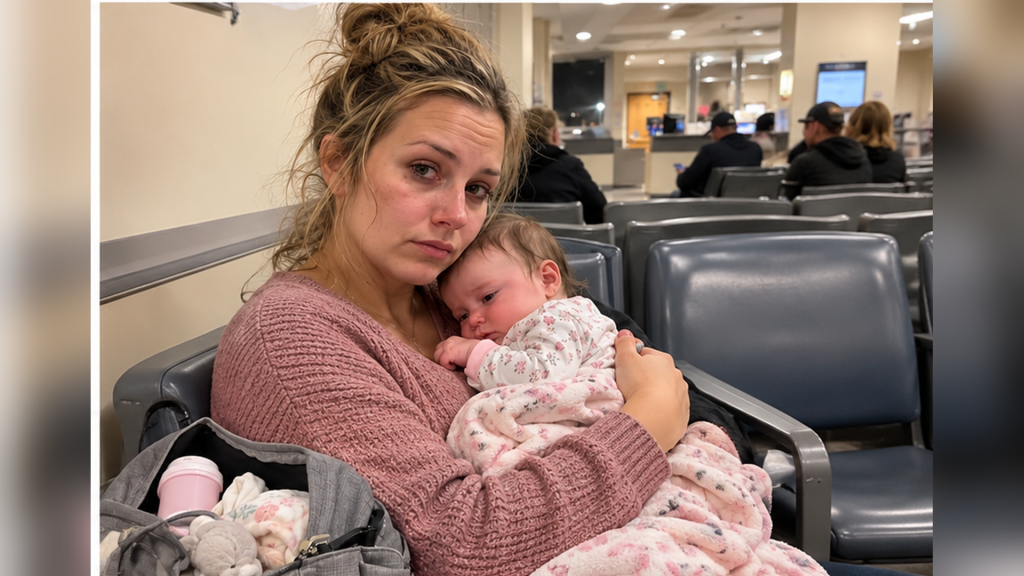
She studied the photograph, and her expression changed. “Lauren,” she whispered, “what is this?” I swallowed. “I don’t know.” She enlarged the image. The heading read: VOLUNTARY TEMPORARY GUARDIANSHIP AND PARENTAL CONSENT. My name appeared beneath it. Lauren Mitchell. Ethan Mitchell was listed as the child’s father.
And Sylvia Mitchell, my mother-in-law, was identified as the person authorized to assume primary care of our daughter.
Our baby.
Grace.
The little girl I’d carried for nine months, delivered after seventeen hours of labor, and held against my chest while Ethan cried and promised we’d always protect her together.
I read the document again.
It claimed I had voluntarily acknowledged being unable to meet the demands of motherhood because of emotional instability and overwhelming anxiety.
It said I consented to Grace living with Sylvia until my condition improved.
And near the bottom was a signature that looked almost exactly like mine.
I felt physically sick.
“Claire, I never signed that.”
“I know.”
“I would never agree to it.”
“I know, Lauren.”
Her voice was gentle, but there was something hard in her eyes.
She continued reading.
Then she stopped.
“Look at the date.”
I leaned closer.
The document was dated eleven days earlier.
Eleven days ago, I’d been sitting in our kitchen, feeding Grace while Ethan complained that I was spending too much time worrying about her sleep schedule.
That same evening, Sylvia had brought over dinner.
She’d smiled, washed the dishes, and offered to hold Grace while I took a shower.
I’d thanked her.
I’d even told Ethan how fortunate we were to have family nearby.
Now I wondered whether she’d spent that evening measuring how easily she could remove my daughter from my life.
My phone vibrated again.
Another message from Sylvia.
You need to think carefully before making trouble. Ethan has a career to protect, and Grace needs a stable household.
I stared at the screen.
Somewhere in the corridor, a monitor sounded an alarm.
A nurse hurried past our doorway.
My daughter stirred in her crib.
And suddenly, the entire ugliness of the message became painfully clear.
Sylvia hadn’t sent that photograph because she was worried about Grace.
She’d sent it while Grace was dangerously ill, believing the fear would make me surrender.
Claire gently placed the phone on the bedside table.
“First, we’re saving all of this.”
I nodded.
“Then we’re telling the hospital that nobody except you has permission to make decisions about Grace.”
I looked at her.
“Can Sylvia really take her?”
Claire shook her head.
“A photograph of a document doesn’t mean a court has given her custody. But we’re not guessing about what she’s planning. We’ll speak to a lawyer.”
I took a trembling breath.
Then looked toward my daughter.
Grace’s little fingers moved beneath the transparent dressing protecting her IV.
I reached into the crib and touched her foot.
“You’re staying with Mommy,” I whispered.
Her eyes remained closed.
But her toes curled against my finger.
And in that moment, something inside me changed.
Until then, I had been waiting for Ethan to become the husband and father I’d believed he was.
Waiting for him to notice how frightened I was.
Waiting for him to understand that parenthood didn’t end whenever someone felt tired.
But my daughter couldn’t afford to wait for her father to grow a conscience.
She needed one parent who would remain beside her.
And I was already there.
At four thirty that morning, a pediatric hospitalist named Dr. Hannah Reed entered the room.
She had tired eyes, a reassuring voice, and the careful manner of someone accustomed to delivering serious information without causing unnecessary panic.
“Lauren, we’ve received some of Grace’s initial test results.”
I stood immediately.
“Is she okay?”
“She’s stable right now, but we’re concerned about a significant bacterial infection.”
My stomach dropped.
Dr. Reed pulled up a chair.
“Her urine testing suggests an infection in the urinary tract, possibly involving the kidneys. We’ve started intravenous antibiotics while we wait for the culture results.”
I looked at Grace.
“Did I miss something?”
Dr. Reed frowned gently.
“What do you mean?”
“Should I have brought her in sooner? She was fussy yesterday afternoon, but she was still feeding. Then the fever came on so suddenly.”
She shook her head.
“You noticed that she was unwell, checked her temperature, contacted her pediatrician, and brought her to the emergency department when you were told to. Those were appropriate actions.”
My eyes filled.
I hadn’t realized how desperately I needed someone to say that.
For four months, I’d been told I worried too much.
That every new mother was nervous.
That I was overreacting when Grace cried.
That babies got sick and I needed to stop being dramatic.
Now a doctor was telling me my instincts had helped get my daughter the care she needed.
Dr. Reed continued.
“We’ll monitor her closely and adjust the treatment based on the cultures. Right now, the most important thing is that she’s receiving care.”
I nodded.
Then Claire spoke.
“Doctor, we also need to tell you something about the family situation.”
I looked at my sister.
She squeezed my hand.
“We’ve received threats from the baby’s grandmother. She’s claiming to have custody paperwork that Lauren says she never signed.”
Dr. Reed’s expression became serious.
“Have you spoken with our social work team?”
“Not yet.”
“I’ll ask them to come by. We can also make sure the care team understands who is authorized to receive information and participate in medical decisions.”
I swallowed.
“Is this going to make me look like an unfit mother?”
Dr. Reed looked directly at me.
“Seeking help because someone has threatened you is not evidence that you’re unfit.”
I began crying.
She waited.
Then she said something I’ll remember for the rest of my life.
“Lauren, you don’t have to prove you’re a good mother by handling everything without support.”
I looked at Claire.
My sister smiled through her own tears.
And for the first time that night, I stopped feeling ashamed of being frightened.
By six o’clock, Ethan had sent fourteen messages.
None asked how Grace was doing.
The first accused me of exaggerating her condition.
The second demanded that I stop upsetting his mother.
The third said I’d embarrassed him by making a scene in the emergency department.
Then came the one that changed the way I would remember our marriage.
If you’d just been calmer since the baby was born, none of this would be happening.
I read it twice.
Calmer.
As though a mother’s emotional state could cause a bacterial infection.
As though Grace’s fever was somehow a punishment for my failure to remain pleasant.
Claire watched me reading.
“Lauren, put the phone down.”
I shook my head.
“How can he say that?”
She sat beside me.
“I don’t know.”
“He watched me go through labor. He held her when she was born.”
My voice broke.
“He cried, Claire. He said she was the most beautiful thing he’d ever seen.”
My sister took my hand.
“People can mean something in one moment and still fail terribly when it requires sacrifice.”
I looked toward Grace.
The antibiotic infusion was running.
A nurse checked her temperature and adjusted the blanket.
I whispered, “I thought he loved being a father.”
Claire was quiet.
Then she said, “Maybe he loved the idea of being a father. Now he has to decide whether he’s willing to do the work.”
I closed my eyes.
Because that distinction explained more about the past four months than I wanted to admit.
Ethan loved photographs of Grace.
He loved carrying her into restaurants and hearing strangers say she looked like him.
He loved telling coworkers about becoming a dad.
But when Grace cried at midnight, he slept.
When she needed feeding supplies washed, he said he had work.
When I asked him to take her for an hour so I could shower and eat, he looked at me as though I had imposed an unreasonable burden.
I’d made excuses.
His job was demanding.
He was adjusting.
He needed time.
And Sylvia reinforced every excuse.
“He’s always needed his sleep.”
“Men don’t instinctively know what babies want.”
“You have maternity leave, Lauren. He doesn’t.”
But Ethan hadn’t been asked to instinctively know anything.
I’d asked him to learn.
The same way I was learning.
And he’d decided that because I was the mother, learning was entirely my responsibility.
Now his mother wanted to make that belief permanent.
Only she didn’t intend to leave Grace with me.
She wanted the baby for herself.
At eight that morning, the hospital social worker arrived.
Her name was Mara Collins.
She had silver-streaked hair, a notebook, and a way of listening that made me feel she was hearing the words I hadn’t yet found the courage to say.
Claire remained beside me while I explained everything.
The emergency room.
Ethan’s complaint about his presentation.
Sylvia’s arrival.
The shouting.
The threat.
And the photographed document.
Mara examined the messages without interrupting.
Then she asked, “Has anyone actually obtained a court order changing custody or guardianship?”
“Not that I know of.”
“Have you ever signed a voluntary arrangement allowing Sylvia to take Grace?”
“No.”
“Has Ethan previously threatened to take the baby away from you?”
I hesitated.
Then remembered something.
Two weeks earlier, I’d asked Ethan to attend a pediatric appointment because I was exhausted and needed help remembering the doctor’s instructions.
He’d rolled his eyes.
“You know, Mom thinks Grace might be better off staying with her for a while.”
I’d laughed because I thought he was joking.
“Then she can come help us,” I’d said.
Ethan hadn’t smiled.
“That’s not what she meant.”
At the time, I assumed he was frustrated.
Now the memory felt very different.
I told Mara.
She made a note.
Then asked whether I felt safe going home.
I opened my mouth.
Closed it.
And realized I wasn’t certain.
Not because Ethan had ever struck me.
He hadn’t.
But he’d threatened to portray me as unstable.
He’d walked away from our critically ill baby.
And his mother had sent me a document suggesting she’d been planning to separate Grace from me before we entered the hospital.
I looked at my sister.
Claire said quietly, “Lauren and Grace can stay with me.”
Mara nodded.
“We can discuss a safe discharge plan, and I can give you contact information for legal and family support services.”
I swallowed.
“Will there be a report about this?”
She answered carefully.
“We document relevant concerns and follow hospital policy. If a report to child protective services is required, that process focuses on assessing the child’s safety. It doesn’t mean someone automatically loses custody.”
I nodded.
I needed that distinction.
Sylvia had spent months making me afraid of being judged for ordinary motherhood.
I worried about the way Grace slept.
I worried about whether she was eating enough.
I worried about every unfamiliar sound she made.
Sometimes I cried in the shower because I was exhausted.
I hadn’t understood how easily someone could collect those ordinary moments and describe them as evidence of instability.
Mara closed her notebook.
“Lauren, do you know what I’ve seen since I entered this room?”
I shook my head.
“A mother asking appropriate questions about her daughter’s treatment, responding to her needs, and making arrangements for her safety.”
My eyes filled.
She continued.
“That’s what I’m documenting.”
For the first time, I felt the ground beneath me becoming solid again.
At ten fifteen, Sylvia appeared outside Grace’s room.
I heard her before I saw her.
“This is ridiculous! I’m her grandmother!”
A nurse answered calmly.
“Ma’am, you need to speak with the front desk.”
“I have legal documents!”
I looked toward the doorway.
Claire stood.
“Stay here.”
But I shook my head.
“No.”
I rose carefully and stepped into the corridor.
Sylvia stood near the nurses’ station wearing a cream-colored coat and carrying her enormous brown handbag.
Her hair was perfectly arranged.
Her lipstick was immaculate.
She looked nothing like a woman whose granddaughter had spent the night in the hospital with a serious infection.
When she saw me, her expression sharpened.
“Lauren, tell these people I’m family.”
I took a slow breath.
“You are family. You are not authorized to make medical decisions for Grace.”
She stared.
“I have the papers.”
“You have a photograph of a document I never signed.”
Her mouth tightened.
“Don’t start.”
I felt Claire step beside me.
Sylvia lowered her voice.
“Ethan has enough pressure. You’re making everything worse.”
I looked at her.
“Grace has been admitted to the hospital.”
“I know that.”
“She has an infection that needs treatment.”
“Babies get sick.”
I stared.
Then asked quietly, “Do you know her temperature when we arrived?”
Sylvia blinked.
“What?”
“Do you know how high her fever was?”
She looked irritated.
“Lauren, I don’t see why—”
“One hundred and four degrees.”
I swallowed.
“Do you know how many times she’s had her blood drawn? Do you know how much she cried when they placed the IV?”
Sylvia shifted her handbag.
“You’re being emotional.”
I nodded.
“Yes. My daughter is sick. I am emotional.”
For a moment, she looked genuinely surprised.
Perhaps because I wasn’t apologizing.
I continued.
“But being frightened for her doesn’t give you the right to take her from me.”
Sylvia looked toward the nurses’ station.
“I’m going to have you removed.”
I stepped aside.
“You can speak with hospital security and the social worker. But you are not going into her room without my agreement.”
Mara appeared from farther down the corridor.
She calmly introduced herself and offered to discuss the situation in a private office.
Sylvia refused.
Then she made the mistake that changed everything.
She opened her handbag.
Pulled out a stapled packet.
And announced loudly enough for three nurses to hear, “I have proof she’s mentally unstable!”
She waved the pages.
“She cries constantly. She forgets things. She can’t cope with the baby. Ethan has documented everything.”
The corridor became painfully quiet.
I felt something collapse inside me.
Not because I believed her.
Because I suddenly understood how much of my private life my husband had been collecting for use against me.
Then Mara spoke.
“Mrs. Mitchell, accusations of that nature require appropriate evaluation and evidence. Please lower your voice.”
Sylvia stared.
“You don’t understand. I’m trying to protect my granddaughter.”
Mara replied, “Then let’s begin by respecting the care team’s instructions.”
Sylvia’s face reddened.
Security arrived a few minutes later.
They escorted her away from the patient area after she refused to stop arguing.
I returned to Grace’s room on shaking legs.
Claire closed the door behind us.
Then I looked at my daughter.
Her fever had begun to fall.
She was sleeping more peacefully.
And I realized something terrible.
While I had been fighting to protect Grace’s health, my husband and his mother had been preparing to fight me for control of her life.
At noon, my phone rang.
It was a number I didn’t recognize.
I almost ignored it.
Then I answered.
“Hello?”
“Lauren Mitchell?”
“Yes.”
“My name is Marcus Ellis. I’m Ethan’s department director.”
My stomach tightened.
“I know who you are.”
He hesitated.
“I hope I’m not intruding. Ethan told me your daughter was in the hospital.”
“She is.”
“I’m sorry. How is she?”
I looked toward Grace.
“She’s receiving IV antibiotics. The doctors are monitoring her.”
“I’m glad she’s getting care.”
There was a pause.
Then Marcus said, “Lauren, I wanted to clear something up.”
I frowned.
“What?”
“Ethan told me he had to leave the hospital because he couldn’t miss this morning’s presentation.”
I closed my eyes.
“Yes.”
Marcus sighed.
“That’s not true.”
I sat down.
“What?”
“When he called me just after two this morning, I told him we could move the presentation to next week.”
I stared at the wall.
“He said it had to happen at nine.”
“It didn’t.”
I couldn’t speak.
Marcus continued.
“We have three other senior managers who can present the material. And our company has family emergency leave. I told him to stay with you and the baby.”
I covered my mouth.
“He told me he’d lose his opportunity for a promotion.”
“He would not have lost a promotion for caring for his hospitalized child.”
I felt tears slide down my cheeks.
Then Marcus said softly, “Lauren, he insisted the presentation mattered more than the delay. I told him his family came first.”
I looked at Grace.
The little girl whose entire world depended on adults making good decisions.
And I finally understood.
Ethan hadn’t been forced to leave.
He had chosen to.
He’d used work as the excuse because he knew I’d spent years respecting his career.
He’d allowed me to believe our daughter’s illness was threatening his professional future.
But even his employer had told him to stay.
I thanked Marcus and ended the call.
Claire watched my face.
“What happened?”
I told her.
She closed her eyes.
Then whispered, “Lauren, you can’t keep making excuses for a man who won’t even accept the excuses other people offer him.”
I looked at my phone.
Another message from Ethan had arrived.
Hope you’re happy. The presentation went terribly because I was distracted.
I read it once.
Then forwarded it to the lawyer whose number Mara had given me.
For the first time, I wasn’t going to answer his anger with an apology.
The attorney’s name was Naomi Brooks.
She was a family-law specialist with a calm voice, sharp questions, and an office full of photographs of her two children.
We spoke by video call while Grace slept.
I explained everything.
Naomi reviewed the threatening messages, the photographed guardianship document, and the hospital’s written confirmation that Grace was receiving inpatient treatment.
When I finished, she leaned toward her screen.
“Lauren, I want you to understand something important. A parent cannot simply lose custody because a grandmother produces a paper claiming the mother is overwhelmed.”
I nodded.
“But there’s my signature.”
“A signature you dispute. We’ll examine its origin, and we won’t assume the document is valid merely because someone typed legal language above it.”
She paused.
“Have you and Ethan ever discussed separating?”
“No.”
“Has he ever suggested that Grace should live with Sylvia permanently?”
“Not directly.”
I hesitated.
“He’s said his mother would do a better job than I do.”
Naomi wrote something down.
“How often?”
I swallowed.
“More times than I want to admit.”
Then she asked about the marriage.
I told her about the sleepless nights.
The unequal division of parenting.
The way Ethan criticized me for asking him to help.
The way Sylvia entered our home without calling and rearranged Grace’s nursery whenever she visited.
I told her how Sylvia had once taken Grace from my arms when I was breastfeeding, declaring that the baby was only fussing because I was nervous.
I’d been too shocked to argue.
That night, I cried in the bathroom while Ethan said his mother had been trying to help.
Naomi listened.
Then she said, “Lauren, I recommend we begin documenting these patterns carefully and consider seeking temporary parenting orders if you separate. But our immediate priority is making sure you and Grace are safe when she’s discharged.”
I nodded.
“What if Ethan tries to take her?”
“We can seek appropriate court intervention. Meanwhile, don’t conceal Grace from lawful authorities, and don’t sign anything you don’t understand. Let us handle communications about custody.”
I looked down at the sleeping baby.
“Will she know any of this?”
Naomi’s expression softened.
“She’s too young to understand these disputes. What she needs is consistent, responsive care and adults who place her interests ahead of their arguments.”
Tears filled my eyes.
That was all I’d ever wanted.
A home where our daughter’s needs mattered more than anyone’s ego.
The next afternoon, a woman appeared outside Grace’s room.
She was younger than Ethan, with reddish-brown hair and familiar green eyes.
His sister.
Olivia.
I hadn’t seen her in almost a year.
Sylvia described Olivia as difficult, ungrateful, and selfish.
Ethan said she caused family drama.
Over time, I’d stopped inviting her to gatherings because every invitation triggered another argument with his mother.
Now she stood in the hallway holding a small bag of baby clothes.
“Lauren?”
I rose.
“Olivia.”
She glanced toward Grace.
“How is she?”
“Better. The fever is coming down.”
Her shoulders relaxed.
“Thank God.”
She stepped inside.
Then looked at me.
“I heard what Mom did.”
My stomach tightened.
“From Ethan?”
She shook her head.
“From Mom. She called me yesterday to say she’d finally found a way to make Ethan’s life easier.”
I stared.
Olivia’s expression darkened.
“She said you were going to sign Grace over to her.”
I felt sick.
“I never agreed to that.”
“I know.”
Olivia set the bag down.
Then reached into her coat pocket.
“I came because there’s something you need to see.”
She handed me her phone.
It displayed a message from Sylvia, sent nearly three weeks earlier.
Ethan has agreed. Once Lauren signs, Grace can stay with me permanently while he focuses on his career.
Below it was Olivia’s reply.
Lauren would never agree to that. Stop interfering with their marriage.
Sylvia answered:
You don’t understand. Lauren is too attached to the baby. Ethan needs a wife who can manage herself, not someone who demands his attention every night.
My hands began shaking.
Olivia continued.
“Mom asked me to witness a guardianship document. I refused.”
I looked up.
“She asked you?”
“Yes.”
“Did Ethan know?”
Olivia nodded.
“He brought the papers to her house.”
The room seemed to darken.
For days, I’d been hoping Ethan had merely allowed his mother to run wild.
That he hadn’t understood how far she’d gone.
That some part of him would be horrified when he learned she had forged my signature.
Now his own sister was telling me he’d personally brought the documents.
Olivia swallowed.
“I’ve kept copies of our messages. I’ll provide them to your attorney.”
I stared at her.
“Why didn’t you tell me?”
Tears filled her eyes.
“I should have.”
She sat down.
“Mom told me the whole thing was just a backup arrangement in case you became seriously ill. I said she needed to discuss it with you directly. Then Ethan promised he’d handle it.”
She wiped her cheeks.
“I believed he’d tell you.”
I looked at Grace.
She was sleeping with one tiny fist beside her cheek.
I whispered, “He didn’t.”
Olivia shook her head.
“No.”
Then she told me the final piece.
Sylvia had offered to pay off a substantial personal debt Ethan had accumulated through credit cards and an unsuccessful investment.
In exchange, he agreed to support her proposed guardianship arrangement.
I stared.
“How much?”
“About thirty-eight thousand dollars.”
I felt as though someone had struck me.
Thirty-eight thousand dollars.
My husband had allowed his mother to negotiate control over our daughter’s care while concealing his financial problems.
Olivia leaned forward.
“Lauren, I don’t know exactly what Ethan thought would happen. But Mom kept saying that once Grace lived with her, you would eventually stop fighting and get on with your life.”
I looked down at my hands.
A woman who had spent four months insisting I wasn’t doing enough as a mother had apparently been planning to replace me.
Not because Grace was neglected.
Not because she was unsafe.
But because Sylvia wanted to raise her granddaughter, and Ethan wanted his mother to make his difficulties disappear.
I began crying.
Olivia moved beside me.
“I’m sorry.”
I looked at her.
Then whispered, “Thank you for telling me.”
She took my hand.
“I know what it’s like when Mom decides your life belongs to her.”
For the first time, I wondered how many years Olivia had spent fighting the same battle I’d only recently recognized.
Grace’s urine culture confirmed the source of her illness.
A bacterial urinary tract infection had caused the high fever, and the medical team was treating her for possible kidney involvement.
Dr. Reed explained the results carefully.
The antibiotics appeared to be working.
Grace’s temperature was improving.
She was feeding better.
And her activity was slowly returning.
We would need follow-up care and monitoring, but the immediate danger had begun to recede.
That evening, Grace opened her eyes and gave me a tiny smile.
It lasted only a second.
A sleepy little smile.
But it was the most beautiful thing I’d ever seen.
I bent over her crib.
“Hi, sweetheart.”
She moved her arms.
I laughed through tears.
“There you are.”
Claire stood behind me.
“Look at her.”
I turned.
My sister was crying too.
Then Grace made a soft gurgling sound.
Not quite a laugh.
Not quite a coo.
Just the sweet, ordinary noise of a baby beginning to feel better.
I held her against my chest and felt her warm cheek resting beneath my chin.
For two days, I’d been frightened of every change in her breathing.
Every monitor.
Every cry.
Now I could feel her relaxing in my arms.
I closed my eyes.
“You’re going to be okay.”
For the first time, I believed it.
And with that relief came a realization that frightened me almost as much as the hospital admission.
I had been so focused on keeping my daughter alive that I hadn’t allowed myself to consider what came afterward.
Where we would live.
How Ethan would respond.
Whether Sylvia would continue trying to interfere.
But one thing was certain.
I wasn’t bringing Grace home to a place where my husband and his mother had been discussing how to remove me from her life.
Not without changes that protected us both.
Three days later, Grace was discharged.
I listened carefully while the nurse reviewed her medications and follow-up appointments.
I wrote everything down.
Asked questions.
Checked the instructions twice.
The ordinary actions of a mother who wanted to make sure her baby recovered.
Then I buckled Grace into her car seat and carried her out of the hospital.
Claire was waiting beside her car.
She opened the passenger door.
“Ready?”
I looked down at my daughter.
Her cheeks had regained their color.
Her little fingers were wrapped around the strap of her stuffed rabbit.
I smiled.
“Yes.”
We drove to Claire’s house instead of the home I shared with Ethan.
For the first time since giving birth, I spent a night without worrying that someone would come into the nursery and tell me I was doing motherhood wrong.
Claire had prepared a little room for us.
There was a crib beside the window.
A rocking chair.
Fresh blankets.
And a note on the dresser.
You are both welcome here for as long as you need.
I read it twice.
Then I began crying.
Claire hugged me.
“You don’t have to thank me.”
I held her tightly.
“I don’t know how I would have survived this without you.”
She pulled back.
“Then it’s a good thing you didn’t have to.”
Ethan came to see me the following week.
Naomi arranged for us to meet at her office because I wasn’t ready to be alone with him.
He arrived wearing his work clothes.
His expression was tired, but the moment he sat down, he began defending himself.
“Lauren, this has gotten completely out of hand.”
I stared at him.
“Our daughter was hospitalized, Ethan.”
“I know.”
“Your mother sent me a forged document saying I was giving her custody.”
He rubbed his forehead.
“Mom was trying to help.”
I looked at him.
“Did you bring her the guardianship paperwork?”
His face changed.
For a moment, he said nothing.
Then he whispered, “Yes.”
I closed my eyes.
“Did you know she planned to use my signature without asking me?”
He looked toward Naomi.
“I thought Lauren would eventually agree.”
I stared.
“That’s not what I asked.”
He lowered his eyes.
After a long silence, he said, “Mom said she could handle the documents.”
My throat tightened.
“Did you give her a copy of my signature?”
He nodded.
“From the insurance paperwork.”
I sat motionless.
My own husband had supplied the material his mother used to make a document appear as though I had consented.
He’d known what they were planning.
And while our daughter lay in the hospital, he’d threatened to tell people I was unstable if I interfered with his presentation.
I looked at him.
“Why?”
His eyes filled.
“I was overwhelmed.”
I waited.
He continued.
“The baby was always crying. You were always tired. I couldn’t concentrate on work. Mom said she could take Grace for a while and give us a chance to figure things out.”
I stared at him.
“Then why didn’t you ask me?”
He looked down.
“Because I knew you’d say no.”
The words hung between us.
Finally, I understood the simplest and ugliest part of what had happened.
Ethan hadn’t misunderstood my wishes.
He had known them.
And he had decided they didn’t matter.
I took a slow breath.
“Did your mother offer to pay your debts?”
His eyes widened.
“Who told you?”
I looked at him.
“So it’s true.”
He covered his face.
I continued.
“You let her use our daughter as part of an arrangement to solve your financial problems.”
He shook his head.
“It wasn’t like that.”
“Then explain it.”
Silence.
He began crying.
For a moment, I remembered the man I’d married.
The man who used to bring flowers home for no reason.
Who once drove through a thunderstorm to bring me medicine when I had the flu.
Who had promised in the delivery room that he’d always put our daughter first.
I wanted that man to be sitting across from me.
But he wasn’t.
And I had to make decisions based on the person Ethan had shown himself to be, not the person I wished he would become.
I looked at Naomi.
Then back at my husband.
“I’m filing for separation and asking the court to establish appropriate parenting arrangements.”
Ethan began sobbing.
“Lauren, please.”
I felt tears gathering.
“I loved you.”
He reached toward me.
I moved my hand away.
“And I wanted our daughter to grow up watching us love each other.”
My voice broke.
“But I will not teach her that a wife must sacrifice her safety and dignity to make her husband comfortable.”
Ethan stared at me.
Then whispered, “What about my family?”
I looked at him.
“Grace is your family.”
For the first time, he had no answer.
The weeks that followed were exhausting.
There were legal meetings, financial disclosures, and painful conversations about temporary parenting arrangements.
Naomi challenged the purported guardianship document.
Evidence showed that I had not signed or authorized it.
Olivia provided the messages Sylvia had sent while planning the arrangement.
The hospital records documented Grace’s illness, my involvement in her care, and the circumstances surrounding the family conflict.
The disputed document was referred for further investigation.
It had never given Sylvia an enforceable right to take Grace from me.
The court addressed parenting decisions based on the evidence and Grace’s best interests, not on the grandmother’s demands.
Temporary arrangements initially provided for structured visits between Ethan and Grace while concerns about his judgment and his mother’s interference were assessed.
Ethan was required to follow the court’s orders.
Sylvia was not permitted to assume decision-making authority or have unsupervised contact under those temporary arrangements.
The final parenting plan took shape over time, with additional review and professional input.
It wasn’t a simple matter of one parent winning and the other losing.
It was about making sure Grace had safe, dependable care.
I didn’t want to erase her father.
I wanted him to learn that being a father required more than appearing in photographs.
And I wanted my daughter to know that love should never depend on whether her needs were convenient.
Sylvia called me one evening about two months after the hospital admission.
I’d stopped accepting her calls, but she left a voicemail.
Her voice was softer than I’d ever heard it.
“Lauren, I know you’re angry. But I raised Ethan by myself for several years when his father traveled for work. I understand how hard motherhood can be.”
I listened.
Then her voice sharpened.
“You’ve misunderstood my intentions. I only wanted to make sure Grace had the best possible care.”
She paused.
“And I hope someday you’ll understand that everything I did was for her.”
I saved the message.
Then sat quietly for a long time.
For months, Sylvia had treated me like a temporary inconvenience in her son’s life.
She’d acted as though giving birth to Grace made me responsible for every sleepless night while her son remained entitled to uninterrupted comfort.
Yet when she wanted to take control, she suddenly described motherhood as something I wasn’t capable of handling.
I understood that contradiction now.
Sylvia wasn’t defending the importance of motherhood.
She was defending the importance of her own authority.
I didn’t return the call.
Her intentions, whatever she believed them to be, couldn’t erase the choices she’d made.
An apology would have required acknowledging those choices.
And I wasn’t going to let another carefully worded excuse become a reason to place Grace at risk.
Over the following months, Ethan began attending parenting classes and meeting regularly with a counselor.
He also followed the parenting arrangements established through the court.
At first, his efforts were inconsistent.
He complained about the scheduling.
He asked whether visits could be shortened when he had work deadlines.
He occasionally seemed surprised that caring for a baby involved feeding, changing, comforting, and planning around naps.
But gradually, something changed.
He began arriving prepared.
He learned Grace’s feeding schedule.
He stopped calling me for instructions about every ordinary task.
And one afternoon, during a scheduled exchange, he said something I hadn’t expected.
“I used to think taking care of her was helping you.”
I looked at him.
He continued.
“Now I understand I was supposed to be doing my part.”
I nodded.
“Yes.”
His eyes filled.
“I’m sorry I wasn’t there when she needed me.”
I looked down at Grace.
She was smiling at the bright yellow toy clipped to her stroller.
“I’m glad you’re learning, Ethan.”
He looked hopeful.
But I continued.
“That doesn’t undo what happened between us.”
He lowered his head.
“I know.”
I believed he was beginning to understand.
But understanding wasn’t the same as restoring our marriage.
The marriage had been damaged by choices that went far beyond one terrible night.
And I had learned that forgiveness did not require returning to the place where those choices had been made.
Grace celebrated her first birthday eight months after the emergency room visit.
Claire decorated her backyard with little yellow flowers and paper butterflies.
Olivia came carrying a stuffed giraffe.
A few friends brought cupcakes, balloons, and more toys than a one-year-old could possibly need.
Grace wore a pale pink dress and a tiny ribbon in her hair.
She had learned to crawl, pull herself upright, and clap whenever someone sang.
When we brought out the cake, she stared at the candle as though it were the most extraordinary thing she’d ever seen.
Everyone began singing.
I held her gently around the waist.
Her little hands reached toward the frosting.
“Not yet, sweetheart,” I laughed.
Claire took a photograph.
And for a moment, I thought about the hospital.
The hard plastic chair.
The terrible fever.
The IV taped to Grace’s hand.
The night I stood in an emergency room while my husband’s mother screamed that he hadn’t signed up for the stress of fatherhood.
I looked at my daughter.
Her cheeks were pink.
Her eyes were bright.
Her tiny fingers were covered in frosting.
She was alive.
Healthy.
Laughing.
And I realized I had been given something more precious than the restoration of a marriage.
I had been given the chance to build a home where she would never have to wonder whether her needs mattered.
After the party, when the guests had gone, I sat on Claire’s porch with Grace in my lap.
The sun was setting.
A warm breeze moved through the trees.
Grace rested her head against my chest.
Then she looked up at me.
“Mama,” she said.
I froze.
She had made sounds resembling the word before.
But this time, she looked directly into my eyes.
“Mama.”
My throat tightened.
I pulled her close.
“Yes, sweetheart.”
Tears slid down my cheeks.
“I’m right here.”
She smiled.
Then reached up and touched my face.
I kissed her little fingers.
For so long, I had wondered whether I was enough.
Whether I was too anxious.
Too tired.
Too emotional.
Too demanding.
I had allowed other people to convince me that needing help made me weak.
But now I understood.
A good mother doesn’t have to be fearless.
She doesn’t have to be perfect.
She doesn’t have to carry every burden alone.
She has to recognize when her child needs her, seek help when help is necessary, and keep choosing that child’s well-being even when the choices are difficult.
I looked down at Grace.
Then whispered, “You know something, baby girl?”
She gurgled happily.
“Your grandmother said your daddy didn’t sign up for this much stress.”
I paused.
“But I didn’t sign up for betrayal either.”
I held her a little closer.
“And neither of us deserved it.”
Beyond the porch, the first stars appeared.
Grace’s fingers curled around mine.
I remembered the moment Sylvia had shoved Ethan’s coat into his hands.
How I’d stood up instead of arguing.
How I’d walked straight to the triage desk because my daughter’s fever mattered more than their anger.
That decision had started everything.
I hadn’t known it would lead to a hospital admission, a forged document, a separation, and the complete reconstruction of my life.
I only knew my baby needed help.
And I refused to let anyone distract me from getting it.
I kissed Grace’s forehead.
Then whispered the promise I wished someone had made to me when I first became a mother.
“You will never have to earn the right to be cared for. And you will never be a burden simply because you need someone.”
Grace yawned.
Her little eyes closed.
And as I held her beneath the evening sky, I finally understood something Sylvia had never learned.
Motherhood isn’t measured by how much suffering a woman can endure in silence.
It’s measured in the love that keeps showing up.
Even when it’s difficult.
Even when it’s frightening.
Even at two in the morning, in a crowded emergency room, when everyone else decides they would rather go home.
I looked at my sleeping daughter.
Then smiled.
Because when Grace needed someone to stay, I stayed.
And when the time came to protect her future, I learned that I could stand up for both of us.
THE END STORIES! THANK YOU FOR READING GOOD LUCK !❤️
Related Posts