For twenty-seven years, I believed my mother was dead. I believed she had died in a car accident when I was eight years old. I believed the little white headstone beneath the oak tree in Willow Creek Cemetery marked the place where she’d been laid to rest.
Every Mother’s Day, I brought flowers. Every Christmas, I left a small candle. And every birthday, I whispered things I wished I could tell her. Now I stood in my father’s kitchen, holding a photograph of a silver-haired woman who was very much alive. On the back, written in trembling handwriting, were eight words.
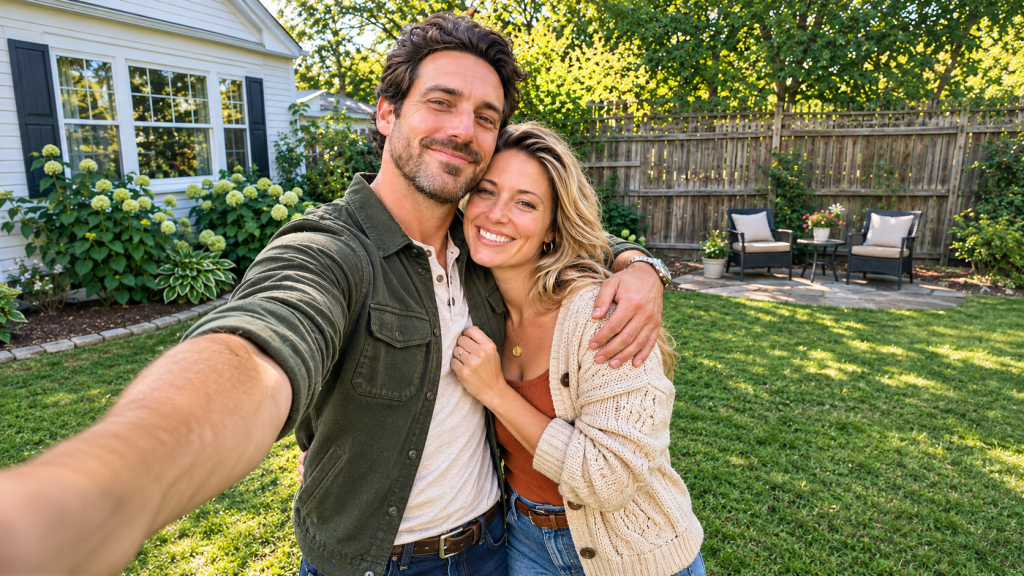
Claire, please tell me why you stopped coming. My hands shook so badly that I nearly dropped it. I looked at my father. “Stopped coming?” He lowered his eyes. “Claire—” “What does that mean?” Ethan stood beside the kitchen counter, his face pale.
My father reached for his chair.
“Sweetheart, please sit down.”
I stepped backward.
“Don’t call me sweetheart.”
He froze.
I held up the photograph.
“Why does my mother think I stopped visiting her?”
Neither man answered.
And suddenly, a memory surfaced.
A room with yellow curtains.
A woman lying beneath a white blanket.
The smell of oranges.
Someone singing softly.
I’d always believed it was a dream.
I pressed my hand against my chest.
“Dad?”
His eyes filled.
“Did you take me to see her?”
He closed his eyes.
“After the accident, yes.”
My breath caught.
“How many times?”
He swallowed.
“For several months.”
The photograph slipped from my fingers.
Ethan bent to retrieve it, but I stepped away from him.
“You told me she was dead.”
My father began crying.
“I know.”
“You told me she died in the hospital.”
He nodded miserably.
“I know.”
I stared at him.
“Then why does she remember me visiting?”
His voice broke.
“Because she never stopped asking for you.”
My name is Claire Morgan.
I was thirty-five years old when I discovered that the two men I trusted most had kept the truth about my mother from me.
My boyfriend, Ethan Parker, had been my partner for six years.
He was kind, patient, and thoughtful in ways that made people love him almost immediately.
When I caught the flu, he brought soup.
When my car broke down, he drove across town to help.
When my father needed a new roof, Ethan spent an entire weekend climbing ladders in the summer heat.
He remembered birthdays.
He listened when I cried.
And he made our small home feel like a place where I belonged.
But whenever I asked about marriage, something changed.
His smile disappeared.
His shoulders tightened.
And he told me he wasn’t ready.
After six years, I couldn’t keep waiting without knowing why.
I’d been packing to leave when I overheard him speaking to my father.
He had bought an engagement ring years earlier.
But he wouldn’t propose until Dad told me the truth.
I thought I was about to discover some embarrassing family secret.
Instead, I learned that my mother, whom I’d mourned for nearly three decades, was alive in a care residence outside Raleigh.
And that Ethan had known for three years.
I stared at my father.
“Tell me everything.”
He wiped his cheeks.
“Claire, this is complicated.”
I laughed.
It was a terrible sound.
“Complicated?”
My voice rose.
“I spent twenty-seven years believing my mother was buried in a cemetery, and you’re calling it complicated?”
Ethan took a cautious step toward me.
“Claire, please.”
I turned on him.
“Don’t.”
He stopped.
I looked back at Dad.
“Start with the accident.”
He sat down heavily.
For a long moment, he stared at his hands.
Then he began.
“Your mother and I were having problems.”
I frowned.
“What kind of problems?”
He swallowed.
“Our marriage wasn’t what you remember.”
I felt something cold move through me.
“What does that mean?”
He looked toward the window.
“We argued. About money. About how I worked too much. About how I made decisions without talking to her.”
My chest tightened.
“She wanted things to change.”
I listened.
“And I kept promising they would.”
His eyes filled.
“Eventually, she told me she wanted us to separate.”
The room seemed to grow smaller.
I gripped the back of a chair.
“Mom wanted to leave you?”
He nodded.
“Yes.”
I tried to picture my mother telling him that.
In my memories, she was gentle.
She sang while cooking.
Read stories in funny voices.
And kissed my forehead before bed.
Dad had always described their marriage as perfect.
He told me they were soulmates.
That he had never loved anyone else.
That losing her had destroyed him.
Now I was learning that even the story of their marriage had been rewritten.
“Were you getting divorced?” I asked.
He looked down.
“We were discussing separation. Nothing had been finalized.”
I swallowed.
“And the accident?”
His voice trembled.
“We were driving home from a meeting with a counselor.”
I closed my eyes.
A counselor.
Another detail I’d never known.
Dad continued.
“We were arguing in the car. I looked away from the road.”
He paused.
My heart began pounding.
“Dad?”
He began crying.
“I drifted across the center line.”
I couldn’t breathe.
“You caused the accident?”
He looked at me.
“The investigation found I was responsible for crossing into the other lane.”
I stared at him.
He continued.
“Your mother was badly injured. I had a broken arm and a concussion.”
My hands went numb.
“And you told me she died?”
He nodded.
“At first, I didn’t.”
I remembered the yellow curtains again.
The oranges.
The song.
Dad continued.
“You visited her in the hospital. She was unconscious at first. Later, she had periods when she recognized you.”
I stared at the floor.
“She knew me?”
His voice broke.
“Yes.”
A sob escaped my throat.
I pressed my hand over my mouth.
My father continued.
“After several months, the doctors explained that her recovery would be uncertain. She needed specialized care.”
I looked up.
“Then why did you stop taking me?”
He began trembling.
“Because she started remembering the argument.”
The room went silent.
I stared at him.
He swallowed.
“She remembered wanting to separate.”
My stomach tightened.
“And?”
“She asked whether you’d be allowed to visit if we weren’t living together.”
I closed my eyes.
Dad continued.
“I was terrified.”
His voice broke.
“I thought she’d take you away.”
I stared at him.
“Dad, she was recovering from a brain injury.”
“I know.”
“You were both my parents.”
“I know.”
“But you decided she didn’t get to be my mother anymore?”
He covered his face.
“Yes.”
I backed toward the stairs.
For twenty-seven years, I’d believed my father was a grieving widower who had sacrificed everything to raise me.
He’d worked long hours.
Packed my lunches.
Attended school plays.
And comforted me when I cried about missing Mom.
Some of that love had been real.
But it existed beside a lie so enormous I couldn’t understand how he’d carried it.
“Did you actually tell me she died?”
He nodded.
“Yes.”
“And the funeral?”
His voice shook.
“There was a memorial service.”
I stared at him.
“For a woman who was alive?”
He looked away.
“Yes.”
I felt sick.
“The grave?”
He whispered, “It’s a memorial marker. There isn’t a burial beneath it.”
I sank into a chair.
My knees couldn’t hold me anymore.
Every Mother’s Day.
Every bouquet.
Every whispered prayer.
I had knelt beside an empty grave while my mother lived only a few hours away.
I began crying so hard I couldn’t see.
Ethan moved toward me.
I raised my hand.
“Don’t touch me.”
He stopped immediately.
For several minutes, I cried.
Then I looked up.
“Who else knew?”
Dad wiped his face.
“A few relatives knew she survived, but I told them she was in permanent care and that contact would harm her recovery. Some questioned me. Most trusted what I said.”
I stared at him.
“Grandma Rose?”
His face crumpled.
“She knew your mother survived the first year.”
My mother’s mother.
She had died when I was sixteen.
I’d believed she had been grieving her daughter.
“Did she know you told me Mom was dead?”
Dad shook his head.
“Not at first. When she found out, we argued. She tried to see your mother, but contact became difficult. Eventually, she stopped speaking to me.”
I stared at him.
He continued.
“She wanted to tell you. I begged her to wait until you were older.”
My voice cracked.
“She died before she could.”
Dad nodded.
And something inside me shattered all over again.
I turned toward Ethan.
He stood motionless beside the sink.
His eyes were red.
“Now you.”
He swallowed.
“Claire—”
“Dad said you had something to confess.”
He looked down.
“Three years ago, your father asked me to help organize some paperwork.”
I nodded.
“He’d recently undergone surgery and wanted help with his medical files.”
Ethan continued.
“I found correspondence from the residence where your mother lived.”
I stared at him.
“And you recognized her name?”
“Yes.”
“What did you do?”
“I confronted your father.”
I laughed bitterly.
“And believed whatever he told you?”
Ethan shook his head.
“No. I went to the residence.”
My stomach tightened.
“You met her?”
He nodded.
“Yes.”
I gripped the chair.
My boyfriend had met my mother.
The mother I had spent decades grieving.
He had sat in a room with her.
Spoken to her.
Perhaps held her hand.
Then returned home to me.
Kissed me.
Asked about my day.
And pretended nothing had changed.
“Did she know who you were?” I whispered.
He nodded.
“I introduced myself as someone who loved her daughter.”
Tears filled his eyes.
“She smiled.”
My chest hurt.
“What did she say?”
Ethan’s voice broke.
“She asked whether you were happy.”
I couldn’t speak.
He continued.
“I told her you were.”
I swallowed.
“And then?”
“She asked whether you were married.”
My eyes filled.
“I told her we were together.”
His voice trembled.
“She said she hoped she’d meet you again someday.”
I stared at him.
“And you came home and didn’t tell me.”
He nodded.
“Yes.”
I wanted to scream.
Instead, I whispered, “Why?”
Ethan closed his eyes.
“Your father begged me not to.”
I stared at him.
“He said the truth would destroy you. He showed me old medical reports and said your mother sometimes became confused and distressed.”
I shook my head.
“And you believed him?”
“Not completely.”
I looked up sharply.
Ethan continued.
“I told him he had to tell you. He promised he would.”
I laughed through tears.
“For three years?”
He looked down.
“Yes.”
My father began speaking.
“Claire, Ethan pressured me constantly.”
I turned toward him.
“Don’t defend him for keeping your secret.”
Dad fell silent.
I looked back at Ethan.
“What did you do that Dad said you needed to confess?”
He covered his face.
For a long time, he said nothing.
Then he whispered, “I signed a letter.”
My heart stopped.
“What letter?”
He swallowed.
“The residence contacted me because your mother was asking whether you could visit. Your father had listed me as another person to contact after I started visiting.”
I stared at him.
Ethan continued.
“The social worker wanted to know whether you had been told about her condition.”
My voice trembled.
“And?”
He looked directly at me.
“I signed a statement saying you knew she was alive but weren’t ready for contact.”
The silence was unbearable.
I stared at him.
“You told them I knew?”
Tears streamed down his cheeks.
“Yes.”
“But I didn’t.”
“I know.”
“You made them think I was choosing not to see her.”
He sobbed.
“Yes.”
I stood.
For a moment, I couldn’t feel my hands.
“So when she asked why I’d stopped coming…”
Ethan covered his mouth.
I finished the sentence.
“She believed I’d abandoned her.”
He nodded.
I stepped backward.
“Get out.”
Ethan stared at me.
“Claire.”
“Get out.”
He swallowed.
“I know I don’t deserve—”
“No.”
My voice cracked.
“You don’t get to decide what I deserve to hear.”
He nodded slowly.
Then looked toward my father.
“I’m sorry.”
I shook my head.
“Don’t apologize to him.”
Ethan’s expression crumpled.
“Apologize to my mother.”
He stood there for another second.
Then quietly picked up his jacket.
At the doorway, he turned.
“The ring…”
I laughed bitterly.
“Ethan, don’t.”
He swallowed.
“I kept telling myself I couldn’t ask you to marry me while I was keeping something this important from you.”
I stared at him.
“Then why didn’t you stop keeping it?”
He closed his eyes.
“I was afraid you’d leave.”
A terrible sadness settled over me.
“You were so afraid of losing me that you chose to lie to me for three years.”
He nodded.
“Yes.”
I wiped my face.
“Then you never really trusted me to choose you.”
He had no answer.
He left.
And for the first time in six years, I was relieved to hear the door close behind him.
I turned toward Dad.
He sat at the kitchen table, looking smaller than I’d ever seen him.
“Claire?”
I stared at him.
“I need her address.”
He looked up.
“Sweetheart—”
“Now.”
He nodded.
Then wrote it down.
A care residence outside Raleigh.
Less than three hours from the house where I’d grown up.
I stared at the address.
For twenty-seven years, my mother had been close enough for a weekend visit.
And nobody had told me.
I picked up my suitcase.
Dad stood.
“Where are you going?”
I looked at him.
“To meet the mother you took away from me.”
His face crumpled.
“Claire, please don’t drive while you’re upset.”
I stopped.
For a moment, I almost accepted his concern.
Then I realized how familiar it sounded.
He had always been so careful about my safety.
So quick to tell me what I could handle.
What would upset me.
What was best for me.
And for twenty-seven years, he’d used that language to justify keeping the truth hidden.
I took a breath.
“I’ll decide how to get there safely.”
Then I walked outside.
I didn’t drive to Raleigh that night.
I called my best friend, Hannah.
When she answered, I could barely speak.
“Hannah?”
“Claire? What’s wrong?”
I began crying.
“My mother’s alive.”
There was silence.
Then she whispered, “What?”
I tried to explain.
The accident.
The residence.
Dad’s lies.
Ethan’s letter.
Hannah listened without interrupting.
When I finished, she said something I desperately needed.
“Where are you?”
I told her.
“I’m coming to get you.”
Twenty minutes later, Hannah arrived.
She found me sitting on the front steps beside my suitcase.
She didn’t ask whether I’d misunderstood.
She didn’t tell me to calm down.
She simply sat beside me and wrapped her arms around my shoulders.
I cried until my throat hurt.
Then she helped me into her car.
That night, I slept in her guest room.
Or rather, I lay in bed staring at the ceiling.
I kept hearing Ethan’s voice.
She asked whether you were happy.
And Dad’s.
She never stopped asking for you.
I pressed the photograph against my chest.
“Mom,” I whispered into the darkness, “I’m coming.”
The next morning, Hannah made breakfast.
I couldn’t eat.
She sat across from me.
“Claire, I’ve taken today off.”
I looked up.
“You didn’t have to.”
She smiled gently.
“I know.”
My eyes filled.
She continued.
“If you want me to drive you to Raleigh, I will.”
I swallowed.
“Thank you.”
Before leaving, I called the residence.
A woman named Rebecca Sloan answered.
She was the social worker assigned to my mother’s care.
When I introduced myself, there was a pause.
“Claire Morgan?”
“Yes.”
Her voice softened.
“Your mother’s daughter?”
My throat tightened.
“Yes.”
Another silence.
Then Rebecca said, “I’m glad you called.”
I began crying.
She waited patiently.
Eventually, I whispered, “Does my mother know I didn’t abandon her?”
Rebecca took a breath.
“I think that’s something you deserve to discuss with her, as much as she’s comfortable discussing it.”
I wiped my cheeks.
“I want to visit.”
“Of course. We can arrange a meeting.”
She explained that my mother experienced fluctuations in memory, fatigue, and emotional regulation.
Some days were clearer than others.
Visits could be overwhelming if they lasted too long.
There were questions about past family communications that needed reviewing separately.
But my mother was an adult with her own preferences and rights.
And she had repeatedly expressed a desire to see me.
Before ending the call, Rebecca said something that made me cry again.
“Claire, your mother keeps photographs of you in her room.”
I closed my eyes.
“She does?”
“Yes.”
I swallowed.
“Even now?”
Her voice softened.
“Even now.”
The drive to Raleigh felt endless.
Hannah kept the radio low.
We stopped twice because I felt nauseated.
At one point, I asked her to pull over.
I stood beside the road, breathing cold air while tears streamed down my face.
Hannah waited beside me.
Finally, I whispered, “What if she doesn’t recognize me?”
Hannah took my hand.
“Then you can introduce yourself.”
I looked at her.
She smiled gently.
“You don’t have to make twenty-seven years happen in one afternoon.”
The residence was a quiet brick building surrounded by gardens.
Flowering trees lined the entrance.
A small fountain stood near the parking lot.
Nothing about the place looked like the terrible institution I’d imagined.
That made the reality harder to understand.
For years, I’d pictured my mother in a cemetery.
Now I was standing outside a building where she’d eaten meals, listened to music, celebrated birthdays, and lived a life I knew nothing about.
Rebecca met us in the lobby.
She was in her fifties, with kind brown eyes and a calm voice.
“Claire?”
I nodded.
She shook my hand.
“I’m Rebecca.”
My throat tightened.
“Thank you for speaking with me.”
She smiled.
“Your mother is in the garden room.”
I stared at her.
“Right now?”
“Yes.”
My heart began racing.
Rebecca studied my face.
“Would you like a moment first?”
I nodded.
“Please.”
She led us into a small private room.
There were comfortable chairs and a window overlooking the garden.
I sat down.
Then asked the question I’d been carrying all morning.
“Did Ethan tell you I knew?”
Rebecca’s expression changed.
She nodded slowly.
“We have a letter in our records that represented you were aware of your mother’s circumstances and weren’t ready for contact.”
I covered my mouth.
She continued.
“We’re reviewing how that information was handled, including why we relied on statements from other people instead of contacting you directly.”
My eyes filled.
“Did Mom believe I didn’t want her?”
Rebecca hesitated.
“Your mother sometimes worried about that.”
I began crying.
“But she also understood that families can be complicated, and she never stopped hoping you’d visit.”
Rebecca sat beside me.
“Claire, I need you to know something.”
I looked up.
“Your mother has experienced losses, but she has also had meaningful relationships here.”
I nodded.
“She enjoys music. She likes gardening. She has friends among the residents and staff.”
My throat tightened.
Rebecca continued.
“I don’t want your first meeting to be defined only by everything that went wrong.”
I looked at her.
“She is still a person with a life of her own.”
Those words steadied me.
For twenty-seven years, I’d thought about my mother as someone frozen in the past.
A beautiful young woman in family photographs.
A voice singing me to sleep.
A memory I’d tried to preserve.
But she wasn’t frozen.
She had grown older.
Changed.
Struggled.
Found moments of happiness.
And survived.
A few minutes later, Rebecca stood.
“Would you like to see her?”
My hands began trembling.
I looked toward Hannah.
She smiled through tears.
“Go.”
We walked down a hallway lined with watercolor paintings.
Someone was playing piano in a nearby recreation room.
I could hear voices.
Laughter.
The gentle movement of everyday life.
Rebecca stopped outside a glass door.
Through it, I saw several people sitting around tables.
A woman near the window was arranging flowers in a ceramic vase.
She had silver hair.
A soft lavender sweater.
And delicate hands.
I recognized the curve of her shoulders before I recognized her face.
My mother.
My knees weakened.
Rebecca touched my arm.
“That’s Laura.”
I stared.
Twenty-seven years.
Twenty-seven years of wondering what she’d have looked like as I grew older.
Would her hair have turned gray?
Would she have laugh lines?
Would she still love flowers?
Now there she was.
Alive.
Arranging yellow roses beneath the afternoon sunlight.
Rebecca approached her first.
“Laura?”
My mother looked up.
Her eyes were a little tired.
But when she smiled, something inside me remembered.
“Yes, Rebecca?”
“There’s someone here who would like to meet you.”
Mom glanced toward the doorway.
Our eyes met.
For a moment, her expression was uncertain.
Then she tilted her head.
I couldn’t move.
She looked at me carefully.
And whispered, “Claire?”
The sound of my name in her voice shattered me.
I covered my mouth.
“Mom?”
She stood slowly.
The flowers slipped from her hands.
A yellow rose fell onto the floor.
She took one step toward me.
Then stopped.
“Claire?”
I nodded through tears.
“Yes.”
Her face crumpled.
“Oh, sweetheart.”
I crossed the room.
She opened her arms.
And for the first time in twenty-seven years, I held my mother.
She was smaller than I remembered.
Her hair smelled faintly of lavender.
Her hands trembled against my back.
But when she hugged me, I recognized something I hadn’t known I remembered.
The way she rested her cheek against my hair.
The way she whispered my name.
And the way she held me as though she’d been waiting a lifetime.
“Mom,” I sobbed.
She began crying too.
“My baby.”
I closed my eyes.
“I’m here.”
She held me tighter.
“Where have you been?”
The question pierced my heart.
I pulled back enough to look at her.
“Mom, I didn’t know.”
Her expression changed.
“I didn’t know you were alive.”
For a moment, she stared at me.
Then her eyes filled.
“Oh.”
I took her hands.
“Dad told me you died.”
She looked confused.
Then terribly sad.
“I wondered why you stopped coming.”
I began crying again.
“I never would have stopped if I’d known.”
She touched my face.
Her fingers were warm.
“You were little.”
I nodded.
“Eight.”
She smiled faintly.
“My little girl.”
Then she began crying again.
We sat together near the window.
Rebecca remained nearby to support us.
Hannah waited outside the room.
For a while, Mom simply held my hand.
She asked how old I was.
I told her.
“Thirty-five.”
Her eyes widened.
“Thirty-five?”
I nodded.
She laughed through tears.
“My goodness.”
Then she looked at me.
“Do you still like strawberry ice cream?”
I began laughing and crying at once.
“Yes.”
She smiled.
“I remember.”
A few minutes later, she asked the same question again.
I answered again.
And when she asked whether I was still in school, I told her about my work as a graphic designer.
She listened eagerly.
Then, halfway through my explanation, became tired.
Rebecca gently suggested a break.
Mom looked worried.
“Will she come back?”
My chest tightened.
I took her hand.
“Yes, Mom.”
She studied my face.
“Promise?”
I swallowed.
“I promise I’ll do everything I can to keep visiting.”
She smiled.
“Good.”
Before leaving, I asked whether I could take another photograph with her.
She agreed.
We stood beside the yellow flowers.
Her arm rested around my waist.
I was smiling through tears.
Afterward, she reached toward the vase.
She selected one yellow rose.
Then handed it to me.
“For my Claire.”
I took it carefully.
“Thank you, Mom.”
As I turned to leave, she began singing.
Softly.
Almost absentmindedly.
An old lullaby.
The same one I remembered from childhood.
I stopped in the doorway.
And for a moment, I was eight years old again.
Lying beneath a blanket.
Listening to my mother sing.
Except this time, I didn’t have to imagine her voice.
She was right there.
Outside, I collapsed into Hannah’s arms.
I cried harder than I had the night before.
But the tears were different.
They carried grief.
Relief.
Anger.
And something I hadn’t allowed myself to feel in years.
Hope.
We stayed overnight in Raleigh.
The next morning, I returned to the residence.
Mom was having breakfast when I arrived.
She looked up.
For a second, she seemed uncertain.
Then she smiled.
“Claire.”
I nearly cried again.
“Hi, Mom.”
She patted the chair beside her.
“Sit.”
I sat.
She pushed a small dish toward me.
“Would you like some strawberries?”
I laughed.
“Sure.”
And we ate breakfast together.
A small, ordinary moment.
One I had spent twenty-seven years believing I’d never have again.
Over the following weeks, I began learning about my mother’s life.
Rebecca and the care team helped me understand her medical history and needs with my mother’s participation and appropriate permission.
Her brain injury had left lasting cognitive difficulties.
She experienced fatigue.
Sometimes lost track of dates.
Occasionally struggled to find words.
But she also had strong memories, preferences, humor, and the ability to make many decisions with suitable support.
There was no miraculous recovery.
No sudden return to the woman she had been before the accident.
That wasn’t what I wanted.
I wanted to know the woman she was now.
She loved painting flowers.
She disliked overly sweet coffee.
She watched old musicals.
And she had a friend named Dorothy who played cards with her every Thursday.
I learned that she’d celebrated birthdays.
Made friends.
Argued about television programs.
And had difficult days when she was frustrated by what she couldn’t remember.
She had lived an entire adult life while I believed she’d been dead.
I couldn’t recover those years.
But I could stop losing new ones.
The next unexpected discovery came from a wooden box in her room.
One afternoon, Mom asked me to open it.
Inside were birthday cards.
Small handmade bracelets.
Old photographs.
And letters addressed to me.
Some had never been mailed.
Others had been returned.
A few were dated only by the year.
I picked up a card decorated with blue butterflies.
On the front, in shaky handwriting, were the words:
For Claire, when she turns eighteen.
Inside, Mom had written:
I hope you know I never stopped being your mother.
I pressed the card against my chest.
Mom watched me.
“Did you get it?”
I shook my head.
“No.”
Her face fell.
“I made so many.”
My eyes filled.
“I know.”
She looked down.
“I thought maybe you didn’t like them.”
I reached for her hand.
“Mom, I would’ve treasured every one.”
She smiled sadly.
Then whispered, “You can have them now.”
I looked at the box.
All those birthday cards.
All those attempts to reach a daughter she believed had stopped coming.
I understood then that my father’s lie hadn’t simply stolen my mother from me.
It had stolen a daughter from her.
I began working with an attorney named Caroline Bennett.
Not because I wanted to punish everyone immediately.
But because I needed to understand the truth.
The old accident records.
The memorial arrangements.
The correspondence.
The financial and care decisions made over the years.
And the documents Ethan had signed.
Caroline warned me that legal questions involving decades-old events could be complicated.
Records might be incomplete.
Time limits could matter.
And moral wrongdoing did not automatically establish every legal claim.
I understood.
But I wanted someone independent to review what had happened.
Caroline also helped me arrange my own role in my mother’s future according to her wishes and the applicable rules.
I didn’t want to replace one person making decisions for her with another.
If Mom wanted me involved, I would help.
If she wanted privacy or independence, I would respect that too.
For twenty-seven years, other people had made choices about our relationship.
I wasn’t going to repeat their mistake.
I didn’t speak to Dad for nearly two months.
He called.
Sent messages.
And wrote letters.
I saved them.
But I couldn’t bring myself to respond.
Every time I heard his voice in an old voicemail, I remembered the cemetery.
The birthday candles.
The bedtime conversations when I told him I missed Mom.
How many times had he watched me cry while knowing she was alive?
That question haunted me.
One afternoon, Hannah found me staring at a photograph of Dad and me on my high school graduation day.
He was smiling proudly.
His arm rested around my shoulders.
I looked at the photograph.
Then whispered, “Was any of it real?”
Hannah sat beside me.
“What do you mean?”
I swallowed.
“He raised me.”
She nodded.
“He took care of me when I was sick. He went to parent-teacher conferences.”
My voice broke.
“He taught me to ride a bicycle.”
Hannah waited.
I continued.
“How can someone love you and still do something this terrible?”
Hannah took a breath.
“Claire, the things he did for you can be real.”
I looked up.
“And the harm he caused can be real too.”
I began crying.
She squeezed my hand.
“You don’t have to erase the good memories to acknowledge the betrayal.”
That helped.
Not because it made the pain smaller.
But because it allowed me to stop searching for one simple explanation.
My father had loved me.
And he had controlled my life in a way that caused extraordinary harm.
Both were true.
Ethan was harder to understand.
He respected my request for distance.
He didn’t arrive at Hannah’s house with flowers.
Didn’t flood my phone with apologies.
And didn’t ask friends to persuade me to forgive him.
He sent one letter through Caroline.
I waited several days before opening it.
Claire,
I have rewritten this letter more times than I can count.
Every version begins with an explanation.
I was afraid.
Your father begged me.
I thought I was protecting you.
But explanations are not excuses.
I knew your mother was alive, and I withheld that information.
Worse, I signed a statement saying you knew, even though I knew you didn’t.
That was dishonest.
It affected how people understood your absence.
And it took away your right to make your own decision.
I am deeply sorry.
I stopped reading.
My eyes filled.
Then continued.
I bought the engagement ring because I wanted to spend my life with you.
But I kept postponing the proposal because every time I imagined asking you to trust me forever, I remembered what I was hiding.
I told myself I was waiting for your father to do the right thing.
The truth is that I was also avoiding doing the right thing myself.
You don’t owe me another chance.
You don’t owe me forgiveness.
Whatever happens between us, I hope you and your mother are given the time together that you deserve.
Ethan.
I folded the letter.
Then cried.
For six years, I’d loved Ethan.
I’d believed he was the person I could tell anything.
Now I understood that he’d carried an enormous secret into our home every day.
His kindness had been real.
His love might have been real.
But his dishonesty was real too.
And I couldn’t pretend a beautiful apology repaired it.
Three months after meeting my mother, I finally agreed to speak with Dad.
We met in Caroline’s office.
I wanted neutral ground.
When he entered, I barely recognized him.
He looked thinner.
His hair seemed grayer.
And the confidence I’d known throughout my childhood had disappeared.
He sat across from me.
“Claire.”
I nodded.
“Dad.”
His eyes filled.
“I’ve missed you.”
I looked down.
“I’ve missed the father I thought I knew.”
He began crying.
For a while, neither of us spoke.
Then I asked him something that had haunted me.
“When were you going to tell me?”
He stared at his hands.
“I kept telling myself I’d do it when you were older.”
I waited.
“Then you turned eighteen.”
His voice trembled.
“And I thought you would hate me.”
I swallowed.
“So you waited.”
He nodded.
“Then you graduated college.”
He began crying harder.
“Then you met Ethan.”
I looked at him.
“And every year, telling the truth became harder.”
He nodded.
I leaned forward.
“Dad, you didn’t protect me from grief.”
His eyes filled.
“You gave me grief for twenty-seven years.”
He covered his face.
I continued.
“You made me mourn someone who was alive.”
My voice broke.
“And you let Mom believe I didn’t want to see her.”
He began sobbing.
“I know.”
I took a breath.
“I don’t know whether I’ll ever forgive you.”
He nodded.
“I understand.”
“And I need you to stop asking other people to manage my feelings.”
He looked up.
I continued.
“If we ever rebuild our relationship, it has to begin with the truth.”
Dad nodded.
Then said something I hadn’t expected.
“I’ve started therapy.”
I looked at him.
He continued.
“I’ve also begun cooperating with the independent review of the old records.”
I remained quiet.
He swallowed.
“I don’t expect that to make things right.”
My eyes filled.
“Good.”
He looked down.
“Because I know it can’t.”
We didn’t hug that day.
But when I left, I felt something shift.
Not forgiveness.
Not reconciliation.
Just the beginning of understanding that I could love my father without allowing him to control my life again.
My relationship with Mom continued growing.
I visited as often as work and distance allowed.
We made video calls with help when she wanted them.
I learned which days were better for longer conversations.
And I stopped measuring every visit by how much she remembered.
Some afternoons, she called me by name immediately.
Other times, she needed a reminder.
Once, she confused me with her younger sister.
At first, those moments devastated me.
Then Rebecca helped me understand something.
A relationship didn’t depend entirely on perfect memory.
It could exist in laughter.
In familiar music.
In the warmth of holding someone’s hand.
One afternoon, Mom and I were painting flowers together.
She looked at my canvas.
“You’re better than me.”
I laughed.
“Absolutely not.”
She smiled.
“You always liked drawing.”
My throat tightened.
“You remember?”
She nodded.
“You used to draw houses.”
I smiled.
“I still do sometimes.”
She looked pleased.
Then asked, “Are you happy, Claire?”
I considered.
“I’m getting there.”
She squeezed my hand.
“Good.”
A few months later, I agreed to meet Ethan.
We chose a quiet park.
I hadn’t seen him since the day I dropped my suitcase on the stairs.
When he approached, my heart ached.
He looked tired.
But he didn’t rush toward me.
“Claire.”
I nodded.
“Ethan.”
We sat on a bench overlooking a pond.
For a while, neither of us spoke.
Then I asked, “Have you seen my mother?”
He shook his head.
“Not since you learned the truth. I didn’t want to intrude.”
I nodded.
“She remembers you sometimes.”
His eyes filled.
“Does she?”
“Yes.”
I looked toward the water.
“She asked why you stopped bringing her flowers.”
Ethan began crying.
I turned toward him.
“Ethan, I need to know something.”
He wiped his face.
“Anything.”
“When you signed that letter, did you understand what you were doing?”
He closed his eyes.
“Yes.”
I swallowed.
“Then why?”
He stared at his hands.
“Because I was afraid of losing you.”
I nodded sadly.
“And you chose to let my mother believe I didn’t want her.”
Tears streamed down his cheeks.
“Yes.”
For a long time, we sat silently.
Then he whispered, “I’ve been working with a counselor.”
I looked at him.
He continued.
“I’ve spent years avoiding conflict, especially with people I care about.”
He shook his head.
“I told myself keeping promises meant being loyal.”
His voice broke.
“But I was protecting a lie.”
I took a breath.
“Ethan, I loved you because I thought you were honest.”
He nodded.
“I know.”
“And I don’t know whether I can trust you again.”
He looked down.
“I understand.”
I studied him.
“I’m not promising anything.”
He nodded.
“I won’t ask you to.”
We left the park separately.
It hurt.
But for the first time, neither of us was pretending that love alone could solve everything.
Over the following year, I rebuilt my life around choices I was making for myself.
I moved into a small apartment closer to work.
I continued visiting Mom.
I attended counseling.
And I learned how to sit with grief without letting it decide every part of my future.
My father continued taking responsibility for what he’d concealed, including the questions raised by the old records.
Our contact remained limited.
There were difficult conversations.
There were apologies.
And there were boundaries I refused to surrender.
Ethan and I eventually began speaking occasionally.
At first, it was awkward.
Then we talked over coffee.
Later, we attended several counseling sessions together.
We discussed what had happened without minimizing it.
I told him how frightened I was of trusting him again.
He listened without defending himself.
And slowly, I began noticing something different.
He no longer tried to make uncomfortable feelings disappear.
When I asked difficult questions, he answered.
When he didn’t know what to say, he admitted it.
And when I needed space, he respected it.
We didn’t immediately resume our relationship.
It took time.
Months of conversations.
Long periods of uncertainty.
And a willingness to accept that reconciliation might never happen.
But eventually, I found myself wanting to try again.
Not because of the ring.
Not because of the years we’d spent together.
Because I saw sustained changes that allowed me to imagine a different future.
One afternoon, nearly two years after the truth came out, Ethan accompanied me to visit Mom.
I’d asked her beforehand whether she’d like to see him.
She smiled.
“The nice young man with the flowers?”
I laughed softly.
“Yes.”
She nodded.
“Bring him.”
When Ethan entered her room, he looked nervous.
Mom sat beside the window arranging yellow roses.
She looked up.
Then smiled.
“Ethan.”
His eyes filled.
“Hello, Laura.”
She held out her hand.
He took it.
For a moment, she studied his face.
Then asked, “Did you bring my Claire?”
Ethan looked toward me.
His voice broke.
“She brought me.”
Mom laughed.
Then she took both our hands.
“Good.”
She looked at Ethan.
“Don’t make her wait for good things.”
He began crying.
I smiled through tears.
“Mom.”
She looked at me.
“What?”
I shook my head.
“Nothing.”
Later, while Mom rested, Ethan and I walked through the garden.
He stopped beside the flowering trees.
“Claire?”
I turned.
“Yes?”
He took a breath.
“I still have the ring.”
My heart tightened.
He continued.
“But I don’t want you to think it means you owe me an answer.”
I looked at him.
He swallowed.
“I’d like to build a future with you.”
His eyes filled.
“And I know that requires earning trust, not asking you to overlook what happened.”
I stood quietly.
Then took his hand.
“Ethan, I’m not ready to get married tomorrow.”
He smiled faintly.
“I know.”
“But I am ready to talk seriously about what marriage would mean for us now.”
His eyes filled.
“Really?”
I nodded.
“Yes.”
We didn’t get engaged that afternoon.
That mattered to me.
I wanted the decision to belong to the people we had become, not to the frightened versions of ourselves who had spent years hiding behind silence.
Another year passed before Ethan proposed.
By then, we’d rebuilt our relationship slowly.
We’d learned to have difficult conversations.
We’d discussed marriage, children, responsibilities, and the boundaries we would maintain with our families.
And most importantly, we’d learned that protecting someone didn’t mean withholding the truth from them.
Ethan proposed in the garden at my mother’s residence, with her agreement to share the afternoon.
There were no photographers.
No elaborate decorations.
Just the three of us beneath the flowering trees.
Mom sat in her favorite chair.
I stood beside Ethan.
He took the small velvet box from his pocket.
Then looked at me.
“Claire, I bought this ring years ago because I knew I wanted to marry you.”
My eyes filled.
He continued.
“But wanting to marry someone isn’t the same as being ready to be the partner they deserve.”
His voice trembled.
“I had to learn that honesty matters even when the truth is frightening.”
He knelt.
“I can’t promise I’ll never make a mistake.”
I began crying.
“But I promise I won’t use fear as an excuse to decide what you’re allowed to know.”
He opened the box.
Inside was a beautiful sapphire ring.
Simple.
Elegant.
Exactly the kind I’d once told him I loved.
“Claire Morgan, will you marry me?”
I looked at Mom.
She smiled.
“Is he asking you something, sweetheart?”
I laughed through tears.
“Yes, Mom.”
She nodded.
“Then tell him what you want.”
I turned back to Ethan.
And smiled.
“Yes.”
He slipped the ring onto my finger.
Then stood and hugged me.
I cried against his shoulder.
Not because everything had been perfect.
Because we’d faced what was broken without pretending it could be repaired by one apology.
We married the following spring.
It was a small ceremony in a garden outside Raleigh.
Mom attended with support from people she knew and trusted.
She wore a pale blue dress.
Her silver hair was pinned with tiny white flowers.
She became tired before the reception ended, so we arranged a quiet room where she could rest.
Her comfort mattered more than any schedule.
Dad attended too.
I had invited him after much thought.
He sat among the guests.
He didn’t walk me down the aisle.
That was my decision.
I walked on my own.
Not because I wanted to punish him.
But because I’d spent too much of my life allowing other people to decide where I belonged.
When I reached Ethan, he smiled through tears.
And when we exchanged vows, I promised to love him honestly.
Not without disagreement.
Not without mistakes.
But without turning silence into a substitute for trust.
During the reception, Mom asked to dance with me.
We swayed slowly beneath the trees.
She rested her head against my shoulder.
For a moment, she seemed tired.
Then she whispered, “You look beautiful.”
I began crying.
“Thank you, Mom.”
She looked at me.
“Are you happy?”
I smiled.
“Yes.”
She squeezed my hand.
“That’s all I ever wanted.”
Years later, when I think about the day I nearly left Ethan, I still remember the suitcase.
The sweaters I’d folded.
The words I’d rehearsed.
And the terrible feeling that the man I loved didn’t want the future I wanted.
I had been wrong about why he wouldn’t propose.
But I hadn’t been wrong to demand honesty.
The secret he carried was larger than anything I could have imagined.
And discovering it changed every relationship in my life.
I learned that my father was capable of loving me while also causing profound harm.
I learned that Ethan’s kindness didn’t excuse his dishonesty.
And I learned that forgiveness, when it comes, must never be demanded as the price of keeping a family together.
Most importantly, I learned that my mother hadn’t disappeared from the world.
She’d been living.
Changing.
Laughing.
Struggling.
Remembering.
And waiting.
We couldn’t recover the twenty-seven years we’d lost.
No apology could return my childhood to her.
No wedding could erase the letters that never reached me.
And no beautiful ending could make what happened acceptable.
But we could build something new with the time we still had.
One afternoon, after my marriage, I visited Mom with a photo album.
We sat beside the window.
She turned the pages slowly.
There were photographs of our reunion.
The garden.
My wedding.
And ordinary afternoons spent together.
When she reached the picture of us embracing for the first time, she paused.
“Who’s this?” she asked softly.
I smiled.
“That’s us, Mom.”
She studied the photograph.
Then looked at me.
“That’s a happy picture.”
My eyes filled.
“Yes.”
She smiled.
“I like happy pictures.”
I rested my head against her shoulder.
She began singing the old lullaby.
The one I remembered from childhood.
The one that had followed me through years of grief.
I closed my eyes and listened.
For once, I wasn’t wishing I could hear my mother’s voice again.
I was hearing it.
And I understood something I would carry for the rest of my life.
Love isn’t protecting someone from every painful truth. It’s trusting them enough to let them face the truth with you.
My father had confused protection with control.
Ethan had confused loyalty with silence.
And I had nearly confused patience with giving up my own needs.
We all had to confront what those mistakes had cost.
In the end, the most precious thing I recovered wasn’t an engagement ring.
It wasn’t a wedding.
And it wasn’t even the childhood memories I’d spent years trying to preserve.
It was the chance to know my mother as she was, instead of grieving the person I’d been told was gone.
She hadn’t stopped loving me.
She hadn’t chosen to disappear.
And she hadn’t forgotten the little girl who used to fall asleep listening to her sing.
She’d simply been waiting for someone to tell me where she was.
For twenty-seven years, I brought flowers to an empty grave.
Now I brought yellow roses to my mother’s room.
And whenever she looked up and smiled, whether she remembered my name immediately or needed a gentle reminder, I knew something that no lie could ever take from me again.
She was here.
I was here.
And we still had time to love each other.