I never told my sister-in-law that I was a Colonel in Army Intelligence. To her, I was just a “broke veteran” she could look down on. I came home early for my daughter’s fifth birthday and found her locked outside. Her tiny body was burning with fever as she whispered, “Aunt Sarah said I’m not allowed inside…

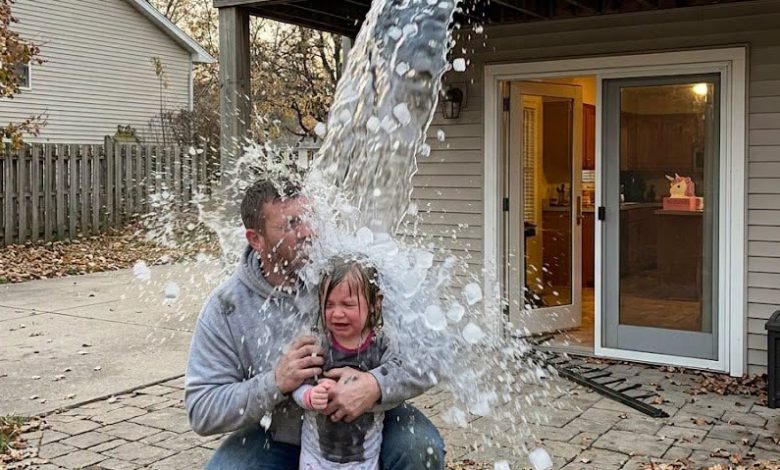
I’ll make her child sick.” Before I could even react, a bucket of icy water was dumped over us. Sarah laughed from the doorway. “Fastest way to lower a fever. Now take your burden and leave.” I rushed my daughter to the hospital. Then I made one phone call. “Activate the team. Return to my house. Target confirmed.” She had no idea who she had just humiliated. And she was about to find out.
Autumn wind pushed dry leaves across the driveway while I worked under the hood of my old 2004 Ford F-150, grease ground into my hands and the elbows of my faded gray hoodie. To Sarah, that truck and those clothes proved everything she wanted to believe about me.
“Still pretending to be useful?”
She stood in the garage doorway holding a vanilla latte, looking at me like I had wandered onto somebody else’s property.
Sarah was Claire’s older sister. She had arrived three months earlier after a breakup and what she called a toxic work situation. Claire had offered her our guest room for a few weeks. Sarah stayed for months—and somewhere along the way, she started acting like the house belonged to her.
“The truck needed a belt,” I said. “It runs fine now.”
“Maybe you can use it to drive to a job interview. Claire is working herself to death in Chicago while you play mechanic. If this were my house, you’d be living in a tent.”
I let her talk.
She didn’t know Claire’s trip to Chicago was a vacation I had paid for. She didn’t know there was no mortgage because I had bought the house outright. She definitely didn’t know the card she had been using for coffee was connected to my account.
Most important, she didn’t know what I actually did in the Army.
I had spent years learning when to respond and when not to. At home, with my daughter turning five, I wanted peace more than I wanted to prove anything.
So I wiped the grease from my hands and went to pick up Sophia’s birthday cake—a pink unicorn cake with sprinkles she had talked about for days.
When I returned, the temperature had dropped hard. The house was strangely quiet.
“Sophia? Honey, I got the cake!”
Nothing.
Sarah sat on the couch watching television with a glass of wine. Her ten-year-old son, Lucas, was on the floor playing video games.
“Where’s Sophia?”
“Outside.”
I stopped. “Outside where?”
“The patio. She was coughing. I’m not letting Lucas get sick before soccer tryouts.”
The cake box stayed on the counter.
I ran to the back of the house and pulled open the curtains.
Sophia was curled into a ball on the stone patio in thin cotton pajamas. Her cheeks were blotchy red. Her entire body shook hard enough that I could see it through the glass.
The sliding door was locked.
Worse, Sarah had dropped the security bar into place.
“Sophia!”
I fought the lock, then slammed my shoulder into the frame until the bar broke loose. Cold air rushed inside as I dropped beside my daughter.
“Daddy?” Her teeth chattered between the words. “Aunt Sarah said I have germs. She said I can’t come in.”
I pressed my palm to her forehead.
Burning.
The air outside was around forty degrees, but her skin felt like a furnace. I estimated her fever was at least 104.
“I’ve got you, baby.”
Then Sarah’s voice came from above us.
“Hey!”
I looked up.
She was standing on the balcony with a large yellow cleaning bucket in both hands.
“What are you doing?” I shouted. “She’s sick!”
Sarah tipped the bucket.
Gallons of icy water crashed over us. Ice cubes struck the patio stones and bounced around my knees. Sophia’s pajamas went instantly dark and clung to her shaking body.
She made a weak, broken sound that scared me more than any scream could have.
Sarah laughed.
“Fastest way to break a fever. Now take that burden and get out. I’m not having my weekend ruined because she’s contagious.”
She turned toward the house.
I didn’t argue. I didn’t threaten her. I pulled Sophia against my chest, stood with water streaming from both of us, and ran for the truck.
PART 2
I got Sophia into the truck with her wet pajamas wrapped against me and drove straight to the hospital. My hands stayed steady on the wheel, but every time I looked over and saw her shivering, something inside me tightened another notch.
At the hospital, getting her inside was the only thing that mattered. The birthday cake was still sitting untouched back at the house. Sarah’s insults, the coffee, the truck, every cheap shot she had taken at me suddenly felt very small compared with what she had done to my five-year-old daughter.
Once Sophia was being cared for, I stepped away and pulled out the phone Sarah had always mocked as an outdated brick.
I made one call.
When the line connected, my voice was quiet.
“Activate the team. Return to my house. Target confirmed.”
There was no speech about revenge. No explanation of my rank. No warning for Sarah.
I ended the call, slipped the phone back into my wet hoodie, and turned toward Sophia as the team began its return to my house.
The hospital room was quiet except for the steady sounds of machines and the soft movement of nurses checking on Sophia. Her father sat beside her bed, still wearing the same faded gray hoodie that had been covered in water only hours earlier. His daughter was finally warm, but the image of her standing outside in thin pajamas would not leave his mind.
He kept replaying the moment he pulled back the curtain and saw her curled up on the cold patio. He remembered her tiny voice telling him that Aunt Sarah said she had germs and could not come inside. He remembered the locked door. He remembered the bucket of icy water falling over both of them.
Sarah had spent months looking at him like he was a failure. She saw an old pickup truck, worn clothes, and a man who fixed things with his own hands. She never saw the years of discipline behind his quiet nature. She never understood that the person she dismissed as a struggling veteran had spent years working in Army Intelligence.
She judged what was visible and ignored everything she could not see.
That mistake was about to change.
Before this day, the tension in the house had been building slowly. Sarah was Claire’s older sister, and she had moved into their guest room after a difficult breakup and what she described as a toxic work situation. Claire wanted to help her. A few weeks turned into months, and Sarah became comfortable in a home that was never hers.
At first, she acted grateful. Then she started making comments.
The comments became criticism.
The criticism became disrespect.
She looked at every ordinary thing in the house and used it as proof that she was somehow above him. The old Ford F-150 in the driveway was not a reliable truck that had carried a family through years of life. To Sarah, it was evidence that he was stuck.
The hoodie he wore while repairing the truck was not a comfortable piece of clothing after a long week. To Sarah, it was another reason to look down on him.
One afternoon, while he worked under the hood, Sarah stood in the garage doorway holding her coffee and watched him like he was entertainment.
“Still pretending to be useful?” she asked.
He did not answer with anger. He simply kept working.
The truck needed a belt replaced. It was a simple repair. Something he could handle himself.
Sarah used that moment to make another attack.
“Maybe you can use it to drive to a job interview,” she said. “Claire is working herself to death while you play mechanic. If this were my house, you would be living in a tent.”
She believed she had the full story.
She did not know the trip Claire took to Chicago had been paid for by him. She did not know the house had no mortgage because he had already bought it. She did not know the coffee card she used every day was connected to his account.
Most importantly, she did not know who he really was.
But he had never felt the need to announce it.
After years in the Army, he understood something Sarah did not. Not every battle needed a response. Some people revealed themselves through their own choices.
His priority was simple.
His daughter.
That was why he ignored the insults and focused on making Sophia’s fifth birthday special.
He picked up the cake she had been talking about for days. It was a pink unicorn cake covered with sprinkles, exactly what she wanted.
When he came back home, the atmosphere felt wrong.
The house was too quiet.
He called out for Sophia.
Nothing.
Then he saw Sarah sitting comfortably on the couch, watching television with a drink in her hand. Her son Lucas was on the floor playing video games.
“Where’s Sophia?” he asked.
“Outside.”
The answer stopped him.
“Outside where?”
Sarah acted like it was no big deal.
“She was coughing. I’m not letting Lucas get sick before soccer tryouts.”
For a second, he could not believe what he was hearing.
Then he moved.
He ran to the back of the house and pulled open the curtain.
There she was.
His five-year-old daughter was curled up on the stone patio. Her thin pajamas were not enough for the cold weather. Her cheeks were bright red, and her body was shaking.
The sliding door was locked.
The security bar was in place.
Someone had made sure she could not get back inside.
He forced the door open and dropped beside her.
“Daddy?” Sophia whispered.
Her teeth were chattering.
“Aunt Sarah said I have germs. She said I can’t come in.”
His hand touched her forehead.
She was burning with fever.
The cold air outside made the situation worse. His only thought was getting his daughter safe.
“I’ve got you, baby.”
Then Sarah appeared above them.
She was holding a large yellow cleaning bucket.
“What are you doing?” he shouted.
She did not look worried.
She looked annoyed.
“She needs to cool down,” Sarah said.
Then she poured the water.
The ice-cold water hit them both.
Sophia’s pajamas became soaked instantly. The ice cubes scattered across the patio. The little girl made a weak sound that frightened him more than any argument ever could.
Sarah laughed.
“Fastest way to break a fever,” she said. “Now take that burden and leave. I’m not ruining my weekend because she’s contagious.”
That was the moment everything changed.
He did not scream.
He did not threaten her.
He did not give her the reaction she wanted.
He picked up his daughter and carried her to the truck.
The cake stayed on the kitchen counter.
The birthday celebration could wait.
His daughter could not.
At the hospital, every decision was about Sophia. Doctors and nurses worked to care for her while her father stayed close. His anger was still there, but it was controlled.
Sarah had spent months trying to make him feel powerless.
She had mistaken silence for weakness.
She had mistaken patience for ignorance.
She had no idea that the quiet man she mocked had spent his life learning how to gather information, make decisions, and act only when necessary.
Once Sophia was receiving care, he stepped away from the room.
He looked down at the old phone Sarah always joked about. She called it outdated. She laughed at the way he kept it instead of buying something newer.
She never knew what that phone represented.
He made one call.
When someone answered, his voice stayed calm.
“Activate the team. Return to my house. Target confirmed.”
Then he ended the call.
There was no speech.
No dramatic warning.
No explanation for Sarah.
She would learn soon enough.
For years, she believed she understood the man living under the same roof. She believed his clothes, his truck, and his quiet personality told her everything she needed to know.
But she never asked the most important question.
What happens when the person you underestimate finally decides enough is enough?
Back at the house, Sarah still believed she was in control. She believed the situation was another family argument she could explain away. She believed she was the person with the power.
She did not understand that the balance had already shifted.
The man she called a burden had been protecting his family quietly for years.
The father she dismissed had just watched someone hurt the person he loved most.
And when he finally decided to respond, Sarah was about to discover that some people are not silent because they have nothing to say.
Some people are silent because they are choosing the exact moment to act.
THE END STORIES! THANK YOU FOR READING GOOD LUCK !❤️
Related Posts