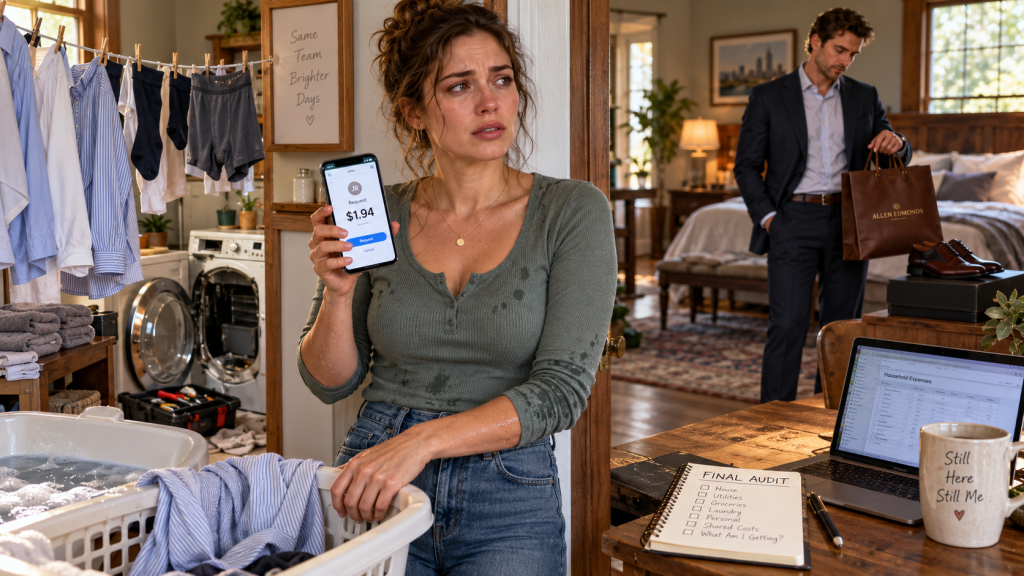
My parents texted me: “Don’t come to our wedding anniversary party. Only high-society guests will be there.” So I stayed alone in my apartment. But on that very day, my sister called, her voice shaking: “Why did you hide this from the family?” Mom and Dad had just seen the news and…

My parents texted me at 8:12 on the morning of their fortieth wedding anniversary.
“Don’t come tonight. Only high-society guests will be there. We don’t want things to feel awkward.”
I read it twice in my Cambridge apartment, still wearing the old gray sweatshirt my mother once called “proof I had given up.”
My name is Hannah Reed. I was thirty-six, unmarried, and—in my parents’ version of my life—still “doing computer work for some little medical company.”
They preferred my younger sister, Olivia. She married a cardiologist, lived in Beacon Hill, knew which fork belonged beside which plate, and never arrived anywhere without a coat that looked expensive.
I typed, “Understood.”
Then I made coffee and stayed home.
Their anniversary party was being held at the Ashford Hotel in Boston: champagne wall, string quartet, two hundred guests, and a ballroom my father had described as “the room where people finally see what we built.”
At 6:47 p.m., my phone rang.
Olivia.
I almost ignored it.
“Hannah,” she said when I answered. Her voice was shaking. “Why did you hide this from the family?”
“Hide what?”
Behind her, I heard dozens of people talking at once.
“Turn on Channel Seven.”
I switched on the television.
There I was.
Not live. A recorded interview from that afternoon.
The headline beneath my face read: NORTHSTAR MEDICAL ROBOTICS ANNOUNCES $118 MILLION PARTNERSHIP.
For nine years, I had built Northstar from a rented workshop behind a rehabilitation clinic. Our robotic mobility system had just received national distribution through one of the country’s largest hospital networks. I still owned the controlling interest.
My family knew I worked there.
They did not know I founded it.
That had been deliberate.
The last time I mentioned a promotion, Dad asked how much I could lend Olivia for a kitchen remodel.
On television, the anchor called me “one of Boston’s most closely watched medical-technology founders.”
Olivia whispered, “Mom just dropped her glass.”
Then I heard my father in the background.
“Give me the phone.”
His voice came on hard and breathless.
“Hannah, get dressed and come here now.”
“You told me not to.”
“This is different.”
I smiled without feeling anything.
“No. It’s exactly the same.”
Then Olivia sent me a photograph from the ballroom.
It showed a glossy investment booklet sitting beside my father’s champagne glass.
Across the cover were the words:
REED CAPITAL DEVELOPMENT — STRATEGIC PARTNER: NORTHSTAR MEDICAL ROBOTICS.
My company.
My name.
And a partnership I had never agreed to.
PART 2: THE PARTNERSHIP MY FATHER INVENTED
I stared at the photograph Olivia had sent.
The booklet was glossy.
Heavy stock.
Embossed lettering.
Expensive enough to look official from across a ballroom.
REED CAPITAL DEVELOPMENT
STRATEGIC PARTNER: NORTHSTAR MEDICAL ROBOTICS
My company.
My logo.
My work.
My name being used in a room I had specifically been told not to enter.
For a few seconds, I said nothing.
Then my father came back onto the phone.
“Hannah?”
His voice had changed.
Less commanding now.
More urgent.
“Come to the hotel.”
“No.”
“Stop being difficult.”
I almost laughed.
There it was.
Thirty-six years old.
Founder of a company valued high enough to be discussed on television.
And in one sentence, my father had reduced me to a stubborn child refusing to put on shoes.
“I’m not being difficult.”
“You’re embarrassing us.”
That actually made me laugh.
Quietly.
“You asked me not to attend.”
“That was before we knew.”
“Before you knew what?”
Silence.
I let it stretch.
Dad answered carefully.
“Before we understood the scale of what you were doing.”
My chest tightened.
Not before we understood you.
Not before we realized we were wrong.
Before we understood the scale.
Money.
Prestige.
Visibility.
The things my parents recognized instantly when love took too much imagination.
I looked again at the booklet.
“Who made this?”
Dad exhaled.
“Hannah.”
“Who made the booklet?”
“It’s marketing.”
“For what?”
“Our development fund.”
I went completely still.
“Our?”
He heard it.
“I mean Reed Capital’s.”
“Your company.”
“Yes.”
“Not mine.”
“No.”
“Then why is Northstar on the cover?”
Dad paused.
That pause told me more than any answer.
I stood.
Walked toward the kitchen counter.
Set my coffee down.
It had gone cold.
“Dad.”
“We’ve had preliminary conversations.”
“No, you haven’t.”
“With people connected to you.”
“Who?”
“Advisers.”
“Names.”
“Hannah, this is not the time.”
“It became the time when you printed my company logo beside yours.”
Olivia’s voice appeared faintly in the background.
“Dad, just tell her.”
He snapped:
“Stay out of this.”
I closed my eyes.
Same family.
Same choreography.
One person asks a question.
Dad decides the question is disrespect.
Mom reframes the conflict as embarrassment.
Olivia smooths the room.
I leave.
Except I was already gone.
That was the difference.
I was sitting in my own apartment.
He had no room to make me walk out of.
“Put Olivia back on.”
“Hannah.”
“Put her back on.”
Silence.
Then:
“Fine.”
The phone shifted.
Olivia came on.
“Hannah?”
“What exactly is happening there?”
She hesitated.
“A presentation.”
My stomach tightened.
“What presentation?”
“Dad’s.”
“About Reed Capital?”
“Yes.”
“What is he saying?”
Olivia lowered her voice.
“He’s telling people Reed Capital is positioned to lead a major real-estate and infrastructure expansion around Northstar’s growth.”
I stopped breathing.
“What?”
“He said something about satellite rehabilitation centers.”
I sat down slowly.
Northstar had announced a distribution partnership.
We had not announced a real-estate program.
We had not selected satellite locations.
We had not hired Reed Capital.
We had not even begun that stage of planning.
“What else?”
Olivia whispered:
“There’s a slide deck.”
Of course there was.
“What’s on it?”
“Northstar facilities.”
“Maps.”
“Projected expansion zones.”
“And Dad keeps saying ‘preferred development channel.’”
My stomach turned cold.
Preferred development channel.
It sounded just vague enough to avoid being a direct statement of contract.
And just official enough to make investors think one existed.
My father knew exactly what he was doing.
Not enough truth to be safe.
Enough suggestion to be profitable.
I asked:
“Who’s in the room?”
Olivia looked around.
“People from the bank.”
“Two private-equity guys Dad knows.”
“Some real-estate people.”
“City development people.”
I closed my eyes.
Not a party anymore.
A pitch.
My parents had turned their anniversary into a capital-raising event.
And my company was the centerpiece.
Without me.
“Is there an investment commitment sheet?”
“What?”
“A sign-up page.”
“Maybe.”
“Look.”
I heard movement.
Voices.
Glassware.
Then:
“Yeah.”
My heart started pounding.
“What does it say?”
“Interest indication.”
“For Reed Capital Development Fund IV.”
“How much are they raising?”
Olivia inhaled.
“Forty million.”
The room inside me went completely silent.
Forty million dollars.
Using Northstar’s growth story.
My growth story.
As implied credibility.
Dad came back onto the line.
“That does not mean we’ve collected anything.”
I had not realized he was listening.
“Yet.”
I said it softly.
He went quiet.
I continued.
“You are asking people to express investment interest based on a relationship that doesn’t exist.”
“It’s early-stage positioning.”
“No.”
I stood.
“It is unauthorized.”
His voice hardened.
“Watch your tone.”
Something in me cracked.
Not anger.
Something older.
A final thread.
“I am thirty-six years old.”
Silence.
“I employ over two hundred people.”
His voice changed slightly.
“I know.”
“No.”
“You learned that tonight.”
He said nothing.
“I have spent nine years building a company you dismissed as computer work.”
“Hannah—”
“You told me not to attend your anniversary because you thought I would look out of place.”
“That was your mother’s wording.”
I laughed once.
Of course.
Pass the cruelty sideways.
“Did you agree with the text?”
He did not answer.
“Did you stop her from sending it?”
Still nothing.
“Then it was your wording too.”
Behind him, I heard my mother.
“Give me the phone.”
Then her voice.
“Hannah.”
I almost hung up.
Instead I waited.
She sounded angry.
Not ashamed.
Angry.
“You need to understand how humiliating this has become.”
I looked at the television.
My own face was still frozen on the screen from the interview segment.
“Humiliating for who?”
“For us.”
“Why?”
“Because everyone here just found out from the news.”
I stared.
Found out.
Not that I had been excluded.
Not that Dad had used my company.
That I had succeeded.
That was the humiliation.
My success had made their judgment visible.
Mom continued.
“People are asking why we never told them.”
I almost smiled.
“What are you saying?”
“That you’re private.”
I laughed.
“Hannah.”
“No.”
“You told people I do computer work at a little medical company.”
“That is what you told us.”
“No.”
“I told you I worked at Northstar.”
“You never said you owned it.”
“I said I helped build it.”
Mom exhaled.
“That could mean anything.”
Exactly.
To her, “helped build it” meant employee.
Because she could imagine me working for someone important more easily than she could imagine me becoming important without asking permission.
Then she said:
“You always make everything so secretive.”
My anger arrived then.
Clean.
Cold.
Not explosive.
“You mean like the last time I told Dad about my compensation package and he asked whether I could pay for Olivia’s kitchen?”
Olivia’s voice in the background:
“Mom.”
Mom ignored her.
“That was a family request.”
“No.”
“That was an invoice.”
“Hannah, don’t be cruel.”
I almost laughed again.
Cruel.
Interesting word from a woman who had texted her own daughter not to attend a family anniversary because richer strangers might feel awkward.
I looked at the booklet photograph one more time.
“Mom.”
“What?”
“Did you know Dad was using Northstar tonight?”
Silence.
My stomach tightened.
“You knew.”
“It wasn’t supposed to be a problem.”
I closed my eyes.
There it was.
“How long?”
“Hannah—”
“How long have you known?”
“A few weeks.”
My entire body turned cold.
“Olivia?”
She answered quietly.
“I didn’t.”
I believed her.
Mom continued.
“Your father was trying to build something for the family.”
“What family?”
She stopped.
“The Reed family.”
I whispered:
“I am a Reed.”
Nobody spoke.
Then:
“You just didn’t think I belonged at the party.”
Mom inhaled sharply.
“That isn’t fair.”
“No.”
I said it calmly.
“It isn’t.”
Then I hung up.
For two seconds, the apartment was completely silent.
Then my phone began ringing again.
Dad.
Mom.
Dad.
Olivia.
Unknown number.
Unknown number.
Unknown number.
I turned the phone face down.
And called my general counsel.
Her name was Priya Shah.
She answered on the third ring.
“Hannah?”
“Sorry.”
“What happened?”
“Can you check your email?”
“Why?”
“I’m sending you a photo.”
I sent the booklet.
There was a pause.
Then:
“Oh.”
One word.
Very lawyerly.
“What?”
“Tell me this is fake.”
“I don’t know what it is.”
“Did we authorize Reed Capital to use our name?”
“No.”
“Logo?”
“No.”
“Discuss development partnership?”
“No.”
“Do they have access to internal expansion projections?”
My stomach dropped.
“Not legally.”
Longer pause.
“Hannah.”
“I know.”
“No.”
Her voice sharpened.
“Do they have maps?”
I thought of Olivia’s description.
Expansion zones.
Facility projections.
Preferred development channel.
“Yes.”
“Then somebody may have internal information.”
My chest tightened.
“Could it be public?”
“Some of it.”
“Not enough for maps.”
“Exactly.”
I walked to the window.
Cambridge lights reflected across the glass.
People passed below carrying groceries.
Couples walking dogs.
Normal lives.
Mine was apparently being used as a fundraising deck three miles away.
Priya asked:
“Who inside Northstar knows your father?”
“Almost nobody.”
“Who knows he’s your father?”
“Senior leadership.”
“Anyone in development?”
I stopped.
One name came immediately.
Daniel Cross.
Vice president of strategic facilities.
Forty-two.
Smart.
Polished.
Joined us eighteen months earlier.
And two weeks ago, he asked whether I knew Reed Capital.
I had said:
“My father runs it.”
He had smiled.
“Small world.”
At the time, I thought nothing of it.
Now my skin went cold.
“Priya.”
“What?”
“Daniel Cross.”
She went quiet.
“Why?”
“He asked me about Reed Capital.”
“When?”
“Two weeks ago.”
“Context?”
“Casual.”
“There’s no such thing as casual anymore.”
“I know.”
She exhaled.
“I’m calling IT security.”
“Tonight?”
“Yes.”
“Can we do that without creating panic?”
“We can preserve logs without accusing anyone.”
Good.
Evidence first.
No family confrontation.
No dramatic ballroom entrance.
For the first time that evening, my breathing steadied.
This was my world.
Not champagne.
Not social rank.
Systems.
Records.
Access.
Facts.
Things that did not care whether my mother thought my coat looked expensive.
Priya continued.
“Do not contact your father about documents again.”
“Too late.”
“What did you say?”
“That he was using my company without permission.”
“Anything threatening legal action?”
“No.”
“Good.”
“Should I go to the hotel?”
“No.”
The answer came so quickly I almost laughed.
“Absolutely not.”
“Why?”
“Because your father wants you there now.”
That stopped me.
Priya continued.
“Think about it.”
“He excluded you when you were socially inconvenient.”
“Now you are valuable.”
“If you walk into that ballroom tonight, he gets to absorb your credibility in real time.”
My stomach tightened.
She was right.
The image alone would do it.
Founder daughter appears.
Shakes hands.
Takes photographs.
People assume family partnership.
My father would not need a signed contract.
He would have a room full of visual implication.
“Stay home.”
Priya said.
“We preserve evidence.”
“We send a formal notice.”
“And if Reed Capital is still presenting your company as a strategic partner, we make them stop.”
I sat down.
“Okay.”
Then Olivia called again.
I answered.
“Hannah.”
Her voice sounded worse.
“What happened?”
“Dad just told everyone you’re on your way.”
I almost laughed from disbelief.
“What?”
“He said you were delayed because of media obligations.”
My eyes closed.
Of course he did.
“Olivia.”
“I know.”
Her voice cracked.
“I know.”
“Did he say I approved anything?”
“He said you’ve been ‘working quietly with family behind the scenes.’”
My jaw tightened.
“That’s false.”
“I know.”
“Did anyone record it?”
Silence.
Then:
“Yes.”
I opened my eyes.
“You?”
“Yes.”
Something shifted inside me.
“Send it.”
She did.
Thirty seconds later, the file arrived.
I pressed play.
My father’s voice filled my apartment.
Confident.
Warm.
The exact tone he used whenever strangers were listening.
Hannah has always been extremely private about her work, but we’ve been quietly discussing how Reed Capital can support Northstar’s next stage.
Applause.
Actual applause.
Then:
Family businesses work best when each generation contributes its strength.
My chest tightened.
Family business.
He had never invested in Northstar.
Never mentored me.
Never introduced me to investors.
Never attended the rehabilitation-clinic demo where our first prototype nearly failed because the left actuator overheated.
Never helped me carry equipment up three flights of stairs when we could not afford delivery.
But now—
family business.
Olivia whispered:
“There’s more.”
I kept listening.
We expect to be involved in a meaningful portion of the company’s physical expansion.
Expect.
Carefully chosen.
Then:
Tonight isn’t about selling investments.
Laughter.
It’s about celebrating what the Reed family has built together.
I stopped the recording.
My hand was shaking.
Not because he had lied about a contract.
Because he had rewritten nine years of my life into something he had participated in.
He had erased the rented workshop.
The late-night coding.
The grants I wrote myself.
The investor who told me rehabilitation technology was “too niche.”
The week payroll nearly failed.
The first patient who stood with our prototype and cried.
He wanted the finished building without acknowledging he had never lifted a brick.
Olivia whispered:
“I’m sorry.”
I closed my eyes.
“For what?”
“For all of it.”
“You didn’t do this.”
“No.”
She inhaled.
“But I benefited from how they treated us differently.”
That silenced me.
Olivia continued.
“I knew they underestimated you.”
“I didn’t know this.”
“But I knew.”
My throat tightened.
“Olivia.”
“Dad paid the down payment on our Beacon Hill place.”
“I know.”
“He told everyone it was because Michael and I represented the family well.”
I stared out the window.
She continued.
“When you bought your apartment, they gave you a toaster.”
I laughed.
I could not help it.
A terrible, real laugh.
“Yes.”
“It was a nice toaster.”
That made both of us laugh.
Then she started crying.
“I’m serious.”
“I know.”
“I kept telling myself you didn’t care.”
I softened.
“I acted like I didn’t.”
“Why?”
“Because caring was embarrassing.”
Silence.
Then Olivia whispered:
“They like needing you now.”
I felt something inside me go still.
“What?”
“I can see it.”
Her voice dropped.
“Mom keeps telling people how proud she is.”
“Dad keeps saying you got your discipline from him.”
I closed my eyes.
Of course.
Failure had been mine.
Success was hereditary.
Then Olivia said:
“And there’s a man here asking for you.”
“What man?”
“Gray suit.”
“Maybe sixty.”
“He says his name is Charles Vale.”
I froze.
Charles Vale.
Founder of Vale Health Systems.
One of the largest hospital networks in the Northeast.
Not our new distribution partner.
A different network.
A man I had been trying to get in front of for almost two years.
“He’s there?”
“Yes.”
“Why?”
“He came because Dad invited him.”
My stomach turned.
“How does Dad know him?”
“No idea.”
Then Olivia hesitated.
“Hannah?”
“What?”
“Charles is holding the booklet.”
I closed my eyes.
There it was.
The real danger.
Not embarrassment.
Not family drama.
Commercial confusion.
A major hospital executive might walk away believing Northstar had tied itself to my father’s development fund.
Priya’s advice vanished from my mind.
For one second, I wanted to run to the hotel.
Then I stopped.
No.
Not like that.
I called Priya.
“Charles Vale is there.”
She swore.
First time I had ever heard her.
“Okay.”
“What do we do?”
“Do you have his number?”
“Yes.”
“Call him directly.”
My heart pounded.
“Now?”
“Yes.”
“No ballroom.”
“No father.”
“No optics.”
“Founder to executive.”
I nodded even though she could not see.
Then called.
Charles answered.
“Hannah Reed.”
His voice sounded amused.
“Interesting evening.”
My stomach tightened.
“Mr. Vale.”
“Charles.”
“Charles.”
I took a breath.
“I need to clarify something immediately.”
“I assumed you might.”
Of course he knew.
Men like Charles did not become billion-dollar healthcare executives by believing glossy booklets at anniversary parties.
“Northstar has no strategic partnership with Reed Capital Development.”
Silence.
Then:
“I see.”
“We did not authorize use of our logo.”
“Understood.”
“We have not appointed them as preferred developer.”
“Understood.”
“And I am not attending tonight.”
He laughed quietly.
“That part I gathered.”
“How?”
“Your father said you were on your way fifteen minutes ago.”
My jaw tightened.
Charles continued.
“Then your sister walked past looking like she wanted to set the projector on fire.”
Despite everything, I smiled.
“That sounds like Olivia.”
He lowered his voice.
“Do you want advice?”
I almost said no.
Then:
“Yes.”
“Don’t come here.”
Priya had been right.
Again.
Charles continued.
“If you walk into this room tonight, half these people will remember only the photograph.”
“You.”
“Your father.”
“The booklet.”
“That becomes the story.”
I swallowed.
“So what do I do?”
“Put the truth in writing.”
“That becomes the record.”
I closed my eyes.
Record.
Good.
I could work with record.
“Thank you.”
“Also.”
“Yes?”
“Your technology is better than your family’s brochure.”
I laughed.
“That might be the nicest thing anyone has said to me tonight.”
“Low bar.”
Then he hung up.
Priya drafted the notice within twenty minutes.
Short.
Clinical.
Devastating.
Northstar Medical Robotics has not entered into any partnership, development agreement, investment relationship, or strategic affiliation with Reed Capital Development.
Reed Capital is not authorized to use Northstar’s name, trademarks, internal projections, facility plans, or commercial materials.
Any statements suggesting otherwise should be corrected immediately.
We sent it to Reed Capital.
My father.
My mother.
The hotel event coordinator.
Northstar’s board.
Our communications team.
And, because the booklet had already circulated, Priya recommended sending it to a short list of known recipients.
Not public yet.
Controlled.
Precise.
The response was immediate.
Dad called.
I did not answer.
Mom called.
I did not answer.
Then a text.
How could you do this to us on our anniversary?
I stared at it.
For a full minute.
Then typed:
You used my company without permission on your anniversary. The date did not make it legal.
I sent it.
My hands stopped shaking.
Twenty minutes later, Olivia called.
“They stopped the presentation.”
“Good.”
“Dad is furious.”
“Good.”
She laughed despite herself.
“Mom is crying.”
I said nothing.
Then Olivia added:
“People are leaving.”
That hurt.
Not because I wanted their party ruined.
Despite everything, I did not.
Forty years married was still forty years.
But they had chosen to turn the celebration into something else.
A fundraising opportunity.
A social display.
A chance to borrow my credibility after excluding me from the room.
Consequences had arrived wearing the same clothes as their choices.
Olivia continued.
“Charles Vale left.”
“Okay.”
“He shook my hand.”
“Congratulations.”
“Shut up.”
I smiled.
Then:
“Is Dad still taking commitments?”
“No.”
“Are the booklets being collected?”
“Yes.”
“Make sure one stays.”
“I already took three.”
I laughed.
“You’re learning.”
“I have a sister in tech.”
There was warmth in it.
Something we had not had in years.
Then her voice changed.
“Hannah.”
“What?”
“I found something.”
My stomach tightened.
“What?”
“Inside Dad’s briefcase.”
I closed my eyes.
“Why were you in his briefcase?”
“Because he told me to get his charger.”
Fair.
“What did you find?”
“A letter.”
“From who?”
“Northstar.”
My body went cold.
“What?”
“Not current.”
“Dated eight months ago.”
I stood.
“Send me a picture.”
She did.
The letterhead was ours.
Northstar Medical Robotics.
Facilities Division.
Addressed to:
REED CAPITAL DEVELOPMENT
Attention:
Thomas Reed
My father.
The first paragraph thanked Reed Capital for “informal discussions regarding potential future facility development.”
My heart started pounding.
This was real.
Not fake.
At least not entirely.
Then I saw the signature.
Daniel Cross
Vice President, Strategic Facilities.
I called Priya immediately.
“He contacted my father.”
“What?”
“I have a letter.”
I forwarded it.
Long silence.
Then:
“This changes the internal side.”
“Does it change the unauthorized partnership?”
“No.”
“Daniel had no authority to commit the company alone.”
“But it explains the materials.”
“Possibly.”
I kept reading.
The letter said preliminary conversations were confidential.
No public announcement.
No use of Northstar marks.
No representation of agreement.
So Dad knew.
He knew exactly what he was not allowed to do.
My stomach turned.
Then I saw a handwritten note across the bottom.
Dad’s handwriting.
Need Hannah out of first-round conversations. She gets emotional about conflicts. Daniel says easier to structure before board sees it.
Everything inside me stopped.
I read it again.
Out of first-round conversations.
My own company.
My own father.
And Daniel Cross had apparently been talking about how to work around me.
Priya said my name.
“Hannah?”
“I’m here.”
“What does the note say?”
I told her.
She went silent.
Then:
“Do not contact Daniel.”
“I wasn’t going to.”
“Good.”
“I’m asking IT to preserve his emails, messages, access logs, file downloads, and external communications.”
My chest tightened.
“Can we suspend his access?”
“With the information we have now?”
“Yes.”
“We should.”
I sat back down.
The room felt colder.
This was no longer only my father exploiting my success.
Someone inside Northstar had opened the door.
I whispered:
“Why would Daniel do this?”
Priya answered:
“We don’t know yet.”
Money.
Future role.
Family connection.
Real-estate commissions.
Maybe something else.
No guesses.
Evidence.
Always evidence.
Olivia called again.
“Hannah.”
“What now?”
“Dad knows I took the letter.”
Of course.
“What happened?”
“He asked for it back.”
“Do not give him the original if it’s yours to hold lawfully.”
“I photographed everything.”
“Good.”
She was quiet.
Then:
“He said you’re going to destroy him.”
I closed my eyes.
“What did you say?”
“That maybe he shouldn’t have built something that depended on you never finding out.”
I smiled despite myself.
“Thank you.”
“He didn’t like it.”
“I’m devastated.”
Olivia almost laughed.
Then whispered:
“There’s another page.”
“What page?”
“Behind the letter.”
My chest tightened again.
“It’s a draft term sheet.”
“Between who?”
“Reed Capital and an entity called Northstar Expansion Holdings.”
I stood.
“That entity does not exist.”
“I figured.”
“Who created the draft?”
“There’s no law-firm name.”
“Any signatures?”
“No.”
“Numbers?”
“Yes.”
“What numbers?”
Olivia went quiet.
“Hannah.”
“What?”
“Your father was asking for twenty percent.”
My mouth went dry.
“Of what?”
“Development equity tied to future Northstar facility expansion.”
I stared at the wall.
Twenty percent.
Of projects my company had not approved.
Under a structure we had not created.
Then Olivia added:
“There’s a note beside it.”
My stomach dropped.
“What note?”
She inhaled.
“Dad wrote…”
Then stopped.
“Olivia.”
She read it.
Once Hannah is brought in, position as family legacy. She won’t say no publicly.
I closed my eyes.
There it was.
The party.
Maybe not the whole plan.
But part of it.
Get the booklet into the room.
Build social expectation.
Put investors around me.
Frame the relationship as family legacy.
Then bring me in.
Make refusal look like betrayal.
My parents had told me not to come because I did not fit the image they wanted.
Then, once they learned what I was worth, they intended to bring me into the same room because my presence could close the deal.
I laughed.
Not because it was funny.
Because the cruelty was almost elegant in its hypocrisy.
At 10:18 p.m., Dad finally texted:
Come to the hotel. We can fix this privately.
I stared.
Then replied:
No.
He answered immediately.
You are overreacting.
I smiled.
Another familiar phrase.
Then typed:
No. I’m documenting.
No response.
For twenty-three minutes.
Then Olivia called one last time.
She sounded strange.
Not frightened.
Stunned.
“Hannah.”
“What happened?”
“Dad left.”
“Okay.”
“No.”
She swallowed.
“He didn’t leave the hotel.”
My stomach tightened.
“Then where?”
“He went upstairs.”
“To a room?”
“To Suite 1408.”
“Why?”
“I followed him.”
“Olivia.”
“I know.”
“What did you see?”
She whispered:
“Daniel Cross.”
Everything inside me went cold.
“At the hotel?”
“Yes.”
“In Dad’s suite.”
I stopped breathing.
“Are you sure?”
“I’ve seen him before.”
“Where?”
“At our house.”
The room tilted.
“What?”
Olivia continued.
“Two months ago.”
“Dad told me he was a consultant.”
My heartbeat pounded against my ribs.
“You never told me.”
“I didn’t know his name.”
Then:
“Hannah…”
Her voice dropped even lower.
“There’s another man with them.”
“Who?”
“I don’t know.”
“Describe him.”
“Older.”
“Silver hair.”
“Black glasses.”
Then she said:
“Dad called him Senator.”
I went completely still.
Not because politics frightened me.
Because Northstar had a pending state-level infrastructure grant.
A major one.
Public-private rehabilitation expansion.
Still confidential.
Still under review.
Only a tiny circle knew.
My father should not.
Daniel Cross should.
And suddenly the fake partnership booklet looked smaller than what might be happening upstairs.
I called Priya.
“Daniel is at the hotel with my father.”
Silence.
“And someone Olivia says Dad called Senator.”
Another silence.
Longer.
Then:
“Hannah.”
“I know.”
“No.”
Her voice sharpened.
“Do not go there.”
I looked toward my coat hanging beside the door.
Every angry instinct in me wanted to.
I wanted to see my father’s face.
Daniel’s.
Wanted to walk into Suite 1408 and ask exactly what part of my company they had been trading without me.
Instead, I sat down.
“You’re right.”
“Good.”
“What do we do?”
“Preserve.”
“Security logs.”
“Emails.”
“Access.”
“Grant files.”
“Any communications touching Reed Capital.”
Then:
“And you call the board chair.”
My chest tightened.
At 10:41 p.m., I did.
By midnight, Daniel Cross’s system access was frozen pending investigation.
By 12:14, our board had been notified.
By 12:30, Reed Capital had received a second preservation notice.
And at 12:43, Olivia sent me one final photograph.
Not of the ballroom.
Not of the booklet.
Suite 1408.
Door partly open.
My father inside.
Daniel Cross beside him.
And on the coffee table between them—
a printed map.
I recognized it instantly.
Northstar’s confidential state expansion map.
The one tied to the grant application.
The one showing proposed rehabilitation sites before any public announcement.
Across the top, in red letters, someone had written:
REED PRIORITY ACQUISITION ZONES
My hands went numb.
That was when I understood the real purpose of the fake partnership.
My father had not only wanted to impress wealthy guests.
He had been positioning Reed Capital to buy land around places where Northstar might expand.
Before the public knew.
Before prices moved.
Before anyone else had the information.
And someone inside my company had apparently helped him.
At 12:46, my father texted me:
Whatever Olivia thinks she saw, do not make assumptions.
I stared at the message.
Then at the photograph.
For thirty-six years, my parents had taught me that appearance mattered more than explanation.
That respectable people belonged in certain rooms.
That embarrassment was worse than cruelty.
That success counted most when other people could see it.
Tonight, they had finally taught me something useful.
Appearances were dangerous.
Records were better.
So I forwarded the photograph to Priya.
Then to the board chair.
Then I saved the original.
And for the first time that night, I did not feel excluded from my parents’ world.
I felt grateful I had never belonged to it.
Because downstairs, their high-society guests were still finishing champagne beneath chandeliers.
Upstairs, my father was sitting beside one of my executives with a confidential map he had no right to possess.
And somewhere between those two rooms, the anniversary party had stopped being a family insult.
It had become evidence.
PART 3: THE ROOM THEY NEVER WANTED ME IN
At 12:47 in the morning, Priya called me back.
“Hannah.”
“I’m here.”
“Do not delete anything.”
“I won’t.”
“Do not forward that photograph outside counsel, the board chair, and security.”
“Okay.”
“And do not contact your father again tonight.”
I stared at his last text.
Whatever Olivia thinks she saw, do not make assumptions.
Then I looked at the photograph.
My father.
Daniel Cross.
A confidential Northstar expansion map.
Red circles around land surrounding proposed rehabilitation sites.
REED PRIORITY ACQUISITION ZONES
“I’m done assuming.”
Priya went quiet.
Then:
“Good.”
I sat at my kitchen table until dawn.
Not crying.
Not raging.
Just watching the city go from black glass to gray morning.
At some point, my coffee became cold again.
That seemed to be the theme of the evening.
By seven, Northstar’s board chair, Martin Hale, had convened an emergency call.
Daniel Cross’s access remained suspended.
IT began preserving email, messaging, file-access history, downloads, and external transfers.
No accusation yet.
No dramatic announcement.
Just doors closing around evidence before anyone could rearrange it.
That distinction mattered.
My father had spent years using confidence as proof.
I was done answering confidence with emotion.
I wanted records.
By nine-thirty, we had them.
Daniel had downloaded the confidential expansion map eleven times over six weeks.
That alone was not improper.
It was part of his job.
What mattered was what happened afterward.
At least four versions had been exported outside approved systems.
Two had been sent to a personal email address.
One attachment had been forwarded to a domain associated with Reed Capital.
My father’s firm.
When Martin read that aloud, nobody on the board spoke.
Then Priya asked:
“Was that transfer authorized?”
Northstar’s head of security answered:
“No.”
My stomach tightened.
Martin looked toward me on the video call.
“Hannah.”
“Yes?”
“Did you ever authorize your father or Reed Capital to receive confidential site-selection materials?”
“No.”
“Did you authorize Daniel to discuss the grant geography externally?”
“No.”
“Did you authorize preliminary land acquisition through Reed?”
“No.”
Martin nodded slowly.
“Then we proceed on that basis.”
It was strange.
For years, my parents had made me feel as though saying no required a justification.
At Northstar, no was simply information.
No.
I did not authorize it.
Record that.
Move forward.
The next discovery came before lunch.
Daniel Cross had not acted for free.
Of course he hadn’t.
There was a draft consulting agreement between Reed Capital and an LLC tied to him.
The payments were structured as future advisory fees contingent on completed property acquisitions.
Not yet paid.
But promised.
If Northstar selected certain sites and Reed Capital bought surrounding parcels early enough, land values would likely rise.
My father had seen a future before the market saw it.
And instead of asking whether my company wanted to work with him—
he decided my information was more useful than my consent.
That realization hurt differently than being excluded from the anniversary party.
The text had been cruel.
The booklet had been arrogant.
This was theft of trust.
At one that afternoon, my father called from a new number.
I nearly answered.
Then didn’t.
He left a voicemail.
“Hannah.”
His voice sounded exhausted.
“I need you to stop this before it gets out of control.”
I laughed.
There it was again.
Stop this.
As though the investigation had created the conduct.
He continued.
“Daniel may have overstepped.”
May.
“But nothing was final.”
Nothing was final.
Apparently attempted exploitation became respectable if interrupted before closing.
Then:
“I was trying to create an opportunity for everyone.”
Everyone.
I closed my eyes.
He had always loved that word.
Family.
Everyone.
Legacy.
Words large enough to hide who was actually benefiting.
His voicemail continued.
“You have to understand that Reed Capital is not what it was ten years ago.”
Now I understood.
His company was struggling.
I knew that before Priya confirmed it.
Debt had risen.
Two development projects were delayed.
A lender had tightened terms.
Reed Capital needed a new story.
Northstar was the story.
A fast-growing medical robotics company.
A national distribution agreement.
Potential public infrastructure expansion.
Land.
Buildings.
Contracts.
Prestige.
My father had spent decades believing access was more valuable than creation.
He had been wrong until one of his daughters created something worth accessing.
I deleted nothing.
Saved the voicemail.
Forwarded it to Priya.
Then went back to work.
That was harder than it sounds.
People imagine success protects you from family pain.
It does not.
I still had meetings.
Engineering reviews.
A hiring decision.
A distribution call.
A product team asking whether a mobility platform could safely support a specific new configuration.
No one in those rooms knew that the night before my mother had texted me not to attend her anniversary because I might embarrass wealthy guests.
No one needed to.
For nine years, Northstar had been the place where I was not measured against Olivia’s husband, my clothes, my marital status, or whether I understood formal table settings.
I was measured against whether the prototype worked.
Whether payroll cleared.
Whether patients could use what we built.
That had always been enough.
By late afternoon, Daniel Cross requested counsel.
Good.
That meant the informal explanations were ending.
He was terminated three weeks later after the investigation confirmed unauthorized disclosures, undisclosed outside financial interests, and violations of company confidentiality policies.
The board referred the matter to appropriate authorities because the information involved confidential commercial plans and potentially improper financial activity.
I did not celebrate.
I had hired Daniel.
Promoted him.
Defended him once when another executive called him too ambitious.
Maybe they had been right for the wrong reason.
That bothered me.
Priya told me:
“You are not required to predict betrayal.”
I looked at her.
“No.”
She smiled faintly.
“But you are required to improve systems after finding it.”
That I could do.
So we did.
Northstar changed access controls.
More separation between strategic site planning and external development discussions.
Mandatory disclosure of family or outside financial relationships.
Stronger controls around exporting confidential material.
Not because one bad actor meant nobody could be trusted.
Because trust works better when it does not require blindness.
My father’s situation was worse.
Reed Capital had already used confidential information in preliminary land discussions.
Not every deal closed.
Some were only inquiries.
But enough documents existed to show intent.
The glossy anniversary booklet became especially ugly in context.
He had created the appearance of a strategic relationship while holding information obtained through an employee who had no authority to give it to him.
The investment-interest forms were frozen.
Potential investors backed away.
The Ashford Hotel sent a statement confirming the event presentation had been stopped after receiving Northstar’s notice.
Charles Vale gave our counsel a written account of what he heard.
And Olivia—
Olivia became the witness my father least expected.
Not because she hated him.
Because she finally stopped protecting the version of him that benefited her.
She gave counsel the recording of his ballroom speech.
The photograph from Suite 1408.
The letter from Daniel Cross.
The draft term sheet.
The handwritten notes.
And the photograph of the expansion map.
Dad called her twelve times the day she turned everything over.
She did not answer.
Then he texted:
After everything we’ve done for you.
Olivia sent me a screenshot.
Under it, she wrote:
There it is. The invoice.
I laughed.
Then cried.
Because she finally understood.
Our parents’ generosity had always carried accounting.
Down payment.
Prestige.
Praise.
Access.
Nothing was free if it could later be collected as obedience.
Olivia and I met for lunch two weeks after the party.
Not Beacon Hill.
A little Vietnamese place near my office where the tables were too close together and nobody cared what coat either of us wore.
She looked tired.
“You hate me?”
“No.”
She stared.
“Really?”
“No.”
“I kind of hate me.”
“That sounds inefficient.”
She laughed.
Then stopped.
“I should have noticed more.”
“Probably.”
Her eyes filled.
“You’re not going to make me feel better?”
“No.”
I picked up my water.
“You’re thirty-three.”
She laughed through tears.
“That was mean.”
“It was honest.”
She looked down.
Then:
“I liked being the easy daughter.”
There it was.
Not the favored daughter.
Easy.
I understood that better.
“You liked not being criticized.”
“Yes.”
“I liked that they approved of Michael.”
“Yes.”
“I liked that Mom called my house elegant and called yours…”
She stopped.
I smiled.
“Functional.”
Olivia groaned.
“God.”
“She meant it as an insult.”
“I know.”
Then her face softened.
“I think I kept telling myself you didn’t need them.”
I stared at her.
“Because I had work?”
“Because you looked fine.”
That hurt.
Fine.
The mask capable daughters wear while everyone distributes care elsewhere.
“I wasn’t fine.”
“I know now.”
I stirred my noodles.
“You know something else?”
“What?”
“I still don’t need them the way they wanted to be needed.”
She frowned.
“What does that mean?”
“I don’t need their approval to make my life legitimate.”
Olivia stared at me.
Then nodded.
“Yeah.”
That was the beginning of us becoming sisters again.
Not allies against our parents.
Something better.
Two women learning to know each other without the family ranking system in the room.
The legal side took over a year.
I will not pretend it ended with one spectacular courtroom scene.
That would have been satisfying.
Reality was messier.
Investigations.
Depositions.
Audits.
Regulatory questions.
Civil claims.
Negotiations.
Insurance carriers.
Lenders.
Board meetings.
Reed Capital lost investors and several planned deals.
My father was removed from day-to-day leadership after his partners decided his judgment had become a liability.
He eventually agreed to a civil settlement related to unauthorized use of Northstar’s marks and confidential materials.
Other matters involving information use and transactions were resolved through separate legal processes.
Daniel Cross faced professional and legal consequences of his own.
Nothing restored the night.
Nothing restored trust.
But the record no longer said what my father wanted it to say.
That mattered.
Northstar did not partner with Reed Capital.
My father did not build Northstar with me.
My family did not create my success.
They had discovered it on television.
That truth remained wonderfully plain.
My mother took longer to understand.
For the first three months, every message from her was about humiliation.
People are talking.
We can’t go anywhere without questions.
Your father’s name is being dragged through the mud.
Never:
Are you okay?
Never:
I’m sorry we excluded you.
Then one evening, six months after the anniversary, she appeared outside my apartment building.
No warning.
I almost did not let her upstairs.
Then I did.
Not because she was my mother.
Because I wanted to know whether anything had changed.
She walked inside and looked around.
My apartment was the same one she had mocked.
Books stacked beside the sofa.
Running shoes by the radiator.
Gray sweatshirt draped over a chair.
She saw it.
The sweatshirt.
Her eyes stopped.
“You still have that thing.”
“Yes.”
“I was awful about it.”
That surprised me.
She sat.
I did not offer wine.
Coffee only.
She wrapped both hands around the mug.
Then said:
“I thought you were wasting your life.”
There it was.
Not:
I didn’t know.
She had judged.
“I know.”
“You never married.”
“No.”
“You didn’t buy the kind of house Olivia did.”
“No.”
“You drove that terrible car.”
“It was reliable.”
“It had tape on the mirror.”
“One month.”
She almost smiled.
Then didn’t.
“I thought all of that meant you had failed.”
I leaned back.
“And when you discovered I hadn’t?”
Her eyes filled.
“I was proud.”
“No.”
She looked up.
“You were embarrassed.”
Silence.
I continued.
“You were embarrassed that other people knew something about me you didn’t.”
She cried.
“Yes.”
Good.
Truth.
Then:
“And I wanted to correct it too quickly.”
“What does that mean?”
“I wanted everyone to believe we had always known.”
My stomach tightened.
“Why?”
“Because I couldn’t stand the idea that people might see what kind of mother misses something that big.”
I stared at her.
“Mom.”
She looked at me.
“You missed me long before Northstar.”
Her face crumpled.
That was the sentence.
Not the company.
Not the money.
Me.
“You decided what kind of daughter I was and stopped checking.”
She cried silently.
“You liked Olivia’s life because it matched what you understood.”
“Yes.”
“And mine didn’t.”
“Yes.”
“You made me smaller so I would make sense.”
She covered her mouth.
“I’m sorry.”
I believed she was sorry.
That did not mean I trusted her.
“I don’t know what our relationship looks like now.”
Her eyes filled again.
“I understand.”
“Do you?”
“I’m trying.”
Good enough for that night.
She left after forty minutes.
No hug.
Her choice to ask.
My choice to say no.
That was progress too.
Dad refused accountability longer.
He called Northstar the family company in one interview after litigation began.
We corrected it publicly within an hour.
His own partners eventually asked him to stop speaking about me.
Apparently reality became easier to respect once attorneys invoiced by the hour.
Almost two years after the anniversary, he asked to meet.
I chose a restaurant.
Public.
Neutral.
No Reed Capital office.
No childhood home.
He arrived early.
Gray hair thinner.
Shoulders smaller.
For the first time in my life, my father looked less like a verdict.
He looked like an old man who had run out of rooms where authority followed him automatically.
We ordered.
Neither of us ate much.
Finally:
“I was wrong.”
I waited.
He looked irritated by the silence.
Old habits.
Then caught himself.
“I was wrong to use Northstar.”
Still too small.
I waited.
“I was wrong to work with Daniel without telling you.”
Better.
“I was wrong to use the map.”
Better.
“I was wrong to tell those people there was a partnership.”
I nodded.
Then:
“And the party?”
His face tightened.
“You’re still stuck on that.”
There.
I almost smiled.
“No.”
I stood.
He looked up.
“Hannah.”
“That’s the part you still don’t understand.”
“Sit down.”
“No.”
He flinched at the word.
I remained standing.
“The legal damage was complicated.”
“The party was simple.”
His eyes moved away.
“You told your daughter she was not good enough to be in the room.”
“Hannah—”
“Then the moment you learned what I had built, you demanded I come so you could use me in the same room.”
He said nothing.
“That is not a business mistake.”
My throat tightened.
“That is what you thought I was worth.”
He looked older.
“I was ashamed.”
“Of me?”
“No.”
“Then say it correctly.”
His eyes filled.
“Of myself.”
Finally.
I sat back down.
Dad stared at his hands.
“I spent years thinking success had to look a certain way.”
“Yes.”
“And I thought Olivia had it.”
“Olivia has a good life.”
“I know.”
“Her life didn’t become fake because mine turned out differently.”
He nodded.
“I compared you.”
“Yes.”
“I made you feel…”
He stopped.
“Less.”
I helped him because accuracy mattered more than making him work for the word.
“Yes.”
He cried.
My father rarely cried.
It did not move me the way it might have once.
Emotion is not accountability.
But it can accompany it.
“I wanted your company because I thought I had a right to ask.”
“You had a right to ask.”
He looked up.
I continued.
“You did not ask.”
“No.”
“You went around me.”
“Yes.”
“You used family as leverage.”
“Yes.”
“You planned to put me in a room where saying no would make me look disloyal.”
His face twisted.
“Yes.”
There.
The whole thing.
Finally.
“I’m sorry.”
I believed him.
Still did not trust him.
“I accept that you are sorry.”
His eyes searched mine.
“Does that mean—”
“No.”
He stopped.
I almost smiled.
He understood faster now.
“I don’t know what it means.”
He nodded.
“Okay.”
That was the first time my father ever let me leave a difficult conversation without trying to dictate the conclusion.
Our relationship never returned to what it had been.
That was good.
What it had been was not worth restoring.
We built something narrower.
More honest.
He stopped asking me for introductions.
Stopped talking about Northstar unless I brought it up.
Stopped calling my career “family success.”
For my thirty-ninth birthday, he gave me a book.
Just a book.
No business proposal tucked inside.
I laughed when I opened it.
He looked worried.
“What?”
“Nothing.”
I hugged him.
Briefly.
His face softened.
Healing sometimes looks embarrassingly ordinary.
Northstar grew.
The $118 million distribution partnership became larger than even our optimistic projections.
We expanded carefully.
Not through Reed Capital.
Through competitive processes with independent oversight.
The first new rehabilitation center opened three years after the anniversary party.
The launch was held in Worcester.
Patients.
Clinicians.
Engineers.
Local officials.
No champagne wall.
No string quartet.
At the entrance stood a photograph from our first rented workshop.
Cinderblock walls.
Exposed pipes.
A prototype held together by more hope than polish.
Someone from communications asked whether I wanted my parents seated in the front row.
I thought.
Then said:
“No special seating.”
They came anyway.
Mom wore blue.
Dad wore a plain dark suit.
They sat in the third row beside Olivia and Michael.
No introduction as founders’ parents.
No borrowed title.
They applauded.
That was enough.
After my speech, Dad approached.
He looked at the old workshop photograph.
“I never saw this place.”
“No.”
“I should have.”
“Yes.”
He nodded.
No excuse.
Mom touched the corner of the display.
“This is where you started?”
“Yes.”
She whispered:
“It looks terrible.”
I laughed.
“There she is.”
She covered her mouth.
Then laughed too.
Even Dad smiled.
For once, the joke did not wound because reality was secure.
Olivia eventually left the life our parents had designed for her too.
Not her marriage.
She loved Michael.
Still does.
But she quit the nonprofit board Mom chose for her and started working with an education foundation she actually cared about.
At forty, she called me and said:
“I think I’m finally disappointing them correctly.”
I laughed so hard I nearly dropped the phone.
Dad retired from Reed Capital.
Not triumphantly.
The company survived smaller than before.
Different leadership.
Fewer assumptions.
He and Mom sold the large house eventually.
Moved to a condo outside the city.
The first time I visited, Mom apologized for the size of the guest room.
I looked at her.
“High-society guests only?”
Her face went white.
Then she realized I was teasing.
“Hannah.”
I laughed.
She did too.
Dad did not.
He still hated that joke.
Some scars keep sharp edges.
Years later, at their forty-fifth anniversary, they held dinner for twelve people.
Not two hundred.
Family.
A few old friends.
No investment booklets.
No projector.
Mom called me two weeks before.
“I want you there.”
I paused.
Then she added quickly:
“Not because of Northstar.”
That made me smile.
“I know.”
Then:
“And if you say no, I’ll understand.”
I went.
Not because forgiveness had erased history.
Because years of different behavior had earned one evening.
At dinner, Dad stood to make a toast.
For one terrible second, I expected him to mention Northstar.
He didn’t.
He looked at Mom.
Then Olivia.
Then me.
And said:
“We spent too much of our lives thinking family was something we could display.”
His voice shook.
“I know now it is something people must be allowed to enter without auditioning.”
My throat tightened.
He looked at me.
Then away.
No grand apology in public.
Good.
That belonged to us.
After dinner, Mom hugged me in the kitchen.
Then whispered:
“Thank you for coming.”
I answered:
“Thank you for asking.”
That was all.
Sometimes the repaired sentence does not need poetry.
It only needs the missing respect.
Today, Northstar employs more than a thousand people.
The company is not my child.
I do not say that.
Companies are companies.
People are people.
But I am proud of what we built.
Because it began in a place my parents would never have called impressive.
A rented workshop behind a rehabilitation clinic.
Bad fluorescent lights.
Secondhand tools.
A folding table that leaned slightly left.
No high-society guests.
No champagne.
Just a problem worth solving.
And people willing to solve it.
I kept the anniversary text.
Not because I enjoy pain.
Because sometimes evidence should outlive revision.
Don’t come tonight. Only high-society guests will be there. We don’t want things to feel awkward.
Years later, Mom once asked why I still had it.
I said:
“Because that morning, you told me exactly how you saw me.”
Her eyes filled.
“And that night?”
“You showed me how quickly you were willing to change your view once other people valued me.”
She looked down.
“I hate that.”
“I know.”
Then I smiled.
“But I don’t live there anymore.”
That was the important part.
Not proving them wrong.
Not becoming rich enough to earn invitation.
Not walking into the Ashford ballroom and making everyone regret underestimating me.
I never went.
That was the victory.
Because for most of my life, I believed one day I would become impressive enough that my parents would finally pull out a chair.
Then the chair appeared.
The moment television told them I mattered.
And suddenly I understood I did not want it.
Not under those terms.
So I stayed home.
I protected my company.
I protected my work.
And eventually, I learned to protect something harder.
My right not to accept affection that arrived only after external validation.
My parents were allowed to change.
I was allowed to notice.
They were allowed to apologize.
I was allowed to take years before trusting the apology.
Family does not require amnesia.
And forgiveness does not require pretending the door was never shut.
Sometimes the healthiest ending is not revenge.
It is standing outside the room that once defined your worth and realizing you no longer want to enter.
The night of my parents’ fortieth anniversary, they told me I did not belong among important people.
By midnight, my father was upstairs with one of my executives trying to profit from confidential work I had built without him.
For years, I thought that irony was the heart of the story.
It wasn’t.
The heart of the story came later.
At the opening of Northstar’s new rehabilitation center, I watched a teenage boy use one of our systems to cross a therapy room.
Slowly.
Carefully.
His mother cried.
His physical therapist cheered.
Nobody in that room knew who my parents were.
Nobody cared what Olivia’s husband did.
Nobody asked whether I was married.
Nobody looked at my coat.
The boy reached the other side of the room.
Everyone applauded.
And I thought:
This.
This is the room I wanted to belong in.
I had simply spent too many years asking the wrong people for admission.
THE END STORIES! THANK YOU FOR READING GOOD LUCK !❤️
Related Posts