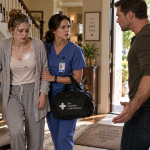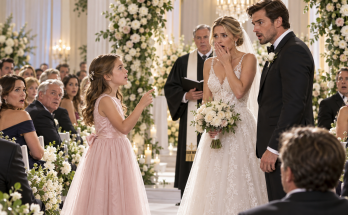
An entitled man took the accessible football seats I bought with my last savings for my son in a wheelchair—then a quiet elderly woman taught him a lesson.
My eleven-year-old son, Caleb, had spent four months counting down to that football game.
Six months earlier, he had been walking home from school when a five-year-old boy chased a ball into the street. Caleb saw a pickup coming, ran after him, and managed to shove the little boy back onto the sidewalk just seconds before impact.
Caleb wasn’t fast enough to save himself.
The truck hit him hard enough to fracture his spine, and after hours of surgery followed by weeks in the hospital, doctors told me they couldn’t promise he would ever walk again. Yet Caleb never once said he regretted what he’d done.
“If I hadn’t pushed him, Mom, he’d be the one in this chair.”
What hurt him most was losing football. He’d played since he was six, and now he couldn’t run with his friends or even climb the bleachers at school, but every Sunday he still watched his favorite team from our couch.
“When I’m strong enough, can we see them for real?”
So I saved every dollar I could, skipped lunches at work, sold an old bracelet, and finally spent almost everything left in my account on two accessible seats near the field.
The moment we entered the stadium, Caleb’s whole face lit up.
“Mom, I can smell the grass!”
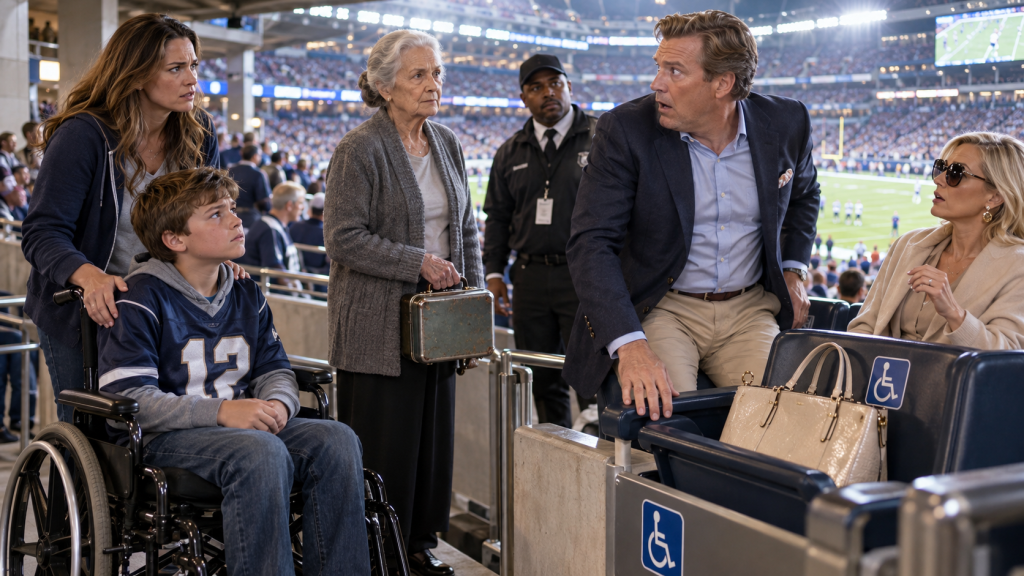
Then we reached our section and found a wealthy-looking couple sitting in our seats, with the woman’s designer purse placed directly in the wheelchair space.
“Excuse me,” I said, showing our tickets. “These are ours.”
The man barely glanced at them before looking at Caleb.
“Sit somewhere else.”
“My son can’t. These are accessible seats.”
His eyes dropped to the wheelchair, and he shrugged.
“Not my problem. I just want to see the game properly. The view from here is perfect. Lady, I spend enough money here to buy half this stadium. Your kid can watch from the concourse. I bet he doesn’t even understand the rules.”
His wife actually smiled.
An usher hurried over, but before he could speak, Caleb gently tugged my sleeve.
“It’s okay, Mom,” he whispered. “We can watch from the hallway.”
After everything he’d survived, hearing him surrender the one afternoon he’d dreamed about for months nearly broke me.
Then a calm voice came from the row behind us.
“You. Stand up. Now.”
A small elderly woman in a plain gray cardigan sat there with an old metal lunchbox resting on her knees.
The man laughed.
“Oh, God. Don’t stick your nose into other people’s business.”
She rose slowly and held the lunchbox toward him.
“I’ve got something better for you than this view.”
“What, your sandwich?”
“Just open it.”
Still smirking, he flipped the latch.
The laughter vanished from his face.
For several seconds, he simply stared inside. Then, right beside my son’s wheelchair, the man dropped to his knees.
“Oh no,” he whispered. “Please don’t do this.”
He looked up at the elderly woman, suddenly terrified.
“Give me one more chance.”
When I saw what was in the lunchbox, I gasped. The man was going to learn the harshest lesson of his life.
PART 2 — THE SEAT HE THOUGHT NOBODY COULD TAKE FROM HIM
The man stayed on his knees.
A minute earlier, he had been laughing at my son.
Now his face looked as though someone had opened a door beneath his feet.
His wife stopped smiling.
The stadium noise continued around us.
Music.
Announcements.
Thousands of people talking.
But inside that small accessible section near the field, everything had gone strangely still.
The elderly woman stood over him in her plain gray cardigan.
The old metal lunchbox remained open in his hands.
“Mrs. Whitmore…”
he whispered.
So he knew her.
That was the first thing I understood.
The second was that whatever was inside that lunchbox frightened him far more than security ever could.
“Please.”
he said.
“Give me one more chance.”
The elderly woman’s expression did not change.
“Stand up.”
He remained kneeling.
She tapped one finger against the lunchbox.
“I said stand up.”
Slowly, he rose.
Then I finally saw what was inside.
And forgot how to breathe.
On top lay an old newspaper clipping sealed in clear plastic.
I recognized the photograph immediately.
Caleb.
My Caleb.
Lying in a hospital bed six months earlier.
His face pale.
A brace supporting his neck.
One hand raised awkwardly because the photographer had asked whether he wanted to wave.
The headline read:
ELEVEN-YEAR-OLD BOY SERIOUSLY INJURED SAVING CHILD FROM TRAFFIC
My knees weakened.
Beneath the article was a plastic hospital bracelet.
Not Caleb’s.
The printed name read:
NOAH WHITMORE
Age: 5.
Beside it was a photograph of a little blond boy standing between two adults.
Same missing front tooth I remembered.
Same red sneakers.
The little boy Caleb had pushed out of the road.
The boy whose life my son had traded his own footsteps to save.
My hand flew to my mouth.
“Oh my God.”
Caleb looked up at me.
“What?”
The elderly woman turned toward him.
For the first time, her stern expression softened.
“Your name is Caleb Harris, isn’t it?”
Caleb stared.
“How do you know my name?”
Her eyes filled.
“Because Noah is my grandson.”
Caleb went completely still.
My son had asked about Noah constantly after the accident.
Not about the driver.
Not about blame.
Noah.
The five-year-old child he had never met before that afternoon.
“Is he okay?”
That had been Caleb’s first question after waking from spinal surgery.
Not:
Will I walk?
Not:
What happened to me?
Is the little boy okay?
The nurses had eventually learned through police that Noah suffered bruises and a sprained wrist.
Nothing more.
His family sent flowers while Caleb was still in intensive care.
Later, a card came.
Then our lives disappeared into rehabilitation appointments, insurance calls, home modifications, and learning how to use a wheelchair.
We never met them.
I had assumed we probably never would.
Yet Noah’s grandmother had apparently been sitting one row behind us.
The old woman nodded.
“He is healthy.”
Caleb’s shoulders dropped.
“He still talks about you.”
Caleb looked embarrassed.
“I didn’t really do anything.”
I closed my eyes.
Six months.
Four surgeries.
Months of physical therapy.
A wheelchair.
And my child still said he had not really done anything.
Mrs. Whitmore shook her head.
“You pushed a five-year-old boy away from a truck.”
Caleb shrugged.
“He was little.”
As if that explained everything.
Maybe to Caleb, it did.
The wealthy man beside us looked as though he wished the concrete would open and swallow him.
Mrs. Whitmore turned back toward him.
“Richard.”
So that was his name.
He swallowed.
“Yes, ma’am.”
“Do you understand now who you told to watch the game from the concourse?”
Richard’s eyes moved toward Caleb.
For the first time, he seemed to truly look at the wheelchair.
Not around it.
Not through it.
At it.
“I didn’t know.”
Mrs. Whitmore’s expression hardened again.
“That is supposed to make this better?”
He opened his mouth.
Nothing came out.
She continued.
“If he had never saved Noah, would he deserve the seat less?”
Richard lowered his eyes.
“No.”
“If he had been born using that chair?”
“No.”
“If he understood nothing about football?”
Richard’s face reddened.
“No.”
“Then his heroism is irrelevant to his right to sit in the seat his mother purchased.”
The words went through me.
Because until then, part of me had felt Caleb’s sacrifice should matter.
That once people understood what happened to him, they would become kinder.
Mrs. Whitmore saw further than I did.
Caleb should not have needed to be extraordinary to deserve basic dignity.
The usher who had approached us earlier was still standing nearby.
He looked almost as stunned as I felt.
A supervisor had joined him now.
She wore a navy stadium blazer and a credential around her neck.
“Ma’am.”
she said to me.
“May I see your tickets again?”
I handed them over.
She scanned them.
Then looked at the seat numbers.
“These are your designated accessible locations.”
“Yes.”
The supervisor turned toward Richard and his wife.
“May I see your tickets?”
Richard hesitated.
His wife suddenly became fascinated with her purse.
“Sir?”
The supervisor repeated.
Richard took two digital tickets from his phone.
She scanned them.
Her eyebrows lifted.
Then she looked at him.
“Your seats are in Club Section 114.”
Richard said nothing.
I stared.
Club Section 114 was not even close to us.
“So they were never supposed to be here?”
I asked.
“No, ma’am.”
The supervisor replied.
“They were not.”
His wife finally spoke.
“We came down because these seats were empty.”
I looked at her designer purse.
Still sitting precisely where Caleb’s wheelchair was supposed to fit.
“They were empty because it took us longer to get through the accessibility entrance.”
Her face changed.
She looked away.
The supervisor gestured toward the aisle.
“I need both of you to return to your assigned locations.”
Richard glanced at Mrs. Whitmore.
“Margaret.”
So that was her first name.
“Please.”
She said nothing.
His wife stood quickly.
Grabbed her purse.
Richard remained.
“I can explain.”
Mrs. Whitmore tilted her head.
“About the tickets?”
“Yes.”
“No explanation is required.”
“You were assigned somewhere else.”
“You saw an accessible space you preferred.”
“You occupied it.”
“When the ticket holders arrived, you told a child in a wheelchair to leave.”
That was the explanation.
Sometimes facts do not need improved vocabulary.
Richard looked at Caleb.
His voice became quieter.
“I’m sorry.”
Caleb stared at him.
Not angry.
Just uncertain.
Richard continued.
“What I said was wrong.”
Caleb’s hands tightened around the arms of his chair.
Then he said something so simple that it embarrassed every adult nearby.
“You said I didn’t understand football.”
Richard looked down.
“I know.”
Caleb frowned.
“I do.”
“I’ve played since I was six.”
Richard closed his eyes.
“I’m sorry.”
Caleb nodded.
But he did not say it was okay.
I was proud of him for that.
Children are taught too quickly to accept apologies so adults can feel finished.
Richard and his wife finally moved toward the aisle.
Then Mrs. Whitmore said:
“Not yet.”
Richard froze.
His wife turned.
Margaret reached into the lunchbox again.
The bottom compartment contained several papers beneath Noah’s photograph.
She removed a black credential holder.
When Richard saw it, his shoulders sank.
She held it where I could read.
MARGARET WHITMORE
WHITMORE FAMILY TRUST
STADIUM BOARD — FOUNDING MEMBER
I looked from the card to her face.
Then toward the enormous stadium surrounding us.
“You…”
She smiled faintly.
“My husband and his brother were among the original ownership group.”
“My family’s share is smaller these days.”
“Age makes business complicated.”
She glanced around.
“But I still attend board meetings.”
Richard looked physically ill.
That explained the kneeling.
Not the clipping.
Not Caleb.
Her name.
Her position.
He had not suddenly discovered empathy.
He had discovered consequences.
Margaret knew it too.
Her face told me.
“I’m sorry, Margaret.”
he said.
“No.”
She answered.
His brow tightened.
“No?”
“Do not apologize to me because you recognized my name.”
She pointed toward Caleb.
“The person you humiliated is sitting there.”
Richard’s face reddened.
“I apologized.”
“Yes.”
“You did.”
Then Margaret added:
“Now go sit in the seats you actually purchased.”
The supervisor gestured toward the aisle.
Richard’s wife moved first.
Richard followed.
This time, nobody stopped them.
The moment they disappeared, the entire section seemed to breathe again.
The supervisor removed a folding chair Richard had dragged into the wheelchair area.
Another usher helped clear the space.
Then Caleb finally rolled into the exact location printed on our ticket.
Near the field.
Unobstructed.
Perfect.
He looked toward the grass.
His face changed.
Not dramatically.
Just wonder.
The kind that makes a mother memorize every line because she knows childhood does not offer unlimited copies.
“Mom.”
“Yes?”
“We’re really close.”
I laughed through tears.
“I know.”
He breathed deeply.
“I can smell the grass again.”
That sentence nearly finished me.
Margaret sat behind us.
For several minutes, neither of us spoke.
Then I turned.
“How did you recognize Caleb?”
She looked embarrassed.
“I’ve seen that photograph perhaps a thousand times.”
She touched the lunchbox.
“Noah keeps a copy beside his bed.”
Caleb turned his wheelchair slightly.
“He does?”
Margaret smiled.
“He calls you the football boy.”
Caleb smiled.
For the first time all afternoon, he looked eleven again.
Not brave.
Not injured.
Not inspiring.
Just a kid pleased another kid remembered him.
Margaret explained that Noah’s parents had tried contacting us more than once after the accident.
Some messages reached the hospital social worker.
Others went through insurance attorneys.
Everything became confused.
We moved temporarily into my aunt’s one-story house after Caleb came home because our apartment had stairs.
My phone number changed after I switched jobs.
Life happened.
“We did not want to intrude.”
Margaret said.
“Noah’s mother especially worried that showing up might make Caleb feel responsible for reassuring us.”
I understood immediately.
After the accident, everyone wanted Caleb to be inspirational.
Doctors.
Neighbors.
Local reporters.
Strangers online.
People told him he was strong so often I sometimes wondered whether we had accidentally made sadness feel like failure.
I had started turning visitors away.
Maybe Noah’s family had interpreted that correctly.
Margaret touched the hospital bracelet.
“Noah wore that for two days.”
“He insisted we keep it.”
“Why bring it to a football game?”
I asked.
She smiled.
“Because Noah was supposed to be here today.”
My heart tightened.
“Where is he?”
“With his parents.”
“A stomach bug.”
She rolled her eyes.
“Five years old and furious about being sick.”
Then she lifted the lunchbox.
“This belongs to my late husband.”
“He carried lunch in it when he worked construction before any of us had stadium money.”
“Noah likes filling it with his treasures.”
“The article about Caleb is one.”
Something about that broke my heart gently instead of painfully.
Caleb asked:
“Does Noah like football?”
Margaret laughed.
“No.”
Caleb looked horrified.
“He likes dinosaurs.”
“Oh.”
Caleb considered.
“Dinosaurs are okay.”
High praise.
The game began.
For a while, nothing else mattered.
Kickoff.
Crowd roaring.
Caleb shouting at a penalty call.
Me pretending to understand everything he screamed.
Margaret laughing behind us.
At halftime, an attendant brought Caleb a team cap.
I immediately worried it was some special pity gift.
Margaret noticed.
“It isn’t from me.”
she said.
“The usher requested it because of what happened.”
I relaxed.
Slightly.
Caleb put it on backward.
Of course.
Then Margaret asked if she could speak to me privately.
Caleb was happily discussing defensive formations with the usher, so I stepped a few feet away.
Margaret looked toward the tunnel where Richard had disappeared.
“I owe you an explanation.”
“You don’t owe me anything.”
“I think I do.”
She lowered her voice.
“Richard Sloane was not frightened because I’m wealthy.”
I glanced at her.
“I assumed—”
“He was frightened because he knows exactly why I’m here today.”
Something in her tone changed.
“What do you mean?”
Margaret opened the lunchbox again.
This time, she removed a thick folded document.
A glossy cover.
Professional.
Architectural drawings.
A company logo.
SLOANE CIVIC DEVELOPMENT
My stomach tightened.
“Richard’s company?”
“Yes.”
Margaret handed me the packet.
The title read:
STADIUM ACCESS MODERNIZATION — FINAL PROPOSAL
I stared.
Margaret continued.
“The stadium is planning major renovations over the next two years.”
“Entrances.”
“Restrooms.”
“Elevators.”
“Accessible seating.”
“Companion seating.”
“Concourse routes.”
“Everything.”
I looked toward the empty wheelchair space beside Caleb.
Then back at the document.
“You’re kidding.”
“I wish.”
She sighed.
“Richard’s company is one of three finalists for part of the project.”
My mouth fell open.
The man who told my son to watch from the hallway wanted to be paid to redesign accessible areas.
The hypocrisy was almost too precise to believe.
Margaret continued.
“I chair the foundation committee that reviews community-access commitments.”
“I am not the sole decision-maker.”
“Richard knows that.”
“So he knows I cannot simply snap my fingers and erase his company from consideration.”
I appreciated that clarification.
No billionaire magic.
“But I can report what I witnessed.”
“And I will.”
My stomach twisted.
“Will he lose the contract?”
“I don’t know.”
She answered immediately.
“Nor should I decide that alone.”
“The procurement committee will review facts.”
“Richard will have an opportunity to respond.”
“His company employs people who had nothing to do with what happened here.”
Again, she surprised me.
She was angry without becoming careless.
Maybe that was what real power looked like.
Not destruction.
Responsibility.
I looked at the proposal cover again.
Then read the slogan printed beneath the company name.
ACCESS WITHOUT BARRIERS. DIGNITY IN EVERY SEAT.
I actually laughed.
Margaret did not.
“That sentence was Richard’s idea.”
she said.
“How do you know?”
“He presented this proposal himself three weeks ago.”
I looked toward the field.
Caleb was cheering.
A boy in a wheelchair sitting exactly where he had paid to sit.
Behind me, a multimillion-dollar proposal promised dignity in every seat.
And the man who approved those words had looked at my child and said:
Not my problem.
Margaret’s expression grew sad.
“That is why I stopped him.”
“Not because of the contract.”
“Not originally.”
“I would have spoken even if he sold shoes.”
“But once I realized who he was, I needed him to understand something.”
“What?”
She looked directly at me.
“A company does not become inclusive because the marketing department learned respectful vocabulary.”
That sentence stayed with me.
After halftime, Richard returned.
Alone.
He did not approach the seats.
He stood near the aisle until the supervisor noticed him.
Then Margaret did.
She sighed.
“I wondered whether he would come back.”
Richard asked:
“May I speak with you?”
Margaret glanced at me.
Then at Caleb.
“Not here.”
They moved several yards away.
I tried not to listen.
I failed completely.
“Margaret, what happened was unacceptable.”
Richard said.
“Yes.”
“I know that.”
“Do you?”
“I lost my temper.”
Margaret shook her head.
“You were not angry when they arrived.”
“You were comfortable.”
That stopped him.
She continued.
“You dismissed them calmly.”
“You insulted the boy calmly.”
“You put your wife’s purse in a wheelchair space calmly.”
“Do not reduce deliberate entitlement to temper because temper sounds temporary.”
I almost stood and applauded.
Didn’t.
Barely.
Richard’s face flushed.
“What do you want me to do?”
“That is the wrong question.”
“What should I do?”
“Better.”
She looked toward Caleb.
“Start by understanding that what happened here is not about whether that boy is extraordinary.”
“He is.”
“But that is not why you move.”
“You move because the ticket is his.”
“You move because the space exists for a reason.”
“You move because another human being should not have to explain his medical history before you respect a boundary.”
Richard nodded.
For once, he did not speak.
Then he said:
“What happens with the bid?”
There it was.
Margaret’s face became deeply disappointed.
“You lasted almost ninety seconds.”
He looked ashamed.
“I have eighty-two employees.”
“And they matter.”
“That is why your conduct will be reviewed instead of me behaving impulsively.”
Richard exhaled.
“But Margaret—”
“No.”
She held up one hand.
“You told this child to sit in a hallway because you wanted a better view.”
“You do not get to tell me now that your employees make consequences inconvenient.”
His jaw tightened.
Then I heard something I did not expect.
Richard said:
“The seats weren’t about the game.”
Margaret stared.
“What?”
He glanced around.
Then lowered his voice.
“I needed to be here.”
“Why?”
He hesitated.
Margaret’s expression sharpened.
“Richard.”
He looked toward the field.
“My facilities team said this was the best accessible sightline in the lower bowl.”
I stared.
His wife’s purse had been sitting in Caleb’s wheelchair space because Richard had deliberately chosen that exact location.
Not randomly.
He continued.
“I wanted to experience the view before the final committee presentation.”
My stomach turned.
Margaret looked disgusted.
“You were evaluating accessible seating?”
Richard closed his eyes.
“Yes.”
“And when a wheelchair user arrived to use it…”
Silence.
Margaret finished for him.
“You asked him to leave.”
No slogan in the world could repair the absurdity of that.
Richard rubbed his forehead.
“I know how it looks.”
Margaret’s voice became very quiet.
“It does not look like anything.”
“It is something.”
He said nothing.
She continued.
“You wanted to understand an accessible seat without the inconvenience of an actual disabled person occupying it.”
The sentence landed harder than shouting.
Even Richard flinched.
I looked at Caleb.
He had stopped watching the field.
He had heard.
Of course he had.
“Mom.”
I leaned down.
“Yes?”
“That guy designs wheelchair seats?”
“His company is trying to work on some of them.”
Caleb frowned.
“But he doesn’t use a wheelchair.”
“No.”
“Then why didn’t he just ask somebody who does?”
I stared at my son.
Eleven years old.
One question.
The entire accessibility-consulting industry reduced to common sense.
Margaret heard him.
She turned.
A slow smile crossed her face.
“Caleb.”
He looked up.
“Yes?”
“Would you repeat that?”
He did.
“Why didn’t he ask somebody who uses one?”
Richard looked as though the question had physically struck him.
Margaret nodded.
“That, Richard, is precisely what your proposal is missing.”
He stared at her.
“What?”
“Disabled people.”
“That’s not true.”
“We have consultants.”
“You have compliance consultants.”
“Architects.”
“Engineers.”
“One accessibility attorney.”
She tapped the proposal.
“You have no wheelchair users listed on the community-design panel.”
Richard started to speak.
Then stopped.
Because apparently she had read the document more carefully than he had.
Margaret looked toward Caleb.
“This is what happens when people design dignity from a conference room.”
The crowd erupted around us as the home team scored.
For several seconds, her words disappeared beneath thousands of cheering voices.
They remained inside me anyway.
Richard finally left again.
Not defeated.
Not publicly destroyed.
Just quiet.
He returned to his assigned section.
That seemed appropriate.
The simplest first consequence was sitting where his ticket said he belonged.
During the fourth quarter, Caleb forgot about him.
That may have been the best punishment Richard received all day.
My son stopped being a lesson.
Stopped being a symbol.
Stopped being the injured hero everyone watched.
He became a football fan again.
He yelled.
Complained about officiating.
Ate an unreasonable amount of popcorn.
When our team scored late, he slapped both hands against his wheels and shouted so loudly the man beside us laughed.
I cried.
Caleb caught me.
“Mom.”
“What?”
“Stop.”
“I’m not doing anything.”
“You’re doing the face.”
“What face?”
“The crying face.”
“I am not crying.”
“You are literally crying.”
I wiped my cheek.
“Allergies.”
“Inside a stadium?”
“Very aggressive allergies.”
He rolled his eyes.
Perfect.
The home team won.
Caleb stayed in his seat after most people started leaving.
He stared at the field.
“You ready?”
I asked.
“Can we stay another minute?”
“Of course.”
So we stayed.
Workers began clearing cups.
Players disappeared into tunnels.
The giant screens changed to advertisements.
Margaret remained behind us.
None of us rushed.
After four months of waiting, one more minute seemed reasonable.
Then Caleb asked:
“Mrs. Whitmore?”
“Yes?”
“Can I meet Noah?”
Her eyes filled immediately.
“If you want to.”
“I do.”
“Then yes.”
He smiled.
“Tell him he owes me a football lesson.”
Margaret laughed.
“He would prefer dinosaurs.”
“I can teach him football and he can teach me dinosaurs.”
“Deal.”
It sounded so ordinary.
Two children planning to meet.
No headlines.
No heroism.
Just the continuation of a moment that nearly ended two lives and changed both.
As we prepared to leave, the stadium supervisor returned.
She apologized again.
Explained that staff should have resolved the seat issue immediately.
She offered information about how to report accessibility concerns formally.
No giant lifetime tickets.
No private jet.
Just a system admitting it had been too slow.
I appreciated that more than spectacle.
Then she handed me a refund voucher for our concession purchases because of the inconvenience.
I almost refused.
Caleb whispered:
“Take it.”
I looked at him.
“Why?”
“Nachos are expensive.”
Fair.
I took it.
Margaret walked with us toward the accessible exit.
Her metal lunchbox swung gently from one hand.
I finally asked:
“Why carry the proposal around in that?”
She smiled.
“Because board members get too impressed with leather folders.”
I laughed.
She tapped the old metal box.
“My husband carried sandwiches in this while building houses.”
“When we eventually had money, he still carried it to every major meeting.”
“He said anyone making decisions about millions should remember what ten dollars used to mean.”
I looked at Caleb.
At my tickets.
At the money I had saved by skipping lunches.
That line hit dangerously close.
Margaret seemed to realize it.
“How hard were these tickets for you to buy?”
I hesitated.
“Hard enough.”
She nodded.
No pity.
Good.
Then she stopped walking.
“Mrs. Harris.”
“Please call me Megan.”
“Megan.”
She looked at me.
“I want you to understand something before we part.”
“All right.”
“What happened today should not become a story where a wealthy old woman rescued you.”
I blinked.
“I wasn’t—”
“I know.”
She smiled.
“But people like stories that way.”
“The powerful person arrives.”
“The rude man learns his lesson.”
“The child gets rewarded.”
She shook her head.
“You bought the correct seats.”
“You arrived with valid tickets.”
“The stadium had an obligation to honor them whether I was here or not.”
I felt tears rising again.
Margaret continued.
“I intervened because staff were moving too slowly.”
“But you did not need my grandson’s story to deserve those seats.”
“And Caleb did not need to save anyone to deserve respect.”
There it was again.
The truth beneath the satisfying parts.
I looked at her.
“Thank you.”
She squeezed my hand.
“Now make sure he knows that too.”
I looked down at Caleb.
He was listening.
Of course.
He said:
“I know.”
Margaret smiled.
“Good.”
We reached the gate.
Then a young stadium employee hurried toward Margaret.
“Mrs. Whitmore?”
She turned.
He handed her another folder.
“This was delivered from the procurement office.”
Richard’s company name appeared on the tab.
Margaret sighed.
“Already?”
The employee nodded.
“Mr. Sloane requested an emergency amendment to his presentation tomorrow.”
I glanced at her.
She raised an eyebrow.
“Apparently he is moving quickly.”
Caleb whispered:
“Because he got caught?”
“Caleb.”
I said.
Margaret laughed.
“Probably.”
She opened the folder.
Read the first page.
Her amusement disappeared.
“What?”
I asked.
She looked up.
“Richard is proposing to add wheelchair users to his project advisory panel.”
“That sounds good.”
“It might be.”
Her eyes returned to the page.
“Except he already listed three names.”
“So?”
Margaret turned the paper toward me.
My stomach dropped.
At the top of the proposed community advisers was:
CALEB HARRIS — YOUTH ACCESSIBILITY REPRESENTATIVE
I stared.
“What?”
Caleb leaned forward.
“That’s me.”
“I know.”
Margaret’s mouth tightened.
“No one asked you.”
“No.”
“No one asked me either.”
My anger returned instantly.
Richard had met my child less than three hours ago.
Insulted him.
Taken his seat.
Then apparently decided Caleb’s name could repair a corporate proposal.
Another person trying to use my son because his story made them look better.
Margaret looked furious now.
Not theatrical.
Protective.
“This is not happening.”
I took the page.
Richard’s cover note described Caleb as:
An inspiring young wheelchair user whose lived experience will strengthen the project’s community-engagement component.
I almost tore it in half.
Caleb read enough to understand.
His face changed.
“I didn’t say I’d do that.”
“No.”
I said.
“You didn’t.”
Margaret nodded.
“And that is the only fact that matters.”
Consent.
Again.
Even kindness could become exploitation when someone skipped the asking.
Then she turned to the second page.
Stopped.
Her eyes narrowed.
“There it is.”
“What?”
“The reason he was so desperate to sit in your exact space.”
She handed me the page.
It contained a rendering of the renovated lower-bowl accessible section.
A photograph of our row had been inserted into the presentation.
Taken earlier that afternoon.
Before we arrived.
Richard sat in Caleb’s space.
His wife beside him.
Both smiling toward the camera.
The caption read:
Executive Site Review — Existing Accessible Sightline
My mouth fell open.
He had not wandered into those seats because he liked the view.
He had staged himself there for his company’s proposal.
And when the actual wheelchair user whose space he occupied arrived, Caleb had threatened the image he wanted to present.
So Richard tried to move him.
Not because he did not understand what the space was.
Because he understood exactly what it was.
He simply believed the disabled person mattered less than the photograph.
Margaret looked at the glossy proposal.
Then at Caleb.
Then at me.
Her voice became colder than I had heard it all day.
“Tomorrow morning, Richard Sloane is scheduled to stand in front of our stadium accessibility committee and explain why his company should be trusted with twenty-eight million dollars’ worth of renovation work.”
She closed the folder.
“Now he is going to explain something else first.”
I looked at the photograph again.
A man smiling proudly from the wheelchair space he would later refuse to surrender to a child who actually needed it.
And suddenly I understood.
The lunchbox had not destroyed Richard.
It had simply opened before the one meeting where he could no longer hide the difference between what he sold and who he was.
PART 3 — THE SEAT THAT WAS ALREADY HIS
The next morning, Richard Sloane walked into a conference room carrying a twenty-eight-million-dollar proposal.
By the time he left, the proposal was no longer the most important thing on the table.
I know because Margaret called me afterward.
Not to celebrate.
Not to tell me she had ruined him.
To ask whether Caleb and I were all right.
That alone told me more about her than the lunchbox ever had.
“Did he lose the contract?”
I asked.
Margaret was quiet for a moment.
Then she said:
“The committee paused the process.”
“Paused?”
“Yes.”
“No one gets disqualified from a project of that size because I am angry after one football game.”
That answer surprised me.
I had spent all night imagining Richard walking into the boardroom and watching his empire collapse beneath the weight of one photograph.
Real life was less theatrical.
And probably fairer.
Margaret continued.
“The committee reviewed the incident.”
“The stadium supervisor submitted a report.”
“The usher submitted one.”
“The procurement team received the photograph Richard’s company used.”
“And they received the amendment naming Caleb without consent.”
My stomach tightened again.
“What did Richard say?”
Margaret sighed.
“At first?”
“Yes.”
“He called it a misunderstanding.”
Of course.
The favorite word of people who understand perfectly well what happened but dislike the consequences.
Richard told the committee that he had sat in the accessible section only because he was conducting a site review.
He said he had assumed the space would remain empty until kickoff.
He said he had been under pressure.
He said he had spoken rudely.
He said the photograph was simply documentation.
Then someone asked the obvious question.
If he knew it was designated accessible seating, why did he refuse to move when an actual wheelchair user arrived with the correct ticket?
Margaret told me there was a long silence.
Then Richard said:
“I made a bad judgment.”
A committee member asked:
“Which judgment?”
Apparently Richard did not understand the question.
So the member repeated it.
“Was the bad judgment sitting there?”
“Refusing to move?”
“Insulting the child?”
“Using him afterward in your amended proposal without permission?”
“Or believing all of those things would remain irrelevant because you understood accessibility on paper?”
Richard stopped answering.
Sometimes silence is the first honest thing a person says.
Margaret did something else I respected.
She recused herself from the final procurement decision.
When I asked why, she sounded almost offended.
“Because I witnessed the incident.”
“Because Caleb saved my grandson.”
“Because I am furious.”
“Any one of those things would make my vote easy to challenge.”
“But you’re on the board.”
“Yes.”
“That means I have a duty not to confuse personal certainty with clean process.”
I thought about that for a long time.
Power had made Margaret careful.
Richard’s had made him careless.
Maybe that was the difference between possessing influence and believing influence belonged to you.
The stadium appointed an independent review group.
Accessibility consultants.
Operations staff.
Two wheelchair users who regularly attended games.
One season-ticket holder with a visual impairment.
A parent of a child with cerebral palsy.
A retired architect who specialized in public venues.
People with actual lived experience.
Not one inspirational photograph inserted into a corporate slideshow.
A group.
Paid for their time.
Asked before being named.
Imagine that.
Richard’s company remained eligible to respond to concerns.
That mattered too.
The eighty-two employees he had mentioned did not deserve unemployment because their president had behaved badly.
But the proposal was no longer judged on glossy renderings alone.
The committee asked harder questions.
Who had been consulted?
How were wheelchair users included?
How would companion seating work?
Would disabled fans have equal sightlines or merely technically compliant locations?
How far were accessible restrooms?
What happened when temporary equipment blocked a route?
What did staff training look like when someone occupied a designated space?
Richard had prepared answers about concrete.
Ramps.
Angles.
Railings.
He had fewer answers about people.
That was the problem.
Three weeks later, Sloane Civic Development lost the contract.
Not because Margaret snapped her fingers.
Because the revised scoring placed the company below another bidder once community engagement, accessibility design process, and implementation planning were reviewed more closely.
Richard’s conduct became part of the record.
So did his company’s failure to involve enough disabled users before presenting the plan.
Another firm won.
I expected to feel triumphant when Margaret told me.
Instead, I felt strangely empty.
“That’s it?”
I asked.
“What did you want?”
“I don’t know.”
Fireworks, maybe.
A giant scoreboard reading:
DON’T STEAL WHEELCHAIR SEATS.
Margaret laughed.
“He lost a contract.”
“His company will survive.”
“He will either learn something or he won’t.”
“That part is outside our control.”
She was right.
Consequences can create an opportunity for change.
They cannot manufacture character.
Richard sent us a letter.
I almost threw it away unopened.
Then Caleb asked what it was.
“From the man at the stadium.”
He made a face.
“The rude guy?”
“Yes.”
“Can I read it?”
I hesitated.
Then handed it to him.
The letter was not long.
Richard wrote that he was ashamed of what he had said.
He admitted he had known the space was accessible.
Admitted he had chosen it because he wanted a photograph from what his team considered one of the best wheelchair sightlines.
Admitted that when Caleb arrived, his first instinct had been to preserve his convenience rather than respect the purpose of the space.
Then he addressed the unauthorized proposal amendment.
Adding your name without asking was another version of the same mistake. I treated your experience as something available for my use. It was not.
That line mattered.
He ended:
You do not owe me forgiveness. I am sorry.
Caleb read the letter twice.
Then folded it.
“Well?”
I asked.
He shrugged.
“He sounds less stupid.”
I laughed.
“High praise.”
“Can I keep it?”
“Why?”
He shrugged again.
“I don’t know.”
So I let him.
Children do not always process things on adult schedules.
I received my own apology from Richard’s wife.
Her name was Diane.
Until then, she had barely existed in my mind except as the woman who smiled when her husband told Caleb to sit in the concourse.
Her note surprised me.
She wrote that she had spent years letting Richard’s confidence decide when she should speak.
At the stadium, she knew immediately that the purse needed to move.
She knew the seats were not theirs.
And still she smiled.
Not because she hated Caleb.
Because she wanted to signal to Richard that she was on his side.
I made your son small so my husband would not be uncomfortable.
I read that sentence several times.
Then put the letter down.
There are betrayals that happen loudly.
And there are people who stand nearby and help by pretending nothing is wrong.
Diane understood which one she had been.
I did not write back.
Not every apology requires a relationship afterward.
Caleb met Noah two weeks after the game.
Margaret arranged nothing elaborate.
No press.
No stadium.
No “hero reunites with child he saved” cameras.
Just a Saturday afternoon at a park with accessible paths.
Noah arrived wearing a dinosaur shirt.
He ran toward us, stopped suddenly when he saw Caleb, then became shy.
Caleb became shy too.
For all the newspaper language about courage and sacrifice, they were still eleven and five.
Two children with absolutely no idea how to handle being important to each other.
Noah hid behind his mother.
Caleb stared at his wheels.
Finally Noah whispered:
“Are you the football boy?”
Caleb nodded.
“Are you the dinosaur kid?”
Noah gasped.
“How do you know I like dinosaurs?”
“Your grandma told me.”
That broke the tension.
Within ten minutes, Noah was explaining the difference between a Brachiosaurus and an Apatosaurus with the seriousness of a surgeon.
Caleb listened.
Then taught him what a blitz was.
Neither cared about the symbolic importance of the meeting.
Thank God.
At one point, Noah’s mother came over to me.
Her name was Rachel Whitmore.
She hugged me.
Hard.
Then immediately stepped back.
“I’m sorry.”
“For what?”
“I promised myself I wouldn’t make this emotional.”
I laughed.
“That seems ambitious.”
She cried.
So did I.
Then she looked at Caleb.
“I don’t know how to thank him.”
“You don’t have to.”
“I do.”
“No.”
I touched her arm.
“You don’t.”
Because that was something I had learned from Margaret.
Caleb did not save Noah to place another family in permanent debt.
He saw a little boy in danger.
He moved.
That terrible, beautiful choice did not mean the Whitmores owed him a lifetime.
Gratitude was not a contract.
Rachel nodded.
Then said:
“I need you to know we never forgot him.”
“I know.”
“Mom told me she met you.”
“I know.”
“She also told me what happened with Richard.”
I groaned.
Rachel smiled faintly.
“Apparently Mom terrifies entire committees now.”
“I believe it.”
Then Rachel became serious.
“What he said to Caleb…”
I looked over.
My son was laughing while Noah drove a toy dinosaur across one of his wheels.
“I think it hurt him.”
I said.
Rachel’s face changed.
“More than he admitted.”
That was the truth.
After the stadium game, Caleb started doing something I had not noticed immediately.
Whenever we entered a new place, he looked ahead before he looked around.
Door width.
Steps.
Ramps.
Spaces.
People sitting where wheelchairs were supposed to go.
Before the accident, he entered rooms like they belonged equally to everyone.
Afterward, he entered rooms looking for proof that they might not belong to him.
That was one of the things disability had changed that nobody put into medical charts.
Not his courage.
His expectations.
The world had taught him to check whether it had remembered him.
Richard had confirmed his worst suspicion for a few minutes.
That even when the right space existed, someone might decide his need was less important than their comfort.
I hated that.
I could not unteach the whole world.
But I could refuse to teach Caleb surrender.
A month after the game, we went to a movie theater.
Accessible spaces near the middle.
Two teenagers were standing there talking.
Caleb stopped.
I felt him prepare to say:
It’s okay.
Instead, he looked at me.
Then at them.
“Excuse me.”
They moved immediately.
No argument.
No insult.
No wealthy board member.
Just:
“Oh, sorry.”
Then they stepped aside.
Caleb rolled into place.
Ten seconds.
Ordinary.
On the drive home, he said:
“That was easy.”
“Yes.”
He stared out the window.
“Why wasn’t the football guy easy?”
I thought.
“Because some people confuse wanting something with being entitled to it.”
Caleb considered.
“That’s dumb.”
“Yes.”
Sometimes wisdom is eleven years old and unimpressed.
The stadium contacted us again before the next season.
My first instinct was suspicion.
I thought they wanted Caleb for publicity.
A photograph.
A feel-good story.
I said no before the representative finished explaining.
She paused.
Then:
“Mrs. Harris, I understand.”
That embarrassed me.
“Sorry.”
“No need.”
She continued.
The stadium had decided to create a permanent accessibility advisory group before finalizing renovation designs.
Not one child.
Not one disability.
A rotating panel of fans with different access needs.
Adults.
Teenagers.
Parents.
Caregivers.
They would be compensated.
Transportation covered.
Participation voluntary.
No names used publicly without permission.
The representative said:
“Mrs. Whitmore insisted we make that last part very clear.”
Of course she did.
They invited Caleb to attend one youth session.
He did not have to.
I told him exactly that.
“No?”
he asked.
“No.”
“You’re not going to tell me it would be good for me?”
“No.”
He narrowed his eyes.
“You always tell me things are good for me.”
“Physical therapy.”
“That is different.”
“Vegetables?”
“Debatable.”
He laughed.
Then asked:
“What would I do?”
“Tell architects and stadium people what works and what doesn’t.”
“Can I tell them the bathroom doors are too heavy?”
“Yes.”
“The cup holders are too high.”
“Yes.”
“And the ramp by Gate C is stupid.”
“Maybe use a different word.”
“No promises.”
He thought for a day.
Then said yes.
His choice.
That part mattered more than the yes.
At the meeting, Caleb was not the hero.
Nobody introduced him as the boy who saved Noah.
Margaret made sure of that.
He was simply:
Caleb Harris, fan representative.
Across the table sat a woman who had used a wheelchair for nineteen years.
A teenager with muscular dystrophy.
A man who was blind and attended games with his brother.
A veteran with a prosthetic leg.
A mother whose daughter used a communication device.
Caleb listened more than he spoke.
Good.
He came home furious about things I had never considered.
“Mom.”
“What?”
“They design accessible seats but sometimes put companion seats where you can’t turn around.”
I stared.
“Okay.”
“And one guy said he has to wait twenty minutes for elevators after games.”
“Okay.”
“And did you know accessible does not always mean actually usable?”
I smiled.
“I’m learning.”
So was he.
Not to represent every disabled person.
To understand that his experience was one experience.
That may have been the most valuable lesson of all.
The renovation plans changed.
Not because of Caleb alone.
Because people who used the stadium were finally part of designing it.
Some wheelchair locations moved.
Companion seating improved.
Routes widened.
More power outlets were added for certain medical devices.
Restroom plans changed.
Staff training changed.
The committee created clearer procedures for keeping accessible seating from becoming casual overflow.
Nothing became perfect.
Buildings rarely do.
But better happened because people stopped treating accessibility as a favor and started treating it as part of the stadium.
Richard’s company made changes too.
I know because months later, I saw an article.
Not about us.
No Caleb.
No Margaret.
Sloane Civic Development had created a paid disability advisory board and brought in an outside accessibility firm.
Richard stepped back from personally leading public-access proposals for a while.
Was it genuine?
Public relations?
Probably both.
People love clean categories.
Real motives are messy.
If embarrassment pushed him toward better behavior, I was willing to let the better behavior count.
I did not need access to his soul.
Almost a year after the original game, Richard appeared at one of the stadium’s open accessibility forums.
I saw him before he saw me.
He was sitting near the back.
Not presenting.
Listening.
Caleb noticed too.
“The rude guy.”
I whispered:
“Still Richard.”
“He can be both.”
Fair.
Richard approached us afterward.
Slowly.
“Mrs. Harris.”
“Mr. Sloane.”
Then he looked at Caleb.
“Hi.”
Caleb nodded.
“Hi.”
Awkward.
Human.
Richard said:
“I heard you helped with the new lower-bowl layout.”
Caleb shrugged.
“A lot of people did.”
That answer pleased me more than it should have.
Richard nodded.
“Yes.”
“A lot of people did.”
Then:
“I should have understood that sooner.”
Caleb looked at him.
“You should’ve asked.”
Richard smiled sadly.
“I should have.”
Nothing more.
No hug.
No giant forgiveness scene.
Richard left.
Caleb asked for a pretzel.
Life continued.
Margaret became part of ours in a quieter way.
Not a benefactor.
I would not let her become one.
She once offered to cover some of Caleb’s rehabilitation expenses.
I refused.
Not because we did not need help.
We did.
But I did not want gratitude becoming another form of obligation.
Margaret understood immediately.
Instead, she connected me with a legitimate nonprofit that helped families navigate adaptive equipment grants.
Not her money.
A resource.
A choice.
That felt different.
Caleb’s recovery continued.
Slowly.
There was no miracle.
I need to say that because people wanted one so badly.
After the newspaper story spread again, strangers wrote:
He’ll walk again. I just know it.
They meant kindness.
But every time someone said it, I wondered what they thought would happen if he didn’t.
Would the ending be less beautiful?
Would Caleb be less victorious?
His doctors remained careful.
Nerve recovery after spinal injury was unpredictable.
He regained some sensation.
Some strength.
Not enough to walk independently.
At twelve, he still used his wheelchair.
At thirteen too.
Maybe someday that would change.
Maybe not.
We stopped treating walking as the only acceptable ending.
That saved both of us.
Caleb found adaptive sports.
At first, he refused.
“I want football.”
“I know.”
“I don’t want some pity sport.”
“Then don’t do it.”
That surprised him.
I continued:
“But maybe watch once before deciding it’s pity.”
He went to a wheelchair rugby practice.
Only to watch.
He came home with bruised hands and a grin because apparently watching lasted eleven minutes before somebody let him try a chair.
“Mom.”
“No.”
“You don’t even know what I’m asking.”
“No.”
“I need a sports chair.”
“Absolutely not until we price it.”
“They’re amazing.”
“So is our rent.”
Eventually, grants and fundraising helped with equipment.
Not pity.
Access.
Caleb fell in love with competition again.
Not as a substitute for football.
As something else that belonged to him.
He still watched every Sunday game.
Some loves do not need replacement.
They simply make room.
Noah grew too.
For years, he and Caleb saw each other several times annually.
Their friendship was strange because adults kept wanting it to mean something.
To them, it mostly meant video games.
Dinosaurs evolved into space.
Football remained Caleb’s territory.
When Noah was nine, he finally asked Caleb about the accident.
I was in the kitchen.
I heard them.
“You got hurt because of me?”
Long silence.
Then Caleb said:
“I got hurt because a truck hit me.”
Noah whispered:
“But you ran after me.”
“Yeah.”
“Do you wish you didn’t?”
I froze.
Caleb answered:
“No.”
Then:
“But you don’t owe me anything.”
Margaret had taught him that.
Maybe I had too.
Noah cried.
Caleb hated that.
“Dude, stop.”
“I’m sorry.”
“You’re making it weird.”
Children.
Thank God.
One evening, years later, Caleb asked me something I had secretly feared.
“Mom.”
“Yes?”
“Did you really sell your bracelet to buy those football tickets?”
He was fifteen.
How had he learned that?
Probably my sister.
Family secrets have terrible security.
“It wasn’t an important bracelet.”
“That’s not an answer.”
I sighed.
“Yes.”
He looked upset.
“You shouldn’t have.”
“I wanted to.”
“What if the guy never moved?”
“But he did.”
“That’s not the point.”
I stared at him.
Apparently teenagers eventually become your parents.
Then he said:
“You always spend everything on me.”
My heart tightened.
“I don’t spend everything on you.”
“You skipped lunch.”
My sister was dead to me.
“I ate.”
“Granola bars are not lunch.”
I laughed.
Then stopped because he looked serious.
“I wanted you to have that day.”
I said.
“I know.”
“But?”
He looked down.
“I don’t want you having nothing so I can have stuff.”
There it was.
A different form of dignity.
Not his.
Mine.
I sat beside him.
“You’re right.”
That surprised him.
“I am?”
“Yes.”
“Don’t sound so shocked.”
He smiled.
Then I said:
“I was scared after your accident.”
“I wanted to give you back everything you lost.”
“Football.”
“Fun.”
“Normal days.”
“And sometimes I tried too hard.”
He looked at his chair.
“I’m okay, Mom.”
I knew what he meant.
Not perfect.
Not unhurt.
Okay.
A whole word.
Enough.
“I know.”
This time, I did.
We started saving together after that.
A football fund.
Not because we needed accessible seats to prove anything.
Because Caleb wanted to attend another game and insisted he would contribute from birthday money and later from a summer job helping at an adaptive recreation program.
The second stadium trip felt different.
No desperation.
No bracelet sold.
No last savings.
We planned.
Saved.
Bought tickets.
Caleb paid for the nachos.
“Those cost nine dollars.”
I said.
“I know.”
“Highway robbery.”
“Don’t ruin my generosity.”
I laughed.
Our seats were in a newly renovated accessible section.
Not the exact same row.
Close.
Better turning space.
Clearer sightline.
Cup holder positioned where Caleb could reach easily.
He noticed immediately.
“Hey.”
“What?”
“They moved this.”
“What?”
“The rail.”
He pointed.
“I complained about that.”
I smiled.
“So did six other people.”
“Still counts.”
“Yes.”
“It counts.”
He looked ridiculously proud.
As he should have been.
Not because a stadium had honored him.
Because someone had asked.
And he had answered.
And the answer had become concrete.
Literally.
Before kickoff, Margaret joined us.
Older.
Slower.
Same gray cardigan style.
Different metal lunchbox.
“No way.”
Caleb said.
She grinned.
“The old one rusted.”
“You replaced it?”
“Some traditions deserve maintenance.”
She sat behind us.
For a moment, all three of us looked toward the field.
Then Caleb said:
“Do you remember Richard?”
Margaret raised an eyebrow.
“I’m eighty-six, not dead.”
He laughed.
“What happened to him?”
She considered.
“He stayed with his company.”
“They won other contracts.”
“Smaller ones at first.”
“He hired people smarter than he was about access.”
“That must have hurt.”
“Terribly.”
Caleb smiled.
Then Margaret became serious.
“He changed.”
“How much?”
“I don’t know.”
“That is not really mine to measure.”
Good answer.
The game started.
Halfway through the first quarter, a family arrived near us.
Mother.
Father.
Little girl using a wheelchair.
The father looked confused by the row numbers.
A man in front started to place his coat in their open wheelchair space.
Before I could say anything, the usher stepped forward.
“Sir, please keep that area clear.”
The man immediately moved his coat.
“Sorry.”
The family entered.
The girl rolled into place.
No argument.
No hero.
No elderly board member.
No public lesson.
Just the system working the way it should have the first time.
I looked at Margaret.
She had seen it too.
She smiled.
That moment meant more than Richard losing the contract ever could.
The goal had never been one rude man learning a lesson.
The goal was a world where a child did not need a lesson to be taught on their behalf every time they arrived.
Caleb caught me watching.
“What?”
“Nothing.”
“You’re doing the face.”
“What face?”
“The emotional face.”
“I don’t have one.”
“Yes, you do.”
Margaret leaned forward.
“She does.”
Traitor.
Caleb laughed.
Then the quarterback threw a forty-yard pass and every philosophical insight disappeared beneath screaming.
Perfect.
Years passed.
The newspaper clipping faded.
Noah’s hospital bracelet remained inside Margaret’s new lunchbox until she eventually gave it to his mother.
Richard’s letter stayed in Caleb’s desk for years.
Then one day I noticed it was gone.
I asked about it.
He shrugged.
“Didn’t need it anymore.”
That sounded healthy.
I let it go.
Caleb never became the inspirational child strangers wanted him to be.
He became much more interesting.
Sarcastic.
Competitive.
Terrible at folding laundry.
Good at statistics.
Obsessed with football strategy.
At sixteen, he started charting plays for his high-school team.
Not because they pitied him.
Because the coach realized Caleb could spot defensive formations faster than most assistants.
By seventeen, he was helping with film review.
One Friday night, I watched him roll down the sideline holding a tablet and yelling:
“They’re showing blitz!”
The coach looked.
Changed the call.
Touchdown.
Caleb turned toward the stands and lifted both arms.
I screamed louder than anyone.
He later told me I embarrassed him.
My work as a mother remained successful.
At graduation, he received an award for sports analytics.
Not bravery.
Not overcoming adversity.
Not inspiration.
Sports analytics.
He liked that.
“So much better.”
he whispered afterward.
“Than what?”
“Than getting another certificate for being brave.”
I laughed.
Then cried.
Obviously.
Margaret came to graduation.
Noah too.
Tall now.
Almost a teenager.
He brought Caleb a small gift.
A toy dinosaur wearing a football helmet.
Caleb stared.
“This is horrifying.”
“I know.”
“I love it.”
Good.
Richard did not come.
He did send a card.
No money.
No corporate logo.
Just:
Congratulations. I hope you keep demanding better questions from people who think they already have the answers.
Caleb showed me.
“What are you going to do with it?”
“Probably keep it.”
“Why?”
He smiled.
“People are allowed to improve.”
Then he added:
“Doesn’t mean I’m giving him my seat.”
There was my son.
Margaret died peacefully the following winter.
Eighty-seven.
Her family invited us to the memorial.
On a table near the entrance sat the metal lunchbox.
The original one.
Someone had cleaned the rust.
Inside were photographs.
Her husband.
Children.
Grandchildren.
Noah.
And tucked into the lid was a copy of the newspaper article about Caleb.
Not because Caleb was the greatest thing she had ever known.
Because he belonged to a story she had carried.
At the bottom of the lunchbox was a handwritten card.
Margaret’s handwriting.
A good seat is not generosity when someone already has the right to be there.
I stared at it until the words blurred.
That was Margaret.
One sentence.
No nonsense.
Her family gave Caleb the lunchbox afterward.
He protested.
“Noah should have it.”
Noah shook his head.
“She wanted you to.”
“How do you know?”
“She wrote your name under it.”
Of course she did.
Caleb took it.
Carefully.
Not like a trophy.
Like an object that had carried too many lives to be casual.
Years later, Caleb took that lunchbox to his first job.
Not as a player.
Not exactly.
He studied sports management and data analysis.
Then joined a professional team’s operations department, eventually working on fan-experience analytics and venue access.
He never called himself an accessibility expert.
He knew better.
He worked with them.
Paid them.
Listened.
Whenever someone suggested making assumptions about disabled fans because “we already know what they need,” Caleb apparently placed the metal lunchbox on the conference table.
Someone once asked him what was inside.
He said:
“A reminder to ask.”
That was all.
I still have the old ticket from that first game.
Two accessible seats near the field.
I found them years later inside a drawer.
The ink had faded.
The price still made my stomach hurt.
I remembered skipped lunches.
My bracelet.
Caleb saying:
“It’s okay, Mom. We can watch from the hallway.”
That sentence still hurts.
More than Richard’s insult.
Because for one terrible moment, my child had believed the easiest solution was for him to disappear from a space built for him.
That was the thing I never wanted him to learn.
The elderly woman with the lunchbox did not save us that day.
Margaret was right about that.
She interrupted something that should already have been interrupted.
She used influence where the system was too slow.
She helped expose hypocrisy.
She forced Richard to look directly at the human being his proposal had reduced to a seating category.
But the seat was already Caleb’s.
Before Margaret stood.
Before anyone knew he had saved Noah.
Before the clipping.
Before the hospital bracelet.
Before anyone called him brave.
He had a ticket.
He had a wheelchair.
He had the same right to see the field as everyone else who paid to be there.
That should have been enough.
It was enough.
For years, people told Caleb he was extraordinary because he ran into the street for a child he did not know.
He was.
I will never pretend otherwise.
But his life after the accident taught me something more important.
Heroism should never become the price of dignity.
A disabled child should not need a newspaper article before someone moves a purse.
A wheelchair user should not need to save a life before a stadium protects their space.
A person should not need to inspire you before you respect them.
Sometimes they are simply there.
And that is enough.
The last time Caleb and I attended a game together before he moved away for work, we arrived early.
Very early.
He had inherited my anxiety about logistics.
Probably unfair.
We found our section.
No one in the wheelchair space.
No bags.
No coats.
No argument waiting.
Caleb rolled into position.
Looked across the field.
Then breathed in.
I smiled.
“You can smell the grass?”
He looked at me.
Older now.
Laugh lines beginning at the corners of his eyes.
Still my boy.
“Yeah.”
Then he smiled.
“Still can.”
I sat beside him.
No wealthy man moved.
No elderly woman stood.
No lesson was required.
The game simply began.
And after everything it had taken to reach that kind of ordinary, ordinary felt like victory.
THE END STORIES! THANK YOU FOR READING GOOD LUCK !❤️
Related Posts