The storage door creaked open behind me. Every muscle in my body locked. I slammed the laptop shut and turned. For one terrible second, I expected to see my father. Instead, a woman stepped into the narrow strip of light. Her hair was shorter than I remembered. Her face was thinner.
There was a pale scar near her left eyebrow that had not existed seven years ago. But the eyes were the same. Valeria. My sister stood ten feet away from me. Alive. I forgot how to breathe. She pressed one finger to her lips. “Don’t scream.” I covered my mouth with both hands.
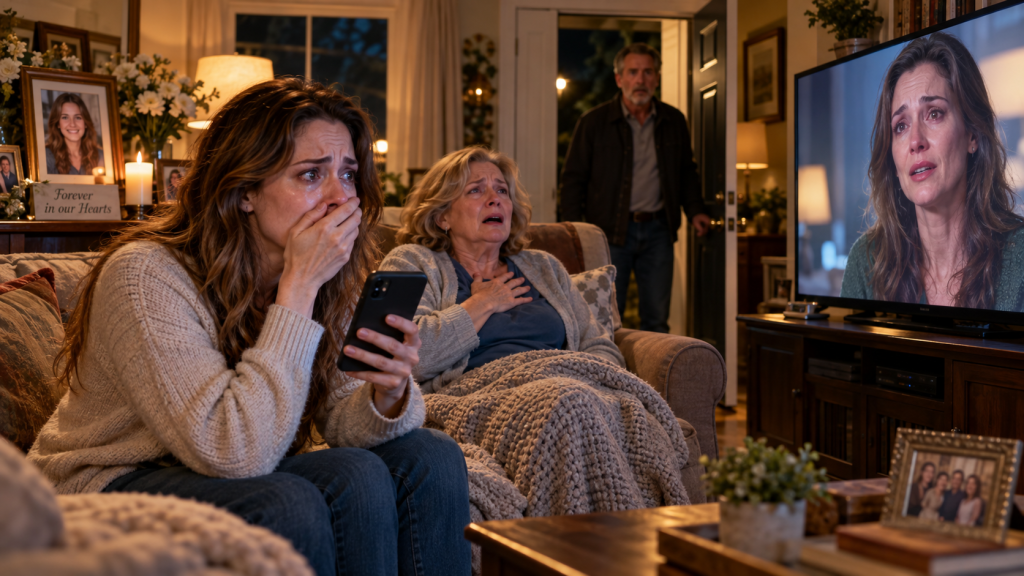
Seven years. Seven birthdays. Seven Christmases. Seven years of watching Mom light candles beneath her photograph. Seven years of walking past a closed bedroom and pretending the silence behind that door was something I had accepted.
And now she was standing in front of me wearing jeans, a gray sweatshirt, and fear.
Not a ghost.
Not television.
Not memory.
Valeria.
I whispered her name.
She started crying.
So did I.
Then I crossed the distance between us.
I grabbed her.
Hard.
Too hard.
She flinched.
I immediately let go.
“I’m sorry.”
“No.”
She reached for me again.
“This is okay.”
I held her more carefully.
Her body shook against mine.
She smelled like rain and cheap soap.
Nothing like death.
Nothing like ashes.
Nothing like the perfume Mom sprayed on the photograph every year on Valeria’s birthday.
I buried my face in her hair.
“You’re alive.”
“I know.”
“You’re alive.”
“I know.”
“You let us bury you.”
Her body went still.
The words came out harsher than I meant them to.
But grief does not disappear just because the person returns.
Sometimes grief turns around and demands answers.
Valeria stepped back.
Her eyes filled.
“I didn’t let you.”
I looked at the metal box behind me.
The DNA report.
Camila Reyes.
Detective Harris.
Dad’s voice.
Valeria saw my expression.
“You found it.”
“Yes.”
“We don’t have much time.”
“Why?”
“Because Dad knows the locker exists.”
My stomach dropped.
“How?”
“He saw the television interview.”
“He’ll assume I came back for the evidence.”
“You called me because you knew I could get here first.”
She nodded.
“Maybe.”
“Maybe?”
“He watches Mom.”
“He watches the house.”
“He watches you less.”
That sentence chilled me.
“He has been watching us?”
“For years.”
I stared at her.
Then remembered Dad walking into the house just as Valeria called.
His face.
His eyes on my phone.
“Is he following me?”
“I don’t know.”
Valeria pulled out a small phone.
“We need to leave.”
I looked toward the box.
“I’m taking everything.”
“No.”
I stared.
“We leave it.”
“What?”
“It’s already copied.”
She pointed to the flash drive.
“That one is bait.”
My heart stopped.
“You planned this.”
“Partly.”
“Why?”
“Because Dad doesn’t know what I have.”
A car engine sounded outside.
Valeria’s face changed.
“Now.”
We shut the locker.
Not locked.
That was deliberate.
Then she led me through a rear service door into an alley behind the storage yard.
A dark sedan waited.
A woman sat behind the wheel.
Valeria opened the passenger door.
“Get in.”
I froze.
“Who is she?”
The driver looked at me.
“Special Agent Marisol Vega.”
She showed identification.
I stared at Valeria.
“Federal?”
“The case crossed state lines years ago.”
That explained nothing and everything.
I got in.
As we pulled away, another SUV entered the front gate.
Black.
My father drove a black SUV.
I turned in my seat.
“Was that him?”
Agent Vega did not look back.
“Possibly.”
Valeria stared straight ahead.
Her hands were shaking.
I reached for one.
She hesitated.
Then let me hold it.
I whispered,
“Mom is in the hospital.”
Valeria’s face broke.
“What happened?”
“She saw Dad’s picture on television.”
“Oh God.”
“She fainted.”
“Is she okay?”
“Yes.”
“I think.”
Valeria started crying silently.
“I wanted to call her.”
“Why didn’t you?”
“Because Dad would expect it.”
Seven years of fear had turned every loving instinct into a tactical decision.
I hated him for that more than I understood.
Agent Vega drove us to a federal building downtown.
Not dramatic.
Gray walls.
Security doors.
Bad coffee.
Truth rarely arrives somewhere beautiful.
I was taken into one room.
Valeria into another.
I panicked immediately.
“No.”
Agent Vega turned.
“She is safe.”
“I just got her back.”
Valeria looked at me.
“I’m not going anywhere.”
I knew she meant it kindly.
Still, the words stabbed.
Seven years ago, she had gone somewhere.
And I had not been able to follow.
I sat with an attorney and two investigators while they photographed the documents I had seen in Locker 214.
Then Agent Vega placed a thicker file in front of me.
“We need to explain what we currently believe happened.”
I stared at the folder.
“Currently believe.”
“Yes.”
“Not know.”
“Correct.”
I appreciated that.
Too much of my family’s destruction had begun with people acting certain before anyone had earned certainty.
She opened the file.
Valeria had been seventeen when our grandmother, Sofia Alvarez, died.
Grandma Sofia was my father’s mother.
Sharp.
Wealthy.
Unforgiving.
She owned a controlling stake in a regional construction and property company.
I knew she had money.
I did not know how much.
Apparently neither did Mom.
Grandma had distrusted Dad’s financial judgment for years.
He borrowed heavily.
Guaranteed business loans.
Used company assets to cover personal ventures.
Nothing criminal at first.
Just reckless.
So when Grandma rewrote her estate plan, she did something Dad never forgave.
She skipped him.
Not entirely.
She left him income from several properties.
A house.
Some investments.
But controlling ownership of the family holding company went into trust for Valeria.
My younger sister.
Not me.
Not Dad.
Valeria.
I stared at the page.
“Why her?”
Agent Vega answered.
“Your grandmother left a letter.”
My heart tightened.
“What did it say?”
“That Valeria reminded her of herself.”
Of course.
Grandma Sofia adored Valeria.
They both argued with people twice their size.
They both hated being told to lower their voices.
The trust held fifty-two percent of Alvarez Meridian Holdings.
Commercial property.
Warehouses.
Land.
Development rights.
At the time of Grandma’s death, that interest was worth approximately thirty-one million dollars.
My mouth went dry.
“How much now?”
Agent Vega looked at Valeria’s attorney.
He answered.
“Depending on current valuations, between forty-four and forty-nine million.”
I sat back.
That was the reason.
Not the whole reason.
But enough to change the shape of seven years.
The trust had rules.
Until Valeria turned eighteen, an independent fiduciary controlled major decisions.
From eighteen until twenty-five, Valeria could approve certain transactions, distributions, and transfers, but full voting control would not vest until her twenty-fifth birthday.
She was now twenty-four.
Three months away.
I whispered,
“That’s why she came back now.”
Agent Vega nodded.
“That is part of it.”
Valeria had been taken seven years earlier, less than six months before her eighteenth birthday.
Dad had financial problems at the time.
Serious ones.
A failed development.
Personal guarantees.
Loans secured by company interests he did not fully own.
He needed control of Grandma’s shares.
But he could not legally get it.
Unless Valeria signed.
I closed my eyes.
Part 2’s recording came back.
She stays hidden until she signs what belongs to her.
I looked at Agent Vega.
“He kidnapped his own daughter for shares.”
She answered carefully.
“We believe he unlawfully confined and coerced her in connection with those assets.”
I almost laughed.
Legal language sometimes sounds too clean for family horror.
“Where?”
“At first?”
She opened another page.
“A property outside Santa Fe.”
My stomach turned.
Dad had owned a vacation house there.
He told us he sold it years earlier.
Apparently he transferred it to a shell company instead.
Valeria had been kept there for almost a year.
Not chained to a wall.
That mattered legally.
Emotionally, it did not.
He took her phone.
Her identification.
Threatened Mom.
Threatened me.
Told her police believed she ran away.
Told her if she returned, he would have Mom charged with financial crimes.
He showed Valeria forged bank statements that appeared to implicate Mom.
My hands trembled.
“He told her Mom would go to prison?”
“Yes.”
“And she believed him?”
“She was seventeen.”
I looked away.
I would have believed him too.
Dad had always been the calm one.
The practical one.
The man who handled paperwork.
If he said a judge had signed something, we believed there was a judge.
If he said police advised silence, we stayed silent.
If he said the remains were Valeria’s, we buried them.
Power does not always shout.
Sometimes it simply knows where all the documents are kept.
After the first year, Valeria was moved.
Several times.
Dad used associates.
Paid caretakers.
One woman believed Valeria was being protected from an abusive boyfriend.
Another thought she was in witness protection.
Each person knew only part of the story.
That was how large lies survive.
No one person carries the whole thing.
Except the victim.
“What did Harris do?”
Agent Vega’s expression hardened.
Detective Harris had handled Valeria’s disappearance from the beginning.
He had financial problems too.
Gambling.
A mortgage in default.
Dad discovered the weakness.
Then used it.
Payments totaling more than three hundred thousand dollars moved from a consulting company controlled by Dad to entities associated with Harris and his brother.
In return, Harris slowed certain leads.
Then came Camila Reyes.
I stared at her name.
“Who was she?”
Agent Vega paused.
“A nineteen-year-old from New Mexico.”
“Missing?”
“Yes.”
“Did Dad kill her?”
“We have no evidence of that.”
I breathed.
Not relief.
Nothing about Camila was relief.
But at least we were not inventing another murder.
“She died in an unrelated incident several months after Valeria disappeared.”
“What kind?”
“Likely accidental exposure after leaving a party while intoxicated.”
Her remains were found in a rural area.
They were unidentified at first.
Harris learned of the case through law-enforcement channels.
Dad needed a body.
Harris had access to a body no one had named yet.
My stomach turned.
“So they made her Valeria.”
Agent Vega nodded.
“Evidence suggests Harris manipulated the identification process and case documentation.”
The original DNA comparison did not match Valeria.
That was the report I had seen.
A second report was entered into the case file showing a match.
The revised one.
False.
The physical remains were released under Valeria’s name.
Then cremated.
The ashes my mother had prayed over for seven years belonged to Camila Reyes.
I pressed my hands to my face.
“Oh God.”
There was a family somewhere.
A mother.
A father.
Siblings.
People who had spent seven years not knowing where Camila was while my mother lit candles beside her ashes.
I whispered,
“Does her family know?”
“Not yet.”
My head snapped up.
“They have to.”
“They will.”
“When?”
“As soon as the identification is independently confirmed.”
I nodded.
Facts first.
Even now.
Especially now.
I asked the question that had been pounding inside me since the television broadcast.
“Why didn’t Valeria escape sooner?”
Agent Vega did not answer.
“Ask her.”
That hurt.
But she was right.
Valeria’s story belonged to Valeria.
Not the file.
Not investigators.
Not even me.
I finally saw Mom the next morning.
She was still in the hospital.
Blood pressure unstable.
Bruised hip from the fall.
Terrified.
Dad had vanished.
His phone was off.
Police were looking for him.
Mom clutched my hand.
“Was it really her?”
I sat beside the bed.
“Yes.”
Her face collapsed.
“Alive?”
“Yes.”
She covered her mouth.
A sound came out of her that I had only heard once before.
At the funeral.
Except this time the grief had hope inside it.
That made it almost worse.
“Where is she?”
“Safe.”
“Can I see her?”
I hesitated.
Mom noticed.
Her face changed.
“She doesn’t want to see me.”
“That’s not what I said.”
“But you paused.”
I breathed.
“She wants to.”
“She’s scared.”
“Of me?”
“Of everything.”
Mom closed her eyes.
“Did I fail her?”
The question came so quickly I knew she had been asking herself for seven years.
I squeezed her hand.
“I don’t know all of what happened yet.”
“That means yes.”
“No.”
I leaned closer.
“It means we are not turning Valeria’s pain into a trial where every person demands a verdict before she can breathe.”
Mom started crying.
I cried too.
Then she whispered,
“I prayed to another mother’s child.”
My throat tightened.
She had already understood.
The ashes.
Camila.
“Yes.”
Mom looked toward the window.
“For seven years.”
“Yes.”
She cried silently.
Then:
“When they find Camila’s family…”
Her voice broke.
“Tell them I’m sorry.”
I squeezed her hand.
“You didn’t know.”
“I still held their daughter while they didn’t.”
That sentence stayed with me.
Valeria came that afternoon.
Not alone.
Agent Vega waited outside.
A victim advocate sat near the door.
Mom was sitting upright when Valeria walked in.
For a second, neither moved.
Then Mom whispered,
“My baby.”
Valeria flinched.
Mom saw it.
And stopped herself from reaching.
That was the first good thing any of us did.
She asked.
“Can I hug you?”
Valeria began crying.
Then nodded.
Mom opened her arms.
Valeria walked into them.
The sound my mother made was almost unbearable.
She held Valeria like someone trying to gather seven years without crushing what remained.
“I’m sorry.”
Mom kept saying it.
“I’m sorry.”
“I’m sorry.”
Valeria cried into her shoulder.
Then finally whispered,
“You didn’t know.”
Mom answered,
“I should have known.”
Valeria pulled back.
“No.”
Mom shook her head.
“Your father told me to stop asking.”
“You were scared of him too.”
Mom froze.
I stared.
Valeria had said it before any of us.
Scared.
Not physically.
Not then.
But Dad controlled money.
Documents.
Decisions.
He dismissed Mom’s suspicions as hysteria.
He told her police had warned the family not to interfere.
He told her reopening the case could jeopardize prosecution.
Then, after the remains were found, he told her every question dishonored Valeria’s memory.
Grief became the tool he used to shut her mouth.
Mom whispered,
“I believed him.”
Valeria answered,
“So did I.”
That was the first bridge.
Not forgiveness.
Shared understanding.
The next week changed everything.
Dad was found at a private airfield two states away.
He had cash.
A second passport.
A laptop.
And copies of trust documents.
He was arrested before boarding a chartered plane.
Detective Harris was arrested the same day.
I expected satisfaction.
Instead, when I saw Dad in a booking photograph, I felt hollow.
That was my father.
The man who taught me how to ride a bicycle.
The man who sat beside my hospital bed when I had pneumonia.
The man who grilled steaks every Sunday.
The man who had orchestrated my sister’s disappearance.
People want villains to arrive from outside the family.
It is easier that way.
You can hate them cleanly.
Dad came with childhood memories.
That made hatred complicated.
Not smaller.
Complicated.
Valeria gave her full statement over several days.
She told us pieces later.
Never all at once.
I learned not to ask for more than she offered.
The night she disappeared, Dad told her Grandma’s trustee needed a signature.
He drove her out of town.
Then said Mom had been accused of misusing trust money.
If Valeria cooperated, he could “fix it.”
She refused to sign the first transfer.
Dad became angry.
Not violent at first.
He took her phone.
Said she was grounded.
At seventeen.
In a house four hours from home.
She tried to leave.
A man Dad hired blocked the road.
That was when she realized it was not a family argument.
It was captivity.
Days became weeks.
Dad told her police had classified her as a runaway.
Then showed her a news story about her disappearance.
She begged him to let her call us.
He refused.
When search pressure increased, Harris created false leads suggesting Valeria had crossed into Mexico.
Months later, Camila’s remains were discovered.
The plan changed.
Dad and Harris created a death.
Not Valeria’s.
A legal version of one.
The funeral ended the search.
That was why Dad had insisted:
“Let her rest.”
Because every candle Mom lit beside Valeria’s photograph was another day no one looked for the living girl.
Valeria cried when she told me that.
“I saw the funeral online.”
My heart broke.
“What?”
“Dad showed it to me.”
I could barely breathe.
“Why?”
“To prove nobody was looking anymore.”
I stared at the floor.
“He made you watch us bury you?”
She nodded.
The room blurred.
Mom had collapsed against the casket table.
I had read a eulogy.
Dad stood behind us.
Hand on Mom’s shoulder.
Valeria had watched from somewhere else.
Alive.
I asked,
“What did you do?”
She looked at me.
“I stopped believing rescue was coming.”
There are sentences that divide your life.
That was one.
For years afterward, Dad moved Valeria between properties.
He needed her signature on trust-related documents.
She signed some.
Refused others.
Sometimes she signed because Dad threatened us.
Sometimes because she thought a signature might buy a phone call.
Sometimes because she was exhausted.
The trust’s independent fiduciaries rejected several transactions because signatures were inconsistent or lacked proper witnesses.
That saved more of Grandma’s estate than Dad realized.
But he still managed to divert millions through loans and shell companies.
By the time Valeria was twenty-one, she understood the money was secondary.
Dad wanted control because losing Grandma’s company felt like humiliation.
Grandma had judged him.
Valeria had become the living proof of that judgment.
He told her once:
“You were never supposed to have what took me thirty years to build.”
Valeria answered,
“Grandma built it.”
Dad did not speak to her for three days.
That was my sister.
Even in captivity.
Still arguing.
Still herself.
“How did you escape?”
I asked.
She smiled faintly.
“Bad plumbing.”
I blinked.
“What?”
The final property was a ranch house outside Flagstaff.
A pipe burst.
A contractor came.
Dad’s caretaker left Valeria alone with him for less than four minutes.
She did not tell him she was kidnapped.
She knew that sounded unbelievable.
Instead, she asked to borrow his phone because hers “died.”
She called a domestic violence hotline.
Gave her name.
Then the contractor.
Then the address.
She hung up before anyone returned.
Two hours later, deputies arrived.
Not Dad’s people.
Not Harris.
Local deputies who had no idea who Valeria was supposed to be.
She said her full name.
One officer Googled it.
Then stared at her.
Because dead girls are not supposed to answer doors.
From there, everything moved quickly.
Federal investigators.
Protective custody.
DNA.
Old files.
National coverage.
She chose television deliberately.
That surprised me.
“Why?”
“So Dad couldn’t quietly put me back.”
My stomach tightened.
“He had controlled the private version for seven years.”
She looked at me.
“I wanted the public version to exist before he could erase me again.”
That was why she spoke on national television before calling Mom.
Not cruelty.
Protection.
A witness with millions of viewers.
Dad’s power depended on closed rooms.
Valeria chose cameras.
The investigation into the trust uncovered more than we expected.
Dad had diverted approximately six-point-three million dollars over seven years.
Not the entire trust.
But enough.
Some funded his failing projects.
Some paid Harris.
Some paid caretakers who did not know the full truth.
Some financed the shell companies used to hold properties where Valeria stayed.
A smaller portion went to legal petitions prepared years earlier claiming Valeria was unstable and needed a guardian if she “resurfaced.”
That terrified me.
He had built a backup plan.
If she escaped, he would call her mentally ill.
The petitions were never filed.
But drafts existed.
Statements.
Names of doctors who had never examined her.
A narrative waiting for a signature.
Control prepares its next explanation before the truth arrives.
The grandmother’s trust was eventually frozen during review.
Not taken from Valeria.
Protected.
Independent trustees replaced everyone connected to Dad.
Forensic accountants rebuilt seven years of transactions.
It was slow.
Painfully slow.
Valeria hated that.
“I escaped in four minutes.”
She told me once.
“And it takes two years to prove where the money went.”
Her attorney smiled sadly.
“Freedom can happen quickly.”
“Accounting cannot.”
She rolled her eyes.
Some things had not changed.
Camila Reyes’s identification was confirmed three weeks later.
Her family lived in El Paso.
Her mother’s name was Maribel.
Her father had died two years earlier without knowing what happened to his daughter.
That fact destroyed me.
Maribel came to meet us privately.
Mom wanted to go.
Valeria wanted to go.
I did too.
We met in a chapel office.
No reporters.
No cameras.
Maribel was small.
Gray hair.
Strong hands.
She carried a folder thick with missing-person flyers.
Seven years of looking.
Mom started crying the moment she saw her.
Maribel did not.
Not at first.
Mom whispered,
“I prayed over your daughter.”
Maribel’s face changed.
Mom continued.
“I thought she was mine.”
“I kissed the urn.”
“I put flowers beside her.”
“I told her goodnight.”
Her voice broke.
“I am so sorry.”
Maribel stared at her for a long time.
Then tears came.
She sat beside Mom.
“You didn’t steal her.”
Mom shook her head.
“But I had her.”
Maribel took Mom’s hand.
“And someone loved her.”
That sentence nearly broke all of us.
Maribel cried.
“My husband died thinking our daughter was alone somewhere.”
Mom squeezed her hand.
“She wasn’t alone in my house.”
Silence.
Not healing.
Not enough.
Nothing could make seven lost years fair.
But two mothers sat together because one daughter had been buried under another daughter’s name.
Sometimes truth cannot repair.
It can only return the right grief to the right family.
Camila’s ashes were transferred to the Reyes family after legal procedures were completed.
We attended the memorial only because Maribel invited us.
Valeria stood beside me.
Alive.
While another family finally buried their daughter under her real name.
I watched Mom place one white rose beside Camila’s urn.
She whispered something I did not hear.
Later I asked.
Mom shook her head.
“That was between me and her.”
I respected that.
Dad’s case took almost three years.
Harris’s moved faster.
He cooperated after the financial records made denial impossible.
He admitted manipulating reports and evidence documentation.
He claimed he never knew how long Valeria would be held.
That did not save him.
He had helped erase a living teenager.
He had turned Camila into a false answer.
He lost his badge.
His pension was reduced under applicable proceedings.
He served prison time for corruption, obstruction, and related offenses.
The exact sentence mattered less to me than the public correction.
The department formally reopened the old files.
Issued statements.
Corrected Valeria’s status.
Corrected Camila’s identification.
The state amended death records.
It sounds bureaucratic.
It was not.
For seven years, paper had said my sister was dead.
One day, paper finally admitted she was alive.
Dad fought longer.
At first he claimed Valeria had left voluntarily.
Then prosecutors played the motel video.
Say it again.
Her seventeen-year-old voice:
I’m leaving voluntarily.
Dad argued he had been protecting the family business.
Then the payment records surfaced.
He argued Valeria had always been free to leave.
Then investigators found logs showing hired security at the first two properties.
He argued she was emotionally unstable.
Then the draft guardianship petitions proved he had been preparing that accusation for years.
Eventually, the story narrowed.
Not because Dad confessed beautifully.
Because evidence removed his exits.
He accepted a plea covering kidnapping-related offenses, financial fraud, obstruction, and conspiracy.
The sentence was long.
Long enough that the man who left prison would be very old.
Maybe older than Mom.
Maybe older than his own certainty.
Before sentencing, I received a letter.
From Dad.
I almost burned it.
Then Valeria said,
“Read it if you want.”
I looked at her.
“You don’t?”
“No.”
“Never?”
“Maybe someday.”
That helped me.
No family rule.
No shared reaction.
I opened mine.
The first line made me furious.
You have heard only one version.
I almost stopped.
Then continued.
He wrote about Grandma.
How she had humiliated him.
How she never trusted him.
How Alvarez Meridian should have been his.
How Valeria had been too young to understand what Grandma’s will would do to the company.
Excuses.
Then, near the end, something changed.
I told myself I was borrowing time.
I slowed down.
The first week, I believed I would convince Valeria and bring her home.
My hands shook.
The first month, I believed the scandal would destroy the family if I admitted what I had done.
After the false identification, I told myself there was no way back.
There.
Not innocence.
Not yet accountability.
But the architecture of cowardice.
Every year made the truth more expensive.
I read that twice.
So I paid for another year.
Money.
Lies.
People.
Another house.
Another caretaker.
Another story.
I did terrible things because I kept believing admitting the previous terrible thing would be worse.
My throat tightened.
Then:
That is not an excuse.
Finally.
It is the mechanism.
I sat very still.
He continued.
I loved Valeria.
I almost threw the letter.
But he added:
I understand that saying this may mean nothing to her. Love that removes someone’s freedom is not useful evidence of goodness.
I closed my eyes.
That sounded like something a prison therapist had forced him to learn.
Good.
Let it be forced.
Truth can enter through locked doors too.
He apologized to me.
To Mom.
To Camila’s family.
Not enough.
But clearer than before.
I did not answer.
Valeria eventually read her letter six months later.
She told me only one sentence.
Dad had written:
I kept waiting for you to become afraid enough to agree with me, and instead you became someone who survived me.
Valeria cried when she repeated it.
Not because she forgave him.
Because it named something she had never known how to say.
She survived him.
Not perfectly.
Not untouched.
But she survived.
Mom divorced Dad.
At seventy-one.
People asked why bother.
He was in prison.
The marriage was functionally over.
Why paperwork?
Mom answered:
“Because my name should stop standing beside his as if I consented to the life he made.”
That was enough.
She changed nothing else.
Kept the house.
Kept her last name.
Not because it belonged to him.
Because she had used it longer than he had owned her loyalty.
Valeria did not move back into her old bedroom.
That surprised Mom.
The room had been preserved like a shrine.
Trophies.
Posters.
Blanket.
Photographs.
Everything exactly where seventeen-year-old Valeria left it.
Mom thought seeing it would comfort her.
Instead, Valeria stood in the doorway and started shaking.
“I can’t sleep here.”
Mom immediately said,
“Okay.”
No guilt.
No:
“But I kept it for you.”
That was growth.
Valeria rented a small apartment.
Two bedrooms.
Too many plants.
Terrible parking.
Perfect.
Months later, she returned to the old room with us.
She took some things.
A trophy.
Three books.
A scarf.
Then looked at Mom.
“You can change it.”
Mom’s eyes filled.
“Are you sure?”
“Yes.”
“That room belongs to the girl everyone was waiting for.”
She touched the doorframe.
“I’m not her anymore.”
Mom cried.
Valeria hugged her.
They turned the room into a sewing room and guest room.
They kept one photograph.
Not the memorial portrait.
A candid picture of all three of us eating watermelon at Grandma Sofia’s house.
Valeria was twelve.
Juice on her chin.
Dad was not in the frame.
Nobody said anything about that.
The trust settled after years of litigation.
Valeria retained her fifty-two-percent interest.
Some diverted funds were recovered through Dad’s assets and insurance.
Not all.
Money does not teleport back because truth wins.
Approximately four million dollars came back over time.
Some was gone forever.
Valeria did not obsess over recovering every cent.
That surprised everyone except me.
She had already lost seven years.
She refused to lose ten more chasing the last dollar.
She restructured the company.
Independent board.
No family member could sign alone.
Major transactions required outside review.
She sold two failing developments Dad had created.
Kept the stable properties.
Then did something Grandma Sofia never expected.
She gave me ten percent of her personal distributions for three years.
I refused immediately.
“No.”
Valeria rolled her eyes.
“You didn’t even let me explain.”
“It’s your inheritance.”
“Yes.”
“Keep it.”
“No.”
“Valeria.”
She stared at me.
“You paid Mom’s mortgage during the search.”
I froze.
“How do you know?”
“Mom told me.”
“That was different.”
“You delayed graduate school.”
“So?”
“You spent years helping her because Dad emotionally disappeared after the funeral.”
I looked away.
“Still no.”
She sighed.
“I am not paying you for grief.”
“Good.”
“I am sharing what Grandma left because I want to.”
That word.
Want.
Not guilt.
Not obligation.
Choice.
I still said no.
She compromised.
Of course.
She created a fund in Mom’s name instead.
Not huge.
Enough to support families dealing with missing-person cases.
Travel.
Private DNA testing.
Legal consultations.
Search costs.
Counseling.
Mom cried for two days.
The fund was called The Elena Search Support Project.
Mom hated seeing her name on brochures.
Valeria loved it.
I loved both reactions.
Valeria also created a smaller grant in Camila Reyes’s name for families with unidentified remains cases.
Maribel approved.
Not because money repaired anything.
Because Camila deserved to be attached to something other than a falsified death certificate.
The first year, the grant helped a family identify a brother missing for sixteen years.
Maribel attended the press conference.
Mom sat beside her.
Two mothers who had met because of the worst mistake in both their lives now helping another family get an answer.
I did not call it destiny.
I hate when people make suffering sound necessary to produce good things.
Camila should have been identified correctly the first time.
Valeria should never have disappeared.
Mom should never have prayed to the wrong ashes.
Nothing good justified any of that.
But once the harm existed, we chose what not to waste.
Valeria struggled.
More than television ever showed.
She hated locked doors.
Could not sleep if a phone battery dropped below thirty percent.
Panicked when people stood between her and exits.
For months, she kept three bags packed.
One in her apartment.
One in my car.
One at Mom’s house.
Her therapist called them survival habits.
Not irrational.
Just outdated.
Valeria eventually unpacked the first bag.
Then the second.
The third took two years.
I found it one afternoon in Mom’s closet.
Empty.
I cried.
Valeria caught me.
“Oh, please.”
“What?”
“You’re emotional about luggage now?”
“Yes.”
She laughed.
That laugh sounded like home.
She dated nobody for five years.
Then met Ana.
A public-interest accountant who reviewed nonprofit audits.
The least romantic description of a human being imaginable.
Perfect for Valeria.
Ana did not ask for keys early.
Did not show up unannounced.
Did not say:
“Trust me.”
She behaved in ways that made trust possible.
Valeria once told me the first thing she loved about Ana was how she texted:
I’m outside. Want me to come up?
Not:
I’m here.
A question.
Choice.
Small things become enormous after control.
Mom lived another twelve years.
The first few were difficult.
She mourned Dad while hating him.
That confused her.
She said once,
“How can I miss a man who did this?”
Valeria answered,
“Because missing someone isn’t acquittal.”
Mom wrote that sentence down.
Later she taped it beside the kitchen phone.
She visited Dad in prison exactly once.
Alone.
We did not ask what happened.
When she returned, she looked exhausted.
Valeria asked,
“Do you want to talk?”
Mom said,
“No.”
We respected that.
Months later, she told me one thing.
Dad had said:
“I thought if I kept everyone under control, I could keep the family.”
Mom answered:
“You kept the shape of a family while destroying the people inside it.”
Then she left.
That was the last time she saw him.
Dad died in prison eight years after sentencing.
A stroke.
I expected something dramatic inside myself.
Relief.
Grief.
Rage.
Instead I made coffee.
Sat down.
Cried a little.
Then called Valeria.
She answered on the second ring.
“I know.”
Of course someone had already told her.
“You okay?”
She thought.
“Yes.”
Then:
“No.”
Then:
“I don’t know.”
That was honest.
We met at Mom’s.
She lit no candle for him.
But she placed one photograph on the table.
Dad holding Valeria as a baby.
Young.
Smiling.
Before greed.
Before Grandma’s trust.
Before the lie.
Mom whispered,
“I don’t want the last thing he did to erase the first thirty years.”
Valeria looked at the picture.
Then said,
“It doesn’t.”
Mom exhaled.
“But the first thirty don’t erase the last seven either.”
“No.”
Two truths again.
We did not have a funeral for Dad.
His siblings handled burial.
We did not go.
That decision belonged to us.
Mom died four years later.
Peacefully.
In her own bed.
Valeria was there.
So was I.
The old memorial room was now full of fabric, sewing supplies, and grandchildren’s drawings from relatives.
No shrine.
No frozen bed.
Life had returned.
Before Mom died, she asked for Valeria’s hand.
Then mine.
“I spent seven years praying for a miracle.”
Her voice was weak.
Valeria leaned closer.
“You got one.”
Mom smiled.
“No.”
We looked at her.
“The miracle was not that you came back.”
Valeria’s eyes filled.
Mom continued.
“The miracle was that you came back and still knew how to live.”
Valeria started crying.
“So don’t make a shrine out of me either.”
Even dying, Mom knew us.
I laughed through tears.
“No candles?”
“One.”
She smiled.
“I’m not unreasonable.”
Those were almost her last words.
After the funeral, Valeria and I cleaned Mom’s room.
In a drawer, we found the little candle holders she had used for seven years beside Valeria’s photograph.
Seven of them.
One for each year.
Valeria sat on the floor holding them.
I asked,
“What do you want to do?”
She thought.
Then said,
“Keep one.”
“What about the others?”
“Give them away.”
We donated six.
Kept one.
Not as a symbol of death.
As a reminder that love can wait without knowing whether it is right.
Years later, the national television clip still exists online.
People occasionally recognize Valeria.
Not often.
When they do, they say:
“You’re the girl whose father kidnapped her.”
She hates that.
So she started answering:
“I’m Valeria Alvarez.”
Nothing else.
Just her name.
A whole person.
Not an event.
Not a victim.
Not a trust beneficiary.
Not a miracle.
Valeria.
She eventually stepped away from day-to-day management of Alvarez Meridian.
Hired professionals.
Kept board control.
Used her wealth carefully.
Not perfectly.
She once bought a ridiculously expensive vintage car because Grandma Sofia had always said sports cars were “for men compensating for dull personalities.”
Valeria called it revenge.
I called it financially irresponsible.
She called me Dad.
I threatened to disown her.
We laughed until we cried.
That laughter mattered.
For years, everything in our family had carried hidden meaning.
Now sometimes a stupid car was just a stupid car.
Camila’s mother, Maribel, stayed in our lives too.
Not constantly.
Birthdays.
Holiday messages.
Once a year, Mom and Maribel used to meet for coffee before Mom died.
Afterward, Valeria and I continued.
Maribel once told Valeria,
“I used to think it would hurt to see you.”
Valeria looked down.
“Because my face meant Camila’s funeral?”
“No.”
Maribel shook her head.
“Because you were alive.”
Silence.
Then she took Valeria’s hand.
“And my daughter wasn’t.”
Valeria cried.
Maribel continued.
“That was my grief talking.”
“I never wanted you dead.”
“I just wanted Camila back.”
Valeria whispered,
“I know.”
There are feelings so ugly people hide them because they fear they make them cruel.
Sometimes saying them gently prevents them from becoming poison.
Maribel gave us that gift.
We gave her space to miss Camila without turning us into symbols.
The case changed policy too.
The department introduced independent review for certain unidentified-remains identifications.
Not because one scandal fixes an institution.
But because paperwork can kill truth when no one checks the person holding the pen.
Detective Harris’s name came off commendation plaques.
Camila’s corrected file carried her real identity.
Valeria’s missing-person file ended with a line I read years later:
Subject located alive.
Three words.
Seven years.
I cried over those words longer than I cried at Dad’s death.
Subject located alive.
That was what Mom had prayed for without ever seeing the paper.
I am older now.
Older than Dad was when he first started believing control could protect him from failure.
That frightens me sometimes.
Not because I think I will become him.
Because age does not automatically make people wise.
Choices do.
I learned to distrust sentences that begin with:
“It’s better if they don’t know.”
Sometimes privacy protects.
Sometimes secrecy controls.
The difference usually becomes clear when you ask one question:
Who gets to choose?
Valeria had no choice.
Mom had incomplete information.
I had a false death certificate.
Camila’s family had nothing.
Dad had all the information.
All the papers.
All the money.
All the leverage.
That was not protection.
That was power without consent.
Valeria says the most important thing she got back was not the trust.
Not the company.
Not even her name.
It was time that belonged to her.
Coffee in the morning because she wanted coffee.
A locked door because she chose to lock it.
A phone she could turn off.
Trips she could take without telling anyone.
People underestimate ordinary freedom because they have never lost it.
I do not anymore.
Every year on the anniversary of the television broadcast, we do something boring.
Dinner.
No speeches.
No media.
No candles.
The first year, Valeria ordered pizza.
The second, tacos.
The third, Mom insisted on cooking and burned the rice.
The fifth, Ana joined us.
The eighth, Maribel came.
The tenth, we forgot the date until halfway through dessert.
That was my favorite year.
Healing had finally made the anniversary small.
Not erased.
Small.
One evening, long after Mom died, I walked past the room that had once belonged to Valeria.
The door was open.
Sunlight hit the old trophy shelf.
Only one trophy remained.
A high-school debate medal.
Valeria had taken the others.
On the wall hung no memorial photograph.
Instead, there was a framed copy of Mom’s favorite sentence from the last years of her life.
She had written it in shaky blue ink:
Missing someone is not the same as losing yourself.
I stood there for a long time.
Then Valeria walked up behind me.
“You’re doing the staring thing.”
“What staring thing?”
“The emotional one.”
“I don’t have an emotional staring thing.”
“You absolutely do.”
I smiled.
She leaned against the doorframe.
I asked,
“Do you ever think about the girl who was in this room?”
“All the time.”
“Do you miss her?”
Valeria thought.
“Sometimes.”
Then she looked at me.
“But I don’t owe her my whole life.”
That might be the wisest thing anyone in our family ever said.
She did not owe the seventeen-year-old captive girl endless fear.
Mom did not owe seven years of mourning another seven years of guilt.
I did not owe Dad hatred until I died.
Maribel did not owe us gratitude for identifying Camila.
Nobody owed pain permanence.
We were allowed to remember without remaining trapped inside memory.
The last piece of Dad’s scheme surfaced almost fifteen years after Valeria came home.
An archive company found an unprocessed box from Detective Harris’s old evidence storage.
Inside was an envelope.
Addressed to Valeria.
Dad’s handwriting.
Never delivered.
The date was three weeks after the false funeral.
Valeria stared at it.
“Do you want to read it?”
I asked.
She turned it over.
Then shook her head.
“Not yet.”
We put it in her safe.
It stayed there two years.
Then one rainy afternoon, she opened it.
She called me afterward.
“Come over.”
I did.
She handed me the letter.
It was short.
Dad had written it while Valeria was being held.
He apologized for “how far things had gone.”
Then wrote:
Once you sign the transfer, you can come home.
My stomach turned.
Below that:
Everyone already believes you are gone. We can rebuild quietly.
Valeria’s hands shook.
Then the last line:
Someday you will understand I did this so the family would survive.
We sat in silence.
Finally I asked,
“What do you feel?”
She looked at me.
“Nothing new.”
That surprised me.
She continued.
“For years, I thought there must be some deeper explanation.”
She tapped the letter.
“There isn’t.”
“He wanted control.”
“He kept going.”
“That’s it.”
No hidden murder confession.
No secret noble motive.
No larger conspiracy.
Just entitlement strengthened by fear.
Sometimes the final twist is that there is no final twist.
Only the simplest truth people avoided because it seemed too ugly to be enough.
Valeria burned the letter.
Legally, we could.
The case was long closed.
She watched the paper curl in a metal bowl on her balcony.
I asked,
“Sure?”
“Yes.”
“Why?”
She smiled sadly.
“Because I don’t need every piece of evidence anymore.”
That was freedom too.
At the very end, the thing I remember most is not the television.
Not Mom fainting.
Not Dad’s photograph.
Not Locker 214.
Not the DNA report.
It is the sound of the storage door opening.
I turned expecting danger.
And there she was.
My sister.
Older.
Scarred.
Terrified.
Alive.
For seven years, our family had treated death like the final truth.
It was not.
Paper lied.
Police lied.
Dad lied.
Even ashes lied because we had given them the wrong name.
But a living person walked through a door.
And suddenly every official certainty had to move aside.
That is what truth does when it finally arrives.
It does not always arrive politely.
Sometimes it appears on national television.
Sometimes it calls from an unknown number.
Sometimes it hides inside a storage locker.
Sometimes it wears the face of someone you already buried.
And sometimes the hardest part is not discovering that someone lied.
It is deciding what you will build after the lie collapses.
We built no shrine.
We built no perfect family.
We built something better.
A family where questions were allowed.
Where documents were explained.
Where money had independent oversight.
Where grief did not make anyone incompetent.
Where love did not mean silence.
Where “I’m protecting you” required the protected person to agree.
Where names belonged to the people who carried them.
Camila.
Valeria.
Mom.
Me.
Not case numbers.
Not beneficiaries.
Not bodies.
People.
And every year, when I pass the open door of that once-untouched room, I remember something I wish we had all understood earlier.
The dead deserve truth.
But so do the living.
Especially the living.
THE END STORIES! THANK YOU FOR READING GOOD LUCK !❤️
Related Posts



