For almost a full minute, I stared at the photograph on my phone. Me. Unconscious. My head turned awkwardly against the arm of a gray couch. Vanessa beside me. A folder open across her knees. One hand holding a pen. The other holding my phone. Beneath the photograph were six words.
Don’t go home. I can prove everything. Rachel took the phone from my shaking hand. “Do you recognize the room?” I forced myself to look again. The wall behind the couch was dark green. A framed photograph hung crookedly near the lamp. There was a glass coffee table. Then I saw it.
A silver sculpture shaped like a bird. I had given it to Marcus and his wife for Christmas three years earlier. “That’s Marcus’s apartment.” Rachel’s eyes sharpened. “You’re sure?” “Yes.” “He moved there after his divorce.” I felt the floor disappear beneath me. Julian had not merely known Marcus was driving me somewhere after I lost consciousness.
He had arranged for me to be taken to his brother’s home.
Vanessa had been there.
And apparently somebody else had been there too.
Somebody with a camera.
Rachel enlarged the photograph.
“Look at the reflection.”
“What reflection?”
“The glass table.”
I leaned closer.
At first, all I saw was light.
Then a shape.
Someone standing near the doorway.
Phone raised.
Taking the picture.
Rachel whispered:
“Whoever sent this was in that room.”
My own phone buzzed again.
Unknown number.
If you want the rest, don’t call Julian. Don’t call Marcus. Don’t reply from any device they can access.
Rachel looked at me.
“Do they have access to your phone plan?”
“Yes.”
“Cloud account?”
“Julian set it up.”
“Email recovery?”
My stomach turned.
“Probably.”
Rachel stood.
“We’re done using your phone.”
She powered it off.
Then handed me hers.
“Call the police.”
My hand froze.
Until that moment, part of me had still been behaving like a wife inside a terrible marriage.
A woman gathering evidence.
A woman preparing to confront her husband.
A woman hoping there was some explanation that would let her life remain recognizable.
Calling the police meant admitting there was no conversation left to have.
Rachel seemed to understand.
“Sofia.”
I looked at her.
“This is no longer a marital dispute.”
I nodded.
Then called.
Detective Elena Torres from the Dallas-area financial crimes unit met us first because of the forged financial documents.
A second investigator, Detective Aaron Blake, became involved because of the suspected nonconsensual administration of an unknown substance and the transportation while I was incapacitated.
They listened to the recording.
Reviewed the photograph.
Copied the text messages.
Collected the clinic documentation.
Then Torres asked me the question I had been avoiding.
“How many times did you lose consciousness after riding with Marcus?”
“Four.”
“Dates?”
“I can approximate.”
“Try.”
I did.
Each date hurt.
March 8.
March 22.
April 5.
April 19.
Four missing pieces of my own life.
Torres asked:
“Anything unusual after each incident?”
“Pain.”
“Bruising twice.”
“Headaches.”
“Once I threw up the next morning.”
“Any missing jewelry?”
“No.”
“Money?”
“I didn’t check.”
“Phone access?”
My throat tightened.
“Yes.”
“Apparently.”
She nodded toward the forged documents.
“Anything else?”
I closed my eyes.
After the second blackout, Julian had insisted I sign up for biometric access on our brokerage account.
He said passwords were outdated.
After the third, he suggested I should let him “handle more of the finances” because stress seemed to be affecting me.
After the fourth, that very afternoon before Marcus picked me up, Julian had asked:
“What’s the name of the firm holding your father’s inheritance again?”
At the time, I laughed.
“You’ve seen the statements for six years.”
He smiled.
“Humor me.”
I told Detective Torres.
She wrote it down.
Then asked:
“Your father’s inheritance—separate property?”
“Yes.”
“Approximately?”
“Six hundred forty thousand dollars now.”
Rachel corrected gently.
“Approximately six hundred forty thousand was the attempted transfer amount.”
“The account itself is closer to seven hundred fifteen thousand.”
I stared at her.
“What?”
She looked at me.
“You haven’t checked recently, have you?”
“No.”
The room tilted.
My father had left me just under four hundred thousand dollars eight years earlier.
I invested it conservatively.
It grew.
Julian used to tease me for treating it like “museum money.”
I never touched it.
Not because I was wealthy.
Because it felt like the last physical thing my father had entrusted to me.
Detective Torres asked:
“Did Julian know the balance?”
“Yes.”
I whispered.
“He knew everything.”
That sentence stayed with me.
The police advised me not to return home.
Not alone.
Not that night.
Officers later accompanied me to collect essentials.
Julian was not there.
Neither was Marcus.
The condo looked perfectly normal.
That was the ugliest part.
Our wedding photograph sat on the entry table.
Two coffee mugs were still beside the sink.
Julian’s shoes were aligned beneath the bench.
A grocery list in his handwriting was stuck to the refrigerator.
Milk.
Coffee.
Spinach.
Dish soap.
Four nights earlier, I had stood in that kitchen planning dinner with the man who had apparently been arranging for his brother to render me unconscious.
There is something cruel about discovering betrayal inside an ordinary room.
You expect evil to alter the furniture.
It doesn’t.
The warrant process moved quickly after detectives reviewed the recordings, medical evidence, forged documents, and transfer attempts.
I was not present when investigators searched Marcus’s apartment.
I learned about it afterward.
They recovered the gray couch.
The silver bird sculpture.
Several folders containing copies of my financial statements.
Two old phones.
A laptop.
Empty water bottles matching the brand Marcus routinely gave me.
And a locked drawer containing documents bearing my name.
Some were genuine.
Some were not.
One document nearly made me stop breathing.
A preliminary petition prepared—but never filed—requesting temporary financial authority over me based on alleged “episodes of confusion, unexplained sedation, and impaired judgment.”
My own blackouts.
The blackouts they had apparently caused.
Julian had been preparing to use them as evidence that I was incapable of managing money.
Rachel read the draft twice.
Then looked at me.
“He was building two exits.”
“What do you mean?”
“If the transfers worked, he got the money.”
“And if you noticed?”
“He could argue you were impaired.”
My stomach turned.
“They were creating the problem and writing down the symptoms.”
Rachel nodded.
I had spent months blaming myself.
Maybe I was overworked.
Maybe I had skipped lunch.
Maybe I had developed some strange medical condition.
Julian encouraged every explanation except the correct one.
Once, after the second blackout, I had said:
“I think something is wrong with me.”
He took my hand.
Looked me directly in the eye.
And said:
“We’ll figure it out together.”
That memory hurt more than shouting would have.
Because betrayal sounds worst in a gentle voice.
The anonymous sender contacted police two days later.
It was Vanessa.
I did not believe it at first.
I read Detective Torres’s message three times.
Vanessa Cole has retained counsel and requested to provide information.
I called Rachel immediately.
“She helped them.”
“Yes.”
“She was in the photograph.”
“Yes.”
“Why would she warn me?”
“We don’t know yet.”
I found out at a meeting one week later.
Not directly from Vanessa.
Through investigators.
She had entered the scheme months earlier believing it was purely financial.
Julian had told her my inheritance was actually marital money that I was hiding from him before a planned divorce.
He claimed I had already agreed to restructure certain accounts but was “playing games.”
Vanessa worked in compliance.
She should have known better.
She did know better.
That was why Julian needed her.
He asked her to prepare documents in ways that looked legitimate.
She notarized signatures she did not witness properly.
Helped create access requests.
Accepted explanations she had professional training to question.
Why?
Because Julian was also sleeping with her.
Of course he was.
When Detective Torres told me, I laughed.
A strange, empty laugh.
“What?”
“She and Julian were involved romantically.”
“How long?”
“Approximately nine months.”
Nine months.
My husband had a mistress.
And somehow that was not even the worst thing he had done.
I put my forehead against my hands.
Rachel sat beside me.
I whispered:
“Was Marcus involved with her too?”
“No indication of that.”
“Wonderful.”
Rachel looked at me.
“What?”
“I’m trying to locate the minimum number of betrayals.”
She squeezed my shoulder.
Vanessa told investigators she initially believed Julian’s story.
Then the first night she saw me unconscious at Marcus’s apartment, she panicked.
She asked:
“What happened to her?”
Julian said I had taken a prescribed sleep aid and become sick in the car.
Vanessa should have left.
Instead, she stayed.
That mattered.
She watched Julian unlock my phone using my hand.
She watched him open a financial app.
She watched Marcus reposition me on the couch.
And she notarized a document.
Afterward, according to her statement, she told herself I had consented beforehand.
The human brain can construct astonishing shelters when the truth is inconvenient.
The second time, she knew.
By the third, she started secretly taking photographs.
Not to protect me.
At first, to protect herself.
That distinction mattered too.
She realized Julian and Marcus could eventually blame her.
She documented everything.
Photographs.
Messages.
Copies of instructions.
Audio clips.
On the fourth night, she overheard Julian telling Marcus:
“If Sofia starts asking questions, Vanessa handled the paperwork. We never touched anything.”
That was when Vanessa understood she had been selected as the future scapegoat.
She photographed me on the couch.
Then waited.
The next morning, she heard Julian joking that I still had no idea.
That was when she sent the message.
Not because she suddenly became heroic.
Because fear finally outweighed loyalty.
I respected the truth more than a prettier version.
Vanessa had helped them.
Then helped expose them.
Both were real.
Her evidence transformed the case.
One audio clip captured Julian saying:
“Once the six-forty clears, we cover the fund gap and put the rest back before she ever checks.”
Fund gap.
That phrase opened the next door.
Julian’s investment firm managed several private investment vehicles.
Months earlier, one had suffered a severe loss after an aggressive commercial property deal collapsed.
Not necessarily criminal by itself.
Investments fail.
But Julian had apparently concealed part of the loss from certain internal partners while trying to stabilize the fund.
He personally faced repayment obligations and possible professional ruin if the discrepancy surfaced.
The amount?
Approximately $1.8 million.
He did not need my $640,000 to become rich.
He needed it to postpone disaster.
That almost made it worse.
He had not gambled our marriage for a yacht.
He had gambled it to protect his reputation.
Again.
Humiliation.
The same force that drives people to do astonishing things.
Julian could not tolerate becoming the man who failed.
So he made me the woman who was confused.
Marcus’s motive was simpler.
Money.
Julian had promised him $85,000 once the transfer cleared.
Marcus was drowning in debt after his divorce.
Credit cards.
Unpaid taxes.
A failed restaurant investment.
He agreed to drive me.
Give me the opened water.
Transport me.
Allow his apartment to be used.
And apparently told himself he was merely helping Julian “move paperwork.”
But the recording destroyed that excuse.
She’s out cold again.
He knew.
Vanessa provided messages where Marcus complained:
This stuff is getting too risky.
Julian responded:
One more and we’re done.
One more.
The fourth trip.
My final blackout had not been random.
It was supposed to be the last.
The attempted brokerage transfer was already queued.
My phone had been used for identity verification while I was unconscious.
But the brokerage firm flagged the transaction because the destination account was newly opened and the transfer size was inconsistent with my history.
They delayed it pending additional verification.
That delay saved my inheritance.
Nothing had left.
Not one dollar.
I sat in Rachel’s office and cried when we received confirmation.
Not because money mattered more than what they had done.
Because my father’s last gift was still mine.
Untouched.
Rachel said:
“You’re allowed to be relieved.”
“I feel stupid for caring.”
“Don’t.”
“He chose that account because it mattered to you.”
I looked at her.
She was right.
Julian knew I would eventually notice.
But he also knew the account was large enough to solve part of his problem.
He had chosen between my grief and his reputation.
His reputation won.
The toxicology results came back.
The hospital found a sedating substance in my system that I had not been prescribed and had not knowingly taken.
I will not name it.
I do not want the story of what happened to me to become instructions.
What mattered was that the medical findings aligned with my blackouts, the recorded conversations, the bottles recovered, and the digital evidence.
There was no evidence that Julian or Marcus sexually assaulted me.
I need to say that clearly.
For days, my mind had invented horrors in every blank space.
The pain.
The reclined seat.
The bruises.
The rustling sound on the recording.
Investigators found no evidence of sexual assault.
The physical soreness was consistent with being moved while unconscious, poor positioning, and one documented incident when Marcus apparently dropped me against the side of the couch while carrying me.
Vanessa’s videos supported that.
Relief came with anger.
Because “not the worst thing imaginable” is a miserable standard for gratitude.
They still drugged me.
Moved me.
Handled my body without consent.
Used my unconscious hand to unlock devices.
Reclined my seat.
Manipulated my phone.
Put paperwork beside me as though my silence could sign.
That was violation enough.
I stopped asking whether I was allowed to feel traumatized because something worse had not happened.
Trauma does not require winning an imaginary competition.
Julian was arrested first.
Marcus two days later.
No dramatic chase.
No airport takedown.
Julian appeared at his attorney’s office after learning a warrant had been issued.
Marcus surrendered through counsel.
Vanessa was not immediately charged while prosecutors evaluated her cooperation and conduct.
Eventually, she entered into an agreement requiring her to plead guilty to offenses related to fraudulent notarization and participation in the financial scheme.
Her cooperation mattered.
So did her wrongdoing.
She received probation, professional sanctions, community service, and financial penalties.
She lost her notary commission.
Lost her compliance career.
For years.
Maybe permanently.
I never asked.
Julian’s firm placed him on immediate leave.
Then terminated him.
Regulators opened separate investigations into the fund losses and his professional conduct.
That became a parallel disaster.
His partnership collapsed.
Clients left.
His name disappeared from the company website overnight.
The man who had risked everything to avoid professional humiliation created a far larger one.
There was no satisfaction in watching it.
At first, I expected there would be.
Instead I felt empty.
Because Julian’s destruction did not rebuild me.
That would have to be separate work.
I filed for divorce.
The petition was simple.
Fraud.
Cruelty.
Financial misconduct.
The language looked so small beside what had happened.
Two pages of boxes and legal phrases describing the collapse of fourteen years.
Julian fought over money initially.
Of course.
Then his criminal attorney apparently explained what continued financial aggression might look like against the evidence already gathered.
His tone changed.
He agreed to freeze joint assets.
My inheritance remained separate.
The condo was eventually sold.
I did not want it.
People asked:
“Why let him take the home from you too?”
He didn’t.
I chose not to sleep beneath a ceiling that had watched me live beside someone I no longer recognized.
Choice matters.
I moved into a smaller townhouse in Grapevine.
Two bedrooms.
Sunlight.
A tiny patio.
No underground garage.
I bought the cheapest dining table I could find and loved it more than our designer furniture.
The first night there, I slept on the floor because my mattress had not arrived.
I woke at 3:17 a.m.
My heart racing.
For several seconds, I did not know where I was.
Then I remembered.
My house.
My key.
My phone.
My water bottle.
Mine.
I started crying.
Recovery began with absurdly small things.
Opening my own bottle.
Checking a ride-share license plate three times.
Refusing drinks that had left my sight.
Sleeping with lights on.
Waking up and touching the bedside table to prove I remembered going to bed.
My therapist, Dr. Nina Shah, asked me:
“What do you think safety feels like?”
I answered:
“Control.”
She shook her head gently.
“Control can become another prison.”
I did not like her.
For three sessions.
Then she said:
“Try again.”
I thought longer.
“Choice.”
She smiled.
That became our word.
Choice.
Not knowing everything.
Not controlling everyone.
Knowing I could choose.
Who drove me.
What I drank.
Who entered my home.
Which questions I answered.
What happened to my money.
Whether I ever spoke to Julian again.
The criminal case took almost two years.
Julian’s defense challenged the meaning of the recordings.
Argued some financial forms were drafts.
Claimed the toxicology could not establish exactly when the substance had entered my system.
Questioned Vanessa’s credibility because she was cooperating to reduce her own consequences.
All of that was expected.
It still hurt.
Marcus’s attorney argued he had followed Julian’s instructions without understanding the full financial plan.
That argument weakened when prosecutors introduced the messages about payment and risk.
The cases did not end in one giant cinematic trial.
Both men eventually entered guilty pleas after extensive negotiations.
Julian pleaded to multiple offenses involving fraud, conspiracy, financial exploitation, and conduct connected to administering a substance without consent.
Marcus pleaded to offenses tied to the incapacitation, transportation, and conspiracy.
Julian received nine years in state custody, followed by supervision and restitution obligations.
Marcus received five years, with additional supervision and financial penalties.
The numbers never felt meaningful to me.
Nine years.
Five years.
Four blackouts.
$640,000.
$85,000 promised.
$1.8 million fund gap.
Human beings try to make damage legible with numbers.
But the thing I had lost could not be itemized.
Trust.
At sentencing, Julian asked permission through counsel to read a statement.
I did not object.
He stood.
Looked older.
Hair thinner.
No expensive suit.
No confident smile.
He said:
“Sofia, I told myself I was protecting us from financial ruin.”
I almost laughed.
Us.
Still.
Then:
“I told myself Marcus was only helping you sleep.”
My body went cold.
“I told myself the money was partly mine because we were married.”
“I told myself I would replace it.”
“I told myself you would never know.”
He stopped.
The courtroom was silent.
“Every sentence I used began with me.”
Good.
At least he knew that.
He continued.
“I used your trust as access.”
“I used your body as access.”
“I used our marriage as an excuse.”
“I am sorry.”
I felt nothing.
Then something.
Not forgiveness.
Recognition.
That was the first time Julian had described what happened without shrinking it.
I read my own statement afterward.
I did not talk about the money first.
I said:
“I used to believe losing consciousness was the frightening part.”
“It wasn’t.”
“The frightening part was waking up beside someone who knew exactly why I could not remember and still smiled at breakfast.”
Julian looked down.
I continued.
“You made me doubt my body.”
“You laughed at my pain.”
“You told me I needed a gym when what I needed was the truth.”
My voice shook.
I stopped.
Breathed.
Then:
“You did not steal $640,000 from me.”
“The bank stopped you.”
“But you stole something else for a while.”
“You stole the feeling that home was where I stopped being careful.”
I looked directly at him.
“I have that feeling back now.”
“That is not because you gave it to me.”
“It is because I rebuilt it without you.”
Then I sat down.
That was the last time I saw Julian for seven years.
Vanessa contacted me once.
Through Rachel.
A letter.
I almost threw it away.
Then read it.
She wrote:
I am not asking you to forgive me.
Good start.
I knew enough to walk away before I did. I stayed because I loved Julian and because I wanted the story he told me to be true.
Then:
The first night I saw you unconscious, I should have called police. I did not. I notarized a document instead. That is something I will carry.
I believed her.
She continued:
I warned you only after I realized they planned to blame me. I wish I could say courage motivated me. Fear did. But fear still made me tell the truth eventually.
That mattered.
Not redemption.
Accuracy.
I never replied.
Years later, I heard she worked as an office manager for a small nonprofit after rebuilding her life.
No compliance role.
No notary work.
I hoped she became honest.
I did not need to know.
Marcus wrote once too.
His letter was shorter.
I told myself I never hurt you because I didn’t intend to injure you. That was a lie. I carried you while you could not consent. I gave you things you did not knowingly agree to take. I helped Julian use you. I am sorry.
I read it.
Put it away.
Never answered.
My former in-laws did not know what to do with the truth.
Julian’s mother called me crying.
“He says it got out of control.”
I answered:
“It began out of control.”
She went quiet.
“He’s still my son.”
“I know.”
“I love him.”
“I know.”
“Do you hate me for that?”
“No.”
I meant it.
A mother loving her son did not require me to restore mine as husband.
People confuse those things.
Love and access.
Love and trust.
Love and absolution.
They are not synonyms.
Julian’s father never called.
That told me enough.
My own mother had died years earlier.
My father too.
For a while, I felt painfully parentless.
Then Rachel started inviting me to Thanksgiving.
The first year, I said no.
Second year too.
The third year, she wrote:
This is not charity. My husband makes too much food and we need help.
I went.
Her children argued over potatoes.
A dog stole bread.
Someone broke a wineglass.
Nobody manipulated anybody’s money.
It was glorious.
I returned to work six weeks after moving.
Too soon, perhaps.
But I needed something familiar that Julian had not touched.
Numbers.
Accounting.
Ledgers.
Processes.
People joked that accountants love certainty.
They are wrong.
We love reconciliation.
When two sides disagree, you trace.
You document.
You find the missing entry.
My life had become one enormous unreconciled account.
Work helped.
Eventually, I was promoted to controller.
Then finance director.
At fifty-one, I became CFO of a regional logistics company.
The first time my name appeared on a glass office door, I stood there for five minutes.
SOFIA RAMIREZ — CHIEF FINANCIAL OFFICER
Ramirez.
My maiden name.
I had changed it back after the divorce.
Not because marriage had erased me.
Because I wanted a name I had chosen before Julian ever met me.
My employees knew almost nothing about the case.
Good.
I was not interested in becoming inspirational office folklore.
I wanted to approve budgets and complain about forecasting.
Ordinary life became precious.
At fifty-three, I met a man named David Morales at a charity audit committee meeting.
Romantic, I know.
Nothing says passion like internal controls.
He was a civil engineer.
Divorced.
Two adult daughters.
Our first date lasted seventy minutes.
At the end he asked:
“Can I drive you home?”
My entire body froze.
He noticed.
Immediately.
“No problem.”
No questions.
No wounded pride.
“I can call you a car.”
“I have mine.”
“Perfect.”
He walked me to my car.
Stopped five feet away.
“Good night, Sofia.”
That was it.
I sat behind the wheel and cried.
Not because David had done something extraordinary.
Because respect had become extraordinary to me.
We dated slowly.
For six months, I never drank anything he poured unless I watched him open it.
He noticed.
Said nothing.
One evening I finally told him why.
Not everything.
Enough.
David listened.
Then asked:
“What would make you feel safest with me?”
Not:
Don’t you trust me?
Not:
I’m not Julian.
What would make you feel safest?
I nearly married him on the spot.
I waited three years.
We signed a prenuptial agreement.
Separate inheritances.
Shared expenses.
Independent retirement accounts.
Clear emergency powers.
David joked:
“This is the most romantic spreadsheet I’ve ever seen.”
I said:
“You have low standards.”
We married in a courthouse.
Rachel was there.
So were David’s daughters.
I wore blue.
No veil.
No giant wedding.
No vows about becoming one person.
I had worked too hard to become one person again.
We promised partnership.
That word suited me better.
When Julian became eligible for parole consideration years later, victim services notified me.
I did not oppose release automatically.
I submitted a statement.
Short.
I said:
“I do not seek revenge.”
“I do seek conditions that recognize what occurred.”
“No contact with me.”
“No access to my financial information.”
“No indirect communication.”
“Compliance with treatment and supervision.”
The board made its own decision.
He was eventually released after serving a substantial portion of the sentence, subject to conditions.
I was sixty.
By then, the man who once occupied every nightmare had become an administrative notice.
That surprised me.
I thought his release would destroy my peace.
It did not.
Fear had shrunk.
Not vanished.
Shrunk.
A year later, Julian requested permission through attorneys to send me one final letter.
I agreed.
It began:
Sofia, I am not asking to see you.
Good.
For years I believed the worst thing about what I did was that I got caught. Then I believed the worst thing was prison. Neither was true. The worst thing is knowing you were afraid inside a marriage where I had promised safety.
I read that sentence three times.
Then:
I used money as the excuse because admitting pride was harder. I was terrified of professional failure. I was terrified Vanessa would see me as weak. I was terrified Marcus would know I needed help. So I chose the one person I thought would never leave me and made you absorb the cost.
There it was.
The emotional truth.
He did not drug me because he hated me.
He did it because he believed my love made me available for exploitation.
That was somehow worse.
His letter ended:
You do not owe me a response.
I did not respond.
But I kept it.
Not as a bridge.
As closure.
Accurate apologies do not always reopen doors.
Sometimes they simply close files.
Marcus never contacted me again after his first letter.
He worked construction after release.
Paid portions of restitution.
Remarried eventually.
I heard through mutual acquaintances.
That was enough.
Life continued.
David and I traveled.
Poorly.
He hated airports.
I hated rental cars.
We argued about maps.
We saw Lisbon.
Vancouver.
Mexico City.
Montreal.
Every time someone offered me an already-open drink, David looked at me.
Not dramatically.
Just checking.
Eventually, I stopped needing the look.
One evening in Portugal, a waiter brought water in an open glass.
I drank it without thinking.
Later, in the hotel, I realized.
I had not checked.
Had not watched the bottle.
Had not felt my heartbeat change.
I sat on the edge of the bed.
David looked up.
“What?”
I started crying.
He panicked.
“What happened?”
“I drank water.”
He stared.
“Yes?”
“Without watching.”
His face softened.
He sat beside me.
“Good water?”
I laughed through tears.
“Excellent.”
Healing can be ridiculous.
That was one of my happiest nights.
My father’s inheritance remained invested.
By the time I was sixty-five, the account Julian had tried to drain had grown past $1.1 million.
I considered spending it recklessly.
A sports car.
Diamonds.
Something dramatic.
Instead, I used part of it to create a small grant program through a local nonprofit for women rebuilding financial independence after coercive relationships.
Not only violent ones.
Financial control.
Identity misuse.
Hidden debt.
Restricted access.
The quiet forms of captivity people rarely recognize until paperwork turns hostile.
I named the fund after my father.
The Rafael Ramirez Independence Fund.
No dramatic slogan.
No photograph of me.
I did not want the program centered on my story.
The first grant helped a woman pay licensing fees to restart her nursing career after years out of the workforce.
The second helped someone secure legal assistance related to forged debt.
That felt better than a sports car.
Although sometimes I still think about the car.
David says I would drive too slowly.
He is correct.
At sixty-seven, I retired.
Not fully.
Accountants never fully retire.
We become volunteers who ask intrusive questions about budgets.
Rachel retired too.
We remained friends.
One afternoon we sat on my patio drinking coffee.
She said:
“Do you remember the first night?”
“Yes.”
“You looked like you were going to disappear.”
“I almost did.”
She shook her head.
“No.”
“You were terrified.”
“Different thing.”
I smiled.
She was right.
Fear felt like disappearance at the time.
But I had still been there.
Making copies.
Calling doctors.
Saving recordings.
Going to Rachel.
Calling police.
Sometimes courage is not a feeling.
It is paperwork completed while your hands shake.
David died when I was seventy-two.
Heart attack.
Fast.
Cruel.
He collapsed while pruning a tree he had no business climbing a ladder to reach.
I yelled at him even while the paramedics were working.
He would have appreciated that.
Grief with David was different.
There was no suspicion.
No hidden account.
No recovered text messages.
No secret version of him waiting inside a device.
Only loss.
Clean pain.
Terrible.
Honest.
I learned then that grief hurts differently when trust survives the person.
For months, I kept reaching for his coffee mug.
Sometimes I still do.
At seventy-four, I moved into a smaller home.
No stairs.
Large windows.
Good neighbors.
I stopped checking every bottle.
Mostly.
I still do not let anyone manage my finances entirely.
That will never change.
My niece calls me paranoid.
I call it good governance.
At seventy-six, I received an unexpected call.
Vanessa.
I almost hung up.
She said:
“Sofia, please.”
I stayed silent.
“I’m sick.”
My heart did not move.
“I’m sorry.”
“No.”
“I don’t mean I’m calling for sympathy.”
“Then why?”
She took a breath.
“I found something.”
My body tightened despite the years.
“What?”
“An old storage box.”
“From when I moved after the case.”
“There’s an audio card.”
I frowned.
“A what?”
“MicroSD card.”
“I thought police had everything.”
“So did I.”
“What’s on it?”
“I don’t know.”
“Don’t play it.”
She went quiet.
“Why?”
“Give it to your attorney.”
“Have them contact the authorities who handled the case.”
“Do not send it to me.”
She laughed weakly.
“Still careful.”
“Yes.”
Good.
The card turned out to contain nothing criminally new.
Several voice notes.
Photographs already duplicated elsewhere.
One recording of Julian talking about the fund gap.
No hidden murder.
No fifth blackout.
No secret victim.
I was strangely relieved by the boring ending.
Not every old box needs another twist.
Vanessa died the following year.
Cancer.
Her attorney mailed me a final note she had written.
One sentence:
Thank you for not turning my late truth into innocence.
I kept that too.
Because it was accurate.
She told the truth.
Eventually.
She was still responsible for what came before.
Both.
Always both.
I am eighty-one now.
Sometimes my hands ache.
Sometimes I forget why I entered a room.
When that happens, I laugh.
Julian once tried to build an entire legal narrative around the idea that ordinary forgetfulness meant I could not control my life.
Now I can spend ten minutes searching for glasses sitting on my head and remain completely competent.
Age has taught me the difference between needing help and surrendering authorship.
I accept help.
My niece drives me at night.
A neighbor carries heavy groceries.
A financial adviser reviews investments.
But nobody gets unilateral access.
Nobody signs for me.
Nobody tells me what I “must have meant.”
Choice.
Still the word.
Every April 19, I remember the fourth trip.
Not intentionally.
My body remembers before my calendar does.
Sometimes I sleep poorly.
Sometimes I hear Marcus’s voice in that recording.
She’s out cold again.
Then Julian:
Perfect. Bring her over.
For years, those words made me feel like an object being transported.
Cargo.
Something owned.
Now I hear them differently.
Not because they became less terrible.
Because I know what came after.
I woke up.
I listened.
I believed myself.
I preserved the evidence.
I left.
That sequence belongs to me too.
People who hear pieces of the story often ask:
“Why did you keep drinking the water?”
I hate that question.
But I answer it.
Because Marcus was my brother-in-law.
Because Julian was my husband.
Because trust is normal.
Because ordinary people do not live every moment imagining betrayal from the people closest to them.
Because a sealed bottle was not supposed to be a test of intelligence.
Because love should not require forensic vigilance.
The correct question was never:
Why did I trust them?
The correct question was:
Why did they exploit trust?
That is where responsibility belongs.
Others ask:
“How didn’t you know sooner?”
I did know something.
My body knew.
Pain.
Missing time.
Wrong seat position.
Bruises.
Confusion.
But knowing something is wrong is not the same as having language for what it is.
That is why the recorder mattered.
Not because technology saved me.
Because it gave my fear a voice I could not dismiss.
Julian had spent months telling me:
“You’re tired.”
“You’re out of shape.”
“You’re stressed.”
“You forget things.”
The recorder said:
She’s out cold.
Facts can be merciful that way.
They end arguments with yourself.
The hardest part of recovery was not believing Julian had betrayed me.
Evidence handled that.
The hardest part was learning my instincts were not foolish simply because someone had manipulated them.
I had trusted.
Trust was not stupidity.
I loved.
Love was not consent.
I drank water handed to me by family.
That was not negligence.
They turned ordinary trust into access.
That belonged to them.
Not me.
Once, when I was seventy-eight, my niece drove me home from dinner.
She handed me a bottle of water.
Already open.
I stared at it.
She froze.
“Oh my God.”
“I’m sorry.”
“I forgot.”
For half a second, I was forty-six again.
Parking garage.
11:08 p.m.
Reclined seat.
No memory.
Then I looked at my niece.
She looked horrified.
I laughed.
Not at her.
At time.
“Sweetheart.”
“What?”
“Take a sip.”
She did.
Then handed it back.
I drank.
We both laughed.
Not because the fear was silly.
Because it no longer owned the moment.
That may be what healing eventually becomes.
Not forgetting.
Choice returning faster than fear.
When I think of Julian now, I do not picture sentencing.
I picture a morning years before everything collapsed.
He was making coffee.
Barefoot.
Hair messy.
He put one mug in front of me and kissed my forehead.
I loved that man.
Was that moment fake?
I used to think it had to be.
Now I don’t.
Human beings are capable of loving someone and later choosing to harm them.
That contradiction is unbearable.
It is also real.
I do not need to rewrite every good memory into deception to justify leaving.
What he did later was enough.
Love does not cancel harm.
Harm does not prove every earlier smile was false.
Life is harder than that.
I keep one thing from the case.
The little digital recorder.
Not the audio.
The device.
Battery removed.
Empty.
It sits in a drawer beside my father’s old watch.
My niece once found it.
“What’s this?”
I smiled.
“The thing that made people stop telling me I imagined something.”
She looked at it.
“That tiny?”
“Yes.”
She handed it back.
“Do you ever wish you’d never listened?”
I thought.
“No.”
“Even knowing everything?”
“Especially then.”
Truth did not destroy my marriage.
The actions on that recording did.
Truth simply stopped me from living inside the destruction without knowing its name.
And that is the difference I carried forward.
The night I pressed play, I thought my life had ended.
It had not.
One version had.
The version where Julian was safe.
Where Marcus was family.
Where my body’s confusion could be laughed away.
Where money sat quietly in an account nobody would touch.
Where trust required no evidence.
That life ended.
Another began.
A clinic.
An attorney.
A detective.
A townhouse floor.
A new name on an office door.
A careful first date.
A courthouse marriage.
Portugal water.
A scholarship fund.
A smaller house.
A long life.
People want revenge at the end of stories like mine.
They want Julian ruined.
Marcus alone.
Vanessa punished.
Money recovered.
Some of that happened.
But punishment is not the ending I remember.
Freedom is.
The first time I rode home with someone again and stayed awake the entire way.
The first bottle I opened myself without my hands shaking.
The first night I slept six hours.
The first paycheck deposited into an account only I controlled.
The first time David asked instead of assumed.
The first time I forgot where I put my glasses and laughed rather than wondering whether somebody was building a case against my mind.
Those were my victories.
Quiet.
Boring.
Mine.
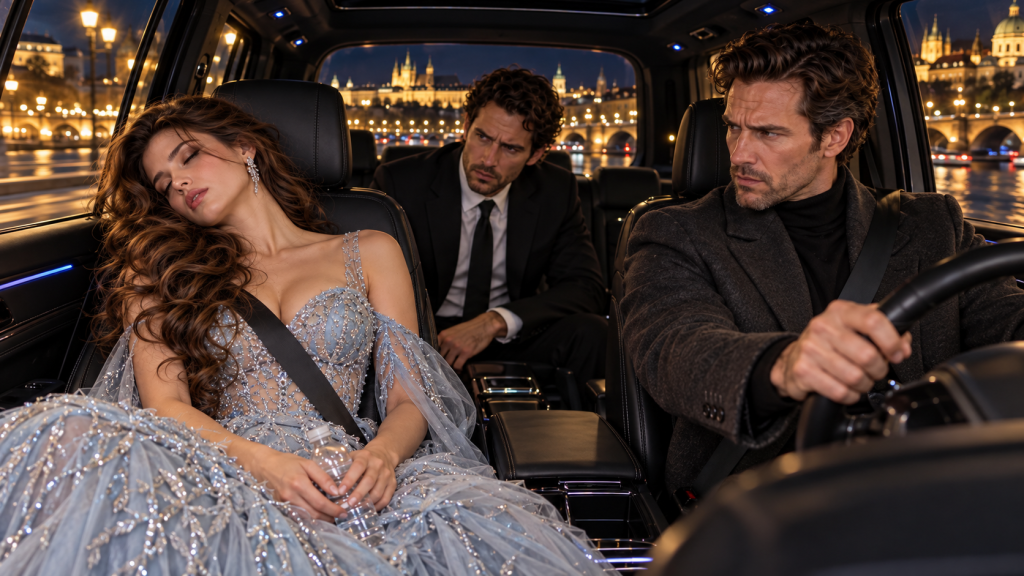
If I could speak to the woman sitting in Marcus’s SUV at 11:08 p.m., staring at her torn tights and wondering why her back hurt, I would not tell her to be less trusting.
I would tell her:
Pay attention to what your body keeps trying to tell you.
Save what you can.
Get somewhere safe.
Do not confront people who have already shown they can make you vulnerable.
Let professionals help.
And most importantly:
Do not confuse being deceived with being foolish.
The shame belongs in the other seat.
Not yours.
For years, the worst sentence in my life was Julian’s voice saying:
She’s out cold. Bring her over.
Now another sentence matters more.
One I said to myself in Rachel’s office after the police took my statement.
My hands were shaking.
My marriage was over.
My future looked empty.
Rachel asked:
“What do you want to do next?”
And for the first time in months, I answered without wondering what Julian would think.
“I want to go somewhere he cannot decide what happens to me.”
I did.
And I never came back.
THE END STORIES! THANK YOU FOR READING GOOD LUCK !❤️
Related Posts