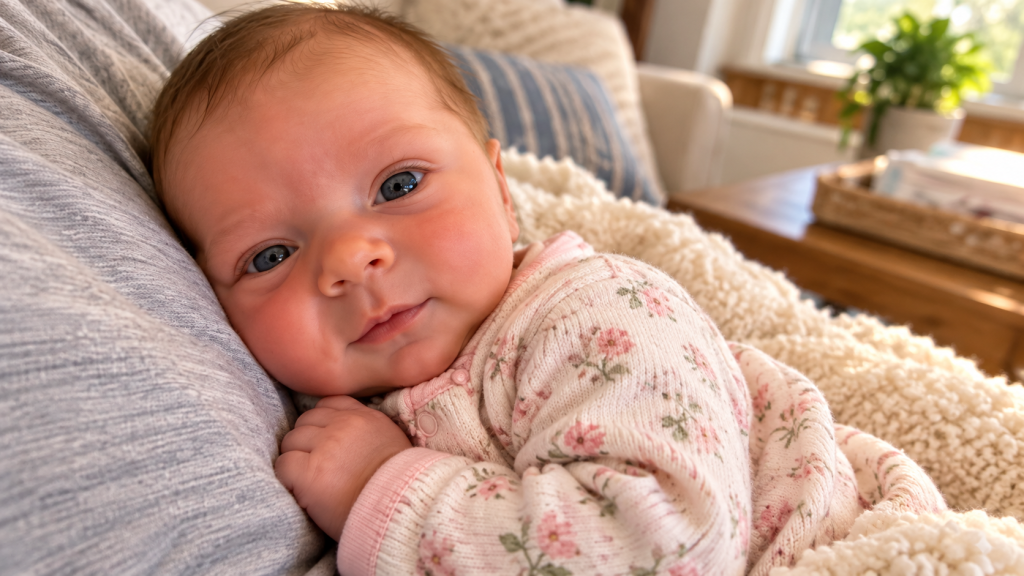
“There’s a discrepancy involving the identity of the donor.” Those eleven words changed everything. For several seconds, nobody moved. My newborn niece lay against my chest, her tiny fingers curled beneath her chin, completely unaware that the adults surrounding her had begun questioning the circumstances of her existence.
Lucas stood beside the hospital bed. His face was pale. Hannah sat near the window, trembling so badly that the nurse had brought her a glass of water. And I stared at the pediatrician, Dr. Evelyn Carter, wondering whether I’d misunderstood her. “What discrepancy?” I whispered. Dr. Carter glanced toward the baby.
Then back at us. “The fertility clinic contacted the hospital this morning. They identified inconsistencies in the records associated with the embryo transfer.” Hannah’s voice cracked. “What kind of inconsistencies?” The doctor hesitated. “An internal review raised questions about whether the embryo identification information matches the donor records.”
My heart began pounding.
“Does that mean this isn’t their baby?”
Dr. Carter shook her head.
“We don’t know that. And I don’t want anyone making assumptions before the clinic establishes what happened.”
Lucas gripped the bedrail.
“Then why did they call you?”
“Because they wanted the care team to know there may be relevant family medical information that hasn’t been confirmed.”
Hannah stood.
Her chair scraped against the floor.
“Relevant medical information?”
Her voice rose.
“You mean there could be something wrong with my daughter?”
Dr. Carter looked at her gently.
“No one has established that. A discrepancy in paperwork is not a diagnosis, and the mark on her back is not proof of a hereditary illness. But she needs a careful newborn examination, and we need accurate information.”
I looked down at the baby.
She yawned.
Opened her tiny mouth.
Then settled against me again.
And suddenly, I felt furious.
Not at the doctor.
Not even at Lucas.
At the thought that this beautiful child had been in the world for less than an hour, and already people were discussing her as though she were a problem to solve.
I pulled her closer.
“She has a name,” I whispered.
Everyone turned toward me.
I looked at my brother.
“Lucas. Hannah. You spent nine months calling her your little miracle.”
My voice trembled.
“You painted her nursery. You bought dresses. You talked to her through my stomach.”
Tears slid down my cheeks.
“And now she’s here.”
Lucas couldn’t look at me.
I swallowed.
“Whatever happened at that clinic, she deserves to be held without fear.”
Hannah approached slowly.
Her cheeks were wet.
“Can I hold her?”
I nodded.
“Of course.”
I placed the baby carefully into her arms.
Hannah sat down, supporting her daughter’s head.
For several moments, she simply stared.
Then she kissed the baby’s forehead.
“My little girl.”
Her voice broke.
“I’m right here.”
Lucas stood motionless.
I looked at him.
And for the first time in our lives, I wondered whether my twin brother was someone I truly understood.
We had shared a womb.
A birthday.
A childhood.
The same crooked smile.
The same habit of biting our lips when nervous.
When we were six, Lucas broke his arm trying to stop me from falling out of a tree.
When we were eleven, he punched a boy who made fun of my glasses.
When our mother died, he sat beside me on the kitchen floor and promised that whatever happened, we would always have each other.
And when I became a single mother at twenty-six, Lucas showed up at my apartment carrying groceries and a secondhand crib.
He never once made me feel ashamed.
He was the person I trusted with everything.
That was why I agreed when he and Hannah asked me to carry their child.
Not because pregnancy was easy.
It wasn’t.
Not because I wanted attention.
I didn’t.
I did it because I loved them.
And because I had seen the heartbreak that followed every unsuccessful fertility treatment.
But now Lucas had placed that newborn back in my arms as though fatherhood were something he could refuse after seeing an unexpected mark on her skin.
I didn’t understand.
And I wasn’t sure I wanted to.
“Lucas,” I said quietly, “come outside with me.”
He looked up.
His eyes were bloodshot.
“Please.”
He nodded.
We stepped into the hallway.
The door closed behind us.
For a moment, we stood beneath the harsh hospital lights without speaking.
Then I turned toward him.
“What is wrong with you?”
He flinched.
I didn’t care.
“You held your daughter for ten seconds.”
My voice cracked.
“Ten seconds, Lucas.”
He covered his face.
“I know.”
“Then explain.”
He shook his head.
“You wouldn’t understand.”
I stared at him.
“Try me.”
For a long moment, my brother said nothing.
Then he reached into his pocket and pulled out the photograph.
The one he’d shown us earlier.
A newborn baby.
Tiny shoulders.
A dark crescent-shaped mark above her lower back.
On the back, in faded ink, were the words:
EMMA. THREE DAYS OLD.
I looked at the photograph.
Then at Lucas.
“Who gave you this?”
His voice trembled.
“Dad.”
I froze.
Our father had died four years earlier.
A quiet man named Robert Bennett.
He worked as an electrician.
Loved baseball.
Hated hospitals.
And almost never discussed the past.
After Mom died, he became even quieter.
He raised us with an awkward kind of tenderness.
Burned pancakes.
Forgot birthdays until the last minute.
But always appeared when we needed him.
I knew he had secrets.
Every parent did.
But I had never imagined one of those secrets might involve another child.
“Dad told you we had a sister?”
Lucas nodded.
“When he was dying.”
My throat tightened.
I remembered those final weeks.
The hospital.
The oxygen tubing.
The way Dad’s hands had grown so thin.
I had been there almost every day.
So had Lucas.
But sometimes we took turns.
One night, Lucas stayed while I went home to my son.
The next morning, he looked exhausted.
I assumed Dad had been restless.
Now I wondered what else had happened.
“What did he say?”
Lucas looked down.
“That Mom gave birth to another baby before us.”
My heart stopped.
“Before us?”
He nodded.
“A little girl.”
I swallowed.
“Emma.”
“Yes.”
“And Dad said she died?”
Lucas shook his head.
“He said that’s what they told him.”
The hallway seemed to tilt.
I leaned against the wall.
“What?”
Lucas wiped his eyes.
“He said Emma was born early.”
“Mom was seventeen.”
“She wasn’t married.”
“Her parents were furious.”
My stomach tightened.
“She was sent away for the delivery.”
I stared at him.
Lucas continued.
“Dad said she went to a maternity home.”
“And after Emma was born, the baby was taken.”
Tears filled his eyes.
“Mom was told she hadn’t survived.”
I pressed my hand against my mouth.
“Lucas…”
He looked at me.
“Dad never believed the story completely.”
I swallowed.
“Then why didn’t he tell us?”
My brother’s face crumpled.
“Because Mom couldn’t bear to speak about it.”
I closed my eyes.
Our mother, Margaret Bennett.
The woman who braided my hair before school.
Who smelled of lavender soap.
Who sang while folding laundry.
Who cried every time she watched a movie about a lost child.
I had always assumed she was simply sensitive.
Now I wondered whether those tears belonged to a grief she’d carried silently her entire life.
Lucas wiped his face.
“Dad gave me the photograph and an old hospital bracelet.”
I stared.
“Where are they?”
“At home.”
He hesitated.
“And he gave me a name.”
“What name?”
“Eleanor Price.”
I frowned.
“Who is she?”
Lucas swallowed.
“The woman who helped arrange Emma’s adoption.”
For several seconds, I couldn’t speak.
Then I whispered, “You investigated?”
He nodded.
“For four years.”
My anger shifted.
Not disappearing.
But becoming tangled with disbelief.
“Four years, Lucas?”
He looked away.
“You were going through your divorce.”
I stared.
“That doesn’t mean you couldn’t tell me.”
“I know.”
“You let me believe Mom and Dad never had another child.”
He nodded miserably.
“I know.”
I swallowed.
“And what did you find?”
Lucas leaned against the wall.
His voice became barely audible.
“Emma may still be alive.”
My heart stopped.
“What?”
He looked at me.
“I found records suggesting she was adopted by a family in Wisconsin.”
I gripped his arm.
“Then where is she?”
“I don’t know.”
I stared.
“Lucas.”
He began crying.
“I found an amended birth record and a possible name, but I couldn’t confirm anything.”
I swallowed.
“And the photograph?”
He looked down.
“Dad said Emma had a crescent-shaped mark on her back.”
My heart tightened.
The baby.
The mark.
The photograph.
Lucas continued.
“When I saw my daughter, all I could think about was Emma.”
I shook my head.
“Lucas, resemblance doesn’t mean—”
“I know.”
His voice broke.
“I know that now.”
He looked at the closed hospital door.
“But then I thought about the message.”
I stared.
“What message?”
Lucas pulled out his phone.
His hands trembled.
He opened an email.
The sender’s address was unfamiliar.
The subject line read:
ABOUT YOUR FAMILY HISTORY.
He handed me the phone.
I began reading.
Mr. Bennett,
I believe I may have information concerning the daughter your parents lost many years ago.
There are hereditary medical issues in the family that you should understand before having biological children.
Please contact me privately.
I looked up.
“When did you get this?”
“Three weeks ago.”
I stared.
“Three weeks?”
He nodded.
I felt anger rise again.
“And you didn’t tell Hannah?”
He closed his eyes.
“No.”
“Or me?”
“No.”
“Lucas!”
He began crying.
“I was afraid.”
I shook my head.
“Afraid of what?”
He looked toward the nursery window at the end of the hallway.
Then whispered, “That I had already passed something terrible on to my daughter.”
I wanted to shake him.
I wanted to hug him.
I wanted to tell him he was being ridiculous.
But beneath his panic was something real.
A man who had spent years dreaming of fatherhood.
A man who had learned about a sister his parents lost.
A man who received a frightening, unverified warning.
And who had allowed fear to swallow his judgment at the worst possible moment.
I took a breath.
“Lucas, an anonymous email isn’t a medical diagnosis.”
He nodded.
“I know.”
“A birthmark isn’t proof of a disease.”
“I know.”
“And if your daughter ever does have a medical condition, that doesn’t make her less your daughter.”
His face crumpled.
I stepped closer.
“You understand that, right?”
He began crying.
Then whispered, “Yes.”
For a moment, we stood quietly.
Then I asked the question I’d been avoiding.
“What was in the genetic report?”
He stared at me.
“The one you said arrived yesterday.”
He swallowed.
“I haven’t opened it.”
I held out my hand.
“Then let’s stop guessing.”
Lucas looked terrified.
But he unlocked his phone.
Opened the message from the genetic testing service.
And handed it to me.
The report was not what he’d described in the delivery room.
It was a family ancestry and carrier-screening summary he’d arranged for himself, not a genetic diagnosis for the baby.
It contained technical information he had barely understood.
Several findings required professional interpretation.
And the report clearly stated that its results could not determine whether a future child would have a particular condition without appropriate clinical evaluation.
I looked up.
“Lucas.”
He covered his face.
“I know.”
I swallowed.
“You terrified yourself with information you didn’t understand.”
He began sobbing.
“Yes.”
I handed the phone back.
Then said quietly, “We need to go back inside.”
He shook his head.
“I don’t know what to say to Hannah.”
I stared at him.
“The truth.”
He looked at me.
I continued.
“All of it.”
When we entered the room, Hannah was sitting beside the bed.
The baby lay in her arms.
Dr. Carter stood nearby reviewing information with a nurse.
Hannah looked up.
Her expression was exhausted.
“Lucas.”
He stopped.
She stared at him.
“Before you say anything, I need to ask you one question.”
He nodded.
“Okay.”
Her voice trembled.
“If our daughter has a medical condition…”
She swallowed.
“Will you still love her?”
The question cut through the room.
Lucas began crying.
“Yes.”
Hannah looked at him.
“Then why did you say you wouldn’t take her home?”
He covered his face.
“Because I panicked.”
She shook her head.
“That isn’t enough.”
“I know.”
Her voice broke.
“I have spent six years dreaming of this child.”
Tears streamed down her cheeks.
“We went through failed treatments.”
“Procedures.”
“Disappointments.”
“And finally, your sister carried our baby.”
She looked down at the newborn.
“She’s here.”
Her voice cracked.
“She’s finally here.”
Then she looked at Lucas.
“And the first thing you did was reject her.”
Lucas fell into a chair.
He began sobbing.
“I know.”
Hannah held the baby closer.
“I don’t know whether I can forgive that.”
His face crumpled.
“I understand.”
I stood near the window.
My heart breaking for all three of them.
For Hannah.
For Lucas.
And most of all, for the little girl who deserved a beginning filled with love rather than fear.
Dr. Carter approached.
“I want to update everyone about the baby’s examination.”
We turned toward her.
She spoke calmly.
“The pediatric team has examined the mark. Its appearance alone does not establish a diagnosis, but because of its location and some associated features, we’ve requested additional evaluation.”
Hannah nodded.
“Is she in danger?”
The doctor answered carefully.
“She is stable. We’re taking the appropriate precautions and arranging the recommended tests.”
I looked down at the baby.
Her tiny chest rose and fell peacefully.
Dr. Carter continued.
“Whatever we learn, we’ll explain it clearly and discuss what care she may need.”
Hannah wiped her eyes.
“Thank you.”
Then the doctor turned toward Lucas.
“And regarding the embryo records, the fertility clinic will need to provide a formal explanation. I cannot interpret their internal findings on their behalf.”
Lucas nodded.
“So we don’t know if she’s biologically ours?”
“Not from that discrepancy alone.”
The doctor paused.
“If parentage needs to be confirmed, there are reliable ways to evaluate that with appropriate consent and guidance.”
Hannah looked toward me.
Then at Lucas.
Her expression became suddenly guarded.
“Something happened at the clinic?”
I swallowed.
Lucas looked down.
And I knew another difficult conversation was beginning.
Three days later, the fertility clinic asked us to attend a meeting.
By then, the baby had undergone further evaluation.
The doctors had identified a spinal skin finding that warranted specialist follow-up.
Imaging and clinical assessment were being arranged to determine whether any underlying spinal abnormality was present.
She was feeding well.
Breathing normally.
And beginning to develop the tiny expressions that make newborns look as though they are already judging the world.
Hannah had named her.
Grace Elizabeth Bennett.
Grace.
Because after years of disappointment, she’d always said that if a daughter came into their lives, she wanted the name to reflect gratitude.
Elizabeth.
After Hannah’s grandmother.
Lucas cried when he heard it.
But Hannah had not yet allowed him to pretend the terrible moment in the delivery room had never happened.
At the clinic, we sat in a conference room.
Hannah held Grace.
Lucas sat beside her.
I sat across from them.
An administrator named Dr. Naomi Foster entered with a reproductive endocrinologist, a laboratory representative, and a patient advocate.
Their faces were serious.
My stomach tightened.
Dr. Foster took a breath.
“Thank you for coming.”
Hannah looked at her.
“Please tell us what happened.”
The administrator nodded.
“We identified inconsistencies in historical labeling and chain-of-custody records associated with the embryo used in your transfer.”
Lucas gripped the armrest.
“What inconsistencies?”
Dr. Foster opened a folder.
“During an internal audit, we found that records from the day of embryo preparation contained conflicting identifiers.”
Hannah’s face went white.
“Are you saying you transferred someone else’s embryo?”
The administrator paused.
“We cannot responsibly conclude that from the paperwork alone.”
Hannah’s voice rose.
“Then what can you conclude?”
“That the documentation does not meet the standards we expect, and that further investigation is required.”
For a moment, nobody spoke.
Then Lucas leaned forward.
“Was there another patient?”
The laboratory representative nodded.
“Another embryo-handling procedure occurred during the same laboratory session.”
My heart began pounding.
Hannah covered Grace’s head protectively.
“Another family?”
“Yes.”
Her voice broke.
“And they have a child?”
Dr. Foster hesitated.
“We cannot discuss another patient’s confidential information.”
Hannah began crying.
I reached for her hand.
She squeezed it tightly.
Lucas looked toward the window.
Then whispered, “So this could be their baby.”
Dr. Foster answered carefully.
“We understand that possibility is frightening. But a documentation discrepancy does not establish that an embryo was switched.”
Hannah swallowed.
“What happens now?”
The patient advocate leaned forward.
“We can discuss independent legal advice, records preservation, and appropriately arranged genetic testing to clarify parentage.”
Hannah nodded.
“And our daughter?”
The advocate’s expression softened.
“Her medical care continues regardless of the outcome.”
I watched Hannah look down at Grace.
Then something changed in her expression.
She adjusted the baby’s blanket.
Kissed her forehead.
And said quietly, “She’s coming home with us.”
Lucas turned.
“Hannah…”
She looked at him.
“Whatever the test says.”
Her voice trembled.
“We will handle the truth responsibly.”
Then she looked toward Dr. Foster.
“But nobody is going to treat her like an object that was delivered to the wrong address.”
The room fell silent.
And for the first time since Grace’s birth, I felt hope.
The genetic testing was arranged through independent professionals.
Appropriate consent was obtained.
We were careful not to make assumptions about what the results might mean legally.
The clinic preserved relevant records.
Attorneys became involved.
And Hannah and Lucas began the agonizing process of waiting.
I returned home to my son, Noah.
He was eight years old.
A thoughtful boy with dark hair and his uncle’s crooked smile.
He had spent the final weeks of my pregnancy asking whether his baby cousin would recognize his voice.
Now he stood in the kitchen wearing dinosaur pajamas.
“Mom?”
I smiled.
“Yes?”
“Is the baby okay?”
I knelt beside him.
“She’s being checked by doctors, but she’s doing well.”
He looked relieved.
“Good.”
Then he frowned.
“Why was Uncle Lucas sad?”
My heart tightened.
I considered.
Then answered gently.
“He got scared.”
Noah looked confused.
“Of the baby?”
“Of something he didn’t understand.”
He thought about that.
Then asked a question that stayed with me for years.
“But babies can’t help how they’re born, right?”
My eyes filled.
“No, sweetheart.”
He nodded seriously.
“Then he shouldn’t be mad at her.”
I pulled him into my arms.
“No.”
My voice broke.
“He shouldn’t.”
That night, after Noah went to bed, I sat alone in the kitchen.
The house was quiet.
My body still ached from childbirth.
My emotions felt raw.
And I began crying.
Not simply because I was exhausted.
Because I’d spent months carrying a child for people I loved.
I’d endured morning sickness.
Back pain.
Sleepless nights.
The discomfort and uncertainty of pregnancy.
And every time Grace moved inside me, I’d pictured the moment my brother finally held her.
I’d imagined Hannah crying with happiness.
Lucas laughing.
A family beginning.
Instead, I’d watched my twin brother reject his newborn daughter in terror.
I felt betrayed.
And I didn’t know how to tell him.
The next morning, Lucas appeared at my door.
He carried coffee.
And a bag of my favorite pastries.
Exactly the things he’d brought when I was struggling after Noah’s birth.
I opened the door.
He gave me a nervous smile.
“Hey.”
I stared.
“Lucas.”
His smile disappeared.
“Can we talk?”
I hesitated.
Then stepped aside.
We sat at the kitchen table.
For a while, neither of us spoke.
Lucas looked exhausted.
His hair was messy.
His eyes swollen.
Finally, he whispered, “I’m sorry.”
I stared at him.
“Which part?”
He swallowed.
“All of it.”
I looked down.
He continued.
“For not telling you about Emma.”
“For believing that message.”
“For letting fear make me cruel.”
His voice broke.
“And for what I did when Grace was born.”
I felt tears rising.
Then said something I hadn’t allowed myself to say before.
“Lucas, I trusted you.”
He closed his eyes.
“I know.”
“I carried your daughter.”
His face crumpled.
“I know.”
“For nine months, I listened to you talk about how much you wanted her.”
I swallowed.
“And then you gave her back to me because you saw something on her skin.”
He began crying.
“I know.”
My voice rose.
“Do you understand how that felt?”
He shook his head.
“No.”
I looked at him.
“It felt as though you thought my body had failed you.”
His eyes widened.
“No.”
I began crying.
“It felt as though everything I’d done could be rejected in ten seconds.”
Lucas reached toward me.
Then stopped.
His voice broke.
“I never meant that.”
I wiped my eyes.
“But that’s how it felt.”
He sat silently.
Then whispered, “I’m sorry.”
I nodded.
For a moment, I saw my little brother.
The boy who shared my birthday.
The boy who held my hand when Mom died.
The boy who always seemed strong when I couldn’t be.
Now he was frightened.
Ashamed.
And finally beginning to understand how deeply he’d hurt us.
I took a breath.
“Lucas, you need to talk to someone.”
He looked up.
“A counselor?”
“Yes.”
He nodded.
“I already made an appointment.”
I stared.
He swallowed.
“Hannah asked me to.”
My chest tightened.
“And?”
“I agreed.”
For the first time that morning, I felt a little relief.
I looked at him.
Then asked quietly, “Do you love Grace?”
His eyes filled.
“Yes.”
“Even if she has a medical condition?”
“Yes.”
“Even if the clinic made a mistake?”
He hesitated.
Then whispered, “I’m trying to understand what that would mean.”
I nodded.
“That makes sense.”
He looked up.
I continued.
“But you don’t get to stop treating her like a human being while you work it out.”
His face crumpled.
“I know.”
For a long moment, we sat quietly.
Then Lucas reached across the table.
“Can you forgive me?”
I looked at him.
My twin brother.
The person I’d shared almost everything with.
I loved him.
Of course I did.
But something between us had cracked.
And I wasn’t going to pretend otherwise.
“I don’t know yet,” I whispered.
He nodded.
“I understand.”
That afternoon, Hannah sent me a photograph.
Grace sleeping in her crib.
The green nursery walls behind her.
A tiny stuffed rabbit beside the mattress, which Hannah moved away before leaving her to sleep.
Beneath the picture, she wrote:
She’s home.
I stared at the words.
Then began crying.
Because after everything, the child I’d carried was finally in the room her parents had prepared for her.
I called Hannah.
She answered immediately.
“Hi.”
Her voice sounded tired.
I smiled through tears.
“Hi.”
“Did you see the picture?”
“Yes.”
I swallowed.
“She looks beautiful.”
Hannah laughed softly.
“She kept us awake all night.”
I smiled.
“Sounds like a newborn.”
She chuckled.
Then grew quiet.
“Thank you.”
My throat tightened.
“For what?”
“For not letting her be alone in that room.”
Tears slipped down my cheeks.
I closed my eyes.
“I love her, Hannah.”
Her voice broke.
“I know.”
Then she whispered, “And I love you.”
Over the following weeks, Grace underwent additional medical assessment.
The specialists explained the possible significance of her skin finding.
They arranged follow-up as needed.
Some concerns were ruled out.
Others required monitoring.
But nothing about her appearance established the frightening hereditary diagnosis Lucas had imagined.
The medical team focused on evidence.
On her actual health.
On what could be evaluated and treated.
Not on anonymous warnings or family rumors.
Lucas began attending counseling.
At first, he struggled to speak openly.
He was embarrassed.
Afraid.
Ashamed of the delivery-room incident.
But gradually, he began examining the fear beneath his reaction.
Fear of losing a child.
Fear of repeating our parents’ grief.
Fear that something terrible could happen because of him.
Fear that he wasn’t capable of being the father he’d always dreamed of becoming.
One evening, Hannah told me something that broke my heart.
“Lucas sits beside Grace’s crib every night.”
I looked at her.
“Really?”
She nodded.
“He watches her breathe.”
My throat tightened.
“Does he sleep?”
She shook her head.
“Not much.”
I swallowed.
“And how are you?”
Hannah looked down.
For a moment, she seemed unable to answer.
Then whispered, “I’m angry.”
I nodded.
“You have every right to be.”
She began crying.
“I waited so long for her.”
I reached for her hand.
She continued.
“And now I’m frightened every time Lucas looks worried.”
My heart tightened.
“Because of what happened?”
She nodded.
“I keep thinking he’ll change his mind again.”
I squeezed her fingers.
“Hannah…”
She looked up.
“I know he’s trying.”
Her voice broke.
“But I’m still scared.”
I sat beside her.
For a long time, we said nothing.
Then I whispered, “You don’t have to forgive him faster than you’re ready.”
Her eyes filled.
She nodded.
“And he doesn’t get to decide when you stop hurting.”
She began crying harder.
I hugged her.
The next development came six weeks after Grace’s birth.
I was folding laundry when my phone rang.
Hannah.
I answered immediately.
“Hello?”
Her voice trembled.
“The results came.”
My heart stopped.
I sat down.
“What results?”
“The parentage testing.”
I swallowed.
“And?”
For several seconds, she couldn’t speak.
Then whispered, “Lucas isn’t her biological father.”
The laundry slipped from my hands.
I stared at the wall.
“What?”
Hannah began crying.
“The test confirmed it.”
I couldn’t breathe.
I swallowed.
“And you?”
Her voice broke.
“I’m not her biological mother either.”
For a moment, the room seemed to tilt.
I pressed my hand against the table.
Hannah was sobbing.
I tried to speak.
But nothing came out.
Finally, I whispered, “Then whose baby did I carry?”
Hannah began crying harder.
“We don’t know.”
I closed my eyes.
Nine months.
Nine months of pregnancy.
Appointments.
Ultrasounds.
Tiny kicks.
The nursery.
The birth.
Everything.
And now the baby I’d carried was genetically unrelated to the people who had spent years longing for her.
I felt a strange wave of grief.
Not because genetics determined whether Grace deserved love.
They didn’t.
But because somewhere, another family might be living with a terrible uncertainty.
Someone might be wondering why their own treatment had failed.
Someone might have lost an embryo without knowing.
And Grace herself would someday deserve the truth about her beginnings.
“Where’s Lucas?” I whispered.
Hannah swallowed.
“Here.”
I heard movement.
Then his voice.
“Hey.”
My throat tightened.
“Lucas.”
He began crying.
“I know.”
I swallowed.
“What are you going to do?”
There was silence.
Then he whispered, “I’m going to keep being her dad.”
I closed my eyes.
Tears slipped down my cheeks.
He continued.
“I held her this morning.”
“She smiled in her sleep.”
“I know that doesn’t mean she recognizes me.”
His voice broke.
“But I realized something.”
I waited.
He swallowed.
“I already love her.”
For a moment, I couldn’t speak.
Then he said the words I’d been waiting to hear since the delivery room.
“Whatever happens next, I’m not abandoning her.”
I began crying.
Not because the situation was simple.
It wasn’t.
Parentage.
Consent.
Legal responsibilities.
The clinic investigation.
The rights and interests of any other affected family.
There were difficult decisions ahead.
But Lucas was finally saying something that mattered.
He was willing to face those decisions while continuing to care for Grace.
I took a breath.
“Then do this properly.”
He nodded.
“We will.”
“Get independent legal advice.”
“Yes.”
“Don’t hide anything.”
“I won’t.”
“And whatever you learn…”
My voice broke.
“Remember she’s a child, Lucas.”
He began crying.
“I know.”
The clinic’s investigation intensified.
Records were reviewed.
Laboratory procedures examined.
Relevant parties contacted through appropriate channels.
The clinic retained outside experts.
Hannah and Lucas obtained independent legal representation.
They requested copies of their treatment records.
And made clear that Grace’s welfare must remain central to every decision.
Several weeks later, the clinic confirmed that an embryo identification error had occurred.
The findings indicated that the embryo transferred to me was not the one intended for Hannah and Lucas.
The revelation devastated everyone.
Hannah called me after the meeting.
Her voice was barely audible.
“They admitted it.”
I sat down.
“What exactly did they say?”
She swallowed.
“That their laboratory process failed.”
Tears filled my eyes.
I closed my eyes.
“And another family?”
“They’re contacting the people who may have been affected.”
I nodded slowly.
Hannah began crying.
“I can’t stop thinking about them.”
I swallowed.
“Neither can I.”
Then she whispered, “I’m scared.”
My heart tightened.
“Of what?”
“That someone will come and take Grace away.”
I closed my eyes.
For a moment, I wanted to promise that wouldn’t happen.
That everything would be fine.
That the law would protect the family she had built.
But I couldn’t know that.
And after everything we’d endured, I wasn’t going to offer false certainty.
I took a breath.
“Hannah, we’ll make sure you have good legal guidance.”
She began crying.
“And we’ll put Grace’s well-being first.”
For a long time, neither of us spoke.
Then Hannah whispered, “I don’t know how to survive losing her.”
My heart broke.
I closed my eyes.
And remembered the months when she’d sat in my kitchen after another unsuccessful treatment.
The way she held Noah as a baby.
The way she looked at family photographs.
The little dresses she’d bought before Grace was born.
I swallowed.
“Hannah.”
“Yes?”
“Whatever happens, you won’t face it alone.”
The next twist arrived on a Thursday morning.
I was preparing Noah’s breakfast when my phone rang.
An unfamiliar number.
I almost ignored it.
Then answered.
“Hello?”
A woman’s voice spoke.
“Am I speaking with the sister who carried the baby for Lucas and Hannah Bennett?”
My stomach tightened.
“Yes.”
“My name is Emma.”
I stopped breathing.
She continued.
“Emma Collins.”
My hand began trembling.
“I believe I’m your older sister.”
For a moment, I couldn’t speak.
The kitchen suddenly felt too bright.
Too quiet.
Noah sat at the table eating cereal.
The clock ticked.
A car passed outside.
And I stood holding the phone as though someone had reached across decades and touched my childhood.
“Emma?”
My voice cracked.
“Yes,” she whispered.
I gripped the counter.
“How did you find me?”
She took a breath.
“I’ve been trying to find my birth family.”
My eyes filled.
“And I saw information connected to the clinic investigation.”
I swallowed.
She continued.
“Then I realized the names matched the family I’d been researching.”
I closed my eyes.
“Lucas knows about you.”
There was silence.
Then she whispered, “I know.”
My heart began pounding.
“You contacted him?”
“Yes.”
I swallowed.
“About a hereditary condition?”
She hesitated.
“I contacted him because I wanted to talk about our family history.”
I stared.
Then asked carefully, “Did you tell him never to have children?”
Emma sounded startled.
“What?”
I swallowed.
“Did you warn him about a hereditary illness?”
Her voice changed.
“No.”
My heart stopped.
“I never said that.”
I closed my eyes.
Then whispered, “Emma, can we meet?”
She took a breath.
“I’d like that.”
We arranged to meet the following weekend.
At a quiet café halfway between our homes.
Lucas agreed to come.
Hannah stayed with Grace.
She wasn’t ready to be part of another emotionally complicated reunion.
And I understood.
The morning of the meeting, I stared at myself in the mirror.
Thirty-four years old.
Brown hair.
Dark eyes.
A small scar near my eyebrow from falling off a bicycle at seven.
I wondered whether Emma would look like me.
Whether she had our mother’s smile.
Whether she’d inherited Dad’s stubbornness.
Whether we’d recognize something in one another despite the years we’d lost.
Lucas arrived early.
He looked nervous.
“Ready?”
I gave a weak laugh.
“Not remotely.”
He smiled sadly.
“Me neither.”
We drove in silence.
When we entered the café, I saw her immediately.
She sat near the window.
A woman in her late forties.
Dark brown hair.
Soft eyes.
A familiar shape to her mouth.
She held a blue coffee cup in both hands.
And when she looked up, I felt something inside me stop.
Our mother.
Not exactly.
Not completely.
But something about her expression reminded me so strongly of Mom that tears immediately filled my eyes.
Emma stood.
For a moment, none of us moved.
Then she whispered, “Lucas?”
He nodded.
His face crumpled.
“Emma.”
Her eyes filled.
Then she looked at me.
“And you must be his twin.”
I nodded.
My throat closed.
She smiled through tears.
“I’ve wondered what you looked like.”
I began crying.
Then she opened her arms.
And I stepped into them.
We hugged.
Two sisters who had never met.
Two women connected by a family history neither had chosen.
And for a moment, I felt the weight of every year we’d lost.
Birthdays.
Holidays.
Childhood memories.
Weddings.
Ordinary afternoons.
All the things sisters are supposed to share.
Emma held me tightly.
Then whispered, “I’ve wanted to meet you for so long.”
My voice broke.
“Me too.”
We sat together.
Ordered coffee.
And slowly began telling our stories.
Emma had been adopted as a newborn by a couple named David and Ruth Collins.
They were loving parents.
They raised her in Wisconsin.
She had a happy childhood.
But from a young age, she knew she had been adopted.
Her parents never treated the truth as shameful.
They told her what they knew.
Admitted what they didn’t.
And supported her curiosity about her biological family.
When Emma turned thirty, she began searching.
The process was slow.
Records were incomplete.
Some documents were sealed.
Others contained outdated information.
She found references to a maternity home.
An original first name.
And eventually, clues connecting her to our mother.
Margaret Bennett.
Emma looked down at her coffee.
“I found out she had died.”
My eyes filled.
She nodded sadly.
“I cried for days.”
I swallowed.
Then whispered, “She was wonderful.”
Emma’s eyes filled.
“Tell me about her.”
I took a breath.
Then began.
I told her about Mom’s lavender soap.
Her terrible dancing.
The way she sang while washing dishes.
Her love of sunflowers.
Her habit of making hot chocolate whenever someone was sad.
Emma began crying.
Then laughed softly.
“My adoptive mom loved sunflowers too.”
I smiled through tears.
Lucas reached into his bag.
He removed a photograph of Mom.
Young.
Standing in a garden.
Smiling.
Emma stared at it.
Then covered her mouth.
“Oh.”
Her voice broke.
“That’s her.”
Lucas nodded.
“Yes.”
Emma touched the photograph.
Tears streamed down her face.
“She looks like me.”
I reached for her hand.
“She does.”
For a long time, we sat quietly.
Then Emma asked, “Did she ever talk about me?”
My heart tightened.
Lucas and I looked at each other.
I swallowed.
“We didn’t know about you until after she died.”
Emma’s expression crumpled.
“Oh.”
Lucas leaned forward.
“But Dad remembered you.”
He showed her the old photograph.
The newborn.
The crescent-shaped mark.
Emma stared.
Then slowly turned pale.
My heart began pounding.
“Emma?”
She looked up.
Then whispered, “I have a mark like that.”
I stared at her.
Lucas gripped the table.
Emma looked down.
“On my back.”
She swallowed.
“It’s been there since I was born.”
My mouth went dry.
The photograph.
Grace.
Emma.
The strange resemblance.
For a moment, all the pieces seemed to move closer together.
Then I caught myself.
A physical resemblance was not enough to explain the clinic error.
And Emma’s family history was separate from the question of who had provided Grace’s embryo.
I took a breath.
“Emma, did you send Lucas the email about a hereditary condition?”
She frowned.
“I sent him a message asking to discuss family medical history.”
Lucas looked up sharply.
Emma continued.
“But I didn’t warn him never to have children.”
I felt cold.
Lucas’s face drained.
“Then who sent that?”
Emma looked confused.
“What warning?”
Lucas showed her the email.
She read it.
Her expression changed.
“This wasn’t from me.”
He swallowed.
“Are you sure?”
She looked at him.
“Yes.”
Then she pointed toward the sender’s address.
“That’s not my email.”
I felt a chill.
Someone had used information about our family history to frighten Lucas.
But who?
And why?
Emma continued studying the message.
Then she looked up.
“Did someone at the clinic know you were searching for me?”
Lucas hesitated.
“I mentioned family medical history during our consultations.”
I stared.
“To whom?”
He swallowed.
“A counselor.”
My heart tightened.
“What counselor?”
He looked down.
“Dr. Rebecca Hale.”
I stared at him.
“Why would she know about Emma?”
Lucas explained that during fertility treatment, he’d disclosed the possibility of an unknown biological sibling and questions about family medical history.
The counselor had recommended appropriate genetic consultation.
He had shared his concerns.
The photograph.
And some of the documents Dad left.
I felt my stomach twist.
“But that still doesn’t explain the anonymous email.”
Lucas shook his head.
“No.”
Emma looked serious.
“Then don’t assume they’re connected until someone investigates.”
I nodded.
She was right.
After everything we’d learned, suspicion felt tempting.
But guessing could hurt innocent people.
We needed evidence.
The following week, Lucas provided the email and relevant correspondence to the professionals handling the clinic matter.
The information was preserved.
Reviewed.
And considered alongside other records.
The origin of the message was not immediately established.
But investigators identified that the sender had used details not widely available outside the treatment process.
That raised concerns about possible inappropriate access to confidential information.
The clinic opened a separate privacy review.
The family consulted its legal representatives.
And we learned something important.
The message and the embryo error might be related.
Or they might not.
We refused to declare a connection without proof.
Meanwhile, Emma became part of our lives.
Slowly.
Carefully.
With the awkwardness and joy of strangers discovering they share a history.
She visited my home.
Met Noah.
Brought photographs of her childhood.
And told us about her adoptive parents.
One afternoon, Noah asked her, “Are you really my aunt?”
Emma laughed.
“Yes.”
He frowned.
“Even though Mom didn’t know you before?”
She smiled.
“That’s right.”
Noah considered.
Then grinned.
“Cool.”
He handed her a dinosaur.
“Then you can play.”
Emma burst out laughing.
And I watched her sit on the floor with my son.
A sister I hadn’t known existed.
Laughing in my living room.
It felt impossible.
Beautiful.
And heartbreaking.
All at once.
Then one evening, Emma asked about Grace.
“I’ve heard she’s doing well.”
I smiled.
“She is.”
Emma nodded.
“I’m glad.”
I looked at her.
Then hesitated.
“Would you like to meet her?”
Emma’s eyes filled.
“Only if Hannah and Lucas are comfortable.”
I smiled sadly.
“Thank you.”
When the day came, Emma arrived carrying a tiny blanket.
She stood in Hannah’s living room.
The green nursery visible through the hallway.
Grace was asleep in Hannah’s arms.
Lucas stood nearby.
For a moment, Emma simply stared.
Then whispered, “She’s beautiful.”
Hannah smiled.
“Thank you.”
Emma approached slowly.
Hannah looked toward Lucas.
Then nodded.
“You can hold her.”
Emma’s eyes widened.
“Really?”
Hannah smiled.
“Of course.”
She placed Grace carefully in Emma’s arms.
Emma looked down.
Then began crying.
“Oh, sweetheart.”
Grace opened her eyes.
Stared up at the unfamiliar face.
And made a tiny sound.
Emma laughed through tears.
“Hello, little one.”
Lucas stood beside them.
His eyes filled.
Then he whispered, “Emma.”
She looked up.
He swallowed.
“I’m sorry.”
Emma frowned.
“For what?”
“For the years.”
His voice broke.
“For not finding you sooner.”
Her expression softened.
She shook her head.
“Lucas, you didn’t know.”
He began crying.
She smiled sadly.
“We found each other now.”
For a moment, they simply looked at one another.
Then Emma reached toward him.
He stepped closer.
And they embraced carefully around the sleeping baby.
I turned away.
Tears streaming down my face.
Because I wished Mom could have seen it.
Her children.
Together.
At last.
The next major development arrived several months later.
The clinic’s review had identified another affected couple.
Their names were Sarah and Daniel Whitmore.
They had undergone fertility treatment during the same laboratory period.
They had been informed that an error might have affected their stored embryos.
And after obtaining independent advice, they agreed to participate in appropriately arranged testing and discussions.
When Hannah told me, her voice trembled.
“They’re willing to meet.”
I sat down.
“Are you ready?”
She laughed weakly.
“No.”
I swallowed.
“Then why?”
Her voice broke.
“Because they deserve answers.”
The first meeting was arranged through attorneys and a counselor experienced in complex family matters.
Nobody walked into the room expecting a simple conversation.
There were legal questions.
Medical questions.
Emotional questions.
And a child whose best interests had to remain central.
Sarah Whitmore was a woman in her late thirties.
Soft-spoken.
Dark hair.
Tired eyes.
Her husband Daniel sat beside her.
He looked nervous.
They had endured years of fertility treatment too.
Their recent attempt had not resulted in a pregnancy.
And now they were learning that an embryo connected to their treatment might have been transferred to someone else.
I watched Sarah enter.
Her eyes immediately moved toward Grace.
Hannah held the baby.
Lucas sat beside her.
The room became silent.
Then Sarah began crying.
“Oh.”
She covered her mouth.
Daniel placed an arm around her.
I felt my heart break.
Because this was not a story with easy villains and heroes.
The clinic had made a serious error.
But the families sitting in that room had all been hurt.
The counselor spoke gently.
“We’re here to share verified information and discuss next steps without rushing decisions.”
Everyone nodded.
Then Sarah looked toward Hannah.
Her voice trembled.
“Can I ask her name?”
Hannah swallowed.
“Grace.”
Sarah began crying.
“That’s beautiful.”
Hannah’s eyes filled.
“Thank you.”
For a moment, nobody spoke.
Then Daniel Whitmore looked toward Lucas.
“I don’t know what to say.”
Lucas nodded.
“Neither do I.”
They sat quietly.
Two men.
Both frightened.
Both facing a situation neither had chosen.
The counselor explained the next steps.
The available genetic evidence indicated that Grace was biologically related to Sarah and Daniel.
The clinic’s findings also supported that the wrong embryo had been transferred.
But establishing biological parentage did not automatically resolve every question about legal parentage, custody, relationships, or the child’s future.
Those matters required careful legal consideration.
Sarah looked at Grace.
Then at Hannah.
Her voice broke.
“I don’t want to hurt you.”
Hannah began crying.
“I don’t want to hurt you either.”
For a moment, the two women simply stared at one another.
Then Sarah whispered, “I don’t know what the right thing is.”
Hannah shook her head.
“Neither do I.”
I sat quietly.
My hands folded tightly in my lap.
I had carried Grace.
Felt her grow.
Heard her heartbeat.
Given birth to her.
And yet I was not her genetic mother.
Hannah had prepared to raise her.
Loved her from the moment she knew she was coming.
Sarah had provided the genetic material from which she developed.
And now we were all looking at the same little girl with different kinds of love, grief, and responsibility.
The counselor spoke again.
“No one needs to make a final decision today.”
I felt my shoulders loosen.
“Good,” I whispered.
Over the following months, the families pursued a careful process.
Independent attorneys.
Child-development professionals.
Medical guidance.
And conversations that sometimes ended in tears.
There were difficult legal proceedings concerning parentage and the clinic’s error.
The court considered the relevant agreements, applicable law, established relationships, and Grace’s welfare.
Nothing was decided simply because one adult claimed a stronger emotional connection.
Sarah and Daniel wanted a relationship with Grace.
Hannah and Lucas wanted to continue raising her.
Both families were afraid.
And both understood that their choices would shape a child who had done nothing wrong.
Eventually, with professional guidance and court approval of the applicable arrangements, the families established a path that preserved Grace’s stable home with Hannah and Lucas while allowing an appropriate, developing relationship with Sarah and Daniel.
The details were documented.
The adults accepted responsibilities.
And the plan could be reviewed as Grace grew and her needs changed.
It wasn’t the ending anyone imagined when fertility treatment began.
But it was one built around the child rather than the fears of the adults.
One evening, Sarah came to visit.
Hannah made tea.
Grace sat in a baby seat, kicking her feet.
Lucas was preparing dinner.
I sat near the window.
Sarah looked toward Grace.
Then smiled.
“She has Daniel’s eyes.”
Hannah nodded.
“She does.”
Sarah’s eyes filled.
For a moment, she seemed overcome.
Then Hannah said gently, “Would you like to feed her?”
Sarah looked up.
“Really?”
Hannah nodded.
“Yes.”
Sarah took the bottle.
Held Grace carefully.
And began feeding her.
The baby stared up at her.
Then wrapped one tiny hand around her finger.
Sarah began crying.
Hannah watched quietly.
Her own eyes filled.
I looked toward Lucas.
He stood in the doorway.
His expression was difficult to read.
Then he approached.
Sat beside Hannah.
And took her hand.
For the first time since Grace’s birth, I saw him watching the situation without fear taking over.
He looked sad.
Moved.
Overwhelmed.
But present.
Later, after Sarah left, Hannah sat beside me.
She looked exhausted.
“How are you?” I asked.
She considered.
Then smiled sadly.
“It’s strange.”
I nodded.
She continued.
“I never imagined my daughter would have so many people connected to her story.”
My throat tightened.
I looked toward the nursery.
Hannah followed my gaze.
Then whispered, “But she’s loved.”
I nodded.
“Yes.”
“Very.”
The legal proceedings involving the clinic continued.
The families sought accountability.
Documentation.
Financial compensation for established harm.
And safeguards intended to prevent similar errors.
The clinic faced serious scrutiny.
Its procedures were reviewed.
Changes were required.
And its failures became part of a broader effort to improve how vulnerable families were protected.
We didn’t receive every answer immediately.
Some questions took months.
Others longer.
But we learned enough to understand that a documented identification failure—not some mysterious curse, hidden hereditary destiny, or physical resemblance—had caused the embryo error.
The anonymous message remained troubling.
A separate review identified unauthorized access to certain confidential records and led to additional consequences for the responsible individual.
The investigation did not establish that the message had been part of a deliberate plan to change Grace’s parentage.
It appeared to have been an irresponsible attempt to exploit Lucas’s family-history concerns.
When Lucas learned that, he sat silently for a long time.
Then whispered, “I let one message destroy the happiest moment of my life.”
I looked at him.
We were sitting on my porch.
Noah played in the yard.
Grace was asleep inside.
I took a breath.
“You made a terrible mistake.”
Lucas nodded.
“I know.”
I continued.
“But you can spend the rest of your life making better choices.”
His eyes filled.
“I want to.”
I looked toward the house.
Then said something I’d been carrying for months.
“Lucas, Grace won’t remember what happened in the delivery room.”
He nodded.
“But someday, she may hear about it.”
His face crumpled.
I continued.
“When that happens, what matters is whether she can see that you took responsibility.”
Tears slipped down his face.
He nodded.
“I will.”
And he did.
Not perfectly.
Not overnight.
But steadily.
He attended counseling.
Learned to discuss fear without allowing it to control him.
Supported Hannah through difficult conversations.
Participated in Grace’s medical appointments.
Respected the legal process.
And stopped treating every uncertainty as an impending disaster.
The man who once placed his daughter back into my arms because he was terrified gradually became a father who could hold her through uncertainty.
That difference mattered.
Grace’s health continued to be monitored.
The specialists explained the findings to her parents.
Some concerns did not develop into significant problems.
Others required routine follow-up.
But she grew.
Smiled.
Rolled over.
Reached for toys.
And eventually laughed so loudly that Lucas claimed it was the most beautiful sound he’d ever heard.
The first time Grace said “Dada,” Lucas called me.
He was crying.
I answered.
“What’s wrong?”
He laughed through tears.
“Nothing.”
I frowned.
“Lucas?”
He sobbed.
“She said it.”
I smiled.
“Said what?”
“Dada.”
My eyes filled.
I laughed.
“Oh, Lucas.”
He began crying harder.
“She looked right at me.”
I swallowed.
“And?”
He whispered, “I never thought I’d deserve to hear that.”
I sat quietly.
Then said gently, “Lucas, fatherhood isn’t about deserving a title.”
He listened.
“It’s about showing up.”
His voice broke.
“I know.”
Grace’s first birthday arrived with balloons.
A small cake.
A green dress.
And more people than the living room could comfortably hold.
Hannah made decorations.
Lucas baked a cake that leaned dangerously to one side.
Noah helped hang banners.
Emma brought flowers.
Sarah and Daniel attended according to the arrangements the families had established.
And I stood near the kitchen watching the little girl I’d carried take clumsy steps between the people who loved her.
At one point, Grace reached toward Lucas.
He knelt.
Opened his arms.
And she stumbled forward.
He caught her.
Lifted her carefully.
Then kissed her cheek.
She squealed.
Everyone laughed.
I felt tears filling my eyes.
Hannah stepped beside me.
She smiled.
“Thinking about the hospital?”
I nodded.
“Yes.”
Her eyes softened.
“Me too.”
I looked at her.
Then whispered, “Are you happy?”
She considered.
Then smiled through tears.
“I’m grateful.”
I nodded.
She continued.
“And sometimes still sad.”
My throat tightened.
“That’s okay.”
She smiled.
“I know.”
We watched Grace laugh in Lucas’s arms.
Then Hannah whispered, “Nothing about this happened the way I imagined.”
I nodded.
“No.”
She took my hand.
“But she’s here.”
I looked at the little girl.
Then smiled.
“Yes.”
“She is.”
Emma became a regular part of our family.
She celebrated birthdays with us.
Brought old photographs.
Shared stories about her adoptive parents.
And gradually learned about the mother she’d never been allowed to know.
One evening, we sat together in my kitchen.
Emma held a photograph of Mom.
Her fingers moved along the edge.
“Do you think she remembered me?”
My heart tightened.
I considered.
Then nodded.
“Yes.”
Emma looked up.
“How can you be sure?”
I took a breath.
“Because there were moments when she looked sad without explaining why.”
I swallowed.
“And because Dad kept your photograph all those years.”
Emma began crying.
I continued.
“I can’t know everything she felt.”
“But I don’t believe she forgot you.”
Emma looked down.
Then whispered, “I spent years wondering whether I was wanted.”
My chest tightened.
I took her hand.
“Emma, you were loved.”
She began crying.
“Maybe not in every way you deserved.”
My voice broke.
“But you were loved.”
She leaned toward me.
And we hugged.
Years passed.
Grace grew into a curious, energetic little girl.
She loved green.
Perhaps because her nursery had always been green.
She loved stuffed animals.
Drawing.
And asking questions nobody could answer quickly enough.
She was especially fascinated by Noah, who was older and considered himself responsible for teaching her everything important.
One afternoon, Grace asked him why dinosaurs disappeared.
Noah launched into an elaborate explanation.
Grace listened seriously.
Then asked, “But did they have birthdays?”
Noah stared.
I burst out laughing.
Lucas covered his face.
Hannah laughed until she cried.
And for a moment, our family was simply a family.
No lawyers.
No clinic records.
No fear.
Just laughter.
As Grace grew older, the adults began explaining her origins in age-appropriate ways.
Not through one dramatic revelation.
Not by waiting until she accidentally discovered something.
But through gentle, honest conversations that could become more detailed as she matured.
She knew I had carried her.
She knew Hannah and Lucas were the parents raising her.
She knew Sarah and Daniel were important people connected to her biological beginnings.
And she knew her story involved a serious clinic mistake that the adults had worked hard to address.
One afternoon, when Grace was six, she sat beside me drawing.
She looked up.
“Auntie?”
I smiled.
“Yes, sweetheart?”
“Did I really grow in your tummy?”
I nodded.
“Yes.”
Her eyes widened.
“Why?”
I smiled gently.
“Because your mom and dad wanted a baby very much, and I agreed to help.”
She considered.
Then frowned.
“But you have Noah.”
I laughed.
“Yes.”
She thought for a moment.
Then grinned.
“So you shared.”
My eyes filled.
I smiled.
“In a way.”
Grace went back to drawing.
Then asked another question.
“Did it hurt when I came out?”
I burst out laughing.
“Oh, sweetheart.”
She looked serious.
“Did it?”
I smiled.
“Yes.”
Her eyes widened.
“A lot?”
I nodded.
“Quite a bit.”
She considered.
Then whispered, “Sorry.”
My heart melted.
I pulled her close.
“Oh, Grace.”
I kissed her forehead.
“You don’t need to apologize for being born.”
She looked up.
I smiled through tears.
“I was happy you arrived safely.”
She grinned.
“Good.”
Then went back to drawing.
As though the matter had been settled forever.
But some questions were more difficult.
When Grace was older, she began asking about the clinic.
About why the adults had needed lawyers.
About why Sarah and Daniel had been part of her life since she was small.
We answered honestly.
Carefully.
Without forcing her to take responsibility for anyone else’s feelings.
One evening, Grace asked Lucas something that made the room go quiet.
“Dad?”
He looked up.
“Yes, sweetheart?”
“Were you scared when I was born?”
Lucas stopped.
Hannah looked toward him.
I sat nearby.
Grace was twelve.
Old enough to understand that adults sometimes made mistakes.
Young enough to need reassurance that those mistakes weren’t her fault.
Lucas put down his book.
Then nodded.
“Yes.”
Grace frowned.
“Why?”
His eyes filled.
“Because I heard something frightening about our family, and I didn’t know how to handle it.”
She considered.
“Was I sick?”
He shook his head.
“No.”
“You had something on your back the doctors needed to check.”
She nodded.
“I know.”
He continued.
“But I was so frightened that I behaved badly.”
Her eyes widened.
“How?”
Lucas swallowed.
“I said something hurtful before I knew what was happening.”
Grace stared.
“About me?”
His face crumpled.
“Yes.”
For a moment, nobody spoke.
Then Lucas knelt beside her.
He looked into her eyes.
And said something I’d been waiting years to hear.
“Grace, what I said that day was wrong.”
His voice trembled.
“It had nothing to do with your worth.”
She watched him.
He continued.
“I was afraid of things I didn’t understand.”
“And I made you and your mom feel rejected.”
Tears filled his eyes.
“I am deeply sorry.”
Grace looked down.
For a moment, she seemed uncertain.
Then she whispered, “But you love me now?”
Lucas began crying.
“Oh, sweetheart.”
He took her hands.
“I have loved you for years.”
His voice broke.
“And I will keep loving you.”
Grace looked toward Hannah.
Then back at Lucas.
“Even when I make mistakes?”
He nodded immediately.
“Always.”
She considered.
Then stepped into his arms.
He hugged her carefully.
And began sobbing.
I looked away.
Because that moment belonged to them.
Later, Grace came to sit beside me.
She looked thoughtful.
“Auntie?”
I smiled.
“Yes?”
“Dad was scared when I was born.”
I nodded.
“He was.”
She looked down.
“But he apologized.”
“Yes.”
She considered.
“Adults make mistakes too.”
I smiled sadly.
“Yes, sweetheart.”
She leaned against me.
Then whispered, “I’m glad he learned.”
My throat tightened.
I kissed the top of her head.
“Me too.”
As the years passed, Lucas and Hannah continued building their marriage.
It wasn’t effortless.
The delivery-room incident had created a wound that required time.
The clinic error had brought enormous stress.
And the complex family arrangements required patience, communication, and ongoing attention to Grace’s needs.
But they kept working.
They learned to discuss difficult feelings before resentment hardened.
To ask for professional help.
To avoid making major decisions in panic.
And to recognize that love wasn’t proved by never being afraid.
It was proved by how people behaved when they were afraid.
One evening, Hannah told me something beautiful.
“We’re finally enjoying ordinary life.”
I smiled.
“What do you mean?”
She laughed softly.
“Homework.”
“Laundry.”
“Dirty dishes.”
“Grace leaving her shoes in the hallway.”
I laughed.
She continued.
“I spent years imagining motherhood would be all beautiful moments.”
Her eyes filled.
“But now my favorite moments are the boring ones.”
I smiled through tears.
“Those are often the best.”
She nodded.
Then whispered, “I used to pray for a baby.”
My throat tightened.
“Now I pray for patience when she argues about bedtime.”
We both burst out laughing.
Emma remained close.
She married later in life.
And when she invited Lucas and me to stand beside her at the ceremony, we cried.
Our older sister.
The baby our parents had lost.
The woman we’d found after decades.
Walking toward a new chapter surrounded by people who loved her.
At the reception, Emma raised a glass.
She looked toward Lucas and me.
Then smiled through tears.
“For a long time, I believed my family story began with being given away.”
The room grew quiet.
She continued.
“But I’ve learned that my story is bigger than that.”
Her voice trembled.
“I was loved by the parents who raised me.”
“And I was remembered by the family I lost.”
She looked toward us.
“And somehow, after all these years, we found each other.”
I began crying.
Lucas wiped his eyes.
Emma smiled.
“Families aren’t always built in simple ways.”
She looked toward Grace.
“But that doesn’t mean they can’t be beautiful.”
Everyone applauded.
And I thought about Mom.
How proud she might have been.
How relieved.
How heartbroken that she hadn’t lived to see us together.
Then I looked at Emma.
Smiling.
Alive.
Loved.
And realized that even though Mom couldn’t be there, part of her was present in each of us.
When Grace turned sixteen, she asked to see the original photograph of Emma as a newborn.
Lucas brought it from the safe.
The old image.
The crescent-shaped mark.
The handwritten name.
Grace examined it carefully.
Then looked toward Emma.
“You really had a mark like mine?”
Emma smiled.
“Yes.”
Grace looked curious.
“Does that mean we’re genetically connected in some special way?”
Emma shook her head gently.
“We’re related because I’m your dad’s biological sister, but your own genetic story is different. Similar marks don’t prove a particular genetic relationship.”
Grace nodded thoughtfully.
Then laughed.
“So it’s a coincidence?”
Emma smiled.
“It may be. Bodies can have similar features for many reasons.”
Grace looked back at the photograph.
Then whispered, “It’s strange.”
I smiled.
“Yes.”
“It is.”
Then she asked Lucas, “Was this why you panicked?”
He nodded.
“Partly.”
Grace studied him.
Then said quietly, “You must’ve been really scared.”
His eyes filled.
“I was.”
She looked down.
Then whispered, “I’m glad you figured out what was real.”
Lucas swallowed.
“Me too.”
For a long time, they sat together.
Then Grace leaned against his shoulder.
And I felt something settle inside me.
Not because the past had disappeared.
But because it no longer had to be hidden.
Eventually, Grace graduated from high school.
The ceremony was held on a warm afternoon.
She wore a blue graduation gown.
Her hair fell over her shoulders.
She stood tall.
Confident.
Beautiful.
I sat in the audience beside Noah.
He was grown now.
A college graduate himself.
He leaned toward me.
“Mom.”
I smiled.
“Yes?”
“Are you crying already?”
I laughed.
“Maybe.”
He grinned.
“She hasn’t even walked across the stage.”
I wiped my eyes.
“I know.”
Then Grace’s name was called.
She walked forward.
Accepted her diploma.
And smiled toward the audience.
Hannah stood immediately.
Lucas cheered.
Emma cried.
Sarah and Daniel smiled proudly.
Noah whistled.
And I sat there feeling as though my heart might burst.
After the ceremony, Grace ran toward us.
Her arms full of flowers.
Her eyes bright.
She hugged Hannah first.
Then Lucas.
Then Sarah and Daniel.
Then Emma.
And finally me.
She held me tightly.
“Auntie.”
I smiled through tears.
“Yes?”
“Thank you.”
My throat tightened.
“For what?”
She pulled back.
Then looked at me.
“For helping me get here.”
I began crying.
“Oh, Grace.”
She smiled.
“I know you carried me.”
I nodded.
She continued.
“And I know everything was complicated.”
My eyes filled.
“But I’m glad you all figured out how to love me.”
I covered my mouth.
Then hugged her again.
Because in that one sentence, Grace had understood something it had taken the adults years to learn.
Her life was not a problem to solve.
She was a person to love.
That evening, we held a graduation dinner.
The table was crowded.
There were flowers.
Photographs.
Laughter.
And too much food.
Lucas stood to make a toast.
He looked toward Grace.
Then at Hannah.
Then at me.
His eyes filled.
“For years, I thought becoming a father meant being strong enough to protect a child from everything.”
He paused.
“But Grace taught me something else.”
The room became quiet.
He smiled through tears.
“Being a father means showing up.”
“Especially when you’re scared.”
Hannah began crying.
Lucas continued.
“I made a terrible mistake the day Grace was born.”
He swallowed.
“And I spent years learning how to take responsibility for it.”
He looked toward his daughter.
“But you gave me the opportunity to become the father I should have been from the beginning.”
Grace’s eyes filled.
Lucas raised his glass.
“To Grace.”
His voice broke.
“To the girl who taught me that love is not conditional on biology, appearances, or fear.”
Everyone raised their glasses.
“To Grace.”
I looked toward my twin brother.
For a moment, I remembered the delivery room.
His pale face.
The trembling hands.
The words I’d thought would destroy everything.
I’m not taking her home.
Then I looked at him now.
Standing beside his daughter.
Smiling through tears.
And I felt gratitude that he had chosen to change.
Later that evening, Lucas approached me.
The party was winding down.
Grace was laughing with friends.
Hannah was speaking with Emma.
I stood near the kitchen window.
Lucas came beside me.
“Hey.”
I smiled.
“Hey.”
For a while, we watched everyone.
Then he whispered, “Do you remember the hospital?”
I looked at him.
“Of course.”
His eyes filled.
“I think about it sometimes.”
I nodded.
“Me too.”
He looked down.
Then said quietly, “I don’t think I’ve ever properly thanked you.”
I smiled sadly.
“Lucas…”
He shook his head.
“No.”
His voice broke.
“I need to say it.”
He took a breath.
“You carried Grace because you loved us.”
I nodded.
“And I let my fear turn that gift into something painful.”
His eyes filled.
“I’m sorry.”
I reached for his hand.
He continued.
“But you didn’t let me disappear into shame.”
“You told me the truth.”
“You made me face what I’d done.”
His voice trembled.
“And you helped me understand that I could become better.”
I began crying.
“Lucas…”
He smiled through tears.
“Thank you.”
For a moment, I couldn’t speak.
Then I squeezed his hand.
“You did the work.”
He nodded.
“I know.”
I smiled sadly.
“And I’m proud of you.”
His face crumpled.
He pulled me into his arms.
And for a moment, we were simply twins again.
Two people who’d shared a beginning.
And spent their lives trying to understand what it meant to love one another well.
Years later, Grace began studying child development and family counseling.
She said she wanted to help children whose family stories were complicated.
Children who were adopted.
Children conceived through assisted reproduction.
Children growing up in blended families.
Children who didn’t fit the simple stories people expected.
One evening, she told me why.
We sat on my porch.
The sun was setting.
Noah was visiting with his wife.
The house smelled of dinner.
Grace looked toward the garden.
“Auntie?”
I smiled.
“Yes?”
“When I was little, I thought every family was like mine.”
I laughed softly.
“Really?”
She nodded.
“Lots of people who loved me.”
My eyes filled.
She continued.
“Then I got older and realized other people thought it was unusual.”
I smiled sadly.
“Yes.”
Grace looked at me.
“But I never felt like a mistake.”
My throat tightened.
She smiled.
“Because you all made sure I knew I wasn’t one.”
I began crying.
Grace leaned toward me.
“And I want other kids to feel that way too.”
I wrapped my arms around her.
“Oh, sweetheart.”
She hugged me tightly.
That evening, after everyone left, I sat alone in the kitchen.
I thought about the day Lucas and Hannah asked me to become their surrogate.
I remembered their nervous smiles.
The way Hannah held my hands.
Lucas pacing across the living room.
Their fear that I might say no.
Then my answer.
“Yes.”
Such a small word.
And it changed our lives.
I had believed I was helping them become parents.
I had not imagined that carrying Grace would uncover the story of Emma.
Or expose a serious error at the fertility clinic.
Or force us to confront what family meant beyond genetics.
I had not imagined legal proceedings.
Difficult conversations.
Medical uncertainty.
The complicated love of several adults connected to the same child.
Or the courage required to keep telling the truth as Grace grew.
But I had also not imagined the beauty.
The reunions.
The birthday parties.
The little drawings Grace made.
The way Lucas learned to speak honestly about fear.
The way Hannah found strength in circumstances she never wanted.
The way Sarah and Daniel became part of Grace’s life.
And the way Emma filled a space in our family we hadn’t even known existed.
Some stories don’t become beautiful because nothing goes wrong.
They become beautiful because people choose care and responsibility when things go terribly wrong.
One afternoon, long after Grace had grown up, Emma and I visited our parents’ graves.
We brought flowers.
Sunflowers for Mom.
White lilies for Dad.
Emma stood quietly beside the headstones.
Her eyes filled.
Then she whispered, “I wish I’d known them.”
I took her hand.
“Me too.”
She smiled sadly.
“Do you think Mom would’ve loved me?”
My heart tightened.
I looked toward the photograph of Mom I’d brought.
Then at Emma.
I swallowed.
“I can’t speak for every moment of her life.”
Emma nodded.
“But Dad kept your photograph.”
My eyes filled.
“And Mom never stopped carrying the grief of losing you.”
Emma began crying.
I squeezed her hand.
“I believe you mattered to her.”
We stood quietly.
Then Emma whispered, “I’m glad I found you.”
I smiled through tears.
“I’m glad you did too.”
After a while, we sat on a bench beneath a tree.
The breeze moved gently through the leaves.
Emma looked toward the sky.
“It’s strange.”
I turned.
“What?”
She smiled sadly.
“I spent years searching for where I came from.”
I nodded.
“And when I finally found you, I learned that your family was going through a completely different crisis.”
I laughed softly.
“That’s putting it mildly.”
Emma smiled.
Then grew quiet.
“But somehow, we all found our way through.”
I considered.
Then nodded.
“Yes.”
“Somehow.”
We drove home together.
And that evening, our family gathered for dinner.
Lucas.
Hannah.
Grace.
Noah.
Emma.
And the people who had become part of our lives through circumstances none of us could have predicted.
The table was crowded.
Someone spilled a drink.
Noah told a terrible joke.
Grace laughed until she couldn’t breathe.
Lucas complained about the noise.
Hannah told him to stop pretending he didn’t love it.
And I looked around.
For years, I had thought our family was complete.
Then we learned about Emma.
Then Grace was born.
Then the clinic error changed everything.
And eventually, we understood something simple.
Families can grow in ways nobody plans.
But love has to be accompanied by honesty, responsibility, and respect for the people involved.
I looked toward Grace.
She was laughing beside Lucas.
Her smile bright.
Her eyes full of life.
Then I remembered the tiny newborn who had lain in my arms while the adults panicked.
The child with the crescent-shaped mark.
The child whose arrival brought hidden grief and difficult truths into the open.
I smiled.
Because she had never been a reason for shame.
Never a mistake.
Never something to reject.
She was Grace.
And she had always deserved love.
One evening, when I was older, Grace came to visit alone.
She carried a small wooden box.
I smiled.
“What’s that?”
She laughed.
“A surprise.”
I raised an eyebrow.
“Should I be worried?”
She grinned.
“No.”
Then she placed the box on the table.
“Open it.”
Inside was a silver bracelet.
Simple.
Beautiful.
Engraved with a date.
The day Grace was born.
On the inside were four words.
THANK YOU FOR CARRYING ME.
I covered my mouth.
Tears immediately filled my eyes.
“Grace…”
She smiled through tears.
“I wanted you to have something.”
I shook my head.
“Oh, sweetheart.”
She took my hand.
“You gave me my first home.”
My heart broke.
She continued.
“And then you helped everyone figure out how to give me the rest.”
I began sobbing.
Grace hugged me.
For a long time, we held each other.
Then I whispered, “You never owed me anything.”
She smiled.
“I know.”
Her eyes filled.
“But I wanted to say thank you.”
I looked down at the bracelet.
Then toward the window.
And thought about everything.
The pregnancy.
The hospital.
The doctor.
The mark.
Emma’s photograph.
The clinic error.
The legal process.
The years of learning.
And the beautiful young woman standing before me.
I smiled through tears.
Then whispered, “I’m grateful I got to know you.”
Grace hugged me again.
That night, after she left, I placed the bracelet beside a photograph of our family.
I stared at the picture.
Lucas stood beside Hannah.
Grace between them.
Emma smiling nearby.
Noah with his arm around his cousin.
Sarah and Daniel standing beside the group.
And me.
The sister who had agreed to carry a baby because she wanted her twin brother to experience the love she’d known as a mother.
I never imagined how difficult that promise would become.
But I also never imagined how much it would teach us.
Lucas learned that fear could never excuse cruelty.
Hannah learned that motherhood could survive extraordinary uncertainty without denying the truth.
Sarah and Daniel learned to build a meaningful relationship under circumstances they never would have chosen.
Emma learned that the family she’d searched for had been searching too.
And I learned that loving people sometimes means telling them the truth they least want to hear.
As for Grace, she grew up knowing that no adult’s mistake had ever determined her worth.
That was the most important lesson of all.
One day, many years after her birth, I asked Lucas something.
We were sitting on the porch.
He held a cup of coffee.
The afternoon was quiet.
I looked at him.
“Lucas?”
He smiled.
“Yes?”
“Do you ever wish you could change that first day?”
His expression softened.
Then he nodded.
“Every time I think about it.”
I swallowed.
“Me too.”
He looked down.
Then whispered, “But I can’t.”
I nodded.
“No.”
He took a breath.
“So I try to make sure every day after it tells Grace something different.”
My eyes filled.
I smiled.
“That’s all you can do.”
He looked toward the house.
Where Grace was laughing with Hannah.
Then said something that stayed with me.
“I used to think being her father meant sharing her blood.”
He paused.
“But now I know it means being the person who stays.”
I looked at my brother.
The boy who once protected me.
The man who nearly allowed fear to destroy his dream.
And the father who had spent years learning how to love responsibly.
I smiled through tears.
“Yes, Lucas.”
“It does.”
That evening, we gathered around the dinner table.
Grace told a story.
Noah laughed.
Emma passed the bread.
Hannah poured drinks.
Lucas complained about someone stealing his chair.
Everyone talked at once.
And for a moment, I imagined Mom and Dad watching us.
Our parents.
Who had carried grief and secrets we hadn’t understood.
Who had lost a daughter and never fully recovered.
Who had raised twins who eventually found their sister.
And whose family had grown far beyond the shape they once imagined.
I looked around.
Then smiled.
Because for the first time, all those complicated pieces felt as though they belonged to one story.
Not a simple story.
Not a perfect one.
But ours.
Later, when Grace was leaving, she hugged Lucas.
Then Hannah.
Then Emma.
Then me.
She smiled.
“Love you, Auntie.”
I kissed her cheek.
“Love you too.”
She stepped toward the door.
Then stopped.
Turned.
And looked back at everyone.
“You know what?”
We smiled.
“What?”
Grace laughed.
“I have the weirdest family.”
Everyone burst out laughing.
Lucas raised his hands.
“Hey!”
Hannah shook her head.
Emma laughed so hard she had to sit down.
Noah grinned.
“She’s not wrong.”
Grace smiled.
Then said softly, “But I wouldn’t trade any of you.”
The room became quiet.
Then Lucas stepped toward her.
He hugged his daughter.
And whispered, “Neither would I.”
I watched them.
My twin brother.
And the little girl he once feared taking home.
Now a grown woman.
Confident.
Loved.
And fully aware of the complicated journey that brought her into our lives.
Tears filled my eyes.
Because in that moment, I knew the story had finally reached the place it was meant to go.
Not toward perfect answers.
Not toward a family free of mistakes.
But toward people who had learned to face the truth without abandoning one another.
I looked toward the photograph of Mom on the shelf.
Then whispered, “We found her.”
Emma.
The daughter Mom lost.
The sister Dad remembered.
The woman who came back into our lives after decades.
Then I looked toward Grace.
And whispered, “And we kept showing up for her.”
That was what mattered.
I had agreed to carry a baby for my twin brother.
And when he held his newborn daughter for the first time, he refused to take her home.
The words nearly destroyed us.
But the story didn’t end in that hospital room.
It continued through painful discoveries.
Medical evaluations.
A serious clinic error.
Difficult legal questions.
A sister we never knew.
A family learning to tell the truth.
And a father who had to face the consequences of his fear.
We couldn’t erase what happened.
But we could choose what happened next.
And in the end, that choice made all the difference.
Because Grace was never the mistake.
The mistakes belonged to adults.
To records.
To failures.
To fear.
And to decisions that needed to be corrected.
Grace herself was never something that required fixing.
She was a little girl who needed love.
Care.
Honesty.
And the freedom to grow into her own person.
I smiled.
Then turned off the kitchen light.
The house grew quiet.
Outside, stars shimmered above the trees.
And I remembered the first time I felt Grace move inside me.
A tiny flutter.
Almost nothing.
I had placed my hand against my stomach.
Smiled.
And whispered, “Hello, little one.”
I hadn’t known her name.
Hadn’t known the secrets that would surface.
Hadn’t known how many lives would change.
But even then, before she was born, I knew something.
She mattered.
And all those years later, watching her walk into the world with confidence, surrounded by people who had learned how to love her well, I understood that the promise I’d made had become something much larger than surrogacy.
It had become a lesson about family.
Not the family we imagine in perfect photographs.
But the family that exists when fear arrives.
When mistakes happen.
When truth becomes difficult.
When love has to become a choice rather than a feeling.
And perhaps that was the greatest gift Grace ever gave us.
She taught us that belonging cannot depend on a perfect beginning.
Sometimes a family begins with joy.
Sometimes with grief.
Sometimes with an unexpected truth.
And sometimes with one frightened father learning, painfully, that the baby in his arms deserves unconditional care.
But what matters most is what happens afterward.
Whether we choose honesty.
Whether we accept responsibility.
Whether we make room for others.
And whether we continue showing up.
Because a child should never have to earn love by being exactly what an adult expected.
Grace never did.
And when I think back to the hospital, to the moment Lucas handed her back, I no longer see only the worst moment of our lives.
I see the beginning of the work we all had to do.
The work of telling the truth.
Of facing fear.
Of repairing harm.
And of making sure one beautiful little girl grew up knowing that her existence was never a mistake.
I took one final look at the family photograph.
Then touched the bracelet on my wrist.
THANK YOU FOR CARRYING ME.
I smiled through tears.
And whispered the answer I wish I could have given her the day she was born.
“Thank you for coming into our lives, Grace.”
Because through every twist, every heartbreak, and every revelation, one thing had remained true.
She was loved.
Not because of a genetic report.
Not because of a birthmark.
Not because the adults agreed on every question.
But because she was Grace.
And she deserved nothing less.
THE END STORIES! THANK YOU FOR READING GOOD LUCK !❤️
Related Posts



