“Mrs. Kelley, please don’t sign anything. We’ve discovered something worse.” Clara’s voice was trembling. In twenty-two years of knowing her, I had never heard her sound like that. Not when the market crashed. Not when Thomas died. Not even when she sat across from me that morning, helping me cancel the one hundred seventy-four recurring payments that had quietly drained my savings.
I stood in my doorway with my phone pressed against my ear. Benjamin was staring at the folded loan document in his hand. Genevieve stood beside him, suddenly pale. And my eight-year-old granddaughter, Lily, was holding my fingers so tightly that I could feel her little heartbeat through her palm.
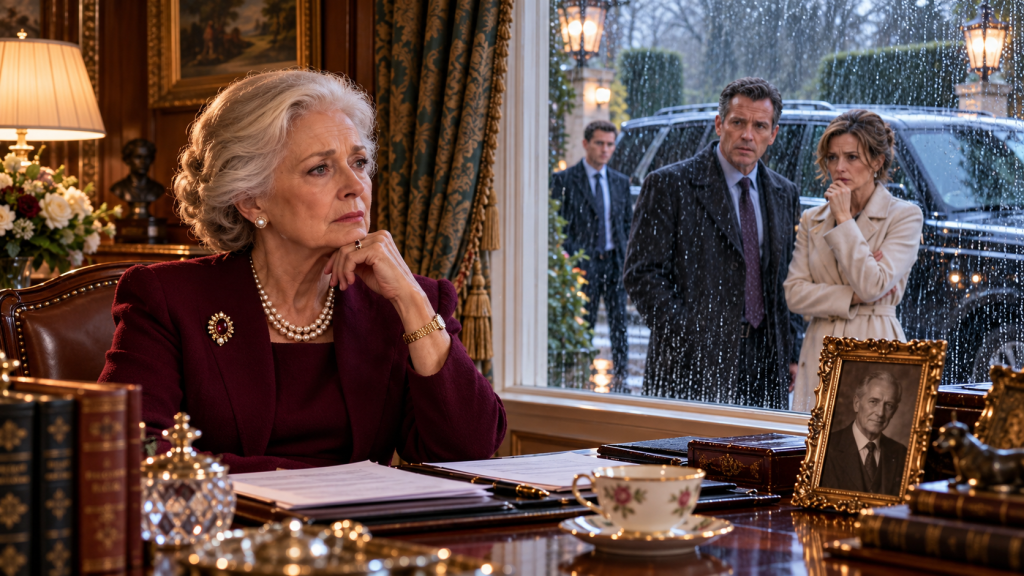
“What did you find?” I whispered. Clara took a breath. “Mrs. Kelley, the signature belonging to your late husband isn’t the only irregularity.” My stomach turned. “What do you mean?” “There are records suggesting someone may have submitted documents using your identity.”
I closed my eyes.
“Clara…”
She continued.
“Some of those documents concern your house.”
For a moment, the whole world seemed to stop.
My house.
The little white house where Thomas and I had raised Benjamin.
The home where we’d celebrated birthdays, Christmas mornings, graduations, and fifty-three years of marriage.
The place where my husband had taken his final breath.
I tightened my grip on the telephone.
“What about my house?”
Clara hesitated.
“There’s a purported authorization connected to a financing arrangement. We need to establish whether it’s genuine and whether any claim was actually recorded against the property.”
My knees weakened.
I reached for the doorframe.
“Are you telling me someone borrowed money against my home?”
“We don’t know whether a valid obligation exists,” she answered carefully. “But the documents are serious enough that you should speak with an attorney immediately.”
Behind me, the clock struck twelve.
I looked at Benjamin.
Then at Genevieve.
And for the first time since Thomas died, I felt something stronger than grief.
Betrayal.
“Clara,” I whispered, “was Benjamin involved?”
There was a short silence.
“I can’t determine that from these records.”
I swallowed.
“And Genevieve?”
“That will need investigation too.”
I closed my eyes.
Then asked the question that frightened me most.
“Could I lose my home?”
Clara’s voice softened.
“Mrs. Kelley, the existence of a questionable document does not establish that you’re responsible. We’ll help you identify the records, and your attorney can advise you about protecting your interests.”
I took a long breath.
“All right.”
Then she added something unexpected.
“And please, don’t let anyone pressure you into paying this loan before it’s reviewed.”
I looked toward my daughter-in-law.
Her cream-colored coat was spotless.
Her face wasn’t.
She looked terrified.
“I won’t,” I whispered.
I ended the call.
For several seconds, nobody spoke.
Then Benjamin stepped forward.
“Mom?”
I looked at him.
My son.
Forty-eight years old.
Standing in the doorway of the house where I had changed his diapers, nursed his fevers, and kissed his forehead after childhood nightmares.
The same son who had told me the previous evening that I wasn’t invited to dinner.
Not because there wasn’t enough food.
Not because the gathering had been canceled.
But because his wife didn’t want me there.
And now he was standing in front of me with a document bearing his dead father’s signature.
“Benjamin,” I said quietly, “who prepared that loan application?”
His eyes moved toward Genevieve.
She looked away.
I felt cold.
“Answer me.”
He swallowed.
“Genevieve handled most of the paperwork.”
My eyes settled on her.
“Is that true?”
She lifted her chin.
“Margaret, don’t start accusing me of things you don’t understand.”
I stared.
For fifteen years, that sentence had been her favorite weapon.
You don’t understand.
You’re old-fashioned.
Business is complicated.
Don’t worry your pretty little head.
I had swallowed those insults because I wanted my son to have a peaceful marriage.
But peace built on humiliation is not peace.
It is silence.
And I had been silent long enough.
I took a breath.
“Genevieve, my husband has been dead for four years.”
She said nothing.
“His name appears on a loan document.”
Her lips tightened.
“And my house may be connected to an arrangement I never authorized.”
I stepped closer.
“So you’re going to explain what you know.”
Genevieve laughed.
It was a small, brittle sound.
“Honestly, Margaret, you’re being dramatic.”
Benjamin turned toward her.
“Genevieve, stop.”
She blinked.
“What?”
He held up the paper.
“You told me Mom signed it.”
I stared at him.
My heart cracked.
“You believed that?”
Benjamin swallowed.
“She said you agreed to help.”
I felt tears rising.
“Without asking me?”
He lowered his eyes.
“Yes.”
I looked toward Lily.
She was staring at us, frightened.
And suddenly I realized something.
The adults were so busy fighting over money that nobody had considered what all this was doing to the little girl standing between us.
I crouched carefully.
My knees protested.
“Sweetheart.”
Lily looked up.
“Yes, Grandma?”
“Would you like some cookies?”
Her lower lip trembled.
“Are you mad at me?”
My heart broke.
“Oh, darling.”
I pulled her into my arms.
“No.”
She began crying.
“Mommy said we might have to move because you stopped loving us.”
I closed my eyes.
Behind her, Benjamin made a wounded sound.
I kissed Lily’s hair.
“Listen carefully, sweetheart.”
She nodded against my shoulder.
“Grown-ups are responsible for paying their own bills.”
She sniffled.
“And loving someone doesn’t mean you have to pay for everything they want.”
Her little arms tightened around me.
“So you still love me?”
I kissed her forehead.
“More than every star in the sky.”
I stood slowly.
Then looked at Benjamin.
“Take your daughter into the kitchen.”
He hesitated.
“Mom—”
“Please.”
Something in my voice made him obey.
He took Lily’s hand.
And for the first time in a very long time, my son followed my request without arguing.
Genevieve remained on the porch.
I looked at her.
“You are not coming inside.”
Her eyes widened.
“Excuse me?”
“You heard me.”
She crossed her arms.
“Margaret, this is ridiculous.”
I shook my head.
“No.”
My voice remained calm.
“What’s ridiculous is arriving at my home because your payments stopped, after spending years making me feel unwelcome in yours.”
Her cheeks flushed.
“We have financial commitments!”
“So do I.”
“You can’t just abandon us!”
I stared.
“Abandon you?”
For a moment, I almost laughed.
I had paid Benjamin’s college expenses.
Helped with his first apartment.
Covered part of his wedding.
Assisted with mortgages.
Paid insurance premiums.
Funded repairs.
Covered tuition.
And quietly sent money whenever life became inconvenient.
I had given until generosity became an expectation.
And expectations became demands.
Then I whispered, “Genevieve, I have not abandoned anyone.”
I looked directly into her eyes.
“I have simply stopped funding a lifestyle that was never mine to maintain.”
She opened her mouth.
But I continued.
“And if any documents were created using my name without permission, that matter will be handled properly.”
Her expression changed.
For the first time, she looked genuinely afraid.
Then she whispered, “You don’t understand what will happen.”
My heart began pounding.
“What will happen?”
She glanced toward the road.
Then lowered her voice.
“Richard won’t let this go.”
I frowned.
“Richard?”
Her eyes widened.
As though she had said something she shouldn’t have.
Then she stepped backward.
“Forget it.”
I caught the doorframe.
“Genevieve.”
She looked up.
“Who is Richard?”
She turned away.
But before she reached the car, she looked back.
Her voice shook.
“Margaret, whatever Benjamin tells you, he doesn’t know everything.”
Then she climbed into the vehicle.
And slammed the door.
For several seconds, I stood motionless.
Rainwater dripped from the porch gutter.
A bird called from the maple tree.
And somewhere inside, Lily was laughing softly at something her father had said.
I stared toward the car.
Then whispered a name I hadn’t heard in years.
“Richard Whitmore.”
Genevieve’s father.
The man who wore expensive watches, owned several companies, and had once told Thomas that keeping money in retirement accounts was a sign of financial ignorance.
Thomas had disliked him immediately.
At the time, I assumed my husband was simply being stubborn.
But I remembered one evening after Benjamin and Genevieve’s engagement dinner.
Thomas stood in our kitchen, drying plates beside me.
He shook his head.
“Ellie—”
Then caught himself.
He always called me Ellie when he was worried.
“Margaret, be careful around Richard.”
I laughed.
“Thomas, the man just offered to help us with the catering.”
Thomas didn’t smile.
“He talks about other people’s money as though he already owns it.”
I rolled my eyes affectionately.
“You’re suspicious of everyone who wears shoes that expensive.”
Thomas looked at me.
Then said something I never forgot.
“Rich people can be honest. Poor people can be dishonest. Money isn’t the problem.”
He placed the plate on the counter.
“Entitlement is.”
Now, standing on my porch four years after his death, I wondered whether my husband had seen something I hadn’t.
I stepped inside.
Benjamin sat at the kitchen table with Lily.
He had given her a glass of milk.
She was drawing flowers on the back of an old envelope.
When I entered, he stood.
“Mom.”
I looked at him.
“Where’s Genevieve?”
I asked.
He looked toward the window.
“In the car.”
I nodded.
Then pulled out a chair.
“Sit down.”
He obeyed.
For a moment, I studied my son.
His hair was thinning.
Gray showed at his temples.
There were dark circles beneath his eyes.
And beneath the expensive shirt and polished watch, I saw something I hadn’t noticed in years.
Fear.
“Benjamin,” I said quietly, “tell me about Richard.”
He stiffened.
I continued.
“Not the dinners.”
“Not the investments he boasts about.”
“The business.”
My son stared at the table.
Then whispered, “Mom, it’s complicated.”
I closed my eyes.
There it was again.
The family phrase.
It’s complicated.
A polite way of delaying the truth until someone else had to pay for it.
I leaned forward.
“Then take your time.”
Benjamin swallowed.
“Richard started a property investment company about two years ago.”
I nodded.
“He said he had investors.”
“Yes.”
“And?”
“He convinced us to put money into it.”
I stared.
“How much?”
Benjamin looked down.
For a long moment, he couldn’t answer.
Then he whispered an amount.
My hands went cold.
It was more than twice what I’d paid toward his household expenses that year.
“Benjamin.”
His eyes filled.
“I know.”
I shook my head.
“No.”
My voice trembled.
“I don’t think you do.”
He began crying.
“Mom, we thought it was a good investment.”
I stared.
“Did you use borrowed money?”
He nodded miserably.
I closed my eyes.
“Did you tell me?”
“No.”
The room became silent.
Then I asked, “What does any of that have to do with my house?”
Benjamin rubbed his face.
“Genevieve said her father could get financing if we showed enough family assets.”
I felt my stomach tighten.
“What family assets?”
He hesitated.
“Dad’s estate.”
The words struck like a physical blow.
I stared.
“Thomas’s estate?”
Benjamin nodded.
“She said the lender only needed evidence that our family had financial resources.”
I swallowed.
“And you believed her?”
He lowered his head.
“Yes.”
I looked toward Thomas’s photograph.
The silver frame.
His gentle smile.
His wedding ring visible on the hand resting against my shoulder.
Then I looked back at my son.
“Benjamin, did you give Richard copies of my financial documents?”
His eyes filled.
“Yes.”
For a moment, I couldn’t speak.
Then whispered, “Which documents?”
He covered his face.
“Bank statements.”
“Insurance information.”
“Some of Dad’s old records.”
My chest tightened.
“And my identification?”
Silence.
My heart sank.
“Benjamin?”
He nodded.
I slowly stood.
Walked toward the kitchen window.
And pressed my hand against the cold glass.
For fifteen years, I’d told myself that helping Benjamin was love.
But somewhere along the way, he had stopped asking what help cost me.
He had begun behaving as though my savings were part of his household budget.
And now he’d handed my private information to someone who had apparently used it in a questionable financial arrangement.
I turned back.
“Benjamin, do you know what your father did to build this house?”
He looked up.
Tears streaming down his face.
I continued.
“He worked weekends.”
“Skipped vacations.”
“Drove the same car for thirteen years.”
My voice trembled.
“And I worked alongside him.”
Benjamin nodded miserably.
I continued.
“We paid for this house with years of our lives.”
He covered his mouth.
I looked at him.
“And you treated that security like something you could hand to another man without asking me.”
My son began sobbing.
“I’m sorry.”
I nodded slowly.
“I believe you’re sorry.”
His eyes lifted hopefully.
Then I added, “But that doesn’t undo what happened.”
For a long time, nobody spoke.
Then Lily looked up from her drawing.
“Daddy?”
Benjamin turned quickly.
“Yes, sweetheart?”
“Why are you crying?”
He wiped his face.
“Because I made some mistakes.”
She frowned.
“Big mistakes?”
He swallowed.
“Yes.”
Lily considered.
Then asked, “Can you fix them?”
The question hung in the air.
Benjamin looked toward me.
For one moment, I saw the little boy he used to be.
The boy who believed I could solve anything.
A broken bicycle.
A failed test.
A scraped knee.
A frightening thunderstorm.
But this time, I wasn’t going to solve his problem for him.
I looked at Lily.
Then gently answered, “Some mistakes can be repaired with time and hard work.”
She nodded.
“And some things don’t go back exactly the way they were.”
Benjamin closed his eyes.
I continued.
“But people can still choose to do better.”
My granddaughter smiled.
“Okay.”
Then she returned to her drawing.
I looked at Benjamin.
He whispered, “Mom, what do I do?”
I took a long breath.
“First, you stop asking me to rescue you.”
He nodded.
“Second, you preserve every document and message connected to Richard’s company.”
“Yes.”
“Third, you get independent legal advice.”
He swallowed.
“Okay.”
“And fourth…”
My voice broke.
“You tell the truth.”
He began crying again.
“I will.”
I studied him.
Then quietly added, “Even if the truth costs you something.”
Benjamin nodded.
“Yes.”
I wasn’t sure I believed him yet.
But it was a beginning.
That afternoon, after Benjamin and Lily left, I sat alone in Thomas’s study.
I hadn’t changed much since his death.
His books still lined the shelves.
His reading glasses rested beside an old notebook.
A photograph of Benjamin at eight stood near the lamp.
And in the bottom drawer was a blue folder labeled:
FAMILY FINANCES — MARGARET.
I opened it.
Inside were documents Thomas had organized years earlier.
Retirement statements.
Insurance policies.
House records.
Copies of our wills.
And a carefully written list of important accounts.
My throat tightened.
Thomas had always been meticulous.
He believed that loving someone meant making difficult things easier for them later.
At the back of the folder, I found a sealed envelope.
My name was written across the front.
MARGARET — IF YOU EVER NEED REMINDING.
I stared.
For a moment, my hands stopped moving.
Then I carefully opened it.
Inside was a letter.
Thomas’s handwriting.
The familiar rounded letters.
The little dash he always made beneath his signature.
Tears filled my eyes before I read a word.
My darling Margaret,
If you’ve found this, I hope you’re organizing the study and complaining about how much paper I kept.
I laughed through tears.
“Oh, Thomas.”
The letter continued.
You’ve spent your whole life making things easier for the people you love.
You give away the larger slice of cake.
You sit in the uncomfortable chair.
You say you’re not hungry when everyone else wants seconds.
My throat tightened.
And when Benjamin needs something, you find a way to provide it before asking whether he should learn to provide it himself.
I pressed the letter against my chest.
I love your generous heart.
But Margaret, generosity should not require you to disappear.
I began crying.
We spent decades building a little security.
That security is yours to enjoy.
Not something you must surrender whenever someone else makes a poor decision.
My shoulders shook.
You are allowed to say no.
You are allowed to disappoint people.
You are allowed to live for yourself, even after spending so many years caring for everyone else.
I covered my mouth.
And if I go before you, promise me something.
Wear the pearls.
Use the good china.
Take the trip you’ve been postponing.
Buy flowers even when no one is coming over.
Tears streamed down my cheeks.
Because you were a whole person before you became Benjamin’s mother.
And you’ll remain one for the rest of your life.
I couldn’t continue.
I pressed Thomas’s letter against my heart.
And sobbed.
For fifty-three years, that man had loved me.
Not perfectly.
We argued.
We made mistakes.
We sometimes went to bed annoyed with each other.
But he never made me feel that my worth depended on how much I could give.
I looked toward his photograph.
Then whispered, “You knew.”
The room was quiet.
I smiled through tears.
“You always knew.”
That evening, I called an attorney.
Her name was Eleanor Shaw.
She was in her sixties.
Calm.
Practical.
And not particularly interested in dramatic stories.
Which was exactly what I needed.
When I explained what had happened, she listened carefully.
Then asked questions.
Lots of them.
Which accounts were mine?
Which payments had I personally authorized?
Were any payments contractual obligations?
Who had access to my financial information?
Did I recognize the loan documents?
Had I ever signed a guarantee?
I answered honestly.
Then Eleanor said something that made me feel stronger.
“Mrs. Kelley, we’re going to separate your decisions about supporting your son’s household from the question of whether anyone used your identity or property without authorization.”
I nodded.
She continued.
“Those are different issues.”
I swallowed.
“And the house?”
“We’ll review the actual records, determine whether any encumbrance was recorded, and challenge any documents or claims that appear unauthorized.”
I closed my eyes.
“Could I lose it?”
Eleanor answered carefully.
“I can’t promise an outcome before reviewing the evidence. But the existence of a disputed document doesn’t automatically establish that it’s valid.”
I nodded.
Then she added, “Don’t sign anything presented by Benjamin, Genevieve, Richard, or anyone acting for them until we’ve reviewed it.”
My voice steadied.
“I won’t.”
That night, I slept poorly.
I dreamed of Thomas standing in our garden.
He was holding a watering can.
Smiling.
Then he turned toward the house.
And suddenly the windows disappeared.
The walls cracked.
The roof collapsed.
I woke with my heart pounding.
For several seconds, I couldn’t remember where I was.
Then I looked toward the empty pillow beside me.
Thomas was gone.
And I was alone.
But as the first light of morning entered the room, I remembered his words.
You are allowed to say no.
I sat up.
Wiped my eyes.
And whispered, “Then that’s what I’m going to do.”
The following week was filled with appointments.
Clara helped me review my accounts.
Eleanor examined the documents.
A specialist reviewed possible identity misuse.
And I began learning just how much financial information had moved through my family without my knowledge.
Some of the one hundred seventy-four payment arrangements had been ordinary recurring bills I’d knowingly paid.
Others involved authorizations I’d barely remembered giving.
A few required additional steps to terminate.
It was exhausting.
But for the first time in years, I was looking directly at my finances.
Not simply responding to Benjamin’s emergencies.
Not assuming every request was legitimate because it came from my son.
Understanding.
One afternoon, Clara turned her computer monitor toward me.
“Mrs. Kelley?”
I looked up.
“Yes?”
“We found a recurring transfer connected to Evergreen Legacy Holdings.”
My stomach tightened.
Richard’s company.
I leaned closer.
“How long has it been going on?”
She told me.
The transfer had begun eleven months earlier.
I stared at the screen.
“I never approved that company.”
Clara nodded.
“That’s what we’re reviewing.”
I swallowed.
“How much?”
She showed me the records.
My hands began shaking.
The total was significant.
Not enough by itself to empty my accounts.
But enough to make me feel sick.
I looked up.
“Can we stop it?”
Clara explained the appropriate process.
We documented the disputed authorization.
Preserved the transaction history.
And initiated the relevant review.
I signed the forms I understood.
Asked questions about those I didn’t.
And refused to rush.
When we finished, Clara looked at me.
“Mrs. Kelley?”
I smiled faintly.
“Yes?”
“You’re doing very well.”
My eyes filled.
“I’m frightened.”
She nodded.
“I know.”
I swallowed.
“But I’m more frightened of doing nothing.”
Clara smiled gently.
“Then we’ll take it one step at a time.”
The first real confrontation with Richard came three days later.
I was watering Thomas’s roses when a dark sedan pulled into my driveway.
A tall man stepped out.
Silver hair.
Expensive watch.
Navy overcoat.
Richard Whitmore.
He smiled as though he’d arrived for afternoon tea.
“Margaret.”
I stood slowly.
“Richard.”
He looked toward the garden.
“Beautiful flowers.”
I said nothing.
He continued.
“Thomas always had excellent taste.”
My fingers tightened around the watering can.
“Why are you here?”
Richard laughed softly.
“Straight to business?”
I looked at him.
“Yes.”
His smile faded slightly.
“I understand there’s been an unfortunate misunderstanding involving some financial paperwork.”
I stared.
“That’s one way to describe it.”
He sighed.
“Family arrangements can become complicated.”
I set down the watering can.
“Richard, did you use my husband’s signature on a loan document after he died?”
His smile disappeared.
“Margaret, that’s a serious accusation.”
I nodded.
“I know.”
He reached into his coat.
Removed a folder.
And held it toward me.
“I came with a proposal.”
I didn’t take it.
“Send it to my attorney.”
His expression hardened.
“Surely we can discuss this like reasonable adults.”
I looked at him.
“We are.”
He lowered his voice.
“Margaret, Benjamin could suffer terribly if these matters become public.”
My chest tightened.
There it was.
Not an explanation.
A warning.
I looked directly at him.
“Richard, are you threatening my son to pressure me into signing something?”
He frowned.
“Of course not.”
I nodded.
“Then send the papers to Eleanor Shaw.”
His jaw tightened.
“You know, Thomas was much easier to negotiate with.”
For a moment, I stared.
Then smiled sadly.
“No.”
He blinked.
“Excuse me?”
I stepped closer.
“Thomas knew when someone was trying to take advantage of him.”
Richard’s expression changed.
“And he warned me about you.”
For the first time, Richard looked unsettled.
I continued.
“Please leave my property.”
He stared.
Then laughed once.
“Margaret, I’m trying to help.”
I shook my head.
“No.”
My voice remained steady.
“You’re trying to help yourself.”
Richard returned to his car.
He didn’t look back.
I watched until he drove away.
Then I went inside.
Locked the door.
And called Eleanor.
Afterward, I sat at the kitchen table.
My hands were shaking.
But beneath the fear was something else.
Pride.
Not because I’d been rude.
I hadn’t.
Not because I’d frightened Richard.
I didn’t know whether I had.
But because I’d stood in my own garden and refused to let another person decide what I should fear.
For the first time since Thomas died, I felt him beside me.
Not physically.
Not as a ghost.
But in the values we’d built together.
I looked toward his photograph.
Then whispered, “You would’ve liked that.”
The investigation widened.
Evergreen Legacy Holdings became the focus of questions involving financing documents, company records, and representations made to lenders.
The lender provided copies of the documents it relied upon.
Eleanor arranged for relevant signatures and records to be examined.
And something important emerged.
The purported signature belonging to Thomas appeared to have been copied from an old family financing document.
A document he’d signed years earlier.
A legitimate transaction.
For Benjamin’s first home.
I remembered that day.
Thomas had been sitting at the dining room table.
Reading every page.
Asking questions.
Making certain our financial responsibility was limited.
Benjamin had been twenty-nine.
Excited.
Nervous.
So proud of becoming a homeowner.
Thomas helped him.
But he insisted on understanding the risks.
Now part of that old signature appeared on documents created after his death.
I felt sick.
Someone had apparently taken a piece of our past and used it to make a new financial obligation look legitimate.
Then Eleanor told me something worse.
“Margaret, there is also a signature attributed to you.”
I stared.
“I didn’t sign anything.”
She nodded.
“I understand.”
My heart pounded.
“Does it look like mine?”
She hesitated.
“Enough that it needs proper examination.”
I pressed my hand against my chest.
For a moment, I couldn’t breathe.
My husband’s name.
My own name.
Our house.
Our savings.
All tied to arrangements I hadn’t understood and didn’t remember authorizing.
I sat quietly.
Then whispered, “How could anyone do this?”
Eleanor’s expression softened.
“That’s what the investigation is intended to determine.”
My eyes filled.
I nodded.
“Then let’s find out.”
The next surprise came from Benjamin.
He called one evening.
His voice sounded exhausted.
“Mom?”
I smiled faintly.
“Yes?”
“Can I come over?”
I hesitated.
“Why?”
He swallowed.
“I found something.”
My stomach tightened.
“What?”
“Emails.”
I sat down.
“From whom?”
He took a breath.
“Genevieve and her father.”
For a moment, the room became silent.
Then he whispered, “Mom, I think Genevieve knew the documents weren’t genuine.”
I closed my eyes.
“Benjamin, please send copies to Eleanor and preserve the originals.”
He sounded surprised.
“You don’t want to see them?”
I swallowed.
“I do.”
“But we’re not handling this with another argument in my kitchen.”
He nodded.
“Okay.”
Then he whispered, “Mom?”
“Yes?”
“I’m sorry.”
My throat tightened.
“I know.”
He began crying.
“No, I mean it.”
I took a breath.
“Benjamin, I’m willing to hear your apology.”
My voice trembled.
“But I need to see responsibility.”
He was silent.
Then whispered, “You will.”
I ended the call.
And for the first time, I didn’t immediately wonder what I could do to make his life easier.
I wondered whether he was finally going to make better decisions for himself.
Two days later, Eleanor reviewed the emails.
They contained conversations about the company’s financing.
Requests for documents.
References to my accounts.
And discussions that raised serious questions about what Genevieve knew.
One message stood out.
It appeared to come from Genevieve.
Use the existing family paperwork. Getting Margaret involved will only complicate things.
I stared at the sentence.
Read it again.
Then whispered, “Complicate things?”
Eleanor looked toward me.
I began crying.
“My permission would have complicated things?”
She remained quiet.
I shook my head.
“It’s my house.”
My voice broke.
“My money.”
“My husband’s information.”
“And asking me would have been inconvenient?”
Eleanor gently handed me a tissue.
I wiped my cheeks.
Then whispered, “I want this handled properly.”
She nodded.
“It will be.”
I looked down at the email.
Not yet proof of every suspected act.
But proof that someone had been discussing the use of my information while treating my consent like an obstacle.
That hurt more than I expected.
Because I’d spent fifteen years helping that household.
Paying.
Giving.
Showing up.
And somehow, the people benefiting from my generosity had begun believing they were entitled to it.
Several weeks later, Genevieve called.
I stared at her name on the screen.
For a moment, I considered letting it ring.
Then answered.
“Hello?”
Her voice sounded strained.
“Margaret.”
“Yes?”
“I need to speak with you.”
I took a breath.
“About what?”
“Benjamin.”
My heart tightened.
“Is he all right?”
She hesitated.
“Yes.”
I closed my eyes.
“Then what is it?”
Genevieve began crying.
It startled me.
For fifteen years, I’d seen her angry.
Dismissive.
Irritated.
Cold.
But rarely vulnerable.
“Margaret,” she whispered, “my father lied to me.”
I sat down.
“About what?”
“The company.”
I swallowed.
She continued.
“He told me everything was legal.”
Her voice broke.
“He said the financing documents were only formalities.”
I looked down.
“Genevieve, you sent messages discussing my accounts.”
Silence.
Then she whispered, “I know.”
“And Thomas’s information.”
Another silence.
“I know.”
I took a breath.
“Then you need to tell the appropriate people exactly what you did and what you believed.”
She began crying harder.
“I was afraid.”
I closed my eyes.
“So was I.”
For a moment, neither of us spoke.
Then Genevieve whispered, “I didn’t think it would hurt you.”
I felt anger rise.
But I controlled it.
“Genevieve, you relied on my money for years.”
She said nothing.
“You insulted me in your home.”
Silence.
“You told my son I wasn’t welcome at dinner.”
Her breathing became uneven.
“And now you’re telling me you didn’t think any of this would hurt me?”
She began sobbing.
I swallowed.
“Maybe you didn’t think about me at all.”
That was when she became quiet.
Not defensive.
Not angry.
Just quiet.
Finally, she whispered, “You’re right.”
For a moment, I almost didn’t recognize her voice.
I looked toward the window.
Then said gently but firmly, “Genevieve, I cannot fix this for you.”
She swallowed.
“I know.”
“You need independent advice.”
“Yes.”
“And whatever responsibility you have, you need to face it.”
She began crying.
“I understand.”
Then she asked something unexpected.
“Can Lily still see you?”
My throat tightened.
“Of course.”
She began sobbing.
“Even after everything?”
I closed my eyes.
“Genevieve, Lily is a child.”
My voice broke.
“She didn’t create any of these problems.”
For several seconds, Genevieve couldn’t speak.
Then whispered, “Thank you.”
I nodded.
“Please coordinate visits appropriately with Benjamin while you work through your arrangements.”
She agreed.
And we ended the call.
I sat quietly afterward.
Thinking about the woman who had made me feel unwelcome for years.
I wasn’t ready to forgive her.
I didn’t know whether I ever would.
But I was relieved that Lily might not have to lose her grandmother because adults had failed one another.
The next month brought another surprise.
Benjamin arrived alone.
He looked thinner.
His expensive watch was gone.
His shirt was wrinkled.
And for the first time in years, he wasn’t driving the luxury SUV.
He’d taken a rideshare.
I opened the door.
“Benjamin.”
His eyes filled.
“Hi, Mom.”
I stepped aside.
“Come in.”
We sat at the kitchen table.
He looked around.
At the curtains.
The old clock.
Thomas’s photograph.
The blue china.
Then whispered, “I forgot how peaceful it is here.”
I smiled sadly.
“It wasn’t peaceful the last time you came.”
He lowered his head.
“No.”
For a moment, he stared at his hands.
Then said, “Genevieve and I are separating.”
My heart tightened.
“I’m sorry.”
He shook his head.
“Don’t be.”
I looked at him.
He continued.
“We’ve been lying to each other about money for years.”
His voice broke.
“And I kept choosing not to ask questions because I was afraid of what I’d learn.”
I nodded slowly.
He swallowed.
“Now Lily is frightened.”
My heart tightened.
“How is she?”
He began crying.
“She thinks everything is her fault.”
I closed my eyes.
“Benjamin…”
He nodded.
“I know.”
I leaned forward.
“Have you told her clearly that she isn’t responsible?”
“Yes.”
“More than once?”
He nodded.
“I’ve been trying.”
I took a breath.
“Good.”
He looked toward Thomas’s photograph.
Then whispered, “Dad always said debt wasn’t shameful, but hiding it could become dangerous.”
My eyes filled.
I nodded.
“He did.”
Benjamin began crying.
“I didn’t listen.”
I looked at him.
“No.”
My voice softened.
“You didn’t.”
For a long time, neither of us spoke.
Then he reached into his folder.
“I made a budget.”
I stared.
He gave a nervous laugh.
“I know.”
He slid the paper toward me.
I looked down.
A list of expenses.
Income.
Necessary payments.
Debts.
And things he’d already canceled.
The country club.
Unnecessary subscriptions.
A leased vehicle.
Several expensive services.
I looked up.
“You did this yourself?”
He nodded.
“With help from a financial counselor.”
My throat tightened.
For years, I’d been the one calculating his expenses.
Now he was finally learning to do it himself.
He looked at me.
Then whispered, “I don’t want you to pay any of it.”
I stared.
He continued.
“I know I’ve said that before.”
He swallowed.
“But this time I’m actually changing how I live.”
I nodded.
“That’s what matters.”
He began crying.
Then said something that hurt and healed me at the same time.
“Mom, I think I forgot you were a person.”
I stared.
His voice broke.
“I treated you like a solution.”
“Whenever something went wrong, I called.”
“And you fixed it.”
He wiped his eyes.
“Then I started expecting it.”
My throat tightened.
He looked down.
“And when Genevieve didn’t want you at dinner, I didn’t defend you.”
Tears filled my eyes.
“I know.”
His voice cracked.
“I was ashamed of how dependent we were on you.”
I stared.
“So you punished me for it?”
He closed his eyes.
“Yes.”
The answer was painful.
But it was honest.
For the first time, my son wasn’t blaming Genevieve for every mistake.
He wasn’t claiming he’d been helpless.
He was acknowledging his own part in what happened.
I looked at him.
Then whispered, “Benjamin, your father and I never wanted you to owe us gratitude for the rest of your life.”
His eyes filled.
“We helped because we loved you.”
He nodded.
“But we also wanted you to become someone who could stand on his own.”
He began crying.
“I know.”
I took his hand.
“You can still become that person.”
He looked up.
I continued.
“But I can’t do the work for you.”
He nodded.
“I understand.”
That afternoon, Benjamin stayed for lunch.
Nothing elaborate.
Tomato soup.
Grilled cheese sandwiches.
Tea.
The sort of meal I made when he was little.
We talked about Lily.
His work.
His plans.
And the difficult legal matters still unfolding.
When he left, he hugged me.
For a long time.
Then whispered, “I love you, Mom.”
My eyes filled.
“I love you too.”
He pulled back.
And I added quietly, “That doesn’t mean the payments are coming back.”
He gave a surprised laugh.
Then nodded.
“I know.”
For the first time in a long time, the laughter between us felt real.
The financial investigation continued.
Records were reviewed.
Accounts examined.
And explanations requested.
The evidence supported concerns that documents associated with my family’s information had been altered or used improperly.
The purported guarantee bearing Thomas’s signature became a central issue.
So did the signature attributed to me.
The lender received the relevant evidence.
The documents were challenged through formal procedures.
And separate inquiries examined the conduct of those involved in arranging the financing.
There were consequences.
Some financial.
Some legal.
Some deeply personal.
I didn’t enjoy watching anyone suffer.
Not Richard.
Not Genevieve.
And certainly not Benjamin.
But I had learned something important.
Accountability isn’t cruelty.
And refusing to rescue someone from the consequences of their choices doesn’t mean you stop loving them.
Eventually, the lender withdrew its claim against me under the disputed guarantee after the documents and circumstances were reviewed.
The remaining proceedings continued separately.
I received written confirmation that the claimed obligation would not be enforced against me under the resolution.
I read the letter three times.
Then called Eleanor.
“Does this mean my house is safe from that claim?”
She answered carefully.
“Under the resolution we’ve received, the lender is no longer pursuing that asserted guarantee obligation against you. We’ll also confirm the relevant property records and make sure any necessary releases are properly documented.”
My throat tightened.
I closed my eyes.
Then whispered, “Thank you.”
For a moment, I couldn’t speak.
Then tears began falling.
Not because I suddenly had more money.
But because the possibility of losing my home over documents I hadn’t authorized had finally begun to lift.
After the call, I walked into Thomas’s study.
His photograph stood beside the window.
I picked it up.
Then whispered, “We kept the house.”
My voice broke.
“We kept it.”
I sat in his chair.
Pressed the silver frame against my chest.
And cried harder than I had in months.
That evening, I made dinner for one.
Salmon.
Roasted potatoes.
Green beans.
And a little glass of sparkling cider.
I set the table with Thomas’s favorite plates.
Lit a candle.
And placed his photograph nearby.
For years, I’d reserved the good things for holidays.
Birthdays.
Guests.
Special occasions.
Now I realized that surviving a difficult year was reason enough.
I raised my glass.
“To us, Thomas.”
Tears filled my eyes.
“And to the life we built.”
The following spring, Lily turned nine.
Benjamin called several weeks before her birthday.
“Mom?”
I smiled.
“Yes?”
“Lily wants a small party.”
My heart warmed.
“That sounds lovely.”
He hesitated.
Then said, “She asked whether she could have it at your house.”
I stared.
“My house?”
He nodded.
“She says she misses the garden.”
For a moment, I couldn’t speak.
Then smiled.
“Of course.”
Benjamin sounded relieved.
“Really?”
“Yes.”
Then I added, “But we need to discuss the arrangements beforehand.”
He gave a nervous laugh.
“I expected that.”
I smiled.
“Good.”
We planned a simple celebration.
Nothing extravagant.
No hired entertainment.
No expensive decorations.
Just cake.
Balloons.
A few friends.
And the garden Thomas loved.
The morning of the party, Lily arrived carrying her familiar pink backpack.
She ran toward me.
“Grandma!”
I opened my arms.
“Happy birthday, sweetheart!”
She hugged me tightly.
Then pulled back.
“Guess what?”
I smiled.
“What?”
“I made you something.”
She reached into her backpack.
Removed a folded drawing.
And handed it to me.
I opened it.
There was a house.
A garden.
A little girl.
And an older woman wearing pearls.
Above them, in colorful letters, Lily had written:
GRANDMA’S HOUSE IS WHERE I FEEL LOVED.
My throat closed.
I stared at the picture.
Then at my granddaughter.
“Oh, darling.”
She smiled shyly.
“I used to think your house was where Daddy came when he needed money.”
My heart tightened.
She continued.
“But now I know it’s where we come because we love you.”
I covered my mouth.
Tears immediately filled my eyes.
I knelt beside her.
“Lily…”
She wrapped her arms around my neck.
“I love you, Grandma.”
My voice broke.
“I love you too.”
Benjamin stood nearby.
His eyes were wet.
For a moment, he looked down.
Then whispered, “She drew that herself.”
I nodded.
“I know.”
And something in my heart softened.
Not because the past had disappeared.
But because my son was finally helping his daughter understand relationships differently.
The party was beautiful.
Simple.
Noisy.
Full of laughter.
Lily’s friends played in the garden.
Benjamin helped serve cake.
Genevieve attended for a short time and remained polite.
Richard Whitmore did not come.
And nobody mentioned the company.
The debts.
Or the legal proceedings.
For one afternoon, the house was simply full of people celebrating a child.
At one point, Lily asked me to dance.
I laughed.
“Sweetheart, my knees…”
She grinned.
“Just a little.”
I smiled.
Then let her take my hands.
We swayed slowly beside the roses.
The same roses Thomas planted years earlier.
And for a moment, I imagined him standing nearby.
Smiling.
Laughing.
Telling me I should have worn the pearls.
I looked down.
And realized I had.
Later, when the guests left, Benjamin stayed to help clean.
We folded napkins.
Washed dishes.
Put away chairs.
For the first time in years, he didn’t assume I would handle everything.
As we worked, he looked toward me.
“Mom?”
I smiled.
“Yes?”
“Thank you for letting us celebrate here.”
I nodded.
“I’m glad Lily had a good day.”
He hesitated.
Then whispered, “I used to think you never got tired.”
My heart tightened.
I looked at him.
“What?”
He swallowed.
“You always said yes.”
His eyes filled.
“You always found a way.”
I smiled sadly.
“That doesn’t mean it was easy.”
He nodded.
“I know that now.”
For a moment, we stood quietly.
Then he said something that surprised me.
“I’ve started telling Lily that you aren’t responsible for our bills.”
I stared.
He continued.
“And that Grandma’s money belongs to Grandma.”
I felt tears rise.
He smiled weakly.
“She asked why I never told her that before.”
I laughed through tears.
“What did you say?”
His face crumpled.
“I told her I should have.”
I reached for his hand.
Then whispered, “Good.”
Over time, Benjamin’s finances became more stable.
Not suddenly.
Not because someone rescued him with a large inheritance.
But because he changed his habits.
He sold things he couldn’t afford.
Worked steadily.
Addressed debts according to the agreements and legal obligations involved.
Learned to live within a budget.
And gradually rebuilt his confidence.
The townhouse situation was complicated.
The financing problems didn’t disappear simply because I stopped paying.
He and Genevieve had to make difficult choices about housing.
Eventually, they left the townhouse.
It hurt Benjamin.
He’d been proud of it.
It hurt Genevieve too.
She’d loved entertaining people there.
But the move allowed them to stop maintaining a lifestyle they couldn’t afford.
Lily adapted more easily than the adults expected.
She missed her old bedroom.
Her garden.
Some neighbors.
But she discovered that a smaller home could still be warm.
And that the people inside mattered far more than the number of rooms.
One evening, she called me.
“Grandma?”
I smiled.
“Yes?”
“We moved.”
“I know, sweetheart.”
She sounded excited.
“My room is smaller.”
I felt a pang.
“Do you like it?”
She laughed.
“Yes!”
I smiled.
“Really?”
“Because Daddy says I can paint one wall purple.”
I burst out laughing.
“Purple?”
She giggled.
“Very purple.”
I looked toward Thomas’s photograph.
Then smiled.
“Your grandfather would have loved that.”
Lily sounded curious.
“Really?”
I nodded.
“He once painted our bathroom bright orange by accident.”
She gasped.
“Grandpa Thomas did?”
I laughed.
“Oh, yes.”
“Did you get mad?”
I smiled through tears.
“For about ten minutes.”
Lily giggled.
Then whispered, “I wish I knew him.”
My throat tightened.
“Me too, sweetheart.”
After the call, I sat quietly.
Then opened an old photograph album.
Thomas holding baby Benjamin.
Thomas standing beside our first car.
Thomas planting roses.
Thomas dancing badly at our fiftieth anniversary celebration.
I selected a few photographs.
Placed them in an envelope.
And mailed them to Lily.
Inside, I wrote:
My darling girl,
Your grandfather believed that a home was made by the people who loved one another, not by the furniture or the address.
He would have been so proud of you.
Love, Grandma.
A week later, Lily called.
She was crying.
“Grandma?”
I felt my heart tighten.
“What’s wrong?”
She sniffled.
“Nothing.”
I smiled.
“Then why are you crying?”
She laughed through tears.
“Because I like the pictures.”
My eyes filled.
She continued.
“I put Grandpa’s photo beside my bed.”
I closed my eyes.
“Oh, sweetheart.”
She whispered, “Now I can say good night to him.”
I sat quietly after the call.
For the first time in a long time, my grief felt less lonely.
Thomas was still part of our family.
Not through old bank documents.
Not through the insurance policy someone had tried to exploit.
But through stories.
Photographs.
And a little girl who wanted to know the grandfather she’d never met.
The next Christmas, Benjamin invited me to dinner.
This time, he called personally.
Not a last-minute message.
Not an invitation delivered through Genevieve.
He called two weeks in advance.
“Mom?”
I smiled.
“Yes?”
“Would you like to come for Christmas dinner?”
My heart tightened.
I paused.
Then asked quietly, “Are you sure I’m invited?”
Silence.
Then his voice broke.
“Mom.”
I closed my eyes.
He continued.
“You should never have to ask that again.”
I felt tears rising.
He swallowed.
“Lily wants you there.”
I smiled.
“And you?”
His voice cracked.
“I want you there too.”
For a moment, I couldn’t speak.
Then I whispered, “All right.”
Christmas dinner was held in Benjamin’s smaller home.
The dining table was secondhand.
The chairs didn’t match.
The decorations were simple.
And the kitchen was too small for everyone to move comfortably.
But the house smelled of roasted vegetables.
Cinnamon.
And fresh bread.
Lily opened the door.
“Grandma!”
I laughed.
“Merry Christmas!”
She hugged me.
Then grabbed my hand.
“Come see!”
She pulled me toward the dining room.
There were place cards.
One for Benjamin.
One for Lily.
One for me.
And a few for other family members.
Mine stood near the center of the table.
GRANDMA MARGARET.
I stared at it.
My throat tightened.
Lily smiled proudly.
“I made them.”
I nodded.
“They’re beautiful.”
She leaned closer.
Then whispered, “I made sure nobody forgot your chair.”
I began crying.
Lily looked worried.
“Grandma?”
I knelt beside her.
“Sweetheart, these are happy tears.”
She smiled.
“Okay.”
Then hugged me.
Benjamin appeared in the doorway.
He saw the place card.
Then my tears.
And his face crumpled.
“Mom…”
I looked at him.
He whispered, “I’m sorry.”
I smiled sadly.
“I know.”
For a moment, we stood quietly.
Then I took his hand.
“Now let’s eat before everything gets cold.”
He laughed through tears.
And we sat down together.
At dinner, nobody talked about my money.
Nobody suggested I pay for repairs.
Nobody asked for help with subscriptions.
Nobody made me feel old-fashioned or embarrassing.
Benjamin asked about my book club.
Lily told stories about school.
We laughed over a burned pie.
And I shared memories of Thomas.
At one point, Benjamin raised his glass.
He looked toward me.
Then said quietly, “I want to thank Mom.”
The room became still.
My throat tightened.
He continued.
“For helping our family when we needed it.”
His eyes filled.
“But also for teaching me something I should have learned long ago.”
I looked at him.
He swallowed.
“That love isn’t something you get to take for granted.”
My eyes filled.
He smiled sadly.
“And that being a son means showing up for your mother too.”
Lily raised her glass of apple juice.
“To Grandma!”
Everyone laughed.
I lifted my cup.
“To family.”
After dinner, Benjamin walked me to the door.
He placed a small wrapped package in my hands.
“Mom, this is for you.”
I smiled.
“You didn’t have to.”
He laughed softly.
“I know.”
Inside was a framed photograph.
Thomas.
Me.
Benjamin.
Taken years earlier at a family picnic.
We were laughing.
Thomas had his arm around my shoulders.
Benjamin was holding a paper plate piled high with food.
None of us were looking at the camera.
The photograph was slightly blurry.
But we looked happy.
I stared at it.
Then began crying.
“Benjamin…”
He smiled through tears.
“I found it in an old box.”
My throat tightened.
He continued.
“I thought you might like it.”
I looked at him.
Then whispered, “I love it.”
He hugged me.
And for the first time since that terrible text message, I hugged him without wondering whether the next words would be a request for money.
Several years passed.
I turned eighty.
Then eighty-one.
My hair grew whiter.
My steps became slower.
But my life became fuller.
I continued attending book club.
Painting watercolors.
Traveling occasionally.
And spending time in my garden.
I kept my finances organized.
Updated my estate documents with independent legal advice.
And made my wishes clear.
I didn’t disinherit Benjamin out of anger.
Nor did I promise him everything simply because he was my son.
I made decisions based on my circumstances.
My needs.
My wishes.
And the responsibilities I wanted to honor.
I also arranged for Lily to receive keepsakes that mattered to me.
Thomas’s photographs.
The little wooden jewelry box he made.
And the pearl earrings he’d given me on our fiftieth anniversary.
Not because she needed expensive things.
But because I wanted her to remember the love behind them.
One afternoon, Lily sat beside me in the garden.
She was a teenager now.
Tall.
Thoughtful.
With Benjamin’s eyes and Genevieve’s dark hair.
She looked toward the roses.
“Grandma?”
I smiled.
“Yes?”
“Can I ask you something?”
“Of course.”
She hesitated.
“Were you really upset when Dad said you couldn’t come to dinner?”
My heart tightened.
I looked at her.
Then nodded.
“Yes.”
She swallowed.
“I remember that night.”
I smiled sadly.
“I know.”
She looked down.
“I was little, but I remember the chair.”
My eyes filled.
She continued.
“I remember asking where you were.”
I nodded.
She looked toward me.
“Why didn’t you just forgive him right away?”
The question surprised me.
I considered.
Then answered carefully.
“Because forgiveness and trust are not exactly the same thing.”
She frowned.
“What do you mean?”
I took her hand.
“I loved your father the whole time.”
She nodded.
“But he had treated me badly.”
Her eyes filled.
“And I needed to know he understood that before we could rebuild our relationship.”
Lily considered.
Then whispered, “So you can love someone and still say no?”
I smiled.
“Yes, sweetheart.”
My voice broke.
“You absolutely can.”
She leaned against me.
Then whispered, “I’m glad you did.”
I closed my eyes.
“So am I.”
That evening, after Lily went home, I sat on Thomas’s bench.
The garden was quiet.
The roses moved gently in the breeze.
I looked toward the house.
And remembered the woman I’d been at seventy-seven.
Standing in the kitchen.
Wearing a navy dress.
Pearl earrings resting beside the mantel.
Reading a message from her son.
You weren’t invited.
My wife doesn’t want you there.
I remembered the humiliation.
The cold tea.
The empty kettle.
The townhouse brochure.
The folder containing years of receipts.
And the sound of my own voice calling the bank.
At the time, I thought I was simply canceling payments.
But I was doing something larger.
I was finally refusing to finance my own exclusion.
For fifteen years, I’d believed giving Benjamin money was how I showed love.
Sometimes it was.
There had been genuine needs.
Emergencies.
Moments when helping him made sense.
But over time, the assistance had become an expectation.
And the expectation had swallowed the relationship.
My son stopped asking whether I was tired.
Stopped wondering whether I could afford the payments.
Stopped considering what I might want to do with my own savings.
And somewhere along the way, I had stopped asking those questions too.
I told myself that mothers sacrifice.
That children need help.
That family comes first.
All beautiful ideas.
Until they’re used to make one person’s needs disappear.
Thomas had understood that long before I did.
His letter reminded me.
You were a whole person before you became Benjamin’s mother.
I smiled through tears.
Then whispered, “I remember now.”
One Sunday afternoon, Benjamin came to visit.
He carried fresh flowers.
No bills.
No contracts.
No emergency requests.
Just flowers.
I opened the door.
“Benjamin!”
He smiled.
“Hi, Mom.”
I looked at the bouquet.
“What’s the occasion?”
He shrugged.
“No occasion.”
I laughed.
“Really?”
He nodded.
“I saw them and thought of you.”
For a moment, I couldn’t speak.
Then I stepped aside.
“Come in.”
We sat in the kitchen.
I made tea.
He asked about my garden.
I asked about Lily.
We discussed books.
Weather.
Ordinary things.
Then Benjamin looked toward Thomas’s photograph.
He smiled sadly.
“I’ve been thinking about Dad.”
My throat tightened.
“Oh?”
He nodded.
“He always told me to live within my means.”
I smiled.
“Yes.”
Benjamin laughed softly.
“And I used to think he was being old-fashioned.”
I nodded.
“He could be.”
We both laughed.
Then Benjamin grew quiet.
“But he was right.”
My eyes filled.
He continued.
“I spent years wanting to look successful.”
“Big house.”
“Nice car.”
“Expensive dinners.”
His voice trembled.
“But I wasn’t happy.”
I looked at him.
He swallowed.
“And I was hurting the people who loved me.”
I took a breath.
“Benjamin…”
He shook his head gently.
“I know you don’t need another apology.”
I smiled sadly.
“No.”
He nodded.
“But I want you to know something.”
I waited.
His eyes filled.
“I like my life now.”
The words surprised me.
I stared.
He smiled.
“It’s smaller.”
“Quieter.”
“Not impressive.”
He laughed.
“But it’s mine.”
My throat tightened.
I looked at my son.
Then whispered, “That’s all your father and I wanted.”
He began crying.
And I reached for his hand.
That afternoon, after Benjamin left, I went into Thomas’s study.
I placed the flowers beside his photograph.
Then looked at the old blue folder.
The one that had once contained the documents I’d been afraid to examine.
I opened it.
Inside were the final records from the financial dispute.
The confirmations.
The account changes.
The letters.
And Thomas’s note.
I read his words again.
Then smiled.
“You were right, darling.”
The house was quiet.
The evening light warm.
And somewhere outside, a bird sang near the roses.
I thought about all the women I’d known over the years.
Women who gave away their savings because a child asked.
Women who postponed retirement to rescue grown children from repeated financial decisions.
Women who felt guilty buying themselves a new coat.
Women who believed saying no meant they’d stopped being loving mothers.
I wished I could sit beside every one of them.
Hold their hands.
And tell them what I had learned.
You can love your children without financing every choice they make.
You can help during genuine hardship without accepting endless demands.
You can be generous without being invisible.
And you can set boundaries without becoming cruel.
Most importantly, you do not lose your dignity when someone decides they no longer need your presence.
The money you earned remains yours to manage.
The years you lived still belong to you.
And the life waiting ahead is worth protecting.
At eighty-two, I celebrated another birthday.
This time, I wore my navy dress.
The very same dress I’d worn the evening Benjamin uninvited me.
I’d kept it carefully.
Not because I wanted to remember the humiliation.
But because I wanted to remember what happened afterward.
I put on Thomas’s pearl earrings.
Brushed my silver hair.
And smiled at my reflection.
For years, I’d looked in the mirror and seen an aging widow.
A woman whose best days belonged to the past.
But now I saw someone else.
A woman who had survived loss.
Learned to protect herself.
Rebuilt her relationship with her son.
And discovered that life could still offer joy after seventy-seven.
The doorbell rang.
I opened it.
Benjamin stood on the porch.
Lily beside him.
She was carrying a cake.
“Happy birthday, Grandma!”
I laughed.
“Oh, sweetheart!”
She hugged me.
Then stepped back.
Her eyes widened.
“Grandma!”
I smiled.
“What?”
“Your dress!”
I looked down.
She grinned.
“It’s beautiful.”
My throat tightened.
I smiled through tears.
“Thank you.”
Then Lily took my hand.
“We have a surprise.”
I laughed nervously.
“Another one?”
She nodded.
“Come on.”
They led me into the garden.
There, beneath Thomas’s roses, was a small table.
White tablecloth.
Yellow flowers.
Three chairs.
And a little framed photograph of Thomas.
I stopped breathing.
Benjamin smiled.
“We thought Dad should have a place too.”
My eyes filled.
Lily pulled out a chair.
“Sit here, Grandma.”
I stared at the chair.
Then looked at my son.
The last time I’d dressed for a family dinner, I’d been told I wasn’t invited.
Now my granddaughter stood beside a table prepared especially for me.
And my son was smiling.
Waiting.
Not because I’d paid for the meal.
Not because he’d needed a favor.
But because they wanted me there.
I sat down.
Tears streamed down my cheeks.
Benjamin knelt beside me.
“Mom?”
I looked at him.
He smiled.
“I’m glad you’re here.”
I covered my mouth.
Then whispered, “So am I.”
We ate cake.
Told stories about Thomas.
Laughed.
And watched the sun sink behind the garden fence.
At one point, Lily asked me to make a wish.
I closed my eyes.
For a moment, I thought about asking for more years.
More time with my granddaughter.
More evenings in the garden.
More opportunities to hear Benjamin laugh.
But then I opened my eyes.
And realized I already had something I’d once feared losing.
Peace.
I blew out the candles.
Everyone clapped.
And I smiled.
Later that evening, when the house was quiet again, I carried Thomas’s photograph into the study.
I placed it on the desk.
Sat in his chair.
And looked around.
The books.
The old lamp.
The blue folder.
The window overlooking the roses.
I remembered the woman who sat in this room years earlier holding his letter.
Terrified.
Humiliated.
Unsure whether she’d lose her home.
I wished I could reach back through time and tell her what I knew now.
Margaret, your son will make mistakes.
Some of them serious.
Some of them painful.
But his mistakes do not have to become your financial ruin.
You will discover things you wish you didn’t know.
You will hear apologies that aren’t enough.
You will learn to distinguish between promises and actions.
And you will realize that love without boundaries can become a burden too heavy for one person to carry.
But you will also discover something beautiful.
You are not finished living.
You will travel.
Paint.
Laugh.
Make friends.
Wear your pearls.
Use the good china.
And watch your granddaughter grow into a young woman who understands that love is not measured by money.
You will rebuild a relationship with your son.
Not by returning to the old arrangement.
But by allowing him to become responsible for his own life.
And one day, you will sit at a dinner table where nobody has invited you because they need you to pay.
They will invite you because they love you.
I looked toward Thomas’s photograph.
Tears filled my eyes.
Then I whispered, “We did it, darling.”
I stood.
Walked into the kitchen.
And made myself a cup of tea.
In my finest cup.
Of course.
Outside, the night was quiet.
The garden rested beneath the moonlight.
And the old house felt warm.
Safe.
Mine.
I picked up my phone.
There was a message from Lily.
Grandma, thank you for today. I love you.
I smiled.
Then replied.
I love you too, sweetheart.
A moment later, another message appeared.
From Benjamin.
Mom, thank you for coming. It meant a lot to us.
I stared at the words.
Then smiled through tears.
Five years earlier, his message had said:
You weren’t invited.
Now he was thanking me for coming.
It wasn’t a perfect ending.
No family has one.
There had been financial damage.
Broken trust.
Difficult legal proceedings.
A marriage strained by deception.
And years of hurt we couldn’t simply erase.
But there had also been change.
Responsibility.
Healing.
And the slow return of ordinary kindness.
That was enough.
I placed the phone on the table.
Then looked toward Thomas’s photograph.
And smiled.
At seventy-seven, I had dressed for a dinner my son wouldn’t allow me to attend.
I’d paid $93,600 toward his expenses in one year.
And after receiving that humiliating message, I’d finally canceled the recurring arrangements that had quietly consumed my security.
One hundred seventy-four payment arrangements.
Fifteen years of financial dependence.
And one sentence that forced me to recognize what I’d allowed my life to become.
At the time, I thought I was punishing my son.
But I wasn’t.
I was protecting myself.
And by refusing to continue the arrangement, I gave Benjamin something more useful than another check.
The responsibility for his own choices.
It took time.
Tears.
Difficult conversations.
And consequences none of us enjoyed.
But eventually, my son began living a life he could afford.
My granddaughter learned that love isn’t something you purchase.
And I learned that motherhood does not erase personhood.
I was still Margaret Kelley.
Thomas’s wife.
Benjamin’s mother.
Lily’s grandmother.
A gardener.
A reader.
A traveler.
A woman who enjoyed tea in beautiful cups and sunlight on old wooden floors.
And my life was worth something even when nobody needed me to pay a bill.
I looked once more toward the garden.
Then whispered the words I wished I’d learned years earlier.
“I’m allowed to matter too.”
The wind moved softly through Thomas’s roses.
And I smiled.
Because after everything, I finally understood the greatest gift my husband had left me.
Not the house.
Not the retirement savings.
Not the insurance money.
The reminder that I was still a whole person.
And that no one, not even someone I loved more than life itself, had the right to make me forget it.
I turned off the kitchen light.
Walked upstairs.
And placed the pearl earrings carefully beside my bed.
Tomorrow, I would wake.
Make coffee.
Water the roses.
Perhaps call Evelyn.
Perhaps paint.
Perhaps sit quietly with a book.
There would be no emergency payment waiting for me to approve.
No country club dues.
No mortgage belonging to someone else’s house.
No silent obligation to keep an expensive lifestyle afloat.
Just a new day.
And a life I finally felt free to enjoy.
As I settled beneath the blankets, I smiled toward the empty pillow where Thomas once slept.
“Good night, darling.”
Then I closed my eyes.
Not feeling abandoned.
Not feeling unwanted.
Not feeling ashamed.
Feeling free.
And for the first time in many years, that freedom felt like love.
THE END STORIES! THANK YOU FOR READING GOOD LUCK !❤️
Related Posts



