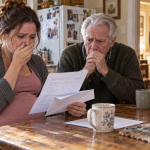
Derek stared at the document as though someone had placed a loaded weapon on the table. His confident smile disappeared. For several seconds, the boardroom was so quiet that I could hear the faint ticking of the clock above the door. Then he looked at Richard Mercer.
“Where did you get this?” Richard folded his hands. “Your wife provided it voluntarily.” Derek’s eyes snapped toward me. “Vanessa?” I nodded. “Yes.” He gave a short, disbelieving laugh. “That’s impossible.” “Apparently not.” He flipped through the pages. His fingers moved faster.
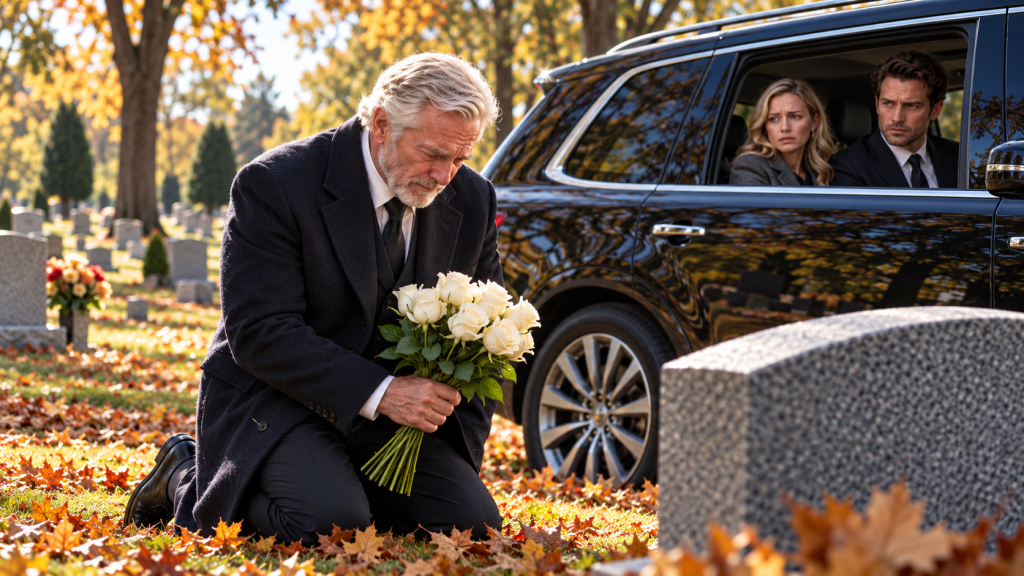
Then stopped. I knew exactly which paragraph he’d reached. It was the one that began: On the morning of November seventeenth, my husband instructed me to leave my father at the cemetery and later describe his behavior as evidence of declining mental capacity. Derek’s face turned an ugly shade of red. “This is a lie.” I looked at him. “Which part?”
He slammed the report onto the table.
“All of it.”
Richard leaned forward.
“Mr. Walsh, perhaps you’d prefer to explain why your wife has described the same plan in messages she preserved.”
Derek opened his mouth.
Nothing came out.
Around the table, six members of the board watched him with expressions ranging from disbelief to cold anger.
These were people I’d known for years.
Some had worked with me when the company operated out of a rented warehouse.
Others had joined long after Eleanor and I stepped away from daily operations.
But every one of them understood something Derek apparently had not.
A man being considered for executive promotion should not be using company resources to plan the financial exploitation of an elderly relative.
And he certainly shouldn’t be presenting questionable financial records to the very board responsible for overseeing his work.
“Harold,” Derek said finally, his voice shifting into the smooth tone he’d used on me for years, “I think we need to discuss this privately.”
I looked at him.
“We’re discussing your conduct as a senior employee.”
“This is a family disagreement.”
“Leaving me at a cemetery was a family matter,” I answered. “Using company funds and preparing false representations about my capacity is something the board needs to examine.”
He leaned back.
His eyes narrowed.
“You’re letting grief cloud your judgment.”
For one painful moment, I heard Vanessa’s voice.
Dad, you’re being difficult.
Dad, you keep forgetting things.
Dad, we only want what’s best for you.
The same language.
The same strategy.
Make me question myself.
Make my objections sound like symptoms.
Make everyone else believe I needed managing.
I looked at Derek.
“I’m grieving, yes.”
I placed my hands on the table.
“But I haven’t forgotten how to read a balance sheet.”
Across from me, Evelyn Cho, our chief executive officer, opened her folder.
“Derek, the independent audit identified invoices from Northstar Strategic Consulting.”
He shifted.
“That’s a legitimate vendor.”
“Then you should be able to explain its services.”
“I already have.”
Evelyn looked at the report.
“Not adequately.”
Derek’s jaw tightened.
Richard slid another page across the table.
“Northstar received payments totaling approximately one million, one hundred and eighty thousand dollars over nineteen months.”
A murmur went around the room.
Derek looked furious.
“Those were authorized expenses.”
Evelyn remained calm.
“Some payments passed through approval channels you controlled. That’s one of the reasons we’re conducting this review.”
She turned to another page.
“We’ve also been unable to verify several of the project deliverables described in the invoices.”
Derek pointed at her.
“Those were confidential consulting services.”
“Then we’ll review the confidentiality agreements and supporting records,” Evelyn answered.
I’d known Evelyn for twenty years.
She’d started at Bennett Freight & Logistics as a scheduling analyst.
When she was twenty-seven, she’d identified a routing problem that saved our company hundreds of thousands of dollars.
I had promoted her twice.
Eleanor used to say Evelyn had the rare talent of making difficult people feel heard without allowing them to get away with nonsense.
Watching her now, I understood exactly what Eleanor meant.
Derek looked around the table.
“Is this some kind of ambush?”
Thomas Reed, our chief financial officer, adjusted his glasses.
“You were informed that your division’s financial records were under independent review.”
Derek scoffed.
“Because Harold demanded it.”
Thomas shook his head.
“Because the figures warranted examination.”
I leaned back.
For six years, I’d left daily management to people I’d helped train.
I’d enjoyed my retirement.
Gardening.
Reading.
Traveling with Eleanor before her illness made long trips impossible.
After she died, retirement became quieter than I knew how to bear.
But I had never sold my controlling interest.
Eleanor and I had placed our shares in a family voting trust with carefully defined terms.
Following her death, I remained the acting trustee with the relevant voting authority.
Those arrangements were disclosed in the company’s ownership records.
Derek had simply never bothered to understand them.
He saw an old man who no longer attended staff meetings.
He assumed that meant I no longer mattered.
The board had elected me interim chair for the special meeting after receiving Richard’s request and reviewing the circumstances.
I hadn’t simply wandered in and claimed a chair that no longer belonged to me.
Everything had been arranged properly.
Because if there was one lesson thirty-eight years in business had taught me, it was that doing the right thing without following the right process could still lead to disaster.
I turned toward Derek.
“Do you remember what you told me at Eleanor’s grave?”
His face hardened.
“I told you we had to leave.”
“No.”
He shifted.
I continued.
“You told me I was a burden.”
He looked toward the other directors.
“Harold was refusing to get in the car.”
I took out my phone.
Opened the messages.
And placed it on the table.
You’re a burden. Walk home.
Below it, Vanessa’s message.
Don’t wait, Dad.
Evelyn read them.
Her expression changed.
Derek looked away.
“I was seventy-one,” I said quietly. “It was freezing. The cemetery was one hundred and ninety miles from my home.”
Nobody spoke.
“You drove away knowing I had no transportation.”
Derek shrugged.
“You had a phone.”
I felt something break inside me.
Not anger.
Not even surprise.
Just the last little piece of hope that the man might finally understand the cruelty of what he’d done.
“Yes,” I answered.
“I had a phone.”
I looked directly at him.
“And that’s why I’m sitting here.”
Richard opened Vanessa’s signed statement.
“There is an additional matter the board needs to address. Mrs. Walsh describes a plan to seek control over Mr. Bennett’s personal finances through claims of diminished capacity.”
Derek’s face tightened.
“That has nothing to do with the company.”
Richard nodded.
“Ordinarily, a family capacity dispute would be a separate matter. But the statement also refers to a proposed company arrangement under which proceeds associated with Mr. Bennett’s property would be used to secure financing for a business connected to you.”
Thomas opened his folder.
“That’s consistent with a draft we’ve located.”
Derek went still.
I leaned forward.
“Derek, why was my house listed in your financial planning documents?”
He laughed nervously.
“It wasn’t.”
Richard placed the draft on the screen.
There it was.
My address.
The estimated value.
And a note describing the property as a future family asset expected to become available through a change in ownership.
My stomach turned.
That house had been Eleanor’s home.
Our children’s childhood home.
The place where she’d learned she had cancer.
The place where she’d spent her final weeks watching the sunlight move across the garden.
And Derek had written it into a business forecast as though it were an empty warehouse waiting to be sold.
“That’s not legally binding,” Derek snapped.
“No,” Richard agreed. “It isn’t. But its inclusion is relevant to the investigation.”
I looked at my son-in-law.
“You asked me to transfer the house into Vanessa’s name three months ago.”
“That was estate planning.”
“You said it was for my protection.”
“It was.”
I pointed toward the screen.
“Then why did you expect to use it as security for your business obligations?”
Derek’s jaw worked.
Then he looked down.
The silence was broken by the board secretary.
“Evelyn, there’s a caller waiting on the secure line.”
Evelyn nodded.
“Put her through.”
A voice filled the room.
Calm.
Familiar.
My daughter’s.
“Hello, Dad.”
I closed my eyes.
“Vanessa.”
Derek shot to his feet.
“What are you doing?”
Evelyn raised a hand.
“Sit down, Derek.”
He stared at the speakerphone.
“Vanessa, hang up.”
My daughter’s voice trembled.
“No.”
Derek gripped the back of his chair.
“Don’t do this.”
There was a long pause.
Then Vanessa said:
“You told me they’d never find out what happened at the cemetery.”
And for the first time since I’d known him, Derek Walsh looked genuinely afraid.
Evelyn kept the call brief.
Vanessa confirmed that she’d made the signed statement and was willing to speak with the independent investigators through counsel.
She did not try to explain every financial transaction on the telephone.
Nor did the board treat her statement as proof of everything alleged.
But her account raised questions that demanded answers.
Questions about the vendor payments.
Questions about my property.
And questions about whether Derek had been using his position to advance interests he had never disclosed.
Derek was asked to step out while the independent directors considered temporary protective measures.
He refused at first.
Then his attorney, whom he’d called during a short recess, advised him to cooperate.
When the meeting resumed, the board voted to place Derek on paid administrative leave pending the investigation.
His access to certain financial systems was suspended.
Relevant records were preserved.
The promotion decision was halted.
And the audit committee received authority to continue its independent examination.
Nobody declared him guilty of a crime.
Nobody pretended a single morning had resolved everything.
But the promotion he’d expected was no longer under consideration.
As Derek gathered his things, he leaned toward me.
“You’ve ruined my career.”
I looked at him.
“No, Derek.”
My voice was quiet.
“I asked people to examine your work.”
His eyes burned with hatred.
“You couldn’t stand to see me succeed.”
I shook my head.
“I wanted you to succeed. I thought that would make my daughter happy.”
For a moment, I remembered their wedding.
Vanessa wearing her mother’s pearl earrings.
Derek standing at the altar, smiling as though he’d won the greatest prize of his life.
I’d shaken his hand afterward and told him:
“Take care of her.”
Now I wondered what he’d believed those words meant.
He walked toward the door.
Then turned.
“You think Vanessa’s going to choose you?”
My chest tightened.
He smiled bitterly.
“She left you there too.”
I didn’t answer.
Because he was right about that part.
Whatever Vanessa had signed afterward, whatever she’d decided to tell Richard, my daughter had willingly driven away from her mother’s grave.
And she’d sent me those three words.
Don’t wait, Dad.
When Derek finally left, the boardroom seemed to exhale.
Evelyn approached me.
“Harold, are you all right?”
I looked toward the empty doorway.
For years, I’d thought money could protect my family from certain kinds of hardship.
Eleanor and I had worked to provide security.
Education.
A home.
A business that could create opportunities long after we were gone.
Yet somehow, the same financial success had drawn people who believed I was worth more as an asset than as a man.
“I don’t know,” I answered honestly.
Evelyn rested a hand on my shoulder.
“That’s understandable.”
I looked toward Eleanor’s old photograph hanging near the boardroom entrance.
She was smiling beside the company’s first warehouse.
Her sleeves were rolled up.
She was holding a clipboard.
And I remembered what she’d said to me on the day we’d purchased our fourth truck.
“Harold, promise me something.”
“What?”
“If we ever become rich, don’t let it make us stupid.”
I’d laughed.
She hadn’t.
Now, thirty years later, I understood.
We’d built a valuable company.
But I’d been foolish enough to think everyone who loved the benefits of my success also loved me.
Richard approached with his folder.
“Harold, there are some things we need to discuss.”
I nodded.
“About Derek?”
“Yes.”
He hesitated.
“And about Vanessa.”
I felt a knot tighten in my stomach.
“She’s coming here?”
Richard nodded.
“She wants to speak with you privately.”
I looked toward the window.
Beyond the glass, trucks moved through the loading yard.
Our trucks.
The company Eleanor and I had built from almost nothing.
Then I thought about a freezing cemetery.
An empty parking lot.
And the taillights disappearing down the road.
“Richard,” I said quietly, “before I see my daughter, I need one question answered.”
He waited.
“Why did she sign that statement?”
His expression changed.
Then he said:
“Because she discovered something Derek had been planning to do after he got control of your house.”
My stomach dropped.
“What?”
Richard opened the last folder.
Inside was a proposed sale agreement.
The buyer was a company I had never heard of.
The seller’s name was listed as Vanessa Walsh, acting under a power of attorney that had never been granted.
And the proposed closing date was only twelve days away.
Derek hadn’t merely wanted control of my home.
He had already started trying to sell it.
I stared at the proposed sale agreement until the letters stopped making sense.
My address appeared at the top.
The description of the property was correct.
Even the estimated square footage was close.
Derek had apparently done his homework.
The document listed a purchase price of eight hundred and ninety thousand dollars.
That was less than the house was worth.
Not dramatically less, but enough to raise questions.
The proposed buyer was a limited liability company called Ashford Property Partners.
I’d never heard of it.
“Who owns Ashford?” I asked.
Richard shook his head.
“We’re still tracing its ownership and connections.”
“And the power of attorney?”
“No valid power of attorney authorizing Vanessa or Derek to sell your home has been identified.”
I looked up.
“Then this document is worthless.”
“As a completed sale, yes. It doesn’t transfer your property. But the fact that someone was preparing a transaction using authority you never gave is serious.”
I sat back.
For a moment, I wanted to laugh.
My house.
The place where I’d lived with Eleanor for forty years.
The garden she’d tended until her hands became too weak to hold the shears.
The front porch where Vanessa learned to ride her bicycle while I chased behind her.
Derek had reduced it to a line item.
A price.
A transaction he apparently expected somebody else to authorize on my behalf.
“Can he sell it without my knowledge?” I asked.
Richard folded his hands.
“A lawful sale requires actual authority and the appropriate documents. But fraudulent attempts can create problems, so we’re going to act promptly.”
He explained that we’d notify the relevant closing professionals and any identified lenders, secure certified copies of the genuine property records, and take appropriate steps if any false document was presented for recording.
We would also review my personal accounts and estate-planning documents.
Not because my daughter had sent an ugly message.
Because the records suggested somebody had been preparing to act in my name.
I rubbed my forehead.
“I can’t believe Vanessa was involved.”
Richard looked at me carefully.
“Harold, she signed the earlier request concerning your home.”
“I know.”
“And her new statement doesn’t erase that.”
I looked down.
He continued gently.
“She has admitted participating in parts of the plan. The extent of her responsibility still needs to be established.”
I nodded.
There was something almost comforting about Richard’s refusal to offer me easy answers.
He’d known Eleanor for twenty-seven years.
He knew how much I loved Vanessa.
He also knew that love had never been a substitute for evidence.
“Where’s my daughter now?”
“In the conference room downstairs. She’s with her attorney.”
I looked toward the window.
“And Derek?”
“He’s been told not to contact company employees about the investigation or interfere with the preservation of records. Whatever happens in their marriage is a separate matter.”
I nodded.
Then stood.
“Let’s talk to Vanessa.”
She was sitting alone when I entered.
Her attorney had stepped into the hallway at her request, remaining nearby.
Vanessa looked up.
For a moment, I barely recognized her.
Not because she’d changed physically.
She was still my daughter.
The same brown eyes Eleanor had loved.
The same little crease between her eyebrows when she was nervous.
But there was something frightened and exhausted about her expression that I hadn’t seen since she was a teenager.
“Dad.”
I closed the door behind me.
“Vanessa.”
She stood as though she wanted to hug me.
I didn’t move.
After a moment, she sat again.
“I know you’re angry.”
I pulled out a chair.
“Angry isn’t quite the word.”
Her eyes filled.
“I deserve that.”
I looked at her.
“I didn’t come here to decide what you deserve.”
She swallowed.
“I came to hear what happened.”
For several seconds, she stared at her hands.
Then she whispered:
“Derek told me you were going to lose everything if we didn’t intervene.”
I felt my chest tighten.
“What exactly did he say?”
“He said your company was being mismanaged. That you didn’t understand how much your shares were worth. That people were taking advantage of you because you were old.”
I stared at her.
“And you believed him?”
She nodded.
“At first.”
I thought about my retirement.
The fishing trips Eleanor and I used to take.
The quiet afternoons gardening.
The fact that I no longer enjoyed discussing logistics over dinner.
I’d earned the right to step away.
But apparently, Derek had interpreted my lack of interest in everyday operations as evidence that I no longer understood my own business.
Or he’d wanted Vanessa to interpret it that way.
“Did you ever ask me?” I said.
She lowered her head.
“No.”
“Did you ever ask Evelyn?”
“No.”
“Richard?”
Her eyes filled.
“No.”
I leaned back.
“Then you weren’t trying to find out whether I was being mistreated. You were trusting Derek’s version of the story.”
She began crying.
“I know.”
I let the silence settle.
Then asked:
“What happened at the cemetery?”
Vanessa covered her face.
“Dad…”
“Tell me.”
She took a shaking breath.
“Derek wanted you to sign the house papers before we drove out there.”
I remembered.
That morning, he’d placed a folder on my kitchen counter.
He’d described it as an updated family estate-planning packet.
I told him I wouldn’t sign anything on the anniversary of Eleanor’s death.
He became irritated.
Vanessa had said nothing.
“He was angry when you refused,” she continued.
“I remember.”
“He said you were making everyone’s life difficult.”
My throat tightened.
“And when I asked for ten more minutes beside your mother’s grave?”
Vanessa began sobbing.
“Derek said we should leave.”
I stared at her.
“And what did you say?”
She couldn’t meet my eyes.
“I said you were being stubborn.”
I nodded slowly.
She continued.
“He said leaving you there might finally make you understand you couldn’t keep treating us like children.”
I felt sick.
“And you agreed.”
She whispered:
“Yes.”
The word hurt more than I expected.
I had spent four days knowing she’d abandoned me.
But hearing her admit it made the memory sharp again.
The cold stone beneath my knees.
Eleanor’s name carved into granite.
The empty cemetery road.
“Did you think about turning around?” I asked.
Vanessa began crying harder.
“Yes.”
“When?”
“About fifteen minutes after we left.”
I stared.
“Then why didn’t you?”
She wiped her face.
“Derek said you’d call a taxi.”
“And you believed him.”
She nodded.
I swallowed.
“Vanessa, you knew my car was being repaired.”
“I know.”
“You knew I had no coat heavy enough for that weather.”
“I know.”
“And you sent me a message telling me not to wait.”
She closed her eyes.
“Yes.”
I looked away.
For a moment, I remembered the first time I’d held her.
Eleanor was exhausted after a difficult delivery.
Vanessa had been wrapped in a pale pink blanket.
When the nurse handed her to me, I’d been terrified of dropping her.
She was so small.
So precious.
I’d promised Eleanor I’d always protect our little girl.
Now that little girl was forty-one years old.
And she’d helped leave me beside her mother’s grave.
I looked back.
“Why did you send that text?”
Vanessa’s voice broke.
“Because I was angry that you wouldn’t sign the house over.”
I said nothing.
She began sobbing.
“I thought you were punishing us. I thought you didn’t trust me.”
I stared.
“Vanessa, why would I transfer my house to you simply to prove I loved you?”
She wiped her cheeks.
“I don’t know.”
I leaned forward.
“I’d already given you money for your education. Helped with your first apartment. Paid off the debt you had after your business closed.”
She nodded.
“And I never asked you to thank me every morning.”
“I know.”
“Then why did my refusing one request make me a burden?”
Vanessa looked at me for a long time.
Finally, she whispered:
“Because Derek convinced me that everything you had would eventually be ours anyway.”
I closed my eyes.
There it was.
The part I’d feared most.
Not just greed.
Entitlement.
My daughter had begun thinking of her parents’ life savings and home as things waiting for her to collect.
As though Eleanor’s death were the first payment on an inheritance that should have arrived sooner.
“Your mother worked for those things,” I said.
Vanessa nodded through tears.
“I know.”
“She spent nights in that first warehouse doing payroll when we couldn’t afford an accountant. She sold her engagement bracelet to cover fuel when our second truck broke down.”
Vanessa looked up.
“I never knew that.”
“Because your mother didn’t think childhood should include worrying about the company’s bills.”
My voice broke.
“We didn’t hide our struggles because we wanted to deceive you. We wanted you to feel safe.”
Vanessa began crying again.
“Dad, I’m sorry.”
I looked at her.
“I believe you’re sorry now.”
She lifted her head.
“But being sorry doesn’t make what happened disappear.”
“I know.”
She wiped her face.
Then reached into her handbag.
“I need to show you something.”
My stomach tightened.
“What?”
She placed her phone on the table.
A photograph filled the screen.
It showed a draft agreement bearing my name.
Beneath it, a handwritten note from Derek:
Capacity declaration first. Family authorization afterward. Close Ashford before anyone starts asking questions.
I stared.
“When did you find this?”
“Tuesday.”
Four days after the cemetery.
She swallowed.
“Derek left his laptop open. I was trying to find the name of a doctor he’d said would assess you.”
My chest tightened.
“What doctor?”
“He’d been speaking with someone about an evaluation. He wanted me to say you’d become confused after Mom died.”
I stared at her.
“And were you going to?”
Her eyes filled.
“I’d already agreed to tell them you were forgetful.”
I felt my stomach sink.
“Vanessa…”
She began crying.
“But I hadn’t understood he was preparing to use a false declaration to sell the house.”
I looked at the photograph again.
The proposed sale.
My name.
The expected closing date.
And Derek’s note about obtaining a capacity declaration.
For a moment, I wanted to demand how my daughter could have been so foolish.
But that would have let her avoid the harder truth.
She hadn’t merely been fooled.
She had chosen, repeatedly, not to ask the questions that might have exposed what she wanted to believe.
“Why did you go to Richard?” I asked.
Vanessa lowered her eyes.
“Because I finally called the cemetery.”
I stared.
“What?”
“On Tuesday morning. I wanted to know whether anyone had helped you after we left.”
My throat tightened.
She continued.
“The groundskeeper remembered you. He said you stayed beside Mom’s grave for almost an hour after the SUV drove away.”
I looked down.
“He said you looked cold.”
Vanessa’s voice broke.
“And he told me he’d offered to let you wait in the maintenance office, but you’d said someone was coming.”
I closed my eyes.
Richard’s driver had eventually arrived in a warm sedan.
Until then, I’d stayed near Eleanor because I couldn’t bear leaving her again.
Vanessa whispered:
“Dad, I pictured you standing there.”
Tears slid down her face.
“And for the first time, I stopped thinking about the paperwork.”
She swallowed.
“I thought about Mom.”
For several seconds, neither of us spoke.
Then she said:
“I remembered what she told me the last Christmas before she died.”
My breath caught.
“What did she say?”
Vanessa looked up.
“She told me that someday you’d be old and lonely, and she hoped I’d treat you with the patience you had always shown me.”
Her face collapsed.
“And I’d just left you alone in a cemetery.”
I turned away.
Because I could hear Eleanor’s voice too.
Not speaking from a grave.
Not handing down some mystical warning.
Just my wife, sitting in the kitchen two years earlier, worried about the future.
She’d known our daughter.
Known her weaknesses.
Known her desire to please Derek.
And perhaps she’d seen the direction things were moving long before I did.
Vanessa reached for a tissue.
“I called Richard that afternoon. I told him everything I knew. Then I gave him the statement.”
I looked at her.
“Why didn’t you call me?”
Her voice broke.
“Because I was ashamed.”
I nodded.
“That would have been a good reason to call.”
She looked down.
“Yes.”
I stood.
Vanessa rose too.
“Dad, please.”
I turned.
She took a hesitant step toward me.
“Can you forgive me?”
I looked at my daughter.
The same girl I’d taught to swim.
The same child who used to run into Eleanor’s arms after school.
The same woman who had helped leave me one hundred and ninety miles from home in freezing weather.
“I don’t know,” I answered.
Her face crumpled.
“But you can start by telling the truth without expecting me to reward you for it.”
She nodded.
Then whispered:
“I will.”
I opened the door.
Before stepping into the hallway, I looked back.
“Vanessa, one more thing.”
She raised her eyes.
“You don’t get to blame Derek for the text you sent me.”
Tears streamed down her face.
“I know.”
I nodded.
Then left.
In the hallway, Richard was waiting.
He studied my expression.
“How did it go?”
I looked toward the closed door.
“I heard the truth.”
He nodded.
“And?”
I took a long breath.
“It hurts.”
Richard placed a hand on my shoulder.
Then said quietly:
“Harold, there’s another document we need to review before you go home.”
I stared at him.
“Another one?”
He nodded.
“This one wasn’t prepared by Derek.”
My heart began pounding.
“Who prepared it?”
Richard’s expression softened.
“Eleanor.”
He opened a thin leather folder.
Inside was a handwritten letter.
My wife’s name appeared at the bottom.
And above it was a sentence I’d never seen before.
If Harold ever begins to believe our daughter loves the inheritance more than the man, give him this.
I stared at Eleanor’s handwriting.
For forty-three years, I’d known the shape of every letter she wrote.
Her capital H always leaned to the right.
She crossed her t’s too high.
And when she was worried about something, she pressed the pen so hard that the words left shallow impressions on the following page.
The letter in Richard’s hand bore those familiar marks.
“Why haven’t I seen this?” I whispered.
Richard looked apologetic.
“Eleanor asked me to hold it unless particular circumstances arose.”
I looked up.
“What circumstances?”
“She was concerned about pressure involving your home and your voting shares. She didn’t want you spending your remaining years suspicious of Vanessa merely because of a fear she might have been wrong about.”
I stared.
“And she was right?”
“She had seen enough to worry. She didn’t know what would happen after her death.”
I opened the letter.
My darling Harold,
If Richard has given you this, then something I hoped would never happen has probably happened.
First, please remember that I loved our life. Not because we became comfortable, but because we built something honest together.
I swallowed.
I still remember your face when the bank refused us our first loan. You came home convinced we’d failed before we’d begun.
We sat on the kitchen floor eating tomato sandwiches because we couldn’t afford to go out.
And I told you that two borrowed trucks were enough to get started if we were willing to work harder than everybody else.
I smiled through tears.
She remembered.
Of course she remembered.
We have spent our lives trying to give Vanessa security. But sometimes I worry she has mistaken security for entitlement.
Derek encourages that mistake.
Perhaps I am unfair to him. I hope I am. But I have watched him ask you about your estate more often than he asks about your health.
My vision blurred.
If they ever try to convince you that you are too old to make your own decisions simply because those decisions disappoint them, please do not surrender your independence out of guilt.
You may need help someday. We both knew that. Accept genuine help when you need it.
But needing help is not the same as belonging to someone else.
I placed a hand over my mouth.
Richard remained silent.
I know how deeply you love our daughter.
Please keep loving her.
But don’t mistake love for unlimited access to the things we earned.
You taught her to ride a bicycle by letting go of the seat.
You may have to love her now by letting her experience the consequences of her own choices.
If she finds her way back, let it be because she wants her father, not because she wants his signature.
And Harold, one final request.
Don’t let whatever happens make you bitter toward the people who have stood beside us faithfully.
Our employees helped build this company too. Protect what all of us created.
I will be proud of you, whatever honest decision you make.
Your Eleanor.
I couldn’t speak.
For a long time, I simply held the letter.
Then I began to cry.
Not the quiet tears I’d shed in the cemetery.
I cried the way I hadn’t allowed myself to cry since the morning Eleanor died.
Because she’d known.
Not every detail.
Not the exact betrayal waiting two years in the future.
But she’d recognized the danger in how our daughter and Derek were beginning to see me.
And she had tried to leave me enough strength to face it.
Richard sat beside me.
“She asked me to safeguard the family arrangements,” he said quietly.
I nodded.
“And she wanted Vanessa protected from herself too?”
He gave a sad smile.
“In many ways, yes.”
I looked at the letter.
Then whispered:
“I miss her.”
Richard put his hand on my shoulder.
“I know, Harold.”
When I returned home that evening, I didn’t turn on the television.
I went straight to the kitchen.
Placed Eleanor’s letter on the table.
And made two cups of tea.
I hadn’t done that in months.
After she died, I stopped setting out the second cup because seeing it untouched made the house feel emptier.
But that evening, I needed to remember the life we’d shared.
So I placed one cup before her old chair.
Then sat across from it.
“Ellie,” I whispered, “I think I finally understand.”
The kitchen remained quiet.
Rain tapped against the windows.
I looked toward the photograph of us on our wedding day.
We were so young.
I’d borrowed my brother’s jacket.
Eleanor had sewn part of her own dress.
We had no money.
No company.
No house.
No idea what the next forty-three years would bring.
And somehow, despite all the pain of that day, those years were still the happiest gift I’d ever received.
I picked up my phone.
Opened Vanessa’s messages.
Read them one more time.
Then saved copies with the legal records and put the phone down.
I didn’t delete them.
I didn’t answer with anger.
I simply stopped trying to find an explanation that would make the words hurt less.
The next morning, Richard called.
“Harold, the company investigators have identified a connection between Derek and Northstar.”
I sat down.
“What kind?”
“The consulting company appears to have been controlled indirectly by an associate who had previously worked with Derek.”
I frowned.
“Who?”
“A man named Colin Faulkner.”
I remembered Colin.
He’d worked in procurement several years earlier.
He was bright, ambitious, and consistently irritated whenever anybody questioned an expense.
I’d met him only a handful of times before retirement.
“Didn’t Colin leave the company?”
“Four years ago.”
I stared toward the garden.
“And now he’s billing us?”
“Through Northstar. The question is what services were actually provided.”
Over the next several weeks, the independent auditors followed the records.
They interviewed employees.
Reviewed the contracts.
Matched invoices to deliverables.
Examined procurement approvals.
And obtained communications through lawful company procedures.
Some payments corresponded to actual consulting work.
Others did not.
The pattern was serious.
But Richard was careful to distinguish suspicious figures from proven losses.
A procurement analyst named Marta Solis became an important witness.
Marta had worked at Bennett Freight & Logistics for seventeen years.
I remembered her from company picnics.
She always brought homemade empanadas and insisted everybody try one.
During the audit, Marta explained that she’d questioned several Northstar invoices months earlier.
The descriptions were vague.
The project codes didn’t match the work supposedly performed.
And the fees appeared much larger than comparable services.
When she asked for supporting documents, Derek told her the work was confidential and approved at the executive level.
She’d written an email expressing concern.
It was never answered.
Then she received a poor performance review.
The timing raised serious questions.
Evelyn arranged for that review to be examined independently.
The board also made clear that employees who had reported concerns were to be protected from retaliation under company policy.
When I heard Marta’s account, I felt ashamed.
Not because I’d approved Derek’s conduct.
I hadn’t.
But because Eleanor had warned me that the company belonged, in a moral sense, to more people than the names on the ownership papers.
Marta had tried to do her job.
And someone with greater authority had apparently tried to punish her for asking reasonable questions.
I called Evelyn.
“I want to speak to Marta.”
Evelyn paused.
“Harold, we should make sure the investigators have completed the relevant interview first.”
“Of course.”
“Then I’ll arrange it.”
Two weeks later, Marta came to my office.
She looked nervous.
“Mr. Bennett.”
I stood.
“Marta.”
She smiled hesitantly.
“I haven’t seen you in years.”
I shook her hand.
“Too long.”
We sat together.
I asked about her family.
Her eldest daughter had graduated from college.
Her youngest was applying to nursing school.
Her husband had retired.
For a few minutes, we talked like old friends.
Then I looked at her.
“Marta, I understand you raised concerns about Northstar.”
She nodded.
“I did.”
“And you felt nobody was listening.”
Her expression changed.
For a moment, she looked as though she might cry.
Then she whispered:
“I thought I’d lose my job.”
My chest tightened.
I leaned forward.
“You should never have been made to feel that asking for accurate invoices was a threat to your employment.”
She wiped her eyes.
“I love this company.”
I nodded.
“So do I.”
She glanced toward Eleanor’s photograph.
“Mrs. Bennett used to come through the office and ask whether we had everything we needed.”
I smiled sadly.
“She was always like that.”
Marta nodded.
“Once, when I had to leave early because my daughter was sick, she told me to go home and take care of my family.”
Her voice broke.
“She said spreadsheets could wait.”
I stared at the photograph.
Then whispered:
“That sounds exactly like her.”
The audit eventually established that a substantial portion of the Northstar payments lacked adequate support and involved serious conflicts of interest that Derek had failed to disclose.
The financial review identified more than six hundred thousand dollars in payments for which legitimate services could not be substantiated.
Further examination of the full $1.18 million continued.
Investigators also identified approximately ninety-two thousand dollars in transfers that appeared to benefit accounts associated with Derek and Vanessa.
Vanessa’s own authorization and knowledge had to be examined separately.
Her cooperation did not make those questions disappear.
The board considered the findings through the company’s established disciplinary and governance procedures.
Derek, represented by counsel, had opportunities to respond.
He disputed several conclusions.
He maintained that the consulting arrangements were valid.
But he could not adequately explain the missing deliverables, the undisclosed relationships, or the irregular approvals identified by the investigators.
His employment was terminated.
The company pursued civil recovery and made the necessary referrals concerning possible criminal conduct.
The legal consequences would take time.
There would be negotiations.
Potential litigation.
More records to review.
And decisions made by people other than me.
I didn’t promise anyone that Derek would be arrested.
I didn’t announce that every dollar would come back.
I had learned to respect the difference between wanting justice and pretending the outcome was already certain.
But Derek’s career at the company Eleanor and I had built was over.
And the promotion he had expected when he walked into that boardroom was never awarded to him.
The proposed sale of my home was also stopped before any completed transfer occurred.
Richard and the property attorneys identified the parties involved, disputed the supposed authority, and took steps to protect my title.
It emerged that Ashford Property Partners had business connections to Colin Faulkner.
The proposed price and financing arrangements were part of the broader review.
Again, nothing about a draft contract gave Derek ownership of my house.
But the attempt to prepare such a transaction without my consent was deeply troubling.
When Richard finally told me that the records showed no completed sale or valid new mortgage against the property, I sat at my kitchen table and cried.
Not because I doubted the lawyers’ work.
Because for weeks I’d imagined someone walking up my front steps and telling me I no longer belonged there.
I looked out at Eleanor’s roses.
The garden she’d planted.
The little bench where we’d sat together in the evenings.
Then I whispered:
“Not this house.”
And for the first time, I could say it without fear.
Vanessa separated from Derek while the investigations were underway.
I learned that from Richard, not from her.
She moved into a small apartment and obtained her own attorney.
She began cooperating with the financial review and addressing her involvement in the questionable transfers.
She was still responsible for the decisions she’d made.
There were financial consequences.
Difficult disclosures.
And obligations she couldn’t simply place at Derek’s feet.
Three months after the cemetery, she called me.
I stared at the screen for a long time.
Then answered.
“Hello, Vanessa.”
Her voice trembled.
“Hi, Dad.”
I waited.
She took a breath.
“I wanted to ask whether I could visit.”
I looked toward Eleanor’s empty chair.
“Why?”
A pause.
“Because I miss you.”
I swallowed.
Then asked the question I should have asked years earlier.
“Do you need money?”
Vanessa began crying.
“No.”
“Do you want me to sign something?”
“No.”
“Are you coming to discuss the house?”
“Dad, no.”
Her voice broke.
“I just want to see my father.”
For a long moment, I said nothing.
Then I looked down at Eleanor’s letter.
If she finds her way back, let it be because she wants her father, not because she wants his signature.
I took a breath.
“Sunday afternoon,” I said.
Vanessa began crying harder.
“Really?”
“Yes.”
I paused.
“But we’re going to talk honestly. And if you begin blaming Derek for choices you made yourself, the conversation ends.”
She swallowed.
“I understand.”
After the call, I sat alone for a long time.
I wasn’t ready to forgive everything.
I didn’t know whether I ever would.
But I could open the door without handing over the keys.
I could love my daughter without pretending she’d done nothing wrong.
And I could let her begin earning back trust through the only method that actually works.
Not promises.
Not tears.
Repeated, honest choices.
Vanessa arrived on Sunday at two seventeen.
I remember the time because I had spent the entire morning telling myself I wasn’t watching the clock.
I cleaned the kitchen twice.
Watered Eleanor’s roses.
Rearranged books on a shelf that hadn’t needed arranging.
At one thirty, I put the kettle on.
At one forty-five, I turned it off.
At two, I stood beside the window.
Then, at two seventeen, my daughter’s little silver car pulled into the driveway.
Not Derek’s expensive SUV.
Not the vehicle that had disappeared through the cemetery gates.
Just an ordinary car with a dent above the back wheel.
Vanessa stepped out carrying a paper bag.
She stood beside the car for several seconds before walking toward the house.
When I opened the door, she looked frightened.
“Hi, Dad.”
I nodded.
“Hello, sweetheart.”
The old nickname came naturally.
It surprised us both.
Her eyes filled.
I stepped aside.
“Come in.”
She looked around the hallway.
The photographs were still there.
Her graduation.
Her wedding.
A picture of Eleanor holding her as a baby.
Vanessa stopped beside that one.
For a moment, she didn’t speak.
Then she whispered:
“Mom looks so young.”
I nodded.
“She was.”
We went into the kitchen.
Vanessa placed the bag on the table.
“I brought cinnamon rolls.”
I glanced at her.
“From Miller’s bakery?”
She smiled faintly.
“Your favorites.”
I looked at the bag.
For three months, I’d promised myself that I wouldn’t let gifts replace difficult conversations.
But a cinnamon roll wasn’t a house.
It wasn’t a trust document.
It wasn’t a request for money.
So I put two plates on the table.
And we sat down.
At first, we talked about ordinary things.
The weather.
A neighbor’s new puppy.
Vanessa’s apartment.
The repairs I’d finally arranged for the garage roof.
It felt awkward.
Like two people attempting to remember a language they once spoke fluently.
Then Vanessa placed her cup down.
“Dad, I want to apologize properly.”
I looked at her.
She took a breath.
“I left you at Mom’s grave because I was angry that you wouldn’t give us the house.”
My chest tightened.
She continued.
“I let Derek convince me you were being selfish. But I was selfish too.”
Tears filled her eyes.
“I knew you were grieving. I knew you needed time. And I chose to punish you for not doing what we wanted.”
I stared at the table.
“I’m sorry for the message,” she whispered.
Then she swallowed.
“And I’m sorry I didn’t turn around.”
I lifted my eyes.
“That’s the part I keep thinking about.”
She nodded.
“I know.”
“Not just the words.”
“I know.”
“The drive.”
My voice broke.
“One hundred and ninety miles, Vanessa. You had all that time to change your mind.”
Tears streamed down her cheeks.
“I did.”
“You didn’t even call to see whether I got home.”
She lowered her head.
“No.”
I sat quietly.
Then said:
“I would have driven five hundred miles to pick you up if you’d been stranded.”
Vanessa covered her face.
“I know, Dad.”
I swallowed.
“And that’s why it hurt.”
For a long time, neither of us spoke.
Then Vanessa reached into her handbag.
I stiffened instinctively.
She noticed.
Her expression crumpled.
“It’s not something for you to sign.”
She took out a folded letter.
“I wrote down everything I wanted to say because I was afraid I’d forget.”
I nodded.
“Go ahead.”
She read slowly.
She acknowledged helping Derek pressure me about the house.
She admitted she’d signed a transfer-related request without asking the questions she should have asked.
She described the financial benefits she’d received through joint accounts and said she was cooperating with the lawyers to identify and return any money that didn’t belong to them.
She didn’t claim she’d suddenly become innocent because she’d left Derek.
She didn’t ask me to abandon the investigation.
She didn’t tell me she deserved a second chance.
When she finished, she folded the paper.
Then whispered:
“I know you may never trust me again.”
I looked at her.
“Trust isn’t a door that stays open or closed forever.”
She raised her eyes.
“Sometimes it has to be rebuilt a little at a time.”
Her lips trembled.
“Will you let me try?”
I took a long breath.
“Yes.”
She began crying.
“But not with my house,” I added gently.
She nodded immediately.
“Not with your money. Not with promises you want me to make.”
“I understand.”
I looked toward Eleanor’s photograph.
“With time.”
Vanessa wiped her eyes.
“Then I’ll give you time.”
She stayed for an hour and a half.
We didn’t hug when she arrived.
But when she was leaving, she hesitated beside the front door.
“Dad?”
I looked at her.
“Yes?”
“Would it be okay if I hugged you?”
I felt my throat tighten.
Then I nodded.
She stepped forward.
I put my arms around her.
And for a moment, I held the daughter I remembered.
Not the woman who’d abandoned me.
Not the person who’d signed dangerous papers.
Just my little girl, frightened and crying.
But I knew something now that I hadn’t understood before.
Holding her didn’t require pretending the betrayal hadn’t happened.
Loving her didn’t require handing her the keys to my life.
Over the following months, Vanessa kept her word in small ways.
She called when she said she would.
She arrived on time.
She stopped bringing up my finances unless it was necessary to resolve questions about the investigation.
She accepted that Richard and my independent advisers would handle my legal and estate matters.
And when I said no, she stopped treating it as an invitation to argue.
One evening, she asked whether I wanted help pruning Eleanor’s rosebushes.
I looked at her.
“Do you know how?”
She smiled sheepishly.
“Not really.”
I laughed.
“Your mother would have something to say about that.”
Vanessa’s eyes filled.
“I know.”
We spent two hours in the garden.
I showed her which branches to cut.
How far back to trim the stems.
Why the roots needed air.
She listened.
At one point, she clipped the wrong branch and looked horrified.
I chuckled.
“It’s a rosebush, Vanessa. It’ll survive.”
She stared at me.
Then laughed.
It was the first time we’d laughed together since Eleanor died.
The company also changed.
The board completed the next stages of the independent review and strengthened procurement controls.
Transactions involving executives’ outside interests required more transparent disclosures.
Large consulting contracts faced additional verification.
Employees received clearer ways to raise concerns outside their supervisors’ reporting lines.
And financial approvals were separated so that no one executive could push questionable payments through without meaningful oversight.
Marta’s performance review was formally reconsidered.
She was recognized for identifying discrepancies that should have received attention much earlier.
Eventually, she accepted a leadership role helping improve procurement controls.
When Evelyn told me, I smiled.
“Good.”
I also returned to the warehouse where the company had begun.
The original building still stood, though it had long since become a storage facility.
Evelyn accompanied me.
We walked through the old loading area.
I remembered the smell of engine oil.
The first winter when we could barely afford heating.
The nights Eleanor stayed until midnight balancing accounts on a calculator.
Evelyn looked around.
“Hard to believe this became everything it is now.”
I smiled.
“It wasn’t just me.”
She nodded.
“I know.”
We established a scholarship program in Eleanor’s memory for children of long-serving employees who wanted to pursue education or skilled trades.
The program had independent oversight and clearly defined eligibility.
I didn’t announce it as some grand act of generosity.
It simply felt like a way to honor what she’d always believed.
The business should create opportunity beyond the people whose names appeared on the certificates.
One afternoon, I visited the new scholarship committee.
They were reviewing applications.
A young mechanic’s daughter wanted to study engineering.
A warehouse supervisor’s son hoped to become a nurse.
A driver’s granddaughter had been accepted into a technical college.
I read their essays.
And thought about Eleanor selling her bracelet to buy fuel for the second truck.
She would have loved knowing that sacrifice had helped create possibilities for families we’d never imagined meeting.
The legal matters involving Derek continued.
The company’s civil recovery claims were pursued through counsel, with financial records preserved for any additional proceedings.
Certain amounts were recovered through negotiated arrangements and available assets, while other disputes remained unresolved.
Any possible criminal accountability depended on the decisions of the appropriate authorities and courts.
I wasn’t given every detail.
I didn’t need every detail.
Derek sent several messages through intermediaries claiming I’d betrayed him.
He accused me of choosing the company over family.
He insisted Vanessa had turned against him because I promised her an inheritance.
None of that was true.
I directed the communications to Richard and stopped engaging.
There was a time when those accusations would have kept me awake.
Now they reminded me of something Eleanor once said.
“When someone can only love you while you’re useful, don’t mistake their anger for heartbreak when you stop being useful.”
Nearly a year after the cemetery, I met Richard to update my estate arrangements.
I didn’t disinherit Vanessa in a burst of anger.
And I didn’t leave everything unchanged because I felt guilty.
We reviewed my actual wishes.
My needs as I aged.
The long-term governance of the company.
The charitable commitments Eleanor and I had made.
And arrangements to prevent any one family member from acquiring financial control over me through pressure or ambiguous paperwork.
I appointed independent professionals to handle responsibilities that required specialized oversight.
I documented who should be consulted if I genuinely became unable to make decisions.
And I made certain that any future changes would reflect my own informed choices.
When the meeting ended, Richard looked at me.
“Feel better?”
I nodded.
“Much.”
He smiled.
“Good.”
Then I picked up Eleanor’s letter.
“Richard, one more thing.”
He waited.
“If Vanessa wants a relationship with me, I want it to be because she wants to spend time with her father.”
Richard nodded.
“That’s a reasonable boundary.”
I looked toward the window.
“Not because she’s wondering what happens after I’m gone.”
That evening, I returned home and found Vanessa kneeling in Eleanor’s garden.
She was wearing old jeans and gardening gloves.
A pile of weeds sat beside her.
When she saw me, she smiled.
“Hi, Dad.”
I stared.
“What are you doing?”
She looked down at the weeds.
“Mom always hated when these things spread.”
I smiled.
“She did.”
Vanessa stood.
“Hope you don’t mind.”
I looked at the garden.
Then back at my daughter.
“No,” I whispered.
“I don’t mind.”
She hadn’t come with a folder.
Or an attorney.
Or a suggestion that I was too old to manage my own affairs.
She’d come to pull weeds.
It wasn’t enough to erase what she’d done.
But for the first time, I believed she was beginning to understand what love looked like when there was nothing to gain.
On the third anniversary of Eleanor’s death, Vanessa called me early in the morning.
“Dad?”
“Yes, sweetheart?”
“I know what day it is.”
I looked toward Eleanor’s photograph.
“I know.”
Vanessa hesitated.
“Would you let me drive you to the cemetery?”
For a moment, I couldn’t speak.
The last time we’d made that journey together, she’d left me standing in the cold.
I thought about the messages.
The empty road.
And the telephone call that had changed our lives.
“Vanessa,” I said quietly, “are you certain you want to do that?”
“Yes.”
“It’s a long drive.”
“I know.”
“I might want to stay awhile.”
Her voice broke.
“Then we’ll stay awhile.”
I looked through the kitchen window.
Eleanor’s roses were blooming.
And for the first time in a year, I felt ready to visit her grave without carrying the same terrible anger.
“All right,” I said.
Vanessa exhaled shakily.
“Thank you, Dad.”
We left at eight.
The sky was clear.
The air was cool but not freezing.
Vanessa had packed sandwiches, bottled water, and a thermos of coffee.
When I climbed into the car, she checked whether I was comfortable.
I gave her a look.
She smiled.
“Too much?”
“A little.”
We laughed.
For most of the drive, we talked about Eleanor.
Vanessa remembered her mother’s terrible singing.
I remembered how Eleanor once backed our first truck into a fence and insisted the fence had been installed in the wrong place.
Vanessa laughed so hard she had to wipe her eyes.
I told her stories about the early years of the company.
About the nights we struggled.
The times we nearly failed.
The sacrifices her mother made without ever asking anyone to admire her for them.
“Dad,” Vanessa said quietly, “I never knew how much you two went through.”
I looked out the window.
“We wanted you to have a childhood, not a list of our worries.”
She nodded.
Then whispered:
“I wish I’d appreciated it sooner.”
I looked toward her.
“The important thing is what you do with what you’ve learned.”
We reached the cemetery shortly before noon.
Vanessa parked near the entrance.
For a moment, neither of us moved.
Then she turned toward me.
“Dad, I want to say something before we get out.”
I waited.
Her eyes filled.
“I know I can never undo what happened here.”
I nodded.
“And I know bringing you back doesn’t make us even.”
“No,” I answered gently.
“It doesn’t.”
She swallowed.
“But today, I want you to have as much time with Mom as you need.”
I looked at my daughter.
She took a slow breath.
“I’ll be here when you’re ready.”
My throat tightened.
“Vanessa…”
She shook her head.
“No deadline. No hurry. No angry messages.”
Tears slipped down her cheeks.
“I’m staying.”
We walked together to Eleanor’s grave.
The grass had grown thick around the headstone.
I knelt and placed a bouquet of white roses beside her name.
Vanessa stood quietly behind me.
For a long time, I didn’t speak.
Then I touched the stone.
“Hello, Ellie.”
The familiar ache returned.
But this time, it was gentler.
“I’ve had quite a year,” I whispered.
The breeze moved softly through the trees.
I smiled.
“I think you’d have some things to say about it.”
My eyes filled.
“The company’s doing all right. The garden’s surviving. And Vanessa has finally learned which branches you’re supposed to prune.”
Behind me, my daughter laughed through tears.
I rested my hand against the stone.
“I’ve missed you every day.”
For a moment, I couldn’t continue.
Then I whispered:
“You were right about one thing, Ellie.”
My voice broke.
“Love doesn’t mean giving away your dignity.”
Vanessa knelt beside me.
She touched her mother’s name.
“Mom,” she whispered, “I’m sorry.”
Tears ran down her cheeks.
“I hurt Dad. I hurt him terribly.”
I looked toward her.
She continued.
“I can’t make it disappear. But I’m trying to become somebody who would never do that again.”
For a while, we stayed together beside the grave.
Not pretending the past was fixed.
Not searching for some perfect ending.
Simply remembering Eleanor.
And acknowledging what we had lost.
Eventually, Vanessa helped me stand.
“Ready, Dad?”
I looked at Eleanor’s name one final time.
Then nodded.
“Yes.”
We walked slowly toward the car.
At the entrance, my phone vibrated.
A message from Vanessa.
I looked at her, puzzled.
She smiled nervously.
“Read it.”
I opened the text.
Take all the time you need, Dad. I’ll be right here.
For a moment, I couldn’t breathe.
A year earlier, she’d sent me three words that made me feel completely unwanted.
Don’t wait, Dad.
Now she was standing beside me.
No contracts.
No requests.
No promises about inheritance.
Just a daughter trying to become someone her father could trust again.
I looked up.
Vanessa’s eyes were filled with tears.
“I wanted you to have a different message to remember,” she whispered.
I felt my own tears falling.
Then I put my arms around her.
And for the first time in a long while, the embrace didn’t feel like an apology being demanded or forgiveness being purchased.
It felt like a beginning.
I know some people would have cut Vanessa out of their lives forever.
Others might have forgiven her the moment she began crying.
I chose neither.
I chose boundaries.
Time.
Accountability.
And the possibility that a person who had hurt me could learn to behave differently.
As for Derek, he lost the promotion he’d expected and the position he had abused. His financial conduct remained subject to consequences that no amount of charm could simply erase.
He had believed a seventy-one-year-old widower was weak because he was grieving.
He had believed my house was his to plan around.
And he had believed abandoning me at a cemetery would teach me to surrender.
Instead, it taught me to protect what Eleanor and I had built.
I still live in our old house.
I still tend Eleanor’s roses.
I still miss her every single day.
But I no longer confuse being alone with being helpless.
And I no longer believe that love must be proven by signing away everything I own.
They left me 190 miles from home, believing grief had made me powerless.
Four days later, Derek walked into a boardroom expecting a promotion and found the man he’d abandoned sitting in the chairman’s chair.
But the greatest victory wasn’t taking that promotion away.
It was discovering that I could protect my dignity without losing my capacity to love.
And when Vanessa drove me home from Eleanor’s grave, I watched the familiar roads pass beneath the afternoon sunlight.
This time, nobody left me behind.
THE END STORIES! THANK YOU FOR READING GOOD LUCK !❤️
Related Posts