For several seconds, I couldn’t breathe. I stared at the photograph in my trembling hands, reading those six words again and again. He saved my life once, Laura. My father’s handwriting. There was no mistaking it.
The slightly crooked letters, the way he pressed too hard when writing his capital L, the little downward stroke he always added at the end of a sentence. My father, Daniel Whitmore, had been dead for eleven years.
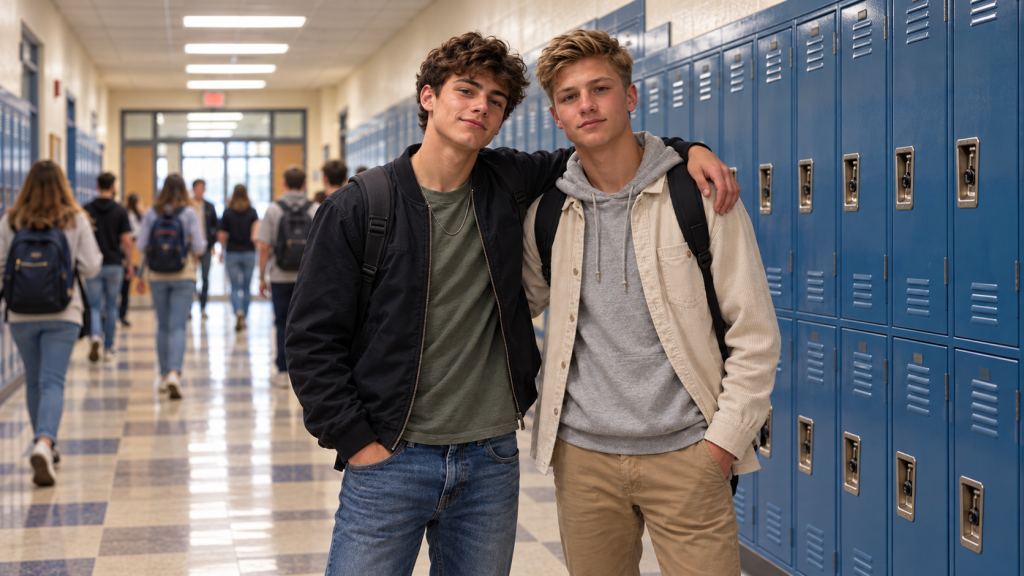
And now, at nearly five in the morning, I was standing in a hospital corridor holding a photograph that connected him to a man I’d never heard of. “Mom?” Nathan’s voice sounded distant. I looked up. My son stood beside me, his bruised cheek illuminated by the harsh fluorescent lights. Cole sat in a plastic chair nearby, rubbing his exhausted eyes.
Denise watched me anxiously.
“Laura, what’s wrong?”
I turned the photograph around.
“That’s my father.”
Nathan frowned.
“Grandpa Daniel?”
I nodded.
“But I don’t understand. Why would Mr. Alvarez have his photograph?”
Cole slowly stood.
“He said you would recognize the man.”
My stomach tightened.
“What else did he say?”
The boys exchanged an uneasy glance.
Then Nathan whispered, “He said your father made him promise something.”
I felt the floor shift beneath me.
“What promise?”
Nathan looked toward the intensive care doors.
“He wouldn’t tell us. He said he needed to speak to you himself.”
I stared at the photograph.
For eleven years, I’d believed I knew everything important about my father’s life.
He had been a mechanic.
A quiet man who loved fishing, crossword puzzles, and terrible jokes.
He raised me alone after my mother died when I was eight.
He worked long hours, rarely complained, and somehow managed to make our small house feel like the safest place in the world.
When he died from a sudden heart attack, I felt as though the foundation beneath my life had disappeared.
Now, apparently, he’d left behind a secret.
And that secret had found its way to my sixteen-year-old son.
I looked toward the intensive care unit.
“Is Mr. Alvarez going to be okay?”
Cole swallowed.
“We don’t know.”
His voice broke.
“They said he’s stable, but they’re still running tests.”
I looked at the two boys.
Their exhaustion was written across their faces.
Nathan’s knuckles were scraped.
Cole had dark circles beneath his eyes.
They had lied to us for two months.
They had frightened us beyond anything I could describe.
Yet beneath the deception was something I hadn’t expected.
Compassion.
Frightened, clumsy, dangerously secretive compassion.
I reached for Nathan’s hand.
“We’re going to find out what happened,” I whispered.
Then I looked at Denise.
“And afterward, we’re going to have a very serious conversation with our sons.”
She nodded.
“Oh, absolutely.”
Nathan lowered his head.
But for the first time that night, I saw the faintest hint of relief on his face.
As though he had been waiting desperately for someone older to take responsibility for a problem he should never have been carrying alone.
The doctor came out shortly after six.
Her name was Dr. Patel.
She explained that Mr. Alvarez had been admitted after collapsing and was receiving treatment for a serious infection and dehydration, with additional complications requiring monitoring.
“He’s awake,” she told us. “But he needs rest.”
Nathan immediately stepped forward.
“Can we see him?”
The doctor’s expression softened.
“We’re limiting visitors right now.”
Cole looked devastated.
“He gets scared when he wakes up alone.”
I glanced at the doctor.
“Are you able to tell him the boys are here?”
She nodded.
“Of course.”
Then she looked at me.
“Are you family?”
I hesitated.
“I honestly don’t know.”
The answer sounded ridiculous.
But it was true.
She couldn’t share private medical details without appropriate permission, and I understood that.
Still, when she returned a few minutes later, she told us Mr. Alvarez had specifically asked to speak with me when he was well enough.
Until then, we were encouraged to go home and rest.
Nathan shook his head.
“I can’t leave him.”
I knelt in front of my son.
“Nathan, look at me.”
His eyes were red.
“What if he wakes up and we’re gone?”
I took his hands.
“Sweetheart, he’s in a hospital surrounded by professionals who know how to help him.”
“He was alone before.”
“I know.”
His lower lip trembled.
“We promised he wouldn’t be alone again.”
My heart ached.
I brushed his hair away from his forehead.
“You made that promise because you have a good heart.”
He looked down.
“But keeping someone safe doesn’t mean refusing to sleep, lying to your parents, or putting yourself in danger.”
Tears filled his eyes.
“I didn’t know what else to do.”
I pulled him close.
For a moment, he was no longer the tall teenager who barely let me hug him in public.
He was my little boy again.
The child who used to crawl into my bed during thunderstorms.
The one who cried when he found an injured bird in our garden.
The one who once spent his birthday money buying food for the stray cat that lived behind our grocery store.
I had seen his kindness all his life.
I simply hadn’t realized how far he might go when he believed someone needed him.
“You should have told me,” I whispered.
“I know.”
“We could have helped together.”
His shoulders shook.
“I know, Mom.”
I held him tighter.
And for the first time since the mystery began, my fear gave way to something more complicated.
I wasn’t simply angry that he’d lied.
I was heartbroken that he’d believed he had to hide his compassion from me.
When we returned home, the sun was rising.
Denise took Cole to their house, promising that we’d meet later to discuss everything.
Nathan headed straight toward the stairs.
“Not yet,” I said.
He stopped.
I guided him into the kitchen.
He sat at the table while I prepared tea.
Then I placed a plate of toast in front of him.
“Eat something.”
“I’m not hungry.”
“I know.”
He stared at the plate.
I sat opposite him.
“Start from the beginning.”
Nathan rubbed his hands together.
“It was the first Friday in August.”
I waited.
“Cole and I were walking home from the basketball court when we saw Mr. Alvarez behind the supermarket.”
“Sleeping in his car?”
Nathan nodded.
“At first, we thought he was just resting. But his clothes were dirty, and there were blankets covering the windows.”
He swallowed.
“Cole recognized him.”
I frowned.
“From where?”
“He drove our school bus when we were little.”
I tried to remember.
There had been so many drivers over the years.
Then a memory surfaced.
A cheerful older man who wore a navy cap and greeted every child by name.
“Mr. Eddie?”
Nathan looked up.
“You remember him?”
I nodded slowly.
“Eduardo Alvarez?”
“Yeah.”
My chest tightened.
I remembered him now.
He had driven Nathan’s kindergarten route.
Whenever a child forgot a lunchbox, he made sure it got returned.
Once, during a thunderstorm, he waited with a frightened first grader until her mother arrived.
I recalled thinking he was unusually patient.
Then, somewhere along the way, his route changed.
And like so many people whose kindness quietly shapes our lives, he disappeared from my daily thoughts.
“What happened to him?” I asked.
Nathan lowered his eyes.
“He said his wife died last year.”
I nodded.
“And?”
“He couldn’t afford to stay in his apartment after the rent went up.”
My stomach tightened.
“He had some savings, but then he got sick and missed work. He was already retired from the school district, but he’d been doing part-time driving.”
Nathan’s voice trembled.
“He tried staying with a relative, but it didn’t work out. Then he started living in his car.”
I pressed my fingers against my lips.
“Why didn’t he ask for help?”
“He said he was embarrassed.”
I understood that more than I wanted to.
Nathan continued.
“At first, we just bought him sandwiches.”
I looked at him.
“With what money?”
“Our allowance.”
“And then?”
“Cole sold his old gaming console.”
I closed my eyes.
“Nathan.”
“And I took weekend cleaning shifts at the diner.”
I opened my eyes.
“You told me you were helping your friend’s uncle.”
“I know.”
“And the shelter?”
“We found a place that could sometimes give him a bed. But it wasn’t always available, and he didn’t like staying there alone.”
My heart sank.
“So you stayed with him?”
Nathan nodded.
“Sometimes we waited there until late. Sometimes we stayed in a family room at the diner owner’s property when he said it was okay. Other times we took turns sitting nearby while he slept.”
I stared at him.
The full danger of what they’d done began settling over me.
Two sixteen-year-old boys.
Moving around the city at night.
Working without our knowledge.
Trying to manage an elderly man’s illness and housing insecurity.
All while telling their parents they were safely sleeping in each other’s homes.
“Nathan, you could have been hurt.”
He nodded.
“I know.”
“Mr. Alvarez could have become seriously ill much sooner.”
“I know.”
I struggled to keep my voice steady.
“Why didn’t you tell me?”
He stared at the table.
Then whispered, “Because of what happened with Grandpa.”
My breath caught.
“What?”
He looked up.
His eyes filled.
“You cried for months after Grandpa died.”
I said nothing.
“And whenever I asked about him, you said you wished you’d noticed sooner how sick he was.”
A familiar ache spread through my chest.
Nathan continued.
“When we found Mr. Alvarez, he reminded me of Grandpa.”
He wiped his eyes.
“I thought maybe if I could help him, I could stop another family from losing someone.”
I covered my mouth.
My son had been carrying a grief I hadn’t even realized belonged to him.
And he’d turned that grief into a responsibility far too large for a child.
I moved around the table.
“Oh, sweetheart.”
He began crying.
“I just didn’t want him to die alone.”
I wrapped my arms around him.
For a long time, neither of us spoke.
Then I whispered, “You were never responsible for saving Grandpa.”
He shook against me.
“And you’re not responsible for saving everyone who reminds you of him.”
He pulled back slightly.
“But somebody has to help.”
I nodded.
“Yes.”
My eyes filled.
“But that somebody doesn’t have to be only you.”
That afternoon, Denise came over with Cole.
The boys sat side by side on the couch.
Both looked as though they were awaiting a prison sentence.
Denise stood beside me with her arms folded.
“Before anything else,” she said, “I want you both to understand how frightened we were.”
Cole lowered his head.
“We know.”
“No,” Denise replied gently but firmly. “I don’t think you do.”
Her voice trembled.
“For eight weekends, I believed you were sleeping safely at Laura’s house.”
I nodded.
“And I believed Nathan was sleeping at yours.”
Denise looked at the boys.
“When neither of you answered your phones, we imagined every terrible possibility.”
Cole began crying.
“I’m sorry, Mom.”
Denise crossed the room and embraced him.
“I know you are.”
Nathan looked at me.
“Are we grounded?”
I almost smiled.
“Yes.”
He sighed.
“For how long?”
“We’ll discuss the details when everyone has rested and calmed down.”
Cole looked at Denise.
“Can we still visit Mr. Alvarez?”
She took a breath.
“Only with permission, during appropriate hours, and with adults involved.”
The boys exchanged relieved glances.
I raised my hand.
“And no more secret jobs, secret sleeping arrangements, or disappearing overnight.”
Nathan nodded quickly.
“Okay.”
“Your schoolwork comes first.”
“Okay.”
“And if you’re worried about someone’s safety, you tell us immediately.”
Both boys nodded.
Denise sat down.
Then her expression softened.
“Now,” she said, “tell us what Mr. Alvarez needs.”
Cole looked surprised.
“You want to help?”
Denise stared at him.
“Of course we want to help.”
His lower lip trembled.
“But you always say we can’t fix everyone’s problems.”
She nodded.
“That’s true.”
Then she reached for his hand.
“But there’s a difference between trying to fix the world alone and finding the right people who can help.”
I looked at both boys.
They had taken a dangerous path.
But beneath their mistakes was something worth preserving.
I didn’t want to punish the kindness out of them.
I wanted to teach them how to practice it safely.
Two days later, Mr. Alvarez was well enough to receive visitors.
The hospital staff confirmed that he wanted to see me.
I entered his room slowly.
He was thinner than I remembered.
His silver hair lay against the pillow, and his hands rested above the blanket.
When he saw me, his eyes widened.
“Laura Whitmore?”
I stopped.
I hadn’t used my maiden name in almost twenty years.
“Yes.”
He smiled faintly.
“You look like your father.”
My throat tightened.
I approached the bed.
“Mr. Alvarez?”
“Eddie,” he whispered. “Your father always called me Eddie.”
I sat beside him.
For a moment, neither of us spoke.
Then I took the photograph from my handbag.
“Where did you get this?”
His eyes filled.
“Daniel gave it to me.”
I looked down.
“Why?”
He closed his eyes.
For several seconds, I thought he might be too tired to answer.
Then he whispered, “Because your father saved my life.”
I waited.
He took a slow breath.
“It was twenty-seven years ago.”
I felt my heartbeat quicken.
“I was driving a delivery truck back then. Had a wife, two children, and debts I was ashamed to admit.”
His voice trembled.
“One winter evening, my truck broke down on a rural road. I had been driving too long, trying to make extra deliveries. I was exhausted.”
I looked at him.
“Your father stopped to help.”
I nodded slowly.
That sounded like Dad.
He couldn’t pass a stranded driver without asking whether they needed assistance.
“He got the engine running enough to move the truck safely. Then he followed me to a repair shop.”
Eddie smiled through tears.
“I couldn’t afford the repairs.”
“What did he do?”
“He paid for them.”
I stared at him.
“He barely knew you.”
Eddie nodded.
“That was your father.”
My throat tightened.
“He also helped me arrange a better job. Introduced me to someone at the school district.”
I looked down at the photograph.
Dad had never mentioned any of this.
Eddie continued.
“Your father told me something that changed my life.”
“What?”
“He said, ‘A man shouldn’t have to choose between feeding his family and keeping his dignity.’”
Tears filled my eyes.
That sounded exactly like him.
Eddie reached toward the bedside table.
There was a small envelope.
“I kept this for years.”
I accepted it.
Inside was another photograph.
My father stood beside Eddie and two young children.
On the back, Dad had written:
Good people deserve another chance.
My vision blurred.
Eddie watched me.
“Your father didn’t want anyone thanking him. He told me that if I ever had a chance to help someone else, I should.”
I wiped my eyes.
“And you did?”
He smiled.
“For twenty-three years, I drove children to school.”
His eyes shone.
“I couldn’t give their families money. But I could make sure those children felt seen.”
I looked toward the door.
Nathan and Cole were waiting outside.
Suddenly, the connection became painfully clear.
My father had helped Eddie survive a difficult chapter.
Eddie had spent decades showing kindness to children.
And now, years later, my son had found him in need and tried to return that kindness.
It wasn’t a debt.
It was a circle.
A beautiful, imperfect circle of people reaching toward one another across generations.
I began crying.
Eddie reached for my hand.
“Your father would be proud of Nathan.”
I nodded.
Then whispered, “I think so too.”
Before I left, Eddie asked me one more question.
“Laura, do you remember the red bicycle?”
I frowned.
“What bicycle?”
He smiled.
“When you were nine. Red bicycle. White basket.”
My breath caught.
I remembered it vividly.
Dad had brought it home one Christmas.
I’d wanted that bicycle for months.
We hadn’t had much money that year, and I’d assumed it was impossible.
Yet there it had been beneath the tree.
My father had told me he’d found a wonderful bargain.
“How do you know about that?” I whispered.
Eddie smiled through tears.
“After your father helped me, I wanted to repay him.”
I stared.
“He refused money.”
Of course he had.
“So one day, he mentioned you wanted a bicycle. I knew someone who repaired used bikes, and we found one that looked almost new.”
My hand flew to my mouth.
“I painted it myself,” Eddie said softly. “Your father insisted on paying for the parts.”
I began crying harder.
For decades, I’d believed that red bicycle represented one man’s extraordinary love.
Now I understood that it had represented something larger.
Two struggling fathers helping each other give their children a little happiness.
I looked at Eddie.
“Why didn’t Dad tell me?”
He smiled.
“Because he didn’t want you to feel grateful for the bicycle. He wanted you to feel loved.”
I covered my face.
And for a moment, I was nine years old again, running down the hallway on Christmas morning.
Dad stood beside the tree with a cup of coffee, pretending not to notice how excited I was.
I could almost hear his laugh.
Almost feel his hand resting on my shoulder.
After eleven years, the memory was still tender enough to break my heart.
But now there was another layer to it.
A stranger’s kindness.
A secret friendship.
A reminder that love sometimes reaches us through hands we never knew were helping.
When I stepped into the corridor, Nathan rushed toward me.
“Mom? Are you okay?”
I looked at him.
His bruise had faded slightly.
His eyes were still anxious.
I pulled him into a hug.
“I’m okay.”
He seemed startled.
“Did Mr. Alvarez tell you?”
I nodded.
“About Grandpa?”
“Yes.”
Nathan swallowed.
“Was Grandpa really the one who helped him?”
I nodded.
Tears filled his eyes.
“I didn’t know until last night,” he whispered. “Mr. Alvarez kept asking if he could speak to you.”
I brushed his cheek.
“Your grandfather was a good man.”
Nathan nodded.
“He sounds like it.”
I smiled sadly.
“You remind me of him.”
My son’s eyes widened.
“Really?”
“Yes.”
I took his hand.
“But there’s something important I need you to understand.”
He listened carefully.
“Your grandfather helped people because he cared. Not because he believed he had to solve every problem alone.”
Nathan nodded.
“And when you saw someone suffering, you did something beautiful.”
His eyes filled.
“But you also made dangerous choices. Your kindness doesn’t erase those mistakes.”
He lowered his head.
“I know.”
I squeezed his hand.
“And your mistakes don’t erase your kindness.”
For the first time in days, he smiled.
A small, tired smile.
But it was enough to make my heart ache.
Eddie remained in the hospital for another week.
During that time, Denise and I began making phone calls.
Not frantic, secretive calls like the ones our sons had made.
We contacted the hospital’s social work team.
We asked about housing assistance, benefits, and community support programs.
With Eddie’s permission, a caseworker began reviewing his circumstances.
The more we learned, the more complicated the situation became.
His financial troubles hadn’t started with one dramatic disaster.
They had accumulated quietly.
His wife’s illness.
Medical bills.
The loss of part-time work.
Rising rent.
A family disagreement that left him without stable housing.
Then embarrassment.
Then isolation.
By the time Nathan and Cole found him, Eddie had become convinced that asking for help would only make him a burden.
I sat beside his hospital bed one afternoon and listened as he explained.
“I used to have a home,” he whispered.
I nodded.
“I used to have people over for dinner.”
His eyes filled.
“My wife loved cooking.”
I smiled gently.
“What did she make?”
“Everything.”
He laughed weakly.
“Too much of everything.”
Then his expression changed.
“After she died, the house stopped feeling like a home.”
I understood.
My father’s death had changed the sound of my own childhood home forever.
Eddie looked toward the window.
“When I lost my apartment, I told myself it was temporary.”
He swallowed.
“Then temporary turned into months.”
I reached for his hand.
“You don’t have to be ashamed.”
He looked at me sadly.
“That’s easy to say when you’re not the one who needs help.”
I considered his words.
Then nodded.
“You’re right.”
He seemed surprised.
I continued.
“But I remember my father struggling. I remember how hard he worked to make sure I never noticed what we didn’t have.”
Tears filled my eyes.
“And I remember how often he told me that needing help wasn’t something to be ashamed of.”
Eddie closed his eyes.
“Daniel was a good man.”
I squeezed his hand.
“Yes.”
Then I said something that surprised even me.
“And I think he’d want us to help you without making you feel small.”
The next twist came from an unexpected place.
Three days before Eddie’s discharge, Denise received a call from the school district.
A former transportation supervisor named Mr. Bennett had heard about Eddie’s hospitalization through a retired drivers’ group.
He remembered Eddie well.
According to him, Eddie had spent years quietly helping children whose families were struggling.
Sometimes he bought breakfast for students who arrived hungry.
Sometimes he replaced lost gloves during winter.
Once, when a child’s family couldn’t afford school supplies, he organized a small collection among the drivers.
None of those acts had ever been publicized.
“He never wanted recognition,” Mr. Bennett told Denise. “He just said someone had helped him when he needed it.”
My throat tightened when she repeated those words.
The district representative had also identified a retired employees’ support network that might help Eddie access services and connect with former colleagues.
It wasn’t a magical solution.
There were forms to complete.
Eligibility requirements.
Waiting lists.
And practical questions about where Eddie could live after leaving the hospital.
But for the first time, there was a coordinated plan.
Professionals were involved.
Community organizations were helping.
And Nathan and Cole no longer had to pretend they were the only people standing between Eddie and disaster.
I watched their expressions when we explained the plan.
Cole looked relieved.
Nathan looked thoughtful.
Then he asked, “Can we still visit him?”
“Of course,” I answered.
He nodded.
“But we don’t have to sleep at the shelter?”
Denise gave him a look.
“Absolutely not.”
Both boys laughed.
And for the first time in weeks, the laughter sounded like it belonged to sixteen-year-olds.
The conversation about discipline happened that evening.
I had spent several days trying to decide how to respond.
Part of me wanted to ground Nathan until he turned thirty.
Another part wanted to wrap him in my arms and tell him how proud I was.
Neither extreme felt right.
So I asked him to sit beside me at the kitchen table.
“Nathan, we’re going to talk about consequences.”
He sighed.
“I know.”
I looked at him.
“Your phone will stay on at night, and you’ll respond when I contact you. For the next several weeks, overnight visits are suspended.”
He nodded.
“You’ll also need to tell me exactly where you’re going and who you’re with.”
“Okay.”
“And the weekend jobs stop unless we review the arrangements together and they’re appropriate for your age.”
He looked disappointed.
“But I was earning money for Eddie.”
“I know.”
I took a breath.
“And I love that you wanted to help.”
He looked up.
“But there are safer ways to earn money and support someone. We can figure those out together.”
Nathan was quiet.
Then he whispered, “Are you disappointed in me?”
The question nearly broke my heart.
I reached for his hand.
“I’m disappointed that you lied.”
His eyes filled.
“And I’m frightened by the risks you took.”
He nodded.
“But I’m also proud that you noticed someone everyone else had stopped seeing.”
A tear rolled down his cheek.
I squeezed his hand.
“Both things can be true.”
He looked down.
“I thought if I told you, you’d say it wasn’t our problem.”
I considered.
“Maybe I would have asked questions you didn’t want to answer.”
He smiled faintly.
“Probably.”
“And I certainly wouldn’t have allowed you to spend nights wandering around the city.”
He nodded.
“But I wouldn’t have told you to stop caring.”
I leaned closer.
“Never confuse a parent’s effort to keep you safe with a demand that you become less compassionate.”
His lower lip trembled.
Then he whispered, “I won’t.”
I hugged him.
And as he rested his head against my shoulder, I realized parenting a teenager wasn’t only about teaching him to avoid mistakes.
It was about helping him preserve the good in himself while learning to make wiser choices.
Eddie was discharged into temporary supported accommodation while longer-term housing arrangements continued.
Denise and I helped coordinate transportation and appointments, following the guidance of the social worker.
The boys visited on Saturday afternoons.
Sometimes they brought groceries.
Sometimes they played cards.
Sometimes they simply sat with Eddie while he told stories about his years driving children to school.
I began joining them whenever I could.
At first, Eddie seemed uncomfortable receiving so much attention.
One afternoon, he looked at the crowded table and shook his head.
“All this fuss over an old bus driver.”
Nathan grinned.
“You were our favorite bus driver.”
Cole nodded.
“You always let us choose the radio station.”
Eddie laughed.
“That’s because you two had better taste than the other kids.”
I smiled.
Then Denise asked, “What about that time you got stuck in the snow?”
Eddie leaned back.
“Oh, that was a day.”
He launched into a story involving a broken heater, twenty frightened children, and a snowstorm that had turned an ordinary afternoon into an adventure.
Nathan and Cole listened with enormous smiles.
I watched them.
For weeks, I’d been haunted by the thought of what might have happened during those secret weekends.
Now I found myself grateful that something good had survived our fear.
A friendship.
An unusual one.
Between two teenage boys and an elderly man whose life had crossed their paths when he needed someone to notice.
And perhaps that was why the story mattered so much.
Not because the boys had performed some extraordinary rescue.
But because they had refused to look away.
A month later, the school district invited Eddie to a small reunion for retired transportation employees.
He almost refused.
“I don’t have anything decent to wear.”
I smiled.
“We can help with that.”
He shook his head.
“I don’t want charity.”
I sat beside him.
“Then don’t think of it as charity.”
He looked at me.
“Think of it as people wanting your company.”
His eyes filled.
Eventually, he agreed.
Nathan and Cole helped him choose a jacket.
Denise arranged the ride.
And on a crisp Saturday afternoon, we accompanied him to the community center.
I expected perhaps a dozen people.
Instead, nearly fifty attended.
Former drivers.
Retired teachers.
School secretaries.
A few parents who remembered him.
And several young adults who had once ridden his bus.
Eddie stopped at the entrance.
His mouth fell open.
“What’s all this?”
A tall man approached.
“Mr. Alvarez?”
Eddie blinked.
“Michael?”
The man laughed.
“You remember me?”
“Of course I do.”
They embraced.
Michael explained that Eddie had driven him to school throughout elementary school.
“When my dad lost his job, you used to bring extra breakfast,” Michael said.
Eddie looked embarrassed.
“Oh, that was nothing.”
Michael shook his head.
“It wasn’t nothing.”
He swallowed.
“I used to think nobody noticed when I came to school hungry.”
Eddie’s expression softened.
“I noticed.”
Michael smiled through tears.
“I know.”
Around the room, others began sharing memories.
A woman remembered Eddie waiting with her daughter during a family emergency.
A former teacher recalled how he always checked that the youngest students reached the correct stops.
A man in his twenties told us that Eddie once noticed he was being bullied and quietly asked a school counselor to help.
None of the stories involved enormous sums of money.
None were dramatic enough to make headlines.
But together, they revealed a lifetime of kindness.
I glanced at Nathan.
Tears were streaming down his cheeks.
Cole stood beside him, smiling through his own.
And I understood something my father had known long before me.
Goodness doesn’t always announce itself.
Sometimes it drives a school bus.
Sometimes it remembers a child’s name.
Sometimes it notices an empty lunchbox.
And sometimes, decades later, that goodness returns when the person who gave it needs help.
Toward the end of the gathering, the district representative asked whether Eddie would like to say a few words.
He stood slowly.
Nathan offered him an arm.
Eddie looked around the room.
For a moment, he seemed unable to speak.
Then he cleared his throat.
“I thought I’d been forgotten.”
The room fell silent.
He looked down.
“After my wife died, everything got smaller.”
His voice trembled.
“My home. My world. My reasons to get up in the morning.”
He paused.
“When I lost my apartment, I thought I had failed.”
Several people wiped their eyes.
“I was ashamed to let anyone see me.”
He looked toward Nathan and Cole.
“Then two boys found me sleeping in my car.”
My throat tightened.
“They were foolish boys,” Eddie said.
A ripple of surprised laughter filled the room.
Nathan grinned sheepishly.
“They lied to their mothers and tried to solve problems too big for them.”
Eddie smiled.
“But they also reminded me that I was still worth noticing.”
He took a breath.
“I don’t want anyone copying what they did.”
Everyone laughed softly.
“I want them to copy why they did it.”
He looked at the boys.
“They saw someone hurting and decided it mattered.”
His voice broke.
“And because of that, I’m standing here today.”
The room erupted in applause.
Nathan lowered his head.
Cole wiped his eyes.
Denise squeezed my hand.
And I cried openly.
Not because the past two months had been easy.
But because we’d reached a moment where the kindness could be celebrated without pretending the mistakes had been harmless.
After the reunion, something unexpected happened.
Several former students and colleagues asked whether they could continue helping Eddie.
A local community organization offered assistance with applications for affordable senior housing and access to services.
Another former colleague helped him obtain replacement documents that had been lost during his months without stable housing.
A retired driver offered to accompany him to appointments.
Within weeks, Eddie moved into a modest apartment in a senior housing community, following the completion of the necessary arrangements.
It was small.
One bedroom.
A narrow kitchen.
A living room with a window overlooking a courtyard.
But it was safe.
Warm.
And his.
The day he received the keys, he stood in the doorway for several minutes.
Then he began crying.
Nathan looked startled.
“Mr. Alvarez?”
Eddie turned toward him.
“Do you know what I’ve missed most?”
Nathan shook his head.
“Having a door I can lock.”
My chest tightened.
Eddie held up the keys.
“A place where I don’t have to wonder whether I’ll be asked to leave tomorrow.”
He wiped his eyes.
“That’s something people don’t appreciate until they lose it.”
We helped carry his belongings inside.
There weren’t many.
A few bags of clothes.
Some books.
A small box of photographs.
And the old picture of my father.
Eddie placed it on a shelf near the window.
I watched him.
“Why keep it there?” I asked.
He smiled.
“Because your father reminded me that life could change in one afternoon.”
I looked at the photograph.
“And now his grandson has reminded me again.”
Tears filled my eyes.
But this time, I smiled through them.
That evening, after we finished helping Eddie settle in, Nathan and I drove home together.
The sky was streaked with orange and violet.
For a while, we rode in silence.
Then Nathan said, “Mom?”
“Yes?”
“Do you think Grandpa knew?”
I glanced at him.
“Knew what?”
“That helping Mr. Alvarez would matter all these years later.”
I considered.
“No.”
Nathan frowned.
“You don’t?”
I shook my head.
“I think Grandpa helped him because he needed help.”
Nathan looked out the window.
I continued.
“He didn’t know Eddie would become a bus driver. He didn’t know he’d meet you and Cole. He certainly didn’t know you’d help him decades later.”
Nathan smiled faintly.
“That’s kind of amazing.”
I nodded.
“It is.”
Then I said, “But I think there’s something even more important.”
He looked at me.
“What’s that?”
“Your grandfather didn’t need to know what would happen later to believe helping someone mattered.”
Nathan was quiet.
I smiled.
“Sometimes we do the right thing because it’s the right thing. Not because we’re promised a reward.”
He nodded slowly.
Then whispered, “I’m glad we found him.”
I reached across and squeezed his hand.
“So am I.”
He hesitated.
“Even though we lied?”
I laughed softly.
“I’m glad you found him. I’m not glad you lied.”
He grinned.
“Fair enough.”
Then his expression became serious.
“I’m never doing that again.”
I looked at him.
“Secret sleepovers?”
“Yeah.”
I raised an eyebrow.
“Secret jobs?”
He sighed.
“Those too.”
“And frightening your mother half to death?”
He laughed.
“Definitely not that.”
I smiled.
“Good.”
Then he added quietly, “Next time someone needs help, I’ll tell you.”
My heart warmed.
“That’s all I’ve ever wanted, sweetheart.”
Life gradually returned to something resembling normal.
The boys resumed their usual weekends.
But this time, the arrangements were real.
When Nathan stayed at Cole’s house, Denise knew.
When Cole stayed at ours, I knew.
And when the boys visited Eddie, we knew exactly where they were going.
It took time to rebuild trust.
Nathan didn’t enjoy having his plans checked so closely.
Cole complained about the restrictions too.
But neither argued that they were unfair.
They had seen how frightened we’d been.
And they understood that trust wasn’t restored simply because their intentions had been good.
One evening, Nathan came into the kitchen while I was making dinner.
“Mom?”
I looked up.
“Yes?”
“Can I ask you something?”
“Of course.”
He leaned against the counter.
“Were you really scared that night?”
I stopped chopping vegetables.
I turned toward him.
“Nathan, I have never been so frightened in my life.”
He looked down.
“I didn’t realize.”
I took a breath.
“When you didn’t answer your phone, my mind went to places I hope you’ll never have to understand.”
He swallowed.
“I’m sorry.”
I approached him.
“I know.”
He looked at me.
“Do you still trust me?”
The question hurt.
I considered carefully.
“I trust that you have a good heart.”
He nodded.
“And I trust that you want to do what’s right.”
His eyes filled.
“But I need to see that you can also make safe, honest decisions.”
He lowered his head.
“Okay.”
I touched his cheek.
“Trust isn’t something you lose forever because you make a mistake.”
He looked up.
“Really?”
“Really.”
I smiled.
“But it is something you rebuild through your actions.”
He nodded.
Then he hugged me.
And as I held him, I remembered something my father once told me.
A good parent doesn’t raise a child who never makes mistakes. A good parent raises a child who knows how to return to the truth.
I hadn’t understood those words when I was younger.
Now I did.
Winter arrived.
The trees lost their leaves.
The evenings grew shorter.
And Eddie settled into his new apartment.
He began attending activities at the community center.
He joined a chess group.
He started volunteering a few hours each week, helping organize donated supplies for families who needed them.
He wasn’t suddenly wealthy.
His health still required attention.
There were difficult days.
But he had stability.
And people.
One Saturday, Nathan and Cole visited him with a small Christmas tree.
They decorated it with inexpensive ornaments.
Eddie watched them from his chair, smiling.
When they finished, Nathan stepped back.
“What do you think?”
Eddie studied the tree.
“Needs one more thing.”
Cole frowned.
“What?”
Eddie reached into a drawer.
He removed an old ornament shaped like a little yellow school bus.
The paint was chipped.
One wheel was missing.
But he held it as though it were made of gold.
“My wife bought this the first Christmas I worked for the school district.”
Nathan took it carefully.
“Where should it go?”
Eddie smiled.
“Right at the top.”
Cole laughed.
“That’s not where bus ornaments go.”
Eddie raised an eyebrow.
“My tree. My rules.”
We all laughed.
Nathan placed the ornament near the top.
Eddie stared at it for a long time.
Then he whispered, “She would’ve liked this.”
I looked at his face.
I knew he was thinking of his wife.
For a moment, I thought about my father.
About the Christmas with the red bicycle.
About how love can remain present in ordinary objects long after the people who gave them are gone.
I stepped beside Eddie.
“I’m glad you have somewhere to put your tree.”
He looked at me.
His eyes filled.
“So am I, Laura.”
A few days before Christmas, Nathan came home carrying a small wrapped box.
He placed it on the kitchen table.
“It’s for you.”
I looked at him suspiciously.
“Should I be worried?”
He laughed.
“No.”
I opened it.
Inside was a framed photograph.
Nathan and Cole stood beside Eddie in front of his new apartment.
All three were smiling.
Beneath the picture, Nathan had written:
SOMETIMES THE PEOPLE WE HELP BECOME THE PEOPLE WHO TEACH US THE MOST.
My throat tightened.
“Nathan.”
He shifted awkwardly.
“There’s something on the back.”
I turned it over.
A handwritten note read:
Mom,
I know I scared you.
I know I lied.
And I know having a good reason doesn’t make lying okay.
But thank you for not making me feel foolish for caring.
Thank you for helping us turn something dangerous into something good.
Grandpa helped Mr. Alvarez.
Mr. Alvarez helped hundreds of kids.
And somehow, all those years later, Cole and I got to help him.
I think Grandpa would have liked that.
Love, Nathan.
I couldn’t speak.
The words blurred.
Nathan looked alarmed.
“Mom? Are you crying?”
I laughed through tears.
“Yes.”
He sighed.
“Good crying or bad crying?”
I pulled him into my arms.
“Very good crying.”
He hugged me tightly.
Then whispered, “I love you, Mom.”
I kissed his forehead.
“I love you too.”
And in that moment, I understood something I hadn’t fully appreciated before.
My son was growing up.
Not only taller.
Not only older.
But into a person whose choices would increasingly belong to him.
I couldn’t protect him from every danger.
I couldn’t prevent every mistake.
But I could teach him that honesty, compassion, and responsibility belonged together.
And I could make sure he knew that home was a place where he could bring difficult truths without losing my love.
Christmas morning, we invited Denise, Cole, and Eddie for breakfast.
The house smelled of cinnamon rolls and fresh coffee.
Nathan and Cole argued over who had burned the first batch of pancakes.
Denise laughed so hard she nearly spilled her orange juice.
Eddie sat near the window, watching the chaos with a soft smile.
At one point, I noticed him looking toward the framed photograph of my father on the mantel.
I approached quietly.
“You okay?”
He nodded.
“Just remembering.”
I sat beside him.
“What?”
He smiled.
“Daniel used to say Christmas wasn’t about having the biggest tree.”
I laughed softly.
“He said that to me too.”
Eddie looked around the room.
“He said it was about making sure there was room for one more chair at the table.”
My eyes filled.
I looked at our crowded kitchen.
Denise was helping Cole fix the pancake batter.
Nathan was laughing.
The table was covered with plates, cups, syrup, and scattered napkins.
It wasn’t perfect.
It wasn’t elegant.
But it was full.
Full of noise.
Full of warmth.
Full of people who had chosen to show up for one another.
I squeezed Eddie’s hand.
“I think Dad would be happy.”
Eddie smiled through tears.
“I think so too.”
Months passed.
Spring arrived.
Nathan turned seventeen.
For his birthday, he asked for something that surprised me.
“Mom, can I volunteer at the community center?”
I smiled.
“Of course.”
He hesitated.
“And maybe Cole and I could organize something for the older people there.”
I raised an eyebrow.
“What kind of something?”
He grinned.
“A weekend breakfast.”
I laughed.
“Are you planning to cook?”
He looked offended.
“I can cook.”
I raised an eyebrow higher.
“Nathan, you burned toast yesterday.”
He shrugged.
“Minor setback.”
I laughed.
Then said, “Let’s talk to the center and see what they need.”
His face brightened.
“Really?”
“Really.”
We worked with the center’s volunteer coordinator to arrange an appropriate youth service project.
The boys helped prepare food, set up tables, and welcome guests.
Several students from their school joined them.
Denise and I volunteered too.
Eddie sat near the entrance, greeting everyone as they arrived.
He wore his old navy bus-driver cap.
When Nathan asked why, Eddie grinned.
“It’s my official uniform.”
The first breakfast was modest.
A few dozen people attended.
Some came for food.
Some came for conversation.
Some came simply because Saturday mornings felt less lonely when there was somewhere to go.
At the end, an elderly woman approached Nathan.
She held his hand.
“Thank you, young man.”
He smiled.
“For what?”
“For remembering people like us still exist.”
I watched my son’s expression change.
He looked toward me.
And I knew he understood.
Not every meaningful act of kindness requires money.
Sometimes it requires time.
Sometimes it requires patience.
Sometimes it requires recognizing that another person deserves to be seen.
That summer, Eddie invited us to his apartment for dinner.
He insisted on cooking.
“I’ve had enough of people bringing me casseroles,” he announced.
I laughed.
“What are you making?”
“My wife’s famous chicken stew.”
Nathan grinned.
“Is it good?”
Eddie pretended to look offended.
“Boy, I was married for forty-six years. Do you think I survived that long without learning something?”
Everyone laughed.
The apartment was small, but it felt like a home.
Photographs covered the shelves.
A plant stood by the window.
The little yellow school-bus ornament rested in a glass dish.
And on the wall hung two framed pictures.
One showed Eddie and my father beside the old delivery truck.
The other showed Eddie with Nathan and Cole outside his new apartment.
I stood before them for a long time.
Two generations.
Two moments of kindness.
Connected across decades.
Eddie approached quietly.
“Your father would have loved that picture.”
I smiled through tears.
“I think he would.”
He looked at Nathan and Cole, who were helping Denise set the table.
“You know, Laura, I spent months thinking my life was over.”
I turned toward him.
He continued.
“When my wife died, I thought the best years were gone. When I lost my apartment, I thought I had become someone nobody needed.”
His voice trembled.
“Then those boys found me.”
I squeezed his hand.
“And you found your way back.”
He smiled.
“With a lot of help.”
I nodded.
“That’s how most of us do.”
He looked at me thoughtfully.
“Your father knew that.”
My eyes filled.
“Yes.”
Then Eddie whispered, “Now your son does too.”
The most unexpected moment came that autumn.
Nathan’s school invited students to submit essays about someone who had changed their lives.
Nathan didn’t tell me he’d entered.
I discovered it when the principal called.
“Mrs. Whitmore?”
“Yes?”
“I’m calling about Nathan.”
My stomach tightened instinctively.
After everything we’d been through, those words still frightened me.
“Is he okay?”
“Oh, yes,” she said quickly. “Very much so.”
I exhaled.
She continued.
“Nathan’s essay has been selected for recognition at our annual community awards evening.”
I stared at the phone.
“His essay?”
“Yes. It’s titled The Man Behind the Supermarket.”
My eyes filled immediately.
The principal explained that Nathan had written about Eddie.
About finding him living in his car.
About the dangerous choices he and Cole made while trying to help.
About the fear they’d caused their families.
And about what happened when adults, social workers, former colleagues, and community organizations became involved.
“He didn’t present himself as a hero,” she said.
I swallowed.
“No?”
“He wrote about learning that kindness without honesty can become dangerous, and that asking for help isn’t a failure.”
Tears rolled down my cheeks.
The principal paused.
“Mrs. Whitmore, I thought you’d want to know.”
I whispered, “Thank you.”
When the call ended, I sat at the kitchen table for a long time.
I thought about the night Nathan had come through the front door at 4:37 in the morning.
The terror.
The anger.
The hospital bracelet.
The photograph of my father.
And the long, difficult journey that followed.
I had feared that my son was slipping away from me.
Instead, he had been struggling to understand the kind of person he wanted to become.
And somehow, in the process, he’d taught me something too.
That parenting isn’t only about keeping children close.
Sometimes it’s about guiding them back when their compassion leads them beyond their judgment.
The awards evening was held in the school auditorium.
Denise sat beside me.
Cole sat with his classmates.
Eddie arrived wearing his best jacket and the navy cap he’d worn for years.
When Nathan’s name was called, my heart began pounding.
He walked onto the stage carrying several pages.
For a moment, he looked nervous.
Then he found us in the audience.
I smiled.
He took a breath.
And began reading.
“Eight weekends ago, I thought being a good person meant solving somebody’s problems without asking for help.”
The auditorium fell silent.
Nathan continued.
“My best friend and I found an older man living in his car. We knew he needed help. But instead of telling our parents, we lied.”
He looked down briefly.
“We thought adults would stop us.”
I wiped my eyes.
“But the truth is, we didn’t understand how much danger we were putting ourselves and him in.”
He paused.
“Kindness isn’t enough if we refuse to be responsible.”
I glanced at Denise.
She was crying.
Nathan continued.
“When our parents found out, I expected them to be furious.”
He gave a small smile.
“They were.”
A ripple of laughter moved through the audience.
“But they didn’t tell us caring was wrong.”
His voice strengthened.
“They helped us find people who knew how to help.”
He looked toward Eddie.
“And we discovered that the man we’d been trying to save had spent most of his life helping other people.”
My throat tightened.
Nathan continued.
“He was our bus driver when we were little. He remembered kids’ names. He made sure they got home safely. He helped children whose families were struggling.”
He paused.
“And years before that, my grandfather helped him when he was having a hard time.”
The auditorium was completely silent.
Nathan looked at me.
“My grandfather died when I was five. I don’t remember everything about him.”
His voice trembled.
“But I know he was kind.”
Tears streamed down my face.
“And I think the best way to remember good people is to keep doing good things.”
He took a breath.
“Not secretly.”
A few people laughed softly.
“Not recklessly.”
He smiled.
“But honestly, safely, and together.”
Then he looked toward Eddie again.
“Mr. Alvarez once told me that a person doesn’t become useless just because they get old.”
His voice broke.
“He said sometimes the world gets so busy that it forgets to look.”
Nathan paused.
“I hope I never forget to look.”
The room erupted in applause.
I stood.
Denise stood beside me.
Eddie covered his face with his hands.
And as I watched my son walk offstage, I felt something I could barely put into words.
Not pride because he had been recognized.
Not relief because the frightening months were behind us.
But gratitude.
Gratitude that the boy who had frightened me so deeply was becoming a young man who understood both the beauty and the responsibility of caring for others.
After the ceremony, Eddie embraced Nathan.
“You did good, kid.”
Nathan laughed.
“Thanks.”
Eddie pulled back.
Then his expression softened.
“Your grandfather would be proud.”
Nathan’s eyes filled.
“You think so?”
Eddie nodded.
“I know so.”
He took the old photograph from his jacket pocket.
The one showing him standing beside my father.
He placed it in Nathan’s hands.
“I want you to have this.”
Nathan stared.
“Mr. Alvarez, I can’t.”
“Yes, you can.”
His voice trembled.
“Your grandfather gave it to me when I needed reminding that my life wasn’t over.”
Nathan looked at the picture.
Eddie continued.
“Now I want you to remember something.”
Nathan looked up.
“You can’t save everyone.”
He nodded.
“And you shouldn’t try to carry every burden alone.”
His eyes filled.
“But never stop noticing when someone needs kindness.”
Nathan swallowed.
“I won’t.”
Eddie smiled.
Then he embraced him again.
I watched them.
My son.
The man my father had once helped.
A photograph connecting them across nearly three decades.
And I realized that my father’s kindness had traveled farther than he ever knew.
It had lived in Eddie’s work.
In the children he’d cared for.
In my son’s compassion.
And now, perhaps, in the people Nathan would one day help.
That was a kind of legacy no money could purchase.
Years later, I would still remember the night everything began.
The cold coffee.
The ringing phones.
Denise sitting at my kitchen table with tears in her eyes.
The unbearable hours before sunrise.
And the sound of Nathan’s key turning in the front door.
At the time, I thought I was about to discover something terrible.
In some ways, I did.
I discovered my son had been lying.
I discovered he’d put himself in danger.
I discovered that a vulnerable older man had been living in circumstances no one should have to endure.
And I discovered how easily two mothers could be frightened by the silence of children who believed they were doing something good.
But I also discovered something beautiful.
I discovered that my son had inherited a tenderness I recognized from my father.
I discovered that goodness could pass quietly from one generation to another without anyone realizing it.
And I discovered that the right response to a child’s mistake isn’t always to crush the impulse beneath it.
Sometimes, it’s to protect that impulse while teaching the child how to act wisely.
Nathan and Cole didn’t become perfect teenagers.
They still argued about video games.
They still forgot chores.
They still complained about homework.
And Nathan still occasionally left dirty socks in places that made me question every parenting decision I’d ever made.
But something between us had changed.
He trusted me with difficult things.
And I tried to make sure that trust was deserved.
Sometimes he’d come home from school and tell me about a student who seemed lonely.
Or a classmate whose family was having trouble.
Or someone he’d noticed sitting alone at lunch.
We didn’t always know what to do.
Sometimes the most appropriate thing was to listen.
Sometimes it was to involve a teacher or counselor.
Sometimes it was simply to offer friendship.
But we talked.
And that was the greatest difference.
The secrets stopped being the price of compassion.
One Sunday afternoon, I found Nathan in the garage.
He was cleaning an old bicycle.
Red paint.
White basket.
Rust along the handlebars.
My breath caught.
“Where did you find that?”
Nathan looked up.
“In the back of Grandma’s storage shed. You said it was yours.”
I stared.
It was the bicycle.
The one my father had given me when I was nine.
The one Eddie had helped repair and paint all those years earlier.
I approached slowly.
For decades, it had been tucked away among forgotten boxes.
A childhood memory covered in dust.
Now my son was cleaning it carefully.
“Why are you fixing it?” I asked.
Nathan smiled.
“Mr. Alvarez said he might be able to help restore it.”
My eyes filled.
“He remembers working on it?”
Nathan nodded.
“He said he painted it red because Grandpa told him it was your favorite color.”
I laughed through tears.
“It was.”
Nathan ran his fingers along the handlebars.
“I thought maybe we could fix it together.”
I stared at him.
“You and me?”
He nodded.
“And Mr. Alvarez.”
My throat tightened.
“Why?”
Nathan shrugged.
“Because it’s part of our story.”
I couldn’t speak.
Then he added, “And maybe someday, if I have a daughter, I can tell her about it.”
I covered my mouth.
Nathan looked embarrassed.
“Not anytime soon, Mom.”
I laughed through tears.
“Good.”
He smiled.
Then he handed me a cloth.
“Want to help?”
I looked at the bicycle.
I remembered my father’s smile.
Eddie’s kindness.
The years that had passed.
And the extraordinary way those small acts of love had found their way back into my life.
I took the cloth.
“Absolutely.”
We spent the afternoon cleaning the bicycle.
Nathan worked on the wheels.
I polished the frame.
Eddie joined us later, carrying a small toolbox and laughing at how much work the old bicycle needed.
By evening, the red paint gleamed again.
It wasn’t perfect.
There were scratches we couldn’t remove.
Little dents that told stories I no longer remembered.
But it was beautiful.
And somehow, those imperfections made it even more precious.
That night, after Nathan went to bed, I sat alone at the kitchen table.
The house was quiet.
Outside, the moonlight rested on the garden.
I opened the small wooden box where I kept photographs of my father.
There was the picture Eddie had given me.
Dad standing beside the delivery truck.
His arm resting on Eddie’s shoulder.
Both men smiling.
I studied my father’s face.
For years, I’d mourned the things he would never see.
Nathan growing up.
His school achievements.
His birthdays.
The person he was becoming.
But perhaps I’d been looking at absence the wrong way.
Dad hadn’t lived to see those moments.
Yet the goodness he’d shown while he was alive had helped shape them.
His compassion had traveled through Eddie.
His example had reached Nathan.
And his love had somehow returned to me at a moment when I needed it most.
I traced the edge of the photograph.
“Dad,” I whispered, “you would have loved this boy.”
Tears slid down my cheeks.
Then I smiled.
“Actually, I think you already do.”
I placed the picture back in the box.
And for the first time in years, the memory of my father brought more warmth than pain.
Eddie continued living in his apartment.
He had good days and difficult ones.
His health required ongoing care, and there were moments when he needed more support.
But he was no longer trying to manage everything by himself.
He had friends.
Community connections.
People who checked on him.
And two teenage boys who had become extraordinarily important to him.
Sometimes Nathan and Cole visited to play chess.
Sometimes they brought groceries.
Sometimes they simply listened while Eddie talked about his wife, his children, or the countless students he’d driven over the years.
And sometimes Eddie gave them advice.
Most of it was sensible.
Some of it was hilariously outdated.
One afternoon, Nathan came home laughing.
“Mom, Mr. Alvarez thinks people should still carry paper maps.”
I grinned.
“He’s not entirely wrong.”
Nathan stared at me.
“Please don’t start.”
I laughed.
Then asked, “Did you have a good time?”
He nodded.
“Yeah.”
He paused.
“Mom?”
“Yes?”
“I think Mr. Alvarez is happy.”
I smiled.
“I think so too.”
Nathan looked thoughtful.
“He still misses his wife.”
I nodded.
“Of course.”
“But he says being happy doesn’t mean he stopped loving her.”
My throat tightened.
“That sounds wise.”
Nathan smiled.
“He says grief is love trying to find somewhere to go.”
I sat quietly.
The words settled into my heart.
I thought about my father.
About the way I’d spent years wishing I could do something with the love I still carried for him.
Perhaps that was what had happened.
Without realizing it, I’d found somewhere for that love to go.
Into raising my son.
Into helping Eddie.
Into making our home a place where kindness could be honest, safe, and shared.
On Nathan’s eighteenth birthday, we gathered in the backyard.
Denise brought a cake.
Cole arrived with an absurdly large gift bag.
Eddie sat beneath the maple tree wearing his navy cap.
The red bicycle stood nearby, fully restored.
Nathan had insisted we display it.
After dinner, Eddie asked everyone to gather around.
He stood slowly, leaning on his cane.
“I want to say something.”
Nathan groaned playfully.
“Oh no.”
Everyone laughed.
Eddie smiled.
“Two years ago, this young man found me at one of the lowest points in my life.”
Nathan looked down.
“Mr. Alvarez—”
“Let an old man finish.”
More laughter.
Eddie continued.
“He and Cole made some mistakes.”
Denise raised her eyebrows.
“Some?”
Everyone laughed again.
Eddie grinned.
“Quite a few.”
Then his expression softened.
“But underneath those mistakes was something precious.”
He looked at Nathan.
“A willingness to see another person’s pain.”
His voice trembled.
“That’s something the world desperately needs.”
Nathan’s eyes filled.
Eddie continued.
“But what makes me proudest isn’t that you helped me.”
He paused.
“It’s that you learned you didn’t have to do it alone.”
He turned toward Denise and me.
“And that your mothers helped you become wiser without teaching you to stop caring.”
I began crying.
Eddie smiled.
“That’s a rare gift.”
Then he reached into his pocket.
He removed a small brass keychain shaped like a school bus.
The paint was faded.
The metal was scratched.
“I carried this during my last twenty years as a driver.”
He placed it in Nathan’s hand.
“I want you to have it.”
Nathan stared.
“I can’t take that.”
Eddie smiled.
“You can.”
He closed Nathan’s fingers around the keychain.
“Whenever you forget what matters, remember this.”
Nathan looked up.
“Remember what?”
Eddie’s eyes filled.
“You don’t have to change the whole world.”
He paused.
“Just don’t walk past someone who needs you without remembering they’re human.”
For a long moment, nobody spoke.
Then Nathan embraced him.
And I watched the two of them standing beneath the maple tree.
One young.
One old.
Both changed by a friendship that had begun in secrecy and fear, yet grown into something deeply meaningful.
Later that evening, after the guests left, Nathan and I sat on the porch.
The restored bicycle stood beside us.
The brass keychain rested in his hand.
He turned it over thoughtfully.
“Mom?”
“Yes?”
“Do you think I’m ready to be an adult?”
I laughed softly.
“I don’t think anyone is ever completely ready.”
He smiled.
“That’s encouraging.”
I nudged his shoulder.
“You’ll make mistakes.”
He nodded.
“You’ll probably make decisions I disagree with.”
“Definitely.”
I laughed.
“And there will be times when you won’t know what to do.”
He looked at me.
“Then what?”
I took his hand.
“Ask for help.”
He smiled.
“That’s it?”
“No.”
I looked toward the stars.
“Tell the truth, even when it’s uncomfortable. Be kind without becoming reckless. And remember that caring for someone doesn’t mean sacrificing your own safety.”
Nathan nodded slowly.
Then asked, “What if I mess up again?”
My heart softened.
I looked at the young man beside me.
His father’s eyes.
My father’s stubbornness.
And a kindness all his own.
“Then you come home,” I whispered.
He looked at me.
“Really?”
“Really.”
I smiled through tears.
“We’ll figure out the next step together.”
He leaned against my shoulder.
And for a moment, I remembered the night he’d returned home at 4:37 in the morning.
The fear.
The anger.
The hospital bracelet.
The photograph.
The secret that had nearly broken my heart.
I wished I could tell that frightened version of myself what I knew now.
That my son wasn’t lost.
He was learning.
That his kindness was real.
That his judgment needed guidance.
And that the greatest responsibility of parenting was not to keep children from ever making mistakes.
It was to help them become people who could face those mistakes without losing their humanity.
Sometimes I still think about those eight weekends.
Eight weekends of fear I didn’t know I should be feeling.
Eight weekends of lies.
Eight weekends when two teenage boys tried to protect an elderly man from loneliness while unintentionally placing themselves in danger.
I don’t romanticize what they did.
I know how differently the story could have ended.
And I will always be grateful that we discovered the truth before something worse happened.
But I also refuse to forget what those weekends revealed.
They revealed that beneath my son’s awkward teenage silence was a heart capable of extraordinary tenderness.
They revealed that people can become invisible long before they disappear.
They revealed that a small kindness, offered without expectation, can travel through decades and return in ways nobody could possibly predict.
My father helped a struggling man because he believed that man’s dignity mattered.
That man spent years caring for children who needed patience and kindness.
And one day, two of those children found him when he had almost forgotten he was worth caring about.
It wasn’t destiny.
It wasn’t magic.
It was the accumulated power of ordinary human goodness.
The kind that doesn’t ask for applause.
The kind that doesn’t require recognition.
The kind that survives because someone, somewhere, decides not to look away.
Now, when I see the restored red bicycle in our garage, I don’t think only about my childhood.
I think about Eddie.
I think about Nathan and Cole.
I think about Denise sitting at my kitchen table, terrified that we’d lost our boys.
I think about my father, standing beside a broken truck on a winter road, choosing to stop when he could easily have driven past.
And I think about how much can change when one person decides another person’s suffering matters.
My son once believed he had to hide his goodness because he feared I would stop him.
I hope he never feels that way again.
I hope he understands that love is not merely an emotion.
It’s a responsibility.
A responsibility to be honest.
To be careful.
To ask for help.
To notice others without forgetting that our own lives matter too.
And I hope he remembers that the strongest people are not those who never need anyone.
They’re the ones who understand that no one should have to face everything alone.
One evening, as Nathan prepared to leave for college, he stopped in the doorway with his suitcase.
“Mom?”
I looked up.
“Yes, sweetheart?”
He smiled.
“Do you remember when you caught us?”
I laughed.
“How could I forget?”
He looked embarrassed.
“I was so scared.”
I smiled sadly.
“So was I.”
He stepped closer.
“But I’m glad you found out.”
I raised an eyebrow.
“Really?”
He nodded.
“Because I thought helping someone meant I had to do everything myself.”
He paused.
“But you taught me that asking for help doesn’t make kindness smaller.”
My eyes filled.
“It makes it stronger.”
I smiled through tears.
“Yes.”
He embraced me.
Then whispered, “I love you, Mom.”
I held him tightly.
“I love you too.”
After he left, I stood on the porch watching his car disappear down the street.
For a moment, my heart ached with the familiar sadness of watching a child grow up.
Then my phone buzzed.
A message from Nathan.
Mom, don’t worry. I’ll call when I get there.
I laughed through tears.
Then another message appeared.
And if I ever meet someone who needs help, I’ll tell you first.
I pressed the phone against my chest.
For years, I’d believed my greatest task was keeping Nathan safe.
Now I understood that my task was something larger.
To help him become a man who could carry kindness into the world without hiding from the people who loved him.
I looked toward the garage.
The red bicycle gleamed beneath the evening light.
And I thought about my father.
About Eddie.
About the remarkable path one small act of compassion had traveled.
Then I whispered something I wished Dad could hear.
“You didn’t just help one man.”
My voice trembled.
“You helped teach my son how to love.”
And perhaps that was the most beautiful legacy of all.
Because kindness is never truly lost. It lives in the people we help, grows in the lives they touch, and sometimes returns decades later through the hands of someone we love.
The world may forget our names.
It may forget our achievements.
It may forget the things we owned.
But the compassion we give can continue long after we’re gone.
And sometimes, the smallest act of kindness becomes the beginning of a story that changes generations.
THE END STORIES! THANK YOU FOR READING GOOD LUCK !❤️
Related Posts