For several seconds, I couldn’t move. I sat beside the café window with my father’s name glowing on my phone, while Hannah’s words echoed through my head. They may have tried to make you accept responsibility for Landon’s missing money. Outside, Nashville was waking to the quiet aftermath of Christmas.
A little girl in a red coat hurried along the sidewalk holding her father’s hand. A delivery driver unloaded boxes from a white van. Somewhere behind the counter, a barista laughed. The world continued as though nothing had changed. But something inside me had gone terribly still.
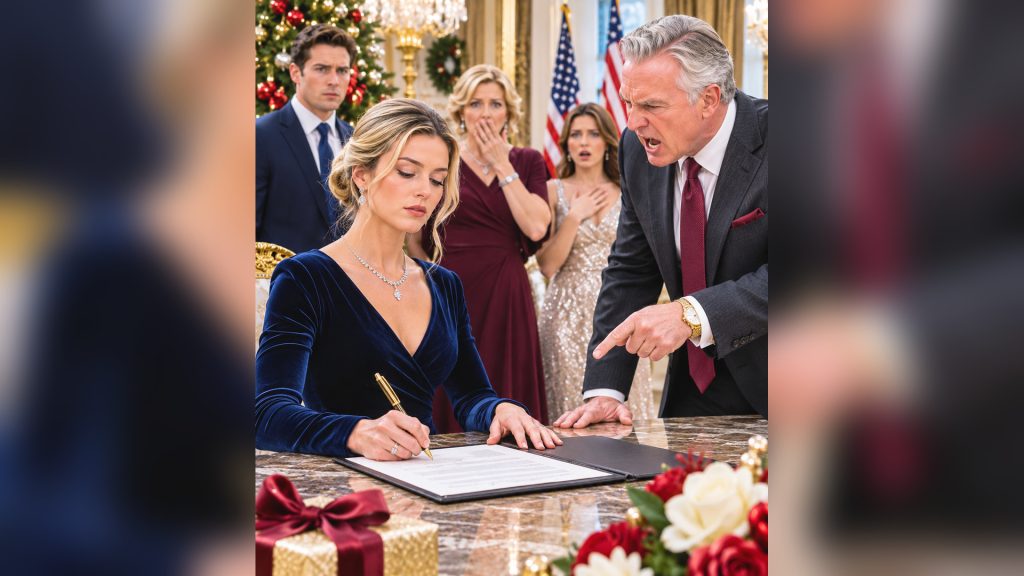
I looked down at the photograph of the document Hannah had sent. Page fourteen. The page Dad had indicated with one impatient finger. The page I’d signed without reading every line. I enlarged the image. Beneath several paragraphs of dense legal language was a sentence that made my stomach tighten.
The undersigned acknowledges prior disclosure and review of transactions affecting the family holdings and releases certain claims arising from those transactions.
I read it again.
And again.
It didn’t explicitly say I’d approved Landon’s invoices.
But the language was broad enough to raise serious questions.
Questions nobody at Christmas dinner had bothered to explain.
My father had presented the documents as a simple inheritance transfer.
Now I wondered whether the money had been only part of what they wanted.
My phone rang again.
DAD.
I answered.
“Brooke?”
His voice was trembling.
I stared through the window.
“Dad, who prepared the documents?”
A pause.
“Why?”
“Who prepared the waiver you made me sign?”
He didn’t answer.
My fingers tightened around the phone.
“Dad.”
Finally, he whispered, “Landon handled the paperwork.”
And just like that, I understood how much trouble we might be in.
My name is Brooke Whitmore.
I was thirty-five years old when my father attempted to strip me of a $720,000 inheritance in front of eleven relatives on Christmas night.
He thought he was teaching me a lesson.
For ten years, he’d mocked my career, dismissed my accomplishments, and called me the family’s charity case.
He believed my older brother, Landon, was the responsible child because Landon worked in the family manufacturing business.
I was the disappointment because I’d chosen cybersecurity instead of following the path Dad wanted.
What my father didn’t know was that I’d built Sentinel Forge Cybersecurity into a successful business employing sixty-eight people.
He didn’t know that my investment partnership, Redstone Capital Partners, had acquired interests in debt connected to Whitmore Industrial Systems.
And he certainly didn’t understand that certain financial arrangements depended on the continued stability and governance of Whitmore Family Holdings.
When I signed away my trust interest at Christmas dinner, I knew it could trigger a financing review.
I hadn’t signed to destroy the family business.
I’d signed because I was tired of allowing money to become a weapon against me.
But now, on the morning after Christmas, I was beginning to suspect that the humiliation had served another purpose.
And that my brother had been counting on my silence.
“Brooke, please come home,” Dad said.
I closed my eyes.
“Not until I speak with my attorney.”
His tone changed.
“Your attorney?”
“Yes.”
“We’re family.”
I almost laughed.
“Were we family when you called me a charity case?”
He said nothing.
“Were we family when you told me to sign away everything Grandpa wanted me to have?”
“Brooke, I was angry.”
I looked down at the paperwork.
“Anger doesn’t explain this waiver.”
He inhaled sharply.
“What waiver?”
My chest tightened.
“The one Landon gave you.”
Dad was silent.
Then he said, “It was supposed to be standard.”
“Standard for what?”
“I don’t know.”
I closed my eyes.
“Did you read it?”
No answer.
“Dad, did you read the documents you demanded I sign?”
His voice broke.
“Landon said the lawyer had approved them.”
I stared at the phone.
Then whispered, “Which lawyer?”
A long silence followed.
Finally, Dad said, “I need to call you back.”
The line disconnected.
I didn’t wait for another call.
I contacted my attorney, Caroline Bennett.
Caroline had represented Sentinel Forge through several financing arrangements and had worked with Redstone’s outside counsel on earlier transactions.
She was careful, direct, and almost impossible to intimidate.
When I explained what had happened, she didn’t congratulate me for signing away the inheritance.
She didn’t tell me I’d taught my father a lesson.
Instead, she asked one question.
“Brooke, do you have copies of everything you signed?”
“Yes.”
“Send them securely. Every page, including attachments.”
I forwarded the documents.
Then waited.
Fifteen minutes later, she called.
Her voice was serious.
“Brooke, these papers raise significant concerns.”
My heart pounded.
“Can they make me responsible for Landon’s transactions?”
“Not automatically,” she answered. “A signature doesn’t establish that you knew facts you didn’t know, and the effectiveness of a release depends on its wording, circumstances, and applicable law.”
I exhaled shakily.
“But?”
“But we need to examine the representations, the underlying trust documents, the manner of execution, and who prepared this.”
I closed my eyes.
She continued.
“Do not sign anything else. Don’t agree to reverse the transfer informally. And preserve every communication about Christmas.”
I swallowed.
“Okay.”
“Most importantly, don’t let anyone rush you again.”
That last sentence hurt.
Because for a brief moment, I’d been proud of those twenty-six seconds.
Proud that I hadn’t cried.
Proud that I’d refused to beg.
Proud that I’d walked out with my dignity intact.
Now I was confronting something uncomfortable.
I’d acted quickly because I wanted my father to see that he couldn’t control me.
But I had allowed his cruelty to push me into signing documents I hadn’t fully examined.
It didn’t make his conduct right.
It didn’t make Landon’s possible deception acceptable.
But it meant I had to learn something too.
Independence wasn’t proving I could walk away from money.
It was making decisions carefully enough that nobody else’s anger dictated my choices.
By noon, Caroline had arranged a meeting with an independent trust-and-estates attorney, Daniel Mercer.
He wasn’t related to our family.
He had no relationship with Whitmore Industrial.
And he had no reason to protect my father or brother.
He reviewed the trust agreement and the Christmas documents before speaking with us.
His first observation surprised me.
“Brooke, we need to distinguish your father’s intentions from what these documents could legally accomplish.”
I frowned.
“What do you mean?”
“Your grandfather created a trust. Depending on its terms, your father may not have had unilateral authority to revoke your beneficial interest.”
I stared at him.
“So Dad might not have been able to take my inheritance?”
“That’s possible. We need to examine the trustee powers, your rights as a beneficiary, and whether the required procedures were followed.”
My chest tightened.
I had spent Christmas night believing I’d signed away everything.
Now I realized Dad might have been threatening something he didn’t fully control.
Daniel continued.
“The waiver raises separate concerns. We need to determine whether material information was withheld or misrepresented.”
Caroline nodded.
“And we’ll need an independent accounting.”
I looked between them.
“What happens next?”
Daniel folded his hands.
“We find out what was actually done before we decide how to address it.”
For the first time since Christmas, I felt something other than anger.
Relief.
Not because the situation was solved.
But because I finally had people asking questions instead of demanding obedience.
That afternoon, Hannah came to my condominium.
She carried a laptop, two folders, and a paper bag from our favorite sandwich shop.
When I opened the door, she looked me over.
“You look terrible.”
I laughed weakly.
“Merry Christmas to you too.”
She stepped inside.
“I brought food.”
“Are you trying to bribe me?”
“Absolutely.”
I smiled.
That was Hannah.
We’d met in graduate school.
She was the person who’d believed in Sentinel Forge before we had employees, clients, or even a proper office.
She’d watched me build the company one contract at a time.
She also knew how much my family’s treatment hurt me, even when I pretended otherwise.
We sat at the kitchen table.
She opened her laptop.
“Brooke, we need to discuss Redstone.”
I nodded.
“Go ahead.”
“The financing review is now active. That means all relevant approvals need to follow the partnership’s procedures.”
“Of course.”
“And because you’re personally connected to the ownership restructuring, we need independent review and clear conflict disclosures.”
I looked at her.
“I know.”
She hesitated.
“Do you?”
I sighed.
“Hannah.”
She leaned forward.
“Brooke, I understand why you’re angry. I would be too. But we cannot turn Redstone into a tool for punishing your father.”
I stared at her.
Then nodded.
“You’re right.”
She softened.
“I know this is painful.”
I looked down.
“You have no idea.”
She reached across the table.
“Then tell me.”
For a long moment, I couldn’t speak.
Finally, I whispered, “He called me sweetheart today.”
Hannah’s expression changed.
I swallowed.
“He hasn’t called me that in years.”
My eyes filled.
“And I wanted to believe he meant it.”
She squeezed my hand.
“I know.”
“But he only said it because he needed something.”
I began crying.
Hannah moved beside me.
She didn’t tell me to be strong.
Didn’t remind me I was wealthy.
Didn’t say I should enjoy watching Dad panic.
She simply hugged me.
And for the first time since Christmas dinner, I stopped trying to appear unaffected.
The next morning, Caroline called.
“Brooke, we’ve identified the law firm named on the document cover page.”
I sat up.
“And?”
“The firm says it prepared an earlier estate-planning draft, but it hasn’t confirmed authorizing the version you signed.”
My stomach tightened.
“What?”
“The version presented at dinner contains language that appears different from the draft in their records.”
I stared at the wall.
“Different how?”
“The broad acknowledgment concerning prior transactions doesn’t appear in the earlier draft they’ve identified.”
I closed my eyes.
Caroline continued.
“We still need to determine who added it, when, and under what authority.”
I swallowed.
“Landon.”
“Possibly. But we’re not going to assume. We’ll establish the document history.”
That afternoon, I received a message from my mother.
Brooke, can we talk privately? Please don’t tell your father yet.
I stared at the screen.
Mom rarely contacted me without Dad knowing.
For years, she’d played the role of peacemaker.
Whenever Dad insulted me, she asked me to be patient.
Whenever Landon took credit for something he hadn’t done, she changed the subject.
And whenever I tried to explain why their behavior hurt, she told me not to make family gatherings uncomfortable.
I loved my mother.
But I’d learned not to expect her to defend me.
I replied.
Where?
She sent the address of a small café near Brentwood.
Two o’clock.
Mom was already there when I arrived.
She wore a beige sweater and a pearl necklace.
Her hair was neatly styled.
But her eyes were swollen.
She stood when she saw me.
“Brooke.”
I approached cautiously.
“Hi, Mom.”
She hugged me.
For a moment, I stiffened.
Then I returned the embrace.
We sat.
A waitress brought coffee.
Mom stared at her cup.
Finally, she whispered, “I knew something was wrong.”
My chest tightened.
“With what?”
“The documents.”
I went still.
She looked up.
“Landon brought them to your father on Christmas Eve.”
I listened.
“He said you’d been interfering with the financing arrangements.”
I frowned.
“What?”
“He told Grant your involvement created a conflict that could put the company at risk.”
My stomach tightened.
Mom continued.
“He said the safest thing was to have you relinquish your trust interest.”
I stared at her.
“And Dad believed him?”
She nodded.
“Landon said the transfer would make future financing simpler.”
I laughed bitterly.
“Simpler.”
Mom’s eyes filled.
“I know.”
I leaned forward.
“Mom, did you know Dad was going to humiliate me at dinner?”
She began crying.
“Not like that.”
I stared at her.
“But you knew he planned to make me sign.”
She nodded.
“Yes.”
For a long moment, I couldn’t speak.
Then I asked, “Why didn’t you warn me?”
Mom covered her face.
“I thought if you refused, everything would become worse.”
My chest tightened.
“Worse for whom?”
She looked up.
I continued.
“For Dad?”
Her eyes filled.
“For Landon?”
She lowered her gaze.
“Or for you, because you didn’t want another argument?”
She began crying harder.
I sat back.
I wanted to comfort her.
But I was tired of having my pain disappear whenever someone else cried.
So I waited.
Eventually, Mom reached into her handbag.
She withdrew a small envelope.
“There’s something else.”
I watched her place it on the table.
“What is it?”
She swallowed.
“Copies of papers Landon asked your father to sign last month.”
My heart pounded.
“Why do you have them?”
“I found them on the printer.”
She looked down.
“I was going to throw them away, but something didn’t seem right.”
I opened the envelope.
Inside were copies of several financial summaries.
Payment schedules.
Vendor listings.
And a note written in Landon’s handwriting.
Need Brooke signature before year-end. Helps close old exposure.
I stared at the words.
My stomach dropped.
“Mom.”
She nodded miserably.
“I know.”
I looked at her.
“You saw this before Christmas?”
Tears filled her eyes.
“Yes.”
I swallowed.
“And you still let him put those documents in front of me?”
She began crying.
“I was afraid.”
I looked away.
For years, Mom had explained her silence with those three words.
I was afraid.
I believed her.
But I also knew fear didn’t erase the harm caused by silence.
I took a breath.
“Mom, I’m going to give these to my attorneys.”
She nodded.
“Good.”
“And I need you to tell them exactly where you found everything.”
“Yes.”
I looked at her.
“Even if it makes Dad angry.”
Her lips trembled.
Then she nodded again.
“Yes.”
For the first time in my life, my mother seemed to understand that keeping peace wasn’t the same as protecting the family.
The next revelation came through an independent forensic review.
The accounting specialists examining Whitmore Industrial’s records identified unusual payments to a vendor called Cumberland Equipment Solutions.
The invoices described specialized manufacturing components.
Some amounts were large.
Others were small enough to blend into routine expenses.
But several transactions didn’t match delivery records.
There were repeated invoice numbers.
Incomplete receiving documentation.
And purchase approvals associated with Landon’s management credentials.
The preliminary discrepancies approached one million dollars.
Investigators and independent reviewers needed to determine which payments represented legitimate business expenses and which might have involved false documentation.
But the pattern was alarming.
Then Hannah discovered something that made the situation even more complicated.
Cumberland Equipment Solutions had been established through a registered agent.
Its ownership wasn’t immediately apparent from the ordinary vendor records.
Further review identified an ownership connection to a business associate of Landon’s named Trevor Hale.
I remembered Trevor.
He’d attended family barbecues.
Driven expensive sports cars.
And spent hours with Landon discussing development projects.
Dad called him a brilliant businessman.
I called him a man who never seemed to explain what his businesses actually did.
One afternoon, Caroline called.
“Brooke, Trevor Hale has retained counsel.”
I nodded.
“Okay.”
“He’s cooperating with the document review to some extent.”
I waited.
“And?”
“He’s claiming Landon instructed him to establish Cumberland as a procurement intermediary.”
My stomach tightened.
“Does that mean the invoices were fake?”
“Not necessarily all of them. Some equipment was purchased. But there are serious questions about pricing, approval, and whether goods were delivered as represented.”
I closed my eyes.
Caroline continued.
“Trevor also says Landon was under pressure to conceal the losses from the acquisition.”
I looked toward the window.
For years, Dad had praised Landon as the son who understood the family business.
Now it appeared Landon’s attempts to prove himself might have helped create the very crisis he was hiding.
I thought about Grandpa.
Arthur Whitmore.
The man who’d started the original manufacturing business in a rented building outside Franklin.
He’d worked with his hands.
Fixed machines.
Negotiated contracts.
And spent decades building something he hoped would outlast him.
When I was little, he took me to the factory every summer.
I loved the noise.
The smell of oil and metal.
The way workers greeted him by name.
Once, when I was twelve, I asked why he still visited the production floor after becoming wealthy.
He smiled.
“Because the company doesn’t run on my name, sweetheart.”
I frowned.
“What does it run on?”
He looked toward the workers.
“People who show up and do their jobs.”
Then he added something I’d never forgotten.
“Money makes you responsible for more people. It doesn’t make you better than them.”
Dad had inherited Grandpa’s company.
But somewhere along the way, he’d begun treating wealth as proof of superiority.
Landon had learned from him.
And I’d spent years trying to prove I deserved respect without following their rules.
Now the company Grandpa built was facing a crisis that threatened employees who had nothing to do with our family arguments.
That mattered more than any Christmas dinner.
The first formal family meeting took place two weeks after Christmas.
It was held at Caroline’s office.
Not my father’s mansion.
Not the company boardroom.
Neutral ground.
Dad arrived wearing a dark suit.
Landon came with his own attorney.
Mom sat beside Dad.
I sat with Caroline and Daniel Mercer.
Hannah attended for the portion concerning Redstone’s financing arrangements, alongside counsel representing the partnership.
For the first time, nobody controlled the conversation simply by speaking the loudest.
Dad looked at me.
“Brooke.”
I nodded.
“Dad.”
He looked exhausted.
There were dark circles beneath his eyes.
His shoulders seemed smaller.
Landon, however, still looked angry.
“This entire situation is ridiculous,” he announced.
Caroline remained calm.
“Mr. Whitmore, we’ll be addressing the documents and the financial issues in an orderly way.”
He laughed.
“You’re treating us like criminals.”
I looked at him.
“Then answer the questions.”
His face hardened.
“Stay out of this, Brooke.”
I leaned back.
“No.”
The room went quiet.
I continued.
“You used my name in documents connected to transactions I knew nothing about.”
Landon stared at me.
“And if you expect me to remain silent, you’ve misunderstood me.”
His attorney placed a hand on his arm.
“Landon, let me handle this.”
For once, my brother stopped talking.
Daniel Mercer began reviewing the trust documents.
He explained the concerns surrounding the attempted assignment of my beneficial interest.
The trust contained restrictions and procedures that required careful examination before any transfer could be treated as effective.
The Christmas documents had not been processed in a way that automatically resolved those requirements.
My father’s dramatic announcement had been just that.
An announcement.
Not proof that he possessed unrestricted authority to eliminate Grandpa’s trust provisions.
Dad stared at the papers.
“What are you saying?”
Daniel answered.
“We’re saying the legal effect of the Christmas documents is disputed and requires proper resolution.”
Dad looked toward Landon.
“You told me she could simply sign it over.”
Landon shrugged.
“That was the idea.”
Dad’s face tightened.
“You said the lawyer approved everything.”
Landon looked away.
His attorney intervened.
“We should refrain from discussing legal conclusions until all versions of the documents have been compared.”
I watched my father.
For the first time, he seemed to understand that Landon’s confidence hadn’t necessarily been competence.
Then Caroline turned to page fourteen.
“The acknowledgment language appears to have been added after the earlier draft was prepared.”
Dad looked confused.
“What acknowledgment?”
I stared at him.
“The one you told me to sign.”
He examined the page.
His face changed.
“Landon?”
My brother stiffened.
Dad pointed.
“What is this?”
Landon leaned back.
“Standard language.”
Caroline spoke calmly.
“That’s a legal characterization your counsel can address. The question is who prepared or authorized this revision and whether Brooke received accurate information about it.”
Landon said nothing.
Dad looked at me.
His eyes filled.
“Brooke, I didn’t know that was there.”
I stared at him.
I wanted to believe him.
But after years of being dismissed, belief didn’t come easily.
I took a breath.
“Dad, you didn’t need to know every technical detail to understand you were humiliating me.”
His face crumpled.
“You made a public spectacle out of something that should never have been handled at Christmas dinner.”
He lowered his head.
“And you didn’t care enough to read what you were demanding I sign.”
Tears filled his eyes.
I continued.
“Whether Landon deceived you doesn’t erase your choices.”
The room was silent.
Then Dad whispered, “I know.”
It was the first time he’d said those words without following them with an excuse.
The meeting continued for almost three hours.
No one resolved everything.
But the parties agreed on steps to preserve documents, review the trust transaction, and address the financing questions through independent processes.
Redstone’s next funding tranche remained on hold pending the contractual review.
That wasn’t my personal punishment.
It was a decision requiring the partnership’s proper approvals, taking into account the financial condition of Whitmore Industrial and the risks to investors.
The company needed money.
But releasing additional funding without understanding the discrepancies could harm everyone involved.
After the meeting, Dad approached me in the hallway.
“Brooke.”
I turned.
He looked exhausted.
“Can we talk?”
I considered.
“Briefly.”
He nodded.
“I never meant for things to become this bad.”
I stared at him.
“What did you mean to happen?”
His eyes filled.
“I wanted you to understand responsibility.”
I almost laughed.
“Dad, I run a business employing sixty-eight people.”
He looked down.
“I know that now.”
I swallowed.
“You didn’t know because you never asked.”
He nodded.
“I know.”
For a moment, I looked at the man who’d once seemed enormous to me.
The father whose approval I’d chased through school.
Through college.
Through the first years of my company.
I’d wanted him to attend my graduation.
He’d missed it because Landon had a meeting.
I’d wanted him to visit Sentinel Forge.
He’d said he didn’t understand computers.
I’d wanted him to ask how my business was doing.
He’d called it my little hobby.
Now he knew the company was successful.
And suddenly he wanted to talk.
“Dad,” I said quietly, “the money isn’t the worst part.”
His eyes filled.
“What is?”
I swallowed.
“You made me feel like being your daughter was something I had to earn.”
He covered his mouth.
I continued.
“And every time I accomplished something, you moved the standard.”
Tears streamed down my face.
“When I got good grades, you wanted me to study law.”
“When I chose engineering, you told me I was wasting my potential.”
“When I started Sentinel Forge, you called me a computer repair girl.”
I took a breath.
“And when I became successful, you didn’t know because you’d already decided I wasn’t.”
Dad began crying.
He reached toward me.
I stepped back.
His face changed.
I shook my head gently.
“Not yet.”
He nodded.
Then whispered, “I’m sorry.”
I looked at him.
“I hope you mean that.”
He swallowed.
“I do.”
I picked up my handbag.
“Then show me.”
The following weeks were difficult for Whitmore Industrial.
The independent financial review uncovered serious control failures.
Some transactions required correction.
Certain procurement arrangements were suspended or terminated.
Management responsibilities changed.
And the board began examining whether Landon’s continued leadership was appropriate.
The company’s lenders demanded updated information.
Employees worried about their jobs.
Suppliers wanted assurances.
Customers began asking questions.
It was a business crisis.
Not merely a family embarrassment.
I visited one of the manufacturing facilities with the permission of the proper company representatives during a scheduled restructuring meeting.
Walking through the factory brought back childhood memories.
The machines were newer.
The production lines more automated.
But the smell of metal and lubricant was familiar.
An older employee approached me.
“Brooke Whitmore?”
I smiled.
“Yes?”
He grinned.
“I’m Samuel Price. I used to work with your grandfather.”
My eyes filled.
“Mr. Price.”
He laughed.
“You were about this tall last time I saw you.”
He held his hand near his waist.
I smiled.
“It’s been a while.”
Samuel looked around.
“Your granddad loved this place.”
I nodded.
“He did.”
His expression became serious.
“A lot of people are worried.”
My chest tightened.
“I know.”
He hesitated.
“Do you think we’re going to lose our jobs?”
I wished I could promise him everything would be fine.
But that wouldn’t have been honest.
“We’re working through the financial problems,” I said carefully. “I can’t guarantee the outcome.”
He nodded slowly.
Then I added, “But decisions need to consider the people who depend on this company, not just the family’s ownership interests.”
His eyes filled.
“Your granddad would’ve liked hearing that.”
Afterward, I sat in my car and cried.
Because the crisis wasn’t abstract anymore.
It wasn’t about my father begging me to return.
Or Landon losing his privileged position.
It was about employees like Samuel.
People who had spent decades working.
People who had mortgages.
Children.
Medical expenses.
Retirement plans.
And lives built around the belief that their employer would manage the business responsibly.
I called Hannah.
“Can we find a path that protects the viable parts of the company?”
She was quiet.
“Possibly.”
I looked toward the factory.
“Then let’s evaluate it.”
She sighed.
“Brooke, remember what we discussed.”
“I know.”
“No family rescue disguised as an investment.”
I nodded.
“Independent review. Commercial terms. Investor approval.”
“Exactly.”
I closed my eyes.
“I don’t want Dad’s approval anymore, Hannah.”
Her voice softened.
“Then what do you want?”
I looked at the workers leaving the building.
“I don’t want people like Samuel paying for mistakes they didn’t make.”
Redstone’s partners eventually approved consideration of a revised restructuring proposal.
It required independent financial verification, improved controls, changes in management, and protections appropriate to the risk.
The arrangement wasn’t guaranteed.
There were difficult negotiations.
Some lenders resisted.
Some investors wanted to exit.
And portions of the business couldn’t be preserved in their existing form.
But the process produced a credible plan for the viable operations.
I participated only within my authorized role, with the relevant conflicts disclosed and independent decision-makers involved where required.
It wasn’t a gift to my father.
It was a commercial restructuring supported by the evidence and proper approvals.
Landon did not remain vice president.
He was placed on leave during the review and later separated from his executive role following the applicable process.
The findings concerning financial misconduct were referred to the appropriate authorities and pursued through relevant legal and civil procedures.
Some losses were addressed through recovery efforts.
Other matters remained disputed for a time.
Landon had opportunities to respond.
And the final consequences reflected what could be established, not what I wanted to believe about him.
One evening, he called me.
I almost didn’t answer.
Then I did.
“Hello?”
“Brooke.”
His voice sounded different.
Less confident.
More exhausted.
“What do you want, Landon?”
A pause.
Then he said, “You got what you wanted.”
I closed my eyes.
“What do you think I wanted?”
“For me to lose everything.”
I looked toward the window.
“No.”
He laughed bitterly.
“Right.”
I took a breath.
“Landon, I wanted you to stop using me as a target for your failures.”
He said nothing.
I continued.
“I wanted Dad to stop pretending that your choices were always brilliant and mine were always foolish.”
He swallowed.
“And I wanted the truth about the company’s finances to come out before more people were hurt.”
He was quiet.
Then he whispered, “I didn’t think it would get this bad.”
My chest tightened.
“What didn’t you think would get this bad?”
“The acquisitions.”
I listened.
“I thought the market would recover.”
He swallowed.
“I thought if we kept moving money around, we’d get enough time.”
My eyes filled.
“And the vendor invoices?”
He didn’t answer.
I waited.
Finally, he said, “My lawyer told me not to discuss those.”
I nodded.
“Then don’t.”
He seemed surprised.
I continued.
“Handle the legal issues through the proper process.”
He swallowed.
“Brooke.”
“Yes?”
“Do you hate me?”
I stared at the ceiling.
For years, Landon had seemed to enjoy humiliating me.
He called me the charity case.
Mocked my career.
And treated Dad’s favoritism as proof he was worth more.
Now he sounded frightened.
I considered his question.
“No.”
A pause.
“You don’t?”
“I hate what you’ve done.”
He was silent.
“And I don’t trust you.”
His breathing changed.
“But I don’t want to spend the rest of my life hating you.”
For a moment, neither of us spoke.
Then he whispered, “I’m sorry.”
I closed my eyes.
“I hope you learn to say that without expecting it to erase consequences.”
Months passed.
The company stabilized enough to continue operating its strongest divisions under the revised plan.
There were difficult cuts.
Some projects ended.
Some assets were sold.
And not every job could be preserved.
The decisions were painful.
But the company avoided the uncontrolled collapse many had feared.
Independent oversight remained in place.
Financial reporting improved.
And leadership changes allowed the business to begin rebuilding trust with lenders, suppliers, and employees.
The trust dispute also moved toward resolution.
Through independent counsel and a formal review of the governing documents, the parties addressed the validity and effect of the Christmas paperwork.
The broad waiver was challenged based on its circumstances and the information presented when I signed.
The parties ultimately entered a documented settlement that resolved the disputed transfer and related issues.
I did not simply regain the inheritance because Dad changed his mind.
The outcome required legal work, negotiation, and proper approval under the trust’s terms.
When Caroline called to explain the final arrangement, I sat quietly.
“So the $720,000?”
She answered carefully.
“Your beneficial interest is being addressed under the settlement and the trust’s governing provisions. The value may change with the underlying assets, but your rights will no longer be treated as something your father can casually erase at dinner.”
I closed my eyes.
“Thank you.”
She paused.
“Brooke, can I ask you something?”
“Of course.”
“Do you regret signing?”
I thought about Christmas.
The fountain pen.
The grandfather clock.
Dad’s cruel smile.
Then I answered.
“I regret not reading everything.”
She listened.
“But I don’t regret refusing to beg.”
Caroline smiled through the phone.
“That’s an important distinction.”
I nodded.
“I know.”
I began seeing a therapist named Dr. Miriam Ellis.
At first, I felt almost embarrassed.
I owned a successful business.
I had financial security.
Good friends.
A comfortable home.
And employees who respected me.
Why did my father’s opinions still hurt so much?
During our first session, I asked that question.
Dr. Ellis looked at me.
“Brooke, how old were you when you first began believing you had to prove your worth to your father?”
I looked down.
“Probably twelve.”
She nodded.
“And how long have you been trying?”
My throat tightened.
“More than twenty years.”
She smiled gently.
“Then perhaps the pain isn’t surprising.”
I began crying.
Over time, I told her everything.
About Landon.
The nickname.
Dad missing my graduation.
Mom’s silence.
The way family gatherings left me feeling small.
And the humiliating Christmas dinner.
Dr. Ellis helped me understand that financial independence didn’t automatically heal emotional wounds.
I could have millions in the bank and still feel like the little girl waiting for her father to say he was proud.
I could run a company and still dread hearing the words charity case.
And I could forgive someone eventually without pretending their behavior had been acceptable.
One afternoon, I told Dr. Ellis something that surprised even me.
“I think I’ve spent my whole career trying to win an argument Dad doesn’t know we’re having.”
She looked at me.
“Tell me more.”
I swallowed.
“Every time Sentinel Forge grew, I thought maybe he’d finally respect me.”
I stared at my hands.
“When we landed our first major client, I wanted to call him.”
My eyes filled.
“When we hired our twentieth employee, I wanted to show him.”
I looked up.
“And when our billings passed ten million dollars, I still wondered whether he’d be impressed.”
Dr. Ellis nodded gently.
“What would happen if you stopped making his approval the measure of your success?”
I sat quietly.
Then whispered, “I think I’d finally get to enjoy my own life.”
That became the work.
Not learning to hate my family.
Not pretending I didn’t care.
But learning that my worth existed whether my father recognized it or not.
Dad began therapy too.
He told me during one of our carefully arranged conversations.
We met at a café.
No shouting.
No business documents.
No requests for money.
Just coffee.
He looked nervous.
“Brooke, I’ve started speaking with someone.”
I raised an eyebrow.
“About what?”
He swallowed.
“How I treated you.”
I remained quiet.
He continued.
“And how I handled Landon.”
My throat tightened.
I nodded.
“That’s good.”
He looked down.
“I’ve been thinking about your grandfather.”
I smiled sadly.
“Me too.”
Dad swallowed.
“He always said the family business belonged to more than the people whose names were on the documents.”
I nodded.
“He was right.”
Dad’s eyes filled.
“And I forgot that.”
He looked at me.
“I thought Landon was more like me.”
I listened.
“He wanted to work in manufacturing. He talked about acquisitions and development.”
Dad swallowed.
“And you wanted to build something I didn’t understand.”
I nodded.
He continued.
“Instead of learning about it, I made jokes.”
My throat tightened.
“Yes.”
He looked down.
“I thought if I made you feel like you needed us, you’d come back.”
I stared at him.
For a moment, I couldn’t speak.
Then I whispered, “You tried to make me feel unsuccessful so I’d return to the family business?”
Tears filled his eyes.
“Yes.”
I sat back.
The revelation hurt.
Because for years, I’d believed Dad genuinely thought I was incapable.
Now I was learning he had deliberately minimized my achievements because he wanted to pull me toward a life I’d rejected.
I looked at him.
“Dad, you could have asked me to visit.”
He began crying.
“You could have told me you missed me.”
His face crumpled.
“You could have said you wanted to understand my work.”
I swallowed.
“But you chose to make me feel worthless.”
He covered his face.
“I know.”
We sat quietly.
Then Dad whispered, “I’m sorry, Brooke.”
I looked at him.
“For what?”
He seemed startled.
I continued.
“I need you to say it.”
He swallowed.
Then looked directly into my eyes.
“I’m sorry I humiliated you.”
My throat tightened.
“I’m sorry I called you a charity case.”
Tears streamed down his cheeks.
“I’m sorry I treated your brother’s mistakes like opportunities for growth and your choices like failures.”
I began crying.
He continued.
“And I’m sorry I made you feel that being my daughter wasn’t enough.”
For a long time, neither of us spoke.
Then I whispered, “Thank you.”
His face softened.
I took a breath.
“But I need time.”
He nodded.
“Of course.”
“And I don’t want to be involved in financial discussions at family dinners ever again.”
He managed a sad smile.
“I understand.”
I looked at him.
“Also, if you want to know about my company, ask.”
His eyes filled.
“I would like that.”
The first time Dad visited Sentinel Forge, he arrived twenty minutes early.
I almost laughed.
It was the same nervous punctuality I’d inherited from him.
He stood in the lobby wearing a dark jacket.
No expensive watch.
No entourage.
Just my father.
When I walked toward him, he smiled awkwardly.
“Brooke.”
“Hi, Dad.”
He looked around.
“This is impressive.”
I swallowed.
“Thank you.”
Our receptionist greeted him.
Then I showed him the offices.
The security operations center.
The training rooms.
The conference spaces.
And the break area where employees gathered for lunch.
Dad listened as I explained what our teams did.
Threat monitoring.
Incident response.
Security assessments.
Compliance work.
And how we helped clients protect systems that supported their operations.
At first, he asked basic questions.
Some were almost painfully simple.
But I answered them.
Because for the first time, he was genuinely asking.
Near the end of the visit, we stopped outside the conference room.
On the wall hung a framed photograph from Sentinel Forge’s first year.
Hannah and I stood beside three employees in a tiny rented office.
The desks didn’t match.
The carpet was ugly.
And the printer in the corner had broken twice that week.
Dad studied the photograph.
“You started with five people?”
I smiled.
“Yes.”
He looked at me.
“And now sixty-eight?”
“Seventy-two,” I answered.
His eyes widened.
“You’ve grown.”
I nodded.
“We have.”
He stared at the photograph.
Then whispered, “I should’ve come sooner.”
My throat tightened.
“Yes, Dad.”
He looked at me.
“I should have.”
That evening, Hannah found me sitting alone in the conference room.
She leaned against the doorway.
“How’d it go?”
I smiled faintly.
“He asked questions.”
She raised an eyebrow.
“Actual questions?”
I laughed.
“Yes.”
She grinned.
“Miracles happen.”
I shook my head.
Then my eyes filled.
Hannah’s expression softened.
“Brooke?”
I swallowed.
“He said he should’ve come sooner.”
She walked over.
Sat beside me.
And took my hand.
“That must have meant something.”
I nodded.
“It did.”
Then I added quietly, “But it doesn’t erase everything.”
She smiled.
“It doesn’t have to.”
My relationship with Mom changed too.
It was slower.
More complicated.
She had spent years telling me not to upset my father.
Now she was learning to tell him when he was wrong.
The first time she did it in front of me, I nearly dropped my coffee.
We were having lunch at my parents’ house.
Dad began criticizing a decision made by a younger family member.
Mom interrupted.
“Grant, have you asked why she made that choice?”
He frowned.
“What?”
Mom set down her fork.
“I said, have you asked?”
Dad looked surprised.
Then he stopped talking.
I stared at Mom.
She looked back at me.
A small smile crossed her face.
It wasn’t a dramatic transformation.
But it was a beginning.
Later, she walked me to the door.
“Brooke?”
I turned.
“Yes?”
Her eyes filled.
“I’m sorry I didn’t protect you when I should have.”
My throat tightened.
She continued.
“I thought keeping your father calm meant keeping the family together.”
I listened.
“But it taught you that your feelings didn’t matter.”
Tears filled my eyes.
I nodded.
“Yes.”
She began crying.
“I know.”
I looked at her.
“Mom, I needed you to say something.”
She nodded.
“I should have.”
I hugged her.
Not because everything was forgiven.
But because she’d finally stopped telling me to forget.
Landon’s path was different.
His legal and financial problems required sustained attention.
He faced the consequences of decisions made while serving as an executive.
He had to address obligations connected to established misconduct.
He also had to begin understanding how privilege had shaped his life.
For years, Dad had protected him from failure.
When Landon made mistakes, someone found an explanation.
When he overspent, someone covered the bill.
When a business decision went wrong, someone blamed the market.
That protection had never required him to learn responsibility.
Now there were consequences Dad couldn’t simply erase.
A year after Christmas, Landon asked to meet me.
I hesitated.
Then agreed to a brief conversation at a neutral location.
He arrived wearing jeans and a plain sweater.
He looked older.
The confidence that once made him seem untouchable had faded.
We sat across from each other.
For a long time, he stared at his hands.
Then he said, “I owe you an apology.”
I waited.
He swallowed.
“I used to think Dad loving me more meant I was better.”
My chest tightened.
He looked up.
“I know how terrible that sounds.”
I nodded.
“It does.”
He looked down.
“But that’s how I thought.”
He continued.
“When you left the family business, I thought you’d failed.”
I listened.
“And when you started Sentinel Forge, I wanted it to be small.”
My eyes filled.
“Why?”
He swallowed.
“Because if you succeeded without Dad, what did that say about me?”
I stared at him.
For the first time, Landon seemed to understand his own jealousy.
He’d spent years believing that being the favored child meant he was the stronger one.
My independence threatened that belief.
So he mocked it.
I took a breath.
“Landon, you didn’t need me to fail for you to matter.”
His face crumpled.
“I know that now.”
I nodded.
“But you hurt me.”
He looked down.
“I did.”
“And you tried to make me sign documents connected to transactions I didn’t understand.”
His eyes filled.
“I know.”
I leaned forward.
“That’s not sibling rivalry.”
He swallowed.
“No.”
“It’s serious.”
He nodded.
“Yes.”
For a while, neither of us spoke.
Then Landon whispered, “I’m sorry, Brooke.”
I looked at him.
“I appreciate that you’re finally saying it.”
He nodded.
I continued.
“But I don’t trust you.”
His expression changed.
“I understand.”
“And I don’t know whether we’ll ever be close.”
Tears filled his eyes.
He nodded again.
“I understand that too.”
I took a breath.
“I hope you keep taking responsibility.”
He looked down.
“I will.”
I left the meeting feeling sad.
Not triumphant.
Because I’d wanted a brother.
Not a rival.
I’d wanted someone who celebrated my achievements.
Not someone who measured his worth against mine.
But I also understood that healing didn’t require pretending we’d had the relationship I wished for.
We could begin with honesty.
And let time determine whether anything more was possible.
Two years after that Christmas, Whitmore Industrial was still operating.
Smaller.
More cautious.
With independent governance and a clearer understanding of its financial limitations.
The business had changed.
Some parts had been sold.
Some projects abandoned.
But many employees remained.
And the company was no longer relying on Landon’s confidence in place of reliable information.
One afternoon, Samuel Price called me.
“Miss Brooke?”
I smiled.
“Mr. Price.”
He laughed.
“Still calling me that?”
“Always.”
He chuckled.
“I wanted to tell you I’m retiring.”
My eyes widened.
“Really?”
“Forty-one years.”
I smiled.
“That’s incredible.”
He paused.
“I thought you should know.”
My throat tightened.
“Thank you.”
He continued.
“Your granddad would’ve liked how hard people worked to keep this place going.”
My eyes filled.
I looked down.
“He would’ve cared about the employees.”
Samuel nodded.
“Exactly.”
At his retirement celebration, I stood near the back of the room while his coworkers told stories.
There were photographs.
Cake.
Laughter.
And a few tears.
Samuel received a framed tribute recognizing his years of service.
When he saw me, he smiled.
“Brooke!”
I hugged him.
“Congratulations.”
He laughed.
“About time, isn’t it?”
I grinned.
“Probably.”
Then he looked at me.
“Your grandfather used to say the company was only as strong as the people willing to tell him when something wasn’t working.”
My throat tightened.
I nodded.
“That sounds like him.”
Samuel smiled.
“Don’t let the family forget it.”
I carried those words with me.
Because the business crisis had reminded me that wealth wasn’t just an inheritance.
It was a responsibility.
And that responsibility couldn’t be fulfilled through pride or appearances.
It required honesty.
Competence.
And respect for the people whose lives depended on the decisions being made.
As Sentinel Forge continued growing, I began mentoring younger professionals entering cybersecurity.
Some were recent graduates.
Others were changing careers.
A few came from families where money had always been uncertain.
I recognized the determination in their faces.
The desire to prove themselves.
The fear of making a mistake.
And the temptation to measure their worth by someone else’s approval.
One afternoon, a young employee named Maya stayed after a mentoring session.
“Brooke?”
I smiled.
“Yes?”
She looked nervous.
“Can I ask you something?”
“Of course.”
“How did you know you were good enough to start your own company?”
I laughed softly.
“I didn’t.”
She looked surprised.
“Really?”
I shook my head.
“I knew I had skills. I knew I could learn. But I was frightened.”
She smiled faintly.
“Then how did you do it?”
I considered.
“I stopped waiting to feel completely ready.”
She nodded.
“And I found people who would challenge me honestly instead of making me feel small.”
Her expression softened.
I looked at her.
“There’s a difference between someone telling you an idea needs work and someone telling you that you don’t matter.”
She listened.
“The first can help you improve.”
I paused.
“The second tells you more about them than about you.”
Her eyes filled.
“Thank you.”
That evening, I thought about how much I’d once needed someone to say those words to me.
Grandpa had tried.
Hannah had reminded me.
My employees had shown me through their trust.
But it had taken years for me to believe them.
One December, Dad called and asked whether I’d join the family for Christmas dinner.
I hesitated.
It had been nearly three years since the night he’d pushed the documents across the table.
I still remembered everything.
The crystal glasses.
The candlelight.
Landon’s grin.
Mom looking into her wine.
And the grandfather clock chiming as I signed.
Dad seemed to understand my hesitation.
“Brooke, I know Christmas isn’t simple anymore.”
I looked toward my office window.
“No.”
He swallowed.
“I wanted to ask whether you’d come for dinner.”
I was quiet.
Then he added, “No surprises. No business discussions. No papers.”
Despite myself, I laughed.
“That’s a very low standard, Dad.”
He laughed sadly.
“I know.”
I thought about it.
Then said, “I’ll come for a little while.”
His voice softened.
“Really?”
“Yes.”
He paused.
“Thank you, sweetheart.”
My throat tightened.
This time, the word didn’t sound like a plea for money.
It sounded like a father genuinely glad his daughter would visit.
Christmas evening arrived with light snow.
I drove to my parents’ house in the same used Lexus Dad had once considered evidence of failure.
The mansion looked familiar.
Tall windows.
Glowing lights.
A decorated Christmas tree visible through the front entrance.
For a moment, I remained in the car.
I remembered the woman I’d been three years earlier.
So determined not to cry.
So certain that the fastest signature was the strongest answer.
I wished I could tell her something.
That walking away was sometimes necessary.
But so was slowing down.
Reading the documents.
Getting good advice.
And refusing to let anger rush her into another person’s plan.
Then I got out of the car.
Dad opened the door before I reached it.
“Brooke.”
I smiled faintly.
“Hi, Dad.”
He looked relieved.
“I’m glad you’re here.”
I nodded.
“Thank you.”
He stepped aside.
“Come in.”
Dinner was different.
Smaller.
Only a few relatives.
No elaborate speeches.
No business announcements.
Mom had made my favorite roasted vegetables.
Dad asked about Sentinel Forge.
He listened while I talked about a training initiative.
And when someone mentioned Landon’s absence, he didn’t make excuses.
He simply said Landon was working through his own responsibilities and wouldn’t be joining us that evening.
At one point, my aunt raised her glass.
“To family.”
I felt a familiar tension in my chest.
Then she added something unexpected.
“And to learning how to treat one another better.”
The table grew quiet.
Mom smiled.
Dad lowered his eyes.
I looked around.
For the first time, nobody laughed at my expense.
Nobody called me a charity case.
And nobody tried to make me feel that my presence depended on what I could offer.
After dinner, Dad asked whether I’d walk with him into the study.
I hesitated.
He noticed.
“No paperwork,” he said quickly.
I laughed softly.
“Okay.”
We entered the room.
The shelves were lined with books.
Family photographs covered the mantel.
Above the fireplace hung a portrait of Grandpa.
Dad stood beside it.
Then turned toward me.
“I found something while going through your grandfather’s old letters.”
My stomach tightened.
“What?”
He opened a drawer.
Then stopped.
He looked at me.
“Would you rather I leave it here and let you read it another time?”
I stared at him.
For the first time, he was offering me a choice.
I smiled faintly.
“It’s okay, Dad.”
He nodded.
Then handed me an envelope.
Inside was a letter written in Grandpa’s familiar handwriting.
The paper had yellowed.
The ink had faded.
But I recognized the careful loops of his letters.
At the top were two words.
For Brooke.
My throat tightened.
I looked at Dad.
“When did he write this?”
“Not long before he died.”
I stared.
“Why didn’t I get it?”
Dad lowered his eyes.
“I found it among old estate papers.”
He swallowed.
“I should’ve looked through them more carefully.”
I looked down.
Then began reading.
Dear Brooke,
If you’re reading this, I hope you’re still asking questions.
You always wanted to know how things worked. When other children asked what something cost, you asked who built it.
I remember taking you through the factory and watching you speak to the workers as though they were the most interesting people in the world.
They were.
Never let anyone convince you that following a different path means abandoning your family.
Sometimes building something new is the best way to honor what came before.
And never confuse inheritance with worth. Money can be given, lost, divided, or taken away. Character is built through what we choose to do.
I’m proud of the young woman you’re becoming.
Love, Grandpa.
I couldn’t finish reading without crying.
For years, I’d wondered whether Grandpa would have been disappointed that I hadn’t joined Whitmore Industrial.
Now his words answered a question I’d carried since college.
He had been proud of me.
Not because I followed his path.
But because I was willing to find my own.
Dad stood quietly.
Then whispered, “Brooke?”
I looked up.
His eyes were wet.
“I think he understood you better than I did.”
I swallowed.
“Yes.”
Dad nodded.
“And I should’ve tried.”
I looked at him.
For a moment, the old anger returned.
Then softened into something quieter.
“You can still try.”
His face crumpled.
He nodded.
“I will.”
I folded the letter carefully.
Then stepped toward him.
He looked uncertain.
I opened my arms.
Dad began crying before I touched him.
We hugged.
Not as though everything had been repaired.
Not as though three years of effort could erase decades of hurt.
But as two people choosing to stop pretending the past hadn’t happened.
When I drove home, the letter rested on the passenger seat.
Snow drifted across the windshield.
The roads were quiet.
And for the first time in years, Christmas didn’t feel like a test I had to pass.
Over the following months, Dad and I continued building a different relationship.
Sometimes we disagreed.
Sometimes old habits resurfaced.
But he began noticing when he was dismissive.
And I stopped swallowing every hurt to keep the peace.
If he made a joke that crossed a line, I told him.
If I needed space, I took it.
And if he apologized, I paid attention to whether his actions changed.
Mom continued learning to speak more honestly.
Landon continued working through his obligations.
Our family wasn’t magically repaired.
There were still uncomfortable gatherings.
Difficult conversations.
And memories that surfaced when nobody expected them.
But the silence that had once protected every harmful pattern was slowly disappearing.
A year later, Sentinel Forge celebrated its tenth anniversary.
We held a modest event for employees and their families.
Hannah organized most of it.
There were photographs from our early years.
Stories about terrible office furniture.
A slideshow of projects we’d completed.
And speeches recognizing employees who’d helped build the business.
I stood near the stage listening as people laughed.
Then Hannah approached.
“Ready?”
I smiled nervously.
“For what?”
She grinned.
“Your speech.”
I groaned.
“Can’t you do it?”
“Nope.”
I laughed.
She squeezed my shoulder.
“You’ve earned this.”
I stepped onto the stage.
Looked at the room.
And took a breath.
Ten years earlier, Sentinel Forge had been a tiny business with uncertain revenue and a frightening amount of responsibility.
Now it employed talented people who trusted us with their careers.
I smiled.
“When we started this company, I thought success meant proving I could build something on my own.”
The room quieted.
I continued.
“But I’ve learned that nobody builds anything meaningful alone.”
I looked toward Hannah.
“Not without partners who tell the truth.”
Then toward my employees.
“Not without people who show up every day and do difficult work.”
My throat tightened.
“And not without learning that leadership requires listening more often than speaking.”
I paused.
“For a long time, I measured my success by whether certain people believed in me.”
My eyes filled.
“But today, I understand that success isn’t about winning someone else’s approval.”
I smiled.
“It’s about building something that reflects your values and treats people fairly.”
The applause was warm.
I stepped off the stage.
Hannah hugged me.
“You did good.”
I laughed.
“I’m never doing that again.”
She grinned.
“Sure.”
Near the back of the room, I saw Dad.
He’d come quietly.
No announcement.
No request for recognition.
He stood beside Mom, listening.
When I approached, he smiled.
“Brooke.”
“Hi, Dad.”
He looked around.
“This is extraordinary.”
My throat tightened.
“Thank you.”
His eyes filled.
Then he said something I’d spent half my life wanting to hear.
“I’m proud of you.”
I stood completely still.
He seemed to realize how much the words mattered.
He continued.
“Not because of the revenue.”
I swallowed.
“Not because of the employees or the office.”
Tears filled his eyes.
“I’m proud of the person you are.”
I covered my mouth.
For a moment, I couldn’t speak.
Then I hugged him.
That evening, after everyone left, I returned to my office.
The building was quiet.
The lights in the hallway had dimmed.
I stood beside the window overlooking Nashville.
Then I opened the drawer where I kept Grandpa’s letter.
I read the final lines again.
Never confuse inheritance with worth.
I smiled through tears.
It had taken me years to understand that.
I thought about Christmas night.
The $720,000.
The fountain pen.
The humiliating laughter.
The twenty-six seconds.
And the seventeen phone calls Dad made the following morning.
For a long time, I’d believed that the greatest victory was proving I didn’t need his money.
But eventually, I understood something deeper.
I hadn’t needed to prove that I could survive without my inheritance.
I needed to learn that my worth had never depended on it.
The inheritance had been important.
It represented Grandpa’s intentions.
My rights under the family trust.
And the work of people who’d come before me.
Defending those rights mattered.
But no amount of money could replace being treated with dignity.
And no restored trust interest could heal a lifetime of feeling unwanted.
That required something different.
Honesty.
Accountability.
Boundaries.
And people willing to change.
I also learned that walking away doesn’t always mean closing a door forever.
Sometimes it means refusing to return until the conditions are different.
Sometimes it means building a life where you no longer need approval to feel secure.
And sometimes, when the other person has genuinely changed, it means choosing to open the door a little.
Not because you’re obligated.
But because you want to.
My father had once told me, “Let’s see how long you survive without our money.”
I could have answered with financial statements.
With Sentinel Forge’s revenue.
With Redstone’s investment portfolio.
With proof that I was wealthier and more successful than he’d imagined.
But none of those things was the real answer.
The real answer was the life I’d built.
A business I loved.
Friends who respected me.
Employees who trusted me.
A home where I felt peaceful.
And the ability to make my own decisions.
When I think back to that Christmas dinner now, I don’t remember the money first.
I remember the look on Dad’s face when I signed.
The way Landon’s grin disappeared.
The silence around the table.
And the moment I realized I could stop participating in a family ritual that required me to feel small.
But I also remember what came afterward.
The suspicious waiver.
The independent investigation.
The employees whose futures depended on responsible decisions.
Mom finally finding her voice.
Landon being forced to confront his own conduct.
Dad learning to apologize without demanding immediate forgiveness.
And Grandpa’s letter, waiting quietly among old papers.
That letter mattered more to me than the $720,000 ever could.
Because it reminded me of something I had known as a child but forgotten while trying to earn my father’s respect.
I had always been enough.
Even when Dad didn’t see it.
Even when Landon mocked me.
Even when Mom stayed silent.
Even when nobody understood why I’d chosen a different life.
One Sunday morning, I sat on my balcony drinking coffee.
The city stretched beyond the railing.
The air was cool.
And the sky was turning pale gold.
My phone buzzed.
A message from Dad.
Good morning, sweetheart. How’s the new Sentinel Forge project going? I’d love to hear about it when you have time.
I smiled.
He wasn’t asking for money.
Wasn’t giving instructions.
Wasn’t comparing me to Landon.
He was simply asking about my life.
I typed back.
It’s going well. I’ll tell you about it over lunch.
A moment later, he replied.
Looking forward to it. Love you.
I stared at the message.
Then smiled through tears.
Love you too, Dad.
I put the phone down.
Looked toward the morning sky.
And thought about the woman who’d signed away her inheritance in twenty-six seconds.
She’d believed that refusing to beg was the strongest thing she could do.
She wasn’t entirely wrong.
But she’d had more to learn.
Strength also meant slowing down.
Reading carefully.
Asking for help.
Telling the truth.
Protecting people who depended on you.
And allowing yourself to heal without pretending the hurt had never existed.
I took another sip of coffee.
Then opened my laptop.
There was work to do.
Employees to support.
Clients to serve.
And a future to continue building.
A future that belonged to me.
My father tried to measure my survival by the money he could take away.
He discovered that my independence was never something he had given me.
And I discovered that the greatest inheritance wasn’t wealth, property, or a family name.
It was the courage to build a life I could respect, even when others refused to understand it.
That Christmas, my father wanted to find out how long I could survive without his money.
Years later, I finally knew the answer.
I had never needed his money to survive.
What I’d needed was the freedom to stop believing I had to earn the right to be loved.
And once I understood that, no document on any dinner table could ever take my worth away.