The stranger’s voice was calm, but the words sent a wave of terror through me. “Mrs. Elora Whitman was brought to St. Catherine’s Medical Center this morning. Your number was listed as someone we could contact.” I tightened my grip on the phone. “Is she alive?” There was a brief silence. “Yes, ma’am.” I closed my eyes. “Thank God.” The woman continued. “She’s conscious, but the medical team is evaluating her condition. She asked us to contact you.”
I looked toward Patricia. My neighbor stood beside the kitchen table, watching me anxiously. “Can I come see her?” I asked. “Yes. I’ll explain where to check in.” I scribbled down the details with a trembling hand. When the call ended, I stared at the old shoebox. The photographs. The forged power of attorney. The bank statements showing eighty-six thousand dollars in unexplained transfers. And the notice suggesting someone had obtained a loan secured against my house.
My father’s inheritance. My home. My former husband. Everything I’d believed was safely behind me had suddenly returned. And the only person who seemed to know the truth was lying in a hospital bed. “Patricia,” I whispered, “what happened to Elora?” My neighbor looked down. “I think she tried to confront Shane.” My stomach tightened. “When?” “Last night.” I stared at her. Patricia swallowed. “She called me after moving out. She said she’d found what she needed and was going to make certain he couldn’t hurt you again.”
I felt the room tilt.
“Why didn’t she tell me?”
Patricia’s eyes filled.
“She said she wanted to bring you proof before she put you through another heartbreak.”
I looked at the letter in my hands.
Elora had been the one person connected to my marriage who continued treating me like family after Shane betrayed me.
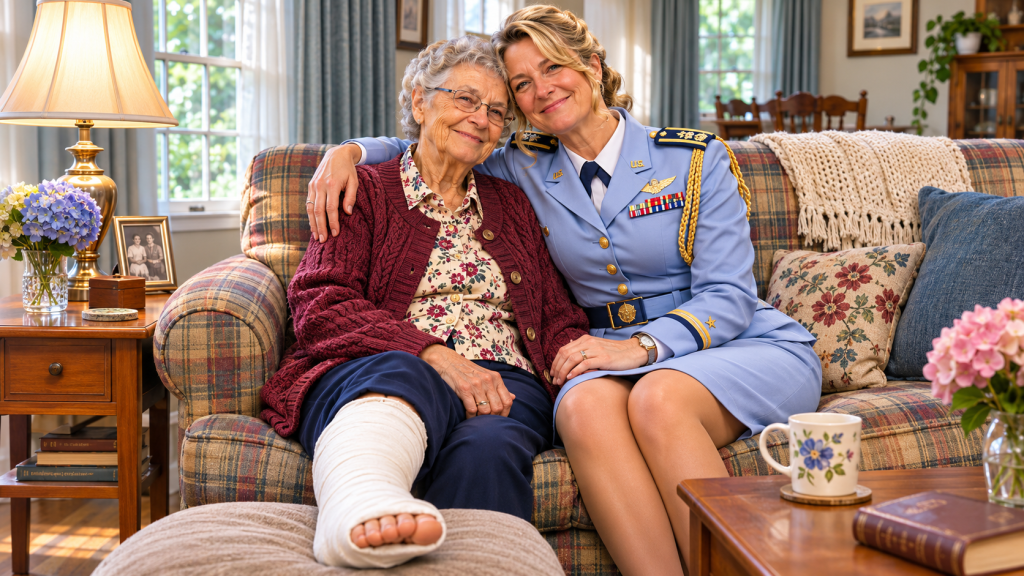
When I offered to care for her broken leg, I thought I was returning a little of the kindness she’d shown me.
Now I was discovering that she’d spent those four weeks searching for evidence of a betrayal far deeper than infidelity.
I picked up my car keys.
“Will you come with me?”
Patricia nodded immediately.
“Of course.”
I carefully gathered the documents, placed them back in the shoebox, and carried everything to my car.
I had no idea what awaited me at the hospital.
But I knew one thing.
I wasn’t going to let Elora face it alone.
My name is Natalie Bennett.
I’m thirty-nine years old, and five years before that morning, I believed my divorce had ended the worst chapter of my life.
Shane Whitman and I were married for eleven years.
We met in college, when he was charming, ambitious, and apparently devoted to building a future together.
He remembered little things.
My favorite flowers.
The name of my childhood dog.
How I liked my coffee.
He told me he wanted a marriage like his parents had once enjoyed before his father died.
I believed him.
And for a while, we were happy.
We bought a modest three-bedroom house in a quiet neighborhood outside Columbus, Ohio.
I worked as an administrative manager for a medical equipment company.
Shane started a business supplying commercial kitchen equipment to restaurants.
We talked about having children.
Traveling.
Growing old together.
I thought we were building an ordinary, beautiful life.
Then my father died.
His name was Arthur Bennett.
He was a retired electrician, a quiet man who believed promises should mean something.
He left me an inheritance that included savings and investments, along with personal belongings he’d spent years collecting.
I was devastated by his death.
Shane handled many of the practical arrangements because I could barely concentrate.
He organized paperwork.
Helped sort Dad’s belongings.
Accompanied me to appointments.
At the time, I thought his attention was proof of love.
I didn’t know that while I was grieving my father, my husband was hiding an affair.
I discovered the affair several months later.
And when I confronted him, he initially denied everything.
Then he blamed me.
I was too busy.
Too sad.
Too absorbed in my father’s death.
He said I’d stopped paying attention to him.
I remember standing in our kitchen, staring at the man I’d married.
And feeling something inside me go completely still.
I filed for divorce.
The process was painful, but we eventually reached a financial settlement.
I kept the house through the agreed property division.
Shane moved away.
I rebuilt my savings.
Returned to work.
And slowly began learning how to enjoy my own company again.
For five years, I believed that was where the story ended.
But I had overlooked something important.
When someone lies about one part of your life, you cannot automatically assume they’ve told the truth about everything else.
Elora was seventy-two.
She had three children.
Shane, her eldest.
His younger brother, Marcus.
And their sister, Denise.
All three had successful-looking lives.
Shane ran his business.
Marcus worked in real estate.
Denise lived in Cincinnati and managed a busy household with two teenagers.
Yet when Elora broke her leg, every one of them found a reason they couldn’t help.
Shane said he was traveling.
Marcus said he had important clients.
Denise claimed her house was too crowded.
I remember feeling furious on Elora’s behalf.
She’d been a generous mother.
The kind who remembered every birthday and stayed up late sewing costumes for school plays.
When I first married Shane, she welcomed me with open arms.
And when our marriage collapsed, she never insisted I pretend his betrayal was acceptable.
“You’re still someone I love,” she’d told me.
Those words mattered.
So when she called asking for help after breaking her leg, I didn’t hesitate.
I prepared the spare bedroom.
Made sure she could move safely through the house.
Took her to appointments.
Cooked meals.
And stayed nearby whenever she needed assistance.
During those four weeks, she seemed deeply grateful.
But she also seemed frightened.
I hadn’t understood that until Patricia showed me the shoebox.
At the hospital, I hurried toward the reception desk.
“Elora Whitman,” I said. “I was told she asked someone to call me.”
The receptionist checked the information and directed me to the appropriate ward.
Patricia walked beside me.
Neither of us spoke.
The corridors smelled of disinfectant.
A nurse hurried past carrying a tray.
Somewhere behind a closed door, a television played softly.
My heart pounded harder with every step.
Then we reached Elora’s room.
She was lying in bed with a monitoring device beside her.
Her injured leg was supported carefully.
Her face looked pale and exhausted.
But when she saw me, her eyes filled.
“Natalie.”
I crossed the room.
“Oh, Elora.”
She reached for my hand.
I took it gently.
For a moment, neither of us could speak.
Then she began crying.
“I’m sorry, sweetheart.”
I shook my head.
“You’re in the hospital. We can talk about everything else later.”
Her fingers tightened around mine.
“No.”
Her voice was weak but determined.
“I need you to know I never meant to hurt you.”
My throat tightened.
“I found the documents.”
She closed her eyes.
I continued.
“Patricia brought me the shoebox.”
A tear slid down her cheek.
“Then you know.”
I swallowed.
“I know someone used my father’s inheritance. I know there’s a loan connected to my house. And I know you went through my belongings without asking.”
Elora began sobbing.
I sat beside her.
For several minutes, I simply held her hand.
Then I whispered, “Why didn’t you tell me?”
She looked toward the window.
“Because I was afraid you wouldn’t believe me.”
I stared at her.
She turned back.
“And because the first time I confronted Shane about what he’d done, he threatened to make you pay for it.”
The words chilled me.
“What do you mean?”
Elora took a shaky breath.
“After I broke my leg, Shane came to my house.”
I waited.
“He brought papers.”
“What kind of papers?”
She looked down.
“A statement saying I had witnessed your father authorize Shane to manage some of his financial affairs.”
My stomach tightened.
“That never happened.”
“I know.”
She squeezed my hand.
“Your father trusted you. He would never have asked Shane to take control of your inheritance behind your back.”
I closed my eyes.
Elora continued.
“Shane told me it was just something the bank needed to clear up an old administrative problem.”
I stared at her.
“What did you say?”
“I refused to sign.”
Her voice broke.
“Then he became angry.”
My heart pounded.
“Did he hurt you?”
She shook her head.
“He didn’t touch me.”
I exhaled.
“But he said if I wouldn’t help him, he’d stop paying for the additional assistance I’d need while my leg healed.”
My stomach tightened.
“He was paying for your care?”
“He’d agreed to arrange some help while I recovered.”
She swallowed.
“Then he said I could find someone else.”
I looked down.
Elora continued.
“Marcus and Denise wouldn’t take me in. I was frightened, Natalie.”
Tears gathered.
“But I was more frightened about what Shane might have done to you.”
I looked at her.
“So you came to my house?”
She nodded.
“Yes.”
I felt a familiar ache.
“Because you knew some documents were still there.”
She began crying.
“Yes.”
For a moment, I couldn’t speak.
I’d offered Elora a safe place to recover.
She’d accepted partly because she needed help.
And partly because she wanted to search for evidence involving my former husband.
Both things were true.
The kindness we’d shared hadn’t been imaginary.
But neither had the deception.
A doctor entered a few minutes later.
She explained that Elora had experienced dizziness and a fall while at home. Given her recent fracture and a possible medication-related issue, the team was evaluating her and monitoring her condition.
Fortunately, there was no indication of a new major fracture.
She needed rest, medical review, and a safe discharge plan.
I listened carefully.
Then asked whether Elora had been injured during an argument.
Elora shook her head.
“No. I became dizzy after getting up too quickly.”
The doctor nodded.
She explained that they were evaluating several possible contributing factors rather than assuming one cause.
I felt relief.
The thought that Shane might have physically harmed her had terrified me.
But I was still worried about what he’d threatened.
After the doctor left, Elora reached for my hand again.
“Natalie, please don’t think I came because I wanted to use you.”
I looked at her.
“Elora, you needed help with your leg. I would have given you that help even if you’d told me everything.”
Tears streamed down her cheeks.
“I know.”
“Then why hide it?”
She looked ashamed.
“Because I thought I could fix one terrible thing my son had done before you ever had to hear about it.”
I swallowed.
“Elora, you couldn’t fix this alone.”
She nodded.
“I understand that now.”
I took a slow breath.
Then said something I needed her to hear.
“I love you. But I’m hurt that you searched my home without permission.”
She closed her eyes.
“I know, sweetheart.”
“And I need the complete truth.”
She nodded.
“No more secrets.”
I looked at her.
“No more secrets.”
The next morning, I contacted an attorney named Rachel Donovan.
She specialized in civil litigation and disputes involving financial fraud.
I had no intention of calling Shane and demanding an explanation.
I’d spent eleven years watching him turn difficult questions into arguments about my supposed failures.
This time, I wanted documents.
Facts.
And someone who understood what steps were necessary to protect my home.
Rachel agreed to meet that afternoon.
Patricia accompanied me.
We carried the shoebox into a conference room overlooking downtown Columbus.
Rachel examined everything carefully.
The bank statements.
The purported power of attorney.
The business transfers.
The notice concerning the loan secured against my house.
When she reached the signature page, she frowned.
“Natalie, did your father ever appoint Shane as his financial agent?”
“No.”
“Did he sign a power of attorney while you were present?”
“Not that I know of.”
She nodded.
“We’ll need to establish what was actually executed, whether it met the legal requirements, and whether anyone relied upon it.”
I swallowed.
“Can Shane take my house?”
Rachel looked at me.
“Let’s not assume that.”
She pointed toward the loan notice.
“We don’t yet know whether there’s a valid, enforceable lien, a disputed application, or an error in the records.”
My breathing eased slightly.
She continued.
“But because the notice mentions default, we’ll investigate promptly. We need to confirm the lender, the recorded documents, the payment history, and whether any formal action has begun.”
I nodded.
Then asked, “What about the eighty-six thousand dollars?”
Rachel opened the statements.
“These appear to show funds moving out of accounts connected to your father’s estate and into an account associated with Shane’s company.”
My throat tightened.
“That money was supposed to be mine.”
She looked at me.
“We need to verify the account ownership, what authority was claimed, and whether the transfers were authorized.”
I stared at the table.
“Will you contact Shane?”
“Through appropriate channels, yes. But first, I’d like to secure the evidence.”
She looked toward Patricia.
“How did these documents come into your possession?”
Patricia took a breath.
“Elora gave me the folder for safekeeping. I added the photographs and some notes about what I’d observed.”
Rachel nodded.
“Good. We’ll document that history carefully.”
Then she looked back at me.
“Natalie, we should also examine your divorce paperwork.”
My stomach tightened.
“Why?”
“Because if financial assets or liabilities were concealed during the divorce, that may affect what remedies are available.”
I stared at her.
Five years.
I’d spent five years believing that Shane was no longer capable of changing my life.
Now I was learning that the financial consequences of our marriage might still be waiting for me.
That evening, I went home and walked into my attic.
It was the first time I’d entered that space since Elora moved out.
The room smelled of cardboard, cedar, and old paper.
Boxes lined the walls.
Christmas decorations.
Childhood photographs.
Books my father had collected.
And one large wooden trunk that had belonged to my mother.
My mother died when I was twenty-two.
Dad never remarried.
After his death, I’d packed many of his belongings into boxes because I wasn’t emotionally ready to sort them.
Shane had helped.
At the time, I thought he was being considerate.
Now I looked at the boxes differently.
I opened one labeled DAD — BANK AND PERSONAL.
Inside were old envelopes, account summaries, and several photographs.
Then I found something tucked beneath a stack of tax returns.
A small spiral notebook.
Dad’s handwriting filled the pages.
I sat on the attic floor and began reading.
He had listed account names, approximate balances, and notes about where important documents were stored.
Near the back, I found a handwritten sentence that made my heart ache.
Natalie is to receive everything remaining after my debts and expenses are settled. Shane may help with arrangements, but decisions belong to Natalie and the estate representative.
I stared at the words.
Then read them again.
My father had anticipated that Shane might assist me.
But he’d never intended to give my husband independent control over my inheritance.
I pressed the notebook against my chest.
“Dad,” I whispered, “I wish you were here.”
For a moment, I remembered him standing in the kitchen, making terrible jokes while stirring soup.
Then I began crying.
The same grief I’d felt five years earlier came rushing back.
Only now it was mixed with anger.
Because while I was mourning the man who raised me, someone I’d trusted may have been using that grief as an opportunity.
The first major breakthrough came from the title records.
Rachel arranged a review of the relevant documents.
The house was still titled in my name.
The divorce settlement had transferred Shane’s interest to me as agreed.
But there was a recorded mortgage document associated with a lender I had never knowingly borrowed from.
My signature appeared on the application and certain closing papers.
Again.
A signature that looked like mine.
Again.
I sat across from Rachel, feeling sick.
“How much?”
She looked at the verified records.
“The original loan amount was one hundred and forty thousand dollars.”
I stared.
“One hundred and forty thousand?”
She nodded.
I covered my mouth.
The eighty-six thousand dollars in suspicious transfers had already frightened me.
Now there was another obligation that might affect the roof over my head.
Rachel continued.
“The records indicate the loan was originated around the time of your divorce.”
I looked up sharply.
“During the divorce?”
“Yes.”
My chest tightened.
Shane and I had spent months negotiating who would keep the house.
I remembered him insisting I was lucky he was willing to let me have it.
He’d acted generous.
Almost noble.
As though surrendering his claim were proof that he wanted an amicable separation.
Now I wondered whether there had been another reason he was eager to finish.
“Rachel, I never applied for that loan.”
She nodded.
“Then we’ll formally dispute the documents and seek the supporting records.”
I swallowed.
“What if they’re already preparing to foreclose?”
She looked at me.
“We’ll verify whether any foreclosure action is pending and evaluate the available remedies immediately. Don’t ignore any formal notices, and don’t assume that a disputed signature automatically stops collection activity.”
I took a breath.
For the first time in days, I felt something other than fear.
Determination.
My father had worked hard to provide me with a measure of security.
I’d worked hard to preserve it.
And I wasn’t going to surrender my home because someone had learned how to imitate my handwriting.
Elora called me that evening.
She was still in the hospital, though her condition had improved.
“Natalie?”
“Hi, Elora.”
Her voice trembled.
“Did you speak with the attorney?”
“Yes.”
There was a pause.
“Is it bad?”
I looked toward the dining room.
“There’s a loan against my house that I never authorized.”
She began crying.
“Oh, sweetheart.”
I swallowed.
“Did you know about the loan?”
She hesitated.
“I knew Shane had mentioned a financial arrangement involving your property. I didn’t know the full details until I found the notice.”
I closed my eyes.
“Why did you search the attic?”
She took a shaky breath.
“Because I remembered something your father told me.”
I sat straighter.
“What?”
Elora continued.
“At his last birthday dinner, he asked whether you and Shane were doing well.”
My throat tightened.
“I remember that dinner.”
She nodded.
“He seemed worried.”
I looked down.
“He asked me whether Shane’s business had become profitable.”
I frowned.
“Why would he ask that?”
“Because Shane had approached him about a loan.”
My stomach dropped.
“A loan from Dad?”
Elora sighed.
“Yes.”
I stared at the wall.
“What happened?”
“Your father refused.”
My eyes filled.
Elora continued.
“He told me he loved Shane as a son-in-law, but he wouldn’t put your financial security at risk to fund another business venture.”
For a moment, I couldn’t speak.
Then she added, “He said Shane was asking for too much without explaining where the money would go.”
I pressed my hand over my mouth.
My father had seen something.
Something I’d missed.
He’d questioned Shane’s finances while I was still defending him.
Elora’s voice softened.
“When Shane brought me those papers after my injury, I remembered what Arthur had said.”
I swallowed.
“That’s why you became suspicious.”
“Yes.”
She began crying.
“I thought if I could find the original estate records, perhaps I could prove your father never intended Shane to control anything.”
My eyes filled.
For a long moment, neither of us spoke.
Then I whispered, “You should have told me.”
Elora cried.
“I know.”
And this time, I believed she understood.
Three days later, Rachel obtained additional records through authorized requests and cooperation from the relevant institutions.
The picture became clearer.
The questionable transfers had occurred in stages.
Some shortly before my father’s death.
Others during the months when his estate was being administered.
The money had moved through accounts associated with Shane’s business.
The records suggested that someone had presented documents claiming financial authority that my father and I had never knowingly granted.
We still needed more evidence to establish exactly who had signed or submitted every document.
But the pattern was troubling.
Then the accountant assisting Rachel found something unexpected.
A substantial payment had been made from Shane’s business account to a private lender shortly after our divorce.
The amount matched part of the funds associated with the home loan.
I stared at the report.
“What does that mean?”
The accountant, a man named Daniel Price, adjusted his glasses.
“It suggests some of the loan proceeds or related funds may have been used to satisfy business obligations.”
I felt my stomach tighten.
“So Shane could have used my house to keep his company afloat?”
Daniel looked at Rachel.
Rachel answered carefully.
“That is one possibility the records support investigating. We shouldn’t state it as a final conclusion until the loan proceeds are fully traced.”
I nodded.
Then asked, “Was his business in trouble?”
Daniel opened another report.
“The company’s financial records from that period indicate serious cash-flow problems.”
I stared.
“How serious?”
He hesitated.
“More serious than Shane appears to have disclosed during the divorce.”
I closed my eyes.
All those arguments.
All those promises.
All those times he’d said the business was about to turn a corner.
And while I was dealing with his affair, he may have been hiding financial problems that affected our entire marriage.
I took a slow breath.
“What do we do?”
Rachel folded her hands.
“We keep following the evidence.”
The next surprise arrived in an email from Shane’s former office manager.
Her name was Marissa Bell.
I’d met her several times during our marriage.
She was quiet, efficient, and had always seemed uncomfortable around Shane when money came up.
Her email was brief.
Mrs. Bennett, I heard you were reviewing financial transactions connected to Mr. Whitman’s business. I may have information relevant to what happened during your divorce. I’d prefer to speak through your attorney.
I forwarded the message to Rachel immediately.
Two days later, Marissa met with us.
She carried a folder and looked deeply nervous.
“I’ve wanted to tell you for years,” she said.
My heart began pounding.
“Tell me what?”
Marissa looked toward Rachel.
Then back at me.
“Shane wasn’t simply having an affair.”
I stared.
She swallowed.
“He was preparing to leave the marriage while trying to protect his business from creditors.”
My stomach tightened.
Marissa continued.
“He was behind on supplier payments. Several accounts were overdue. He kept telling everyone a major contract would solve the problem.”
I looked down.
“Did it?”
“No.”
She hesitated.
“Then he started talking about borrowing against property.”
I felt cold.
“Which property?”
Marissa’s eyes filled.
“Your house.”
I covered my mouth.
She continued.
“I asked whether you’d agreed.”
My breathing quickened.
“What did he say?”
Marissa looked ashamed.
“He said the paperwork was being handled.”
I closed my eyes.
She continued.
“Later, I saw a document with your signature. I assumed he’d discussed it with you.”
My throat tightened.
“Why are you telling me now?”
Marissa began crying.
“Because I found an old email chain while organizing records I’d lawfully retained.”
She took a breath.
“It included a message from Shane saying he needed the financing completed before the divorce settlement was finalized.”
I stared at her.
Then she whispered, “Natalie, I think he wanted the debt in place before you became the sole owner of the house.”
For several seconds, I couldn’t speak.
Then Rachel leaned forward.
“Marissa, we’ll need to review the original context and establish the authenticity of those communications.”
Marissa nodded.
“I understand.”
I stared at the table.
Five years earlier, I’d thought my divorce had freed me from Shane.
Now it appeared he might have left me with a financial trap I hadn’t even known existed.
And the woman who had helped me uncover it was the mother of the man responsible.
I didn’t confront Shane immediately.
That was one of the hardest decisions I made.
Every part of me wanted to call him.
To demand answers.
To ask how he could look at me during my father’s funeral while knowing he was taking advantage of the very person he’d promised to protect.
But Rachel advised me to let the document review proceed.
So I waited.
I continued going to work.
Paid my ordinary bills.
Visited Elora after she returned home with appropriate support.
And slowly gathered the information necessary to challenge the documents.
The waiting was exhausting.
Some nights I lay awake imagining losing my house.
Other nights I remembered my father.
The way he used to check that every window was locked before bed.
How he’d call during thunderstorms to make sure I was safe.
How he’d worked overtime so I could finish college without taking on more debt than necessary.
I’d always believed that the inheritance he left me was his final act of protection.
Now I was fighting to preserve that protection.
One evening, Patricia came over with a casserole.
She found me sitting at the kitchen table, surrounded by papers.
“Natalie.”
I looked up.
“Hi.”
She placed the casserole on the counter.
Then sat beside me.
“Have you eaten?”
I shook my head.
She sighed.
“All right. We’re fixing that first.”
I almost smiled.
Patricia had been my neighbor for twelve years.
She’d brought soup when Dad died.
Helped me carry boxes during the divorce.
Watched my house when I traveled.
And somehow, despite everything, I’d never fully understood how much she cared.
She warmed the food.
Placed a plate in front of me.
Then took my hand.
“You don’t have to solve every part of this tonight.”
My eyes filled.
“I’m afraid.”
She nodded.
“I know.”
I swallowed.
“What if I lose the house?”
Patricia squeezed my fingers.
“Then we’ll deal with what happens. But right now, you have professionals working on it, records to support your position, and people who care about you.”
I looked down.
She continued.
“You’re not alone, Natalie.”
For the first time that evening, I believed her.
Elora’s recovery progressed slowly.
She needed additional therapy and practical assistance after her hospital stay.
This time, I helped coordinate services without taking full responsibility for every task.
Her daughter Denise eventually began visiting more often.
Marcus arranged grocery deliveries.
Shane stayed away.
I didn’t know whether his absence came from guilt, anger, or advice from his attorney.
But I was relieved not to see him.
One afternoon, Elora asked me to sit beside her.
She held a small photograph.
It showed Shane as a little boy, smiling beside his younger siblings.
For a moment, she stared at it.
Then whispered, “I used to think being a good mother meant protecting my children from every consequence.”
I looked at her.
She continued.
“When Shane lied about something as a boy, I often tried to explain it away.”
Her eyes filled.
“If he broke something, I told myself it was an accident. If he took something, I insisted he didn’t understand.”
I remained quiet.
Elora looked at me.
“I thought I was being loving.”
Her voice broke.
“But I wasn’t teaching him to be accountable.”
I took her hand.
“Elora, Shane’s choices are his responsibility.”
She nodded.
“I know.”
Then she whispered, “But I can stop helping him avoid them.”
My throat tightened.
She placed the photograph on the table.
“I love my son, Natalie.”
“I know.”
“And I don’t know what will happen to him.”
I swallowed.
“Neither do I.”
She began crying.
“But I know I can’t lie to protect him.”
I squeezed her hand.
That was the moment I understood what Elora had been trying to do.
She hadn’t searched my house because she wanted revenge on Shane.
She had found herself trapped between the son she loved and the woman he’d betrayed.
And for the first time, she was choosing not to excuse him.
Her secret investigation had been wrong.
But her decision to tell the truth was still meaningful.
Several months later, the dispute reached a turning point.
The lender’s records contained electronic submission information, correspondence, and identification materials associated with the loan application.
The information did not match my account of events.
My attorney challenged the purported authorization and provided evidence supporting my position.
The relevant parties also reviewed the circumstances in which the mortgage document had been recorded.
The process was complicated.
There were additional questions.
Requests for records.
Formal communications.
And anxious weeks when I checked my mailbox with a knot in my stomach.
But eventually, the lender acknowledged substantial problems with the documents attributed to me and agreed to resolve the disputed lien through a documented settlement.
The recorded mortgage was released.
I received confirmation that the disputed obligation would not be enforced against my property under the terms of that resolution.
I sat in Rachel’s office holding the paperwork.
For a long time, I couldn’t speak.
Then I began crying.
Rachel handed me a tissue.
“Take your time.”
I looked at her.
“My house?”
She smiled gently.
“The disputed lien has been addressed. Your title records will reflect the release.”
I covered my mouth.
For months, I’d imagined someone arriving to tell me that I had to leave.
Now the threat was finally being lifted.
I thought of Dad.
And whispered, “Thank you.”
Rachel nodded.
“We still have other financial matters to resolve.”
“I know.”
“But this is an important step.”
I smiled through my tears.
“Yes.”
It was more than important.
It meant I could return home that evening without wondering whether the walls around me were about to disappear.
The eighty-six thousand dollars was a separate battle.
The records established that funds associated with my father’s estate had been diverted through transactions I had never approved.
The legal process required tracing the payments, examining the purported authority documents, and determining appropriate remedies.
Shane contested parts of the allegations.
His attorney presented explanations for certain transfers.
Some were contradicted by the documentary record.
Others required further examination.
I didn’t receive instant repayment.
And no judge simply waved a hand and returned everything.
But through the legal process, a civil judgment and subsequent recovery arrangements ultimately returned a substantial portion of the diverted funds to me.
Additional matters involving the use of the disputed documents were handled through the appropriate authorities.
I cooperated when necessary.
Then allowed the professionals to do their work.
I had spent enough years letting Shane occupy my thoughts.
I wasn’t going to devote the rest of my life to imagining punishments for him.
Accountability mattered.
But so did my freedom.
The day I received the final paperwork concerning the recovered funds, I drove to the cemetery.
Dad’s grave stood beneath an old maple tree.
I brought fresh flowers.
His favorites.
Yellow roses.
I knelt beside the headstone.
For a while, I simply sat there.
Then I whispered, “Hi, Dad.”
A breeze moved through the branches.
I looked down.
“I wish I’d known what was happening.”
Tears gathered.
“I wish I’d asked more questions.”
Then I shook my head.
“No.”
My voice broke.
“I wish someone I trusted hadn’t taken advantage of me when I was grieving you.”
I touched the cool stone.
For years, I’d carried shame over Shane’s affair.
I’d wondered whether I should have been more attentive.
More cheerful.
More understanding.
Now I understood how much of that shame had never belonged to me.
Shane had made choices.
And those choices were his to own.
I swallowed.
“I protected the house, Dad.”
The words came out in a whisper.
Then I smiled through my tears.
“And I’m going to be okay.”
For the first time since discovering the shoebox, I felt a little peace.
A year after Elora’s broken leg, I invited her and Patricia to dinner.
Nothing elaborate.
Roasted chicken.
Mashed potatoes.
Green beans.
And a lemon cake I’d made using my mother’s old recipe.
Elora arrived carrying a small bouquet.
She was walking more confidently, although she still used a cane when necessary.
When she stepped inside, her eyes filled.
“Natalie.”
I smiled.
“Come in.”
She hesitated.
“Are you sure?”
I looked at her.
“Of course.”
She began crying.
I gently took the flowers.
“Elora, we’ve talked about what happened.”
She nodded.
“And you’ve apologized.”
“Yes.”
I took a breath.
“I don’t want us to spend the rest of our lives pretending we can’t care about one another because Shane made terrible choices.”
Her face crumpled.
She stepped forward and hugged me.
I held her carefully.
For a moment, I remembered the four weeks she’d spent in my spare bedroom.
The meals we’d shared.
The appointments.
The evenings when she told stories about her childhood.
And the fear she’d been carrying beneath her gratitude.
I knew now that those weeks hadn’t been completely honest.
But I also knew the affection between us was real.
And I wanted to keep the part that was worth saving.
During dinner, Patricia told us how she’d first become suspicious.
“I saw Elora coming out of the attic one afternoon,” she explained.
Elora looked embarrassed.
Patricia smiled gently.
“I thought you might be looking for something you’d misplaced.”
Elora nodded.
“I was.”
Patricia continued.
“Then she asked whether I’d ever seen Shane visiting when Natalie was away.”
I looked up.
“Did he?”
Patricia shook her head.
“Not during those weeks. But I remembered seeing his car outside the house several times during the divorce.”
My stomach tightened.
I’d never known.
Patricia continued.
“When Elora told me what she suspected, I started documenting what I personally observed.”
Elora looked down.
“I asked her to keep the folder safe because I was afraid Shane might find it if I brought everything home.”
I studied the two women.
One had secretly searched my attic.
The other had watched from next door, trying to understand what was happening.
Neither had handled everything perfectly.
But both had eventually chosen to bring me the truth.
I took a breath.
“Next time either of you thinks something is wrong, please tell me directly.”
Patricia laughed softly.
“That’s fair.”
Elora nodded.
“More than fair.”
Then we raised our glasses.
Not to revenge.
Not to money.
But to the possibility of moving forward without another secret waiting in the shadows.
Today, my life is quieter than it was during my marriage.
I still live in the house Dad loved.
I still work.
I still meet Patricia for coffee on Saturday mornings.
And Elora remains part of my life.
Not as someone who has a claim on me because she was once my mother-in-law.
As a woman I care about, who has learned to respect the boundaries of our relationship.
She doesn’t ask about my schedule unless there’s a genuine reason.
She doesn’t enter private spaces without permission.
And she doesn’t bring Shane into our conversations.
That last boundary has been especially important.
I wish him no harm.
But I don’t want him back in my life.
Some doors can close without bitterness.
And some relationships are healthier when they remain part of the past.
Last Sunday, Elora visited for lunch.
We sat on the back porch, watching sunlight move across the garden.
She looked toward the house.
“Arthur would be proud of you.”
My throat tightened.
I smiled.
“I hope so.”
She nodded.
“He always said you were stronger than you realized.”
I looked down.
For years, I’d thought strength meant surviving everything quietly.
The affair.
The divorce.
My father’s death.
The financial betrayal.
But now I understood that strength also meant accepting help.
Asking difficult questions.
Protecting myself.
And admitting when someone I loved had crossed a line.
Elora reached for my hand.
“Natalie, do you ever regret taking me in?”
I looked at her.
She seemed frightened of my answer.
I considered the question carefully.
Then shook my head.
“No.”
Her eyes filled.
I continued.
“I regret that you felt you had to deceive me.”
She nodded.
“And I regret what Shane did.”
My voice softened.
“But I don’t regret helping you when you were hurt.”
Tears slipped down her cheeks.
She squeezed my hand.
“Thank you, sweetheart.”
I smiled.
“Just promise me something.”
“Anything.”
“Next time you need help, ask for what you actually need.”
She laughed through her tears.
“I promise.”
After she left, I walked into the spare bedroom.
The bed was neatly made.
Fresh curtains moved gently in the afternoon breeze.
On the bedside table sat a photograph of my father.
I’d moved it there while sorting through his belongings.
Beside it was the old shoebox.
I had kept it.
Not because I wanted to relive the betrayal.
But because it reminded me how easily the truth can hide beneath ordinary appearances.
An elderly woman recovering from a broken leg.
A caring former daughter-in-law.
A friendly neighbor carrying a worn cardboard box.
None of it seemed extraordinary.
Yet those small moments had uncovered a secret that changed my understanding of my marriage, my father’s estate, and the people I’d trusted.
I picked up the shoebox.
Then placed the final legal documents inside.
The disputed mortgage release.
The financial recovery records.
And the letter Elora had written apologizing for searching my home.
I closed the lid.
For the first time, the box no longer frightened me.
It held evidence of something painful.
But it also held proof that I had survived.
That evening, I sat in the garden with a cup of tea.
The sky was turning gold.
Birds moved through the trees.
And the house behind me was quiet.
I thought about the woman I had been five years earlier.
Brokenhearted.
Grieving.
Convinced she’d failed at marriage.
I wished I could sit beside her for a moment.
Tell her that she hadn’t caused Shane’s dishonesty.
Tell her that being betrayed didn’t make her foolish.
Tell her that the years ahead would contain challenges, but also friendships and kindness she couldn’t yet imagine.
And I wished I could tell her something else.
Helping someone does not mean surrendering your boundaries, and being kind does not require you to ignore the truth.
Elora’s intentions had been complicated.
Her broken leg was real.
Her gratitude was real.
Her affection for me was real.
But she had still been wrong to search my home without asking.
I could acknowledge that.
I could accept her apology.
And I could choose to rebuild our relationship without pretending everything she’d done was acceptable.
That was what forgiveness meant to me now.
Not forgetting.
Not excusing.
But deciding whether trust could be rebuilt through honesty and changed behavior.
As the sun disappeared behind the trees, my phone rang.
Elora.
I smiled and answered.
“Hello?”
“Natalie, sweetheart, did I leave my reading glasses at your house?”
I laughed.
“Probably. I’ll check.”
She chuckled.
“I’m getting forgetful.”
I walked into the spare bedroom.
There, beside the lamp, were her glasses.
“Found them.”
“Oh, wonderful. I’ll come by tomorrow if that’s all right.”
I smiled.
“Of course.”
Then she hesitated.
“Natalie?”
“Yes?”
“I love you.”
My throat tightened.
For a moment, I thought about everything we’d been through.
The hospital.
The shoebox.
The painful revelations.
The difficult conversations.
And the trust we’d slowly rebuilt.
“I love you too, Elora.”
After hanging up, I returned to the porch.
The evening air was cool.
The windows glowed warmly behind me.
And for the first time in years, I felt completely at home.
Not because every painful memory had vanished.
Not because justice had arrived easily.
But because I finally understood that my life belonged to me.
My home was safe.
My father’s memory remained a source of love rather than fear.
And the people I allowed close to me were there because they respected my heart, not because they could take advantage of it.
I looked toward the darkening sky.
Then whispered, “We made it, Dad.”
A gentle breeze moved through the garden.
I smiled.
And went inside.


