Marcus’s voice came from the upstairs hallway, sharp enough to cut through the silence in the kitchen. “Dana! I said don’t let her open the second envelope!” My sister’s face turned the color of ash. For a moment, nobody moved. Then my mother slowly placed her hand over the envelope lying beside the kitchen drawer. It was white, unmarked, and thicker than the first. I looked at Dana.
“What is in there?” She shook her head. “I don’t know.” But her eyes told a different story. Upstairs, Marcus’s footsteps thundered across the landing. I reached for the envelope. Dana suddenly grabbed my wrist. “Please,” she whispered. “Don’t.” I stared at her. There was something different in her voice. Until that moment, my sister had been defensive, entitled, and furious that I had challenged her.
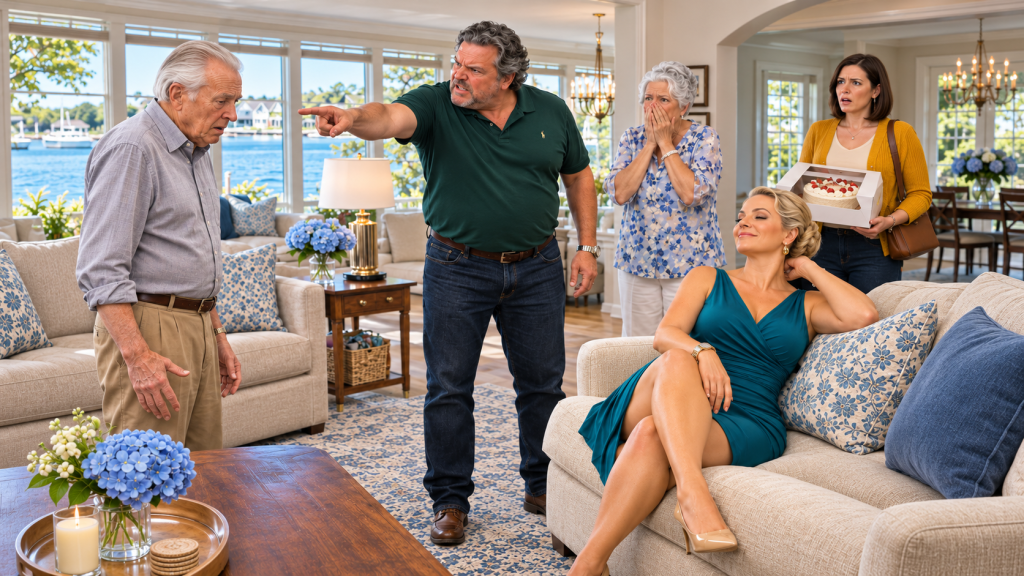
Now she sounded frightened. “Dana,” I said quietly, “let go of me.” Her fingers loosened. I opened the envelope. Inside were copies of bank statements, an unsigned mortgage application, and a document titled Proposed Assignment of Beneficial Interest. My stomach tightened. The document identified my father as the person supposedly transferring an interest in the property. The recipient was a limited liability company. Marsh Coastal Holdings LLC. I had never heard of it. Then I reached the final page.
There, beneath a printed declaration, was a signature that looked remarkably like my father’s.
But the date was impossible.
The document claimed Dad had signed it three days before our fiftieth-anniversary celebration.
Three days before we had even completed the purchase of the house.
I looked at him.
“Dad, have you ever heard of Marsh Coastal Holdings?”
He shook his head.
“No, sweetheart.”
Mom pressed her lips together.
“I found those papers yesterday,” she whispered. “Marcus told me they were insurance documents.”
I turned toward Dana.
“Who owns this company?”
She stared at the floor.
“Marcus set it up.”
The sound of footsteps stopped behind me.
I turned.
Marcus stood in the doorway wearing jeans and a faded sweatshirt. He had finally removed my father’s bathrobe.
His face was tight with anger.
“You have no right to go through our private financial papers.”
I held up the document.
“These papers appear to concern my father’s house.”
“It’s a business proposal.”
“Then why does it contain a signature Dad says he never made?”
Marcus gave a dismissive laugh.
“Your father forgets things.”
Dad slowly pushed himself upright.
For a moment, I thought he might collapse.
Instead, he looked directly at Marcus.
“I may be old,” he said, “but I haven’t forgotten my own name.”
Marcus’s smile disappeared.
And for the first time since I walked into that house, I saw my father begin to reclaim his voice.
I placed the envelope carefully inside my handbag.
Marcus stepped forward.
“Give that back.”
“No.”
“Those are private company documents.”
“Then your attorney can explain them to mine.”
His eyes narrowed.
“You think throwing around the word attorney makes you untouchable?”
I looked toward the living room, where his children had been watching television earlier.
They were now standing at the doorway, frightened by the raised voices.
My niece, Sophie, was ten.
Her younger brother, Oliver, was seven.
Neither child had done anything wrong.
I lowered my voice.
“Marcus, we’re not having this argument in front of your children.”
He glanced at them.
For a second, something like embarrassment crossed his face.
Then it vanished.
“Kids, go upstairs.”
Sophie looked toward Dana.
“Mom?”
Dana wiped her cheeks.
“Go pack your things, honey.”
“Are we leaving?”
“Yes.”
“Did we do something bad?”
The question broke my heart.
I crouched beside her.
“No, sweetheart. This is an adult problem. You and Oliver haven’t done anything wrong.”
She nodded uncertainly.
Then she took her brother’s hand and led him upstairs.
I watched them disappear.
When I turned back, Marcus was glaring at me.
“You’ve poisoned them against us.”
“No,” I replied. “I’m trying to keep them out of a conversation they shouldn’t have to carry.”
Dad lowered himself into his reclining chair.
Mom sat beside him.
For fifty years, they had weathered everything together.
Job losses.
Illness.
Raising two daughters.
The death of relatives and friends.
They had never owned a house as beautiful as this one.
And now, less than two weeks after moving in, they were sitting like unwelcome guests in their own living room.
I felt something inside me harden.
“Marcus, you and Dana need to leave today.”
He folded his arms.
“We have children. You can’t just throw us into the street.”
“You were invited for lunch. You’ve had several days to make other arrangements.”
“We don’t have anywhere to go.”
I looked at Dana.
“What happened to your apartment?”
She began crying again.
Marcus answered before she could.
“We gave notice.”
I stared at him.
“You gave notice on your apartment?”
He shrugged.
“We were making a transition.”
“To what?”
He looked toward the windows.
“To a better situation.”
I finally understood.
They hadn’t planned to stay for lunch.
They had planned to move in.
And they had counted on my parents being too kind, too embarrassed, or too afraid of losing contact with their grandchildren to stop them.
I called my attorney, Claire Donovan, from the back deck.
The afternoon breeze carried the smell of saltwater and pine.
Beyond the yard, the ocean shimmered beneath a gray Maine sky.
I had chosen this place because Dad loved the coast.
As a child, he spent summers working on fishing boats with his uncle.
He always said the ocean made even his worst worries seem smaller.
Now I could hardly bear to look at it.
Claire answered immediately.
“Everything all right?”
“No. I found more documents.”
I explained the loan application, the apparent signature, and the company named Marsh Coastal Holdings.
She listened without interrupting.
Then she asked, “Has anyone actually received money against the property?”
“I don’t know.”
“Has your father signed anything in front of a notary or lender?”
“He says no.”
“Then we need to verify what was submitted, where it went, and whether anyone attempted to create an unauthorized obligation.”
I gripped the railing.
“Could Marcus take the house?”
“Based on the trust documents we prepared, your parents have protected occupancy rights, and the trustees control transactions involving the property. A document purporting to transfer rights your father does not possess would not, by itself, give Marcus ownership.”
I closed my eyes.
“But?”
“But false documentation can still create a serious problem if someone has presented it to a lender. We need to deal with that properly.”
I looked through the window.
Marcus was pacing the living room.
Dana stood near the staircase, wringing her hands.
“Claire, I think they’ve already promised the house to someone.”
“Why?”
“The rental bookings. The company papers. The loan application.”
She was quiet for a moment.
“Don’t destroy or alter anything. Preserve the listing, messages, and documents. I’ll contact the appropriate parties, and we can determine whether a formal report is necessary.”
I swallowed.
“Should I call the police?”
“If anyone threatens you or your parents, call immediately. As to the documents, let’s establish exactly what happened and make sure the relevant authorities receive accurate information.”
I looked toward Dad.
He was sitting with both hands resting on his knees.
He seemed exhausted.
“Claire, I bought this house so my parents could finally rest.”
Her voice softened.
“I know.”
“They’ve spent their whole lives helping everyone else.”
“Then the most important thing now is protecting their right to live there peacefully.”
I breathed slowly.
“You’re right.”
Before ending the call, Claire said something that stayed with me.
“Remember, protecting your parents doesn’t mean you have to solve your sister’s financial problems too.”
By late afternoon, Marcus had loaded most of their suitcases into his pickup.
But Dana refused to leave.
She sat at the kitchen table with her arms folded, staring at the floor.
Mom approached her.
“Dana, honey, you’ve got to go.”
My sister looked up.
“You’re really choosing her over me?”
Mom stopped.
I knew that question.
Dana had used versions of it since childhood.
Whenever our parents set a boundary, she framed it as a contest.
If I received praise for good grades, she accused them of loving me more.
If Dad refused to buy her something expensive, she insisted he favored me.
And whenever she needed money, she reminded everyone that families were supposed to help one another.
Mom sat opposite her.
“This isn’t about choosing one daughter.”
Dana shook her head.
“Of course it is. She buys you a big house, and suddenly she gets to control everything.”
Mom’s eyes filled.
“Your sister bought us a home. She didn’t buy our love.”
Dana looked away.
“And we don’t love her more because she gave us something expensive.”
I felt my throat tighten.
Mom continued.
“But we can’t allow you to mistreat your father or turn our home into a business without our permission.”
Dana began crying.
“We were desperate.”
“Then why didn’t you tell us?”
“Because you’d judge us.”
Dad spoke from the living room.
“We might have asked difficult questions.”
Dana turned toward him.
“Exactly!”
Dad slowly stood.
“But asking questions isn’t the same as abandoning you.”
He walked toward the table, one careful step at a time.
“You didn’t give us the chance to help honestly. You decided to take what wasn’t offered.”
My sister covered her face.
For a moment, I thought she might finally understand.
Then Marcus returned from outside.
“Are we finished with the family therapy session?”
Dad looked at him.
“Your wife is talking.”
Marcus snorted.
“She talks too much.”
The room went still.
Dana lowered her hands.
I watched her expression.
The words had landed somewhere deeper than his earlier insults.
Marcus didn’t seem to notice.
He grabbed his truck keys.
“Come on. We’re leaving.”
Dana stared at him.
Then she whispered, “Where are we going?”
He shrugged.
“We’ll figure something out.”
“What about the children’s school?”
“We’ll deal with it.”
“What about our apartment?”
He turned toward her.
“Dana, stop asking stupid questions.”
Dad’s jaw tightened.
I stepped forward.
“Don’t speak to her like that.”
Marcus glared.
“Stay out of my marriage.”
I held his gaze.
“Then stop bringing your marriage into my parents’ house.”
They finally left shortly before six.
Sophie hugged Grandma goodbye.
Oliver asked whether he could come back to see the beach.
Mom knelt and kissed his forehead.
“Of course you can, sweetheart.”
Marcus stood by the truck, impatiently checking his phone.
Dana lingered near the porch.
For a moment, she looked at me as though she wanted to say something.
I waited.
But she only whispered, “You really think you’re the hero here.”
I shook my head.
“No, Dana. I think Mom and Dad deserve a home where they’re not afraid to speak.”
She looked away.
Then she climbed into the truck.
We watched them drive off.
For several minutes, the three of us stood on the porch.
The evening wind moved through the grass.
A gull cried somewhere above the trees.
Mom pressed a hand against her chest.
“Is it really over?”
I looked at the tire marks across the lawn.
“I don’t know.”
Dad put an arm around her.
“But they’re gone for tonight.”
Mom nodded.
Then she began crying.
Not loudly.
Not dramatically.
Just quiet tears slipping down the face of a woman who had spent decades trying to keep everyone happy.
I embraced her.
She whispered, “I didn’t want to lose Dana.”
I kissed her forehead.
“Setting a boundary doesn’t mean you stop loving her.”
Dad turned toward the ocean.
“I wish we’d learned that sooner.”
We stood together until the sky darkened.
Then I went inside and began cleaning.
I removed the food wrappers.
Washed the dishes.
Gathered the scattered towels.
Changed the guest-room sheets.
Dad took the dog hair off his reclining chair with a lint roller.
Mom laughed when she saw him.
“You don’t have to do that tonight, George.”
He looked at her.
“It’s my chair.”
She laughed harder.
For the first time since I arrived, the house sounded like the home I had wanted to give them.
The following morning, Claire called with troubling news.
The vacation rental platform had confirmed that Dana’s account contained three reservations associated with the property.
The photographs were genuine.
The listing was unauthorized.
And the advertised nightly rate was $325.
But there was something worse.
The bookings weren’t for ordinary weekend visits.
One reservation lasted fourteen nights.
Another covered nearly three weeks.
The third was for the entire month of August.
The total advertised booking value exceeded twenty thousand dollars before fees and adjustments.
I sat down.
“Twenty thousand?”
“Potentially more or less depending on the platform’s final records,” Claire replied. “We’re requesting a full accounting.”
I closed my eyes.
They hadn’t simply planned to earn a little extra money.
They had intended to turn my parents’ entire summer into a commercial operation.
“Claire, Dana said Mom and Dad could stay in the spare bedroom.”
“That’s one of the representations we’ll need to examine. The guests may have been led to believe they were renting the entire home.”
My stomach tightened.
“So strangers could have arrived expecting my parents to leave?”
“Possibly.”
I looked toward the kitchen.
Mom was making breakfast.
Dad was reading the newspaper beside the window.
They looked peaceful.
I couldn’t bear the thought of strangers arriving with suitcases, demanding access to the home my parents had barely begun enjoying.
“What happens to the bookings?”
“The platform is reviewing the unauthorized listing and cancellations. We’ll work to ensure the guests are informed and any appropriate refunds are handled.”
“Dana claims the deposits are gone.”
“Then the account holder may have significant repayment obligations.”
I sighed.
There was a time when those words would have sent me straight to my bank account.
I would have transferred the money.
Paid the balance.
Covered the emergency.
And told Dana that someday she needed to become more responsible.
But someday had arrived.
And I was finally beginning to understand that every time I protected her from consequences, I made the next disaster easier.
“Claire,” I said, “I’m not paying those deposits.”
“That’s your decision.”
“And I’m not paying Marcus’s debts.”
“Understood.”
I looked out at the ocean.
“For once, they’re going to have to explain what happened themselves.”
Two days later, I received a phone call from an unfamiliar number.
A man introduced himself as Peter Landon.
He said he worked for a private lending company.
“I understand you’re connected with the property on Shoreline Road.”
I immediately became cautious.
“Who is this regarding?”
“A financing application involving Marsh Coastal Holdings.”
My chest tightened.
I told him the property was owned through a trust arrangement and that any purported authorization from my father needed independent verification.
Peter paused.
“Are you saying the applicant doesn’t control the property?”
“I’m saying no one in my family authorized Marcus to use it as collateral.”
Silence.
Then he asked, “Do you have legal representation?”
“Yes.”
“Then I should speak with your attorney.”
I gave him Claire’s contact information.
Before ending the call, I asked one question.
“Has any loan been funded?”
“No,” he replied. “The application remains under review.”
Relief washed through me.
But only briefly.
Because the application had advanced far enough for a lender to believe it was worth examining.
Later that afternoon, Claire confirmed that the documents appeared to have been submitted as part of an effort to obtain a substantial loan.
The proposed amount was $180,000.
I stared at the figure.
Dana had begged me for money over the years.
Sometimes five hundred dollars.
Sometimes several thousand.
Once, twelve thousand to cover what Marcus described as an unexpected business expense.
But $180,000?
“What did they intend to do with that much money?” I whispered.
Claire answered carefully.
“We don’t know yet.”
I thought of Marcus lounging in Dad’s bathrobe.
His confidence.
His arrogance.
The way he spoke as though ownership were simply something he could declare.
Suddenly, the situation felt far less like ordinary family entitlement.
And far more like a desperate plan unfolding behind our backs.
The first unexpected answer came from Sophie.
She called me the following Sunday afternoon.
I was at my own house, reviewing paperwork.
“Auntie?”
I smiled.
“Hi, sweetheart.”
Her voice was small.
“Can I ask you something?”
“Of course.”
“Are you mad at me?”
My heart sank.
“Never, Sophie. Why would I be mad at you?”
“Because we had to leave Grandma’s house.”
I closed my eyes.
“Oh, honey. That wasn’t because of you.”
She was quiet.
Then she whispered, “Dad said you made us homeless.”
I felt anger flare.
But I kept my voice calm.
“Your dad and mom are responsible for deciding where your family lives. I didn’t want you or Oliver to feel unsafe or unwanted.”
“Grandma said we could visit.”
“She meant that.”
Sophie breathed a little easier.
Then she said something that changed everything.
“Auntie, did Dad really buy a boat?”
I sat upright.
“What boat?”
She hesitated.
“He said not to tell anybody.”
I pressed my fingers against my forehead.
“Sophie, you don’t have to keep adult financial secrets for anyone. But you also don’t need to investigate things for me.”
She was silent.
Then she whispered, “I saw pictures. It was a big white boat. Dad said we were going to live on it after the summer.”
My chest tightened.
“Did he tell you where?”
“No. He said it was going to be our new beginning.”
I swallowed.
“Are you and Oliver safe right now?”
“Yes. We’re staying at a hotel.”
“Is Mom there?”
“Yes.”
“Then give her a hug for me, okay?”
Sophie sniffled.
“Okay.”
After the call, I sat staring at the wall.
A boat.
An attempted loan.
Three long-term rental bookings.
And an LLC I had never heard of.
The pieces were beginning to connect.
But the picture they formed was worse than I imagined.
I called Claire and told her about the conversation.
She immediately cautioned me against questioning Sophie further.
“She is a child, and she should not be placed between adults in a dispute.”
“I know.”
“If there are relevant financial records, we’ll obtain them through appropriate channels.”
I agreed.
But I couldn’t stop thinking about the phrase Sophie had used.
A new beginning.
Marcus had said the same thing when he persuaded Dana to quit her job two years earlier.
He claimed they would launch an online business together.
Dana had been working as a dental assistant.
She was good at it.
She liked her coworkers.
She had a steady income and health insurance.
But Marcus convinced her that ordinary employment was a trap.
He promised that within eighteen months, his investments would make them financially independent.
Instead, their savings disappeared.
The credit cards grew.
And I became the person they called whenever another bill came due.
I had always assumed Marcus was simply irresponsible.
Now I wondered whether his plans were built on something more deliberate.
That evening, I called Dana.
She answered after several rings.
“What do you want?”
“I want to know whether you’re safe.”
Her silence surprised me.
Then she said, “Of course I am.”
“Where are you staying?”
“At a hotel.”
“For how long?”
“Until Marcus figures something out.”
I took a breath.
“Dana, is Marcus planning to buy a boat?”
She went silent.
Then she whispered, “Who told you?”
I closed my eyes.
“So it’s true.”
“It’s not what you think.”
“Then tell me what it is.”
She began crying.
For a moment, I heard Marcus speaking somewhere in the background.
Dana lowered her voice.
“He says we’re going to leave Maine.”
My stomach tightened.
“Why?”
“He says there’s nothing left for us here.”
“What about the children?”
“They’ll come with us.”
“Dana, where is he planning to take you?”
She whispered, “Florida. Maybe farther.”
I stared at the wall.
“And the money?”
She didn’t answer.
“Dana, were you planning to use Mom and Dad’s house to finance it?”
A long silence followed.
Then she said something that made my blood turn cold.
“He told me you would never let us succeed unless we stopped needing you.”
I sat very still.
For years, Marcus had accused me of using money to control my sister.
Whenever I paid one of their bills, he acted grateful for about twenty-four hours.
Then he returned to complaining that I thought I was better than him.
He never seemed to consider that I would have been delighted if they stopped needing my help.
“Dana,” I said quietly, “I wanted you to succeed.”
She began crying harder.
“I know.”
“Then why would you believe I wanted you to fail?”
“Because Marcus said you liked being the successful one.”
I closed my eyes.
There it was.
The story he had repeated until my sister began accepting it as truth.
My financial stability was arrogance.
My boundaries were cruelty.
My questions were attacks.
And every attempt to protect our parents was supposedly proof that I wanted to control the family.
“Dana, listen to me. You don’t owe me gratitude forever because I helped you financially. But you do owe Mom and Dad honesty.”
She sniffled.
“I didn’t know about the loan application.”
“Did you know about the rentals?”
“Yes.”
“Did you know Marcus planned to use the house as collateral?”
“No.”
I paused.
“Did you sign anything?”
She hesitated.
“A few forms.”
My stomach sank.
“What forms?”
“I don’t remember.”
“Dana.”
“He said they were for the rental business.”
I rubbed my forehead.
“Please don’t sign anything else without speaking to your own attorney.”
She whispered, “Marcus says lawyers are just another way people take money.”
“Then ask yourself why he’s so afraid of you getting independent advice.”
She didn’t answer.
I could hear someone approaching.
Then Marcus’s voice came through.
“Who are you talking to?”
Dana whispered, “I have to go.”
The call ended.
I sat alone for a long time.
I was no longer sure how much my sister had done willingly and how much she had accepted because she had stopped believing she could make decisions without her husband.
But one thing was clear.
I couldn’t rescue her by taking responsibility for her choices.
She would have to decide whether she wanted the truth more than the story Marcus kept telling her.
Three days later, Dad called me.
His voice sounded unusually serious.
“Sweetheart, can you come over?”
“Is everything okay?”
“Your mother and I found something.”
I was already reaching for my keys.
When I arrived, Dad was sitting at the dining table.
Mom stood beside him holding a small wooden box.
It was the box I had given them for their anniversary.
Inside, I had placed copies of the trust documents, emergency contacts, insurance information, and a handwritten letter explaining why I had chosen the house.
Mom opened it.
Beneath the papers was a small envelope.
“This wasn’t here before,” she said.
I frowned.
“What is it?”
Dad pushed it toward me.
Inside was a folded note.
The handwriting belonged to Dana.
I recognized the round letters immediately.
The note read:
Mom and Dad,
If something goes wrong, please believe I never wanted to hurt you.
Marcus says this plan will solve everything, but I’m scared.
I don’t know how to stop it without losing my family.
I’m sorry.
There was no date.
I looked at Mom.
“Where did you find this?”
“Under the lining of the box.”
Dad’s eyes filled.
“She must have put it there while we were unpacking.”
I stared at the note.
Dana had known something was wrong.
Maybe not everything.
But enough to be frightened.
Enough to hide an apology where she hoped someone might eventually discover it.
Mom sat down.
“Do you think she’s in danger?”
I considered the question carefully.
“I don’t know.”
Dad looked toward the window.
“I don’t want her to lose her children.”
“Neither do I.”
He sighed.
“But I won’t let Marcus take this house.”
I placed my hand over his.
“You don’t have to.”
For the first time, Dad looked directly at me without the exhaustion that had filled his face all week.
“Sweetheart, when you bought this place, I thought the greatest gift was the house.”
I smiled sadly.
“And now?”
He squeezed my hand.
“Now I think it’s knowing we can say no and still be loved.”
I couldn’t answer.
I simply held his hand.
That night, Dana appeared at my front door.
Alone.
No Marcus.
No children.
She stood beneath the porch light wearing a wrinkled sweatshirt, her eyes swollen from crying.
For a moment, she looked like the little girl who used to climb into my bed during thunderstorms.
“Can I come in?” she whispered.
I stepped aside.
She walked into the kitchen and sat at the table.
I made tea.
Neither of us spoke until I placed the cup in front of her.
Then she began crying.
“I’m sorry.”
I sat opposite her.
“For what?”
She looked up.
“Everything.”
“Dana, I need more than that.”
She nodded.
“I know.”
She wiped her cheeks.
“Marcus lost his job eight months ago.”
I stared at her.
“He told me he was consulting.”
“He wasn’t.”
“What happened?”
“He was dismissed after a dispute over expenses. He said they were trying to ruin his reputation.”
I leaned back.
“And you believed him?”
“At first.”
She looked down.
“Then the credit card statements started coming. I found out he’d borrowed money from people I didn’t know.”
“How much?”
Her voice trembled.
“Almost ninety thousand dollars.”
I stared at her.
“Dana.”
“I know.”
“Why didn’t you tell me?”
“Because I was ashamed.”
She began crying again.
“Every time I tried to talk about it, Marcus said you would humiliate us. He said you’d use the children to make us look irresponsible.”
I watched her carefully.
“And the rental listing?”
“He said it was the only way to avoid bankruptcy.”
“So you agreed?”
She nodded.
“Yes.”
I appreciated that she didn’t deny it.
“I knew Mom and Dad hadn’t given us permission,” she whispered. “I told myself we’d explain after the first bookings.”
I shook my head.
“You were planning to make our parents uncomfortable in their own home.”
“I know.”
“You let Marcus speak to Dad like that.”
She covered her face.
“I know.”
For several minutes, she cried.
Then she looked up.
“But I didn’t know about the loan application until after you found it.”
I studied her.
“Can you prove that?”
“I don’t know.”
“Then you need to be completely honest with the investigators and your attorney.”
She nodded.
“I will.”
I took a breath.
“Where are the children?”
“With Marcus at the hotel.”
“Are they safe?”
“Yes. He wouldn’t hurt them.”
I hesitated.
“Dana, you can love someone and still recognize that their behavior is dangerous.”
Her expression changed.
“He’s not always like this.”
I nodded slowly.
“That may be true. But we need to deal with what he’s doing now.”
She looked toward the window.
Then whispered, “I don’t think I want to go back.”
I didn’t tell Dana what to do.
I offered her a place to stay for the night.
She accepted.
Before going upstairs, she asked whether I would help her find a lawyer.
“Yes,” I said.
Her eyes filled.
“Even after everything?”
I nodded.
“I’ll help you obtain advice. But I won’t conceal what happened or pay debts you and Marcus incurred without discussing them.”
She swallowed.
“I understand.”
The following morning, Dana contacted an attorney of her own.
She also spoke with a counselor who specialized in difficult and controlling relationships.
I wasn’t present for those conversations.
They belonged to her.
What mattered was that, for the first time in years, she was making decisions without asking Marcus’s permission.
Later that day, she arranged to collect Sophie and Oliver.
Marcus objected.
There were arguments.
Threats about money.
Accusations that she was betraying him.
But Dana did not return to the hotel alone.
She made arrangements through her attorney, with attention to the children’s safety and the applicable legal process.
When the children arrived at my house, Sophie ran into her mother’s arms.
Oliver asked whether they were going to Grandma’s beach house.
Dana knelt.
“Not right now, sweetheart.”
“Why?”
“Because Mommy and Daddy made some decisions that hurt Grandma and Grandpa. We have to make things right.”
Oliver frowned.
“Did we do something?”
Dana shook her head.
“No. You didn’t do anything wrong.”
I watched her.
For the first time in a long time, my sister wasn’t blaming someone else.
She was telling the truth in words her children could understand.
And I began to hope that perhaps she could still become the person I remembered.
The financial investigation took several months.
The lender did not fund the proposed $180,000 loan.
The trust documents and ownership verification prevented the application from proceeding as Marcus apparently expected.
Claire helped ensure that the lender and relevant authorities received the documentation necessary to examine the apparent signature and unauthorized claims.
The rental platform canceled the unauthorized reservations and addressed refunds through its procedures.
Dana’s account was investigated because she had created the listing and accepted bookings.
The missing deposits became part of the financial accounting.
Marcus’s business activities also attracted scrutiny.
The records eventually revealed that Marsh Coastal Holdings had little legitimate operating activity.
It had been formed only months before the attempted financing.
Its supposed assets consisted largely of projected vacation rental income and contracts that had not been properly authorized.
The boat Sophie mentioned was real, but it hadn’t been purchased.
Marcus had placed a deposit on a used yacht in Florida and expected to complete the transaction with borrowed money.
He had imagined taking the family south, operating charter excursions, and beginning a new business.
A business he intended to fund partly through the value of a home that did not belong to him.
When I learned that, I sat in Claire’s office for several minutes without speaking.
“He really thought this would work?”
Claire closed the folder.
“People facing financial pressure sometimes convince themselves that future success will justify what they’re doing now.”
I thought of the word Marcus repeated so often.
Opportunity.
Every debt was an opportunity.
Every risk was an investment.
Every objection was negativity.
And every person who questioned him was supposedly trying to prevent his success.
He had spent years imagining the life he deserved.
But he never seemed willing to accept the responsibilities required to build it.
Marcus eventually faced legal consequences connected to the false documentation and financial transactions.
The resolution did not happen overnight, and not every allegation resulted in a finding against him.
But the evidence established serious misconduct.
He could no longer blame me for everything that had happened.
Dana also faced financial and legal consequences for the rental bookings she had knowingly created.
Her attorney helped her address the obligations, including repayment arrangements where required.
I did not pay those debts for her.
For the first time, she had to sit with the uncomfortable reality of her own decisions.
She returned to work.
Not at an exciting startup.
Not in a glamorous business.
She found a position at a dental clinic, doing work she had once enjoyed.
The salary was modest.
Her apartment was small.
She drove an older car.
But every month, she paid her bills.
And slowly, she began rebuilding a life based on what she could actually afford.
One evening, she called me.
“I bought groceries today.”
I smiled.
“Good.”
“With my own money.”
I laughed softly.
“That’s usually how grocery shopping works.”
She laughed too.
Then she became quiet.
“I know it sounds ridiculous.”
“No.”
“It’s just that for years, I was always waiting for something to go wrong. A credit card declined. Another bill. Another promise from Marcus.”
I listened.
“Today I bought food, paid for it, and came home. Nothing dramatic happened.”
My throat tightened.
“Sometimes ordinary peace is the greatest luxury.”
She was silent for a moment.
Then whispered, “I’m starting to understand that.”
Mom and Dad slowly recovered from the experience.
At first, Mom checked the driveway whenever a vehicle passed.
Dad kept asking whether the doors were locked.
The feeling of safety I had hoped to give them had been shaken.
I arranged for a security assessment and made sure they understood the alarm system.
But I knew cameras and locks couldn’t repair the deeper injury.
They needed time.
And they needed to believe they could make decisions without someone becoming angry.
One afternoon, Dad asked if he could invite his old fishing friends over.
I smiled.
“Dad, it’s your home.”
He looked almost embarrassed.
“I know. I just thought I should check.”
I took his hand.
“You don’t need my permission to have friends over.”
He nodded slowly.
The following Saturday, four retired fishermen arrived carrying clam chowder, fresh bread, and more stories than anyone could reasonably tell in one afternoon.
They sat on the deck, laughing until the sun dipped toward the water.
Mom made blueberry pie.
Dad wore his favorite cardigan and told the same fishing story three times.
Nobody corrected him.
Nobody ordered him around.
Nobody complained that he was making too much noise.
When I called that evening, Mom answered laughing.
“Your father is impossible.”
I smiled.
“What’s he done?”
“He’s invited everybody back next week.”
I laughed.
“Sounds perfect.”
Then she became quiet.
“Sweetheart?”
“Yes?”
“Thank you for giving us our home back.”
I looked down.
“You never should have had to fight for it.”
She sighed.
“Maybe not. But we’ve learned something.”
“What?”
“That being kind doesn’t mean letting people do whatever they want.”
I smiled through tears.
“I think we’re all learning that.”
Six months later, Dana visited the beach house again.
This time, she came alone.
She called ahead.
She asked whether the time was convenient.
And when Mom opened the door, Dana didn’t rush inside.
She stood on the porch holding a small bouquet of flowers.
“Mom, Dad,” she whispered, “I came to apologize.”
Dad looked at her for a long moment.
Then he stepped aside.
They sat together in the living room.
I wasn’t there.
Mom told me about it afterward.
Dana apologized for allowing Marcus to take over the house.
She acknowledged that she had created the rental listing without permission.
She admitted that she had ignored how uncomfortable her parents had become because she wanted to believe the money would solve everything.
And she accepted that her apology didn’t entitle her to immediate trust.
Dad listened.
Then he said, “Dana, I love you. But love doesn’t mean I have to agree with you.”
She began crying.
“I know, Dad.”
Mom took her hand.
“We want you in our lives. We want the grandchildren here. But we need this home to remain ours.”
Dana nodded.
“I understand.”
Dad looked toward his reclining chair.
“Then perhaps we can start with coffee.”
Mom laughed.
And for the first time in months, my sister sat in that living room as a guest who had been invited.
Not as someone claiming ownership.
Not as someone demanding accommodation.
Just as a daughter trying to rebuild trust.
Their fifty-first wedding anniversary arrived on a bright morning in June.
I drove to the coast carrying a chocolate cake.
The same kind I had brought on the day I discovered Marcus wearing Dad’s bathrobe.
But this time, the house looked completely different.
The lawn was green.
The windows were open.
Fresh flowers stood on the kitchen table.
Dad’s reclining chair faced the ocean, and Mom’s favorite music drifted through the living room.
There were no suitcases scattered across the floor.
No strangers’ reservations to worry about.
No one shouting about who had the right to make decisions.
Just peace.
Mom met me at the door.
“You’re early!”
I hugged her.
“Couldn’t wait to see the anniversary couple.”
Dad appeared behind her.
He looked healthier than he had a year earlier.
His shoulders were straighter, and there was laughter in his eyes.
“Did you bring the cake?”
I grinned.
“Of course.”
“Chocolate?”
“Your favorite.”
He looked delighted.
Then he pointed toward the deck.
“Come outside. I want to show you something.”
I followed him.
Near the railing stood two wooden rocking chairs.
Dad had built them himself.
He’d spent months working slowly in the garage, taking breaks whenever his back hurt.
The chairs were painted blue to match the house.
He patted one proudly.
“What do you think?”
I ran my fingers along the smooth wood.
“They’re beautiful.”
He smiled.
“Your mother says they’re the most comfortable chairs she’s ever sat in.”
Mom laughed from the doorway.
“Don’t encourage him. He’s already planning a matching table.”
We sat together, looking toward the ocean.
For a while, nobody spoke.
Then Dad turned to me.
“Sweetheart, do you remember what I said when you first showed us this house?”
I smiled.
“You said it was beautiful about a hundred times.”
He chuckled.
“I did.”
Then his expression softened.
“But I was wrong about something.”
“What?”
“I thought owning a home like this would make us happy.”
I looked at him.
“Doesn’t it?”
“Oh, it helps,” he said, smiling. “Especially that view.”
Mom laughed.
Dad continued.
“But your mother and I spent fifty years being happy in houses that weren’t nearly as nice.”
I nodded.
“We had good times even when money was tight.”
He looked toward Mom.
“We did.”
Then he took my hand.
“What makes this place special isn’t what you paid for it. It’s that we finally learned we don’t have to sacrifice our peace to prove we love our family.”
My eyes filled.
Dad squeezed my fingers.
“And you learned something too.”
I smiled faintly.
“What’s that?”
“That you don’t have to buy everyone happiness.”
I looked away.
For years, I had measured my usefulness by how many problems I could solve.
I thought if I earned enough money, worked hard enough, and gave generously enough, everyone I loved would be safe.
But generosity without boundaries had allowed my sister to avoid responsibility.
And sometimes, the people we love need honesty more than another check.
That afternoon, Dana arrived with Sophie and Oliver.
She brought homemade cookies.
Mom had invited them for two hours.
Nothing more.
Dana respected the arrangement.
Sophie ran toward the deck.
Oliver wanted to show Grandpa a drawing he had made at school.
Dad knelt as far as his back allowed and admired every detail.
For a moment, I watched my sister standing beside the kitchen counter.
She looked different.
Not because her clothes were nicer or her life was easier.
They weren’t.
But her shoulders seemed lighter.
She approached me.
“Can we talk?”
I nodded.
We stepped onto the porch.
Dana looked toward the ocean.
“I’ve been wanting to tell you something.”
I waited.
“I used to resent you for being successful.”
I looked at her.
“I know.”
She gave a sad smile.
“I thought you had everything because life was easier for you.”
I shook my head.
“You know how hard I worked.”
“I do now.”
She took a breath.
“Marcus always told me you wanted to feel superior. And I believed him because it was easier than admitting I’d made choices that hurt my own life.”
Her eyes filled.
“I let you rescue me over and over. Then I got angry whenever you asked me to change.”
I swallowed.
“Dana, I never wanted you to feel small.”
“I know.”
She looked toward the living room.
“And I never should have made Mom and Dad feel small in their own house.”
We stood quietly.
Then she whispered, “Thank you for not giving up on me.”
I shook my head.
“I stopped financing your mistakes. That’s different from giving up on you.”
She smiled through tears.
“I think I finally understand.”
I hugged her.
Not because everything had been repaired.
But because, for the first time in years, my sister seemed willing to repair what she had damaged.
That evening, after everyone left, I stayed to help Mom clean up.
She insisted she could manage.
I insisted that I had brought the cake and could wash the plates.
Dad was outside, rocking gently in one of his new chairs.
The sun was setting.
The sky turned shades of gold and rose.
Mom stood beside me at the kitchen sink.
“Sweetheart,” she said softly, “I want you to promise me something.”
I glanced at her.
“What?”
“Stop worrying that you haven’t done enough for us.”
I smiled.
“Mom—”
“No. Listen.”
She dried her hands and turned toward me.
“Your father and I are getting older. We know that. Some days are harder than others.”
My throat tightened.
“But we’ve had a beautiful life. We’ve made mistakes, raised two daughters, laughed, cried, and somehow managed to love each other for fifty-one years.”
She touched my cheek.
“You gave us a lovely home. But what we need most from you isn’t money.”
“What is it?”
“Time.”
The word settled inside me.
She smiled.
“Come for coffee. Call when you have a difficult day. Bring cake even when it’s nobody’s birthday.”
I began crying.
“Mom.”
“And don’t spend every waking moment trying to make the world safe for everyone else. You deserve a life of your own.”
I pulled her into my arms.
For so long, I had been the dependable daughter.
The fixer.
The one with savings.
The person everyone called when disaster struck.
I had almost forgotten that I was allowed to be more than useful.
I was allowed to be loved without solving anything.
Before driving home, I walked onto the deck.
Dad was sitting beneath a soft blanket, watching the last light disappear over the water.
He smiled when he saw me.
“Leaving already?”
“It’s getting late.”
He nodded.
“Drive carefully.”
I leaned down and kissed his forehead.
Then he caught my hand.
“Sweetheart?”
“Yes, Dad?”
“Do you know what my favorite part of this house is?”
I glanced toward the ocean.
“The view?”
He shook his head.
“The kitchen?”
“No.”
“Your ridiculous reclining chair?”
He laughed.
“Close.”
I looked at him.
“What, then?”
He smiled.
“The front door.”
I frowned.
“The front door?”
He nodded.
“Because now, when someone knocks, your mother and I get to decide whether to open it.”
I felt tears gather.
Dad looked toward the quiet house.
“For most of our lives, we thought family meant opening the door no matter what.”
He paused.
“Now we know we can love people and still decide when it’s time for them to go home.”
I squeezed his hand.
Then I stepped back.
“Happy anniversary, Dad.”
He smiled.
“Thank you, sweetheart.”
As I walked toward my car, I looked back one last time.
Mom had joined him on the deck.
They sat side by side in the rocking chairs he’d built, their hands resting together.
The blue house stood behind them, warm lights glowing through the windows.
It wasn’t just a $425,000 property anymore.
It was the place where my parents had reclaimed their dignity.
Where my sister began learning responsibility.
Where I finally understood that love and sacrifice were not the same thing.
And where a family that had nearly broken apart discovered that reconciliation could begin only after the truth was spoken.
I thought about Marcus’s words the day I found him standing in the living room.
“This house belongs to all of us now!”
He had believed that family connections gave him the right to take whatever he wanted.
But he was wrong.
Family is not ownership.
Love is not permission.
And generosity is not an invitation to exploit someone else’s kindness.
The greatest gift I gave my parents wasn’t a beautiful house near the ocean.
It was the assurance that they could grow old without surrendering their peace.
And the greatest lesson I learned was that sometimes saying no is not the end of love.
Sometimes it is the very thing that allows love to survive.
I started the car.
Behind me, the porch light came on.
Mom and Dad remained together, watching the evening settle over the Maine coast.
And for the first time since buying their dream retirement home, I drove away without worrying about what might happen after I left.
Because this time, I knew they were exactly where they belonged.
Safe.
Respected.
Together.
And finally, truly home.
THE END STORIES! THANK YOU FOR READING GOOD LUCK !❤️


