➡️ PART 3 ➡️
For several seconds, I couldn’t move. I stood in the hallway with my four-year-old twins clinging to my nightgown, staring at the man I’d married eight years earlier. Henry’s face looked almost gray beneath the hallway light. “What do you mean the boys don’t match each other?” I whispered.
He swallowed. “Claire, the laboratory says they might not be identical twins.” I looked down at Max and Leo. Same blue eyes. Same little noses. Same dimples that appeared whenever they smiled. The same tiny birthmark beneath their left ears. I’d carried them together for thirty-six weeks. I’d heard their heartbeats during every prenatal appointment.
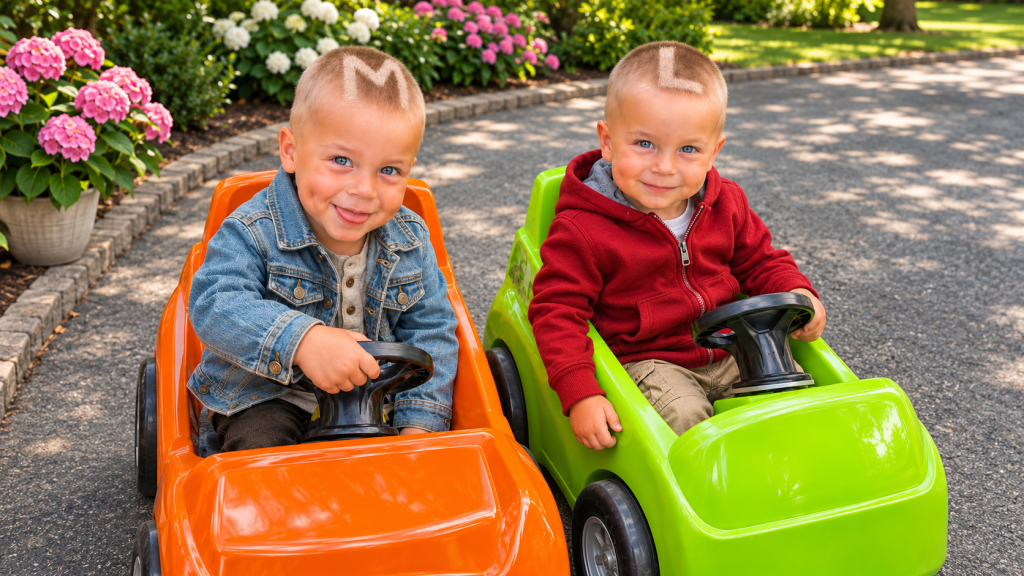
I’d watched them enter the world minutes apart. “What are you talking about?” Henry rubbed his forehead. “I don’t understand it either.” Max pulled on my sleeve. “Mommy, is Daddy mad because we changed beds?” My heart broke. I immediately knelt. “No, sweetheart. You haven’t done anything wrong.” Leo looked frightened. “Are we in trouble?”
I gathered both boys into my arms. “Never for trying to keep each other safe.” Henry stepped forward. “Boys, Daddy didn’t mean to scare you.” But Leo pressed his face against my shoulder. And that tiny movement told me something I wasn’t ready to admit. My sons were afraid of their father. I looked at Henry. “Go downstairs.” “Claire—” “Now.” For once, he didn’t argue.
He turned and walked away.
I stayed on the hallway floor until both boys stopped trembling.
Then I carried them into our bedroom, tucked them beneath my blanket, and sat beside them until they fell asleep.
Only then did I allow myself to cry.
I found Henry sitting at the kitchen table.
The scissors lay beside the little bottle.
The laboratory documents were spread across the wood.
He looked up when I entered.
“Claire, I can explain.”
I pulled out a chair.
“Then start explaining.”
He swallowed.
“Three weeks ago, I was organizing some insurance paperwork. I found an old hospital document from when the boys were born.”
I stared at him.
“What document?”
He slid a photocopy across the table.
It was a newborn identification record.
Two names appeared beneath our surname.
MAX CARTER.
LEO CARTER.
Beside Max’s name was a handwritten notation.
Beside Leo’s was another.
I frowned.
“Those are their hospital identification numbers.”
Henry nodded.
“But the blood-type information didn’t match what I remembered.”
I looked at him.
“Henry, newborn records can contain mistakes.”
“I know.”
“Then why didn’t you ask the hospital?”
He looked down.
“Because I started wondering whether something happened when they were born.”
My stomach tightened.
“Something like what?”
He hesitated.
“Whether one of them was switched.”
For a moment, the kitchen seemed to tilt.
I stared at him.
“You thought somebody gave us the wrong baby?”
He nodded.
“And instead of telling me, you secretly tested our sons?”
Tears gathered in his eyes.
“I was afraid.”
I looked toward the staircase.
“Henry, fear doesn’t explain why our children are frightened to sleep in their own beds.”
He said nothing.
I picked up the first laboratory report.
It wasn’t a document I recognized.
There were numbers, genetic markers, and a conclusion written in clinical language.
I read it twice.
Then I noticed something strange.
The report identified one sample as Max.
But the corresponding collection date was a Tuesday when Max had been home sick with me.
Henry was supposed to have taken Leo to the dentist that morning.
I frowned.
“Where did you get these samples?”
He hesitated.
“From their toothbrushes.”
I stared at him.
“The boys share a bathroom.”
“I know.”
“And sometimes they use each other’s toothbrushes.”
Henry rubbed his forehead.
“I didn’t think about that.”
My heart pounded.
“You didn’t think about it?”
He looked miserable.
“Claire, I was trying to find answers.”
I held up the report.
“You were collecting samples without proper identification, making assumptions from paperwork you didn’t understand, and frightening our children.”
He covered his face.
I continued.
“Did you ever stop to think that your results might be wrong?”
He whispered, “That’s what the laboratory told me today.”
I froze.
“What exactly did they say?”
He reached for another page.
“They said the follow-up comparison was inconsistent with the first report and that the samples might have been mixed up or contaminated.”
I stared at him.
“So you don’t even know whether either result is reliable.”
He shook his head.
“No.”
I closed my eyes.
Then a terrible thought occurred to me.
“Henry, why did you shave their heads?”
He looked away.
“Because I needed to know which boy was which.”
I stared at him.
“For what?”
He swallowed.
Then whispered, “For another test.”
I stood so abruptly that my chair scraped against the floor.
“You shaved their heads so you could collect samples?”
Henry shook his head.
“Not exactly.”
“Then explain.”
He stared at the table.
“I had arranged another collection. This time I wanted to be certain I wasn’t confusing their identities.”
I looked toward the scissors.
“And tonight?”
He hesitated.
“I noticed the markings were growing less clear after their baths. I thought I could clean up the letters before tomorrow.”
My chest tightened.
“While they were sleeping?”
He nodded.
“With scissors and a chemical product?”
He looked ashamed.
“I wasn’t thinking clearly.”
“No, Henry. You weren’t.”
I picked up the bottle.
Its label warned against use near the eyes.
I felt sick imagining him leaning over a sleeping child with scissors in one hand and a chemical product in the other.
“What if one of them moved suddenly?”
He said nothing.
“What if it got into his eyes?”
His expression crumpled.
“I wouldn’t have hurt them.”
I looked at him.
“You’ve already frightened them.”
The words settled between us.
Henry stared toward the staircase.
Then whispered, “I didn’t realize they knew.”
My eyes filled.
“That might be the saddest thing you’ve said tonight.”
I barely slept.
Max and Leo curled against me beneath the blankets.
Every so often, one of them stirred.
I would stroke his back and whisper that everything was all right.
But I wasn’t sure it was.
At six in the morning, Leo opened his eyes.
“Mommy?”
“Yes, baby?”
“Are Max and me still brothers?”
My heart nearly stopped.
I turned toward him.
“Of course you are.”
He looked worried.
“Even if Daddy says we’re different?”
I gathered him into my arms.
“Listen to me, Leo. Nothing about a test or a haircut changes the fact that you and Max are brothers.”
He considered that.
Then whispered, “Forever?”
I kissed his forehead.
“Forever.”
Max opened his eyes and reached for Leo’s hand.
“See? I told you.”
I looked at them.
Two little boys.
Four years old.
Trying to understand a grown man’s fear.
I had never felt so fiercely protective in my life.
That morning, I called my sister Rachel.
She arrived before nine, carrying breakfast sandwiches and wearing the worried expression she reserved for emergencies.
I told her everything.
The shaved heads.
The laboratory reports.
The scissors.
The frightened boys.
And Henry’s suspicion that one child had somehow been switched at birth.
Rachel stared at me.
“Claire, this is serious.”
I nodded.
“I know.”
She lowered her voice.
“Where’s Henry?”
“At a hotel.”
I’d asked him to stay elsewhere while we figured out what to do.
He’d argued at first.
Then he’d seen Max hide behind my legs when he approached the staircase.
And he’d quietly packed a bag.
Rachel reached across the table.
“Have you called the pediatrician?”
“Not yet.”
“Then that’s where we start.”
I nodded.
She was right.
For the first time since the nightmare began, I needed facts instead of fear.
Our pediatrician, Dr. Bennett, saw us that afternoon.
The boys played quietly with wooden blocks while I explained the situation.
I showed her the reports.
She studied them carefully.
Then she looked at me.
“Claire, these results don’t establish what Henry believes they establish.”
I felt my shoulders loosen slightly.
“Why?”
“Because the collection and identity of the samples are uncertain. We also don’t know the laboratory’s complete procedures or whether the material was suitable for reliable testing.”
I nodded.
“And the boys looking identical?”
She smiled gently.
“Physical resemblance isn’t enough to settle genetic questions. But neither is a questionable report.”
I swallowed.
“What should we do?”
“If there’s a genuine concern about their medical or biological history, we can arrange appropriate testing through a qualified service with verified sample collection and consent.”
I looked toward my sons.
Max was helping Leo balance a wooden tower.
Dr. Bennett followed my gaze.
“Whatever happens, remember that these are two little boys who need reassurance, not a family investigation happening around their beds.”
Tears filled my eyes.
I nodded.
“That’s exactly what I told Henry.”
She smiled sadly.
“Then keep telling him.”
That evening, I spoke to Henry on the telephone.
He answered immediately.
“How are the boys?”
I looked toward the living room.
“They’re watching cartoons with Rachel.”
He sounded relieved.
“Can I come home?”
I closed my eyes.
“Not yet.”
There was a pause.
“Claire, I said I was sorry.”
“I know.”
“What more do you want?”
I took a slow breath.
“I want you to understand what you’ve done.”
He was silent.
I continued.
“Max and Leo think their father might stop loving one of them if a test says they’re different.”
His breathing changed.
“What?”
“Leo asked whether they’re still brothers.”
Henry made a sound I’d never heard from him before.
A broken little gasp.
“Oh, God.”
I swallowed.
“Henry, our children are four. They should be worried about dinosaurs and bedtime stories, not whether they belong in their own family.”
He began crying.
“I never wanted that.”
“I believe you.”
I paused.
“But not wanting to hurt someone doesn’t mean you haven’t.”
He said nothing.
Then I continued.
“We’ll get proper answers. But before you come home, I need to know you can put the boys’ feelings ahead of your fear.”
He whispered, “I’ll do whatever it takes.”
I hoped he meant it.
Three days later, Henry agreed to meet with Dr. Bennett.
He also agreed to counseling.
I didn’t make those arrangements because I wanted to punish him.
I made them because what had happened couldn’t be repaired with a simple apology.
Our sons deserved to feel safe.
And Henry needed to understand why his anxiety had led him to make such frightening decisions.
Meanwhile, Dr. Bennett helped us arrange appropriately identified testing.
The process was explained to both of us, including what it could and couldn’t establish.
I insisted on one thing.
The boys would not be told that one of them might not belong to us.
They would simply be told the doctor needed to check some family information.
Henry agreed.
For the first time in weeks, he seemed willing to listen rather than act on every frightening thought that entered his head.
But I was still struggling to understand what had started all of it.
Why had one old hospital document frightened him so badly?
And why had he never mentioned it before?
The answer began arriving the following Monday.
I received a call from a woman named Margaret Ellis.
She introduced herself as a records coordinator at the hospital where the twins were born.
“Mrs. Carter, we’ve received your request for clarification of the boys’ newborn records.”
I held my breath.
“Yes.”
“There is an annotation in the archived chart that may explain the discrepancy your husband noticed.”
My heart began pounding.
“What annotation?”
She paused.
“It concerns the identification labels used during the first few hours after delivery.”
I gripped the telephone.
“What about them?”
“There was a documented labeling correction.”
I sat down.
“A correction?”
“Yes. Two identification entries were transposed during a routine records update.”
My stomach tightened.
“Were the babies switched?”
Margaret answered carefully.
“The available records describe a documentation error, not a confirmed exchange of infants. But I can arrange for our clinical records team to review the full chart with you.”
I closed my eyes.
A labeling correction.
Henry had seen a discrepancy.
And instead of asking someone to explain it, he’d allowed his fear to grow until our children were afraid to sleep.
I thanked Margaret and ended the call.
Then I stared at the telephone.
Something still bothered me.
Because Henry hadn’t simply been worried about paperwork.
He’d been terrified that one of the boys wasn’t biologically his.
And I couldn’t understand why that possibility had frightened him so much.
That evening, Rachel found me sitting at the kitchen table.
“Claire?”
I looked up.
“Can I ask you something?”
“Of course.”
“Do you remember the boys’ delivery?”
She smiled.
“I was in the waiting room for almost twelve hours. How could I forget?”
I nodded.
“Do you remember anything unusual?”
Rachel thought for a moment.
“Besides Henry nearly fainting?”
Despite everything, I almost laughed.
Then she frowned.
“Actually, there was something.”
My stomach tightened.
“What?”
“After the boys were born, a nurse came out asking whether we’d seen a little blue folder.”
I stared at her.
“A blue folder?”
Rachel nodded.
“She said some records had been moved during the shift change.”
My heart pounded.
“Did they find it?”
“I don’t know.”
She studied my face.
“Claire, why?”
I looked toward the drawer where I’d kept the hospital papers.
“Because I think the mistake in those records has been sitting there for four years.”
Rachel nodded.
“That sounds possible.”
But then she asked something I hadn’t considered.
“Did Henry ever tell you why he was reviewing the records in the first place?”
I shook my head.
“He said insurance paperwork.”
Rachel looked thoughtful.
“Was he changing insurance?”
I stared at her.
“I don’t know.”
And suddenly, that simple question made me uneasy.
The next morning, I called Henry.
“Why were you looking through the hospital records?”
He hesitated.
“I told you. Insurance paperwork.”
“What insurance paperwork?”
Silence.
Then he sighed.
“Claire, there’s something I haven’t told you.”
My stomach tightened.
“What?”
He took a shaky breath.
“A few months ago, I received a letter.”
I frowned.
“From whom?”
He hesitated.
“Someone who claimed to know something about the boys’ birth.”
I sat perfectly still.
“What did the letter say?”
Henry’s voice trembled.
“That one of our sons might not be biologically related to me.”
The room seemed to tilt.
I gripped the counter.
“Henry, why didn’t you tell me?”
“I thought it was a cruel joke.”
“Then why did you start testing them?”
He swallowed.
“Because the letter included details about the hospital.”
My heart pounded.
“What details?”
“The time of delivery. The room number. The names of two nurses.”
I stared at the wall.
Those weren’t details a stranger would usually know.
“Do you still have the letter?”
“Yes.”
“Bring it to me.”
He hesitated.
“Claire, I don’t want to frighten you.”
I closed my eyes.
“Henry, you’ve already frightened our entire family. Please stop deciding what I can handle.”
He was silent.
Then whispered, “I’ll bring it.”
Henry arrived an hour later.
He didn’t come inside.
I met him on the porch while Rachel stayed with the boys.
He handed me an envelope.
There was no return address.
Inside was a single printed page.
I read the first sentence.
Then read it again.
“Mr. Carter, you have been raising two boys under the assumption that they are biologically identical. The hospital’s records do not support that assumption.”
My heart began pounding.
The letter continued.
“One of the children may have been incorrectly identified following delivery. A private genetic analysis is recommended.”
I stared at the page.
Then noticed something strange.
At the bottom was a telephone number.
No organization name.
No signature.
Just a number.
“Did you call it?” I asked.
Henry nodded.
My stomach tightened.
“What happened?”
“A woman answered. She told me she worked with a private family-records service.”
I stared at him.
“And?”
“She recommended a testing company.”
I looked down at the reports.
The same laboratory whose results had frightened him.
The same company that had accepted poorly identified samples.
I felt a cold realization settling inside me.
“Henry, did that woman charge you money?”
He looked ashamed.
“Yes.”
“How much?”
He swallowed.
“Almost three thousand dollars.”
I stared at him.
“For what?”
“Consultations. Tests. Record reviews.”
My heart sank.
Someone had frightened my husband with a mysterious letter.
Then directed him toward expensive services.
And he’d never once asked whether the person was telling the truth.
I showed the letter to Dr. Bennett and our family attorney, Mrs. Lawson.
Both advised caution.
Mrs. Lawson examined the document.
“Claire, there’s no identifying information establishing who sent this.”
I nodded.
“Could somebody have obtained those hospital details?”
“Possibly. But we shouldn’t assume the sender had legitimate access. We can ask the hospital to review the concern and preserve any relevant records.”
I looked at Henry.
He sat beside me, staring at the floor.
Mrs. Lawson continued.
“We also need to distinguish between an actual hospital error and someone using an old discrepancy to create fear.”
I swallowed.
“Could the letter be a scam?”
She nodded.
“That’s one possibility.”
Henry covered his face.
For the first time, I saw something other than fear in his expression.
Shame.
He’d frightened his sons.
Hurt his marriage.
Spent thousands of dollars.
And perhaps allowed an anonymous stranger to manipulate him.
I took his hand.
Not because everything was forgiven.
But because I could see that the truth was beginning to reach him.
Two weeks later, the verified genetic results arrived.
Dr. Bennett asked us to come into her office so she could explain them properly.
I sat beside Henry.
My hands trembled.
He looked equally frightened.
The doctor opened the report.
Then smiled gently.
“First, I want you both to know that the new testing was performed using properly identified samples.”
I nodded.
She continued.
“The results support that both Max and Leo are biologically related to both of you.”
I began crying.
Henry covered his face.
“Oh, thank God.”
Dr. Bennett waited until we could listen.
Then she said something unexpected.
“However, there’s another finding.”
My heart tightened.
“What?”
She glanced at the report.
“The boys are not genetically identical.”
I stared at her.
“But they look exactly alike.”
She smiled gently.
“Fraternal twins can sometimes look remarkably similar, especially at a young age.”
I looked toward Henry.
He was staring at the report.
Dr. Bennett continued.
“The results indicate that Max and Leo are fraternal twins, not identical twins.”
For a moment, neither of us spoke.
Then Henry began laughing through his tears.
All those years.
All those matching faces.
All that confusion.
And the boys weren’t even identical.
But the relief didn’t erase what had happened.
I looked at Henry.
His smile faded.
He knew it too.
On the drive home, neither of us spoke for several minutes.
Then Henry whispered, “Claire, I’m so sorry.”
I kept my eyes on the road.
“I know.”
He swallowed.
“I nearly destroyed everything because I was afraid of something that wasn’t true.”
I nodded.
He began crying.
“I frightened our children.”
“Yes.”
“I made them think one of them didn’t belong.”
My eyes filled.
“Yes.”
He covered his face.
“I don’t know how to make that right.”
I looked toward the road ahead.
“By telling them the truth in a way they can understand.”
He nodded.
“By listening when they’re frightened.”
“Yes.”
“And by never again letting fear decide how you treat them.”
Henry looked at me.
“I promise.”
I wanted to believe him.
But trust doesn’t grow back simply because someone promises to change.
It grows when they do.
That evening, I sat with Max and Leo on the living room rug.
Henry sat opposite us.
The boys were building a tower with colorful blocks.
Max looked up.
“Daddy, are you still mad about our hair?”
Henry’s face crumpled.
He moved closer.
“No, buddy.”
Leo looked worried.
“Then why did you keep coming into our room?”
Henry took a shaky breath.
“Because Daddy was worried about something, and I handled it badly.”
Max tilted his head.
“Did we do something wrong?”
Henry began crying.
“No.”
He reached for both their hands.
“You didn’t do anything wrong. Not one thing.”
Leo looked at him.
“Are we still brothers?”
Henry nodded.
“Always.”
Max smiled.
“Even though I have an M and he has an L?”
Henry laughed through his tears.
“Even without the letters.”
I watched them.
For the first time in weeks, the boys moved closer to their father.
But then Leo asked something that made my heart ache.
“Daddy, will you still love us when our hair grows back?”
Henry covered his mouth.
Tears rolled down his cheeks.
Then he pulled both boys gently into his arms.
“I’ll love you when your hair grows back, when you’re grown men, and every day in between.”
The boys hugged him.
And I turned away, wiping my eyes.
I hoped that would be the beginning of healing.
But the story wasn’t finished.
Three days later, Mrs. Lawson called.
Her voice was serious.
“Claire, we’ve received information about the company that contacted Henry.”
My stomach tightened.
“What information?”
“The telephone number on that anonymous letter has been associated with other complaints.”
I sat straighter.
“Complaints about what?”
“Families receiving alarming messages about possible hospital identification mistakes and then being directed toward expensive private testing services.”
I closed my eyes.
“So it was a scam?”
“There’s evidence suggesting a deceptive operation, but the investigation is ongoing.”
I nodded.
Then she continued.
“Claire, there’s something unusual about the information included in Henry’s letter.”
My heart pounded.
“What?”
“The sender appears to have known about the actual labeling correction in the boys’ hospital records.”
I stared at the wall.
“Could someone at the hospital have been involved?”
“That’s one possibility. We shouldn’t jump to conclusions.”
Then she paused.
“But the hospital’s privacy office has discovered something concerning.”
My stomach tightened.
“What?”
“Someone accessed the archived delivery records several months before Henry received the letter.”
I stopped breathing.
Mrs. Lawson continued.
“The hospital is reviewing whether that access was authorized.”
I gripped the telephone.
“Who accessed them?”
There was a long silence.
Then she whispered, “Claire, the access was made using the credentials of a former employee.”
I stared toward the living room.
The boys were laughing as Henry helped them build another tower.
For the first time in weeks, our home sounded happy again.
But I felt cold.
“Mrs. Lawson, do we know the employee’s name?”
She hesitated.
“The hospital hasn’t confirmed responsibility. But they’ve identified whose account was used.”
My heart pounded.
“Who?”
There was another pause.
Then she said a name I hadn’t heard in four years.
“Nurse Evelyn Marsh.”
My knees weakened.
I remembered her immediately.
She’d been one of the nurses who cared for me after the twins were born.
The woman who’d held Max while I recovered.
The woman who’d helped Henry change Leo’s first diaper.
The woman who’d smiled and told us how lucky we were.
I stared at the telephone.
Then Mrs. Lawson added something that made my blood run cold.
“Claire, according to the records we’ve received, Evelyn was dismissed from the hospital shortly after your sons were born.”
I gripped the edge of the table.
“Why?”
Mrs. Lawson took a breath.
“Because of an incident involving the identification records of newborn twins.”
For a moment, I couldn’t move.
The room seemed to fall silent around me.
I’d thought the genetic results had finally ended our nightmare.
Both boys were ours.
They were healthy.
They were brothers.
And we were beginning to repair our family.
But now I understood that someone had known about the hospital’s mistake for four years.
Someone who might have deliberately used that information to frighten Henry.
And the woman whose name had just been revealed had once stood beside my hospital bed holding my newborn son.
I looked toward Max and Leo.
Their laughter filled the room.
Then I whispered into the telephone, “Mrs. Lawson, I need to know exactly what happened in that hospital.”


