➡️ PART 3 ➡️
For thirty-four years, I had believed my mother was careless. That was the explanation I’d carried through childhood, through adolescence, and into adulthood. Careless with labels. Careless with ingredients. Careless about remembering that a handful of walnuts could send me to the hospital.
But as I sat at my kitchen table listening to Gregory Ashby explain what my grandmother had discovered, a far more terrible possibility began taking shape. Perhaps my mother had never been careless at all. “Mr. Ashby,” I whispered, “what exactly did Grandma document?”
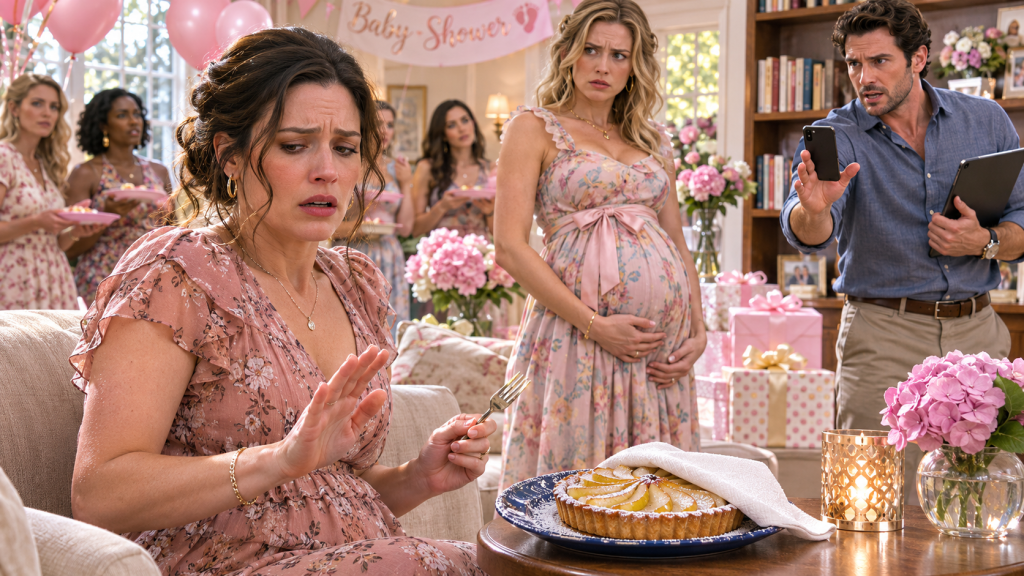
There was a pause. “Mrs. Danforth, I would prefer to discuss the details in person. Some of the information is difficult, and I want you to have the opportunity to examine the original documents.” I looked toward Fred. He sat beside me, his hand resting gently against my back.
“Is it about my allergy?” “Yes.” “Does it involve my mother?” Another pause. “Yes, Christy.” Hearing him use my first name frightened me more than his answer. I closed my eyes. “Then I need to know.” His voice softened. “Your grandmother kept a journal during the final years of her life. She also preserved correspondence, medical information, and several recordings of conversations she considered troubling.”
My fingers tightened around the telephone.
“Recordings?”
“Yes.”
I stared toward the window.
Outside, rain tapped against the glass.
Grandma Evelyn had been a quiet woman.
She liked gardening, crossword puzzles, and making strawberry jam in little glass jars.
She rarely raised her voice.
When family arguments became uncomfortable, she usually disappeared into the kitchen and returned with tea.
The thought of her secretly collecting evidence was almost impossible to imagine.
Then Ashby said something that made my heart stop.
“She was afraid that if she confronted your mother directly, the evidence would disappear.”
After the call ended, Fred pulled me into his arms.
I pressed my face against his chest.
“I don’t understand,” I whispered.
He stroked my hair.
“I know.”
“Why would Mom do something like that?”
He didn’t answer.
And I was grateful.
There wasn’t a comforting explanation available.
Not one that could make the messages about walnut dessert and missing emergency medication harmless.
For years, I’d defended my family whenever Fred expressed concern.
I’d told him Michaela was thoughtless.
I’d said Mom didn’t understand how serious food allergies could be.
I’d insisted that nobody who loved me would deliberately put me in danger.
Now I remembered the camping trip when my injector vanished.
The wedding caterer who nearly served a dessert containing almonds.
The Christmas cookies that had somehow ended up in the wrong tin.
And I wondered how many times my survival had depended on luck.
Fred pulled back slightly.
“Christy, listen to me.”
I looked up.
“Whatever your grandmother found, you don’t have to face it alone.”
My eyes filled.
“I keep thinking about all those times I apologized.”
He frowned.
“For what?”
“For getting upset when they forgot.”
My voice broke.
“I apologized for making everyone uncomfortable after I almost stopped breathing.”
Fred held me tighter.
And for the first time, I allowed myself to feel the anger beneath the fear.
Wednesday morning, Fred and I drove to Gregory Ashby’s office.
The building stood along a quiet street lined with old maples, less than twenty minutes from Grandma’s cottage.
I knew the area well.
When I was little, Grandma used to take me to the bakery across the road.
She’d buy cinnamon rolls for herself and carefully checked fruit pastries for me.
She always asked about ingredients.
Always read labels.
Always made certain I had my emergency medication.
I used to think she worried too much.
Now I wondered whether she’d known something the rest of us refused to see.
Ashby greeted us personally.
He was a silver-haired man in his late sixties, with kind eyes and a careful manner.
He led us into a conference room.
On the table sat a worn green notebook.
Beside it was a sealed envelope with my name written across the front.
I recognized the handwriting immediately.
Grandma Evelyn.
My knees weakened.
Fred helped me sit.
Ashby folded his hands.
“Christy, before we begin, I want you to understand that your grandmother loved you very much.”
Tears filled my eyes.
“I know.”
He nodded.
“She also wanted you to know that she was sorry.”
I stared at him.
“Sorry for what?”
Ashby looked toward the notebook.
“For waiting so long to act on what she suspected.”
He opened the journal.
The first entry he showed me was dated eleven years earlier.
I was twenty-three then, studying pharmacy, and had come home for Thanksgiving.
Grandma had written:
Christy became ill after eating the stuffing. She insists the allergy information was provided beforehand. Marianne says the recipe was changed accidentally. I watched Marianne prepare it. I did not see nuts added, but I heard her tell Michaela that Christy needed to stop controlling everyone else’s meals.
I felt my stomach turn.
I remembered that Thanksgiving.
I’d developed swelling around my mouth and throat and needed emergency treatment.
Mom had cried afterward.
She held my hand at the hospital and repeatedly said she was sorry.
I’d believed her.
Ashby turned another page.
An entry from six years earlier.
Christy’s wedding caterer called to confirm the nut restriction. Marianne said Michaela was handling the menu. Later, Michaela told the caterer the restriction could be removed. Christy discovered the change before the wedding. Both girls argued. I am frightened by how little concern Marianne showed.
Fred reached for my hand.
I couldn’t speak.
Then Ashby opened the journal near its final pages.
The entry was dated four months before Grandma died.
I confronted Marianne about the repeated incidents. She told me Christy exaggerates and that her allergy has become the center of every family gathering. When I told her she was playing with Christy’s life, she said I should mind my own business.
I covered my mouth.
Grandma had confronted my mother.
And Mom had dismissed her.
Ashby let me read for several minutes.
Then he placed a folder beside the journal.
“There are also copies of communications your grandmother received.”
I looked up.
“From whom?”
“Your mother and sister.”
He opened the folder.
Inside were printed emails.
One showed Grandma asking Michaela why she’d removed the allergy restriction from my wedding menu.
Michaela’s response was brief.
Christy always needs special treatment. It was one dessert.
I stared at those words.
One dessert.
As though the number of desserts mattered when one could kill me.
Another exchange concerned the missing injector during our teenage camping trip.
Grandma had asked Mom whether she’d investigated how it disappeared.
Mom replied:
It turned up. Stop making everything a crisis.
I felt tears sliding down my cheeks.
Fred squeezed my hand.
Ashby spoke gently.
“Christy, your grandmother did not have conclusive evidence explaining every past incident. She knew that. But the repeated pattern troubled her deeply.”
I nodded.
That distinction mattered.
I was a clinical pharmacist.
I understood the difference between suspicion and proof.
But the deliberate walnut tart at the baby shower was different.
There were messages.
Missing injectors.
A laboratory result.
And a plan to keep me away from an estate attorney.
The past might still contain uncertainty.
The present did not.
Ashby reached for the sealed envelope.
“Your grandmother asked me to give you this personally.”
My hands trembled as I opened it.
Inside were three handwritten pages.
I recognized Grandma’s familiar blue ink.
My dearest Christy,
If you’re reading this, then I am no longer here to hold your hand, and that breaks my heart.
I began crying immediately.
Fred moved closer.
I continued reading.
You have spent your life trying to make everyone comfortable, even when doing so placed you in danger. I have watched you apologize for needing to breathe safely, for asking questions about food, and for expecting the people who love you to remember what could hurt you.
Sweetheart, you were never asking too much.
I pressed my hand against my mouth.
Those words reached somewhere inside me that had been hurting since childhood.
Grandma continued.
I cannot tell you that I understand everything your mother and sister have done. I only know that too many things happened for me to keep pretending they were ordinary mistakes.
I have left my cottage and the majority of my estate to you because I trust your judgment, your kindness, and your ability to build a life of your own.
Your mother will be angry. Your sister may be angry too. Their anger does not make my decision wrong.
I paused.
Then read the final paragraph.
There is one thing I want you to remember above all else. You do not owe anyone access to your life simply because they are related to you. Love should make you safer, not afraid.
I lowered the letter.
And sobbed.
Fred wrapped his arms around me.
I cried for Grandma.
For the frightened little girl who’d learned to inspect every meal.
For the young woman who’d spent holidays watching other people eat while she checked labels.
For every time I’d apologized to someone who should have been apologizing to me.
Ashby quietly stepped out of the room.
When he returned, he brought tissues and water.
I wiped my face.
“Why didn’t Grandma tell me?”
He sat down.
“She wanted to. But she was also concerned about creating a confrontation without sufficient evidence to establish what had occurred.”
I nodded.
He continued.
“She did speak with an attorney about documenting her concerns. She also changed the estate arrangements to make certain your mother could not control the property intended for you.”
I looked at the letter again.
“Was the cottage always supposed to be mine?”
Ashby shook his head.
“Under an earlier will, your mother would have received most of the estate.”
My stomach tightened.
“And Grandma changed it?”
“Yes.”
“Because of what she suspected?”
“Her written explanation refers to several concerns, including her belief that you needed independence from family pressure.”
I closed my eyes.
Then asked the question that had been haunting me.
“How much is the estate worth?”
Ashby opened another folder.
“The cottage was recently appraised at approximately four hundred and twenty thousand dollars.”
I stared at him.
He continued.
“There are also investment accounts, savings, and other assets. After the estimated obligations and expenses, the estate’s current projected net value is a little over nine hundred thousand dollars.”
I couldn’t speak.
Nine hundred thousand dollars.
Grandma had lived modestly.
She drove an old sedan.
Made her own curtains.
And wore the same winter coat for fifteen years.
I had no idea she’d accumulated that much.
Ashby smiled gently.
“She was careful with money. And she inherited part of her late husband’s family’s business interests many years ago.”
I looked at Fred.
He seemed just as stunned.
Then Ashby explained the Friday meeting.
It was not a simple reading of a will.
The estate administration had encountered complications because my mother disputed Grandma’s final instructions.
“She has challenged the validity of the revised will,” Ashby said.
I stared at him.
“On what grounds?”
“She alleges your grandmother lacked sufficient capacity when she signed it.”
My chest tightened.
“Grandma was doing crossword puzzles until the week before she died.”
Ashby nodded.
“Her medical records and the independent witnesses to the signing will be relevant.”
I took a breath.
“And Mom wanted me absent?”
“Your mother contacted our office and claimed you were too ill to participate. She also suggested that she could speak on your behalf.”
I looked down at Grandma’s letter.
Suddenly, Michaela’s messages made terrible sense.
The tart wasn’t just cruelty disguised as a joke.
The missing injectors weren’t a misunderstanding.
According to the messages, they wanted me unable to attend a meeting where my presence mattered.
I stared at Ashby.
“If I hadn’t stopped eating, I might have ended up in the hospital.”
His expression grew grave.
“Yes.”
Fred tightened his grip on my hand.
I swallowed.
“And they were planning to tell you I couldn’t attend.”
Ashby nodded.
“That appears consistent with what you’ve described.”
I looked toward the window.
The world outside seemed impossibly ordinary.
Cars passed.
People walked along the sidewalk.
Somewhere, someone was buying coffee.
And I was sitting in an attorney’s office learning that my own mother and sister had apparently tried to exploit a medical emergency to interfere with my inheritance.
That afternoon, I called Kelly.
She answered immediately.
“Christy, how did it go?”
I sat on Grandma’s cottage porch while Fred checked the locks.
I’d asked Ashby whether we could visit after our meeting.
He’d arranged access.
The garden was overgrown.
The porch swing creaked.
But the house still smelled faintly of lavender.
“Kelly,” I whispered, “Grandma knew.”
There was silence.
Then she asked, “Knew what?”
I explained the journal.
The letters.
The estate.
The challenge.
And Friday.
Kelly listened without interrupting.
When I finished, she said something that made me cry again.
“Christy, I need you to stop thinking of this as a family disagreement.”
I closed my eyes.
“I know.”
“No. I mean it. Someone knowingly put an allergen in your food and concealed your emergency medication.”
I nodded.
“You’re right.”
“Have you updated the investigator?”
“Not yet.”
“Then do that. And don’t meet either of them alone.”
I looked toward the garden.
“I won’t.”
Kelly softened her voice.
“I’m proud of you.”
I swallowed.
“For what?”
“For finally believing that your safety matters.”
Thursday morning, the laboratory sent its completed report.
The submitted tart sample tested positive for walnut protein.
The report identified the sample, documented its handling after submission, and described the analytical findings.
It did not establish who added the walnuts.
But the messages Fred had preserved addressed that question directly.
I contacted the investigator assigned to my report.
Detective Lauren Brooks met Fred and me that afternoon.
She listened carefully as we explained everything.
We provided the original screenshots, the laboratory report, the timeline, and the estate correspondence.
Detective Brooks examined the records.
Then looked at me.
“Mrs. Danforth, I want to be clear about something. The laboratory report supports the presence of walnut in the sample, but we’ll still need to establish the circumstances surrounding its preparation and handling.”
I nodded.
“I understand.”
She continued.
“The messages about your injectors and the planned exposure are especially concerning.”
My hands trembled.
“Do you think they’ll be questioned?”
“Yes. We’ll pursue the appropriate investigative steps.”
Fred leaned forward.
“What about the missing auto-injectors?”
“We’ll document the reported removal and work to determine who handled them and where they went.”
I took a breath.
Then Detective Brooks said something I hadn’t expected.
“Christy, are you aware of any previous police reports involving your mother or sister?”
I frowned.
“No.”
She hesitated.
“I’m asking because we found a historical incident report that may be relevant.”
My stomach tightened.
“What incident?”
She looked at her notes.
“A medical emergency involving a teenage girl at a family gathering approximately sixteen years ago.”
I stared at her.
“That was me.”
Detective Brooks nodded.
“The report includes a witness statement that wasn’t included in the medical records you provided.”
I felt cold.
“What witness?”
She looked up.
“Your grandmother.”
I sat perfectly still.
I remembered the incident.
I was eighteen.
We’d attended a family birthday party.
Someone had brought a dessert containing pecans.
I’d asked whether the food was safe.
Mom assured me it was.
Within minutes, my throat began tightening.
An ambulance came.
I spent hours in the emergency department.
Mom told everyone the bakery must have mislabeled the dessert.
I had never known Grandma made a statement.
Detective Brooks continued.
“Your grandmother reported seeing someone move the dessert labels shortly before the food was served.”
My stomach tightened.
“Who?”
She looked at the document.
“She identified your sister.”
I covered my mouth.
Michaela would have been fifteen.
I remembered her standing near the dessert table.
I remembered her laughing with cousins.
I remembered waking in the hospital with Mom holding my hand.
Detective Brooks spoke carefully.
“The historical report doesn’t establish intent, and the incident was not pursued as a criminal case at the time. But it may help investigators understand the earlier concerns.”
I nodded.
I understood what she was saying.
A witness statement was not a verdict.
But the fact that Grandma had tried to warn someone sixteen years ago left me feeling hollow.
That evening, I returned home exhausted.
Fred made soup.
I couldn’t eat much.
Every time I closed my eyes, I saw Grandma standing beside that old birthday table, watching my younger sister move the labels.
Why hadn’t anyone told me?
Why had the truth been buried beneath apologies and excuses?
I sat beside Fred on the couch.
“Do you think Michaela hated me?”
He looked startled.
“Christy—”
“I’m serious.”
My voice cracked.
“Did she hate me enough to hurt me?”
Fred took my hand.
“I don’t know what was in her heart.”
I nodded.
“But I do know that whatever she felt, it didn’t give her the right to put you in danger.”
I closed my eyes.
Then whispered, “I keep remembering when she visited me during pharmacy school.”
He listened.
“She brought groceries. She made me laugh. She stayed up all night helping me study.”
Tears filled my eyes.
“How can someone be loving one day and cruel the next?”
Fred looked at me sadly.
“Sometimes people can care about someone and still make choices that are selfish, controlling, or harmful.”
I wiped my cheeks.
“But the caring doesn’t erase the harm.”
He shook his head.
“No.”
I leaned against him.
And for the first time, I stopped searching for a childhood memory that could make the present less frightening.
Friday arrived beneath a gray sky.
Fred and I reached Ashby’s office fifteen minutes early.
Kelly was waiting outside.
She hugged me.
“I took the day off.”
My eyes filled.
“You didn’t have to.”
She smiled.
“I know.”
Inside, Ashby greeted us and led us toward the conference room.
Then he paused.
“Christy, there’s been a development.”
My stomach tightened.
“What?”
“Your mother’s attorney contacted us this morning.”
I looked at him.
“And?”
“He requested that today’s meeting be postponed.”
I swallowed.
“Why?”
Ashby hesitated.
“He says your mother has obtained new evidence concerning your grandmother’s final will.”
I stared at him.
“What evidence?”
He looked uncomfortable.
“A document purportedly signed by your grandmother shortly before her death.”
My heart pounded.
“What kind of document?”
Ashby took a breath.
“A letter claiming she intended to revoke the revised will and restore your mother as the primary beneficiary.”
I felt the room grow cold.
“Grandma never mentioned that.”
Ashby nodded.
“The document’s authenticity has not been established.”
Fred stepped closer.
“And they’re presenting it now?”
“Yes.”
I looked toward the conference room door.
I could hear voices inside.
One of them belonged to my mother.
Another belonged to Michaela.
My stomach tightened.
Then I heard my sister laugh.
The sound was so familiar that for an instant, I was twelve again, standing in our childhood kitchen while she told Mom I’d overreacted to something she’d done.
Ashby opened the door.
Mom sat at the far end of the table.
Michaela sat beside her.
Her baby shower dress had been replaced by a cream-colored sweater.
Both women looked toward me.
Mom’s face changed.
“You’re here,” she whispered.
I stared at her.
“Yes.”
Michaela’s hand tightened around her water glass.
Then Mom stood.
“Christy, honey, we thought you were sick.”
I looked directly at her.
“No, Mom.”
My voice was steady.
“You hoped I would be.”
The room fell silent.
Ashby asked everyone to sit.
My mother’s attorney introduced himself as Daniel Mercer.
He placed a folder on the table.
“We believe this document clarifies Mrs. Evelyn Hartley’s final intentions.”
I looked at the paper.
It contained Grandma’s name.
A date.
And what appeared to be her signature.
Mom watched me carefully.
Michaela stared at the table.
Ashby examined the document without commenting on its authenticity.
Then he asked Mercer where it had been found.
Mom answered immediately.
“In Mother’s bedroom.”
I frowned.
“Where?”
“In her dresser.”
I looked at Ashby.
Grandma’s cottage had been secured after her death.
The estate’s belongings had been inventoried.
And Mom had already claimed she hadn’t found anything important.
“When did you discover it?” I asked.
Mom hesitated.
“Recently.”
“How recently?”
She looked toward her attorney.
Mercer answered.
“We’ll provide the relevant information through the appropriate process.”
I nodded slowly.
Then I noticed something.
The letter was printed on pale cream paper.
At the bottom was a small embossed symbol.
A rose.
My heart tightened.
I knew that stationery.
Grandma had used it for years.
But after Grandpa died, she stopped buying it.
She said the company had discontinued the design.
I remembered helping her clean the writing desk the previous winter.
We had found the last three sheets.
She’d laughed and said she was saving them for special letters.
Then I’d helped her put them inside a blue envelope.
I looked at the supposed revocation letter.
Then at Mom.
“Where is Grandma’s blue writing box?”
Her face changed.
“What?”
“The box where she kept her stationery.”
Mom looked away.
I turned toward Ashby.
“Grandma kept her special paper in a blue box inside the desk in her bedroom.”
He made a note.
I continued.
“She showed it to me last winter.”
Mercer shifted in his chair.
Michaela’s breathing grew shallow.
Then Ashby asked a question that changed everything.
“Mrs. Hartley, did anyone witness your mother’s signature on this document?”
Mom hesitated.
Then pointed toward Michaela.
“My daughter did.”
I looked at my sister.
Her face was pale.
Ashby turned toward her.
“Michaela, did you personally observe your grandmother sign this letter?”
For a moment, she said nothing.
Mom’s voice sharpened.
“Tell him, Michaela.”
My sister looked up.
Her eyes met mine.
And suddenly, I saw something I hadn’t seen at the baby shower.
Not triumph.
Not smugness.
Terror.
She swallowed.
Then whispered, “Mom, I can’t.”
The room went completely silent.
Mom’s face hardened.
“Michaela.”
My sister began crying.
“I can’t keep doing this.”
I stared at her.
“Doing what?”
She covered her face.
Then whispered something that made my blood run cold.
“Grandma didn’t sign that letter.”
Mom stood so abruptly that her chair scraped against the floor.
“Michaela, stop talking!”
But my sister was already sobbing.
And when she finally looked at me, her next words were almost too quiet to hear.
“Christy, Mom told me if you didn’t eat the tart, we’d lose everything.”
I gripped Fred’s hand.
Michaela continued.
“She said the estate wasn’t the only thing Grandma had changed.”
My heart pounded.
“What else?”
Michaela looked toward our mother.
Then whispered, “Grandma left another document. One that explains what happened to the money Mom took from you when you were eighteen.”
For a moment, I couldn’t breathe.
Money?
What money?
I stared at my mother.
Her face had gone completely white.
Then Michaela said the words that shattered everything I thought I knew about my family.
“Christy, Grandma found out Mom had been collecting payments in your name for sixteen years.”


