➡️ PART 3 ➡️
For a moment, I thought I’d misheard my father. Two hundred and forty thousand dollars. The number seemed to hang above the dining table, heavier than anything my mother had said that evening. I looked at Spencer. My brother had gone completely still. His confident smile was gone. His folded arms had fallen to his sides, and his face had turned the color of the white tablecloth beneath his hands.
“Two hundred and forty thousand?” I repeated. Dad nodded. “Yes.” I swallowed. “Spencer, you make seventy-eight thousand dollars a year. What could you possibly need a loan that large for?” My brother stared at the floor. Clare turned toward him. “Spencer?” He didn’t answer. She placed one hand protectively over her pregnant belly.
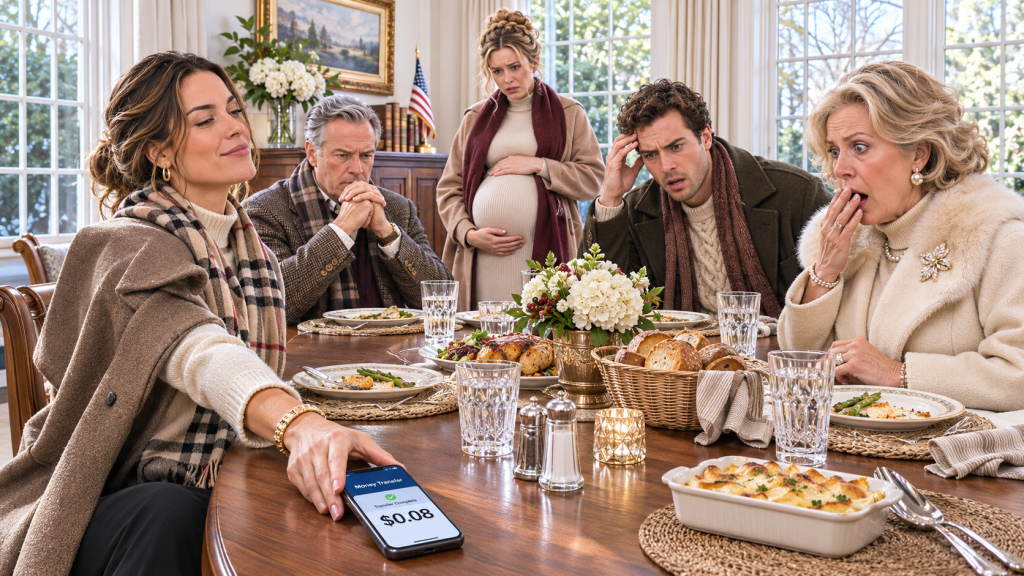
“Tell me what your father is talking about.” Mom stood abruptly. “This conversation has gone far enough.” I looked at her. “No, Mom. I think it’s finally getting somewhere.” Her expression hardened. “Margot, don’t be disrespectful.” I almost laughed. For fifteen years, I’d worked before sunrise, saved whatever I could, and protected the money Grandma Odette had left me.
And now I was apparently being disrespectful because I wanted to know why my brother had tried to use my inheritance to obtain a loan. I turned toward Dad. “Where did you hear about the collateral agreement?” He reached into his jacket pocket. Then placed a folded letter on the table. “The brokerage mailed this yesterday.” My heart began pounding.
I picked it up.
And as I read the first paragraph, I realized that what my family had planned was far more serious than an attempt to give Spencer withdrawal rights.
The letter referred to a proposed securities-backed financing arrangement.
It listed my former investment account as a supporting asset.
And beneath a paragraph describing the account owner’s authorization was my name.
Margot.
I stared at the signature.
It looked almost exactly like mine.
Almost.
But I knew I hadn’t signed anything.
I looked toward Spencer.
“Where did you get this?”
He swallowed.
“Margot, just listen.”
I placed the paper on the table.
“Did you sign my name?”
Mom interrupted.
“We were trying to help your brother.”
I turned toward her.
“That wasn’t my question.”
Her eyes narrowed.
“You don’t understand the pressure he’s under.”
“Then explain it.”
She glanced toward Spencer.
He shook his head slightly.
It was a tiny movement.
But I saw it.
And so did Clare.
“Spencer,” his wife whispered, “what are you hiding?”
He rubbed his forehead.
Finally, he said, “I thought I could fix everything before anyone found out.”
My stomach tightened.
“Fix what?”
He didn’t answer.
Dad lowered himself slowly into his chair.
And for the first time that evening, he looked genuinely frightened.
Clare pushed her chair backward.
“Spencer, look at me.”
He raised his head.
She was crying now.
“We’re having another baby in two months. I need you to tell me what’s happening.”
My brother took a shaky breath.
Then whispered, “The business investment went wrong.”
I frowned.
“What business investment?”
He looked toward Mom.
She closed her eyes.
Spencer continued.
“Last year, a colleague introduced me to a company developing vacation properties near the lake.”
I stared at him.
“You invested in real estate?”
He nodded.
“Initially, it was supposed to be twenty-five thousand.”
Clare’s expression changed.
“Twenty-five thousand?”
Spencer swallowed.
“Then they needed more money to finish the project.”
I looked toward his wife.
“Clare, did you know about this?”
She shook her head.
“No.”
My brother’s voice became smaller.
“I borrowed against our home equity.”
Clare covered her mouth.
“Spencer.”
“And I used two credit cards.”
Her eyes widened.
“How much?”
He stared at the table.
“More than I should have.”
I took a slow breath.
“Is the investment still operating?”
Spencer shook his head.
“No.”
Silence settled over the room.
Then Clare whispered, “Are we going to lose our house?”
My brother started crying.
And suddenly, I understood why he’d been so comfortable allowing Mom to talk about my retirement as though it were family property.
He hadn’t merely wanted extra money.
He’d been counting on mine to save himself.
Dad leaned forward.
“Spencer, why didn’t you come to me?”
Mom looked sharply at him.
“Hugh, we discussed this.”
He turned toward her.
“You told me he needed help with the mortgage.”
“He does!”
“You didn’t tell me he’d put the house at risk.”
Mom folded her arms.
“It wouldn’t have mattered. You would’ve worried.”
Dad stared at her.
“So you decided to hide it?”
She looked away.
I watched them quietly.
For years, Dad’s silence had been the background music of our family.
Mom made decisions.
Spencer received support.
I was expected to understand.
And Dad studied his water glass until the uncomfortable conversation ended.
But now the water glass was untouched.
And my father was finally asking questions.
I looked at him.
“Dad, did you know they were trying to use my retirement account?”
He hesitated.
“I knew they wanted to change the account arrangements.”
My chest tightened.
“Did you agree?”
His eyes filled.
“I didn’t ask enough questions.”
I looked down.
That had been the story of my childhood.
Dad never asked enough questions.
And I was always the one expected to live with the answers.
Mom sat down again.
“Margot, you’re making this into something ugly.”
I looked at her.
“Someone submitted a document with my signature on it.”
She waved her hand.
“It was just paperwork.”
My voice remained steady.
“Did I sign it?”
She stared at me.
“Margot—”
“Did I?”
Silence.
Then Mom whispered, “We knew you’d refuse.”
I felt something inside me grow very still.
“That’s why consent matters.”
Her expression tightened.
“You’re thirty years old.”
“Twenty-nine.”
She waved that away.
“Fine. Twenty-nine. You don’t have children. You don’t own a house. You don’t have the responsibilities your brother has.”
I looked toward Clare.
She was crying quietly.
Then I turned back toward Mom.
“Grandma didn’t leave that money to whoever accumulated the most expenses.”
Mom’s jaw tightened.
“She wanted you to have security.”
“Yes.”
“And Spencer needs security too!”
I took a breath.
“Then Spencer needs to build it.”
She stared at me.
I continued.
“I don’t earn seventy-eight thousand dollars a year. I earn thirty-six thousand.”
My voice trembled.
“I start work at four thirty every morning. I save three hundred and fifty dollars a month. I haven’t taken a proper vacation in years.”
I looked around the table.
“Does any of that matter to you?”
Nobody answered.
And that silence hurt more than I wanted to admit.
I reached for my phone and opened the message from my financial adviser.
Her name was Rebecca Hale.
I’d met her three months earlier after noticing unusual account-access activity.
The first warning had seemed minor.
A notification about changes to the contact information associated with Grandma’s inheritance.
I called the brokerage.
The representative explained that my parents’ old custodial permissions were still visible in the account history, although they did not authorize unrestricted withdrawal from an adult beneficiary’s assets.
I’d been startled.
Then cautious.
Rebecca helped me review the account.
Together, we confirmed my ownership and moved the investments through an authorized transfer process into a new account under my sole control.
I hadn’t done it to punish my family.
I’d done it because something about the attempted changes felt wrong.
Now, looking at the letter in my hand, I was grateful I’d listened to that feeling.
I turned toward Spencer.
“You need to understand something.”
He looked up.
“The money isn’t available to you.”
His expression crumpled.
“Margot, please.”
I shook my head.
“Not now. Not later. Not through Mom.”
He began crying.
“I’ll lose everything.”
I felt my throat tighten.
For a moment, I saw the boy I’d grown up with.
The brother who taught me to ride a bicycle.
Who defended me when older kids teased me about my glasses.
Who once saved his allowance to buy me a birthday cupcake.
I loved that boy.
But the man sitting across from me had tried to use my future to solve a problem he’d concealed from his own wife.
I took a breath.
“Spencer, losing your investment isn’t the same thing as being entitled to mine.”
Clare slowly stood.
“I need some air.”
Spencer reached for her.
“Clare—”
She stepped away.
“Don’t.”
Her voice broke.
“You let me choose nursery colors while you were making plans to borrow hundreds of thousands of dollars?”
He covered his face.
“I was going to fix it.”
She shook her head.
“You weren’t fixing it.”
Tears rolled down her cheeks.
“You were hiding it.”
Then she looked toward me.
“Margot, I’m sorry.”
I swallowed.
“You didn’t know.”
She nodded.
“But I sat here while your mother insulted your work.”
Her face crumpled.
“And I didn’t say anything.”
I looked down.
Clare continued.
“I thought staying quiet would keep the peace.”
For a moment, I remembered every Sunday dinner when I’d done exactly the same thing.
I took a breath.
“Sometimes silence protects the wrong person.”
Clare nodded slowly.
Then she walked outside.
Spencer remained seated, staring at the doorway through which his wife had disappeared.
I left shortly afterward.
Mom tried to stop me.
“Margot, you can’t just walk away from your family.”
I looked at her.
“I’m not walking away because Spencer needs help.”
She folded her arms.
“Then why?”
“Because you’ve decided my future belongs to someone else.”
Her expression hardened.
I continued.
“And because you knew I’d say no, so you tried to arrange it without me.”
Mom’s eyes filled.
“We did what we thought was best.”
I shook my head.
“For Spencer.”
She looked away.
I took my coat from the hallway.
Then paused beside Dad.
He stood slowly.
“Margot.”
I looked at him.
His eyes were wet.
“I’m sorry.”
For a moment, I wanted to embrace him.
To tell him everything was fine.
To make his guilt easier to bear.
But I couldn’t.
Not anymore.
I simply said, “Dad, I needed you to speak up years ago.”
His face crumpled.
“I know.”
Then I walked out.
The following morning, I met Rebecca at her office.
She reviewed the letter from the brokerage.
Then examined the copy of the proposed collateral agreement.
Her expression grew serious.
“Margot, this is concerning.”
I nodded.
“Can Spencer borrow against an account that no longer holds the investments?”
“Not through this document alone. Any actual lending arrangement would require verification, and we need to determine whether the application was approved or merely submitted.”
I exhaled.
She continued.
“We should also preserve the authorization bearing your disputed signature.”
I nodded.
“I already contacted the brokerage.”
“Good.”
Rebecca looked at me.
“Have you retained legal counsel?”
“Not yet.”
“I recommend doing so.”
She paused.
“There’s something else I want to clarify.”
“What?”
“The transfer of your investments protected them from this attempted account change. But the old account’s history still matters.”
I looked at her.
“Why?”
“Because we need to establish who submitted the documents and whether anyone used your identity without permission.”
My stomach tightened.
I nodded.
“Then let’s find out.”
By Wednesday, I had hired an attorney named Daniel Price.
He specialized in financial disputes and estate-related matters.
Daniel reviewed the account documents, the access requests, and the proposed collateral agreement.
Then he asked a question that made me uncomfortable.
“Margot, did your grandmother’s original will name your parents as permanent financial managers?”
“No.”
“Did you ever sign an adult authorization allowing them to make unrestricted withdrawals?”
“No.”
He nodded.
“Then we need to establish what permissions actually existed and whether anyone attempted to exceed them.”
I took a breath.
“Could this affect my retirement?”
“Your current assets are held in an account under your control. We’ll verify their security and address any disputed claims or representations involving the former account.”
I nodded.
Daniel continued.
“We’ll also request the lending records connected to Spencer’s application.”
I looked at him.
“Can we find out whether anyone signed my name?”
“We can seek the relevant documents and examine the evidence.”
I swallowed.
“Good.”
Because suddenly, the eight cents I’d left behind felt less like a clever response and more like the beginning of something I hadn’t expected.
That Friday, Clare called me.
Her voice sounded exhausted.
“Margot, I’m sorry to bother you.”
I sat down.
“What’s wrong?”
She hesitated.
“Spencer told me more about the investment.”
My stomach tightened.
“And?”
“He says the company didn’t just collapse.”
I frowned.
“What do you mean?”
She took a shaky breath.
“He thinks someone deceived him.”
I leaned forward.
“Who?”
“A man named Victor Lang.”
The name meant nothing to me.
Clare continued.
“Victor convinced Spencer to invest in a development partnership. He promised unusually high returns.”
I closed my eyes.
“Did Spencer verify the company?”
“He says he did.”
I waited.
“But?”
Clare began crying.
“The documents he showed me don’t match the bank transfers.”
My stomach tightened.
“What doesn’t match?”
“Some of the money went to a different company than the one named in the investment agreement.”
I looked toward the window.
“And Spencer only noticed now?”
She swallowed.
“He said he noticed months ago.”
Silence.
Then she whispered, “Margot, he kept sending more money because Victor promised he’d get everything back.”
I closed my eyes.
The old trap.
Losing money.
Refusing to accept the loss.
Risking more in the desperate hope that the first mistake could be erased.
I took a breath.
“Clare, I’m sorry.”
She began crying harder.
“I don’t know what we’re going to do.”
I looked down.
For a moment, I considered offering money.
Then I remembered Grandma’s note.
For Margot. Only Margot.
I swallowed.
“I can help you find a qualified financial counselor.”
Clare was quiet.
Then whispered, “Thank you.”
I added gently, “But I can’t pay Spencer’s debts.”
She nodded.
“I understand.”
And for the first time, someone in my family accepted that answer without calling me selfish.
The following week, Daniel called.
“Margot, we’ve received preliminary information concerning the financing application.”
I sat down.
“What did you find?”
“The lender did not complete the proposed loan based on your former account.”
Relief washed through me.
I closed my eyes.
“Thank goodness.”
Daniel continued.
“However, the application contained representations that require investigation.”
My stomach tightened.
“What representations?”
“It identified your parents as authorized controllers of the account and included an acknowledgment supposedly signed by you.”
I stared at the wall.
“I never signed it.”
“I understand.”
Then he paused.
“There’s another document.”
My heart pounded.
“What?”
“A family financial agreement.”
I frowned.
“What kind of agreement?”
Daniel took a breath.
“It states that your grandmother intended the account to support both you and Spencer.”
I stared at him.
“That’s impossible.”
He waited.
“Grandma’s will specifically named me.”
Daniel nodded.
“We have that document.”
I swallowed.
“Who signed this new agreement?”
He hesitated.
“Your mother.”
I closed my eyes.
Then he continued.
“And your father.”
My breath caught.
“Dad?”
“Yes.”
I stared toward the window.
The man who had looked ashamed at Sunday dinner.
The man who finally asked questions.
The father who’d spent years refusing to challenge Mom.
His name was on a document claiming Grandma had wanted her inheritance divided differently.
I swallowed.
“Did he know what he was signing?”
Daniel answered carefully.
“We need to ask him.”
That evening, Dad called.
I almost didn’t answer.
Then I remembered the document.
“Hello?”
His voice sounded tired.
“Margot.”
I sat down.
“Dad.”
He hesitated.
“I heard you’ve hired a lawyer.”
“Yes.”
He sighed.
“Your mother is upset.”
I closed my eyes.
“Dad, Mom has been upset with me for most of my life.”
He was quiet.
Then I asked, “Did you sign a document saying Grandma wanted Spencer to have access to my inheritance?”
Silence.
“Dad?”
He swallowed.
“Yes.”
My heart tightened.
“Why?”
He began crying.
“Evette told me it would help the family.”
I stared at the wall.
“Did you read it?”
He hesitated.
“Not carefully enough.”
I closed my eyes.
“Dad, Grandma wrote ‘For Margot. Only Margot.’”
His voice broke.
“I know.”
“Then why would you sign something claiming otherwise?”
He couldn’t answer.
For several seconds, I heard only his breathing.
Then he whispered, “Because I was afraid your mother would leave me if I didn’t support Spencer.”
My heart seemed to stop.
I stared at the telephone.
“What?”
Dad began sobbing.
“Margot, there’s something about your brother’s finances you don’t know.”
I felt cold.
“What?”
He hesitated.
“Your mother didn’t just help him apply for that loan.”
I gripped the phone.
“Then what did she do?”
He took a shaky breath.
“She gave Spencer money before the application.”
My heart pounded.
“How much?”
Dad was quiet.
Then whispered, “Forty-five thousand dollars.”
I stared at the wall.
“From where?”
He hesitated.
“Your grandmother’s estate.”
My blood ran cold.
I closed my eyes.
“Dad, Grandma’s estate was settled fifteen years ago.”
He began crying harder.
“I know.”
I swallowed.
“Then how did Mom get forty-five thousand dollars from it?”
There was a long silence.
Then Dad whispered something that made my hands begin trembling.
“Margot, the account Grandma left you wasn’t the only account she created.”
I stared at the phone.
“What?”
Dad took a breath.
“There was another trust.”
My heart pounded.
“For whom?”
He hesitated.
Then whispered, “For both of you. But your mother changed how the money was distributed.”
I closed my eyes.
For fifteen years, I’d believed I understood Grandma’s estate.
I knew about the fifty thousand she’d left me.
I knew about the note.
I knew about the account I’d worked so hard to grow.
But now Dad was telling me there had been another trust.
And that Mom had somehow controlled its distribution.
I pressed my hand against my chest.
“Dad, what exactly did Grandma leave?”
He began crying.
Then whispered, “Margot, I think it’s time you saw the original estate file.”
I stared toward the window.
Outside, evening traffic moved past my apartment.
Inside, everything I’d believed about my family’s finances was shifting.
Because suddenly, the question wasn’t just whether Spencer had tried to take my retirement.
It was whether my mother had been deciding what Grandma intended for both of us for fifteen years.
And whether she’d been hiding something much larger than a loan.


