➡️ PART 3 ➡️
For three years, I had believed the greatest secret in my marriage was the reason it began. Two thousand dollars a month. That was the price Jonah’s mother had offered me to become the legal wife of a man serving a prison sentence for stealing from his family’s charity.
I had needed the money. My younger brother, Caleb, needed someone to look after him. And I had been desperate enough to convince myself that marrying a stranger behind prison walls was simply another sacrifice I had to make. But somewhere between the prison visits, the handwritten letters, and the long evenings spent searching through legal documents, something extraordinary had happened.
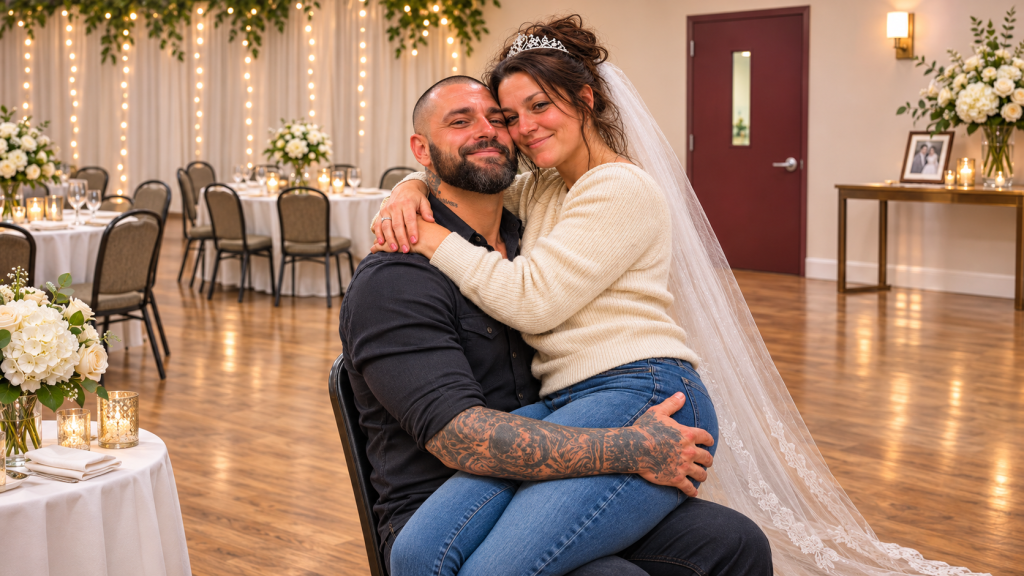
I had fallen in love with Jonah. And now, eight days after his release, I was standing in our kitchen, holding a telephone while Caleb whispered something that made my entire body go cold. “Don’t tell Jonah’s mother I found the recording.” I gripped the phone. “Caleb, where are you?”
“At home.” “Are you alone?” “Yes.” His breathing sounded uneven. “What’s going on?” I whispered. He hesitated. Then said, “I think Mrs. Whitfield knew someone was stealing before Jonah went to prison.” My stomach tightened. Mrs. Whitfield.
The bookkeeper who had tutored Caleb after school.
The woman whose photograph lay inside the mysterious black box.
The woman Jonah had just told me was dead.
I glanced toward my husband.
He was watching me with frightened eyes.
“Caleb,” I said carefully, “don’t delete anything. Don’t send it to anyone except through the attorney once we’ve spoken.”
My brother swallowed.
“Okay.”
Then he whispered, “There’s something else.”
“What?”
“The woman in the recording mentions Jonah’s mother.”
My heart stopped.
I ended the call and stared at Jonah.
He had gone completely pale.
“What did Caleb say?” he asked.
I swallowed.
“He found the recording.”
Jonah closed his eyes.
For several seconds, he didn’t move.
Then he whispered, “Thank God.”
I stared at him.
“That’s all you have to say?”
He looked up.
“What?”
“Your mother knew about Caleb before we were married. She arranged our marriage because she wanted access to something he was keeping.”
Tears burned my eyes.
“And now my brother says her name appears in a recording connected to the crime that put you in prison.”
Jonah stepped toward me.
I stepped back.
He stopped immediately.
“I’m sorry,” he whispered.
I shook my head.
“Jonah, I spent three years trying to prove you were innocent.”
His eyes filled.
“I know.”
“I read thousands of pages. I called witnesses. I borrowed money to help pay for legal reviews.”
My voice broke.
“And all this time, your family knew my brother might be holding evidence?”
Jonah lowered his head.
“Yes.”
The word struck harder than I expected.
Because he wasn’t denying it.
He was admitting it.
I sat down at the kitchen table.
The black box remained open between us.
Inside lay the gold necklace, the old photograph, and the receipt for Caleb’s education fund.
Objects that should have represented kindness.
Instead, they had become reminders of how much information everyone seemed to possess except me.
I looked toward Jonah.
“Tell me everything.”
He pulled out a chair.
For a moment, he stared at his hands.
Then he began.
“Before I was arrested, the charity was called the Whitfield Family Foundation.”
I nodded.
I knew that much.
The foundation provided scholarships, emergency housing assistance, and after-school tutoring for children from low-income families.
It was the sort of organization people praised at fundraising dinners.
The sort whose name appeared on hospital walls and university plaques.
And the sort where nobody expected a family member to steal hundreds of thousands of dollars.
Jonah continued.
“My grandfather established the foundation. When he died, my mother became chairwoman of the board.”
I swallowed.
“And your cousin?”
“Elliot.”
He looked down.
“He handled much of the financial administration.”
I leaned forward.
“Elliot stole the money.”
“Yes.”
“And forged your signature.”
Jonah nodded.
“But that’s not the whole story.”
The room became silent.
Then Jonah whispered, “The foundation had been losing money before anyone reported the theft.”
I frowned.
“Losing how?”
He rubbed his forehead.
“Bad investments. Administrative expenses. Promises made to donors that the foundation couldn’t afford.”
I stared at him.
“Your mother knew?”
He hesitated.
“She knew about the financial trouble.”
My heart tightened.
“But did she know Elliot was stealing?”
Jonah looked toward the black box.
“That’s what I’ve never been able to prove.”
I swallowed.
“Why didn’t you tell me?”
He closed his eyes.
“Because I didn’t want you thinking I was accusing my own mother to avoid responsibility.”
I stared at him.
“Jonah, you were innocent.”
He nodded.
“But for three years, nearly everyone believed I wasn’t.”
His voice broke.
“After a while, you become afraid that even the truth will sound like another excuse.”
I felt my anger soften slightly.
But it didn’t disappear.
“Keeping secrets from me wasn’t fair.”
He looked directly at me.
“I know.”
The following morning, Caleb arrived at our apartment.
He was nineteen now.
Tall, awkward, and perpetually hungry.
But the moment I opened the door, I saw the frightened little boy I’d raised after our father died and our mother became too ill to care for us.
He stood holding a battered blue backpack.
“Hey, Sis.”
I immediately hugged him.
“Are you okay?”
He nodded against my shoulder.
“Yeah.”
I pulled back.
“Did anyone contact you?”
“No.”
“Did you tell anyone about the recording?”
He shook his head.
“Just you.”
I studied his face.
He looked exhausted.
I stepped aside.
“Come in.”
Jonah stood near the kitchen doorway.
Caleb hesitated.
Then said quietly, “Hi, Jonah.”
Jonah nodded.
“Hello, Caleb.”
For a moment, neither spoke.
Then Jonah whispered, “I’m sorry you got dragged into this.”
Caleb looked down.
“Mrs. Whitfield told me someday the truth might matter.”
The words made my stomach tighten.
We sat around the kitchen table.
Caleb opened his backpack.
Inside was an old school folder.
Its corners were bent.
The elastic band holding it closed had cracked with age.
On the front, in faded purple ink, someone had written:
Caleb — Keep Your Important Things Here.
I recognized the handwriting from birthday cards Mrs. Whitfield used to send him.
Caleb carefully opened the folder.
Inside were old report cards.
Photographs.
A certificate from a reading competition.
And a small padded envelope.
He placed it on the table.
“This was taped inside the back cover.”
I leaned forward.
“When did you find it?”
“Last night.”
He swallowed.
“I was looking for an old document when I remembered Mrs. Whitfield telling me never to throw away the folder.”
Jonah stared at the envelope.
His hands began trembling.
Caleb continued.
“I found a memory card inside.”
My stomach tightened.
“And the recording?”
He nodded.
“It’s on there.”
I wanted to listen immediately.
Every part of me wanted to know whether Jonah’s mother had been involved in the crime that destroyed his life.
But I remembered what I’d learned during the years I spent helping attorneys review his conviction.
Evidence needed to be preserved.
Files needed to be authenticated.
And emotional certainty wasn’t the same as proof.
I looked toward Jonah.
“We need to call your attorney.”
He nodded.
“Daniel Mercer.”
I recognized the name.
Daniel had helped pursue the review that eventually led to Jonah’s conviction being overturned.
He’d become one of the few people I trusted throughout the ordeal.
I called him.
He answered on the third ring.
When I explained what Caleb had found, he became quiet.
Then he said, “Don’t alter the original files. We need to preserve the card and establish where the recording came from.”
I nodded.
“Can we bring it to you?”
“Yes.”
He paused.
“And Mira—”
I nearly smiled at the mistake before remembering that my name wasn’t Mira.
My name was Elise.
It was the first time in years that a lawyer had sounded so tired he confused one client’s name with another.
Daniel corrected himself immediately.
“Elise, I want you to understand something. A recording can be important, but we need to verify its authenticity and context before drawing conclusions.”
I swallowed.
“I understand.”
That afternoon, we drove to Daniel’s office.
Caleb sat in the back seat holding his backpack.
Jonah drove.
I watched the city pass through the window.
For three years, I’d imagined what freedom would look like for my husband.
I imagined ordinary mornings.
Grocery shopping.
Quiet dinners.
Holidays when we wouldn’t have to stand in line outside a prison.
And perhaps, someday, children.
But freedom had arrived carrying another mystery.
One that threatened to change everything we thought we knew about Jonah’s family.
When we reached the office, Daniel greeted us.
He was in his early fifties, with thinning hair and a tired expression that had become familiar during the case.
He led us into a conference room.
Then asked Caleb to explain how he’d obtained the memory card.
My brother told him everything.
Mrs. Whitfield had been his tutor.
She gave him the folder shortly before disappearing from his life.
She told him to keep it somewhere safe.
And she died several months later after a serious illness.
Daniel listened carefully.
Then arranged for the digital evidence to be preserved and reviewed.
Two days later, Daniel called.
He’d completed an initial review with a digital specialist.
The recording appeared to be an audio conversation between Mrs. Whitfield and two other people.
One voice resembled Elliot’s.
The other appeared to be a woman.
But the identities still required verification.
I gripped the phone.
“What did they say?”
Daniel hesitated.
“The conversation concerns foundation transfers.”
My heart pounded.
“And Jonah’s mother?”
He took a breath.
“Her name is mentioned several times.”
I closed my eyes.
Daniel continued.
“One speaker says she approved moving money temporarily to cover a shortfall.”
I swallowed.
“Did she steal it?”
“We can’t conclude that from the recording.”
I nodded.
Then he added something that made my stomach drop.
“But there’s a statement suggesting that someone knew Jonah was being blamed for transactions he didn’t authorize.”
For several seconds, I couldn’t speak.
Then I whispered, “Who knew?”
Daniel paused.
“That’s what we’re trying to establish.”
Jonah was standing beside the window when I told him.
He didn’t move.
His face seemed to lose every trace of color.
For a long moment, he stared outside.
Then whispered, “My mother visited me every month.”
I swallowed.
He continued.
“She cried every time.”
His eyes filled.
“She told me she believed I was innocent.”
I stepped closer.
“Jonah…”
He shook his head.
“She paid for my legal defense.”
I nodded.
“She arranged our marriage.”
His voice broke.
“And now I have to wonder whether she knew something that could have helped me years earlier.”
I reached for his hand.
This time, he didn’t pull away.
He turned toward me.
“Do you think she knew?”
I took a slow breath.
“I think we need the truth before deciding.”
He nodded.
Then whispered, “I’m afraid of what it will cost.”
I squeezed his fingers.
“You’ve already paid enough for other people’s decisions.”
Three days later, Jonah’s mother arrived at our apartment.
Her name was Vivian.
She was sixty-two, elegant, and accustomed to entering rooms as though she owned them.
She wore a pale cashmere coat and carried a handbag that probably cost more than my first car.
For years, I’d been intimidated by her.
She had arranged the marriage.
Sent the monthly payments.
And spoken to me as though gratitude was the only emotion I was allowed to express.
Now I looked at her differently.
She stood in our doorway.
“Elise, sweetheart.”
I didn’t move aside immediately.
“Vivian.”
She smiled tightly.
“May I come in?”
I glanced toward Jonah.
He nodded.
I stepped back.
Vivian entered the living room.
She looked toward the black box sitting on a shelf.
Her expression changed.
“Jonah,” she whispered, “where did you get that?”
He stared at her.
“It belonged to Mrs. Whitfield.”
Vivian went pale.
For several seconds, nobody spoke.
Then Vivian sat down.
“I haven’t seen that box in years.”
Jonah looked confused.
“You knew about it?”
She swallowed.
“Of course.”
I felt my stomach tighten.
“Then you knew Mrs. Whitfield left things behind?”
Vivian looked toward me.
“She was a valued employee.”
I folded my hands.
“That wasn’t my question.”
Her expression hardened.
“Elise, I don’t appreciate being interrogated.”
Jonah stepped forward.
“Mom.”
She turned toward him.
He took a breath.
“Did you know Mrs. Whitfield had evidence about Elliot?”
Vivian stared at him.
“What evidence?”
Jonah swallowed.
“The recording.”
Her face went completely still.
Then she whispered, “What recording?”
I watched her carefully.
For the first time since I’d known her, Vivian looked genuinely frightened.
Jonah sat across from his mother.
“Mom, I need you to answer honestly.”
She nodded stiffly.
He continued.
“Before my arrest, did you know Elliot was moving money out of the foundation?”
Vivian’s eyes filled.
“I knew there were irregularities.”
My chest tightened.
“What kind?”
She looked down.
“Transfers I didn’t understand.”
Jonah stared at her.
“Then why didn’t you report them?”
Vivian began crying.
“Because Elliot told me they were temporary.”
He shook his head.
“Temporary?”
She swallowed.
“He said money had been moved to cover another obligation and would be returned before the audit.”
I stared at her.
“And you believed him?”
Vivian’s voice broke.
“I wanted to.”
The room became silent.
Then Jonah asked the question I’d been dreading.
“Did you know he used my signature?”
Vivian closed her eyes.
For several seconds, she didn’t answer.
Then whispered, “Not at first.”
Jonah went completely still.
I felt my heart sink.
“Not at first?” he repeated.
Vivian began sobbing.
“I found out after the investigation started.”
Jonah stood so abruptly his chair scraped across the floor.
“You knew?”
Vivian reached toward him.
“Sweetheart—”
He stepped back.
“Don’t.”
His voice trembled.
“For three years, I sat in prison.”
Vivian began crying harder.
“I know.”
“You visited me.”
He stared at her.
“You held my hands and told me you believed in me.”
She covered her face.
“I did believe you.”
Jonah’s voice broke.
“Then why didn’t you tell the authorities what you knew?”
Vivian shook her head.
“I was afraid.”
I looked at her.
“Of what?”
She whispered, “That the foundation would collapse.”
For several seconds, nobody spoke.
Then Jonah laughed.
Not because anything was funny.
But because the answer was so terrible he couldn’t seem to absorb it.
“You protected the foundation?”
Vivian sobbed.
“I thought I could fix everything.”
He shook his head.
“While I was in prison?”
I watched Jonah’s face crumble.
This was a man who had survived three years behind bars.
A man who had learned to sleep through shouting, eat meals he hated, and endure the humiliation of being treated as guilty for something he hadn’t done.
But nothing seemed to hurt him more than hearing his mother admit that she’d known information that might have helped him.
I moved beside him.
He took my hand.
His fingers were cold.
Vivian looked at us.
“I was trying to protect the family.”
Jonah closed his eyes.
Then whispered, “I was your family.”
The words seemed to empty the room of air.
Vivian began crying.
For a long moment, nobody moved.
Then Jonah said quietly, “I need you to leave.”
She looked up.
“Jonah—”
“Please.”
His voice broke.
“I can’t do this right now.”
Vivian stood slowly.
She looked toward me.
“Elise, please talk to him.”
I shook my head.
“No, Vivian.”
Her expression changed.
I continued.
“This is something you need to answer for yourself.”
She lowered her head.
Then left.
That evening, Jonah sat at the kitchen table.
The black box lay open before him.
He stared at Mrs. Whitfield’s photograph.
I sat beside him.
For a long time, neither of us spoke.
Then he whispered, “Do you regret marrying me?”
I turned toward him.
“What?”
He looked down.
“If you hadn’t agreed to my mother’s arrangement, none of this would have happened to you.”
My eyes filled.
“Jonah, I was twenty-seven and desperate.”
He nodded.
“I know.”
“I needed money to help Caleb.”
His voice softened.
“I know.”
I took his hand.
“And I didn’t love you when I married you.”
He closed his eyes.
I continued.
“But I love you now.”
Tears rolled down his cheeks.
I squeezed his fingers.
“That part is real.”
He looked at me.
“Even after everything?”
I smiled sadly.
“Especially after learning how much we’ve both survived.”
He leaned forward.
And for the first time since his release, he allowed himself to cry in my arms without trying to hide it.
The next morning, Daniel called again.
His voice was serious.
“Elise, we’ve made another discovery.”
My stomach tightened.
“What?”
“The digital specialist found an additional file on the memory card.”
I stared at the wall.
“Another recording?”
“No.”
He paused.
“It’s a scanned letter.”
I swallowed.
“From Mrs. Whitfield?”
“Yes.”
Daniel continued.
“The letter appears to have been written shortly before she became seriously ill.”
I looked toward Jonah.
He was standing beside me.
“What does it say?” I asked.
Daniel hesitated.
“It describes why she gave Caleb the folder.”
My heart pounded.
“Because she wanted the evidence preserved?”
“Partly.”
I frowned.
“What do you mean?”
Daniel took a slow breath.
“Elise, Mrs. Whitfield wrote that Caleb wasn’t chosen by accident.”
I felt cold.
“Why would she say that?”
Daniel paused.
Then answered quietly.
“Because according to her letter, Caleb’s father had once worked for the foundation.”
I stared at the telephone.
Our father?
The man who had died when Caleb was young?
I swallowed.
“That’s impossible.”
Daniel continued.
“She says he discovered financial misconduct years before Jonah was accused.”
My hands began trembling.
“And?”
Daniel’s voice softened.
“She believed he was pressured into silence.”
I looked toward my brother’s old folder on the table.
The faded handwriting.
The photographs.
The tiny envelope.
Then Daniel said something that made my entire body go cold.
“Elise, there’s another document attached to the letter.”
I could barely speak.
“What document?”
“A copy of a confidential agreement.”
My heart pounded.
“Between whom?”
Daniel hesitated.
“Between your father and the Whitfield Family Foundation.”
I stared at Jonah.
He looked just as shocked as I felt.
Then Daniel added one final sentence.
“The agreement was signed by Vivian.”
For several seconds, the world seemed to stop.
My father had known Jonah’s family.
Mrs. Whitfield had known Caleb.
Vivian had known about the connection.
And suddenly, I understood that my marriage might have been arranged for reasons far more complicated than two thousand dollars a month.
Because Vivian hadn’t simply found a desperate woman willing to marry her imprisoned son.
She had found the daughter of a man whose name appeared in a confidential agreement connected to the very foundation that destroyed Jonah’s life.
And somewhere in that agreement was the answer to a question that made my hands tremble.
Had Vivian chosen me because she wanted to help Jonah—or because she believed my family held a secret that could destroy her?