➡️ PART 3 ➡️
For forty years, I believed my daddy had been unfaithful to my mother. For forty years, I watched Mama stand at the kitchen window every Saturday, staring down the gravel driveway while her coffee turned cold. And for six years after her death, I refused to answer the telephone when Daddy called.
Now, standing inside a little shed on Rich Patch Road, I held a letter proving that the story I’d believed my entire life had been missing its most important pieces. My mother’s handwriting stared back at me. Idella, I finally know why he kept coming. I owe you an apology. My fingers trembled. I looked toward Foster.
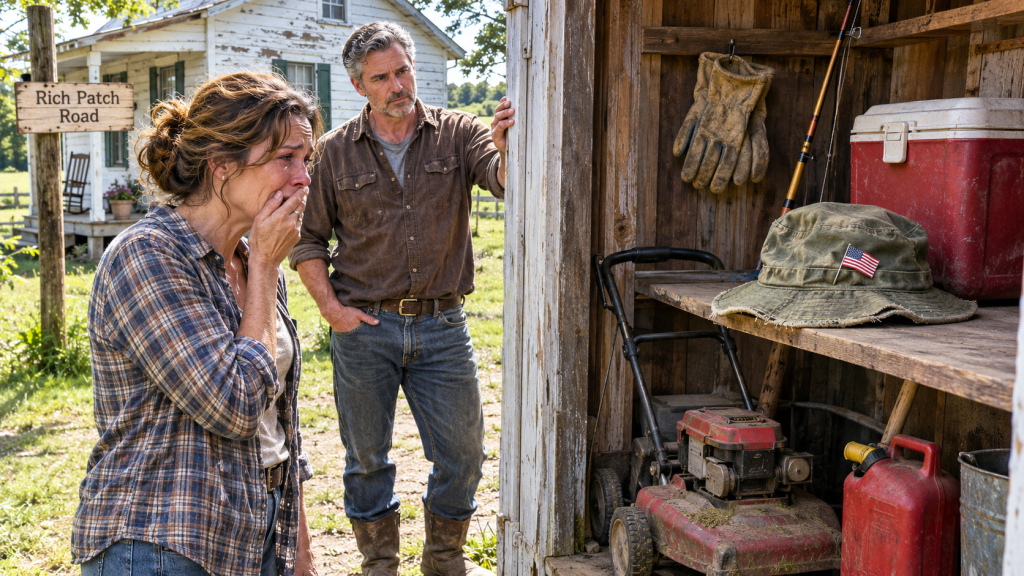
“What does this mean?” He stood beside Daddy’s old lawn mower, his face heavy with sorrow. “Read the rest, Amanda.” I swallowed. Then unfolded the paper. Dear Idella, For years, I believed your relationship with my husband was something shameful.
I let jealousy become certainty, and certainty become bitterness. I blamed you for the Saturdays he spent away from home, even though I never had proof of what happened between you. Last month, I found the papers from the mill accident.
I stopped reading.
“The mill accident?”
Foster nodded.
“Keep going.”
My heart pounded.
I didn’t understand what your husband did for mine until I read the witness statements.
I didn’t know that he died saving my husband’s life.
And I didn’t know how much my husband had done for your family afterward.
My eyes blurred.
Mama had known.
Before she died, she’d discovered the truth.
But that wasn’t what made my stomach tighten.
It was the next paragraph.
There’s something else I need to confess.
I looked up.
Foster’s eyes were filled with tears.
“What did she confess?”
He shook his head.
“I think you ought to hear it in her own words.”
I lowered my eyes.
Years ago, when Amanda was young, I found an envelope your husband had written before the accident.
It was addressed to my husband.
I opened it.
And after reading it, I hid it.
My breath caught.
I read the words again.
Mama had hidden a letter.
From Foster’s father.
To mine.
“What letter?” I whispered.
Foster walked toward the cabinet.
He opened a drawer and took out a small brown envelope.
It looked old enough to crumble.
He placed it on the workbench between us.
“My mama kept that after your mother returned it.”
I stared at the envelope.
Across the front, written in faded blue ink, were the words:
For Walter. From Raymond.
My daddy’s name was Walter Bennett.
Foster’s father had been Raymond Cole.
I touched the paper.
“What was in it?”
Foster swallowed.
“Something about the accident.”
I opened the envelope carefully.
Inside was a folded sheet of notebook paper.
The handwriting was uneven.
The words had been written in a hurry.
Walt,
That machine has been making a terrible knocking sound for three days.
I told the supervisor, but he says we can’t stop the line until the weekend.
If that guard comes loose again, somebody’s going to get hurt.
I know you’ve been worried too.
We need to go together and insist they shut it down.
Raymond.
I stared at the letter.
Then looked toward Foster.
“Your daddy wrote this before he died?”
He nodded.
“That’s what Mama said.”
My hands started shaking.
I remembered Daddy’s silence whenever somebody mentioned the paper mill.
I remembered how he never liked fireworks.
How he’d flinch when a truck backfired.
How he kept his old work boots polished even after retiring.
And how he sometimes woke up at night calling a name I didn’t recognize.
Raymond.
I’d heard him say it.
More than once.
Foster leaned against the workbench.
“My father knew that machine wasn’t right.”
I nodded slowly.
“He warned Daddy.”
“Yes.”
I swallowed.
“But Daddy never said anything about it.”
Foster looked toward the floor.
“He carried the accident with him for the rest of his life.”
The shed was quiet.
Outside, a bird called from the fence.
I held the letter against my chest.
For the first time, I wondered whether Daddy’s Saturday trips had been less about hiding something from us and more about keeping a promise he couldn’t bear to break.
“Why did Mama hide this?” I asked.
Foster shook his head.
“Her letter explains some of it.”
I unfolded my mother’s confession again.
My hands were trembling so badly I could hardly hold the page.
I was angry with Walter that year.
He was working long hours. Money was tight. Amanda needed things we couldn’t afford.
When Raymond died, Walter changed.
He stopped sleeping.
He became quiet.
And then he began spending Saturdays away.
I convinced myself there was another woman because that seemed easier to understand than a grief he wouldn’t explain.
I wiped my eyes.
Then continued.
When I found Raymond’s letter, I was afraid it would make Walter feel even more responsible.
So I hid it.
I told myself I was protecting him.
But the truth is, I was protecting the story I’d already decided to believe.
I sat down on an overturned bucket.
My knees wouldn’t hold me.
For decades, Mama had accused Daddy of being unfaithful.
And I had believed her.
I had carried that anger into adulthood.
Into my marriage.
Into the way I spoke about him around my children.
But now I was reading words she’d written before her death, admitting she’d doubted the very story she taught me to believe.
I looked toward Foster.
“Did Daddy ever see this?”
He shook his head.
“Not that I know of.”
I swallowed.
“Did your mother?”
“Yes.”
“What did she say?”
Foster’s voice broke.
“She cried.”
He pulled out another chair.
“My mama never hated your mother.”
I stared at him.
“After everything Mama said?”
He nodded.
“She said jealousy can make good people cruel when they’re frightened.”
I looked down.
Foster continued.
“She also said Walter wasn’t an easy man to understand.”
A sad smile crossed his face.
“He’d show up before sunrise, mow the grass, fix whatever had broken, bring groceries, and leave before supper.”
I remembered Daddy’s red cooler.
“What was in that?”
Foster smiled.
“Sandwiches. Medicine sometimes. Groceries he didn’t want Mama to know he bought.”
I closed my eyes.
The cooler I’d believed held evidence of an affair.
The cooler Mama had watched disappear every Saturday.
It had been carrying ordinary things.
Food.
Supplies.
Small necessities.
Foster walked toward the shelf.
He brought down an old photograph album.
“There’s something I want to show you.”
He opened it.
On the first page was a picture of a young woman standing beside a little boy.
Idella Cole.
And Foster.
He couldn’t have been older than five.
The house behind them looked exactly as it did now.
Only the porch was freshly painted.
Foster turned the page.
There was Daddy.
Younger.
Thinner.
Wearing the same green fishing hat.
He stood beside a newly repaired porch railing.
I touched the photograph.
“That’s him.”
Foster nodded.
“He built those steps.”
He turned another page.
Daddy was kneeling beside a bicycle.
Foster stood nearby, smiling.
“He taught me to ride.”
My throat tightened.
For years, I’d thought Daddy didn’t care enough about me to stay home.
Now I was seeing photographs of him helping another child grow up.
It hurt.
Even knowing why.
I stared at Foster.
“Did he treat you like a son?”
Foster considered the question.
Then nodded.
“In some ways.”
I looked away.
He continued gently.
“But he never tried to replace my father.”
My eyes filled.
“He made sure I knew who Raymond was. He told me stories about him.”
Foster swallowed.
“He said my daddy was the bravest man he’d ever known.”
I sat quietly.
Then whispered something I hadn’t expected to say.
“I was jealous of you before I knew you existed.”
Foster looked toward me.
“Why?”
“Because you got forty years of Saturdays with him.”
My voice broke.
“And I spent the last six years refusing his calls.”
Foster sat beside me.
“Amanda, I didn’t know about that.”
I shook my head.
“I thought he had chosen your mother over mine.”
He sighed.
“Your daddy loved you.”
I began crying.
“Then why didn’t he explain?”
Foster looked toward the workbench.
“I asked him that once.”
I turned.
“What did he say?”
Foster took a slow breath.
“He said he didn’t know how to tell the truth without making everybody hurt worse.”
For a moment, anger rose inside me.
Not the old anger that had convinced me Daddy was a bad man.
A different kind.
The kind that comes when you realize how much pain silence can create.
“He could’ve told me.”
Foster nodded.
“Yes.”
“He could’ve told Mama.”
“Yes.”
“He could’ve let us decide what to believe.”
Foster lowered his head.
“You’re right.”
I looked at him.
“He wasn’t perfect.”
“No, ma’am.”
I swallowed.
“But he tried.”
Foster nodded.
“Every Saturday.”
We sat in silence for a long time.
Then Foster reached beneath the workbench.
He pulled out a wooden toolbox.
It was Daddy’s.
I’d recognize the scratches anywhere.
There was a dent in the corner from when he’d dropped it off the tailgate when I was twelve.
Foster opened it.
Inside were wrenches, pliers, a measuring tape, and a little tin of screws.
But beneath the tools lay a stack of birthday cards.
I stared.
“What are those?”
Foster handed me the first one.
It had my name on it.
Amanda — Age 27.
My heart stopped.
I opened it.
Happy birthday, Sprout.
I hope you’re happy.
I hope you’re safe.
I hope Kane treats you like the treasure you are.
Love, Daddy.
I looked at the next card.
Age twenty-eight.
Then twenty-nine.
Thirty.
There were cards from years when Mama was still alive.
And cards from after her death.
The last six were unopened.
I stared at them.
“Why are they here?”
Foster swallowed.
“Your daddy used to bring them out when you wouldn’t answer his calls.”
My hands trembled.
“He never mailed them?”
Foster shook his head.
“He said he didn’t want you to feel pressured.”
I pressed the cards against my chest.
Foster continued.
“Sometimes he’d sit on the porch and ask what he should do.”
I looked toward him.
“What did you tell him?”
“To keep trying.”
Tears rolled down his cheeks.
“And he did.”
The last card was dated two months before Daddy died.
I opened it carefully.
Inside, his handwriting was shaky.
Sprout,
I know you’re angry.
I know I gave you reasons to misunderstand me.
But not a day passes that I don’t think about you.
I hope someday we can sit together without needing to settle every hurt at once.
I’d just like to hear about your day.
Love, Daddy.
I covered my mouth.
Then I began sobbing.
Not quietly.
Not politely.
I cried because the words I’d refused to hear for six years were sitting in my hands.
And the man who’d written them was buried in the ground.
Foster waited.
He didn’t try to make me stop.
When I finally lifted my head, he handed me a tissue.
“There’s one more thing.”
I wiped my face.
“What?”
He looked toward the shed door.
“My mama left something for you.”
I stared.
“Idella?”
He nodded.
“She died three years ago.”
“I’m sorry.”
“Thank you.”
He swallowed.
“She knew your daddy was worried about you.”
I looked down.
Foster continued.
“Before she died, she asked me to give you something if you ever came here.”
He reached for a small envelope.
My name was written across the front.
Not in Mama’s handwriting.
Not Daddy’s.
Idella’s.
I opened it.
Inside was a letter.
Dear Amanda,
You don’t know me, but I’ve known your name since you were a little girl.
Walter talked about you often.
He told me when you started kindergarten.
When you learned to ride a bicycle.
When you got married.
When your babies were born.
He was proud of you.
My eyes filled.
I continued.
I know your mother believed there was something improper between Walter and me.
There wasn’t.
He came here because Raymond asked him to make sure Foster and I were alright.
I tried to tell your mother once.
But she wouldn’t listen.
I closed my eyes.
Then read the next paragraph.
I don’t blame her for being frightened.
She loved her family.
But love becomes a painful thing when fear is allowed to speak for it.
I wiped my eyes.
The final lines were written in a trembling hand.
If you ever find yourself standing in my house, I hope you’ll remember that Walter was a man who made mistakes.
His greatest mistake was believing that silence could protect everybody.
But he also kept promises.
And every Saturday he came here, he carried your name in his heart.
Idella Cole.
I sat holding that letter for a long time.
Then I looked toward Foster.
“Your mama knew.”
He nodded.
“She knew he loved you.”
I swallowed.
“And she never asked him to stop coming?”
Foster shook his head.
“She tried.”
I frowned.
“What?”
He smiled sadly.
“When I turned eighteen, Mama told him we’d manage.”
My heart tightened.
“But he kept coming.”
“Yes.”
“Why?”
Foster looked toward Daddy’s fishing hat resting on the shelf.
“Because he said a promise doesn’t expire just because the people who made it are getting old.”
I thought about that.
Daddy had kept his promise to Raymond.
He’d helped Idella and Foster.
He’d carried groceries.
Fixed the porch.
Cut the grass.
And made sure they weren’t alone.
But in doing so, he’d allowed his own marriage to fill with suspicion.
And eventually, he’d lost his daughter.
I looked toward the old fishing rod.
No hook.
No bait.
Forty years of pretending.
Then I whispered.
“Daddy, why didn’t you just tell us?”
Of course, he couldn’t answer.
That afternoon, I drove home with a box of letters in the passenger seat.
Daddy’s fishing hat rested on top.
Kane was sitting on the porch when I arrived.
He stood when he saw my face.
“Mandy?”
I walked into his arms.
And cried.
He held me without asking questions.
Eventually, we sat on the porch steps.
I told him everything.
Raymond.
The accident.
The Saturday visits.
Mama’s confession.
The birthday cards.
Idella’s letter.
Kane listened quietly.
Then whispered.
“Oh, Mandy.”
I wiped my cheeks.
“I hated him.”
Kane shook his head.
“You were hurt.”
I looked toward him.
“I let Mama’s anger become mine.”
He nodded.
“And now you know more.”
I pressed my hands together.
“But I can’t tell him.”
Kane’s eyes filled.
“No.”
I stared toward the road.
“He’s gone.”
That evening, I opened Daddy’s old fishing hat.
The green fabric was worn thin.
The union pin sat crooked on the band.
Inside, near the sweatband, was something I hadn’t noticed.
A small folded piece of paper.
I pulled it free.
It was brittle with age.
On it, in Daddy’s handwriting, were four words.
Raymond — I Still Remember.
Beneath them was a date.
October 14, 1984.
The day Foster’s father died.
I sat at the kitchen table staring at the paper.
Then Kane leaned closer.
“What’s that?”
I showed him.
He read it.
Then whispered.
“Your daddy carried the date with him.”
I nodded.
“For forty years.”
The next morning, I called Foster.
He answered immediately.
“Amanda?”
“Yes.”
“Everything alright?”
I looked toward Daddy’s hat.
“I found something.”
I told him about the note.
For several seconds, Foster was silent.
Then he whispered.
“October fourteenth.”
I nodded.
“That’s the day.”
He swallowed.
“Your daddy came here every anniversary.”
My throat tightened.
“Even when it wasn’t Saturday?”
“Yes.”
I closed my eyes.
Foster continued.
“He’d bring flowers to the cemetery.”
I stared toward the window.
“Flowers?”
“Every year.”
My eyes filled.
Then I whispered.
“Foster, did Daddy ever tell you exactly what happened at the mill?”
There was a long silence.
Finally, he answered.
“Not everything.”
My stomach tightened.
“What do you mean?”
Foster hesitated.
“The company investigated.”
I nodded.
“I know.”
“But the official report didn’t tell the whole story.”
I felt cold.
“What story?”
He took a breath.
“Your daddy said somebody had warned the supervisors about that machine before the accident.”
I looked toward Raymond’s letter lying on my kitchen table.
“Raymond did.”
“Yes.”
Foster swallowed.
“But your daddy said something else.”
I gripped the phone.
“What?”
“He said the warning wasn’t the only one.”
For several seconds, I couldn’t speak.
“Who else warned them?”
Foster hesitated.
Then whispered.
“Walter did.”
I stared at the wall.
“Daddy?”
“Yes.”
“Then why did he blame himself?”
Foster took a slow breath.
“Because he believed he should’ve refused to operate the line.”
I looked toward Raymond’s letter.
The warning.
The supervisor.
The machinery.
The accident.
I thought about my father carrying that date inside his hat for forty years.
Then Foster said something that made my heart stop.
“Amanda, there are records your daddy kept about what happened. My mother said he was afraid somebody would be hurt again.”
I swallowed.
“What records?”
Foster hesitated.
“Old company documents.”
My stomach tightened.
“Where?”
He took a breath.
“In a metal box he kept under the shed floor.”
I stared at the telephone.
“Why didn’t you show me yesterday?”
Foster’s voice broke.
“Because he made me promise I wouldn’t open it unless there was a reason.”
I looked toward Daddy’s photograph on the mantel.
“And now?”
Foster swallowed.
“Now I think there’s a reason.”
Two hours later, I was back on Rich Patch Road.
Foster stood beside the shed with a pry bar.
He lifted a loose floorboard near the workbench.
Beneath it was a metal box.
Old.
Rusted.
Heavy.
He pulled it out and set it on the table.
Inside were newspaper clippings, mill inspection notes, copies of letters, and a small cassette tape.
I stared.
“What’s that?”
Foster picked up the cassette.
A white label was stuck to the plastic.
In Daddy’s handwriting were the words:
RAYMOND COLE — OCTOBER 1984.
My breath caught.
Foster looked toward me.
“Your daddy told Mama this tape was important.”
I swallowed.
“Important how?”
He shook his head.
“I don’t know.”
Then he placed the cassette in an old player he’d brought from the house.
The machine clicked.
Hissed.
And after several seconds, a man’s voice filled the shed.
A voice I’d recognize anywhere.
Daddy.
Younger.
Shaken.
Barely holding himself together.
“If anybody ever hears this, I want them to know Raymond Cole didn’t die because he made a mistake.”
I gripped the edge of the table.
The recording crackled.
Then Daddy continued.
“He died because somebody knew that machine was dangerous and ordered us to keep running it anyway.”
Foster covered his mouth.
I stared at the cassette player.
Then came another voice.
A man’s voice.
Hard.
Angry.
And frighteningly familiar.
“Walter, you keep your mouth shut about that inspection, or you’ll wish you’d never brought it up.”
I looked at Foster.
“Who is that?”
His face went pale.
He stared toward the machine.
Then whispered.
“Amanda, that’s the man who signed the accident report.”
I felt my stomach drop.
“Who?”
Foster swallowed.
Then said a name I’d heard at my father’s funeral.
“Harold Benton.”
The same Harold Benton who’d stood beside Daddy’s casket, shaken my hand, and told me my father was the finest man he’d ever worked with.
The same man who’d been the paper mill’s shift supervisor in 1984.
And suddenly I understood that Daddy’s secret hadn’t ended with helping a widow and her son.
For forty years, he’d also been carrying something else.
A truth about Raymond’s death that someone had desperately wanted buried.
And now that truth was speaking from an old cassette tape beneath a shed floor.