I walked into Dad’s hotel gala – only to hear my stepmother say: ‘Security, remove her.’ I left without a word… Then moved the hotel, the land, and $17M into my trust. Minutes later, 68 missed calls. By midnight, they knocked my door

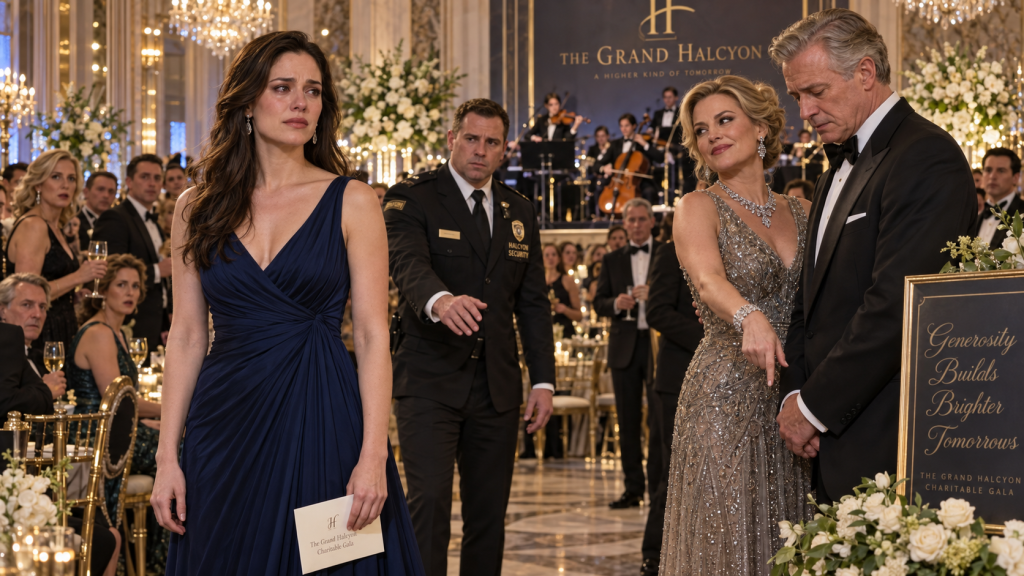
The first thing I heard when I walked into my father’s hotel gala was my stepmother’s voice cutting through the orchestra: “Security, remove her.” The second was my father’s silence.
For one ugly second, two hundred guests turned toward me beneath the chandeliers of the Grand Halcyon, the hotel my mother had helped build from an abandoned riverside warehouse before she died. I stood there in a navy dress, invitation in hand, while my stepmother, Vanessa, smiled as if she had finally erased the last stain from her perfect evening.
“Claire,” Dad said at last, not meeting my eyes. “This is a private donor event.”
“I’m on the board list.”
Vanessa laughed softly. “You were. Before we cleaned up the family’s affairs.”
That got a few nervous smiles from people who thought they were watching a spoiled daughter being disciplined. Across the ballroom, one of Dad’s oldest partners looked away. That hurt more than Vanessa’s smile. I had grown up in those halls, carrying room-service trays during summer breaks while Mom taught me that ownership meant responsibility, not entitlement.
I looked at my father. “You knew I was invited.”
His jaw tightened. “Don’t make a scene.”
I almost laughed.
For six months, Vanessa had been whispering that I was unstable, resentful, bad with money. She convinced Dad to remove me from management meetings, then from the hotel foundation, then from anything that made me visible. What neither of them understood was that visibility had never been the same thing as control.
A security guard approached, embarrassed. “Ms. Bennett, I’m sorry.”
“It’s fine,” I said.
Vanessa blinked. She had expected tears.
I placed my unopened gift envelope on the registration table. Inside was a copy of the original land trust my mother had created twenty-two years earlier.
Then I walked out.
At 8:17 p.m., I sat in the back of a black town car and called Miriam Cole, the estate attorney who had handled my mother’s affairs.
“Are you sure?” she asked.
I watched the hotel lights glitter behind me.
“They just made it very easy.”
Miriam was quiet for a beat. “Then I’ll execute the transfer sequence.”
My mother had never left the hotel outright to Dad. She had placed the land beneath it, fifty-one percent of the hotel holding company, and a seventeen-million-dollar reserve fund into a revocable family structure controlled jointly by Dad and me until my thirty-fifth birthday.
I had turned thirty-five three days earlier.
At that moment, Dad’s authority had expired.
He just didn’t know it yet.
At 8:43, my phone buzzed once.
TRANSFER COMPLETE.
I turned the screen facedown.
Then the calls started.
PART 2 — THE HOTEL THEY FORGOT WAS NEVER THEIRS
The first call came at 8:47.
Dad.
I watched his name appear on my phone and disappear.
Then again.
Then Vanessa.
Then Dad.
Then an unknown number.
Then the hotel’s general manager.
I did not answer any of them.
By 9:03, I had twenty-two missed calls.
At 9:11, there were thirty-seven.
At 9:26, Vanessa finally stopped calling and started texting.
WHAT DID YOU DO?
Then:
CLAIRE, ANSWER YOUR PHONE.
Then:
THIS IS NOT FUNNY.
I sat in the town car outside my apartment and stared at the last message.
She was right about one thing.
It wasn’t funny.
For six months, Vanessa had treated me like a troublesome guest in a business my mother had helped create.
Tonight, for the first time, she had discovered that the woman she had spent months removing from photographs had never been removed from the legal structure beneath them.
There is a difference between occupying a chair and owning the floor it stands on.
Vanessa had just learned it.
Miriam called at 9:31.
I answered immediately.
“Talk to me.”
Her voice was calm.
That was why my mother had trusted her.
Miriam Cole had the unnerving ability to discuss millions of dollars with the emotional temperature of someone ordering soup.
“The birthday succession documents are effective.”
she said.
“Your mother’s trust now has sole voting control over the land-holding entity and the fifty-one-percent interest in Halcyon Hospitality Group.”
I closed my eyes.
Even though I knew this was coming, hearing it aloud felt different.
“And the reserve?”
“Moved into the successor trust account.”
“Seventeen million?”
“Seventeen million, two hundred twelve thousand and change.”
I exhaled.
“Was any of it Dad’s personally?”
“No.”
Important.
“Any marital property involving Vanessa?”
“Not according to the trust documents.”
Another important distinction.
I was not taking money from my father.
I was assuming control over property my mother had structured for me decades earlier.
Dad had been co-trustee and managing controller during the transition period.
That period ended when I turned thirty-five.
The transfer had not been invented in retaliation at 8:17 tonight.
It had been designed when I was thirteen.
I had simply chosen not to waive it.
“Can Dad challenge?”
I asked.
“Anyone can challenge almost anything.”
Miriam replied.
“That isn’t what I asked.”
“No.”
She softened slightly.
“The documents are unusually clear.”
“Your mother anticipated remarriage.”
“Of course she did.”
“She anticipated business disputes.”
“Also of course.”
“And she anticipated that your father might prefer continuity after your birthday.”
That made me laugh.
“Meaning he might not want to give up control.”
“Your mother knew the man.”
I looked through the town-car window at the city.
“She loved him.”
“Yes.”
“And still wrote this.”
“Those ideas are not inconsistent.”
There it was.
My mother’s favorite kind of lesson.
Love people.
Document anyway.
Miriam continued.
“Claire, I need to make one thing very clear.”
“Go ahead.”
“You have not transferred the hotel building into your personal name.”
“I know.”
“You have not emptied company operating accounts.”
“I know.”
“You have not fired your father.”
“I know.”
“You have become the controlling trustee and voting representative for entities that already existed.”
“Yes.”
“Good.”
She paused.
“Because the story they are going to tell tonight will sound much more dramatic.”
My phone buzzed.
Vanessa.
YOU STOLE YOUR FATHER’S HOTEL DURING HIS GALA.
I almost laughed.
Miriam had excellent timing.
“I think that story has already started.”
“Let it.”
“Seriously?”
“For tonight.”
Then her voice hardened.
“Do not post.”
“Do not threaten.”
“Do not send triumphant messages.”
“Do not tell Vanessa she is trespassing.”
“Wasn’t planning to.”
“Good.”
“And under no circumstances remove seventeen million dollars for personal use.”
“I wouldn’t.”
“I know.”
“Still saying it.”
I smiled.
Mom had chosen well.
The $17 million reserve was not a pile of spare cash.
That mattered.
My mother created it after the hotel nearly failed during its second renovation.
It existed for capital repairs, debt service emergencies, insurance shortfalls, and extraordinary preservation needs connected to the hotel and riverside property.
It was a fortress.
Not a checking account.
Dad had access to it only with co-trustee approval for certain categories.
For years, that meant him and me.
Except I had barely exercised the role.
I had trusted him.
More accurately, I had trusted that the structure made constant supervision unnecessary.
That was my mistake.
Not because Dad had stolen anything.
At least I had no evidence of that.
Because structures still require people to look.
And for six months, while Vanessa convinced everyone I was unstable and irrelevant, I had been looking less than I should have.
Tonight changed that.
“Is there anything pending against the reserve?”
I asked Miriam.
A pause.
Tiny.
But I heard it.
“What?”
“We need to discuss that tomorrow.”
“No.”
“Claire.”
“Now.”
Another pause.
Then:
“There is a financing request.”
My stomach tightened.
“What kind?”
“Proposed refinancing of the Grand Halcyon operating debt.”
“How much?”
“Forty-two million.”
I sat straighter.
The hotel had debt.
That was not surprising.
Forty-two million?
That was.
“What is current debt?”
“About twenty-eight.”
My pulse changed.
“So they want fourteen million more.”
“Approximately.”
“For what?”
“That is the question.”
I went very still.
“Who signed the proposal?”
“Your father signed preliminary authorization.”
Of course.
“And Vanessa?”
“She is listed as development adviser.”
I almost laughed.
Vanessa had never developed anything except a talent for appearing in photographs near money.
“What’s the collateral?”
Miriam did not answer immediately.
The city outside suddenly seemed very far away.
“Miriam.”
“The proposal contemplates a first-position security package over operating assets.”
“Fine.”
“And?”
“A pledge related to the riverside ground lease.”
My body went cold.
“The land?”
“Indirectly.”
“No.”
“I know.”
“The land trust prohibits that without successor-trustee approval.”
“Yes.”
“Which is me now.”
“Yes.”
“And before my birthday?”
“You and your father jointly.”
I stared at the dark window.
“Did anyone ask me?”
“No.”
There it was.
I thought about the gala.
Vanessa:
Before we cleaned up the family’s affairs.
Dad:
Don’t make a scene.
They were standing inside a hotel while discussing financing that may have required my consent.
And had security escort me out.
The irony was almost too neat.
“What does the proposal say about my approval?”
I asked.
“It doesn’t.”
My stomach tightened.
“How?”
“Claire, it is preliminary.”
“No lender has closed anything.”
“No funds have moved.”
“So we do not accuse anyone of fraud.”
“I’m not.”
“But somebody prepared a structure that assumes the land interest can be pledged.”
“Yes.”
“And nobody contacted the trustee whose signature would be required.”
“Correct.”
I closed my eyes.
“Who is the lender?”
“North Atlantic Commercial.”
I knew them.
Serious people.
Not reckless.
Which meant they had probably been given a reason to believe the approvals would come.
“What did Dad tell them?”
“I don’t know yet.”
“Find out.”
“I already asked for the file.”
Of course she had.
By the time I reached my apartment, there were sixty-eight missed calls.
Exactly.
I remember because I stared at the number while the elevator rose.
Sixty-eight.
Some from Dad.
Some Vanessa.
Some hotel executives.
Some board members who had ignored my emails for six months.
Interesting how quickly people remember your number when a voting certificate changes hands.
I turned the phone to silent.
Then opened my apartment door.
Home.
Small by Halcyon standards.
Two bedrooms.
Exposed brick.
A dining table my mother bought at an estate sale when I was nineteen.
No chandeliers.
No orchestra.
I changed out of my navy dress.
Put on sweatpants.
Then made grilled cheese.
That detail becomes important whenever people tell this story later as though I spent the night celebrating a hostile takeover.
I did not.
I ate burnt grilled cheese over the sink because my hands would not stop shaking.
At 10:14, Dad sent his first message that did not sound furious.
Please answer. I need to understand what happened.
I stared at it.
He needed to understand.
The sentence almost hurt more than Vanessa’s accusations.
Dad had signed the trust documents.
He had attended every meeting with Mom and Miriam.
He had known my thirty-fifth birthday mattered.
Maybe he forgot.
Maybe he convinced himself the transition was ceremonial.
Maybe Vanessa had convinced him.
I did not know.
But I was tired of allowing other adults’ failure to read documents become my emergency.
I replied:
Miriam will send you formal notice tomorrow morning. We can speak after you and your counsel review it.
Three dots appeared instantly.
Your counsel? Claire, I’m your father.
My throat tightened.
I typed:
Tonight you were also the man who watched security remove me from my mother’s hotel. We can be family after we are accurate about business.
I sent it.
Then put the phone down.
My hands shook afterward.
Boundaries often look strong after they are spoken.
During the speaking, they feel like nausea.
At 10:52, someone buzzed from downstairs.
I ignored it.
Again.
Then my doorman called.
“Ms. Bennett?”
“Yes, Omar?”
“Your father is here.”
Of course.
“And Mrs. Bennett.”
Of course.
“They’re asking to come up.”
“No.”
Silence.
Omar knew my father.
Everyone did.
“Should I tell them you aren’t home?”
“No.”
I sat on the edge of my couch.
“Tell them I’m home and I’m not receiving visitors.”
There are moments when honesty feels almost luxurious.
“Understood.”
Five minutes later, pounding came from the hallway.
They had gotten upstairs anyway.
I would later learn a neighbor recognized Dad from the hotel business and let them through the elevator security.
Rich people are forever being accidentally assisted by social familiarity.
Vanessa struck the door first.
“Claire!”
I stood in the living room.
Did not move.
“Open this door!”
Dad:
“Vanessa.”
Then softer:
“Claire.”
I walked to the door.
Looked through the peephole.
Dad’s bow tie hung loose.
Vanessa was still in her gala dress.
Perfect ivory silk.
Furious face.
At midnight, they looked less like powerful hoteliers and more like two people who had driven across town because a document finally told them no.
I opened the door but kept the chain attached.
Dad stared at me.
Vanessa stared at the chain.
That insulted her more than anything.
“Take that off.”
she said.
“No.”
Her face changed.
“Claire—”
Dad raised a hand.
“Enough.”
For once.
Then he looked at me.
“What did you do?”
I almost smiled.
“Dad.”
His jaw tightened.
“What?”
“You signed the trust.”
Silence.
Vanessa spoke first.
“This is theft.”
“No.”
“You transferred company assets during an active event.”
“No.”
“You moved seventeen million dollars.”
“From one trust-controlled reserve account to its successor trust account.”
Her mouth opened.
I continued.
“No operating money was removed.”
“No employee payroll was touched.”
“No hotel guest was affected.”
“No asset was sold.”
“And I didn’t create the succession structure tonight.”
My eyes moved to Dad.
“Mom did.”
That shut both of them up.
For a second, my mother entered the hallway without being there.
Eleanor Bennett.
Architect.
Developer.
Terrible baker.
Woman who could smell a bad contract from another county.
Dead eighteen years.
Still inconvenient.
Dad looked down.
“I thought the trust was being extended.”
My pulse changed.
“What?”
“Vanessa said—”
He stopped.
Vanessa snapped:
“Don’t.”
I looked at her.
Interesting.
Dad continued anyway.
“She said Miriam had paperwork.”
I stared.
“What paperwork?”
Vanessa answered:
“It was discussed.”
“With whom?”
“The estate office.”
“Miriam?”
“No.”
“Then who?”
Her face tightened.
“One of the associates.”
Name.
I wanted a name.
Dad gave it.
“Stephen Vale.”
I knew Stephen.
Junior estate-planning associate.
Joined Miriam’s firm less than two years ago.
My stomach tightened.
“What did Stephen say?”
Dad looked embarrassed.
“That a continuation agreement could preserve management stability after your thirty-fifth birthday.”
I stared.
“Could.”
“Yes.”
“Did I sign one?”
Silence.
“No.”
“Did Miriam?”
“No.”
“Then what exactly did you think was being extended?”
Vanessa stepped forward.
“The intent.”
I almost laughed.
“The trust does not transfer seventeen million dollars based on vibes, Vanessa.”
Dad closed his eyes.
I had probably inherited that sentence from Mom.
“Why didn’t you call me?”
I asked Dad.
He looked at me.
“For the extension.”
No answer.
“Why?”
Vanessa interrupted.
“Because every conversation with you became combative.”
I turned.
“Name one.”
Her mouth tightened.
“You questioned the donor strategy.”
“Yes.”
“The hotel foundation grants.”
“Yes.”
“My development plan.”
“Absolutely.”
“And the refinancing.”
She stopped.
Too late.
There it was.
Dad’s face changed.
“Vanessa.”
I looked between them.
“The refinancing.”
I said.
“You knew.”
Vanessa crossed her arms.
“Of course I knew.”
“You’re listed as development adviser.”
“Yes.”
“What is the extra fourteen million for?”
Silence.
Then:
“Expansion.”
Dad looked at her sharply.
I looked at him.
“You don’t know?”
“Claire.”
“What expansion?”
Vanessa answered:
“The east-river acquisition.”
My stomach dropped.
There was a parcel east of the hotel.
Former industrial land.
Expensive.
Complicated.
My mother once wanted it.
Then abandoned the idea after environmental studies showed remediation would be costly.
“You’re buying Eastbank?”
“Potentially.”
“With fourteen million borrowed against Halcyon?”
“In part.”
“Dad?”
He rubbed his forehead.
“We were evaluating it.”
“Were.”
“No final decision.”
“Then why is there a forty-two-million-dollar financing proposal?”
His face tightened.
“Because you prepare financing before making offers.”
Fair.
But incomplete.
“And why does that financing contemplate land-trust collateral I never approved?”
Silence.
Vanessa said:
“Because everyone assumed approval would follow.”
I stared at her.
There it was.
Not forgery.
Not theft.
Entitlement.
They assumed I would sign.
Or assumed I could be made irrelevant enough that the signature would become a formality.
“Is that why you removed me from meetings?”
I asked.
Dad immediately said:
“No.”
Vanessa:
“You were disruptive.”
I laughed.
“What did I disrupt?”
“Momentum.”
That was such a Vanessa word.
“What momentum?”
“The hotel has been stagnant.”
I looked at Dad.
The Grand Halcyon had eighty-seven percent annual occupancy.
Award-winning restaurant.
Strong cash flow.
Waiting list for weddings.
Stagnant apparently meant Vanessa had not yet attached her name to an expansion.
She continued.
“Your father has spent eighteen years maintaining your mother’s vision.”
“He deserves to create something of his own.”
My chest tightened.
There was truth hidden inside that too.
Dad had lived in Mom’s shadow.
Not publicly.
Inside himself.
People still called Halcyon Eleanor’s hotel.
Still told stories about the warehouse she saw potential in.
Vanessa knew that wound.
She pressed it like a button.
“So Eastbank is Dad’s legacy?”
I asked.
Vanessa’s eyes sharpened.
“Our legacy.”
There.
Dad looked away.
I understood more than I wanted to.
She did not merely want the hotel.
She wanted authorship.
A new wing.
Residences.
Event pavilion.
Something large enough that future brochures would stop beginning with my mother.
And I had become the irritating trustee standing between Vanessa and permanence.
“You could have brought the plan to me.”
I said.
Vanessa laughed.
“We tried.”
“No.”
“You presented a glossy concept packet at a foundation meeting.”
“That is not the same as asking the land trust to secure forty-two million dollars.”
She went silent.
I looked at Dad.
“Did you know the land was included?”
His answer took too long.
“I knew legal was reviewing collateral options.”
Not yes.
Not no.
Dad had always hated direct guilt.
“Did you read the term sheet?”
“Yes.”
“Then you knew.”
He looked down.
“Yes.”
There it was.
Something inside me changed.
Not rage.
Sadness.
Dad had known my approval was likely required.
Maybe he hoped the extension would happen.
Maybe Stephen Vale told him it could.
Maybe Vanessa promised me away as an administrative problem.
But he had known enough to call.
And didn’t.
That hurt more than security.
Because security had humiliated me publicly for thirty seconds.
This had erased me privately for months.
“Why?”
I asked.
Dad whispered:
“Because I thought you’d say no.”
I closed my eyes.
That answer.
Again and again in families.
People avoid asking when they already know the boundary.
Then call the resulting secrecy necessity.
“If you believed I would say no, that was the strongest reason to ask.”
“I know.”
“Do you?”
He looked at me.
“Yes.”
Vanessa scoffed.
“Oh, please.”
We both turned.
She shook her head.
“This sentimental performance is absurd.”
I stared.
“Vanessa.”
“No.”
She stepped closer to the chained door.
“You have been waiting for this.”
“For what?”
“To take everything.”
I almost felt sorry for her.
She genuinely believed control was a prize people hoarded.
Probably because that was how she understood it.
“You think tonight was revenge.”
“Wasn’t it?”
“No.”
I looked at her.
“Tonight was the first time I stopped delaying what Mom’s documents already required.”
Her face hardened.
“Because I removed you from a party.”
“No.”
“Because you removed me from decision-making while preparing a transaction that needed my approval.”
That was the distinction.
Dad looked exhausted.
“What happens now?”
For the first time all evening, his voice sounded like my father.
Not chairman.
Not hotelier.
Dad.
I almost opened the chain.
Didn’t.
“We review everything.”
“Claire—”
“Everything.”
“The refinance.”
“Eastbank.”
“Foundation grants.”
“Board appointments.”
“Management agreements.”
“Reserve requests.”
“Any proposed trust extension.”
Vanessa laughed bitterly.
“So you’re taking over.”
“I’m doing the job I should have been doing six months ago.”
Her face flushed.
“I will not work under you.”
I looked at her.
“You do not work for me.”
That stopped her.
“You aren’t a hotel executive.”
“You aren’t an employee.”
“You are Dad’s wife and an adviser on one proposed project.”
Her face went white.
Dad closed his eyes.
Maybe because nobody had said it aloud before.
Vanessa had accumulated enormous social power at Halcyon.
Without a clear formal role.
That was not automatically improper.
Family businesses operate like that constantly.
But social authority had become confused with corporate authority.
That confusion ended tonight.
Vanessa stepped back.
“You’re going to regret humiliating your father.”
I looked at Dad.
Then her.
“I didn’t have security escort him out of his mother’s hotel.”
Silence.
Her face changed.
She had forgotten the symmetry.
I had not.
Dad whispered:
“Claire.”
I looked at him.
“I’m sorry.”
Vanessa snapped:
“Robert.”
“No.”
He looked at her.
Then back at me.
“I should have stopped it.”
My throat tightened.
“Yes.”
“I was angry.”
“At me?”
“At everything.”
He rubbed his face.
“The board questions.”
“The trust deadline.”
“The refinancing.”
“Your mother’s name attached to every decision.”
There it was.
Then:
“And Vanessa said you came to embarrass us.”
I looked at him.
“So you let me be removed.”
“Yes.”
The word was almost inaudible.
“I’m sorry.”
No excuses left.
Good.
It did not repair it.
Still good.
I leaned my forehead briefly against the door.
When I spoke again, my voice was softer.
“Go home.”
Vanessa stared.
“What?”
“Both of you.”
“Tomorrow, Miriam will send the succession documents.”
“I’ll schedule a meeting with independent counsel and the hotel board.”
“Until then, no refinancing documents are to be signed.”
Dad nodded.
Vanessa did not.
I looked directly at her.
“If anything is signed tonight, it will be challenged.”
She glared.
“Is that a threat?”
“No.”
“It is information.”
Mom would have liked that sentence.
Then I closed the door.
My knees gave out afterward.
Not dramatically.
I simply slid down against the wood and sat on the floor.
On the other side, I heard Vanessa say something furious.
Dad answered quietly.
Their footsteps moved toward the elevator.
Then silence.
I put my face in my hands.
And cried.
Because power does not feel powerful when the person on the other side of the door is your father.
It feels lonely.
The board meeting took place Monday morning.
Nine people.
Miriam.
Outside counsel.
Hotel CFO.
Dad.
Me.
Vanessa was not invited.
That became our first conflict.
Dad wanted her present.
I said no.
Not forever.
Not because she was his wife.
Because the meeting involved trust succession and refinancing decisions in which her informal role had become part of the governance problem.
Outside counsel agreed.
Dad stopped arguing.
Progress.
The first surprise came from the hotel CFO.
His name was Leonard Price.
Sixty-three.
At Halcyon longer than I had been an adult.
He looked sick.
“There’s something the trustees need to see.”
He slid a packet across the table.
The proposed Eastbank development budget.
I read the first page.
Total project:
$31.8 million.
Not fourteen.
I looked up.
“I thought the refinance added fourteen.”
Leonard nodded.
“It does.”
“Then where does the rest come from?”
Silence.
Dad looked at him.
“Leonard?”
Leonard swallowed.
“Reserve contribution.”
My body went cold.
“What reserve?”
He looked at me.
“The Eleanor Bennett capital reserve.”
Seventeen million.
All of it.
Almost.
I stared at Dad.
His face had gone pale.
“You knew?”
“No.”
Immediate.
Strong.
I believed his surprise.
Miriam did too.
I could tell.
Leonard continued.
“The draft development capitalization uses sixteen point five million from the reserve and approximately fourteen million of new debt proceeds after refinancing costs.”
I turned pages.
There.
A schedule.
Sponsor equity: $16,500,000.
No trust name.
Just sponsor equity.
“Who approved this model?”
Leonard hesitated.
Then:
“Vanessa’s development consultant prepared it.”
“Who is that?”
“Voss Urban Partners.”
I knew them.
Legitimate firm.
Not villains.
“Did they know the reserve restrictions?”
“I don’t believe so.”
Of course.
They had been told money existed.
Not what it was for.
Dad looked furious now.
“Vanessa told me the equity was coming from outside investors.”
Leonard stared at him.
“She told finance it was family capital.”
The room went silent.
There it was.
Not necessarily a crime.
Not yet.
But a profound discrepancy.
I thought about seventeen million dollars.
Mom had built that reserve after almost losing the hotel.
It was not there to make rich people’s expansion dreams easier.
It was there so no future recession, flood, boiler catastrophe, lawsuit, or renovation emergency could force the family to sell the property under pressure.
Vanessa wanted to turn the safety net into a down payment.
Maybe she genuinely believed Eastbank would succeed.
It might.
That was not the point.
The reserve had rules.
She had treated rules as obstacles to arrange around.
“Did she have authority to commit it?”
I asked.
Leonard answered:
“No.”
“Did she commit it?”
“Not legally.”
“Did anyone transmit this model to a lender?”
Silence.
Then:
“Yes.”
My stomach dropped.
“North Atlantic?”
“Yes.”
Dad whispered something under his breath.
I did not catch it.
Probably better.
Miriam turned toward outside counsel.
“Was the lender told trustee approval remained outstanding?”
Counsel looked through another packet.
Then:
“The financing presentation says sponsor equity is ‘committed and available upon closing.’”
I felt every muscle in my body tighten.
Committed.
Available.
Neither true without trust approval.
“Who signed that presentation?”
Leonard looked at Dad.
Dad looked horrified.
“I signed a cover authorization.”
“Did you read the model?”
“Yes.”
“Did you understand sponsor equity meant the reserve?”
“No.”
I believed that too.
Dad knew about collateral.
He knew about refinancing.
He had not known Vanessa intended to consume almost the entire reserve.
Different failures.
Both serious.
“What did Vanessa tell you sponsor equity was?”
I asked.
“Family office capital.”
“What family office?”
“She said she had commitments.”
“From whom?”
Dad stared at the table.
“She didn’t say.”
My anger rose.
“Dad.”
“I know.”
“No.”
I leaned forward.
“You signed a lender presentation identifying sixteen and a half million dollars of committed equity without knowing whose money it was.”
His face collapsed.
“Yes.”
There.
No more interpretation necessary.
He had not stolen anything.
He had become careless.
Maybe because Vanessa made confidence feel like information.
Maybe because he wanted Eastbank badly.
Maybe because age and pride made diligence feel like distrust.
Whatever the reason, my mother had designed the trust for exactly this kind of moment.
Not because she expected Dad to become evil.
Because good people can become careless when they desperately want something.
The board paused the refinancing.
Formally.
Unanimously except Dad abstained.
The lender received corrected notice that no land-trust collateral or reserve contribution had been authorized.
No accusation of misconduct.
No public scandal.
Just correction.
The Eastbank deal was put on hold.
Vanessa exploded.
Not in the room.
On Dad’s phone.
Everyone heard enough.
He silenced it.
Then did something I had never seen him do.
He turned the phone completely off.
Small.
Important.
After the meeting, Dad asked me to stay.
Everyone left except Miriam.
I looked at her.
She understood.
“Call me if needed.”
Then Dad and I sat in the boardroom where Mom once taught me how to read hotel occupancy reports.
He looked old.
Not weak.
Old.
There is a difference.
“I failed you.”
he said.
I did not rescue him.
“Yes.”
He nodded.
“I failed your mother too.”
“That is for you to decide.”
He looked toward the window.
The river.
Eastbank visible beyond it.
Then:
“I wanted that land when Eleanor was alive.”
I stared.
“You did?”
“Yes.”
“She said no.”
“Why?”
“Environmental risk.”
“Debt.”
“Overexpansion.”
“Everything you said.”
A sad smile.
“Of course.”
Dad rubbed his hands.
“Vanessa found the old plans two years ago.”
There.
The idea was older than I knew.
“She said your mother had been too cautious.”
My stomach tightened.
“And you believed her?”
“I wanted to.”
Better answer.
Then:
“I thought buying Eastbank would prove Halcyon didn’t end with Eleanor.”
My heart hurt.
“Dad.”
“I know.”
“No.”
I leaned forward.
“Halcyon was never supposed to prove you existed separately from Mom.”
He looked at me.
“You existed.”
“You were her partner.”
“You operated the hotel after she died.”
“You kept eight hundred people employed through a recession.”
“You restored the ballroom after the flood.”
“You negotiated the union contract everyone thought would fail.”
His eyes filled.
“Why wasn’t that enough?”
Dad cried then.
Not loudly.
“I don’t know.”
That was perhaps the saddest answer.
“Vanessa made me feel like I’d spent eighteen years caretaking another person’s monument.”
My throat tightened.
“And did you feel that before her?”
He thought.
“Yes.”
So I could not blame Vanessa for creating the wound.
She had found it.
Fed it.
Used it.
But it had already existed.
“Dad.”
“Yes?”
“Mom built the trust so you could manage Halcyon for eighteen years.”
He nodded.
“That was trust.”
He looked at me.
“Then she gave it to me.”
“Yes.”
“That wasn’t rejection.”
His face broke.
“I know.”
Maybe he finally did.
I asked the question I feared most.
“Did you want me out of the business?”
His eyes filled.
“No.”
“Then why let Vanessa remove me?”
“I thought you were judging me.”
I almost laughed.
“About Eastbank?”
“About everything.”
“Every time you asked for documents, I heard Eleanor.”
That silenced me.
I had my mother’s habit.
Direct questions.
No decorative language.
I had always thought Dad admired that.
Maybe sometimes he did.
Maybe after eighteen years of grief, similarity became pressure.
He continued:
“I felt like I was standing in front of both of you.”
“Dead wife.”
“Living daughter.”
“Both asking whether I’d read the footnotes.”
A laugh escaped me.
Dad smiled through tears.
“She would ask that.”
“She always did.”
For the first time in months, we shared something that did not belong to Vanessa.
Mom.
Not as a weapon.
As memory.
Then Dad said:
“I want to resign.”
My chest tightened.
“From what?”
“Chairman.”
“No.”
He looked surprised.
“No?”
“Not today.”
“Claire, after what happened—”
“No.”
I took a breath.
“Do not turn accountability into another dramatic gesture.”
He stared.
“If you resign because you’re ashamed, everyone else spends the next year managing your shame.”
That sounded like something Miriam would say.
Good.
“Stay through the review.”
“Cooperate.”
“Recuse where needed.”
“Then the board decides what role makes sense.”
Dad was quiet.
Then nodded.
“Okay.”
That was the first responsible thing either of us had done that morning.
Vanessa did not take the pause well.
She called three board members privately.
Sent a memorandum defending Eastbank.
Accused me of emotional retaliation.
Said I was using my mother’s trust to freeze strategic growth because of a “family disagreement.”
It would have worked better if the financial model had not contained sixteen and a half million dollars she had no authority to promise.
Facts are irritating that way.
The board retained an independent governance firm.
Not because I demanded Vanessa be investigated.
Because everyone finally understood the problem was bigger than one gala.
Who had decision rights?
Who had assumed them?
Which approvals were formal?
Which existed only because Vanessa said:
Robert wants this.
The review began.
Then they found the emails.
Three weeks before my birthday, Vanessa had written Stephen Vale.
The young associate at Miriam’s firm.
We need continuity after Claire turns thirty-five. Robert cannot operate with an inexperienced daughter suddenly controlling the land and reserve. Draft whatever preserves current management authority for another five years.
Stephen replied:
Any extension would require Claire’s voluntary execution. Existing trust language is automatic at 35.
Vanessa:
Prepare it anyway. Robert will handle Claire.
My hands went cold.
Then another email.
Two weeks later.
Stephen:
Has Claire agreed to review?
Vanessa:
She does not need to understand every structural detail. We can present it as administrative housekeeping.
I stopped reading.
Dad was beside me.
His face was gray.
“I never saw that.”
I believed him.
Then came the final email.
Four days before my birthday.
Stephen:
I cannot represent that succession has been extended absent Claire’s signature. Please do not communicate otherwise to lenders or board members.
Vanessa did not reply.
Instead, the next day, she emailed Leonard:
Estate counsel is handling continuity documents. Proceed on assumption current authority remains unchanged.
There.
That was why everyone believed Dad still controlled everything.
Not a forged trust.
Not falsified signature.
Something subtler.
A statement designed to let people assume completion where only discussion existed.
Dad sat down hard.
“She lied to me.”
I looked at him.
“Yes.”
Then:
“And you also chose not to verify.”
His face tightened.
“Yes.”
I would not let Vanessa absorb all his responsibility.
That would have been too easy.
He had signed things.
Ignored me.
Allowed my removal.
He was accountable for those choices.
Vanessa was accountable for hers.
Separate columns.
Mom would approve.
By the end of the review, Eastbank was dead.
Not because I killed it.
Environmental estimates had increased.
Interest rates made financing weaker.
The proposed return depended on aggressive hotel-residence pricing.
Without consuming Mom’s reserve, the project did not meet the board’s risk standards.
Two independent directors voted against it.
Dad voted against it too.
That surprised me.
Vanessa called it betrayal.
I called it math.
Math won.
For once.
Vanessa resigned from her advisory role before the board could formally remove it.
She remained Dad’s wife.
That was their marriage.
Not my governance problem.
Important distinction.
But she was no longer permitted to direct hotel staff, represent herself as speaking for ownership, or participate in financing discussions without written authorization.
The ballroom staff received clear reporting lines.
The foundation got a separate board chair.
Family governance rules were adopted.
Written authority.
Conflict disclosures.
No spouse or family member treated as executive by implication.
It was astonishing how much peace can be created by writing down who is allowed to do what.
Dad moved out of their house two months later.
I did not ask him to.
They separated.
Not because of one email.
Because the emails forced conversations they had apparently avoided for years.
Vanessa believed Dad had promised they would build something together at Halcyon.
Dad admitted he had let her believe that.
He also admitted he liked the way she made his frustration with Mom’s legacy feel righteous.
Vanessa admitted she saw me as an obstacle from the beginning.
Not because I was unstable.
Not because I was bad with money.
Because my legal rights made her future dependent on my consent.
At least, eventually, she said the ugly thing plainly.
That helped.
A little.
She and Dad divorced the following year.
No spectacular courtroom battle.
Prenup.
Separate assets mostly clear.
Some disputes.
Lawyers.
Forms.
The boring machinery of consequences.
She did not leave penniless.
Dad did not lose everything.
The hotel was never hers to lose.
That distinction mattered.
Dad remained on the Halcyon board for eighteen months after the gala.
Not as chairman.
The independent directors asked him to step into a transition role.
He agreed.
I became chair.
Not CEO.
I did not want to run hotel operations.
That was another misunderstanding everyone had carried.
Ownership is not the same as management.
Mom taught me that when I was twelve.
We hired a professional CEO.
Leonard remained CFO until retirement.
I focused on governance, preservation, and capital strategy.
The trust remained exactly what Mom intended.
A guardrail.
Not a throne.
And the seventeen million dollars?
I did not spend it.
That disappointed people who wanted a dramatic ending.
No penthouse.
No revenge purchase.
No yacht named SECURITY.
The reserve stayed invested.
Two years later, when a hundred-year flood damaged the hotel’s lower mechanical systems, eleven million dollars of that reserve paid for repairs without forcing us into emergency debt.
As I stood in the flooded service corridor wearing rubber boots, Leonard looked at me.
“Your mother knew.”
I looked at the ruined electrical room.
“She usually did.”
That was why the money existed.
Not to make me powerful.
To make the hotel harder to destroy.
There is a difference.
Dad and I repaired slowly.
Not through business.
That came easier.
Documents are simple compared with fathers.
Our first dinner after his divorce was awkward.
He stared at the menu too long.
Then said:
“I’m proud of you.”
I looked at him.
“For what?”
He smiled sadly.
“You sound like your mother.”
“Answer.”
“For not using control to punish me.”
My throat tightened.
“You expected me to?”
“Part of me did.”
“Why?”
“Because that’s what I might have done at thirty-five.”
At least he knew himself.
Then:
“I thought when the trust shifted, I would become irrelevant.”
There it was.
The fear under everything.
I put down my fork.
“Dad.”
He looked at me.
“I never needed you to be irrelevant.”
“I needed you to stop treating my relevance like a threat.”
He cried.
So did I.
Restaurants hate families like ours.
Months later, he finally told me what happened the night of the gala after I left.
The transfer alert reached Miriam first.
Then the trust bank.
Then Leonard.
Leonard was standing near the ballroom entrance.
He took Dad aside.
Told him succession had activated and he no longer had unilateral authority over several pending items.
Vanessa heard.
She said:
“That’s impossible.”
Dad asked:
“Did Claire sign an extension?”
Vanessa answered:
“It was being handled.”
Not yes.
Then Dad called Miriam.
She told him the truth.
Automatic succession.
No extension.
No Claire signature.
Effective three days earlier.
Dad looked across the ballroom at the registration table.
Saw the envelope I had left.
Inside:
the original trust summary.
I had brought it as a gift.
Not a threat.
I had planned to give Dad a copy and ask him to meet privately the following week so we could discuss transition.
I had even written a note.
He still had it.
He handed it to me after dinner.
My handwriting.
Dad,
Mom built this so neither of us would ever have to wonder who was responsible for what. I want the next chapter to be ours, not a handoff that makes either of us feel pushed aside. Let’s do it properly. Love, Claire.
I read it three times.
Then cried.
Because the saddest part was that I had arrived at the gala planning cooperation.
Vanessa saw a threat.
Dad saw a scene.
Security saw an instruction.
And thirty minutes later, the cooperative transition became a legal one.
Not revenge.
Consequence.
“Why didn’t you open it?”
I asked.
Dad looked down.
“Vanessa said it was probably another demand.”
My heart hurt.
“So you let someone tell you what was inside an envelope with my handwriting on it.”
“Yes.”
He started crying.
“I’m sorry.”
That sentence represented more than the gala.
For years, Dad had let Vanessa interpret me.
My questions.
My tone.
My absence.
My objections.
Eventually, he stopped checking the source.
That was how families become strangers while still sharing last names.
Not always through hatred.
Sometimes through intermediaries.
I kept the envelope.
Not the gala invitation.
My note.
A record of the conversation that could have happened.
For a while, it made me sad.
Then I stopped treating alternate histories like debts reality owed me.
Dad had failed.
I had reacted.
We repaired.
That was the history we actually had.
It was enough.
Three years after the gala, the Grand Halcyon celebrated its fiftieth anniversary.
I stood beneath the same chandeliers.
Same ballroom.
Different donor event.
Dad attended as a guest.
He looked handsome.
Older.
Peaceful.
No Vanessa.
No family drama waiting behind the registration table.
When I entered, the new security director smiled.
“Good evening, Ms. Bennett.”
I laughed.
“What?”
He looked worried.
“Nothing.”
Then:
“Just appreciating the improvement.”
He understood.
Everyone at Halcyon knew the story by then.
Not the gossip version.
The governance version.
A family succession failure that became a case study in what not to do.
I was fine with that.
Truth loses some sting when people use it to build better systems.
During the anniversary program, the CEO asked Dad to speak.
Not me.
I had approved it.
Dad stood at the microphone.
For a second, I worried.
Then he looked toward me.
“Fifty years ago, my wife Eleanor saw a broken warehouse beside a river and told me it could become something worth protecting.”
My throat tightened.
He continued.
“For a long time, I believed protecting it meant keeping control.”
The room went quiet.
“I was wrong.”
He looked at me.
“Sometimes protecting a thing means knowing when someone else has the authority, judgment, and right to carry it next.”
My eyes filled.
Then:
“My daughter Claire did not take this hotel from me.”
Silence.
There it was.
Publicly.
“She inherited responsibility her mother deliberately prepared her for.”
He paused.
“And I made that transition harder than it needed to be because I confused being needed with being important.”
My chest broke open.
Dad smiled.
“I know better now.”
No spectacle.
No humiliation.
Correction.
That was all I ever wanted.
Afterward, he found me near the terrace.
“Too much?”
I wiped my eyes.
“Almost.”
He smiled.
“Your mother would have edited it.”
“Extensively.”
“She’d cut the sentimental part.”
“Immediately.”
We laughed.
Then Dad looked toward Eastbank across the river.
Still undeveloped.
Wild grass.
Old brick structures.
The project that almost consumed everything.
“Do you ever regret not buying it?”
he asked.
“No.”
“Never?”
I thought.
“Sometimes I wonder.”
“That isn’t regret.”
“No.”
He nodded.
Then:
“You were right.”
I smiled.
“Careful.”
“About the reserve.”
“About leverage.”
“About Vanessa.”
My smile disappeared.
“I wasn’t right about everything.”
He looked at me.
“What were you wrong about?”
“I thought you chose her over me.”
He went quiet.
“Didn’t I?”
“At the gala?”
“Yes.”
“For months?”
“Sometimes.”
I looked at him.
“But I understand now you were also choosing a version of yourself she made easier to believe.”
His eyes filled.
“That doesn’t excuse it.”
“No.”
“It explains it.”
Both.
Again.
Always both.
Dad died seven years later.
Peacefully.
Heart failure.
I was with him.
His last coherent conversation had nothing to do with the hotel.
He asked whether I had fed his dog.
I said yes.
He accused me of lying.
The dog had eaten twice.
Perfect.
The next morning, while sorting his papers, I found my old gala note in the top drawer of his desk.
Beside Mom’s photograph.
No frame.
Folded carefully.
He had kept it.
That mattered more than I expected.
The Grand Halcyon still stands.
The river still floods occasionally.
Guests still complain about parking.
Brides still cry in the east stairwell.
Hotels are less glamorous from the inside than people imagine.
Pipes leak.
Chefs quit.
Sheets disappear.
Ownership is mostly responsibility with prettier stationery.
Mom was right about that too.
I eventually moved the hotel land and controlling interest into a long-term irrevocable family stewardship trust.
Not for future children to fight over.
For governance.
Independent trustees.
Clear succession.
No spouses gaining authority by implication.
No birthdays capable of surprising everyone because somebody ignored the documents.
Some family members called it overkill.
I called it inheritance with lessons attached.
The reserve grew again.
Not endlessly.
Enough.
We used part of it carefully for seismic upgrades, flood systems, employee housing support, and restoration.
Not a single dollar went toward proving anyone’s legacy.
That may be the decision of which I am proudest.
People still tell the gala story incorrectly.
They say:
“Claire got kicked out and transferred a seventeen-million-dollar hotel empire to herself.”
No.
That is more exciting.
Less true.
I did not steal a hotel from my father.
I stopped waiving control my mother had already given me.
I did not seize seventeen million dollars.
I protected a restricted reserve from being consumed by a development project it had never been created to fund.
I did not destroy my father’s marriage.
Documents exposed decisions that forced him and Vanessa to confront what their marriage had become.
And I did not become powerful at 8:43 that night.
That is perhaps the biggest misunderstanding.
I had held power before the gala.
I simply had not been using it.
For years, I thought restraint proved maturity.
Sometimes it did.
Sometimes restraint was simply another name for hoping people would eventually respect a boundary I had never enforced.
Mom had given me the trust because she understood something I did not.
Responsibility that exists only on paper disappears socially when you refuse to exercise it.
Vanessa understood that instinctively.
So did Dad, eventually.
I had to learn it painfully.
The last time I walked through the Grand Halcyon ballroom before Dad died, he stopped near the place where security once approached me.
“Claire.”
“Yes?”
He pointed at the floor.
“Right here?”
“What?”
“Where they asked you to leave.”
I looked.
Maybe.
I had never measured it.
“About here.”
Dad stared at the spot.
Then whispered:
“I wish I had followed you out.”
My throat tightened.
“What?”
“That night.”
He looked at me.
“I wish when Vanessa told security to remove you, I had said we were leaving too.”
I wanted to tell him not to torture himself.
Then remembered everything I had learned about premature comfort.
So I said:
“I wish you had too.”
He nodded.
Tears in his eyes.
Then I added:
“But you didn’t.”
“No.”
“And we had to live from what happened, not what should have.”
“Yes.”
I touched his arm.
“We did.”
He smiled.
“We did.”
That was forgiveness for us.
Not erasing the door.
Walking through different ones afterward.
When my mother created the trust, she wrote a private letter to me.
Miriam gave it to me years after the gala.
Mom wrote:
Claire,
People will tell you ownership means you can do what you want. Ignore them. Ownership means you are the person who cannot pretend something is somebody else’s problem.
I keep that line in my office.
Not the trust certificate.
Not the hotel valuation.
Not the number seventeen million.
That sentence.
Because power is not the ability to make sixty-eight phones call you.
It is the obligation to answer the right questions after everyone stops calling.
What protects the place?
Who bears the risk?
Who actually has authority?
Who is being silenced because their consent is inconvenient?
And if the answer depends on nobody reading the documents—
then the answer is probably wrong.
The night of the gala, Vanessa thought she was removing me from a room.
For a few seconds, she succeeded.
I walked out.
No scene.
No argument.
No tears she could use against me.
Then the legal structure underneath that room continued exactly as my mother designed it to.
By midnight, Dad and Vanessa were at my door.
Not because I had suddenly become someone important.
Because they finally discovered I had been important all along.
That was the lesson.
Not wealth.
Not revenge.
Not seventeen million dollars.
Visibility and authority are not the same thing.
A person can be pushed out of photographs.
Removed from committees.
Mocked at galas.
Called unstable.
Called difficult.
Called irrelevant.
And still hold rights nobody bothered to understand because everyone became too comfortable with her silence.
I was silent for a long time.
Then I wasn’t.
And once I began using the voice my mother had built into the documents for me, something changed.
Not only the hotel.
Me.
I stopped waiting for people to acknowledge my place before standing in it.
The Grand Halcyon had always been part of my inheritance.
But that night, I inherited something more useful.
The understanding that a boundary does not become cruel simply because someone else had planned a future that required you not to have one.
And sometimes the most powerful response to being told to leave—
is to leave the room,
read the documents,
and finally stop giving away the authority that was yours all along.
PART 3 — WHAT MY MOTHER MEANT BY OWNERSHIP
My father died seven years after the gala.
By then, the story everyone loved to tell had already hardened into something cleaner than the truth.
They said I had been thrown out of the Grand Halcyon, discovered I secretly controlled the hotel, transferred seventeen million dollars, and brought my father and stepmother to their knees before midnight.
People love stories where power arrives on cue.
Real life was messier.
Dad and I repaired.
Vanessa left.
The Eastbank project died.
The reserve later saved the hotel from taking on emergency debt after the flood.
And for seven years, Dad slowly learned how to walk into the Grand Halcyon without needing everyone inside it to remember that he had once been chairman.
Then his heart failed on a Thursday morning.
No orchestra.
No ballroom.
No final business lesson.
Just my father in a hospital bed asking whether somebody had fed his dog.
“I did.”
I told him.
He narrowed his eyes.
“You always say that.”
“The dog has eaten twice.”
“Don’t make him fat.”
“You fed him bacon every Sunday.”
“That was different.”
“How?”
He thought.
Then smiled faintly.
“I was his father.”
Those were almost his last coherent words.
Ridiculous.
Perfect.
Human.
Exactly the way endings usually are when no one is writing them for an audience.
Dad died shortly before dawn.
I held his hand.
For a while after the nurse left, I stayed beside him and stared at those hands.
They looked older than I remembered.
Veins raised beneath thin skin.
Wedding ring gone since the divorce.
A scar across one knuckle from the year he tried to repair one of Mom’s original freight elevators himself because he refused to admit we needed a specialist.
My father had once signed documents too carelessly.
Allowed another person to interpret me for him.
Watched security escort me out of a hotel my mother built with him.
He had also spent the final years of his life becoming someone who asked more questions before he signed anything.
Someone who apologized without demanding immediate comfort.
Someone who learned that letting go of authority did not make him disappear.
I loved him.
I was still angry at parts of him.
Even there.
Beside his body.
That surprised me once.
It no longer did.
Love does not require the dead to become innocent.
The funeral was held at a small stone church near the river.
Not the Grand Halcyon.
Dad had written that instruction himself.
No ballroom. It’ll look like I booked one last event.
Even dead, the man had timing.
Two hundred people came anyway.
Hotel employees.
Former board members.
Old vendors.
Friends.
Competitors who pretended they were not relieved he could no longer out-negotiate them.
Leonard came wearing a tie Dad hated.
Miriam sat near the aisle.
And Vanessa came.
That was the first time I had seen her in almost five years.
She stood near the back.
Black dress.
No pearls.
No performance.
Just older.
For a second, something ugly moved through me.
Memory is quick.
Ivory silk.
Ballroom lights.
Security, remove her.
Then Vanessa looked at the casket.
And whatever anger had risen in me changed shape.
She had loved him too.
Not well in every way.
Not safely for our family.
Still.
Love.
I did not invite her forward.
I also did not ask her to leave.
That was enough.
After the service, she waited until everyone else had gone.
I was standing beside Dad’s casket before it was taken to the cemetery.
Vanessa approached slowly.
“Claire.”
“Vanessa.”
She looked toward him.
Then:
“He kept a picture of your mother in his desk until the day I left.”
I did not know what to say.
She laughed sadly.
“I used to hate that.”
I looked at her.
“I know.”
“No.”
Her eyes filled.
“I don’t think you do.”
I almost braced myself.
Then she surprised me.
“I thought if I built something bigger with him, her shadow would finally get smaller.”
There it was.
Eastbank.
The expansion.
The rush.
Not only greed.
Not only ego.
Competition with a dead woman.
A contest no living person can win because the dead never make new mistakes.
Vanessa continued.
“I resented the hotel because every beautiful thing about it had your mother’s name attached somewhere.”
“The architecture.”
“The trust.”
“The riverfront plan.”
“You.”
My throat tightened.
“Me?”
“You were proof she was still in the room.”
That hurt.
But it made sense.
Vanessa wiped one eye.
“I thought if you had less authority, I would have more space.”
“And?”
“I was wrong.”
“Yes.”
She almost smiled.
“You still make apologies difficult.”
“I learned from Miriam.”
That earned a quiet laugh.
Then Vanessa said:
“I am sorry I had security remove you.”
I waited.
“I’m sorry I told people you were unstable.”
She swallowed.
“I’m sorry I tried to make your consent look administrative because I knew you might refuse.”
That one mattered.
No:
I’m sorry things got out of hand.
No:
I’m sorry you were hurt.
Specific.
I nodded.
“Thank you.”
She looked at me.
“Do you forgive me?”
There it was.
The question people always want answered too quickly.
“I don’t know.”
Her face fell slightly.
Then I added:
“But I don’t need you punished anymore.”
She stared.
I continued.
“That’s what I know.”
Vanessa nodded.
Tears ran down her face.
“Fair.”
Then she touched Dad’s casket once.
And left.
We never became family again.
But I stopped needing her to remain a villain in order for my version of the story to stay true.
That freedom surprised me.
Two days after the funeral, Miriam came to my house.
She carried one envelope.
Cream-colored.
My name in my mother’s handwriting.
I laughed immediately.
“What now?”
Miriam sat at my dining table.
“What?”
“Every dead parent in this family apparently has stationery.”
She smiled.
“This one has been waiting a long time.”
My stomach tightened.
“How long?”
“Since Eleanor amended the trust structure after your thirteenth birthday.”
I stared.
“Twenty-nine years?”
“Approximately.”
“Why didn’t I get it at thirty-five?”
“Because she instructed me to give it to you after Robert died.”
I sat.
There are moments when your parents continue rearranging your life long after both of them are gone.
I opened the envelope.
One page.
My mother never needed five when one could make you uncomfortable.
Claire,
If Miriam has given you this, then your father is gone and you now have the one thing I never wanted either of us to have alone: final authority.
I stopped reading.
Miriam watched me.
“Sounds like her.”
“Yes.”
I continued.
You will be tempted to confuse control with safety because control feels cleaner after people have disappointed you. Resist that.
My eyes filled.
Of course.
Mom had anticipated not only Dad.
Me.
The trust was designed to protect the Halcyon during the years when grief, remarriage, youth, ambition, or simple bad judgment might make any one of us careless.
I almost laughed.
“Simple bad judgment.”
Miriam smiled.
“Also her.”
Then:
But a guardrail that lasts too long becomes a cage.
I stopped.
Read again.
A guardrail that lasts too long becomes a cage.
Something in my chest tightened.
For years, I had praised Mom’s structure.
The trust saved us.
Stopped Eastbank.
Protected the reserve.
Clarified authority.
I had begun treating the documents almost as scripture.
Mom, inconveniently, was now warning me against exactly that.
I continued.
Do not preserve the Grand Halcyon merely because I loved it.
That sentence hurt.
I looked at Miriam.
“She wrote that?”
“You’re holding it.”
I kept reading.
Buildings are not children.
Companies are not marriages.
If the hotel can serve its employees, guests, community, and future better under different ownership someday, sell it.
My throat closed.
My mother—
Eleanor Bennett—
the woman everyone described as visionary founder—
had given me permission to sell the hotel.
Not instruction.
Permission.
That changed everything.
Then:
If the family can steward it responsibly, keep it.
But never make another generation prove its love for me by carrying an asset it does not want.
I covered my mouth.
For years, Dad had thought protecting the hotel meant proving loyalty to Mom.
Vanessa had fought Mom’s legacy.
I had defended it.
All of us had turned a building into a referendum on love.
And Mom, almost three decades earlier, had already rejected the entire premise.
The final paragraph was worse.
Better.
Both.
Your father will make mistakes. So will you.
The point of structure is not to create people who cannot fail.
The point is to make failure survivable.
I cried then.
Miriam looked away.
Mom continued.
When the time comes, distribute authority farther than feels comfortable.
Independent trustees. Professional management. Employee voice. Clear succession.
Make it difficult for one frightened person to confuse personal need with institutional necessity.
Eastbank.
Dad.
Vanessa.
Me.
All inside one sentence.
Then:
And Claire—
My hand shook.
If you ever find yourself thinking, “I alone know what is best for this place,” go outside, stand by the river, and remember that before I arrived, it was just an abandoned warehouse.
I laughed through tears.
Of course.
Then the last line:
Nothing you own is proof that you deserve to be loved.
Love, Mom.
I put the letter down.
And cried like I had lost her yesterday.
For the next six months, I became unbearable.
That is the charitable description.
I reread Mom’s letter so often the crease softened.
Then I argued with it.
Privately.
Publicly.
With Miriam.
With Leonard.
With the new CEO.
With myself.
Independent trustees?
We already had some.
Enough?
Maybe not.
Employee voice?
What did that mean?
Board seat?
Advisory council?
Profit participation?
Mom had left principles.
Not blueprints.
Very annoying.
I understood why Dad used to swear at her notes.
The first person who told me I was becoming exactly what I feared was Leonard.
He had retired by then but still met me for coffee once a month.
I was explaining why a proposed governance committee could not be trusted with certain land-use decisions.
Leonard listened.
Then said:
“Claire.”
“What?”
“You’ve said ‘they don’t understand the property’ four times.”
“Because they don’t.”
“Maybe.”
He stirred his coffee.
“Your father used to say the same thing about you.”
I stopped.
Leonard wisely drank.
“That was low.”
“Yes.”
“Effective.”
“Yes.”
I stared out the window.
The river beyond.
Mom’s warning.
I alone know what is best for this place.
God.
I hated dead women with good foresight.
So I did something that felt dangerous.
I created a succession working group.
Not family only.
Independent directors.
Management.
Employee representatives.
A preservation architect.
Finance.
Community development.
Miriam.
No Vanessa.
No sentimental invitations.
Just people whose decisions would affect or be affected by the hotel.
Their job was not to obey me.
Their job was to answer one question:
What structure would keep the Grand Halcyon healthy without requiring the Bennett family to remain competent forever?
That phrasing offended several relatives.
Good.
Competence should never be hereditary by assumption.
The employees surprised me most.
I expected requests about wages.
Benefits.
Scheduling.
They had those.
Valid.
But the older staff talked about the building almost the way family did.
Marisol from housekeeping had worked there thirty-one years.
She said:
“My children learned to walk in the staff dining room.”
Leonard’s former assistant said:
“If the family sells, promise you won’t let private equity cut everything into luxury condominiums.”
A banquet captain said:
“We don’t need the Bennetts forever.”
Then quickly:
“No offense.”
I laughed.
“None taken.”
He continued.
“But someone has to care whether this stays a hotel.”
There it was.
Stewardship.
Not ownership.
Not blood.
Purpose.
The answer we eventually designed took more than a year.
The land and controlling family interest moved into a long-term irrevocable stewardship trust.
Independent trustees.
Strict mission.
The hotel did not have to remain a hotel forever under all circumstances.
Mom had been clear about cages.
But any sale, redevelopment, or major leverage required a higher approval threshold and independent review.
No single trustee could pledge the land.
No spouse became an adviser by proximity.
No child inherited voting control merely by turning a certain age.
Family members could serve only if they met experience and independence standards.
That part produced excellent Thanksgiving arguments.
I survived.
The reserve remained restricted.
Professional investment oversight.
Clear permitted uses.
Emergency capital.
Preservation.
Debt stabilization.
Employee-transition support if ownership ever changed.
Not vanity expansion.
Not legacy construction.
Not personal rescue.
We also created an employee profit-sharing pool.
Not because my mother had instructed it explicitly.
Because once I stopped thinking of Halcyon as a family possession, something became obvious.
Hundreds of people had spent decades making the hotel valuable.
My mother designed.
Dad operated.
I governed.
But Marisol cleaned rooms for thirty-one years.
Chefs built reputations.
Engineers kept century-old pipes alive.
Banquet staff worked New Year’s Eve while ownership toasted upstairs.
Ownership may be legal.
Value is collaborative.
That became another lesson the family had somehow missed while arguing about whose name belonged above the ballroom.
The first year under the new structure felt strange.
I was still chair.
Still influential.
But not sovereign.
Good.
Then came the test.
A developer offered us seventy-four million dollars for the Eastbank parcel and an adjacent unused warehouse interest the hotel controlled.
Not the Grand Halcyon itself.
Still major.
Ten years earlier, Dad would have seen vindication.
Vanessa would have called it destiny.
I might once have refused simply because Eastbank had become emotionally contaminated.
Instead, the stewardship committee reviewed it.
Environmental liability.
Returns.
Traffic.
Community impact.
Hotel operations.
Employees.
Everything.
I disagreed with two trustees.
Strongly.
For the first time since the gala, a vote mattered and I did not control the outcome.
The committee recommended selling the unused parcel while retaining a protective easement along the river.
I voted no.
Lost.
Six to three.
I went home furious.
Walked into my kitchen.
Saw Mom’s letter framed on the wall.
Distribute authority farther than feels comfortable.
I said aloud:
“I hate you.”
Then laughed.
The next morning, I signed the implementation documents as chair.
Not because I had changed my mind.
Because governance means sometimes respecting a decision you participated in and lost.
That was perhaps the first moment I truly understood what Mom had built.
The sale proceeds funded debt reduction.
Employee housing assistance.
Flood mitigation.
A reserve replenishment.
And a public riverwalk easement.
Dad would have loved the numbers.
Vanessa would have hated the lack of branding.
Mom?
Who knows.
That was another freedom.
We stopped asking the dead to approve every choice.
Years later, I ran into Vanessa again.
Airport.
Gate C14.
She was reading a magazine.
I almost walked past.
Then she looked up.
“Claire.”
“Vanessa.”
She glanced at my bag.
“Business?”
“Always.”
“You sold Eastbank.”
I laughed.
“News travels.”
“I saw it.”
She hesitated.
“I thought I’d be angry.”
“Were you?”
“No.”
That surprised me.
Then she smiled sadly.
“I realized I never wanted the land.”
“What did you want?”
She looked toward the runway.
“Proof your father and I had made something that didn’t belong to Eleanor.”
There it was.
Older.
Cleaner.
No need to defend it anymore.
“And now?”
“I have a house in Santa Fe.”
“That sounds healthier.”
“It is.”
She laughed.
Then:
“I garden.”
I stared.
“You?”
“Badly.”
“Good.”
Our boarding groups were called.
Before she left, Vanessa touched my arm.
“Claire.”
“Yes?”
“I read your mother’s letter.”
My entire body went still.
“What?”
“Robert showed me years ago.”
I frowned.
“He didn’t have it.”
She shook her head.
“Not that one.”
“Another.”
Of course.
Eleanor had apparently papered the earth.
“What did hers say?”
Vanessa smiled.
“‘Do not compete with me. I’ll be dead, so you’ll look ridiculous.’”
I laughed so loudly people turned.
“That sounds exactly like her.”
“I hated her.”
“I know.”
“Eventually I liked her a little.”
“Dangerous.”
Then Vanessa boarded her flight.
That was the last time I saw her.
And somehow, it was enough.
The Grand Halcyon flooded again nine years after the gala.
Worse than before.
A storm pushed river water through lower service entrances.
Mechanical rooms filled.
Two elevators failed.
Kitchen storage damaged.
The ballroom remained dry.
Of course.
The expensive rooms always have better luck.
At 3:14 in the morning, my phone rang.
One call.
Not sixty-eight.
One.
The CEO.
“Claire, we’ve activated emergency protocol.”
That sentence meant everything.
Not:
What do we do?
Not:
Who has authority?
Not:
Can we reach the family?
Protocol.
Teams.
Reserve authorization.
Insurance notice.
Employee relocation.
Guest transfers.
Everyone knew their role.
I drove to the hotel anyway.
Rubber boots.
Raincoat.
Hair a disaster.
Standing water in a corridor where chandeliers could not help us.
Leonard’s old office had become temporary operations command.
People worked.
Nobody waited for me to save anything.
I stood there and understood:
This was success.
Not being indispensable.
Building something that still functions when you are merely one tired person in wet shoes.
At dawn, I walked outside to the river.
Mom’s instruction.
Stand by the river.
Remember the warehouse.
The Grand Halcyon rose behind me.
Stone.
Brick.
Windows glowing.
Beautiful.
Expensive.
Vulnerable.
Once abandoned.
Maybe someday something else.
That idea no longer frightened me.
I had spent half my life thinking inheritance meant keeping.
Then I learned inheritance can also mean knowing what to release.
The hotel reopened fully six months later.
No emergency refinancing.
No panic sale.
The reserve did what it was meant to do.
Employees received temporary wage protection during partial closure.
Insurance covered much.
Reserve covered the timing gaps and non-covered systems.
Exactly what Mom imagined.
Leonard came to the reopening dinner.
Old now.
Walking with a cane.
He looked at me.
“Seventeen million dollars.”
I smiled.
“It’s not seventeen anymore.”
“You know what I mean.”
“Yes.”
He looked around.
“Vanessa wanted to build condos with it.”
“Residences.”
“Condos.”
“Fine.”
He laughed.
Then:
“Your father would be proud.”
I looked toward the river.
“I think so.”
Then corrected myself.
“I’m proud.”
Leonard smiled.
Better.
We were finally learning to let the living evaluate their own lives.
I never had children.
That surprised people.
Especially relatives who assumed the trust should pass through blood.
For a while, it scared me too.
Who comes after me?
Then I realized Mom had already answered.
Not a child.
Not automatically.
A structure.
People.
Qualifications.
Mission.
I did not need to produce an heir to justify inheriting responsibility.
Another family myth dismantled.
Good.
My successor as chair was not a Bennett.
Her name was Elena Vargas.
Former hotel lawyer.
Then independent trustee.
Brilliant.
Patient.
Completely unimpressed by family mythology.
Perfect.
When I told the extended Bennett cousins, one asked:
“So the family loses the hotel?”
I said:
“No.”
He frowned.
“Then what happens?”
“The trust continues owning the controlling interest.”
“But who controls the trust?”
“Trustees.”
“So not us.”
“Correct.”
He looked offended.
I smiled.
Mom would have enjoyed that enormously.
My final board meeting took place thirty-one years after my mother died.
I was sixty-six.
The ballroom had new carpet.
Better lighting.
Same chandeliers.
I sat in the same room where Vanessa once ordered security to remove me.
No dramatic full circle was planned.
Life simply has a limited number of rooms.
Elena sat beside me.
The board approved my transition unanimously.
Then she handed me a small box.
“What’s this?”
“Open it.”
Inside was the old brass key from the original warehouse.
Mom’s.
Rust darkened the teeth.
I had not seen it in years.
Leonard apparently donated it to the hotel archive.
Elena smiled.
“We thought you should have it.”
I stared.
Then closed the box.
“No.”
Her face fell.
“No?”
“Put it in the archive.”
“But it was your mother’s.”
“Yes.”
“And the hotel’s.”
She understood.
Slowly.
Then smiled.
“Okay.”
That was the final test.
I did not need the key.
I already knew the door.
After the meeting, I walked alone through the ballroom.
For years, people had asked whether I hated that room.
I never did.
Rooms are innocent.
People behave inside them.
That night long ago, two hundred guests watched me be removed.
Some looked away.
Some whispered.
One security guard apologized.
I left.
Then the legal world shifted because a birthday and a trust had already changed the authority underneath their feet.
At thirty-five, I thought the lesson was:
Know what you own.
At forty-five, I thought it was:
Use your authority.
At sixty-six, I understood something larger.
Power is most useful when you build systems that eventually need less of yours.
I stopped at the registration table.
The same place where I had left Mom’s trust summary inside an unopened gift envelope.
I could still remember Dad’s face when he later handed me the note I had written:
I want the next chapter to be ours.
For years, I mourned that lost possibility.
The peaceful handoff.
The father who would have opened the envelope.
The stepmother who would have respected my role.
The gala that would have ended with champagne instead of sixty-eight missed calls.
Then I stopped.
Alternate histories are greedy.
They take time from the life you actually survived.
Dad and I did not get the elegant transition Mom planned.
We got the painful one.
We still found each other afterward.
That counted.
Before leaving the hotel that night, I went to the river.
Of course.
The air smelled like rain.
Across the water, the part of Eastbank we had sold was now a mixed-use neighborhood.
Apartments.
Trees.
Coffee shop.
Public path along the river.
Children on bicycles.
Not our project.
Not Vanessa’s legacy.
Not Dad’s vindication.
Just a place people lived.
That comforted me.
The world continued creating things without requiring the Bennett family to attach its name.
I took Mom’s letter from my bag.
The original.
Folded.
Soft from years of reading.
I had carried it to my final meeting without planning to.
I read the last line again.
Nothing you own is proof that you deserve to be loved.
There it was.
The sentence underneath the hotel.
Underneath Vanessa.
Underneath Dad.
Underneath me.
My father had wanted Eastbank partly because he feared being remembered as the husband who maintained Eleanor Bennett’s creation.
Vanessa wanted it because she feared living in Eleanor’s shadow.
I defended the trust because I feared being erased.
Different fears.
Same temptation.
Use property to prove identity.
Mom had seen it before any of us.
A hotel can make money.
Employ people.
Hold weddings.
Shelter travelers.
Anchor a street.
It cannot tell you whether you matter.
That job belongs elsewhere.
I folded the letter.
Went inside.
And for the first time in thirty-one years, left the Grand Halcyon without checking whether anyone knew where I was going.
No security.
No board.
No phone calls.
No succession document waiting for a signature.
Just me.
People still tell the story of the night I was removed from my father’s gala.
They love the numbers.
Seventeen million.
Fifty-one percent.
Sixty-eight missed calls.
Midnight knocking.
Those details make power visible.
But that was never the ending.
The ending came decades later, when I could walk away from the hotel willingly because I had finally stopped needing ownership to prove nobody could remove me again.
That is the difference between control and freedom.
Control says:
You cannot make me leave.
Freedom says:
I know where I belong even when I do.
My mother left me land.
Shares.
Money.
Documents.
But the best thing she left was a contradiction.
Protect this.
Do not worship it.
Use authority.
Distribute it.
Remember the past.
Do not trap the future inside it.
Love your family.
Make them sign the paperwork.
That was Eleanor Bennett.
Difficult even from the grave.
I am grateful.
The Grand Halcyon still stands today.
My name appears in the archive.
Not over the entrance.
Dad’s too.
Mom’s most prominently.
As it should.
But the employees have names there too now.
Founding engineers.
Housekeepers with thirty-year service.
Chefs.
Managers.
People who carried the building between generations.
The hotel became more honest when the story stopped pretending one family had built it alone.
Maybe families become more honest the same way.
And if someone asks me what happened after Vanessa said:
“Security, remove her.”
I no longer say:
I took the hotel.
Because I didn’t.
I say:
I left the room.
Then I learned what my mother had actually given me.
Not a weapon.
A responsibility.
I used it badly sometimes.
Well sometimes.
Eventually, I learned to share it.
And when the time came, I gave much of it away.
Not because Vanessa had won.
Not because Dad had been right.
Not because I stopped loving the Grand Halcyon.
Because love that requires permanent possession is only another kind of fear.
My mother knew that before I did.
So did the river.
Buildings change hands.
Money moves.
Names fade from plaques.
People die.
What remains is the structure we leave behind for people who never knew the fight it took to build it.
And that, in the end, was the only legacy worth protecting.
THE END STORIES! THANK YOU FOR READING GOOD LUCK !❤️
Related Posts