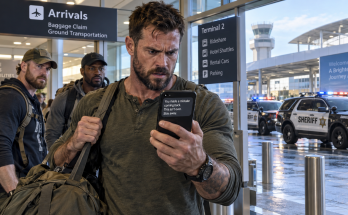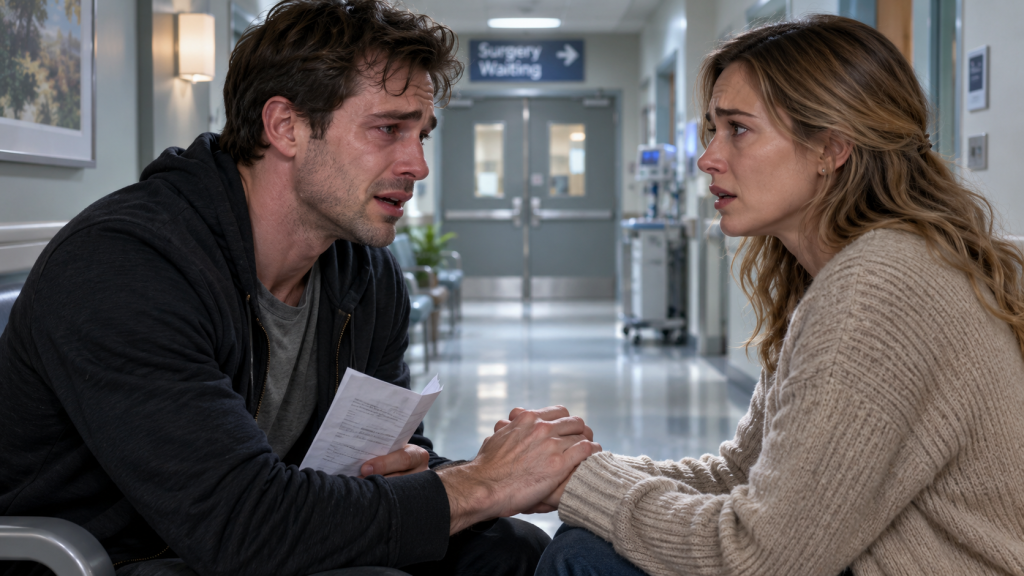
My best friend married my sister, who has Down syndrome — while she was fighting for her life, he gripped my hands and said, “Now it’s time for you to understand why I really married her.”
My sister, Rosie, is a year younger than I am. Growing up, some kids avoided her or treated her differently because she had Down syndrome.
But not my best friend, Ben.
“Rosie, you’ll always have me and Ben,” I used to tell her.
Ben was always there for her. He made sure Rosie was never left out. In fourth grade, he even told her that one day, he would take her to prom.
For years, everyone thought Ben and I would end up together. But instead, when we were older, he asked Rosie to marry him.
I cried even more than she did. My best friend had become my brother, and my sister had found real happiness.
When Rosie announce at their wedding that she was pregnant with twins… We were overjoyed.
But the pregnancy was difficult.
At thirty-four weeks, Rosie was rushed to the hospital. The doctors gave us little reason to hope. They were doing everything they could to save her and the babies.
Ben never left her side. He looked completely terrified, his face drained of color. Then, out of nowhere, he grabbed my hand and pulled me into an empty hallway.
“What’s going on?” I asked.
“Before surgery, Rosie made me promise to tell you this only if she didn’t wake up.”
Ben looked as though he was about to cry.
“Now it’s time for you to understand why I really married her,” he said, squeezing my hands tightly.
My stomach dropped.
“Ben, why would you even say that?”
My mind immediately went to the darkest possibilities.
Had he married Rosie for money? Was he after our parents’ inheritance? Or worse… had he only married my sister because it gave him a reason to stay close to me?
Ben watched my face for a moment, as if he could see exactly where my thoughts had gone.
Then he said,
“It’s much worse than you think. You’d better sit down.”
He pulled a sheet of paper from his jacket.
I barely made it through the first line before I screamed
PART 2 — THE PROMISE ROSIE MADE HIM KEEP
The first line read:
PETITION FOR APPOINTMENT OF GUARDIAN OVER ROSALIE ANNE WALKER.
For several seconds, I did not understand what I was looking at.
The words were English.
I knew every one of them.
Together, they made no sense.
I looked at Ben.
“What is this?”
His face had gone gray.
Behind the double doors at the end of the hall, surgeons were trying to save my sister and her unborn twins.
Machines beeped somewhere nearby.
A cart rattled past.
Someone laughed softly at the nurses’ station.
The world had the nerve to keep functioning.
Ben pointed toward the paper.
“Keep reading.”
I did.
And by the third paragraph, I screamed.
Not loudly at first.
It came out like air being ripped from my chest.
Then louder.
“No.”
Ben caught my shoulders.
“Sit down.”
“No.”
“Hannah.”
That was my name.
And it was there.
On the page.
Hannah Walker, sister, supports the family’s longstanding concern that Rosalie lacks sufficient capacity to make complex medical, financial, and residential decisions independently.
I stared at the sentence.
Then at Ben.
“I never said that.”
“I know.”
“I never said that.”
“I know.”
“Why is my name on this?”
His eyes filled.
“That’s what Rosie wanted you to know.”
I read the line again.
My name looked ordinary.
That was the frightening part.
No forged signature.
No dramatic red stamp.
Just my name placed inside a sentence I had never spoken.
A statement that sounded reasonable enough that somebody reading it might assume I had agreed.
I looked down the page.
The proposed guardian was our mother.
Margaret Walker.
My stomach turned.
“No.”
Ben sat beside me.
“Hannah.”
“Mom wouldn’t do this.”
He did not answer.
That silence was worse than contradiction.
Our mother had always been protective of Rosie.
Sometimes too protective.
But everyone had called it love.
When Rosie was a teenager, Mom still walked her into appointments.
At twenty-one, she kept Rosie’s bank card “for safekeeping.”
At twenty-three, she told Rosie which jobs were too stressful before Rosie had interviewed for them.
At twenty-six, when Rosie moved into an apartment with a roommate, Mom cried for a week and called twice every evening.
We joked about it.
Mom worries.
That explained everything.
Or so I had thought.
Ben reached into his jacket again.
“There’s more.”
I did not want more.
He handed it to me anyway.
The next document was an evaluation summary.
Old.
Very old.
Rosie had been sixteen.
A school psychologist had written that she required support with abstract planning, complex finances, and unfamiliar decision-making.
That part was probably true at sixteen.
Below it, someone had highlighted:
May be vulnerable to undue influence.
My hands trembled.
“This is from high school.”
“Yes.”
“She’s thirty-one.”
“I know.”
“She has a job.”
“I know.”
“She handles her own medication.”
“I know.”
“She budgets.”
“With help.”
“So do half the adults I know.”
Ben almost smiled.
Almost.
Then his face broke again.
I looked at the petition.
“When was this filed?”
“It wasn’t.”
Relief moved through me too quickly.
Then Ben added:
“Not this version.”
My relief vanished.
“What does that mean?”
“This was the draft Rosie found.”
“Found where?”
“At your mom’s house.”
My head snapped toward him.
“How?”
Ben rubbed his hands together.
“About eighteen months before we got married.”
Rosie had gone to Mom’s house to look for her birth certificate because she needed it for a workplace benefits form.
Mom was at church.
Rosie knew the filing cabinet where family documents were kept.
Inside was a folder with her name on it.
School records.
Medical notes.
Bank statements.
And this draft petition.
Rosie photographed every page.
Then called Ben.
Not me.
That hurt.
I hated that it hurt because the reasons were already becoming obvious.
“What did she tell you?”
Ben swallowed.
“She asked whether your mother could make her come home.”
I closed my eyes.
Oh, Rosie.
I remembered that period.
Rosie had been living with a roommate named Paige.
Mom hated it.
Not Paige.
The arrangement.
She said Rosie forgot to lock the door sometimes.
That Rosie ate cereal for dinner too often.
That Paige worked nights and left Rosie alone.
That the neighborhood was “not ideal.”
I agreed with some of it.
I even told Rosie:
“Maybe Mom’s right that you need somewhere more structured.”
My stomach turned at the memory.
Had Rosie heard:
Hannah thinks I cannot live by myself?
Had my careless concern become another brick in a wall Mom was building around her?
I whispered:
“Why didn’t she tell me?”
Ben stared at the floor.
“Because she thought you would tell your mother.”
That hurt more.
Would I have?
Eighteen months earlier?
I did not know.
And that uncertainty was an answer.
Ben continued.
“Rosie asked me to help her understand what the papers meant.”
“So I found an attorney.”
“A real one?”
“Yes.”
“Not Mom’s?”
“No.”
Good.
Her own.
That mattered.
The attorney explained guardianship.
Explained that Down syndrome did not automatically mean Rosie lacked legal capacity.
Explained there were less restrictive ways to get help.
Supported decision-making.
Powers of attorney Rosie could choose and revoke.
Representative payee arrangements if needed for certain benefits.
Health-care proxies.
Budgeting support.
But not necessarily a court-appointed guardian controlling her life.
“What happened?”
I asked.
“Rosie was terrified.”
Ben’s eyes filled.
“She kept saying, ‘If Mom becomes my guardian, can she make me stop seeing you?’”
I looked at him.
“And?”
“I told her I didn’t know.”
Honest.
That was Ben.
Never promising what he did not know.
Then he said:
“That’s why we got married when we did.”
The hallway disappeared.
There.
The sentence.
The one I had feared.
The reason.
Not money.
Not me.
Something else entirely.
“You married her because of this?”
Ben flinched.
“No.”
Then:
“Yes.”
Both.
He looked ashamed.
“I loved her.”
“I love her.”
“God, Hannah, I have loved your sister since before either of us understood what that meant.”
His voice broke.
“But we moved the wedding up because Rosie was scared.”
I stared.
“How far?”
“Almost a year.”
I had never known.
They told us they were “just ready.”
We celebrated their impatience.
Mom complained that planning was too rushed.
Of course she did.
Ben continued.
“Rosie thought if she was married, people would finally stop talking about her like she belonged to your mother.”
My chest cracked.
“She said that?”
“Yes.”
“She said, ‘If I’m Ben’s wife, Mom can’t make all my choices.’”
I covered my face.
It was not legally that simple.
Marriage did not automatically protect someone from a guardianship proceeding if they truly lacked capacity.
Ben knew that now.
Maybe they had known it then.
But fear rarely studies statutes before it chooses hope.
“She shouldn’t have had to get married to feel like an adult.”
I whispered.
“No.”
Ben said.
“She shouldn’t.”
I lowered my hands.
“Was that the only reason?”
His face changed.
“No.”
Good.
I needed that.
Not because I doubted him.
Because Rosie deserved more than a rescue marriage.
Ben reached into his wallet.
Pulled out a folded photograph.
It was old.
Fourth-grade field day.
Rosie in a yellow T-shirt.
Ben beside her, both knees grass-stained.
He handed it to me.
“I married her because she is Rosie.”
He said.
“Because she remembers everyone’s birthday and forgets where she puts her keys.”
“Because she sings the wrong lyrics confidently.”
“Because she cries at animal commercials.”
“Because she gets furious when people talk over her.”
“Because she wanted three children until pregnancy taught us that two at once might be enough.”
He laughed through tears.
“And because when I had pneumonia two winters ago, she slept sitting up beside me because she thought I might stop breathing.”
He looked at the operating-room doors.
“I married her because I wanted my whole life with her.”
Then softly:
“But I married her sooner because she was scared someone would take that choice away.”
That was the truth.
Complicated.
Painful.
Real.
I asked:
“What did Mom do when she found out you were getting married?”
Ben looked at me.
“You remember.”
I did.
Mom cried.
Said it was too fast.
Asked whether Rosie really understood marriage.
Asked Ben whether he understood the responsibility.
The word had made me uncomfortable then.
Responsibility.
As if he were adopting Rosie.
Not marrying her.
But I had said nothing.
I told myself Mom was emotional.
I told myself parents worry.
Again.
Always.
“Did Rosie confront her?”
“Yes.”
“When?”
“The week before we announced the engagement.”
My heart pounded.
“What happened?”
“Your mother denied she intended to file.”
“She said the petition was only a draft.”
“She said she was exploring options because Rosie had started making ‘adult decisions without enough guidance.’”
I almost laughed.
Adult decisions.
At thirty.
“How did Rosie respond?”
Ben’s face softened.
“She said, ‘They’re my decisions because I’m an adult.’”
That sounded exactly like my sister.
Then Ben told me something I had never known.
Rosie had hired the attorney permanently.
Her name was Dana Ruiz.
She specialized in disability rights and supported decision-making.
With Dana’s help, Rosie created her own plan.
She chose who could help her with specific things.
Ben with medical information if she wanted.
Me with paperwork if she asked.
A financial counselor at the community center for budgeting.
No one person controlling everything.
Rosie opened a new bank account in her own name.
Set up direct deposit.
Changed passwords Mom knew.
Created a health-care directive.
Not because she was incapable.
Because every adult should decide who helps when help is needed.
I felt proud.
Then ashamed I had not been there.
“She asked you to keep this from me?”
I asked.
“Yes.”
“Why?”
“Because she wanted to tell you herself.”
“When?”
Ben’s mouth trembled.
“After the twins were born.”
My chest tightened.
“She kept saying she didn’t want the pregnancy to become a war with your mom.”
So she waited.
Of course.
Rosie had spent her entire life learning how to manage other people’s discomfort about her existence.
She knew exactly how quickly her choices could become family meetings.
Behind the doors, something changed.
A nurse hurried past.
Ben stood instantly.
“So did I.”
No one came for us.
We sat again.
Every minute felt borrowed.
I looked back at the petition.
“You said this version wasn’t filed.”
“No.”
“What version was?”
Ben closed his eyes.
That was when fear returned.
“What did Mom do?”
“Hannah…”
“What did she do?”
He reached into his jacket one last time.
Another document.
Newer.
Dated four months earlier.
During Rosie’s pregnancy.
My hands started shaking before I read.
This one was not labeled draft.
It was a filing copy.
Petition for Temporary Guardianship and Emergency Protective Authority.
My breath stopped.
“No.”
Ben said nothing.
I scanned the first page.
The petition alleged Rosie’s pregnancy had created “heightened medical and cognitive vulnerability.”
It claimed she was unable to fully comprehend high-risk obstetric decisions.
It argued that a temporary guardian should have authority to assist with treatment and protect her from “undue influence.”
Proposed guardian:
Margaret Walker.
Again.
My vision blurred.
“She filed this?”
“Yes.”
“When?”
“Four months ago.”
“Does Rosie know?”
“Yes.”
“Why did nobody tell me?”
Ben looked at me.
“Because Rosie begged us not to.”
I stood.
Anger made my body too small.
“You let Mom file for guardianship over my pregnant sister and didn’t tell me?”
Ben stood too.
“She had a lawyer.”
“She fought it.”
“Dana fought it.”
“What happened?”
“The court did not grant emergency guardianship.”
Relief.
Small.
Not enough.
“Why not?”
“Because Rosie appeared.”
“Spoke for herself.”
“Her doctors did not say she lacked capacity.”
“Dana proposed supported decision-making instead.”
“Ben—”
“It’s still pending in part.”
The relief vanished.
“What part?”
Ben stared at the floor.
“Your mother amended it.”
My blood went cold.
“Amended what?”
He looked up.
“The request.”
“To what?”
He could barely say it.
“To include authority related to the babies if Rosie became medically incapacitated.”
For a moment, I heard nothing.
No monitors.
No wheels.
No voices.
Just my own heartbeat.
“What does that mean?”
“It means your mother asked the court to recognize her as the person who should make decisions if Rosie couldn’t.”
“For Rosie?”
“Yes.”
“And the twins?”
Ben’s eyes filled.
“She argued that if Rosie couldn’t care for them immediately after birth, placement should default to family under her supervision.”
I stared.
“But you’re their father.”
“I know.”
“So how could she—”
“She can ask.”
Ben said quietly.
“That doesn’t mean she gets it.”
Important.
“Dana said it was aggressive.”
“Not automatically valid.”
“She filed responses.”
“My parental rights aren’t erased because Rosie is sick.”
“Good.”
I needed every grounded sentence.
No magic.
No mother stealing twins with one paper.
But she had tried to position herself.
That was enough.
“Why?”
I whispered.
Ben looked at me.
“She thinks I manipulated Rosie into marriage.”
Of course.
“And the pregnancy?”
“She thinks Rosie cannot safely parent twins without family control.”
My throat tightened.
“Does Mom know Rosie wanted children?”
“Yes.”
“Does she know Rosie chose this pregnancy?”
“Yes.”
“Does she know the doctors explained everything?”
“Yes.”
“Then why?”
Ben’s answer was simple.
“Because she doesn’t trust Rosie’s choices when they aren’t hers.”
There.
The whole story.
Not hatred.
Not cartoon evil.
Control disguised as love.
Sometimes that is harder to fight because it arrives carrying soup.
I sank back into the chair.
For years, Mom had said:
Rosie needs us.
Maybe she did.
We all need people.
But need had slowly become ownership.
I thought of every family dinner where Mom cut Rosie’s food without asking.
Every appointment she insisted on attending.
Every time Rosie said:
“I can do it.”
And Mom replied:
“I know, honey.”
Then did it anyway.
I had smiled.
Sometimes I helped.
God.
I had helped.
I looked at the first petition again.
My name.
Supporting family member.
“I need to fix this.”
Ben nodded.
“Yes.”
“How?”
“Dana needs a statement from you.”
My stomach tightened.
“She asked?”
“Rosie asked.”
“When?”
“Before surgery.”
There it was.
The promise.
Ben had not dragged me into the hall because he wanted to confess why he married my sister.
He had dragged me here because Rosie might die before she could ask for help herself.
“What did she say?”
Ben began crying.
Really crying now.
He covered his face.
Then forced himself to speak.
“She said, ‘If I don’t wake up, tell Hannah she has to tell the truth about me.’”
I could barely breathe.
“What truth?”
Ben looked at me.
“That you know she can make choices.”
“That she asks for help when she needs it.”
“That she has been raising herself as much as anyone else raised her.”
“And…”
He swallowed.
“That you never agreed to say she couldn’t.”
I looked at my forged sentence.
“No.”
I whispered.
“I never did.”
Then a doctor came through the double doors.
We both stood so fast our chairs moved.
The surgeon’s mask hung under her chin.
Dr. Miriam Patel.
Her face was exhausted.
Ben grabbed my hand.
“What happened?”
Dr. Patel looked at him first.
“The babies are out.”
Ben’s knees nearly gave way.
“Alive?”
“Yes.”
Both.
A boy.
A girl.
Small.
Very small.
But alive.
The boy needed respiratory support.
The girl was breathing with assistance.
NICU teams had them.
Ben sobbed.
I did too.
Then the question neither of us wanted to ask.
“Rosie?”
Dr. Patel became careful.
“She had severe bleeding.”
My stomach dropped.
“We controlled it.”
“She required transfusion.”
“She is stable.”
Ben closed his eyes.
“Stable.”
I repeated.
“Is she awake?”
“Not yet.”
“She’s going to intensive care.”
“Can I see her?”
“Soon.”
No promise she would wake immediately.
No promise there had been no complications.
But alive.
Rosie was alive.
That was enough for the next breath.
Ben pressed his forehead against mine.
“They’re alive.”
“Yes.”
“All three.”
“Yes.”
We stood in that hallway crying like children.
Then a nurse appeared.
“Mr. Carter?”
Ben turned.
“Your babies are in NICU.”
“Would you like to see them?”
He looked at me.
Then back toward the doors where Rosie had disappeared.
He could not decide.
The nurse understood.
“Your wife will be transferring upstairs.”
“She won’t be alone.”
Ben nodded.
Then followed.
Before he left, he handed me the legal papers.
“Call Dana.”
I looked at them.
“Now?”
“Yes.”
Then:
“Hannah.”
“What?”
“Don’t call your mother first.”
My instinct had already been reaching for my phone.
He knew me.
I hated that.
He was right.
Dana Ruiz answered on the second ring.
I explained who I was.
She went quiet.
“I’ve been hoping Rosie would tell you.”
“Why didn’t you?”
“She was my client.”
Of course.
Confidentiality.
Rosie’s choice.
Again.
“Dana, my name is in these papers.”
“I know.”
“I never made that statement.”
“I suspected that.”
“Why?”
“Because when Rosie described you, she said, ‘Hannah gets scared for me, but she knows I’m not stupid.’”
My eyes filled.
That sounded like Rosie too.
Dana explained the situation carefully.
Margaret’s first full petition had been challenged.
The emergency request had not been granted.
No court had declared Rosie incapable of making all decisions.
No guardian had been appointed over her.
Important.
The case remained open because Margaret’s attorney continued arguing for limited guardianship.
Rosie’s team opposed it.
Supported decision-making was already functioning.
Her doctors had documented that Rosie understood her pregnancy, risks, choices, and consent.
That mattered.
“Then why isn’t it over?”
I asked.
“Because courts sometimes take time.”
Dana said.
“And because your mother continues to insist Rosie is being influenced.”
“By Ben.”
“Yes.”
“And you?”
“Sometimes.”
“Anyone who supports Rosie’s choice becomes proof of influence?”
Dana sighed.
“That is one of the arguments we are addressing.”
I looked toward the NICU hallway.
“What happens if Rosie doesn’t wake up?”
Dana paused.
Then answered carefully.
“Ben remains her spouse.”
“The twins’ father.”
“Rosie’s valid health-care directive matters.”
“Temporary medical incapacity does not transform your mother into a guardian automatically.”
Relief moved through me.
Then:
“But Margaret has already asked the court for emergency review because of the delivery.”
My stomach turned.
“Today?”
“This morning.”
“Before surgery?”
“Yes.”
How had Mom even known enough?
Family.
Hospital updates.
Of course.
“She filed while Rosie was fighting for her life?”
“Hannah.”
Dana’s voice softened.
“She likely believes she is protecting Rosie.”
That did not comfort me.
Sometimes the most dangerous control comes from someone convinced it is love.
“What do you need from me?”
“A truthful declaration.”
“I’ll give one.”
“Do not exaggerate.”
“I won’t.”
“Do not say Rosie needs no support if that isn’t true.”
I appreciated that.
“She does need support sometimes.”
“So do I.”
“Then say that.”
Dana replied.
“This is not about proving Rosie can do everything alone.”
“It is about whether support requires taking away decision-making authority.”
There.
The line.
I wrote it down on my hand like I was still in school.
I gave my statement that afternoon.
Not dramatic.
Specific.
I described Rosie’s work.
How she scheduled transportation.
How she used a budgeting app.
How she asked Ben to explain insurance forms when language got confusing.
How she cooked.
Forgot things.
Called me when she needed help.
Got angry when I hovered.
I admitted I had sometimes underestimated her.
That hurt to write.
Still true.
I stated clearly:
I had never said Rosie lacked capacity to make medical, residential, or personal decisions.
I had never authorized anyone to say otherwise.
I had never agreed to support a guardianship petition.
My name had been used without my consent.
Facts.
Pages.
Signed.
Then I called Mom.
She answered immediately.
“Hannah?”
She was crying.
“Is Rosie alive?”
“Yes.”
Mom sobbed.
“Oh, thank God.”
For one minute, we were just mother and daughter.
Sister and mother.
Family terrified about Rosie.
Then I looked down at the petition.
“Mom.”
“Yes?”
“Why is my name on a guardianship filing?”
Silence.
There it was.
“Hannah—”
“Why?”
“It’s complicated.”
“No.”
My voice shook.
“It’s one question.”
“Did you tell your lawyer I supported guardianship?”
Mom inhaled.
“I told them you had concerns.”
“Did I tell you I supported guardianship?”
“You’ve said Rosie needs help.”
“That is not the same thing.”
“Hannah, don’t start.”
I almost laughed.
Don’t start.
Apparently asking how my name ended up in a legal petition was starting trouble.
“Mom, did you use my name without asking?”
She cried harder.
“I was trying to protect your sister.”
“Answer me.”
A long silence.
Then:
“Yes.”
There.
I closed my eyes.
Not forged signature.
Not fake notarization.
Still wrong.
“You cannot speak for me.”
“I know what you believe.”
“No.”
I said.
“You know what you wanted me to believe.”
That stopped her.
Mom’s voice hardened.
“You have no idea what Rosie’s life is really like.”
My anger rose.
“Maybe because you never let anyone see her without you standing in front.”
“Hannah.”
“She is thirty-one.”
“She has Down syndrome.”
“I know.”
“You say that like it answers everything.”
“She is vulnerable.”
“Yes.”
“So are people without Down syndrome.”
“She’s having twins.”
“She already had them.”
Mom gasped.
“What?”
I had forgotten she did not know.
For one second, anger dissolved.
“Both alive.”
She cried.
“A boy and girl.”
More crying.
“Ben is with them.”
Then Mom whispered:
“And Rosie?”
“Stable.”
“Not awake yet.”
She sobbed.
I let her.
Then I returned to the truth.
“Mom, you filed emergency papers today.”
Silence.
“Yes.”
“Why?”
“Because if something happens to Rosie, those babies need someone capable.”
My blood turned cold.
“Ben is their father.”
“He’s emotional.”
“He’s their father.”
“He manipulated her.”
“No.”
“You don’t know that.”
“I know him.”
“You thought he was going to marry you.”
That came from nowhere.
I froze.
“What?”
Mom continued, crying and angry now.
“Everyone did.”
“Then suddenly he marries Rosie.”
“You never thought that was strange?”
I felt sick.
Not because I believed her.
Because I finally understood how Mom had constructed the story.
Ben could not simply love Rosie.
There had to be another explanation.
Manipulation.
Pity.
Access to our family.
Anything except Rosie being chosen.
“Mom.”
My voice became quiet.
“You think Rosie is lovable.”
She gasped.
“How dare you?”
“That’s not what I said.”
“Yes, it is.”
“No.”
I swallowed.
“I think you love her.”
“I think you would die for her.”
“But I don’t think you believe someone else could look at her and see an equal partner.”
Silence.
“Because if you did, you wouldn’t keep calling her marriage proof she was manipulated.”
Mom hung up.
For once, I was glad.
Rosie woke fourteen hours later.
Ben called me at 4:08 in the morning.
“She opened her eyes.”
I ran.
Actually ran through the ICU hallway until a nurse told me to slow down.
Rosie looked terrible.
Pale.
Tubes.
Monitors.
Weak.
Beautiful.
Alive.
Ben sat beside her.
His eyes were swollen from crying.
Rosie turned her head toward me.
“Hannah.”
I burst into tears.
She frowned.
“Why are you crying?”
Classic Rosie.
I took her hand carefully.
“Because you scared me.”
She blinked.
“Babies?”
“Alive.”
Her face crumpled.
“Both?”
“Both.”
Ben showed her photographs.
Tiny faces beneath NICU equipment.
Our niece.
Our nephew.
Rosie touched the screen.
“My babies.”
Then she cried.
Weakly.
Softly.
Ben bent over her hand.
For a while, nothing else mattered.
Not Mom.
Not courts.
Not paper.
Just three people still alive.
Later, when Rosie was more alert, she looked at me.
“Ben told you?”
I nodded.
“You mad?”
“At you?”
“No.”
Her eyes closed.
“Good.”
Then she whispered:
“I didn’t want Mom to make you pick.”
My heart broke.
“Pick what?”
“Her or me.”
I leaned closer.
“Rosie, there is no picking.”
She opened her eyes.
“There is if Mom says I can’t decide.”
I could not answer.
Because she was right.
She whispered:
“I need help sometimes.”
“I know.”
“I’m not dumb.”
“I know.”
“Mom thinks help means she gets to say.”
There it was.
Everything Dana had explained in legal language.
Rosie said it better.
“Do you want Mom to be your guardian?”
“No.”
Immediate.
Clear.
“Who do you want helping you?”
“Ben.”
“You.”
“Dana.”
“My doctor.”
Then she smiled weakly.
“And me.”
I started crying again.
Rosie frowned.
“You cry too much.”
“I know.”
Then she squeezed my fingers.
“I have me.”
That sentence would stay with me for the rest of my life.
The hearing was scheduled quickly because of the emergency request.
Rosie was still hospitalized.
She participated remotely later, after doctors confirmed she was medically able and wanted to do so.
No one dragged her into a courtroom from intensive care.
Dana made sure of that.
The judge heard doctors.
Ben.
Me.
Mom’s attorney.
Independent evaluators.
It was not a simple good-versus-evil proceeding.
That surprised me.
Mom presented genuine concerns.
Rosie had difficulty with some complex documents.
She could be overly trusting.
She sometimes needed reminders.
Pregnancy and recovery increased support needs.
All true.
But support needs were not the same thing as absence of personhood.
That became the center.
My declaration mattered.
So did the false implication that I supported guardianship.
Mom’s attorney called it a misunderstanding.
I called it my name used for a position I never held.
The judge did not appreciate ambiguity in family representations.
Good.
More important were Rosie’s own words.
She explained what she understood about her medical condition.
Her babies.
Recovery.
Money.
Home.
Support.
She did not answer every question perfectly.
Neither would I.
But she knew what she wanted.
And she knew how to ask for help.
That mattered more.
The court denied broad guardianship.
Instead, Rosie’s existing supported decision-making arrangements remained in place, with additional practical support during recovery.
No one person received control over her life.
Ben remained her spouse and the twins’ father.
Rosie’s own health-care documents were respected.
Any assistance with benefits, finances, or services had to be handled through narrower, appropriate arrangements rather than stripping away decision-making rights wholesale.
Mom lost the thing she had tried to obtain.
Control.
But Rosie did not lose her mother.
Not automatically.
That part came later.
And it was harder.
Two days after the decision, I received a text from Mom.
You chose strangers over your family.
I stared.
Then replied:
I chose Rosie’s voice over everyone speaking for her.
Mom did not answer.
For three months.
The twins stayed in NICU for five weeks.
A girl named Lily.
A boy named Noah.
Rosie chose Lily because she liked the flower.
Ben chose Noah because Rosie told him his first suggestion was “too weird.”
He refused to tell me the rejected name.
Probably wise.
When Rosie first held both babies together, she cried so hard the nurse had to remind her to breathe.
I stood beside her.
Ben behind the chair.
For once, nobody told Rosie how she should feel.
Nobody repositioned her hands without asking.
Nobody took over.
The nurse said:
“Want help?”
Rosie nodded.
“Yes.”
There.
Choice.
Help offered.
Help accepted.
Not control.
It looked so simple.
Maybe it always should have been.
Mom eventually asked to meet.
Rosie said:
“Not yet.”
We respected it.
That was new for our family.
Four months later, she said yes.
One hour.
Dana did not attend.
Neither did I.
Ben waited nearby only because Rosie wanted him to.
Mom apologized.
Not perfectly.
At first, she said:
“I was scared.”
Rosie answered:
“So was I.”
Mom cried.
“I thought you needed me.”
Rosie said:
“I did.”
Then:
“But I need me too.”
That was the sentence Mom finally heard.
Maybe because it came without lawyers.
Maybe because Rosie was holding Lily while saying it.
Maybe because Noah was asleep against Ben’s chest.
A family already existing without Mom’s permission.
Reconciliation took time.
Years, really.
Mom never again sought guardianship.
She did sometimes slip into old habits.
Speaking for Rosie.
Answering questions addressed to her.
Offering help before asking.
Rosie became very good at saying:
“Mom.”
One word.
Warning.
Mom would stop.
Usually.
Progress is often repetitive.
As for why Ben really married her?
Years later, I asked Rosie.
Not Ben.
Rosie laughed.
“You still think about that?”
“Yes.”
She looked offended.
“He married me because I’m beautiful.”
“Obviously.”
“And funny.”
“Debatable.”
She hit my arm.
Then became serious.
“I was scared.”
“I thought being married would make people stop treating me like a kid.”
“Did it?”
She thought.
“Some.”
Then:
“But Ben said marriage couldn’t make me a person.”
“He said I already was one.”
I swallowed hard.
“And you still married him.”
“Yes.”
“Why?”
Rosie smiled.
“Because I love him.”
Simple.
That was the part everyone else had made complicated.
The darkest secret Ben revealed in that hospital hallway was not that he had used Rosie.
It was that Rosie had spent years believing she needed marriage to protect her adulthood from her own family.
That truth changed all of us.
Especially me.
I had promised Rosie when we were children:
“You’ll always have me and Ben.”
I thought that meant we would stand in front of her.
Protect her.
Fight for her.
Now I understand something better.
Sometimes loving Rosie means standing beside her.
Not in front.
Not speaking over.
Not turning help into ownership.
Beside.
Where she can still be seen.
Where her own voice reaches the room first.
And where, when anyone asks who Rosie has to depend on, she can answer exactly as she did from that hospital bed:
“I have Ben.”
“I have Hannah.”
“I have people who help me.”
Then smile and add the most important part.
“I have me.”
PART 3 — THE LIFE ROSIE CHOSE FOR HERSELF
The court could deny my mother control over Rosie’s life.
It could not teach us how to stop controlling her.
That part took longer.
Much longer.
And, if I am honest, Mom was not the only person who needed to learn.
I did too.
For years, I thought I was different from her because I listened more.
Because I defended Rosie in public.
Because I had never filed a petition asking a judge to decide whether my sister could make her own choices.
But love can become controlling in smaller ways.
Quieter ways.
Ways that look helpful enough to escape your own notice.
Rosie’s recovery taught me that.
So did the twins.
So did Ben.
And eventually, so did our mother.
Rosie came home from the hospital seven weeks after the twins were born.
Not to Mom’s house.
That was important.
She went home with Ben.
Their house had been rearranged while she was in rehabilitation.
A temporary ramp.
A shower chair.
Grab bars.
Bassinet beside the bed.
A second bassinet because apparently newborn twins consider sleeping at the same time a personal insult.
The first evening, I arrived carrying three grocery bags, four containers of soup, diapers, wipes, detergent, and enough frozen meals to survive an invasion.
Ben opened the door.
He stared at the bags.
Then at me.
“Hannah.”
“What?”
“Why do you have nineteen pounds of food?”
“Because you have two premature babies.”
“We also have a grocery store.”
“I’m aware.”
“And a meal train.”
“I’m aware.”
“And three neighbors who have been feeding us against our will.”
I lifted the bags.
“Move.”
He moved.
Some habits die slowly.
Rosie was sitting on the couch with Lily asleep against her chest.
Noah lay beside Ben’s mother in a portable bassinet.
Rosie looked exhausted.
Happy.
Terrified.
Normal.
That last word mattered.
People had spent so much of Rosie’s life treating every difficulty as evidence that she was fundamentally different.
But newborn twins made everyone incompetent.
I watched Ben put a diaper on backward.
I watched Rosie forget whether Lily had eaten twenty minutes earlier.
I watched Ben’s mother record feedings because neither parent could remember.
Nobody suggested appointing a guardian over Ben.
Interesting.
I started unpacking groceries.
Rosie watched me.
“Hannah.”
“Yes?”
“Why are you doing that?”
“Helping.”
“I didn’t ask.”
I froze with a bag of apples in my hand.
The room became very quiet.
Not hostile.
Educational.
I looked at her.
“You don’t want groceries?”
“I want groceries.”
“Okay.”
“But you didn’t ask if I wanted you to organize my kitchen.”
I looked down.
I had already moved the cereal.
Of course I had.
I had decided the shelf made no sense.
Mom used to do that at Rosie’s apartment.
I had hated watching it.
And there I was.
Same hands.
Different person.
Same mistake.
I slowly put the apples down.
“You’re right.”
Rosie blinked.
Apparently she had expected resistance.
“Do you want help putting this away?”
She thought.
“Yes.”
“Do you want me to decide where things go?”
“No.”
“Excellent.”
Ben covered a smile.
I pointed at him.
“Don’t enjoy this.”
“I would never.”
Liar.
That became our new language.
Do you want help?
What kind?
Do you want me to explain?
Do you want advice?
Do you want me to just listen?
Questions.
Simple things.
Embarrassingly simple.
The kind of things we should have been asking Rosie since she was old enough to answer.
Mom did not visit for almost five months.
Not because Rosie hated her.
Because Rosie was not ready.
Mom sent messages.
At first, too many.
Tell Rosie I love her.
Tell Rosie I’m sorry.
Tell Rosie I bought something for the babies.
Tell Rosie I won’t interfere.
Everything still traveled through me.
Finally, I called her.
“Mom.”
“Yes?”
“You need to stop using me as a hallway.”
Silence.
“What?”
“If Rosie isn’t answering you, that is an answer for now.”
“I’m her mother.”
“Yes.”
“I need to know if she’s okay.”
“She is.”
“How are the babies?”
“Ask Ben if he wants to tell you.”
“Hannah.”
“No.”
My voice softened.
“You’re still trying to stay inside her life through other people.”
Mom began crying.
That used to end conversations.
Not anymore.
“I’m trying.”
“I know.”
“Then why are you being cruel?”
There it was.
Boundary translated into cruelty.
Another old family language.
“I’m not being cruel.”
I said.
“I’m refusing to make Rosie’s no more comfortable for you.”
Mom went quiet.
Then whispered:
“I don’t know how to do this.”
For the first time, I believed her.
So I said:
“Learn.”
She did.
Slowly.
She found a therapist.
I know because she told me months later, not because she used therapy as proof that everyone owed her forgiveness.
She also wrote a formal correction through her attorney.
That mattered.
The original petition had implied I supported broad guardianship.
Mom signed a declaration clarifying that I had never agreed to that statement and that the language had reflected her interpretation of past family concerns, not my authorization.
It did not erase what happened.
It corrected the record.
She also withdrew the remaining request for guardianship rather than continuing to pursue narrower control.
Dana reviewed everything.
Rosie approved what could be shared.
Paper had been used to speak over Rosie.
Now paper was being used to restore the truth.
There was justice in that.
Small.
Administrative.
Real.
Then came the harder part.
Money.
Mom had been managing one of Rosie’s old savings accounts since Rosie was a teenager.
Not secretly.
Rosie knew.
But no one had revisited the arrangement in years.
Dana asked the obvious question.
“Do you still want this?”
Rosie said:
“No.”
Mom took it badly.
Not because she wanted the money.
I believe that.
Because managing it had become one of the ways she understood being needed.
When Rosie moved the account under a structure she chose with a financial counselor, Mom called me crying.
“She thinks I would steal from her.”
“No.”
“Then why take me off?”
“Because it’s her account.”
“I’ve managed it for fifteen years.”
“Yes.”
“She never complained.”
“Mom.”
I paused.
“Rosie not complaining has never been reliable evidence that Rosie agreed.”
That one hurt both of us.
Because it was true about more than money.
The twins grew.
Slowly at first.
Noah came home from NICU needing extra monitoring.
Lily had feeding problems.
Rosie’s physical recovery took months.
She tired easily.
Her iron levels remained low.
Sometimes she needed help lifting both babies safely.
Sometimes she needed someone there during appointments because medical language overwhelmed her when she was exhausted.
Those facts did not embarrass her.
The family had finally stopped treating support as evidence against her.
Ben’s mother came Tuesdays.
I came Thursdays.
A home-health nurse visited for a period.
A parenting-support worker helped both Ben and Rosie create routines.
Schedules went on the refrigerator.
Feedings.
Medication.
Appointments.
Emergency contacts.
The remarkable thing was how unremarkable it all looked.
Good support rarely looks like heroism.
It looks like calendars.
Text reminders.
Prepared bottles.
Someone asking before they touch the stroller.
Mom’s first visit happened when Lily and Noah were six months old.
Rosie set the terms.
One hour.
Ben home.
No discussion of court.
No discussion of guardianship.
No advice unless requested.
Mom agreed.
Then arrived twenty-three minutes early.
Of course she did.
Ben did not let her in until the agreed time.
I loved him for that.
She sat in her car.
Probably furious.
Still waited.
Progress.
When Rosie opened the door, Mom immediately started crying.
Rosie did not.
She stood there holding Noah.
Mom whispered:
“Can I hug you?”
That question alone nearly broke me when Ben told me later.
Can I?
Not assumption.
Not ownership.
Permission.
Rosie said yes.
They hugged.
Then Mom looked at Noah.
“Can I hold him?”
Rosie hesitated.
Then:
“Sit first.”
Mom sat.
Rosie placed Noah in her arms.
Mom cried harder.
Noah burped on her sweater.
I like to think that was his contribution to family healing.
The visit did not fix everything.
At forty-five minutes, Mom noticed Lily rubbing her eyes.
“She needs to go down.”
Rosie looked at the clock.
“In ten minutes.”
“She’s overtired.”
“Mom.”
Just that.
Mom stopped.
Her mouth tightened.
Old instinct.
Then she exhaled.
“Sorry.”
Rosie waited.
Mom added:
“You know her better.”
That was harder for Mom to say than any courtroom apology.
Because motherhood had been the territory she trusted herself most to understand.
Now she was admitting Rosie was the mother in the room.
After Mom left, Rosie called me.
“How was it?”
I asked.
“Weird.”
“Bad weird?”
“Some.”
“Good weird?”
“Some.”
Then she laughed.
“Mom asked before changing Lily.”
My eyes filled.
“She did?”
“Yes.”
“She said, ‘Would you like me to change her?’”
“What did you say?”
“Yes.”
“Revolutionary.”
Rosie laughed.
“She put the diaper on backward.”
I almost fell out of my chair.
“Mom?”
“Yes.”
“Margaret Walker?”
“Backward.”
Justice.
Finally.
Ben and Rosie’s marriage changed too.
The crisis had made Ben look almost saintly to everyone.
He hated that.
At a family dinner, an aunt once said:
“You’re such a wonderful man for taking care of Rosie.”
Ben became very still.
Rosie rolled her eyes.
I knew what was coming.
Ben said:
“Rosie takes care of me too.”
Our aunt smiled awkwardly.
“You know what I mean.”
“No.”
Ben replied.
“What do you mean?”
Silence.
Beautiful silence.
Because the compliment depended on a hidden assumption.
That loving Rosie was sacrifice.
That marrying her made Ben noble.
That her disability turned ordinary marriage into charity.
Ben had spent years hearing it.
So had Rosie.
He was done accepting praise built on insulting his wife.
Later, I asked him whether those comments still bothered him.
He said:
“They always will.”
Then:
“People think I chose Rosie despite something.”
He looked toward the living room, where she was laughing because Noah had put a cracker inside his sock.
“I chose Rosie because she’s Rosie.”
There was the same answer he had given me in the hospital hallway.
Only now I understood it better.
The twins turned one.
We had a backyard party.
Nothing elaborate.
Balloons.
Cupcakes.
A tiny inflatable pool no one trusted.
Mom arrived with two gifts.
She handed them to Rosie.
Not directly to the babies.
“These are from me.”
Rosie looked suspicious.
“What?”
“Nothing.”
“Mom.”
“They’re savings bonds.”
Rosie’s face changed.
Mom immediately added:
“In their names.”
“And I’m not managing them.”
Everyone laughed.
Even Mom.
Especially Mom.
Sometimes families heal enough to make jokes about the things that almost broke them.
Not cruel jokes.
Different kind.
The kind where nobody has to be humiliated for everyone else to laugh.
The guardianship papers remained in Rosie’s filing cabinet.
She did not destroy them.
I asked why once.
“I don’t know.”
she said.
Then thought.
“So I remember.”
“Remember what?”
“That people can love you and still be wrong.”
That sentence stayed with me.
Love does not certify judgment.
Good intentions are not self-correcting.
People can love you enough to sacrifice themselves for you and still refuse to hear who you are.
That was Mom’s tragedy.
For years, she loved Rosie fiercely.
She just trusted her own fear more than she trusted Rosie.
Two years after the twins were born, Rosie started working again.
Part time.
Three mornings a week at the community arts center where she had worked before pregnancy.
Mom worried.
Naturally.
“Childcare is expensive.”
Rosie had already arranged it.
“Transportation could be difficult.”
Already handled.
“What if you get tired?”
Rosie smiled.
“Then I get tired.”
Mom opened her mouth.
Closed it.
Another victory.
The first morning Rosie returned to work, Ben took a photograph.
Rosie stood on the front porch wearing a blue blouse and holding her lunch bag.
Lily was clinging to one leg.
Noah was screaming because he wanted the lunch bag.
Ben sent the photograph to our family chat.
Caption:
Corporate America is not ready.
Rosie replied:
I work at an art center, idiot.
Ben:
Artistic America is not ready.
Mom added three heart emojis.
No instructions.
No warning.
No reminder to call.
I noticed.
Rosie probably did too.
Healing often announces itself through what people stop saying.
My relationship with Rosie changed more than anyone’s.
That surprised me.
I had thought I was already her safest person.
Her defender.
Her big sister by twelve months.
Her translator when strangers became impatient.
The person who stepped between her and schoolyard cruelty.
Then I had to confront something uncomfortable.
Sometimes I liked being needed.
Not as much as Mom.
But enough.
I liked being the capable one.
The person Rosie called for forms.
Doctors.
Contracts.
Technology.
When she started calling Dana instead of me about legal questions, part of me felt replaced.
I hated admitting that.
Then I understood my mother a little better.
Not enough to excuse her.
Enough to recognize the seed.
Control does not always begin with wanting power.
Sometimes it begins with being useful for so long that usefulness becomes identity.
Then the person you love grows.
And your help becomes less necessary.
If you are not careful, you start creating reasons they still need you.
I refused to do that.
So when Rosie said:
“I got it.”
I learned to answer:
“Okay.”
Not:
Are you sure?
Not:
Let me check.
Just okay.
One of the hardest words I ever learned.
Three years after the hospital, Rosie and I went shopping alone.
No babies.
No Ben.
No Mom.
She wanted a dress for our cousin’s wedding.
At the store, a saleswoman looked at me instead of Rosie.
“What size does she need?”
Old reflex shot through me.
I almost answered.
Rosie answered first.
“Ask me.”
The saleswoman flushed.
“Of course.”
Rosie chose a dark green dress.
I hated it.
The neckline was strange.
The sleeves looked like curtains.
She loved it.
A few years earlier, I would have suggested something “more flattering.”
That day I said:
“You look happy.”
Rosie smiled.
“I look hot.”
“Debatable.”
She flipped me off.
Some things did not need healing.
Mom and Rosie never returned to their old relationship.
That was probably the best thing that could have happened.
The old relationship depended on Rosie tolerating too much and Mom deciding too much.
Their new one had edges.
Mom asked before appointments.
Rosie sometimes said no.
Mom visited.
Sometimes Rosie canceled.
Mom got hurt.
Then handled it without calling me.
That last part deserved a medal.
Eventually Mom became one of the twins’ favorite people.
Not because she took charge.
Because she learned how to play.
She taught Noah to bake biscuits.
Taught Lily how to sew buttons.
Rosie watched carefully at first.
Then less.
Trust returned in small deposits.
Never automatically.
One afternoon, Lily was four when she asked Mom:
“Why does Mommy talk different?”
Everything stopped.
Children.
No cruelty.
Just curiosity.
Mom looked at Rosie.
Old Margaret would have answered immediately.
New Margaret asked:
“Do you want to answer?”
Rosie nodded.
She crouched in front of Lily.
“Because I have Down syndrome.”
“What’s that?”
“It means my body and brain were made a little different.”
Lily considered this.
“Like Noah has curly hair and I don’t?”
Rosie smiled.
“Kind of.”
“Does it hurt?”
“No.”
“Can I get it?”
“No.”
“Okay.”
Then Lily ran away because a butterfly had appeared and apparently medical genetics could wait.
Mom started crying.
Rosie groaned.
“Mom.”
“I know.”
Mom wiped her face.
“I cry too much.”
I laughed.
“Runs in the family.”
The twins grew old enough to understand that strangers sometimes stared.
That was harder.
Once, at a playground, another mother spoke slowly and loudly to Rosie after realizing she had Down syndrome.
Rosie answered normally.
The woman continued talking as though volume might cure chromosomes.
Noah, age six, finally said:
“My mom can hear you.”
I almost applauded.
Rosie said:
“Noah.”
“What?”
“She can.”
The woman turned red.
Rosie smiled politely.
“Have a nice day.”
Later I asked whether it bothered her.
“Sometimes.”
she said.
Then:
“But I have things to do.”
That may have been Rosie’s greatest gift.
She refused to let other people’s misunderstanding become the center of every afternoon.
Ben and Rosie had hard years too.
Real marriage.
Not inspirational-poster marriage.
They fought about money.
Ben worked too much one year.
Rosie spent almost six hundred dollars on craft supplies without mentioning it.
Ben was furious.
Rosie accused him of treating her like a child.
He said:
“I would be furious if Hannah spent six hundred dollars without discussing it too.”
I said:
“Leave me out of this.”
They went to counseling for a while.
Not because their marriage was fake.
Because it was real.
Love did not remove conflict.
Disability did not make Rosie incapable of being wrong.
That mattered too.
Equality means allowing someone to have ordinary flaws.
Not turning every mistake into diagnosis.
At one counseling session, Ben apparently said:
“I don’t want to become Margaret.”
Rosie came home furious.
“Why does everyone use Mom as the bad example?”
Then she called Mom and complained.
Mom told her:
“Because I earned it.”
Rosie laughed.
That may have been the moment I knew Mom had truly changed.
Accountability had become something she could hold without collapsing.
The twins turned seven.
At their birthday party, Ben found me sitting alone on the porch steps.
Inside, children were destroying the house with balloons.
Rosie was arguing with Mom about whether seven candles on two cakes was fourteen candles or still seven.
Important matters.
Ben sat beside me.
“Remember the hospital?”
I looked at him.
“I try not to.”
“Me too.”
Then we both laughed because obviously we both remembered everything.
I said:
“You scared the life out of me.”
“What?”
“‘Now it’s time for you to understand why I really married her.’”
He groaned.
“I was panicking.”
“You sounded like a villain.”
“I know.”
“I thought you were about to confess you married Rosie for money.”
“What money?”
“Mom has retirement accounts.”
Ben laughed.
“Scandalous.”
Then I became serious.
“Did you ever regret telling me?”
“No.”
“Even though Rosie survived?”
“No.”
He looked through the window.
Rosie was now holding both cakes while Noah tried to blow out candles before anyone sang.
Ben smiled.
“She wanted you to know.”
I asked the question I had never fully asked.
“Ben.”
“Yeah?”
“If the guardianship thing hadn’t happened…”
He looked at me.
“Would you still have married her?”
His expression changed.
Not offended.
Sad.
Then he said:
“Hannah.”
“I know.”
“No.”
He shook his head.
“You don’t.”
He leaned forward.
“I did not marry Rosie to protect her from your mother.”
“I married Rosie because I wanted to wake up beside her for the rest of my life.”
“The guardianship changed when we married.”
“It did not create why.”
I nodded.
“I know.”
Then he smiled.
“Also, she proposed first.”
My head snapped toward him.
“What?”
He grinned.
“You didn’t know that?”
“No.”
“Oh, this is excellent.”
“Ben.”
Apparently, after Rosie found the guardianship draft and met Dana, she invited Ben to their favorite diner.
Ordered pancakes.
Then said:
“If people are going to keep acting like I can’t decide things, I’m going to decide something big.”
Ben thought she meant moving.
She pulled a ring box from her purse.
Not an engagement ring.
A plastic ring from a vending machine.
Pink.
Awful.
She put it on the table and said:
“Ben Carter, I love you. You talk too much and you leave socks everywhere. Do you want to marry me?”
I stared at him.
“You let everyone think you proposed?”
“She told me I could do the fancy proposal later.”
“You fraud.”
“She wanted pictures.”
Of course she did.
“So you proposed twice.”
“Yes.”
“Why didn’t she tell me?”
Ben shrugged.
“Ask her.”
I did.
Immediately.
Rosie was in the kitchen cutting cake.
“Did you propose to Ben?”
She froze.
Then looked at him through the window.
“BEN!”
He waved.
Coward.
Rosie turned to me.
“It was private.”
“For seven years?”
“Yes.”
“Why?”
She thought.
Then smiled.
“Because everybody already thought Ben chose me.”
The room inside me became still.
Rosie continued.
“I wanted one thing that was mine.”
There it was.
Again.
Choice.
Not protection.
Not rescue.
Not being selected.
She had chosen too.
That night, after the party, I sat with Rosie on the back steps while Ben put the twins to bed.
I said:
“When we were kids, I always told you that you’d have me and Ben.”
“I remember.”
“I think I thought I was promising we’d protect you.”
“You did.”
“Sometimes too much.”
She smiled.
“Yes.”
“Do you forgive me?”
Rosie considered it dramatically.
“For what?”
“For all the times I spoke for you.”
“For assuming.”
“For not seeing what Mom was doing sooner.”
“For making you think you couldn’t tell me.”
Rosie leaned against my shoulder.
“You’re my sister.”
“That’s not an answer.”
She laughed.
Then:
“I forgive you.”
A pause.
“But I still get to remind you.”
“Obviously.”
“Forever.”
“Unfortunately.”
Mom died many years later.
Quietly.
At home.
By then Lily and Noah were teenagers.
Rosie sat beside her bed the final night.
I was there too.
So was Ben.
Mom’s breathing had become shallow.
She opened her eyes once and looked at Rosie.
“I’m sorry.”
Rosie took her hand.
“I know.”
Not:
It’s okay.
Not:
You did your best.
Just:
I know.
Sometimes forgiveness does not need to rewrite history.
It only needs to stop demanding another ending.
Mom whispered:
“You did good.”
Rosie smiled.
“I know.”
I laughed through tears.
Even Mom did.
Those were among the last words she heard.
I am glad.
After the funeral, I helped Rosie clean out Mom’s desk.
In the bottom drawer we found a folder.
Rosie’s old guardianship papers.
I stiffened.
Rosie sat beside me.
Inside, Mom had written a note years earlier.
Not legal.
Just paper.
Rosie, I thought loving you meant making sure nothing bad could happen to you. I understand now that I was making sure nothing could happen without me. Those are not the same thing. I am sorry.
Rosie read it.
Then folded it.
“What do you want to do with it?”
I asked.
She thought.
“Keep the note.”
“And the petition?”
She smiled.
“Shred it.”
So we did.
Page by page.
My name.
Mom’s name.
All those sentences deciding what Rosie could not do.
Gone into thin strips.
Rosie held one strip up.
“What does this say?”
I squinted.
“‘Lacks sufficient—’”
She dropped it into the bin.
“Good.”
Years later, Lily asked why Grandma Margaret had once tried to become Rosie’s guardian.
Rosie told her.
Honestly.
Age appropriately.
“She was scared.”
“Was she mean?”
“No.”
“Was she wrong?”
“Yes.”
“Can people be nice and wrong?”
Rosie looked at me.
Then smiled.
“All the time.”
That may be the most important thing our family ever learned.
Cruelty is easy to recognize when it arrives shouting.
Control is harder when it arrives carrying casseroles.
Sometimes the people who limit you most sincerely believe they are helping.
That does not make them monsters.
It also does not make the limit acceptable.
Love does not excuse taking someone’s voice.
Real love learns to listen for it.
Ben once told me it was time to understand why he really married Rosie.
For years, I thought the answer was the guardianship fight.
Fear.
Protection.
A way to make the world recognize Rosie as an adult.
That was part of the story.
But not the deepest part.
The deepest part was embarrassingly simple.
Ben married Rosie because he loved her.
Rosie married Ben because she loved him.
She had Down syndrome.
She needed help with some things.
So did he.
So did I.
So did Mom.
The difference was that nobody ever tried to make Ben prove he deserved authority over his own life because he forgot appointments or made bad financial decisions.
Nobody questioned whether I was capable of love because I needed advice.
Rosie had been asked to prove things the rest of us were allowed to assume.
That was the injustice.
Not her disability.
Our doubt.
Rosie is older now.
Gray beginning at her temples.
Still stubborn.
Still funny.
Still capable of buying six hundred dollars’ worth of craft supplies if left unsupervised by common sense.
Lily and Noah are grown.
Ben’s hair disappeared years ago.
Rosie claims this improves him.
Every Sunday they have dinner at their house.
Sometimes I go.
Sometimes I don’t.
Rosie no longer needs me to attend every chapter of her life.
That used to frighten me.
Now it makes me proud.
Because the promise I made when we were children was wrong in one small but important way.
I used to tell her:
“You’ll always have me and Ben.”
As though we were the foundation beneath her.
As though without us she might fall.
I would say it differently now.
I would tell her:
“You’ll always have people who love you.”
“You’ll always have people who will help when you ask.”
“You’ll always have somewhere to call home.”
And then I would add what Rosie taught all of us the hard way:
“But your life is still yours.”
No husband gives you that.
No sister gives you that.
No mother.
No judge.
No diagnosis takes it away.
Rosie had it from the beginning.
We were simply the ones who needed years to understand.
And if you ask her now who she depends on, she still gives the same answer she gave me from that hospital bed all those years ago.
“I have Ben.”
“I have Hannah.”
“I have my kids.”
“I have people.”
Then she smiles.
Touches her hand to her chest.
And says the part none of us will ever forget again.
“I have me.”
THE END STORIES! THANK YOU FOR READING GOOD LUCK !❤️
Related Posts