My parents sold my 11-year-old daughter’s antique cello — the one she got from my grandmother — for $87,000 and spent the money on a pool for my sister’s kids. When Grandma found out, she didn’t cry. She smiled and said, “The cello was …” My parents’ faces went pale.

“Where’s Lucy’s cello?” I asked.
My mother raised her coffee mug like I had interrupted a quiet morning instead of walking into a house that smelled like wet paint, sawdust, and money.
Dad sat at the kitchen table with his tablet. My sister Rachel leaned against the counter with her expensive-looking green drink.
Outside, machines had ripped open the backyard for a new in-ground pool.
Inside Grandma Margaret’s old music room, the corner where my eleven-year-old daughter’s antique cello had always rested was empty.
Lucy stood beside the empty stand, completely still.
Not crying. Not demanding answers. Just being careful, like she was afraid the wrong question might somehow make this her fault.
Mom gave me a thin smile. “Your father handled it.”
“Handled it how?”
Dad finally looked up. “We sold it.”
I stared at him.
“You sold Lucy’s cello?”
“It was valuable,” he said. “It was sitting there. Your grandmother wasn’t using it.”
“She gave it to Lucy.”
Rachel laughed. “She’s eleven.”
As if being eleven meant ownership disappeared the second an adult wanted something more.
Mom set her mug down. “Emily, don’t start.”
“How much?”
Dad’s mouth tightened. Rachel looked away.
“Eighty-seven thousand,” Mom said.
My hand closed around the edge of the counter.
Outside the window, the pool forms gleamed in the sunlight.
“You spent Lucy’s cello on that?”
Rachel straightened. “It’s for the kids.”
“My kid is a kid.”
Dad rubbed his forehead. “Lucy will be fine with a student cello. Plenty of children rent instruments.”
Lucy will be fine.
My family loved that sentence whenever Lucy was the one expected to lose something.
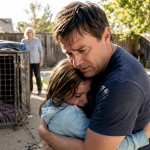
I found her back in the music room, touching the empty stand with two fingers before pulling her hand away.
“Did I do something wrong?” she whispered.
“No.” I knelt in front of her. “You did nothing wrong.”
That night she practiced on a battered student cello her teacher loaned us. The sound was thin and boxy compared with the warm voice of the antique instrument.
Lucy never complained.
She only said, “Maybe Great-Grandma didn’t mean for it to be mine yet.”
After she fell asleep, one sentence from my mother kept circling in my head.
You are not telling your grandmother.
Not, Don’t upset her.
Don’t tell her.
So the next morning, I drove to Grandma Margaret’s assisted living community and told her everything—the missing cello, the $87,000 wire transfer, the collector, the pool, and the warning that she was never supposed to know.
Grandma didn’t cry.
She asked one question.
“And Lucy?”
“She thinks you changed your mind.”
Grandma’s expression hardened.
She reached for her phone and made one quiet call.
Then she looked at me over her glasses. “I am not the one who should be worried.”
Six weeks later, my parents invited everyone over for the pool reveal.
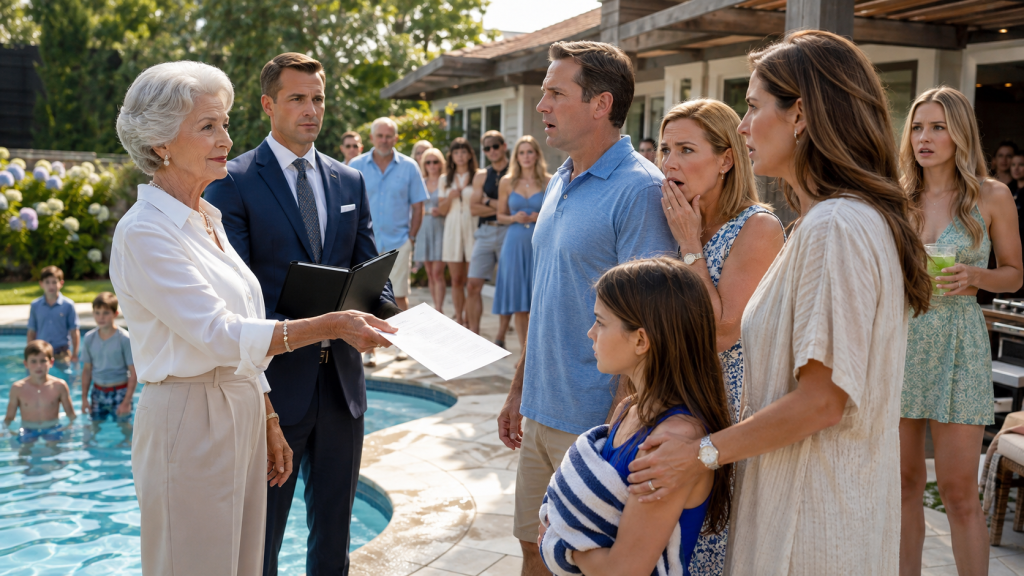
Rachel’s kids were already splashing. Relatives and neighbors stood around the backyard. Mom worked the grill with her practiced family-host smile.
Lucy stayed beside me, holding her folded towel in both hands and staring at what her cello had become.
Then the back gate opened.
Grandma Margaret walked in wearing a crisp blouse.
Beside her was Andrew, her lawyer, carrying a slim folder.
Mom stopped smiling. Dad stared at the folder.
Grandma looked from the pool to my parents.
“Well,” she said pleasantly. “You’ve been busy.”
Mom forced out a laugh. “This is a party.”
“I know,” Grandma said. “That’s why I came.”
Andrew handed her the folder.
Grandma opened it while the pool motor hummed behind her. Rachel lowered her drink. Lucy found my hand and squeezed.
Grandma looked directly at my parents.
“I gave that cello to Lucy,” she said. “Not to you. Not to Rachel. To Lucy.”
Dad started to answer, but Grandma lifted the first page.
Then she smiled—the same calm smile that had scared me six weeks earlier—and placed the page in my father’s hand.
PART 2 — THE CELLO WAS NEVER THEIRS TO SELL
Dad took the page from Grandma’s hand.
At first, his expression barely changed.
He glanced down at the document with the irritated patience of a man expecting to dismiss a technicality.
Then his eyes stopped moving.
The color drained from his face.
Mom noticed before anyone else.
“What is it?”
Dad did not answer.
Rachel stepped closer.
“Dad?”
He kept reading.
Grandma stood in front of him with both hands resting calmly over the handle of her cane.
There was no anger in her posture.
No trembling.
No grief.
That frightened me more than shouting would have.
Grandma Margaret had always been gentle.
Not weak.
Gentle.
There is a difference.
Weakness bends because it cannot resist.
Gentleness chooses not to break things simply because it can.
But standing beside that glittering new pool, with my daughter’s inheritance turned into blue water and concrete, Grandma looked like a woman who had finally decided there was nothing left worth protecting from the truth.
Dad looked up.
“What is this?”
Grandma smiled.
“A document you should have read before selling something that never belonged to you.”
Rachel frowned.
“What does that mean?”
Grandma looked toward Lucy.
My daughter had gone completely still beside me.
Her fingers were wrapped around mine so tightly they hurt.
Grandma’s voice softened when she looked at her.
“The cello was never part of my general property.”
Dad’s jaw tightened.
“What are you talking about?”
Grandma turned back to him.
“That cello was placed in a separate family instrument trust seventeen years ago.”
Silence fell across the backyard.
Even the children in the pool seemed suddenly far away.
Mom blinked.
“A what?”
“A trust.”
Grandma said the word as though she were explaining something painfully simple.
“Your father and I created it after the cello was appraised.”
Dad stared at the page again.
I looked at Andrew.
He had said nothing yet.
He did not need to.
His face had the calm, almost impersonal expression of a man who had already checked every date, every signature, every line of ownership.
Grandma continued.
“The instrument could be used by members of the family.”
Her eyes shifted to me.
“Eventually, it was to pass to a descendant who demonstrated serious commitment to music.”
Lucy’s breath caught.
I looked down at her.
Grandma smiled at her.
“That was you.”
Lucy’s eyes immediately filled.
Not because of the money.
Never because of the money.
Because for six weeks she had been carrying the quiet belief that perhaps Great-Grandma had never truly wanted her to have it.
Children can survive disappointment.
What destroys them is believing love was withdrawn.
Grandma seemed to understand that.
She stepped closer to Lucy.
“I chose you a year before I moved here.”
Lucy’s lips trembled.
“You did?”
“Yes, sweetheart.”
Grandma’s voice broke slightly for the first time.
“I heard you play Saint-Saëns in my living room.”
Lucy looked down.
“You made mistakes.”
Grandma smiled.
“Several.”
A tiny laugh escaped Lucy through her tears.
Then Grandma touched her cheek.
“But every time you made one, you started again without getting angry at the instrument.”
Her eyes shone.
“That is how I knew.”
Something inside my chest twisted.
Lucy wiped her face.
“So you really wanted me to have it?”
Grandma’s answer came without hesitation.
“I wanted you to have it more than anyone.”
My daughter began to cry.
Quietly.
The kind of crying she had been refusing to do for six weeks.
I wrapped my arm around her.
Grandma let her have that moment.
Then she turned back to my parents.
And the softness disappeared.
Dad lifted the page.
“This proves nothing.”
Andrew finally spoke.
“It proves ownership.”
Dad looked at him.
Andrew’s tone stayed professional.
“The trust agreement identifies the cello by maker, year, dimensions, historical description, and serial notation associated with the insurance appraisal.”
Rachel crossed her arms.
“So what?”
Andrew looked at her.
“So your parents had no legal authority to sell it.”
Mom’s face tightened.
“That cello was in our house.”
Andrew nodded.
“Possession and ownership are not the same thing.”
Mom scoffed.
“My mother left it there for years.”
Grandma looked at her.
“I left many things in your house.”
Her voice was quiet.
“That did not make them yours.”
Mom flushed.
Dad looked back at the paper.
“The buyer paid for it.”
“Yes.”
Andrew nodded.
“And that creates a second problem.”
I felt my stomach tighten.
Rachel’s eyes flickered toward the pool.
“What second problem?”
Andrew opened the folder.
He removed another document.
“The instrument was sold using a bill of sale in which Mr. and Mrs. Bennett represented themselves as lawful owners.”
Dad’s face hardened.
“We believed we were.”
Andrew raised an eyebrow.
“Did you?”
Silence.
I looked at Dad.
For the first time, something in his expression cracked.
Not guilt.
Fear.
Andrew continued.
“Because the buyer asked for provenance.”
Dad’s face changed again.
I knew that word.
Provenance.
The documented history of an antique object.
Ownership.
Authenticity.
Where it came from.
Who had possessed it.
With old instruments, provenance could be almost as important as the object itself.
I stared at Dad.
“What did you give the collector?”
He looked away.
Mom jumped in.
“Your father handled the paperwork.”
Of course.
Responsibility in my family was communal when something went right and immediately individual when consequences arrived.
Andrew looked at Dad.
“What did you provide?”
Dad’s jaw worked.
“I gave him what he asked for.”
Grandma’s eyes narrowed.
“What?”
Dad said nothing.
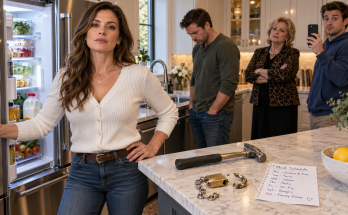
Andrew slid a photocopy onto the patio table.
I walked closer.
It was an old appraisal.
I recognized Grandma’s name near the top.
But something looked wrong.
The bottom page listed ownership.
Dad’s name had been typed into a space where Grandma’s should have been.
My blood ran cold.
I looked at him.
“Did you alter this?”
Mom said quickly,
“It wasn’t altered.”
Andrew turned toward her.
“Then what would you call it?”
Nobody answered.
He continued.
“The original appraisal identifies Margaret Bennett as custodian on behalf of the instrument trust.”
He tapped the photocopy.
“This version removes the trust reference entirely.”
I looked at Dad.
“You forged provenance?”
He snapped.
“I did not forge anything.”
“You changed a legal document.”
“It wasn’t legal.”
Andrew almost smiled.
“It was part of an insured asset record.”
Dad’s voice rose.
“I adjusted a copy so the sale could go through.”
There.
The admission landed in the middle of the party like a stone dropped into still water.
Rachel whispered,
“Oh my God.”
Dad turned on her.
“Don’t.”
“No, Dad.”
She stepped back.
“You told me the cello was yours to sell.”
“It was sitting here unused.”
“That is not the same thing.”
I almost laughed.
Not because anything was funny.
Because apparently Rachel had finally discovered a moral line once the consequences threatened to reach her side of the yard.
I looked toward the pool.
Perfect turquoise water.
Stone coping.
A waterfall feature.
A built-in spa.
Custom fencing.
Eighty-seven thousand dollars.
Lucy’s cello had become all of it.
The whole backyard glittered with stolen value.
Grandma looked at the pool too.
Then she said the sentence that made Mom grip the edge of the table.
“The cello was insured for two hundred and forty thousand dollars.”
Silence.
Absolute silence.
Dad stared at her.
Mom went pale.
Rachel actually laughed once.
A broken, disbelieving sound.
“What?”
Grandma looked at her.
“The eighty-seven thousand was not its value.”
She turned toward Dad.
“It was the price you accepted because you had no idea what you were selling.”
I felt Lucy’s hand go slack inside mine.
I stared at Grandma.
“Two hundred and forty thousand?”
Andrew corrected gently.
“That was the most recent formal insurance value.”
Dad shook his head.
“No.”
Grandma said nothing.
“No.”
Dad repeated it louder.
“The collector said eighty-seven was generous.”
Andrew’s expression became almost sympathetic.
“I’m sure he did.”
Dad’s face twisted.
Mom looked from him to Andrew.
“Are you saying we were cheated?”
Grandma gave a short laugh.
The sound was colder than anything I had ever heard from her.
“You stole a quarter-million-dollar instrument from a child, sold it for a third of what it was worth, and now you are upset that the buyer may have been dishonest with you?”
Mom flinched.
Grandma stepped forward.
“You should be grateful irony is free.”
Nobody spoke.
A few relatives had quietly moved closer.
Not obviously.
But nobody was pretending this was still a pool party.
Rachel’s husband, Mark, had come out of the water and was standing near the patio wrapped in a towel.
His face was unreadable.
One of Rachel’s boys floated near the steps, watching the adults.
I hated that the children were there.
Not because they had done anything wrong.
Because they had become props in a crime they never asked for.
“For the kids.”
That was what Rachel had said.
As though saying those words turned theft into generosity.
Andrew removed another sheet.
“The trust instrument has a recovery provision.”
Dad looked at him sharply.
“What does that mean?”
“If the cello is unlawfully transferred, the trustee is authorized to pursue recovery of the instrument itself.”
Mom frowned.
“You mean get it back?”
“If possible.”
A tiny spark of hope moved through me.
I looked at Grandma.
“Can we?”
She did not answer immediately.
That frightened me.
I looked at Andrew.
“Can we get Lucy’s cello back?”
He exhaled.
“We know where it is.”
Lucy lifted her head.
“You do?”
Andrew looked at her.
“Yes.”
Her entire face changed.
Hope entered so quickly that it hurt to watch.
“Where?”
He softened.
“With a dealer in New York.”
I stared.
“The collector sold it?”
Andrew nodded.
“Three weeks after purchasing it.”
My father swore under his breath.
Mom looked sick.
“For how much?”
Andrew glanced at Grandma.
Grandma answered.
“One hundred and ninety-five thousand.”
Dad’s knees nearly seemed to buckle.
He lowered himself into a patio chair.
Nobody helped him.
He sat there staring at the pool.
Rachel covered her mouth.
“That’s impossible.”
Andrew shook his head.
“It is documented.”
I thought of the collector.
Eighty-seven thousand.
Three weeks later.
One hundred and ninety-five.
More than a hundred thousand dollars in instant profit.
Dad had not merely stolen Lucy’s cello.
He had delivered it to someone who knew exactly what he had.
“Did he know?”
I asked.
Andrew looked at me.
“We don’t yet know what he knew at the moment of purchase.”
Grandma added,
“But he knew enough to move it quickly.”
Dad stared at the ground.
Mom whispered,
“So if the dealer has it, we just explain the mistake.”
Andrew looked toward her.
“No.”
She blinked.
“No?”
“The dealer purchased the instrument through another intermediary and has placed it with a private client for evaluation.”
My stomach dropped.
“What does that mean?”
“It may be harder to recover immediately.”
Lucy’s hope dimmed.
I squeezed her shoulder.
Andrew continued.
“We have already notified the relevant parties that title is disputed.”
Dad stood again.
“You already contacted them?”
Grandma looked at him.
“Yes.”
His face reddened.
“You did all this behind our backs?”
I stared at him.
The sheer audacity of that sentence left me breathless.
Grandma did not.
She simply said,
“You sold my great-granddaughter’s cello behind her back.”
Dad opened his mouth.
Grandma lifted one hand.
“You will not complain to me about surprise.”
That shut him up.
Then Andrew pulled out another document.
“This is a formal demand.”
Dad stared at it.
“For what?”
“Several things.”
Andrew began reading.
“Immediate preservation of all financial records connected to the sale.”
Dad’s face tightened.
“Accounting for all proceeds.”
Mom looked toward the pool.
“Disclosure of communications with the buyer.”
Rachel stepped closer to Mark.
“Restitution for any trust losses caused by the unauthorized transfer.”
Dad went rigid.
“And legal fees.”
Andrew closed the folder.
Mom’s voice became thin.
“What exactly do you want from us?”
Grandma looked at her daughter for a long time.
It was strange seeing them that way.
Mother and daughter.
For all my anger toward Mom, I suddenly wondered what it felt like to stand in front of the woman who raised you and know she had finally seen something in you she could not defend.
Grandma said,
“I want Lucy made whole.”
Mom swallowed.
“And if the cello can’t be recovered?”
Grandma’s expression hardened.
“Then you will learn how expensive it is to steal from family.”
Rachel stared at her.
“Grandma, the pool is already built.”
Grandma looked at her.
“Yes.”
Rachel opened both hands.
“So what are we supposed to do?”
For one second, nobody answered.
Then Lucy spoke.
Her voice was quiet.
“Maybe fill it with cellos.”
Every head turned.
Lucy immediately looked embarrassed.
I covered my mouth.
Grandma laughed.
A real laugh this time.
Even Andrew smiled.
Rachel did not.
“This isn’t funny.”
Lucy looked at her.
“No.”
Her little face went serious.
“It isn’t.”
The smile vanished from Grandma’s face too.
Lucy looked toward the water.
“You said it was for the kids.”
Rachel stiffened.
Lucy continued.
“I was a kid too.”
I felt my throat close.
My daughter had barely spoken about any of this.
For six weeks, she had absorbed everything.
The missing instrument.
The excuses.
The borrowed student cello.
The way everyone expected her to be mature because making a scene would inconvenience adults.
Now all of it finally came out in one sentence.
“I was a kid too.”
Rachel looked away.
Lucy’s voice trembled.
“I loved that cello.”
Not its value.
Not its age.
Not the money.
“That was the first instrument that didn’t sound like it was fighting me.”
Grandma’s eyes filled.
Lucy wiped her cheek.
“Great-Grandma taught me how to hold the bow on it.”
She looked at Mom and Dad.
“It smelled like old wood and her house.”
Mom’s face changed.
For the first time, I saw something like shame.
Lucy continued.
“When I got nervous before recitals, I used to touch the scratch near the bottom because Great-Grandma said Grandpa made it accidentally when they were young.”
Grandma smiled through tears.
“He did.”
Lucy looked back at the empty house behind us.
“You didn’t sell eighty-seven thousand dollars.”
Her voice cracked.
“You sold something that remembered people.”
Nobody had an answer for that.
That was the difference between children and adults.
Adults had spent six weeks arguing about price.
Lucy understood value.
Grandma walked to her.
She opened her arms.
Lucy fell into them.
And Grandma held her.
For a long time.
Nobody interrupted.
When they finally pulled apart, Grandma whispered something I barely heard.
“We are going to fight for it.”
Lucy nodded.
“I know.”
Then she said,
“But if we don’t get it back, it’s okay.”
Grandma looked surprised.
Lucy swallowed.
“I’ll still play.”
That broke me.
I turned away for one second because tears had blurred everything.
Lucy had lost something irreplaceable and somehow the person showing the most dignity was the eleven-year-old everyone had treated as too young to own it.
Grandma kissed her forehead.
“That is why it belonged to you.”
Behind us, Dad said,
“Enough.”
The word came out loud.
Abrupt.
Everyone turned.
His face was red now.
Humiliation had finally burned through fear.
“This has gone far enough.”
Andrew straightened.
Dad pointed toward Grandma.
“You come into my house with a lawyer and humiliate us in front of everyone?”
Grandma looked around.
“This is your house?”
Dad froze.
The question was odd.
Mom looked at Grandma.
“What does that mean?”
Grandma smiled again.
The same smile from six weeks earlier.
The smile that said she had been waiting for exactly this moment.
Andrew opened the folder one more time.
I saw Dad notice.
Something in his expression collapsed.
Grandma said softly,
“You should really stop making claims about ownership before checking the paperwork.”
Mom stared.
“What are you talking about?”
Grandma looked toward the house.
Then the pool.
Then back at them.
“When your father died, this house became mine.”
Dad said quickly,
“You transferred it.”
“Yes.”
Grandma nodded.
“I transferred a remainder interest.”
Mom’s face emptied.
I had no idea what that meant.
Apparently, neither did Rachel.
“What is that?”
Andrew explained.
“Margaret retained a life estate.”
Dad went pale.
There it was.
Another legal phrase.
Another piece of paper my parents had clearly forgotten existed.
Grandma continued.
“You were permitted to live here.”
She looked at Mom.
“You were not given unrestricted ownership while I was alive.”
Mom took one step backward.
Dad whispered,
“That isn’t what Dad said.”
Grandma’s face sharpened.
“Your father signed it.”
Andrew lifted another page.
“He did.”
Rachel looked at Mark.
“What does this mean?”
Andrew turned toward her.
“It means Margaret retains the legal right to possess and control the property during her lifetime.”
Rachel stared at the pool.
Then at Grandma.
“No.”
Grandma looked almost amused.
“What?”
Rachel’s voice rose.
“You can’t take the house.”
Grandma’s expression turned cold.
“I am not taking anything.”
She paused.
“I am simply no longer lending it to people who steal from children.”
Mom’s mouth fell open.
“Mom.”
“No.”
Grandma’s voice remained soft.
“Do not call me that as though the word creates immunity.”
I felt goosebumps rise along my arms.
Mom started crying.
“This is our home.”
Grandma looked around.
“And Lucy believed the cello was hers.”
Mom flinched.
“That is different.”
“No.”
Grandma shook her head.
“It only feels different because now you are the one afraid of losing something.”
Silence.
Rachel whispered,
“What happens now?”
Andrew removed a final document.
“Margaret has exercised her right to terminate your permissive occupancy.”
Dad stared.
“You can’t evict us.”
Grandma looked at him.
“I can remove people from my property.”
He laughed angrily.
“This is insane.”
Andrew said calmly,
“You will receive formal notice.”
Mom grabbed Grandma’s arm.
“Mother, please.”
Grandma looked down at her hand.
Mom immediately released her.
For one second, something passed across Grandma’s face.
Pain.
Real pain.
This was still her daughter.
That mattered.
Even now.
Maybe especially now.
But love does not require surrender.
Grandma said quietly,
“I trusted you.”
Mom started sobbing.
“I know.”
“No.”
Grandma’s voice trembled.
“I gave you access to my home.”
“I left my music here.”
“I believed you understood why certain things mattered.”
She looked at the pool.
“You turned my great-granddaughter’s inheritance into landscaping.”
Mom covered her face.
Grandma continued.
“And then you told her mother to keep it from me.”
Dad interrupted.
“Because we knew you would overreact.”
Grandma stared at him.
Then laughed.
A small, astonished laugh.
“Overreact?”
She pointed toward the house.
“You falsified a provenance document.”
She pointed toward the pool.
“You spent stolen proceeds.”
She looked toward Lucy.
“And you made an eleven-year-old believe I had changed my mind about loving her.”
Her voice broke.
“That is the part you should pray I eventually forgive.”
Dad looked away.
For once, he had nothing to say.
Andrew handed him the second notice.
Dad took it.
His hands were shaking.
Rachel stepped forward.
“Wait.”
Everyone looked at her.
She looked terrified.
“What about us?”
I stared.
“What about you?”
She gestured toward the pool.
“We paid for upgrades too.”
Dad looked at her.
“What?”
Rachel froze.
Mom turned slowly.
“What upgrades?”
Rachel’s face drained.
Mark closed his eyes.
Grandma looked between them.
“What upgrades?”
Rachel swallowed.
“The pool package was ninety-eight.”
I stared.
Mom’s mouth fell open.
“You said eighty-seven.”
Rachel looked toward Dad.
Dad looked furious.
“Rachel.”
She stepped backward.
“The cello money covered most of it.”
My stomach tightened.
“Most?”
Rachel said nothing.
Andrew’s gaze sharpened.
“Where did the remainder come from?”
Rachel looked at Mom.
Then Dad.
And in that second, I knew.
There was another secret.
Of course there was.
Families like mine never built betrayal in one layer.
There was always another room behind the wall.
Dad snapped,
“Don’t.”
Rachel’s eyes filled.
“Dad, I’m not taking this alone.”
Mom stared.
“Taking what?”
Mark spoke for the first time.
His voice was quiet.
“We should go.”
Rachel turned on him.
“No.”
Her breathing became fast.
“No, because apparently everyone is going to blame me anyway.”
She looked at Grandma.
Then at me.
“The pool didn’t cost eighty-seven thousand.”
I waited.
“It cost one hundred thirty-two.”
Nobody moved.
I stared at her.
“One hundred and thirty-two thousand dollars?”
Rachel nodded.
I looked at Mom.
She looked genuinely confused.
“Where did the other forty-five come from?”
Rachel began crying.
Dad shouted,
“Enough!”
Grandma’s cane struck the stone patio once.
Hard.
The sound silenced everyone.
She looked at my father.
“You will not shout your way out of another answer.”
Then she turned toward Rachel.
“Where did the money come from?”
Rachel swallowed.
Her mascara had begun to run.
“Grandpa’s account.”
Mom went white.
Grandma’s face changed completely.
Not anger.
Something deeper.
“What account?”
Rachel looked at Dad.
He looked as if he might be sick.
“Rachel.”
She shook her head.
“You told me it was family money.”
Grandma stepped forward.
“What account?”
Dad stared at the ground.
Andrew looked toward him.
And then I remembered.
Years earlier, Grandpa had created an education fund.
Not for me.
Not for Rachel.
For the grandchildren.
Small at first.
Then larger over time.
An account meant for college.
For future generations.
For children.
I looked at Lucy.
My stomach dropped.
“No.”
Dad closed his eyes.
Grandma whispered,
“Thomas.”
My father finally looked at her.
“What did you do?”
He said nothing.
Grandma’s voice trembled.
“What did you do?”
Rachel wiped her face.
“He took forty-five thousand from the education trust.”
Lucy’s fingers found mine again.
The whole world seemed to narrow.
The cello.
The pool.
The house.
And now this.
Dad looked at Grandma desperately.
“I was going to replace it.”
Grandma stared.
“With what?”
He had no answer.
“When?”
Nothing.
Grandma closed her eyes.
For several seconds, she stood completely still.
When she opened them again, something had changed.
The mercy was gone.
Not forever.
Maybe.
But for that moment, gone.
She looked at Andrew.
“Add it.”
He nodded.
Dad stepped forward.
“Margaret.”
Grandma did not look at him.
“Add all of it.”
Andrew closed the folder.
Mom whispered,
“What does that mean?”
Grandma turned toward her.
“It means the cello was not the only thing stolen from a child.”
Her eyes moved toward Lucy.
Then toward Rachel’s children in the pool.
“And apparently Lucy was not the only child whose future you decided belonged to you.”
Rachel looked toward her boys.
Her face crumpled.
The pool motor hummed.
Water spilled over the artificial stone waterfall.
Sunlight danced across blue tile.
An hour earlier, it had looked luxurious.
Now it looked obscene.
A monument to every excuse my family had made.
For the kids.
Family money.
She’s eleven.
She’ll be fine.
Dad lowered himself into the same chair again.
This time he looked old.
Not powerful.
Not angry.
Just old.
Grandma stared at him.
“You wanted a pool.”
Her voice was quiet.
“You may have bought yourself a lawsuit instead.”
She turned to Andrew.
“Contact the bank.”
He nodded.
“Already prepared.”
“Contact the dealer.”
“Yes.”
“And the police?”
Everyone froze.
Dad looked up.
Mom whispered,
“Mother.”
Grandma did not blink.
Andrew said carefully,
“We have enough documentation to make a report regarding the instrument sale and the altered paperwork.”
Dad stood.
“You would call the police on your own son-in-law?”
Grandma looked at him.
“No.”
Her voice was terrifyingly calm.
“I will report a man who forged documents and sold property belonging to my great-granddaughter.”
She paused.
“You being married to my daughter does not make those two people different.”
Dad’s face went white.
Grandma turned toward Lucy.
“Sweetheart.”
Lucy looked up.
“I have one more thing to tell you.”
Everyone fell quiet.
Grandma reached into her purse.
She pulled out a small velvet pouch.
Inside was a brass key.
Lucy frowned.
“What is that?”
Grandma placed it in her palm.
“A safe-deposit key.”
Dad stared.
Mom looked confused.
Grandma smiled at Lucy.
“The cello was never the only instrument I set aside.”
Lucy’s eyes widened.
“What?”
Grandma looked at me.
Then back at my daughter.
“There is a second cello.”
Nobody breathed.
Rachel whispered,
“You have another one?”
Grandma ignored her.
“It is not as old.”
She looked at Lucy.
“But it is very special.”
Lucy stared at the key.
“Is it mine?”
Grandma smiled.
“It will be.”
Lucy’s eyes filled.
“But only if you still want to play after all this.”
Lucy looked toward the house.
The empty music room beyond the windows.
The place where an old cello had once waited for her.
Then she looked down at the key.
Finally, she lifted her head.
“I do.”
Grandma’s smile broke into tears.
“Good.”
She hugged her.
And as I watched them, something in me finally shifted.
For six weeks, I had believed this story was about getting back what had been stolen.
Maybe it was.
Partly.
But Lucy had already proved something more important.
They had taken her instrument.
They had not taken her music.
Behind us, Dad unfolded the legal notice again.
Mom sat down beside him.
Rachel stood frozen beside a pool nobody wanted to look at anymore.
And Andrew quietly opened his phone.
Grandma glanced toward them.
Then at me.
“This part,” she said softly, “is going to get unpleasant.”
I looked at my parents.
At the forged appraisal.
At the pool.
At the house they no longer truly controlled.
At the trust money Dad had apparently raided.
Then I looked at Lucy.
She was holding the little brass key in one hand and Grandma’s fingers in the other.
“I think it already has.”
Grandma gave me a sad smile.
“No, Emily.”
Her eyes moved toward Andrew.
“He hasn’t told them the worst part yet.”
Dad slowly looked up.
Mom went still.
Rachel whispered,
“What worst part?”
Andrew closed his phone.
Then he reached into the folder and removed one final sealed envelope.
It had my father’s name across the front.
He walked over and handed it to him.
Dad did not open it.
He simply stared at the envelope like he already knew.
And that was when Grandma smiled again.
Not warmly.
Not cruelly.
Just knowingly.
“The cello,” she said, “was the first thing we found.”
PART 3 — THE MUSIC THEY COULDN’T TAKE
Dad stared at the sealed envelope in Andrew’s hand.
For the first time that afternoon, he did not reach for it.
That frightened me.
My father had always been the kind of man who opened bills before sitting down, answered questions before hearing them fully, and treated hesitation as weakness.
But now he stood beside a pool bought with stolen money, surrounded by relatives who had gone painfully quiet, and looked at that envelope as though paper had finally become heavier than stone.
Andrew extended it slightly.
“Mr. Bennett.”
Dad swallowed.
“What is it?”
Grandma Margaret answered.
“Something you should have told me about before I had to discover it myself.”
Mom looked from Grandma to Dad.
“Thomas?”
He still did not move.
Rachel whispered,
“Dad, just open it.”
He turned on her with such sharp anger that she flinched.
“Stay out of this.”
Grandma’s cane struck the patio once.
Not hard.
Just enough.
“No.”
Her voice was cold now.
“She has been dragged into this because you made her part of it.”
Dad looked away.
Then, slowly, he took the envelope.
His thumb slid beneath the flap.
I watched his face as he read.
One line.
Then another.
His expression did not collapse all at once.
It emptied.
Piece by piece.
His mouth softened.
His shoulders dropped.
Then his eyes lifted toward Grandma.
“You went through my accounts.”
Grandma did not blink.
“I went through accounts connected to my trust.”
Mom whispered,
“What accounts?”
Dad folded the page.
Too quickly.
Grandma said,
“Show her.”
He said nothing.
“Thomas.”
Still nothing.
Andrew stepped in.
“The document concerns additional transfers from the Bennett Family Education Trust.”
Rachel stared.
“More?”
I felt my stomach tighten.
“How much more?”
Andrew looked at Grandma.
She nodded once.
He answered.
“One hundred and sixty-three thousand dollars over four years.”
The number seemed to hang in the summer air.
One hundred and sixty-three thousand.
For several seconds, I thought I had heard him wrong.
Mom grabbed the back of a patio chair.
“No.”
Andrew continued gently.
“In addition to the forty-five thousand used for the pool project.”
Rachel covered her mouth.
Lucy leaned into my side.
I wrapped an arm around her before I even realized I was doing it.
Dad looked furious now.
Not guilty.
Cornered.
That was different.
“I was managing the fund.”
Grandma’s face hardened.
“You were a trustee.”
“I had discretion.”
“Not for yourself.”
“I did not use it for myself.”
Andrew opened the folder.
“No?”
He pulled out a list.
“Payments to a private golf club.”
Dad’s face changed.
“Vehicle lease.”
Mom turned sharply toward him.
“Thomas.”
“Travel expenses.”
Rachel stared.
“Dad?”
“Personal credit-card payoff.”
Grandma looked at him.
“And two transfers to an investment account in your name.”
Dad snapped,
“I intended to replace all of it.”
Grandma laughed.
There was nothing warm in the sound.
“That sentence is becoming your favorite prayer.”
Dad’s jaw tightened.
“I was investing it.”
“For whom?”
“For the family.”
Grandma’s voice rose for the first time.
“Stop using that word when you mean yourself.”
The backyard went silent.
Even the children had come out of the pool now.
Rachel’s husband had wrapped towels around them and quietly moved them toward the patio doors.
He looked deeply uncomfortable.
I almost felt sorry for him.
Almost.
Grandma continued.
“That trust was created for education.”
“For the grandchildren.”
“For great-grandchildren.”
Her eyes moved to Lucy.
“For children who had no voice when the money was set aside.”
Dad rubbed one hand over his face.
“You don’t understand what happened.”
“Then explain it.”
He looked at all of us.
And for the first time, I saw something close to desperation.
“My business slowed down.”
Mom frowned.
“What business?”
Dad’s head snapped toward her.
That was enough.
She stared at him.
“The consulting work?”
He said nothing.
“Thomas.”
Rachel whispered,
“Oh my God.”
I looked between them.
“What?”
Mom’s eyes filled.
“He told me the consulting work was doing well.”
Dad looked away.
Grandma said quietly,
“It closed eighteen months ago.”
Mom went pale.
“What?”
“I found the corporate dissolution filing.”
Grandma’s voice softened slightly.
“He never told you.”
Mom stared at Dad.
“You told me you were still working.”
“I was doing independent projects.”
“How many?”
Silence.
“Thomas.”
He slammed the paper onto the table.
“Fine.”
His voice cracked.
“Not enough.”
Mom looked as if somebody had struck her.
“I had obligations.”
Dad continued.
“The house.”
“The cars.”
“Health insurance.”
“Everything costs more.”
Grandma looked toward the pool.
“And apparently theft was cheaper.”
Dad’s face reddened.
“I was under pressure.”
I finally spoke.
“So you took money from children.”
He looked at me.
“I borrowed from a fund I had helped manage for years.”
“Without asking.”
“You wouldn’t understand.”
That sentence was almost comforting.
It was so familiar.
Whenever my father ran out of logic, he reached for hierarchy.
You’re too young.
You’re too emotional.
You don’t understand money.
You don’t understand family.
Anything to keep himself on the higher step.
This time, it did not work.
I looked at Lucy.
Then back at him.
“I understand enough.”
My voice was calm.
“You took her cello.”
“You altered documents.”
“You sold it.”
“You spent the money.”
“And when that still wasn’t enough, you took more from a trust created for children.”
I pointed toward the glittering water.
“You didn’t build a pool.”
“You built evidence.”
Nobody moved.
Rachel started crying.
Not softly.
Not elegantly.
She sank into one of the patio chairs and covered her face.
“I didn’t know.”
Grandma turned toward her.
Rachel looked up.
“I swear.”
Her mascara had streaked beneath her eyes.
“I knew about the cello.”
Her voice broke.
“I knew they sold it.”
Lucy stiffened beside me.
Rachel saw.
Pain crossed her face.
“I knew that part.”
She swallowed.
“I thought it belonged to Mom and Dad.”
I stared at her.
“You also knew it had been given to Lucy.”
Rachel closed her eyes.
“Yes.”
The word hurt.
At least it was honest.
“I told myself she was too young.”
Her tears fell faster.
“I told myself she would get another one.”
Lucy looked down.
Rachel continued.
“And I wanted the pool.”
There it was.
Not misunderstanding.
Not confusion.
Want.
Sometimes the ugliest truth is also the simplest.
“I wanted my boys to have a place where their friends could come.”
She laughed bitterly.
“I wanted the backyard to look like the ones online.”
Grandma’s expression did not soften.
Rachel wiped her face.
“I knew it was selfish.”
I thought of every time Rachel had said, It’s for the kids.
Not because the kids needed it.
Because saying children out loud made selfishness sound generous.
Rachel looked toward Lucy.
“I am sorry.”
Lucy said nothing.
She was eleven.
She did not owe anyone grace on command.
Rachel nodded slowly, as if she understood that.
“I know that doesn’t fix it.”
“No,” Lucy whispered.
“It doesn’t.”
Rachel flinched.
But she did not defend herself.
That mattered.
Mom was still staring at Dad.
“You lied to me.”
He sighed.
“Please.”
“No.”
Her voice sharpened.
“You lied to me.”
Her hands shook.
“How long?”
Dad looked exhausted.
“Carol—”
“How long have you been taking money from that trust?”
He said nothing.
Andrew answered.
“The first transfer we located was four years and three months ago.”
Mom closed her eyes.
Four years.
I watched that number move across her face.
Four anniversaries.
Four Christmases.
Four tax seasons.
Four years of sitting across from a man who knew exactly what he had hidden.
When she opened her eyes again, they were different.
Not angrier.
Clearer.
“You made me part of it.”
Dad frowned.
“What?”
“You let me stand there and defend you.”
She looked toward me.
“Defend selling Lucy’s cello.”
Then toward Grandma.
“You let me tell my own mother she was overreacting.”
Her voice cracked.
“All while you knew there was more.”
Dad lowered his voice.
“I was going to replace it.”
Mom laughed.
A terrible little laugh.
“There it is again.”
She looked at Grandma.
Now I understood where the phrase came from.
Same family.
Same exhaustion.
Mom looked back at Dad.
“When?”
He said nothing.
“You keep saying you were going to replace everything.”
Her eyes filled.
“When?”
No answer.
“After the pool?”
“After the next investment?”
“After somebody died?”
Dad’s face tightened.
“Don’t be dramatic.”
Something changed in Mom’s face.
I saw it happen.
The old obedience disappeared.
Not because she suddenly became heroic.
Because she had heard the same sentence too many times.
Don’t be dramatic.
Maybe that was how families like ours kept pain organized.
The person causing harm stays calm.
The person objecting becomes dramatic.
Mom stepped away from him.
“No.”
Dad stared.
“No what?”
“No more telling me what my reaction is allowed to be.”
Grandma looked at her daughter.
Something almost like sadness crossed her face.
Mom continued.
“I knew selling the cello was wrong.”
She looked at Lucy.
“I knew.”
Her voice trembled.
“And I let myself believe your grandfather’s excuses because admitting what we had done would have ruined the pool.”
Lucy squeezed my hand.
Mom began crying.
“I am sorry.”
Lucy looked at her for a long time.
Then asked,
“Why didn’t you stop it?”
No one breathed.
Mom opened her mouth.
Closed it.
Finally she said,
“Because I was selfish.”
A tear rolled down her cheek.
“And because it was easier to tell myself you would recover than to give up something Rachel wanted.”
Lucy nodded.
Not forgiveness.
Understanding.
Children can tell the difference.
Grandma moved closer to Mom.
“I wish you had told me that six weeks ago.”
Mom lowered her eyes.
“I wish I had too.”
Dad suddenly pushed away from the table.
“Are we done?”
Everyone turned.
His face was flushed.
“This whole thing has become absurd.”
Grandma stared.
“Absurd.”
“Yes.”
He gestured toward Andrew.
“Lawyers.”
“Police.”
“Threats.”
“All over an instrument and some money that stayed in the family.”
I felt my entire body go cold.
Lucy did too.
I could feel it.
Grandma’s face became completely still.
Then she smiled.
That same frightening, beautiful smile.
The one that meant she had stopped hoping he might understand voluntarily.
“Andrew.”
He nodded.
Dad looked between them.
“What?”
Grandma said,
“Tell him the rest.”
Dad laughed bitterly.
“There is more?”
Andrew removed another document.
“Yes.”
He placed it on the table.
“The buyer of the cello has agreed to cooperate.”
My heart jumped.
“What?”
Lucy looked up instantly.
Andrew turned toward her.
“The current holder of the instrument has agreed not to complete the pending private sale while ownership is being resolved.”
Lucy’s mouth opened.
Grandma took her hand.
Andrew continued.
“The New York dealer reviewed the trust documentation.”
“And?”
I could barely speak.
“He is willing to return the cello upon repayment of documented acquisition costs, while he separately pursues the intermediary who sold it to him.”
Lucy stared.
“Return it?”
Andrew smiled.
“If everything proceeds as expected.”
Lucy’s hand flew to her mouth.
I felt tears sting my eyes.
“Then we can get it back?”
Grandma looked at me.
“Yes.”
For the first time all afternoon, relief entered the backyard.
Not complete relief.
Not yet.
But enough.
Lucy began crying again.
This time she smiled while doing it.
“Really?”
Grandma nodded.
“Really.”
Lucy threw her arms around her.
Grandma nearly lost her balance.
Andrew reached out instinctively.
Grandma waved him off, laughing.
“Let the girl hug me.”
I laughed too.
So did Lucy.
It lasted maybe five seconds.
Five precious seconds.
Then Dad asked,
“How much?”
Grandma looked at him.
“What?”
“To recover it.”
Andrew answered.
“One hundred and ninety-five thousand, subject to final accounting and settlement.”
Dad went pale again.
Mom whispered,
“We don’t have that.”
Grandma smiled.
“I do.”
Dad looked at her.
“You are not paying that.”
Grandma’s eyebrows rose.
“I beg your pardon?”
“You shouldn’t have to.”
For one ridiculous second, he almost sounded offended on her behalf.
Grandma looked at him for a long time.
Then she said,
“You are right.”
Dad relaxed slightly.
Then she continued.
“I will not be the one paying it in the end.”
His expression vanished.
Andrew slid another paper forward.
Grandma spoke gently.
“Your house proceeds will.”
Mom stared.
“What?”
Grandma looked toward the house.
“I meant what I said.”
The permissive occupancy would end.
The property would return fully to her control.
The house would eventually be sold.
Dad’s face reddened.
“You can’t take everything.”
Grandma’s voice softened.
“I am not taking.”
“I am collecting.”
“That is different.”
Mom sank into a chair.
Rachel whispered,
“What about the pool?”
Grandma glanced at the water.
“What about it?”
“It adds value.”
Grandma looked almost amused.
“Good.”
Rachel’s face crumpled.
“The boys love it.”
Grandma’s eyes shifted toward the children inside.
Then back.
“The boys are innocent.”
Her tone softened.
“They are welcome to visit me wherever I live.”
“But I will not preserve stolen luxury because children enjoy swimming.”
Rachel cried harder.
That line hurt.
Because it stripped away the excuse.
The kids had not asked for the pool.
Adults had.
We had simply used children to make the desire sound noble.
Dad folded his arms.
“You think this ends cleanly?”
Grandma shook her head.
“No.”
“I think it ends correctly.”
There was a difference.
And that was the beginning of the longest year our family had ever lived through.
The police report came first.
Then interviews.
Then attorneys.
Then accountants.
The collector who had originally purchased the cello produced emails showing Dad had repeatedly represented himself as authorized to sell.
The altered appraisal became impossible to explain away.
The education-trust transfers became their own investigation.
Grandma removed Dad as trustee immediately.
A professional fiduciary took over.
Every account was audited.
Every transfer examined.
Some of the money was recoverable.
Some was not.
Dad fought almost everything at first.
He blamed Grandma.
Then Andrew.
Then me.
Then Rachel.
Then the economy.
Then bad investments.
He blamed everyone except the man whose signature appeared at the bottom of the transfers.
Eventually, his attorney convinced him that denial was becoming more expensive than cooperation.
The house was sold eight months later.
That was the hardest part for Mom.
I expected her to fight.
She did not.
She packed slowly.
Room by room.
When she reached Grandma’s old music room, she stood in the doorway for a long time.
The empty cello stand was still there.
She touched it.
Then called me.
I came over alone.
Lucy was at school.
Mom sat on the floor beside the empty stand.
“I kept thinking about what she asked me.”
“What?”
“Why didn’t I stop it?”
Her eyes filled.
“I have had eight months to answer.”
I sat beside her.
“And?”
She looked at the empty corner.
“I was jealous of you.”
That surprised me.
“Me?”
“You always listened to Grandma.”
Mom smiled sadly.
“She trusted you.”
“She trusted Lucy.”
“And I spent my whole life feeling like I was never quite the daughter she wanted.”
I shook my head.
“Mom—”
“I know.”
She raised one hand.
“I know now that was mostly my story.”
Her lips trembled.
“But when she gave the cello to Lucy, something ugly in me thought, Of course.”
I looked at her.
She cried quietly.
“Another thing passing around me.”
There it was.
Not justification.
The wound beneath the cruelty.
“I let resentment make me small.”
She looked at me.
“And then I punished an eleven-year-old for feelings she never caused.”
That confession hurt more than anger would have.
Because I believed her.
Mom reached for my hand.
“I am sorry.”
I held it.
Not because everything was repaired.
Because this apology had finally stopped asking for escape.
She was not saying sorry so I would comfort her.
She was naming what she had done.
That mattered.
Rachel changed too.
Slowly.
Her marriage nearly broke under the financial strain.
She and Mark sold their larger SUV.
Canceled vacations.
Downsized.
She took a second job for a while.
Not because Grandma demanded humiliation.
Because part of the restitution agreement required her to repay money she had knowingly benefited from.
The first check Rachel wrote to Lucy’s trust was small.
Three hundred dollars.
She mailed it with a note.
Lucy read the note.
Then put it in a drawer.
“What does it say?” I asked.
She shrugged.
“Aunt Rachel says she knows money isn’t the same as sorry.”
I waited.
Lucy continued.
“She says she’s going to do both.”
That was probably the best thing Rachel could have written.
Dad took much longer.
Consequences made him quieter.
Not kinder immediately.
Quieter.
The criminal case did not destroy his life.
Real life rarely delivers punishment with the symmetry stories promise.
There was restitution.
Probation.
Financial restrictions.
Legal fees.
Humiliation.
Loss of access to the trust.
Loss of the house.
Loss of the certainty that everyone would automatically defend him because he was the father.
The deepest consequence, though, was family distance.
Grandma stopped speaking to him except through lawyers for almost a year.
Mom moved into a small townhouse alone.
Yes.
Alone.
She and Dad separated.
The pool had been meant to celebrate family.
Instead, it became the last expensive thing they ever built together.
The new owners kept it.
That seemed fitting.
A stranger’s children ended up swimming in it.
Children who knew nothing about cellos.
Nothing about trusts.
Nothing about the adults who once fought beside that blue water.
The house moved on.
Houses are good at that.
People take longer.
And the cello?
It came home eleven weeks after the pool party.
I will remember that day for the rest of my life.
The dealer sent it in a climate-controlled transport case.
Grandma insisted we open it at her assisted living apartment.
Lucy came straight from school.
She still had her backpack on.
Her borrowed student cello was in the car.
When Andrew rolled the black case into the room, Lucy stopped breathing.
She did not run toward it.
That was what surprised me.
She just stood there.
Grandma sat beside her.
“You can open it.”
Lucy whispered,
“What if it’s different?”
Grandma looked at her.
“Things can go away and come back changed.”
Lucy’s eyes filled.
“So can people.”
I looked toward Mom.
She had come too.
She stood near the window, quiet.
Rachel had not been invited yet.
Dad definitely had not.
Some moments deserve safety more than symmetry.
Lucy crouched beside the case.
Her fingers shook as she opened the latches.
One.
Two.
Three.
The lid lifted.
And there it was.
Dark amber wood.
Old varnish glowing softly beneath the apartment lights.
The tiny scratch near the bottom.
The worn place near the neck.
The instrument that had once belonged to Grandma.
The instrument Lucy had thought no longer wanted her.
She touched it with one finger.
Then she cried.
Not loudly.
She folded over it as though grief and relief had both arrived at once.
Grandma cried too.
I knelt beside them.
For several minutes, nobody tried to say anything beautiful.
There are moments language only makes smaller.
Eventually, Lucy lifted the cello.
She rested it against herself.
Her hand found the neck automatically.
Grandma whispered,
“Still fits.”
Lucy laughed through tears.
“Better.”
Then she asked,
“Can I play?”
Grandma smiled.
“Please.”
Lucy tuned slowly.
The first note was imperfect.
A little rough.
The second steadier.
Then she began the piece Grandma had heard years before.
Saint-Saëns.
The same piece that had convinced Grandma the cello belonged to her.
Lucy made mistakes.
Of course she did.
She was eleven.
But this time, when she missed a shift, she did not stop.
She smiled.
Started the phrase again.
And kept going.
Grandma covered her mouth.
Mom turned toward the window and cried silently.
I sat there thinking about value.
Eighty-seven thousand dollars.
One hundred and ninety-five thousand.
Two hundred and forty thousand.
Those numbers had consumed our family for months.
But none of them explained what I was hearing.
You cannot put a clean price on memory.
On wood held by four generations of hands.
On a scratch made by a man who has been dead for years.
On an eleven-year-old learning that something precious came back because people finally fought for her instead of asking her to endure quietly.
Lucy finished.
The final note faded.
Grandma applauded first.
Then Mom.
Then me.
Lucy laughed.
And that was the moment the cello truly came home.
Not when the case crossed the doorway.
When Lucy played it without fear.
Six months later, Grandma created a new trust.
This time, she made the terms painfully clear.
The cello belonged to Lucy.
No adult could sell it on her behalf except under narrow circumstances and with independent approval.
The education funds were professionally managed.
No relatives held unilateral control.
Grandma joked that she had finally learned not to confuse family with internal controls.
Andrew laughed harder than anyone.
Mom began visiting Grandma every Sunday.
Their relationship was not magically repaired.
Some Sundays were awkward.
Some ended early.
Some included old arguments.
But they were honest.
That was new.
Rachel apologized to Lucy in person almost a year after the pool party.
Not at a holiday.
Not with an audience.
She came to our house.
She sat at the kitchen table.
And she said,
“I knew the cello mattered to you, and I let wanting something for my children matter more.”
Lucy looked at her.
Rachel cried.
“I am sorry.”
Lucy asked,
“Would you do it again?”
Rachel shook her head immediately.
“No.”
Lucy thought about it.
Then said,
“Okay.”
Rachel looked confused.
“Okay?”
Lucy nodded.
“I’m not ready to forget.”
Rachel cried harder.
“That’s fair.”
Lucy looked at her.
“But you can come to my recital.”
That was how forgiveness entered our family.
Not dramatically.
Not completely.
As an invitation with conditions.
Dad did not attend that recital.
He had not earned that invitation yet.
Two years passed before Lucy asked whether he could come to one.
By then, he had repaid a substantial portion of what he owed.
He had written letters.
Not excuses.
Letters.
He stopped calling the money borrowed.
Stopped calling the cello family property.
Stopped saying he had meant well.
The first honest sentence he ever wrote to Lucy was simple:
I took something that was yours because I believed being older gave me more right to decide. I was wrong.
Lucy kept that letter.
I asked her once why.
She shrugged.
“Because it sounds like Grandpa finally understands.”
Maybe he did.
Maybe understanding is never guaranteed.
But change began there.
Grandma lived long enough to hear Lucy perform her first solo concert at fourteen.
She sat in the front row wearing a blue silk scarf.
I sat beside her.
Mom sat on the other side.
Rachel was three rows back with her boys.
Dad sat alone near the aisle.
Nobody pretended the family had returned to what it was.
That family was gone.
Maybe it needed to be.
What remained was smaller.
More careful.
More honest.
Lucy walked onto the stage carrying the cello.
The lights caught the old varnish.
Grandma took my hand.
“Look at her.”
Her voice trembled with pride.
“I am.”
Lucy sat.
Adjusted the endpin.
Raised the bow.
Then the first note filled the hall.
Warm.
Deep.
Alive.
The sound reached us differently now.
It carried everything.
The empty stand.
The borrowed student instrument.
The pool.
The lawsuit.
The lies.
The return.
The apologies.
The years.
Grandma cried quietly.
After the concert, Lucy came straight to her.
“How was it?”
Grandma smiled.
“You still made mistakes.”
Lucy laughed.
“Great-Grandma.”
“And you still kept going.”
Lucy’s expression softened.
Grandma touched her cheek.
“That was always the important part.”
Grandma died the following spring.
Peacefully.
At ninety-two.
Lucy played at the memorial.
She chose the same piece.
This time, when she made one tiny mistake in the middle, she smiled.
Then kept going.
I cried harder because of that smile than anything else.
Afterward, we gathered at my house.
No pool.
No expensive decorations.
No performance of family perfection.
Just food.
Photographs.
Stories.
Rachel washed dishes.
Mom folded napkins.
Dad sat quietly with Lucy while she showed him the bow Grandma had used when she was young.
At one point, I looked around the room and realized something.
The cello had exposed us.
Not simply the theft.
Us.
Grandma’s old resentment with Mom.
Mom’s resentment toward me.
Dad’s entitlement.
Rachel’s selfishness.
My habit of letting Lucy absorb disappointment because I wanted to avoid conflict.
Even me.
I had spent years telling my daughter, Be the bigger person.
Grandma taught me something better.
A child should not always have to become emotionally larger so adults can remain small.
Sometimes the adults need consequences.
Sometimes love requires confrontation.
Sometimes protecting peace only protects the person causing harm.
Years later, the pool is still there.
I know because the house was listed online once and I clicked through the photos.
Beautiful landscaping.
Blue water.
New owners.
A different life.
I stared at the photograph for a long time.
Then closed the page.
It did not make me angry anymore.
The pool was concrete and water.
That was all.
The thing my parents had believed they could transform Lucy’s cello into had never actually contained its value.
The value came home.
It came home in a black case.
It came home beneath Lucy’s fingers.
It came home in a concert hall.
It came home in the way Grandma smiled whenever Lucy played.
And that brass safe-deposit key?
Lucy keeps it inside the cello case.
The second instrument Grandma had mentioned became hers later too.
She never sold it.
She loans it to talented students whose families cannot afford a serious instrument.
The first girl who borrowed it was thirteen.
Her mother cried when we delivered it.
Lucy told her,
“Instruments are supposed to be played.”
I looked at my daughter.
Sixteen by then.
Tall.
Confident.
Still gentle.
And I understood something Grandma had known long before the rest of us.
Ownership is not only about keeping something.
Sometimes it is about knowing who has the right to decide what happens to it.
My parents believed Lucy was too young for that right.
They believed adulthood gave them permission.
Money gave them permission.
Family gave them permission.
It did not.
And Grandma made sure they never forgot it.
People still sometimes ask what Grandma meant when she smiled and said the cello was not what my parents thought it was.
They expect one dramatic answer.
The trust.
The insurance value.
The recovery clause.
The hidden education fund.
The house.
But I think Grandma meant something larger.
The cello was never simply an expensive object.
It was evidence of trust.
A promise passed through generations.
A voice made of wood.
A lesson about what family is allowed to touch and what it must learn to respect.
My parents sold the instrument.
For a while, I believed that meant they had destroyed the gift.
They hadn’t.
Because the real gift was not something they could auction.
It was the certainty Grandma eventually gave Lucy.
You were chosen.
You were trusted.
What belonged to you mattered.
And most importantly—
You did not have to lose quietly just because the adults around you preferred comfort to justice.
That lesson stayed.
Long after the lawsuits ended.
Long after the house sold.
Long after the pool became somebody else’s backyard.
Long after Grandma was gone.
Sometimes, late at night, Lucy still practices in the room beside mine.
The old cello sends its warm voice through the walls.
I can hear the roughness of the bow sometimes.
A missed note.
A restarted phrase.
Then the music continues.
Always continues.
And whenever I hear it, I think of Grandma standing beside that ridiculous pool, smiling while everyone else went pale.
They thought she was smiling because she knew the cello was worth more money.
Maybe partly.
But now I know better.
She was smiling because they had mistaken silence for weakness.
Lucy’s silence.
My silence.
Her silence.
And they were about to learn that none of us were going to stay quiet anymore.
They had sold the cello.
They had spent the money.
They had poured concrete over the betrayal and filled it with clear blue water.
But they had not understood one simple thing.
You can sell an instrument.
You can steal money.
You can take a room, a trust, a house, even years of someone’s peace.
But if the person you tried to diminish finally learns that their voice matters—
you cannot take the music.
And Lucy never stopped playing.
THE END STORIES! THANK YOU FOR READING GOOD LUCK !❤️
Related Posts