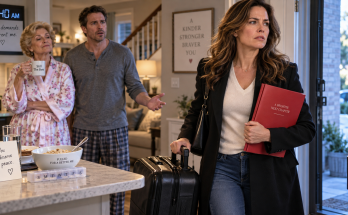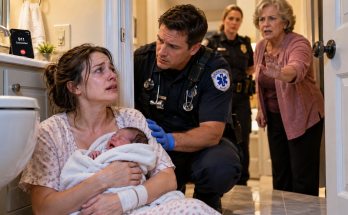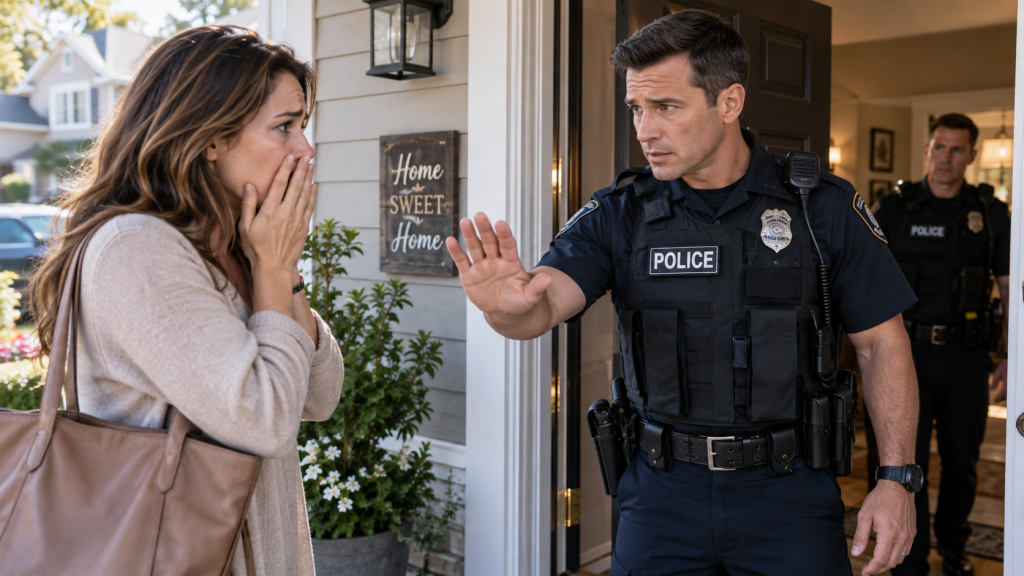
I went to pick up my five-year-old daughter from my sister’s house, but my key didn’t work. No one answered when I knocked, so I called the police. When the officer entered, he said, “Ma’am, you shouldn’t look…” I asked, “Why?” He replied, “Your daughter is already…”

A heavy, calloused hand clamped firmly onto my shoulder, halting my desperate stride toward the porch. It was a cruel barrier between me and the nightmare waiting beyond the threshold.
“Ma’am, you shouldn’t look.”
The officer’s voice was gravelly, laced with a pity that made my stomach churn. I knocked his hand away, my eyes locked on the front door of my sister’s house. It stood wide open, a dark, gaping maw in the afternoon sun. From the depths of that shadow, a sound drifted out—a low, rhythmic keening that scraped against the walls of my heart.
Crying. My daughter’s crying.
“Why?” The word clawed its way out of my throat, brittle and broken. “What happened to Sophia?”
The officer didn’t answer. He didn’t have to. The deadly silence and the grim set of his jaw told me everything I refused to accept.
If only I could turn back time to three weeks ago. Regret washed over me like acid. Three weeks ago, I—a proud music teacher—chose to leave my little girl behind for a career-defining trip to Boston. I had trusted Amy. I had trusted her smile when she said, “I’ll take care of Sophia. Kevin likes her, too.”
Kevin. Her new boyfriend with the flat, soulless eyes and jagged energy. I should have listened to a mother’s instinct.
Two weeks ago, the video calls became sporadic.
A week ago: “She’s at the park with Kevin, don’t worry.”
Then, total silence.
Until today. Standing here, the smell hit me first—the copper tang of old blood mixed with the stale stench of fear. The living room looked like a war zone. The sofa was ripped apart, stuffing spilling out like guts. On the refrigerator, a brownish smear. Blo0d.
“Miss Parker, please wait!” Detective Sarah screamed from the hallway.
I ignored her, running toward the sound of weeping drifting from the back bedroom. The door was ajar. Just as my fingers grazed the cold handle, a young uniformed officer stepped in my path, his face pale as a sheet.
“Ma’am, please… The scene inside… you can’t handle it.”
I shoved past him and threw the door open.
PART 2 — WHAT AMY HID IN SOPHIA’S RABBIT
I threw the bedroom door open.
And for one terrible second, my mind could not understand what my eyes were seeing.
The room looked as though somebody had searched it with hatred.
Drawers had been emptied.
A lamp lay broken beneath the window.
The mattress had been dragged halfway from the frame.
Tiny shirts and socks were scattered across the floor.
Sophia’s pink suitcase had been cut open along one side.
And against the far wall, wrapped in a gray blanket, sat my daughter.
Alive.
A paramedic was kneeling beside her.
Sophia’s face was pale.
Her hair was tangled.
There was a small bruise near her temple and red marks around one wrist.
But she was sitting.
Breathing.
Looking at me.
For half a second, neither of us moved.
Then her mouth opened.
“Mommy?”
My knees almost gave out.
“Sophia.”
I crossed the room so quickly the paramedic barely had time to move aside.
I dropped to the floor.
She crawled into me.
Not ran.
Crawled.
Like standing required too much trust in the world.
Her arms wrapped around my neck.
I could feel how badly she was trembling.
“Mommy.”
“I’m here.”
I held her face.
Kissed her forehead.
Her cheeks.
Her hair.
Anywhere I could reach.
“I’m here.”
“I’m here.”
“I’m here.”
Apparently those were the only words my body still knew.
Behind me, the young officer spoke softly.
“Ma’am, that’s what I was trying to tell you.”
I turned.
His face looked even paler than before.
“Your daughter is already with medical personnel.”
He swallowed.
“It’s your sister we didn’t want you walking into.”
Everything inside me stopped again.
Amy.
I looked around the room.
She was not there.
“Amy?”
Nobody answered immediately.
I stood.
Sophia tightened her arms around me.
“No.”
Her voice was tiny.
I froze.
“No what, baby?”
“Don’t leave.”
I sat back down immediately.
“Okay.”
No hesitation.
Whatever waited elsewhere in that house could wait another minute.
My daughter had spent too long waiting for me already.
Detective Sarah came into the doorway.
Her full name, I later learned, was Detective Sarah Coleman.
She had been the woman shouting after me in the hallway.
Forties.
Dark hair tied at the base of her neck.
The calm expression of someone who had learned that panic spreads faster than useful information.
She crouched several feet from Sophia.
Not too close.
“Hi, Sophia.”
Sophia buried her face against me.
Sarah did not take it personally.
“My name is Sarah.”
No response.
“I’m a police officer.”
Sophia’s fingers tightened around my blouse.
Sarah looked at me.
“Her aunt is alive.”
Air slammed back into my lungs.
“What?”
“She is alive.”
“Where is she?”
“Paramedics are treating her.”
“How bad?”
Sarah paused.
Too long.
“Serious.”
My stomach turned.
“But alive?”
“Yes.”
I started crying again.
Not relief exactly.
Relief had become too complicated for that house.
But Amy was alive.
For the moment, that had to be enough.
Sophia whispered against my shoulder.
“Aunt Amy told me not to come out.”
I became still.
“Come out of where?”
She pointed toward the closet.
The door hung crookedly from one hinge.
Inside, clothing had been ripped from hangers.
At the back of the closet was a narrow gap between stacked storage bins and the wall.
Small enough for a five-year-old.
My daughter had been hiding there.
I looked at the gray blanket around her.
Then noticed what she was holding beneath it.
Her stuffed rabbit.
Benny.
She had slept with Benny since she was two.
One ear permanently folded.
The nose resewn twice by my mother before she died.
Sophia pressed the rabbit against her chest.
“Aunt Amy said I had to be a statue.”
I swallowed.
“What does that mean?”
Sophia whispered:
“No talking.”
“No moving.”
“Even if Kevin got mad.”
My vision blurred.
Detective Coleman’s eyes met mine.
Not now.
That was what her look said.
Do not ask a five-year-old to keep walking through this because you need answers.
She was right.
I kissed Sophia’s hair.
“You did exactly right.”
Sophia looked up.
“Is Aunt Amy dead?”
“No.”
The answer came so fast it almost sounded angry.
“No, sweetheart.”
“She’s with doctors.”
Sophia stared at me.
“Kevin said she was.”
The room went cold.
“What?”
Coleman moved immediately.
“Miss Parker.”
I looked at her.
She gave one small shake of her head.
Not because the sentence did not matter.
Because Sophia had already given us enough.
The detective turned toward the paramedic.
“Can we move them?”
He nodded.
“She needs the hospital.”
I held Sophia tighter.
“We’re going.”
As I carried my daughter through the hallway, I finally saw Amy.
Only for a moment.
Paramedics were moving her on a stretcher from the kitchen.
Oxygen mask.
Neck brace.
Bandages.
Her face so still that my sister looked like a photograph of herself.
“Amy!”
One of the paramedics glanced toward me.
“Ma’am, stay back.”
“Is she conscious?”
“No.”
“Is she going to live?”
“We’re doing everything we can.”
I hated that answer.
Because it was not an answer.
Then the stretcher disappeared through the front door.
Sophia saw only the wheels.
I covered the side of her face against my neck.
Not because she was weak.
Because children do not need every image simply because adults call it truth.
At the hospital, they put Sophia in a pediatric examination room.
The doctors found dehydration.
Minor bruising.
A sprained wrist.
A small cut hidden beneath her hair.
No broken bones.
No life-threatening injuries.
I cried when the doctor told me.
Then immediately felt ashamed for being grateful over bruises on my child.
Grief and gratitude make terrible roommates.
They bump into each other and both act offended.
A pediatric nurse brought Sophia apple juice.
She drank half.
Then fell asleep with Benny under her chin.
I sat beside her bed.
Watching her chest rise.
Fall.
Rise.
Fall.
I counted breaths like each one needed my personal permission.
Thirty-seven.
Thirty-eight.
Thirty-nine.
The door opened quietly.
Detective Coleman.
She stepped inside.
“How is she?”
“Physically?”
I looked at Sophia.
“They say she’ll be okay.”
Coleman nodded.
“And your sister?”
I sat straighter.
“She’s in surgery.”
The detective’s eyes softened.
“What happened to her?”
“We’re still putting that together.”
“Kevin?”
“We’re looking for him.”
“You haven’t found him?”
“No.”
Fear moved through me so quickly I stood.
“Then he knows where I live.”
“Sit down.”
“I have to—”
“Miss Parker.”
Her voice stayed calm.
“We have an officer outside this room.”
“Another unit is at your house.”
“Kevin’s vehicle information is already out.”
“We are not assuming anything.”
“You need to stay with Sophia.”
I looked at my sleeping daughter.
Then sat.
That sentence hurt because it was the same choice I should have made sooner.
Stay.
“I need to know what happened.”
I said.
“You will.”
“I left her here.”
“With your sister.”
“Yes.”
“Someone you trusted.”
“I saw Kevin.”
Coleman watched me.
“I saw something wrong with him.”
“What?”
“I don’t know.”
“That’s the problem.”
I pressed my hands against my eyes.
“The way he watched people.”
“The way Amy laughed too fast around him.”
“The way Sophia once said he didn’t like noise.”
“I should have—”
Coleman stopped me gently.
“There will be time to examine what everyone knew.”
“Right now, blaming yourself will not tell us where Kevin is.”
I looked at her.
Not absolution.
Direction.
I needed that.
“What do you know?”
I asked.
Coleman pulled a chair over.
“We know the locks were changed five days ago.”
My stomach tightened.
“Amy never told me.”
“She may not have been able to.”
“We found two damaged phones in the house.”
“Both appear to belong to Amy.”
“Two?”
“Her current phone and an older one.”
I stared.
“What else?”
“The home internet router had been unplugged.”
“The security camera system was disconnected.”
“And?”
Coleman hesitated.
“Several neighbors reported hearing arguments during the past week.”
Anger surged.
“And nobody called?”
“One neighbor did.”
“When?”
“Three nights ago.”
My heart jumped.
“What happened?”
“Officers responded.”
I stared at her.
“What?”
“Kevin answered.”
My hands went cold.
“And Amy?”
“He told officers she was asleep.”
“Did they see her?”
“No.”
“Then they left?”
Coleman’s jaw tightened.
“The caller reported shouting, not a witnessed assault.”
“The responding officers spoke with Kevin.”
“He said there had been an argument with television noise.”
“No one inside asked for help.”
I wanted somebody to blame.
The officers.
The neighbor.
Myself.
Amy.
Everyone except the man who had engineered the silence.
Then I understood how useful that impulse would be to Kevin.
So I swallowed it.
“Okay.”
I whispered.
“What happened next?”
Coleman opened a small notebook.
“At approximately eleven-thirty this morning, one neighbor saw Kevin drive away in Amy’s car.”
“Alone?”
“As far as she could tell.”
“Why her car?”
“We don’t know.”
“His?”
“Still at the house.”
That did not make sense.
“Then where is Amy’s phone?”
“One in the kitchen sink.”
“The other smashed behind the washing machine.”
My stomach tightened.
“And Sophia?”
“She may have been in the closet by then.”
I looked at my daughter.
Five years old.
Hiding in darkness while adults searched rooms.
My hands began trembling.
“Did Amy put her there?”
“We believe so.”
“Why?”
Coleman stared at me.
“Because we found blood on the closet handle matching what appears to be Amy’s injury location.”
My breathing stopped.
“She put Sophia in there after he hurt her?”
“We do not know the exact sequence yet.”
Facts.
Careful.
I hated careful.
I also needed it.
“What happened to Amy?”
I asked.
Coleman hesitated.
“She appears to have been assaulted.”
“How badly?”
“She had significant injuries when officers entered.”
I closed my eyes.
Sophia shifted in her sleep.
I lowered my voice.
“Did Kevin do it?”
“He is our primary person of interest.”
“Sarah.”
She looked at me.
“Did he do it?”
“I cannot give you certainty we have not earned yet.”
That sentence would stay with me.
Certainty we have not earned.
Because fear wants answers immediately.
Truth often arrives carrying paperwork.
An hour later, a doctor came for me.
Amy had survived surgery.
There was a head injury.
Several fractures.
A punctured lung.
She was in intensive care.
Critical.
But stable enough for the doctor to say:
“We expect the next twenty-four hours to tell us more.”
I almost collapsed against the wall.
Alive.
Again.
The word kept becoming everything.
I was allowed to see her briefly.
Amy looked impossibly small beneath hospital blankets.
My older sister.
The person who once broke a boy’s nose in middle school because he called me four-eyes.
The woman who taught me to drive badly.
Who stood beside me at my mother’s funeral.
Who promised three weeks earlier:
I’ll take care of Sophia.
Machines breathed and blinked around her.
I stood beside the bed.
“I’m here.”
No response.
“I found Sophia.”
A tear slid down my face.
“She’s safe.”
Amy’s eyelids did not move.
I wanted to scream at her.
Hug her.
Ask why she had not told me.
Apologize for not asking harder.
Instead I touched two fingers to the back of her hand.
“You kept her alive.”
My voice broke.
“Now you do the same.”
That evening, Sophia woke asking for Benny.
The rabbit was beside her.
She grabbed him immediately.
Then began picking at the seam beneath one ear.
I had seen that habit before.
When anxious, she pulled at loose threads.
“Careful.”
I said softly.
“Grandma sewed that.”
Sophia looked at me.
“Aunt Amy did something.”
My stomach tightened.
“What?”
She turned Benny over.
Along the lower back was a small seam I did not recognize.
Fresh stitches.
Messy.
Dark blue thread.
Amy could sew.
Badly.
Apparently under pressure, even worse.
Sophia whispered:
“She cut him.”
I froze.
“Who?”
“Aunt Amy.”
“When?”
“Yesterday.”
My pulse quickened.
“What did she do?”
Sophia touched the seam.
“Put the secret in.”
Every muscle in my body went still.
I did not open it.
That surprised even me.
A different version of myself would have ripped the rabbit apart.
Instead I called Detective Coleman.
She arrived twenty minutes later with another officer and an evidence technician.
Sophia became upset when she saw the bag they planned to put Benny into.
“No!”
She pulled him against her.
Coleman crouched.
“This belongs to you.”
Sophia nodded fiercely.
“We’re not taking him unless your mom says it’s okay and you understand why.”
Sophia looked at me.
“Are they going to cut him?”
I almost smiled despite everything.
“Maybe one little stitch.”
Her lower lip trembled.
“Grandma fixed him.”
“I know.”
I looked at Coleman.
“Can they open only the new seam?”
“Yes.”
“And then give him back?”
“If what we find can be removed safely, yes.”
I turned to Sophia.
“Aunt Amy said there’s a secret inside?”
She nodded.
“Maybe that secret can help Aunt Amy.”
Sophia stared at Benny.
Then slowly handed him over.
That might have been the bravest thing anyone did all day.
Inside the rabbit was a USB drive.
Nothing cinematic.
Black plastic.
Two inches long.
Wrapped in a small sandwich bag.
Coleman looked at me.
“Did Amy ever mention this?”
“No.”
“Do you recognize it?”
“No.”
Sophia whispered:
“Aunt Amy said Kevin couldn’t find the bunny.”
That sentence explained the destroyed house.
Not completely.
Enough to make the air change.
The drive went into evidence.
Coleman would not open it on my laptop.
Correctly.
Police copied it properly.
Preserved the original.
Hours later, she returned.
Her expression had changed.
“What’s on it?”
I asked.
“Several folders.”
My stomach tightened.
“What kind?”
“Photos.”
“Audio recordings.”
“Financial records.”
“Screenshots.”
“Copies of identification documents.”
“Whose?”
“Amy’s.”
“Kevin’s.”
Then:
“And some belonging to women we haven’t identified yet.”
I stared.
“What women?”
“We’re working on it.”
My skin went cold.
This was bigger than one terrible week.
Amy had been collecting evidence for nearly two months.
The first folder was labeled:
IF SOMETHING HAPPENS TO ME
My throat tightened when Coleman said it.
Inside were photographs of damaged walls.
Bruises on Amy.
Threatening texts from Kevin.
Bank transfers Amy did not recognize.
Screenshots showing him logging into her accounts.
Recordings of arguments.
Not secret spy equipment.
Just Amy’s phone placed inside drawers or left recording on countertops.
In one audio clip, Kevin accused Amy of telling me he was “bad news.”
She denied it.
He said:
“Your sister thinks she can come back from Boston and start asking questions. By the time she does, everything will be different.”
My stomach turned.
“He knew about Boston.”
Coleman nodded.
“Apparently.”
“Everyone knew.”
I whispered.
“My school posted the trip.”
That explained nothing by itself.
But the next folder did.
It was labeled:
TRAVEL
Inside were screenshots of my flight itinerary.
Not public.
Hotel name.
Conference schedule.
Return date.
A photograph of my printed emergency contact sheet.
The one I had given Amy before leaving.
Kevin had photographed it.
Why?
I did not know yet.
Coleman did not pretend she did.
Then she showed me something else.
A photograph Amy had taken of papers inside Kevin’s backpack.
My name appeared at the top of one.
EMILY PARKER.
So there was my first name.
I almost laughed at the absurdity that seeing it in a police evidence photograph felt like being introduced to myself.
Beneath it:
My address.
Employer.
Phone.
Vehicle.
Then Sophia.
Full name.
Date of birth.
School.
Emergency contacts.
I felt sick.
“He made files on us?”
“It appears so.”
“Why?”
“We don’t know yet.”
Again.
The most unbearable sentence in the English language.
The next folder was labeled:
REAL NAME?
Coleman placed a printed photograph on the table.
Kevin.
Younger.
Different hair.
Same flat eyes.
The document beneath it showed another name.
KEVIN MATTHEWS.
The man Amy knew as Kevin Reed was apparently Kevin Matthews.
Same date of birth.
Different surname.
Different state.
An old arrest record.
Domestic battery charge.
Later dismissed when the complainant stopped cooperating.
Another case involving property damage.
A restraining order that expired years earlier.
Not proof of what happened to Amy.
Evidence of history.
And proof that Kevin had lied about who he was.
“Did Amy discover this?”
I whispered.
“Yes.”
“When?”
“Based on file dates, about six weeks ago.”
“Why didn’t she tell me?”
Coleman looked at me.
“We may have an answer.”
She opened another transcript.
An audio recording.
Amy and Kevin.
His voice came first.
“You call Emily, I’ll know.”
Amy:
“How?”
Kevin laughed.
“Because you’re not as clever as you think.”
Then:
“And if your sister comes home early, I’ll make sure she regrets it.”
My skin turned cold.
Amy had not simply kept a bad boyfriend secret.
She had been trying to manage a threat.
Badly, maybe.
Alone.
Definitely.
But not because she did not care about Sophia.
Perhaps because she cared too much and overestimated how long she could control the danger.
Humans make terrible decisions when choosing between two frightening options.
That does not always mean they stopped loving anyone.
Another recording had been made four days before I came home.
Amy sounded different.
Stronger.
She told Kevin to leave.
He laughed.
Said the house was as much his as hers.
It was not.
Amy owned it.
Inherited partly from our mother.
He told her:
“Try changing the locks.”
The next day, Kevin changed them himself.
That was why my key failed.
Not Amy.
Kevin.
He had taken control of the house physically before I ever reached the porch.
“Why was Sophia still there?”
I asked.
The question came out sharper than I intended.
Coleman did not judge me.
“We don’t know exactly.”
I shook my head.
“Amy knew who he was.”
“She had six weeks.”
“Why didn’t she send my daughter somewhere?”
“Maybe she thought she still had control.”
“She didn’t.”
“No.”
That truth needed no softening.
I loved my sister.
And she had made a dangerous choice.
Both facts could live in the same room.
Later, when Amy woke, I finally got to ask.
Not immediately.
The doctors made me wait two days.
Two days during which Sophia slept beside me in a recliner.
Two days during which every unknown car outside the hospital made my chest tighten.
Two days before police found Kevin.
He had abandoned Amy’s car at a bus station.
Then used cash to rent a room under another name.
A hotel clerk recognized him from a police bulletin.
He was arrested without incident.
No shootout.
No chase across rooftops.
Just a man opening the door to Room 214 and discovering that disappearing is harder when enough ordinary people are paying attention.
When Detective Coleman told me he was in custody, I sat down.
Then cried so hard I frightened myself.
Amy opened her eyes the next morning.
I was beside her.
She looked confused.
Then tried to speak.
Nothing came out.
I leaned closer.
“Sophia’s safe.”
Her eyes filled immediately.
“Sophia is safe.”
I repeated.
“She’s with me.”
Amy started crying.
Tears slid silently toward her ears.
I held her hand.
“You protected her.”
Amy shook her head.
Barely.
“No?”
I asked.
Her lips moved.
I leaned closer.
“I…”
“What?”
“I failed.”
I closed my eyes.
There it was.
The sentence people reach for when reality is too complicated.
“You made mistakes.”
I said.
Her eyes found mine.
“So did I.”
Amy tried to shake her head.
I continued.
“You should have told me.”
Tears came faster.
“You should have gotten Sophia out sooner.”
She closed her eyes.
“Yes.”
“I should have asked harder questions.”
“No.”
Her voice barely existed.
“Yes.”
I said.
“I saw you changing.”
“I saw the calls getting strange.”
“I let ‘busy’ explain everything because I wanted to finish the trip.”
Amy began crying again.
I squeezed her hand.
“But Kevin did this.”
Her eyes opened.
“Not you.”
“Not me.”
“Not Sophia.”
“Him.”
The sentence had edges.
We both needed them.
Amy whispered:
“He watched my phone.”
“I know.”
“He said he’d go after you.”
“I know.”
“I thought if I could get proof…”
She stopped to breathe.
“…then police would believe me.”
“They do.”
“I needed more.”
“No.”
She looked at me.
I corrected myself.
“You thought you needed more.”
Her face crumpled.
A common tragedy.
People wait for evidence to become perfect while danger keeps moving.
“Why keep Sophia there?”
I asked.
I hated myself for asking.
I had to.
Amy closed her eyes.
“Because he was good with her.”
My stomach tightened.
“At first.”
She whispered.
“He never hit her.”
“He brought her coloring books.”
“Made pancakes.”
“Said he loved kids.”
She began crying.
“I thought his anger was about me.”
There it was.
The most dangerous lie violence tells.
It has rules.
I looked at my sister.
“It never has rules.”
She nodded.
“I know.”
Now.
Too late to prevent everything.
Not too late to tell the truth.
Amy had planned to get Sophia out the morning before I came home.
She had arranged for a friend from work to pick them both up.
Kevin discovered packed bags.
Not because Amy was careless.
Because he came home three hours earlier than expected.
He took both phones.
Unplugged the internet.
Changed the deadbolt.
Then searched for the USB.
Amy had already hidden it.
Inside Benny.
“Why the rabbit?”
I asked.
Amy almost smiled.
“Kevin hated toys.”
“What?”
“He said they were clutter.”
“So he never touched them.”
Smart.
Terrible.
Smart.
“He asked where the drive was.”
Amy whispered.
“You told him?”
“No.”
“He searched everything.”
The torn couch.
The bedroom.
The refrigerator smear.
Everything rearranged itself in my memory.
Not random destruction.
A search.
“What happened that morning?”
I asked.
Amy’s breathing changed.
I immediately regretted it.
“You don’t have to tell me now.”
She nodded gratefully.
Then whispered:
“I put Sophia in the closet.”
“I know.”
“Told her statue game.”
“I know.”
“He thought she ran outside.”
My heart stopped.
“You lied?”
Amy gave the smallest nod.
That lie may have saved my daughter.
“He went looking.”
“I tried to get to the front door.”
Then her eyes closed.
That was enough.
I did not need the rest from her hospital bed.
Detectives could take it later when she chose.
I was her sister.
Not an investigator.
Before I left, Amy grabbed my wrist.
Weakly.
“Emily.”
“Yes?”
“The drive.”
“Police have it.”
Her eyes opened wider.
“There’s more.”
“What?”
She swallowed.
“Kevin wasn’t after money.”
I became still.
“What was he after?”
Amy looked toward the door.
Then whispered:
“Your school.”
I stared.
“My school?”
She nodded.
“What does that mean?”
“He asked about student files.”
My blood turned cold.
“What files?”
“I don’t know.”
“He kept asking what you could access.”
“I don’t have access to—”
I stopped.
Music teacher.
Student emergency forms.
Performance travel lists.
Family contact information.
Not broad records.
But enough names.
Enough schedules.
Enough children.
My stomach turned.
I called Detective Coleman immediately.
She returned that evening.
The digital team had already found something pointing in the same direction.
Kevin’s laptop contained spreadsheets.
Not stolen school databases.
At least not yet.
Public information.
School calendars.
Sports schedules.
Staff names.
Parent association rosters scraped from public pages.
Photos of badge layouts.
Notes about which buildings had side entrances.
My skin crawled.
“What was he planning?”
Coleman shook her head.
“We don’t know.”
“Was he targeting children?”
“We do not have evidence of that.”
Thank God.
Then:
“But we believe he may have been planning fraud using family information.”
“What kind?”
“Identity theft.”
“False emergency contacts.”
“Possibly access to households while families were away.”
I thought of my Boston conference.
Public performance schedule.
Parents traveling with school groups.
Empty homes.
The puzzle changed shape again.
Kevin had not dated Amy solely because of me.
But once he learned where I worked, he may have seen an opportunity.
That was what investigators now suspected.
Not yet proven.
Important distinction.
Then Coleman handed me a transcript from the USB.
Amy had recorded one conversation I had not heard.
Kevin:
“Your sister goes into homes all the time.”
Amy:
“No, she doesn’t.”
Kevin:
“Parents trust teachers.”
Amy:
“What are you talking about?”
Kevin laughed.
Then:
“People tell schools everything.”
That sentence made me colder than any threat.
People do tell schools everything.
Addresses.
Phone numbers.
Custody notes.
Emergency contacts.
Medical information.
Who picks children up.
Who is traveling.
Who is divorced.
Who works late.
Trust creates information.
Most people never weaponize it.
Some people look at trust and see inventory.
My school district was notified.
Quietly.
Administrators reviewed access logs.
There was no evidence Kevin had entered protected systems through me.
Relief.
But police found photographs on his phone of my employee badge.
Taken at Amy’s house while I was visiting months earlier.
He had photographed the front and back.
I remembered leaving my purse on the kitchen chair.
Maybe five minutes.
That was all.
I sat in my principal’s office later and cried from shame.
She waited.
Then said:
“You did not give him permission to photograph your badge.”
“No.”
“We are replacing it.”
“Yes.”
“We are reviewing procedures.”
“Yes.”
Then:
“You are also not becoming the reason we pretend systems never have weaknesses.”
I looked at her.
That helped.
Not absolution.
Perspective.
Sophia returned to my house when doctors cleared her.
The first night, she refused her bedroom.
Slept on my couch.
Benny pressed against her face.
I slept on the floor beside her.
At three in the morning, she whispered:
“Mom?”
“Yes?”
“Did Aunt Amy do bad?”
I looked at her.
“What do you mean?”
“She said sorry.”
I breathed carefully.
“Aunt Amy made a mistake.”
Sophia’s eyes widened.
“Big?”
“Yes.”
Children deserve truth proportionate to their age.
Not lies dressed as protection.
“She should have told me she was scared.”
“She should have gotten you away from Kevin sooner.”
Sophia became quiet.
“Is she bad?”
“No.”
“How?”
There are questions children ask that adults spend lifetimes failing to answer properly.
I touched her hair.
“Good people can make dangerous mistakes.”
“And bad people can sometimes do nice things.”
“Like pancakes?”
My heart broke.
“Yes.”
“Like pancakes.”
Sophia stared at Benny.
Then:
“That’s confusing.”
“Yes.”
I whispered.
“It is.”
Kevin remained in custody while prosecutors built the assault case and investigators examined the financial and fraud evidence separately.
I stopped asking Detective Coleman every day whether he would “go away forever.”
She never promised.
Good.
The justice system is not a mother’s wish machine.
What she did promise was information.
Protective orders.
Victim advocates.
Updates.
Process.
Less emotionally satisfying than revenge.
Far more useful.
Amy eventually came home from rehabilitation.
Not to her house.
That property became a crime scene, then evidence, then eventually something she could not emotionally return to.
She stayed with me.
Three women beneath one roof.
Me.
My sister.
My daughter.
Some nights none of us slept.
Other nights Sophia slept ten hours while Amy and I sat at the kitchen table saying almost nothing.
Healing is often boring.
Medication schedules.
Therapy appointments.
Insurance forms.
Toast.
Laundry.
People expect survival to sound like inspirational speeches.
Mostly it sounds like:
“Did you take your pill?”
“Do we need milk?”
“Where are Sophia’s shoes?”
Life reclaiming itself through errands.
One afternoon, Amy stood on my porch.
The same porch where police had stopped me from entering her house weeks earlier.
She looked thinner.
A scar disappeared beneath her hairline.
She said:
“I’m selling the house.”
“Okay.”
“No argument?”
“Do you want one?”
She almost smiled.
“No.”
“Then okay.”
She stared at the yard.
“I thought you’d say Mom left us that house.”
Our mother had helped Amy buy it.
“Yes.”
I said.
“She left you a house.”
“She didn’t leave you a prison.”
Amy began crying.
I held her.
Not forever.
Long enough.
Months passed.
Sophia started kindergarten counseling through school.
The first time she drew the house, every window was black.
Three months later, one was yellow.
Her therapist told me not to turn that into a symbol too quickly.
Children sometimes choose yellow because the crayon is closest.
I liked her therapist.
She did not manufacture meaning where Sophia had not put it.
That became important to me.
Kevin eventually accepted a plea agreement on the most serious charges related to Amy’s assault and unlawful confinement, while separate fraud charges proceeded from the evidence found on his devices.
I did not attend every hearing.
At first I thought I should.
Then Amy said:
“I don’t want my whole life organized around where he has court.”
That sentence changed our calendar.
We went to the zoo instead.
Sophia spent thirty minutes staring at an otter.
No one spoke Kevin’s name.
Victory can look like that too.
The fraud investigation eventually identified several earlier victims.
Not children.
Families.
Women Kevin had dated.
People whose personal information he had accessed through relationships and jobs.
Small thefts.
Credit accounts.
Mail redirected.
One elderly relative of a former girlfriend whose identity had been used.
Nothing like the elaborate criminal empire my fear invented.
Something more ordinary.
Repeated exploitation.
The kind that survives because each victim believes her incident is isolated.
Amy’s USB connected patterns investigators had never previously seen together.
Not because Amy became a superhero.
Because she documented what happened.
And handed evidence over when she finally could.
That was enough.
A year after the day I found Sophia, Detective Coleman came to my house.
Not officially.
She returned Benny.
The original rabbit had been photographed and processed long before, but certain evidence procedures had delayed everything.
The new stitches were still visible.
Dark blue.
Uneven.
Sophia grabbed him.
Then frowned.
“He smells weird.”
Coleman laughed.
“Evidence storage.”
“What’s that?”
“A place where rabbits have no fun.”
Sophia considered.
Then hugged him anyway.
Children forgive objects quickly.
People take longer.
Before leaving, Coleman handed Amy a photocopy of the original USB inventory.
Amy looked uncomfortable.
“I don’t want it.”
“You don’t have to keep it.”
Coleman said.
“Why give it to me?”
“Because sometimes survivors think police saved the case.”
Amy looked at her.
Coleman shook her head.
“You saved evidence.”
“The neighbor called.”
“Your sister called.”
“Sophia followed instructions.”
“Officers entered.”
“Doctors documented injuries.”
“Digital analysts did their work.”
“Everybody carried a piece.”
She smiled gently.
“That is usually what getting out actually looks like.”
Not one hero.
A chain.
I loved that.
After Coleman left, Amy sat on the porch.
I joined her.
Sophia played in the yard with chalk.
Amy watched her draw enormous purple circles across the driveway.
Then said:
“I don’t think she’ll ever trust me again.”
I looked at her.
“Don’t decide that for her.”
Amy’s eyes filled.
“I almost got her killed.”
“Yes.”
The word hurt both of us.
But I would not lie.
Amy looked down.
I continued.
“And you hid her.”
“You protected the evidence.”
“You got between her and Kevin.”
“You survived.”
“Do not turn one truth into the only truth because punishing yourself feels cleaner.”
Amy stared at me.
“When did you get wise?”
“I teach elementary music.”
“Same thing.”
She laughed.
For the first time in months, it sounded almost like my sister.
Sophia did trust Amy again.
Slowly.
Not because adults told her to.
At first she would not stay in a room alone with her.
That devastated Amy.
She accepted it.
Then one afternoon, Sophia asked Amy to brush her doll’s hair.
Another week later, she asked Amy to read bedtime stories while I washed dishes.
Months after that, she asked if she could sleep over with Aunt Amy someday.
Amy cried in the bathroom for ten minutes before answering.
“Whenever your mom says it’s okay.”
I heard.
Then walked in.
“Whenever Sophia says she’s ready.”
Different.
Important.
The first sleepover happened eighteen months later.
At Amy’s new apartment.
Third floor.
Yellow kitchen.
No Kevin.
No changed locks.
No secrets sewn inside stuffed animals.
I dropped Sophia off.
Then sat in my car crying for twenty minutes.
Not fear.
Not completely.
Some moments feel ordinary only to people who do not know what came before them.
My Boston trip haunted me for a long time.
I almost stopped accepting professional travel entirely.
Then my therapist asked:
“If you never leave Sophia again, what lesson does she learn?”
I became defensive.
“That I protect her.”
“Or?”
I hated the pause.
“Or that the world is too dangerous for her mother to go anywhere.”
There it was.
Fear trying to disguise itself as devotion.
Again.
The following year, I attended a three-day music conference.
Chicago.
Not Boston.
I told Sophia exactly where I would be.
Who she would stay with.
How to reach me.
She stayed with my closest friend, Marisol.
Not Amy.
Not because I distrusted Amy forever.
Because nobody needed the first separation after trauma to become a test of forgiveness.
We made the decision based on comfort.
Not symbolism.
That mattered.
Every evening Sophia video-called.
On the second night she barely looked at me because she was building something with blocks.
I had never been so happy to be ignored.
Kevin became a name we used less often.
His conviction remained real.
The harm remained real.
But our lives stopped arranging furniture around him.
Amy started working again.
Sophia learned piano.
Badly.
Painfully.
I teach music for a living, which apparently guarantees your child will refuse proper fingering out of principle.
She preferred making up songs.
Most had four notes.
All were masterpieces.
One afternoon, when she was seven, Sophia brought Benny to me.
The dark-blue stitches Amy had sewn were coming loose.
“Can you fix him?”
I stared.
“Maybe Aunt Amy should.”
Sophia thought.
Then nodded.
Amy came over that evening.
Sat at my kitchen table.
Needle.
Thread.
Benny between her hands.
This time she used matching brown thread.
Small stitches.
Careful.
Sophia watched.
“What did you put in him before?”
Amy froze.
I waited.
Sophia knew some version already.
Amy answered:
“Something I needed to keep safe.”
“Was it treasure?”
Amy looked at me.
Then back at Sophia.
“Yes.”
“What kind?”
“The kind that tells the truth.”
Sophia nodded as though that made perfect sense.
Maybe children understand truth as treasure more easily than adults do.
Adults know how much trouble truth causes.
Amy finished the seam.
Handed Benny back.
Sophia squeezed him.
Then said:
“No more secrets in him.”
Amy’s face broke.
“No.”
she whispered.
“No more secrets.”
That sentence became our family promise.
Not no privacy.
Privacy is healthy.
No secrets that require a child to carry adult danger.
Different.
Years later, when Sophia finally learned the full story, she asked the question I had always feared.
“Why did you leave me with Aunt Amy if you didn’t like Kevin?”
She was fourteen.
Old enough for more truth.
I sat across from her.
“Because I thought feeling uneasy was not enough reason to interfere in Amy’s relationship.”
“Was that wrong?”
“Partly.”
I thought carefully.
“I should have asked more questions.”
“I should have talked to you privately.”
“I should have made sure you knew you could call me any time.”
“Would that have stopped him?”
I swallowed.
“I don’t know.”
She nodded.
Then:
“I don’t remember most of it.”
I had spent years terrified she would remember everything.
Now that hurt too.
Memory is strange.
We want children spared.
Then mourn the parts of their lives they cannot retrieve.
She asked:
“Was Aunt Amy bad?”
Same question.
Nine years later.
I gave almost the same answer.
“No.”
“She made mistakes.”
“Big ones?”
“Yes.”
“Did you?”
“Yes.”
“Did Kevin?”
I looked at her.
“Kevin made choices that hurt people on purpose.”
Sophia nodded.
There.
At fourteen, nuance had more room.
Then she smiled.
“I still remember the rabbit.”
“Benny?”
“Yes.”
“What about him?”
“I remember Aunt Amy telling me statues don’t answer bad guys.”
My eyes filled.
Sophia laughed.
“That’s kind of a terrible game.”
“Yes.”
“But it worked.”
“Yes.”
She became quiet.
“Mom?”
“What?”
“I’m glad you came home.”
That sentence was the one I had spent years needing without realizing it.
Not:
I forgive you.
Not:
You did nothing wrong.
Just:
I’m glad you came home.
I reached across the table.
She took my hand.
I still travel sometimes.
I still teach.
Amy still lives fifteen minutes away.
Sophia eventually stopped sleeping with Benny.
He sits on a shelf now.
One folded ear.
Two different seams.
Grandma’s careful stitches.
Amy’s emergency blue ones removed long ago.
Then repaired properly.
A small history written in thread.
The day I stood outside Amy’s house and my key did not work, I believed the worst thing waiting inside would be something I could see.
Blood.
Broken furniture.
A body.
I was wrong.
The deepest damage was invisible.
Fear.
Silence.
Shame.
The terrible decisions people make when they believe they must solve danger alone.
Those things do not disappear when police remove one man from a house.
They have to be untangled slowly.
With therapy.
Boundaries.
Honesty.
Time.
And sometimes with the humility to admit that loving someone does not mean every choice you made around them was safe.
I blamed myself for Boston.
Amy blamed herself for Kevin.
Sophia once blamed herself for leaving the closet when police called her name.
That nearly destroyed me.
We spent years putting responsibility back where it belonged.
Not perfectly.
But deliberately.
Kevin chose violence.
Kevin chose threats.
Kevin chose control.
The rest of us made human decisions around danger we did not fully understand.
Some wise.
Some terrible.
That distinction saved us.
For a long time, I thought my greatest failure was leaving my daughter.
Now I think my greater mistake would have been teaching her that mothers must never leave in order for children to be safe.
Safety cannot depend on one woman remaining physically present every second.
It has to live in systems.
People.
Phone calls.
Neighbors willing to listen.
Teachers who notice.
Police who return.
Doctors who document.
Sisters who finally tell the truth.
Children who know that when something feels wrong, they are allowed to say so.
And mothers who come home when the truth calls.
Every year on the anniversary, we do nothing.
No vigil.
No candles.
No posts.
No speeches.
Amy once suggested dinner.
Sophia said:
“Why would we celebrate Kevin?”
Excellent question.
So we let the day pass.
Some anniversaries deserve less power, not more.
Last month, Sophia turned sixteen.
Amy gave her a small wooden box.
Inside was no USB drive.
No evidence.
No secret.
Just a brass key.
Sophia looked confused.
“What’s this?”
Amy smiled.
“My apartment.”
Sophia stared.
“Why?”
“Because I want you to know there is always another door.”
My throat tightened.
Sophia hugged her.
No one mentioned the old house.
No one needed to.
The meaning was clear enough.
Years ago, I returned from Boston believing I was coming home to resume an ordinary life.
Instead, I found a door my key could not open.
For a long time, I thought that locked door represented everything I had failed to see.
Now I remember something else.
I called for help.
Someone came.
The door opened.
Sophia was alive.
Amy was alive.
And eventually, after fear had changed the locks on all of us, we learned how to open our own doors again.
Not because the past disappeared.
Because it no longer had the only key.
PART 3 — THE DOOR THAT OPENED
The envelope arrived eleven years after the afternoon my key stopped working.
By then, Sophia was sixteen.
Tall.
Sharp-eyed.
Still attached to Benny the rabbit, although she would have denied that under oath.
She no longer slept with him.
He sat on a shelf above her desk, one ear folded permanently forward, the old stitching hidden beneath fur worn smooth by childhood hands.
The envelope had nothing to do with Kevin.
At first.
It was from Boston.
That was enough to make my heart stop.
Sophia walked into the kitchen holding it above her head.
“Mom.”
I looked up from grading fourth-grade rhythm worksheets.
She was smiling.
Not an ordinary smile.
A smile too large for her face.
“Oh no.”
“What?”
“You got in.”
She froze.
“How do you know?”
“Because you’re vibrating.”
She laughed.
Then tore the envelope open even though she had already received the email.
Children still like paper when paper contains something they want.
She read the first line aloud.
Dear Sophia Parker, we are pleased to offer you a place in the Young Composers Summer Residency…
The rest disappeared beneath the ringing in my ears.
Boston.
Two weeks.
Residential program.
College campus.
Student dormitory.
Supervised rehearsals.
Young musicians from across the country.
Everything my daughter had worked for.
Everything I should have celebrated.
Instead, the first thing I saw was Amy’s locked front door.
Sophia noticed.
Of course she did.
Children raised around frightened adults become excellent meteorologists.
They can feel emotional weather before anyone admits clouds have appeared.
Her smile faded.
“Mom.”
I tried.
I really did.
“That’s wonderful.”
“You hate it.”
“No.”
“You’re doing your school-concert voice.”
“What is my school-concert voice?”
“The one where you say everything is wonderful while someone is playing the recorder like an injured goose.”
Despite myself, I laughed.
Then she placed the letter on the table.
“You don’t want me to go.”
I looked at Boston printed across the top.
“I didn’t say that.”
“You thought it.”
That child had inherited the least convenient parts of me.
I stood and reached for the kettle.
When frightened, apparently every woman in my family made tea.
“I just need to know more.”
“Like what?”
“Supervision.”
“It’s in the packet.”
“Dorm security.”
“In the packet.”
“Who has access to students?”
“Mom.”
“Emergency procedures.”
“Mom.”
“What?”
She looked at me.
Not angry yet.
Worse.
Disappointed.
“You helped me apply.”
“I know.”
“You listened to my audition recording forty times.”
“Thirty-seven.”
“Exactly.”
She sat.
“Did you think I wouldn’t get accepted?”
That hurt because somewhere deep inside, perhaps I had allowed myself to support the application precisely because acceptance remained hypothetical.
Hope is easy while it stays theoretical.
Departure is harder.
“Sophia—”
“Just say it.”
I sat across from her.
“I’m scared.”
Her expression softened slightly.
“Because it’s Boston?”
“Yes.”
“That doesn’t make sense.”
“I know.”
“You were in Boston when Kevin hurt Aunt Amy.”
“I know.”
“You weren’t there.”
“I know.”
“You coming home didn’t cause it either.”
I looked at her.
She continued.
“Kevin was the danger.”
“Not Boston.”
Not the conference.
Not the airplane.
Not the hotel room where I had been sleeping while my sister’s life collapsed hundreds of miles away.
Kevin.
Even after eleven years, some part of me had resisted giving him the whole responsibility.
Because if Boston was partly responsible, perhaps I could keep Sophia safe simply by never letting the city have her.
Fear likes geography.
It turns places into explanations because places are easier to avoid than uncertainty.
“I know that in my head.”
I said.
Sophia leaned back.
“What does the rest of you know?”
I smiled sadly.
“That mothers who leave sometimes come home to locked doors.”
She went quiet.
Then:
“And mothers who never leave teach their daughters the world isn’t safe without them.”
The sentence hurt.
My therapist had once told me nearly the same thing.
Apparently Sophia had been paying attention to my life when I thought she was only living hers.
I looked at her.
“Who taught you to talk like that?”
“Aunt Amy.”
Of course.
Traitor.
Amy arrived twenty minutes later because Sophia called her.
Not secretly.
Right in front of me.
“Your sister is being emotionally weird.”
Amy apparently understood the emergency code.
She arrived carrying takeout and no sympathy.
“What happened?”
Sophia shoved the Boston letter toward her.
Amy read.
Her face lit up.
“Oh my God.”
Then she looked at me.
Her smile disappeared.
“Oh.”
I hated both of them.
“I am not saying no.”
I said.
Amy put the food down.
“You’ve said that three times, which means you are building toward no.”
“I want information.”
Sophia pointed toward the packet.
“There are twelve pages of information.”
“I know.”
Amy sat beside me.
“Emily.”
“Don’t.”
“Okay.”
She opened a container of noodles.
We sat in silence for several seconds.
Then Amy said:
“You know this isn’t about her.”
I glared.
“I said don’t.”
“You said don’t.”
“I said okay.”
“You’re still talking.”
“I contain contradictions.”
Sophia laughed.
I did not.
At first.
Then Amy became serious.
“You don’t get to make my mistake the walls around her.”
That silenced me.
Sophia looked between us.
Amy continued.
“I kept her in that house too long because I thought I could manage danger if I watched it closely enough.”
Her voice became softer.
“You cannot fix what I did by watching Sophia closely enough for the rest of her life.”
“Amy…”
“No.”
She looked directly at me.
“I need you to hear this because I spent years wishing I could undo it.”
“You leaving for Boston did not make Kevin dangerous.”
“I stayed.”
“You left.”
“He was still dangerous.”
There it was.
The cleanest version.
I looked at Sophia.
“What do you want?”
Her expression changed.
Not because the question was unusual anymore.
Because she knew what it had cost our family to learn to ask it.
“I want to go.”
“Why?”
“To learn.”
She smiled.
“To be around people who don’t think writing music for three bass clarinets is weird.”
“It is weird.”
“Exactly.”
She laughed.
Then:
“I want two weeks where nobody there knows the story.”
That hurt in a different way.
“What story?”
She gestured vaguely.
“You know.”
“The house.”
“Kevin.”
“The rabbit.”
“Police.”
“The whole thing.”
She looked at me.
“I love that everybody here cares.”
“But sometimes I want to be Sophia who writes music badly at two in the morning.”
“Not Sophia who survived something when she was five.”
My eyes filled.
That was enough.
Almost.
I picked up the packet.
“When do you leave?”
Her entire face changed.
“Mom.”
“I did not say yes yet.”
“You just asked when.”
“That is research.”
“July seventh.”
Amy smiled.
I glared at her.
She ate noodles.
Very quietly.
We said yes.
Not immediately.
The following afternoon.
I called the program.
Sophia sat beside me.
Important.
I asked questions.
Not interrogations.
Questions.
Residential supervision.
Emergency contact procedures.
Access controls.
Medical support.
Student check-in.
Transportation.
Sophia asked her own.
Practice rooms.
Composition software.
Whether dorm refrigerators existed.
Whether students could leave campus in groups.
Her questions mattered as much as mine.
Maybe more.
We built a plan together.
One daily check-in.
Not hourly.
No location tracker unless Sophia wanted one.
She did not.
Emergency contacts on paper because batteries die.
A copy of insurance information.
Campus number.
My number.
Amy’s.
Marisol’s.
Preparedness without surveillance.
I was learning the distinction.
Then, three weeks before Sophia was supposed to leave, another envelope arrived.
This one was from the state victim-services office.
I knew before opening it that nothing inside would smell like possibility.
The return address alone brought back rooms I had not visited in years.
Court benches.
Detective Coleman.
Hospital corridors.
I placed it on the counter.
Did not open it.
Sophia came home from school and saw it.
“What is that?”
“I don’t know yet.”
She looked at the return address.
Then at me.
“Oh.”
Yes.
Oh.
We opened it together.
Kevin Matthews had requested permission, through an approved victim-contact process, to send a letter.
He could not contact Amy or Sophia directly.
The notice asked whether Sophia, now sixteen, wished to receive written communication.
No obligation.
No direct access.
No requirement to respond.
Just a choice.
I read the page twice.
Then looked at Sophia.
She had gone completely still.
“Do you want some time?”
she asked.
I blinked.
“What?”
“For you.”
Despite everything, I laughed.
“This isn’t my decision.”
“I know.”
“That is why I’m asking what you want.”
She stared at the paper.
Then stood.
Walked to her room.
I did not follow.
For twenty minutes.
Thirty.
Forty-five.
My entire body wanted to knock.
Instead, I waited.
She had the right to think without me occupying the doorway.
An hour later, Sophia returned carrying Benny.
That frightened me more than tears would have.
She had not carried him downstairs in years.
She sat.
Put the rabbit on the table.
Then looked at the letter.
“I don’t want it.”
“Okay.”
“Not now.”
“Okay.”
“Maybe ever.”
“That’s okay too.”
She stared.
“Do you want me to read it?”
“No.”
The answer came immediately.
Good.
I meant it.
Sophia touched Benny’s folded ear.
“What if he says sorry?”
I thought carefully.
“Then he said sorry.”
“That’s all?”
“That’s all it means by itself.”
She frowned.
“Does it mean he changed?”
“I don’t know.”
“Does it mean I have to forgive him?”
“No.”
“Does it mean I should know what he says?”
“No.”
Her shoulders loosened.
Then she whispered:
“I don’t want him inside the summer.”
I understood immediately.
Boston.
Music.
Something new.
She did not want an old voice packed inside her suitcase.
I reached for the response form.
“What do you want me to write?”
She looked at it.
Then:
Do not forward correspondence at this time.
Simple.
No speech.
No accusation.
No revenge.
We checked the box.
Signed.
Mailed it.
The world continued.
That night, Sophia left Benny on the kitchen chair.
I carried him upstairs.
Paused outside her room.
The door was open.
Always open when she slept as a child.
Closed now when she wanted privacy.
I placed Benny on her desk.
She was awake.
“Mom?”
“Yes?”
“Thank you.”
“For what?”
“For not wanting to read it.”
That broke my heart more than if she had thanked me for anything else.
Because it revealed that some part of her had expected adults to believe access to her pain belonged to them.
I kissed her forehead.
“Your story is not family property.”
She nodded.
Then turned off the lamp.
July came.
At the airport, I was unbearable.
I checked the luggage tags three times.
Asked whether she had her ID four times.
Reminded her that liquids over the limit—
“Mom.”
“I’m stopping.”
“You said that ten minutes ago.”
“I relapsed.”
Amy laughed.
She had come with us.
Not because Sophia needed two guardians.
Because Amy said:
“If you melt down at security, someone has to take you home.”
Supportive.
Sophia hugged Amy first.
Then me.
I held her slightly too long.
She did not complain.
When I released her, she looked at my face.
“You’re doing it again.”
“What?”
“Looking like I’m entering witness protection.”
“I am emotional.”
“You’re terrifying the other parents.”
I laughed.
Then she became serious.
“I’ll call tonight.”
“You don’t have to call the second you land.”
“I know.”
“I mean it.”
“Okay.”
“Text is enough.”
“Mom.”
“Yes.”
She smiled.
“Go home.”
So I did.
That may have been the bravest thing I had done since opening a locked door.
The first night, she called.
Everything fine.
Roommate named Maya.
Composer from Ohio.
Talked constantly.
Sophia liked her.
Second night, text.
Third night, nothing.
At 8:00 p.m., I checked my phone.
8:17.
9:03.
9:42.
No message.
I opened the campus emergency-contact page.
Closed it.
Opened it again.
My breathing changed.
Amy, who was sitting on my couch watching television, noticed.
“What?”
“She hasn’t called.”
“What time did she promise?”
“She didn’t.”
“Then what rule has she broken?”
I hated good questions.
“She always checks in.”
“She has checked in twice.”
“It’s after ten there.”
“Maybe she’s rehearsing.”
“She could text.”
“Maybe her phone died.”
“That’s what people say before—”
I stopped.
Before what?
Before Kevin?
Before an unlocked future becomes a locked room?
Amy muted the television.
“Emily.”
I looked at her.
She said:
“Are you worried because something happened?”
“Or because once something happened?”
The distinction was unbearable.
Also necessary.
I texted:
Hope you’re having a good night. Call tomorrow when you have time. Love you.
Then put the phone face down.
I did not contact campus security.
Did not call Maya’s parents.
Did not board a plane.
At 11:16 p.m., Sophia replied.
Sorry! Phone died during rehearsal. We got pizza. Going to sleep. Love you.
I cried.
Then laughed.
Then showed Amy.
She looked at me.
“You survived.”
“Barely.”
“Gold star.”
“I hate you.”
“Love you too.”
The final concert happened on a Saturday afternoon.
Amy and I flew to Boston together.
Sophia did not know Amy was coming until the morning of the performance.
We wanted one surprise that did not involve fear.
The recital hall was small.
Maybe two hundred seats.
Parents.
Students.
Teachers.
Programs printed on heavy cream paper.
Sophia’s name appeared halfway down.
Sophia Parker — Yellow Window
I stared.
Yellow Window.
Amy noticed too.
Neither of us said anything.
The piece began softly.
Piano.
Clarinet.
Cello.
One high violin note repeating above them.
Not sad exactly.
Uncertain.
Then the music became crowded.
Harsh rhythms.
Interrupted phrases.
A low percussion sound like someone knocking from far away.
My hands tightened in my lap.
Amy reached for one.
I let her.
Then something changed.
The piano returned.
One note.
Then another.
Then the violin answered.
Slowly, the piece opened.
Not triumphantly.
No giant crescendo.
Just more room.
More air.
The final chord did not resolve completely.
It hung.
Bright.
Unfinished.
Beautiful.
I cried anyway.
Naturally.
Afterward, Sophia found us in the lobby.
She saw Amy.
Her mouth fell open.
“You came.”
Amy opened her arms.
Sophia ran into them.
Sixteen years old.
Too cool for almost everything.
Not that.
Then she hugged me.
I held her.
Released first.
Progress.
“What was Yellow Window?”
I asked.
Sophia groaned.
“You’re going to make it weird.”
“I am your mother.”
“Occupational hazard.”
Amy smiled.
“Was it the drawing?”
Sophia looked at her.
“You remember?”
Of course we did.
When she was five, during therapy, Sophia drew the house over and over.
Every window black.
Then one day, one window yellow.
Her therapist warned me not to turn it into symbolism.
Maybe the crayon had simply been close.
Apparently Sophia remembered anyway.
She shrugged.
“It’s not about Kevin.”
“Okay.”
“It’s about houses after people turn the lights back on.”
I swallowed.
Amy looked away.
Sophia continued quickly:
“But not in a trauma way.”
“Of course not.”
“It has weird harmonic structure.”
“Much less emotional.”
“Mom.”
I laughed.
Then kissed her temple.
“Whatever it is, it’s beautiful.”
We spent one extra day in Boston.
Sophia wanted to show us everything.
Practice room.
Dorm.
Coffee shop.
A bookstore where she had spent too much money.
We walked past the convention center where my old music-teachers conference had been held eleven years earlier.
I recognized it immediately.
My body did too.
I stopped.
Amy followed my gaze.
“That’s it?”
“Yes.”
Sophia looked between us.
“What?”
“The conference.”
“Oh.”
She looked at the building.
Then shrugged.
“That place is ugly.”
I laughed.
Eleven years of guilt.
Reduced by my daughter to architectural criticism.
I loved her for it.
I stood there longer.
Remembering the last morning of that trip.
How excited I had been.
How guilty I felt even before anything happened because mothers are trained to apologize for ambition before anyone asks.
Then the phone calls.
Silence.
Flight home.
Amy’s locked door.
Blood.
Sophia.
I had spent years believing that building marked the place where I chose career over motherhood.
Now I saw a conference center.
Glass.
Concrete.
Bad signage.
Nothing more.
The evil had never lived there.
I turned away.
That mattered.
On the flight home, Sophia slept against the window.
Amy sat beside me.
“She did well.”
“Yes.”
“You did too.”
“I did nothing.”
“Exactly.”
I looked at her.
She smiled.
“Sometimes not interfering is the advanced level.”
Fair.
When we landed, Sophia unlocked the front door herself.
Her key worked.
I noticed.
Of course I noticed.
Metal sliding into the lock.
One turn.
Door opening.
An ordinary sound.
No police.
No blood.
No one stopping me on a porch.
Just home.
Sophia walked inside and dropped her backpack in the hallway.
“Can we order Thai food?”
“Welcome back.”
Two years later, another departure came.
College.
Not Boston this time.
Three states away.
Composition program.
Scholarship.
Sophia packed her room into boxes.
Benny went into one.
I pretended not to see.
The night before she left, Amy came over.
She brought the brass key she had once given Sophia at sixteen.
“My apartment key.”
Sophia smiled.
“I know.”
“Keep it.”
“I already have it.”
“I mean always.”
Amy became serious.
“If you need a door.”
Sophia hugged her.
Then reached into her own pocket.
Pulled out another key.
My house.
She held both together.
One from me.
One from Amy.
Two homes.
Two women who had once failed in different ways.
Two doors still open.
No perfection required.
After Amy left, Sophia sat beside me on the porch.
Same steps.
Different life.
She looked toward the street.
“Do you still blame yourself?”
Children should not be allowed to ask questions that direct.
“Yes.”
I answered.
“Sometimes.”
“For what part?”
“Leaving.”
“Not calling more.”
“Trusting Amy.”
“Not trusting my instincts.”
“Running into the house when police told me not to.”
She laughed softly.
“That one worked out.”
“I am not recommending it.”
“Noted.”
Then she looked at me.
“Do you blame Aunt Amy?”
“Sometimes.”
“Does she know?”
“Yes.”
“Does she blame herself?”
“Too much.”
Sophia nodded.
Then:
“Do you blame me?”
I turned so quickly my neck hurt.
“No.”
She laughed.
“I know.”
“Then why ask?”
“Because I wanted you to hear how fast you answered.”
I stared.
Clever child.
Cruel child.
My child.
She continued.
“That’s where responsibility belongs.”
“What?”
“You don’t even have to think when it comes to me.”
“Because I was five.”
“Yes.”
“Because I was a kid.”
“Yes.”
She looked toward Amy’s old key in her hand.
“Aunt Amy was an adult.”
“She made bad choices.”
“Yes.”
“You were an adult.”
“You missed things.”
“Yes.”
“And Kevin?”
I waited.
Sophia’s voice became steady.
“Kevin chose to hurt people.”
There it was.
The sentence we had spent thirteen years building.
Not flattening complexity.
Putting weight where it belonged.
“I think I’m done blaming Boston.”
I said.
Sophia smiled.
“Good.”
“I’m working on blaming myself less.”
“Good.”
“I may always blame Amy a little.”
“Probably fair.”
I laughed.
Then:
“What about you?”
She thought.
“I don’t think about blame very much anymore.”
“What do you think about?”
“Rent.”
I burst out laughing.
“College is coming.”
“That’s my girl.”
The next morning, we loaded the car.
Boxes.
Bedding.
Books.
Keyboard.
Benny hidden badly beneath a sweatshirt.
I said nothing.
At the end of the driveway, Sophia stopped.
Looked back at the house.
Then at me.
“You okay?”
“No.”
“Great.”
“I raised you for eighteen years so you could abandon me for music theory.”
“You’re taking this well.”
“Terribly.”
She hugged me.
I held on.
Then released.
First.
Again.
That had become important.
Before getting into the car, she handed me something.
A small brown thread.
I stared.
“What is this?”
“From Benny.”
My heart tightened.
“The old seam?”
She nodded.
“It came loose when I packed him.”
I looked at the tiny piece of thread.
The rabbit once held evidence inside his body.
Then secrets.
Then nothing.
Now just stuffing.
“What am I supposed to do with this?”
Sophia shrugged.
“Throw it away.”
So I did.
Right there.
Into the trash bin beside the garage.
She smiled.
Good.
Some history deserves archives.
Some deserves court files.
Some deserves museums.
And some deserves to become a piece of thread nobody needs anymore.
Sophia left.
I cried.
Amy called.
I cried more.
Then Monday arrived.
Children at school needed instruments.
Someone lost a recorder.
Someone else had put gum beneath a music stand.
Life remained aggressively ordinary.
I was grateful.
Years later, when people asked Sophia about childhood, she did not always mention Kevin.
That surprised me at first.
I thought the worst thing that happened to us would permanently become the first chapter in every introduction.
It did not.
She talked about music.
Benny.
Aunt Amy’s terrible pancakes.
My inability to throw away old sheet music.
Boston.
College.
Friends.
She carried the history.
The history did not carry her.
That was enough.
Amy eventually moved again.
Not because she was running.
Because she wanted a place with more sunlight.
On moving day, Sophia came home to help.
Amy handed her a new key.
Sophia groaned.
“How many of your apartments am I going to have permanent access to?”
“All.”
“That’s excessive.”
“I have trauma.”
We all laughed.
The joke would have been impossible years earlier.
Now it felt earned.
Not because trauma became funny.
Because trauma no longer controlled whether we could laugh near it.
Detective Coleman retired.
We sent flowers.
Not lilies.
Absolutely not.
She wrote back:
Tell Sophia I still remember the brave little girl who handed me her rabbit.
Sophia read it.
Then said:
“I was terrified.”
I looked at her.
“Those aren’t opposites.”
She nodded.
Neither are fear and courage.
Neither are love and mistakes.
Neither are regret and healing.
Our family had learned to stop demanding that one feeling erase another.
The old house Amy owned was sold years ago.
Another family lives there now.
I drove past once by accident.
Different paint.
New porch railing.
Children’s bicycles outside.
For one second, I wanted to stop.
Then I kept driving.
That house no longer belonged to our story.
At least not every day.
I still have the old key that failed.
Amy gave it back to me after the police released her belongings.
It sits in a drawer.
I never threw it away.
Not because I worship what happened.
Because once in a while, I take it out and remember something important.
A key can fail for many reasons.
Locks change.
Doors swell.
Metal wears down.
People hide danger.
People make mistakes.
But the failure of one key does not mean there are no other ways inside.
That afternoon, I called police.
Someone came.
The door opened.
That was the beginning of everything after.
Sophia keeps two keys on her ring now.
Mine.
Amy’s latest apartment.
She jokes that we are incapable of healthy boundaries.
Maybe.
But those keys do not mean obligation.
She can use them.
Or not.
That is the difference.
A door is not love because it stays open.
Love is knowing you are allowed to choose whether to walk through it.
The last time Sophia came home, it was after midnight.
I woke when I heard the lock.
For half a second, my whole body returned to that afternoon years ago.
Then the door opened.
Sophia stepped inside carrying a suitcase.
Older.
Laughing quietly because she had dropped something outside.
She saw me standing in the hallway.
“Mom?”
I pressed one hand to my chest.
“You scared me.”
“Sorry.”
She held up her key.
“It worked.”
Such a small sentence.
I almost cried.
Of course she noticed.
“Oh, Mom.”
“I’m fine.”
“You’re crying.”
“I’m old.”
“That is not how tears work.”
She put down the suitcase and hugged me.
I held her.
Not because she had survived Kevin.
Not because I had survived guilt.
Not because Amy had survived her mistakes.
Because my daughter was home.
That was all.
For once, that was enough.
Years ago, I stood outside a locked house and believed the worst thing a mother could discover was that she had not been there when her child needed her.
I understand differently now.
Children will need us when we are absent.
They will make choices we cannot supervise.
They will enter rooms we cannot inspect.
Travel.
Love people.
Trust people.
Get hurt.
Leave.
Return.
Parenthood cannot prevent all of that without becoming another kind of cage.
The job is not to make sure no door ever closes.
The job is to make sure your child knows there is always somewhere she can knock.
And when she does—
open it.
No questions first.
No blame.
No speeches.
Open the door.
Then stay long enough to help her remember she can open the next one herself.
Sophia once told me she barely remembers Kevin’s face.
I am grateful.
She remembers Amy sewing Benny.
The policewoman kneeling instead of towering over her.
Apple juice at the hospital.
My yellow sweater when I carried her out.
She remembers small mercies surrounding something terrible.
Maybe that is how childhood protects itself.
Not by deleting darkness.
By keeping pieces of light close enough that darkness does not become the entire picture.
If I could return to that afternoon, I would change many things.
I would ask Amy harder questions three weeks earlier.
I would call Sophia privately from Boston.
I would listen to every uncomfortable instinct without demanding courtroom proof before acting on concern.
But I would not spend the rest of my life pretending regret is a time machine.
It is not.
Regret can teach.
Warn.
Humble.
Then eventually it must stop driving.
Otherwise the person who harmed you still decides where you are allowed to go.
And I refuse to give Kevin Boston.
I refuse to give him music.
I refuse to give him locked doors.
I refuse to give him my daughter’s future.
He already took enough.
So Sophia went.
First to Boston.
Then college.
Then everywhere else her life wanted to go.
Amy rebuilt.
I kept teaching.
Benny retired.
Keys changed.
Doors opened.
And the story that once began with me screaming my daughter’s name inside a broken house eventually became quieter.
Not forgotten.
Quieter.
Sometimes that is healing.
Not a triumphant ending.
Not the past disappearing.
Just one morning when you realize fear has stopped narrating every ordinary thing.
My key failed once.
For years, I thought that was the symbol of everything I had lost control of.
Now I think about what happened next.
I asked for help.
The police came.
A frightened child came out of hiding.
A wounded sister survived.
Evidence was found.
Truth accumulated.
People carried pieces.
And, over time, we stopped needing one person to possess every key.
That was never safety anyway.
Control is not safety.
Knowing you can leave is.
Knowing someone will believe you is.
Knowing you can ask for help is.
Knowing one locked door does not mean every door is closed.
That is what I wanted Sophia to inherit.
Not my fear.
A way out.
A way back.
And a key that works because she chooses the door.
THE END STORIES! THANK YOU FOR READING GOOD LUCK !❤️
Related Posts