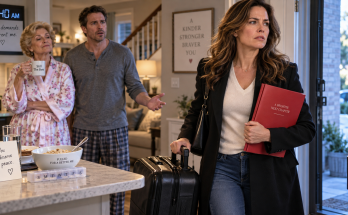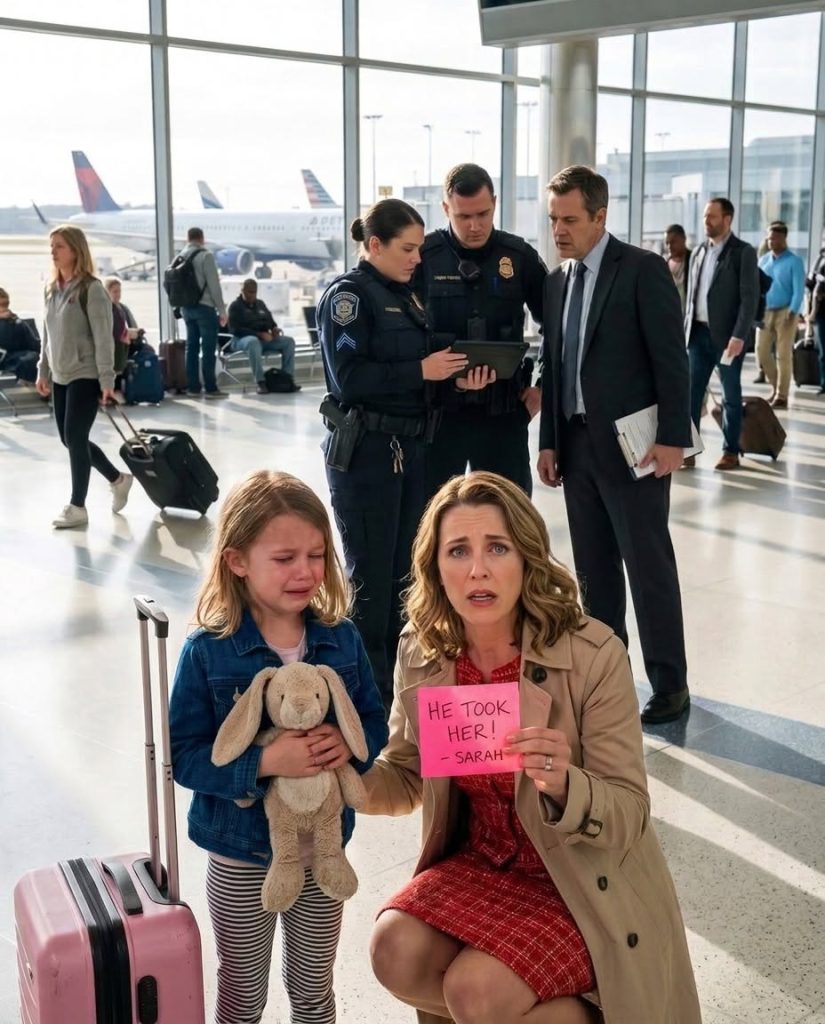
Minutes before boarding my solo flight to Maui, I returned from the restroom to find my entire family gone—leaving my crying six-year-old niece holding a sticky note: “Surprise! Babysitting duty. You’ll have so much fun together in paradise!”
They turned off their phones to trap me. Furious, I dialed her wealthy ex-husband instead: “Mark, your ex-wife just abandoned your daughter at Gate 14.”
When they landed, the FBI and child services were waiting.
Part 1
I had saved for nearly two years to book a solo ten-day dream vacation to an exclusive resort in Maui. Between grueling eighty-hour weeks at my design agency and helping pay my parents’ unexpected car repairs, I desperately needed total peace.
Coincidentally, my older sister, Jessica, our parents, and her six-year-old daughter, Lily, booked a separate group flight leaving from Atlanta Hartsfield-Jackson International Airport around the same time for a family getaway to Orlando. We met at the central concourse terminal food court for breakfast before our respective departure times.
Jessica had spent months whining about how exhausted she was from single motherhood following her high-profile divorce from Mark, an executive at a prominent logistics corporation. During breakfast, Jessica kept dropping unsubtle hints about how wonderful it must be to travel child-free, while our mother casually remarked that family should always step up to relieve overburdened mothers. I ignored the comments, checked my boarding pass, and excused myself to the ladies’ restroom twenty minutes before boarding began for my flight at Gate B12.
When I walked back into the gate area carrying my carry-on bag, my entire family was nowhere to be found.
Sitting alone on an oversized vinyl waiting bench, clutching a battered stuffed rabbit, was my six-year-old niece, Lily, sobbing quietly with tears streaming down her red cheeks. My parents and Jessica had completely disappeared.
I rushed over, dropping to my knees. “”Lily, honey, what happened? Where is your mommy?””
Sniffling, Lily handed me a neon-pink sticky note that had been slapped onto the handle of her tiny pink rolling suitcase.
In Jessica’s familiar, bubbly cursive handwriting, the note read: “”Surprise, Brooke! Babysitting duty! Mom and Dad agree that you need some practice being selfless, and I desperately need a real girl’s vacation without packing juice boxes. You’ll have so much fun together in paradise! See you back in Atlanta in ten days!””
Panic turned instantly into white-hot fury. I whipped out my phone and dialed Jessica, then my mother, and then my father. Every single line clicked straight to automated voicemail—they had intentionally powered off their phones after boarding their Orlando flight..
PART 2*_* The Trap Behind the Sticky Note
Brooke’s anger turns into panic when she realizes Lily has not merely been left with her—Jessica has abandoned a six-year-old in a crowded airport without Brooke’s consent. Instead of trying to solve the problem quietly, Brooke calls Mark and tells him exactly what happened. Mark goes silent, then reveals something disturbing: Jessica told him Lily would spend the entire ten-day trip in Orlando with her grandparents. Because their custody agreement requires Jessica to disclose overnight childcare arrangements, Mark immediately understands that Jessica planned to deceive him too.
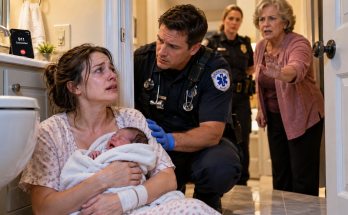
Airport police arrive and preserve the pink sticky note, Brooke’s unanswered calls, and security footage showing Jessica and the grandparents walking away while Lily remains behind. An airline supervisor discovers that Lily’s Orlando reservation was canceled earlier that morning—hours before Brooke went to the restroom.
Inside Lily’s suitcase, officers find ten days of carefully packed clothing, medication, sunscreen, and a handwritten schedule titled “For Aunt Brooke.” The discovery devastates Brooke. This was never an impulsive prank. Her family had prepared Lily for Hawaii in advance.
A child-services worker gently interviews Lily. The most painful revelation comes when Lily whispers that Jessica had told her for several days, “Aunt Brooke is taking you to paradise.” Lily believed Brooke had agreed. Brooke kneels beside her and makes one thing absolutely clear: none of this is Lily’s fault.
Mark arrives, frantic but controlled. Authorities verify his identity and custody rights before releasing Lily to him. When Lily runs into his arms crying, Brooke realizes how badly Jessica has frightened her own daughter just to escape motherhood for ten days.
After Jessica’s flight lands in Orlando, her phone comes back online. During an angry call, she accidentally admits the plan began the previous week. Brooke’s mother defends it as “helping family,” while her father begs everyone not to make trouble.
Then investigators uncover something far worse: a temporary caregiver authorization naming Brooke as Lily’s guardian for the Hawaii trip—with Brooke’s signature forged.
The document includes Brooke’s private Maui resort details.
Brooke remembers her mother had access to her apartment.
Moments later, her father sends a panicked message:
“Please don’t tell them your mother handled the paperwork.”
Brooke realizes the betrayal was never just about babysitting.
Her family had entered her private life, forged her consent, and planned the entire trap while smiling across the breakfast table.
PART 3 — THE VACATION I FINALLY TOOK FOR MYSELF
By noon, I had missed my flight to Maui.
By one, my mother had been interviewed by federal agents in Orlando.
By two, Jessica was screaming at Mark through an attorney’s phone.
And by three, I was sitting in a plastic chair at Atlanta airport beside a six-year-old who had begun apologizing for ruining my vacation.
That was the moment that hurt most.
Not the forged signature.
Not my parents helping Jessica.
Not even the knowledge that the people I trusted had spent days planning how to corner me into ten days of childcare.
It was Lily.
She sat beside Mark with Mr. Buttons tucked beneath one arm, staring at the floor.
Then she whispered:
“Aunt Brooke?”
I moved closer.
“What, sweetheart?”
“Are you sad because you didn’t get Hawaii?”
I looked at her.
Her eyes were swollen from crying.
“Yes.”
I decided not to lie.
“I am a little sad.”
Her face collapsed.
“I’m sorry.”
“No.”
I took both of her hands.
“That is not what I said.”
She blinked.
“My trip got changed because adults made bad decisions.”
“Not because of you.”
“But I was supposed to go.”
“You were told you were supposed to go.”
“That is different.”
She stared at me.
Six-year-olds understand more than adults think, but sometimes they need the same truth given to them in several shapes.
So I tried another.
“If someone put a puppy in my car without asking and told the puppy I wanted it…”
Lily frowned.
“Puppies can’t talk.”
“Work with me.”
That earned half a smile.
“If somebody did that, would it be the puppy’s fault?”
“No.”
“Exactly.”
“I’m not a puppy.”
“Much louder than one.”
She finally laughed.
Tiny.
But real.
Mark turned away for a moment and rubbed his eyes.
The federal agents did not arrest my entire family on the jet bridge.
Real life was less satisfying than television and far more complicated.
Two agents met Jessica and my parents in a secure area after the Orlando flight landed because the airline had referred the forged caregiver authorization and supporting travel documents for possible federal investigation.
Child-services workers were there for a different reason.
Local airport police for another.
Everyone had their own lane.
That mattered.
The FBI cared about how the false document had been created, transmitted, and used in connection with air travel.
Child services cared that Lily had been intentionally left without the knowledge or agreement of the adult expected to take responsibility for her.
Jessica’s custody dispute belonged to family court.
Any state forgery or identity offenses would belong to prosecutors with jurisdiction where the documents had been created or used.
Nobody shouted:
“You’re all going to prison.”
Nobody needed to.
The truth was already bad enough.
My mother tried to explain.
Of course she did.
According to what I later learned, she began by insisting that nothing had been forged because she had signed “on my behalf.”
One of the investigators apparently asked:
“Did your daughter authorize you to sign her name?”
Mom said:
“She would have if we had explained everything properly.”
The investigator repeated the question.
Mom changed direction.
She said families signed things for one another all the time.
She had filled out school forms for Jessica years ago.
She had signed Dad’s name on Christmas cards.
She had even deposited one of my grandmother’s checks once when Grandma’s arthritis was bad.
None of those examples helped.
Then Dad tried to help Mom.
That went worse.
Dad said they were never trying to “abandon” Lily.
They knew I would return from the restroom.
They had watched from near the jet bridge until I was almost back.
They believed that meant Lily had never been in real danger.
The interviewer asked why they had not simply remained until I returned and asked me directly.
Dad reportedly said:
“Because Brooke would have said no.”
There it was again.
The entire plan in one sentence.
They knew my answer.
So they designed a situation where my answer would no longer matter.
That was the betrayal beneath everything else.
Jessica initially claimed she had believed Mom had discussed the arrangement with me.
That lasted until investigators showed her the sticky note.
Her own handwriting.
Surprise! Babysitting duty!
Surprise is a terrible word to put on evidence when your defense is informed consent.
Then they showed her messages recovered from the family group chat.
A chat I was not in.
My parents.
Jessica.
Three days before the airport.
Jessica had written:
She’ll be furious for an hour and then fall in love with having Lily there.
Mom:
Once the plane leaves she’ll stop fighting it.
Dad:
I don’t like tricking her.
For several hours after I learned that, that last sentence bothered me more than the others.
Because it sounded almost decent.
Until I read what he wrote next.
But if we ask, she’ll refuse and Jess will have no break.
He had known it was wrong.
He simply decided Jessica’s need mattered more than my no.
Knowing better is not morality if you still choose convenience.
The agents did not let Mark or me listen to the interviews.
Good.
We received information later through lawyers and official reports.
That afternoon, all I knew was that my family had been stopped in Orlando and Lily was still beside me in Atlanta.
Eventually, child services approved Mark taking her home after confirming custody documents and conducting their initial safety review.
Mark knelt in front of Lily.
“Do you want to come home with me?”
She nodded.
Then looked at me.
“Is Aunt Brooke coming?”
That question nearly broke me again.
I looked at Mark.
He understood immediately.
“You can come if you want.”
I shook my head.
Not because I did not want to be near Lily.
Because I had spent my entire adult life stepping into whatever emergency my family placed in front of me.
Something had changed.
Lily needed her father.
Not a guilty aunt hovering because she believed leaving would make her selfish.
I crouched.
“I’m going to my apartment.”
“You’re leaving?”
“For tonight.”
Her eyes filled.
I touched Mr. Buttons’ bent ear.
“And tomorrow, if your dad says yes and you want to see me, we’ll have pancakes.”
She looked at Mark.
“Can we?”
“Absolutely.”
Then she looked back at me.
“With chocolate chips?”
“This crisis has apparently destroyed all nutritional standards.”
She hugged me.
Hard.
I held her.
Then let go first.
That mattered.
Mark waited until Lily was buckled into his car with a child-services worker nearby before coming back.
He held out an envelope.
I frowned.
“What’s that?”
“Your flight and resort costs.”
“No.”
“Brooke.”
“I said no.”
“You lost thousands of dollars because Jessica—”
“Your ex-wife.”
He stopped.
“Yes.”
“Not you.”
“My daughter was involved.”
“Lily is six.”
“I know.”
“Then stop putting invoices on her existence.”
His face changed.
“I wasn’t.”
“I know you weren’t trying to.”
I softened.
“But right now every adult around her is turning what happened into something she caused.”
“I don’t want money crossing that line too.”
Mark put the envelope away.
Then:
“Your airline may rebook you.”
“Maybe.”
“The resort might move the dates.”
“Maybe.”
“If they don’t?”
I looked at him.
“Then I deal with the financial problem separately from Lily.”
He nodded.
Fair.
Then he said:
“Thank you for calling me.”
I almost answered:
Of course.
Instead I remembered the sticky note.
Nothing was “of course” anymore.
“You’re welcome.”
I went home in a taxi.
Not because my car was unavailable.
Because my hands would not stop shaking.
Atlanta moved past the window as though nothing had happened.
People carried groceries.
A man walked a dog.
Two teenagers argued at a crosswalk.
The world is rude that way.
Your family can split open at an airport and traffic still moves.
My apartment door looked normal.
That frightened me.
Mom still had a key.
Or had until that morning.
I stood in the hallway for almost a minute before putting my own key into the lock.
Then I called building management.
“Can someone come upstairs while I enter?”
The manager asked:
“Is there an emergency?”
“I don’t know.”
That was honest.
Ten minutes later, the assistant manager stood beside me while I went inside.
Nothing looked disturbed.
No broken drawers.
No missing television.
No sign anyone had violated anything.
Just my life.
Sofa.
Books.
Coffee cup in the sink.
Suitcase-shaped dust outline where my larger luggage had sat before I decided to travel carry-on only.
Then I walked into my small office.
My travel folder was on the desk.
I opened it.
Empty plastic sleeve where the printed Maui reservation had been.
My chest tightened.
There it was.
Not proof of exactly who took it.
But proof somebody had.
My old laptop sat inside the desk drawer.
I opened it.
The battery was dead.
I plugged it in.
When it turned on, my email was still logged in.
I stared at the screen.
Nine days earlier.
2:18 p.m.
A forwarded Maui confirmation.
From my account.
To Dad.
Then deleted from Sent.
Whoever used the laptop had also emptied the trash.
Almost.
My provider kept a security activity log.
There it was.
A login from my own device while I had been at a client presentation across town.
No hacker.
No sophisticated cyberattack.
Someone with physical access.
Someone inside my apartment.
I sat on the floor.
For the first time all day, I cried like a child.
Not elegant tears.
Not cinematic silence.
I cried until my face hurt.
My mother had watered my plants that afternoon.
That was what she told me.
She had texted:
Stopped by and rescued your poor basil. You work too much!
I had sent back a heart.
She had apparently walked through my home, opened my travel folder, and either she or Dad had used my computer.
The idea of them standing beside my desk while I worked to pay for the vacation they were planning to hijack made me physically sick.
It was not just ten days.
It was intimacy used as access.
My spare key.
My unlocked laptop.
My trust.
Family does not always break into your house.
Sometimes you hand them the key, and they decide that means every room belongs to them.
I called the police officer whose card I had been given.
Then changed every password I owned.
Email.
Bank.
Cloud storage.
Travel account.
Utilities.
Streaming services.
Even my grocery delivery app.
I removed my parents as emergency contacts.
Changed my apartment lock.
Turned on two-factor authentication.
Then I sat on my kitchen floor at eleven at night eating crackers because I had no appetite and had forgotten to buy dinner.
Freedom did not look very glamorous.
Jessica called from an Orlando hotel shortly after midnight.
I almost ignored it.
Then curiosity won.
“Hello?”
She was crying.
Not soft crying.
Furious crying.
“Do you know what you’ve done?”
I closed my eyes.
There it was.
“You’re asking me?”
“They questioned me for six hours.”
“I sat in an airport for nearly that long with the daughter you left.”
“You know what I mean.”
“No.”
“I actually don’t anymore.”
She inhaled sharply.
“Mark filed for emergency custody.”
“That sounds like something you should discuss with your lawyer.”
“You called him.”
“Yes.”
“You knew what he’d do.”
“I knew he was Lily’s father.”
“You always take his side.”
I laughed.
“You spent four years telling me Mark was emotionally absent and worked too much.”
“He does.”
“And today he was the parent who came.”
Silence.
That hurt her.
I heard it.
Part of me regretted saying it.
Another part knew regret was not always a sign words were wrong.
Jessica said:
“I needed ten days.”
“I know.”
“You don’t.”
“I am drowning, Brooke.”
My anger faltered.
Because beneath everything, I believed that.
Jessica had been struggling.
The divorce was ugly.
Mark traveled.
Lily had sleep problems.
Jessica had lost two childcare arrangements in six months.
I had heard her exhaustion.
I had simply refused to let exhaustion turn me into involuntary staff.
“You should have asked for help.”
“I did.”
“When?”
“All the time.”
“No.”
I stood.
“You hinted.”
“You complained.”
“You told Mom I was selfish.”
“You never called and said, ‘Brooke, I am not coping. Can you take Lily for two days?’”
“Because you’d say you were busy.”
“Maybe.”
“That’s the point!”
Her voice cracked.
“You always say no.”
I became very still.
“Jessica.”
“What?”
“The fact that you expected no is the reason you needed consent more.”
Silence.
“You don’t have children.”
she said.
Again.
That sentence.
“You don’t understand how tired I am.”
“You’re right.”
She stopped.
I continued.
“I don’t know what single motherhood feels like.”
“I don’t know what it’s like to negotiate custody with Mark.”
“I don’t know what it’s like to be touched out or sleep deprived or responsible for a child every morning.”
Her breathing softened.
Then:
“But not understanding your exhaustion does not make my life available to you.”
She started crying again.
“I wasn’t trying to hurt you.”
“This is not only about me.”
I leaned against the kitchen counter.
“You told Lily I agreed.”
Silence.
“You made her believe I wanted her with me.”
Jessica’s voice became small.
“I didn’t want her scared.”
There.
The thing that finally broke my anger open into something sadder.
“You didn’t want her scared while you were leaving her.”
Jessica said nothing.
“You made your daughter participate in a lie because that made it easier for you to walk away.”
“I knew you’d take care of her.”
“That is not the defense you think it is.”
“I trust you.”
“No.”
I shook my head though she could not see.
“You trusted my character while violating my choice.”
“That is different.”
She whispered:
“Brooke…”
“I love Lily.”
“I would walk through fire for Lily.”
“And none of that means you get to place her in my arms and run.”
Then I ended the call.
My hands shook for twenty minutes afterward.
Boundaries rarely feel powerful the first time.
Mostly they feel like grief.
The next morning, my airline called.
Not because I was important.
Because airport police had documented the incident and the gate supervisor had escalated my missed departure as an involuntary disruption tied to a child-safety event.
The airline offered to rebook my outbound flight within thirty days without a change fee.
My resort was less generous at first.
The reservation was prepaid.
Nonrefundable.
I expected to lose most of it.
Then the travel manager reviewed the documentation and offered a one-time date change subject to availability.
I sat at my desk staring at the email.
I could still go.
Not immediately.
But later.
The thought made me unexpectedly angry.
I had wanted Maui before.
Now going felt like a statement.
I did not want my vacation to become a revenge symbol.
I wanted a vacation.
Nothing more.
So I did not rebook that morning.
I waited.
Mark filed an emergency family-court motion.
That did not mean Jessica “lost Lily forever.”
Courts are not vending machines where outrageous conduct produces permanent outcomes instantly.
The judge issued temporary orders.
Lily remained primarily with Mark while the circumstances were investigated.
Jessica received structured contact.
At first, supervised.
Not because Mark was rich.
Not because one angry ex could purchase a result.
Because the incident had raised questions about judgment, deception, and safe childcare planning.
Jessica’s attorney fought the order.
Mark’s attorney argued.
Child-services reports were reviewed.
The judge asked questions.
Procedure.
Slower than anger.
Better than anger.
I was subpoenaed to testify at a temporary-custody hearing six weeks later.
I hated that.
Jessica called through her attorney first, asking whether I would “support family reunification.”
I said:
“I support whatever arrangement is safe for Lily.”
Apparently that was not the answer she wanted.
At the hearing, Jessica sat across the room.
She looked smaller.
No vacation tan.
No expensive resort photographs.
She and Mom and Dad never made it to the Orlando hotel they had booked for the full stay.
The first two days vanished into interviews and attorneys.
After that, Dad flew home.
Mom followed.
Jessica remained because of court and child-services requirements.
The “girls’ vacation” died before it began.
I took no pleasure in that.
I thought I would.
Revenge is often more satisfying in imagination because imagination does not include your six-year-old niece asking why Mommy cries during video calls.
Jessica’s attorney questioned me first.
“You love your niece.”
“Yes.”
“You have cared for her before.”
“Yes.”
“Overnight?”
“Yes.”
“Weekends?”
“Once.”
“You have taken her to museums, movies, restaurants?”
“Yes.”
“So leaving Lily with you was not equivalent to leaving her with a stranger.”
“No.”
I looked at the judge.
“It was worse in one specific way.”
The lawyer frowned.
“What way?”
“She knew me well enough to know I would not abandon Lily after discovering her.”
The courtroom became quiet.
“That trust was used against both of us.”
Jessica looked down.
The attorney tried another direction.
“Was Lily physically harmed?”
“No.”
“Was she lost?”
“No.”
“Was she unattended for a significant period?”
“I don’t know exactly how long.”
“You returned within minutes.”
“Yes.”
“So the plan worked.”
I stared at him.
“I’m sorry?”
He corrected himself.
“I mean the timing resulted in Lily being with you.”
I looked at the sticky note displayed as an exhibit.
“No.”
“The timing resulted in me discovering a child who believed I had agreed to care for her.”
“Those are not the same thing.”
Then Mark’s attorney asked:
“Did you ever consent to take Lily to Maui?”
“No.”
“Did you sign the temporary caregiver authorization?”
“No.”
“Did you authorize your mother to sign your name?”
“No.”
“Did you authorize anyone to access your apartment for purposes of obtaining travel documents?”
“No.”
“Did you authorize your father to access your email?”
“No.”
“Did Jessica tell you in advance she planned to leave Lily?”
“No.”
“Would you have agreed if asked?”
The courtroom became very still.
Jessica looked at me.
I answered:
“No.”
Her face crumpled.
It hurt me.
Still no.
That mattered.
The judge did not call Jessica a monster.
Did not congratulate Mark.
Did not deliver the sort of speech people repost online.
He said something much less dramatic.
“The concern here is not that Ms. Carter wanted respite.”
“Parents need respite.”
“The concern is the deliberate circumvention of consent and the use of deception involving both the child’s father and the proposed caregiver.”
Then he looked at Jessica.
“When an adult says no to childcare, the solution is not to engineer circumstances that make refusal practically impossible.”
I wanted to write that sentence on every wall in my childhood home.
Temporary custody remained with Mark.
Jessica’s visitation expanded gradually after parenting counseling, individual therapy, and successful supervised visits.
That process lasted months.
Not forever.
Because one catastrophic decision did not erase every good thing Jessica had ever done as Lily’s mother.
That truth was hard for me.
I wanted the airport to become a verdict on her entire character.
Life would not cooperate.
Jessica had also spent six years reading bedtime stories.
Taking Lily to doctors.
Packing lunches.
Sitting beside her through ear infections.
People are inconveniently larger than their worst day.
Accountability did not require pretending otherwise.
The forgery investigation was harder.
Mom eventually admitted preparing the caregiver form.
Not immediately.
At first she insisted she had merely “completed a template.”
Then digital records showed she created the document in the family cloud account.
Dad had downloaded my Maui confirmation after accessing my email from my apartment.
He admitted that too.
His explanation made everything worse.
Mom had asked him to “check Brooke’s exact hotel dates.”
Dad said he knew I would be angry if I discovered them using my computer.
So he forwarded the confirmation, deleted the message, and cleared the folder.
He knew enough to hide it.
That eliminated any fantasy that he believed he had permission.
The federal investigation did not end with dramatic prison sentences.
The U.S. Attorney’s Office ultimately declined to pursue the matter federally after reviewing the circumstances and available state charges.
The FBI’s role narrowed to documenting and referring evidence connected to the transmitted travel documents.
State prosecutors moved forward instead.
Mom faced charges tied to forgery and identity misuse.
Dad faced lesser charges associated with unauthorized computer access and participation in the false-document scheme.
Jessica faced separate state consequences connected to the abandonment and false caregiver arrangement.
Their lawyers negotiated.
Months passed.
Eventually, all three entered plea agreements on different charges.
Probation.
Fines.
Restitution.
Community-service requirements.
No prison.
My mother was furious about that phrase:
plea agreement.
She said it made them sound like criminals.
I remember thinking:
Maybe actions should sound like what they legally became.
But I did not say it.
I was tired.
Restitution covered some of my direct financial losses.
Lock change.
Security consultation.
A portion of legal expenses.
Certain travel costs not recovered elsewhere.
I refused to seek money beyond what my attorney said was reasonably connected to the conduct.
Not because I wanted to be noble.
Because I did not want the rest of my life becoming a spreadsheet measuring how much betrayal was worth.
Some losses do not belong on invoices.
My parents tried to contact me constantly at first.
Mom sent flowers.
Returned by the building.
Dad mailed letters.
I stored them unopened for three months.
Jessica texted apologies.
Then angry messages.
Then apologies for the angry messages.
Then silence.
My relatives joined.
Aunt Carol:
Your mother made a terrible mistake, but she is devastated.
Uncle Jeff:
Family shouldn’t be torn apart over one vacation.
Cousin Laura:
I understand why you’re mad but the legal stuff seems extreme.
The phrase one vacation became almost funny.
As if Maui were the issue.
So I wrote one message and sent it to every relative who contacted me.
I kept it short.
This is not about a vacation. My family forged my signature, accessed my private information, lied to Lily’s father, and deliberately left a six-year-old expecting me to assume responsibility without my knowledge or consent. I am not discussing the investigation or my boundaries through extended family. Please do not contact me about reconciliation again.
Then I blocked anyone who argued.
My phone became very quiet.
I slept better.
The hardest person to block was Mom.
Not because she apologized well.
She did not.
Because she was my mother.
Memory is disloyal to anger.
I would be furious and suddenly remember her sitting beside my bed when I had chickenpox.
Packing my college dorm room.
Calling every Sunday.
Making soup when I had pneumonia.
Then I would remember my empty travel folder.
Both versions existed.
I hated that.
I wanted betrayal to erase love.
It refused.
Three months after the airport, Dad asked to meet me alone.
Through my attorney.
No surprise visit.
No ambush.
That mattered.
I agreed.
Public coffee shop.
One hour.
He arrived early.
Looked older.
His hands shook when he lifted his cup.
“Hi, Brooke.”
“Hi, Dad.”
For a while we said nothing.
Then:
“I’m sorry.”
I asked the question I had learned to ask after listening to too many vague family apologies.
“For what?”
Dad flinched.
Good.
Specificity should cost something.
“For going into your email.”
“Yes.”
“For taking your travel information.”
“Yes.”
“For helping your mother make the document.”
I waited.
“And?”
His eyes filled.
“For deciding Jessica needed help more than you needed a choice.”
There.
I had not expected him to understand so quickly.
Maybe court-ordered counseling had been useful.
Maybe six months without his younger daughter changed the shape of things.
Maybe he had always known.
“Why did you do it?”
I asked.
Dad stared into his coffee.
“Because your sister was falling apart.”
“So you decided I should take over.”
“Yes.”
“Why me?”
He looked almost confused.
“You’re competent.”
That answer hurt more than I expected.
I laughed quietly.
“That was the punishment?”
“No.”
“Sounds like it.”
I leaned back.
“Jessica was overwhelmed.”
“You saw me handling my life.”
“So you took from the person functioning and gave to the person struggling.”
Dad whispered:
“Yes.”
“Without asking.”
“Yes.”
I thought about all the years before.
My parents’ car repair.
Jessica’s missed rent after the divorce.
Emergency babysitting.
Holiday planning.
Airport pickups.
I had been rewarded for competence with more responsibility.
Jessica had been rewarded for collapse with more rescue.
Neither of us had benefited.
Dad said:
“We thought you could handle it.”
“I could have.”
“Yes.”
“That’s not the point.”
“I know.”
“Do you?”
He looked at me.
“I’m trying.”
I believed that.
Not enough to restore him.
Enough to remain seated.
Then I asked:
“Why did you delete the email?”
He closed his eyes.
“Because I knew you’d be angry.”
“Which means?”
“I knew I shouldn’t have been in it.”
“Yes.”
He nodded.
No excuse.
Then:
“I told myself I was preventing a fight.”
I almost smiled.
“Our family does love preventing fights by making decisions behind people’s backs.”
He looked ashamed.
Good.
I did not hug him when we left.
He did not ask.
That mattered too.
Mom took longer.
Much longer.
Her first letters were mostly explanations.
Jessica needed rest.
I would have loved Maui with Lily.
Lily adored me.
Mom knew I was good with children.
The form was “only practical paperwork.”
No one could have predicted police involvement.
Everybody had overreacted.
That final sentence became almost comforting.
It told me she was not ready.
So I stayed away.
Jessica, strangely, changed before Mom did.
Maybe because losing normal access to Lily cut deeper than probation or legal fees.
Maybe because parenting counseling forced her to sit with the question nobody in our family had ever asked directly:
What did Lily experience?
Not:
What did Brooke lose?
Not:
What did Jessica intend?
What did Lily experience?
A six-year-old was told Aunt Brooke wanted her.
Then watched Mom disappear.
Then found Aunt Brooke shocked.
Then police arrived.
Then Dad came.
Then adults argued about where she belonged.
Jessica had called it a surprise.
Lily experienced abandonment.
That distinction finally reached her.
Eight months after the airport, Jessica sent me a letter.
Not a text.
Not through Mom.
Directly.
I almost threw it away.
Then read it.
The first line said:
I am not asking you to forgive me or babysit ever again.
Strong opening.
Then:
My therapist asked me to write down every choice I made that day without using the words tired, overwhelmed, or desperate as explanations. I hated her for it.
I smiled despite myself.
Then she listed them.
She canceled Lily’s ticket.
She packed ten days of clothes.
She told Lily I had agreed.
She let Mom prepare paperwork.
She knew Mom planned to sign for me.
She lied to Mark.
She watched me go to the restroom.
She left.
She turned off her phone.
Each sentence began:
I chose.
By the end, I was crying.
Because for the first time, my sister was not turning her exhaustion into the main character.
Then she wrote:
The worst part is that I knew you would take care of Lily once you found her. I used the fact that you love her as leverage. I used your goodness like a lock.
I had to put the letter down.
That was exactly what happened.
Jessica wrote that she had spent years resenting me.
I had no children.
Better income.
Career.
Nice apartment.
Travel.
She saw freedom.
She did not see eighty-hour weeks.
Loneliness.
Bills.
The choices I had postponed.
She admitted that when I booked Maui, she felt something ugly.
Not merely envy.
Entitlement.
I thought: Why does Brooke get ten days of rest when I never do?
Then:
Instead of asking why I had no sustainable support, I decided your rest was available to me.
That sentence changed something.
Not everything.
Something.
She ended:
I love you. I loved you while I did something cruel to you. I don’t know what to do with that except stop pretending love made the cruelty smaller.
I folded the letter.
Cried.
Then put it in a drawer.
I did not answer for a month.
When I finally did, I wrote:
I believe your apology. I am not ready to rebuild our relationship. Please keep doing the work even if I never become available to you the way I used to be.
Jessica replied:
I will.
No guilt.
No request.
Good.
My relationship with Lily became the strangest part.
Under the temporary court order, I could see her during Mark’s parenting time if Mark agreed.
He did.
But I was careful.
I did not want to become another adult who used access to Lily to communicate feelings about Jessica.
So we did ordinary things.
Pancakes.
Museum.
Park.
Movie nights.
I never asked:
“What does Mommy say about me?”
Never asked what happened during visits.
Never discussed court.
When Lily mentioned Jessica, I listened normally.
That was harder than it sounds.
Children notice tension faster than weather.
One afternoon, Lily was drawing at my dining table.
She said:
“Mommy says she made a very bad choice.”
I kept my voice neutral.
“What do you think?”
She shrugged.
“She says she shouldn’t have left me.”
Then:
“Were you mad because she gave me to you?”
My heart tightened.
“I was mad because she did not ask me.”
Lily frowned.
“But you like me.”
“I love you.”
“Then why did she need to ask?”
There it was.
The question adults get wrong all the time.
Because love does not erase consent.
I pulled a chair beside her.
“Do you love ice cream?”
“Yes.”
“If I put ice cream in your backpack every day without asking, even when it melted into your books, would loving ice cream mean you had to be happy?”
She giggled.
“No.”
“Exactly.”
“Something can be good and still need permission.”
Lily thought.
“So I’m ice cream?”
“Apparently everyone in this family gets compared to food eventually.”
She laughed.
Then returned to drawing.
Lesson over.
No burden.
A year after the airport, Mark’s emergency custody arrangement ended.
The final family-court order gave Jessica substantial parenting time again, but with clearer requirements around travel notices, childcare arrangements, and communication.
Mark remained more involved than before.
That was perhaps the one useful thing the disaster forced.
He adjusted his travel schedule.
Hired stable childcare during his parenting time.
Attended school events.
Not because he suddenly became perfect.
Because being the “less problematic parent” for a few months had forced him to confront how much of the daily work he had previously left Jessica to carry.
Jessica deserved accountability.
So did he.
That mattered.
Mark told me once:
“I think I used money to avoid being there.”
We were standing beside a playground while Lily climbed something unsafe.
I looked at him.
“That sounds expensive.”
He smiled.
“I thought paying for everything meant I was doing enough.”
“And?”
“Turns out tuition can’t attend parent-teacher conferences.”
“Tragic.”
He laughed.
Then became serious.
“Jessica was drowning before the airport.”
“I know.”
“I knew too.”
That surprised me.
“What did you do?”
“Sent more money.”
Of course.
People solve problems using the tools that make them feel competent.
Mark used money.
I used reliability.
Mom used control.
Dad used avoidance.
Jessica used crisis.
None of us were innocent in the larger family system.
But responsibility still had different weights.
Understanding a system should not flatten who did what.
Fourteen months after the airport, I rebooked Maui.
Same island.
Different resort.
That was deliberate.
My original hotel had been kind.
I appreciated them.
But too much of that reservation belonged to the forged paperwork.
I wanted a place nobody else knew.
I booked it from a new email account.
New password.
No family copies.
I told my office only after everything was confirmed.
Then I did something that felt almost ceremonial.
I told nobody in my family until the night before.
Not because I feared they would sabotage it.
Because my travel plans were not public property.
Dad knew we were speaking occasionally by then.
Jessica and I exchanged careful messages.
Mom and I still had no contact.
When Dad heard I was leaving, he said:
“Have a good time.”
That was all.
No:
Send itinerary.
No:
What hotel?
No:
Text when you land.
I nearly cried from the absence of questions.
Sometimes repair looks like somebody finally not asking.
Lily found out because Jessica told her.
She video-called.
“You’re going Hawaii without me!”
Mock outrage.
I laughed.
“Yes.”
“Rude.”
“I’m terrible.”
“Can you bring me a shell?”
“If it’s legal to take one.”
“Bring ten.”
“Your criminal tendencies are genetic.”
Jessica, somewhere offscreen, laughed.
For a second, the sound hit me strangely.
My sister’s laugh.
Normal.
I missed normal.
But missing something does not mean rushing back into it.
Then Lily said:
“Aunt Brooke?”
“Yes?”
“You’re not mad at me about Hawaii anymore?”
My chest tightened.
“I was never mad at you.”
“Promise?”
“Promise.”
She smiled.
Good.
That was the only forgiveness I needed urgently.
I boarded the Maui flight alone.
No crying child at the gate.
No sticky note.
No calls.
No police.
When the plane doors closed, I expected triumph.
Instead, I felt grief.
I cried quietly beside the window.
The woman next to me pretended not to notice.
Kind.
I watched Atlanta become small beneath us.
Then clouds.
Then sky.
For the first time in more than a year, nobody needed anything from me.
The silence felt unfamiliar.
Almost frightening.
I stayed inside it.
Maui was beautiful in the irritating way photographs promise and real places rarely deliver.
Warm wind.
Ocean so blue it looked edited.
Flowers everywhere.
The first morning, I woke before sunrise because my body still expected work emails.
I walked to the beach.
No phone.
No itinerary.
Sat in the sand.
And discovered I did not know what to do with rest.
That embarrassed me.
I had fought so hard for this vacation.
Then freedom arrived and I tried to optimize it.
Sunrise hike?
Breakfast reservation?
Spa?
Snorkeling?
If I did not enjoy every hour efficiently, had my family still stolen something?
I laughed at myself.
Then stayed on the beach until breakfast ended.
Bought terrible coffee.
Ate fruit.
Did nothing.
It was glorious.
On the third day, I saw a little girl near the pool.
About Lily’s age.
Pink swimsuit.
Rabbit-shaped float.
For half a second, my body went rigid.
Then the girl ran to her father.
Not Lily.
Of course.
I sat back.
Breathed.
Some betrayals stay in the nervous system longer than the calendar.
That did not mean they still controlled you.
It meant healing had texture.
Jessica emailed me on day four.
Subject:
No need to reply.
I almost deleted it.
Then opened it.
One sentence.
I hope the trip feels like yours this time.
I stared.
No apology repeated.
No request.
No reference to Lily.
Just that.
I closed the laptop.
Went swimming.
I came home ten days later with a tan, a suitcase full of clothes I had never worn, one shell for Lily that I purchased legally at a gift shop, and absolutely no revelation about the meaning of life.
Good.
Vacations should not have to heal trauma to justify their cost.
Sometimes the ocean is just the ocean.
Sometimes rest is simply rest.
I had spent too many years requiring everything useful to produce something.
Career.
Money.
Family harmony.
Even pain.
Maui did not owe me transformation.
It gave me breakfast and sunsets.
Enough.
I gave Lily the shell the following weekend.
She held it to her ear.
“I can hear the ocean!”
“That’s mostly blood moving through your ear.”
She stared at me.
“Why are you like this?”
“Design school ruined me.”
She laughed.
Then ran to show Mark.
On the way, she dropped Mr. Buttons.
I picked him up.
The rabbit’s fur was almost gray now.
One ear permanently bent.
I thought about Gate B12.
How small Lily had looked.
How enormous the adults’ choices had been around her.
Then I placed the rabbit on the sofa.
No symbolism.
Just a toy.
That felt good.
Mom finally asked to meet almost two years after the airport.
Not through Dad.
Through my attorney at first, then by letter.
Her letter was only one page.
No defense.
That surprised me.
Brooke, I used the word family to mean access. I thought because I had helped you throughout your life, I was entitled to decide when you should help Jessica. I knew you would say no. Instead of respecting that, I treated your no as a problem to solve.
I stopped reading.
My hands shook.
Then:
I entered your home using a key you trusted me with and used your private information for a purpose you did not approve. I signed your name because I thought the outcome mattered more than your consent. I understand now that this is exactly what made it wrong.
No:
but Jessica needed.
No:
I was trying to help.
Then:
I do not expect a relationship because I finally found the correct words.
That was the sentence that made me agree to meet.
We chose a therapist’s office.
One hour.
Mom looked older.
Gray hair at the roots she once dyed religiously.
No makeup.
Hands clasped.
I had imagined this meeting a thousand times.
In most versions, I delivered a speech that left her speechless.
Reality was quieter.
She said:
“I’m sorry.”
I asked:
“For which part?”
Specific.
Always.
She answered.
“For forging your signature.”
“For entering your email through your father.”
“For taking the resort papers.”
“For helping Jessica deceive Mark.”
“For leaving Lily.”
“For deciding your work and your rest mattered less because you didn’t have children.”
My throat tightened.
“And?”
Mom cried.
“For teaching Jessica that you would always be the one who gave in.”
There.
The oldest wound.
I looked at her.
“When did that start?”
She understood the question.
Not the airport.
The pattern.
Mom stared at the floor.
“When you were little.”
I laughed weakly.
“Of course.”
“Jessica was harder.”
“I know.”
“She cried louder.”
“I know.”
“She fought everything.”
“I know.”
“You were…”
“Easy?”
Mom looked ashamed.
“Responsible.”
Same thing, in families like ours.
“So when Jessica needed something…”
“We asked you.”
“When she broke something…”
“You understood.”
“When she ruined plans…”
“You adjusted.”
“When I was upset?”
Mom cried harder.
“You usually handled it.”
I leaned back.
“I was a child.”
“I know.”
“No.”
My voice broke.
“You know now.”
Mom nodded.
“Yes.”
There it was again.
Families often call one child mature when what they mean is convenient.
I had been proud of it.
Independent Brooke.
Reliable Brooke.
Brooke who never needed much.
Then adulthood arrived and everyone kept charging things to that account.
Time.
Money.
Patience.
Availability.
Until I finally said no to ten days in Maui.
And the family system responded by overriding me.
The airport had not created the problem.
It had made the problem impossible to ignore.
“Do you forgive me?”
Mom asked.
I hated the question.
Not because she had no right to hope.
Because it tried to turn my internal work into a verdict on hers.
“I don’t know.”
She nodded.
Good.
Then I said:
“I don’t think forgiveness means what you think it means.”
“What do you think it means?”
“I think I can stop wanting to punish you without giving you a key again.”
Mom closed her eyes.
A tear fell.
“Yes.”
“I think I can believe your apology without pretending I trust you the way I did.”
“Yes.”
“I think we could someday have a relationship that never includes access to my finances, email, travel plans, or home.”
Her mouth trembled.
“Yes.”
“And if that relationship feels too small for you…”
I swallowed.
“…then we don’t have one.”
Mom cried quietly.
Then:
“I’ll take small.”
That was the first honest beginning we had.
Not restoration.
Beginning.
Dad and I rebuilt sooner.
Jessica slower.
Mom slowest.
No one returned to the old arrangement.
That was important.
We stopped treating reconciliation as a time machine.
Dad never received another key to my home.
Mom never handled my paperwork.
Jessica never assumed childcare.
I stopped paying my parents’ unexpected expenses automatically.
The next time their car needed repairs, Dad called.
“The transmission is going.”
Old me would have asked:
How much?
New me said:
“That sounds awful.”
Pause.
Then:
“We’ll figure it out.”
“I know.”
And we changed the subject.
My heart raced afterward.
No one died.
Fascinating.
Jessica asked me to babysit for the first time three years after the airport.
Actually asked.
Phone call.
Specific date.
Four hours.
Dinner with friends.
She said:
“You can say no.”
I nearly laughed.
“Is that court ordered?”
“No.”
“Therapy?”
“Possibly.”
I checked my calendar.
Then checked myself.
Did I want to?
Not:
Could I?
Want.
“Yes.”
I said.
Jessica went silent.
“Really?”
“Yes.”
“Are you sure?”
“Don’t ruin it.”
She laughed.
Then:
“Thank you.”
No assumption.
No guilt.
No suitcase waiting.
Lily came over Saturday with Mr. Buttons, pajamas, and a handwritten note.
I froze when I saw it attached to her bag.
Bright pink paper.
For one terrible second, the airport returned.
Then Lily handed it to me.
“I wrote you instructions.”
I stared.
She had written in giant uneven letters:
1. PIZZA
2. MOVIE
3. NO BEDTIME BEFORE 10
4. MOM SAID 9 BUT IGNORE HER
5. LOVE YOU
I laughed so hard I cried.
Lily looked horrified.
“Why are you crying?”
“I’m old.”
“You’re thirty-seven.”
“Ancient.”
She hugged me.
I folded the note and put it on the refrigerator.
Not because sticky notes were redeemed.
Because this one asked nothing I had not agreed to.
Consent can make ordinary things beautiful again.
Jessica picked Lily up at nine-thirty.
Not ten.
She stood at the door.
“Everything okay?”
“Your daughter is attempting regime change.”
“Sounds right.”
Then she saw the note on my fridge.
Her expression changed.
She knew.
Of course she knew.
For a second, neither of us spoke.
Then she whispered:
“I’m sorry.”
I looked at her.
“I know.”
This time, that was enough.
Years passed.
Lily stopped carrying Mr. Buttons everywhere.
Then stopped carrying him at all.
Jessica stabilized.
Not magically.
She still got overwhelmed.
Still complained.
Still occasionally asked Mom for too much.
But she built actual support.
A babysitter she paid.
After-school care.
Friends who traded pickups.
Mark became more present.
They learned to communicate through a parenting app rather than emotional warfare.
Neither became ideal.
They became functional.
For Lily, functional was precious.
Mark eventually remarried.
Jessica hated his new wife for six months.
Then tolerated her.
Then, after Lily broke her arm at school and both women spent three hours together in the emergency room without murdering each other, something softened.
Families are strange ecosystems.
I stayed out of it.
Growth.
My own life changed too.
I stopped working eighty-hour weeks.
That surprised everyone, including me.
The airport taught me something uncomfortable.
My family had believed my time was available because I had spent years proving I would surrender it.
My employer had learned the same lesson.
Different context.
Same Brooke.
Every crisis landed on my desk because I could handle it.
Every deadline became mine because I delivered.
Every vacation got interrupted because I answered.
I had been furious at Jessica for using my competence against me while letting my company do the same thing for a salary.
So I changed jobs.
Not immediately.
Six months later.
Better boundaries.
Slightly less money.
Far more life.
No heroic career collapse.
Just choice.
On my fortieth birthday, I returned to Maui.
This time with three friends.
Not solo.
That mattered too.
Independence does not mean proving you need nobody.
Sometimes I had used self-sufficiency the way Jessica used helplessness.
Different armor.
Same fear.
We stayed somewhere loud and cheerful.
Drank absurd cocktails.
Went snorkeling.
One friend got seasick.
Another lost a sandal.
Nothing meaningful happened.
Perfect.
On the last evening, I walked alone along the beach.
Sun low.
Water gold.
Phone in my hand.
Lily had sent a photo earlier.
She was ten now.
Missing one front tooth.
Holding a school certificate.
Jessica in the background.
Mark’s wife beside her.
A messy, repaired family.
The caption from Lily read:
I GOT FIRST PLACE IN SCIENCE FAIR!!!
I replied:
Proud of you. What did you build?
She sent:
A VOLCANO BUT NOT THE BORING KIND
Then three hundred words of explanation.
I smiled.
I thought about Gate B12.
About the little girl crying beside a pink suitcase.
About the sticky note.
About the years after.
People who heard the story always focused on the dramatic parts.
The FBI.
The forged signature.
Child services.
Emergency custody.
They liked the idea of consequences arriving at the Orlando gate before Jessica’s vacation could even begin.
I understood.
It made a satisfying story.
But consequences were not the ending.
Boundaries were.
Slow ones.
Boring ones.
Changing passwords.
Saying no to car repairs.
Not explaining travel plans.
Letting Dad feel disappointed.
Allowing Mom to earn a smaller relationship instead of handing her the old one because she cried.
Letting Jessica become accountable without making Lily choose sides.
Those choices changed my life more than any agent with a badge.
For years, my family had treated love like a debt.
Mom gave birth to me.
Therefore I owed access.
Dad helped me through college.
Therefore I owed availability.
Jessica was my sister.
Therefore I owed rescue.
Lily loved me.
Therefore childcare required no permission.
Every relationship came with an invisible invoice.
The airport was the day I stopped paying automatically.
That did not make me less loving.
It made love voluntary again.
Which, I learned, is the only kind worth having.
A month after my fortieth birthday, Mom came to my apartment for dinner.
She knocked.
That detail still mattered.
I opened the door.
She held a pie.
“May I come in?”
“Yes.”
She stepped inside.
No key.
No assumption.
We ate.
Talked about work.
Dad’s cholesterol.
Jessica.
Lily’s science fair.
Mom noticed a folder on my desk labeled TRAVEL.
Her eyes moved away immediately.
She did not ask.
That tiny restraint meant more to me than flowers ever could.
People think trust returns through grand gestures.
Mostly it returns through all the small violations that stop happening.
When she left, Mom paused by the door.
“Brooke?”
“Yes?”
“Thank you for letting me come.”
I almost said:
You’re my mother.
Of course.
Then I stopped.
Nothing was of course anymore.
Good.
“You’re welcome.”
She smiled.
Then left.
The door closed.
I locked it.
Not from fear.
Habit.
My home.
My choice.
Both could coexist with love.
Years later, Lily asked me for the whole airport story.
She was fourteen.
Jessica had told her an age-appropriate version.
Mark had told her another.
Family court documents existed.
Eventually, children become historians of their own lives.
She came to my apartment.
Sat at the kitchen table.
Mr. Buttons had returned for the occasion, apparently.
“Mom says she abandoned me.”
I winced.
“What do you remember?”
“Mostly being scared.”
Then:
“And you kneeling.”
My throat tightened.
“What else?”
“Dad coming.”
“The rabbit.”
“Police.”
She looked at me.
“Did Mom really write that note?”
“Yes.”
“Do you still have it?”
I did.
Evidence had been returned years earlier.
The neon paper had faded slightly.
I kept it in a file.
Not a shrine.
Not displayed.
Record.
I retrieved it.
Lily read.
Her face changed.
You need some practice being selfless.
She looked at me.
“That’s mean.”
“Yes.”
“Grandma agreed?”
“Yes.”
“Grandpa too?”
“He went along with it.”
Lily became quiet.
Then:
“Why do you still talk to them?”
Important question.
“Because they changed enough that I chose to.”
She frowned.
“Does that mean what they did wasn’t that bad?”
“No.”
“Does forgiving make it smaller?”
“No.”
“Then what does it do?”
I thought.
“For me?”
She nodded.
“It means I don’t need them to suffer every day for me to feel safe.”
Lily considered.
“But you still don’t give Grandma keys.”
“Absolutely not.”
She laughed.
Good.
Then became serious.
“Did you hate Mom?”
“For a while.”
Her eyes widened.
“Really?”
“Yes.”
“I loved her too.”
“How?”
There it was.
The question everybody asks when feelings refuse to organize themselves.
“I don’t know.”
I smiled sadly.
“Humans are badly designed.”
Lily rolled her eyes.
Then she asked:
“Were you mad at me?”
The old wound.
Even after eight years.
“No.”
“Never?”
“Never.”
“Not even for one second?”
“No.”
I leaned closer.
“I was furious about what was done around you.”
“That is different from being angry at you.”
She looked relieved in a way that told me part of the six-year-old was still listening.
So I said it again.
“You were never the problem.”
Her eyes filled.
Then she pushed Mr. Buttons toward me.
“You can have him.”
I laughed.
“Why?”
“You survived him.”
“Technically he survived all of us.”
Fair.
I gave him back.
Before she left, Lily asked if she could keep the sticky note.
I hesitated.
Then:
“Why?”
She shrugged.
“It’s part of my story too.”
She was right.
I handed it over.
No dramatic reluctance.
It belonged to both of us now.
She slipped it into her backpack.
Then looked at me.
“Can I write something on the back?”
“Your property now.”
She borrowed a pen.
Wrote.
Folded it.
Put it away before I could see.
Teenagers.
Secrets with legal protection.
Two weeks later, an envelope arrived in my mailbox.
Inside was the sticky note.
Lily had mailed it back.
On the reverse, in blue ink, she had written:
Dear Aunt Brooke,
Thank you for knowing I was never the surprise.
Love, Lily.
I sat on the floor beside the mailbox and cried.
That note is still the only family document I keep somewhere visible.
Not the forged form.
Not court papers.
Not restitution checks.
That note.
Because it corrected the story.
Lily had never been the burden.
I had never been selfish for wanting my own life.
And family had never been entitled to turn love into compulsory service.
My parents are older now.
Dad’s car finally died.
They bought a used one they could afford.
The world continued.
Mom occasionally complains about something and catches herself before asking me to fix it.
Sometimes I help anyway.
That is the part outsiders misunderstand.
Boundaries did not turn me into someone who never gives.
They made giving feel like mine.
I paid for Dad’s cataract surgery travel when insurance would not cover a nearby specialist.
Because I wanted to.
I declined to pay for a kitchen renovation.
Because I did not.
Both answers came from love.
Neither required guilt.
That was freedom.
Jessica and I are sisters again.
Not the old kind.
Better, perhaps.
She no longer tells me I “wouldn’t understand” every time parenting is difficult.
I no longer pretend her life is easy because Mark has money.
We argue.
Then stop.
Sometimes apologize.
She once asked me whether I regretted calling Mark.
“No.”
The answer hurt her.
I saw it.
She nodded.
“I wouldn’t either.”
That mattered.
Then she said:
“If you hadn’t…”
I stopped her.
“Don’t.”
“What?”
“Don’t build a nightmare timeline.”
She looked confused.
“What if Lily had been—”
“I know.”
We both knew.
But imagination can become punishment.
Lily was safe.
We did not need to invent harm to justify taking the real event seriously.
Jessica nodded.
Then:
“Thank you for taking care of her until Mark came.”
I smiled.
“That part was never difficult.”
“I know.”
She looked down.
“That’s why what I did was worse.”
Yes.
We left it there.
Mark remained wealthy.
Apparently readers always want to know.
His money did not buy Jessica’s downfall.
It bought competent lawyers.
So did Jessica’s resources.
Judges still made decisions.
Child services still documented.
Lily still had feelings no amount of money could solve.
Eventually Mark and I stopped discussing the airport entirely.
We became two adults who occasionally sat beside each other at Lily’s school events.
That was enough.
And Maui?
Maui became just a place again.
Thank God.
Not the island my family tried to hijack.
Not the symbol of independence.
Not the reward after betrayal.
A place with warm water, expensive food, impossible sunsets, and tourists who wear terrible shirts.
I have been back three times.
Once alone.
Once with friends.
Once, years later, with Lily.
That trip was her high-school graduation gift.
Jessica and Mark both agreed.
In writing.
Because apparently our family appreciates paperwork now.
I laughed when I received both permission forms.
Jessica wrote at the bottom:
NO SURPRISES. I LEARNED.
I kept that one too.
At the airport before our graduation trip, Lily was eighteen.
Tall.
Confident.
Mr. Buttons remained at home because even nostalgia has limits.
We reached the gate early.
Lily went to buy coffee.
I watched her disappear into the crowd.
For a second, memory laid another image over the scene.
Six years old.
Pink suitcase.
Crying.
Then eighteen-year-old Lily returned carrying two cups.
“What?”
she asked.
I realized I was staring.
“Nothing.”
“You’re doing the weird emotional aunt thing.”
“Respect your elders.”
“You’re forty-something.”
“Ancient.”
She handed me coffee.
Then sat.
Boarding began.
Lily looked at me.
“You nervous?”
“No.”
“Liar.”
I smiled.
“A little.”
She leaned against my shoulder.
“Want me to promise not to abandon you?”
“Very funny.”
“I could leave a sticky note.”
I gasped theatrically.
“Too soon.”
“It’s been twelve years.”
“Still too soon.”
She laughed.
Then reached into her backpack.
My heart stopped.
“No.”
She pulled out a neon-pink sticky note.
“Lily.”
“Relax.”
She handed it to me.
I looked down.
Her handwriting was much neater now.
It read:
Surprise! Vacation duty.
Your only responsibilities are sunscreen, snacks, and embarrassing me as little as possible.
You agreed this time.
Love you.
I stared until the words blurred.
Then I laughed.
Then cried.
Then laughed again.
Lily wrapped an arm around me.
“Are you okay?”
“Yes.”
And this time, the word was completely true.
The boarding agent called our group.
Lily stood.
“Ready?”
I looked at the gate.
At the crowds.
At the pink note in my hand.
At the young woman beside me who had survived being used as leverage and somehow grown without believing she was a burden.
“Yes.”
I said.
“I’m ready.”
We boarded together.
No one disappeared.
No phones were switched off.
No plans had been made behind my back.
No one had decided for me.
My seat had my name on it.
So did my life.
And after everything it had taken to learn the difference, I knew exactly how precious that was.
THE END STORIES! THANK YOU FOR READING GOOD LUCK !❤️
Related Posts