For several seconds, nobody at the table moved. My father’s words seemed to remain in the room after his voice stopped. “You humiliated my daughter when you stole her right to say no.” Julian stared at him.
Then at me. His face had gone from smug to pale so quickly that it almost frightened me. Almost. “What exactly did you do?” he demanded. Dad lifted his water glass. “I protected property that belongs to Elena.”
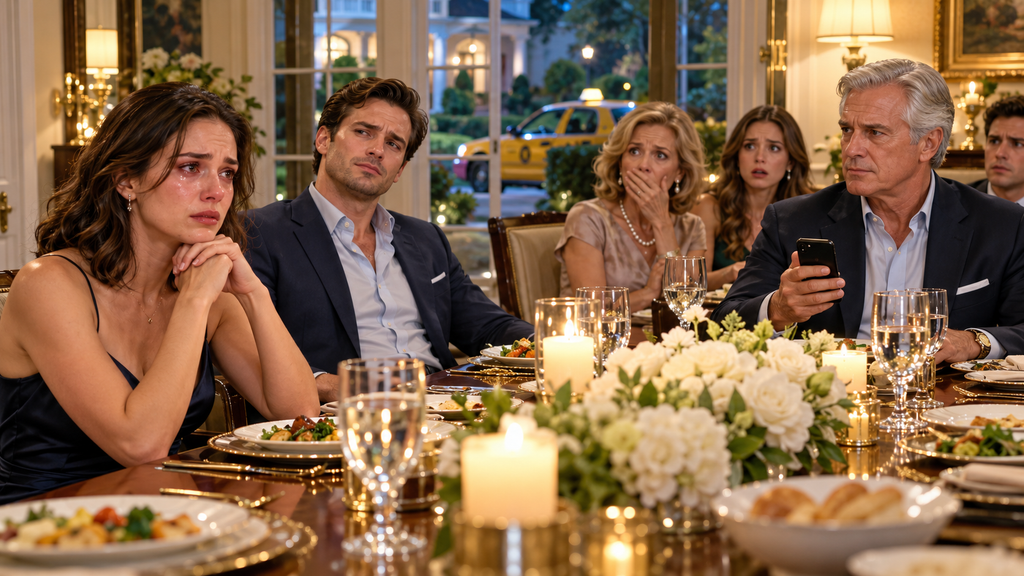
“You had no right to interfere in our marriage.” My brother, Nathan, gave a humorless laugh. “You just gave away your wife’s car.” Julian snapped toward him. “Stay out of this.” Nathan leaned forward.
“You made it family business when you announced it over steak.”
“Nathan,” Mom said quietly.
He sat back.
Julian looked at me.
“Are you enjoying this?”
The question shocked me.
“Enjoying what?”
“This.”
He gestured around the table.
“Making me look like some kind of criminal in front of your family.”
I stared at him.
“You took my car without asking.”
“I didn’t steal it.”
“What would you call taking something that belongs to another person after they repeatedly tell you no?”
His jaw tightened.
“We’re married.”
Dad answered before I could.
“Marriage is not a transfer of ownership.”
Julian turned toward him.
“I don’t need a lecture.”
“No.”
Dad’s voice remained maddeningly calm.
“You need boundaries.”
Julian pushed his chair backward.
“This is ridiculous.”
His phone rang again.
Nobody spoke.
He looked at the screen.
Then answered.
“What?”
A woman’s voice was faintly audible.
Julian turned away.
“No, Mom, listen to me.”
Brenda.
His shoulders stiffened.
“No, don’t argue with them.”
Another pause.
“I know.”
He rubbed his forehead.
“I know what I told you.”
My father’s eyes moved toward me.
I saw something there.
Not triumph.
Concern.
That mattered.
He wasn’t enjoying this either.
Julian lowered his voice.
“Mom, give them the keys.”
I felt my lungs open for the first time in two weeks.
The keys.
My keys.
He listened.
“No, they’re not arresting you.”
My mother’s hand flew toward her mouth.
Julian glared at Dad.
“Apparently your people scared the hell out of her.”
Dad said nothing.
Julian returned to the call.
“Just give them the car.”
A pause.
“I’ll handle Elena.”
Something inside me changed.
Not dramatically.
No lightning.
No sudden courage.
Just one sentence landing differently than it would have two weeks earlier.
I’ll handle Elena.
He had said versions of it for years.
I’ll talk to Elena.
Elena will understand.
Elena won’t mind.
I’ll convince Elena.
Let me deal with Elena.
Every version meant the same thing.
My answer was temporary until he replaced it with his own.
I stood.
Julian glanced at me.
“Sit down.”
The room became silent.
I looked at him.
“What did you say?”
His expression shifted.
“I said we need to talk.”
“No.”
“You’re making a scene.”
“No, Julian.”
I could hear my heart.
“You told me to sit down.”
He glanced around the table.
“You’re twisting everything.”
“For once, I’m hearing it exactly as you said it.”
“Elena.”
“No.”
My voice shook.
I hated that it shook.
But shaking didn’t mean weakness.
I had learned that much.
“You don’t get to order me back into my chair because you’re uncomfortable.”
He stared.
Then laughed.
It was a small laugh.
The one he used when he wanted other people to believe I was irrational.
“See?”
He looked at my parents.
“This is what I’ve been dealing with.”
Dad’s eyes narrowed.
Julian continued.
“Every conversation turns into this emotional performance.”
I felt the old instinct rise.
Explain.
Defend.
Prove I was reasonable.
Then Mom spoke.
“Julian.”
He looked at her.
Sylvia Vance rarely interrupted anyone.
She had spent thirty-four years married to a surgeon and had developed the ability to wait until people exhausted themselves.
But when she spoke, the room listened.
“My daughter arrived at my house in a taxi because you took her car.”
Julian opened his mouth.
Mom raised one finger.
“No.”
He stopped.
“You then announced that you gave it to your mother because you decided she deserved it more.”
“I didn’t say deserved—”
“You said needed.”
Mom’s voice remained gentle.
“Don’t hide inside vocabulary.”
My chest tightened.
She looked at me.
“Elena, how long has the car been gone?”
“Thirteen days.”
Mom’s face changed.
“Thirteen?”
I nodded.
“You knew?”
“No.”
“Did you tell anyone?”
“No.”
“Why?”
That question hurt more than anything Julian had said.
I looked down.
“I was embarrassed.”
Mom’s eyes filled.
“Oh, sweetheart.”
Julian sighed.
“Here we go.”
Dad stood.
Slowly.
Julian immediately stopped talking.
My father wasn’t physically imposing anymore.
Sixty-four.
Silver hair.
Reading glasses.
A slight stiffness in his right shoulder from years bent over operating tables.
But thirty years in surgery had taught him a kind of stillness that made frantic people reveal themselves.
He looked at Julian.
“You should leave.”
Julian blinked.
“Harrison—”
“My daughter arrived ashamed because of something you did to her.”
“You’re hearing one side.”
“Then give me the other side.”
Julian spread his hands.
“My mother needed transportation.”
Dad nodded.
“Elena said no?”
“Yes, but—”
“There is no other side.”
Julian’s face hardened.
“This family has always treated me like I’m beneath you.”
Nobody answered.
“You think because you’re doctors and executives and you have money, you get to decide what’s right.”
Dad looked almost sad.
“This has nothing to do with money.”
“Of course it does.”
Julian pointed toward the driveway.
“You gave her a car with legal traps attached to it.”
“I gave my daughter a car structured so nobody could dispose of it without her consent.”
“You mean me.”
“I didn’t name you.”
“You didn’t have to.”
Dad held his gaze.
“That seems to bother you more than it should.”
Julian looked at me.
“Are you coming?”
I didn’t understand.
“What?”
“Home.”
The word felt strange.
Home.
The place where I had spent thirteen days calling taxis while my husband drove our SUV and his mother drove my car.
“No.”
His face changed.
“What do you mean, no?”
“I mean I’m staying here tonight.”
“Elena.”
“I said no.”
He stared at me.
And for once, I didn’t translate his expression into something softer.
It was anger.
Not heartbreak.
Not stress.
Anger because I had disobeyed.
He picked up his jacket.
“Fine.”
Then he leaned toward me.
“When you calm down, call me.”
I almost smiled.
“I am calm.”
That seemed to frighten him more.
He left.
The front door closed.
Nobody at the table moved.
Then my father sat beside me.
Not at the head of the table.
Beside me.
“Elena.”
I looked at him.
“I’m sorry.”
He frowned.
“For what?”
“For this.”
I gestured around the room.
“For embarrassing everyone.”
My father’s face broke.
Not into anger.
Pain.
He reached for my hand.
“Who taught you that someone hurting you is embarrassing for you?”
I couldn’t answer.
Because I knew.
Not one person.
Not one moment.
It had happened slowly.
Every time Julian called me sensitive after insulting me.
Every time he spent money and made me feel selfish for objecting.
Every time he turned my boundaries into evidence that I didn’t understand family.
Every time I apologized simply because the room became uncomfortable.
Dad squeezed my hand.
“You have nothing to apologize for.”
My eyes filled.
“I let this happen.”
“No.”
“I kept paying.”
“You were trying to keep your marriage peaceful.”
“I lied for him.”
“Yes.”
That surprised me.
Dad wasn’t going to erase my choices.
“You protected him.”
He continued.
“Now you can choose differently.”
I nodded.
Then remembered the folder.
My evidence.
The texts.
Receipts.
Voicemails.
Credit card alerts.
I looked at my father.
“Dad.”
“Yes?”
“There are other things.”
His expression changed.
“What things?”
I opened my purse.
Not the folder.
That was still in my desk at home.
But my phone held photographs.
Screenshots.
Statements.
I started with the gas purchase on my credit card.
Then Brenda’s overdue bill.
Then another.
Then another.
Mom sat beside me.
Nathan came around the table.
My aunt quietly took the younger cousins into the living room.
I showed them eighteen months of charges I had excused.
$1,240 for tires.
$860 for plumbing.
$2,100 for a medical bill.
$600 for a church fundraiser.
$1,800 for “emergency dental work.”
Dad stopped me.
“Did you see the medical bill?”
“No.”
“The dental invoice?”
“No.”
“Receipts?”
“No.”
My brother frowned.
“How much altogether?”
“I don’t know.”
Dad said:
“Find out.”
Not angrily.
Practically.
For the next hour, we sat at that table and began reconstructing my marriage financially.
I logged into accounts.
Mom wrote numbers.
Nathan created a spreadsheet.
Dad asked questions.
Not accusations.
Questions.
What was this transfer?
Who authorized this charge?
Did I recognize this account?
Had Julian ever opened credit in my name?
I kept saying:
“I don’t know.”
Each time, the words frightened me more.
At 10:47 p.m., Nathan stopped typing.
“Elena.”
I looked at him.
“What?”
“There are transfers to an account ending in 4421.”
“So?”
“Do you recognize it?”
“No.”
He turned the laptop toward me.
Twenty-three transfers.
Small enough individually that I had ignored them.
$400.
$750.
$900.
$1,200.
Over twenty months.
Total:
$18,650.
I stared.
“That can’t be right.”
Nathan said nothing.
“Maybe it’s one of our savings accounts.”
“Check.”
I did.
It wasn’t.
Dad asked:
“Can you see the recipient name?”
I clicked.
The banking interface showed partial information.
B. Mercer Household Support.
Brenda Mercer.
My stomach dropped.
“He’s been sending her money.”
Mom whispered:
“Without telling you?”
I laughed.
The sound was ugly.
“He told me every time was an emergency.”
Dad looked at the total.
“Apparently the emergency had a subscription plan.”
I looked at him.
My father almost never used sarcasm.
That was how angry he was.
Then Nathan found something worse.
A credit card I didn’t recognize.
Joint household mailing address.
Julian as primary.
Me as authorized user.
Balance:
$14,380.
“What is that?”
Nobody answered.
I clicked transactions.
Restaurants.
Hotels.
Electronics.
Cash advances.
A furniture store.
Then a payment to Mercer Auto Finance.
I stared.
“What’s Mercer Auto Finance?”
Nathan searched.
A small used-car dealership thirty miles away.
Mom whispered:
“Maybe Brenda’s old car?”
I remembered Julian’s argument.
Mom was embarrassed driving that old thing.
“What old thing?”
I asked.
Dad looked at me.
“What?”
“Brenda’s car.”
I felt cold.
“She told me it barely ran.”
I grabbed my phone.
Opened photos.
Brenda’s birthday six months earlier.
There she was outside church.
Behind her.
A blue Honda CR-V.
Not new.
But certainly not dying.
I zoomed.
Nathan looked over my shoulder.
“That car looks fine.”
“It was.”
The realization came slowly.
Brenda hadn’t needed my Camry because she had no transportation.
She wanted my Camry because it was newer.
Because it was free.
Because Julian had trained both of us to believe her wants were emergencies.
I slept in my childhood bedroom that night.
Or tried.
At 1:13 a.m., Julian called.
I didn’t answer.
1:16.
Again.
1:22.
Then messages.
We need to talk like adults.
Your father had no right to interfere.
Mom is humiliated.
Then:
I hope you’re happy.
I stared at that one.
For years, those words could make me crumble.
I hope you’re happy.
Translation:
Your boundary caused someone’s discomfort.
Therefore your boundary was cruel.
I didn’t answer.
At 1:41:
Are you seriously staying there?
At 2:03:
Fine. Don’t come crying when this gets worse.
I turned off the phone.
The next morning, my Camry came home.
Dad’s attorney, David Chen, arranged everything.
No police dragging Brenda from the driver’s seat.
No dramatic tow truck outside church.
She had surrendered the keys after being informed that she wasn’t the legal owner and had no authority to retain the vehicle.
The car was delivered to my parents’ driveway at 9:12 a.m.
I stood on the porch.
There it was.
Charcoal gray.
Ordinary.
Mine.
I walked toward it.
Then stopped.
Something was different.
The rear bumper had a deep scrape.
There were fast-food wrappers on the floor.
A perfume bottle in the cup holder.
A pink steering-wheel cover.
Brenda had personalized it.
In thirteen days.
As though my ownership had already disappeared.
Then I saw the mileage.
Nearly 1,700 additional miles.
“Where did she go?”
Dad stood behind me.
“I don’t know.”
I opened the trunk.
Shopping bags.
Church pamphlets.
A blanket.
Then a cardboard box.
Inside were papers.
I almost ignored them.
Then I saw my name.
ELENA VANCE-MERCER
I froze.
Dad noticed.
“What is it?”
I lifted the document.
It was an insurance quote.
For the Camry.
Applicant:
Brenda Mercer.
Primary driver:
Brenda Mercer.
Ownership:
Pending family transfer.
My signature appeared at the bottom.
Except I had never signed it.
Dad’s face changed.
“Don’t touch anything else.”
I looked at him.
“That’s my signature.”
“No.”
He leaned closer.
“That’s an imitation of your signature.”
My hands went cold.
Dad called David.
The car stopped being merely a recovered possession.
It became evidence.
David advised me to document everything before removing Brenda’s belongings.
Photographs.
Mileage.
Damage.
Documents.
Then he asked:
“Elena, did you ever authorize anyone to transfer title or insurance?”
“No.”
“Did you sign any document giving Julian power of attorney?”
“No.”
“Are you sure?”
The question frightened me.
“I think so.”
Dad interrupted.
“Don’t answer from memory. Check.”
That became the theme of the next week.
Check.
Not assume.
Not panic.
Check.
I retrieved the folder Dad had given me from my desk.
I did not go alone.
Nathan came.
Julian wasn’t home.
I opened the drawer.
The folder was gone.
I stood staring at the empty space.
“No.”
Nathan looked over my shoulder.
“What?”
“It was here.”
“What was?”
“The car folder.”
“Are you sure?”
“Yes.”
Then I laughed bitterly.
“God, I hate that question.”
Nathan put a hand on my shoulder.
“I believe you.”
We searched.
Nothing.
Then I remembered something.
Dad had scanned the title arrangement before giving it to me.
He had copies.
Julian could steal paper.
He couldn’t steal the legal record.
That evening, he finally came to my parents’ house.
He didn’t knock politely.
He pounded.
Dad opened the door.
Julian stood outside holding my missing folder.
“I think Elena left this at home.”
I stared.
The audacity almost impressed me.
“You took it from my desk.”
“No.”
“It was in my desk.”
“You brought it downstairs weeks ago.”
“No, I didn’t.”
He shrugged.
“See? This is what I mean. You forget things.”
The words hit differently now.
Not because I believed him.
Because I finally recognized the mechanism.
I stepped onto the porch.
“Give me the folder.”
He held it out.
I took it.
“Did you sign my name on an insurance application?”
His face changed.
“No.”
“Brenda had one in the car.”
“Mom handles her own paperwork.”
“It said pending family transfer.”
“She assumed you’d eventually agree.”
“I said no three times.”
He sighed.
“Elena, can we stop performing for your father?”
Dad remained inside.
Silent.
I said:
“Did you sign my name?”
“No.”
“Did your mother?”
“No idea.”
“Did you tell her the car was hers?”
“I told her we’d work it out.”
“That’s not what you said at dinner.”
He looked irritated.
“What difference does wording make?”
“All of it.”
He stepped closer.
“Come home.”
“No.”
“Stop this.”
“No.”
“We can fix it.”
“What exactly are we fixing?”
“The misunderstanding.”
I laughed.
“There is no misunderstanding.”
“Elena.”
“You took my car.”
“You sent money to your mother behind my back.”
His face changed.
“You opened a credit card I didn’t know about.”
Silence.
“You’ve been charging things to it.”
“Household expenses.”
“Hotels?”
He stopped.
That silence was different.
I felt my stomach tighten.
“Why hotels?”
“Work.”
“Your company reimburses travel.”
“Not always.”
“Which hotel?”
He looked away.
I already knew the answer wouldn’t save us.
But I asked anyway.
“Julian.”
“I’m not doing this on your parents’ porch.”
“Then where did you stay?”
“It wasn’t me.”
“The card is yours.”
“I booked for someone.”
“Who?”
He exhaled.
“A client.”
“What client?”
“This is ridiculous.”
He turned toward his car.
I said:
“Was there another woman?”
He stopped.
Everything inside me went quiet.
He turned.
“No.”
Too fast.
My father appeared in the doorway.
Not to rescue me.
Just present.
Julian saw him.
“You know what?”
He laughed.
“This is exactly why our marriage is failing.”
I stared.
“Our marriage is failing because my father is standing inside his own house?”
“Because you’ve never grown up.”
I almost couldn’t believe it.
“You run to your parents whenever things get hard.”
“I hid this from them for two weeks.”
“Because you knew you were overreacting.”
“No.”
I stepped closer.
“Because I was trained to protect you.”
He flinched.
I saw it.
For the first time, I had said the thing neither of us could pretend not to understand.
“You made me ashamed of having boundaries.”
“Elena—”
“You made every no sound selfish.”
“I never—”
“You made your mother’s needs more important than mine because you knew I would keep trying to prove I was a good wife.”
His mouth closed.
“And I did.”
My eyes filled.
“I paid.”
“I apologized.”
“I made excuses.”
“I took taxis while your mother drove my car.”
His face softened.
That frightened me more than anger.
“Baby.”
No.
Not now.
He reached toward me.
I stepped back.
“Don’t.”
His hand fell.
“I love you.”
There it was.
The emergency button.
The sentence he used when every other argument failed.
I looked at him.
“Then why does loving you keep costing me pieces of myself?”
He stared.
I had no answer either.
He left.
Two days later, Brenda called.
I almost didn’t answer.
Then curiosity won.
“Elena.”
Her voice was cold.
“Hello, Brenda.”
“I hope you’re proud of yourself.”
I closed my eyes.
“Of what?”
“I was stopped like a criminal.”
“You weren’t arrested.”
“I was humiliated.”
“You were driving my car.”
“My son gave it to me.”
“He didn’t own it.”
“He’s your husband.”
“And?”
She paused.
I heard it.
The same assumption.
Marriage meant Julian’s access to me was unlimited.
She said:
“Everything you have is his too.”
“No.”
“That’s how marriage works.”
“Not legally.”
“Forget legally.”
“No, Brenda.”
My voice sharpened.
“I think I’ve forgotten legally for too long.”
She went quiet.
I continued.
“Did you sign my name on an insurance application?”
“No.”
“Did Julian?”
“I don’t know.”
“Who completed it?”
Silence.
“Brenda.”
“I was told you’d agreed.”
“That wasn’t my question.”
She sighed.
“The agent filled most of it.”
“Who gave them my information?”
Another silence.
“Julian.”
My heart sank.
“Did he tell you I agreed?”
“Yes.”
“When?”
“Before he brought the car.”
I closed my eyes.
He had planned it before taking it.
Not impulsive.
Not an emergency.
A plan.
“What else did he tell you?”
“That you didn’t need it.”
I almost laughed.
“Anything about the title?”
“He said he’d handle it.”
“Did you know I’d said no?”
Silence.
“Brenda.”
“He said you were being stubborn.”
There it was.
She knew.
Maybe not everything.
Enough.
“Why did you accept it?”
Her answer was astonishing.
“Because after everything I’ve done for that boy, I deserved something.”
I sat down.
Something.
My car.
My money.
My marriage.
All translated into Julian’s ability to reward his mother.
“I need to ask you something.”
“What?”
“Did you actually need a car?”
She bristled.
“My Honda has problems.”
“What problems?”
“It makes noises.”
“Does it run?”
“Yes.”
“Is it insured?”
“Yes.”
“Did a mechanic say it was unsafe?”
“No.”
I closed my eyes.
“You didn’t need my car.”
“I needed something reliable.”
“You wanted my car.”
“What difference does that make?”
Everything.
But I realized there was no sentence that could teach her.
So I said:
“Do not contact me about the Camry again.”
“Elena—”
“And do not use my name on any paperwork.”
“I didn’t.”
“Then this shouldn’t be difficult.”
I hung up.
The insurance company investigated.
The signature wasn’t mine.
The application had been initiated online from an email address linked to Julian.
He claimed he had only started a quote.
He denied signing.
Brenda claimed she assumed everything was authorized.
No criminal prosecution came from that document.
Not enough evidence to prove who placed the signature there.
For once, I accepted uncertainty.
I didn’t need every wrong converted into a charge.
I needed out.
Then the hotel charges revealed their secret.
Not another woman.
Something almost worse.
Julian had been meeting with a business partner named Grant Ellis.
They were trying to purchase a struggling fitness franchise.
The hotel charges covered meetings, investor dinners, and a two-night “strategy retreat.”
Julian had invested $42,000.
Money I didn’t know existed.
Because it didn’t.
He had borrowed it.
Against what?
Our joint home equity line.
I stared at the statement in David’s office.
“No.”
David pointed.
“Your signature appears on the authorization.”
“I never signed this.”
He looked at me.
“Then we need a forensic document review.”
My heart pounded.
“Can he borrow against the house without me?”
“Not legitimately in the way this was structured.”
Dad sat beside me.
I turned toward him.
“Did he forge my signature?”
David answered carefully.
“We don’t know yet.”
I laughed.
Again that phrase.
We don’t know yet.
My entire life had become a waiting room for facts.
The forensic examiner concluded the signature was likely not mine.
The lender opened a fraud investigation.
Then Julian’s story changed.
He claimed I had verbally authorized the investment.
I hadn’t.
He produced a text.
Do whatever you think is best.
My text.
Real.
Sent eight months earlier.
Context?
We had been discussing paint colors for the guest bedroom.
I still had the messages before and after.
Gray or blue?
I don’t care. Do whatever you think is best.
Julian had taken one sentence from our marriage and tried to turn it into authorization for $42,000 in debt.
When David showed me, I stared for a long time.
Then something surprising happened.
I laughed.
Dad looked worried.
“Are you okay?”
“Yes.”
I wiped my eyes.
“For the first time, yes.”
Because it was absurd.
And because the absurdity was visible.
Documented.
I didn’t have to convince anyone.
The context existed.
The truth existed.
Julian couldn’t rewrite it simply by speaking louder.
I filed for divorce three weeks after the dinner.
When he was served, he called me seventeen times.
I answered the eighteenth.
“Elena, what are you doing?”
“Ending our marriage.”
“You didn’t even talk to me.”
“I talked for three years.”
“Not about divorce.”
“Because I spent three years trying not to need one.”
Silence.
“You’re really throwing away our marriage over a car?”
I almost admired the reduction.
A car.
As if the Camry had been the problem.
“No.”
“Then what?”
“The car was just the first thing you took that I finally stopped explaining away.”
He went quiet.
I continued.
“You used my money without asking.”
“You lied about transfers.”
“You opened debt.”
“You tried to use my signature.”
“You made decisions for me and called my objections selfish.”
“And every time I resisted, you told me I didn’t understand marriage.”
He whispered:
“I can change.”
I believed he believed that.
In that moment.
Fear can make people sincere for an hour.
“Maybe you can.”
“Then give me a chance.”
“You’ve had chances.”
“Not like this.”
“No.”
My voice softened.
“You had better chances.”
He started crying.
That almost destroyed me.
Julian rarely cried.
“Elena, please.”
I pressed my hand against my mouth.
I remembered our wedding.
Our first apartment.
The night my grandmother died and he drove four hours through rain because I couldn’t stop crying.
The ridiculous dance he did when I got promoted.
People are not only the worst thing they do.
That truth can make leaving harder.
I whispered:
“I loved you.”
“Loved?”
His voice broke.
“Past tense?”
“I don’t know.”
“Then don’t do this.”
I closed my eyes.
“Love isn’t enough when I can’t safely say no.”
He cried harder.
“I never hit you.”
The sentence shocked me.
I opened my eyes.
“I didn’t say you did.”
“I never hurt you.”
“Yes, Julian.”
My voice was barely audible.
“You did.”
He stopped.
I said:
“You just don’t respect the kind of hurt that doesn’t leave bruises.”
Then I ended the call.
The divorce became ugly.
Not because I wanted revenge.
Because Julian wanted control.
He challenged the Camry.
Failed.
Claimed it was marital property.
The title arrangement and gift documentation were clear.
Dad’s careful folder mattered.
He challenged the credit-card charges.
Claimed household use.
Some were.
Some weren’t.
He challenged the transfers to Brenda.
Claimed I knew.
I had paid some knowingly.
Others had been hidden.
The court didn’t turn every unfair marital choice into fraud.
That frustrated me initially.
Then David explained:
“Divorce isn’t a moral accounting system.”
I hated that sentence.
Then understood it.
The court could divide assets.
Assign certain debts.
Address documented misconduct where legally relevant.
It could not issue a ruling on every dinner where I was manipulated.
Every insult.
Every boundary ignored.
Some justice had to come from leaving.
The home-equity investigation was more serious.
The lender eventually determined that the disputed authorization did not meet its requirements and reversed part of the transaction while pursuing Julian and Grant over representations made during the application.
Grant disappeared from Julian’s life immediately.
Apparently business loyalty lasted exactly until lawyers appeared.
The fitness franchise deal collapsed.
Julian lost most of his investment.
Then something happened I didn’t expect.
Brenda sued him.
When Nathan told me, I thought he was joking.
“For what?”
“He borrowed money from her too.”
“How much?”
“Thirty-one thousand.”
I stared.
“Why?”
“Fitness business.”
Of course.
Julian had been feeding two women different stories.
To me, Brenda was constantly in crisis.
To Brenda, Julian was a brilliant businessman temporarily short on cash.
She had given him savings.
He had given her some of my money.
Money moved in circles while truth stayed still.
Brenda called me.
This time, she wasn’t angry.
She sounded old.
“Elena.”
“Yes?”
“Did you know?”
“About your loan?”
“No.”
“He said the investment was guaranteed.”
“I didn’t know about it until recently.”
“He lost my money.”
I felt sympathy.
Then remembered the Camry.
Both could exist.
“I’m sorry.”
She started crying.
“I trusted him.”
The sentence almost made me laugh, but I didn’t.
“I know.”
“He’s my son.”
“I know.”
“How could he do that?”
I looked out the window.
For years, I had asked a version of that question.
Finally, I had an answer.
“Because we kept teaching him that needing something badly enough gave him permission to take from people who loved him.”
Brenda went silent.
I continued.
“You taught him that your needs outranked my boundaries.”
“I taught him?”
“And I taught him that if he pushed long enough, I’d eventually give in.”
Her voice hardened.
“So this is my fault?”
“No.”
I was careful.
“His choices are his fault.”
“Then why say that?”
“Because I can admit how I participated in a pattern without taking responsibility for his decisions.”
Silence.
Then she whispered:
“I shouldn’t have taken the car.”
“No.”
“I knew you’d said no.”
My eyes filled.
That was the first time she admitted it.
“He told me you’d get over it.”
“I usually did.”
“He said your father spoiled you.”
I laughed softly.
“My father gave me one car.”
“I know.”
She cried.
“I was jealous.”
That surprised me.
“Of me?”
“Yes.”
“Why?”
“Because Harrison gave you things without making you beg.”
The sentence hurt.
Not because it was cruel.
Because it revealed something.
Brenda had spent much of her life surviving scarcity.
Her husband had left when Julian was young.
She worked two jobs.
She counted every dollar.
Julian grew up watching her struggle.
Somewhere along the way, gratitude became debt.
He believed his adult life existed to repay her suffering.
And Brenda believed repayment had no ceiling.
Understanding it didn’t excuse anything.
But it made the pattern visible.
She whispered:
“I saw that car and thought, she doesn’t even understand what she has.”
I said:
“You were right.”
She went quiet.
“I didn’t understand.”
I looked at the Camry through my window.
“I didn’t understand that having something of my own would show me how little ownership I had over the rest of my life.”
Brenda apologized.
I accepted the apology.
Not the relationship.
Those are different.
For almost a year, we didn’t speak again.
The divorce finalized eleven months after I arrived at my parents’ dinner in a taxi.
I remember standing outside the courthouse.
No rain.
No dramatic weather.
Just an ordinary Tuesday.
David shook my hand.
“It’s done.”
Done.
Three letters.
Three years of marriage pain.
Eleven months of legal documents.
Thousands of dollars.
Countless nights awake.
Done.
I expected relief.
Instead, I cried.
Dad stood beside me.
“I thought I’d be happier.”
He nodded.
“You lost something.”
“But it was bad.”
“Parts of it.”
I looked at him.
He continued.
“Don’t rewrite your whole marriage just because the ending was painful.”
That surprised me.
“Some of it was real.”
I nodded.
“That’s what hurts.”
“I know.”
He put his arm around me.
“You’re allowed to grieve what was good and still leave what became harmful.”
We walked toward the parking garage.
My Camry waited on level three.
I had repaired the bumper.
Removed the pink steering-wheel cover.
Professionally cleaned the interior.
For months, I considered selling it.
Too many memories.
Then one morning, I realized something.
The car hadn’t betrayed me.
People had.
I kept it.
After the divorce, I did something embarrassingly small.
I drove to the beach alone.
Two hours.
No permission.
No explanation.
No one asking when I’d return.
I stopped for coffee.
Bought the expensive one.
Julian used to tease me for spending six dollars on coffee while quietly transferring hundreds to Brenda.
I sat outside with the cup in my hands.
Then laughed.
Six dollars.
The price of freedom was apparently caramel and too much whipped cream.
At the beach, I parked near the water.
Sat on the hood of the Camry.
Watched waves.
And cried.
Not because I wanted Julian back.
Because I wanted myself back.
I had spent years becoming smaller in tiny increments.
Recovery happened the opposite way.
Tiny expansions.
I changed my bank passwords.
Opened accounts in my name.
Started therapy.
Reconnected with friends I’d stopped seeing because Julian found them “negative.”
Took a pottery class.
I was terrible.
Kept going.
Bought red shoes.
Julian hated red.
Not because of him.
At least that’s what I told myself.
Maybe a little because of him.
I learned something important in therapy.
Independence isn’t the same as isolation.
At first, I refused help from everyone.
Dad offered to pay legal fees.
I said no.
Mom offered groceries.
No.
Nathan offered to repair a shelf.
No.
I thought accepting help would make me weak again.
My therapist asked:
“What is the difference between help and control?”
I stared at her.
“Choice.”
She nodded.
“Exactly.”
That changed everything.
My father had given me a car.
He hadn’t told me where to drive.
Julian had taken the same car.
Then told me why I didn’t need it.
The object wasn’t the issue.
Consent was.
So I let Dad help with part of the legal bill.
Then repaid him slowly because that mattered to me.
He never asked.
That mattered too.
Julian moved into Brenda’s house after the divorce.
That arrangement lasted four months.
Apparently two people who believed the other owed them something could not share a kitchen peacefully.
He rented an apartment.
Found another job after his employer learned he had used work contacts in the failed franchise venture.
He wasn’t fired for what he did to me.
Life is rarely that narratively convenient.
But his professional reputation suffered.
Grant sued him.
Brenda pursued repayment.
The lender dispute remained on his financial record.
Consequences accumulated.
Not because my father destroyed him.
That story circulated in the extended family.
It was wrong.
Dad made one call about a car.
Julian destroyed the rest himself.
That distinction mattered to me.
I didn’t want my freedom to become another story about a powerful man rescuing me.
My father opened a door.
I had to walk through it.
Two years later, Julian asked to meet.
I almost refused.
Then agreed.
Public café.
Daytime.
My car parked where I could see it.
Old habits.
He arrived early.
He looked different.
Thinner.
No expensive watch.
He stood when I approached.
“Hi.”
“Hi.”
We sat.
He didn’t try to hug me.
Good.
For several minutes, we discussed nothing.
Work.
Weather.
Nathan’s new baby.
Then Julian said:
“I owe you an apology.”
I waited.
“I’ve apologized before.”
“Yes.”
“But usually because I wanted something.”
That was true.
“I wanted you to stop being angry.”
“I wanted you to come home.”
“I wanted the divorce to stop.”
He looked down.
“That isn’t the same as apologizing.”
I said nothing.
He continued.
“I took the car because I thought you’d eventually forgive me.”
My chest tightened.
“That’s true.”
“I knew you said no.”
I looked at him.
“I told myself you were being selfish.”
He swallowed.
“But really, I just didn’t respect the answer.”
There it was.
The sentence I’d needed years earlier.
Not because it repaired anything.
Because it named it.
“I used Mom as an excuse.”
He continued.
“She did struggle when I was a kid.”
“I know.”
“I spent my whole life feeling like I owed her.”
“I know.”
“Then I started making you pay the debt.”
My eyes filled.
Julian looked away.
“I didn’t understand that until counseling.”
“You went to counseling?”
He smiled sadly.
“Court-ordered financial counseling first.”
I almost laughed.
“Then regular therapy.”
“Good.”
“I kept thinking everyone abandoned me.”
He looked at me.
“You.”
“Mom.”
“Grant.”
“My company.”
“I was angry.”
“Then my therapist asked what all those relationships had in common.”
I knew.
“Me.”
He nodded.
“That was a terrible week.”
Despite myself, I laughed.
So did he.
For a moment, I remembered why I married him.
Charm.
Humor.
Warmth.
Those qualities had been real.
They simply hadn’t been enough.
He said:
“I didn’t have an affair.”
“I know.”
“I almost wish I had.”
I frowned.
“That would be easier to explain.”
He nodded.
“I betrayed you with entitlement.”
That sentence stayed with me.
“I thought marriage meant I could use what was yours because eventually we’d agree.”
He shook his head.
“That’s insane.”
“It didn’t feel insane while I was living it.”
“No.”
“That’s why it worked.”
He looked at me.
“Do you hate me?”
I considered.
“No.”
His eyes filled.
“Do you forgive me?”
I considered longer.
“Mostly.”
He nodded.
“Could we ever—”
“No.”
I didn’t let him finish.
His face fell.
I continued gently.
“Forgiveness isn’t an application to return.”
He looked down.
“I know.”
“Do you?”
“Yes.”
A long silence.
Then he smiled sadly.
“You always did have a way with words.”
“No.”
I smiled.
“I just stopped letting you finish my sentences.”
He laughed.
Then cried.
We said goodbye.
He didn’t ask for another meeting.
I appreciated that more than he knew.
Years passed.
The Camry aged.
At 110,000 miles, the alternator failed.
At 126,000, air-conditioning repair.
At 141,000, Nathan said:
“Elena, please buy another car.”
“No.”
“This thing is becoming a historical artifact.”
“It runs.”
“Barely.”
“Sounds like Brenda’s Honda.”
He stared.
Then we both burst out laughing.
Humor had finally reclaimed the memory.
When the Camry reached 157,000 miles, Dad asked:
“Why are you keeping it?”
I thought.
“Because you gave it to me.”
“That isn’t a reason to become emotionally attached to a transmission.”
“Surgeons are cold.”
“Surgeons understand when parts need replacement.”
I smiled.
“You really want me to sell it?”
Dad shook his head.
“No.”
“Then why ask?”
“Because I want to make sure you’re keeping it because you want it, not because it became a symbol.”
I stared.
He always did that.
Cut through tissue without damaging what mattered.
I looked at the car.
He was right.
Somewhere along the way, the Camry had become more than transportation.
Freedom.
Boundaries.
My father.
The divorce.
Proof.
Maybe too much.
Three months later, I traded it in.
I cried at the dealership.
The salesman panicked.
“Ma’am, you don’t have to sell it.”
I laughed.
“No, I’m okay.”
“Are you sure?”
“Yes.”
I touched the steering wheel once.
“It’s just been a very good car.”
I bought a blue Subaru.
With my own money.
My own financing.
My own signature.
Dad hated the color.
I bought it anyway.
That was growth.
When I drove to my parents’ next family dinner, Dad walked outside.
Looked at the Subaru.
Then at me.
“Blue?”
“Yes.”
“Very blue.”
“You don’t like it.”
“I didn’t say that.”
“Your face did.”
He smiled.
“Do you like it?”
“I love it.”
“Then I love it.”
That sentence nearly made me cry.
Do you like it?
Then I love it.
No control.
No conditions.
Love without ownership.
Years later, Dad became ill.
Not suddenly.
A slow neurological condition that eventually forced him to stop operating.
The irony was cruel.
A man whose hands had saved lives gradually lost confidence in them.
I drove him to appointments.
In the blue Subaru.
One afternoon, leaving the hospital, he struggled with the seat belt.
“Damn thing.”
“Here.”
I reached over.
He pulled away.
“I can do it.”
I froze.
Then sat back.
“Okay.”
He tried again.
Failed.
His hands shook.
He cursed.
Then looked at me.
“Help.”
I buckled it.
Neither of us spoke for several minutes.
Then Dad said:
“Thank you for waiting.”
“For what?”
“Until I asked.”
My throat tightened.
“Of course.”
He looked out the window.
“No.”
His voice softened.
“Not everyone does.”
I knew what he meant.
Control can disguise itself as help.
Even love can become suffocating when it stops asking.
I drove him home.
At a red light, he said:
“Do you remember the Camry dinner?”
I laughed.
“How could I forget?”
“I’ve wondered whether I handled it correctly.”
“What?”
“The call.”
“You got my car back.”
“Yes.”
“But I acted before asking what you wanted.”
I looked at him.
“Dad.”
“I saw you being mistreated and I moved.”
“You protected something legally.”
“Yes.”
“But I still should’ve asked.”
The light turned green.
I drove.
Then said:
“You know what mattered?”
“What?”
“After the call, you gave the decision back to me.”
He nodded.
“I tried.”
“You never told me to divorce Julian.”
“No.”
“You wanted to.”
“Desperately.”
I laughed.
“So did Mom.”
“Your mother had several plans.”
“I know.”
“She wanted to bury him under the rose garden.”
“Dad.”
“Metaphorically.”
“Sure.”
He smiled.
Then became serious.
“I knew if I told you what to do, I’d just become another man deciding your life for you.”
My eyes filled.
That was my father.
Not perfect.
Wise enough to question his own power.
When he died three years later, I thought grief would destroy me.
It didn’t.
It changed me.
At the funeral, Julian came.
He stood in the back.
I hadn’t invited him.
I also hadn’t forbidden him.
Dad had been part of his life for years.
Afterward, Julian approached.
“I’m sorry.”
“Thank you.”
He looked older.
So did I.
“Your father scared the hell out of me.”
I laughed through tears.
“He liked you at first.”
“I know.”
“That made it worse.”
He nodded.
“He was right about me.”
I shook my head.
“Not completely.”
Julian looked surprised.
“Dad never thought you were evil.”
“He had a funny way of showing it.”
“He thought you were entitled.”
“That sounds more accurate.”
“He also thought people could change.”
Julian looked toward Dad’s grave.
“I wish I’d changed sooner.”
“So do I.”
We stood quietly.
Then he said:
“I finally paid Mom back.”
I smiled.
“Good.”
“And the lender.”
“Good.”
“I bought a used Corolla.”
I stared.
He smiled.
“Very practical.”
“Does your mother drive it?”
“Absolutely not.”
We both laughed.
Then he walked away.
That was the last time I saw him for many years.
My mother lived another decade.
After Dad died, she became unexpectedly adventurous.
At seventy-two, she took a cooking class in Italy.
At seventy-four, she learned basic Spanish.
At seventy-six, she dated a retired history professor named Walter, whom Nathan and I interrogated mercilessly.
Mom finally said:
“You two realize I’m an adult?”
I laughed so hard I almost fell off the sofa.
“What?”
“Nothing.”
“No, tell me.”
“Dad used to say that about me.”
Mom smiled.
“Then perhaps it’s genetic.”
She married Walter at seventy-eight.
Small ceremony.
I drove her there.
She asked:
“Do you think your father would mind?”
I thought.
“No.”
“How do you know?”
“Because he loved you, not ownership of you.”
Mom cried.
So did I.
That lesson kept returning.
Love without ownership.
Family without debt.
Help without control.
Commitment without surrender.
The things I once believed were obvious had taken half a lifetime to learn.
At forty-three, I remarried.
His name was Daniel Brooks.
He was a civil engineer.
Widowed.
Two teenage sons.
Terrible dancer.
Excellent cook.
The first time he borrowed my Subaru, he texted:
Can I take your car to the hardware store? Mine’s blocked in.
I stared at the message.
Then cried.
Daniel called immediately.
“What’s wrong?”
“Nothing.”
“You’re crying.”
“I know.”
“Did I say something?”
“No.”
A pause.
“Is this about the car?”
I laughed through tears.
“Maybe.”
He knew the story.
Not every detail.
Enough.
He said:
“I can move mine.”
“No.”
“You sure?”
“Yes.”
“Can I take yours?”
The question.
Again.
Can I?
Not:
We’re married.
Not:
You don’t need it.
Not:
It’s practical.
A question.
“Yes.”
“Thank you.”
He returned it with a full tank.
I accused him of showing off.
He said:
“Your standards for men are alarmingly low.”
I laughed.
“I’m working on them.”
Daniel never became perfect.
Neither did I.
We argued.
Real arguments.
Money.
Children.
Vacations.
His habit of leaving cabinet doors open like he was trying to kill me through forehead injuries.
But something was different.
When I said no, the conversation could continue without my no being treated as betrayal.
Sometimes he persuaded me.
Sometimes I persuaded him.
Sometimes neither did.
And the world kept turning.
The first major argument we had was over his son, Tyler.
Tyler wanted $8,000 for a business idea.
Daniel wanted to lend it.
I didn’t.
We shared finances by then.
My body tightened.
Old fear.
Daniel noticed.
“We don’t have to.”
“What?”
“I said we don’t have to.”
“But you want to.”
“Yes.”
“And if I say no?”
“Then it’s no.”
I stared.
“That easy?”
He frowned.
“Should it be difficult?”
I started crying.
Poor Daniel.
Marriage to me required occasional emotional responses to basic respect.
He held me.
Then said:
“We can find another way to help Tyler.”
We did.
Tyler made a business plan.
Saved half.
We loaned the rest from Daniel’s separate funds with written terms.
He repaid it.
No family war.
No guilt.
No stolen car.
I remember thinking:
Oh.
This is what problem-solving looks like when nobody needs to win control.
At fifty, I received a strange letter.
From Brenda.
We hadn’t spoken in years.
She was ill.
Cancer.
She wrote:
I have spent a lot of time thinking about the night Harrison took back the car. For years I told everyone your father humiliated me. I understand now that I humiliated myself by accepting something I knew was not mine.
I sat with the letter.
Julian told me you would eventually forgive him because you always did. I believed him because I had watched you do exactly that. I am ashamed that instead of protecting your kindness, we treated it like permission.
That line hurt.
Kindness as permission.
Yes.
I want you to know that Julian has changed. Not because I think you should care or return to him. You were right not to. But because I know part of you once loved him, and I thought perhaps you would want to know he became better than the man who hurt you.
I did want to know.
That surprised me.
He volunteers with a financial counseling program now. He talks to young men about debt, pride, and asking for help before desperation becomes dishonesty.
I smiled.
I am sorry, Elena. Not because I am sick. I was sorry before that. I was simply too proud to write.
I answered.
One page.
I told her I accepted the apology.
I thanked her for telling me about Julian.
I wished her peace.
She died four months later.
Julian sent a short message.
Thank you for writing to her. It mattered.
I replied:
I’m glad. I’m sorry for your loss.
That was all.
Enough.
My life continued.
Daniel and I traveled.
Mom aged.
Nathan’s children grew.
My career changed.
I became a department director.
Then vice president.
At work, I became known for one peculiar habit.
Whenever a manager said:
“They agreed.”
I asked:
“How do you know?”
At first, people thought I was being difficult.
Then they understood.
I cared about documented consent.
Clear expectations.
No assumptions.
Especially around money.
My history didn’t become my personality.
But it sharpened my values.
One year, a junior employee named Grace came into my office.
She was twenty-six.
Eyes red.
“Can I ask you something weird?”
“Always.”
“My fiancé wants me to cosign a business loan.”
I said nothing.
“He says if I don’t, it means I don’t believe in him.”
There it was.
Different man.
Different object.
Same language.
I asked:
“Do you want to cosign?”
She looked down.
“No.”
“Then don’t.”
She cried.
“But what if he leaves?”
I thought about Julian.
The Camry.
My father.
The empty driveway.
“Then you’ll learn something important before signing a loan.”
She laughed through tears.
“That’s harsh.”
“Yes.”
I smiled.
“But useful.”
I didn’t tell her to leave him.
I didn’t call him abusive.
I didn’t make her choice.
I simply returned the question to its owner.
What do you want?
Years later, Grace sent me a wedding invitation.
Different man.
I laughed when I saw it.
Daniel asked:
“What?”
“Nothing.”
“Are we going?”
“Yes.”
“Do I know them?”
“No.”
“Then why?”
“Because sometimes you want to see how a story turns out.”
At the wedding, Grace hugged me.
“You saved me.”
I shook my head.
“No.”
“You did.”
“I asked one question.”
“Exactly.”
I understood then what Dad had done for me.
He didn’t save me either.
He asked questions.
Then protected the space where my answer could matter.
That is a different kind of rescue.
One that leaves your dignity intact.
On the twentieth anniversary of the family dinner, Nathan organized a gathering at Mom’s house.
The old house.
Same dining room.
Different table.
Dad’s chair remained in the corner.
Not because we couldn’t move it.
Because Mom liked it there.
Daniel sat beside me.
Nathan’s children argued about dessert.
Walter complained that nobody appreciated history.
Mom told him nobody appreciated his forty-minute explanation of the Roman Republic.
I laughed until my stomach hurt.
Then Nathan raised his glass.
“To Dad.”
We all did.
Mom looked at me.
“Do you remember what he said that night?”
I smiled.
“Which part?”
“When Julian said Brenda needed the car.”
Nathan grinned.
“Dad’s face.”
Everyone laughed.
Daniel had heard the story many times.
He leaned toward me.
“I still think your father was terrifying.”
“He was five-foot-ten.”
“Psychologically terrifying.”
Mom smiled.
“He didn’t raise his voice.”
“Exactly.”
We drank.
Then Mom said:
“Elena, tell the younger ones.”
I looked around.
My nieces and nephews were adults now.
They knew pieces.
Not all.
So I told the story.
Not as revenge.
Not as:
My powerful father destroyed my selfish husband.
That version was easy.
And wrong.
I told them about the first bill.
The second.
The jokes.
The guilt.
The way boundaries disappear one concession at a time.
I told them about arriving by taxi.
About wanting to lie.
About Julian answering first.
About Dad asking:
“Did Elena agree?”
I told them about the call.
The recovered car.
The hidden transfers.
The debt.
The forged-looking documents.
The divorce.
And the years after.
When I finished, my niece Chloe asked:
“So Grandpa knew Julian was bad?”
I thought.
“No.”
“He suspected?”
“He suspected I was giving away too much of myself.”
“Why didn’t he tell you?”
“He did.”
“When?”
“Quietly.”
I smiled.
“He gave me a car that belonged only to me.”
She frowned.
“That was the warning?”
“Partly.”
I looked toward Dad’s empty chair.
“He couldn’t make me see something before I was ready.”
Daniel squeezed my hand.
My nephew asked:
“Was Grandpa happy when Julian got in trouble?”
“No.”
“How do you know?”
“Because he loved me more than he hated Julian.”
That distinction mattered.
Dad didn’t want Julian destroyed.
He wanted me safe.
Those are not the same wish.
Later that night, after everyone left, I stood in the driveway.
The exact place where the Camry had been missing twenty years earlier.
Daniel came outside.
“You okay?”
“Yes.”
He stood beside me.
“You’re doing the memory thing.”
“The what?”
“Looking dramatically into the distance while pretending you’re not thinking about the past.”
“I don’t do that.”
“You absolutely do.”
I laughed.
Then looked at him.
“You know what’s strange?”
“What?”
“For years, I thought that dinner was the night my marriage ended.”
“Wasn’t it?”
“No.”
I thought.
“It was the night I stopped disappearing.”
Daniel took my hand.
That was more accurate.
The marriage had been failing long before.
The dinner wasn’t destruction.
It was visibility.
My father didn’t create the problem.
The call didn’t create it.
The Camry didn’t create it.
Those things simply made visible what I had spent years translating into softer language.
Control became concern.
Entitlement became family duty.
Taking became sharing.
Guilt became love.
And my silence became peace.
But silence isn’t peace when only one person benefits from it.
It’s surrender.
I had surrendered in installments.
Then reclaimed myself the same way.
One choice at a time.
One bank account.
One drive.
One no.
One yes that actually belonged to me.
Years later, when Mom died, we sold the family house.
Before closing, Nathan and I walked through the empty rooms.
The dining room echoed.
I stood where I had sat that night.
Nathan leaned against the doorway.
“You know what I remember?”
“What?”
“Julian’s face when his phone rang.”
I laughed.
“So does everyone.”
“I thought Dad had called the police.”
“So did I.”
“Then I realized he’d called David.”
I smiled.
“Dad preferred paperwork.”
“He was terrifying with paperwork.”
We laughed.
Then Nathan became serious.
“I should’ve said something sooner.”
“About what?”
“Julian.”
I frowned.
“You noticed?”
“Sometimes.”
“What?”
“The jokes.”
“The money stuff.”
“The way you looked at him before answering.”
I remembered Dad noticing the same thing.
“Why didn’t you?”
Nathan looked ashamed.
“I thought it wasn’t my business.”
I nodded.
“Maybe it wasn’t.”
“That’s convenient.”
“No.”
I looked at him.
“There is a difference between controlling someone’s marriage and asking whether they’re okay.”
He swallowed.
“I should’ve asked.”
“Maybe.”
“Would you have told me?”
“No.”
We both laughed sadly.
“I would’ve defended him.”
“I know.”
“So forgive yourself.”
Nathan nodded.
“Working on it.”
We walked outside.
I turned once toward the house.
My childhood.
Dad.
Mom.
Sunday dinners.
Friday dinners.
The empty driveway.
Then I closed the door.
I didn’t need the house to keep what mattered.
At sixty-seven, Daniel and I downsized.
During packing, I found the original yellow sticky note Dad had placed on the Camry folder.
Keep this in your desk. Not in the glove compartment.
I sat on the floor.
Held that tiny piece of paper.
And cried.
Daniel found me.
“What happened?”
I handed it to him.
He read it.
Then sat beside me.
“Your dad?”
I nodded.
“He knew.”
“Maybe.”
“No.”
I wiped my eyes.
“He knew I needed something that was mine.”
Daniel put his arm around me.
For years, I thought the gift had been a car.
It wasn’t.
The real gift was documentation.
Clarity.
A line.
This belongs to Elena.
Those words became the first boundary I could prove when I no longer trusted myself enough to defend one.
I framed the sticky note.
Not because I worshipped the past.
Because sometimes a sentence deserves to survive.
When my granddaughter—Daniel’s granddaughter by biology, mine by love—turned eighteen, we helped her buy her first car.
A used Mazda.
She stood in the driveway holding the keys.
Daniel said:
“Drive carefully.”
I handed her a folder.
She laughed.
“What is this?”
“Registration.”
“Insurance.”
“Service history.”
“Title information.”
She stared.
“Grandma Elena, you’re intense.”
“I’ve heard.”
Then I added a yellow sticky note.
This is yours. Learn what that means.
She read it.
Looked at me.
“Is this another life lesson?”
“Unfortunately.”
She hugged me.
“I love you.”
“I love you too.”
Then I said:
“And if you marry someone someday—”
She groaned.
“Here we go.”
“Marriage doesn’t make your no disappear.”
Her expression changed.
She knew enough of my history.
“I know.”
“Good.”
She drove away.
Daniel watched.
“You realize she’s going to tell her friends you’re terrifying.”
“Excellent.”
“Your father’s legacy continues.”
I smiled.
Maybe it did.
Not the call.
Not the legal restriction.
The question.
Did Elena agree?
Four words.
That was the heart of everything.
Did she agree?
Not:
Was Julian trying to help his mother?
Not:
Could Elena afford taxis?
Not:
Was Brenda older?
Not:
Was the car free?
Not:
Were they married?
Did Elena agree?
No.
Then stop.
So many painful stories become complicated only because someone refuses to respect a simple answer.
I wish I had understood that sooner.
But I understand it now.
And sometimes now is enough.
I am seventy-one as I tell this.
Daniel is in the kitchen arguing with a jar he cannot open.
He refuses my help because apparently male pride survives retirement.
Our granddaughter’s Mazda is parked outside.
My blue Subaru is long gone.
I drive a small hybrid now.
White.
Nothing symbolic about it.
At least I hope not.
Julian and I exchange Christmas cards.
That surprises people.
There is no romance.
No secret longing.
No unfinished business.
Just two older people who once loved each other and eventually became capable of acknowledging the past without living inside it.
He remarried.
A woman named Claire.
Before their wedding, he sent me one message.
I wanted you to know before you heard elsewhere.
I replied:
I wish you both well.
And I meant it.
Later, Emily—no, there was no Emily in my story; that was another family’s name in another life. Mine and Julian’s marriage had ended before children, something I once considered a failure and later understood as mercy. The family I built afterward came through Daniel, his sons, their wives, and grandchildren who never once felt less mine because we did not share blood.
That became another lesson.
Family isn’t the person who can make the strongest claim on you.
Family is the place where love and freedom can occupy the same room.
Brenda taught me that by failing to understand it.
Dad taught me by living it.
Julian eventually learned it.
And I learned it last.
Maybe because I needed it most.
Sometimes people ask whether my father planned everything.
Whether he deliberately structured the Camry because he expected Julian to take it.
No.
Dad wasn’t a fortune-teller.
He was simply careful.
He knew I had begun surrendering financial independence.
He didn’t know how far it would go.
He gave me a practical gift with practical protection.
Then when the protection became necessary, he used it.
Six minutes.
That is the part everyone loves.
The dramatic part.
My husband smiling.
My father making one call.
The phone ringing.
Julian’s face changing.
People tell that part like it was revenge.
It wasn’t.
The most important thing happened afterward.
Dad looked at me.
Not Julian.
Me.
And eventually asked:
“What do you want to do?”
That question rebuilt my life.
Not:
Here’s what you’ll do.
Not:
I told you so.
Not:
Leave him immediately.
What do you want?
At first, I didn’t know.
That frightened me.
I had spent so long anticipating what everyone else needed that my own wants felt like a language I’d forgotten.
So I started small.
I wanted my car back.
Then my money protected.
Then my own room for a while.
Then information.
Then legal advice.
Then divorce.
Then peace.
Nobody had to hand me the entire future.
I found it one answer at a time.
And if I could sit beside the Elena who arrived in that taxi at 7:18 p.m., I wouldn’t tell her to stop being foolish.
She wasn’t foolish.
She was tired.
She loved someone.
She wanted marriage to work.
She confused endurance with devotion because many of us are taught that good relationships survive when someone keeps sacrificing.
I would take her hand.
I would tell her:
You are allowed to stop sacrificing when the sacrifice is always yours.
You are allowed to ask where the money went.
You are allowed to keep something that belongs to you.
You are allowed to say no to someone else’s emergency.
You are allowed to disappoint people who benefit from your lack of boundaries.
And most importantly:
You do not need someone’s permission to recognize that they ignored yours.
I think she would cry.
I think she would still try to protect Julian.
That’s okay.
Change rarely happens because someone delivers the perfect speech.
Sometimes you need to see the empty parking space yourself.
Sometimes you need the taxi receipt.
Sometimes you need your husband smiling across your parents’ dinner table and saying:
“I gave it to my mother.”
Sometimes you need your father to ask one simple question.
“Did Elena agree?”
And sometimes the silence that follows finally tells you everything.
I remember Julian’s face when Dad asked.
He knew.
That was what I missed at first.
He didn’t misunderstand my answer.
He overruled it.
There is a difference.
A painful one.
But once I saw it, I could never unsee it.
That truth ended one life.
Then gave me another.
The Camry is probably scrap metal now.
Maybe its engine became parts.
Maybe someone drove it another hundred thousand miles.
I don’t know.
I hope it had a good ending.
It certainly gave me one.
Not because it was valuable.
Not because my father bought it.
Not because Julian lost access to it.
Because for the first time in years, something in my life had a clear line around it.
Mine.
And when someone crossed that line, the world didn’t end because I objected.
My family didn’t abandon me.
I wasn’t selfish.
I wasn’t cruel.
I wasn’t dramatic.
I was simply a person whose answer mattered.
That sounds obvious.
It should be.
But sometimes the most obvious truths are the ones we spend years learning.
Last month, Daniel and I had everyone over for dinner.
The driveway was full.
Grandchildren.
Stepchildren.
Friends.
Cars everywhere.
I stood by the window while Daniel carved roast chicken.
Our granddaughter arrived late.
She came through the door complaining.
“Someone blocked me in!”
Daniel shouted:
“Move their car.”
She said:
“Whose keys?”
Three people answered.
I laughed.
She looked at me.
“What?”
“Nothing.”
“No, Grandma. You have that look.”
“What look?”
“The one where you’re turning normal life into a lesson.”
Everyone laughed.
I raised my hands.
“No lesson.”
“Promise?”
“Promise.”
Then Daniel called from the kitchen:
“Dinner!”
We crowded around the table.
Nobody had assigned seats.
Nobody controlled conversation.
Nobody asked who deserved what.
At one point, my grandson reached for the last dinner roll.
His sister grabbed it first.
He complained.
She broke it in half.
Simple.
No debt.
No guilt.
No speech about sacrifice.
Just enough to share because she chose to.
I watched them.
Then thought of Brenda.
Julian.
My father.
The old dinner table.
The phone call.
Six minutes.
A lifetime.
Daniel touched my arm.
“You disappeared.”
I smiled.
“No.”
“What?”
“For once, I didn’t.”
I looked around the table.
At the family I had built after believing mine had collapsed.
At the life that came after the taxi.
At the choices nobody made for me.
And I understood something I wish I had known much earlier.
Losing a marriage did not mean losing my family.
Losing Julian did not mean losing love.
And saying no did not make me selfish.
It made my yes worth something again.
After dinner, everyone left slowly.
Cars backed out one by one.
Eventually the driveway emptied.
I stood at the front door.
Daniel came beside me.
“Cold?”
“A little.”
He wrapped an arm around me.
I looked at the empty driveway.
Once, an empty place there had represented something taken.
Now it looked peaceful.
Open.
Waiting.
Mine to leave empty if I wanted.
Mine to fill.
That is how I remember the story now.
Not the way people in my family tell it at holidays.
They like the dramatic version.
Julian takes the Camry.
Dad makes the call.
Six minutes later, Julian’s phone rings.
Smile gone.
Car recovered.
Justice.
But life didn’t change in six minutes.
It changed in everything that came after.
In the moment I stayed at my parents’ house.
In the first bank statement I examined.
In the first question I stopped apologizing for.
In the first no I refused to soften.
In the divorce papers.
In the beach drive.
In the blue Subaru my father disliked.
In the second marriage where someone asked before borrowing my car.
In the years when forgiveness became possible because distance made it safe.
In the granddaughter who received her own folder.
In the ordinary dinner where nobody needed to win.
Those were the real victories.
Not Julian losing.
Me returning.
To myself.
To my voice.
To the part of me that had always known the difference between generosity and surrender.
I just hadn’t listened to her.
Now I do.
And whenever someone tells me marriage means sharing everything, I smile.
Because they’re partly right.
Marriage can mean sharing.
Money.
Cars.
Homes.
Responsibilities.
Fear.
Joy.
Plans.
But sharing has a requirement.
Both people remain people.
Neither becomes property.
Neither person’s no becomes temporary simply because the other wants a yes.
Neither person’s kindness becomes an open account.
Julian taught me that through failure.
Dad taught me through one question.
Daniel taught me through ordinary respect.
And I finally taught it to myself.
If Dad were alive, I think he’d laugh at how much meaning I attached to that old Camry.
He’d probably say:
“Elena, it was a Toyota.”
And I’d say:
“I know.”
Then he’d ask:
“Reliable?”
“Very.”
“Good gas mileage?”
“Excellent.”
“Then what more do you want?”
I’d smile.
Nothing.
I got far more from that car than he ever intended to give me.
It carried me to work.
To the beach.
To court.
Away from one marriage.
Toward myself.
And on the night it wasn’t in the driveway, its absence finally forced me to see how absent I had become from my own life.
My father got the car back in six minutes.
Getting Elena back took longer.
But I did.
And this time, nobody gets to give her away.
THE END STORIES! THANK YOU FOR READING GOOD LUCK! ❤️
Related Posts